Pathology of Zionist siege of Gaza: Victim blamed
By Yuram Abdullah Weiler | Press TV | July 17, 2014
“At the heart of the blame approach is a system of warfare, which centers on the outcome of moral or legal battles rather than on the resolution of conflict and the prevention of future violence. As such, it neither reduces pathology nor protects the victim.” – Ofer Zur, Ph.D.
Once again, the Zionist entity has unleashed a massive bombing campaign on Gaza, killing over 200 people and injuring 1500, supposedly in retaliation for being targeted by “an ever-escalating number of missiles.”
The Islamic Resistance Movement Hamas, by responding with over 1,000 rockets aimed at targets within the Zionist entity, is being portrayed as the aggressor and “Israel” as an innocent victim that even agreed to a cease fire while its “terrorist” adversary did not. U.S. President Obama has justified Zionist assaults on Gaza since “there’s no country on Earth that would tolerate missiles raining down on its citizens from outside its borders.”
To clarify who is the victim and who is the perpetrator here, we must briefly examine history to see the pathology of the Zionist entity, which has repeatedly launched similar assaults on Gaza under the pretext of its right to defend itself. Most news coverage of the current carnage points to the deaths of three kidnapped teenagers as the immediate cause, falling in line with the allegations of Zionist Prime Minister Netanyahu, who insisted on blaming Hamas for the tragedy. However, taking such a short-sighted perspective can only yield a distorted view of this ongoing colonial confrontation whose roots date back to before the Balfour Declaration in 1917.
To understand what led to the current onslaught, we can begin with the unilateral withdrawal of Zionist occupation forces and settlers from Gaza in August 2005. Engineered by Ariel Sharon, the butcher behind the 1982 massacre of Palestinians in the Sabra and Shatila refugee camps in Lebanon, the “disengagement” from Gaza was an excuse to circumvent Zionist responsibility under the Fourth Geneva Convention as the occupying power, as was clarified in a letter sent to then U.S. President George Bush. The letter stated that, upon completion of the withdrawal, “there will be no basis for the claim that the Gaza Strip is occupied territory.”
By cooperating with Sharon’s disengagement plan, Palestinians expected the Zionists to live up to their word and allow Gazans “to breathe the air of freedom and begin rebuilding their shattered lives.” However, this did not happen: Gaza’s borders remained closed, its airport remained shut down, the sea was still off limits to fishermen, and entry into and exit from the coastal enclave remained a virtual impossibility, subject to the whims of the Israeli entity. Based on the Hague “effective control test,” Gaza remained occupied territory under international law, as research professor of law at the University of London Iain Scobbie wrote, “When we also take into account the views that have been expressed on control of the territory from the air, it is clear that Israeli withdrawal of land forces did not terminate occupation.”
Before the disengagement, Hamas had announced their intention to participate in the May 5, 2005 legislative elections, which resulted in Fatah winning 50 seats and Hamas winning 28, mainly in the major urban areas. Fatah contested the election in court, which ruled in their favor, necessitating a second election that was delayed until January 25, 2006. However, as the date approached, it became increasingly clear, much to the chagrin of U.S. and Zionist officials, that Hamas stood a good chance of winning over the disputing Fatah factions. Their worst fears were born out when Hamas won big, taking 74 seats to Fatah’s 45, something which reportedly surprised even the Hamas leadership.
As a result of the sweeping Hamas victory, rival Fatah, of course, became bitter, but the Bush administration flatly refused to accept the outcome, and announced that they would neither engage the victors in dialogue nor grant economic aid until Hamas met three conditions: First, recognition of the Israeli entity; second, disarming and renunciation of violence; and third, acceptance of all previous Palestinian agreements with Tel Aviv. By placing these conditions on Hamas, the American officials, who, incidentally, were among the staunchest proponents of holding the elections, effectively signaled that, rather than supporting democracy, they were unwilling to accept the will of the majority of the Palestinian people.
In one of the first acts of the newly-elected government, political bureau head Khaled Mish’al unilaterally extended the Hamas truce with the Zionist regime, but instead of welcoming this gesture, the U.S. exerted pressure on countries worldwide not to recognize the incoming Palestinian administration. While Turkey and Russia extended invitations to the newly-elected government, Mahmoud Abbas played no small role in sabotaging meetings between the Hamas leadership and South Africa and Malaysia. Moreover, the outgoing Palestinian Legislative Council gave Abbas sweeping executive powers which gave him the authority as president to have the final word in any disputes arising with the new Hamas government.
The security situation in Gaza became increasingly chaotic due to poor response by Fatah police under the command of Abbas, who himself had a personal security force of 10,000, financed and trained by the U.S. in Jordan with Zionist collaboration. Then, Washington and Tel Aviv imposed economic sanctions and virtually cut off all financial channels by which aid could flow to the Hamas government. Next, armed provocateurs were dispatched to stir the growing unrest into a full-blown confrontation between Hamas and Fatah. Lastly, the U.S. and the Zionist entity resorted to armed conflict in an attempt to bring down the Hamas government.
As the political struggle between Fatah and Hamas intensified, the Zionist regime fired shells into Gaza, allegedly in response to rockets fired from there, and continued to assassinate Palestinian activists from both factions in an obvious attempt to escalate the conflict. Then on June 9, 2006, a Zionist artillery bombardment killed seven Palestinians, one of whom was the father of a ten-year-old girl named Huda Ghalia. The photos of Huda running in tears toward her father after her entire family had been annihilated by an Israeli shell galvanized Gazans, who demanded a response to this Israeli provocation. At that point the Izzadin al-Qassam brigades appealed to Hamas leadership, which finally relented and ended the truce. Nevertheless, Abbas continued to meet with then Zionist prime minister Ehud Olmert, whom the Hamas leaders justifiably referred to as a “terrorist.”
A critical point in the escalating conflict came soon afterward when on June 24 Zionist troops entered Gaza and kidnapped two Hamas members, the brothers Mostafa and Osama Muammar, after severely beating their father who required hospitalization. In retaliation, members of various resistance factions tunneled under the border to the Zionist outpost of Keren Shalom, neutralizing four soldiers and kidnapping corporal Gilad Shalit. The Zionist regime used the abduction, for which Hamas was not directly responsible, as an excuse to bomb bridges, main roads, water plants, power stations and other services in a vicious attempt to dislodge Hamas by destroying Gaza’s infrastructure.
For a time in the summer of 2006, the world was distracted from Gaza while Hezbollah successfully repulsed a full-scale Zionist assault on Lebanon, which killed 1,109 Lebanese civilians and wounded 4,399. Explaining his perspective on cause of the so-called War of Tammuz, one Hezbollah fighter explained, “The Israelis did what they could to destroy our humanity. As a result, the people rose up and resisted. Isn’t that normal?” This statement exposes the Zionist pathology: the desire to destroy the humanity of Palestinians, which is precisely what we see in Gaza, as the victim is blamed for resisting the oppressor.
By 2007, an agreement for a unity government brokered by the Saudis was derailed by the United States, which tasked Lieutenant General Keith Dayton with toppling the Hamas government with the help of Fatah. This act of American adventurism led Hamas to expel Fatah forces from Gaza. In response to Hamas with the backing of the U.S., western allies and Egypt, the Israeli entity launched Operation Cast Lead on December 27, 2008, killing 1,400 during the bloody three-week operation. As if this were not enough, the Zionist regime struck Gaza again in March 2012 for five days, killing another 25 Palestinians in a series of air assaults.
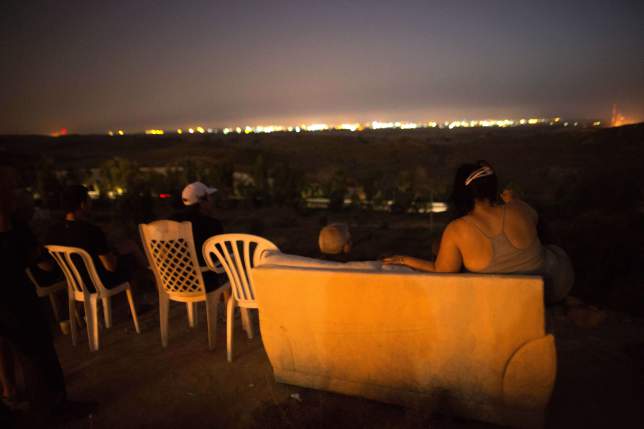
This brings us to the present attack on Gaza, which began on July 8 and so far has claimed the lives of over 200 men, women and children, destroyed 500 homes and cut off water to hundreds of thousands. The Zionist pathology remains the same as it was in Lebanon: the desire to destroy the Palestinians’ humanity. Even more macabre were the actions of some citizens in Sderot who gathered on a hill to watch the bombardment, cheering raucously as each Israeli bomb exploded in Gaza. This is all part of the morbid Zionist pathology.
“Of course, let us not think for a moment, God forbid, that we can be indifferent to the death of innocents. The death of any child, Israeli or Arab, Muslim or Jew, is an unspeakable tragedy that rends the heart,” Rabbi Eric Yoffie, former president of the Union for Reform Judaism, confided sanctimoniously. This is while three teenage Zionists have confessed to murdering a teenage Palestinian boy by burning him alive. This oxymoron is also part of the Zionist pathology.
WaPo’s Gaza dispatch: ugly and dishonest
By Jonathon Cook | July 17, 2014
There’s something deeply ugly, verging on mendacious, about this eye-witness account of the strike against children on Gaza’s beach, which killed four of them, by William Booth in the Washington Post. It begins with what appears to be context but is, in fact, simply an effort to deflect criticism from Israel and blame the victims.
He starts with this: “It is not unusual for militants to launch rockets from sites near my hotel.”
So had rockets been launched from the spot where the children were killed? Here’s the account of veteran Guardian / Observer correspondent Peter Beaumont:
The building that was hit was just a shipping container next to where one of the kids’ father keeps his boat and stores fishing nets. The kids were just playing hide and seek there. They shoot missiles (against Israel) from this neighborhood but none from that location.
So how is Booth’s introduction relevant in any way to the story? Yes, militants have fired rockets from the neighbourhood (after all, from where else but “neighbourhoods” are they likely to fire rockets in one of the most densely populated places on earth). But, as Beaumont points out, they were not being fired from the area that was attacked by Israel.
Israel is supposedly using precision missiles. So this was deliberate targeting of that area, an open area from which no rockets had been fired and where children regularly play. If Booth believes that rockets fired from the general area somehow justify Israel’s missile strikes on the children (and if not, why mention it?), then why the hell is he staying in the al-Deira hotel, which is presumably as likely to be hit as the harbour where the children play?
There is also something unpleasant in his style of writing here. Note this line as the injured children are brought to his hotel.
Two young terrified kids were bleeding and injured, and they were quickly bandaged on the floor of the terrace, where guests usually eat skewers of grilled chicken, suck on water pipes and watch the sun go down.
That incidental reference to the chicken and water pipes is added for colour. It’s a journalistic technique we use when there’s not much happening and you want to set a scene to draw the reader into the story. But here it’s entirely unnecessary. The action – the bleeding children and the dead bodies nearby – are what will draw the reader in, as any rookie journalist would know. So when I see Booth pausing from his description to talk about how the guests entertain themselves in the evenings, I sense – both as a journalist and a reader – that his attention is not fully on the events at hand.
I’d like to believe this is his way of responding to the shock of the events he’s just witnessed. But I suspect something else is at work here, something revealing about the business of journalism.
Most of the time, we write not for ourselves or our readers but for our editors – in short to keep our jobs. Here Booth was called on to stop being the careerist and connect with his humanity. That, rare though it is in journalism, was what the moment required: to see, really see the desperate, terrified little boys in front of him. Instead, all he could think about was technique and what his editors might want.
Health crisis looms in Gaza after Israel bombs water infrastructure
By Ahmed Hadi | Al-Akhbar | July 17, 2014
To either prepare for a ground invasion or to simply to make life for Gazans harsher than it already is, Israel decided to bomb the wells that provide tens of thousands of people in Gaza with water. It has also targeted sewage plants, which means clean water is not coming in and sewage water is not going out.
Bassem Siam carried two plastic gallons as he left his home in the Sheikh Radwan neighborhood in northern Gaza, ignoring the intense bombardment and the continued Israeli military flights. He went to his neighbors who happen to have a small supply of drinking water to get a sip of water for himself and his family and to help his wife wash the dishes that have accumulated in the kitchen because water has been cut off for two days. The 30-something-year-old man held the two gallons tightly to his chest and returned home quickly as Israeli planes bombed farm land near his home. When he entered the building where he lives, he exhaled deeply, having survived the devastating missile shrapnel.
Thousands of Palestinians in Gaza live under the threat of water scarcity due to the fact that Israeli fighter jets bombed wells that provide water to several residential areas in the Gaza Strip. Municipalities in charge of these wells believe that the Israeli targeting of wells is motivated by a decision to destroy the infrastructure in Gaza and to undermine the people’s ability to remain steadfast.
Israeli planes targeted a well located in al-Nasr neighborhood, west of the city of Gaza, which provides water to about 20,000 people and the Ali well in al-Zaitoun area, south of the city, which provides water to about 7,000 people. In addition, three main water lines that feed al-Shujaiya and al-Sabra neighborhoods and provide about 21,000 people with water were also hit.
This targeting appears to be systematic and its obvious objective is to deprive people of water, the single most important element of daily life, especially during the month of Ramadan.
According to the head of the water facilities at the Gaza municipality, Saad al-Din Atbash, it is very difficult to repair the destroyed wells amidst the ongoing violence. Not to mention that the cost for each well to start working again at the same capacity it was working before is $120,000. “In addition, the cost of repairing the three water lines that were damaged is about $6,000 for each line,” he added.
In light of the ongoing war and siege of Gaza, it is hard for the municipality to repair these wells and water lines, Atbash confirmed. He also noted that the electric cables which operate the well pumps that feed the industrial area to the east of Gaza city (known as Karni) have been burned. These pumps provide water to about 5,000 people. He confirmed that the crews working in the field have repaired what can be repaired in order to distribute water again, even if on an intermittent basis. He warned, however, that these crews are working in unsafe conditions because the Israeli military targets emergency work crews.
Gazans are starting to complain about the water shortages that last for days at a time, forcing some of them to fill up their home water tanks with desalinated water to use for drinking, cooking, washing and cleaning. The problem, however, is that the distributors of desalinated water were directly targeted more than once during the 2008 Israeli war on Gaza. Not to mention the additional cost of buying desalinated water which doubles people’s water bills. In addition, several purification water plants announced their inability to provide services to residents, especially to those living in border areas.
Fadi Omran, one of the desalinated water distributors, tells Al-Akhbar : “We can’t risk our lives and go out in the evening. We are trying to work during the day but we don’t have enough time to meet the needs of all the people.” Omran, who drives a huge truck, explained that the Israelis do not differentiate between civilians and Resistance fighters, “they target any moving object at night.” He said that fear for their lives forces them to delay delivering their customers’ orders. In addition to the fact that his plant works only when there is electricity.
This situation prompted the director of the water department in the Gaza municipality to call on people to ration their water consumption “until the damaged water pipes and water wells are repaired.” He also called on international organizations to intervene in order to prevent Israel from bombing the infrastructure in the Gaza Strip.
On the evening of July 12, Israeli warplanes targeted a vehicle that belongs to the non-governmental Coastal Municipalities Water Utility near its well located to the west of Rafah in southern Gaza. The bombing killed a 42-year-old employee called Ziad al-Shawi, destroyed his car completely and seriously injured two of his colleagues.
Because of this incident, the general director of the utility, Monzer Shiblak, announced the complete suspension of work at the field water utility after the targeting of its staff, “despite the existing coordination with the Israeli side. The suspension will continue until proper field protection is provided for the employees.” At the same time, he expressed commitment to see his utility persist in its vital duties towards the public and in carrying out its water and sanitation services to the best of its ability.
During a press conference, Shiblak called on international humanitarian organizations, especially the International Committee of the Red Cross (ICRC) and the United Nations Office for the Coordination of Humanitarian Affairs (OCHA), to assume their responsibilities and take action to protect the Coastal Municipalities Water Utility and pressure the Israeli side to stop targeting their crews and the municipalities’ crews.
According to observers, warnings have been issued regarding the consequences of subjecting Palestinians in Gaza to health and environmental catastrophes as a result of the Israeli bombing of sewage pump no. 1. This pump services the area to the west of the city of Gaza and treats about 15,000 cubic meters of waste-water per day, thus protecting about 200,000 of the city’s residents from the potential harm of untreated sewage water.
Israeli Airstrikes Kill 24 Palestinians on Wednesday, Including 6 Children

Children crying for their friends killed on a Gaza beach (image from Joe Catron – Twitter)
IMEMC | July 17, 2014
According to the Palestinian Ministry of Health in Gaza, Israeli airstrikes and naval and artillery strikes have killed 24 Palestinians on Wednesday, most of whom are civilians.
One Israeli airstrike targeted a civilian car, killing two adults and a child, all from the same family.
In Khan Younis, At approximately 01:00 on Wednesday, 16 July 2014, an Israeli drone fired a missile at the vicinity of ‘Asqalan School in al-Fakhari area in the southeast of Khan Yunis, killing:
1. Farid Mahmoud Abu-Doqqa, 33, Khan Younis.
Three other members of the same family were killed in a separate airstrike, also in Khan Younis. They were riding in a clearly-marked civilian taxi when the taxi was targeted by an aerial missile and blown to pieces. The family members killed in the attack are:
2. Omar Ramadan Abu Doqqa, 24, Khan Younis.
Omar’s little brother:
3. Ibrahim Ramadan Abu Doqqa, 10, Khan Younis.
And their grandmother:
4. Khadra Al-Abed Salama Abu Doqqa, 65, Khan Younis.
The family had been visiting an injured relative at Shifa Hospital, and were on their way home when their taxi was targeted by an Israeli missile. Five others were injured in that attack.
Also in Khan Younis, at approximately 03:00, an Israeli drone fired a missile at
5. Mohammed Tayseer Yousef Shurrab, 23
He was targeted when he was on his way back home in Gizan Abu Rashwan area in the southeast of Khan Yunis. He was instantly killed.
At approximately 06:40, Israeli drones fired 2 missiles at a house belonging to Muneer Abu Hatab in Khan Yunis refugee camp. The house was damaged.
In Rafah, in the early hours of Wednesday, July 16, 2014, an Israeli airstrike killed a Palestinian civilian in Shabura camp:
6. Ashraf Khalil Abu Shanab, 33, Rafah.
An Israeli airstrike around the same time targeted the Abu Audah family home in Rafah, killing two:
7. Mohammad Ismael Abu Odah, 27, Rafah.
8. Mohammad Abdullah Zahouq, 23, Rafah.
Four others were injured in that attack.
In a separate airstrike in Rafah, a Palestinian man associated with the Islamic Jihad was killed (he was not engaged in any hostilities at the time of his assassination):
9. Mohammad Sabri ad-Debari, Rafah.
According to the Palestinian Center for Human Rights, between 22:00 on Tuesday until 08:15 on Wednesday, 16 July 2014, Israeli warplanes bombarded and destroyed 7 houses in Gaza City:
1 house belonging to Sami Hashem in Tal al-Hawa neighborhood; 1 house belonging to the heirs of Nabeel Shabet in al-Tuffah neighborhood; 1 house belonging to Mahmoud ‘Atallah in al-Ghefari area; 1 house belonging to Mahmoud al-Zahhr, a leader of Hamas, 1 house in al-Sabra neighborhood belonging to Na’im al-Harazinin al-Zaytoun neighborhood; 1 house belonging to Tayseer al-‘Ashi in al-Remal neighborhood; and 1 house belonging to ‘Adnan Killab in al-Shati refugee camp.
Israeli warplanes bombarded 2 flats in Tal al-Hawa neighborhood, as well: a minaret of a mosque in al-Shati refugee camp, a building of the Ministry of Interior and al-Wafaa’ Hospital, which Israeli forces ordered its evacuation.
On Wednesday morning, a Palestinian man died from injuries sustained when a missile struck his car in Rafah before midnight.
10. Ahmad al-Nawajha
Midday on Wednesday, an Israeli airstrike on a Gaza beach killed four children between the ages of 9 and 11 – IMEMC has a full report on this killing in a separate article
The children killed are:
11. Ahed Atef Bakr, 10, Gaza beach.
12. Zakariya Ahed Bakr, 10, Gaza beach.
13. Mohammad Ramiz Bakr, 11, Gaza beach.
14. Ismail Mahmoud Bakr, 9, Gaza beach.
Later on Wednesday afternoon, a Missile fired by a reconnaissance aircraft in west of Gaza, in the Sheikh ‘Ejleen region of Gaza City killed:
15. Mohammad Kamel Abdul-Rahman, 30, Sheikh ‘Ejleen, Gaza City.
A Palestinian died Wednesday afternoon of wounds sustained in earlier airstrikes:
16.Husam Shamlakh, 23, Sheikh ‘Ejleen, Gaza City.
died of wounds sustained in a previous attack on a house in west Gaza/ Sheikh ‘Ejleen:
Four people were killed, including two small children and an elderly woman, and three others injured, when Israeli fire targeted them near the al-Katiba mosque west of Khan Younis. They were all members of the same family:
17.Usama Mahmoud Al-Astal, 6, Khan Younis .
18. Yasmin al-Astal, 4, Khan Younis.
19. Hussein Abdul-Nasser al-Astal, 23, Khan Younis.
20. Kawthar al-Astal, 70, Khan Younis.
Airstrikes continued throughout Wednesday afternoon and evening, killing:
21. Kamal Mohammad Abu ‘Amer, 38, Khan Younis.
22.Akram Mohammad Abu ‘Amer, 38, Khan Younis. (brother of Kamal, injured in same incident, then later same day died of his injuries)
23. Abdul-Rahman Ibrahim Khalil as-Sarhi, 37, Gaza City.
Also on Wednesday,
24. Hamza Raed Thary, 6
died of wounds he sustained in an airstrike several days ago in Jabalia.
From ‘God’s Wrath’ to ‘Protective Edge’: Israel’s Four-Decade-Long Assault on Palestine
By Derek Ide | The Hampton Institute | July 16, 2014
 In Beirut on July 8, 1972, thirty-six year old Ghassan Kanafani entered into his Volkswagen for the last time. The prolific writer and editor of Al Hadaf (“The Goal”) was headed to the newspaper’s office. His seventeen year old niece Lamis Najm was with him. Not long before, he had penned these words to her:
“Dearest: You are rising now, while we start to fall. Our role is almost complete. The role of this generation was the shortest for any generation in history. We live in crucial times for the history of humanity and people are divided between participants and spectators… The battle is harsh and human capacity cannot tolerate this much. I, young one, chose not to be a spectator. It means that I chose to live the crucial moments of our history, no matter how short…”[1]
It was around 11 a.m. that Saturday when the explosion occurred, judging from the watch later found on what remained of Lamis’ hand.[2] Kanafani was a leading member of the Popular Front for the Liberation of Palestine, the heart of the left-wing secular opposition to Israel. He was a noncombatant, and although pictures of Ho Chi Minh and Che Guevara adorned his office, he never personally picked up a gun against his Zionist enemies, despite having every right to resist the ongoing occupation by whatever means necessary. Yet, he still became a victim of Israeli terror.
The car bomb attached to Kanafani’s vehicle killed him and his teenage niece on July 8, 1972. The assassination was part of a secret operation known as God’s Wrath. The plan, carried out under the tutelage of Prime Minister Golda Meir, was intended to murder leading militants and officials within the Palestinian resistance movement carried out by Israel’s “Institute for Intelligence and Special Operations,” more commonly known as Mossad.
Operation God’s Wrath was a covert operation that utilized methods, such as car bombs, akin to what Arundhati Roy once referred to as the “privatization of war.”[3] Forty-two years later, to the day, after the car bomb killed Ghassan and Lamis, the terrorist state of Israel began a new public operation of a different sort. On Tuesday, July 8, 2014 Israel unleashed Operation Protective Edge onto Gaza, a much more hasbara-friendly initiative. This spectacle of sheer force – conventional terrorism, it might be called – had indiscriminately slaughtered nearly 200 Palestinians within the span of one week.[4] Seven days in and Israel’s casualties had reached a stunning zero.
Unlike the names of the three Israeli teenage settlers who were kidnapped and murdered not long before Operation Protective Edge was initiated, the names of the 192 victims of Israeli aggression have not yet been plastered on the front pages of every newspaper or the headlines on every television set. Sa’ad Mahmoud al-Hajj was 17, the same age as Kanafani’s niece Lamis, was murdered along with seven members of his family when an Israeli bomb destroyed their home in Khan Younis. Sa’ad’s brother Tarek, age 18, and his sister Fatima, age 12, died with him. Ziad Maher al-Najjar, 17 years old, was also killed in Khan Younis days later. 17-year-old Anas Youssef Kandil was murdered by Israeli terror in Jabalia, and 17-year-old Mohammed Isam al-Batash was killed in Gaza city. 10-year-old Bassim Salim Kawareh, 11-year-old Maryam Atieh Mohammed al-Arja, 12-year-old Qassi Isam al-Batash, all victims of this most recent terrorist attack. These names may not find their way onto the pages or television screens of major news outlets in the west, where Palestinian blood has always been worth less than Israeli blood, but they, along with all the other names of victims of Israeli barbarity, should grace the lips and enter the hearts of those engaged in the struggle for a free Palestine.
Thus, forty-two years after the terrorist state martyred Kanafani, its reign of terror continues. The world is a different place from 1972, however, and the voice of worldwide opposition is growing. Just as the movement against apartheid South Africa took decades to build, so did the opposition to the settler-terrorist state of Israel. Today, however, the movement for boycott, divestment, and sanctions (BDS), put forward by Palestinian civil society in 2005, is growing at an even more rapid pace than did its predecessor. Across US campuses, student governments have passed resolutions calling for divestment, and victories in the name of a free Palestine have been on the rise.[5] While the puppet Arab leaders, sheikhs and Israeli pawns wring their hands, donate a pittance of their enormous wealth to clean up the aftermath, and send fighters off to die in Iraq or Syria, they cannot be the face of the Palestinian resistance.
As Ghassan Kanafani explained: “If we are failed defenders of the cause, it is better to change the defenders, not to change the cause.” Since his time, the defenders have changed more than once, but Kanafani’s cause lives on. For those of us who live outside the “harsh battle,” we too should “chose not to be a spectator.” Let us, like Kanafani, “chose to live the crucial moments of our history” and contribute to the struggle for a free Palestine. For those of us who face no imminent threat of retaliation, no fear of bombs dropping onto our homes while we eat with our families, no chance of a car bomb detonating as we head to our offices, it should not only be our choice, but our obligation, our duty, to support the movement to boycott and divest from the terrorist state of Israel. As Alice Walker, who refused an Israeli publisher’s offer to publish “The Color Purple,” once said, “Activism is my rent for living on this planet.” Indeed, when it comes to Palestine, it is time for Americans to pay some rent.
Notes
‘Shells were chasing them’: Four Palestinian children killed on beach by Israeli rockets

RT | July 16, 2014
Four Palestinian children were killed by rockets while playing football on Gaza beach, with local officials saying the attack came from an Israeli gunboat. Dozens of international journalists witnessed the tragedy.
“This is a cowardly crime,” said Ashraf al-Qidra, spokesman for the Gaza Health Ministry.
The children have been named as Ahed Atef Bakr and Zakaria Ahed Bakr, both aged 10, Mohamed Ramez Bakr, 11, and Ismael Mohamed Bakr, 9, and another boy remains in critical condition. All the victims were relatives.
“The kids were playing football on the beach,” Ahmed Abu Hassera, who witnessed the explosions along with dozens of foreign journalists located nearby, told Reuters. “When the first shell hit the land, they ran away but another shell hit them all. It looked as if the shells were chasing them.”
“We live by the coast. There was a headline on the news that four children were injured … so we went looking for the kids and we could not find them, so we came here to the hospital to look for them and we found them all, including my son … oh my God,” a man who introduced himself as the father of Zakaria, told NBC.
The Israeli Defense Forces have denied targeting the children, who came from the family of a fisherman whose shack on the beach was decimated by the strike.
“We do not target civilians, we target Hamas terrorists,” IDF representative Peter Lerner told RT.
“I have seen the footage of the incident, and indeed it does look tragic, and we will have to look into the circumstances.”
The strike brought the total of Palestinians killed by the Israeli counter-offensive to 214.
What next for Gaza?
By Robert Turner | Ma’an | July 16, 2014
As I sit here in my office cum bedroom in Gaza City, listening to the airstrikes and rocket fire, there is talk of how to bring the violence to an end. This is to be eminently desired, particularly for the civilian population in Gaza who have suffered the brunt of this escalation.
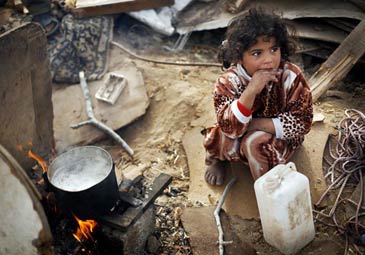
But when I think of the 17,000 displaced people sheltered in our schools, some of whom I spoke with yesterday, I wonder what they would think of this. Because they have seen it all before, for most this was their third displacement since 2009; many having returned to the exact same classroom.
If this prospective cease-fire ends the same way as those before it, would they think this is anything other than a brief respite from violence?
For Gaza, a return to ‘calm’ is a return to the eighth year of blockade. It is a return to over 50 percent of the population either unemployed or unpaid. It is a return to confinement to Gaza and no external access to markets, employment, or education – in short, no access to the outside world.
For example, if one of the grandmothers I spoke to yesterday should wish to go to Birzeit University in the West Bank to study, she cannot.
The Israeli government need not demonstrate this grandmother poses any specific threat to security as they have approved a blanket ban on Gazans studying in the West Bank based on an undefined security threat. The vast majority of the population are prevented from leaving this 365 square kilometer sliver of land.
If one of the tomato farmers I met yesterday can find a buyer for his product in Paris, Peoria or Prague under certain conditions he can box up his tomatoes, ship them through the one open commercial crossing and on to Ashdod port or Ben Gurion airport – two of the most sensitive security sites in Israel.
Unfortunately there is no market for Gazan tomatoes in Paris, Peoria or Prague. There is a market for Gazan tomatoes in Israel and the West Bank, but this farmer is not allowed to sell his tomatoes there because of that same undefined security threat.
The elderly I met yesterday wonder how they will access health care after this cease-fire. Other than the services provided by us at the United Nations Relief and Works Agency and some private and NGO facilities, the government health care system is collapsing. Infrastructure has been damaged and the people wonder who will take responsibility to fix it.
If the Palestinian Authority is not permitted or is unable to do that is the international community expected to? Or will Israel, the occupying power, assume that responsibility?
The mothers I met yesterday wonder where their children will go to school in six short weeks if not in one of UNRWA’s 245 schools. Who will repair the government schools, deliver the textbooks, pay the teachers? If government schools do not open will UNRWA be expected to fill that void?
We lack the physical capacity, human and financial resources to accept tens, or even hundreds, of thousands of additional students in our schools.
UNRWA and the UN family, including WFP, UNICEF, OCHA and UNDP, remain engaged in meeting the humanitarian needs of the people of Gaza. Amongst the areas in which UNRWA has scaled up its work in recent years is construction, where we have a very large portfolio.
This is predominantly schools for our education program, in which we taught over 230,000 children last year, and houses for those whose homes were destroyed in previous conflicts or demolished by Israel.
If we want to build something we have to submit a detailed project proposal to Israel with the design, location and a complete bill of quantities. The Israelis then review the proposal, a process that is supposed to take not more than two months but on average takes nearly 20 months.
We received no project approvals between March 2013 and May 2014, during the last ‘calm’, despite having nearly USD 100 million worth of projects awaiting approval. Will this ‘calm’ be any better?
More importantly, the people here wonder who will govern Gaza? No one has an answer to that question. I think the people of Gaza would say that if this is the form of ‘calm’ people have in mind, while preferable to the current violence, it cannot last. It will not last.
Robert Turner is Gaza Director of Operations for UNRWA.
Israel Failed to Provide Connection between Targets and Military Activity – Report
By Chris Carlson | International Middle East Media Center | July 16, 2014
Israeli human rights organization B’Tselem has issued an information sheet stating that the interpretation presented by the Israeli forces spokesperson — that it is enough for a person to be involved in a military activity to render his home and his neighbors’ homes legitimate military targets without having to prove any connection between his activity and the house in which he and his family live — is unfounded and illegal.
The organization added, according to WAFA Palestinian News & Info Agency’s recent report:
“It is not a coincidence that the number of uninvolved civilians killed or injured by these bombings is growing. The law is meant to protect civilians and, unsurprisingly, violating it has lethal consequences. Euphemisms such as ‘surgical strikes’ or ‘operational infrastructure’ cannot hide the facts: illegal attacks of homes, which constitute punitive home demolition from the air, come at a dreadful cost in human life.”
The fact sheet details a discussion which would cast considerable doubt over the legality of Israel’s targeting of what it claims were houses belonging to Hamas operatives.
International humanitarian law defines a military target as follows:
“[…] military objectives are limited to those objects which by their nature, location, purpose or use make an effective contribution to military action and whose total or partial destruction, capture or neutralization, in the circumstances ruling at the time, offers a definite military advantage.” (Article 52 (2), Protocol I Additional to the Fourth Geneva Convention)
WAFA further reports that, according to the official interpretation of the International Committee of the Red Cross, objectives which, by their nature, make an effective contribution to hostile military action – such as weapon storage, military bases and communication centers used by the military – are considered military targets.
However, although civilian sites may serve as military bunkers or headquarters, and accordingly become legitimate military targets, the law states that if any doubt arises as to the use of a civilian site and its effective contribution to hostile military actions, it must be considered civilian.
Attacking any such structure must provide a definite military advantage.
Although the actuality of Gaza civilian houses contributing effectively to hostile military action was in fact doubted, Israeli forces targeted them anyway.
B’Tselem defines the aim of international humanitarian law as being:
“…to minimize harm to civilians under warfare and to restrict the warring parties… it is not open to any and all interpretations. The word of the law must be interpreted in its original spirit, in keeping with its overreaching aim: to provide maximum protection to civilians.”
According to the organization, the Israeli army spokesperson, over the course of the current operation, has changed the wording of statements concerning the bombings on Gaza, in an apparent attempt to retroactively match his reports of reality to the requirements of the law.
First statement (July 8): “Among the targets attacked were four homes of activists in the Hamas terror organization who are involved in terrorist activity and direct and carry out high-trajectory fire towards Israel…”.
The next day, another statement was issued which reported that the military had attacked additional homes of Hamas activists “which functioned as command and control infrastructure for the organization’ or as ‘a control center for advancing terrorism”.
The same evening, the spokesperson stopped reporting that homes were destroyed, stating instead that “the operational infrastructure of a senior Hamas functionary was attacked”.
Gaza faces water crisis amid Israeli strikes: Red Cross
Press TV – July 16, 2014
The International Committee of the Red Cross (ICRC) has warned that hundreds of thousands of people in Gaza are without water as a result of Israel’s repeated airstrikes on the enclave.
The ICRC said on Wednesday that Gaza’s already vulnerable water system is being destroyed after days of deadly airstrikes by Israel.
“Hundreds of thousands of people in Gaza are now without water. Within days, the entire population of the Strip may be desperately short of water,” Jacques de Maio, the head of the ICRC delegation in the Palestinian occupied territories said.
“If they do not stop, the question is not if, but when an already beleaguered population will face an acute water crisis,” he added.
ICRC water and sanitation expert Guillaume Pierrehumbert also warned that the coastal enclave’s water system had been deteriorating for years, saying “the latest attacks are the last straw.”
The water crisis comes as temperatures are on the rise in Gaza.
Since July 8, Israeli warplanes have struck more than 1,300 targets across Gaza, which is home to around 1.8 million Palestinians.
At least 205 Palestinians have been killed and 1,500 others wounded since last week. Reports show that more than 30 percent of people killed in Gaza were women and children.
Israel has blockaded Gaza since 2007, denying the Palestinian people there of their basic rights, such as freedom of movement, jobs that pay proper wages, and adequate healthcare and education.
Gaza also often faces electricity and fuel shortages.
Egypt claims to have brokered ceasefire agreement; Palestinian factions say they were not consulted
By Celine Hagbard | IMEMC News | July 15, 2014
The Israeli security cabinet reportedly agreed to a ceasefire agreement on Tuesday proposed by the Egyptian government, but leaders with the Palestinian resistance said that no one had contacted them to negotiate any ceasefire.
According to Israeli military reports, the alleged ceasefire proposal would require the Israeli military to end its aerial and naval bombardment of the Gaza Strip that has been constant for the past week, while Palestinian armed factions would be required to stop firing homemade shells into Israel.
Despite claims of having agreed to a ceasefire, Israeli bombardment continued to pound Gaza on Tuesday morning.
The armed wing of the Hamas party, the Izz-al Deen al-Qassam Brigades, claimed that the ceasefire agreement amounted to a ‘surrender’, and that no representative of Hamas or any other armed resistance group had been involved in the negotiations. Therefore, the group said, they would continue their resistance to Israeli aggression in Gaza.
The supposed agreement does not meet the four key elements reiterated by Hamas leaders in recent days. These requirements include the lifting of the Israeli siege of the Gaza Strip, which has led to the unemployment rate of 80%, the sealing of all borders and the prevention of aid, construction materials and fuel, as well as staple goods, from entering Gaza.
Ismail Haniyeh, the elected Prime Minister of the Palestinians people who has not been recognized by Israel because of his association with the Hamas party, said on Monday, “The Gaza blockade must be lifted so that our people live in freedom like all other peoples around the world.”
Egyptian officials negotiated with Israel, apparently without involving Palestinians in the negotiation of the proposed ceasefire. Despite the lack of involvement, Palestinian President Mahmoud Abbas with the Fateh party urged rival parties to accept the agreement.
Hamas officials stated over the weekend that Egypt was an unacceptable negotiator for any ceasefire negotiations, and only Turkey or Qatar could be considered as potential negotiators of a ceasefire.
Egypt’s President Abdel Fattah al-Sisi has kept the Egyptian border with Gaza closed over the last week, apart from one opening to allow critically wounded patients through. This has led to widespread disapproval of Egypt as a negotiator among the Palestinian populace of Gaza, who have not had any way to escape the near-constant bombardment that began on July 8th.
In the two weeks prior to July 8th, 13 Palestinians had been killed by Israeli soldiers and settlers.
In the week since, 195 Palestinians have been killed, including three babies under age two, and several families that were totally wiped out.
2 Israeli girls were wounded on Monday night by a Palestinian shell, the first such injuries in the week of escalation. One of them, age 10, was wounded critically, according to Israeli sources.
Over the past week of escalation, at least 1,385 Palestinians have been wounded, many with head injuries, amputated limbs, permanent disabilities and embedded shrapnel. They include a four-day old infant, who was critically wounded by Israeli forces on Tuesday morning.
More than 180 Palestinians have been killed and 1,385 injured since Israel launched Operation Protective Edge against Gaza exactly a week ago.
Early on Tuesday evening, as Operation Protective Edge entered its second week, Israeli air strikes and rocket continued to strike Gaza even while reports of the ceasefire began to emerge.
Hamas rockets also continued to fly toward Israel where they have largely caused minor injuries and damage. Monday evening saw the most serious incident of the week-long conflict so far with two sisters – aged 10 and 13 – being hospitalised following a rocket attack. The younger sister, 10-year-old Maram Wakili remains in critical condition.
The fatal Palestinian trinity
By Haneen Zoabi | MEMO | July 15, 2014
There are no concrete military outcomes for what is happening in Gaza. Israel has not eliminated Hamas nor has it obliterated any other resistance forces or liberation movements that seek to break the hold of the occupation. Israel has achieved nothing through its use of excessive military force; through its killing; through its destruction of Gaza.
Yet, at the same time, Hamas alone has not been able to prevent Israel from deepening the roots of the occupation, nor has it been able to prevent it from continuing its violence and killings.
What will result from this aggression is that Israel will soon realise that the limits of its power are defined clearly, and that while basic rockets do not kill human beings they do kill the strategic vision on which Israel has based its understanding of security and politics. To this effect, the fatal trinity that is imposed on the Palestinians ‑ the siege of Gaza, the apartheid wall and Israel’s security coordination with the Palestinian Authority ‑ is what afforded the Zionist entity the opportunity to impose a relatively “soft occupation”, and this is precisely what Hamas’s rockets have threatened.
Indeed, what Hamas has killed is Israel’s conviction that it is able to impose a state of occupation without a physical occupier via this trinity. It [the trinity] has facilitated the stability of Israel’s grip on occupied Palestinian territory for the past ten years.
Recent resistance efforts have revived the concept of the Palestinians as an occupied people within the Israeli conscience. This notion has been largely absent from both Israeli reality and mentality. The resistance in Palestine reminds Israel that there is an occupation in place, which is something that it wants to forget so that it can live in security and stability without acknowledging that it is an occupier.
The aggression will eventually be stopped by a state that does nothing more than enforce the status quo through a series of crimes against the Palestinian people. Moreover, the rockets will also stop and both sides will have to sit and re-evaluate their position and the rules of the game that have been shaken in the recent aggression and resistance operations.
In the light of the Arab region’s and international community’s complicit silence, and the lack of any official and concrete action on the part of the Palestinian leadership, Israel will argue that it has been given the green light to prepare for the next round of aggression, repressive policies and practices, and death and destruction.
In order to bring a complete and final end to the possibility that Israel will maintain and deepen its occupation, and to dismantle the fatal trinity of the siege, the wall and security coordination, we, the Palestinians, must also end our own fatal trinity: coordination, negotiations and separation. We have to abandon this other trinity and declare our intention to continue popular resistance in lieu of security coordination; isolate Israel as opposed to negotiating with it; and insist on our unity instead of fragmentation.
Translated from Arabs48, 13 July, 2014
Which came first? Palestinian rockets or Israeli violence?
By Alison Weir | July 13, 2014
Since US media are reporting the latest Israeli massacre in Gaza as though it is a defensive action, I thought I would set the record straight. Israeli forces shelled and invaded Gaza BEFORE the rockets began. Rockets were fired only after numerous Palestinians, including many children, had been killed.
According to a pro-Israel website, the Jewish Virtual Library, Gaza rocket fire against Israel began in 2001. Four rockets were launched in the entire year.
The Israeli military website agrees with this chronology, saying that the first rocket was launched from Gaza on April 16, 2001.
By happenstance, I was traveling throughout the Palestinian Occupied Territories just before that – during February-March 2001 – as a freelance reporter.
While I was there, Israeli forces were regularly shelling both the West Bank and Gaza, and had been doing so for several months. Gaza was particularly hard hit. (An article I wrote at the time can be read here.)
Below are some of my photos from Gaza from February 2001 (i.e. BEFORE any rockets had been fired, and long before Hamas was elected in 2006.)
 Tofah area, Khan Yunis, Gaza, February 2001. Photo by Alison Weir

Tofah, Khan Yunis, Gaza, February 2001. Photo by Alison Weir

Gaza boy shot by Israeli forces, Feb 2001. Photo by Alison Weir

Palestinian 12-year-old boy shot by Israeli forces in Feb 2001; brain dead. Photo by Alison Weir
A few months before, in fall 2000, massive unarmed demonstrations against Israeli occupation began, eventually growing into what is known as the “Second Intifada” (uprising).* Israeli forces immediately used lethal means to try to put this down. An Israeli newspaper reported that the Israeli military fired over a million bullets in the first few days alone.
In the following three months Israeli forces killed over 90 Palestinian children – before a single Israeli child was then killed, and long before any rockets were fired. (The largest single cause of these Palestinian children’s deaths was gunfire to the head.)
In fact, in every year since, far more Palestinian children have been killed than Israeli children:

For additional charts with statistics on both populations go to http://www.ifamericansknew.org
Israeli shelling, military ground invasions, and abductions of Palestinians have continued throughout the following years, occurring, except for few ceasefires (which Israeli violence consistently ends), virtually every day.
Some groups (usually not Hamas), have also periodically fired rockets at Israel through these years.
During that time Israeli forces killed 4,000 Gazans, while Gazan resistance fighters using rockets killed 27 Israelis. On average, Israelis have killed a Palestinian child every three days.
By the way, the Iron Dome sysem has played a somewhat minimal role in the small number of Israeli deaths from rockets. Iron Dome wasn’t begun to be put in place until March 27, 2011. In the ten years before, there were only 17 deaths. For a full analysis go here.
Who originally began this violence?
Of course, the conflict between the two groups began before fall 2000, so let us go back and see how this all started, and which party initiated the violence.
That’s actually quite easy to do.
You don’t need to go back “thousands of years,” as some people believe. In reality, in the late 1800s this region – known as Palestine – was peaceful and had been so for centuries. Its population was about 80 percent Mulim, 15 percent Christian, and a little under 5 percent Jewish; all practicing their faiths side by side largely without conflict on land considered sacred to all three groups.
The problem began when a political movement called “Political Zionism” began in the late 1800s in Europe (and also in the United States) with the goal of pushing out the inhabitants and creating a Jewish state on this land.
The culmination of their efforts came in 1948-49, when Israel was created through warfare. At least 750,000 of Palestine’s non-Jewish inhabitants, approximately half of the total population, were ethnically cleansed, their lands, businesses, orchards, and other property (worth many millions of dollars) confiscated by the newly created Jewish state, Israel.
The Palestinians’ crime was being there.
#
By the way, the belief – also pushed by US media – that the current wave of violence began with the abduction and murder of three young Israelis is also incorrect.
The fact is that Israeli forces had killed at least 4 Palestinian children and approximately 35 Palestinian adults in 2014 BEFORE the abuction/murder of the 3 Israelis.
Also, one of the largest group hunger strikes in history was going on among Palestinians who were being held illegally in Israeli prisons — these “administrative detainees,” Israel’s Orwellian term, are prisoners who have never even been charged with a crime, yet are held for months or years. Many are tortured.
Even JJ Goldberg, a fervently pro-Israel journalist, says that Israeli “politics and lies” are behind Israel’s current aggression.
The pro-Israel spin, despite being repeated over and over, just doesn’t survive the facts.
#
For a synopsis of the history go here, for a more thorough discussion go here, for the US history go here.)
An account by another person who visited Khan Yunis (this is also spelled Khan Younis) a year later can be read here. Below is one of his photos:

Tofah area of Khan Younis, March 2012. Photo by John Caruso
And below are some photos I took when I was last in Gaza, July 2009:
 Gaza, July 2009. Photo by Alison Weir
Gaza, July 2009. American International School in Gaza destroyed by Israeli forces. Photo by Alison Weir

Gaza, July 2001. Photo by Alison Weir
___________
* This is also sometimes called the “Al Aqsa Intifada,” after the location where some of the first demonstrations began.
“Intifada” literally means “shaking off” of oppression. The American Revolutionary War, for example, could be similarly called the American Intifada against the British.
Featured Video
Seyed M. Marandi: US-Iran War Inevitable: Kuwait and Bahrain May Fall
or go to
Aletho News Archives – Video-Images
From the Archives
Oil and the Israel Lobby
Reknowned economist M. Shahid Alam offers this excellent critique of Noam Chomsky’s defective analysis of the relative influence of Oil versus the Israel lobby over US foreign policy: … continue
Blog Roll
 Aletho News
- ICC ignored ‘very well-documented’ NATO crimes – ex-Libyan minister
- SNSC secretary dismisses US response to Iran’s conditions as ‘inadequate’
- Sanaa says Taiz roads open, secure for residents, warns Saudi forces
- Iraqi resistance group urges Saudi leadership to admit defeat, lift Yemen siege
- Trump’s Retreat: How Al-Aqsa Flood Took Down the US Empire
- Israel’s Military Actions in Lebanon Grossly Violate International Law — Lavrov
- Seyed M. Marandi: US-Iran War Inevitable: Kuwait and Bahrain May Fall
- Leaders Condemn Ansarallah Attack on Saudi Arabia While Ignoring Illegal War Against Yemen
- Leaked: Britain’s Covert Iraqi Psyops Network
- Yemeni Armed Forces Warn Airlines Against Using Saudi Airports, Exempt Mecca and Medina
- If Americans Knew
- After Oct 7, IDF policy allowed civilian casualties for even the lowest-ranking targets
- Israel’s Destruction of Southern Lebanon Intensified After the Cease-Fire
- The Last-Minute Decision That Gave Israel Its Name
- The American Conservative: How Trump Made the World Go Nuclear
- Meet the US generals and admirals advancing Israeli policy
- Opinion: Why news organizations should boycott Israel
- The Israeli witch hunt of Sami Abu Shehadeh exposes the lie of the ‘Jewish and democratic’ state
- No state has a ‘right’ to exist – least of all Israel
- Testimonies about Gaza’s civilian death toll expose Israel’s atrocities – Daily Update
- How Israel Conquered the Latin American Right
- No Tricks Zone
- New Study Suggests Large Regions Of The Pacific Ocean Have Been Cooling For The Last 80 Years
- Germany’s Green Energy Debacle: High Energy Costs Force Kahla Porzellan to Close After 182 Years!
- New Study: 50 Years Of The Most Aggressive ‘Net Zero’ Policies Can Only Affect The Global Climate By 0.03°C
- US September “Heat” Was No Record…Many Records Set Decades Ago
- Latest European Green Energy Debacle; Portugal’s Largest Flagship Solar Park Insolvent!
- Green Energy Debacle: German Expert Professor Fritz Vahrenholt Warns Of Severe Economic And Social Consequences
- Two More Paleo Reconstructions Affirm Meters-Higher Sea Levels Across Ireland, Brazil 7000-6000 Years Ago
- New Study: Earth And Venus Surface Warmth Largely Explained By Convection And Lapse Rate, Not CO2 Or Radiation
- 2025 Nature Paper Claiming Worsening Global Drought Gets RETRACTED …Heavily Flawed
- New Study: ‘Global Drought Shows No Detectable Recent Acceleration Under Climate Warming’

