‘Gate of Dignity’ built on lands of Beit Iksa north of Jerusalem
IMEMC News | January 18, 2013
The Palestinian village of Beit Iksa overlooking Jerusalem just built a new village they called Bab Al-Karama (Gate of Dignity) on their land behind the apartheid wall that Israel has built on their land and call on Palestinians and Internationals to join them in their popular struggle to hold on to their lands.
The wall Israel is building on the village land would leave 96% of the village land inaccessible and behind the segregation wall.
Over the past 24 hours, the villagers built a mosque and set up 5 tents for dwelling on their land behind the wall.
 The head of the Beit Iksa village council Mr. Kamal Hababa stated that idea of building this village extension is to protect their legally owned lands and to be the second such village built to protect from growing efforts at transforming Arab Jerusalem.
Already the threatened village land behind the wall is 7,411 dunums which amounts to half the total threatened lands of the eight Palestinian villages northwest of Jerusalem and 96% of the village land of Beit Iksa. Colonial Jewish only settlements built on Palestinian lands beyond the Green line in this area include Ramot, Neve Shmuel, Har Shmuel, and Givat Ze’ev.
The erection of Bab Al-Karama village comes shortly after Palestinian activists erected a village they called Bab Ashams to counter Israeli settlement construction in the area known as E1, located between Jerusalem and Jericho, which signals a new model in popular struggle against the ongoing expansion of the Israeli settlements in the West Bank.
Veolia Withdraws from California Water Contract Bidding
End the Occupation | January 11, 2013
Davis, California – The Davis Committee of Palestinian Rights (DCPR) is happy to report that Veolia Water North America has withdrawn as a prospective bidder on a $325 million dollar project that would provide treated water from the Sacramento River to residents of Woodland and Davis in Yolo County, California. The announcement came at the December 20, 2012 meeting of the Woodland-Davis Clean Water Agency (Water Agency), a joint powers authority between the University of California – Davis and the cities of Woodland and Davis. Veolia’s withdrawal followed efforts by citizens of Yolo County to prevent Veolia’s bidding due to the company’s involvement in the violation of Palestinian human rights.
Members of DCPR first contested the participation of Veolia Water as a prospective bidder in June 2011. Appearing before meetings of the Water Agency Board of Directors, DCPR provided substantial documentation of Veolia’s history of profiting from Israel’s illegal occupation and apartheid policies in Palestine, as well as the dissatisfaction of public agencies throughout the U.S. for Veolia’s mismanaged operations and poor performance, environmental permit violations and fines, and failure to make good on promised improvements.
On April 19th, 2012, DCPR testified before the Board charging that Veolia did not meet the Water Agency’s ethical criteria. Veolia’s involvement in the Jerusalem Light Rail Transit system, its operation of settler-only buses on segregated roads in the occupied West Bank for inhabitants of illegal Israeli settlements, and its operation of a landfill on land confiscated from Palestinians have been contested by Palestinians and international human rights activists throughout the last decade. Veolia has suffered the loss of more than $20 billion in contracts to date following this global outcry.
Within the U.S., the Friends Fiduciary Corporation, which handles investments for hundreds of U.S. Quaker institutions, recently divested from Veolia following requests by Quakers concerned about the violation of Palestinian rights. In December 2012 the City of St. Louis voted to suspend approval of a contract with Veolia Water until it completed an investigation of Veolia’s controversial labor, environmental, and human rights practices. There are ongoing campaigns protesting Veolia Transportation public contracts in Sonoma County and Los Angeles, CA; Baltimore, MD; Boston, MA; and beyond. The state-wide California Israel Divestment Campaign calls on CalPERS public pension system to divest from Veolia Environnement, Caterpillar and Elbit Systems.
Bids were initially due in December 2012, but following outcry from citizenry regarding the large impact of the project’s capital cost upon resident’s water bills, the City Council decided to postpone the due date and appoint a citizens’ advisory committee to investigate rate alternatives, revisit the water supply need-assessment, and consider other water procurement options. Veolia was the only company to withdraw from bidding.
CONTACT: Mikos Fabersunne, Davis Committee for Palestinian Rights, fabersunne@sbcglobal.net
Veolia Fact Sheet
December 18th, 2012 | Published in Latest News and Action Alerts, STL-PSC Blog
What is Veolia?
According to a story broken by the Riverfront Times, St. Louis city lawyers have been negotiating a contract with Veolia Water North America to guide cost-cutting. Veolia Water is a major subsidiary of Veolia Environnement, a Paris-based multinational corporation and the largest water privatization business in the world. Veolia is infamous for:
- Failure to make good on promised improvements
- Anti-labor practices
- Privatizing public resources
- Irresponsible to disastrous environmental practices
- Mismanagement
- Corruption, bribery, embezzlement, and fraud
- Supporting and profiting from segregation and discrimination in Palestine
Worldwide, consumers report that Veolia consistently charges high rates, provides poor service, causes staff turnover, discourages water conservation, and fails to implement promised improvements. Its history reveals consistent prioritization of private profit at the expense of the environment and public welfare.
Unless otherwise indicated, the following is based on extensive research and documentation on Veolia’s practices by Water for All, Polaris Institute, Global Exchange, Novato Friends of Locally Operated Wastewater, Public Citizen, Public Water Works, and Food & Water Watch (here, here, here, here, here).
What happened in Indianapolis?
In its proposal to the St. Louis Water Division, Veolia extensively references its work in Indianapolis as a successful model that could inform Veolia’s guidance in St. Louis. If Indianapolis is any indication of Veolia’s practices, then our city would do well to steer clear. Veolia claims that the contract was completed and “focused on building a collaborative environment with all of the project stakeholders (union, government and the community).” In fact the company’s 20-year contract with Indianapolis was terminated by the city less than halfway through, by which time the following had ensued:
- Non-union employees claimed that the company cut retirement plans, health care and other benefits, costing the workers more than $50 million over 25 years. Hundreds of employees, many organized under a strong union, found themselves in a pitched battle with the company to preserve benefits and hold Veolia to its promises.
- Veolia was sued for breaking state contract law, and for overcharging 250,000 residents.
- Because the company lacked proper safeguards, a typo by an employee caused a boil-water alert for more than a million people, closing local businesses and canceling school for 40,000 students.
- An independent review uncovered lax oversight of the city’s contract with Veolia.
- Consumer complaints more than doubled in the first 10 months of the contract.
- In a study of 100 large U.S. cities, Environmental Working Group ranked Indianapolis drinking water quality #90 (i.e. 11th-worst overall). St. Louis ranks #9 — among the best in the country.
In 2005, a federal grand jury subpoenaed four Veolia Indianapolis employees as part of an investigation into allegations that the utility falsified water quality reports. The probe began amid accusations by Indianapolis council members that the company had cut back on staffing, water testing, treatment chemicals and maintenance. Though Veolia was never charged, the corporation sustained multimillion-dollar losses and dug its way out of this hole by finagling concessions, including a 2007 contract amendment shifting at least $144 million in costs from Veolia to the city. Ignoring public outcry from consumers and state officials, the city then tried to raise rates by 35% to pay for these additional expenses and more expensive capital improvement projects.
In 2010, with infrastructure needs mounting and Veolia demanding more than the city could afford, Indianapolis canceled the contract more than 10 years early, for which they were forced to pay Veolia an additional $29 million. The nonprofit Citizens Energy Group took over, positioned to save the city more money than multinational Veolia was ever able to.
If Veolia gives Indianapolis as an example of a success story, what could a failure possibly look like?
New Orleans — an Environmental Disaster, and Other Cities
In 2001 in New Orleans, an electrical fire at a sewer treatment plant operated by Veolia caused operators to divert raw sewage into the Mississippi River for two hours. In 2001 and 2002, the plant released sewage into the river a total of 50 times, often violating water quality standards and resulting in more than $107,000 in fines. The city’s Sewerage and Water Board Director and staff made numerous, repeated and documented complaints about Veolia reducing staff to inadequate levels, neglecting preventive maintenance, failing to notify city officials of environmental violations, and other problems. Veolia has a long track record of failing to communicate with New Orleans in connection with the contract. In 2002, the board rejected Veolia’s bid for a new water/wastewater contract following public outrage.
In Richmond, CA in 2006, the city and Veolia were sued for dumping more than 17 million gallons of sewage into tributaries that empty into the San Francisco Bay. The Baykeeper watchdog group said Richmond had one of the highest spill rates in the state. The city had given a 20-year, $70 million contract to Veolia, which promised to cut costs and develop and implement an improvement plan for the sewer and storm water systems. By the time of the lawsuit four years later, the company had not even finished designing the plan, much less begun the renovations. Richmond settled the lawsuit out of court by agreeing to pay for multimillion-dollar improvements to reduce sewer spills. In addition, Richmond taxpayers had to shell out $500,000 annually for years to compensate residents and businesses for property damaged. Even after the lawsuits, the problem continues: Veolia’s Richmond plant had 22 spills dumping more than 2 million gallons of sewage during the first two months of 2008.
Lynn, MA ended a wastewater overflow plant contract with Veolia because the company failed to stay adequately bonded for the project. While company officials lauded the continuing contracts with water and wastewater treatment plants in the community, the town rapped the company for cutting costs by refusing to properly treat wastewater with chemicals. As a result, the town was blanketed in a stench.
Angleton, TX terminated a Veolia contract for non-performance and took the company to court, charging that it breached its contract by failing to maintain adequate staffing levels, not submitting capital project reports and charging improper expenses to the maintenance and repair tab picked up by the city.
In Atlanta, Veolia tried to maximize revenue simply by slashing the work force in half, contributing to boil-water orders, maintenance backlogs and other issue that ultimately led to dissolution of the contract.
In Sauget, IL, right across the river, a related Veolia subsidiary operated a hazardous waste incinerator for over 10 years without a clean air permit. In 2005, “the owners agreed to pay $150,000 for alleged air pollution violations.” As of 2008, the facility had been fined more than $3 million,” mostly related to small explosions and releasing toxic chemicals, including carcinogenic dioxins, into the air.
For more examples, see: Burlingame, CA; Wilmington, DE; Port Arthur, TX; Cranston, RI; and others.
Bribery, Corruption, Embezzlement, Fraud
Corruption, bribery, embezzlement, and fraud appear to part of Veolia’s corporate culture. The president of a Veolia subsidiary was convicted of bribing a New Orleans sewer board member to support renewal of its contract (see background above) in 2002. The same year, the mayor of Bridgeport, CT was convicted on 16 counts including taking kickbacks, bribes and extortion along with 8 other defendants a contract proposal from Veolia (then called Vivendi). A forensic audit in Rockland, MA led to contract termination amid embezzlement charges involving a sewer department official and a local company executive charged with embezzling more than US$300,000. Veolia disclosed accounting fraud in the U.S. from 2007-2010 amounting to $120 million. The scandal took place in their Gulf of Mexico Marine Services unit. These are small examples of a pattern of Veolia replicated around the country and world.
Would this contract privatize the city’s water? No — not yet. But the contract would position Veolia — which specializes in water privatization — as a “brain-trust” of management expertise in reducing costs. Many view Veolia and focusing on privatizing services through long-term monopoly contracts rather than through outright ownership. These types of “advisory” roles can serve as a backdoor avenue toward eventually privatizing municipal operations.
Supporting Apartheid and Segregation in Israel/Palestine
Veolia is involved in Israel’s systematic ethnic discrimination against the Palestinians in many ways:
An Israeli subsidiary, Veolia Water – Israel, operates a wastewater treatment plant located in an illegal Jewish-only settlement called Modiin Ilit, built on Palestinian land in the West Bank. The owners of the land on which this settlement was built have been violently driven out. Two unarmed Palestinians from the Palestinian village on which Modiin Ilit was built, have been killed as they protested nonviolently against the ongoing confiscation of their land and resources. Veolia continues to service the settlement.
An Israeli subsidiary of Veolia Transdev, Connex – Israel, operates buses on segregated roads through the occupied West Bank, including two bus lines that use road 443, which is built partially on confiscated land with portions closed entirely to Palestinians. A separate but unequal Palestinian road system is made up of low grade roads cut by checkpoints and physical barriers restricting Palestinian freedom of movement. Last year, Palestinian Freedom Riders attempted to board buses operating on their own land and were violently removed and arrested. Veolia is profiting from segregation and discrimination.
Another Israeli subsidiary, Veolia Environmental Services – Israel, supervises, consults for, and operates the Tovlan Landfill in the occupied Jordan Valley, collecting refuse from illegal settlements. Israel renders it almost impossible for Palestinians in the Jordan Valley to gain permits to build homes, toilets, wells, animal pens, or other vital infrastructure for local communities, which has forced almost all Palestinian families out, with those remaining living in dire conditions. Some are left with no alternative but to work on settlements that have taken their families’ land, for pay far below the minimum wage, unable to take bathroom breaks, and denied any rights to unionize. Veolia takes captured Palestinian land and natural resources to service the settlements exploiting or driving out Palestinians.
UN Special Rapporteur Richard Falk recently recommended that Veolia “should be boycotted, until they bring their operations into line with international human rights and humanitarian law and standards.” Veolia’s extensive profiting from Israel’s illegal practices have provoked global outcry, costing Veolia more than $12.5 billion in lost contracts to date. Recently, the Friends Fiduciary Corporation, which handles investments for hundreds of U.S. Quaker institutions, also divested from Veolia.
Veolia already in Financial Trouble
With public opinion shifting negatively around the world, Veolia is paying a price. After a 25-year contract, Veolia’s home city of Paris declined to renew its contract in 2009. Cities around the world have done the same. Veolia’s profit margin has plummeted since 2008 and the company lost more than half its market value in 2011. Veolia’s CEO pledged to sell $1.8 billion of assets and to stop operations in at least 37 countries. In September 2012, Veolia’s debt stood at more than $19.7 billion.
Now, Veolia is trying to bring its risky and immoral business to our backyard.
Related articles
- St. Louis Palestine Solidarity Committee Statement on Pending City Contract with Veolia Water (alethonews.wordpress.com)
- Veolia to end sponsorship of major UK photography exhibition (bdsmovement.net)
Protestors return to Bab-Alshams
Popular Struggle Co-ordination Committee | January 15, 2013
Bab-Alshams, Occupied Palestine – Following the violent eviction of Bab-Alshams (gateway of the sun) on Sunday around a hundred Protestors returned to the land which the Israeli Occupation Forces call E1. After the acceptance of Palestine as a non-member state to the UN, Israel announced the approval of a plan to expand by building some 4,000 residential units in this area. Such construction would effectively bisect the West Bank, effectively cutting it off from Jerusalem.
The protestors arrived before 15:00 to the surprise of Israeli Police stationed in the area; two groups approached Bab-Alshams from different directions. As protestors moved up the hill Israeli Occupation Forces began to attack the demonstration initially with stun grenades.
Activist’s remained steadfast and refused to leave the land which is privately owned by Palestinians. Israeli police began to outnumber protestors and then began detaining Palestinians violently. Slowly Israeli forces managed to push activists down the hill.
Activists regrouped at the bottom of the hill, sat down and began to sing. The violence of the Israeli authorities then again increased, one women was beaten and suffered a head wound which required medical attention. At least two others were injured one male was bleeding heavily from the wrist, while others were being treated for shock.
At-least 10 people were arrested most of which have now been released. Some remain in detention including an ISM founder Neta Golan.
Related articles
- Palestinians Establish a new Village, Bab Alshams, in Area E1 (alethonews.wordpress.com)
- Palestinian Village of Bab Alshams Remains Steadfast (palsolidarity.org)
- Israeli Soldiers Attack, Evict, Bab Al-Shams, Arrest Dozens (alethonews.wordpress.com)
Israeli soldiers violently break into two houses in Nablus, Kidnapping one person
International Solidarity Movement | January 15, 2013
Occupied Palestine – Last night more than forty Israeli soldiers invaded the city of Nablus and raided two homes looking for two young men. One of them was arrested Emad’s Motherduring the raid and the other one avoided arrest as he was working at the time of the raid.
At 2.30 am, dozens of Israeli soldiers with several dogs broke into Mead Nijad’s house breaking the door with a hammer and violently interrupting the family’s sleep. As the soldiers entered the house, they ordered everyone to have their hands up; they asked for Emad, blindfolded, handcuffed and arrested him. Immediately after, they took the ID’s of all family members and locked them outside the house on a cold winters night. In the meantime, the soldiers ransacked the whole house causing widespread destruction. They also took with them the young boy’s working tools. As Emad’s mother explains, “if they come with dogs, why do they have to destroy everything? If there is something in the house, the dogs would find it”. Furthermore, no reasons for why they arrested Emad were given; the commander just said “your son has caused problems to the Israelis, if you want to know where your son is, come to Huwwara”. The family still does not know the fate of their son.
In the case of Moaz Darduk (19), dozens of only Hebrew speaking soldiers arrived in his house at 3 am while he was at work and woke his parents up. As they asked for him and his father told the soldiers he was not at home but working, they locked his mother in a room and took his father to his other son’s house just in the next building. The commander, who was the only one speaking Arabic, kept saying to his father “do you know who I am? I am Haroun and I came here to kill your son”. When the commander went back to Moaz’s house he told to his parents “I want you to remember who I am, I am Haroun and I am here to kill your son. If you do not bring your son to Huwwara tomorrow morning at 9.30, we will kill him and return him to you in a coffin”.
Night raids and home searching are common tools used by the Israeli Occupation Forces to arrest Palestinian youth for no reason and as a collective punishment to scare Palestinian families.
Related articles
- Israeli forces arrest cancer patient in Nablus, locals say (altahrir.wordpress.com)
- Soldiers Kidnap Nine Palestinians In The West Bank (imemc.org)
Israeli army kills Palestinian teenager
Al-Akhbar | January 15, 2013
A Palestinian teenager was shot and killed after Israeli soldiers stormed a high school in the West Bank, according to activists.
The victim, 17-year-old Samir Awad was from Budrus, a village close to the Israeli apartheid wall, Ma’an news agency reported.
According to the village council head Mohammad Morar, a clash erupted between Israeli forces and teenagers attending the Budrus high school.
Witnesses told Ma’an that Israeli troops stormed into the school, causing students to throw rocks at them. Israeli soldiers then fired five bullets at the students.
Awad was shot four times in the head, chest and legs. He was taken to Ramallah for medical treatment, but succumbed to his wounds there.
The spokesman’s office of the Israeli Armed Forces claimed that Awad had tried to breach the Budrus security fence, ignoring warning shots fired in the air, The Jerusalem Post reported.
Late on Monday, 21-year-old Palestinian Mustafa Abu Jarad died in Gaza after being shot in the head by Israeli forces. A military spokesman later denied that the incident was related to the Israeli army.
West Bank: Aid agencies tread gingerly in Area C
IRIN | January 11, 2013
As night descends in the Jordan Valley in the occupied Palestinian territory (oPt), a family in the village of Ras Al-Ahmar lights a small paraffin lamp in the tent they call home.
There is no electricity here and the nearby Palestinian villages are enveloped in darkness. The only visible cluster of light is from a nearby Israeli settlement.
Humanitarian agencies are well aware of the needs in this part of the West Bank but they face a challenge: play by the rules established by Israel or face the risk of having projects demolished.
Despite being outside the state of Israel, 90 percent of the Jordan Valley is under full Israeli civil and military control as part of Area C, a zone that covers 60 percent of the West Bank.
Palestinian communities here, among the poorest and most vulnerable in oPt, desperately need access to water, electricity, sanitation and other basic infrastructure.
But despite the needs, development organizations that try to improve living conditions in Area C say they find their ability to make any lasting impact hampered by Israeli restrictions and bureaucracy.
Like Palestinians, organizations that want to build basic service infrastructure such as houses, schools or water systems are required to submit an application for a permit to the Israeli authorities.
Often, these permits are not granted. According to the UN Office for the Coordination of Humanitarian Affairs (OCHA), between January 2000 and September 2007, over 94 percent of applications submitted by Palestinians to the Israeli authorities for building permits in Area C were denied.
“The permit regime is very confusing. There is no clarity about the status of an application, whether paperwork has been received, if it is complete,” Willow Heske, media lead for Oxfam in oPt, told IRIN. “Agencies have sometimes waited for two years only to get a rejection that comes without any explanation.”
“A few years ago we put in plans to build a water reservoir in Al-Jiftlik, to provide half of Al-Jiftlik with running water,” said Heske.
“The reservoir was considered a `building’ and we didn’t get the permit. So we moved to a plan B which still involved setting up a reservoir and piping system but above rather than below ground. This too was not accepted. So as a last resort we had to go back to distributing water tanks. And of course people were frustrated and disappointed.”
Challenging the Occupation
Some NGOs, among them Palestinian organizations like Ma’an Development Centre (MDC), believe that adhering to the permit regime helps legitimize the occupation, and choose to ignore the rules altogether.
“If you’re playing within the rules of the occupation then you are legitimizing it. We don’t seek permits from the Israelis. If we put in a permit request we would likely get denied,” MDC project manager Chris Keeler told IRIN. “And also because of a moral stance. We don’t think that a Palestinian NGO should be seeking permission from Israel to be building on Palestinian lands.”
For international organizations, it’s not only the possibility of having a permit denied that affects their work, but also the multiple ways in which the Israeli state bureaucracy hinders their work by issuing “stop work” orders to existing projects, refusing to issue work visas, or refusing to renew existing work permits for foreign staff.
Even MDC finds that it must sometimes work within existing framework restrictions.
“There are houses all over the Jordan Valley that need renovations,” said Keeler. “If we do a project in some of the communities in the north, it would likely get destroyed. So we work a lot in Al-Jiftlik and Al-Fasayil. We need permits in those places too, but because they are more established communities, there is less risk that they will get destroyed. A lot of donors want reassurance that structures we build will not be torn down.”
IRIN was unable to get a response from the Israeli government despite repeated attempts, but in the past the Israeli government spokesperson has said Israeli policy is shaped by security concerns.
EU Move
In May 2012, the European Union (EU) Council of Foreign Affairs called on Israel to meet its obligations to communities in Area C, “including by accelerated approval of Palestinian master plans, halting forced transfer of population and demolition of Palestinian housing and infrastructure… and addressing humanitarian needs.”
The Council stated that the “social and economic developments in Area C are of critical importance for the viability of a future Palestinian state.”
The Israeli Ministry of Foreign Affairs criticized the recommendations, saying they were “based on a partial, biased and one-sided depiction of realities on the ground” and that they “do not contribute to advancing the peace process”.
The Ministry said 119 projects were authorized in Area C in 2011 and that they ensured that “planned projects” were “coordinated and in conformity… with the law”.
Oxfam’s Heske believes the recent EU recommendations are bold and courageous, even though it is still not clear how they will play out on the ground. “These conclusions mean that there is now a full political commitment to work on development in Area C,” she said. “How it will play out, we don’t know, if it happens with or without permits. But we don’t want to see just one token water network here and there.”
Since 2011, the Palestinian Authority’s ministry for local government and local Palestinian councils have submitted 32 master plans for development in Area C to the Israeli Civil Administration (ICA). Each master plan includes infrastructure development, health care, primary education, water provision, electricity and the development of agricultural land, and requires approval by the ICA through a lengthy process of negotiation.
However, according to Azzam Hjouj, acting general director for urban and regional planning in the Palestinian ministry of local government, even if master plans are approved by the ICA, it is expected that the Israeli authorities may issue demolition and “stop work” orders for some plans, particularly in areas like Al-Jiftlik in the Jordan Valley, and that political pressure will be required to ensure implementation.
Bedouin Villages
As for the more isolated Bedouin villages in the valley, the new master plans will not cover their areas.
“It’s difficult to make a master plan for these herding communities, because they are dispersed over large areas. They move around a lot and we don’t want to urbanize these areas, it’s their way of life,” Hjouj said. “And even if we made master plans, it would just give the ICA an excuse to congregate the herding communities into one area and take the remaining land.”
The Israeli Coordination of Government Activity in the Territories (COGAT – a unit in the Israeli Ministry of Defense that engages in coordinating civilian issues between the government of Israel, the Israel Defense Forces, international organizations, diplomats, and the Palestinian Authority) said that many of the construction projects in Area C are “illegal and poorly planned”.
A report compiled by COGAT relating to projects in Area C states that “illegal construction projects that ignore master plans undermine the possibility for future expansions and create problems for electrical, sewage and water systems.”
More Advocacy?
As with the wider crisis, there are no easy solutions for humanitarian agencies seeking to provide aid in Area C, and finding the line between purely humanitarian work, and political engagement is tough.
For economist Shir Hever, author of The Political Economy of Israel’s Occupation, Western governments and NGOs need to be more active in opposing the occupation of West Bank areas.
“Instead, donors put 99 percent of their work in doing what is allowed and 1 percent in protesting conditions,” he said.
Related articles
- Israeli occupation authorities halt entry of West Bankers to 1948 occupied Palestine (alethonews.wordpress.com)
- More evictions for Israeli army training in the Jordan Valley (alethonews.wordpress.com)
- Israeli forces evict West Bank Palestinian outpost despite court ruling (rt.com)
Israeli occupation authorities halt entry of West Bankers to 1948 occupied Palestine
Palestine Information Center – 13/01/2013
AL-KHALIL — The Israeli occupation authorities have stopped issuing permits for Palestinian West Bankers to enter occupied Jerusalem or 1948 occupied Palestine, sources in the Palestinian liaison office said Saturday.
They noted that no permits were issued for more than a month except for patients, adding that the ban started after the UN accepted Palestine as a non-member observer state.
An official at the chamber of commerce and industry in Al-Khalil affirmed the news saying that 1800 permits were tabled with the Israeli civil administration but no response was made to any of them.
He said that the arbitrary measure obstructed economic and commercial life for the Palestinians, adding that officials at the Israeli administration told them that the reason was the admission of Palestine at the UN.
Related article
- IOF arrests 320 Palestinian workers within ten days (occupiedpalestine.wordpress.com)
Israeli Soldiers Attack, Evict, Bab Al-Shams, Arrest Dozens
By Saed Bannoura | IMEMC News | January 13, 2013
On Saturday at dawn thousands of Israeli soldiers and policemen attacked the Bab Al-Shams Palestinian village, installed east of in occupied East Jerusalem, and forcibly removed dozens of activists loading them into buses.
The soldiers dragged several activists onto the ground, attacked reporters and journalists and declared the area a closed military zone, several injuries were reported.
The Israeli decision to evacuate the village came, on Saturday, through a direct order issued by Israeli Prime Minister, Benjamin Netanyahu, and his right-wing fundamentalist cabinet.
Israeli daily, Haaretz, reported that by midnight Saturday, the order was signed by Osnat Mandel, head of the Israeli High Court division of the Justice Ministry, under the claim that “the people and the tents must be removed due to security considerations”.
The Israeli Police said that the eviction order, issued by the court, prohibits the army from removing the tents, but orders the removal of the people staying there.
Also, the so-called Israeli Civil Administration Office, run by the occupation in the West bank, claimed that the Palestinian tent village “was installed on state land”.
But four Bedouin families living in the area confirmed that they own the land, and even showed deeds proving ownership.
Dr. Mustafa Barghouthi, secretary-general of the Palestinian National Initiative, who was also at the Palestinian village, stated that hundreds of Israeli soldiers invaded the village after surrounding it, and attacked the nonviolent activists camped there, and started kidnapping them.
The soldiers violently attacked the residents, including journalists, elderly and women, and dragged several residents onto the ground.
The soldiers repeatedly interrupted the work of local reporters, flashing their lights onto the camera, and pushing the reporters away, and dragged dozens of activists into buses that were brought by the army to the area.
On Saturday evening, Israeli Prime Minister, Benjamin Netanyahu, ordered the army “to remove the Palestinians and their supporters from the Palestinian outpost” that was installed on privately-owned Palestinian lands to send a message to Israel and the entire world that this land is the land of Palestine, and the Palestinian people have the right to inhabit it.
The army installed dozens of roadblocks around the area to prevent Palestinian traffic and surrounded the Bab Al-Shams camp where around 200 activists installed around 20 tents declaring the Bab Al-Shams Palestinian village, in the area where Israel illegally declared it intends to build thousands of homes for Jewish settlers, east of occupied east Jerusalem.
The Israeli decision to build the illegal settlements in the occupied state of Palestine came after the Palestinians managed to obtain an observer state status at the UN – General Assembly.
The Israeli decision was met with international condemnation, but the settler-led government of Benjamin Netanyahu, approved the illegal settlement project.
The so-called E1 settlement project aims at linking the Maale Adumim illegal settlement, where 35,000 reside, with occupied East Jerusalem, thus illegally confiscating Palestinian lands and blocking geographical continuity in the occupied West Bank.
This illegal Israeli project would divide the West Bank into two parts, and would completely isolate it from occupied East Jerusalem, an issue that would prevent the establishment of a viable Palestinian state.
Abdullah Abu Rahma, a Palestinian nonviolent activist from the West Bank village on Bil’in, who was also detained when the army attacked and evicted Bab Al-Shams, stated that this village is on private Palestinian land, and that the Palestinians are not invading anybody’s property, as they are establishing a village in the land of Palestine.
“We tied our hands, chained ourselves with each other to prevent the soldiers from removing us”, Abu Rahma said, “The Soldiers violently attacked us, beat us, and injured at least 10”
He added that there will be more nonviolent activities, and that the struggle for Bab Al-Shams, the nonviolent struggle for the liberation of Palestine will continue as the Palestinians are practicing their internationally-guaranteed right.
It is worth mentioning that the Palestine TV was live streaming from Bab Al-Shams, and the army repeatedly tried to interrupt the stream, pushing the reporters, and using large flashlight, pointing them against the camera to disrupt the images.

Wounded Journalist Hafeth Ibrahim
Related articles
- Palestinians Establish a new Village, Bab Alshams, in Area E1 (alethonews.wordpress.com)
Palestinians Establish a new Village, Bab Alshams, in Area E1
PSCC | January 11th, 2013
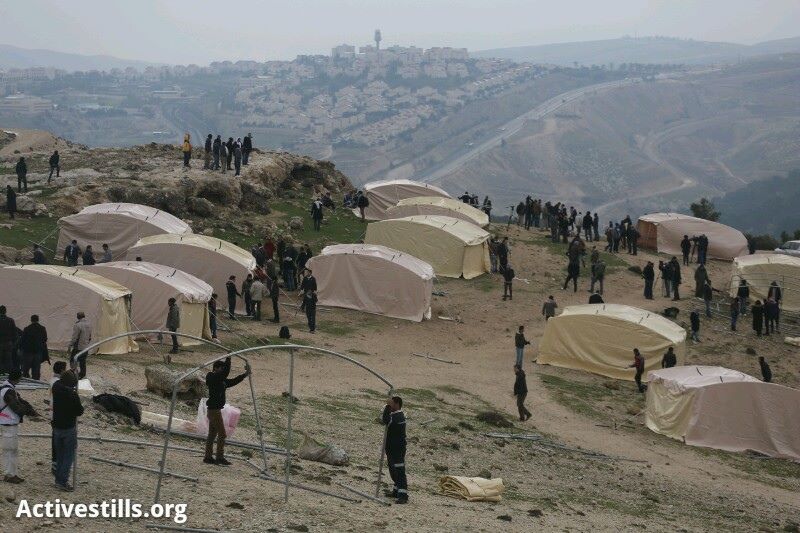
Bab Alshams, Occupied Palestine – 250 men and women from across Palestine establish this morning a new Palestinian village named “Bab Alshams” (Gate of the Sun). Tents were built in what Israel refers to as area E1 and equipment for long-term living was brought.
The group released the following statement:
We, the sons and daughters of Palestine from all throughout the land, announce the establishment of Bab Alshams Village (Gate of the Sun). We the people, without permits from the occupation, without permission from anyone, sit here today because this is our land and it is our right to inhabit it.
A few months ago the Israeli government announced its intention to build about 4000 settlement housing units in the area Israel refers to as E1. E1 block is an area of about 13 prayer in Bab AlShamssquare km that falls on confiscated Palestinian land East of Jerusalem between Ma’ale Adumim settlement, which lies on occupied West Bank Palestinian land, and Jerusalem. We will not remain silent as settlement expansion and confiscation of our land continues. Therefore we hereby establish the village of Bab Alshams to proclaim our faith in direct action and popular resistance. We declare that the village will stand steadfast until the owners of this land will get their right to build on their land.
The village’s name is taken from the novel, “Bab Alshams,” by Lebanese writer Elias Khoury. The book depicts the history of Palestine through a love story between a Palestinian man, Younis, and his wife Nahila. Younis leaves his wife to join the Palestinian resistance in Lebanon while Nahila remains steadfast in what remains of their village in the Galilee. Throughout the 1950s and 1960s, Younis smuggles through Lebanon and back to the Galilee to meet his wife in the “Bab Alshams” cave, where she gives birth to their children. Younis returns to the resistance in Lebanon as his wife remains in Bab Al Shams.
Bab Alshams is the gate to our freedom and steadfastness. Bab Alshams is our gate to Jerusalem. Bab Alshams is the gate to our to our return.
For decades, Israel has established facts on the ground as the International community remained silent in response to these violations. The time has come now to change the rules of the game, for us to establish facts on the ground – our own land. This action involving women and men from the north to the south is a form of popular resistance. In the coming days we will hold various discussion groups, educational and artistic presentations, as well as film screenings on the lands of this village. The residents of Bab Al Shams invite all the sons and daughters of our people to participate and join the village in supporting our resilience.
Time For Justice – A call from Palestine to EU citizens
International Solidarity Movement | January 11, 2013
Ask your governments and EMPs to suspend EU-Israel Association Agreement and stand up for human rights in 2013!

A call urging citizens of the European Union to tell their representatives to suspend the EU’s trade agreements with Israel, until Israel complies with international law, has been issued by grassroots networks and organizations from across Palestine.
The call has been endorsed by numerous European solidarity networks and organizations.
Join the action. Send letters to your representatives now by clicking on your country below:
AUSTRIA
BELGIUM (DUTCH / FRENCH)
BULGARIA
CYPRUS
CZECH REPUBLIC
DENMARK
ESTONIA
FINLAND
FRANCE
GERMANY
GREECE
HUNGARY
IRELAND
ITALY
LATVIA
LITHUANIA
LUXEMBOURG
MALTA
NETHERLANDS
POLAND
PORTUGAL
ROMANIA
SLOVAKIA
SLOVENIA
SPAIN (CASTILIAN / CATALAN)
SWEDEN
UNITED KINGDOM
For the full text click here.
Related
Israeli soldiers violently break into five homes in the Al Ayn Camp
International Solidarity Movement | January 9th, 2013
 Al Ayn Refugee Camp, Occupied Palestine – Hundreds of Israeli soldiers in 27 military jeeps violently broke in and ransacked five homes in the Al Ayn refugee camp, Nablus. They caused widespread destruction in the houses involved in the raid. No arrests were made.
Weam Reda Khaled, a woman whose house was ransacked, recounted how forty soldiers with dogs broke open the door of her home at three this morning. They came into the living-room and bedroom, shouting and intimidating her and her children. The family was forced to stay in the doorway while soldiers searched the house and broke everything that came to their hands. One of her sons was blindfolded, handcuffed and interrogated for two hours under the staircase. In the meantime, the army smashed furniture and electronic appliances in the kitchen, living-room and bedroom. They threw the television and some furniture on the roof, under the rain. Weam described how her four year old son was terrorised by the scene of the military violently breaking in and searching their house. Initially, soldiers even refused to let him go to the bathroom. This is the second time in the last eight months that Weam received such a visit. In May, soldiers broke into her home and arrested her husband, who is still being held in administrative detention without any charge brought against him.
Four other families in the Al Ayn camp suffered the same fate of Weam. In one case, a family of eight was forced to stay outside in shivering cold and heavy rain for four hours. Here, soldiers raided the store of the family and ruined the food kept there by throwing bread and flour on the ground and spilling oil all over the floor. Most of the furniture and appliances of the home were damaged or completely broken. In another case a man and his son were tied and locked in one room while soldiers ransacked the house, damaged the sofa, broke the TV and washing machine. A 70-year old man with a heart condition had to be hospitalised because of the shock suffered from the army’s invasion of his house.
The Al Ayn Camp, home to 5,000 refugees from the 1948 Zionist massacres, is known for its fierce resistance to Israeli occupation and for its resilience during the second intifada. During this raid the Israeli army told the families that they were searching for weapons. However, none were found in Al Ayn Camp during yesterday night’s ransacking.
Related articles
- 500 Israeli soldiers ransack homes in Burqa (palsolidarity.org)
- Israeli soldiers vandalise Hebron home and arrest a student (alethonews.wordpress.com)
- Soldiers Kidnap Four Palestinians (imemc.org)
- Ransacking and arrests in Sarra and Tell (palsolidarity.org)
Featured Video

Armando Mema: Finland Used as New Frontline Against Russia
or go to
Aletho News Archives – Video-Images
New Documentary
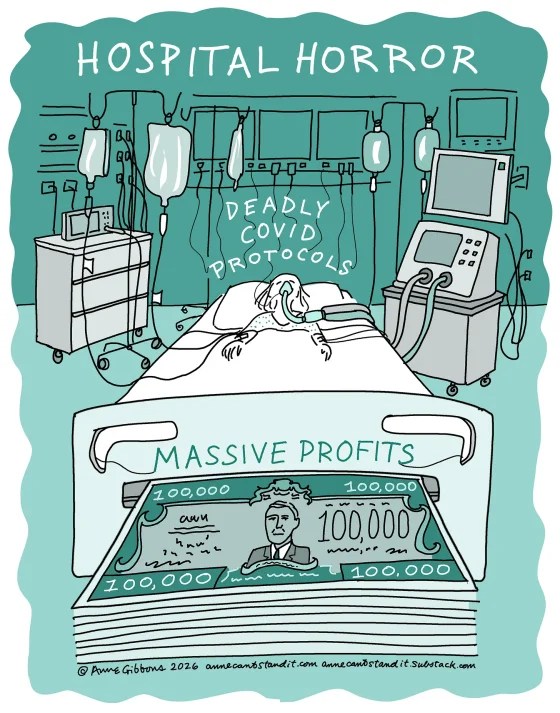
Hospital Horror
Documented in the film,“Bad Medicine”
Blog Roll
 Aletho News
- Iran tells UN Security Council to stop reversing roles of ‘aggressor and victim’
- Disgraced neocons Feith & Libby: stop whining about ‘endless war’
- CENTCOM rejects Israeli claims of preparations for new Iran attacks
- Your Shopping Bag Runs Through Hormuz
- Armando Mema: Finland Used as New Frontline Against Russia
- Gestapo 2.0? Germany grants spy agencies sweeping new powers
- Franco-Palestinian group seeks court ban on Israeli real estate fair in Paris
- How British foreign policy is frozen in the ruins of empire
- EU risks investor exodus over Russian assets – Euroclear chief
- Moscow warns NATO over troop buildup
- If Americans Knew
- Israel Used a U.S.-Made Missile to Kill Six at Gaza’s Nasser Hospital
- Congress Might Sneakily Use Lame Duck to Deeply Intertwine the U.S. and Israeli Militaries
- DAILY UPDATE: Latest essential news on Palestine, Israel, & region
- 9-month-old baby dies from severe cold in Gaza, 1st cold-related death this winter: Health Ministry
- Israel Kills over 12, Injures Many Across Gaza
- ‘Every drawer was opened’: Palestinians report looting amid Israel’s Hebron siege
- Scoop: Israeli spy chief in D.C. as Netanyahu presses Trump to resume war
- Israel Issued More than 24,000 ‘Administrative Detention’ Orders in Three Years
- Israel Critic Van Hollen to Challenge Schumer for U.S. Senate Majority Leader
- Most violent olive harvest on record in the West Bank
- No Tricks Zone
- New Study: Barents Sea Temperatures Were Warmer And Sea Ice Less Extensive In The 1700s Than Today
- German Authorities Start Initiative To Evaluate Public Register For Climate “Disinformation” Spreaders!
- Zonal Asymmetry of Temperature Change in the Antarctic Circumpolar Current
- New Study: The Net Fossil Fuel Contribution To Rising Atmospheric CO2 Has Been Zero For 500 Years
- Germany’s Green Energy Transition Becoming Increasingly Expensive…Another 6 Trillion Euros!
- Sudden Stratospheric Warming, Powerful El Niño Combination May Lead To Extreme Europe Cold, Energy Crisis!
- Two New Studies Find Thwaites Glacier Melt Cannot Be Driven By Human Activity Or A Warming Ocean
- E-Cars Reduce CO2 Emissions By Only 41% Compared To Internal Combustion Engine Vehicles
- Predictions Made By Renowned Climate Professor Over Past Decades Have Been Proven To Be Poor
- New Study Suggests Large Regions Of The Pacific Ocean Have Been Cooling For The Last 80 Years

