UK Labour approved more weapons to Israel in three months than Tories did in four years
MEMO | May 17, 2025
The UK’s Labour government is reported to have approved approximately $160 million worth of arms exports to Israel between October and December 2024, more than the total approved during the entire four-year term of Conservative leadership preceding it. The figure, drawn from newly released strategic export licensing data, reflects an unprecedented rise in UK military support to Israel as the occupation state continues its genocide in Gaza
By comparison, from 2020 to 2023, UK arms export licences to Israel totalled approximately $144 million, including $39 million in 2020, $30 million in 2021, $52 million in 2022 and $23 million in 2023.
The stark figures, compiled by the Campaign Against Arms Trade (CAAT), come amid mounting criticism of the UK’s ongoing military support for Israel as the occupation state continues its devastating war on the besieged Gaza Strip.
“This is the Labour government aiding and abetting Israel’s genocide in Gaza,” said Emily Apple, CAAT’s media coordinator. “It is sickening that instead of imposing a full two-way arms embargo, Keir Starmer’s government has massively increased the amount of military equipment the UK is sending to Israel.”
The revelations coincide with a High Court case in which the UK government is defending its decision to continue supplying F-35 fighter jet components used by Israel in Gaza. Under international and domestic law, the UK is obliged to suspend arms exports where there is a clear risk they could be used to commit serious violations of international law.
However, government lawyers have argued that the available evidence does not support the conclusion that a genocide is occurring or has occurred in Gaza. This, despite the government’s own insistence that any determination of genocide is for the courts to decide.
In response, CAAT challenged the government’s claims, highlighting what it described as contradictions in the official narrative. “The UK government is arguing that ‘the impact of suspending F-35 components on operations in Gaza is likely to be minimal’ because the ‘IDF is one of the most significant and well-equipped militaries in the world’,” CAAT said. “However, the claim that the impact would be ‘minimal’ is contradicted by the facts.”
According to CAAT, Israel is operating its fleet of 39 F-35s at five times the usual rate, creating a surge in demand for spare parts. Freedom of Information disclosures show that the UK’s open licence for F-35 components was used 14 times more frequently in 2023 than in any previous year.
The arms export disclosures come as Israel continues its siege on Gaza, blocking food, medicine, and humanitarian supplies for over ten weeks, measures that have compounded an already catastrophic situation. According to the Integrated Food Security Phase Classification (IPC), nearly half a million Palestinians are enduring “catastrophic” levels of hunger, with another one million facing emergency conditions.
The crisis has escalated since Israel broke a ceasefire agreement with Hamas in March and announced its intention to occupy the entirety of the Gaza Strip. The UN has warned that these actions may amount to war crimes and has repeatedly called for a ceasefire and unrestricted humanitarian access.
Despite these warnings, the UK continues to supply weapons to Israel, a move legal experts say could render British officials complicit in the atrocities being committed. Human rights groups have condemned the UK’s position as morally indefensible and legally precarious.
Call for international probe into the fate of forcibly disappeared Gazans
Palestinian Information Center – May 17, 2025
GAZA – The Palestinian Center for the Missing and Forcibly Disappeared Persons (PCMFD) said that Israel is practicing arbitrary detention, enforced disappearance, and extrajudicial killings against civilians in the Gaza Strip, calling for an international investigation.
In a statement issued on Saturday, the center condemned Israel for withholding information about the forcibly disappeared from their families and preventing them from knowing the fate and whereabouts of their loved ones, which compounds the suffering of thousands of families in Gaza.
The center called on the UN and the international community to open an independent investigation to reveal the fate and whereabouts of thousands of detainees from the Gaza Strip and to hold Israel accountable for its crimes against them.
The statement stressed that enforced disappearance is a crime against humanity under international law and cannot be tolerated or overlooked, calling for the activation of the mandate of the UN Committee on Enforced Disappearances and for Israel to be compelled to reveal the fate of those detained and disappeared during the military aggression in Gaza.
PCMFD also called for the inclusion of the issue of missing Palestinians in the work of the Human Rights Council and the UN General Assembly as an urgent humanitarian issue requiring immediate international action.
Thousands of families in Gaza continue to live in painful limbo, amid the absence of any effective international body tracking the fate of the disappeared and missing, it pointed out, stressing the need to break the silence and act before it is too late.
According to a report by the Palestine Center for Prisoner Studies, the Israeli occupation army carried out field executions of Gazan prisoners who were captured during the war. About 43 prisoners executed by the occupation army have been identified, while it continues to conceal the names of dozens of prisoners who were executed in various ways.
All estimates and testimonies from families and residents of Gaza indicate that the Israeli occupation army has arrested more than 11,000 citizens since the onset of the war on Gaza, subjecting them to all forms of abuse and torture and executing a large number of them.
The Palestine Center revealed that Israel opened new detention camps under army control to accommodate the large numbers of detainees after October 7, and practiced all forms of internationally prohibited torture inside them, in addition to immoral practices that reached the level of rape, depriving prisoners of the basic life essentials, amid an unprecedented policy of starvation. It warned of the continued martyrdom of prisoners in Israeli prisons as a result of such repressive and criminal practices.
The center called on the international community and human rights institutions to intervene immediately and form committees of inquiry to document the crimes of murder and torture against prisoners, to pressure Israel to stop these violations, and to demand that the International Criminal Court bring Israeli officials to trial as war criminals for their direct responsibility for these crimes and for providing cover for their perpetrators.
The High Human Cost of Syria Sanctions
By Rick Sterling | Dissident Voice | May 17, 2025
On May 13, U.S. President Trump announced he is ordering the removal of sanctions on Syria.
Some of the U.S. sanctions can be quickly terminated because they were issued by Executive Order. Other sanctions, including the extremely damaging 2019 “Caesar” sanctions, were imposed by Congressional legislation and may require Congressional action to terminate.
The Syrian people are joyous at the prospect of the end of their country’s economic nightmare. In 2010, before the conflict began, Syria was a middle-income country with free education, free healthcare, and no national debt. It was largely self-sufficient in energy and food. After fourteen years of war, occupation, and strangulating Western sanctions, the U.N. reports that “nine out of ten Syrians live in poverty and face food insecurity”.
Why Syria Was Targeted
In 2007, the former Supreme Allied Commander of NATO, General Wesley Clark, publicly revealed that Washington neo-cons had a hit list of seven countries to be overthrown in the wake of 9-11. The list included Iraq, Libya, Somalia, Sudan, Lebanon, Syria, Iran.
The list is essentially the same as that identified by Benjamin Netanyahu in his 1995 book Fighting Terrorism: How Democracies Can Defeat the International Terrorist Network. The premise of this book is that Palestinian and Lebanese resistance movements are “terrorist,” and any nation that supports them should be overthrown. He targets Iran, Libya, Syria, and Sudan for supporting Palestinian rights and says. “Take away all this state support, and the entire scaffolding of international terrorism will collapse into dust.”
In 2007, Democratic Party leader Nancy Pelosi visited Syria and tried to persuade Assad to end Syria’s support of the Palestinian and Lebanese resistance movements. When Assad would not comply with US and Israeli wishes, Syria was marked for regime change. The Netanyahu and neo-conservative hit list had somehow been adopted by the Western foreign policy establishment. This was confirmed by the former French Foreign Minister Roland Dumas. In a 2013 interview he says, “I went to England almost two years before the start of hostilities (2011). I met British officials, some of whom are friends of mine. They confessed, while trying to persuade me, that preparations for something were underway in Syria. This was in England, not the US. Britain was preparing gunmen to invade Syria… This operation goes way back. It was prepared, conceived, and planned for the purpose of overthrowing the Syrian government because … this regime has an anti-Israeli stance.”
Hybrid Warfare against Syria
The overthrow of the Syrian government was not easy. It involved massive funding from seven countries (USA, UK, France, Turkey, Saudi Arabia, Qatar, UAE). In the early years, the CIA budget alone was $1 billion per year. The campaign included military, diplomatic, media/information and economic warfare.
The regime change operation began in March 2011. While part of the population was hostile to the Assad dynasty, the majority supported the government and a secular Syria. The opposition came largely from sectarian jihadist elements, including the Muslim Brotherhood. Hundreds of factions and cells were supplied and funded by a host of countries, including Qatar, Saudi Arabia, Turkey, the U.S., and the UK. Thousands of foreigners were recruited and provided access to Syria.
The political and media war on the Assad government was intense. Historian Stephen Kinzer wrote, “Coverage of the Syrian war will be remembered as one of the most shameful episodes in the history of the American press.”
Accusations that the Assad government used chemical weapons against civilians were widely broadcast in the West. They were used to justify Western bombing attacks on Syria. Acclaimed U.S. investigative journalist Seymour Hersh uncovered evidence that the chemical weapons attacks were by the opposition, aided by Turkey, NOT by the Assad government. He had to go abroad to have the explosive article published.
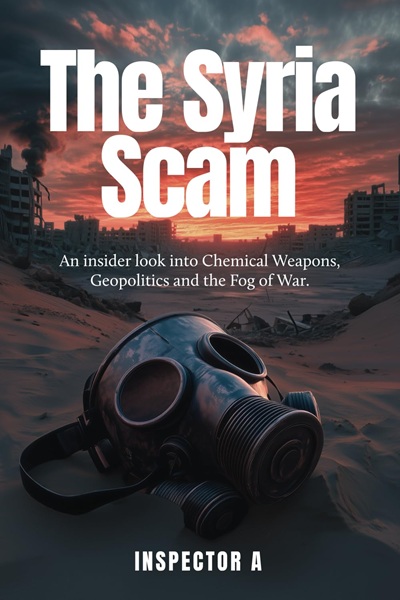 The dubious chemical weapons accusations and US driven political corruption of the Organization for the Prohibition of Chemical Weapons (OPCW) are now exposed in a February 2025 book by one of the technical professionals from the OPCW. The book is titled The Syria Scam: An insider look into Chemical Weapons, Geopolitics and the Fog of War.
By the end of 2018, the Syrian army had largely defeated the diverse jihadists. However, instead of conquering or expelling the opposition, Syria allowed them to have a safe haven in Idlib province on the border with Turkey. With Turkey, Iran and Russia seeking to find a solution through the Astana Accords, the conflict was frozen, and the jihadists were allowed to regain strength. Hayat Tahrir al Sham (HTS) became the de facto leader of the opposition factions and the government of Idlib.
The Frozen Conflict
In 2019, the U.S. turned the screws on Syria and escalated attacks on Lebanon. The extreme Caesar sanctions did what they were intended to do. They crushed the Syrian currency and economy, made it impossible to rebuild, and impoverished the vast majority of Syrians. The spreading poverty and inability to counteract it led to widespread demoralization and dissatisfaction. With consummate cynicism, the “Caesar” sanctions were named the “Caesar Civilian Protection Act”.
Meanwhile, in the HTS safe haven of Idlib province on the Turkish border to the north, conditions were very different. Although HTS was designated a terrorist organization in the U.S. and the West, they were helped economically. The HTS fighters were trained and supplied with modern military weaponry, including drones, sophisticated communications equipment, etc.. Very recently, when people from Damascus traveled to Idlib, they were shocked to find new highways, Wi-Fi widely available, and electricity 24 hours a day. Teacher salaries are ten times higher in Idlib than in Damascus.
The Fall of Damascus
With a demoralized population and Syrian army, the Assad government fell in a few weeks, and HTS, led by Ahmad Al Sharaa, took power on 8 December 2024. The new leader of Syria has been greeted and endorsed by the Gulf monarchies and Western countries that paid for and promoted the overthrow in Syria: the UK, Germany, France, Saudi Arabia, Qatar, and of course, Turkey.
Since the change, there have been numerous sectarian massacres of Alawites and Christians along the coast.
There have been attacks on Druze in Damascus. To date, there have been no punishments for the massacres of civilians. A nun reports, “there is no security” in Damascus or elsewhere in Syria.
Meanwhile, Israel has invaded and occupied all of the Golan and parts of southern Syria. They have built military bases in Quneitra and other strategic locations. Israel has carried out a bombing blitzkrieg, destroying all known Syrian ammunition depots. Israel can now fly over any part of Syria at will.
Instead of condemning the Israeli violation of Syrian land and airspace, Ahmad al Sharaa has criticized Iran and Hezbollah. In recent weeks, the new Syrian regime has arrested Palestinian leaders and closed their offices in Damascus. The normalization of relations with the Zionist state has begun.
Lifting Sanctions on Syria
Of course, the sanctions on Syria should be lifted. They never should have been imposed.
U.S. sanctions, known officially as “unilateral coercive measures”, are condemned by the vast majority of world nations. Over 70% of the world’ nations say that US sanctions are “contrary to international law, international humanitarian law, the Charter of the UN and the norms and principles governing peaceful relations among States.”
Without exaggeration, the West and their allies sponsored terrorism in Syria through Al Qaeda and other fanatical violent terrorist groups. They destroyed a once prosperous and independent nation. With a diverse Syrian population ruled by a sectarian leadership prone to violence, there may be more dark days ahead. While Israel, Turkey and the Gulf monarchies are pleased with the removal of the Assad government, a very heavy price has been paid by the majority of Syrians. And the cost is ongoing.
Trump’s Middle East theatricals were all about putting Bibi in his place
By Martin Jay | Strategic Culture Foundation | May 16, 2025
Was it Bill Clinton in the White House with Benjamin Netanyahu who, in a press conference, muttered those vulgar and certainly immortal words “who’s the f*** superpower around here?” The question was really about whether the U.S. is running Israel and its activities in the Middle East or it is in fact Israel which is running the U.S.
In recent months in both the Biden administration and the Trump one which followed, many pundits have claimed that Israel is in control of U.S. foreign policy, with some even going as far as speculating that this control even goes beyond the Middle East itself. This cabal of online commentators made so much of how Trump adjusted Bibi’s seat when he sat down in the Oval Office.
We can see now though that this idea of the tail wagging the dog, even if once it might have been true to some extent, has now been dealt with head on by Trump.
His visit to the Middle East and his impressive speech in Saudi Arabia which mocked the bellicose approach to bombing civilians was a direct message to Netanyahu in Israel: America is back.
Trump is literally taking control of U.S. foreign policy in the region and pushing back Israel’s attempts to bomb its way to peace, whether this be in Gaza, Lebanon, Syria or, of course, in Iran.
The move comes at a tough time in the region where the country which seemed to bring about a revolution with the Arab Spring – Tunisia – is falling into an abys as it becomes a leading example of a dictatorship which knows no limits on its brutal suppression.
For Netanyahu, a number of pundits now are pointing to the “clear light” between Trump and him with some claiming that these two leaders aren’t even talking anymore. Trump defied him by talking to Iran, negotiating with the Houthis and now scrapping sanctions in Syria.
Israel cannot even dream of attacking Iran with the U.S. help and so a big part of Netanyahu’s mojo has been removed. And now Trump is calling the shots on aid to Gaza, but stopped short of calling for the Palestinians to have their own state.
Yet his move on Syria is telling. Israel’s plans were always to have head-chopping extremists running the show – which they backed in the Syria civil war – with a constant mayhem present so that they can always take advantage of the chaos while ensuring that the path which once stood between Tehran and Beirut is always blocked.
Trump’s announcement that all sanctions will be lifted will not be welcomed by Bibi who will see the move as a stunt by the Donald to demonstrate who is running the show, although the announcement itself might prove to be premature.
Senator Lindsey Graham states only Congress can change the country’s designation as a “state sponsor of terror” and that Trump must make his case to Congress for that to happen.
“That report has not been received, and Congress has the opportunity to review this action if it chooses. The designation of Syria as a state sponsor of terrorism has tremendous ramifications apart from the sanctions,” Graham stated. The senator stated that he is sure that Congress must be informed before sanctions are lifted, and the legislative body would then “make an informed decision on whether or not it should approve the change in designation.” But he also stated that Israel’s opinion matters and that Congress would consult Netanyahu so it’s fair to say that Syria’s fate is still yet to be decided regardless of whatever Trump has said at the podium in Riyadh. It would appear that Bibi and Trump are set to clash now and we shouldn’t be surprised at what resources Trump will deploy to show Israel’s leader that Trump is both serious about peace in the region but also that Israel must put aside its warmongering – which may well include even supporting a two-state solution, pushed more recently by France and the UK. And then we will see who is the f*** super power and who is the client state. Almost certainly the fate of Syria and Gaza will be used as a rod for Bibi’s back until he succumbs to Trump’s rule.
NYU withholds diploma of student who condemned Israel’s Gaza genocide

MEMO | May 16, 2025
In the latest example of escalating repression against Palestine solidarity activism on US campuses, New York University (NYU) has withheld the diploma of student speaker Logan Rozos after he used his commencement address to denounce Israel’s ongoing genocide in Gaza and the US’s complicity.
Rozos, graduating from NYU’s Gallatin School of Individualised Study, told his fellow students on Wednesday: “The only thing that is appropriate to say in this time and to a group this large is a recognition of the atrocities currently happening in Palestine.”
In his speech, Rozos condemned the genocide “supported politically and militarily by the United States, paid for by our tax dollars and livestreamed to our phones for the past 18 months.” He further stated: “I do not wish to speak only to my own politics today, but to speak for all people of conscience, and all people who feel the moral injury of this atrocity.”
Razos’s remarks were met with widespread applause from students. NYU swiftly responded by issuing a statement denouncing Rozos, accusing him of violating university rules and announcing it would withhold his diploma pending disciplinary action.
The university also removed Rozos’s student profile from its website, adding to concerns about institutional retaliation.
This incident comes amid a wider crackdown on free speech and pro-Palestinian activism at US universities. NYU, like many elite institutions, has adopted the highly controversial International Holocaust Remembrance Alliance (IHRA) definition of anti-Semitism, which conflates political opposition to Zionism and Israel’s colonial violence with anti-Jewish hatred. Critics, including human rights scholars and Jewish groups, warn that such measures are being weaponised to suppress Palestinian advocacy and silence dissenting voices.
Rozos’s speech, and NYU’s reaction, follows a pattern of repression at the university. Over the past year, NYU administrators have called police to disperse peaceful encampments and arrested dozens of students and faculty protesting Israel’s war on Gaza. The university has also updated its conduct guidelines to classify phrases such as “Zionist” as discriminatory, explicitly erasing the distinction between anti-Zionism and anti-Semitism.
In December 2024, NYU declared two tenured professors, Andrew Ross and Sonya Posmentier, “persona non grata” after they joined a sit-in demanding the university divest from companies profiting from Israel’s war crimes in Gaza. Months later, NYU cancelled a talk by Doctors Without Borders’ former president Dr Joanne Liu, deeming her slides on Gaza civilian casualties potentially “anti-Semitic.”
Human rights advocates and academic freedom organisations have condemned these actions, warning that universities like NYU are sacrificing core principles of free speech and academic independence under pressure from pro-Israel donors, political figures, and lobby groups.
Rozos’s speech, which framed Israel’s war on Gaza as a genocide livestreamed in real time, resonates with warnings from genocide scholars, legal experts and international bodies that Israel’s actions meet the legal definition of genocide. Despite this, Rozos now faces institutional reprisals for expressing what many human rights defenders see as an urgent moral truth.
Israel kills over 100 Palestinians in northern Gaza attacks
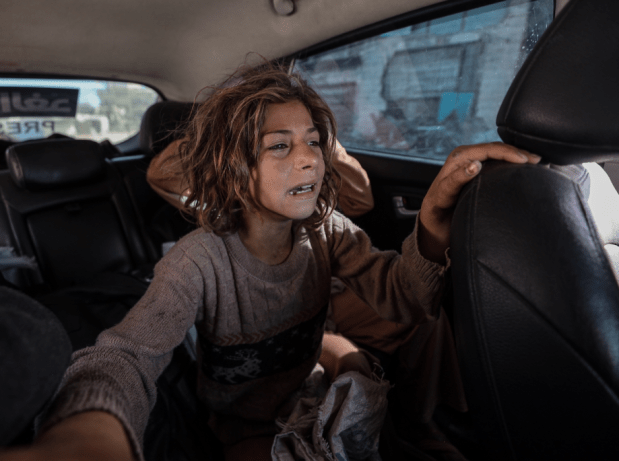
Bodies of Palestinians, who lost their lives after Israeli attacks, are brought to Indonesia Hospital in Gaza City, Gaza on May 16, 2025. [Abdalhkem Abu Riash – Anadolu Agency]
MEMO | May 16, 2025
More than 100 Palestinians were killed in several attacks carried out by the Israeli occupation army in northern Gaza at daybreak today.
Medical sources told Anadolu that the Israeli occupation army carried out “horrific massacres” targeting civilians.
They reported several casualties when the Israeli army targeted an ambulance in the town of Jabalia in northern Gaza, the latest in a series of attacks on medics and healthcare facilities.
“Since early Friday, rescue teams have recovered 50 bodies from under the rubble following Israeli air strikes on 11 residential homes in northern Gaza,” Gaza Civil Defence spokesman Mahmoud Basal said.
He added that “over 50 others are still trapped beneath the debris.”
He warned that the actual death toll is likely much higher, as emergency crews have been unable to reach several areas due to the ongoing bombardment across the enclave.
Basal added that Israeli occupation forces not only struck densely populated homes but also targeted paramedics attempting to rescue victims and retrieve bodies in the aftermath of the attacks.
“There are bodies still lying in the streets of Beit Lahia, Jabalia, Jabalia refugee camp, and Beit Hanoun,” he said. “Rescue teams cannot access them because of the intensity of the strikes.”
The Israeli army has pursued a brutal offensive on the Gaza Strip since October 2023, killing more than 53,000 Palestinians, most of them women and children.
Declassified files expose secret Western support for Israeli assassinations
MEMO | May 16, 2025
Newly declassified documents have revealed that Western intelligence services secretly collaborated with Israel’s Mossad in the 1970s, providing critical intelligence that enabled the assassination of Palestinian activists across Europe, without any parliamentary oversight or democratic scrutiny. The revelation has fuelled concerns that similar clandestine intelligence-sharing arrangements are likely facilitating Israel’s ongoing genocide in Gaza today.
According to a detailed exposé by the Guardian, a covert network known as “Kilowatt”—comprising at least 18 Western intelligence agencies including those of the UK, US, France, and West Germany, was established in 1971 to share sensitive intelligence on Palestinian groups. The information shared included personal details, safe house locations, and vehicle registrations of Palestinian individuals who were subsequently targeted by Mossad hit squads.
Dr Aviva Guttmann, the historian who uncovered the encrypted cables in Swiss archives, confirmed that the intelligence shared was granular and critical to Israel’s covert killings, many of which took place in Paris, Rome, Athens, and Nicosia. “At the very beginning, perhaps officials were unaware of the extrajudicial assassinations, but later, they certainly knew and continued sharing intelligence,” Guttmann told the Guardian.
This covert support, the paper reported, operated entirely beyond the purview of elected officials, and would likely have triggered public outrage had it been exposed at the time. Indeed, some of those assassinated were publicly disputed as innocent, such as Wael Zwaiter, a Palestinian intellectual gunned down in Rome in 1972, whom Israel accused of being linked to the Black September Organisation. Evidence supporting such claims was largely based on intelligence fed through the Kilowatt system.
The revelations, while historical, have sparked urgent comparisons to the present day, where Israel is prosecuting what rights experts and genocide scholars widely describe as an ongoing genocide in Gaza, once again behind a wall of secrecy and political impunity.
Dr Guttmann herself underlined the relevance of these disclosures, warning that the shadowy practices of intelligence-sharing without political oversight remain largely unchanged: “International relations of the secret state are completely off the radar of politicians, parliaments, or the public. Even today, there will be a lot of information being shared about which we know absolutely nothing,” she stressed to the Guardian.
Critics argue that such secrecy underpins the UK’s and other Western states’ complicity in Israel’s Gaza genocide, which since October 2023 has killed over 53,000 Palestinians, mostly women and children. Despite the International Court of Justice opening a genocide case against Israel, British intelligence cooperation with Israeli agencies continues in the dark, with no democratic accountability or transparency. The UK government has also refused to clarify the purpose of more than 500 Royal Air Force surveillance flights over Gaza, raising fears these may be contributing to targeted killing.
Another Report on Israel’s Genocide. More Silence & Complicity From The Liberal West
By John J. Mearsheimer | May 11, 2025
The UN Human Rights Council has issued a lengthy report titled “Anatomy of a Genocide.” As the title indicates, it describes in detail the ongoing Israeli Genocide in Gaza.
Despite the abundance of evidence regarding Israel’s savagery, the liberal West not only does virtually nothing to stop it, but is actually complicit in the genocide.
Where are all those liberal academics, activists, journalists, and policymakers who have spent much of their adult life preaching about human rights and the virtues of the liberal international order? They are AWOL in the face of one of the great crimes of modern times.
Alex Lo, the distinguished columnist for The South China Morning Post, hits the nail on the head in his recent column, which is titled: “The Western World Has Already Dug Its Own Grave in Gaza War.”
He goes on to say: “By enabling Israel to unleash its genocidal impulse, most leaders of developed nations have crossed a moral red line that cannot be undone.”
The following three paragraphs from Lo are especially worth considering:
The most extraordinary censorship is being exercised across many Western countries, but especially in the United States and Germany, to silence anyone who tries to speak out what everyone already knows is going on in Palestine. It is no accident that the two countries that make the most of the Holocaust as universal civic education are the two countries that most actively enable a real-time genocide being committed and shown live on our computer screens and social media pages.
Silencing the victims’ cries so the killers can continue with the butchery, and criticism is considered racial hate speech against the killers and their apologists. Who does that?
The West cares more about the feelings of the butchers than the lives and limbs of victims. Western ‘civilisation’ now sounds like a contradiction in terms.
BBC’s May 14 interview with Gaza aid chief was shameful
By Jonathan Cook | May 14, 2025
There was yet more shameful reporting by BBC News at Ten last night, with international editor Jeremy Bowen the chief culprit this time.
He prefaced an interview with Philippe Lazzarini, head of United Nations refugee agency UNRWA, with an utterly unwarranted disclaimer – as though he was talking to a terrorist, not a leading human rights advocate who has been desperately trying to keep the last aid life-lines open to the people of Gaza as they are being actively starved to death by Israel.
The only time I can remember Bowen prefacing an interview in such apologetic terms was when he interviewed Hamas’ deputy political chief, Khalil al-Hayya, last October.
That was shameful too. But at least on that occasion, Bowen had an excuse: under Britain’s draconian Terrorism Act, saying or doing anything that might be viewed as favouring Hamas can land you with a 14-year prison sentence for supporting terrorism.
But why on earth would Bowen imply that Lazzarini’s remarks – on the intense suffering of Gaza’s population in the third month of a complete Israeli aid blockade – need to be treated with caution, in the same manner as those of a Hamas leader?
For one reason only. Because Israel, quite preposterously and for completely self-serving reasons, claims UNRWA is a front for Hamas. Since January, Israel has outlawed the organisation from operating in the Palestinian territories it continues to illegally occupy. As ever, the BBC is terrified of upsetting the Israelis.
Israel has long wanted UNRWA out of the picture because it is the last significant organisation to uphold the rights of Palestinian refugees enshrined in international law. It is, therefore, a major obstacle to Israel ethnically cleansing Palestinians from what is left of their homeland.
Before airing the interview with Lazzarini, Bowen cautioned: “Israel says he is a liar, and that his organisation has been infiltrated by Hamas. But I felt it was important to talk to him for a number of reasons.
“First off, the British government deals with him, and funds his organisation. Which is the largest dealing with Palestinian refugees. They know a lot of what is going on, so therefore I think it is important to speak to people like him.”
Bowen would never consider prefacing an interview with Benjamin Netanyahu in a similar manner, even though the following would actually be truthful and far more deserved:
“The International Criminal Court has issued an arrest warrant for the Israeli prime minister, accusing him of crimes against humanity. But I felt it was important to talk to him for a number of reasons.
“First off, the British government deals with him, and sends weapons to his military to carry out the crimes he is accused of. As its leader, he obviously knows a lot about what Israel is up to, so therefore I think it is important to speak to someone like him.”
Can you imagine the BBC ever introducing Netanyahu in that way? Of course, you can’t – even though, in journalistic, ethical and legal terms, it would be fully warranted.
But in the case the Lazzarini, there are absolutely no grounds for such a prologue – except to promote an Israeli pro-genocide agenda. Bowen’s remarks suggest he needs to explain why, in the midst of an Israeli-engineered famine in Gaza, the BBC would choose to speak to one of the most knowledgeable public figures about that starvation.
Bowen’s resort to an explanation instantly paints Lazzarini as problematic and controversial. It aligns with, and reinforces, Israel’s entirely bogus conflation of UNRWA and Hamas.
Even were Israel’s claims about UNRWA true of local staff in Gaza – and Israel has supplied precisely no evidence they are, as Lazzarini makes clear in a longer edit of the interview that aired on the BBC’s Six O’Clock News – that would in no way implicate Lazzarini. His remarks in the interview, on the catastrophic suffering of Gaza, are echoed by all aid agencies.
Bowen’s apologetic tone not only served to undercut the power of what Lazzarini was saying, but bolstered Israel’s ridiculous smears of UNRWA. That will have delighted Israel, and given it a little bit more leeway to carry on the starvation of Gaza, even as the first establishment voices tentatively start calling time on the genocide – 19 months too late.
Notice this from Bowen too. He asks Lazzarini: ‘When people look back on what’s been happening in the future, will they see, actually, a big international failure?”
Lazzarini responds: “I think in the coming years we will realise how wrong we have been, how on the wrong side of history we have been. We have, under our watch, let a massive atrocity unfold.”
Bowen jumps in: “Would you include the 7th of October in that?”
Lazzarini answers: “I would definitely include the 7th of October.”
But the set-up from Bowen is entirely unfair. He asks Lazzarini a question about “international failure” in relation to Gaza, and Lazzarini responds about the failure by the West to do anything to stop an atrocity – more properly a genocide – unfold over the past 19 months.
The events of 7 October 2023 are irrelevant to that discussion. There has been no “international failure” to support Israel. The West has armed it to the hilt and prioritised the suffering caused to Israelis by Hamas’ one-day attack over the incomparably greater suffering caused to Palestinians by 19 months of Israel’s slaughter and starvation.
Bowen’s interjected question about 7 October is a nonsense. It is levered in simply to cast further doubt on Lazzarini’s good faith in the hope of placating Israel, or at least providing the BBC with a defence when Israel goes on the offensive against Bowen for speaking to UNRWA.
The atrocities carried out on October 7 occurred in the context of decades of brutal and illegal Israeli military occupation of the Palestinian territories, of settlement expansion and apartheid rule, and of a 16-year siege of Gaza.
The international community was certainly on the “wrong side of history”, but not in the sense Bowen intends or Lazzarini infers from Bowen’s question. The West failed because it did precisely nothing to stop Israel’s brutalisation of the Palestinian people over those many decades – in fact, the West assisted Israel – and thereby guaranteed that Palestinians in Gaza would seek to break out of their concentration camp sooner or later.
Lazzarini’s remarks on the catastrophe in Gaza should be seen as self-evident. But Bowen and the BBC undermined his message by framing him and his organisation as suspect – and all because Israel, a criminal state starving the people of Gaza, has made an entirely unfounded allegation against the organisation trying to stop its crimes against humanity.
This is the same pattern of smears from Israel that has claimed all 36 hospitals in Gaza are Hamas “command and control centres” – again without a shred of evidence – to justify it bombing them all, leaving Gaza’s population without any meaningful health care system as malnutrition and starvation take hold.
Israel struck another hospital yesterday, the European Hospital in Khan Younis, as medics there were waiting to evacuate sick and injured children. The attack killed at least 28 people and injured many more, including a BBC freelance journalist who was conducting an interview there as the missiles hit.
Notably, BBC News at Ten blanked out its journalist’s face, adding: “For his safety, we are not revealing his name.” The BBC did not explain who the journalist needed protecting from, or why.
That is because the BBC rarely mentions that Israel has assassinated more than 200 Palestinian journalists in Gaza, as well as banning all foreign correspondents from entering the enclave, in its attempts to limit news coverage and smear what does come out as Hamas propaganda. Israel understands it is easier to commit genocide in the dark.
You might assume a major news organisation like the BBC would wish to be seen showing at least some solidarity with those being murdered for doing journalism – some of them while working to provide the BBC with news. You would be wrong.
We shouldn’t pretend that it was Bowen’s choice to attach such a disgraceful disclaimer to his interview. We all understand that he is under enormous pressure, both from within the BBC and outside.
BBC executives have appointed and protected Raffi Berg, a man who publicly counts a former senior figure in Israel’s spy agency Mossad as a friend, to oversee the corporation’s Middle East coverage.
And as the late Greg Philo reported in his 2011 book More Bad News from Israel, a BBC News editor told him at that time: “We wait in fear for the telephone call from the Israelis”. Things are far, far worse 14 years on.
Excuses won’t wash any longer. We are 19 months into a genocide. Helping Israel to launder its crimes is to become complicit in them. No journalist should be allowing themselves to be pressured into this kind of moral and professional failure.
Netanyahu: Israel is destroying Gaza so Palestinians are forced to leave

MEMO | May 14, 2025
Israeli Prime Minister Benjamin Netanyahu told members of the Knesset’s Foreign Affairs and Defence Committee on Sunday that Tel Aviv is “destroying more and more houses [in Gaza] so the Palestinians will have nowhere to return,” according to quotes from the session leaked to the media.
“The only obvious result will be Gazans choosing to emigrate outside of the Strip,” Netanyahu continued, adding that Israel’s “main problem is finding countries to take them in.”
“I know I will disappoint some people here, but we are not talking about Israeli settlements in the Gaza Strip right now,” Netanyahu told lawmakers.
According to partial transcripts from the meeting leaked to the Israeli Maariv newspaper, Member of the Knesset Limor Son Har-Melech replied: “Bring the Jews of the United States [to settle Gaza]. That way, we can kill two birds with one stone.”
Netanyahu also claimed that the US “remains interested in the plan to take over the Strip’s administration” but the Times of Israel quoted sources familiar with the matter as saying that the Trump administration has put minimal effort into actually advancing Trump’s Gaza takeover plan since it was announced in early February following the massive pushback it received from Arab allies.
The Israeli military has destroyed most of the Gaza Strip during the ongoing military operations, displacing 1.9 million Palestinians multiple times within the Strip, amid deteriorating humanitarian conditions.
Israel has also imposed a complete blockade on the Strip, preventing the entry of food, water, fuel, medicines and all humanitarian aid since early March, exacerbating the suffering of the besieged population.
Israeli massacre at Gaza hospital leaves at least 28 killed, 70 injured
Al Mayadeen | May 13, 2025
In a new escalation of its ongoing war on Gaza, the Israeli occupation military committed a massacre at the Gaza European Hospital on Tuesday evening, targeting the facility and its surroundings in Khan Younis, southern Gaza, with a series of intensive airstrikes.
Al Mayadeen’s correspondent reported that the Israeli airstrikes struck multiple sections of the hospital, including the entrance to the emergency department, the courtyard between the maintenance and anthropology departments, and areas adjacent to two shelter centers: Ehsan al-Agha and Jenin.
The attack caused extensive destruction and resulted in multiple fatalities and injuries, with bodies still trapped under the rubble.
Gaza Civil Defense: At least 28 killed, 70 injured
According to Gaza Civil Defense spokesperson Mahmoud Basal, the bodies of 28 martyrs were recovered from the area around the Gaza European Hospital, which had come under fire belts by the Israeli military. He added that more than 70 people were injured, many of them seriously.
The hospital was reportedly hit with at least six missiles, leading to the collapse of several facilities and severe structural damage. Following the attack, Nasser Medical Complex in Khan Younis, southern Gaza, declared a state of maximum emergency, unable to cope with the influx of casualties or take on the burden of patients transferred from the now-disabled hospital.
Medical teams were forced to evacuate the wounded and patients from the Gaza European Hospital to Nasser Medical Complex, as the infrastructure of the former could no longer support medical operations.
The actual death toll is expected to be higher as rescue operations remain obstructed by continuous air raids.
In the early hours of Tuesday, Israeli occupation forces bombed the burn unit of Nasser Medical Hospital, killing several Palestinians, including renowned journalist Hassan Eslaih, whose powerful and unflinching photography has brought global attention to the harrowing massacres committed since the outset of the Israeli genocide.
Palestinian Resistance denies claims about targeted leader
In response to Israeli media reports suggesting that a Palestinian Resistance leader was present at the hospital site, a senior figure in the Resistance affirmed that such claims were untrue.
“Loser Netanyahu is trying to please the Zionist right by claiming that he is achieving success in Gaza,” the senior figure indicated.
Civil Defense condemns Israeli targeting of rescue teams
Gaza’s Civil Defense confirmed that its teams remain unable to access the site of the massacre due to heavy and continuous Israeli shelling. Attempts to retrieve the remaining bodies scattered around the Gaza European Hospital have been thwarted by the Israeli occupation’s deliberate targeting of rescuers.
In a statement, the Civil Defense condemned the attack on its personnel as they attempted to evacuate civilians from a bombed residential building near the customs checkpoint in eastern Khan Younis. The same building was bombed again by Israeli forces while the rescue operation was underway, injuring two crew members and forcing the team to retreat without being able to save trapped civilians.
Continued Israeli raids on Khan Younis, Gaza City
Simultaneously, Israeli strikes continued across other parts of Khan Younis. Two civilians were killed and others injured in an Israeli airstrike on a tent near the Asdaa Gate, west of the city. Another round of airstrikes hit Aabasan al-Kabira, east of Khan Younis.
Elsewhere, Civil Defense teams reported recovering 10 bodies and 16 injured civilians from the Afghan family home, targeted by Israeli warplanes near the customs checkpoint in eastern Khan Younis.
In Gaza City, Israeli shelling was concentrated on eastern neighborhoods, including al-Shujaiya, al-Zaytun, al-Tuffah, and the area near al-Shawa Square, resulting in additional casualties and widespread destruction.
Gaza death toll surpasses 52,900
The Gaza Ministry of Health announced earlier on Tuesday that the death toll from the ongoing Israeli war on Gaza since October 7, 2023, has now exceeded 52,900 martyrs, with more than 119,700 injured. Since March 18 alone, over 2,700 have been martyred and more than 7,600 wounded.
Hundreds of bodies remain under the rubble and in the streets, unreachable due to relentless Israeli attacks and debris blocking access.
Ambulance and Civil Defense teams face immense challenges in responding, as they themselves are targeted in what officials describe as a systematic effort to paralyze rescue efforts.
Featured Video

EUROPE FEARS RUSSIA’S NEXT MOVE / Ian Proud
or go to
Aletho News Archives – Video-Images
New Book
New Book: No Autoimmunity The Body Doesn’t Attack Itself
Lies are Unbekoming | September 24, 2026
 The label for Humira, once the best-selling drug in the world, lists its risks in plain print. One of them, in the label’s own words, is new “autoimmune” disease.
A drug prescribed for a condition labelled autoimmune carries a warning that it can cause a condition labelled autoimmune. That contradiction sits in every box, on a folded paper almost nobody reads.
My new book starts there.
No Autoimmunity: The Body Doesn’t Attack Itself
For seventy years, “your body is attacking itself, and we don’t know why” has ended the conversation for people diagnosed with multiple sclerosis, lupus, rheumatoid arthritis, Hashimoto’s, Type 1 diabetes, Crohn’s and psoriasis. More than eighty conditions now carry the autoimmune label. The diagnosis comes with a prescription for life. It almost never comes with a question about cause.
This book asks the question and answers it from the framework’s own records: its drug labels, its journals, its regulatory filings, and its own experiments. … continue
Blog Roll
 Aletho News
- Merz regime wants ‘secret police’ – opposition
- Israeli settlers terrorize West Bank Palestinians with state-provided drones: Report
- They see them, then kill them: Israeli quadcopters track, deliberately target civilians in Gaza
- Debunked: Trump’s egregious UNGA claims on war against Iran crumble under scrutiny
- Europe was part of the infrastructure of US aggression against Iran: Deputy FM
- New evidence on the Bucha Massacre
- Italy and France debunk reports CIA issued ‘Russian drone threat’ warning
- How Russia is Rewiring the Global South
- Britain’s elites want you ready to die for a war they keep imagining
- Inside Ukraine’s propaganda operation targeting Americans
- If Americans Knew
- Trump betrayed voters with his campaign lies and prioritized a foreign country once he took office
- Netanyahu calls Israel’s war in Gaza ‘opposite of genocide’ in UN speech to near-empty hall
- Settler Kidnappings: Torture, Sexual Abuse and Terrorisation of Palestinian Abductees as Israel Deepens Annexation of West Bank
- Gaza winter nears as 162,000 tents become unusable, raising fears of humanitarian crisis
- Netanyahu says, “It’s the opposite of genocide”; UN says Gaza economy is world’s ‘most severe crisis on record’ – Daily Update
- Israel’s US-Backed Assault on Gaza Has Created the ‘World’s Most Severe Economic Crisis on Record’: UN
- ‘Protecting U.S. Citizens’… From Israel
- ‘This is where I live now, the back of a truck’: a day in the life of a grandmother in Gaza
- In UN Speech, Iran’s President Displays Pictures of Children Killed by US, Brings Attention to Israel’s Nuclear Arsenal
- Israel displaces hundreds of Palestinians amid wave of demolitions in West Bank
- No Tricks Zone
- New Study: Earth And Venus Surface Warmth Largely Explained By Convection And Lapse Rate, Not CO2 Or Radiation
- 2025 Nature Paper Claiming Worsening Global Drought Gets RETRACTED …Heavily Flawed
- New Study: ‘Global Drought Shows No Detectable Recent Acceleration Under Climate Warming’
- Economic Masterminds: German Socialists Suggest Taxing Productivity Gains Stemming From Using AI
- The South China Sea Has Not Been Cooperating With The Climate Change Narrative
- Energy Crisis: Germany Enters Heating Season With Historically Low Gas Reserve Fill Levels
- New Study: The Antarctic Ice Sheet Gained Mass From 2020-2024 Due To Staggering Snow And Ice Accumulation
- Study: Ocean Heating Rates From Thousands Of Years Ago ‘Dwarf’ Modern Ocean Heating Rates
- Climate Extremists Target, Attack Large-Scale Power Grid Infrastructure In Germany!
- New Study: Antarctic Ice Melt Has Contributed Less Than 1 Centimeter To Sea Level Rise In The Last 30 Years

