Moscow demands answers on Nord Stream blasts
Samizdat | October 13, 2022
Russia will not recognize the results of the ongoing investigation into the explosions at the Nord Stream 1 and Nord Stream 2 gas pipelines in late September unless its experts are allowed to take part in the probe, Moscow has said. Russia’s foreign ministry revealed on Thursday it had summoned the representatives of Germany, Denmark and Sweden to convey its “bewilderment” over a lack of official reaction to a request for cooperation sent earlier this month by Russian Prime Minister Mikhail Mishustin.
In its press statement, the ministry noted that while Russian authorities and the country’s energy giant, Gazprom, have still not been granted access to the investigation, reports have been appearing which suggest that Berlin, Copenhagen and Stockholm have been far more accommodating to similar requests made by other nations, including the US.
Russian diplomats emphasized that if its calls for cooperation are ignored, Moscow will assume that the three European countries “have something to hide or [that] they are covering up the perpetrators of these terrorist attacks.”
“Russia will, of course, not recognize any ‘pseudo-results’ of such an investigation, unless Russian experts take part in it,” the statement read.
The warning comes after Swedish Prime Minister Magdalena Andersson announced on Monday that Stockholm would not share with Moscow the results of its investigation into the explosions that severely damaged the two conduits created to pump gas from Russia to Europe.
“In Sweden, our preliminary investigations are confidential, and that, of course, also applies in this case,” she explained.
The premier added, however, that Russia may conduct its own probe at the site if it so wishes.
Meanwhile, Swedish authorities have said they’d found evidence that points to sabotage.
Also on Monday, Russian President Vladimir Putin hinted that despite the denial of access to the probe, “we all know well who the ultimate beneficiary of this crime is.” Earlier, he had publicly laid the blame for the attack at the doorstep of the “Anglo-Saxons,” a Russian colloquialism for the US-UK bond.
Commenting on the blasts, US Secretary of State Antony Blinken had described them as a “tremendous opportunity” for Europe “to once and for all remove the dependence on Russian energy.”
The Nord Stream 1 and 2 pipelines were rendered inoperable on September 26 following a series of powerful underwater explosions off the Danish island of Bornholm.
UN votes on Ukraine’s ‘territorial integrity’
Samizdat – October 13, 2022
The UN General Assembly has adopted a non-binding resolution accusing Moscow of an “attempted illegal annexation” and calling on member states to ignore the results of referendums in four former eastern Ukrainian regions to join Russia.
Wednesday’s 143-5 vote followed the General Assembly’s refusal on Monday to use secret ballots, as requested by Russia, amid pressure from the US and its allies to join them in condemning Moscow for the accessions. Russia’s UN Ambassador Vassily Nebenzia had argued that for many countries “it may be very difficult” to express their views publicly.
Despite that pressure, four nations joined Russia in voting against the UN resolution, including Belarus, Syria, Nicaragua and North Korea. Among those 35 abstaining were China and India, as well as South Africa, Pakistan, Thailand, Cuba, Vietnam, Armenia and Algeria.
Before launching its military operation in Ukraine in February, Russia recognized the sovereignty of two Donbass regions, the Donetsk (DPR) and Lugansk (LPR) People’s Republics, arguing that the central power in Kiev has for far too long failed to represent and protect people living there. Residents of two other regions, Kherson and Zaporozhye, also voted by wide margins in public referendums last month to declare independence and join Russia. President Vladimir Putin signed the unification treaties with the four new Russian regions on October 5.
The UNGA condemned those plebiscites as “illegal,” saying the four regions are temporarily occupied because of Russian aggression, in violation of Ukraine’s territorial integrity and sovereignty. Wednesday’s resolution calls on all nations and the UN to refuse recognition of the accessions.
Moscow argued the referendums were the only legitimate way for people to exercise their right for self-determination and be protected from their former government. In a recent speech, Putin cited “an inherent right sealed in Article 1 of the UN Charter, which directly states the principle of equal rights and self-determination of peoples.”
Putin also previously argued that the UN itself set a legal precedent for the referendums, after its International Court of Justice ruled that Kosovo’s unilateral declaration of independence from Serbia in 2008 did not violate international law.
UN leaders have dismissed such parallels, with General Assembly President Csaba Korosi reiterating on Monday that the referendums in the former Ukrainian regions were illegal while calling to “find a political solution based on the UN Charter and the international law.”
Rejecting the referendums as a “sham,” Kiev – which receives military assistance, training and intelligence from NATO nations on an unprecedented scale – said it is determined to beat Russia on the battlefield. Ukraine insists the Russian offensive was completely unprovoked, even as its former president admitted that Kiev’s main goal since 2014 Minsk agreements was to use the Germany- and France-brokered ceasefire to buy time and “create powerful armed forces.”
THERE IS NO SINGLE WAR IN UKRAINE AND NATO IS IN TROUBLE
By Larry Johnson | A Son Of The New American Revolution | October 11, 2022
Not to beat a dead horse, but most of the world has a delusional image in their head of the war in Ukraine. As I have written previously, much of the fault lies with Hollywood, which through a plethora of movies has conditioned the masses to think of war as the conquest of critical territory. But that is a misleading image when it comes to Ukraine. Yes, there are strategically important pieces of territory that must be captured or defended, but there also are vast swaths of plains (we call them prairies here in the United States) that are tactically difficult to control and, if you succeed in capturing an area of land, you create a problem of how to defend it.
Russia has a decisive advantage over Ukraine when it comes to battling for this territory, even though it ceded some of it a few weeks ago to advancing Ukrainian troops. Why? Because Russia’s air force is still intact and can be used to attack massed Ukrainian units. Ukraine’s air capability has been eviscerated. Russia also enjoys a lopsided advantage in tanks.
At the beginning of its full-scale invasion in Feb., Russia had around 3,330 operational tanks (2,840 with the ground forces, 330 with its naval infantry, and 160 with its airborne forces), according to the Military Balance 2021 database. . . .
However, Russia still has some 2,000 battle-ready tanks at hand, as well as an enormous amount in storage.
The Military Balance 2021 database says Russian storage facilities have around 10,200 tanks, including various T-72s, 3,000 T-80s, and 200 T-90s.
Tank battles on rolling plains is great grist for a Hollywood blockbuster, but the real peril for Ukraine has been on display over the last two days–Russia’s hypersonic missiles, cruise missiles and air launched rockets mangling power nodes and military headquarters throughout Ukraine. The Russian strikes in the last two days significantly degraded Ukraine’s ability to supply electricity and critical heat to its major cities. The attacks also are disrupting Ukraine’s cell phone network and its ability to move troops and equipment from the west to the frontlines in the east.
Ukraine does not have a comparable capability to counter the Russian attacks. Moreover, the Russian missile barrage has highlighted the weakness, if not absence, of Ukraine’s anti-missile defense system. It is neither a mistake nor a coincidence that Russia’s strikes in major Ukrainian cities–more than 100 missiles– caused very few human casualties, especially on the civilian side of the ledger. Despite Ukrainian claims that Russia’s strikes killed civilians, the evidence suggests otherwise–Ukraine’s own anti-missile system failed to intercept the Russian targets and then fell to earth and hit apartments and schools.
What is the United States and NATO going to do? Immediately deploy the Iron Dome anti-missile system? Unfortunately, these Western anti-missile systems are not designed to defeat the missiles Russia is launching. Then there is the logistics problem–i.e., getting those systems deployed and training personnel to operate them. This will take weeks, if not months. And Ukraine does not have the luxury of time in this regard. Making matters worse, the United States and NATO do not have the reserves to quickly resupply Ukraine:
The United States will soon be unable to supply Ukraine, as it has up to now, with the sophisticated equipment essential for its defense against Russia as its reserves are reaching their limits, especially in terms of ammunition. . . .
But US stockpiles of certain equipment are “reaching the minimum levels necessary for war and training plans” and getting weapons stockpiles back to pre-invasion levels could take years, Mark Cancian wrote in a recent analysis. of the Center for Strategic and International Studies.
Washington is “learning lessons” from the conflict about ammunition needs in a very powerful war, and that it is “much larger” than expected, said a US military official who requested anonymity.
Then there is the nightmare scenario for Ukraine and NATO of Russia invoking the Collective Security Treaty Organization (CSTO) and Russia asking Belarus to join the fray. Russian and Belarusian troops already are gathering on Ukraine’s northern border. Whether this is a bluff by Russia or genuine preparation for opening a new front in the north, the massing of forces requires Ukraine to deploy already depleted forces to the northern border. This will weaken Ukraine’s ability to hold off a Russian offensive in Kherson and Zaporhyzhia.
I believe that the events during the next five weeks will create a crisis within NATO and the United States. If Russia seizes the initiative and moves in force against Ukrainian units, NATO will not be in a position to rescue Ukraine from defeat on the battlefield. Any further intervention by NATO will make it, in the eyes of the Russians, a legitimate military target.
Compounding the military challenges confronting the United States and NATO, there are the economic and political headwinds. Joe Biden is likely to lose control of the House of Representatives and the Senate. If this happens, he will no longer have a congressional ally eager to keep shoveling money and weapons into Ukraine. The economic conditions throughout Europe of inflation and shuttering businesses will fuel more domestic unrest and diminish enthusiasm for keeping Ukraine afloat.
When you take all of these factors into consideration, the conclusion is clear–Russia enjoys a strategic and tactical initiative that will be difficult to surmount. Conversely, NATO is in trouble.
Two potentates meet up at St. Petersburg
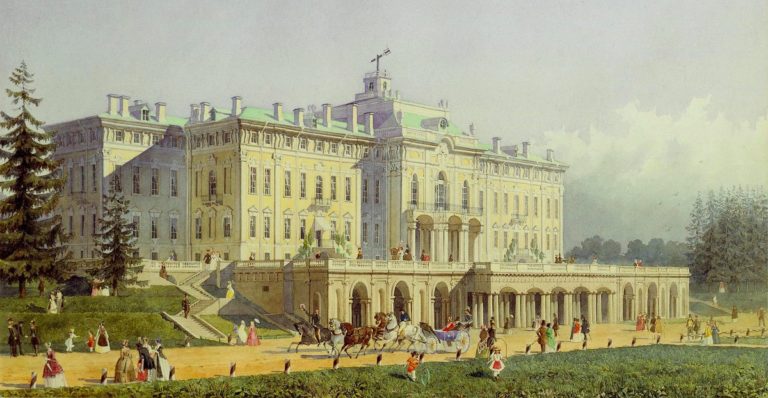
A 19th century painting of Konstantinovksy Palace, St. Petersburg
BY M. K. BHADRAKUMAR | INDIAN PUNCHLINE | OCTOBER 12, 2022
There was something profoundly meaningful that the President of the United Arab Emirates Sheikh Mohammed bin Zayed Al Nahyan undertook a visit to Russia amidst the gathering storms in Ukraine. Conscious of the symbolism, Russian President Vladimir Putin received Sheikh Mohammed on Tuesday in a grand setting befitting a monarch — at the gorgeous Konstantinovksy Palace in St. Petersburg whose heritage dates back to Peter the Great, a symbol of the revival of Russia and its cultural heritage.
The meeting of the two potentates couldn’t have been more timely. Sheikh Mohammed and his Saudi kinsperson, Crown Prince and Prime Minister Mohammed bin Salman Al Saud had just handed down a strategic defeat to a superpower in the geopolitics of oil, as the world community witnessed disbelievingly and understood that the sun has set on the American Century in international politics.
Putin too stands at the threshold of a historic victory over the combined might of the North Atlantic Treaty Organisation, which is poised to redraw the contours of the new world order. Putin told Sheikh Mohammed that the relations between Russia and the UAE are “an important factor of regional and overall global stability.”
Putin said, “I know that you are concerned about the entire situation that is developing, and I know about your desire to make a contribution to resolving all contentious issues, including the ongoing crisis in Ukraine. I would like to note that, indeed, this substantial factor makes it possible to use your influence to help gradually resolve the situation.”
The words were carefully chosen. Putin noted the UAE’s desire “to help gradually resolve the situation” in Ukraine, underscoring that a denouement is not in the cards in a near term. [Emphasis added.] However, the centrepiece of Putin’s remarks was something else — OPEC Plus where Saudi Arabia, UAE and Russia are virtually navigating the global energy markets.
Putin signalled that Moscow is not at all viewing the OPEC+ decision in zero sum terms. Rather, its aim is “to stabilise global energy markets, so that consumers of energy resources and those supplying them to global markets would feel calm, stable and confident, and so that supply and demand would be balanced.” Of course, embedded within this polite submission is a tough message to the G7 that any further attempt on their part to extend their weaponisation of sanctions to the global energy market is unacceptable and will be resisted and defeated.
These were Putin’s first remarks on the collective decision announced by the OPEC+ at its meeting in Vienna last Thursday to cut oil production by 2 million barrels per day. Putin concluded firmly that Russia will “respond to market requirements all the time, and we try to do this in line with current developments.”
Sheikh Mohammed unmistakably signalled that his visit focused on boosting its bilateral relations with Russia, especially in the economic sphere. As the western sanctions atrophy Russia’s flourishing economic ties with Europe, Moscow is turning to the non-Western world for partnerships, and reorienting its regional strategies. Putin has repeatedly stated that Russia will gladly engage with any country that stands up to western bullying.
The UAE has been quick to grasp that Russia prioritises the Emirates as a favoured destination to conduct business. The uniqueness of the UAE for Moscow lies in its dynamic environment for doing business as well as for opening a window for Russian industry to the Western world. Moscow has been receiving strong feelers from European partners about resuming business ties albeit indirectly. After all, the Russian market is synonymous with high business returns.
A crucial template here is Moscow’s appreciation of the growing emphasis by the UAE on preserving its strategic autonomy. The Russian elites admire Sheikh Mohammad for rapidly transforming the Emirates from an economy once reliant on fishing and pearls, to becoming a financial powerhouse and diverse economy, and providing a stable political system, strong capital flow, favourable taxation environment and liberal trade regimes.
Indeed, the UAE is now an attractive investment hub with a ‘2021 Vision’ of becoming the economic, touristic and commercial capital for over two billion people. As the Russians see it, these ambitious goals will continue to facilitate a hospitable, well-regulated and secure business ecosystem in the UAE. The World Bank’s Logistics Performance Index ranks the UAE among the top dozen out of 160 countries in terms of trade logistics.
Equally, Moscow does not envisage that it could be “business as usual” with the Europeans anytime soon — if ever. The the resuscitation of the West’s Nazi heritage to spite Russia and the destruction of the Nord Stream gas pipelines to punish Russia are only the culmination of an excessively obnoxious behaviour by the US and its allies to humiliate Russia over the decades — pouring scorn over its cultural heritages of language, literature, music, etc. out of sheer envy — in an appalling zest to “erase” Russia as a powerhouse. This has created deep wounds in the Russian psyche.
With 4,000 Russian companies operating out of the UAE, there is a rapidly growing Russian community in the Gulf region and Sheikh Mohammed noted that the Emirates will provide a friendly ambience for the Russian expatriates by approving the opening of the first Russian school in the Emirates. Conceivably, this must be the first such Russian school in that part of the world.
The Russian business community visualises the UAE as a prime launch-pad to access markets around the world. Its geographical location and amicable time zone (GMT +4), give businesses wishing to access markets in Africa, Asia and Europe a regional and business-centric hub from which to operate. Russia has set its sights high for expanding its relations with African countries, where it enjoys tremendous “soft power” dating back to the Soviet era.
In geopolitical terms, Sheikh Mohammed’s decision to travel to Russia to meet with Putin comes in the backdrop of the temper tantrums of the American political elites threatening to “punish” Saudi Arabia and the UAE. The Democrats have brashly called for the withdrawal of US troops in the UAE and Saudi Arabia and cutback on arms supplies.
These Neanderthal men ought to have become museum pieces by now. They do not comprehend that the West Asian elites have a cosmopolitan mindset and know these hollow men well enough, having interacted with them in their pristine years and watched stoically more recently as they began ageing, showing signs of exhaustion and senility.
By this visit to St. Petersburg, Sheikh Mohammed may have in his own astute way shown that such crude American threats will only be counter-productive. Earlier once, the Biden Administration had bullied him to sever the UAE’s relations with China to qualify for F-35 jets, whereupon, in disgust, he turned to France’s Rafale.
Russia, Saudi Arabia and the UAE have the potential to form a troika where each of the members augmented the political power of the other two members and at the same time collectively impacted the actual distribution of power in a multipolar world. The OPEC Plus has shown the way. Sheikh Mohammed’s meeting with Putin comes within the week of the OPEC Plus meeting in Vienna.
US lies when talking about peace proposals – Russian FM
By Lucas Leiroz | October 12, 2022
During a press conference on October 11, Russian foreign minister Sergey Lavrov severely criticized the recent American speech insisting that Moscow had rejected peace proposals allegedly offered by the West. The minister stated that no serious proposal was made by Washington, therefore there was no Russian unwillingness to negotiate peace.
Lavrov claimed that the Americans indeed made some calls but did not show any concrete peace proposals during the talks. According to him, not even these calls were ignored, having Moscow responded, showing willingness to continue the dialogue in order to seek the formulation of a specific plan that benefits both sides. However, the West has shown itself to be uninterested in initiating conversations in this direction.
“This is a lie [that Russia refuses to negotiate]. We did not receive any serious proposals to enter into contact. There were some not very serious calls, to which we also did not respond negatively, but offered to formulate specific proposals, with which some people want to contact us through indirect contacts. And in this case, we did not receive more specific explanations from anyone”, he said.
The day before Lavrov’s interview, US National Security Council spokesman John Kirby had publicly reiterated that Moscow was not responding to US calls for negotiations. Earlier, some US officials and journalists had already said that there would be no further dialogue as the Russian government was not interested in any proposals. But Russia does not endorse this narrative and claims that no US proposal has been presented.
Journalists also asked Lavrov for his opinion on the possibility of resuming peace talks with Turkey as a mediator, given the recent rumors that Ankara is planning a new negotiation for the conflict. According to Lavrov, no Russian official has yet received any information about such an initiative, but he made clear the Russian willingness to negotiate if the proposals seem reasonable. He stated that the meeting between Putin and Erdogan in Astana would be a good opportunity to clarify this topic.
Regarding the Ukrainian decision to not continue any form of dialogue with Russia and veto peace talks, Lavrov stressed that it does not seem to be something really resolute. For him, Zelensky’s decisions could change at any time, depending on a series of factors, mainly his “mood”, considering the instability already demonstrated by Zelensky so far, and the orders he will receive from the West in the near future. For Lavrov, if the Western powers order Zelensky to start peace talks, he will simply accept and ask to talk to Moscow.
“I do not rule out that he, as he forbade himself [to talk with Russia], will then forget about it, depending on his mood when he gets up in the morning and what he does. Well, or he will receive an order from Washington, from London – he will say ‘Yes’ and figure out how to explain all this so as not to lose face”, Lavrov said.
The veto of peace negotiations is precisely a consequence of orders received by the West, which is the side most unwilling to negotiate and which most seeks to escalate the conflict. So, if the opinion of Western leaders on the direction of peace talks eventually changes, it is actually expected that Zelensky will rethink the veto and suddenly ask to talk to Moscow.
The narrative that “Moscow does not want to negotiate” has been spread precisely in order to justify new actions in support to Kiev and Western active participation in the conflict. On many occasions, the West has made it clear that the longer the fighting lasts, the more beneficial this will be to NATO’s interests, because, given the impossibility of defeating Russia militarily, what is sought is simply to prolong the situation of security instability in the Russian strategic environment.
Since February, the Russian side has been the only one to actively pursue peace talks. To stop the special military operation, Moscow makes it clear that it only expects a list of requirements to be met. These requirements include some Russian territorial and political goals, such as the self-determination of Russian-majority regions and the demilitarization of Kiev. For Moscow, this is not an “expansionist ambition”, as the West says, but a real necessity, since present-day Ukraine is a direct threat against the Russian state.
For peace to emerge in Ukraine, the West must “authorize” Kiev to act sovereignly and negotiate with Russia proposals that meet the demands made by Moscow. There is no way to negotiate peace without fulfilling these requirements and what prevents Ukrainians from following them is precisely the order they receive from Western leaders to continue fighting in a war in which they have no chance of winning.
Lucas Leiroz is a researcher in Social Sciences at the Rural Federal University of Rio de Janeiro; geopolitical consultant.
You can follow Lucas on Telegram.
NATO once ‘lost’ underwater drone under Nord Stream, Gazprom reminds
Samizdat | October 11, 2022
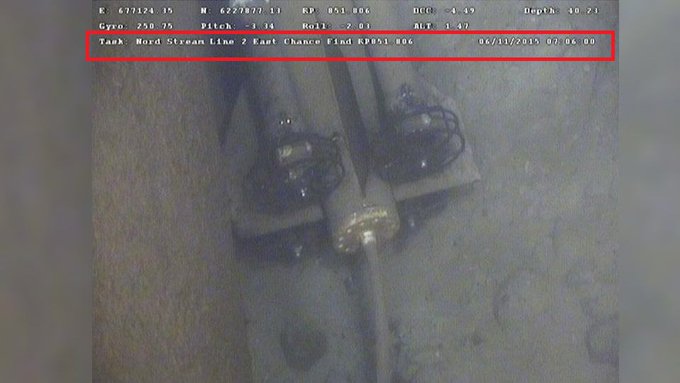
The US-led NATO alliance has been very active in waters around Nord Stream and once even managed to “lose” an armed underwater drone right under the pipeline, a Gazprom spokesman has said.
“On November 6, 2015, a NATO underwater mine destroyer ‘Seafox’ was discovered during a scheduled visual inspection of the Nord Stream gas pipeline,” Sergey Kupriyanov told Rossiya 24 on Monday.
The device was found resting on the seabed at a depth of 40m between the Nord Stream pipelines, almost directly under one of them, Kupriyanov said. The incident, which received limited media coverage at the time, prompted a brief halt in gas deliveries, while the drone was ultimately recovered by the Swedish military.
Back then, the US-led bloc said it had “lost” the device during military drills, the spokesman claimed. The German-made drone carries a 1.4kg shaped-charge warhead, which is intended for destroying sunken unexploded munitions and mines, according to publicly available data.
“That’s NATO drills for you, when a military-grade explosive device ends up straight under our pipeline,” Kupriyanov concluded.
The remarks come in the aftermath of the apparent sabotage attacks on the Nord Stream pipeline system. The Nord Stream 1 and 2 pipelines both abruptly lost pressure on September 26, following a series of powerful underwater explosions off the Danish island of Bornholm. The ruptures caused massive gas leaks into the open sea and rendered the pipelines inoperable.
While Moscow has called for an international – with its own participation – probe into the incident, other parties appear to be reluctant to carry out such an investigation. Sweden, for instance, has already explicitly stated it will not share the results of its investigation into the explosion with Moscow.
“In Sweden, our preliminary investigations are confidential, and that, of course, also applies in this case,” Swedish Prime Minister Magdalena Andersson told reporters on Monday.
Russian President Vladimir Putin has already blamed the “the Anglo-Saxons,” a Russian colloquialism for the US-UK alliance, of being behind the blasts, which Moscow described as an “act of international terrorism.” Speaking during a meeting of the Russian Security Council on Monday, Putin said that “we all know well who the ultimate beneficiary of this crime is.”
UK intelligence plotted Crimean Bridge bombing – Grayzone
Samizdat | October 11, 2022
Attacking the strategically vital Crimean Bridge was clearly not a new idea for Ukraine and its anti-Russia allies. In fact, UK intelligence officials reportedly commissioned a study in April examining ways to blow up the key transportation link across the Kerch Strait.
The secret plot was drawn up at the request of senior British Army intelligence operative Chris Donnelly, the Grayzone reported on Tuesday, citing internal documents and correspondence that the investigative journalism outlet obtained from an unidentified source. The stated goal was to destroy the bridge to cut off a key Russian supply route, isolate military forces in Crimea and temporarily block maritime access to the Sea of Azov.
The attack roadmap was titled, ‘Audacious: Support for Ukraine Maritime Raiding Operations’, and it was produced by UK military veteran Hugh Ward, according to the documents obtained by Grayzone. Donnelly, who’s also a veteran NATO advisor, called the plans “very impressive indeed.”
Ward laid out multiple options for blowing up the $4 billion bridge, including a cruise missile attack targeting concrete pillars on each side of the central steel arch. He also examined using divers or underwater drones to attach limpet mines to pillars at the “weakest part” of the structure.
Although last week’s attack on the bridge was carried out using a truck bomb, rather than the options discussed in the UK analysis, there are indications that British spies had shared their findings with Ukraine’s government “at the highest levels,” Grayzone said. The outlet obtained an email in which Donnelly forwarded the plans to Lithuanian Defense Minister Audrius Butkevicius.
Reached by phone, Ward didn’t deny that he prepared the attack plans for Donnelly, Grayzone said. “I’m going to have a chat with Chris and confirm with him what he’s prepared for me to release,” Ward told the outlet.
Although the Crimean Bridge is crossed by thousands of civilians daily, the UK study included no reference to avoiding non-combatant casualties. Saturday’s bombing, as it turned out, killed at least four civilians. Russian President Vladimir Putin called the blast a terrorist attack and indicated that Monday’s air strikes against infrastructure targets in Kiev and other Ukrainian cities were carried out in response to the bridge incident.
Ukrainian media outlets reported that the attack was perpetrated by the Security Service of Ukraine (SBU). Senior officials in Ukraine’s government celebrated the bombing and made jokes about it. The SBU posted a photo of the damaged bridge with a note saying, “The sun is rising, the bridge is burning beautifully.” Senior presidential aide Mikhail Podoliak posted a Twitter message calling the blast “just the beginning.”
Ukraine targets energy infrastructure in Russia – governor
Samizdat | October 11, 2022
The Ukrainian military struck an electrical substation in Russia’s southern region of Belgorod on Tuesday, local authorities have said. The attack on the facility, located in the village of Shebekino, sparked a fire at a transformer and disrupted power supply for some 2,000 people in the area.
Footage circulating online shows the transformer at the substation on fire, with a thick plume of smoke visible many kilometers away from Shebekino.
The attack inflicted only material damage with no injuries reported, according to local officials. It was not immediately clear whether the substation was subjected to artillery or rocket fire. The attack disrupted electricity supply in the area, with some 2,000 people affected. The local authorities promised to restore power within several hours.
The border areas of Russia’s Belgorod Region have repeatedly come under rocket, artillery and drone attacks by Ukrainian forces amid the ongoing conflict. The latest incident comes a day after the Russian military launched a massive missile attack across Ukraine, targeting infrastructure and military installations.
The strikes came in retaliation for Kiev’s terrorist activities and repeated attempts to target Russia’s critical civilian infrastructure, in particular the attack on the Crimean Bridge over the weekend, Russian President Vladimir Putin said.
Russia sent troops into Ukraine on February 24, citing Kiev’s failure to implement the Minsk agreements, designed to give the regions of Donetsk and Lugansk special status within the Ukrainian state. The protocols, brokered by Germany and France, were first signed in 2014. Former Ukrainian president Pyotr Poroshenko has since admitted that Kiev’s main goal was to use the ceasefire to buy time and “create powerful armed forces.”
In February 2022, the Kremlin recognized the Donbass republics as independent states and demanded that Ukraine officially declare itself a neutral country that will never join any Western military bloc. Kiev insists the Russian offensive was completely unprovoked.
Russia to nationalize assets of Japanese carmaker – trade ministry
Samizdat | October 11, 2022
Japanese carmaker Nissan will sell all its Russian assets to state-owned research and development firm NAMI, the trade ministry has said.
The deal, worth a symbolic sum of €1, was approved by the Japanese corporation and includes a plant in St. Petersburg and sales and marketing facilities in Moscow.
“We have managed to reach a formant where the enterprise remains operational. Key competencies, the production cycle and jobs are preserved,” Russia’s Trade Minister Denis Manturov said in a statement on Tuesday.
Nissan has some 2,000 employees in Russia and after the transfer is completed NAMI will be able to attract other companies as production partners to create joint ventures.
According to the minister, Russian carmaker AVTOVAZ will carry out maintenance services for Nissan vehicles, as well as supply spare parts. The deal will give Nissan the right to buy back the business within six years, the trade ministry said.
The scheme is almost identical to the withdrawal of Renault, a member of an alliance with Nissan. In May, the French carmaker’s 68% stake went to NAMI and its factory in Moscow, which produced cars under the Renault and Nissan brands, was transferred to the city government.
Meanwhile, Nissan reported on Tuesday an estimated loss of $686.2 million from leaving the Russian market.
In 2009 the manufacturer started producing SUV models such as the X-Trail and the Qashqai at its plant in St. Petersburg. The Japanese carmaker suspended production there in March due to supply-chain disruptions, following the conflict in Ukraine.
Moscow aims to ensure balanced global energy market
Samizdat | October 11, 2022
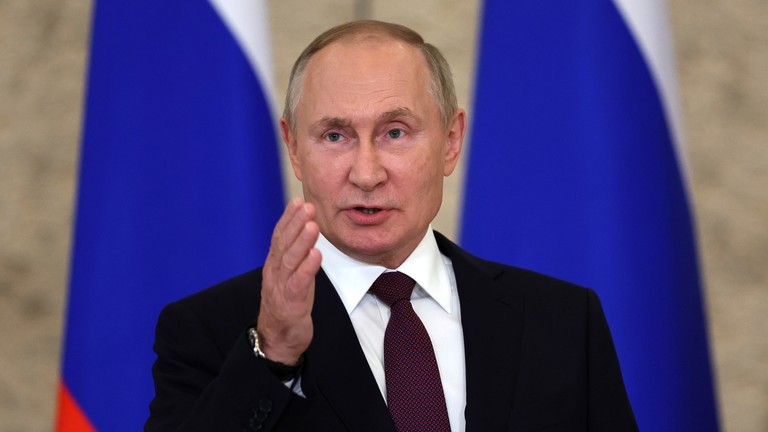
Russia’s actions regarding energy resources are aimed at ensuring market stability, and not creating obstacles for anyone, President Vladimir Putin said on Tuesday while meeting with his UAE counterpart, Mohammed bin Zayed Al Nahyan, in St. Petersburg.
The leader of the UAE is on an official visit to Russia to discuss cooperation between the two countries, as well as regional and international issues.
“We are actively working within the framework of OPEC+. I know your position, our actions, our decisions are not directed against anyone … They are aimed at stability in the world energy markets, so that both consumers of energy resources and those involved in their production, as well as suppliers feel calm, stable and confident. So that the supply and demand will be balanced,” Putin said.
Last week, the Organization of the Petroleum Exporting Countries and allies (OPEC+) agreed to an oil production cut of 2 million barrels per day starting in November. The reduction, which is the largest output cut since early 2020, was approved despite US pressure to pump more. It is expected to stem the latest slide in global oil prices.
US President Joe Biden expressed disappointment with the decision, and Treasury Secretary Janet Yellen called the move “unhelpful and unwise.”
Russian Deputy Prime Minister Aleksandr Novak, who attended the OPEC+ meeting, said that the output cut is necessary to balance the market before the seasonal decline in demand.
According to Kremlin spokesman Dmitry Peskov, Washington seeks to force through its decisions regarding the oil market and manipulate prices, even at the cost of destabilizing the global energy market.
Analysts interviewed by Bloomberg warn that the output cut may lead to a jump in oil prices above $100 a barrel and force the US to tap its strategic reserves. They also believe that Russia may introduce even larger output cuts than those announced by OPEC+ in response to the introduction of an oil price cap by the EU last week. Given the rise in oil prices, Russia’s oil export profits are unlikely to suffer even with production cuts, they say.
Russia’s retaliatory strikes mark new phase of conflict in Ukraine
Kiev is unlikely to change its behaviour and will continue to carry out orders from the West
By Ahmed Adel | October 11, 2022
Continued strikes against Ukrainian infrastructure following the terrorist attack on the Kerch Bridge, more commonly known as the Crimean Bridge, can cause serious damage to Ukraine’s industry and significantly reduce the country’s combat capability. Russian strikes hit energy facilities in 12 regions across Ukraine on October 10, affecting power, internet and central heating, and in which Ukraine’s energy minister Herman Halushchenko described as “the biggest [attack] during the entire war.” In fact, the Russian strikes were so powerful that the Ukrainian energy ministry said in a statement that it must halt exports of electricity to the European Union.
“Today’s missile strikes, which hit the thermal generation and electrical substations, forced Ukraine to suspend electricity exports from Oct. 11, 2022 to stabilise its own energy system,” the ministry said.
It cannot be discounted that some factories involved in the production of weapons or the repair of military equipment could have been affected by the Russian strikes. Greater disruptions to Ukraine’s electrical infrastructure will inevitably also lower the combat capabilities of the Ukrainian military, which will also have an effect on mobility, replenishment of reserves, transportation and repair of equipment.
The retaliatory strikes occurred immediately after the statements made by Russian President Vladimir Putin on October 9. Symbolically, the Ukrainians discussed that they would give Putin “a gift” for his birthday, which is on October 7. On October 8 the Kerch Bridge was attacked. The terrorist strike was even commemorated in Kiev with the issuing of a postal stamp, even though three civilians were killed.
On October 10, at a working meeting with members of the Security Council, Putin announced that a series of high-precision missile strikes from air, sea and land targeted infrastructure throughout Ukraine. The Russian president then described the incident on the Kerch bridge as a terrorist attack aimed at destroying civilian infrastructure. According to him, Ukraine has placed itself on the same level as the most feared terrorist groups across the world, such as ISIS, and Russia simply cannot allow crimes of this kind to go unanswered.
For his part, Commander Apti Alaudinov commented on the recent air strikes against Ukraine’s military and energy infrastructure, noting that Russia could have carried them out a long time ago.
“Ukraine for many years – eight years – has tested the nerves of both Russia and the territories inhabited by the Russian-speaking community… It is a pity for those who may have to suffer the attacks, innocent people… but in the end, the people must understand that their leaders get mad and throw all their people into the furnace of war. It’s impossible that everything will be fine with them when something bad happens to us,” he said.
Strikes against Kiev and other parts of Ukraine signals a new phase of the war after Russia made all efforts to find a peaceful solution. It is recalled that there were also widespread reports that Moscow was ready for a peace agreement, but it was prevented by the arrival of then UK Prime Minister Boris Johnson to Kiev, who quite literally destroyed such plans.
It is little surprise that endless statements from Kiev, Washington, Brussels and London repeat that the only solution to ending the war is with Russia’s defeat. Effectively, the Russians have no one to negotiate with as none of the major parties are interested in a peaceful solution. On the contrary, there was an escalation by Ukraine since there was a terrorist attack on civilian infrastructure.
Effectively, Russia is forced to launch a real war, which will be far more devastating for Ukraine, especially since Moscow has refrained from major strikes for all these months.
Even with the assassination of Russian citizens, such as Darya Dugina, Moscow remained restrained with its responses. However, the Kerch Bridge, as already proven, is a line which Russia will not allow to be crossed without retaliation.
Strikes and military action will continue until there is a change in the situation and Kiev’s attitude towards Moscow. It is more than likely that the decision to target the Kerch Bridge was not concocted in Kiev and is rather an attempt by the West to humiliate Russia when considering the date of the bridge attack was carefully chosen and the media covered this terrorist act with a birthday greeting to Putin.
Even after Russia’s actions, Kiev itself will not change its behaviour and will continue to servilely carry out orders from the West and act according to the goals that are in line with Washington’s political strategy. The Ukrainian army enjoys material, logistical and intelligence support from the West, and its ranks include special forces from Romania, Poland and other NATO countries. For these reasons, Russia is moving the war into the next phase, especially as NATO is directly participating in military operations and civilian infrastructure are being targeted in terrorist attacks.
Ahmed Adel is a Cairo-based geopolitics and political economy researcher.
Featured Video
Death Spikes & Rising Cancer In Our Youth Explained
or go to
Aletho News Archives – Video-Images
From the Archives
Politicians lie
By Mazin Qumsiyeh | Popular Resistance | August 18, 2013
There is no way to say this truth nicely: Politicians lie. That includes Japanese, American, Egyptian, Israeli, and Palestinian politicians! Is there something more common sense than that? Yet, so many citizens around the world believe their own politicians or wistfully acknowledge lies but think it is part of the job needed to run things. They believe even when politicians contradict themselves blatantly. This phenomenon is rather remarkable. It is a dissonance and disconnect from reality that many seem oblivious to. It is very dangerous because it can lead to accepting rationales for going to war. These can be deadly wars that lead to millions of lives lost as happened in what was called World War 1 and WW2. Even when incredible and declassified evidence abound, politicians continue to lie and old mythologies refuse to die. Here are just a few of the countless lies told to us over the past few decades… continue
Blog Roll
 Aletho News
- RSF military group defects, joins Sudanese army: State media
- Ireland goalkeeper refuses to play ‘Israel’ as squad weighs boycott
- China pushes back against US on Cuba, Iran
- Ukrainian Soldiers, Potential Mercenaries: Have Gun, Will Travel!
- Burnham’s UN debut… A masterclass in British disinformation
- Iran flights continue despite US aviation sanctions
- Global Tipping Points Lead the World Into a State of Entropy
- The day-after at the White House: USA and Xi Jinping
- The Geopolitical Balance in the Red Sea: The UAE Being Displaced by New Players
- Iraqi resistance group vows to stage airport sit-ins over Iran aerial blockade
- If Americans Knew
- Deconstructing Netanyahu’s pants-on-fire UN rant – Daily Update
- Trump betrayed voters with his campaign lies and prioritized a foreign country once he took office
- Netanyahu calls Israel’s war in Gaza ‘opposite of genocide’ in UN speech to near-empty hall
- Settler Kidnappings: Torture, Sexual Abuse and Terrorisation of Palestinian Abductees as Israel Deepens Annexation of West Bank
- Gaza winter nears as 162,000 tents become unusable, raising fears of humanitarian crisis
- Netanyahu says, “It’s the opposite of genocide”; UN says Gaza economy is world’s ‘most severe crisis on record’ – Daily Update
- Israel’s US-Backed Assault on Gaza Has Created the ‘World’s Most Severe Economic Crisis on Record’: UN
- ‘Protecting U.S. Citizens’… From Israel
- ‘This is where I live now, the back of a truck’: a day in the life of a grandmother in Gaza
- In UN Speech, Iran’s President Displays Pictures of Children Killed by US, Brings Attention to Israel’s Nuclear Arsenal
- No Tricks Zone
- New Study: Earth And Venus Surface Warmth Largely Explained By Convection And Lapse Rate, Not CO2 Or Radiation
- 2025 Nature Paper Claiming Worsening Global Drought Gets RETRACTED …Heavily Flawed
- New Study: ‘Global Drought Shows No Detectable Recent Acceleration Under Climate Warming’
- Economic Masterminds: German Socialists Suggest Taxing Productivity Gains Stemming From Using AI
- The South China Sea Has Not Been Cooperating With The Climate Change Narrative
- Energy Crisis: Germany Enters Heating Season With Historically Low Gas Reserve Fill Levels
- New Study: The Antarctic Ice Sheet Gained Mass From 2020-2024 Due To Staggering Snow And Ice Accumulation
- Study: Ocean Heating Rates From Thousands Of Years Ago ‘Dwarf’ Modern Ocean Heating Rates
- Climate Extremists Target, Attack Large-Scale Power Grid Infrastructure In Germany!
- New Study: Antarctic Ice Melt Has Contributed Less Than 1 Centimeter To Sea Level Rise In The Last 30 Years

