Russia comments on Ukrainian grain exports
Samizdat | May 31, 2022
Russia is not preventing ships from transporting grain out of Ukraine, Foreign Minister Sergey Lavrov said on Tuesday, and Western claims to the contrary are part of a smear campaign that will do nothing to solve the global food crisis.
The only party actually preventing ships from using Ukrainian ports and exporting grain by sea is Ukraine itself, he added, because it deployed sea mines that have made navigation unsafe.
“If the demining problem is solved, then in the open sea… the Russian Navy will ensure unrestricted movement of ships to the Mediterranean,” Lavrov said during a press conference.
“Russia had made all the guarantees it could make a long time ago,” he added.
The foreign minister suggested that Western politicians who have expressed concerns over surging food prices should do something to address the problem. After all, Western sanctions have disrupted the logistical and financial infrastructure that Russia uses to export its own grain, he said.
“They should have some thought and decide what is more important to them: Milking publicity from the issue of food security or solving this problem.”
Lavrov was responding to criticism from the US and its allies, who claim that a Russian naval blockade is preventing grain exports from Ukraine. The Russian military says a corridor in the Black Sea is available for civilian traffic every day.
Five killed by Ukrainian shelling of schools and residential buildings – Donetsk authorities
Samizdat | May 30, 2022
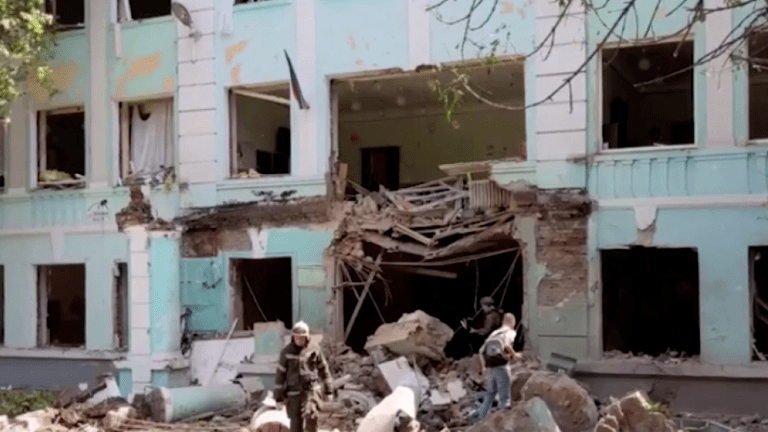
Ukrainian shelling of Donetsk has left at least five people dead, and 18 others injured, local authorities of the Donetsk People’s Republic (DPR) said on Monday. According to local officials, a teenage girl is among the fatalities. The strikes damaged several civilian facilities in the city, including schools and residential buildings.
Preliminary reports allege that US-supplied artillery may have been used in the attacks. In one home, two 14-year-old girls were hurt, Mayor Aleksey Kulemzin said. One of them died while the other one was taken to hospital.
Three civilians were killed, and a dozen others injured at two schools, the mayor claimed. Two people were in serious condition, he added.
The headmistress of one of the schools, Olga Rachinskaya, told the media that many of the teachers “were lacerated with shrapnel”. She said the two workers who were killed were elderly.
“This is just an ordinary school. There is nothing military here, nothing,” she said. Luckily, Donetsk schools teach remotely, so students were not in the classrooms when the shells hit, according to the educator.
The DPR defense HQ said Ukrainian troops fired at least two Smerch rockets armed with cluster munitions and also used 155mm artillery in the shelling.
On Monday, Mayor Kulemzin speculated that the Ukrainian troops may have used US-supplied 155mm M777 howitzers in the assault. “This is heavy weaponry, most likely the American delivery,” he told Russian television when describing the attacks. He claimed some of the shell fragments discovered on the ground had markings in English.
The US and its allies have reportedly supplied about 100 towed artillery guns to Ukraine, ramping up their military aid with heavier kinds of weapons. Kiev may soon receive US-made multiple launch rocket systems too, adding them to the weapons from Soviet stockpiles that it currently possesses, according to media reports.
Commenting on the news coming from Donetsk on Monday, Kremlin spokesman Dmitry Peskov said Ukrainian attacks on civilian infrastructure in DPR were “outrageous.”
“This is exactly what our warriors are fighting against. To make such things stop,” he said, branding the perpetrators “neo-Nazis”.
Russia attacked Ukraine state in late February, following its failure to implement the terms of the Minsk agreements, first signed in 2014, and Moscow’s eventual recognition of the Donbass republics of Donetsk and Lugansk. The German- and French-brokered protocols were designed to give the breakaway regions special status within the Ukrainian state.
The Kremlin has since demanded that Ukraine officially declare itself a neutral country that will never join the US-led NATO military bloc. Kiev insists the Russian offensive was completely unprovoked and has denied claims it was planning to retake the two republics by force.
Lavrov: Recent Sanctions Unlikely to Be Lifted, This Is What US Is Telling Allies Behind Closed Doors
Samizdat | May 29, 2022
Russian Foreign Minister Sergey Lavrov says that the latest Western sanctions against Russia were prepared long ago and are unlikely to be lifted.
“The speed with which they were introduced and their volume indicate that they were not created overnight, they were being prepared for quite a while. It is unlikely that these sanctions will be lifted,” Lavrov said in an interview with French broadcaster TF1.
“At least, the US, not publicly but during contacts with its allies, says that when all this [the crisis in Ukraine] is over the sanctions will remain anyway,” Lavrov added.
Lavrov noted that in the wake of these revelations, it’s clear the West’s main priority isn’t defending the Ukrainian regime, which he described as a mere “bargaining chip,” but about curbing Russia’s development. According to the diplomat, the US considers Russia an obstacle to its goal of establishing a unipolar world – a vision “which Washington proclaimed with the submissive consent of Europe.”
According to him, the West was also indifferent to the fact that Ukraine publicly refused to comply with the UN Security Council resolution urging the implementation of the Minsk Accords signed by France and Germany.
At the same time, Lavrov noted that liberating Donbass remains a top priority.
Russia launched a military operation last month with the stated goal of putting an end to war crimes committed by Ukrainian troops against civilians during an eight-year offensive against Donbass. President Vladimir Putin said that for eight years, people in Donbass have been subjected to what he called a “genocide” by the Kiev regime.
Iran seizes Greek tankers after US ‘piracy’
Samizdat | May 27, 2022
Iranian soldiers seized two oil tankers flying the Greek flag in the Persian Gulf on Friday, while Tehran protested the confiscation of one of its own vessels in Greek waters earlier this week, calling it US “piracy.” Washington reportedly plans to sell the ship’s oil cargo, which was confiscated under sanctions targeting Russia.
Islamic Revolutionary Guard Corps (IRGC) Navy troops used helicopters to board the tankers Delta Poseidon and Prudent Warrior on Friday, the industry monitor Lloyd’s List reported. The ships were “later escorted by naval vessels from international traffic lanes to Iranian waters a few miles off the coast,” according to the same source.
The Greek Foreign Ministry confirmed the seizure of the two vessels and demanded their release. Iranian media likewise confirmed the capture of the ships, making clear it was reprisal against the actions of the government in Athens. More than 25% of the world’s tankers fly the Greek flag.
“The Islamic Republic has decided to take punitive measures against Greece after it seized an Iranian tanker and let the US government confiscate its crude oil,” reported Nour News, an outlet affiliated with the IRGC.
Meanwhile, the Iranian Foreign Ministry had summoned the ambassador of Switzerland – which represents US interests in Tehran – to protest the seizure of the Iranian-flagged tanker Pegas in Greek waters on Wednesday.
“The Islamic Republic expressed its deep concern over the US government’s continued violation of international laws and international maritime conventions,” according to the state news agency IRNA.
Iran’s Ports and Maritime Organization said the tanker had sought shelter along the Greek coast from bad weather after experiencing technical problems, and called the seizure of its cargo “a clear example of piracy.”
While the US government did not officially comment, Reuters reported on Thursday that Washington was planning to take the oil to the US on board another vessel, quoting three sources familiar with the matter.
The US has sanctioned Iran’s oil exports and previously seized Iranian tankers bound for Venezuela, citing its sanctions against Caracas. The capture of Pegas, however, seems to be related to sanctions against Moscow.
Pegas was previously owned by the Russian company Transmorflot and was sanctioned by the US on February 22, two days before the hostilities in Ukraine began. Transmorflot itself was sanctioned on May 8, but Pegas – renamed Lana on March 1 – was already under Iranian ownership by then and has been flying Tehran’s flag since May 1.
The Globalists’ Race Against Time
By Eamon McKinney | Strategic Culture Foundation | May 26, 2022
The green economy, de-industrialisation, digital health passports, Central Bank digital currencies, these are all core components of the Globalists’ plan for the Great reset. The WEF has painted a picture of their proposed future via Klaus Schwab and his acolytes. “We will have nothing, own nothing and be happy”. The main obstacle to this grand vision is that not surprisingly very few countries wish to go along with it. The Globalists know their game is coming to an end and the Great Reset is their way of ensuring that the same financial cabal that has brought the world to its current lamentable state will continue to rule over all in the next world order. The most prominent objectors to this insidious plan are of course Russia and China. Unlike their western counterparts both have strong leaders who enjoy popular support, have strong economies and are optimistic about future prospects for growth. Neither intends to sacrifice their countries so that Western elites can maintain their control over the Global economic system and impose their self-serving will on weaker nations. Which in its simplest terms is why both countries need to be destroyed, at least economically before the Great Reset can be imposed on the world. Time, however, is not on the Globalists’ side, recent events have demonstrated that they are aware of this and are accelerating their timelines.
The Great Reset and its stated objectives have been in the planning for several years, those plans however are now seriously behind schedule. The election of Trump in 2016 wasn’t supposed to happen. He was to Washington the ultimate “Black Swan” event. An outsider without the backing of a political party and with seemingly the entire mainstream media against him, his victory was considered all but impossible. Yet win he did, and it seemed he spent the entire four years of his presidency battling against the Globalist faction, both internationally and within America. Washington felt cheated, not only was Trump an “outsider” he was also a disrupter. Opinions on the divisive Trump aside, he was indisputably an “America First Nationalist”, he was anti-NATO. and a vocal anti-Globalist. There would be no Great Reset under Trump, he was an obstacle to the agenda and had to be removed. Which in 2020 in a blatantly fraudulent election he was. Should Trump run again in 2024 and all indications are that he will, he would likely win an honest election in a landslide. The return of Trump would provide another major obstacle to the Globalist agenda. Expect that all efforts will be expended to prevent another Trump presidency. With an angry populace and increased electoral scrutiny next time around, they may have to turn to other measures to foil a Trump return. Should Trump re-enter the White House in 2024, the notoriously vindictive Trump is expected to seek accountability against those who he believes robbed him of his rightful election. Nerves are frayed in Washington and they know the clock is ticking.
Trump set the agenda back four years and they are now playing against the clock to make up for lost time, all evidence suggests that they are getting increasingly desperate. The recent invitations issued to Sweden and Finland to “fast track” NATO membership is yet another provocation to Russia. Putin wants to end the Ukraine conflict on his own terms and withdraw, not get bogged down in a quagmire that would drag on for years. NATO wants exactly that. Wooing Sweden and Finland is their attempt to ensure years of conflict and tension. Putin understands this all too well. As they lurch from one bad idea to another, attention should be paid to the indecent haste in which they are moving. It appears they are making things up as they go along, all without any obvious sense of consequence.
The prospect of Trump 2.0 is not the only time sensitive issue facing the Globalists. The global economy is on the brink of implosion. Sri Lanka has recently defaulted on its international debts. This will immediately create at least a $500 billion hole in the global economy. Alarmingly, according to the World Bank more than 70 other countries are in a similarly perilous economic condition. For most their debts are un-payable, and the IMF solution of structural adjustment (austerity) privatisations, and cuts to government services, would consign these countries to generations of deprivation and social unrest. Or, they could repudiate the debt completely and abandon the Western banking model. Both China and Russia have alternatives to SWIFT and welcome countries who want to escape the neo-liberal financial plantation. Both offer investment for development, non-interference and respect for countries’ sovereignty. All things valued by every country, but unachievable under Western domination. Decisions will very soon be made by countries throughout the Global south about who they want to align their futures with.
A new proposal being put before the UN on May 22nd essentially requires all nations to surrender their sovereignty to the WHO in the event of another pandemic. That they would even think that post-Covid the WHO enjoys that level of confidence, is delusional. This transparent power grab is easily recognised for what it is, in the unlikely event that it gains enough traction, expect another pandemic to follow shortly after. The cabal still has the tools to cajole, bribe and threaten countries to submit, and doubtless it will try, but outside of the captured western countries, such a desperate move will garner scant support. Covid failed to usher in the Great Reset but it unleashed a wave of destruction on the global economy that may take generations to repair. Many questions on the criminal mismanagement of Covid remain unanswered. There are few nations that don’t harbour deep resentment towards the notoriously corrupt and inept WHO and its genocidal Sugar Daddy Bill Gates. The sheer audacity of the proposal stinks of desperation. The upcoming vote is likely to give the Globalists another stark reminder of its waning power and influence.
A Great Reset will happen, just not the one intended by the Globalists. They may have to settle for the Great Decoupling instead. As Western influence continues to diminish at a rapid pace the trend of countries flocking to the China/Russia orbit is bound to increase. The NWO that they have been lusting after for generations is likely to be restricted to Western Europe and North America, or about 15% of the World’s population. The effects of the disastrous Ukraine provocation and the failed sanctions will soon become undeniable. Food and energy shortages together with uncontrollable inflation, will make even this smaller NWO harder to control. The Emperor has no clothes, as all can now see, their game is old, tired and predictable, and they have no new ideas. The Globalists may not have to worry about a Trump return in 2024. It is highly likely that the clock will have run out on them by then. It could happen any day.
Indo-Pacific power dynamic in radical shift
BY M. K. BHADRAKUMAR | INDIAN PUNCHLINE | MAY 27, 2022
The joint air patrol over the waters of the Sea of Japan and the East China Sea on Monday by an air task force composed of Russian Tu-95MS capable of carrying nuclear weapons and Chinese H-6K strategic bombers couldn’t have been a knee-jerk reaction to US President Joe Biden’s Asia tour, leave alone his provocative remarks conjuring up an apocalyptic US-China war over Taiwan.
The Chinese Defence Ministry spokesman Senior Colonel Wu Qian pointed out that this has been the fourth strategic patrol jointly conducted by Russia and China since 2019, with the purpose of testing and improving the level of coordination between the two air forces, and promoting the strategic mutual trust and practical cooperation between the two militaries. As he put it, “This operation does not target any third party, and has nothing to do with the current international and regional situation.”
That said, perceptions do matter in strategic posturing and Japan’s defence minister Nobuo Kishi has enthusiastically rushed to endorse an interpretation that the timing of the Chinese-Russian operation had something to do with the QUAD summit taking place in Japan on that very same day.
Conceivably, Kishi was on a cover-up, distracting attention away from the new geopolitical reality in the Far East. Indeed, the rebirth of militarism and revanchist sentiments in Japan, in a historic departure in the country’s post-World War 2 pacifist posture, with overt American encouragement and backing, provides the broader context for a Sino-Russian congruence. Ominously enough, Japan has lately switched to a diplomatic idiom to refer to the Kuril Islands as “occupied” territory, implying that Russia is an aggressor — although the historical truth may be vastly different.
Again, Japan has been flexing muscles lately as a ‘front-line state’ in imposing sanctions against Russia (including against President Putin) although in all of its history or politics or geography, the land of the rising sun has had nothing to do with the Russian borderlands in Ukraine. Above all, Japan has been overzealous in drawing a fanciful comparison between the situation around the Taiwan Straits and Ukraine.
Whichever way one were to look at it, Monday’s operation displayed a very high level of military cooperation between China and Russia at a juncture when the two countries are facing new provocations and added pressure from the US. Quite obviously, Beijing pooh-poohs the US Defence Secretary Lloyd Austin’s declaration in late April that Washington wanted to see Russia weakened militarily “to the degree that it can’t do the kinds of things that it has done in invading Ukraine” and will be unable to recover quickly.
Given the close foreign-policy coordination between China and Russia, it is entirely conceivable that Beijing has an insightful knowledge of the actual state of play in Russia’s special operation in Ukraine.
On the other hand, it is a reasonable surmise after Monday’s joint strategic air patrol by China and Russia on Monday that Beijing has pushed back the Western attempts to browbeat it on the Ukraine issue. Clearly, on Monday, Beijing was risking “a major reputational damage ,” in the western world — to borrow the threatening words of the EU’s executive president Ursula von der Leyen after “a very frank and open” videoconference with the Chinese leadership in early April.
What emerges are three things. One, Beijing continues to adhere to the letter and spirit of the joint statement of February 4 with Russia on the International Relations Entering a New Era and the Global Sustainable Development which was issued during President Vladimir Putin’s meeting with Chinese President Xi Jinping in Beijing. Two, in the Chinese perspective, the three-month old Russian operation in Ukraine, which began on February 24, has not changed the current imperatives of the international situation characterised by rapid development and profound transformation where “Some actors representing but the minority on the international scale continue to advocate unilateral approaches to addressing international issues and resort to force; they interfere in the internal affairs of other states, infringing their legitimate rights and interests, and incite contradictions, differences and confrontation, thus hampering the development and progress of mankind, against the opposition from the international community.” (February 4, 2022)
Third, Moscow and Beijing are circling the wagons, so to speak, in the Far East. Evidently, the Ukraine conflict is not preventing the US from pushing ahead with the NATO expansion and there is every reason to believe that the alliance’s next ‘line of defence’ will be moved to the South China Sea. The Russian Foreign Minister Sergey Lavrov pointed out on Thursday that belligerent western politicians are stating publicly that the alliance should have global responsibility, and that NATO should be responsible for the security in the Pacific region. Moscow and Beijing cannot be faulted if they anticipate that major decisions in this regard are expected at the forthcoming NATO summit meeting in Madrid on June 28-30.
The Chinese Foreign Ministry spokesman said on Thursday that “NATO has publicly stated on many occasions that it will remain a regional alliance, it does not seek a geopolitical breakthrough and it does not seek to expand to other regions. However, in recent years, NATO has entered the Asia-Pacific region repeatedly. Some NATO member states keep sending aircraft and warships to carry out military exercises in waters off China’s coast, creating tensions and disputes. NATO has been transgressing regions and fields and clamoring for a new Cold War of bloc confrontation. This gives ample reason for high vigilance and firm opposition from the international community.”
Russia and China have given up hopes of any moderation in the US’ adversarial mindset. Russian Foreign Minister Sergey Lavrov said today, “The West has declared total war against us, against the entire Russian world. Nobody even hides this fact now.” For the first time since 2006, Russia and China on Thursday vetoed a US-drafted United Nations Security Council resolution to strengthen sanctions on North Korea.
In and address on Tuesday at Georgetown University, titled The Administration’s Approach to the People’s Republic of China, designed to rally the international community to deter and counter China, US Secretary of State Antony Blinken stated that the coalition that Washington mustered to counter Russia in Ukraine presents a model both agile and well-resourced in how to face future challenges from China.
China, Russia Veto US-Sponsored UNSC Resolution on North Korea
Samizdat | May 26, 2022
The UN Security Council failed to reach common ground on new sanctions against Pyongyang on Thursday. Washington proposed the sanctions in the wake of North Korea’s latest missile test this week, on the heels of US President Joe Biden’s Asia tour.
The vote came just a day after North Korea was accused of test-launching its largest intercontinental ballistic missile and two others. Ahead of the vote, US Ambassador Linda Thomas-Greenfield called for unity in the face of “a threat to the entire international community.”
However, China and Russia vetoed new sanctions on humanitarian grounds, pointing to their futility and even “inhumanity,” as North Korea struggled to contain a massive Covid-19 outbreak.
The UNSC imposed sanctions on North Korea back in 2006, following its first nuclear test, and has tightened them over the years. Since the latest round of restrictions in 2017, Moscow and Beijing have increasingly been arguing that further pressure is a road to nowhere and unlikely to force Pyongyang to disarm unilaterally.
“We do not think additional sanctions will be helpful in responding to the current situation. It can only make the situation even worse,” China’s UN Ambassador Zhang Jun said on Thursday.
“We have repeatedly said that the introduction of new sanctions against the DPRK is a dead end,” said Russia’s representative Vasily Nebenzya. “We emphasized the fallacy, inefficiency and inhumanity of sanctions pressure on Pyongyang.”
The new resolution sought to cut North Korea’s already limited imports of crude oil and refined petroleum products by another 25 percent, impose additional maritime sanctions, and ban the country from exporting mineral fuels, oils and waxes. Washington also proposed a global asset freeze on the state corporation that supervises North Korean laborers overseas, as well as the Lazarus hacking group, accused of “cyberespionage, data theft, monetary heists” on behalf of the Pyongyang government.
Pyongyang has for years accused Washington and Seoul of “hostile policy” towards the North, and vowed to maintain a sufficient level of deterrence. Regional tensions somewhat improved during the presidency of Donald Trump, with Pyongyang temporarily halting its missile tests. However, the two much-hyped summits between the US and DPRK leaders in 2018 and 2019 reached no lasting agreement on the subject of sanctions or denuclearization.
Biden has returned to the more hostile posture of his predecessors, while North Korea’s Kim Jong-Un has responded in kind, by firing off over a dozen of ballistic missiles this year alone and warning that the DPRK not only has a “firm will” to continue with its “nuclear deterrent” program but will use such weapons “preemptively,” if forced to.
New South Korean President Yoon Suk-yeol similarly ran on a more hawkish platform than his predecessor Moon Jae-in.
US infiltrated post-Soviet states with biolabs – Russia
Samizdat | May 26, 2022
In the 1990s, post-Soviet nations were weak and inexperienced while the US had the guile and resources to find footholds in them, Russian Foreign Minister Sergey Lavrov told RT Arabic. Washington took advantage of that, establishing a webwork of biolabs that Russia believes to be conducting military research, he explained in an interview.
The collapse of the USSR left in its wake nations that were poor and in desperate need of even the most basic necessities, which left them open for the US to exploit, Lavrov said.
“Our Western partners then, so to speak, vigorously scrambled. They offered their services in every aspect and infiltrated every area of the newly-independent states. They sent advisers. And now we are experiencing what came as a result of those times,” the minister said.
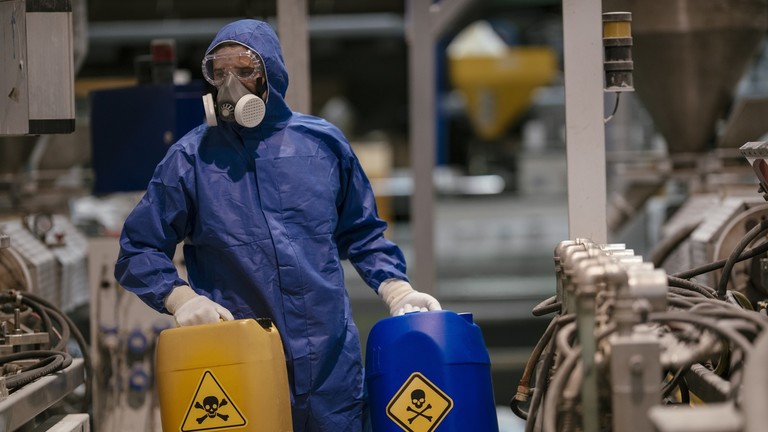
In particular, the diplomat was referring to US-funded labs that many post-Soviet states host in their territory. Operating under the umbrella of the Pentagon’s Defense Threat Reduction Agency, they conduct biological research.
Washington says the network is benign and serves to detect and identify emerging pathogens that may pose a threat to humanity. But some nations, including Russia, believe them to be clandestine bioweapons research facilities.
Evidence of the labs’ true nature was uncovered by the Russian military during its offensive in Ukraine, Lavrov said, adding that Moscow will not allow the issue to slide.
“The experiments they conduct in those labs. We have long suspected that they are not peaceful and harmless,” he said.
“The samples of pathogens that were stored [at Ukrainian labs], the paperwork showed clearly the military character of the experiments. And the documents made it clear that there are dozens of these labs in Ukraine,” he added.
Moscow wants to update the Biological Weapons Convention, a 1972 international treaty that bans any research, stockpiling and use of such weapons and which both Russia and the US signed. The agreement has a major flaw in lacking a verification mechanism, similar to what the International Atomic Energy Agency or the Organization for the Prohibition of Chemical Weapons use to ensure compliance in their areas of non-proliferation.
The US has been stonewalling a proposal to establish such a mechanism for over two decades, since 2001, Lavrov stressed. “Now it has become clear to us why they took this position while creating military biological laboratories throughout the world over all these years,” he said.
EU seeks to criminalize sanctions evasion
Samizdat | May 25, 2022
The European Commission has insisted that breaching EU sanctions must be made a crime and that it was especially important to ensure strict adherence to the restrictions against Russia amid the Ukraine conflict.
“The European Commission is proposing to add the violation of EU restrictive measures to the list of EU crimes,” the bloc’s executive body said in a press release on Wednesday.
Such a step taken at the level of the EU should make it easier to investigate, prosecute and punish the violation of sanctions in all 27 members states, it pointed out.
The commission has singled out some of the potential criminal offenses, such as activities that seek to circumvent sanctions, including concealing assets, failing to freeze funds subject to restriction, and engaging in prohibited trade, such as importing or exporting goods covered by trade bans.
Brussels also put forward new, more stringent rules on asset recovery and confiscation, which should also contribute to compliance with the EU’s measures “to ensure that crime does not pay by depriving criminals of their ill-gotten gains and limiting their capacity to commit further crimes.”
According to the initiative, once such behavior is criminalized violating sanctions could also become grounds for the seizure of assets.
“EU sanctions must be respected and those trying to go around them punished… As a Union we stand up for our values and we must make those who keep Putin’s war machine running pay the price,” said Vera Jourova, the commissioner for values and transparency.
The commission added that it will present a legislative proposal after all of the member states agree on its current initiatives.
Russian became the most sanctioned country in the world after the EU, US and other nations imposed several rounds of harsh restrictions in response to its military offensive in Ukraine.
Among other measures, the foreign assets of Russia’s central bank were frozen, and a wide array of foreign businesses stopped dealing with the country.
The EU is currently discussing a sixth package of sanctions, which could include turning away from Russian oil. However, this faces opposition from some members, particularly Hungary, which compared the proposed curbs to “an atomic bomb.”
Russia makes move on foreign firms leaving the country
Samizdat | May 25, 2022
Lawmakers have approved a bill allowing Moscow to introduce control over foreign companies’ assets in Russia if their owners have ceased activities in the country “for no apparent economic reasons.” The legislation passed in the first reading in the Russian State Duma on Tuesday.
The bill applies to companies in which foreign equities account for 25% or more if they are of ‘major’ significance for the Russian economy. They could be the only supplier of ‘critically important industries’, produce goods of prime necessity, or be a local economic mainstay.
The legislation is primarily aimed at firms that have left Russia and decided to do so “based on the anti-Russian sentiments in Europe and the US,” a statement published by the State Duma says.
External control could only be imposed by a court for a period of up to 18 months, the bill says. The measure could then be lifted before the scheduled date if shareholders that together own more than 50% of the stock file a request with the Russian authorities and remove the causes that led to the court decision.
A court would be able to impose external control over a company’s assets for a number of reasons, including supply-side shocks, key supply chain breaches, as well as job slashing and “actions or inaction” that could lead to casualties or technogenic disasters.
Moscow has been mulling the seizure of foreign assets for months after many foreign companies halted operations in the country over the fighting in Ukraine. Consumer protection groups such as the Public Consumer Initiative (OPI) have been calling for the measure to be introduced against the likes of Apple, IKEA, Microsoft, IBM, Shell, McDonald’s, Volkswagen, Porsche, Toyota, H&M, and others.
Under the proposed bill, external management would not mean full nationalization. Foreign owners would have the opportunity to get their assets back and resume operations in Russia, or sell their shares.
Russian oil shipments hit record high
Samizdat | May 24, 2022
Nearly 62 million barrels of Russia’s flagship Urals crude oil, a record amount, are currently in tankers at sea, according to data from energy analytics firm Vortexa, as cited by Reuters.
However, traders are reportedly struggling to find buyers for some of the cargo as EU countries fail to agree on a possible Russian oil ban. Other buyers have reportedly been shunning Russian crude due to fears of future sanctions.
According to Vortexa, the volume of Urals crude oil on the water is triple the average recorded before February 24, when Russia’s military operation was launched in Ukraine.
“The headline numbers, showing Russian exports are still relatively strong, don’t tell the full story,” Houston-based energy strategist Clay Seigle said, as quoted by Reuters. “Russian oil at sea is continuing to accumulate.”
The number of Urals cargoes at sea with no set destination constitutes 15% of the total, also a new high, Seigle said, adding that some of the oil could be in transit to undisclosed buyers, while others could be unsold cargoes.
Most barrels of Russian crude oil have reportedly headed to Asia, mostly to India and China, while volumes headed to Europe have also increased.
Looming food crisis caused by Anti-Russia sanctions, not Moscow’s actions: Kremlin
Samizdat | May 23, 2022
Sanctions imposed on Moscow are the real cause of a looming global food crisis, not Russia’s actions, Kremlin spokesman Dmitry Peskov told journalists on Monday.
He said that Russian President Vladimir Putin agreed with UN Secretary General Antonio Guterres’ opinion that there was a risk of global hunger.
“That is true. But when it comes to grain, the president said that the imposed sanctions and restrictions led to the collapse that we are now witnessing,” Peskov revealed.
The US, the UK, the EU and many other countries imposed hard-hitting sanctions on Russia in response to its military operation in Ukraine. In Guterres’ view, Russia’s offensive in the neighboring country has added to the problems that were already affecting the situation on the food market, namely climate change and the Covid-19 pandemic. Guterres pointed out that Moscow should stop blocking the export of food from Ukrainian ports but at the same time made it clear that fertilizers and food products from Russia should be allowed to reach the world markets without obstacles.
Peskov noted that both Russia and Ukraine have always been reliable grain exporters and that Moscow in no way prevents Kiev from exporting grain to Poland by rail. He also emphasized that as the Poles send trains with weapons to Kiev, “No one prevents them from exporting grain back on the same trains.”
In regard to maritime transportation, the Kremlin spokesman accused the Ukrainian forces of planting naval mines in the Black Sea. According to Peskov, such actions made trade and shipping “virtually impossible” and special measures needed to be taken in order to resume navigation.
“And when it comes to the alternative routes, again, we are not the source of the problem which is causing the threat of world hunger. The sources of this problem are those who imposed sanctions, and the sanctions themselves,” Peskov claimed.
Also on Monday, Russian Deputy Foreign Minister Andrey Rudenko said that allegations that Moscow was blocking the export of Ukrainian grain in the Black Sea ports, thereby leading to the deficit on the grain market, were “nothing more than speculation.”
“All restrictive measures that were introduced against Russian exports should be canceled,” Rudenko said.
Earlier this month, Deputy Chairman of the Security Council Dmitry Medvedev stressed that Russia would not export food to the detriment of its own population. Referring to the anti-Russia sanctions, the former Russian president also said that the West could blame its own “cosmic cretinism” for the looming food crisis.
As Russia and Ukraine are major wheat suppliers, accounting for some 30% of global exports, prices have significantly grown since the launch of the Russian military attack and the subsequent sanctions imposed on Moscow.
The fact that Russia, Ukraine, and Belarus are leaders in the production of fertilizers also aggravates the situation on the global food market – something that was mentioned by both Guterres and Medvedev.
Featured Video

AIDS Inc. by Gary Null (2007)
or go to
Aletho News Archives – Video-Images
From the Archives
Clash of Civilization, Iran Part II
By Jamal Kanj – Intifada-Palestine.com – January 14, 2011
Israel’s survival kit is: perpetuate conflict, insecurity to rationalize collective hate and finally playing victim.
Devoid of conflict, Israel implodes internally; without hate, Zionism loses its justification; and playing eternal victim to continue blackmailing the West. Absence of this holy trinity, Israel ceases to exist.
From its inception, the house of Zion has mastered exploiting adversarial powers to advance Israel’s cause. For instance, their influence over the Democratic Party in the US began with President Truman’s bid for 2nd term election in 1948.
Responding to strong opposition from Secretary of State General George Marshall and Department experts urging against recognition of Israel, President Truman replied: “I’m sorry gentlemen but I have to answer to hundreds of thousands [Jewish voters] who are anxious for the success of Zionism. I do not have hundreds of thousands of [voting] Arabs among my constituents”
Zionists influence over liberal American politics was matched with the doctrinal school of Conservative theoreticians aligning the Republican Party’s platform with Israel’s objectives. The Neoconservative Zionists, coined Zioncons, invented the “Clash of Civilization” concept to fight Israel’s wars. … continue
Blog Roll
 Aletho News
- Mauritius denies landing permit to flight from Israel, forcing cancellation: Tour operator
- Israeli finance minister calls for genocidal war on West Bank, annexation of south Lebanon
- 12 Things Your Psychiatrist Was Trained Not to Tell You
- From Unipolar Universalism to Multipolar Civilizational Distinctiveness
- RSF military group defects, joins Sudanese army: State media
- Ireland goalkeeper refuses to play ‘Israel’ as squad weighs boycott
- China pushes back against US on Cuba, Iran
- Ukrainian Soldiers, Potential Mercenaries: Have Gun, Will Travel!
- Burnham’s UN debut… A masterclass in British disinformation
- Iran flights continue despite US aviation sanctions
- If Americans Knew
- Israel forces Gazans to live in constant peril – Daily Update
- Deconstructing Netanyahu’s pants-on-fire UN rant – Daily Update
- Trump betrayed voters with his campaign lies and prioritized a foreign country once he took office
- Netanyahu calls Israel’s war in Gaza ‘opposite of genocide’ in UN speech to near-empty hall
- Settler Kidnappings: Torture, Sexual Abuse and Terrorisation of Palestinian Abductees as Israel Deepens Annexation of West Bank
- Gaza winter nears as 162,000 tents become unusable, raising fears of humanitarian crisis
- Netanyahu says, “It’s the opposite of genocide”; UN says Gaza economy is world’s ‘most severe crisis on record’ – Daily Update
- Israel’s US-Backed Assault on Gaza Has Created the ‘World’s Most Severe Economic Crisis on Record’: UN
- ‘Protecting U.S. Citizens’… From Israel
- ‘This is where I live now, the back of a truck’: a day in the life of a grandmother in Gaza
- No Tricks Zone
- New Study: Earth And Venus Surface Warmth Largely Explained By Convection And Lapse Rate, Not CO2 Or Radiation
- 2025 Nature Paper Claiming Worsening Global Drought Gets RETRACTED …Heavily Flawed
- New Study: ‘Global Drought Shows No Detectable Recent Acceleration Under Climate Warming’
- Economic Masterminds: German Socialists Suggest Taxing Productivity Gains Stemming From Using AI
- The South China Sea Has Not Been Cooperating With The Climate Change Narrative
- Energy Crisis: Germany Enters Heating Season With Historically Low Gas Reserve Fill Levels
- New Study: The Antarctic Ice Sheet Gained Mass From 2020-2024 Due To Staggering Snow And Ice Accumulation
- Study: Ocean Heating Rates From Thousands Of Years Ago ‘Dwarf’ Modern Ocean Heating Rates
- Climate Extremists Target, Attack Large-Scale Power Grid Infrastructure In Germany!
- New Study: Antarctic Ice Melt Has Contributed Less Than 1 Centimeter To Sea Level Rise In The Last 30 Years

