Declassified docs reveal how Pentagon aimed to nuke USSR and China into oblivion
RT | September 2, 2018
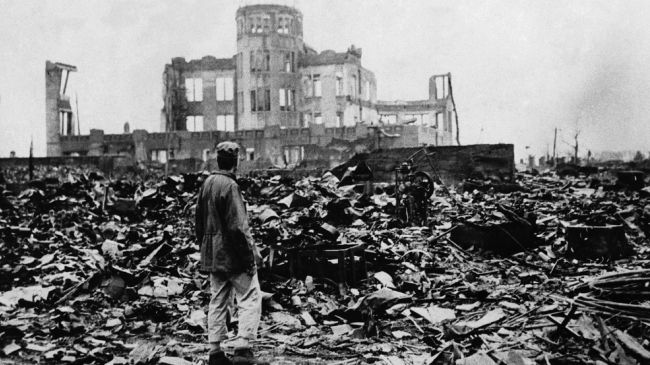
Plans for a nuclear war devised by the US Army in the 1960s considered decimating the Soviet Union and China by destroying their industrial potential and wiping out the bulk of their populations, newly declassified documents show.
A review of the US general nuclear war plan by the Joint Staff in 1964, which was recently published by George Washington University’s National Security Archive project, shows how the Pentagon studied options “to destroy the USSR and China as viable societies.”
The review, conducted two years after the Cuban Missile Crisis, devises the destruction of the Soviet Union “as a viable society” by annihilating 70 percent of its industrial floor space during pre-emptive and retaliatory nuclear strikes.
A similar goal is tweaked for China, given its more agrarian-based economy at the time. According to the plan, the US would wipe out 30 major Chinese cities, killing off 30 percent of the nation’s urban population and halving its industrial capabilities. The successful execution of the large-scale nuclear assault would ensure that China “would no longer be a viable nation,” the review reads.
The Joint Staff had proposed to use the “population loss as the primary yardstick for effectiveness in destroying the enemy society with only collateral attention to industrial damage.” This “alarming” idea meant that, as long as urban workers and managers were killed, the actual damage to industrial targets “might not be as important,” the George Washington University researchers said.
The 1964 plan doesn’t specify the anticipated enemy casualty levels, but – as the researchers note – an earlier estimate from 1961 projected that a US attack would kill 71 percent of the residents in major Soviet urban centers and 53 percent of residents in Chinese ones. Likewise, the 1962 estimate predicted the death of 70 million Soviet citizens during a “no-warning US strike” on military and urban-industrial targets.
The Pentagon continues to rely heavily on nuclear deterrence, and – just like in the 1960s – the US nuclear strategy still regards Russian and Chinese military capabilities as main “challenges” faced by Washington. The latest Nuclear Posture Review, adopted in February, outlined “an unprecedented range and mix of threats” emanating from Beijing and Moscow. The document, which mentions Russia 127 times, cites the modernization of the Russian nuclear arsenal as “troubling” for the US.
The existing nuclear strategy also allows the US to conduct nuclear strikes not only in response to enemies’ nuclear attacks, but also in response to “significant non-nuclear strategic attacks” on the US, its allies and partners.
The newest US Nuclear Posture Review was heavily criticized by Russia and China. Moscow denounced the strategy as “confrontational,” while Beijing described the Pentagon’s approach as an example of “Cold-War mentality.”
Lavrov calls murder of Donbass leader ‘blatant provocation’
RT | September 1, 2018
The assassination of the Donetsk People’s Republic’s leader Aleksandr Zakharchenko is intended to undermine the ceasefire deal in eastern Ukraine and make European-backed peace talks “impossible,” Russian FM Sergey Lavrov said.
“It is a blatant provocation aimed at undermining the implementation of the Minsk Agreement in eastern Ukraine,” Lavrov told reporters on Saturday.
Zakharchenko was killed on Friday when an explosive device detonated at a cafe in the Donetsk People’s Republic (DPR) capital, Donetsk. His bodyguard was also killed in the blast, and 11 people were injured.
“Given the current situation, it’s impossible to talk about the nearest meetings in the Normandy format like many of our European partners would have wanted,” Lavrov said. “It is a serious situation that must be analyzed. We are doing it right now.”
The Normandy format, also known as the Normandy Four, is a contact group comprising France, Germany, Ukraine and Russia. The group is tasked with negotiating a peace settlement in eastern Ukraine.
Is the Next US Aggression on Syria Already Scheduled?

Photo credit: Atılgan Özdil, Anadolu Agency
The Saker • Unz Review • August 31, 2018
The things that please are those that are asked for again and again
HoraceBomb, Bomb, Bomb, Bomb, Bomb Iran
John McCainPresident Putin, Russia and Iran are responsible for backing Animal Assad. Big price…
Donald TrumpIt is difficult to have a dialogue with people who confuse Austria and Australia
Vladimir Putin
Bis repetita
It appears that we are coming back full circle: the AngloZionists are again, apparently, preparing to use the very same White Helmets (aka “good terrorists”) to execute yet another chemical false flag attack in Syria and again blame the government forces for it. The Russians are, again, warning the world in advance and, just as last time, (almost) nobody gives a damn. And there are even reports that the US is, yet again, considering imposing a (totally illegal) no-fly zone over Syria (I have not heard this once since Hillary’s presidential campaign). And just like last time, it appears that the goal of the US is to save the “good terrorists” from a major governmental victory.
It appears that my prediction that each “click” brings us one step closer to the “bang!” is, unfortunately, coming true and while the Empire seems to have given up on the notion of a full-scale reconquest of Syria, the Neocons are clearly pushing for what might turn out to be a major missile strike on Syria. The fact that firing a large number of missiles near/over/at Russian forces might result in a Russian counter-attack which, in turn, could lead to a major, possibly nuclear, war does not seem to factor at all in the calculations of the Neocons. True, the Neocons are mostly rather stupid (as in “short-term focused”) people, with a strong sense of superiority and a messianic outlook on our world. However, it baffles me that so few people in the US and the EU are worried about this. Somehow, a nuclear war has become so unthinkable that many have concluded that it can never happen.
The other thing which the Neocons seem to be oblivious to is that the situation on the ground in Syria cannot be changed by means of missile strikes or bombs. For one thing, the last US attack has conclusively shown that US Tomahawks are an easy target for the Syrian (mostly antiquated) air defenses. Of course, the US could rely on more [advanced] AGM-158 JASSM which are much harder to intercept, but no matter what missiles are used, they will not effectively degrade the Syrian military capabilities simply because there are so few lucrative targets for cruise missile strikes in Syria to begin with. Considering that the US knows full well that no chemical attack will take place (or even could take place, for that matter, since even the US have declared Syria chemical weapons free in 2013) the White House might decide to blow up a few empty buildings and declare that “the animal Assad” has been punished I suppose. But even if completely unopposed a US missile attack will make no military sense whatsoever. So this begs the question of what would be the point of any attack on Syria? Sadly, the rather evident answer to that is that the upcoming missile strike has less to do with the war in Syria and much more to do with internal US politics.
Russian and Syrian options
There are a few differences too. The biggest difference is that this time around the Russian naval task force in the eastern Mediterranean is much bigger than last time: 15 ships including two advanced frigates, the Admiral Grigorovich and the Admiral Essen (see a detailed report here: https://www.almasdarnews.com/article/russia-sends-largest-naval-fleet-ever-to-syrian-waters/ ) and two 636.3-class advanced diesel-attack submarines. That is a lot of anti-ship, anti-air and anti-submarine firepower and, even more crucially, a lot of advanced early warning capabilities. Since the Russian and Syria air defense networks have been integrated by single automated fire system this means that the Syrians will very accurately “see” what is taking place in and around the Syrian airspace (this is especially true with the Russians keeping their A-50U AWACs on 24/7 patrol).
What has me most worried are the various reports (such as this one) which says that US Secretary of State Mike Pompeo told Russian Foreign Minister Sergei Lavrov last week that “Moscow would be held responsible” if any chemical attack occurs. If by “Moscow will be responsible” the crazies in Washington DC mean “morally responsible”, then this is just the usual nonsense. But I am afraid that with certified nutcases like Bolton and Pompeo in charge, the US might be considering attacking Russian personnel in Syria (not necessarily at the well defended Khmeimin or Tartus bases). These guys could easily target various installations or Syrian military units where Russian personnel are known to be deployed and declare that they were not deliberately targeting Russians and that the Russians hit were “clearly involved” with the Syrian chemical weapon forces. The US has already targeted Russian nationals for kidnapping and detention, they might start killing Russian nationals next and then place the responsibility for these deaths on the Kremlin. You don’t think so? Just think “Skripal” and you will see that this notion is no so far fetched.
The Russians do have options, by the way. One thing they could do is place 6 (modernized) MiG-31s on quick alert in southern Russia (or, even better, in Iran) and keep a pair of them on combat air patrol over Syria (or over Iran). Combined with the “eyes” of the A-50U, these MiG-31s could provide the Russians with a formidable capability, especially against the US B-1B deployed in Qatar or Diego Garcia. So far, the MiG-31s have not seen action in Syria, but if intercepting a large number of cruise missiles becomes the mission then they would offer a much more flexible and capable force than the very small amount of Su-35 and Su-30 currently based in Khmeimim.
But the key to protecting Syria is to beef-up the Syrian air defenses and early warning capabilities, especially with advanced mobile air defense systems, especially many short-to-medium range systems like the Tor-M2 and the Pantsir-S2. Until this goal is achieved, the US and Russia will remain in a most dangerous “Mexican standoff” in which both parties are engaged in what I call a “nuclear game of chicken” with each party threatening the other side while counting on its own nuclear capability to deter a meaningful counter-attack or retaliation. This is extremely dangerous but there is very little Russia can do to stop the US leaders from coming back to that same strategy over and over again. So far the Russians have shown a truly remarkable level of restraint, but if pushed too far, they next step for them will be to retaliate against the US in a manner which would provide them with what the CIA calls “plausible deniability” (I discussed this option over a year ago in this article). If attacked directly and openly the Russians will, of course, have no other option left than to hit back. And while it is true that the Russian forces in and near Syria are vastly outnumbered by US/NATO/CENTOM forces, the Russians have a massive advantage over the US in terms of long range cruise missiles (see Andrei Martyanov’s analysis “Russia’s Stand-Off Capability: The 800 Pound Gorilla in Syria” for a detailed discussion of this topic).
None of the above is new, the world has been been stuck in this situation for well over a year now and there still appears to be no end in sight. Unfortunately, I can only agree with Ruslan Ostashko: only a massive military defeat or a no less massive economic collapse will stop the folks who “who confuse Austria and Australia” to give up their insane quest for world hegemony by violence.
US not ready for substantive dialogue with Russia on cybersecurity – Lavrov
RT | August 28, 2018
The US has not yet provided any evidence of ‘Russian hackers’ interfering in the 2016 presidential election, Russian Foreign Minister Sergey Lavrov said Tuesday.
“For the second year we have been proposing that a bilateral working group on cybersecurity should be created to discuss and remove mutual concerns, including those related to influence on electoral processes in [the US and Russia],” he told the Slovak newspaper Pravda.
However, Washington is avoiding a “professional exchange of views,” he said.
It is only surprising “how easily it was possible to put a discussion of this unfounded theme at the center of the intra-American socio-political discussion,” Lavrov noted.
Iran president to host Syrian, Turkish counterpart for Syria talks
Press TV – August 27, 2018
The presidents of Iran, Russia, and Turkey will hold their third round of tripartite summit in Iran next week in an attempt to find ways to end the ongoing crisis in Syria, Turkish state television says.
Iranian President Hassan Rouhani will host his Turkish and Russian counterparts Recep Tayyip Erdogan and Vladimir Putin, respectively, on September 7, state-run TRT Haber television said on Monday.
Private NTV television also said the summit would be held in the northwestern Iranian city of Tabriz as Iran, Russia and Turkey are acting as guarantor states for a peace process in Syria.
The three presidents have previously held summits in the Russian resort city of Sochi in November 2017 and in the Turkish capital Ankara in April.
At the end of their meeting in Ankara on April 4, the Iranian, Russian and Turkish presidents reaffirmed their commitment to work toward achieving a sustainable ceasefire between warring sides in Syria and bringing peace and stability to the war-torn Arab country.
Rouhani, Putin and Erdogan, “reaffirmed their determination to continue their active cooperation on Syria for the achievement of lasting ceasefire between the conflicting parties and advancement of the political process envisaged by UN Security Council Resolution 2254,” said a joint statement issued at the end of the summit.
Addressing their summit in Sochi on November 22, Rouhani lauded the defeat of the Daesh terror group in Iraq and Syria, but underlined the need for continued battle against terrorism until the eradication of all Takfiri terrorist outfits in Syria.
He blamed foreign interference for the conflict in Syria, saying certain countries claiming to be advocates of democracy wrecked havoc in the Arab country to achieve their goals in the region.
Erdogan had previously said that he planned to host a summit in Istanbul on September 7 on the crisis in Syria with Putin, French President Emmanuel Macron and German Chancellor Angela Merkel.
However, press reports over the last weeks have indicated that such a meeting was increasingly unlikely and was set to be replaced by the latest three-way summit in Iran.
A UN spokeswoman said on Friday that United Nations Special Envoy Staffan de Mistura had invited Iran, Russia and Turkey to talks due to be held in Geneva next month on forming Syria’s Constitutional Committee.
“Special Envoy de Mistura continues his consultation on the establishment of a Syrian-led, Syrian-owned and UN facilitated Constitutional Committee within the framework of the Geneva process and in accordance with Security Council Resolution 22-54 2015,” Alessandra Vellucci said at a news conference.
In a meeting with Syrian President Bashar al-Assad in Damascus on Sunday, Iran’s Defense Minister Brigadier General Amir Hatami hailed the steadfastness of the Syrian people and government forces in their battle against terrorism, expressing confidence that they will achieve a final victory in this path.
“Not only regional people, but people around the world are indebted to the fight carried out against terrorists in Syria,” Hatami said.
Reactivated US 2nd fleet returns to North Atlantic ‘ready to fight’… guess who?
RT | August 25, 2018
Just seven years after shutting down operations, the US 2nd Fleet has been officially reactivated, with its admiral seeking to turn it into a menacing force “ready to fight” any “bad actor” it may sail into in the North Atlantic.
Fearing that “some bad actors” on the world stage “threaten the very birthright freedoms that we hold sacred” and are looking to “undermine and rewrite” the US-established world order, Vice Adm. Andrew Lewis, promised to “build a fleet that is ready to fight” along a stretch that extends from the East Coast of the US all the way to the Barents Sea, just off the coast of Norway and Russia, near the Arctic Circle.
“We are going to aggressively and quickly rebuild this command into an operational warfighting organization,” Lewis announced, as he took charge of the Second Fleet at the establishment ceremony at Naval Station Norfolk, Virginia.
The fleet, which previously had 126 ships and submarines in service, will once again “help to maintain America’s maritime superiority,” chief of Naval Operations Adm. John Richardson noted on Friday. “A new Second Fleet increases our strategic flexibility to respond – from the Eastern Seaboard to the Barents Sea.”
Today, the @USNavy established #US2ndFleet with Vice Adm. Andrew “Woody” Lewis assuming command aboard @CVN77_GHWB. #ReadyToFight
ℹ️ https://t.co/stV8660tGEpic.twitter.com/SjmXM2Dv8B
— U.S. 2nd Fleet (@US2ndFleet) August 25, 2018
After the fleet was disestablished in 2011 to save costs during the Obama administration’s proposed “reset” with Russia, most of its personnel, warships and responsibilities were transferred into Fleet Forces Command.
While it has yet to be announced which hardware will be transferred back under its command, at one point the Second Fleet had more than 90,000 personnel assembled between carrier strike groups (CSG) and amphibious ready groups (ARG). The fleet’s Aegis-capable ships also projected the American maritime ballistic missile defense capabilities overseas.
Over the past few years, especially after the outbreak of ‘Russiagate’ with the arrival of the Trump administration, the US and its allies have been increasingly accusing Russia of aggressive posturing and of threatening neighbors, slowly and gradually increasing their own military capabilities along its borders under this pretext.
Moscow insists that it has been forced to reform its military and develop new weapons systems, following US disregard for Kremlin concerns when Washington unilaterally withdrew from the ABM treaty in 2002. Russia continues to treat the global anti-missile system, including sites in Alaska, Romania, and Poland, as well as the Aegis-capable ships, as a potential national security threat that undermines mutual deterrence and power parity – and may lower the threshold of nuclear weapons use by giving Washington a false sense of invincibility.
Meanwhile, the reactivated 2nd Fleet will now once again sail close to the Arctic where Russia, compared to the US, has much more territorial waters and thus strategically invested interests, including utilization of the region’s rich natural resources. The country is also conducting infrastructure projects along the Northern Sea Route and has built a number of military outposts to seal the northern frontier that was left virtually defenseless after the fall of the Soviet Union.
READ MORE:
US ABM shield in Europe may lead to sudden nuclear attack on Russia, Moscow says
Russia: US plans new Syria strike with false flag attack
Press TV – August 25, 2018
The Russian Defense Ministry says the US, Britain and France are preparing to conduct a fresh aerial assault against Syria under the pretext of the alleged use of chemical weapons by the Damascus government.
The ministry spokesman Major General Igor Konashenkov said on Saturday that a group of militants, who were trained by a private British military company to work with poisonous materials, had already arrived in Syria’s northwestern Idlib Province.
“To carry out the alleged ‘chemical attack’ in the city of Jisr al-Shughur in the province of Idlib, militants from the Tahrir al-Sham group had delivered 8 tankers with chlorine… to a village a few kilometers from Jisr al-Shughur,” Konashenkov said.
The Russian general further warned that a possible militant gas attack on Syria would be followed by a Western strike against the Arab country.
“This provocation with the active participation of the British special services will serve as another pretext for the US, UK and France to conduct a missile strike on the Syrian government and economic facilities,” he said.
The official further noted that the American destroyer USS The Sullivans armed with 56 cruise missiles had also arrived in the Persian Gulf and a US В-1В bomber carrying 24 air-to-surface AGM-158 JASSM cruise missiles had been deployed at Al Udeid airbase in Qatar.
“Western countries’ actions in spite of their public statements are aimed at another sharp deterioration of the situation in the Middle East region and the disruption of the peace process on the territory of Syria.”
The warning comes as the Syrian army is now preparing for an operation to liberate Idlib Province, the last major militant stronghold.
Bolton’s warning
On Saturday, Bloomberg reported that US National Security Adviser John Bolton had warned his Russian counterpart, Nikolai Patrushev, that Washington was prepared to take strong military action against Syria if it used chemical weapons in Idlib.
Bolton issued the warning during his Thursday’s talks with Patrushev, the report quoted four people familiar with the discussions as saying.
On April 14, the US, Britain and France launched a coordinated missile attack against sites and research facilities near Damascus and Homs with the purported goal of paralyzing the Syrian government’s capability to produce chemicals.
The strike came one week after an alleged gas attack on the Damascus suburb town of Douma.
Both Damascus and Moscow accused the White Helmets volunteer group of having staged the suspected chemical weapons attack in Douma.
Turkey pushing against Syria’s upcoming Idlib campaign
As countdown begins for the Idlib counter-terrorism campaign, Turkey tries to avert the push, claiming that it will lead to a humanitarian crisis.
Speaking at a press conference with his Russian counterpart, Sergei Lavrov, in Moscow on Friday, Turkish Foreign Minister Mevlut Cavusoglu said that the two countries could cooperate on separating Idlib “terrorists” from opposition groups.
“A military solution there (in Idlib) will cause catastrophe,” he said. “Not only for the Idlib region but for the future of Syria, it will cause catastrophe and the clashes may last a long time.”
Lavrov, for his part, acknowledged that the situation in Idlib is “complex” and called for the separation of militants from opposition outfits.
He also said that when Turkey, Iran and Russia held talks on Syria’s ceasefire zones, Moscow did not expect militants to be “using it as a human shield” from which they could attack the government.
Russian prosecutors brand US group Pacific Environment ‘undesirable organization’
RT | August 24, 2018
The Russian Prosecutor General’s Office has included US NGO Pacific Environment (PERC) on a list of undesirable foreign organizations after determining the group’s work can threaten Russia’s security and constitutional order.
“After studying some materials it had received the Prosecutor General’s Office on August 24 decided to recognize as undesirable on the territory of the Russian Federation, the work of foreign non-government organization Pacific Environment (PERC) from the USA,” chief spokesman for the agency, Aleksandr Kurennoy, was quoted as saying by TASS on Friday.
“It has been established that the work of this organization creates a threat to the foundations of Russia’s constitutional order and the security of the Russian state,” the official added. The order to put the group on the list of undesirable organizations will now be forwarded to the Justice Ministry where it needs to be registered to come into force.
Founded in 1987, the Pacific Environment group states its primary objective as protecting the living environment of the Pacific Rim. In Russia, its activists have instigated public opposition to several major mining and energy projects in Siberia and the Far East.
Russia introduced the law on undesirable foreign organizations in mid-2015. According to this act the Prosecutor General’s Office and the Foreign Ministry have the powers to create a list of “undesirable foreign organizations,” making the activities of such groups in Russia illegal. Violations of this law are punished by civil penalties, but repeated and aggravated offenses can cause criminal prosecution and carry prison sentences of up to six years.
Hidden internal directive on Syria that got no UNSC approval DOES exist – Russian Foreign Ministry
RT | August 24, 2018
The UN has devised internal guidelines for limiting cooperation with Syria until a “political transition” takes place there, and it was drafted without any consent from the Security Council, the Russian Foreign Ministry has said.
The document in question is entitled ‘Parameters and Principles of UN Assistance in Syria,’ the ministry wrote in a statement to RT. It was issued by the UN Secretariat in October 2017 and provides guidelines for the UN agencies and programs in their work with the war-torn country.
The Secretariat issued the paper without requesting consent or even consulting the UN Security Council or the UN member states, at least on an official level, the ministry noted, adding that the “guidelines” document still “penetrates deeply” into the political situation in the Syrian Arab Republic, thus “going beyond the issue of simple coordination between the UN structures.”
One particular provision of the document explicitly states that the UN “would be ready to facilitate reconstruction” in Syria only “once there is a genuine and inclusive political transition negotiated by the parties.” The Russian ministry described it as an apparent attempt to prevent the international organization from contributing to Syria’s recovery under the current circumstances, while enforcing a “politicized approach of the countries advocating a regime change.”
The directive also implicitly restricts the UN agencies’ cooperation with Damascus, the ministry said, adding that the text of the document says that “UN assistance must not assist parties who have allegedly committed war crimes or crimes against humanity.” The US and its allies in the West have repeatedly accused the Syrian government of various violations of international law and particularly blamed them for chemical weapons incidents that took place on Syrian soil. No hard evidence has ever been presented to substantiate those claims, while the West ignored relevant data provided by the Russian military operating in Syria.
“If some influential [UN] donors believe that … it is time to toughen the sanctions regime against Syria, it does not necessarily mean that the UN agencies should be guided by the same irresponsible approach,” the Russian Foreign Ministry said in its statement, expressing its hope that the UN Secretariat will review its methods as Syria’s need for humanitarian assistance and reconstruction aid grows, not least due to an increasing number of refugees returning home.
The issue of an alleged “secret directive” having been distributed by the Secretariat throughout the UN system in October 2017 was first raised by Russian Foreign Minister Sergey Lavrov on Monday. He did not name the document but said that it “prohibited the agencies… from participating in any kind of projects aimed at restoring the Syrian economy” until a “political transition” there.
Lavrov also linked the release of the directive with the “absolutely deconstructive” stance of the US on the issue of Syria’s reconstruction. The next day, the office of the spokesperson for the UN secretary-general denied the existence of any such document by saying that neither its department of political affairs nor any other UN entity had issued a “secret directive” on Syria.
Meanwhile, the ‘not secret’ but rather hard-to-find document mentioned by the Russian Foreign Ministry apparently indeed exists: It was briefly mentioned on an official UN website in a temporary job description. However, the text of the document has never been officially made public by any UN agency.
However, a supposed copy of the text of the directive, entitled ‘Parameters and Principles of UN Assistance in Syria’ and dated October 2017, was included as an annex in another paper published by the Global Protection Cluster – a structure directly linked to such UN agencies as the UN Refugee Agency (UNHCR), the UN Population Fund (UNFPA) and the UN Children’s Fund (UNICEF). This document is still available online.
After declaring its commitment to the UN Charter and the Security Council resolutions, the document indeed states that any UN aid to the reconstruction efforts would be possible only following “political transition.” It also states the UN work should de-facto focus on basic humanitarian assistance only, while any “development and reconstruction activities that are outside this will need to be reflected in other frameworks that are by nature a longer negotiation with governments.”
The paper also openly states that the UN “will not promote the return of refugees.” Apart from prohibiting cooperation with “parties who have allegedly committed war crimes or crimes against humanity,” the guidelines also state that assistance must be “prioritized based on the needs of the population (rather than government-driven),” in what might be potentially considered an indirect attempt to limit the UN agencies’ cooperation with the Syrian government.
Read more:
Kabul Confirms to Sputnik It Won’t Attend Moscow Conference on Afghanistan
By Ksenia Shakalova – Sputnik – 23.08.2018
MOSCOW – The conference in Moscow will be held amid a conditional ceasefire between the Taliban movement and the Afghan government, which was announced by Afghan President Ashraf Ghani on Sunday.
“We are not going to attend [the Moscow conference]… The peace process should be led by Afghanistan only, only by the Government of the Republic of Afghanistan,” Afghan Foreign Ministry spokesman Sibghatullah Ahmadi told Sputnik on Thursday.
Ahmadi added that it was an independent decision that had nothing to do with Washington.
The spokesman also said that the government already had its own peace council that was working on negotiations with the Taliban.
“Of course we will lead the peace process, but by the way, we have very close relations with Russia and Russia is a big country and a powerful country in the region and one of our friends. And we have very good relations with Russia,” Ahmadi concluded.
On Tuesday, Russia said it had invited officials from 12 countries, including the US, to attend the Moscow-format consultations on Afghanistan. Moscow also confirmed that the Taliban movement expected to participate in the upcoming conference.
A US Department of State official, commenting on the talks, stated that Washington would not take part in the meeting, doubting that the talks would help to establish peace in Afghanistan.
Goldman, JPMorgan object to Russian proposal to limit their ability to move money out of the country
RT | August 23, 2018
A total of 15 foreign lenders are protesting against a new plan proposed by the Russian central bank to reduce the amount of cash they can move abroad from their units located in Russia.
Russian subsidiaries of banking majors, including Goldman Sachs, Citigroup, Raiffeisen, JPMorgan, Deutsche Bank and HSBC Holdings, have voiced their objections to plans that would limit the Russian units to depositing just 20 percent of their capital abroad at their parent companies. Under the current regulations, there is no limit for banking operations of this kind.
The Central Bank of Russia proposed the rationing measures in response to fresh anti-Russia sanctions from the US and Europe that could allow foreign lenders to block access to the funds for its units based in Russia, two sources close to the issue told Bloomberg. The targeted lenders say they will have to reduce their loan services in Russia, according to unnamed people quoted by the agency.
If the new rules enter force, most of the local units run by foreign banks will inevitably be in violation of the mandated capital ratios. Some of the lenders, including Nordea Bank and Commerzbank, say the measure will create “unequal” conditions for local banks and foreign-owned subsidiaries.
Ahead of the US mid-term elections in November, the US Congress is actively discussing potential punitive measures against Russia over its alleged meddling in US elections. Among the penalties is a ban on using US dollars for some of Russia’s biggest banks. In August, local banking bonds brought investors a loss of 5.1 percent in dollar terms, the worst of any sector domestically, according to a Bloomberg Barclays index.
According to the Central Bank of Russia, the final version of the rule is still being discussed. The regulator didn’t elaborate on the goal of the restrictions or on the fate of the proposal.
See also:
Featured Video

Dan Dicks with James Corbett on Solutions Watch
or go to
Aletho News Archives – Video-Images
From the Archives
$1.5bn up in smoke: US THAAD missile stockpile dries up defending Israel against Iran
By Ivan Kesic | Press TV | July 2, 2025
According to American media, defense news outlets, and independent analysts, the 12-day Israeli military aggression against Iran significantly depleted the US stockpile of THAAD (Terminal High Altitude Area Defense) interceptor missiles.
Citing official sources, American magazine Newsweek reported on Friday that the US transferred a substantial portion of its advanced missile defense capabilities to support the Israeli regime, an effort with questionable results and a critical impact on US strategic reserves.
THAAD, developed by Lockheed Martin arms manufacturing company, is a key component of Israel’s multi-layered air defense architecture. It is designed to intercept medium-range ballistic missiles, including those launched from Iran and Yemen.
The US-made system is capable of targeting short-, medium-, and intermediate-range ballistic missiles during their terminal phase, whether inside or outside Earth’s atmosphere.
THAAD uses a “hit-to-kill” method, relying on kinetic energy rather than explosive warheads to destroy incoming threats, intercepting at altitudes of up to 150 km and ranges between 150-200 km.
Operated exclusively by American personnel, the US military maintains eight THAAD batteries with an estimated 350–400 interceptors in total. The eighth battery was activated during the June 20 Israeli aggression against Iran and is capable of intercepting hypersonic missiles. … continue
Blog Roll
 Aletho News
- Zionist Bought Senate Blocks Information About American Citizens Killed By Israel
- While Gaza dominates the UN, these are the people keeping it alive
- New Report: “Scholasticide and Genocide in Gaza: Assessment, Testimonies and Legal Analysis”
- ‘THAAD Delusion’: Iran war exposes US missile shield limits – The Atlantic
- Moscow issues warning to NATO over Russian exclave
- Yes, the Iran war has destroyed Trump’s presidency
- The fallacy of US delusions about Iran’s economic collapse
- Hezbollah denies Syria cell link, warns of Israeli plan to sow discord
- The legacy of US sanctions, war, and occupation in Iraq
- Iraqi resistance group rejects disarmament, vows to maintain support for Lebanon
- If Americans Knew
- Mamdani releases plan to combat antisemitism and hate crimes in New York City
- Iran’s Revolutionary Guards Publish Letter to the American People
- DMFI launches $1 million ad campaign supporting Virginia’s Elaine Luria
- US Senate blocks resolution seeking report on Americans killed by Israel
- Israeli Attacks Kill Ten Palestinians in Gaza
- Massacre at Minab: The School That Became a Grave
- Israeli media: The IDF Shows It Doesn’t Turn a Blind Eye; It Actively Emboldens Settler Havoc
- As settlers ravage West Bank, Israeli forces kill 10 in Gaza – Daily Update
- New Report: “Scholasticide and Genocide in Gaza: Assessment, Testimonies and Legal Analysis”
- Ex-Biden officials are desperate for a Gaza scapegoat
- No Tricks Zone
- Green Energy Debacle: German Expert Professor Fritz Vahrenholt Warns Of Severe Economic And Social Consequences
- Two More Paleo Reconstructions Affirm Meters-Higher Sea Levels Across Ireland, Brazil 7000-6000 Years Ago
- New Study: Earth And Venus Surface Warmth Largely Explained By Convection And Lapse Rate, Not CO2 Or Radiation
- 2025 Nature Paper Claiming Worsening Global Drought Gets RETRACTED …Heavily Flawed
- New Study: ‘Global Drought Shows No Detectable Recent Acceleration Under Climate Warming’
- Economic Masterminds: German Socialists Suggest Taxing Productivity Gains Stemming From Using AI
- The South China Sea Has Not Been Cooperating With The Climate Change Narrative
- Energy Crisis: Germany Enters Heating Season With Historically Low Gas Reserve Fill Levels
- New Study: The Antarctic Ice Sheet Gained Mass From 2020-2024 Due To Staggering Snow And Ice Accumulation
- Study: Ocean Heating Rates From Thousands Of Years Ago ‘Dwarf’ Modern Ocean Heating Rates

