Destruction of Last Chemical Munition in Russia is ‘Historic Event’ – Putin

Sputnik – September 27, 2017
Russian President Vladimir Putin has called the destruction of the last chemical munitions in the country a “historic event.”
The last kilogram of Russia’s 40,000-tonne stockpile of chemical warfare agents, which was contained in two artillery shells, was destroyed on Wednesday at the Kizner facility in Udmurtia.
Attending the event via video link, Putin said that it is “a huge step towards” a more balanced and secure world, stressing that Russia had held the largest chemical stockpiles in the world. Putin also said Russia was working closely with partners to save mankind from the threat of the use and spread of chemical weapons.
“In this regard, I would like to recall the key role of our country in solving the problem of chemical weapons in Syria,” he said.
The president pointed out that Moscow is fulfilling all of its obligations under the non-proliferation treaties and expects that other countries, including the United States, will follow in Russia’s footsteps.
“As is known, Russia was the largest holder and possessor of chemical weapons, and so far the United States, which unfortunately does not fulfill its obligations on the timing of the destruction of chemical weapons, has already three times postponed the destruction on the pretext of lack of funds, which sounds very strange,” he pointed out.
The elimination of chemical materials was conducted under the Chemical Weapons Convention (CWC), an arms control treaty that prohibits the production, stockpiling, and use of chemical weapons. The treaty, which came into force in 1997, has been signed by 192 states as of April 2016.
Russia joined the CWC in 1997 and was initially expected to destroy its chemical weapons stockpiles by December 31, 2018.
Inquiry Into Death of Russian Lt. Gen. Asapov Shows Data Leaks to Daesh – Source
Sputnik – September 26, 2017
The preliminary investigation into the death of Russian Lieutenant-General Asapov near Syrian Deir ez-Zor has shown data leaks to Daesh, a source in the Syrian security forces told Sputnik.
“The results of a preliminary investigation into the death of general Asapov in Deir ez-Zor evidences a leak of information on his location to the side that carried out the attack,” the source said.
Lieutenant-General Valery Asapov died on Sunday after sustaining a “fatal injury” in a Daesh shelling near Deir ez-Zor, according to the Russian Defense Ministry.
Asapov was a member of the group of Russian military advisers providing Syrian commanders with assistance during the operation aimed at the liberation of the city of Deir ez-Zor.
Commenting on the incident, Russian Deputy Foreign Minister Sergei Ryabkov on Monday that the death of Asapov is the price that Russia paid for the “duplicity” of the United States in actions aimed at resolving the crisis in the region.
Meanwhile, the Russian Defense Ministry circulated an aerial footage of the areas where Daesh militants were stationed near Deir ez-Zor, clearly showing US special forces’ military vehicles at strongholds previously fortified by terrorists.
Russian MoD Refutes Reports About Strikes on Settlements in Idlib Province
Sputnik – September 26, 2017
MOSCOW – Russian Defense Ministry spokesman Maj. Gen. Igor Konashenkov denied on Tuesday the claims of the UK-based Syrian Observatory for Human Rights about alleged strikes of the Russian Aerospace Forces on settlements in Syria’s Idlib province.
“The aircraft of Russian Aerospace Forces do not strike settlements in the Syrian Arab Republic. The statements of the Observatory citing unnamed ‘witnesses’ and ‘volunteers’ are unsubstantiated as usual and serve as ‘information cover-up’ for actions of Al Nusra Front [a terrorist group] militants,” Konashenkov said.
He said that over the past 24 hours, the Russian jets carried 10 strikes on terrorists positions in the Idlib province following reconnaissance sorties of drones and additional confirmation through other channels.
Konashenkov explained that the targets included underground bases of militants, located far from residential neighborhoods, field ammunition depots, armored vehicles, multiple launch rocket systems and sweatshops for loading guns on cars which were used during both preparations and offensive of the terrorists against positions of the Russian military police in the north of Hama province in order to take Russian servicemen hostage. He noted that the ministry had the objective monitoring data for all the strikes.On Wednesday, the Russian General Staff said that Nusra Front launched the attack with support of artillery, tanks and infantry fighting vehicles on September 19 and managed to penetrate Syrian army defenses to the depth of some 7.5 miles. The General Staff added that the offensive was initiated by US special services to stop the Syrian Army advance east to Deir Ez-Zor.
Straws in the Wind for a Reset in US-Russian Relations
By M.K. BHADRAKUMAR – Asia Times – 23.09.2017
The receding specters of a war involving North Korea and a US-Russia confrontation in Syria. The sound of cracking ice in the frozen conflict in Ukraine. Russia and the United States bidding farewell to “tits-for-tat.” Is this the dawn of a brave new world?
You might be skeptical, but it’s possible to draw positive conclusions from the two meetings, on successive days, between US Secretary of State Rex Tillerson and Russian Foreign Minister Sergey Lavrov, on the sidelines of the United Nations General Assembly in New York this week. These meetings, in fact, bode well for another meeting ahead, between presidents Valdimir Putin and Donald Trump, this time in Danang, Vietnam, on the sidelines of the November 11-12 APEC summit.
There are straws in the wind that cannot be ignored. Lavrov told the media after listening to Trump’s UN speech that he viewed it positively. Lavrov was in a forgiving mood towards the threats held out by Trump to “evil regimes” in North Korea, Iran and Venezuela. Indeed, he felt that it was a “remarkable speech,” with Trump voicing respect for sovereignty and equality in international affairs and promising that the US will not impose itself on other countries. “I think it’s a very welcome statement, which we haven’t heard from the American leaders for a very long time,” Lavrov noted with satisfaction.
Thus, the foreplay has already begun that frames November’s Putin-Trump talks as a new page in Russian-American relations. Moscow judges that things can only improve in those relations and that Trump is wedded to his conviction that good relations with Russia are in the US’ best interests and – as Lavrov put it – “the interests of solving quite a number of important and most acute world problems.” Lavrov told the Associated Press :
“And what I feel talking to Rex Tillerson is that… they are not happy with the relations (with Russia)… And I believe that the understanding is that we have to accept the reality, which was created… by the Obama administration… And, being responsible people, the Russian government and the US administration should exercise this responsibility in addressing the bilateral links as well as international issues. We are not at a point where this would become a sustained trend but understanding of the need to move in this direction is present, in my opinion.”
The US and Russia have resumed dialogue over the global strategic balance, but to a great extent the shape of things to come over North Korea, Syria and Ukraine will set the tempo of their relations in the short term. US-Russia cooperation can make all the difference in addressing these problems, while any exacerbation of these conflict situations will inevitably impact their relationship.
North Korea: The Trump administration can turn the Russia-China entente to its advantage to defuse the North Korean crisis. While China’s capacity to leverage North Korea is not in doubt, what remains unexplored is that Moscow also wields influence with the leadership in Pyongyang. Kim Il Sung served as an officer in the Soviet Red Army after crossing into the USSR during World War II, before returning home to found North Korea in 1948.
Russia is uniquely placed to offer an “integration package” that might interest Pyongyang. It is a failure of leadership in Washington that the “Russian option” (in tandem with China) hasn’t been explored.
Syria: While the situation in Syria gives grounds for cautious optimism and the formation of new de-escalation zones may create conditions for internal dialogue in the country, it is time to work for a regional settlement as well.
A recent regional tour of the Persian Gulf by Lavrov and the upcoming visit by Saudi King Salman to Russia (October 4-7) should be viewed in this context. Russia also enjoys good relations with Turkey and Israel, while Iran is its ally in Syria. All this makes Russia a key interlocutor. Arguably, the Iran nuclear issue has morphed into a template for a settlement in the Iraq-Syria-Lebanon triangle.
Ukraine: The proposal mooted by Russia at the UN Security Council regarding the deployment of UN peacekeeping forces in the separatist Donbas region of Ukraine is gaining traction. Interestingly, NATO Secretary-General Jens Stoltenburg hailed the idea after a meeting with Lavrov in New York on September 21.
Germany is supportive of the Russian move and hopes to elaborate the concept in coordination with France, its western European partner in the Normandy format. With Angela Merkel remaining as Chancellor following Sunday’s Bundestag elections a definite prospect, it’s time to breathe new life into the Minsk accord, which is of course the base line for the EU to consider any rollback of sanctions against Russia.
While there is talk of Europe’s “strategic autonomy” in the Trump era, it is unrealistic to expect “an anti-American Europe that will break with Washington in favor of warmer relations with Moscow,” as noted Russian pundit Fyodor Lukyanov wrote recently. On the other hand, the Trump administration will have a tough time shepherding the EU into a united front against Russia (which President Obama brilliantly succeeded in doing, in 2014.) Clearly, a new framework for US-Russia relations has become necessary. And it must begin by breaking the stalemate in Ukraine.
NATO is seeking to revive Сold War climate – Lavrov at UNGA

RT | September 21, 2017
NATO is currently seeking to revive the Cold War climate instead of building a dialogue with Moscow, Russian Foreign Minister Sergey Lavrov said in his speech at the UN General Assembly in New York.
Russia has honestly walked along a long path of getting rid of the legacy of the Cold War but received no support in its efforts from its partners in the West, the minister said, expressing his regret over the fact that “some countries still prefer force to dialogue.”
“The West constructed its policy on the basis of a principle, ‘If you are not with us, you are against us’ and proceeded with hideous expansion of NATO to the east,” the Russian diplomat said, adding that such policy ultimately led only to “instability” in the post-Soviet republics and increased tensions in the region.
At the same time, the minister said that Russia is ready to cooperate with its western partners and work together in a constructive way to find mutually acceptable solutions of the pressing issues, including the Ukrainian crisis in particular.
He also expressed his hope that the Russian initiative that involves sending a UN peacekeeping mission to Eastern Ukraine would ultimately help to resolve the crisis, adding that the relevant draft resolution had been already submitted to the UN Security Council.
‘Unilateral sanctions – illegitimate’
“Centuries of history have shown that a lasting settlement of difference can only be [achieved] through dialog and balancing of the core interests of the conflicting parties,” the minister said, adding that, “unfortunately, the arsenal of many western states does not include diplomacy but only rough pressure.”
“Any unilateral sanctions imposed aside from the sanctions approved by the UN Security Council are illegitimate and undermine the collective nature of the international efforts,” Lavrov said.
He then expressed concern over the new rounds of sanctions imposed by the US against Iran and warned that they threaten the 2015 Iranian nuclear deal, which earlier greatly contributed to the restoration of the regional and global stability.
‘War hysteria around North Korea could lead to disaster’
Lavrov denounced the escalation of tensions around the Korean Peninsula by calling it a “very dangerous confrontational spiral.” The minister stressed that Russia condemns the North Korean nuclear tests conducted in violation of the UN resolutions, but added that war hysteria stirred up by the West around Pyongyang’s actions could end up in a “disaster.”
The minister then called on all the parties to the Korean crisis to start a dialogue, and said that there is “no alternative to the political and diplomatic settlement of the nuclear crisis on the Korean Peninsula.”
He also urged the international community to support the joint Russian-Chinese roadmap of resolving the crisis that involves the “double freeze” initiative, envisaging Pyongyang stopping its nuclear and missile program in exchange for the US and South Korea abandoning their joint military exercises near the peninsula.
At the same time, Lavrov praised Tuesday’s statement by US President Donald Trump, in which he stressed the importance of respecting the principle of sovereignty in international relations. “We are pleased to see that the President of the United States, Donald Trump, … unilaterally stated that it is important to abide by the principle of sovereignty in the international affairs, that it is more important to lead by an example than dictate to other peoples,” the minister said.
‘Attempts to topple undesirable regimes only open way to terrorists’
It is unacceptable to incite riots and to threaten to use force to enforce “democratization” or undermine legitimate authorities in any country, Lavrov said. The attempts to ignore the opinions of others and to issue ultimatums without the UN approval “never led to anything good,” he added.
“The upsurge of international terrorism, millions of refugees and waves of illegal immigrants have come to a significant extent as a result of reckless attempts to remove some undesirable regimes, particularly through military intervention,” the minister said, adding that such actions brought only “chaos and destruction” to the Middle East and North Africa as well as “opened a way for terrorists.”
He then urged the international community to make additional efforts aimed at restoring stability in Syria and Iraq, adding that what has been done so far is still not enough, despite the success achieved in fighting Islamic State (IS, former ISIS/ISIL) in the region.
“A string of bloody terrorist acts in the world shows that it is an illusion to try and create separate islands of security. Extremism and terrorism is something that we need to combat together, without using double standards and hidden agendas,” Lavrov said as he once again drew attention to what he called an “ambiguous” situation in Syria, where the US-led coalition seems to be sparing Al Nusra terrorists in its airstrikes while fighting another terrorist group, Islamic State.
‘No militarization of cyberspace’
Russia rejects the idea of militarization of cyberspace, Lavrov said, adding that this field should not be allowed to become “an area of military confrontation.” He went on to say that cyberspace should be prevented from being used to inflict economic damage or spread extremist propaganda.
He called on the international community to work out rules of “responsible behavior” in cyberspace that would be in the interests of all states. The diplomat also said that Russia drafted a universal convention on prevention of cybercrimes, including hacking attacks, and urged the General Assembly to discuss it during this year’s session.
Russia warns US it will strike back if militia attacks in Syria don’t end
RT | September 21, 2017
Moscow has warned the US that if militias it supports in northeast Syria again attack positions of pro-government forces backed by Russia, the Russian military will use all its force to retaliate.
The troops of the Syrian Democratic Force (SDF), a predominantly Kurdish militia that receives support from the US military, have twice attacked positions of the Syrian Arab Army in the Deir ez-Zor governorate with mortar and rocket fire, according to the Russian Defense Ministry’s spokesman, Major General Igor Konashenkov.
“Russia unequivocally told the commanders of US forces in Al Udeid Airbase (Qatar) that it will not tolerate any shelling from the areas where the SDF are stationed,” Konashenkov said, adding that the attacks put at risk Russian military advisers embedded with Syrian government troops.
“Fire from positions in regions [controlled by the SDF] will be suppressed by all means necessary,” he stressed.
Konashenkov said Moscow suspected the SDF of colluding with the terrorist group Islamic State (IS, also known as ISIS/ISIL) in Deir ez-Zor rather than fighting it, as it claims to be. He said Russia had detected the transfer of SDF fighters from the IS stronghold of Raqqa, to join forces with the jihadists.
“SDF militants work to the same objectives as IS terrorists. Russian drones and intelligence have not recorded any confrontations between IS and the ‘third force,’ the SDF,” the Russian general said.
The statement said that the siege of Raqqa by the SDF has been halted, apparently in response to the latest advances by Syrian government forces in Deir ez-Zor, which is located to the east from Raqqa along the Euphrates River.
“The central parts of the former ISIL capital, which account for roughly 25 percent of the city, remain under full control of the terrorists,” Konashenkov remarked.
According to the statement, in the last 24 hours Syrian government troops “continued their offensive operation” to destroy the last “IS bridgehead” near the city of Deir ez-Zor, the provincial capital. Troops led by Syrian Army General Suheil al-Hassan liberated around 16 sq km of territory and two settlements on the western bank of the Euphrates River.
“More than 85 percent of Deir ez-Zor’s territory is under the full control of Syrian troops. Over the next week the city will be liberated completely,” Konashenkov said.
The city of Deir ez-Zor in eastern Syria was besieged by Islamic State in 2014. Syrian government forces lifted the blockade of the city in early September.
However, the liberation of Deir ez-Zor also triggered a confrontation between Syrian government forces and the US-backed SDF militants, the point of contention being control of Deir ez-Zor’s oil fields.
Following Damascus’s strategic victory, food, medicine and other essentials started to reach the city by convoy, where previously the inhabitants had to rely on air-drops.
The escalation of tension in eastern Syria is mirrored in the western Idlib governorate, where militant forces this week attacked Syrian positions in a designated de-escalation zone. The offensive threatened a unit of Russian military police, who were stationed in the area to monitor the ceasefire. Russia mounted an emergency rescue operation on Wednesday, in which three Russian special operations troops were injured. The Russian Defense Ministry claimed that the militants’ offensive had been instigated by US special services.
Nuclear powers refrain from signing UN treaty on banning nukes
Press TV – September 20, 2017
World powers that possess nuclear weapons refrain from attending a ceremony at the United Nations to sign a long-anticipated treaty on banning nukes, merely arguing that the pact will not work.
None of the nuclear-armed states including the United States, Britain, Russia, France, China, India and Pakistan sent representatives to the ceremony for signing the Treaty on the Prohibition of Nuclear Weapons, a pact that was adopted by 122 countries at the United Nations in July.
UN Secretary General Antonio Guterres opened the event in New York while hailing the agreement as a milestone and the first multilateral pact on disarmament in more than two decades.
Brazilian President Michel Temer was the first head of state to put his signature on the document, which comes amid heightened tensions over North Korea’s nuclear program.
North Korea tested its sixth and most powerful nuclear bomb earlier this month following the test-fire of two intercontinental ballistic missiles, weapons that experts say could target the mainland United States and could be used to carry a nuclear warhead.
The United States, Britain and France have dismissed the UN treaty as unrealistic, arguing that North Korea’s intensified nuclear activity has shown that they still need nuclear arms to maintain deterrence.
Supporters of the pact, however, say the time has come for the international community to push harder toward eliminating atomic weapons as a 50-year-old Non-Proliferation Treaty has effectively failed to contain the thirst of powers for expanding their nuclear arsenal.
“We call upon them to join this date with history,” said Costa Rican President Luis Guillermo Solis at the ceremony, held on the sidelines of the annual UN General Assembly meeting of world leaders.
‘We need negotiations, not declarations’: Russia stays away from Trump’s UN reform plan
RT | September 18, 2017
As US President Donald Trump officially launched his 10-point reform program for the United Nations, Russian officials say they share many of the concerns it raises, but not the methods Washington is using to advance its solutions.
On Monday morning in New York, UN Secretary-General Antonio Guterres and Trump delivered speeches in support of the reform declaration, which has been endorsed by 128 states.
According to the published text of the plan, it would give Guterres greater executive powers “encouraging him to lead organizational reform,” which would “provide greater transparency and predictability” and “promote gender parity and geographic diversity,” while combating “mandate duplication, redundancy, and overlap” and other forms of inefficiency at the international body.
“In recent years, the United Nations has not reached its full potential because of bureaucracy and mismanagement. While the United Nations on a regular budget has increased by 140 percent, and its staff has more than doubled since 2000, we are not seeing the results in line with this investment,” said Trump, who previously emphasized that the US is the biggest contributor to United Nations funds.
“To serve the people we support and the people who support us, we must be nimble and effective, flexible and efficient,” declared Guterres, the former Prime Minister of Portugal, who assumed his current post this year.
Countries that were hesitant or unwilling to sign the document – which include Russia, China, Brazil and South Africa – were not invited to the launch.
“There was no consultation either prior or following the publication of the declaration,” said Vassily Nebenzia, Russia’s envoy to the UN, in an interview with TASS news agency, published Monday. “We are all for increasing the role of the UN on the international arena, and raising its efficiency. The organization needs reform, even if not a fundamental overhaul. But the reform itself should not come through a declaration, but through inter-governmental negotiations between members.”
State-owned daily Rossiyskaya Gazeta cited officials in the Russian delegation in New York, who criticized the US for hijacking the ongoing UN General Assembly for its own purposes, noting that the declaration “had nothing to do with the United Nations” and that Washington “has developed a bad habit of using the UN building during General Assemblies to push its own foreign policy agenda.”
Some were altogether suspicious of Trump’s motives, considering his previously dismissive attitude to the UN.
“Trump’s reform is a landmark move towards a unipolar world, and the reduction of the role of the UN in the international architecture that is forming in the 21st century. We are not ready to support or participate in this process,” Leonid Slutsky, the Chairman of the Committee on International Affairs in the Russian parliament, told RIA news agency.
“The US should start not with behind-the-scenes coalition-forming,” wrote Konstantin Kosachev, who heads in the Foreign Affairs Committee in the upper chamber of the Russian parliament, the Federation Council, on his Facebook page. “Instead, it should begin by acknowledging its mistakes, when it bypassed the UN in Yugoslavia, Iraq, Libya and Syria.”
Vladimir Putin and Russia versus Zionist Fairytales
By Phil Butler – New Eastern Outlook – 16.09.2017
Did you read the latest news that Vladimir Putin is rich and evil? Oh, you don’t read anymore, more power to you. Fake news has it that the Russian president has a new “secret” holiday mansion worth untold millions. Furthermore, some of the stories tell of Putin being the world’s richest and most evil man. For those of you who do not believe in fairytales, here’s a candid look at what Russians are really up against.
My initial reaction to reading “Drone footage shows Putin’s secret island mansion” at 9 News Australia was, “So what if the leader of Russia is rich?” I would have skimmed the article and moved on but for a familiar name popping up. I’ll get to the ousted industrialist shark Bill Browder in a minute, but first it’s important for readers to understand that Putin actually has little need of money in the traditional sense. Every financial magazine, every expert, and hordes of guessing investigators have tried for years to count Vladimir Putin’s gold, and to no avail. Some say he is worth more than Bill Gates and Jeff Bezos combined, but nobody can trace down this immense wealth. Amid all the speculation as to “why” the Panama Papers could not convict Putin, the pointedly obvious shines through. Nobody can trace Putin’s fortune because there isn’t one. But this is fodder for another story, let me move on to the latest Alexei Navalny fairytale and to this Browder character cited in the Australian piece.
I needn’t outline the role and the character of Alexei Navalny again here. The blogger who would be kind of Russian was last seen fueling up his drones for another flyby of Sergey Shoygu’s super secret space station home. Having attempted to label Russian Prime Minister Dmitry Medvedev a criminal for the places he’s vacationed at, Navalny seems unable to stop himself proving the insignificant. I think the best reason for Russians to ignore Putin’s biggest detractor is the simple fact he knows nothing of Russian people. Hey Navalny, heads up, Russians don’t care if Putin is rich, they only care if he does his job. Sorry, this western poster boy of change in Russia, he just sets me off. What an idiot. But let’s move on to another famous profiteer who Putin banished from Russia, the founder of Hermitage Capital Management, Bill Browder.
It’s amazing how western mainstream media and the politicians always turn to Putin haters to be experts or to get “proof” on the Russian leader. Haven’t you noticed yet how Russian mafia types like Yukos Oil oligarch Yukos Mikhail Khodorkovsky, and before him the now deceased Boris Berezovsky always pop up as “experts” on Putin? Isn’t it a bit strange that news media in the west never seem to cite people with a positive or moderate stance on Russia’s president? I am sure this coincidence is not because of the scarcity of pro-Putin experts. Whatever the reasoning, the Australian article fueled by Navalny’s drone footage dredges up another ousted financial crook who hates Putin’s guts. Most readers will identify Bill Broder with Hermitage Capital, but few will recall that the investment firm was also funded by one Beny Steimetz, the Israeli oligarch and financier just arrested (August 14) by Israeli and Swiss anti-corruption officials for wide scale fraud and money laundering. The Russian privatization shark who was once Israel’s richest man is a subject for another report. I only bring him up here to point at two facets of this war on Putin. First, the Jewish connection in all this is something that just needs to come out. Secondly, the ring of profiteers bent on Putin’s demise all have gigantic skeletons in their wardrobes. A story citing one Putin hater, when investigated, always leads to ten more. This is no coincidence.
Back to Browder, his Hermitage was at one time the largest foreign portfolio investor in Russia. That was before Vladimir Putin put a stop to the rape of Russia’s legacy and the theft of her assets. This is undeniable fact, and even the lowliest of Russian peasants know it by now. Browder, a Chicago Jew, set out to profit from Russian privatization after Yeltsin, but was thwarted like other sharks when Putin’s hammer fell on other mafiosos. RICO suits, libel cases, tax evasion charges, and ties to some of the seediest characters in world finance highlight the man who pushed the now famous Magnitsky Act into US foreign policy play. It’s no coincidence that Browder has emerged as a central player in the ongoing investigation of Russian interference in the 2016 elections. The privateer who made billions off Russian privatization turned into a human rights activist, and now he’s bent on seeing Donald Trump impeached!
The reader might be surprise to discover the source of the statement “Russia is more dangerous than ISIS” was actually Bill Browder, rather than rabid Arizona Senator John McCain. Or was McCain first? Both Russia haters told reporters of the grave danger to the US at the same time actually, back in May of 2017. Perhaps the narrative of US war hawk politicians and ousted financial henchmen has become just that convergent, but I somehow doubt the coincidence. Both Browder and McCain contend that Russian President Vladimir Putin used the country’s primary security agency, the Federal Security Service (FSB), to meddle in the U.S. presidential election, but neither has shown any proof of their claims. I mention this “coincidental” melding of message for obvious reasons. Or maybe McCain and Browder are now pals as this Browder Tweet on McCain returning to the Senate to do battle against Russia after his hospital stint suggests. What’s most amazing to me is the way FOX and other networks readily use Browder and other suspected criminals without searching out counter arguments for their stories. Maybe Rupert Murdoch can answer that one. And so on, and so on, and so on…
Every time I start researching for one of these stories I end up in a deep and dark rabbit hole of collusion and confusion. In each and every case I end up with Vladimir Putin stoically defending a position against wild assertions with no proof whatsoever. The big picture of the “game” by now is like watching a schoolyard name calling and finger pointing contest. The iconic bullies and thugs are on one end of the yard, while their target stands virtually alone looking as innocent as a lamb for a variety of reasons. It’s become ridiculous, but there’s always more.
A story by Kevin Alfred Strom at the National Vanguard, which was originally published back in 2004, adds light to a facet of the Russia privatization profiteering, and ties into some recent stories of my own here on NEO. “The Silent Coup: Putin vs. the Oligarchs” deals with these ousted oligarchs and the western investors intent on carving up Russia after the wall came down. But more importantly, the piece cites Putin on the case of Jewish mafiosos always seeming to play a role. The story of influence by Israel, AIPAC, and a cadre of Jewish billionaires converge when Strom cites Vladimir Putin in his story. Notable Jewish figures like Boris Berezovsky, Mikhail Friedman, Vladimir Gusinsky, Mikhail Khodorkovsky, and Alexander Smolensky are highlighted in the story alongside Putin’s lesser publicized views on Zionists in Russia at the time of privatization. The piece also points out the Russian people’s utter hatred for most of these Jewish oligarchs, a hatred that has absolutely nothing to do with anti-Semitism by the way. Since Putin seized the Rothschild/Khodorkovsky share of Yukos Oil, Russia has been divesting herself of the only Zionist plot that matters, the ending of Jewish mafia/oligarch control of the country. Not many readers will realize that Russia’s Central Bank (CBR) is a member of Rothschild BIS.
An article by Alexander Azadgan at KATEHON expands on the Jewish money component, and reiterates the possibility of Putin nationalizing the CBR. Given new sanctions by the US and Prime Minister Dmitry Medvedev describing them as “full scale economic war” waged on Russia, it’s important to observe Putin’s moves east and especially the new BRICS dealings. For Russians, it matters little if Vladimir Putin has 100 yachts and fifty mansions, as long as Russia is not raped and destroyed by the unscrupulous of the world. Putin’s job is clear, defend Russia – period. His compensation is of little consequence to his people. All we hear, read, and see about Putin’s Russia is from a London, Brussels, or Washington standpoint – never a Moscow one. The influence of Zionist bankers is well known to Russians, and almost unheard of by Americans. The enemy Russia really consists of Zionists and technocrats who do know the name of the game, and the public they use to do their bidding. In the same way the Jewish religion and Jewish people are used for the Zionist bankers’ purposes, the waiting public is leveraged through blind ignorance and propaganda against Russia. For those who believe alternative fairytales I can only say…
Russia, US Officials Revive Dialogue on Arms Control: Offering Glimmer of Hope
By Andrei AKULOV | Strategic Culture Foundation | 14.09.2017
The New Start Treaty was in focus of the talks held in Helsinki between Russian Deputy Foreign Minister Sergei Ryabkov and US Undersecretary of State Thomas Shannon on September 11-12. The parties agreed that the treaty should be implemented without exception. It was revealed that expert consultations on the future of the agreement had begun. A meeting of the US-Russian bilateral commission on implementing the New START would take place in the near future so that the two sides could continue their discussion of the technical aspects of implementation.
In force since 2011, New START foresees the reduction of both countries’ nuclear arsenals to 1,550 warheads and 700 operationally deployed launch systems by 2018. The treaty also obliges Moscow and Washington to exchange information about their nuclear weapon stockpiles. It is one of the few nuclear agreements still being honored amid the current strained relations between Washington and Moscow. The treaty is set to expire in 2021 and stipulates that the parties may agree to extend it for a period of no more than five years.
With no negotiations in sight on a new strategic arms reduction agreement, it would be prudent to extend the treaty till 2026. True, it would be even more beneficial to have a new treaty, if possible, but there are obstacles on the way. At this level of reductions, other nuclear powers should join. This prospect is hardly feasible at present, and yet step-by-step progress toward constructive consultations on nuclear arms reductions and transparency measures is possible. The US program of creating a global missile defense is also a hindrance. There is also a problem of mistrust against the background of the relationship at its lowest ebb.
An agreement to extend the landmark treaty is the way to stabilize the ties and prevent a competition. It would revive the hopes for saving the arms control regime, which is being eroded, to put the world back to the brink of nuclear war where it had been before the Partial Nuclear Test Ban Treaty was signed in 1963. The mutual limits and the robust verification and compliance regime, including satellites, on-site inspections, required notifications, and data exchanges enhance stability and reduce incentives for engaging in an arms race. With no verification procedures in place, the leaderships of both countries would lose a critical source of intelligence, hampering policymakers’ ability to make informed decisions. By extending New START, the parties could add stability at the time of increasing tensions.
In February, President Trump decried the New START Treaty. He said it was one-sided and «Just another bad deal that the country made, whether it’s START, whether it’s the Iran deal … We’re going to start making good deals», he said in an interview with Reuters. He also responded negatively to Russian President Putin’s suggestion to extend that treaty in a January phone call.
The military leaders appear to have a different view. Gen. John Hyten, the head of US Strategic Command, told Congress in March that he is a “big supporter” of the treaty. According to him, “bilateral, verifiable arms control agreements are essential to our ability to provide an effective deterrent.” Secretaries of Defense and State, support New START. The Federation of American Scientists supports the treaty. European allies also back the idea of keeping New START in force. According to Federica Mogherini, European Union High Representative for Foreign Affairs and Security Policy, “The right path is the one marked by the New START Treaty and its implementation. This is the kind of cooperation between Russia and the United States that we Europeans like to see.”
The United States is currently pursuing a near-complete overhaul of all elements of its strategic nuclear potential. Over the next 30 years, it plans to have a new ICBM, a new strategic submarine, a new bomber, and a new nuclear cruise missile. However, none of the plans are inhibited by New START. Russia is going through modernization of its nuclear triad. It’s absolutely important to keep the limitations and verification procedures in place to ensure adequate planning.
Extending New START could help create a positive atmosphere for improving the US-Russia relationship. It would help head off unconstrained nuclear arms race and global security. Failing to pursue an extension would be a major missed opportunity.
Nobody expects spectacular breakthroughs, but it’s good news the issue of strategic stability was at last addressed during a high level Russia-US meeting. It was abnormal that the nuclear arms reductions were not part of the bilateral agenda for such a long period of time. It’s hard to overestimate the importance of the fact that the dialogue is revived at the time when the entire arms control and non-proliferation regime is unraveling. Looks like at last a glimmer of light appeared at the end of the tunnel.
Anti-Russian sanctions cost Europe $100bn – UN Special Rapporteur
RT | September 13, 2017
Over the last three years, the European Union has been losing at least $3.2 billion every month due to the anti-Russian penalties, according to a report by a UN Special Rapporteur Idriss Jazairy.
“The most credible approximation is of $3.2 billion a month,” says the report on the negative impact of the unilateral coercive measures, as quoted by Sputnik.
Jazairy stressed that Russia had sustained a direct loss of nearly $15 billion a year or a total of $55 billion so far.
“The resulting overall income loss of $155 billion is shared by source and target countries,” he added.
EU sanctions against Russia were introduced in 2014 over the country’s alleged involvement in the conflict in eastern Ukraine and Crimea. The penalties targeted Russia’s financial, energy, and defense sectors, along with some government officials, businessmen, and public figures.
Moscow responded by imposing an embargo on agricultural produce, food and raw materials on countries that joined the anti-Russian sanctions. Since then the sides have repeatedly broadened and extended the restrictive measures.
Russia is the EU’s fourth-largest trading partner after the US, China and Switzerland. The country is also Europe’s biggest natural gas supplier, as well as one of its biggest oil suppliers.
The penalties have been severely criticized by European politicians and businessmen as both politically ineffective and economically harmful for both Russia and Europe.
Featured Video
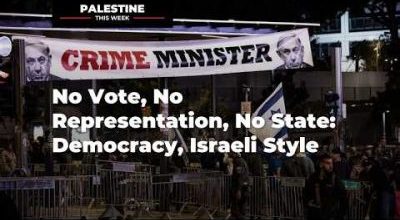
No Vote, No Representation, No State: Democracy, Israeli Style
or go to
Aletho News Archives – Video-Images
From the Archives
Sanctions, War and the Policy of Dual Containment
By SASAN FAYAZMANESH | March 17, 2008
It is now nearly three decades since the Unites States adopted the policy of dual containment of Iran and Iraq. While much has been written about the containment of Iraq, there has been very little in-depth analysis of this policy when it comes to Iran. In a book that is going to be released on March 31, 2008, entitled The United States and Iran: Sanctions, Wars and the Policy of Dual Containment (Routledge), I attempt to address this shortcoming by investigating when and why the US policy of containment of Iran came about, how it evolved, and where it stands today.[1] To the extent that Israel has been involved in US policy making, the study will also include the role that Israel has played in the containment of Iran. Also, since the fate of Iran has been inextricably linked to that of Iraq, occasionally the investigation will overlap with the containment of Iraq.
The policy of dual containment of Iran and Iraq originated during the Carter Administration, but it was not until the Clinton Administration that the expression “dual containment” became popular. … continue
Blog Roll
 Aletho News
- How Israel destabilizes the Middle East: Denying sovereignty and the right to exist
- Europe’s Establishment Is Embracing War – and Losing Voters
- NATO chief advocates war of aggression
- No Vote, No Representation, No State: Democracy, Israeli Style
- Zionist Bought Senate Blocks Information About American Citizens Killed By Israel
- While Gaza dominates the UN, these are the people keeping it alive
- New Report: “Scholasticide and Genocide in Gaza: Assessment, Testimonies and Legal Analysis”
- ‘THAAD Delusion’: Iran war exposes US missile shield limits – The Atlantic
- Moscow issues warning to NATO over Russian exclave
- Yes, the Iran war has destroyed Trump’s presidency
- If Americans Knew
- Israel map in LA Times ad includes all land from the river to the sea
- Inside Lebanon’s 200-page dossier on Israeli war crimes
- Flydubai, genocide, settler violence, Trump abuse of power to deport – Daily Update
- Counting Antisemitic Incidents: What the ADL Audit Reveals — and Obscures
- Mamdani releases plan to combat antisemitism and hate crimes in New York City
- Iran’s Revolutionary Guards Publish Letter to the American People
- DMFI launches $1 million ad campaign supporting Virginia’s Elaine Luria
- US Senate blocks resolution seeking report on Americans killed by Israel
- Israeli Attacks Kill Ten Palestinians in Gaza
- Massacre at Minab: The School That Became a Grave
- No Tricks Zone
- Green Energy Debacle: German Expert Professor Fritz Vahrenholt Warns Of Severe Economic And Social Consequences
- Two More Paleo Reconstructions Affirm Meters-Higher Sea Levels Across Ireland, Brazil 7000-6000 Years Ago
- New Study: Earth And Venus Surface Warmth Largely Explained By Convection And Lapse Rate, Not CO2 Or Radiation
- 2025 Nature Paper Claiming Worsening Global Drought Gets RETRACTED …Heavily Flawed
- New Study: ‘Global Drought Shows No Detectable Recent Acceleration Under Climate Warming’
- Economic Masterminds: German Socialists Suggest Taxing Productivity Gains Stemming From Using AI
- The South China Sea Has Not Been Cooperating With The Climate Change Narrative
- Energy Crisis: Germany Enters Heating Season With Historically Low Gas Reserve Fill Levels
- New Study: The Antarctic Ice Sheet Gained Mass From 2020-2024 Due To Staggering Snow And Ice Accumulation
- Study: Ocean Heating Rates From Thousands Of Years Ago ‘Dwarf’ Modern Ocean Heating Rates

