Lavrov to Tillerson on consulate closure: We regret escalation of tension not initiated by Russia
RT | August 31, 2017
Russian Foreign Minister Sergey Lavrov has expressed regret over the “escalation of tensions” after the US State Department ordered Russia to close several diplomatic offices in the US within 48 hours.
Moscow will carefully study the new measures the US announced and will inform Washington of its reaction, Lavrov said.
On August 23, the US embassy in Russia suspended all “nonimmigrant visa operations” in Russia, saying they will be resumed only in the main embassy building in Moscow on September 1.
“NIV [non-immigrant visa] interviews at the US Consulates in St. Petersburg, Yekaterinburg, and Vladivostok are suspended until further notice,” the embassy said in a statement.
“The first impression is that the American authors of these decisions made one more attempt to draw disfavor from Russian citizens toward the actions of the Russian authorities,” Lavrov said earlier in August.
Moscow later stated it would take no action in response to the US Embassy’s announcement on the processing of nonimmigrant visas, which Russian Foreign Ministry spokeswoman Maria Zakharova described as “the horror that the Americans have created.”
Earlier this summer, Russia ordered the US diplomatic mission to bring its personnel in Russia down to 455 people, to match the numbers of Russian diplomatic staff. The US said it would need to downsize its embassy and consular staff by 755 as a consequence.
Netanyahu’s Sudden Trip to Russia: What’s Israel Worried About?
By Dmitry MININ | Strategic Culture Foundation | 29.08.2017
The stated purpose of Israeli Prime Minister Benjamin Netanyahu’s sudden Aug. 23 trip to Sochi and meeting with the Russian president was to update him about the «scale of Iran’s military footprint in Syria». However, this is something Tel Aviv does with enviable regularity, and since Russia already has a presence on the ground in Syria, Israel would be hard-pressed to be able to offer Moscow any new information on this. Moreover, according to the Israeli press, a less prominent Israeli delegation presented a similar report some time ago in Washington that failed to make much of an impression there.
However, the director of Mossad, Yossi Cohen, and the head of Israel’s National Security Council, Meir Ben-Shabbat, also made the trip to Sochi, in addition to the prime minister, which indicates the particular significance of the meeting for Netanyahu. And DEBKAfile reports that the powwow lasted a full three hours, despite the Russian president’s tight schedule that day.
Israeli analysts surmise that Netanyahu is not only worried about the presence of Iranian volunteer squadrons in Syria, but also about how a quick end to the civil war in that country would not, on the whole, work in Israel’s favor. For example, the joint Lebanese-Syrian operation to rout the last major Islamic State (IS) contingent on the border between the two countries in the western Qalamoun region, 20 km. north of Israel, will soon be winding down. One might expect that once the Syrian Arab Army (SAA) units and their allies are freed up there, they would next turn their attentions to clearing terrorists from the areas bordering Israel, particularly in the region of Quneitra.
Israel, therefore, faces a serious dilemma. The Israelis don’t want to let Damascus re-approach their border near the occupied Golan Heights, for then it will become apparent that Netanyahu’s entire strategy of supporting the Syrian opposition and renouncing Assad has failed. That moment of truth could deal the final blow to his cabinet’s rather precarious position. It would also prove awkward to actually be fighting on the side of al-Qaeda militants from HTS. Even the US gave that idea a very cool reception. Hence this explanation: the «terrifying» country of Iran is on the verge of capturing all of Syria with the help of «Shi’ite militias,» and Israel is firmly drawing «lines in the sand» against Tehran and Lebanon’s pro-Iranian «Hezbollah». If those lines are crossed, that will necessitate the use of all of Israel’s military might.
The problem is compounded by the fact that Russian monitors and peacekeepers (two squadrons of military police from Ingushetia are currently on duty) are stationed at 10 roadblocks, 13 kilometers from what would be the battlefield on the western borders of the southern «de-escalation zone» in Syria. Those peacekeepers have been awarded international recognition, even in accordance with an agreement with the United States. There’s a good reason Israel was not terribly pleased by either the creation of this «de-escalation zone» or by the appearance of the Russian peacekeepers there. It will be quite easy for them to see if Iran’s Revolutionary Guards or agents from Hezbollah are moving in Israel’s direction. Gone are the days when the survival of Damascus largely depended on foreign volunteers. New military divisions and even SAA corps have already emerged, made up of Syrians. Assad has no need to use Iranians or Lebanese to take control of the Israeli border – he has his own units for that. That’s why Netanyahu is so insistent in his attempts to convince Moscow that the Iranians are bound to attack them for some reason. Of course the Iranian divisions in Syria theoretically don’t even possess the heavy weaponry that would make it possible for them to do such a thing. That is entirely in the hands of the SAA and lately also within the Russian advisors’ zone of interest.
Moscow is telling the truth when it claims that it is not only concerned about Israel’s security, it is also prepared to guarantee it. But that security has to be real, not pretend. Both sides need to call a spade a spade. It’s already clear to any unbiased observer that the outcome of the war in Syria is a foregone conclusion. And the victors won’t only be individual politicians like Assad, but also the entire Syrian nation. Clear-sighted politicians should have accepted reality long ago and adjusted their strategy accordingly, without attempting to turn back the hands of time. Only thus will they be in a position to ensure stability, both for themselves and for the region as a whole.
The future evolution of this conflict will largely depend on the US stance. Israeli pundits acknowledge that Netanyahu, despite all his threats, is unlikely to launch a serious military operation in Syria unless he gets some sort of nod from Washington. That’s what would also demonstrate whether the White House is prepared to cross the rickety bridge toward reconciliation in Syria or whether it wants to plunge that country back into total chaos, which, given the current power dynamics, would bode ill for itself. IS is on the verge of total collapse in Syria. Next in line could be America’s allies from the Free Syrian Army.
Maariv, a prominent Israeli newspaper, regretfully observes that the Aug. 23 meeting in Sochi «will not change the sad fact that when it comes to Iran, Israel has no true allies on the international stage». And that publication puts the blame for this on Netanyahu himself, who – when it came down it – proved unable to secure the support of those politicians he is so proud to call his friends – the presidents of the US and Russia.
However, does «friendship» include indulging anything one’s «friend» does, even if what he’s doing is a mistake? After all, it has more than once been explained to Prime Minister Netanyahu that the Iranian troops will depart once the war in Syria ends. That’s even what Tehran is saying. And perhaps it would be better, before it’s too late, to play a role in events on the winner’s side? Even in the absence of diplomatic relations, it’s not so hard to find a way. This would be the most intelligent policy.
Moldova Presses Russia over Transnistria: What Next?
By Alex GORKA | Strategic Culture Foundation | 28.08.2017
The government of Moldova has called on the United Nations to discuss the withdrawal of Russian peacekeepers from the breakaway Transnistria region at the upcoming 72nd session of the General Assembly to open on September 12. A letter from the Permanent Representative of Moldova to the UN, Victor Moraru, was forwarded on August 22, calling the presence of Russian troops in Transnistria «a threat to international peace and security».
The Russian Federation has stationed about 1,200 troops in Transnistria in accordance with the «Agreement on the Principles for a Peaceful Settlement of the Armed Conflict in the Transnistrian Region of the Republic of Moldova» signed on July 21, 1992 by the presidents of Russia and Moldova in the presence of Transnistria’s leader. Transnistria, a largely Russian-speaking region, broke away from Moldova following the collapse of the Soviet Union in 1991. Its relations with Moldova’s central government in Chisinau have been tense ever since. In 1992, a bloody armed conflict sparked, with civilian casualties estimated in hundreds on both sides. The truce ended a war between pro-Russian forces and the Moldovan military.
Besides the peacekeepers, there are also around 800 Russian military personnel who guard ammunition depots near Kolbasna settlement left over from the days of the USSR. Their scrapping and removal started in 2001, but was blocked by Transnistria’s residents in 2004 amid deteriorating relations with Chisinau.
In 2008, NATO’s Parliamentary Assembly adopted a resolution urging Russia to «withdraw its illegal military presence from the Transnistrian region of Moldova in the nearest future». Since 2014, after conflict erupted in Ukraine, Moldova has banned Russian military from crossing its territory and the Russian Aerospace Forces from landing at the airport in Chisinau.
In November 2016, the defense ministers of Moldova and Ukraine concluded an agreement on the organization of a «green corridor» for the withdrawal of Russian troops, together with weapons, from the territory of the Transnistrian Republic. It was perceived by Moscow as a provocative move as neither Russia nor Transnistria had been consulted.
On May 2, the Constitutional Court of Moldova declared unconstitutional the presence of Russian soldiers on the territory of the Transnistrian region of the republic. On July 30, the Government of Moldova called the Russian peacekeepers «a factor in the freezing of the Transnistrian conflict».
In July, Moldova’s parliament adopted a declaration, asking Russia to withdraw its troops from Transnistria. The move came a day after the Moldovan Foreign Ministry warned the military aircraft with Russia’s Deputy Prime Minister Dmitry Rogozin on board was not allowed to land in Chisinau for a visit to mark the 25th anniversary of the Russian peacekeeping mission in Transnistria. Andrei Neguta, the Moldovan ambassador to Russia, was invited to the Ministry of Foreign Affairs. Deputy Foreign Minister Grigory Karasin expressed a firm protest against the Moldovan government’s decision to declare Deputy Prime Minister Dmitry Rogozin a persona non-grata.
The official emphasized that Russia has been consistently working to develop good relations with Moldova in the past few years. In contrast, Chisinau’s irresponsible steps are aimed at deliberately undermining bilateral relations.
Moldova’s President Igor Dodon condemned the declaration on withdrawal of Russian peacekeepers adopted by the parliament, accusing the pro-Western lawmakers of trying to worsen relations with the Russian Federation. He also claimed that such a decision could only come from «outside Moldova», presumably referring to Romania. Romania’s Prime Minister Mihai Tudose and several Romanian ministers were in Chisinau on July 21 – the day the resolution was passed – for a joint government meeting with the Moldovan executive.
The parliamentary resolution was not approved unanimously. «This is a serious violation of common sense. At least allow us to look at it properly», Socialist MP Vlad Batrancea said in parliament. «We believe this is a geopolitical provocation», he added. The lawmakers from the opposition Socialist Party left the parliament’s meeting in protest.
Transnistria’s legislators condemned the declaration, adopted by the Moldovan parliament. The Transnistrian authorities also strongly oppose the Moldova’s plan to withdraw Russian peacekeepers. During 25 years, the peacekeeping mission has been a success. There have been no clashes. After all, nobody else but Moldova insisted on an international peacekeeping force in 1992.
Russia considers Moldova’s letter to the United Nations requesting the withdrawal of Russian peacekeepers from Transnistria as another hostile action. Russia’s ambassador to the United Nations, Vasily Nebenzya, has objected to the Moldovan government’s call for the UN to discuss withdrawing Russian troops at the next month’s General Assembly session. He believes the «sudden move» was «not very friendly», especially in view that Moscow had not been warned in advance of this request. The Russian representative to the UN also said that this initiative of Moldova would not contribute to the 5 + 2 talks on Transnistrian settlement.
There is a very important aspect of the problem to be mentioned here. Chisinau puts forward the argument that the 1999 OSCE Istanbul summit included the commitment by the Russian Federation to withdraw from Transnistria by December 31, 2002. It fails to mention the fact that the agreement was linked to the provisions of the 1990 Treaty on Conventional Armed Forces in Europe (CFE) that limited NATO and Warsaw force disposition in Europe. The treaty was never fully observed by NATO as it kept on expanding. In 2007, Russia suspended its participation in the treaty, and on 10 March 2015, citing NATO’s de facto breach of the CFE, Russia formally announced it was completely halting its participation in it as of the next day. The treaty has become history today, it’s not effective anymore. It’s worth to emphasize that the Istanbul document does not rescind the 1992 truce accord.
There is no doubt that the Moldovan letter is an element of the propaganda war to be used by the West in its effort to paint Russia as an «aggressor». Ukraine will use the opportunity for attacks against Russia.
And now, last but not least. Neither the Moldovan government, excluding the president, nor the parliament has mentioned the need to take into account the opinion of Transnistrian people. After all, they have the right for self-determination. The Moldovan letter to the United Nations includes everything but the right of the Transnistrian people to decide their own fate. Should Russia abandon them?
Is there any guarantee there will be no armed conflict sparked right after the Russian military personnel’s withdrawal? If Russia leaves and innocent people die again, will Moldova take on responsibility? Will it be ready to admit its guilt? Is there any other OSCE member but Russia willing to dispatch peacekeepers to Transnistria and shoulder the expenditure? Is there any progress on finding a solution to the problem through talks? Finally, is Moldova ready to provide answers to all these questions at the United Nations General Assembly’s session in September?
‘Israel sees Iran as obstacle to its policies’
Press TV – August 25, 2017
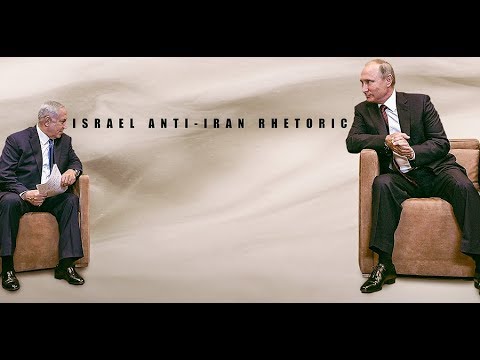
Prime Minister Benjamin Netanyahu has said that Israel felt threatened by Iran’s growing influence in the Middle East. Netanyahu expressed his Iranophobic view in a meeting with Russian President Vladimir Putin in Russia’s Black Sea resort of Sochi on Wednesday. Press TV has asked Scott Rickard, former American intelligence linguist from Tampa, Florida, and Brent Budowsky, a columnist at The Hill from Washington, to give their thoughts on the issue.
Rickard said Tel Aviv is concerned about the fact that the regime could not carry out its old project to spread sectarian divisions and pave the way for dismemberment of the countries in the Middle East region because of the Iranian-led resistance against Israeli policies, not only in the occupied territories of Palestine but also in the whole region.
“Iran is not a threat to Israel whatsoever. The threat that Israel sees is the fact that their Oded Yinon Plan is being put to a hold by Iran,” the intelligence linguist said on Thursday night.
“They (the Israelis) look at Iran as a threat only because they have no influence on their governments and Iran is autonomous and is not under the Zionist influence,” he added.
Since the victory of the Islamic Republic of Iran in 1979, Tehran has been critical of Israel’s policies in the region, whereas “no leaders [of other states] even dared to speak out against Zionism,” Rickard argued.
“Considering Iran a threat in the region is really a fantasy,” which is a propaganda campaign to demonize the Islamic Republic, he said.
During the meeting in Sochi, Netanyahu tried to illustrate a negative portrait of Iran’s support for the Syrian government, but Russian Ambassador to the UN Vasily Nebenzya disappointed Israel by saying that Iran plays a very constructive role in Syria.
Rickard went on to say that the Israelis are trying to sway public opinion by using false intelligence about the Iranian role in Syria.
The analyst opined that the Israeli regime is “not worried about Iran as much as they are worried about the failure of their effort alongside their allies in trying to topple” the Syrian government.
Tel Aviv is afraid of witnessing that “Iran, Russia and Syria have built up a formidable defense” and have shown great resolve and great restraint against being attacked by Israel, he explained.
Iran and Russia alongside the Lebanese Hezbollah movement have played a major role in supporting the Syrian armed forces to defeat Takfiri terrorists and foiling a US-Israeli plot to partition Syria.
Budowsky, the other guest on the panel, said Netanyahu and President Putin were “establishing some understanding of each other’s position to try to avoid any mistakes that could escalate militarily.”
Israel, which has been reportedly aiding and abetting terrorist groups to topple the government in Damascus, considers Iran’s support for President Bashar al-Assad’s fight against the spread of terrorism a threat to its intervention.
The columnist said that Israel is concerned about having Iran near the occupied territories of Palestine as a result of Iranians’ presence in Syria. – Video
First tanker crosses northern sea route without ice breaker (Because it is one anyway!)
By Paul Homewood | Not A Lot Of People Know That | August 25, 2017
A commercial LNG tanker has sailed across the colder, northern route from Europe to Asia without the protection of an ice-breaker for the first time.
The specially-built ship completed the crossing in just six-and-a-half days setting a new record, according to the tanker’s Russian owners.
The 300-metre-long Sovcomflot ship, the Christophe de Margerie, was carrying gas from Norway to South Korea.
Rising Arctic temperatures are boosting commercial shipping across this route.
There is only one slight problem – the newly built tanker is actually an icebreaker itself, as Matt McGrath goes on to elaborate:
The Christophe de Margerie is the world’s first and, at present, only ice-breaking LNG carrier.
The ship, which features a lightweight steel reinforced hull, is the largest commercial ship to receive Arc7 certification, which means it is capable of travelling through ice up to 2.1m thick.
On this trip it was able to keep up an average speed of 14 knots despite sailing through ice that was over one metre thick in places.
Popular Science has more details on the project to build another 15 of these icebreaking tankers:
There’s a lucrative shipping route between Europe and Asia that has the potential to cut thousands of miles and months of time off the trip. The only catch: it’s covered with thick, ship-sinking Arctic ice.
Heavy ice blocks the Arctic route from December to July, more than half the year. Even with icebreaking escort ships, few merchant vessels run it.
Now, Daewoo Shipbuilding and Marine Engineering is building the world’s first icebreaker tankers–16 of them–to carry liquid natural gas (LNG) through the route year-round. LNG tankers today have to be escorted by icebreaking ships that clear the way through the Northern Sea Route.
The Yamal LNG project, run by companies in Russia, France, and China, proposes drilling more than 200 wells in the Arctic to produce 16.5 million tons of LNG per year, supported by Daewoo’s first 16 Arc7 tankers. Year-round, Yamal LNG will ship LNG from the project’s Sabetta port in Russia’s Yamal Peninsula westward to Europe, South America, India, China, and South Korea. For the warmer half of the year, it’ll also ship east from Sabetta to Japan and South Korea.
As Russia leans more heavily on fuel exports and the prices for them drip lower and lower, a dormant 17th-century Russian ambition is coming back to life: to open the Arctic year-round.
http://www.popsci.com/worlds-first-ice-breaking-tanker-ships-open-arctic-route#page-2
French oil company Total, who are involved in the Yamal project also have this:
To transport Liquefied Natural Gas from Yamal LNG, which is located in the Arctic and constitutes one of the world’s biggest LNG projects, Total and its partners have designed a new type of ship: an LNG ice-breaker. This innovative solution allows large shipments of LNG to be transported efficiently and at a steady pace throughout the year and without the assistance of ice-breakers. The ship, which is 300 metres long and has a capacity of 172,600 m3, can sail in temperatures that fall as low as -52°C and in ice thickness up to 2.1 metres. Between December 2016 and 2019, 15 LNG ice-breakers will be commissioned. In this article, we delve into this technological microcosm.
The tankers are certified as Arc7, which is the Russian system of classifying ice breakers and ice strengthened ships. The classification goes up to Arc9 for the strongest ships.
So the fact that the Christophe de Margerie has just made this trip has nothing at all to do with global warming.
It is however a reminder that the French, along with Russia and China, will carry on developing oil and gas reserves, regardless of whatever was agreed at Paris.
Moscow ‘preparing inevitable response’ as US hits Russians with new sanctions over N. Korea
RT | August 23, 2017
Moscow has fired back at the latest round of US sanctions targeting Russian interests, as Washington blacklisted one Russian company and four individuals for their alleged dealings with North Korea.
On Tuesday, the US Treasury revealed it had imposed sanctions on 16 Russian and Chinese nationals and companies for their alleged dealings with North Korea. The Treasury claims the sanctions are in line with the internationally agreed measures against North Korea’s missile and nuclear weapons programs. The companies are accused of working with blacklisted individuals, helping develop the North Korean energy sector, help it place workers abroad or move money from abroad. As a result, their US assets are frozen and Americans are forbidden from doing business with them.
“It is unacceptable for individuals and companies in China, Russia, and elsewhere to enable North Korea to generate income used to develop weapons of mass destruction and destabilize the region,” Treasury Secretary Steven Mnuchin said in a statement.
“We are taking actions consistent with UN sanctions to show that there are consequences for defying sanctions and providing support to North Korea, and to deter this activity in the future.”
Reacting to the sanctions, Russian Deputy Foreign Minister Sergey Ryabkov issued a statement expressing disappointment, and warning Washington that Russia was working on a response.
“Against such a depressing backdrop, the lip service from American representatives about the desire to stabilize bilateral relations is extremely unconvincing,” Ryabkov said. “We have always and will always support resolving our existing differences through dialogue. In recent years, Washington in theory should have learned that for us the language of sanctions is unacceptable, and the solutions to real problems are only hindered by such actions. So far, however, there doesn’t seem to be an understanding of such obvious truths.”
“Nevertheless, we do not lose our hope that the voice of reason will sooner or later prevail, and that our American colleagues will be aware of the futility and detrimental nature of further sliding down the spiral of sanctions.”
In the meantime, we are beginning to work out the inevitable response to this situation.”
The companies under sanction include Gefest-M, a Moscow-based firm accused of acquiring metals for a North Korean company, and Mingzheng International Trading, a Chinese and Hong Kong-based bank that supposedly conducted transactions on behalf of North Korea.
Andrey Klimov, a senior Russian senator, said that the US sanctions against Gefest-M and the others lack legitimacy.
“These sanctions are illegal in themselves, because the only thing recognized by international law is the sanctions of the UN Security Council,” Klimov told Interfax. “We must react in principle to this insane and confrontational policy. The toolbox is rich, let’s hope that we will act consistently, reasonably, professionally and effectively.”
Klimov’s words were echoed by the Chinese government, with a spokesperson saying Beijing “opposes unilateral sanctions out[side] of the UN Security Council framework.”
“We strongly urge the US to immediately correct its mistake, so as not to impact bilateral cooperation on relevant issues,” the spokesperson said, as quoted by the Financial Times.
At the same time, the US Department of Justice also filed two complaints to forfeit over $11 million from two Asian companies for allegedly laundering funds for North Korea.
The DoJ alleges that the two companies violated the international sanctions against North Korea and indirectly supporting its missile and nuclear weapons programs.
“The United States filed two complaints today seeking imposition of a civil money laundering penalty and to civilly forfeit more than $11 million from companies that allegedly acted as financial facilitators for North Korea,” read the statement.
Proceedings have been launched against Velmur Management Pte Ltd., based in Singapore, as well as the Chinese company Dandong Chengtai Trading Co. Ltd.
READ MORE:
US embassy in Russia temporarily halts issue of non-immigrant visas
Afghanistan is ripe for proxy war

By M K Bhadrakumar | Indian Punchline | August 20, 2017
Russia has hinted in the past that the United States is covertly sponsoring the Islamic State in Afghanistan. On Thursday, the Russian Foreign Ministry spokesperson raised the bar by alleging that “foreign fighters” who were transferred by “unknown helicopters” have perpetrated a massacre of Hazara Shias in the Sar-e-Pol province in northern Afghanistan. The spokesperson said:
- We can see attempts to stir up ethnic conflict in the country… Cases of unidentified helicopter flights to territory controlled by extremists in other northern provinces of Afghanistan are also recorded. For example, there is evidence that on August 8, four helicopters made flights from the airbase of the Afghan National Army’s 209th corps in Mazar-i-Sharif to the area captured by the militants in the Aqcha district of the Jowzjan province. It is noteworthy that witnesses of these flights began to fall off the radar of law enforcement agencies. It seems that the command of the NATO forces controlling the Afghan sky stubbornly refuses to notice these incidents.
From the above, it appears that sections of the Afghan armed forces and the NATO command (which controls Afghan air space) are hand in glove in these covert operations. No doubt, this is a very serious allegation. The attack on the Hazara Shias must be taken as a message intended for Tehran. Historically and culturally, Iran has affinities with the Hazara Shia community in Afghanistan. Possibly, the Trump administration, which has vowed to overthrow the Iranian regime, is opening a ‘second front’ by the IS against Iran from the east.
Interestingly, the Russian Foreign Ministry also issued a statement on Friday on the alarming drug situation in Afghanistan. It pointed out that:
- A sharp increase in drug production is expected in Afghanistan this year and one-third of the country’s population is now involved in cultivation of opium poppy.
- The geography of the Afghan drug trafficking has expanded and now reaches the African continent.
- Tonnes of chemicals for processing narcotics are illegally imported into Afghanistan – with Italy, France and Netherlands “among main suppliers”.
- The US and NATO are either unwilling or incapable of curbing the illegal activity.
Russia and Iran cannot turn a blind eye to the hostile activities by the US (and NATO) in their backyard, transforming the anti-Taliban war into a proxy war. They cannot but view the Afghan conflict through the prism of their deepening tensions with the US.
What are Russia’s options? The Russian Defense Minister Sergei Shoigu said at a meeting with the top brass in Moscow on August 18 that the Afghan conflict poses a threat to Central Asia’s stability. He said that Russia plans to hold joint military exercises later this year with Kyrgyzstan, Tajikistan, and Uzbekistan. Russia has military bases in Tajikistan and Kyrgyzstan.
Again, Ambassador Zamir Kabulov, Russian presidential envoy to Afghanistan, said recently that if the Afghan government and the US are unable to counter the IS threat, Russia will resort to military force. Kabulov disclosed that Russia has raised in the UN Security Council the air dropping of supplies for the IS fighters in at least three provinces in northern Afghanistan by unidentified aircraft.
Of course, it is inconceivable that Russia will put “boots on the ground” in Afghanistan. But if the IS breaches the borders of the Central Asian states, it becomes the “red line”, Russia will hit back. Russia is reinforcing its bases in Kyrgyzstan and Tajikistan. Significantly, in a joint military exercise with Tajikistan in July, Russia tested its Iskander-M short-range ballistic missiles, one of the most advanced weapons in the Russian arsenal, with a range of 500 kilometers and a payload of 700 kg. Iskander is equipped with terminal guidance systems with the capability to overcome missile defences. Iskander’s accuracy could be better than 10 meters. (Russia has deployed the deadly weapon to Syria.)
With the exit of White House strategist Steve Bannon, an inveterate anti-war ideologue in the Trump administration who wanted the Afghan war to be brought to an end, the generals now have the upper hand in controlling the US policy. Defence Secretary James Mattis and National Security Advisor HR McMaster favour deployment of additional troops to Afghanistan. The ‘known unknown’ is John Kelly, whom Trump recently appointed as his chief of staff. But there are enough indications that Kelly (a retired Marine Corps general and father of a fallen Marine, 1st Lt. Robert Kelly, who was killed in Afghanistan in 2010) almost certainly shares the opinion of Mattis and McMaster.
The more one looks at it, President Donald Trump’s real challenge is not about winning the war against the Taliban, but the high risk he’ll be incurring, by taking his generals’ advice, to put his imprimatur on a full-fledged proxy war in Afghanistan against Russia, Iran and China.
US visa move resembles logic of color revolutionists, says Russia
Press TV – August 21, 2017
Foreign Minister Sergei Lavrov has censured a US decision to reduce its visa services in Russia, saying the measure brings to mind the logic of the masterminds of “color revolutions.”
“The first impression is that the American authors of these decisions have come up with another attempt to stir up discontent among Russian citizens about the actions of the Russian authorities,” Lavrov said at a news conference in Moscow on Monday. “It’s a well known logic … this is the logic of those who organize color revolutions.”
The top Russian diplomat made the remarks after the US embassy announced that it was suspending all “non-immigrant visa operations” in Russia as of August 23 and that it would also cancel all scheduled appointments for visa applicants in retaliation for the Russia-imposed restrictions on its staff.
Lavrov further said Moscow would first examine the measures adopted by the US embassy in Russia before making a decision on retaliatory steps, promising not to direct its anger at ordinary Americans.
“As for our response, as I have already said, it is necessary to study in detail the decisions that the Americans have announced today. We will see,” he noted. “I can say only one thing – we won’t take it out on American citizens.”
Earlier this month, Russian President Vladimir Putin ordered the US diplomatic mission in Moscow to cut 755 diplomats and staff by September 1, heightening tensions between the two countries after the US Congress approved sanctions against Russia over alleged meddling in the 2016 US presidential election and Crimea’s reunification with Russia in 2014.
Russia had already dismissed allegations of Moscow’s interference in the US election and the Ukrainian conflict over Crimea.
The US and its allies in Europe imposed several rounds of economic sanctions on Russia after the Black Sea peninsula of Crimea decided to join Russia while accusations have been leveled against Russia over its alleged support for pro-Russia forces engaged in fighting with the Kiev government in eastern Ukraine.
Russia throws weight behind Iran’s missile program
Press TV – August 16, 2017
Iran’s defensive missile program is part of its “national interests,” Russian Foreign Minister Sergei Lavrov says, asserting that the new US sanctions against the Islamic Republic over its missile activities are “illegitimate” and only harm the nuclear deal between Tehran and the P5+1.
Speaking to reporters in a news conference on Wednesday, Lavrov said Iran’s development of an array of ballistic missiles was not in violation of the UN Security Council’s Resolution 2231, adopted in July 2015 to endorse the landmark nuclear agreement, known as the Joint Comprehensive Plan of Action (JCPOA.)
“The missile program is Iran’s internal affair. Iran is not prohibited from having it,” Lavrov said. “The UN Security Council’s resolution contains no legal bans on that score.”
‘Illegitimate’ pressure
The top Russian diplomat warned the US against upsetting the balance of the deal in favor of its own interests by resorting to unilateral measures.
Washington has on several occasions slapped new sanctions against Iran over its missile program, most recent of which was on July 28.
“Unilateral sanctions are essentially illegitimate. When these sanctions are used to upset the balance on a certain problem in favor of some party, and such a balance was achieved on the Iranian nuclear program, these are irresponsible moves, which may upset and undermine that balance,” Lavrov said.
“One should not come up with such provocations, since the issue at hand is the interests of a vast region where we would like to secure a non-nuclear status rather than some individual country’s national interests,” he added.
Iranian President Hassan Rouhani warned earlier this week that Tehran’s nuclear program could quickly return to its pre-JCPOA status in case the US continued its hostile attitude.
“I do hope that this will not happen,” Lavrov said. “I also hope that the United States will not violate its commitments to the Joint Plan, either.”
He noted that both the International Atomic Energy Agency (IAEA) and the administration of US President Donald Trump had time and again confirmed Iran’s compliance to the deal.
Russia against ‘suffocating’ North Korea
Elsewhere, Lavrov weighed in on the aggravating tensions between the US and North Korea and said Russia was not in favor of economic sanctions that were meant to “suffocate” Pyongyang and its people.
“We cannot support the ideas that some of our partners continue to nourish and that are aimed literally at the economic suffocation of North Korea with all the negative, tragic humanitarian consequences for the North Korean citizens,” Lavrov said, noting that the possibilities for economic pressure on North Korea had almost been “exhausted.”
The standoff was intensified earlier this month after Trump threatened Pyongyang with “fire and fury” over its missile program. The North hit back by threatening a missile strike against the US Pacific territory of Guam.
“We are noting that this rhetoric has quieted down recently, and it is probably to be hoped that the hot heads have cooled down,” Lavrov said.
Ukraine Hosts US Military to Be Permanently Stationed on Its Soil
By Alex GORKA | Strategic Culture Foundation | 14.08.2017
United States Naval Construction Battalions, better known as the Seabees (C.B. – construction battalion), of the Naval Construction Force held a groundbreaking ceremony for a maritime operations center on Ochakov Naval Base, Ukraine, July 25. According to the Navy.mil, the official website of the US Navy, the maritime operations center is one of three projects that are currently planned to be executed by the Seabees in Ochakov and will serve as a major planning and operational hub during future military exercises hosted by Ukraine. The Seabees arrived in Ochakov in April to establish contracts, obtain construction permits and perform other logistical tasks for the maritime operations center project.
Maritime operations centers are the operational-level warfare command and control organizations designed to deliver flexible maritime capabilities throughout the full range of military operations. The future Seabee projects in Ochakov include a boat maintenance facility and entry control points with perimeter fencing.
«Our ability to maximize European reassurance initiatives in Ukraine holds strategic importance, and will ultimately improve host nation defense capacity and infrastructure, strengthen relations, and increase bilateral training capabilities», said Lt. j.g. Jason McGee, officer in charge of Det. Ukraine.
In July, several US missile warships, including the USS Hue City Ticonderoga-class guided-missile cruiser and the USS Carney Arleigh Burke-class guided-missile destroyer, a P-8A Poseidon patrol aircraft and a Navy SEALs team took part in the 12-day Sea Breeze 2017 NATO naval exercise held in the northwestern part of the Black Sea, near the port city of Odessa. 17 nations took part in the training event.
The drills were conducted in the ‘free game’ format in the Odessa and Nikolayev regions and the northwestern areas of the Black Sea. The practice scenarios cover amphibious warfare. The only country the forces could be training to assault is Russia.
During the exercise, US Secretary of State Rex Tillerson made his first visit to Ukraine (July 9) to demonstrate the political support of Kiev’s policy aimed at integration with the United States and NATO. He was accompanied by Kurt Volker, the newly appointed US Special Representative to the Minsk peace process, who is known as a hawk against Moscow.
The US political support is not gratuitous. In late June, the Ukrainian government took a decision to buy American coal from Pennsylvania, which is said to be almost twice as expensive as locally sourced in the Donbass – Ukraine’s traditional supplier of energy needs.
In July, Ukrainian President Petro Poroshenko signed the Law of Ukraine «On Amendments to Certain Laws of Ukraine Regarding the Foreign Policy of Ukraine», which determines membership of the Alliance as one of the country’s foreign policy priorities. Poroshenko said that a referendum on NATO membership would be held by 2020.
Ukraine takes part in a host of NATO exercises: Operation Fearless Guardian, Exercise Sea Breeze, Saber Guardian/Rapid Trident, Safe Skies and Combined Resolve. It became the first non-member country to contribute its troops to the NATO Response Force.
On June 8, Ukraine’s parliament adopted a bill called «On Amending Certain Legislative Acts of Ukraine (on Foreign Policy Course of Ukraine), setting NATO membership as Ukraine’s foreign policy goal, replacing the country’s non-aligned status.
The United States will deliver lethal weapons to Ukraine. The Joint Staff is working with US European Command to determine what the lethal defensive aid to Ukraine would look like. The House version of the 2018 National Defense Authorization Act (NDAA) cuts military aid to Ukraine from the initial $300 million to $150 million, but it provides permission for lethal arms supplies. The idea is strongly supported in the Senate. If the legislation goes through, the weapons could be legally sent to Ukraine starting October 1. The money could be used to deliver over 900 FGM-148 Javelin anti-tank missiles designed to strike armored vehicles, fortified ground installations and low flying aerial targets at a distance of 50-2,500 meters.
Former President Barack Obama was unconvinced that granting Ukraine lethal defensive weapons would be the right decision in view of corruption widespread in Ukraine. Skepticism about sending weapons to Ukraine is common in Europe. German President Frank-Walter Steinmeier opposed the idea. NATO Military Committee Chairman Petr Pavel has spoken against lethal arms deliveries to Kiev.
A recently published RAND study says that the country faces deeply embedded problems which cannot easily be solved by foreign-provided assistance.
A US military facility near Russia’s borders is a very serious threat to regional security. The Black Sea region is turning into a hot spot. US destroyers and cruisers visit the Black Sea regularly to provide NATO with long-range first strike capability. The Romania-based Aegis Ashore BMD system uses the Mk-41 launcher capable of firing Tomahawk long-range precision-guided missiles against land assets.
Romania has worked energetically to increase US and NATO force presence in the region. The US has recently taken the decision to send an additional 500 forces to the Romanian Mihail Kogalniceanu (MK) forward operating base. A brigade-size multinational NATO force is based in Craiova, Romania. Nations which have pledged to contribute include Canada, Germany, the Netherlands, Poland, Turkey and the United States. The unit is intended to facilitate the deployment of reinforcements. Georgia and Ukraine will be fully involved in the plans.
Romania calls for a regular trilateral format of joint naval exercises in the Black Sea, along with Turkey and Bulgaria, with the eventual participation of non-littoral NATO members.
The United Kingdom has decided to deploy four Typhoon aircraft to Mihail Kogalniceanu in 2017. Deveselu, Romania, is home for Aegis Ashore ballistic missile defense site and a target for the Russian military.
Bulgaria has offered to participate in the Multinational Framework Brigade stationed in Romania with 400 troops. In September, about 150 US Marines, part of the Black Sea Rotational Force, are due at Novo Selo, Bulgaria. This will be the first of three six-month rotations of about 150 US Marines, part of the Black Sea Rotational Force. Under the 2006 defense cooperation agreement, the United States has access to three Bulgarian military bases.
The US plans to deploy up to 2,500 troops at Novo Selo; the base can hold as many as 5,000 during joint-nation exercises with NATO allies. The facility’s upgrade is finished to add a helicopter landing zone and an air operations building. The base is expected to host US heavy tanks. A NATO maintenance support area is to be built in Sliven or Plovdiv. This is a serious military build-up turning Bulgaria into springboard to attack Russia or a target for the Russia’s armed forces.
It’s hardly a wise decision to militarize the country against Russia when 80 percent of Bulgarian exports and imports transit the Black Sea and tourism contributes heavily to the country’s economy, increased maritime militarization could have a widespread negative economic impact in case of heightened tensions, accidents or clashes.
Since September, 2016 US and Bulgarian aircraft conduct patrol flights in the Black Sea. The patrolling mission greatly increases the risk of an accident, especially with the Russian S-400 long range systems stationed in Crimea. Russian aircraft deployed in the Northern Caucasus and Rostov region are capable of controlling the whole Black Sea. President Putin has warned NATO about the consequences such a policy would lead to.
Non-Black Sea NATO members cannot stay in the Black Sea for more than 21 days, according to the Montreux Convention. NATO has three members with Black Sea ports in Romania, Bulgaria and Turkey, as well as two more aspiring members in Ukraine and Georgia. Bulgarian, Romanian, Ukrainian and Georgian navies have limited capabilities. Handing over to them some of other NATO members’ warships is an option under consideration. The ships could be reflagged to beef up permanent naval capabilities in the theater. US warships frequent the Black Sea to provide NATO with long-range first strike capability.
The Romania-based missile defense system as well as NATO air bases and headquarters will be targeted by Russian Kalibr sea- and air-based medium-range cruise missiles successfully tested in Syria some time ago. The active phase array antenna-based radar, located in Romania, can be countered by Russian ground and air-based electronic warfare systems.
In response to NATO growing presence, Russia has deployed S-400 long-range air-defense systems and Bastion-P (K-300P) anti-ship coastal defense missile systems equipped with Onyx missiles. These Mach 2.6 supersonic missiles are highly maneuverable, difficult to detect and have a range of nearly 300 kilometers. With the help of the Monolith-B radar station, the system is capable of obtaining over-the-horizon target designation many miles beyond the horizon. The long-range cruise missile capable Su-24 supersonic attack aircraft are already deployed in Crimea.
Russia has to react in view of massive militarization of the region against the background of high tensions. An accident may spark a big fire. The US military presence in Ukraine is a highly provocative step, which will very negatively affect the situation. Nothing justifies the whipping up of tensions in the Black Sea region, but the United States keeps on doing it with great vigor.
Moldova to Become Foothold for US Military

By Peter KORZUN | Strategic Culture Foundation | 10.08.2017
The former Soviet republic of Moldova may actually become yet another foothold for the US military in Europe. The US Naval Facilities Engineering Command Europe Africa Southwest Asia (NAVFAC EURAFSWA) plans to construct eight training facilities for military operations in urban terrain at the Bulboaca training base in Moldova. The fact that the US Navy Department is involved makes believe the facility will host American Marines.
A total of $1.6 million has already been invested in the renovation of the Bulboaca base located near Tiraspol, the capital of Transnistria or the Transnistrian Moldovan Republic. The largely Russian-speaking region broke away from Moldova following the collapse of the Soviet Union in 1991.
The secession led to an armed conflict that ended in a ceasefire in July 1992. Russian troops were deployed to the conflict zone in accordance with the «Agreement on the Principles for a Peaceful Settlement of the Armed Conflict in the Transnistrian Region of the Republic of Moldova», signed in 1992 by the presidents of Russia and Moldova in the presence of Transnistria’s leader.
Today, 450 Russian servicemen are carrying out the peacekeeping mission in accordance with the decisions of the 1999 Organization for Security and Co-operation in Europe (OSCE) summit. Besides the peacekeepers, Russia holds units of the 1,200-strong Operative Group of the Russian Forces residing in Transnistria. The Transnistrian authorities strongly oppose Moldova’s plan to withdraw Russian peacekeepers, whom they see as guarantors of peace in the region. They point out that the mission has proved to be highly successful. The 25th anniversary since the start of the peacekeeping operation was marked in July.
Since 2005, talks on Transnistrian peace have been held in the so-called «5+2 format», which includes Moldova, Transnistria, the OSCE, Russia, and Ukraine, plus the European Union and the United States in external observers’ roles.
Moldovan President and Supreme Commander-in-Chief of the Armed Forces Igor Dodon stepped in to suspend the implementation of the plans to build a US military facility in Bulboaca, saying the move was not approved by him. The president said he will examine the issue. Meanwhile, the US stopped financing the project.
Anatol Șalaru, acting leader of the Party of National Unity and ex-Defense Minister, said he is going to sue President Dodon for undermining national security as the US suspended the $12, 7 military aid to modernize Moldova’s military through the Foreign Military Financing (FMF) program.
Moldova closely cooperates with the US and NATO. It joined the NATO Partnership for Peace program in 1994 and the Individual Partnership Action Plan in 2006. A NATO liaison office is to open in Chisinau soon.
Since 2016, Moldova has been included in a US regional program to build «more formidable defense capabilities… against aggressive actions by Russia or from other sources». Areas targeted include «border security and air/maritime domain awareness, as well as building stronger institutional oversight» of defense ministries. Last March, Lt. Gen. Ben Hodges, the commander of US Army Europe, said that military engineers would head to Moldova as the US looks «for ways to do more exercises in the southern flank of NATO».
In February, the US donated 41 High Mobility Multipurpose Wheeled Vehicle (HMMWV) and trucks to the Moldovan Army. The military vehicles would be used during national and international exercises. In 2014, the US donated some other 39 HMMWV and 10 trailers for the military vehicles.
On July 24 — August 5, the base hosted the Dragoon Pioneer 2017, joint drills of US and Moldovan troops. Army Maj. Gen. John L. Gronski, Deputy Commanding General for Army National Guard, US Army. Europe, visited Moldova to watch the training event.
In late July, the Moldovan parliament passed a declaration demanding the withdrawal of Russian troops from the territory of the unrecognized Transnistrian Moldovan Republic. The resolution was supported by deputies from the ruling coalition led by the Democratic Party, as well as representatives of Liberals and Liberal Democrats. The lawmakers from the opposition Socialist Party left the meeting in protest. Moldovan President Igor Dodon condemned the parliament’s decision, calling it a provocation.
Moscow expresses concern over the Moldovan policy in Transnistria. Russian military personnel movements are obstructed by Moldavan authorities. In late July, Russian Deputy Prime Minister Dmitry Rogozin was barred by the Moldovan government from flying to Transnistria in a military plane to celebrate the 25th anniversary of Russia’s deployment of peacekeepers there. Russia retaliated by halting imports of Moldovan farm produce, depriving Europe’s poorest country of a key market for its wine, fruit and vegetables. In early August, Moldovan authorities declared Rogozin persona non grata. Actually, the relations had begun to worsen much earlier after the expulsion of five Russian diplomats in May. President Igor Dodon believes that the government embarked on provocations against Russia in order to complicate relations.
Moscow has accused Moldova of undermining their relations and threatening regional stability. The Russian Foreign Ministry’s statement reads: «High-ranking Russian representatives and peacekeepers but also ordinary citizens of both countries have recently become targets of provocations. It seems that Chisinau politicians are trying to get to the forefront of the hysterical and hopeless campaign that has been launched against the Russian Federation». It adds that dangerous actions may have a serious destabilising influence on the general situation in the region and Europe as a whole. Kremlin spokesman Dmitry Peskov said Moldova’s decision to ban Rogozin was «much worse» than even the new tough US economic sanctions on Russia.
The US military presence is expanding everywhere, including areas in the proximity of Russia’s borders, such as Transnistria. This is a very dangerous development to make US forces and Russian peacekeepers watch each other through gun sights. Moscow and Chisinau may have different views and divisions but it does not make them adversaries.
With Russian peacekeepers gone, the situation would exacerbate and a spark would be enough to restart the hostilities – something that has been prevented since 1992. By hosting US-operated facilities on its territory, Moldova, a neutral state, will become a target for a Russian retaliatory strike. Parliamentary elections are expected to be held in Moldova in November 2018. Hopefully, the voters will make the right choice, electing more responsible people to end incessant provocations and adopt a more reasonable foreign policy. If the hopes come true, Russia and Moldova will become friends and good neighbors again.
Why Siding with Washington on Korea May Be Dangerous
By Finian CUNNINGHAM | Strategic Culture Foundation | 10.08.2017
In backing the latest US-led sanctions against North Korea at the United Nations Security Council, both China and Russia seem to have made a tenuous bet to resolve the crisis on the Asian peninsula. By deferring to Washington’s punitive sanctions, Beijing and Moscow are calculating that the US will relent on their proposals for comprehensive talks and a freeze on American military exercises with its South Korean ally.
China and Russia may regret their course of action. Since the imposition of new sanctions on North Korea last weekend, the tensions in the region have ratcheted up to alarming levels. US President Trump has even been accused of using «unhinged» language by members of Congress after he threatened to unleash «fire and fury» on North Korea «with a power the world has never seen before». Some American lawmakers were comparing Trump’s rhetoric with that of North Korea’s fiery leader Kim Jong Un.
North Korea, predictably, responded to Trump’s outburst by declaring that its leadership was considering a pre-emptive military strike on the US air base on the Pacific island of Guam.
The region is being put on a hair-trigger for war – a war that would certainly involve the use of nuclear weapons. The American side has come to the conclusion that North Korea has finally mastered the technology to fit a nuclear warhead on its already proven intercontinental ballistic missile (ICBM) capability, reported the Washington Post this week. That means that if a military confrontation breaks out, the US will be tempted to use overwhelming force.
Trump’s words about deploying «power the likes of which the world has never seen before» are especially icy given the 72nd anniversary this week of the US dropping the atomic bombs on Hiroshima and Nagasaki in 1945.
When the UN Security Council convened last weekend it passed Resolution 2371 unanimously with 15 votes to 0. It was a surprise turnaround by China and Russia. Last month, following North Korea’s ICBM test on July 4, both Beijing and Moscow rejected the US call for more sanctions on Pyongyang. They said then that sanctions policy doesn’t work and instead called for all-party dialogue to resolve the long-running Korean crisis. China and Russia also made the eminently reasonable call for the US and its South Korean ally to desist from their frequent joint war maneuvers, which the Communist North perceives as a threat of invasion.
Over the past few weeks, the US and China reportedly engaged in intense negotiations over the Korean issue. Trump accused his Chinese counterpart President Xi Jinping of not doing enough to rein in allied North Korea. The US also threatened to take punitive action against China over wider issues of trade and intellectual property rights. Before the weekend vote at the UNSC, Trump inexplicably cancelled a speech in which he was expected to lay out tough American actions against China over commercial disputes. That suggests some kind of bargain was done between Washington and Beijing – and that China voting for further sanctions on North Korea was part of it.
Following the unanimous vote at the UNSC, Trump and his ambassador Nikki Haley reportedly could hardly contain their glee over «the united response» against «rogue state North Korea».
What Russia gets out of it is not clear. Perhaps Russia felt that to veto the sanctions against North Korea would have incurred international wrath. But it seems curious that Moscow should go along with sanctions at the very same time that Washington is provocatively imposing similar measures against it too.
What appears to be in the calculus by China and Russia is that by giving a sop to the American desire to get tough on North Korea, they are anticipating that the US will agree to calls for multi-party talks and a freeze on military activities on the Korean Peninsula.
Both the Chinese and Russian ambassadors to the UN coupled the latest resolution for sanctions against North Korea with the reboot of the six-party negotiations involving the two Koreas, China, Russia, Japan and the US. Those talks were abandoned in 2009 when the US and North Korea broke off in recriminations.
Last week, before the UN vote, US Secretary of State Rex Tillerson made a significant speech in which he said that the US was not seeking regime change in Pyongyang, nor had any intention of going to war on North Korea.
Following the UN sanctions, Tillerson sounded a conciliatory note while attending the summit of the Association of South East Asian Nations in Manila. The summit was also attended by Chinese and Russian counterparts Wang Yi and Sergei Lavrov. Tillerson said the US was open to dialogue with North Korea if the latter stopped its missile tests. That appeared to be a significant concession from the US side towards resolving the Korean problem.
However, this is where the calculation comes unstuck. The backing of more sanctions against North Korea by China and Russia may have softened the stance of the US somewhat, but at what price?
From the North Korean side, the increased sanctions are tantamount to an act of war. The new measures are aimed at banning the country’s top export earning commodities, including coal, minerals and seafood. The new sanctions will reportedly slash North Korea’s annual export revenue by one-third, down to $2 billion a year. Not surprisingly, Pyongyang responded furiously, saying the sanctions were an attack on its sovereignty.
Given Trump’s propensity for Twitter diplomacy, the spiral of rhetoric could lead to disastrous misunderstanding, as this week is tending to show.
In retrospect, it seems astonishing that Beijing and Moscow made the bet they did over new sanctions. The damage cannot be undone. But what China and Russia must do immediately is to insist that all sides proceed to multilateral talks and the standing down of military forces. The onus is primarily on the US to stand down its military power in the region. It needs to cancel its provocative maneuvers with its ally in Seoul – due again later this month – and it needs to halt the ongoing installation of the THAAD missile system on South Korean territory.
It is misplaced for China and Russia to pander to the US over sanctions and to expect something by way of concessions in return. The arrogant Americans don’t know the meaning of concessions, they only perceive weakness and will move to capitalize on weakness.
By indulging American demands for more sanctions on North Korea, the danger comes from emboldening Washington’s hubris and its own sense of impunity. One would think that Russia, above all, should understand that dynamic given its own experience over the US confiscating diplomatic properties and slapping on ever-more sanctions.
What Moscow and Beijing should do as a matter of urgency is to never mind new sanctions on North Korea; they should demand that Washington removes its military threat against North Korea – a threat that has been looming since the end of the Korean War in 1953. Then all sides must open talks without preconditions for a comprehensive peace settlement on the peninsula.
Pandering to a bully is never a good idea.
Featured Video
No Vote, No Representation, No State: Democracy, Israeli Style
or go to
Aletho News Archives – Video-Images
From the Archives
Sanctions, War and the Policy of Dual Containment
By SASAN FAYAZMANESH | March 17, 2008
It is now nearly three decades since the Unites States adopted the policy of dual containment of Iran and Iraq. While much has been written about the containment of Iraq, there has been very little in-depth analysis of this policy when it comes to Iran. In a book that is going to be released on March 31, 2008, entitled The United States and Iran: Sanctions, Wars and the Policy of Dual Containment (Routledge), I attempt to address this shortcoming by investigating when and why the US policy of containment of Iran came about, how it evolved, and where it stands today.[1] To the extent that Israel has been involved in US policy making, the study will also include the role that Israel has played in the containment of Iran. Also, since the fate of Iran has been inextricably linked to that of Iraq, occasionally the investigation will overlap with the containment of Iraq.
The policy of dual containment of Iran and Iraq originated during the Carter Administration, but it was not until the Clinton Administration that the expression “dual containment” became popular. … continue
Blog Roll
 Aletho News
- How Israel destabilizes the Middle East: Denying sovereignty and the right to exist
- Europe’s Establishment Is Embracing War – and Losing Voters
- NATO chief advocates war of aggression
- No Vote, No Representation, No State: Democracy, Israeli Style
- Zionist Bought Senate Blocks Information About American Citizens Killed By Israel
- While Gaza dominates the UN, these are the people keeping it alive
- New Report: “Scholasticide and Genocide in Gaza: Assessment, Testimonies and Legal Analysis”
- ‘THAAD Delusion’: Iran war exposes US missile shield limits – The Atlantic
- Moscow issues warning to NATO over Russian exclave
- Yes, the Iran war has destroyed Trump’s presidency
- If Americans Knew
- Israeli former leaders and security chiefs threaten legal action over ‘Jewish terrorism’
- Israel map in LA Times ad includes all land from the river to the sea
- Inside Lebanon’s 200-page dossier on Israeli war crimes
- Flydubai, genocide, settler violence, Trump abuse of power to deport – Daily Update
- Counting Antisemitic Incidents: What the ADL Audit Reveals — and Obscures
- Mamdani releases plan to combat antisemitism and hate crimes in New York City
- Iran’s Revolutionary Guards Publish Letter to the American People
- DMFI launches $1 million ad campaign supporting Virginia’s Elaine Luria
- US Senate blocks resolution seeking report on Americans killed by Israel
- Israeli Attacks Kill Ten Palestinians in Gaza
- No Tricks Zone
- Green Energy Debacle: German Expert Professor Fritz Vahrenholt Warns Of Severe Economic And Social Consequences
- Two More Paleo Reconstructions Affirm Meters-Higher Sea Levels Across Ireland, Brazil 7000-6000 Years Ago
- New Study: Earth And Venus Surface Warmth Largely Explained By Convection And Lapse Rate, Not CO2 Or Radiation
- 2025 Nature Paper Claiming Worsening Global Drought Gets RETRACTED …Heavily Flawed
- New Study: ‘Global Drought Shows No Detectable Recent Acceleration Under Climate Warming’
- Economic Masterminds: German Socialists Suggest Taxing Productivity Gains Stemming From Using AI
- The South China Sea Has Not Been Cooperating With The Climate Change Narrative
- Energy Crisis: Germany Enters Heating Season With Historically Low Gas Reserve Fill Levels
- New Study: The Antarctic Ice Sheet Gained Mass From 2020-2024 Due To Staggering Snow And Ice Accumulation
- Study: Ocean Heating Rates From Thousands Of Years Ago ‘Dwarf’ Modern Ocean Heating Rates

