International investigators allowed Ukraine to fabricate MH17 evidence – Russia
RT | September 28, 2016
The Russian Foreign Ministry has said that investigators probing the MH17 crash allowed Ukraine to fabricate evidence, turning the case to its advantage, while denying Moscow any comprehensive role in the inquiry.
“Russia suggested working together from the start and relying on the facts only,” Russian Foreign Ministry spokesperson Maria Zakharova said in a statement for the media on Wednesday, commenting on the findings in the criminal probe into the MH17 crash by a Dutch-led team of international investigators.
“Instead of [working together], international investigators suspended Moscow from comprehensive participation in the investigative process, allowing our efforts only a minor role. It sounds like a bad joke, but at the same time they made Ukraine a full member of the JIT [Joint Investigation Team], giving it the opportunity to forge evidence and turn the case to its advantage,” Zakharova added.
The spokesperson also noted that the JIT bases its findings on evidence provided by Ukrainian power structures, which are “undoubtedly a party with a vested interest.”
“To this day, the investigators continue to ignore the overwhelming evidence provided by the Russian side, despite the fact that Russia is the only side that submits accurate information and constantly discloses new data,” Zakharova said.
“Russia is disappointed that the situation surrounding the investigation into the Boeing crash is not changing. The findings of the Dutch prosecutor’s office confirm that the investigation is biased and politically motivated.
“To arbitrarily designate a guilty party and dream up the desired results has become the norm for our Western colleagues,” the spokesperson said.
Read more:
Anti-Putin Hysteria in Service to Hillary
By Margaret Kimberley | Black Agenda Report | September 21, 2016
Putin Derangement Syndrome is the imperialist gift that keeps on giving. It was created in the American war party laboratory because Vladimir Putin made it clear he would not be the next target for regime change. That logic of self-preservation is problematic when dealing with the United States. The act of protecting a nation’s sovereign rights has placed many a world leader in America’s cross hairs.
Of course Putin fought back when the American-allied government of Georgia attacked the South Ossetia region in 2008. When the United States overthrew the Ukrainian president in 2014 Putin reacted by annexing Crimea, where a Russian naval base was in need of protection from United States and NATO adventurism.
Putin has been a useful foil ever since and the corporate media happily carry Barack Obama’s water whenever he wants to evoke the bogeyman image in pursuit of his ulterior motives. Putin has been accused of murdering a London based Russian exile who was in fact targeted by oligarchs, shooting down an airliner over Ukraine even though there is no proof of Russian involvement and now scheming to rig the upcoming presidential election.
It would all be amusing if it weren’t so dangerous. Only the reviled Donald Trump asked a simple and reasonable question about United States/Russian relations: Why must the two countries be enemies? A much needed reconsideration of foreign policy orthodoxy has gone unaddressed because facts don’t suit the imperialist cause beloved by both sides of the duopoly.
Now the full court press of Putin-bashing is serving another purpose: assuring victory for Hillary Clinton. Her surrogates are eagerly using Russophobia to demonize Putin and Trump, lest voters take a look at her dismal record and dubious activities. When emails from the Democratic National Committee proved that party’s allegiance to Hillary’s candidacy and not the needs of the of rank and file, Putin was accused of hacking. Suddenly, words like “Russian digital fingerprints” appeared in the media and were readily accepted as being valid. The New York Times, Washington Post, MSNBC and their cohorts went into overdrive mode, making sure that the substance of the revelations was ignored. They repeated the fable of a Romanian hacker who suddenly became Russian and not just any Russian but one in Putin’s employ.
Julian Assange and Wikileaks have also been targeted in order to protect the Clinton candidacy from unknown shoes dropping. Only Russia benefits when western secrets are revealed, at least according to hyperventilation from the New York Times. Joy Ann Reid at MSNBC is so eager to please that she forgets the Soviet Union collapsed 25 years ago and ranted endlessly on twitter about “communist Russia.” Even the National Geographic channel has strayed from nature photography to present an hour long anti-Putin screed.
The press hysteria gives credence to every official lie. Despite the double talk of “isolating Putin” the Obama administration is in fact talking to Russian government representatives on a regular basis. The high school clique at the G8 group of nations may have kicked Russia out of their cool kids clubhouse, but Putin and Obama always end up talking when they are in the same place. The world is fortunate to have at least one leader who does his job despite being constantly insulted by an erratic and violent country. In a sane nation the fact of Putin’s relevance would silence foolish posturing.
The risks of American obstruction and pursuit of hegemony are already evident. It was bad enough that the United States killed Syrian soldiers as part of that ongoing regime change effort. Obama’s United Nations ambassador Samantha Power then went into full attack mode which made America’s culpability obvious. She offended her Russian counterpart, calling his demand for a Security Council meeting a stunt. She shrieked that Russia was to blame for its ally being the victim of American aggression. Without a hint of irony the New York Times then complained that the Russians and Syrians used the incident for propaganda purposes.
Despite nonsense about the media “normalizing” Donald Trump, it is the awful Barack Obama and his even worse would be successor who are being given a pass. Endless war has been normalized. Revival of the cold war has been normalized. The corporate media behaving like an arm of the government is normalized. Vladimir Putin is being used to normalize imperialism and to get Hillary in the oval office. Two birds dead with one stone.
The real loser is democracy, or rather what is left of it. Hillary’s campaign and its big tent of the ruling elites exposes the true nature of American politics. The Russians aren’t even in the same league.
Margaret Kimberley can be reached via e-Mail at Margaret.Kimberley(at)BlackAgendaReport.com.
Washington’s Hawks Push New Cold War
By Alastair Crooke | Consortium News | September 20, 2016
Does the failure of the U.S.-backed, major insurgent August “push” on Aleppo – and the terms of the consequent ceasefire, to which some in the U.S. only irascibly agreed – constitute a political defeat for the U.S. and a “win” for Russia?
Yes, in one way: Moscow may, (just may) have cornered America into joint military air attacks on Al Qaeda in Syria, but in another way, one would have to be somewhat cautious in suggesting a Russian “win” (although Foreign Minister Sergey Lavrov’s diplomacy has been indeed tenacious).
Secretary of State John Kerry’s Syria agreement with Lavrov though, has sparked virtual open warfare in Washington. The “Cold War Bloc,” which includes Defense Secretary Ash Carter and House Speaker Paul Ryan, is extremely angry.
The Defense Department is in near open disobedience: when asked in a press teleconference if the military would abide by the terms of the agreement and share information with the Russians after the completion of the seven-day ceasefire, Lt. Gen. Jeffrey Harrigian, the commander of the U.S. Air Forces Central Command, which is directing the bombing campaign in Iraq and Syria, responded: “I think … it would be premature to say we’re going to jump right into it. And I’m not saying yes or no.”
But President Obama wants to define some sort of a foreign policy historical “legacy” (and so does Kerry). And the President probably suspects (with good cause possibly) that his legacy is set to be trashed by his successor, whomsoever it be – the minute he steps down from office.
In brief, the Establishment’s dirty washing is hanging on the line in plain sight. And it does not look great: Ash Carter, whose Department would have to work jointly with Russia in Syria, last week at Oxford University, accused Russia of having a “clear ambition” to degrade the world order with its military and cyber campaigns.
House Speaker Paul Ryan called Russian President Vladimir Putin an “adversary” and an “aggressor” who does not share U.S. interests. There is a U.S. media blitz in train, with powerful forces behind it, which paints Putin as no possible partner for the U.S.
Obama’s Will
Only in the coming days will we see whether Obama still has the will and clout to make the Syria ceasefire agreement stick. But the agreement did not appear out of the blue. One parent was the failure of America’s military “Plan B” (itself a response to the failed February ceasefire), and the other “parent” was Kerry’s wringing of a further concession from Damascus: Obama supposedly agreed to the separation of U.S. insurgent proxies from Al Qaeda (the former Nusra Front now called Jabhat Fateh al-Sham), and to their joint targeting, in return “for the what the Obama administration characterized as the ‘grounding’ of the Syrian air force in the current agreement,” as Gareth Porter has reported.
The U.S. and its Gulf allies – in pursuit of Plan B – had invested enormous effort to break Damascus’ operation to relieve Aleppo from the jihadists’ hold in the northeastern part of the city. The two sides, here (Russia and U.S.), were playing for high stakes: the U.S. wanted its Islamist proxies to take Aleppo, and then to use its seizure by the jihadis as political leverage with which to force Russia and Iran to concede President Bashar al-Assad’s ouster. Plan B, in other words, was still all about “regime change.”
Aleppo, Syria’s second largest city, has from the outset of this conflict been strategically pivotal – its loss would have pulled the rug from under the Syrian government’s guiding objective of keeping the mass of the urban population of Syria within the state’s orbit.
America’s long-standing objective thus would have been achieved – albeit at an indescribable price paid by the inhabitants of western Aleppo, who would have been overrun by the forces of Al Qaeda. Thus, the Syrian government’s recovery of all Aleppo is a major strategic gain.
In the end, however, the U.S. and its Gulf allies did not succeed: their much vaunted Plan B failed. And in failing, the insurgents have sustained heavy loss of life and equipment. Indeed, such are the losses, it is doubtful whether a “push” on this scale could again be mounted by Qatar or Saudi Arabia (despite the post-Aleppo “push” in Hama) .
In spite of the failure of Plan B, the U.S. was not ready to see Al Qaeda isolated and attacked. It wanted it protected. The U.S. ambiguity towards the jihadists of being “at war with the terrorists”; but always maneuvering to stop Syria and Russia from weakening the jihadists was plain in the letter sent by the U.S. envoy to the Syrian opposition Michael Ratney to opposition groups backed by the United States.
The first letter, sent on Sept. 3, after most of the Kerry-Lavrov agreement had already been hammered out, “makes no reference to any requirement for the armed opposition to move away from their Al Qaeda allies, or even terminate their military relationships, and thus implied that they need not do so,” Porter wrote.
A second letter however, apparently sent on Sept. 10, reverses the message: “We urge the rebels to distance themselves and cut all ties with Fateh al-Sham, formerly Nusra Front, or there will be severe consequences.”
Will it happen? Will the agreement be observed? Well, the Syrian conflict is but one leg of the trifecta that constitutes the “new” Cold War theatre: there is the delicate and unstable situation in Ukraine (another leg), and elsewhere NATO is busy building its forces on the borders of the Baltic Republics (the third leg). Any one of these pillars can be wobbled (intentionally) – and crash the delicate political framework of all the others.
Demonizing Russia
Which brings us to the complex question of the current demonization of Russia by the Cold War Bloc (which includes Hillary Clinton) in the U.S. presidential election campaign.
Gregory R. Copley, editor of Defense & Foreign Affairs has described the situation as one in which the U.S. Establishment is deliberately and intentionally “sacrificing key bilateral relationships in order to win [a] domestic election,” adding “in my 50 odd years covering the US government, I have never seen this level of partisanship within the administration where a sitting president actually regards the opposition party as the enemy of the state.”
In short, the stakes being played here – in demonizing Russia and Putin – go well beyond Syria or Ukraine. They lie at the heart of the struggle for the future of the U.S.
There is practical evidence for such caution – for, three days before the Syrian artillery was scything the ranks of Ahrar al-Sham near Aleppo on Sept. 9 to close the chapter on America’s Plan B – (and four days before Ratney’s letter to the Syrian insurgents telling them to separate from Al Qaeda “or else”), Ukrainian President Petro Poroshenko in addressing the Ukrainian parliament, the Rada in Kiev, was eviscerating the Minsk II accords, brokered by German Chancellor Angela Merkel and French President Francois Hollande as the only possible political solution to the Ukrainian civil war.
“Moreover, in a difficult dialogue,” Poroshenko said (see here and here), “we have convinced our western allies and partners that any political settlement must be preceded by apparent and undeniable progress on security issues: a sustainable ceasefire, withdrawal of Russian troops and equipment from the occupied territories, disarmament of militants and their family – and finally the restoration of our control over our own border” (emphasis added.)
Poroshenko, in other words, unilaterally turned the accord on its head: he reversed its order completely. And just to skewer it further, he told Parliament that any decision would be “exclusively yours” and nothing would be done “without your co-operation” – knowing full well that this Ukrainian parliament never wanted Minsk II in the first place.
And Kiev too is deploying along the entire borders of Donetsk and Lugansk. (A description of the military escalation by Kiev can be seen visually presented here).
Is Poroshenko’s U-turn the American “revenge” for Russia’s “win” in Syria – to heat up Ukraine, in order to drown President Putin in the Ukraine marshes? We do not know.
U.S. Vice President Joe Biden has boasted: “I think I tend to be in more direct conversation, for longer periods of time with the President [Poroshenko], than with my wife. (Laughter.) I think they both regret that (Laughter).”
Is it possible that Biden was not consulted before Poroshenko made his annual address to the Rada? We do not know, although within 48 hours of Poroshenko’s making his Rada address, Defense Secretary Ash Carter was in London, recommitting to Ukraine’s sovereignty and territorial integrity, as he signed a “bilateral partner concept” with the Ukrainian defense minister.
Provoking Russia
What we do know however, is that this is – and is intended to be – a direct provocation to Russia. And to France and Germany, too. Within a week, however, Poroshenko was backtracking as “coincidentally” a new IMF loan was being floated for Kiev, just as the German and French Foreign ministers insisted on the Minsk formula of “truce – special status – elections in Donbass – control of the border” be respected – and as the Donetsk and Lugansk leadership unexpectedly offered a unilateral ceasefire.
But Poroshenko’s “backtrack” was itself “backtracked” by Sept. 16, when the French and German visiting Foreign Ministers were reportedly told that Ukraine’s government now refused to implement the Minsk accord as it stood, as it now insists that the order be fully reversed: “truce – control of the border – elections.”
The American bitter internal election “civil war” is now shaking the pillars of the tripod on which America’s – and Europe’s – bilateral relations with Russia stand. It would therefore seem a stretch now for Obama to hope to prevail with any “legacy strategy” either in the Middle East or Ukraine that is contingent on cooperation with Russia.
The U.S. Establishment seems to have come to see the very preservation of the global status quo as linked to their ability to paint Trump as President Putin’s instrument for undermining the entire U.S. electoral system and the U.S.-led global order.
To the world outside, it seems as if the U.S. is seized by a collective hysteria (whether genuine, or manufactured for political ends). And it is not clear where the U.S. President now stands in this anti-Russian hysteria having likened Putin to Saddam Hussein, and having accused the Republican nominee of trying to “curry favor” with the Russian president – for having appeared on “Larry King Live” which is now broadcast by Russia Today.
But the bigger question is the longer-term consequence of all this: some in the “Hillary Bloc” still hanker for “regime change” in Moscow, apparently convinced that Putin’s humiliation in either Syria (not so likely now), or in Ukraine, could see him deposed in the March 2018 Russian Presidential elections, for a more Atlanticist, more “acceptable” leader.
It is unadulterated wishful thinking to imagine that Putin could be displaced thus – and more likely, Ukraine (with its prolific ‘kith and kin’ ties to Russians) used as a lever to “humiliate” President Putin will prove counter-productive, serving only to harden antagonism towards the U.S., as ethnic Russians die at the hands of rightist Ukrainian “militia.”
But it is certainly so that this campaign is strengthening the hand of those in Russia who would like to see President Putin taking a less “conciliatory line” towards the West. So, we may be heading towards more troubled waters.
Alastair Crooke is a former British diplomat who was a senior figure in British intelligence and in European Union diplomacy. He is the founder and director of the Conflicts Forum, which advocates for engagement between political Islam and the West.
Russian, Syrian Air Forces did not strike UN aid convoy in Aleppo – Russian MoD
RT | September 20, 2016
Russian and Syrian warplanes did not launch airstrikes on an aid convoy that was attacked en route to Aleppo, the Russian Defense Ministry said. The ministry added that only the militants who control the area had information regarding the location of the convoy.
“Russian and Syrian warplanes did not carry out any airstrikes on a UN humanitarian aid convoy in the southwest of Aleppo,” Defense Ministry spokesman Igor Konashenkov said in a statement Tuesday.
The Russian Center for Reconciliation said that it had used drones to accompany the convoy because its route passed through territory controlled by the rebels, but only to a certain point.
“Around 13:40 Moscow time (10:40 GMT) the aid convoy successfully reached the destination. The Russian side did not monitor the convoy after this and its movements were only known by the militants who were in control of the area,” Konashenkov added.
The Red Cross said that at least 20 civilians and one aid worker had been killed after what the organization believed was an airstrike struck the 31-truck convoy.
The aid worker was identified as Omar Barakat, the director of a sub-branch of the Syrian Arab Red Crescent (SARC), which was helping with the delivery of aid intended to reach rebel-held areas of Aleppo.
“Today, the Red Cross and Red Crescent is in mourning. In solidarity with the Syrian Arab Red Crescent, we are calling on the international community to ensure the protection of humanitarian aid workers and volunteers. We are not part of this conflict,” Tadateru Konoe, the president of the International Federation of Red Cross and Red Crescent Societies (IFRC), said in a statement.
Benoit Matsha-Carpentier, the head of communications at the IFRC spoke to RT and said there has been a loss of life, but it is difficult to understand fully what has happened.
“We have very diverse information and it is quite difficult to get a full picture of the situation,” he said. “Very tragically, we have volunteers from the Red Crescent who have been attacked. We have information that several people have died, but we don’t have confirmation on the identities.”
The SARC said it would suspend aid deliveries in Syria for three days in protest at the airstrikes on the convoy.
Meanwhile, the UN said it will be suspending all its aid convoys while the security situation in Syria is assessed.
“As an immediate security measure, other convoy movements in Syria have been suspended for the time being pending further assessment of the security situation,” UN humanitarian aid spokesman Jens Laerke said. He added that the UN had received permission from the Syrian government to deliver aid to all areas of the country.
The International Committee of the Red Cross (ICRC) is also postponing an aid convoy that was to deliver supplies to four besieged Syrian towns.
Earlier, the Kremlin said it was assessing the situation, while Vladimir Putin’s press secretary, Dmitry Peskov, said it would be incorrect to make hasty conclusions when trying to apportion blame.
“I do not think it is possible and correct to make unfounded conclusions. At the moment, our military is checking information regarding the airstrike and I hope they are getting concrete information from first-hand sources that were present in order to present their own findings,” he said.
Peskov also pointed out that terrorists from Jabhat Al-Nusra (Al-Nusra Front) had been firing rockets at areas under the control of the Syrian government.
“We know that the Syrian armed forces, who for the whole week have been the only party to have kept to the terms of the ceasefire, had to respond to this offensive,” he said.
America’s Worldwide Impunity
By Robert Parry | Consortium News | September 19, 2016
After several years of arming and supporting Syrian rebel groups that often collaborated with Al Qaeda’s Nusra terror affiliate, the United States launched an illegal invasion of Syria two years ago with airstrikes supposedly aimed at Al Qaeda’s Islamic State spin-off, but on Saturday that air war killed scores of Syrian soldiers and aided an Islamic State victory.
Yet, the major American news outlets treat this extraordinary set of circumstances as barely newsworthy, operating with an imperial hubris that holds any U.S. invasion or subversion of another country as simply, ho-hum, the way things are supposed to work.
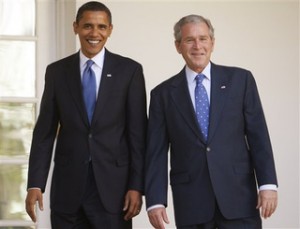
Barack Obama and George W. Bush at the White House
On Monday, The Washington Post dismissed the devastating airstrike at Deir al-Zour killing at least 62 Syrian soldiers as one of several “mishaps” that had occurred over the past week and jeopardized a limited ceasefire, arranged between Russia and the Obama administration.
But the fact that the U.S. and several allies have been routinely violating Syrian sovereign airspace to carry out attacks was not even an issue, nor is it a scandal that the U.S. military and CIA have been arming and training Syrian rebels. In the world of Official Washington, the United States has the right to intervene anywhere, anytime, for whatever reason it chooses.
President Barack Obama has even publicly talked about authorizing military strikes in seven different countries, including Syria, and yet he is deemed “weak” for not invading more countries, at least more decisively.
Democratic presidential nominee Hillary Clinton has vowed to engage in a larger invasion of Syria, albeit wrapping the aggression in pretty words like “safe zone” and “no-fly zone,” but it would mean bombing and killing more Syrian soldiers.
As Secretary of State, Clinton used similar language to justify invading Libya and implementing a “regime change” that killed the nation’s leader, Muammar Gaddafi, and unleashed five years of violent political chaos.
If you were living in a truly democratic country with a truly professional news media, you would think that this evolution of the United States into a rogue superpower violating pretty much every international law and treaty of the post-World War II era would be a regular topic of debate and criticism.
Those crimes include horrendous acts against people, such as torture and other violations of the Geneva Conventions, as well as acts of aggression, which the Nuremberg Tribunals deemed “the supreme international crime differing only from other war crimes in that it contains within itself the accumulated evil of the whole.”
Justifying ‘Regime Change’
Yet, instead of insisting on accountability for American leaders who have committed these crimes, the mainstream U.S. news media spreads pro-war propaganda against any nation or leader that refuses to bend to America’s imperial demands. In other words, the U.S. news media creates the rationalizations and arranges the public acquiescence for U.S. invasions and subversions of other countries.
In particular, The New York Times now reeks of propaganda, especially aimed at two of the current targets, Syrian President Bashar al-Assad and Russian President Vladimir Putin. With all pretenses of professionalism cast aside, the Times has descended into the status of a crude propaganda organ.
On Sunday, the Times described Assad’s visit to a town recently regained from the rebels this way: “Assad Smiles as Syria Burns, His Grip and Impunity Secure.” That was the headline. The article began:
“On the day after his 51st birthday, Bashar al-Assad, the president of Syria, took a victory lap through the dusty streets of a destroyed and empty rebel town that his forces had starved into submission.
“Smiling, with his shirt open at the collar, he led officials in dark suits past deserted shops and bombed-out buildings before telling a reporter that — despite a cease-fire announced by the United States and Russia — he was committed ‘to taking back all areas from the terrorists.’ When he says terrorists, he means all who oppose him.”
The story by Ben Hubbard continues in that vein, although oddly the accompanying photograph doesn’t show Assad smiling but rather assessing the scene with a rather grim visage.
But let’s unpack the propaganda elements of this front-page story, which is clearly intended to paint Assad as a sadistic monster, rather than a leader fighting a foreign-funded-and-armed rebel movement that includes radical jihadists, including powerful groups linked to Al Qaeda and others forces operating under the banner of the brutal Islamic State.
The reader is supposed to recoil at Assad who “smiles as Syria burns” and who is rejoicing over his “impunity.” Then, there’s the apparent suggestion that his trip to Daraya was part of his birthday celebration so he could take “a victory lap” while “smiling, with his shirt open at the collar,” although why his collar is relevant is hard to understand. Next, there is the argumentative claim that when Assad refers to “terrorists” that “he means all who oppose him.”
As much as the U.S. news media likes to pride itself on its “objectivity,” it is hard to see how this article meets any such standard, especially when the Times takes a far different posture when explaining, excusing or ignoring U.S. forces slaughtering countless civilians in multiple countries for decades and at a rapid clip over the past 15 years. If anyone operates with “impunity,” it has been the leadership of the U.S. government.
Dubious Charge
On Sunday, the Times also asserted as flat fact the dubious charge against Assad that he has “hit civilians with gas attacks” when the most notorious case – the sarin attack outside Damascus on Aug. 21, 2013 – appears now to have been carried out by rebels trying to trick the United States into intervening more directly on their side.
A recent United Nations report blaming Syrian forces for two later attacks involving chlorine was based on slim evidence and produced under great political pressure to reach that conclusion – while ignoring the absence of any logical reason for the Syrian forces to have used such an ineffective weapon and brushing aside testimony about rebels staging other gas attacks.
More often than not, U.N. officials bend to the will of the American superpower, failing to challenge any of the U.S.-sponsored invasions over recent decades, including something as blatantly illegal as the Iraq War. After all, for an aspiring U.N. bureaucrat, it’s clear which side his career bread is buttered.
We find ourselves in a world in which propaganda has come to dominate the foreign policy debates and – despite the belated admissions of lies used to justify the invasions of Iraq and Libya – the U.S. media insists on labeling anyone who questions the latest round of propaganda as a “fill-in-the-blank apologist.”
So, Americans who want to maintain their mainstream status shy away from contesting what the U.S. government and its complicit media assert, despite their proven track record of deceit. This is not just a case of being fooled once; it is being fooled over and over with a seemingly endless willingness to accept dubious assertion after dubious assertion.
In the same Sunday edition which carried the creepy portrayal about Assad, the Times’ Neil MacFarquhar pre-disparaged Russia’s parliamentary elections because the Russian people were showing little support for the Times’ beloved “liberals,” the political descendants of the Russians who collaborated with the U.S.-driven “shock therapy” of the 1990s, a policy that impoverished a vast number of Russians and drastically reduced life expectancy.
Why those Russian “liberals” have such limited support from the populace is a dark mystery to the mainstream U.S. news media, which also can’t figure out why Putin is popular for significantly reversing the “shock therapy” policies and restoring Russian life expectancy to its previous levels. No, it can’t be that Putin delivered for the Russian people; the only answer must be Putin’s “totalitarianism.”
The New York Times and Washington Post have been particularly outraged over Russia’s crackdown on “grassroots” organizations that are funded by the U.S. government or by billionaire financial speculator George Soros, who has publicly urged the overthrow of Putin. So has Carl Gershman, president of the National Endowment for Democracy (NED), which funnels U.S. government cash to political and media operations abroad.
The Post has decried a Russian legal requirement that political entities taking money from foreign sources must register as “foreign agents” and complains that such a designation discredits these organizations. What the Post doesn’t tell its readers is that the Russian law is modeled after the American “Foreign Agent Registration Act,” which likewise requires people trying to influence policy in favor of a foreign sponsor to register with the Justice Department.
Nor do the Times and Post acknowledge the long history of the U.S. government funding foreign groups, either overtly or covertly, to destabilize targeted regimes. These U.S.-financed groups often do act as “fifth columnists” spreading propaganda designed to undermine the credibility of the leaders, whether that’s Iranian Prime Minister Mohammad Mosaddegh in 1953 or Ukrainian President Viktor Yanukovych in 2014.
Imperfect Leaders
That’s not to say that these targeted leaders were or are perfect. They are often far from it. But the essence of propaganda is to apply selective outrage and exaggeration to the leader that is marked for removal. Similar treatment does not apply to U.S.-favored leaders.
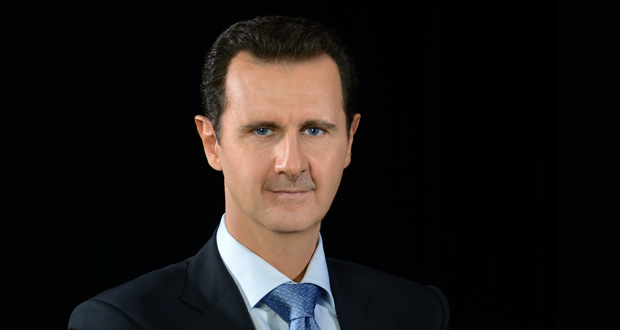
Syrian President Bashar al-Assad
The pattern of the Times and Post is also to engage in ridicule when someone in a targeted country actually perceives what is going on. The correct perception is then dismissed as some sort of paranoid conspiracy theory.
Take, for example, the Times’ MacFarquhar describing a pamphlet and speeches from Nikolai Merkushkin, the governor of Russian region of Samara, that MacFarquhar says “cast the blame for Russia’s economic woes not on economic mismanagement or Western sanctions after the annexation of Crimea but on a plot by President Obama and the C.I.A. to undermine Russia.”
The Times article continues: “Opposition candidates are a fifth column on the payroll of the State Department and part of the scheme, the pamphlet said, along with the collapse in oil prices and the emergence of the Islamic State. Mr. Putin is on the case, not least by rebuilding the military, the pamphlet said, noting that ‘our country forces others to take it seriously and this is something that American politicians don’t like very much.’”
Yet, despite the Times’ mocking tone, the pamphlet’s perceptions are largely accurate. There can be little doubt that the U.S. government through funding of anti-Putin groups inside Russia and organizing punishing sanctions against Russia, is trying to make the Russian economy scream, destabilize the Russian government and encourage a “regime change” in Moscow.
Further, President Obama has personally bristled at Russia’s attempts to reassert itself as an important world player, demeaning the former Cold War superpower as only a “regional power.” The U.S. government has even tread on that “regional” status by helping to orchestrate the 2014 putsch that overthrew Ukraine’s elected President Yanukovych on Russia’s border.
After quickly calling the coup regime “legitimate,” the U.S. government supported attempts to crush resistance in the south and east which were Yanukovych’s political strongholds. Crimea’s overwhelming decision to secede from Ukraine and rejoin Russia was deemed by The New York Times a Russian “invasion” although the Russian troops that helped protect Crimea’s referendum were already inside Crimea as part of the Sevastopol basing agreement.
The U.S.-backed Kiev regime’s attempt to annihilate resistance from ethnic Russians in the east – through what was called an “Anti-Terrorism Operation” that has slaughtered thousands of eastern Ukrainians – also had American backing. Russian assistance to these rebels is described in the mainstream U.S. media as Russian “aggression.”
Oddly, U.S. news outlets find nothing objectionable about the U.S. government launching military strikes in countries halfway around the world, including the recent massacre of scores of Syrian soldiers, but are outraged that Russia provided military help to ethnic Russians being faced with annihilation on Russia’s border.
Because of the Ukraine crisis, Hillary Clinton likened Vladimir Putin to Adolf Hitler.
Seeing No Coup
For its part, The New York Times concluded that there had been no coup in Ukraine – by ignoring the evidence that there was one, including an intercepted pre-coup telephone call between U.S. Assistant Secretary of State Victoria Nuland and U.S. Ambassador Geoffrey Pyatt discussing who should be made the new leaders of Ukraine.
The evidence of a coup was so clear that George Friedman, founder of the global intelligence firm Stratfor, said in an interview that the overthrow of Yanukovych “really was the most blatant coup in history.” But the Times put protecting the legitimacy of the post-coup regime ahead of its journalistic responsibilities to its readers, as it has done repeatedly regarding Ukraine.
Another stunning case of double standards has been the mainstream U.S. media’s apoplexy about alleged Russian hacking into emails of prominent Americans and then making them public. These blame-Russia articles have failed to present any solid evidence that the Russians were responsible and also fail to note that the United States leads the world in using electronic means to vacuum up personal secrets about foreign leaders as well as average citizens.
In a number of cases, these secrets appear to have been used to blackmail foreign leaders to get them to comply with U.S. demands, such as the case in 2002-03 of the George W. Bush administration spying on diplomats on the U.N. Security Council to coerce their votes on authorizing the U.S. invasion of Iraq, a ploy that failed.
U.S. intelligence also tapped the cell phone of German Chancellor Angela Merkel, whose cooperation on Ukraine and other issues of the New Cold War is important to Washington. And then there’s the massive collection of data about virtually everybody on the planet, including U.S. citizens, over the past 15 years during the “war on terror.”
Earlier this year, the mainstream U.S. news media congratulated itself over its use of hacked private business data from a Panama-based law firm, material that was said to implicate Putin in some shady business dealings even though his name never showed up in the documents. No one in the mainstream media protested that leak or questioned who did the hacking.
Such mainstream media bias is pervasive. In the case of Sunday’s Russian elections, the Times seems determined to maintain the fiction that the Russian people don’t really support Putin, despite consistent opinion polls showing him with some 80 percent approval.
In the Times’ version of reality, Putin’s popularity must be some kind of trick, a case of totalitarian repression of the Russian people, which would be fixed if only the U.S.-backed “liberals” were allowed to keep getting money from NED and Soros without having to divulge where the funds were coming from.
The fact that Russians, like Americans, will rally around their national leader when they perceive the country to be under assault – think, George W. Bush after the 9/11 attacks – is another reality that the Times can’t tolerate. No, the explanation must be mind control.
The troubling reality is that the Times, Post and other leading American news outlets have glibly applied one set of standards on “enemies” and another on the U.S. government. The Times may charge that Bashar al-Assad has “impunity” for his abuses, but what about the multitude of U.S. leaders – and, yes, journalists – who have their hands covered in the blood of Iraqis, Libyans, Afghans, Yemenis, Syrians, Somalis and other nationalities. Where is their accountability?
Investigative reporter Robert Parry broke many of the Iran-Contra stories for The Associated Press and Newsweek in the 1980s. You can buy his latest book, America’s Stolen Narrative, either in print here or as an e-book (from Amazon and barnesandnoble.com).
Timing & other aspects of US strike on Syrian army suggest intentional provocation – Churkin
RT | September 18, 2016
The US’ sudden attempt to “help” the Syrian army fighting ISIS in the eastern city of Deir ez-Zor, which resulted in a strike that killed and injured dozens of soldiers, does not look like an honest mistake, Russia’s UN envoy told journalists at the UNSC meeting.
“It is highly suspicious that the United States chose to conduct this particular air strike at this time,” Russia’s ambassador Vitaly Churkin said.
Churkin questioned why the US suddenly chose to “help” the Syrian army defend Deir ez-Zor after all these years, recalling how American forces just observed terrorists’ movements and did “nothing when ISIS advanced on Palmyra.”
“It was quite significant and not accidental that it happened just two days before the Russian-American arrangements were supposed to come into full force,” Churkin added.
Vitaly Churkin spoke to journalists after briefly leaving the closed-door UN Security Council meeting, which was convened by Moscow to give Washington a chance to offer an explanation for the actions of its military.
However, instead of discussing the issue, US ambassador Samantha Power immediately left the room to address the press and accuse Russia of hypocrisy.
The US envoy to the UN spent some 30 seconds expressing “regret” over the unfortunate coalition airstrike that resulted in the loss of the lives of Syrian soldiers, and insisting that even if the ongoing investigation proves the US military is indeed to blame, it had never been their “intention” to strike Syrian military.
After that, Power spent the next 15 minutes slamming Moscow’s “uniquely hypocritical and cynical” attempt to make Washington explain itself at an urgent UNSC meeting.
“Why are we having this meeting tonight? It is a diversion from what is happening on the ground. If you don’t like what is happening on the ground then you distract. It is a magician’s trick… we encourage the Russian Federation to have emergency meetings with the Assad regime and deliver them to this deal,” said Samantha Power.
“What Russia is alleging tonight is that somehow the United States is undermining the fighting against ISIL. The Russian spokesperson even said that the United States might be complicit in this attack … this is not a game,” she added, before going into details of how Assad government is to blame for the dire situation in Syria.
Russian Foreign Ministry: White House ‘Defending the Islamic State’ Terrorists
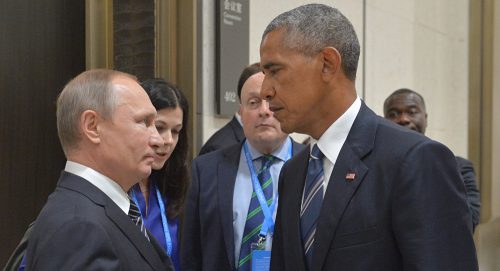
© Sputnik/ Alexei Druzhinin
Sputnik – 17.09.2016
Russia says that the situation in Syria is worsening finding that the rebels have intensified their attacks since the ceasefire came into force on September 12 and laying the blame at the feet of Washington for failing to crackdown on jihadists.
The Russian Foreign Ministry issued a scathing response to the Obama administration after a US Central Command statement suggested that the US-led coalition had warned Russia prior to the airstrikes against Syrian Army positions at Deir Ez-Zor that left some 62 Assad regime soldiers dead.
The statement by the Foreign ministry comes in the wake of accusations by Russia that the United States has not been dealing in good faith in the ceasefire agreement with Russian General Vladimir Savchenko saying that “the situation is worsening” with rebel forces escalating their attacks since the agreement went into force on September 12.
“Russia is exerting all possible effort to restrain Government troops from returning fire,” Senior Army General Viktor Poznikhir said.
The harsh response by Russia comes not only after the United States attempted to flip the blame on Moscow for the attack that killed 80 forces according to the SANA news agency, but also after reports that Daesh terrorists engaged in a major offensive right after the American airstrike crippled the Assad regime’s forces.
Speaking on Rossiya 24 Television the Rusisan Foreign Ministry Spokesperson Maria Zakharova said: “If earlier we had suspicions that the Nusra Front is protected this way, now, after today’s airstrikes on the Syrian army we come to a really terrifying conclusion for the entire world: the White House is defending IS [Islamic State or Daesh).”
US-led coalition aircraft strike Syrian army positions, kill 62 soldiers – military
RT | September 17, 2016
US-led coalition jets have bombed Syrian government forces’ positions near the eastern city of Deir ez-Zor, killing 62 troops and “paving the way” for Islamic State militants, the Syrian Army General Command told the state television.
According to Syria’s official SANA news agency, the bombing took place on al-Tharda Mountain in the region of Deir ez-Zor and caused casualties and destruction on the ground.
Sixty-two Syrian soldiers were killed and over 100 injured in the airstrike by the US-led coalition, Russia’s Defense Ministry spokesman, Major-General Igor Konashenkov, said, citing information received from the Syrian General Command.
“We are aware of the reports and checking with Centcom and CJTF (Combined Joint Task Force),” the Pentagon told RT.
The Russian Defense Ministry said on Saturday that the aircraft which carried out the bombings had entered Syrian airspace from the territory of Iraq.
Four strikes against Syrian positions was performed by two F-16 jet fighters and two A-10 support aircraft, it added.
“If the airstrike was caused by the wrong coordinates of targets than it’s a direct consequence of the stubborn unwillingness of the American side to coordinate with Russia in its actions against terrorist groups in Syria,” Konashenkov stressed.
The Defense Ministry also confirmed a report by SANA that an Islamic State offensive began right after Syrian Army positions were hit from the air.
“Immediately after the airstrike by coalition planes, Islamic State militants launched their offensive. Fierce fighting with the terrorists is currently underway in the area of the airport where for a long a time humanitarian aid for civilians was parachuted,” Konashenkov said.
The Syrian General Command has called the bombing a “serious and blatant aggression” against Syrian forces, and said it was “conclusive evidence” that the US and its allies support IS militants.
Earlier on Saturday, Russia accused the US of being reluctant to take measures to force rebels under its control to fall in line with the terms of the Syrian ceasefire.
Numerous Russian appeals to the American side remain unanswered, which “raises doubts over the US’s ability to influence opposition groups under their control and their willingness to further ensure the implementation of the Geneva agreements,” senior Russian General Staff official, Viktor Poznikhir, said.
Poznikhir also said that the truce is being used by the militants to regroup, resupply and prepare an offensive against government troops.
Last week, Moscow and Washington agreed to influence the Syrian government and the so-called moderate rebel forces respectively in order to establish a ceasefire in the country.
Since then, Russia has repeatedly complained that the US is failing to keep its part of the bargain. The US, on its part, has blamed Russia for not pressuring Damascus enough to facilitate humanitarian access to Syria.
US & US-controlled forces haven’t fulfilled any Syria ceasefire deal obligations – Russian Army
RT |September 17, 2016
The US is still reluctant to take measures to force rebels under its control to implement the Syrian ceasefire, Russia’s Defense Ministry said, adding that if things do not change, Washington will be the sole side responsible for the failure of the truce.
“After five days of the ceasefire, it has to be noted that only the Russian and Syrian sides have been fully implementing their commitments. On its own initiative, Russia prolonged the cessation of hostilities for 48 hours, and yesterday it was extended for another 72 hours,” senior Russian General Staff official, Viktor Poznikhir, said at a briefing in Moscow.
But, according to Poznikhir, it is very different on the American side as “the US and the so-called moderate groups under their control didn’t fulfill a single commitment undertaken in the framework of the Geneva arrangements.”
The Russian official pointed out that “the main priority of the Russian-American agreements of September was the division of territories controlled by IS (Islamic State, formerly ISIS/ISIL), Jabhat al-Nusra, and the areas controlled by the ‘moderate opposition,’ as well the separation of the ‘moderate opposition’ from Jabhat al-Nusra.”
Such a division is essential for the implementation of the ceasefire in Syria because “without it, the hands of the government forces are tied. They can’t fight the terrorists without knowing which of them joined the truce and who didn’t,” he explained.
Numerous Russian appeals to the American side remain unanswered, which “raises doubts over the US’s ability to influence opposition groups under their control and their willingness to further ensure the implementation of the Geneva agreements.
“Russia is making every possible effort to hold off government troops from the use of force in return [to opposition attacks]. If the US does not implement the necessary measures to fulfill their obligations under the September 9 agreements, the responsibility for the failure of the ceasefire will be solely America’s,” Poznikhir said.
The inaction of the American side has already led to a worsening of the situation in Syria, the General Staff official stressed.
“Tensions are rising in Syria, especially in the provinces of Aleppo and Hama, where opposition groups are using the cessation of hostilities to regroup forces, refill their stocks of ammunition and weapons and are preparing an offensive in order to capture new territories,” he said.
“In the past 24 hours, the number of attacks has increased drastically. The positions of government troops, the people’s militia, and civilians were fired at on 55 occasions,” Poznikhir added.
Last week, Russia’s Foreign Minister, Sergey Lavrov, and US Secretary of State, John Kerry, agreed to influence the Syrian government and the so-called moderate rebel forces respectively in order to establish a ceasefire in the country.
Since then, Russia has repeatedly complained that the US is failing to keep its part of the bargain. While the US, on its part, blamed Russia for not pressuring Damascus enough to facilitate humanitarian access to Syria.
Lavrov talked to Kerry on the phone Saturday, urging Washington to start influencing the opposition in Syria in order to expand humanitarian access in the country, the Russian Foreign Ministry said.
The FM also called on the American side to actively participate in monitoring the Syrian ceasefire instead of merely accusing Syrian government forces of violations.
“Due to Washington’s continuing claims of ceasefire violations by the Syrian government forces, the Russian Foreign Minister urged them to go beyond accusations and to ensure the US military’s full-fledged participation in the ceasefire control mechanism created as far back as February and March and to take action against violations,” the ministry said in a statement.
Lavrov also stressed that “as result of Russia’s efforts, the issues of putting on track cooperation between the Syrian authorities and the United Nations in the area of broader humanitarian access are being solved, though not without difficulty.”
Who killed Vladimir Petukhov?

Farida Islamova, widow of murdered mayor Vladimir Petukhov
OffGuardian | September 17, 2016
However much the likes of the Guardian try to portray Mikhail Borisovich Khodorkovsky as a champion of freedom who suffered under the yoke of government oppression before escaping tyranny for the freedom of the West, the fact remains he was and is more Capone than Solzhenitsyn; a greedy robber-baron and willing tool of US hegemony, who exploited his country’s darkest hour, cheated his workforce and eventually served a well-deserved term in prison for fraud, tax-evasion and money-laundering, before scuttling out of his mother-land to live the life of a celebrated “pro-democracy” exile.
It’s less widely understood that there are even darker things being laid at his door than corruption, theft and opportunistic lying for profit. Murder for example. But yes, in 2015, Russian Interpol put Khodorkovsky on a wanted list in connection with the murder of a Siberian city mayor in 1998.
Vladimir Petukhov was the first mayor of oil-rich Nefteyugansk. Popular locally and considered to be a man of the people, he was shot dead on his way in to work, June 26, 1998. A subsequent criminal investigation described the killing as an assassination, and implicated two members of Khodorkovsky’s Yukos Oil Company in a plot to be rid of the Mayor.
A court eventually sentenced Alexei Pichugin to life in prison for multiple murders and attempted murders. His boss Khodorkovsky was not accused of, or prosecuted for, any involvement, though many have claimed he may have known more than he claimed. According to Pravda :
In May 1998 Petukhov accused Yukos of tax evasion, which resulted in the shortage of funds in the local budget to pay wages to employees of state-run enterprises. The mayor went on a hunger strike demanding chairmen of municipal and district tax offices be dismissed from their positions and a criminal case against Yukos be filed on counts of tax evasion.
Vladimir Petukhov was shot dead on June 26 on his way to work.
Local residents took to the streets soon after the assassination of their mayor. Many attempted to seize the local office of Yukos. The Office of the Prosecutor General of the Russian Federation brought assassination charges against an employee of Yukos’s security service, Aleksei Pichugn, only in 2005.
Petukov’s wife, Farida Islamova was and is convinced Mikhail Borisovitch was involved in the plot to murder her husband, and for many years she has been trying to have him brought to justice. She has even written a book – Khodorkovsky, who killed my Husband?, given an English language translation in 2014. In it she says:
Vladimir Petukhov, Mayor of Nefteyugansk, was shot down on his way to work, not far from the municipal administration building. The killer fired several submachine gun bursts from the cover of nearby bushes. Later on, the investigators would find 18 empty cases at the crime scene. In the face of such fire-power, the unarmed security man, Vyacheslav Kokoshkin, was helpless, he himself took several bullets, has never recovered from his wounds… At that time he was only 30 years old, and still today lives with one of these bullets – a sort of a message from Khodorkovsky – in his body…..
Vladimir Petukhov died in the hospital several hours after the attempt. That was a planned contract assassination…
Unsurprisingly, Farida has had little success in getting the English-language media to take interest in her story. No mainstream outfit has covered her book. Her wait for justice drags on as the western media continues to fete Mikhail Borisovich, embezzler of state funds, tax-evader and suspected murderer, as a symbol of the values they hold most dear.
Then again – maybe that’s not as stupid as it first sounds.
Featured Video
Can the U.S. Afford to Annihilate Iran?
or go to
Aletho News Archives – Video-Images
Book Review
The Genetic Deception — now in paperback (Second Edition)
Lies are Unbekoming | October 2, 2026
The genes the field promised were never there.
The genetic story of disease is a cover story.
The twenty-first century runs on it. Paediatric clinics. Cancer centres. Forensic laboratories. Family-planning counsel. It is used to explain illness, to assign blame, to foreclose questions. It protects the industries whose products and practices are what actually caused the harm.
It isn’t true.
In 2010, Jonathan Latham and Allison Wilson looked at over seven hundred genome-wide association studies covering some eighty common diseases. The genes the field had promised were not there. The field invented a term, “missing heritability”, to explain the absence, and has quietly worked to bury the finding ever since.
The Genetic Deception is a book about what Latham and Wilson found. What the field did with it. And what the public was told instead. … continue
Blog Roll
 Aletho News
- Are Europe’s Smallest Nations Dragging the Continent into War?
- EU draws up contingency plans for possible Merz exit
- G7 caves to US blackmail, announces ‘massive’ release of diesel reserves
- Reporting of the RAF Fairford arrests blows the idea of a ‘free press’ out of the water
- US increasing Middle East military buildup – AP
- Flydubai scenario: Netanyahu’s plot to drag US to war with Iran, stay in power
- The Genetic Deception — now in paperback (Second Edition)
- Can the U.S. Afford to Annihilate Iran? /Seyed M. Marandi
- Elmo Sold mRNA Jabs to Your Toddler. Now They Are “Off-Label.”
- British state targets Palestine Action with yet another crooked trial
- If Americans Knew
- Jordan Has Had Enough: King Abdullah’s Scathing Warning to Israel
- Israeli Colonizers (i.e. Settlers) Kill Palestinian Man Near Salfit
- New Google Maps images reveal massive scale of devastation in Gaza
- Jewish supremacy, anti-Palestinian bigotry on display in Israel – Daily Update
- Israeli Soldiers Abduct At Least 22 Across Occupied West Bank
- Eight Palestinians Killed in Israeli Attacks on Gaza
- Israeli former leaders and security chiefs threaten legal action over ‘Jewish terrorism’
- Israel map in LA Times ad includes all land from the river to the sea
- Inside Lebanon’s 200-page dossier on Israeli war crimes
- Flydubai, genocide, settler violence, Trump abuse of power to deport – Daily Update
- No Tricks Zone
- Green Energy Debacle: German Expert Professor Fritz Vahrenholt Warns Of Severe Economic And Social Consequences
- Two More Paleo Reconstructions Affirm Meters-Higher Sea Levels Across Ireland, Brazil 7000-6000 Years Ago
- New Study: Earth And Venus Surface Warmth Largely Explained By Convection And Lapse Rate, Not CO2 Or Radiation
- 2025 Nature Paper Claiming Worsening Global Drought Gets RETRACTED …Heavily Flawed
- New Study: ‘Global Drought Shows No Detectable Recent Acceleration Under Climate Warming’
- Economic Masterminds: German Socialists Suggest Taxing Productivity Gains Stemming From Using AI
- The South China Sea Has Not Been Cooperating With The Climate Change Narrative
- Energy Crisis: Germany Enters Heating Season With Historically Low Gas Reserve Fill Levels
- New Study: The Antarctic Ice Sheet Gained Mass From 2020-2024 Due To Staggering Snow And Ice Accumulation
- Study: Ocean Heating Rates From Thousands Of Years Ago ‘Dwarf’ Modern Ocean Heating Rates

