BRICS create new Development Bank as well as a $100 billion foreign currency reserves pool
By Helmo Preuss | The BRICS Post | July 15, 2014
Fortaleza, Brazil – After some tough rounds of negotiations, BRICS nations (Brazil, Russia, India, China and South Africa) have created not only a new $100 billion Development Bank, but also a $100 billion foreign currency reserves pool.
The announcement was made after a plenary meet of the five BRICS heads of state in Fortaleza on Tuesday.
Shanghai finally won the bid to host the Bank while India will get the presidency of the Bank for the first six years. The Bank will have a rotating chair. The Bank will also have a regional office in Johannesburg, South Africa. All the five countries will have equal shareholding in the BRICS Bank.
The five Finance Ministers will constitute the Bank’s board which will be chaired by Brazil.
The Bank will initially be involved in infrastructure projects in the BRICS nations.
The authorized, dedicated and paid in capital will amount to $100 billion, $50 billion and $10 billion respectively.
The idea of the BRICS Bank was proposed by India during the 2012 Summit in New Delhi.
BRICS have long alleged that the IMF and World Bank impose belt-tightening policies in exchange for loans while giving them little say in deciding terms. Total trade between the countries is $6.14 trillion, or nearly 17 percent of the world’s total. The last decade saw the BRICS combined GDP grow more than 300 per cent, while that of the developed word grew 60 per cent.
Apart from the new development Bank, the group of five leading emerging economies also created a Contingency Reserve Arrangement on Tuesday.
BRICS central banks will keep their reserves in gold and foreign currencies.
China will fund $41 billion, Brazil, India and Russia $18 billion each and South Africa with $5 billion. The funds will be provided according to a multiple. China’s multiple is 0.5, which means that if needed, the country will get half of $41 billion. The multiple is 2 for South Africa and 1 for the rest.
BRICS Finance ministers or central banks’ governors will form a governing body to manage the CRA while it will be presided over by the BRICS President.
The BRICS CRA will not be open to outsiders.
Meanwhile, at the Summit in Fortaleza, Russian President Vladimir Putin said BRICS must form an energy alliance.
“We propose the establishment of the Energy Association of BRICS. Under this ‘umbrella’, a Fuel Reserve Bank and BRICS Energy Policy Institute could be set up,” Putin said on Tuesday.
9 EU countries ready to block economic sanctions against Russia
RT | July 15, 2014
France, Germany, and Italy are among EU members who don’t want to follow the US lead and impose trade sanctions on Russia. US sanctions are seen as a push to promote its own multibillion free-trade pact with Europe.
“France, Germany, Luxembourg, Austria, Bulgaria, Greece, Cyprus, Slovenia, and EU President Italy see no reason in the current environment for the introduction of sectorial trade and economic sanctions against Russia and at the summit, will block the measure,” a diplomatic source told ITAR-TASS.
In order for a new wave of sanctions to pass, all 28 EU members must unanimously vote in favor. EU ministers plan to discuss new sanctions against Russia at their summit in Brussels on Wednesday, July 16. Even if only one country vetoed, sanctions would not be imposed. With heavyweights like France and Germany opposed to more sanctions the measure will likely again be stalled, the source said.
According to the source, the US sees slapping Russia with sanctions as a way to promote its own trade agenda with Europe, a side rarely explored in mainstream media. The Transatlantic Trade and Investment Partnership (TTIP) between the US and Europe would create the world’s largest free trade zone, but some worry it could balloon into an “economic NATO” or could end up putting corporate interests above national.
“Last year the EU and the US started difficult negotiations on a free trade agreement, which would force the EU into serious concessions, in particular, agricultural quality standards and regulation on genetically modified products. In this circumstance, restrictions against Russia will force EU countries to expand trade with the US,” the source said, citing shale gas as an example.
On June 20, Czech President Milos Zeman came out against sanctioning Russia, saying there is “no reason” to further “isolate” the country.
America was successful in getting Europe to toe its sanctions agenda at the height of the Ukraine crisis, but now Russia has removed its troops from the Ukraine border and promised peace in the region, Europe isn’t interested in further sanctions.
The EU initially followed the US cue when it imposed sanctions on Russia after the reunification of Crimea in March, but these measures were limited to politicians and businessmen. The EU unleashed a second round which expanded the list to over 72 individuals, who cannot enter the EU or access any assets there.
Boomerang effect
Russian officials maintain that sanctions are counterproductive, and will end up hurting the West more than they will Russia.
Another reason EU countries are wary of slapping Russia with economic sanctions is the possible spillover effect. Unlike the US, European countries rely heavily on Russia as a trading partner, especially for natural gas. The World Bank estimates that if sanctions escalate European gas prices could jump 50 percent.
Europe clearly has much more to lose by punishing its neighbor, with annual trade in goods and services worth $330 billion. American trade with Russia, by contrast is just a tenth of that at $38.1 billion.
Deals with UK-based BP, US-based Weatherford International, and ExxonMobil, continue to show that most countries continue to do business with Russia, politics aside.
Italy was the first country to speak out against Russian sanctions. Rosneft, the world’s largest listed oil company, recently acquired a 26.2 percent stake in Italian tire company Pirelli. Igor Sechin, boss of Rosneft and on the US sanctions list, joined the board of the Milan-based company. Three other Rosneft representatives, as well as the CEO of Russia’s second largest bank, VTB, sit on the board.
Russia backs Argentina’s call to curb Western dominance
Press TV – July 13, 2014
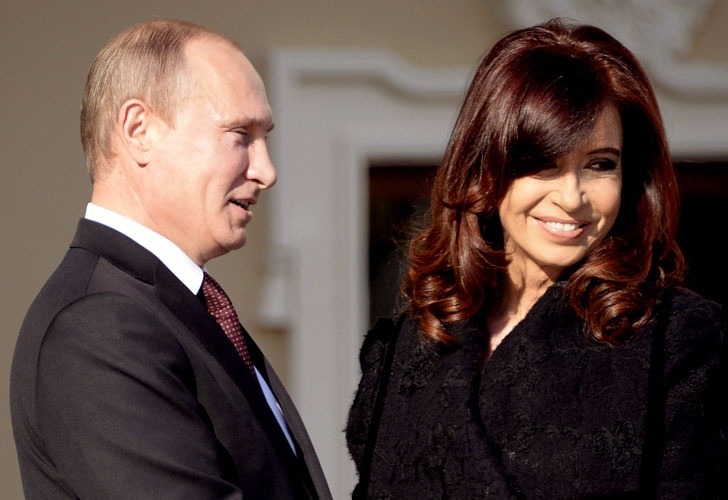
Russian President Vladimir Putin has endorsed a call by his Argentinean counterpart Cristina Fernandez de Kirchner to curb Western dominance in international politics.
Putin gave his support during a meeting with Kirchner in the Argentinean capital, Buenos Aires, on Saturday.
The Russian leader also said Moscow and Buenos Aires share a close view on international relations.
During the meeting, Kirchner emphasized that global institutions must be overhauled and made more multilateral, adding, “We firmly believe in multipolarity, in multilateralism, in a world where countries don’t have a double standard.”
In addition, the two leaders discussed military cooperation and oversaw their delegations signing a series of bilateral deals, including one on nuclear energy.
Putin’s visit to Argentina is part of his six-day tour of Latin America aimed at boosting trade and ties in the region, according to Russian state media.
The Russian leader’s trip will next take him to Brazil, where he is scheduled to attend the gathering of the economic alliance, BRICS (Brazil, Russia, India, China and South Africa), in Brazil on July 15 and 16.
Putin’s Latin American tour began on July 11 in Cuba, where he met with President Raul Castro and his brother, Fidel Castro. During his stay in the capital, Havana, Putin signed a law writing off 90 percent of Cuba’s USD 35-billion Soviet-era debt.
Following his visit to Cuba, Putin made a surprise visit to Nicaragua, where he held talks with President Daniel Ortega.
Russia, Serbia agree €2.1bn South Stream construction deal
RT | July 9, 2014
Serbia has signed a 2.1 billion euro contract with Gazprom subsidiary Centrgaz to construct the South Stream pipeline across its territory. There is increasing pressure from the EU to suspend the project because it claims it breaks competition law.
Centrgaz will be involved in the design, procurement, construction and installation activities, personnel training and commissioning, while Serbian subcontractors will carrying out some of the work, according to South Stream.
The signing ceremony was held in Serbia on Tuesday between South Stream Serbia and Centrgaz.
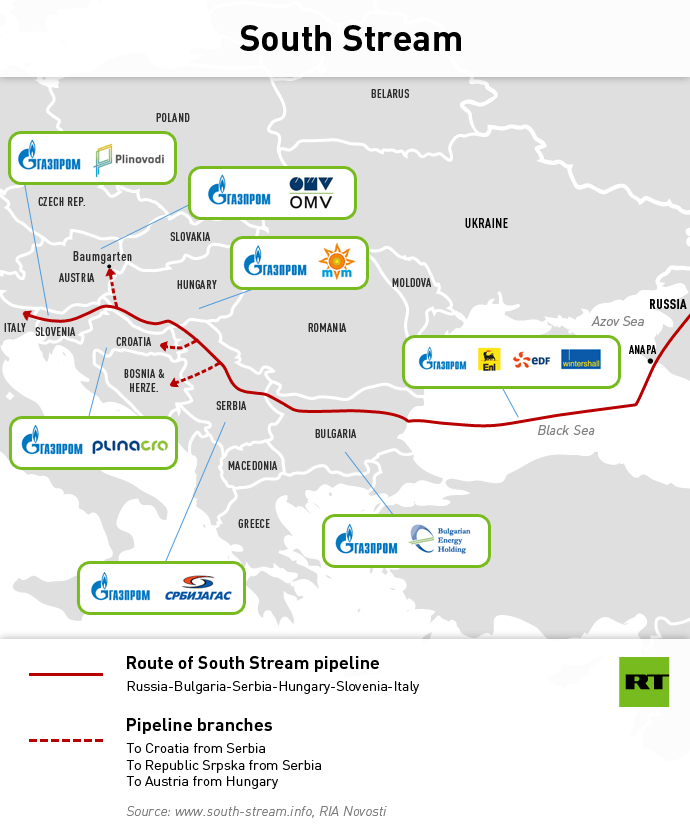 Gas should be flowing through the Serbian part of the pipeline by the end of 2016, according to RIA Novosti.
There has been mounting pressure from the EU to put the project on hold, as it is seen to breach European law.
Serbia had appeared to have halted the construction process, following Bulgaria’s move, however both countries later denied they were not going forward.
Most of the participating countries have confirmed their commitment to South Stream construction.
On Wednesday Russia and Italy said they would continue work on South Stream and were ready “to settle all of the issues, including those that concern dialog with the European Commission,” according to Russian Foreign Minister Sergey Lavrov.
On Tuesday, Slovenia’s Foreign Minister Karl Erjavec said the country wanted “South Stream to pass through our territory.”
Further support for the Russian-led project came from Bulgaria on Monday, when the Prime Minister Plamen Oresharski said it was one of the country’s priority projects. The comment was made after a meeting with Russian Foreign Minister Sergey Lavrov in Sofia. “I believe that we have enough arguments to continue the project,” Oresharski said, adding that the government will work as hard as it can to continue it within the European legislation.
Russian Prime Minister Dmitry Medvedev said the deal on the Serbian part of South Stream would “… mean the transition of our relations with Serbia to a new phase.”
South Stream is a Gazprom project expected to deliver 63 billion cubic meters of Russian gas annually to Europe bypassing Ukraine, which has proved unreliable as a transit partner. The on land part of South Stream goes through Bulgaria, Serbia, Hungary, Slovenia and Austria.
New Russian law bans citizens’ personal data being held on foreign servers
RT | July 5, 2014
All internet companies collecting personal information from Russian citizens are obliged to store that data inside the country, according to a new law. Its supporters cite security reasons, while opponents see it as an infringement of freedoms.
The law, passed Friday by the State Duma, the lower chamber of the Russian parliament, would come into force Sept. 1, 2016. The authors of the legislation believe that it gives both foreign and domestic internet companies enough time to create data-storage facilities in Russia.
The bill was proposed after some Russian MPs deemed it unwise that the bulk of Russians’ online personal data is held on foreign servers, mostly in the US.
“In this way foreign states possess full information, correspondence, photographs of not only our individuals, but companies as well,” one of the authors of the bill, Vadim Dengin of the Liberal Democratic Party (LDPR) told Itar-Tass. “All of the [internet] companies, including the foreign ones, you are welcome to store that information, but please create data centers in Russia so that it can be controlled by Roscomnadzor (the Federal Communications Supervisory Service) and there would be a guarantee from the state that [the data] isn’t going anywhere.”
Russian MPs believe the new law is in tune with the current European policy of trying to legally protect online personal data. Deputy chairman of the Duma’s committee on information policy, Leonid Levin, said the Russian law serves goals similar to those of the recent decision by European Court of Justice, which endorsed the so-called “right to be forgotten,” obliging Google to remove upon request links to personal data.
“The security of Russians’ personal data is one of the basic rights that should be protected, legally and otherwise,” Levin said, Russian Forbes reported.
Websites that don’t comply with the law will find themselves blacklisted by Roscomnadzor, which will then have the right to limit access to them.
Critics of the law believe it could be used by authorities for censorship, however.
“The aim of this law is to create … [another] quasi-legal pretext to close Facebook, Twitter, YouTube and all other services,” Internet expert and blogger Anton Nossik told Reuters.
Some are afraid two years could be not enough for certain companies to have their online data storage organized in Russia. Particular concern has been voiced in relation to online hotel and plane ticket booking services.
Leading Russian airlines Aeroflot and Transaero, for example, use the same GDS system for online ticket sales as most of the other airlines in the world. Developing the Russian system might take longer than the law allows.
“If the law is passed in its current version, then Russians won’t be able to take a plane not only to Europe, they won’t even be able to by an online ticket from Moscow to St Petersburg,” director general of internet payment provider ChronoPay, Aleksey Kovyrshin, said previously to RBC.
The Russian Association for Electronic Communications (RAEC), an NGO focused on Russian internet issues, has warned of the potential economic losses the law might entail.
“The law puts under question cross-border transmission of personal data,” RAEC said in a statement. “Passing similar laws on the localization of personal data in other countries has led to withdrawal of global services and substantial economic losses.”
NATO arming Ukraine with Soviet weapons
RT | July 4, 2014
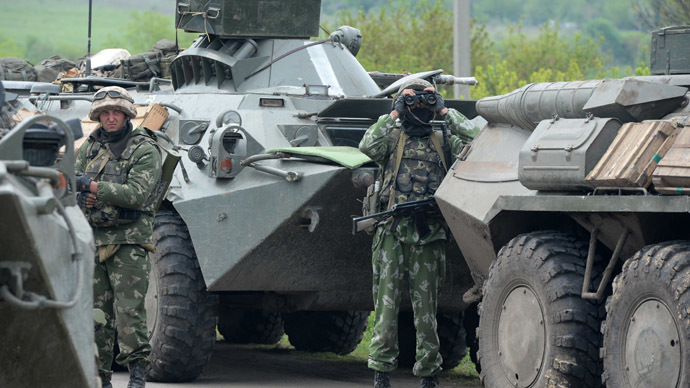
NATO’s newest Eastern European members are handing over their Soviet arms stockpiles to the Ukrainian army, Russia’s Deputy PM Dmitry Rogozin says, adding that the alliance is in danger of pouring gasoline on the flames of that country’s civil war.
Rogozin, who supervises the Russian military industry, has tweeted that NATO is asking its newest members to get rid of operable Soviet military equipment and send it to Ukraine, to aid the miserable state of the country’s military hardware.
“In turn, the US is ready to compensate for the “losses” of the newly co-opted NATO member states. The American military-industrial complex must be happy,” Rogozin wrote in his Twitter account.
“By the way, this is NATO’s commonplace to put out civil wars’ fire with aviation kerosene,” Rogozin added.
Over the months of Ukraine’s hot political crisis, NATO member states, primarily the US, announced they are planning non-lethal aid to Ukrainian troops, supplying uniforms and tents, and even promising to deploy a number of military instructors to train the Ukrainian army to fight the adherents of federalization of the country in Eastern Ukraine.
Political commentator Mikhail Rostovsky told RIA Novosti news agency that the “US and EU are thinking not about Ukraine but about the neutralization of Russia.”
Rostovsky compared the current policies of the European and American leaders with that of British PM Margaret Thatcher and French President François Mitterrand towards the reunification of East and West Germany in 1990.
Speaking loudly about “the European choice for Ukraine,” the EU and US politicians are essentially seeking ways to drive a wedge between Moscow and Kiev to neutralize what they regard as Russia’s possible “imperial ambitions,” Rostovsky said. “We’re dealing with politics dictated by fear: God forbid the Kremlin’s imperial instincts got awakened! This is a matter of principle to deny the Kremlin such an opportunity and break Ukraine away from Russia.”
Rostovsky said he fully agreed with German Foreign Minister Frank-Walter Steinmeier, who told Der Spiegel in late April that Europe has slid “into the worst crisis since the end of the Cold War.”
“Those who can remember the fall of the Berlin Wall know what we’ve accomplished over the past 25 years. The gains we’ve made almost everywhere in Europe in terms of peace, freedom and prosperity are now at risk,” Steinmeier said, adding that that it was important to take “every measure to prevent things [in Ukraine] from getting worse.”
Putin to West: Stop turning world into ‘global barracks,’ dictating rules to others
RT | July 1, 2014
Russia’s president has blamed the turmoil in Ukraine on the country’s newly-elected leader Petro Poroshenko. Vladimir Putin also criticized the West for its intention to turn the planet into a “global barracks.”
Russia’s president has laid the blame for the ongoing turmoil between Kiev and south-eastern regions squarely at the feet of Petro Poroshenko, after the Ukrainian leader terminated the ceasefire.
He has stressed that Russia and European partners could not convince Poroshenko to not take the path of violence, which can’t lead to peace.
“Unfortunately, President Poroshenko has made the decision to resume military actions, and we – meaning myself and my colleagues in Europe – could not convince him that the way to reliable, firm and long-term peace can’t lie through war,” Putin said. “So far, Petro Poroshenko had no direct relation to orders to take military action. Now he has taken on this responsibility in full. Not only military, but also political, more importantly.”
On Monday, the leaders of Russia, France, Germany and Ukraine held a phone call in which Putin stressed the need to prolong the ceasefire and the creation of “a reliable mechanism for monitoring compliance with it and the OSCE [Organization for Security and Cooperation in Europe] should play an active role.”
Russia offered that checkpoints on the Russian side should be monitored by representatives of the Ukrainian Border service as well as OSCE observers for “the joint control of the border.”
As the violent conflict continues in the east of Ukraine and the number of refugees fleeing to Russia grows, Putin vowed to provide help to everyone who needs it.
“Everything that’s going on in Ukraine is of course the internal business of Ukrainian government, but we are painfully sorry that people die, civilians,” Putin said. He added that the killing of journalists was “absolutely unacceptable.”
“In my opinion, there is a deliberate attempt to eliminate representatives of the press going on. It concerns both Russian and foreign journalists,” the president said.
Speaking in front of ambassadors on Tuesday, Putin expressed hope that Western partners will stop imposing their principles on other countries.
“I hope pragmatism will still prevail. The West will get rid of ambitions, pursuits to establish a ‘world barracks’ – to arrange all according to ranks, to impose uniform rules of behavior and life of society,” Putin said.
“I hope the West will start building relations based on equal rights, mutual respect and mutual consideration of interests.”
Putin recalled the situation with France and the delivery of the Mistral-class ships that was agreed between Moscow and Paris, but was jeopardized in March.
“We know about the pressure that our American partners put on the French so that they would not deliver the Mistral [ships] to Russia,” Putin said. “And we know that [they] hinted that if the French don’t deliver Mistral, sanctions on banks will be gradually removed, or at least minimized. What is this, if not blackmail?”
Russia is ready to have dialogue with the US only on the basis of equality, Putin added.
“We are not going to stop our relations with the US. The bilateral relations are not in the best shape, that is true. But this – and I want to emphasize – is not Russia’s fault,” he told diplomats.
Speaking about international relations, Putin stressed that Russia always tried to be “predictable, to do business on an equal basis”, however, in return, its interests were quite often ignored.
War is Our Business and Business Looks Good
By Edward S. Herman | Z Magazine | June 28, 2014
It is enlightening to see how pugnacious the U.S. establishment, led by the Peace Laureate, has been in dealing with the Ukraine crisis. The crisis arguably began when the Yanukovich government rejected an EU bailout program in favor of one offered by Russia. The mainstream media (MSM) have virtually suppressed the fact that the EU proposal was not only less generous than the one offered by Russia, but that whereas the Russian plan did not preclude further Ukrainian deals with the EU the EU plan would have required a cut-off of further Russian arrangements. And whereas the Russian deal had no military clauses, that of the EU required that Ukraine affiliate with NATO. Insofar as the MSM dealt with this set of offers they not only suppressed the exclusionary and militarized character of the EU offer, they tended to view the Russian deal as an improper use of economic leverage, “bludgeoning,” but the EU proposal was “constructive and reasonable” (Ed., NYT, Nov. 20, 2014). Double standards seem to be fully internalized within the U.S. establishment.
The protests that ensued in Ukraine were surely based in part on real grievances against a corrupt government, but they were also pushed along by rightwing groups and by U.S. and allied encouragement and support that increasingly had an anti-Russian and pro-accelerated-regime-change flavor. They also increased in level of violence. The sniper killings of police and protesters in Maidan on February 21, 2014 brought the crisis to a new head. This violence overlapped with and eventually terminated a negotiated settlement of the struggle brokered by EU members that would have ended the violence, created an interim government and required elections by December. The accelerated violence ended this transitional plan, which was replaced by a coup takeover, along with the forced flight of Victor Yanukovich.
There is credible evidence that the sniper shootings of both protesters and police were carried out by a segment of the protesters in a false-flag operation that worked exceedingly well, “government” violence serving as one ground for the ouster of Yanukovich. Most telling was the intercepted phone message between Estonia’s Minister of Foreign Affairs Urmas Paet and EU Foreign Policy chief Catherine Upton in which Paet regretfully reported compelling evidence that the shots killing both police and protesters came from a segment of the protesters. This account was almost entirely suppressed in the MSM; for example, the New York Times never mentioned it once through the following two months. It is also enlightening that the protesters at Maidan were never called “militants” in the MSM, although a major and effective segment was armed and violent—that term was reserved for protesters in Eastern Ukraine, who were commonly designated “pro-Russian” as well as militants.
There is also every reason to believe that the coup and establishment of a right wing and anti-Russian government were encouraged and actively supported by U.S. officials. Victoria Nuland’s intercepted “fuck the EU” words express her hostility to a group that, while generally compliant and subservient, departed from neocon plans for a proper government in Kiev headed by somebody like “Yats.” So she would surely have been pleased when the EU-supported February compromise plan was ended by the violence and coup. The U.S. support of the coup government has been enthusiastic and unqualified, and whereas Kerry and company delayed recognition of the elected government of Maduro in Venezuela, and have strongly urged him to dialogue and negotiate with the Venezuelan protesters—in fact, threatening him if he doesn’t — Kerry and company have not done the same in Ukraine where the Kiev government forces have slowly escalated their attacks on the Eastern Ukraine, but not on “protesters,” only on “militants!”
The Kiev government’s military is now using jets and helicopters to bomb targets in the East and heavy artillery and mortars in its ground operations. Its targets have included hospitals and schools, and as of June 8 civilian casualties have been in the hundreds. A dramatic massacre of 40 or more pro-Russian protesters in Odessa on May 2 by a well-organized cadre of neo-Nazi supporters, possibly agents of the Kiev government, was an early high point in this pacification campaign. No investigation of this slaughter has been mounted by the Kiev government or “international community” and it has not interfered in the slightest with Western support of Kiev. In parallel the MSM have treated it in very low key. (The New York Times buried this incident in a back page continuation of a story on “Deadly Clashes Erupt in Ukraine,” May 5, which succeeds in covering up the affiliation of the killers.) Kerry has been silent, though we may imagine his certain frenzy if Maduro’s agents had carried out a similar action in Venezuela. Recall the “Racak massacre,” where the deaths of 40 alleged victims of the Serb military created an international frenzy; but in that case the United States needed a casus belli, whereas in the Odessa case there is a pacification war already in process by a U.S. client, so MSM silence is in order.
It is an interesting feature of media coverage of the Ukraine crisis that there is a regular focus on alleged or possible Russian aid, control of and participation in the actions of the protesters/militants/insurgents in Eastern Ukraine. This was evident in the Times’s gullible acceptance of a claim that photos of insurgents included a Russian pictured in Russia, later acknowledged to be problematic (Andrew Higgins, Michael Gordon and Andrew Kramer, “Photos Link Masked Men in East Ukraine to Russia,” NYT, April 20, 2014); and in another lead article which was almost entirely speculation (Sabrina Tavernise, “In Ukraine Kremlin Leaves No Fingerprints,” NYT, June 1, 2014.). But this interest in foreign intrusion in Ukraine affairs, with the implication of wrong-doing, does not extend to evidence of U.S. and other NATO power aid and control. Visits by Biden, Cain, Nuland and intelligence and Pentagon figures are sometimes mentioned, but the scope and character of aid and advice, of U.S. “fingerprints,” is not discussed and seems to be of little interest. It is, in fact, normalized, so that as with the aid plans in which Russian proposals are “bludgeons” but U.S.-EU plans are “constructive and reasonable” the double standard is in good working order here as well.
Isn’t there a danger that Russia will enter this war on behalf of the pro-Russian majority of the eastern part of Ukraine now under assault? Possibly, but not likely, as Putin is well aware that the Obama-neocon-military-industrial complex crowd would welcome this and would use it, at minimum, as a means of further dividing Russia from the EU powers, further militarizing U.S. clients and allies, and firming up the MIC’s command of the U.S. national budget. Certainly there are important forces in this country that would love to see a war with Russia, and it is notable how common are political comments, criticisms and regrets at Obama’s weak response to Russian “aggression” (e.g., David Sanger, “Obama Policy Is put to Test: Global Crises Challenge a Strategy of Caution,” NYT, March 17, 2014). But so far Putin refuses to bite.
In response to this pressure from the powerful war-loving and war-making U.S. constituencies, Obama has been furiously denouncing Russia and has hastened to exclude it from the G-8, impose sanctions and penalties on the villain state, increase U.S. troops and press military aid on the near-Russia states allegedly terrified at the Russian threat, carry out training exercises and maneuvers with these allies and clients, assure them of the sacredness of our commitment to their security, and press these states and major allies to increase their military budgets. One thing he hasn’t done is to restrain his Kiev client in dealing with the insurgents in eastern Ukraine. Another is engaging Putin in an attempt at a settlement. Putin has stressed the importance of a constitutional formation of a Ukraine federation in which a still intact Ukraine would allow significant autonomy to the Eastern provinces. There was a Geneva meeting and joint statement on April 17 in which all sides pledged a de-escalation effort, disarming irregulars, and constitutional reform. But it was weak, without enforcement mechanisms, and had no effect. The most important requirement for de-escalation would be the termination of what is clearly a Kiev pacification program for Eastern Ukraine. That is not happening, because Obama doesn’t want it to happen. In fact, he takes the position that it is up to Russia to curb the separatists in East Ukraine, and he has gotten his G-7 puppies to agree to give Russia a deadline to do this, or face more severe penalties.
This situation calls to mind Gareth Porter’s analysis of the “perils of dominance,” where he argued that the Vietnam war occurred and became a very large one because U.S. officials thought that with their overwhelming military superiority North Vietnam and its allies in the south would surrender and accept U.S. terms—most importantly a U.S. controlled South Vietnam—as military escalation took place and a growing toll was imposed on the Vietnamese (see his Perils of Dominance: Imbalance of Power and the Road to War in Vietnam). It didn’t work. In the Ukraine context the United States once again has a militarily dominant position. On its own and through its NATO arm it has encircled Russia with satellites established in violation of the 1990 promise of James Baker and Hans-Dietrch Genscher to Mikhail Gorbachev to not move eastward “one inch,” and it has placed anti-missile weapons right on Russia’s borders. And now it has engineered a coup in Ukraine that empowered a government openly hostile to Russia and threatening both the well-being of Russian-speaking Ukrainians and the control of the major Russian naval base in Crimea. Putin’s action in reincorporating Crimea into Russia was an inevitable defensive reaction to a serious threat to Russian national security. But it may have surprised the Obama team, just as the Vietnamese refusal to accept surrender terms may have surprised the Johnson administration. Continuing to push the Vietnamese by escalation didn’t work, although it did kill and injure millions and ended the Vietnamese alternative way. Continuing and escalating actions against Russia in 2014 may involve a higher risk for the real aggressor and for the world, but there are real spinoff benefits to Lockheed and other members of the MIC.
Who Violated Ukraine’s Sovereignty?
By Ray McGovern | Consortium News | June 28, 2014
Did Russia’s annexation of Crimea on March violate the 1994 Budapest agreement among Ukraine, Russia, Great Britain and the U.S.? Specifically, in Paragraph One, Ukraine agreed to remove all nuclear weapons from its territory in return for a commitment by Russia, Britain and the U.S. “to respect the independence and sovereignty and existing borders of Ukraine?”
I’m no lawyer, but I can read the words. And, taken literally, the answer seems to be Yes – despite a host of extenuating circumstances that can be adduced to explain why Crimea rejoined Russia, including the alarm among Crimean leaders over the unconstitutional ouster of Ukraine’s elected president and the Russian government’s fear about the possible berthing of NATO’s nuclear-missile warships at the naval base at Sebastopol.
But there’s also the item in Paragraph Three in which Russia, the UK, and the U.S. also commit “to refrain from economic coercion designed to subordinate to their own interest the exercise by the Ukraine of the rights inherent in its sovereignty.”
Might the EU’s take-it-or-leave-it proposal last fall offering Ukraine “associate” status in return for draconian economic austerity imposed on the Ukrainian people come under the rubric of the “economic coercion” prohibited at Budapest? An arguable Yes, it seems to me.
Some will try to dismiss President Viktor Yanukovych’s ill-fated rejection of these International Monetary Fund demands to make the hard lives of average Ukrainians even harder as “history,” now that the EU and Ukraine’s replacement President Petro Poroshenko signed on June 27 that “associate” status agreement – the same agreement that Yanukovich rejected in favor of what appeared to be a better deal from Russia.
Was Yanukovich also under pressure from Moscow to maintain Ukraine’s historic, cultural and economic ties to Russia? Of course. Putin reportedly weighed in heavily with Yanukovich last October and early November when U.S. and EU diplomats were pressuring the Ukrainian president as well.
But did Yanukovich expect to be overthrown if he opted for Moscow’s offer? If he did not, he sorely underestimated what $5 billion in U.S. “democracy promotion” can buy. After Yanukovych’s decision, American neoconservatives – the likes of National Endowment for Democracy President Carl Gershman and Assistant Secretary of State for European Affairs Victoria Nuland – pulled out all the stops to enable Ukraine to fulfill what Nuland called its “European aspirations.”
The central problem confronting Ukraine, however, was not whether it leaned toward Europe or toward Russia. It was that after the collapse of the Soviet Union in 1991, some ruthless businessmen used their insider connections to snap up (or “privatize”) the natural and industrial resources of the country. These handful of “oligarchs” then corrupted the political process, buying off politicians from both pro-EU and pro-Moscow perspectives.
Last fall, Yanukovych, who was elected from a political base in the more industrial Russian-ethnic east, was looking for how to bail Ukraine out of the financial and economic crisis that it was facing amid widespread unemployment and the hangover from the Great Recession.
In a layman’s way of understanding what happened in Ukraine, Yanukovych issued what in the consulting world is called a Request for Proposal (RFP), i.e., a feeler to see who could offer the most promising plan for helping Ukraine escape insolvency. After initially tilting toward the EU proposal (before he learned of its draconian IMF small print), he later shifted to the less onerous offer from Russia.
In the world of contractors and RFPs, there are orderly procedures for firms whose bids are turned down to contest the selection of the eventual winner. But I know of no case where one of the losing firms turned around and violently removed the leadership of the RFP-issuing institution, installed new leadership and got the contract.
Abortive Feb. 21 Agreement
And, in assessing which side – the U.S./EU or Russia – is in the wrong on Ukraine, there was also the agreement, facilitated on Feb. 21 by the foreign ministers of Poland, Germany and France, in which then-President Yanukovich acceded to demands from the opposition by accepting limits on his powers and agreeing to early elections to vote him out of office.
Yanukovych also fatefully agreed to pull back the police, opening the way for right-wing militias, including neo-Nazis, to seize government buildings and force Yanukovych and his government officials to flee for their lives. With these paramilitary forces patrolling government offices, what was left of the Parliament voted to replace Yanukovych and install a new regime, giving four ministries to the far right and the neo-Nazis in recognition of their crucial role.
As the U.S. and the EU hailed the “legitimacy” of this new regime — with Nuland’s hand-picked leader Arseniy Yatsenyuk appointed as the new prime minister – the Western “mainstream media” quickly forgot the Feb. 21 agreement (surprise, surprise!). But Russian President Vladimir Putin had a personal representative there, Russian Human Rights Commissioner Vladimir Lukin.
Yet, because the MSM was already parading Putin (and Yanukovych) around the op-ed pages and talks shows as the black-hatted villains of the Ukraine saga, few Americans got to hear Putin’s perception of what happened, as he explained at a Moscow press conference ten days after Yanukovich was overthrown:
“First of all, my assessment of what happened in Kiev and in Ukraine in general. … This was an unconstitutional takeover, an armed seizure of power. Does anyone question this? Nobody does. … The question is why this was done? …
“President Yanukovich, through the mediation of the foreign ministers of three European countries – Poland, Germany and France – and in the presence of my representative signed an agreement with the opposition on Feb. 21. I would like to stress that under that agreement (I am not saying this was good or bad, just stating the fact) Mr. Yanukovich actually handed over power. He agreed to all the opposition’s demands: he agreed to early parliamentary elections, to early presidential elections, and to return to the 2004 Constitution, as demanded by the opposition.
“He gave a positive response to our request, the request of western countries and, first of all, of the opposition not to use force. … he issued orders to withdraw all police forces from the capital, and they complied. He went to Kharkov to attend an event, and as soon as he left, instead of releasing the occupied administrative buildings, they [the opposition] immediately occupied the President’s residence and the Government building – all that instead of acting on the agreement.
“I ask myself, what was the purpose of all this? … He had in fact given up his power already; and as I believe, as I told him, he had no chance of being re-elected. … What was the purpose of all those illegal, unconstitutional actions, why did they have to create this chaos in the country? Armed and masked militants are still roaming the streets of Kiev. …
“If you want, I can tell you even more. He [Yanukovich] called me on the phone and I told him not to do it. I said, ‘You will have anarchy, you will have chaos in the capital. Think about the people.’ But he did it anyway. And as soon as he did it, his office was seized, and that of the government, and the chaos I had warned him about and which continues to this day, erupted.”
If Putin’s account of how the Feb. 21 agreement was violated the very next day is accurate, and by almost all indications it is, then we have the anatomy of an undisguised putsch – an unconstitutional overthrow of a duly elected president of a sovereign state. The apparent aim, to install a government friendlier to the EU, is relevant but not essential here. The fact of the coup is essential.
Guaranteeing Ukraine’s Sovereignty
Friday’s lead editorial in the neocon flagship Washington Post, “Potemkin drawdown: The West must hold Russia to a real withdrawal from Ukraine,” charged that “the rebellion in the east is manufactured by Russia to undermine Ukraine’s sovereignty. The United States and Britain guaranteed support for that sovereignty in 1994 when Ukraine gave up its nuclear weapons.”
That claim brought my thoughts back to a conference of distinguished scholars at the U.S.–Russia Forum in the Hart Senate office building on June 16. With Professors Stephen Cohen and Robert Legvold presenting, it was the most sensible discussion of the Ukraine imbroglio that I have witnessed to date.
The point was made that Russia had violated the Budapest agreement in annexing Ukraine. But were the Russians the only culprits? What about the rest of the story? Russia, the UK and the U.S. all pledged “to respect the independence and sovereignty and existing borders of Ukraine?” Okay. Gotcha on Putin considering the “existing borders.”
But what about the political destabilization supported by the U.S. government, including the $5 billion that Assistant Secretary of State Nuland publicly announced had been invested in Ukraine’s “European aspirations” – or the scores of projects financed by the U.S.-funded National Endowment for Democracy, training activists, supporting “journalists” and organizing business and political groups.
During the crisis, U.S. officials even showed up in Kiev’s Maidan square to urge on the protesters seeking to overthrow Yanukovych. Sen. John McCain gave a speech on a platform of the right-wing Svoboda party under a banner hailing the late Nazi collaborator Stepan Bandera. Nuland went so far as to pass out cookies to the demonstrators and discuss with the U.S. ambassador to Ukraine who should be take over after Yanukovych was ousted.
How does this overt and covert interference square with the Budapest pledge “to respect the independence and sovereignty … of Ukraine?” And how do the strong-arm tactics of the EU square with the commitment “to refrain from economic coercion designed to subordinate to their own interest the exercise by the Ukraine of the rights inherent in its sovereignty?”
Luckily, at the U.S.-Russia Forum, I was able to go first during the Q and A. [To see my question and the answer, click on https://www.youtube.com/watch?v=p8iH50BR0EQ and go to the 2:01:00 point near the end.]
I said: “I have a brief question having to do with the Budapest agreement and also in the perspective of Vladimir Putin being more in a reactive mode than anything else. He’s been accused, of course, of violating that agreement because of the Crimea [annexation].
“I’m wondering, if you look at the putsch, if you look at the coup d’etat of Feb. 22nd, supported to the tune of $5 billion by outside forces over the course of several years, of course, could that not also be regarded as a violation of the Budapest memorandum?”
Columbia University Professor Legvold’s answer was, I think, instructive – instinctive, perhaps. His first thought was to associate my point with an argument the Russians have made. For many listeners, that might put me in the category of some kind of apologist for Putin. I know Legvold well enough to doubt this was his intent. But still: Is Putin’s account of the Feb. 21-22 events to be dismissed out of hand simply because it is from Putin?
The main takeaway for me from the forum was the Cohen-Legvold common assertion that we have already entered a New Cold War. Cohen was very direct in exposing the extraordinary abuse regularly accorded to scholars and specialists who try to discern and explain honestly Moscow’s point of view.
Legvold suggested it would be “naïve” not to recognize that the new Cold War is already upon us, that it will be “immensely expensive and immensely dangerous,” and that all of us need to do whatever we can to make it “short and shallow.”
That endeavor of averting the costs and the risks of Cold War II might well start with a truthful narrative of what happened, not the one-sided account that the American people have been seeing and hearing in the U.S. media.
NYT Revamps Its False Ukraine Narrative
By Robert Parry | Consortium News | June 26, 2014
It’s always interesting when the New York Times promotes a false narrative – as it has on Ukraine by blaming the crisis all on “Russian aggression” – and then has to shift its storyline when events move in a different direction, like President Vladimir Putin’s recent peacemaking initiatives.
On Thursday, the Times explained Putin’s call for an extended ceasefire as a case of him caving in to U.S. pressure. Correspondents Andrew Roth and David S. Herszenhorn wrote:
“Faced with the threat of additional economic sanctions from Washington, President Vladimir V. Putin of Russia discussed an extension of the cease-fire, which is to expire on Friday, in a telephone call with Chancellor Angela Merkel of Germany, President François Hollande of France and Ukraine’s new president, Petro O. Poroshenko.”
The article then continued the tough-guy, ultimatum-threatening chest-pounding that has become de rigueur for the State Department and the mainstream U.S. news media. The Times article noted:
“The Obama administration has drawn up plans to escalate sanctions against Russia if it does not back the current peace plan by halting the flow of weapons and fighters across the Russian border. The sanctions could target some of Russia’s largest banks, or energy and defense firms.”
The Times also reported, without skepticism, the unverified allegations that the Russian government is supplying heavy weapons to the eastern Ukrainian separatists who rebelled after violent protests by western Ukrainians ousted elected President Viktor Yanukovych on Feb. 22.
The U.S. government has repeatedly made allegations about “Russian aggression” in eastern Ukraine but has failed to present any verifiable proof to support the claims. One State Department attempt, which involved getting the Times to run a lead article citing photos purportedly proving that Russian military personnel were operating in Ukraine, collapsed under scrutiny and was later retracted by the Times.
Nevertheless, the Times still conveys the State Department’s claims without noting the absence of evidence, itself evidence of the Times’ unstinting bias in its coverage of the Ukraine crisis. For instance, the Times reported:
“On Wednesday, Secretary of State John Kerry began a news conference at NATO in Brussels by calling for Mr. Putin ‘to stop the flow of weapons and fighters across the border.’ Mr. Kerry said that the missile launcher that brought down the [Ukrainian military] helicopter on Tuesday was Russian-made and urged Mr. Putin to call for separatist forces to lay down their arms. A senior administration official said Friday that several tanks under rebel possession had come from Russia.”
Normally, when one party in a dispute makes an allegation and fails to provide meaningful evidence to support it, news organizations add something like: “However, the claim could not be independently verified” or the Times might have noted that “similar claims by the State Department in the past have proven to be false.”
But the Times simply can’t seem to deviate from its four-month display of an extraordinary lack of balance, which brings us back to the Times’ attempt to explain Putin’s peacemaking as a development that could only be explained as him caving in to U.S. pressure. [For more on the Times’ bias, see Consortiumnews.com’s “NYT’s One-Sided Ukraine Narrative.” For more on Herszenhorn’s bias, see “Ukraine, Through the US Looking Glass.”]
Putin’s Thinking
There is, of course, an alternative explanation for Putin’s recent behavior: that he never sought the Ukraine crisis and surely did not plan it; it resulted, in part, from U.S. and European provocations designed to put Putin in a corner in his own corner of the world; Putin reacted to this Western maneuver but was always willing to compromise as long as the end result was not a strategic threat to Russia.
I’m told that Putin, like many historic Russian leaders, has wanted to see Russia accepted as a member of the First World and took personal pride in helping President Barack Obama defuse crises in Syria and Iran last year. Arguably, it was Putin’s assistance on those crises that made him a target of Washington’s still influential neocons who had hoped instead for U.S. bombing campaigns against Syria and Iran.
By late September 2013 – on the heels of Obama rejecting plans to bomb Syria – leading neocons, such as National Endowment for Democracy President Carl Gershman, identified Ukraine as a key piece on the chessboard to checkmate Putin. [See Consortiumnews.com’s “What Neocons Want from Ukraine Crisis.”]
The Ukraine crisis really emerged from the European Union’s offer of an association agreement that President Yanukovych was initially inclined to accept. But it was accompanied by harsh austerity demands from the International Monetary Fund, which would have made the hard life for the average Ukrainian even harder.
Because of those IMF demands and a more generous $15 billion loan offer from Russia, Yanukovych backed away from the EU association, angering many western Ukrainians and creating an opening for U.S. neocons, such as Assistant Secretary of State for European Affairs Victoria Nuland and Sen. John McCain, to urge on protests to unseat Yanukovych.
In February, as the Ukraine crisis worsened, Putin was preoccupied with the Winter Olympics in Sochi, but he went along with a compromise plan on Feb. 21 in which Yanukovych agreed to reduced powers and early elections (so he could be voted out of office) as well as to pull back the police. That opened the way for violent attacks by neo-Nazi militias who overran government buildings on Feb. 22 and forced Yanukovych and his officials to flee for their lives.
With the U.S. State Department endorsing the coup as “legitimate,” a right-wing government quickly took shape under the leadership of Nuland’s hand-picked prime minister, Arseniy Yatsenyuk. Four ministries were given to the neo-Nazis in appreciation of their key role in the coup, including the appointment of Andriy Parubiy as chief of national security.
The new regime immediately displayed hostility toward the ethnic Russians in the east and south, including sending wealthy “oligarchs” to serve as the new regional governors and dispatching neo-Nazi militias – reconstituted as the National Guard – to crackdown on dissent.
The regional government of Crimea, a longtime part of Russia and home of the Russian naval base at Sevastopol, organized a referendum to secede from Ukraine and to rejoin Russia, a move supported by Putin and aided by the thousands of Russian troops already in Crimea under a basing agreement with Ukraine.
Crimea’s secession was treated by the mainstream U.S. media as a Russian “invasion” and an act of “aggression,” though the reunification with Russia clearly had overwhelming support from the people of Crimea as expressed in the referendum and in opinion polls.
Still, across Official Washington, the narrative took hold that Putin had ginned up the Ukraine crisis so he could seize territory and begin to reconstitute the old Soviet Union. Right-wing and neocon pundits raised the specter of Putin attacking the Baltic states. The U.S. news media lost all perspective on the actual events in Ukraine.
The reality was that Putin was reacting to a Western provocation on his border, a coup d’etat to pry Ukraine away from its traditional relationship with its neighbor Russia and into the embrace of the European Union and NATO. Putin himself noted the threat to Russian national security if NATO’s nuclear-missile-bearing ships were berthed in Sevastopol.
From the beginning, Putin hoped to resolve this crisis through discussions with his erstwhile collaborator, Barack Obama, but – with the U.S. media in a frenzy demonizing Putin – Obama would not even come to the phone at first, I’m told. Afraid of being called “weak,” Obama followed the lead of the State Department’s hawks who were lusting for Cold War II.
Gradually, with Europe’s fragile economic recovery at risk if Russia’s natural gas supplies were disrupted, cooler heads began to prevail. Obama eventually took Putin’s phone calls and the two met face-to-face during the ceremonies around the 70th anniversary of D-Day in France. Putin also viewed chocolate manufacturer Petro Poroshenko as a reasonable choice to fill the slot of Ukraine’s new president.
Poroshenko and Putin found common ground in their desire to deescalate the crisis although neither leader has been able to fully control the hardliners, not Poroshenko in trying to rein in the Right Sektor which has taken a lead role in killing ethnic Russians in Odessa and other cities, nor Putin in convincing the separatists that they have a future in the post-coup Ukraine.
But Putin continues to signal support for Poroshenko’s stated intent to respect the rights of eastern Ukrainians by offering more self-rule and respecting their use of Russian as an official language. In a sign of good faith, Putin has even sought to rescind the permission from the Russian legislature to intervene militarily to protect ethnic Russians in Ukraine.
However, these developments created a dilemma for the New York Times and the rest of the mainstream U.S. news media. If the Ukraine crisis had been just an excuse for Putin to seize territory and revive the “Russian empire,” why would he be so eager to work out a peaceful settlement? The opposite should be true. If the MSM had it right, Putin would be escalating the crisis.
So, we now have this new version: Yes, Putin precipitated the Ukraine crisis so he could conquer Eastern Europe. But he backed down because of tough talk from Official Washington (including on the MSM’s op-ed pages). In other words, the MSM had it right but tough-guy-ism and the threat of sanctions scared Putin into retreat.
That this analysis makes little sense – since it was the European Union that was most unnerved by the prospects of U.S.-driven sanctions disrupting Russia’s natural gas supplies and plunging the Continent into a recessionary relapse – was of little regard to the U.S. press corps. The new false narrative was simply a necessary way to cover for the old false narrative.
It could never be acknowledged that the New York Times and the other esteemed U.S. journals had gotten another major international story wrong, that another “group think” had led the MSM down another rabbit hole of mistakes and misunderstanding. Instead, all that was needed was some creative tinkering with the storyline.
~
Investigative reporter Robert Parry broke many of the Iran-Contra stories for The Associated Press and Newsweek in the 1980s. You can buy his new book, America’s Stolen Narrative, either in print here or as an e-book (from Amazon and barnesandnoble.com).
Featured Video

Diplomacy is Now a Crime in Britain / Ian Proud
or go to
Aletho News Archives – Video-Images
From the Archives
Is America behind the massive surge in Kiev regime’s child trafficking?
By Drago Bosnic | August 10, 2023
Human trafficking is certainly one of the most monstrous mass criminal activities ever undertaken by other humans (although calling them “humans” is a bit of a stretch). And yet, there’s a special kind of this deeply repulsive crime that pushes it to diabolical proportions – child trafficking. Underage kids, particularly those who were abandoned, sold or have very poor/abusive family backgrounds, are by far the most vulnerable group. The depraved criminals who engage in such illicit activities specifically target unfortunate children and given there are millions of them all around the globe, particularly in war-torn areas, the “recruitment pool” is effectively endless. Unfortunately, the demand on the black market also seems to be constant and growing, making it a very lucrative and appealing prospect for criminals. … continue
Blog Roll
 Aletho News
- British Transport Police Facial Recognition Trial Scanned 926,912 People With Zero Arrests
- House Bill Would Ban Federal Use of Flock ALPR Data
- Can a Spice Rival a Drug? 10 Head-to-Head Trials Put It to the Test.
- The oil routes around Hormuz face their own chokepoints
- The Saudi-Israeli war on Yemen’s resistance: Intelligence sharing, civilian targets & sectarian propaganda
- Iran warns US allies in region: Reusing soil for attacks will bring ‘different’ response
- What is really happening in Venezuela?
- Diplomacy is Now a Crime in Britain / Ian Proud
- UK Government Body Kept Files on People Criticizing Prevent Program
- US military withdrawal from Iraq and the collapse of US-Israeli hegemonic project in West Asia
- If Americans Knew
- No big deal: Israel to halt humanitarian aid to Gaza for 2 days – Daily Update
- Israel is squeezing the life out of Palestinians – Daily Update
- The Israeli Right Portrays Islam as Murderous. It Serves a Political Purpose
- Jordan Has Had Enough: King Abdullah’s Scathing Warning to Israel
- Israeli Colonizers (i.e. Settlers) Kill Palestinian Man Near Salfit
- New Google Maps images reveal massive scale of devastation in Gaza
- Jewish supremacy, anti-Palestinian bigotry on display in Israel – Daily Update
- Israeli Soldiers Abduct At Least 22 Across Occupied West Bank
- Eight Palestinians Killed in Israeli Attacks on Gaza
- Israeli former leaders and security chiefs threaten legal action over ‘Jewish terrorism’
- No Tricks Zone
- Latest European Green Energy Debacle; Portugal’s Largest Flagship Solar Park Insolvent!
- Green Energy Debacle: German Expert Professor Fritz Vahrenholt Warns Of Severe Economic And Social Consequences
- Two More Paleo Reconstructions Affirm Meters-Higher Sea Levels Across Ireland, Brazil 7000-6000 Years Ago
- New Study: Earth And Venus Surface Warmth Largely Explained By Convection And Lapse Rate, Not CO2 Or Radiation
- 2025 Nature Paper Claiming Worsening Global Drought Gets RETRACTED …Heavily Flawed
- New Study: ‘Global Drought Shows No Detectable Recent Acceleration Under Climate Warming’
- Economic Masterminds: German Socialists Suggest Taxing Productivity Gains Stemming From Using AI
- The South China Sea Has Not Been Cooperating With The Climate Change Narrative
- Energy Crisis: Germany Enters Heating Season With Historically Low Gas Reserve Fill Levels
- New Study: The Antarctic Ice Sheet Gained Mass From 2020-2024 Due To Staggering Snow And Ice Accumulation

