Unknown armed men from Kiev have tried to seize the Crimean Interior Ministry overnight, Russia’s Foreign Ministry said in a statement. It’s as Crimea’s PM urges Russia to help cope with the crisis, ensuring “peace and calm” in the region.
“Thanks to the decisive action of self-defense squads, the attempt to seize the building of the Interior Ministry was derailed. This attempt confirms the intention of prominent political circles in Kiev to destabilize the situation on the peninsula,” the statement added.
“We believe it is extremely irresponsible to further pressure the already tense situation in the Crimea,” the ministry stated stressing its concerns over the latest developments in the region.
Earlier, Crimea’s Prime Minister Sergey Aksyonov declared that firearms have been used in the clashes in the region, Itar-Tass news agency reported. The PM said the local Ministers’ Council and Supreme Court came under an attack.
He said he would temporarily manage all national security forces in the region, including police, emergency services and the Interior Ministry.
“All chiefs of staff should follow my orders. As for those who disagree, I ask them to leave the service,” Aksyonov said in an urgent statement to the region’s security forces.
Aksyonov said he had asked Russia’s President Vladimir Putin to “help ensure peace and calm on the territory of the autonomous region.” The request, the premier said, was due to “the understanding of the responsibility for the life and safety of the residents.”
Russian MPs urge Putin to react to Crimea crisis
A source in the Kremlin administration replied, “Russia won’t ignore that address,” Russian news agencies reported. Later in the day, both chambers of the Russian parliament asked Putin to take measures to ensure stability in Crimea.
“The Duma Council adopted an appeal to the president of Russia, in which parliamentarians are calling on the president to take measures to stabilize the situation in Crimea and use all available means to protect the people of Crimea from tyranny and violence,” said Lower House speaker Sergey Naryshkin.
The State Duma also said that currently it is impossible to conduct legitimate and democratic elections in Ukraine due to actions of “radical forces.”
The Upper Chamber of the Russian Parliament admitted a limited number of Russian troops could be brought to Crimea to ensure safety, speaker Valentina Matvienko said.
“It’s possible in this situation, complying with a request by the Crimean government, even to bring a limited contingent of our troops to ensure the safety of the Back Sea Fleet and the Russian citizens living on the Crimea territory. The decision is for the president, the chief military commander, to make of course. But today, taking the situation into account, even that variant can’t be excluded. We need to protect the people,” Matvienko said.
In their turn, Ukraine’s self-proclaimed authorities urged Moscow to “withdraw troops and comply with bilateral agreements” and “resolve the crisis peacefully and politically,” interim President Arseny Yatsenyuk said.
This comes despite Russia’s repeated statements that all military operations in the region fall within in the framework of the agreement that concerns the Russian naval base in the Black Sea.
Although Western politicians and the media have expressed concern over Russia’s alleged involvement in Crimea, they have not been able to produce any solid evidence. A US State Department spokeswoman told a press conference they have no confirmation of “intervention” in Crimea.
So far, Moscow and the Crimean authorities have agreed to guard objects belonging to the Russian Black Sea Fleet, whose main base is located in Sevastopol, according to RIA Novosti.
Crimeans began protesting after the new self-proclaimed government in Kiev introduced a law abolishing the use of other languages in official circumstances in Ukraine. More than half the Crimean population are Russian and use only this language for their communication. The residents have announced they are going to hold a referendum on March 30 to determine the fate of the Ukrainian autonomous region.
GENEVA – Unilateral plans for creating a global missile defense are the strongest challenge to the idea of ridding the world of nuclear weapons, Russia’s permanent representative at the UN office and other international organizations in Geneva, Alexei Borodavkin, told the conference on disarmament on Tuesday.
“Russia’s and the United States’ experience of implementing a number of agreements on the reduction of nuclear arsenals indicates that a short way towards a common goal simply does not exist,” he said. “Also, the situation in the modern world to my deep regret by no means promotes the conclusion of more agreements in the nuclear disarmament sphere.”
According to the diplomat, “some negative factors that undermine strategic stability” have been gaining strength.
“Unilateral plans for creating a global missile defense system are the strongest challenge on the road to a nuclear-weapons-free world,” Borodavkin said. They are fraught with an anti-destabilizing potential. They contradict the fundamental principle of impermissibility of strengthening one’s own security to the detriment of others.
“Abuse of this principle, in view of the inseparable link between the defense and strategic offensive weapons, may have extremely negative consequences in various spheres, including the disarmament agenda,” the Russian envoy said.
Borodavkin said that alongside the missile defense one should remember plans for the implementation of the concept of an instant global strike, imbalances in conventional armaments, and insufficient progress towards the enforcement of the NPT treaty.
“We are certain that all countries having nuclear potentials should join the efforts in the field of nuclear disarmament,” he said.
Bill Keller, editorialist for the NY Times and former executive editor of the paper, has recently penned a strong attack on Vladimir Putin arguing that Putin’s leadership “deliberately distances Russia from the socially and culturally liberal West”, describing the Kremlin’s policies as “laws giving official sanction to the terrorizing of gays and lesbians, the jailing of members of a punk protest group for offenses against the Russian Orthodox Church, the demonizing of Western-backed pro-democracy organizations as ‘foreign agents’, expansive new laws on treason, limits on foreign adoptions.”
Keller, who during his tenure as executive editor of the NY Times argued for the invasion of Iraq and wrote glowingly of Paul Wolfowitz, makes no mention of Moscow’s diplomatic maneuvers that successfully avoided a US military intervention in Syria or the Russian asylum given to Eric Snowden. Keller, who had supported the US intervention in Syria by writing, “but in Syria, I fear prudence has become fatalism, and our caution has been the father of missed opportunities, diminished credibility and enlarged tragedy,” also made no mention of Seymour Hersh’s stinging dissection of the Obama administration’s misinformation campaign regarding the sarin attacks in Syria. Hersh’s piece, which drives grave doubts into the case against Assad actually having carried out the attacks, was not published in the New Yorker or in the Washington Post, publications that regularly run his work.
Keller focuses on a Russian law that bans the promotion of gay lifestyles in Russia, a far cry from “giving official sanction to the terrorizing of gays and lesbians”, while failing to mention that according to his own paper, 88% of Russians support the law.
Putin did expel the United States Agency for International Development (USAID) from Russia, cutting off the $50 million in aid, most of which went to pro-democracy and anti-corruption groups. The Kremlin believed that much of this money wound up supporting the protest movement against Putin that emerged in 2011. If Russian funding had been suspected in the Occupy Wall Street Movement, would the New York Times have supported Putin for promoting social equality in the US? If the punk band Pussy Riot had broken into a prominent Jewish temple in New York, instead of a Moscow cathedral, and defamed it to call attention to the millions of Palestinians living in refugee camps, would the young ladies have done some time? And if so, would they have received support from all corners of stardom?
The European Model
Quoting Dmitri Trenin, Keller argues that Putin sees Europe in decline, “it’s national sovereignty… is superseded by supranational institutions.” Is Putin mistaken in his assumption? Maybe ask the people of Greece, Spain, or Ireland. Keller also mentions “limits on foreign adoptions” but fails to mention the cause, the Magnitsky Act, which imposed “visa and banking restrictions on Russian officials implicated in human rights abuses.” The Kremlin saw this law as the perfect example of US meddling in internal Russian affairs.
The heart of the Magnistsky saga was the death in Russia, while under custody, of an attorney for Hermitage Capital, a hedge fund run by a British citizen William Browder, who renounced his US citizenship. Browder made billions in Russia before running afoul of Russian authorities. His Hermitage Capital was funded by the Lebanese national Edmond Safra and eventually claimed to have lost $300 million after having moved billions out of Russia. Browder lobbied hard in Washington to have the Magnitsky Act passed. Why was the US involved in passing a law to protect Lebanese and British capital and a Russian prisoner? America hasn’t enough trouble with its own prison system that it needs to legislate on the Russian penal system? Are there no American politicians who have been implicated in human rights abuses?
Keller’s final point is that Putin is being heavy handed over the Ukrainian/EU integration crisis, but Keller avoids discussing the deep historic and ethnic links between Russia and Ukraine. Most Americans would agree that Russia should stay out of NAFTA negotiations, seeing North America as clearly not within the Russian sphere of influence. Ukrainians are deeply divided over the integration with Europe, so why not let the Ukrainians and Russians work out their trade relations without the American government getting involved?
Khodorkovsky
Probably more than any other topic, the NY Times has repeatedly published articles in defense of the long imprisoned and recently freed Russian oligarch Mikhail Khodorkovsky, a man whose rise to power was filled with unsavory schemes to appropriate businesses which were once the property of the Russian people. The NY Times Sabrina Tavernese wrote in 2001 that he had “orchestrated a series a flagrant corporate abuses of minority shareholders unparalleled in the short history of modern Russian capitalism.”
Khdorkovsky eventually wound up the billionaire owner of Yukos Oil, which he planned to sell to Exxon Mobil. Khdorkovsky also had political ambitions, creating the Open Russian Foundation and putting Henry Kissinger and Lord Jacob Rothschild on the board of directors. He was clearly eyeing political power by making close ties with the West, even being named to the Advisory Board of the Carlyle Group, all of which made him a potential threat to the Kremlin.
The Khodorovsky affair was a complex battle for power in Russia with Khodorkovsky playing the Western powers against the strongly nationalistic Putin. But at the NY Times editorialist Joe Nocera in four pieces on Khodorkovsky never delves into the complexities of Putin’s strategy to keep Western interests at bay, preferring to present a black and white scenario of ‘western liberal’ rule of law against the ‘authoritarian’ Putin.
Curiously, the NY Times doesn’t seem so interested in Harvard’s Russia Project which ended in disgrace and professor Andrei Shleifer, Larry Summers protege, being forced to pay a $2 million fine for enriching himself under the guise of a USAID program where he was to ‘teach’ Russians about capitalism. He gave them an interesting lesson, yet was not forced to resign his post at Harvard, possibly due to his close relationship with Summers. Nocera hasn’t written one article on that scandal which is much more relevant to Americans and their iconic institutions, but which also might make him a few enemies closer to home.
Putin and American Values
Most Americans see Eric Snowden as whistleblower and not a traitor, yet the NY Times star editorialist, Thomas Friedman, isn’t so sure, “The fact is, he dumped his data and fled to countries that are hostile to us,” though he doesn’t elaborate on why Russia is a ‘hostile’ nation and he advises Snowden to come home and face the music if he’s truly a patriot, “It would mean risking a lengthy jail term, but also trusting the fair-mindedness of the American people.”
Putin is a social conservative and a fierce patriot who, like many Americans, opposes regime change in the name of democracy. The American people, after failed interventions in Iraq, Afghanistan and Libya, agree with him — both Putin and Americans, unlike the NY Times, vehemently opposed a US intervention in Syria. It seems Putin has more in common with the opinions of Americans than does the NY Times, which begs the question, why is the NY Times so hell bent on demonizing the President of the Russian Federation when he’s supported by more than 60% of the Russian people?
The New York Times has written extensively about the gay rights issue in Russia but 45% of Americans still think that homosexuality is a sin and as the ‘Duck Dynasty’ controversy has revealed, homosexuality in America is still a very divisive issue. Is the prohibition against publicly speaking in favor of gay lifestyles in Russia such an important stumbling block to ties between the two nations when the vast majority of Russians support the law?
Americans probably don’t approve of roads where members of one religion can drive while members of another religion must walk, as occurs in Hebron and reported on by Ynet, “Jewish residents are allowed to cross the road by vehicle, but Palestinians are now only permitted to cross by foot or by bicycle.” They probably wouldn’t look fondly on back of the bus seating for women, yet in spite of this type of segregation in a country that claims to be democratic, the NY Times doesn’t feel compelled to demonize Mr. Netanyahu and his ‘socially conservative’ Likud party.
The Interests of the American People
Just as the NY Times despises Putin and Russia, it’s equally enamored with Israel. Imagine if the millions of Palestinian refugees were not in camps because of their mother’s religion but instead because they were LGBT? What if Netanyahu were held to the same standard as Mr. Putin? How many millions of Palestinian Khodorkovsky’s are languishing in refugee camps in their own country? It seems that Mr. Keller, Mr. Friedman and Mr. Nocera are much more interested in the rights of Khodorkovsky and William Browder than they are in the rights of Palestinian children living in squalor under an Israeli blockade in Gaza.
Saudi Arabia and Israel, the latter through its surrogate AIPAC, lobbied hard for war in Syria and both supposed allies are furiously attempting to undermine peace talks with Iran. The government Putin leads brokered the deal to avoid US involvement in Syria, played an important role in the Iranian peace initiative and also allowed Americans a glimpse into the massive surveillance program the NSA has hoisted upon them by giving refuge to Eric Snowden.
Just as Americans would not look fondly at the Kremlin interfering in domestic American politics, so the Kremlin pushes back when it see US interference in it’s internal affairs, a good example being American aid to opposition groups during the 2011 Moscow protests against Putin. If the US can accept serious human rights violations by supposed allies Israel and Saudi Arabia, can’t it also accept that Russia has its own way of governing itself, based on its own history and culture?
The NY Times does not represent the best interests of most Americans, nor does it use its powerful voice to protect the millions persecuted within the realms of so called allies. The NY Times represents a small sector of US power, bent on propagating special interests at the expense of the vast majority of Americans.
Mr. Putin certainly acts in the best interests of Russia, but curiously enough, by working in his own interest, he has done more to protect the 4th Amendment than the constitutional law professor currently occupying the White House. In Syria he was protecting Russian interests, but by doing so he kept the US out of an intervention that could have easily developed into a major war. If it had been up to the NY Times, we would have intervened in Syria and Snowden would be behind bars awaiting the mercy of the Obama Administration.
So who is a better friend of the American people? There are no doubts that the NY Times is a better friend of the Khodorkovsky’s and William Browder’s of the world but Americans might actually be better off if their government listened more to Putin and less to the Grey Lady.
On Thursday the Ukrainian parliament reject a final set of laws designed to pave the way for Ukraine to join the EU’s “Eastern Partnership” program as an associate EU member. The surprise move cast a shadow on the Eastern Partnership signing ceremony scheduled to take place in Vilnius, Lithuania next week.
With this move, Ukraine has signaled an end to its interest in further formal association with the European Union and a preference for participation in the Customs Union of Belarus, Kazakhstan and Russia.
Perhaps sensing that a relationship with the EU would also involve endless meddling in internal Ukrainian affairs, the last straw for the Ukrainian parliament was a package of Brussels-demanded legislation which would have released from custody former prime minister Yulia “Gas Princess” Timoshenko, serving time on corruption charges.
The Western media marches nearly in lock-step condemning Russia’s role in “bullying” Ukraine into stepping away from the EU agreement. The Western media’s near-universal claim is that Ukraine is missing out on the deal of a century. But as usual there is far more to the story.
As European asset manager Eric Kraus points out, Ukraine opted for a reliable trading partner next door rather than an EU that is neither interested in importing Ukrainian products nor has the financial means to provide support for modernization of Ukraine’s economy. So despite deceptive and biased Western reporting, Ukraine has settled on guaranteed trade rather than empty suggestions of possible aid.
Western media and governments cannot understand why Ukraine would not drop everything to join the Western club, the EU, but as Kraus explains in the above-linked interview:
The EU offers lots of words…what they don’t offer is what Ukraine needs, which is money…. Ukraine is not vital to the EU. It is part of a geopolitical chess game and they’d like to take that piece. But they are not going to spend a lot of money for it. They can’t. They’ve got Portugal, they’ve got Greece, pretty soon they’ve got France.
As a recent RPI report pointed out in detail, Westernized politicians from the former East like Poland’s Radek Sikorski pretend that their countries have benefited from EU membership when in fact it is predominantly the elites in these countries — often with nomenklatura ties — who have done particularly well for themselves while their countries’ economies have disintegrated. Sikorski’s Poland, for example, “enjoys” a 30 percent youth unemployment rate and a population whose only hope for the future is emigration to the UK.
As RPI contributor Christine Stone points out in the above recent report:
Cheap labour and cut-price prostitution will be Ukraine’s major exports if the Polish or Baltic model of European integration is anything to go by. Poland’s main ‘export’ is cash remittances from almost three million migrants scattered across the western EU, especially in Britain. Maybe Foreign Minister Sikorski hopes that Ukraine will replace Poland as the mega-El Salvador of Europe if it accedes to a visa-free association with the EU?
With Ukraine out of the EU’s “Eastern Partnership” program, the association includes just Georgia and Moldova, both economic basket-cases that make even Ukraine look like Switzerland. Good luck with that, Brussels.
Russian Foreign Minister Sergey Lavrov says the US will no longer have a reason to build the long-touted missile defense shield in Europe, if Iran fulfills its obligations in the recently-signed nuclear program deal.
“If the Iran deal is put into practice, the stated reason for the construction of the defense shield will no longer apply,” Lavrov told journalists in Rome.
NATO is currently rolling out its new Europe-wide missile defense shield, which will include two interceptor bases close to the Russian border in Romania and Poland, with the first of the first ground missiles becoming operational in 2015. The bases will be able to shoot down short and medium-range ballistic missiles.
Russia has long protested at the placement of such bases on its borders, but during both, the Bush era and Obama’s terms, Washington has insisted that the bases are primarily directed against a potential threat from Iran, and are too close to Russia to stop any of its nuclear warheads.
On Sunday, Iran agreed to curtail its nuclear program in exchange for a loosening of substantial EU and US sanctions that have crippled its economy.
The initial term of the deal is six months, though both sides hope this will lead to a permanent rapprochement after a stand-off that lasted a decade, during which the West accused Iran of attempting to acquire a nuclear weapon, while Iran denied this, insisting that it was entitled to enrich uranium.
US Secretary of State John Kerry, while visiting Europe earlier this month, said that the deployment of the missile shield was not likely to be contingent on improving relations with Iran.
“Nothing has changed at this point and I don’t foresee it changing,” he said.
The current European Phased Adaptive Approach (EPAA) missile defense system was adopted by the White House in 2009. It generally uses more established technologies than President George W. Bush’s expensive and ambitious system that first aroused Russia’s ire over five years ago. The most ambitious phase of the program, initially scheduled to begin next decade, was also canceled earlier this year.
Nonetheless, negotiations about Moscow’s potential involvement in the defense shield have broken down over a lack of trust, and the recent groundbreaking ceremony at NATO’s base in Romania was swiftly followed by an unannounced test of Russia’s newest ballistic missiles as well as international patrols by its strategic bombers.
Lavrov recently called missile defense a “burning issue” in Moscow-Washington relations, and said that Russia will soften its stance on the Eastern European bases only if NATO provides written assurances that they will never be used to shoot down Russian missiles, a request it has repeatedly rejected.
MOSCOW – A senior Russian diplomat has voiced concerns over US plans to retain nine military bases in Afghanistan after their planned withdrawal from the country.
Russia’s presidential envoy to Afghanistan, Zamir Kabulov, told RIA Novosti in an interview Wednesday that the bases would “exert a serious influence on the whole vast Asian region and become a powerful foothold for any large-scale military operation.”
Kabulov said Russia has many questions about the purpose of the bases.
The United States earlier said they would be used to train top brass of Afghanistan’s Defense Ministry and General Staff, which is estimated to count up to 400 people.
“Aren’t [400 people] too few for nine military bases?” Kabulov said. “Besides, what is the purpose of hiding the infrastructure of the Camp Shorabak training camp underground, which is moreover equipped with a three-kilometer runway?”
Kabulov said that while he accepted that Afghanistan was free to sign military agreements with any state, he hoped that Kabul’s authorization of foreign military bases would not result in security threats to third states, including Russia.
The NATO-led International Security Assistance Force in Afghanistan, which is currently estimated to comprise 100,000 servicemen, is to be largely pulled out of the country by the end of 2014.
Concerns about human rights records in China and Russia are highlighted on a regular basis in western media. One cannot argue much with the fact that they have both struggled in this area.
The US, however, is not well placed to criticize or sermonize. Severe human rights violations are rampant in the US prison system. According to Pew Research, imprisonment rate (per capita) in the US is almost 50 percent higher than Russia’s and 320 percent higher than China’s.
The racist and arbitrary application of the death penalty is on historic record. African Americans are six times more likely to be incarcerated than a white person and non-white Latinos are almost three times more likely to be incarcerated, says the Pew Center.
America’s privatized health care system exclusively for the wealthy is an equal disgrace.
While critiquing China and Russia, the US has supported and is supporting some of the worst human rights violators in the world: Saudi-Arabia and Uzbekistan to name but a few. It has and is supporting the overthrow of democratically elected leaders all over the world. And, then there is Guantanamo and the drone attacks.
What’s noteworthy is that the US has not objected to other notorious human rights violators becoming members of the UN Human Rights Commission in the past.
Among the rights bodies, the US-based HRW (Human Rights Watch) has called the election “troubling” calling the new entrants ‘negative players”. I think, HRW has done outstanding work in some countries and written pro-US, biased reports in others.
Incidentally, Ms. Power, the US delegate to the UN HR Commission, had also written a eulogy for Richard Holbrooke, the man who made a career out of covering up US supported massacres in East-Timor and elsewhere and highlighting massacres by official US enemies.
She works in the same vein, much ado about human rights abuses by official enemies, apologetic about US and US-sponsored atrocities.
Being selective about human rights violations does not make the world a better place; it makes matters worse, since it sends out a clear message to the tyrants of the world. “Be on our side and do whatever you please, as long you take care of our interests, otherwise you are toast … “.
However, it would be unfair to point fingers to the US exclusively. The US is indeed not alone with its “selective indignation”.
France, UK, any EU-member state, China, Russia, Israel, they are all faithful followers of the same doctrine that divides human rights atrocities in three technical categories:
1) Human rights abuses (real ones and invented ones) committed by our official enemies: they are ‘human rights abuses’.
2) Human rights abuses committed by ourselves, our allies, our friends: they are retaliation, surgical strikes, slightly excessive responses, tactical mistakes based on incomplete information, lack of democratic culture (ours), our enemies placing their children at military target sites, etc etc … the list of excuses is endless. After all, we are ‘the good guys’.
3) Human rights abuses committed somewhere by someone where we have no interests, where we do not care, they are relegated to small print on the back pages, ‘violent clashes’, ‘a culture of internecine violence‘, … or ignored completely.
I am not inventing anything here. Edward Herman and Noam Chomsky analyzed the political instrumentalisation of human rights already in 1979 in their seminal books ‘The Political Economy of Human Rights, Volume I. The Washington Connection and Third World Fascism and Volume II. Postwar Indochina & The Reconstruction of Imperial Ideology. Their case studies may be somewhat outdated, but their analysis still applies today.
It comes down to this. Our terrorism is not ‘terrorism’. Their terrorism is ‘terrorism’. We may from time to time make mistakes, judgment errors, exaggerate, but our intentions are always good, by imperial definition.
The reaction of the US to the Russian and Chinese accession to the UN HR Commission fits perfectly into that mold.
Is there a way out? Mass media not perpetuating this mythology but exposing it for the sham it is would be a start. Unfortunately and as much as it pains me to admit, today that is hardly the case.
Does this mean one should refrain from exposing human rights abuses? Certainly not. When doing so, just apply the same standards of judgment to all human rights abuses everywhere. That’s how you get credibility and real impact.
Iran was once a great power, and though invaded by Greeks, Arabs, Turks, and Mongols and exploited by imperialist powers in the modern era, it has continued to assert its national identity and its people have developed a special sensitivity to interference with its sovereign rights. This concern on the part of Iran does not represent some overwrought sensitivity but is actually a realistic assessment of its history over the past century, as this article will delineate. While professing idealistic principles in international relations, European powers ignored these principles in their violations of Iran’s sovereign rights, which in at least one case led to human suffering on par with the most tragic events of the twentieth century.
(In the outside world Iran was known as “Persia” until 1935, although people within the country used the term “Iran.” This article will use the term “Iran” except when using actual names or quoting from other sources.)
During the nineteenth century, Russia and Britain competed for power and influence in Central Asia, in what was known as the Great Game. Needless to say, it was neither great nor a game for those countries, such as Iran, which were treated like pawns on a chessboard by the two great powers. By the turn of the twentieth century, Russia had come to dominate the northern part of Iran while Britain dominated the south. The two powers formalized this division in the Anglo-Russian Convention of 1907, which segmented Iran into three parts—a Russian zone in the north, in which Russia was to have exclusive political and economic control; a British zone in the southeast, in which Britain had the sole right to exercise political and economic control; and a neutral “buffer” zone in the rest of the country, in which both the British and the Russians shared power.
This agreement was intended to put an end to open conflict between the two powers and establish stability in the country. With the dramatic rise in power of Germany in Europe, which was also starting to penetrate Central Asia, Britain and Russia realized that it was necessary if not to completely put away their rivalry, then at least to lessen tensions. This development, however, did not bode well for Iranian sovereignty since the formal division made it appear that the imperial control would be lasting.
This foreign domination essentially meant that the resources of Iran were under the control of the two imperial powers and that the purpose of whatever economic development took place was primarily for the benefit of those powers and not the Iranian state or people. The central government in Tehran did not even have the power to select its own ministers without the approval of the British and Russian consulates.
While Iran had traditionally been an absolute monarchy, revolutionary agitation in 1905 forced the Shah to allow for a relatively free press and accept a constitution reducing his power. The elected parliament, the Majlis, would formally have considerable power, although in actuality government decisions had to be amenable to the two dominant powers who essentially controlled what took place within their respective zones and heavily influenced developments elsewhere in the country.
Both Britain, with some qualifications, and Russia looked negatively on this new liberal political body, preferring to deal with a small number of people who could more easily be coerced or bribed to advance their imperialist goals, which very likely went against public opinion in Iran that shaped the new parliamentary body. Although the imperial powers could, if they exerted themselves, overcome opposition from the Majlis, it did make things more troublesome.
In 1911, Iran’s nascent constitutional government appointed an American, E. Morgan Shuster, anoted lawyer, civil servant, and financial expert, to help organize the country’s finances, which were in a perilous situation at that time due largely to heavy indebtedness to Russia and Britain. While his proposed reforms were embraced by the Iranians, they were vehemently opposed by the two European powers who feared that these might serve to reduce Iranian dependence on them.
Almost immediately upon arriving in Iran, Shuster became involved in a dispute with Russia over customs policy, in which he requested, and was given, plenary powers by the parliament. At Russia’s behest, backed up by its moving troops to Tehran (which was within the Russian zone), he was ultimately forced to leave Iran in January 1912. Upon his return to the United States, he wrote a heated indictment of Russian and British exploitation of Iran, titled “The Strangling of Persia,” which he dedicated to “The Persian People.” In a much-quoted passage, Shuster summed up the malicious impact of the two Great Powers thus: “[I]t was obvious that the people of Persia deserve much better than what they are getting, that they wanted us to succeed, but it was the British and the Russians who were determined not to let us succeed.”
As bad as it was for Iran at the beginning of the twentieth century, things would become infinitely worse during World War I. Hoping to avoid entanglement in the war, Iran declared its neutrality on November 1, 1914. (The British and Russians had entered the war against Germany and Austria two months earlier.) Nevertheless, the country became a battleground between Russia and Britain (who were allies), and Turkey (a German ally) and its local Muslim supporters. And when the Turks were not in the country, the two European powers were involved in fighting against tribes and groups of nationalists who were stirred into action by the war and the occupiers’ wartime depredations.
According to historian Mohammed Gholi Majd: “World War One was unquestionably the greatest calamity in the history of Persia, far surpassing anything that happened before. It was in WWI that Persia suffered its worst tragedy in its entire history, losing some 40% of its population to famine and disease, a calamity that was entirely due to the occupation of Persia by the Russian and British armies, and about which little is known. Persia was the greatest victim of WWI: no country had suffered so much in absolute and relative terms. As I have shown in another study there are indications that 10 million Persians were lost to starvation and disease. Persia was the victim of one of the largest genocide [sic] of the twentieth century. (Majd, “Persia in World War I and Its Conquest by Great Britain,” 2003, pp. 3-4)
What caused a famine of such horrific proportions? The Russians and, even more so, the British used Iran as a base for their war effort; and Majd finds the British to be principally responsible for the famine. Local transportation, land and river, was taken over by the British for the movement of war materials, which meant that farmers had a difficult time marketing their produce inside Iran. At the same time, significant amounts of food were purchased or confiscated by the British to supply British troops, both within Iran and in the Middle East region as a whole. Moreover, Britain prohibited Iran from importing food from its neighbors—India and Mesopotamia (Iraq), where grain was plentiful–and from the United States. The British used various reasons, including the alleged sabotage of an oil pipeline, to justify the withholding of most oil revenue to the Iranian government (Iran had recently become a major oil producer) during the war years, which reduced the ability of Iran to purchase food. (Majd, “The Great Famine & Genocide in Iran: 1917-1919,” Second Edition, Chapters 5-7.)
It seems unlikely, however, that the British intentionally sought to commit genocide against the Iranian population, as Majd sometimes implies, but rather that the British were solely concerned about their own war effort, pursuing it at the expense of the Iranian people, who died off in the process. But there is no need to debate British intent, or their degree of culpability, to illustrate the point that Iran endured appalling suffering from the actions of other countries during World War I. The same could be said if the death figures Majd provides are excessive and did not actually exceed Holocaust-like levels, though Majd’s analysis of population statistics, which indicate a huge decline in population between 1910 and 1920, seems to substantiate his numbers. (Majd, “Great Famine & Genocide in Iran: 1917-1919,” pp. 77-87)
Furthermore, Majd does show that other observers noted that Iranian civilians perished as a result of the war in massive numbers, if not necessarily in the astronomically high numbers that Majd arrives at. A report submitted by the Iranian delegation to the General Assembly of the League of Nations, dated December 6, 1920, states: “At the beginning of the war of 1914-1918, the Persian government, anxious to continue its historic traditions, solemnly declared its neutrality . . . . Despite her neutrality, Persia has been a battlefield during the world cataclysm. Her richest provinces in the north and north-east have been ravaged, divided and disorganized by the Turco-Russian forces. Many are the ruins which cover Persian territory from Makou (a town lying in the extreme north of Persian province Azerbaijan), to the very south. Towns and villages have been pillaged and burned, and hundreds of thousands of men were compelled to say a lasting farewell to their beloved homes and to find death from hunger and cold far from their native provinces. At Teheran, a city of about 500,000 inhabitants, 90,000 persons died of famine for want of bread; since the big lines of communication were cut by the invaders. All the governments which followed each other during the war were faced with insurmountable difficulties which arose from the violation of Persian neutrality. The food providing provinces of Persia –such as Mazenderan, Gilan, Azerbaijan, Hamadan and Kirmanshahan— which were rich in corn, rice and other cereals, were unable to produce anything, owing to the lack of labour and the want of security: famine, that pitiless scourge, ruled over the greater part of the country and spread ruin and death among its people . . . . It is with deep emotion that we mention the high figure of our loss in man-power—a cruel loss of 300,000 men, massacred by the sword of the invader.” (Majd, “Great Famine & Genocide in Iran: 1917-1919,” p. 8)
In his 1934 biography of the British Foreign Secretary, Lord Curzon, Harold Nicolson, who had served as a British diplomat in Iran during the 1920s, wrote:“Persia, during the war, had been exposed to violations and sufferings not endured by any other neutral country.” (Majd, “Great Famine & Genocide in Iran,” p. 8, quoted from Nicolson, “George Curzon: The Last Phase,” 1934, p. 129)
In a memorandum of August 13, 1941, the Chief of the Division of Near Eastern Affairs at the U.S. Department of State, Wallace Smith Murray, wrote: “During the late World War, despite Iran’s declared neutrality, she was invaded by both the Great Powers, which resulted in untold misery to the Persian people. It is estimated that during the famine of 1917-1918, caused by the chaotic conditions of the country, approximately one third of the population perished.” (Majd, “Great Famine & Genocide in Iran,”p. 8). In a note to Secretary of State Cordell Hull, dated August 21, 1941, which includes Iran’s reply to the Anglo-Russian ultimatum of August 16, 1941, the Iranian minister to Washington, Mohammad Schayesteh, wrote: “The Iranians remember with sorrow the great misfortunes of the last war, the unbelievable number of the population which died as a result of famine and epidemics caused by foreign interference in Iran.” (Majd, “Great Famine & Genocide in Iran,”pp. 8-9)
That virtually no one in the United States, and much of the overall West, would know about the famine in Iran is quite understandable. Britain controlled the news about the war and most of the American elite that shaped the news tended to be Anglophile. Once America entered the war, Britain was an ally. And World War I was considered a great moral crusade. It was the war to make the world safe for democracy; it was the war to save civilization. It was, in short, a Manichean war of good versus evil. Atrocities —real, exaggerated, or imagined– could only be attributed to members of the Central Powers. Thus, Germans supposedly engaged in the raping of nuns, the crucifixion of priests and the bayoneting of babies in their invasion and occupation of Belgium. And much was made of the Turks engaging in mass murder against the Armenians—an atrocity that has, in recent decades, been de-emphasized and debated in the United States as Turkey has become an American ally.
As the partisanship of World War I died down, no one in the United States really knew or cared much about the strange, faraway country of Iran. And Britain remained a close ally of America’s in the fight against the Axis and during the Cold War. Today as the American government and an American media (both heavily influenced by the Israel lobby) have presented U.S. war policy in the Middle East in a good versus evil dichotomy, the depiction of Iran as the victim at any time in its history would not mesh with current policy needs.
With the revolution in Russia in March 1917, the provisional government of Alexander Kerensky would forswear all concessions made to Tsarist Russia in Iran. The armistice agreement between Bolshevik Russia and the Central Powers was concluded on December 15, 1917, which included the provision that Russia would evacuate its forces from Iran, which did take place. (Martin Sicker, “The Bear and the Lion: Soviet Imperialism and Iran,”1988, p. 29.) With the fall of the Central Powers in November1918, however, Bolshevik Russia would state that the terms of the Brest-Litovsk Treaty, which ended Russia’s war with those countries, were null and void, though continuing to profess that it did not have designs on Iran. Some of its actions, however, as we shall see, would soon belie this pledge of non-interference.
With Soviet Russia’s official departure, Britain was now by default the overwhelmingly dominant foreign influence in Iran. By virtue of this monopoly power and bribery, Britain was able to get the Iranian government to sign the Anglo-Iranian Agreement of 1919, which essentially would make Iran a protectorate of Britain. In return for a loan of two million pounds for the development of Iran’s railroad system (and also financial inducements to leading government officials), the treaty would give Britain a monopoly over the supply of arms, military training, infrastructure construction, and advisers for Iran. It also would have the sole right to develop a committee to revise the Iranian tariff–which would, of course, be to Britain’s advantage. Influenced by popular outcries by all segments of the Iranian population, the Majlis refused to ratify the treaty. Nonetheless, the British acted as if the treaty were in effect, as they shaped the Iranian army and developed a tariff law that favored British imports.
It should be pointed out that, during this period of British dominance, Soviet Russia, though pulling out its troops and officially renouncing the imperialist concessions held by the Tsarist government, did not lack interest in Iran. The new Bolshevik government, with its professed belief of world revolution, sought to spread radical revolution to Asia, including Iran, which was illustrated by the First Congress of the Peoples of the East, which was held in Baku, capital of Azerbaijan Soviet Socialist Republic, in September 1920.
After the collapse of Tsarist Russia, an Azerbaijan Democratic Republic came into being on May 28, 1918 in what had been part of the Russian Empire. It would be invaded by Soviet Russia on April 25, 1920 and in three days would be under the complete control of Moscow, though Soviet Russia retained the fiction that although Azerbaijan had become a Soviet state, it had remained independent.
The Baku Congress brought together Communists and radical nationalist forces in Asia and discussed a united effort between the two groups in support of national revolutions against foreign imperialism, though the Communists saw this as a necessary stage for the ultimate sovietization of these lands. Iran, in large part because of its proximity to the Indian subcontinent, was seen by a number of Russian Bolshevik thinkers as the key to the spread of radical revolution in Asia. For example, Konstantin Troyanovsky, in his book “Vostok i Revolutsiya” (“The East and the Revolution”), published in 1918, wrote: “The Persian revolution may become the key to the revolution of the whole Orient, just as Egypt and the Suez Canal are the key to English domination in the Orient . . . . The political conquest of Persia . . . is what we must accomplish first of all. This precious key to all other revolutions in the Orient must be in our hands, come what may.” (Quoted in Shireen Hunter, “Islam in Russia: The Politics of Identity and Security,” 2004, 316-17)
Soviet policy toward Iran thus would essentially run on two tracks. One track, reflecting the Communist’s official repudiation of traditional Western imperialism, consisted of establishing good official state-to-state relations between the Soviet government and the Iranian government, in which the latter was formally treated as an equal, sovereign nation. The other track involved support for the revolutionary nationalist movements in northern Iran closest to Soviet Russia, the most important of which was the Persian Socialist Soviet Republic (widely known as the Soviet Republic of Gilan) in the Iranian province of Gilan, which lasted from June 1920 until September 1921.
The densely forested mountainous region of Gilan and Mazanderan provinces along the shores of the Caspian Sea had been beyond the control of the Iranian government for some time. It was here that the Jangal (Jungle or Forest) movement arose, which was anti-Western, pan-Islamic, socially radical and fought against both the foreign occupiers and the Iranian government in Tehran. It was led by a charismatic land owner and Muslim cleric, Mirza Kouchek Khan.
The Soviet conquest of what had been the Russian portion of Azerbaijan would serve as a springboard for moving into northern Iran. The Soviet army, which had departed Iran in 1919, would reappear there in 1920 at about the same time as preparations were being made for the Baku conference. The reason given for this military action was to apprehend the remnants of the counterrevolutionary White army of Admiral Deniken, which had fled Russia after being defeated in the Russian Civil War and found sanctuary under British protection in the Gilan port city of Enceli on the Caspian Sea, which was not yet under the control of the Jingali secessionists. Claiming that the White army remained a threat to Soviet Russia, the Soviet army attacked. Facing a much superior force, the British retreated and the Whites once again fled. The Soviet army then would move through Gilan province and link up with Kouchek Khan’s Jingali.
Soviet Russia provided arms and soldiers to help Kouchek Khan in his revolutionary endeavor. By the end of 1920, his military force was so successful that it was preparing to march on Tehran. (Ervand Abrahamian, “Iran between Two Revolutions,” 1982, p. 116)
Faced with this threat from the military forces of the Soviet Republic of Gilan, with its large Soviet Russian contingent, along with discontent and rebelliousness in other parts of the country, a crisis feeling developed in Tehran among Iranian supporters of the national government and the British. Concerned about the weakness of the existing Iranian government and its seeming inability to suppress Soviet-backed revolutionaries, the British supported a coup d’état by a military officer named Reza Khan who entered Tehran on February 21, 1921 with a force of 3000 soldiers and seized control of the government, assuring the Shah that he took this action to protect the monarchy from revolution.
Meanwhile, in the Soviet Republic of Gilan, strong differences arose between the non-Communist Jangali and the Iranian Communist Party, causing Mirza Kouchek Khan to quit the government and withdraw with his group back into the forest. The Communists now were in charge and, influenced by ideologues from Soviet Russia, tried to establish a full-scale dictatorship of the proletariat that soon alienated much of the local population.
However, at this time higher level officials in Moscow, including Lenin, saw this open support for revolutionary action in northern Iran as premature and counterproductive to the long-term success of world revolution. They were especially interested in improving state-to-state relations with non-communist states in order to strengthen Soviet Russia; for example, the Soviets were negotiating a loan from Britain, which could be undermined by such overt revolutionary action. (Sicker, p.43)
This new position of the Soviet Union and that of the new government of Iran under Reza Shah harmonized and they made a treaty of friendship, as the latter nullified the highly unpopular 1919 treaty with Britain (which had never been ratified by the Majlis). In the Soviet-Iranian Treaty of 1921, the Soviet Union pledged to withdraw its military forces from Gilan and officially cancelled the Iranian debt and concessions to the Tsarist regime. As quid pro quo, Iran guaranteed that its territory would not be used for attacks on the Soviet state.
From the Iranian perspective, there was one discordant note in this otherwise favorable treaty, for it granted Soviet Russia the right to intervene in Iran if it considered events there to be threatening to its own national security. Obviously, this could be used by Soviet Russia not only to defend itself from counterrevolutionary threats but for offensive reasons as well. The possibility that the Soviets might use this provision to justify an attack on Iran was disturbing to members of the Iranian government and they demanded an explanation from the Soviet government, but they were willing to accept an unwritten, oral response that the Soviet Union would not intervene unless there were some overt military threat to its security. (Sicker, p. 44-45)
Lacking the critical support from the Red Army, the Soviet Republic of Gilan fell to the military forces of the Iranian government. And after the fall of the Gilan, the Communist Party of Iran would follow the Soviet party line and support the strengthening of the central government in Tehran, which was now perceived as being beneficial to the Soviet Russia. (Abrahamian, “Iran between Two Revolutions,” p.128). In 1923, for example, while Reza was Prime Minister, the Comintern had praised him for “his progressive and anti-imperialist orientation.” (Quoted in Sicker, p. 47) Though an anti-Communist, Reza, as a nationalist, temporarily served Soviet interests because he sought to reduce British influence in southern Iran and the Persian Gulf—and the Soviet Union then regarded Britain as its primary foe. Moreover, heavy trade existed between the Soviet Union and Iran, with the Soviets being Iran’s major trading partner until 1939. But while the Soviet Union put aside its interest in Iranian territory for the present, it had not been abandoned and would resurface during World War II.
In voiding the (never ratified) Anglo-Iranian Agreement of 1919, the Iranian government placated the British by requesting that British advisers remain behind to help reorganize the Iranian army and civilian administration. Moreover, the Anglo-Persian Oil Company (APOC), which was partly owned by the British government and a major provider of oil for the British Navy, still controlled the oil industry in southern Iran. This was about as much influence as Britain could expect to exercise since being deeply in debt from World War I, the British government, pursuing a policy of economic austerity, removed its troops from Iran in 1921.
Reza Khan gradually consolidated his power, ultimately proclaiming himself monarch in 1926 under the name Reza Shah Pahlavi. Reza Shah sought to establish a modern, centralized state, with Kemal Atatürk’s Turkey serving as a model. His programs helped to bring about improvements in agriculture, public health, education, transportation and industry and women’s rights while curtailing the power of the Islamic religious leaders. In achieving these ends, however, Reza Shah exercised ruthless, dictatorial powers, turning Iran into a despotic state.
In regard to foreign relations, Reza Shah sought a modern industrial third party state to serve as an economic counterweight to the Soviet Union and Britain, both of whom he regarded as threats to Iranian sovereignty, despite the existence of treaties of amity. His first choice was the United States, but it did not show much interest. After that he looked to Germany, which had shown interest in Iran since the first decade of the twentieth century.
Nazi Germany responded positively. Germany certainly sought profitable commercial relations with any country, especially one open to large scale investment such as Iran. Furthermore, Iran could provide the oil which Germany desperately needed. Moreover, economic connections could be used to enhance German political and military interests. Iran provided a strategic location from which German agents could stir up oppressed Muslim and other Third World nationalities under the control of the Soviet and British empires. Consequently, by the eve of World War II, Germany had become Iran’s largest trading partner. And an influx of German technicians and consultants had entered the country.
On September 4, 1939, three days after the war commenced, Iran officially declared its neutrality. And five days after Nazi Germany’s invasion of the Soviet Union on June 21, 1941, Iran reaffirmed its neutrality in the conflict.
Nonetheless, Soviet and British troops invaded Iran on August 25, 1941, on the grounds that Iran was harboring German agents. Reza Shah appealed to U.S. President Franklin Roosevelt under the idealistic Atlantic Charter, which Roosevelt (and Churchill) piously claimed would be the basis for the future world order, and which included such ideals as the protection of smaller and weaker countries from the powerful. The U.S., however, failed to respond positively to the Shah’s request and, without any outside support, the limited resistance put forth by Iran was overwhelmed by Soviet and British forces in less than a week.
Shortly after the invasion, Reza Shah, being perceived as pro-German, was pressured to abdicate and was replaced by his son Mohammed, only 21 years old, and a constitutional monarchy was reestablished. Political parties were allowed to operate and a multitude of parties arose reflecting various segments of the Iranian population. The removal of Reza Shah “unleashed pent-up social grievances” that could not be expressed during his reign. (Ervand Abrahamian, “Iran between Two Revolutions,”1982, p. 169) However, while elections took place, Iranian government officials were not allowed to interfere with the rule of the occupying powers.
While using the alleged existence of numerous German agents to justify the invasion, Britain and the Soviet Unionhad decided to occupy Iran for multiple reasons. Iran was a major producer of oil, which the Allies wanted to exploit and concomitantly prevent Germany from accessing. Furthermore, in a region seething with anti-colonial passions, Allied control of Iran would serve to protect India, which was an indispensable cog in the British Empire. And most importantly, Iran provided a secure conduit for sending vital war supplies to the beleaguered Soviet Union, which had very few other access routes, and none as viable.
Although Britain and Russia guaranteed Iran’s sovereignty, they took over most significant functions of the country, many of which had heretofore been in private hands. First, they exercised control of all political institutions in their respective zones. And important economic activities —such as banking, oil production, and transportation— fell under their dominion. Furthermore, the occupying powers commandeered food products, fuel, and other essentials, causing famine in the land—though nothing comparable to the human catastrophe that took place duringWorld War I. Once again, Iran was being used as a mere instrument for the interests of foreign countries.
Now it might be assumed that the Allies were fighting for the universal interests of all humanity (the “Good War” concept), and that this took precedence over Iranian sovereignty and its rights as a neutral—that Iran should have willingly acquiesced to this greater good. But it needs to be pointed out that the United States never accepted this concept when it was a weak country and the great powers of that day violated American neutral rights in order to purportedly advance some higher principles. The United States was not even willing to accept a curtailment of its right to trade with belligerents, much less accede to an occupation by foreign countries.
For example, republican France in the 1790s saw itself fighting for the rights of mankind and expected support (though not demanding direct military involvement) from its fellow republic, the United States, in its war of survival against the monarchical powers of Europe; but no such support was forthcoming, even though the two countries had a formal “perpetual” alliance concluded during the American Revolutionary War, in which France had played a major role in bringing about American independence. Instead, the United States, emphasizing its rights as a neutral, continued to trade with monarchical Britain and ultimately fought an undeclared naval war with France —the Quasi-War, 1798-1800— because of French naval efforts to interfere with that wartime trade.
Similarly, during the Napoleonic wars, Britain presented itself as fighting for ordered liberty and the independence of other countries against Napoleon’s tyrannical effort to control Europe, but the United States claimed the right to trade with France, opposing British naval interference, and ultimately going to war with Britain in 1812 — a war that lasted until the end of 1814— thus from the British perspective, aiding Napoleon.
The Tehran Conference (28 November to 1 December 1943), which was the first of the major World War II conferences in which the leaders of the three main Allied powers –Joseph Stalin, Franklin D. Roosevelt, and Winston Churchill— met together, focused on the broad issues of the war and the future peace, but also included a declaration that they all shared a “desire for the maintenance of the independence, sovereignty, and territorial integrity of Iran.”
Stalin, however, had somewhat different plans for Iran. As the German threat to the Soviet Union receded, the Soviets virtually sealed off the northernprovinces from officials from Britain, the United States, and even Iran. After 1942 no member of the foreign media was allowed to enter the Soviet zone to report on conditions there. Moreover,the Soviet Union gave open support to the Communist Party of Iran, which used the press to promote pro-Soviet propaganda, a considerable proportion of which attacked the Iranian government in Tehran. It would justify its control of Iranian territory by citing the 1921 treaty with Iran that gave it the right to intervene in Iran in order to protect its own security. (Sicker,pp. 61-80)
When the war ended, the U.S. and Britain would withdraw their troops from Iran, but Soviet forces would remain. Moreover, the Soviet Union was organizing separatist movements in its northern zone that could be used to declare independence and join the Azerbaijan SSR.
“Decree of the CC CPSU Politburo to Mir Bagirov CC Secretary of the Communist Party of Azerbaijan, ‘Measures to Organize a Separatist Movement in Southern Azerbaijan and Other Provinces of Northern Iran’” July 06, 1945, History and Public Policy Program Digital Archive,
“Secret Soviet Instructions on Measures to Carry out Special Assignments throughout Southern Azerbaijan and the Northern Provinces of Iran in an attempt to set the basis for a separatist movement in Northern Iran.,” July 14, 1945, History and Public Policy Program Digital Archive,
Thus, the Soviets installed the Communist Cafer Pisaveri as the head of the secessionist Autonomous Republic of Azerbaijan, which declared its independence on December 12, 1945. Pisaveri had played a role in the Republic of Gilan of the post-World War I years and later found refuge in the Soviet Union during part of the interwar period. (Sicker, pp. 70-71) Pisaveri was Communist and, despite anAzeri nationalist inclination, saw therevolutionary government in Azerbaijan as the first step toward Communist revolution throughout the rest of Iran. (M. Reza Ghods, “Iran in the Twentieth Century,” 1989, p. 172)
Also supported by the Soviet Union, a Kurdish independence movement emerged in the region around the town of Mahabadin northwestern Iran, and in December 1945, a Kurdish Peoples Republic was established there under Soviet auspices. (p.71, Sicker) The Kurdish Peoples Republic’s emphasis was on Kurdish nationalism rather than on Communism with the establishment of Kurdish as the national language. Although there was redistribution of unoccupied land, the republic lacked the social radicalism that would loom large in the Autonomous Republic of Azerbaijan.
Although these secessionist regimes had substantial support from their inhabitants, at least in their early stages, archival evidence shows that the Soviet Union was directly behind the development of these governments and was necessary for their perpetuation.
It should be observedthat the Soviet Union was following its usual modus operandi toward the two secessionist states. In most of central and eastern Europe occupied by the Red Army after World WarII, Communist regimes and societies were not established immediately but came into being by a gradual process, so that this would not indicate the lack of Soviet control of the two secessionist states nor the Soviet Union’s ultimate goal of sovietization.
The United States and Britain started to become deeply disturbed by the Soviet actions in northern Iran and supported efforts on the part of the Iranian government to reestablish its control in those break-away areas. However, when Iranian military forces tried to move into Azerbaijan and Kurdistan, they were blocked by Soviet forces.
On January 19, 1946, Iran lodged a complaint to the newly-established United Nations Security Council that the Soviet Union was aiding the Azeri and Kurdish secessionists and thus was illegally interfering in Iran’s internal affairs. The Soviet Union responded that it was simply acting in accord with the Soviet-Iranian Treaty of 1921, which gave it the right to intervene if there were threats coming from Iran, and thus it was legal for its military to remain there to protect Azerbaijan’s petroleum, which, it claimed, was endangered.
After lengthy negotiations, the Iranian government and the Soviet Union made a sweeping agreement in which the Soviets would receive a 51% share of the petroleum in northern Iran in exchange for the withdrawal of its troops from Iran. The agreement also stated that the Soviets would establish joint petroleum companies with Iran and accept the secessionist uprisings as strictly Iranian domestic matters in which it would not interfere. The oil agreement, however, would not be put into effect until after its approval by the Iranian Majlis.
Believing that it had received what it wanted, the Soviet Union started to withdraw its troops from Iran on May 9, 1946. Without Soviet military support, the secessionist regimes, against which large-scale popular rebellions had broken out, surrendered to the Iranian government in December 1946. (M. Reza Ghods, “Iran in the Twentieth Century,” 1989, p. 175)
During this time period, elections took place in Iran and the newly-elected Majlis wasn’t able to come together effectively until 1947 to vote on the oil agreement with the Soviet Union. The U.S. government, fearful of Soviet control of Iranian petroleum, informed Iran that if it would reject the petroleum agreement, and the Soviet Union then pressured and made threats against it, America would come to its defense. With this pledge of protection, the Majlis refused to ratify the Soviet oil agreement on October 22, 1947 by the overwhelming vote of 102 to 2.
The Soviet Union essentially accepted this decision, although not without strong threats and some minor hostile acts toward Iran. The reason for Stalin not doing more is beyond the purview of this essay. But it can be briefly stated that Stalin, at that time, apparently did not want to intensify anti-Soviet feeling in the United States or Iran, because of the negative impact this would have on other objectives deemed more important than the petroleum agreement, and that the ultimate unpopularity of the secessionist governments in northern Iran would have made their restoration much more difficult than their initial creation.
The history of the twentieth century has clearly illustrated that Iran has been forced to relinquish its sovereign rights in order to serve the needs and desires of other, more powerful nations, often couched in the name of some universal good, and that it has suffered severely as a consequence. It is thus understandable why Iran would resist this approach at the present, and expect to have the same rights as those who would try to place restrictions on theirs, with the United States and Israel being the major countries currently taking this anti-Iranian stance. Furthermore, while the past suffering of Jews is continually mentioned in the West and is often used to justify special privileges for Israel —for instance, its right to have a Jewish supremacist state and nuclear weapons— the past suffering of Iran caused by other countries is completely ignored and thus plays no part in international decision-making today. Simple justice would seem to dictate that the United States change its current approach and allow all countries to have the same sovereign rights as guaranteed by international law—no more and no less.
Russian oil output, the largest in the world, reached 10.59 million bpd (barrels per day) in October, setting the record for the country’s post-Soviet period, Energy Ministry data showed.
The landmark was reached due to Rosneft increasing production at the Vankor field in the Krasnoyarsk Region, the Vedomosti paper reports.
The output at the field was 18.3 million tons last year, with the company planning Vankor reach 25 million tons annually.
Another influential factor is the larger amount of Gazprom-produced gas condensate, which has now reached 350,000 bpd.
The country’s total output in October reached 44,773 million tons, which is 1.3 percent higher than during the same period last year.
According to the International Energy Agency, Russia’s all-time production of black gold reached its peak at 11.41 million bpd in 1988, when it was still part of the Soviet Union.
The production of oil in Russia has been steadily growing since the setback caused by the global financial crisis in 2008, which saw output falling to about 9.8 million bpd.
In September 2009, it exceeded a monthly level of 10 million bpd, with the country overtaking Saudi Arabia as the world’s largest oil producer the next year.
Oil and gas remain the No.1 source of income for Russia, as hydrocarbons account for 80 percent of the country’s export.
The law submitted by President Putin in September that includes measures to criminalize training in terrorist camps was approved by the country’s parliament in late October.
Effort to target the families of militants marks the latest attempt by Russian authorities to stamp out an insurgency in the turbulent North Caucasus that has claimed thousands of lives over more than a decade.
Under the law, material and moral damages inflicted as a result of a terrorist attack should be compensated “by the perpetrator and his or her family members, relatives, in-laws and other people, whose lives, health and well-being are significant to him or her because of established personal relations.”
The new law stipulates closer scrutiny toward property belonging to the relatives and loved ones of people who have “committed a terrorist act,” with the goal of verifying whether such money or goods were acquired legally.
People found guilty of training with the aim of carrying out terrorist activities will now face a maximum penalty of 10 years in prison and fines of up to 500,000 rubles ($15,700). Anybody found guilty of creating terrorist networks could be sentenced to 20 years behind bars and fines of up to one million rubles.
Individuals found to be parts of terrorist organizations can now be punished with 10-year jail sentences and 500,000 ruble fines.
The new legislation increases penalties for setting up, leading or financing armed groups to up to 10 years. Participation in such groups, including those based abroad, is punishable with up to six years in jail.
The Turkish newspaper, Hurriyet, reported that Turkish Prime Minister, Recep Tayyip Erdogan, will meet Russian President, Vladimir Putin, in Moscow at the end of November, when discussions will focus on the Syrian crisis.
Hurriyet noted that Erdogan will visit the Russian capital where he will head a delegation of a large number of ministers and will preside over the meeting of the joint ministerial committee of the Turkish-Russian Cooperation Council during 21st to the 22nd November. The meeting will discuss several political, trade and investment issues between the two countries.
Deputy Russian foreign minister, Alexei Meshkv, said that the two sides will address several regional and international issues of mutual interest and will discuss ways to develop bilateral relations. In an exclusive interview with the Turkish newspaper Meshkov asserted that Russian-Turkish relations are evolving in several areas, especially in the energy field. The two sides are also cooperating on the construction of the Mersin Nuclear Power and the South Stream natural gas pipeline project, which will pass through the Black Sea.
As the second most populous former Soviet republic, Ukraine has seemed uncomfortable with its independence since 1991 and less than committed to making it work. The fundamental issue has always been, does the country remain entwined with its larger neighbour Russia, or does it succumb to the blandishments of the West and distance itself completely from a country with which it was co-joined for over 1000 years?
Within the USSR Ukraine was an economic power house with a large heavy industrial sector and flourishing agriculture based on its excellent ‘black soil’. To Western eyes, the typical Ukrainian was Nikita Khrushchev — a plump, jolly fellow; a bit crude, perhaps, but a good, stolid Soviet citizen. When Gorbachev arranged a referendum on preserving a reformed Soviet Union in March 1991, 76 percent of voters in Ukraine supported remaining in the USSR. Yet only eight months later 90 percent of them voted for independence. Some might say, how capricious! Could things have changed so quickly? They obviously did, meaning that the Communist apparatchiki jumped the sinking ship and the sheep followed.
Since then, the country has been ruled by a mixture of ex-Soviet officials and Komsomolski joined by a growing band of oligarchs, some who have grown rich from the oil and gas transportation business. Typical of this genre is Yulia Timoshenko, the former prime minister, now serving a prison sentence for embezzlement and therefore regarded as a saintly martyr by the EU oligarchs who regard ripping off the peasantry as far less of a sin than being imprisoned for it.
Making matters worse is the fact that Washington and its European allies have repeatedly involved themselves in Kiev’s dysfunctional politics for their own purposes not the country’s well-being. The country is a strategic linchpin mainly because of its Black Sea coast where the Russians still maintain an important military base in the Crimea, rented from Ukraine.
The Curse of Orange
In 2004, large sums of Western money were poured into Kiev to overturn the results of the country’s presidential election which had been won by Viktor Yanukovich, a mundane but competent bureaucrat from the more Russian-leaning eastern Ukraine. Fears were that he might be less amenable to the ‘reform agenda’ pushed by Brussels and Washington. For several weeks hordes of young people camped in a tent city in central Kiev alleging fraud and claiming that their chosen candidate, Viktor Yushchenko, was the real winner of the poll. They were joined by members of the European Parliament and supported by the U.S. embassy mainly in the form of orange paraphernalia – scarves, flags, T-shirts – which gave the movement its name: the Orange Revolution. At the time, Western-sponsored, allegedly spontaneous ‘colour revolutions’ were all the rage in the former USSR.
By fair means (and certainly foul) the Oranges prevailed. A repeat election was held and Viktor Yushchenko – inevitably – was the winner. He became president and Mrs Timoshenko, also a heroine of the Orange Revolution, was appointed his prime minister. The youth melted away from Kiev now that the free food and drink, provided by the revolution’s western funders, had disappeared. But, soon, all was not well. Yushchenko and his prime minster fell out and she was dismissed a year later, in 2005.
The falling out inside the Orange camp was a symptom of the fractious and feuding nature of Ukraine’s post-Communist elite. The Ukrainian parliament (Verkhovna Rada) was another woeful example of institutional failure. Increasingly dominated by supporters of the defeated (or deposed) President Yanokovich, as the Orange factions fell out and lost support in fresh parliamentary elections, it was the scene of regular fisticuffs and brawls between different factions – all shown on television. Mrs Timoshenko’s supporters were usually the first to throw the punches. It seemed that the Orange team’s promise of Western-style, cutting edge politics was a forlorn dream.
In 2010 the reviled Yanukovich was elected president – again. Allegations of his 2004 election fraud were forgotten. The U.S. and its European friends had made little attempt to rescue their Orange protégées, still, the fear lurked that the new president would lurch perilously towards Moscow. But, surprisingly, his first post-election visit was to Brussels and he seemed keen to pursue closer ties with the EU. However, relations with Russia did improve and Yanukovich began to contemplate Ukraine’s possible participation in the Russian-Belarusian-Kazakh Customs Union, a rival organisation to the EU – certainly when it came to seducing former Soviet republics into the fold. It is at this point that the latest Ukrainian drama – potentially, its most consequential – begins to unfold.
Enter Salvation: the EU beckons
The European Union aware that its members were enlargement weary came up with the idea of a ‘Union Lite’ – the Eastern Partnership – to ease the remaining post-Soviet orphans into the club but, sort of, through the back door. Unveiled in 2009, the idea was heavily promoted by Poland, whose Foreign Minister, Radislav Sikorski, promised all sorts of free trade and other economic benefits to the six potential ‘partners’, including Ukraine – the main one being closer contact with the economic paradise inhabited by their neighbours, the Poles. In truth, any ‘economic benefits’ that did emerge would go to the West rather than the poverty-stricken ‘partners’ who would find that Brussels’ largesse was restricted to its cronies.
Like the rest of the bloc, Ukraine’s economy had suffered during the 1990s as its Soviet markets disappeared. Things began to improve during Leonid Kuchma’s presidency (and Yanukovich’s premiership). Although courted by the west, Kuchma did not completely shut down the country as required by the ‘Washington consensus’. In fact, with economic boom in places like China, Ukraine’s raw materials (iron and steel from the east) were in strong demand. The country’s agricultural base had survived and its farms were productive – unlike the Polish version in Sikorski’s Euro-paradise.
Immediately, things started to go wrong as the Orange team began their time in office by interfering in the gas transit arrangements with Russia. In early 2006, after much provocation, Moscow cut off gas supplies to the West through the Ukrainian pipeline system due to Kiev’s arrears of payment as well as its aberrant behaviour. Negotiations with Moscow followed, and fed up with the debts and messing around, the Russians started to charge the Ukrainians more for their domestic supplies of gas. This impacted the country’s energy-dependent, heavy industrial base which was about to be hit anyway by the economic collapse in 2008 which resulted in less global demand for iron and steel.
Despite a change of government in 2010 rather than cease trouble making and find a solution to disagreements with Moscow, it seems that the apparat in Kiev has decided to walk away and accept the West’s somewhat poisoned chalice. Even the apparently, Moscow-friendly Yanokovich. In August 2013, his government indicated that it would sign the partnership agreement in November 2013 during the forthcoming European summit in Lithuania (another lucky beneficiary of the European project).
Tug of War: Moscow Reacts
The Russians have reacted angrily, stating that Ukraine cannot be a member of both customs unions. Ukraine’s economy is heavily dependent on Russia which takes 35 percent of Ukrainian exports. As Vladimir Putin’s envoy Sergei Glazyev points out: “Millions of people working in the industrial sector, with which we cooperate and which has thousands of ties with Russia, want [Ukraine’s accession to the Customs Union]. These are rocket constructors, shipbuilders, chemists, metallurgists, and especially farmers and producers of food, whose products are not in demand anywhere else except Russia,” Glazyev said in an interview published in the Russian-language Ukrainian newspaper Vesti.[1]
If the agreement is finally signed, Moscow says it will impose tariffs on Ukrainian goods which are likely to be ‘dumped’ in Russia as Ukraine is flooded with imports from the EU. But, the Ukrainian elites aren’t worried by any of this. They yearn to belong to the Euro club with its juicy perks and prospects for further self-enrichment. As Glazyev noted: “Numerous political scientists and experts, who have fed on European and American grants for 20 years … are doing a certain political job on their clients’ behalf. In addition, a whole generation of diplomats and bureaucrats has appeared after the years of the ‘orange’ hysteria, who are carrying out an anti-Russian agenda”.[2]
Having embraced several economic basket-cases (including the over-hyped Poland) since 2004, what is in the deal for Europe? Yes, they can flood Ukraine with food and drink (thus destroying the country’s still productive agricultural base) and they can – for a price – plaster the country with European super and hyper markets. For Tesco, Aldi & co. a population of 48 million is virgin territory – a boost for Tesco whose eastern European outlets have lost money in the last few years. Otherwise, after 22 years of ‘freedom’ there is precious little left for the much vaunted ‘strategic foreign investor’ to gobble up.
Cheap labour and cut-price prostitution will be Ukraine’s major exports if the Polish or Baltic model of European integration is anything to go by. Poland’s main ‘export’ is cash remittances from almost three million migrants scattered across the western EU, especially in Britain. Maybe Foreign Minister Sikorski hopes that Ukraine will replace Poland as the mega-El Salvador of Europe if it accedes to a visa-free association with the EU?
For Ukraine’s future, the immediate and most troubling issue is energy: the country is haunted by its fragile status as a transit route to Western Europe and its own parlous ability to pay the world market price for fuel .
In 2010 a joint Russian-German pipeline began to carry Russian gas to Europe under the Baltic sea. Moscow’s decision to redirect energy exports to the west had been driven by ongoing problems with the Ukrainian route, mainly caused by the Orange politicians (and encouraged by the west). By 2013 Ukraine’s revenues for transporting Russian gas to Europe had nearly halved. Meanwhile, under pressure to ‘distance’ themselves from their evil neighbour, in 2012 Ukraine started to import some gas (at subsidised prices) from Germany’s Ruhrgas. Presumably, this was Russian gas going on a rather roundabout journey but, for good, geopolitical reasons.
Ukraine: an economic basket case?
However, the much promoted energy independence might be achieved – at least, sometime in the future. In 2013, with hubris at fever pitch, various regions in Ukraine began signing contracts with companies like Chevron and Royal Dutch Shell for shale gas exploration. Initial tests have indicated large deposits around the country. Perhaps, finally, the Ukrainians would be free from Russian imports, although exactly when is unknown (2050 is one date bandied about). And, will the domestic customer benefit from lower prices, especially when the profits will go to Chevron & co.? None of this concerns the greedy mix of energy companies and Ukrainian politicos, noses already in the trough and snouts sniffing for more kickbacks.
But, maybe the Europeans have failed to take note of some of the risky business practises encountered by Western investors in Ukraine. According to the Financial Times “Swissport, for example, claims to have spent much of this year struggling to reverse a court ruling that stripped it of a 70 per cent stake in Ukraine’s largest air cargo handler. It won a victory in Ukraine’s highest commercial court on October 2, but could face further legal challenges. London & Regional Properties recently lost management control over Globus one of Ukraine’s top shopping malls. Even McDonalds has been caught up. The fast food giant claims that raiders are trying to seize ownership of one of its 75 local restaurants. Other investors whose assets have faced legal threats in Ukraine steelmaker ArcelorMittal , the biggest foreign investor in the country.[3]
Sometimes, pressures appear to be applied by state law enforcement itself. In two separate incidents last month, fraud investigators raided and temporarily paralysed the local subsidiary of Italy’s Unicredit bank; at Vitmark Ukraine, a juice manufacturer owned by private equity fund Horizon Capital, documents, computers and other items were seized.
On top of this, Ukraine is in debt and, again, poised to go cap in hand to the IMF for further loans. At the end of September the cost of insuring 3-year Ukrainian debt hit a three year high. Among emerging markets, the country has one of the biggest burdens of short-term external debt relative to foreign exchange reserves. Its reserves fell by about 30 per cent to less than $20bn in the year to the end of August. According to Moody’s, this provides 2.3 months’ import coverage. The ratings agency said in its downgrade note”.[4]
Bizarre, then, that while he was in Germany in May 2013, President Yanukovich boasted that the Partnership Agreement “will have a substantial positive influence on the European economic situation and will help Europe emerge from the crisis”. As one commentator pointed out “even without any trade liberalization Ukraine is buying more and more German goods, but it essentially has nothing to export there. Under these circumstances, offering itself as the “saviour of Europe” is a bit presumptuous”.[5] Germany isn’t going to promote anything in Ukraine that might smack of competition (in heavy industry, for example). Instead various ‘green’ projects were floated around at the May meeting.
So, Ukraine is broke; its goods are of an inferior quality and unlikely to appeal to the European consumer; its business practices (including their legal underpinning) are dubious. Why bring the EU closer to such a place when over twenty years of western involvement has not led to any improvement? The answer, as everyone really knows, is political. This is the first really promising opportunity to drag Ukraine away from Russia, a country with which is shares a long border, a common language and historical experience as well as family and religious ties. But, the hatred felt in the west for Mr. Putin has only intensified with his intervention to stop an attack on Syria. Sealing Ukraine’s ties with Europe are a good way of giving him a bloody nose.
The deal still needs to be finalised and this seems to pivot upon Yanukovich agreeing to Brussels’ demand that Yulia Timoshenko, jailed in 2011 for embezzlement and abuse of office, be freed. The Europeans see her plight as a human rights tragedy almost on a par with Nelson Mandela’s incarceration on Robben Island, ignoring the fact that this is the second time she has been imprisoned for economic crimes – in 1994 she was convicted of money laundering and extortion. Many Ukrainians find this sanctification hard to take. They are more likely to accept Matthew Brzezinski’s description of her modus operandi as the ‘gas princess’ in his book Casino Moscow.[6] The incarceration of a rich and powerful lady with a shady past is what seems to separate the Ukrainians from economic nirvana in the EU’s embrace.
As of this writing, Timoshenko’s release looks to be imminent, as Yanukovich has indicated his support for parliamentary action to allow her to be released from prison and sent to Germany, ostensibly for medical treatment.
Why does all this matter? Several basket cases have been absorbed into the EU already but with many negative repercussions, never mentioned by politicians like Sikorski. As people in former Soviet Bloc countries have fled the poverty resulting from membership of the EU, Ukrainians will also flee to western Europe once the ‘free trade’ rules kick in and visa rules are liberalised. How much more migrant labour can countries like Britain support? The Russians seem to be much angrier by Ukraine’s European aspirations than they were when the Baltic States joined NATO and EU. At the recent Yalta Conference where old globalist hands like Tony Blair and Bill Clinton urged Ukraine forward to the promised land, Putin’s envoy, Glazyev (also present) warned that signing the pact – rather than entering a Russian customs union – could tip Ukraine into default.
If the EU’s embrace of Ukraine precipitates a crisis in the debt-laden country with its currency worthless and Russia breathing down its neck, won’t Brussels feel obliged to ‘rush forward’ to save Ukraine by offering immediate entry into the EU? In the past, admission to NATO has preceded EU accession in ex-Communist countries. But when Ukrainians have been polled on joining an anti-Russian alliance, with them in the front-line, they have rejected the idea. So now the double-headed Western political monolith in Brussels is pushing EU accession first, to be followed by membership of NATO down the road.
With its shaky economy and political turmoil in several EU and euro member states, is this what the European Union really needs? With Russia now showing a more robust approach to what it sees as its ‘national interest’ who knows whether what seems on the surface to be an economic spat could lead to something deadlier. The EU’s claim to be a stabilising force for peace on the European continent looks set to collide with its geo-political ambition to do down the Russian state regardless of the costs to ordinary people inside the EU, Ukraine and Russia itself.
[6] For, Matthew Brzezinski on Timoshenko, see for example: “City reaps benefits of native sons. Dnepropetrovsk is home to 220 national politicians. That is too cozy — and too influential — a relationship to suit many Ukrainians.” Wall Street Journal, 28th February, 1997
Christine Stone is a UK-based lawyer and journalist. She was Director of the British Helsinki Human Rights Group. She is the author most recently (with RPI Academic Advisor Mark Almond) of Post-Communist Georgia: A Short History.
By Christina England – 30 Q&As – Book Review & Summary
Lies are Unbekoming | September 4, 2026
… Gardasil received FDA fast-track approval in 2006, Cervarix followed in 2009, and Gardasil 9 was approved in December 2014 with more than double the aluminium adjuvant content of the original. The commercial context is specific. Merck was about to lose patent protection on Zocor and faced $18 billion in Vioxx injury claims from a cardiovascular drug the company had marketed while suppressing its own data showing a five-times increase in heart attacks. Analysts projected the global HPV vaccine market at $4 billion by 2011, contingent on government-funded national programs for teenage girls. The 1986 National Childhood Vaccine Injury Act had already granted manufacturers complete liability immunity. By 2013, Japan had withdrawn its HPV vaccine recommendation after cataloguing severe adverse reactions in hundreds of girls. No Western government followed. The establishment position across the UK, US, Australia, and most of Europe held, and still holds, that the vaccines are safe and effective, that reported injuries are coincidental, and that cervical cancer prevention justifies the program. The book was published into this position, not against a vacuum.
Shattered Dreams sits alongside Mary Holland’s The HPV Vaccine On Trial and Viera Scheibner’s foundational vaccination work as part of the documented record on what has been done to a generation of teenage girls under the banner of cancer prevention. The full summary unpacks three specific findings: that Merck used the aluminium adjuvant itself as the “placebo” control in 92.5% of trial subjects, making it structurally impossible to detect excess reactions from the adjuvant; that Dr. Sin Hang Lee found HPV DNA fragments bound to aluminium in every one of sixteen Gardasil samples tested, and in the blood and spleen of a New Zealand girl six months after her third dose; and that in every country with high vaccination coverage, including Australia, the UK, Norway, and Sweden, cervical cancer rates have stopped declining and started rising specifically in the vaccinated cohort. Martínez-Lavín’s 2017 calculation puts the number needed to seriously harm with Gardasil 9 at 140, and the number needed to vaccinate to prevent one case at 1,757. Thirteen young women are seriously harmed for every one who benefits. The vaccine was approved on the basis of trials that could not detect what the trials were supposed to detect, and it is still being given to twelve-year-olds today. … Read full review
This site is provided as a research and reference tool. Although we make every reasonable effort to ensure that the information and data provided at this site are useful, accurate, and current, we cannot guarantee that the information and data provided here will be error-free. By using this site, you assume all responsibility for and risk arising from your use of and reliance upon the contents of this site.
This site and the information available through it do not, and are not intended to constitute legal advice. Should you require legal advice, you should consult your own attorney.
Nothing within this site or linked to by this site constitutes investment advice or medical advice.
Materials accessible from or added to this site by third parties, such as comments posted, are strictly the responsibility of the third party who added such materials or made them accessible and we neither endorse nor undertake to control, monitor, edit or assume responsibility for any such third-party material.
The posting of stories, commentaries, reports, documents and links (embedded or otherwise) on this site does not in any way, shape or form, implied or otherwise, necessarily express or suggest endorsement or support of any of such posted material or parts therein.
The word “alleged” is deemed to occur before the word “fraud.” Since the rule of law still applies. To peasants, at least.
Fair Use
This site contains copyrighted material the use of which has not always been specifically authorized by the copyright owner. We are making such material available in our efforts to advance understanding of environmental, political, human rights, economic, democracy, scientific, and social justice issues, etc. We believe this constitutes a ‘fair use’ of any such copyrighted material as provided for in section 107 of the US Copyright Law. In accordance with Title 17 U.S.C. Section 107, the material on this site is distributed without profit to those who have expressed a prior interest in receiving the included information for research and educational purposes. For more info go to: http://www.law.cornell.edu/uscode/17/107.shtml. If you wish to use copyrighted material from this site for purposes of your own that go beyond ‘fair use’, you must obtain permission from the copyright owner.
DMCA Contact
This is information for anyone that wishes to challenge our “fair use” of copyrighted material.
If you are a legal copyright holder or a designated agent for such and you believe that content residing on or accessible through our website infringes a copyright and falls outside the boundaries of “Fair Use”, please send a notice of infringement by contacting atheonews@gmail.com.
We will respond and take necessary action immediately.
If notice is given of an alleged copyright violation we will act expeditiously to remove or disable access to the material(s) in question.
All 3rd party material posted on this website is copyright the respective owners / authors. Aletho News makes no claim of copyright on such material.

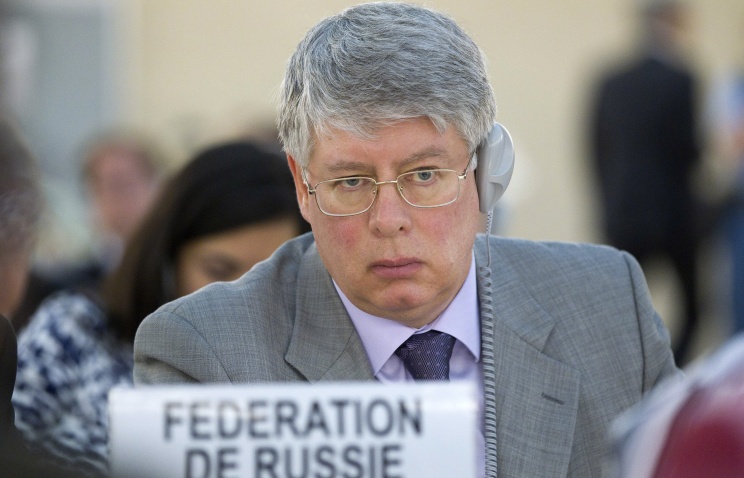

 Aletho News
