A group of pro-Israel protesters have held a rally in New York City against the recent nuclear conclusion between Iran and the P5+1 group of countries.
The pro-Zionist protesters gathered in Times Square on Wednesday to demand that Congress veto the proposed agreement with Iran.
The organizers of the rally had advertised heavily in recent weeks and had hoped for a much larger turnout. The New York metropolitan area is home to the largest Jewish population in the world outside Israel.
The demonstrators said the nuclear deal is a threat to Israel and global security, but even the staunchest allies of Israel in the West see it as a step toward a more secure and peaceful world.
Iran and the P5+1 group — the United States, Britain, France, China, Russia and Germany – reached a conclusion on the Joint Comprehensive Plan of Action (JCPOA) on July 14 in the Austrian capital of Vienna following days of intensive talks over Tehran’s nuclear program.
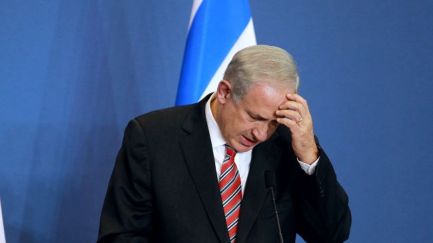
Israeli Prime Minister Benjamin Netanyahu has fiercely opposed any nuclear agreement.
Israel pressed lawmakers on Wednesday to block the deal, with Israeli Ambassador Ron Dermer meeting privately with a group of about 40 Republican lawmakers in the House of Representatives.
The nuclear accord does not need Congressional approval to take effect, but Republicans are expected to try and add provision with legislation that would block President Barack Obama from removing anti-Iran sanctions imposed by Congress.
The nuclear conclusion reached last week has been praised by world leaders, leaving Tel Aviv isolated.
July 23, 2015
Posted by aletho |
Ethnic Cleansing, Racism, Zionism, Wars for Israel | New York City, Sanctions against Iran, United States, Zionism |
Leave a comment
The dust has settled and the long-awaited agreement between Iran and the P5+1 (five permanent members of the Security Council and Germany) called “Joint Comprehensive Plan of Action” (JCPOA) is now a reality. The JCPOA curtails Iran’s nuclear program in exchange for some sanctions relief. Also real is the UN Resolution 2231, which terminates all the previous sanctions resolutions against Iran passed by the United Nations Security Council. We can now announce the winners and losers in the 36-year battle between Iran and its adversaries.
Let us start with the biggest loser in this battle, the colonial regime in Palestine called Israel. Since the 1990s Israeli leaders, particularly Benjamin Netanyahu, had been trying to wage a war against both Iraq and Iran, the twin pillars standing in the way of Eretz Yisrael. But they tried to do this on the cheap, sending American boys and girls to kill and get killed. They were successful in the case of Iraq, but had a difficult time getting the US to wage a war against Iran. They could not even convince George W. Bush to go along with bombing Iran, even though they had planted their “neoconservative” allies around a president who was not known for his immense intelligence and had visions of talking to God before invading Iraq. The work became harder when Barack Obama became president. Once again, Israel planted some of its best lobbyists, such as Dennis Ross, in the highest positions in the White House and charged them with the task of formulating and implementing the policy of “tough diplomacy,” a policy designed to wage a military attack on Iran after a series of steps beginning with imposing the most severe sanctions on the country. Yet, however hard Israeli leaders tried, they could not get President Obama to take the last step and start a war with Iran. The job became even tougher when some of the Israeli lobbyists left the Obama Administration and Secretary of State John Kerry replaced Hillary Clinton, a sycophant who often mimicked Netanyahu when it came to Iran. In the end Israel not only could not get the US to attack Iran, it had to witness the entire policy of “tough diplomacy” wither away.
The failure to make the US wage a war on Iran is, indeed, one of the greatest losses that Israel has ever suffered. Ironically, the dim-witted Prime Minister of Israel played a role in this loss. Netanyahu’s bizarre behavior was, indeed, instrumental in making the P5+1 take Israel’s demands and threats not too seriously. His insane and incessant comparison of Iran to another Nazi Germany intent to commit Holocaust, his silly and continuous warnings that an Iranian nuclear bomb awaits not only Israel but Europe and the US, his ridiculous spectacle at the UN holding a cartoon of an Iranian bomb—mocked by some as “Bibi’s Wile E. Coyote UN speech”—his behind the scene maneuvers with some like mined looney-tunes in the US to defy Obama and speak before a joint session of the US Congress, all helped to isolate Israel and prevent it from playing a major role in the final P5+1 negotiations with Iran. We should all be grateful to Bibi for helping to prevent another war in the Middle East on behalf of Israel!
Israel’s loss is, of course, also the loss of its surrogates in the US. The gambling and “investor” tycoons allied with Israel, the congressmen and women who owe their seats and survival in the US Congress to these moguls, the lobbyists who are nourished by these magnates, the “neoconservatives” whose existence depends on the benevolence of these tycoons, all and all have suffered a colossal loss. The Adelson and Sabans of this world, the Cottons, Kirks and Menendezs, the AIPACs, WINEPs and UANIs, the Kristols, Boltons and Dubowitzs, have all lost big with the conclusion of the JCPOA and Resolution 2231. We should give them an “A” for effort and an “F” for the final outcome.
All this, of course, does not mean that the colonial regime of Israel and its allies are finished with trying to do to Iran what was done to Iraq. They still have a few weeks left to try to kill the US part of the bargain. But even if they muster all the needed votes against the JCPOA in the Congress, the agreement between Iran and the rest of the P5+1 will not go away. Neither will the UN Resolution 2231. That ship has already sailed!
Other big losers in the decades-old battle between Iran and the West are the medieval regimes in the Middle East, particularly in the Persian Gulf, that are nurtured and nourished by the West, especially by the Unites States. A common argument, originally manufactured in Israel, is that if Iran is allowed to enrich uranium, Arab regimes, such as Saudi Arabia, will try to develop nuclear weapons of their own. But this argument only shows how backward and reactionary these regimes are. Why didn’t these sheikhdoms try to acquire nuclear weapons when a colonial power in their midst acquired hundreds of nuclear warheads? Is it because the existence of these regimes is interwoven with colonialism? Is it because they fear resistance to colonialism? Is it because they see Iran as assisting the anti-colonial forces? Is it because they, too, had been working for decades to maintain sanctions against Iran and were hoping that one day the US or Israel or both would attack Iran? Well, the medieval regimes did not get what they wished for.
Who was the main winner in the 36-year old battle? It is tempting to say Iran. But, for reasons explained below, that would not be my first choice. My answer is actually the international corporations! As I once explained, the battle in the US over sanctioning Iran, particularly during the Clinton’s presidency, was fought between two forces, Israel and its lobby groups that were the underwriters of the sanctions, and the corporate lobby that fought to remove the sanctions. Needless to say that the corporate concern was with profit and not with the ethics of trying to starve a nation.
Over the years the corporate lobby, led particularly by the aerospace, energy and agricultural industries, lost all hopes of ever defeating its much stronger foe. Starting in the second half of the Clinton Administration foreign corporations, too, became increasingly fearful of dealing with Iran. Eventually most ties between Iran and the capitalist world economy were severed. Now, after the JCPOA, both the American and foreign corporations are salivating over the prospect of returning to Iran. Like vultures that see a fresh carcass, the capitalists of the world see a large “market” ahead of them, a country with nearly 80 million people who are mostly young and thirsty to possess commodities. Even before the final agreement was reached between Iran and the P5+1, delegation after delegation of corporate leaders started to visit Iran to reserve their seats at the forthcoming auction. But they might be jumping the gun. The sanctions that would eventually be removed are only related to the nuclear dispute. All the other sanctions, related to such things as Iran’s putative “support for terrorism” and “violations of human rights,” will remain in place.
But did Iran have a victory? I was asked this question after a talk I gave following the April Lausanne agreement. My answer was that the battle between Iran and the P5+1 is analogous to the fight between a lightweight and a heavyweight. Even before the fight begins you know who will get clobbered. The question, however, is if the lightweight will still be standing after the fight. If so, that might be construed as a victory for the lightweight. Using that analogy one can say that President Rouhani’s negotiators were victorious. They entered the talks from a position of weakness and yet they were standing at the end. In the process they crossed many of their own “redlines,” to use a favored expression of both sides of the negotiation. The redlines that were crossed by Iran included, among others, the demand that the agreement be reached in one stage rather than different stages, that military sites not be inspected at all and that sanctions be removed on the day of the agreement and not gradually. The UN Resolution 2231 also includes many concessions by Iran, such as a “snap-back” mechanism, a mechanism that would effectively trigger sanctions on Iran if one of the parties to the nuclear deal, such as the US, contends that Iran is not fulfilling its commitments. In addition, the resolution keeps in place an arms embargo and a ban on ballistic missile technology for many years to come. When examined closely, the concessions made by Iran in the JCPOA and Resolution 2231 appear shocking to those who have followed these negotiations from the very beginning.
Some “principalist” opponents of Rouhani in Iran have compared the concessions made by his team of negotiators to those made in the past by Iran in its struggle against imperialist forces—for example, the 1828 Turkmanchai Treaty with tsarist Russia, or the 1890 Tobacco Concession and, subsequently, the 1919 “Anglo-Persian Agreement” signed with the British, or the 1988 “poison chalice,” which forced Iran to accept a cease-fire demanded by the United Nations Security Council to end the war imposed by Iraq’s Saddam Hussein and his supporters, particularly the U.S. But what the “principalists” ignore is that making concessions did not begin with Rouhani and his team. It started a long time ago, in 2003, during the presidency of the “reformist” President Khatami, when Iran entered negotiations over its enrichment of uranium with E3 (France, Britain, and Germany), while contending at the same time that it has an “inalienable right” under Article IV of the Non-Proliferation Treaty to enrich uranium. Only a country in a weak position negotiates with others over its “inalienable right.” But this weakness was not associated solely with Iranian reformists. President Ahmadinejad, who was considered to be an ally of the principalists, also negotiated with the P5+1 over Iran’s enrichment of uranium. Thus, both the reformists and principalists negotiated with the biggest powers in the world from a position of weakness. This, however, was unavoidable, given the circumstances. When your whole existence is threatened, you might make a Faustian bargain, and, if you are still standing, you might call it a victory.
The biggest victim of 36 years of sanctions and threats against Iran was the Iranian working class who had to live not only under conditions of deprivation and austerity but under continuous fear of being bombed by the US, Israel or both. Let us hope that Iran’s “victory” brings about some relief for these workingmen and women, rather than merely translating into a bonanza for the Western corporate elites and their counterparts in Iran. Let us also hope that with lessening of daily threats of war, the fear of the “enemy”—a common phrase in the parlance of Iranian leaders—lessens and a greater freedom descends upon the people of Iran.
Sasan Fayazmanesh is Professor Emeritus of Economics at California State University, Fresno, and is the author of Containing Iran: Obama’s Policy of “Tough Diplomacy.” He can be reached at: sasan.fayazmanesh@gmail.com.
July 22, 2015
Posted by aletho |
Timeless or most popular, Wars for Israel | Iran, Sanctions against Iran, United States, Zionism |
Leave a comment
Now that the P5+1 and Iran have concluded their Joint Comprehensive Plan of Action (JCPOA), it is important to look not just at how the parties will go about implementing the deal but also at the JCPOA’s strategic impact. Hillary, the University of Tehran’s Seyed Mohammad Marandi, and Princeton University’s Seyed Hossein Mousavian engaged in a good discussion of these issues on CCTV’s The Heat, see here or click on the video links below.
Mohammad underlines what—not just from an Iranian perspective but from any perspective that values the possibility of rules-based international order—is certainly a key aspect of the JCPOA’s long-term significance:
“For the first time, really, the United States has been forced to accept the Iranian peaceful nuclear program. I think that is the most significant thing to come out of this… Despite the United States forcing the UN Security Council, in previous years, to impose sanctions on the country, and despite the fact that the United States applied punitive sanctions itself, and threatened other countries with sanctions if they did business with Iran, despite all that, ultimately the United States had to accept Iran’s peaceful nuclear program. And we have to remember that, in the past, the United States was saying that Iran did not have the right to enrich uranium…
The fact that Iran has been able to retain its peaceful nuclear program shows Iran’s inherent strength as an independent country. And I think it also vindicates the fact that Iran continued to pursue its peaceful nuclear program over the past few years. This has given Iran the capability to have a strong hand at the negotiating table.”
As for the JCPOA’s impact on U.S.-Iranian relations, Hillary explains that this will depend very much on how Washington presents the JCPOA to its own public and the extent to which the agreement prompts a fundamental revision of U.S. strategy toward the Middle East:
“[The Obama administration] may try to sell it as a narrow arms control agreement. Well, there’s never going to be an agreement that’s good enough to contain what many in Washington see as this unreconstructed, ‘evil’ state, I think that’s going to fail. And I think that the attempt to say, ‘Well, the Iranians are going to abide by this, so you don’t have to worry,’ and, in the meantime, we’re going to continue to sell billions of dollars of weapons to Saudi Arabia and Israel—while Iran still has the arms embargo in place—could make for a more destabilized region, a more highly militarized region.”
Similarly, Mohammad points out that, if the United States were ready to “rethink” its policy toward the Middle East and toward Iran,
“if the United States changes its behavior toward the country, it would benefit a great deal. But we have to also keep in mind that the United States is still imposing a large number of sanctions against the country. U.S. policy in the region is still in conflict with that of Iran, because of U.S. support for Saudi Arabia and Turkey in their support for al-Qa’ida. So, Iranian-U.S. relations are pretty poor, and I don’t think they will change very quickly.”
As Hillary underscores, the only way to reap the full potential benefit of the JCPOA is for the United States to pursue real, “Nixon to China” rapprochement with the Islamic Republic of Iran. But, at the moment, there is no consensus in favor of that within the Obama administration.
The discussion is worth watching in its entirety.
http://cdnapi.kaltura.com/p/1679301/sp/167930100/embedIframeJs/uiconf_id/26345181/partner_id/1679301?iframeembed=true&playerId=kaltura_player_80bb75d1ec59dd8474f886d8919a6c6d&entry_id=1_0yed0n9z&flashvarsstreamerType=auto
http://cdnapi.kaltura.com/p/1679301/sp/167930100/embedIframeJs/uiconf_id/26345181/partner_id/1679301?iframeembed=true&playerId=kaltura_player_58062caa3de5244961cfb6aa6e753c75&entry_id=1_jaw6tter&flashvarsstreamerType=auto
July 19, 2015
Posted by aletho |
Militarism, Video | al-Qaida, Iran, Israel, Sanctions against Iran, Saudi Arabia, United States |
Leave a comment
Halliburton and Schlumberger, both among the world’s largest oilfield services companies, are waiting in hopeful anticipation that Iran will ramp up oil exports, US media have said.
The Houston-based giants have “a well-established presence” in the Persian Gulf region and given the National Iranian Oil Company (NIOC)’s vast oilfield service needs, the US firms are positioned to benefit, the Houston Business Journal said.
“They are the quiet beneficiaries,” Randall Grace, lead energy analyst at Houston-based Chilton Capital Management, told the publication.
“Schlumberger is the Western company with substantial expertise in Iran, operating for several decades until sanctions forced their departure in 2013,” said Grace.
Schlumberger’s commitment to Iran is so strong that one of its wholly-owned subsidiaries forked over $232.7 million in penalties to the US Department of Justice in March, the Journal said.
“And let’s not forget the incentives. Iranian revenue was $418 million for Schlumberger in 2012, with operating margins north of 50%, more than double the corporate average of about 20%,” it added.
“The profitability potentials are huge,” said Grace, according to the Houston Business Journal.
Non-US affiliates of Schlumberger continued to work for the NIOC and its subsidiaries after the American company ceased operations in Iran in 2013.
According to Schlumberger’s Chief Executive Paal Kibsgaard, cited by the media, the company was awaiting the lifting of sanctions on Iran to return to the country.
“When the sanctions are lifted and when it is permissible, we will evaluate going back in,” he was quoted as saying.
Iran’s energy officials have said the country would raise oil output by 500,000 barrels per day after two months and by 1 million bpd after six months when the sanctions were lifted.
On Wednesday, NIOC Managing Director Rokneddin Javadi said Iran’s oil production could reach its pre-sanctions level of 4 million bpd within six to 12 months if there is enough demand. He said NIOC had tested a production increase and been ordered to raise output in all fields.
July 18, 2015
Posted by aletho |
Economics, Wars for Israel | Sanctions against Iran, United States |
Leave a comment
Am I laughing. As Peace Prize Obama lectures us and the Republicans and Neocons have a cow, maybe we should pause to contemplate the full fraudulent spectacle in progress and analyze what we are being told about the just-concluded nuclear negotiations with Iran.
First of all, I’ve been wondering what in the world the phalanx of negotiators could possibly have been talking about behind closed doors all these many months, busting through multiple deadlines, in view of the fact that Iran possesses no nukes and has no nuclear weapons program, is a member of the International Atomic Energy Agency, and that Iran’s Mullah leadership has denounced and outlawed nuclear weapons from day one.
In the second place, it is amazing that any deal at all was arrived at, since Obama & Company, following in the footsteps of Bush and Clinton, has allowed the incredible demonization of Iran to go unchecked and unchallenged. The demonization continues and may yet blow up the agreement on Capitol Hill.
Both the Grand Ayatollah Khomeini (who ignited a revolution which terminated the Pahlavi dynasty in 1979) and the current supreme leader, the Grand Ayatollah Hosseini Khamenei, issued Fatwas which prohibit the manufacture and/or use of nuclear weapons by Iran.
On top of that, the U.S. intelligence community has itself informed the White House, the U.S. Senate, and the Congress of the non-existence of an Iranian nuclear weapons program in no uncertain terms in 2007. These conclusions were reiterated in 2011. The information was contained in National Intelligence Estimates compiled by Washington’s 16 intelligence agencies.
Alas, no one at the White House or on Capitol Hill dares mention these important documents, or cares to inform the ignorant American public about the facts. Why? Do the beltway politicians want the average American to remain in the dark? Hmm. What is going on here?
What is going on is blatant extortion and blackmail by the Obama White House, with Tehran on the receiving-end. President Obama has done a very effective job of it, building upon the hysteria, insanity and wholesale mendacity of the Cheney Regency, aka, the G.W. Bush Presidency. Obama does indeed deserve a prize for taking the targeting of Iran to the next level.
The non-existent Iranian nuke program and the purported, much-hyped Iranian race to build a nuclear weapon have been used as a stick to try to beat Iran into the ground, or at least to its knees, via all-encompassing economic and financial sanctions. The injustice and dishonesty of this undertaking is breathtaking. Europe stood by and watched. No, it did more. It joined in. The hapless leadership in Tehran had no choice at the end of the day but to deal with the extortionists. Tehran wanted to reunite with the world economy.
Here it gets tricky. Because Tehran had no nukes and Tehran knew that Washington knew that Tehran had no nukes, what exactly could Tehran do to prove a negative–thereby eliminating the purported “threat”–which negative was already well known to be a fact by the sanctimonious, stone-faced extortionists sitting across the table? Tehran concluded, nevertheless, it should go along with this charade, and not embarrass Obama and U.S. Secretary of State John Kerry. In short, Tehran decided the best tactic was to humor the bullying White House.
All that mattered for Tehran was an abatement of economic warfare and, most importantly, renewed access to European markets and to the international banking system. To achieve this, Tehran has agreed, under the current document, to amazingly intrusive, and redundant intervention into its nuclear energy program. This amounts to a de facto foreign takeover of the Iranian civilian nuclear program. It is an insult to Iran’s sovereignty, but what has Iran actually lost? It had nothing to lose to begin with.
One might ask as this point: what was the motivation for Washington’s peculiar conduct? Well, here it is. In the United States, as in Europe, there is something called domestic politics, which has now degenerated into a self-perpetuating business, dominated by special interest groups and lobbies, all largely driven by cash, to wit, campaign contributions. It is big business.
Since the general public does not have the time nor inclination to figure out which politician is relatively honest and which is an outright charlatan, advertising is most important to clarify the issue. Brainwashing or, if you like, spin and PR, costs money. It requires enormous campaign contributions and media support.
To achieve that, Washington politicians, if they want to hold onto their jobs, must pander to what is called the Israel Lobby, the most powerful lobby in Washington. In this direct way and by this simple method, domestic politics gets translated immediately into foreign policy. At least with respect to the Middle East, U.S. foreign policy has nothing to do with what is right and wrong, reasonable or ridiculous, or even about what is in the best interests of the United States or the American people.
All that is secondary. First and foremost are the dictates of the U.S. Israel Lobby, whose apparatchiki receive their cue from Tel Aviv, currently run by Likud and its leader, the charming con man Benny Netanyahu whom some consider to be a war criminal. That’s it in a nutshell.
I realize that the above scenario might appear outlandish and grotesque, but it actually conforms to business as usual. For confirmation, you might study chapter 10–“Iran in the Crosshairs”–of The Israel Lobby (2007) by Professors John Mearsheimer and Steven Walt. It should be on the desk of every Senator and Congressman in Washington, if only to give them a second chance to mend their ways.
In the meantime, please read the up-to-the-minute article by Professor William O. Beeman, titled “Iran Won the Vienna Accords By Agreeing to Stop What It Never Was Doing”. Beeman is an Iran expert, curiously unfazed by establishment propaganda.
July 18, 2015
Posted by aletho |
Ethnic Cleansing, Racism, Zionism, Wars for Israel | Sanctions against Iran, United States, Zionism |
Leave a comment
Those crafty Iranians. In return for relief from America’s devastating economic warfare, they will give up a nuclear ambition they did not have. Boy did we get taken!
Damn, we didn’t even get a chance to humiliate them! What’s happening to America?
The neocons fear that if Iran’s assets are unfrozen, it will behave like the United States.
It’s worth it to see the Lobby and neocons go berserk.
While Obama brags about stemming nuclear proliferation, let him explain why he, like Israel, opposes making the Mideast nuclear-free. (Hint: Israel is the nuclear monopolist, having achieved that status by smuggling the components and breaking U.S. law with the connivance of American officials and other influential people.)
How dare Iran think it can destabilize the Middle East! That’s America’s role!
Next agenda item: dismantling the US nuclear arsenal.
July 14, 2015
Posted by aletho |
Militarism | Israel, Middle East, Sanctions against Iran, United States |
Leave a comment
Iran and six leading world powers have reached a conclusive deal on the Iranian nuclear industry, an Iranian diplomat said as quoted by Reuters.
“All the hard work has paid off and we sealed a deal. God bless our people,” the diplomat told Reuters on condition of anonymity. The breakthrough was confirmed by a European diplomat, who told TASS that it would be announced “soon. “It was difficult work. The arguing continued throughout the night. At times it was heated, with occasional shouting. But the result should be worth all of that,” a source in the German delegation told TASS.
The economic sanctions against Iran would be lifted immediately after verification of its compliance with the deal, reported RIA Novosti citing the draft agreement. The deal also provides for the lifting of economic sanctions imposed outside of the EU, like the banking and insurance restrictions on Iran by the EU and the US. The draft provides for the lifting of restrictions for the EU to import oil and gas from Iran, as well as exports of oil and gas production equipment to Iran.
It also said the International Atomic Energy Agency (IAEA), UN’s nuclear watchdog, has signed a separate agreement with Tehran on the military aspects of its nuclear activities. According to Reuters, the separate agreement focuses on the issue of the Parchin military site.
Iran and P5+1 group are to hold ministerial-level meetings at least twice a year to evaluate how the agreement is being implemented, according to the draft document, as cited by RIA Novosti.
Iran agreed to a 15-year moratorium on enriching uranium beyond 3.67 percent. The enrichment would be conducted only at the Natanz facility, while the Fordo facility would not conduct any enrichment activities or store fissile material, TASS reports. Iran also agreed to store no more than 300 kg of low-enriched uranium. The Arak reactor would not be used to produce plutonium under the deal. The spent fuel would be handled by international mediators.
Reuters leaked others details of the upcoming deal. The UN-imposed arms embargo against Iran is to remain in force for five years, while the restrictions on rocket technology exchange are to be kept for eight years it said, citing diplomatic sources.
The economic sanctions that are to be lifted could be restored within 65 days if Iran doesn’t comply with the terms of the deal, the source added.
The Vienna agreement is to be ratified by the UN Security Council and come into force 90 days later.
Foreign ministers of the seven negotiating nations are to meet at the UN center in Vienna at 08:30 GMT, followed by a media conference, a spokeswoman for the European Union said.
As soon as the deal is officially announced it will bring an end the 12-year dispute over Tehran’s nuclear program and related economic sanctions. Foreign ministers and officials from Iran, the United States, the UK, France, Germany, Russia and China have gathered in Vienna, twice postponing the deadline in the course of the past two weeks, in a bid to make a long-term deal on Iranian nuclear program.
The lengthy negotiations remained deadlocked due to a lack of confidence in the purpose of Tehran’s nuclear activities, which the country claims to remain solely peaceful. The Western countries had accused the country of seeking a way of creating its own nuclear weapons.
July 14, 2015
Posted by aletho |
Aletho News | Sanctions against Iran |
Leave a comment
The corporate media in both the UK and US are attempting to portray the Iranian desire to have the arms embargo lifted, as a new and extraneous demand that could torpedo the nuclear deal. This is an entirely false portrayal.
The issue has been included in the talks since, quite literally, the very first Iranian position document. And there is a reason for that. It is absolutely part and parcel of the issue and in no way extraneous to it. If there were any real journalists employed by the corporate media, that is obvious right on the face of UN Security Council Resolution 1747 of 2007 which imposed the arms embargo. The sole and exclusive reason given for the arms embargo is Iran’s nuclear enrichment programme. And it specifically states that, once the nuclear proliferation issue is resolved, the embargo will be lifted.
Paragraph 13 reads:
(b) that it shall terminate the measures specified in paragraphs 3, 4, 5, 6, 7
and 12 of resolution 1737 (2006) as well as in paragraphs 2, 4, 5, 6 and 7 above as
soon as it determines, following receipt of the report referred to in paragraph 12
above, that Iran has fully complied with its obligations under the relevant
resolutions of the Security Council and met the requirements of the IAEA Board of
Governors, as confirmed by the IAEA Board;
It is the United States, not Iran, which is introducing extraneous factors, banging on about Yemen, Iran and Hezbollah, which are nowhere mentioned in the Security Council Resolutions.
The way this is being reported in the media is the exact opposite of the truth. The United States is attempting to welch on a deal which was not only open, but forms the very text of the security council resolution. None of the BBC’s highly paid analysts, reporters, or guest commenters is capable of noting this basic fact.
July 13, 2015
Posted by aletho |
Deception, Mainstream Media, Warmongering | BBC, Sanctions against Iran, UK, United States |
Leave a comment
Oil prices fell in Asia on Monday as Iran and major western powers said they were closer than ever to a landmark nuclear deal that would lift sanctions and see Tehran’s crude exports return to global markets.
A forecast by the International Energy Agency (IEA) for slower world oil demand next year was also weighing on the market, analysts said.
US benchmark West Texas Intermediate for August delivery was down 86 cents to $51.88 and Brent crude tumbled 96 cents to $57.77 a barrel in late-morning trade.
“We have come a long way. We need to reach a peak and we’re very close,” Iranian President Sheikh Hassan Rouhani said in Tehran on Sunday.
“I hope we are finally entering the final phase of these marathon negotiations. I believe it,” said French Foreign Minister Laurent Fabius, who cancelled a trip to Africa to stay at the talks in Vienna.
Any deal to stop what the West suspects as Iranian efforts to build an atomic bomb will result in the lifting of punishing economic sanctions, allowing the country to resume oil exports.
More Iranian oil however will add to a supply glut, which has depressed prices.
The IEA has forecast that global oil demand would grow by 1.2 million barrels per day next year, slower than the 1.4 million projected this year.
However, global output grew by 550,000 barrels a day in June alone to 96.6 million barrels, IEA added.
This is up on average by 3.1 million barrels from a year ago, boosted by increased production from the Organization of the Petroleum Exporting Countries.
OPEC’s output climbed in June to a three-year high of 31.7 million barrels, the IEA said.
Source: AFP
July 13, 2015
Posted by aletho |
Economics, Malthusian Ideology, Phony Scarcity | Sanctions against Iran |
Leave a comment
http://cdnapi.kaltura.com/p/1679301/sp/167930100/embedIframeJs/uiconf_id/29140361/partner_id/1679301?iframeembed=true&playerId=kaltura_player_54f43f5daa86d2ec837a2ee5018bff0c&entry_id=1_2pw7s2k3&flashvarsstreamerType=auto
~
http://cdnapi.kaltura.com/p/1679301/sp/167930100/embedIframeJs/uiconf_id/29140361/partner_id/1679301?iframeembed=true&playerId=kaltura_player_8bec3cda3b63ce7a5d5018f82297d4b6&entry_id=1_d9wztogf&flashvarsstreamerType=auto
As the world waits to see if the P5+1 and Iran can, in fact, conclude a comprehensive nuclear deal, it is important to step back from the not just day-by-day, but minute-by-minute coverage of comings and goings at the Palais Coburg in Vienna and think about what is really at stake in the negotiating endgame. To this end, we post here a very good discussion of these issues by Hillary and the University of Tehran’s Seyed Mohammad Marandi on CCTV’s The Heat, see here or click on videos above. (Like Mohammad, Flynt is currently in Vienna for the nuclear talks.)
The most critical of the remaining issues to be resolved by the parties relate to the terms of a new United Nations Security Council resolution that would negate previous Security Council resolutions dealing with the Iranian nuclear issue, remove Security Council-authorized international sanctions against Iran, and formally start implementation of a comprehensive nuclear deal. As both Hillary and Mohammad point out, underneath discussions about the modalities for removing international sanctions, whether and how to lift the conventional arms embargo against Iran, and related matters are more fundamental issues:
–Can the United States, for its own interests, abandon its increasingly self-damaging quest to dominate the Middle East and adopt a more reality-based strategy toward this critical part of the world?
–Can the United States, for its own interests, finally accept the Islamic Republic of Iran as a legitimate political order representing legitimate national interests, and genuinely come to terms with this already indispensable and still rising actor in the Middle East?
–In the process, can the United States, for its own interests, replace its longstanding reliance on Israel and Saudi Arabia as its key “partners” in the Middle East with a more balanced approach characterized by strategically-grounded diplomacy with all major regional players?
Let’s see what happens in Vienna.
July 12, 2015
Posted by aletho |
Video, Wars for Israel | Iran, Israel, Sanctions against Iran, Saudi Arabia, United States |
Leave a comment
The Iran nuclear talks may be getting close to some sort of conclusion in Vienna, but American political and policy elites remain, to an appallingly large extent, clueless as to what is really at stake in the negotiations. (This was a significant theme yesterday in Hillary’s appearance on CNN, see here, and in Flynt’s appearance on CNBC, see here, to discuss the Vienna talks.) And, while the headline from a recent NBC News poll notes that Americans favor an Iran nuclear deal by a “2 to 1” margin, in fact, the polls shows that a plurality of Americans say they don’t know what to think about a possible Iran nuclear deal.
These observations underscore a point that we have been making for some time: President Obama has yet to make the case to his fellow Americans for why an Iran nuclear deal—and, beyond that, a potential realignment of U.S. relations with the Islamic Republic—is not just profoundly in American interests, but is strategically imperative for the United States.
–This failure will almost certainly make it more difficult for Obama (and his successor) to implement a deal.
–Furthermore, this failure will severely circumscribe the strategic benefits that the United States can accrue from a deal.
At the moment, many American elites convey particular distress over the Obama administration’s inability simply to dictate the terms of a prospective United Nations Security Council resolution that would endorse a final nuclear agreement and, to help implement such an agreement, remove international sanctions previously authorized by the Council against the Islamic Republic.
–In its approach to drafting a new Security Council resolution, the Obama administration has been demanding that previously authorized limits on exports of conventional weapons and missile-related technology remain in place. Iran, for its part, resists any text that would imply its “acceptance” of continuing international sanctions. Moreover, Russia and China are not going along.
–Likewise, Moscow and Beijing have rejected the Obama administration’s demand that UN sanctions be lifted only for six months at a time, subject to renewal—renewal which the United States, on its own, could veto, thus realizing U.S. ambitions to be able to “snap” sanctions back into place without being blocked by Russia and China.
That the Obama administration has been pushing these positions reveals much of what is so fundamentally wrong with the U.S. approach to diplomacy with Iran. As Flynt pointed out on CNBC, “This was an approach that not only were the Iranians going to object to it, but I don’t think the administration ever had a serious chance of getting consensus within the P5+1, among the permanent members of the Security Council…It was foolish, really, for the administration to take those positions on those issues.” Yet these are the positions the administration took, and now it must either find a way to walk back from them or (foolishly) embrace diplomatic impasse.
Of course, this reflects weakness on Obama’s part—but not the sort of weakness for which neoconservatives and others constantly lambaste him. As Hillary noted on CNN,
“We have tried [the interventionists’] version of strength—invading Iraq; invading Libya; occupying Afghanistan for more than a decade; arming, training, and funding various jihadis in Syria and all across the Middle East. And all it has brought us is damage to ourselves.
The real strength would be, just like Nixon and Kissinger went to China and accepted the People’s Republic of China, we need to go to Tehran, as we wrote in our book, and make our peace with Iran. It will help us. It will resurrect our position in the Middle East and around the world. And if we don’t, we will see ourselves continue to flail across the Middle East and around the world…
The Islamic Republic of Iran is here to stay, like the People’s Republic of China. What we need to recognize is that rising Iran, just like rising China, is a strong, independent power. And we need to work with them, not constantly try to bring them down and align with other countries like Saudi Arabia that get us into strategic disaster after strategic disaster.”
But that is precisely what Obama has been unwilling to do. Could the United States still “walk away” from the process? As Hillary said on CNN, “A decision by the United States to ‘walk away,’ to cut off talks with Iran would be just as strategically damaging, if not more so, to the United States than the decision to invade Iraq. It would have enormously devastating consequences for the United States in the Middle East, keep us on a trajectory to get into one never-ending, unwinnable war after another. And it would have repercussions for us globally, in economic terms and military terms.”
Stay tuned.
July 9, 2015
Posted by aletho |
Militarism, Progressive Hypocrite | Iran, Middle East, Obama, Sanctions against Iran, United States |
Leave a comment
Thomas Friedman, the New York Times op-ed-page representative of the foreign-policy elite, is unhappy with how the overtime Iran nuclear talks are going. He says that President Obama, like his predecessor George W. Bush, hasn’t been tough enough. Obama holds all the cards, but somehow the Ayatollah Ali Khamenei is dictating terms. He writes:
It is stunning to me how well the Iranians, sitting alone on their side of the table, have played a weak hand against the United States, Russia, China, France, Germany and Britain on their side of the table…..
For the past year every time there is a sticking point … it keeps feeling as if it’s always our side looking to accommodate Iran’s needs. I wish we had walked out just once. When you signal to the guy on the other side of the table that you’re not willing to either blow him up or blow him off — to get up and walk away — you reduce yourself to just an equal and get the best bad deal nonviolence can buy. [Emphasis added.]
Friedman glosses over the fact that it is not “him” (foreign minister Javad Zarif?) who would be blown up in a war against Iran. It would be countless ordinary Iranians, who have done nothing to harm the American people. Those same innocent people would be harmed, admittedly in more subtle ways, if the P5+1 “blew off” Iranian negotiators because that would mean no relief from long-standing U.S.-led sanctions that have devastated the Iranian economy, boosting food and medicine prices among other inhumane consequences. Sanctions are acts of war. Would someone remind Friedman of that fact?
Friedman is ever the optimist, however. He believes it is still possible to get at least a “good bad deal,” the chances of a good deal having been blown by Obama’s “empty holster” strategy. It would be a deal “that, while it does not require Iran to dismantle its nuclear enrichment infrastructure, shrinks that infrastructure for the next 10 to 15 years so Iran can’t make a quick breakout to a bomb…. A deal that also gives us a level of transparency to monitor that agreement and gives international inspectors timely intrusive access to anywhere in Iran we suspect covert nuclear activity[.] One that restricts Iran from significantly upgrading its enrichment capacity over the next decade….” (As he notes, it would be deal approved by the Washington Institute for Near East Policy, which he fails to point out is a spin-off think-tank of the chief Israel lobbyist, AIPAC.
Before judging Friedman’s analysis, certain facts must be kept in mind. Iran has never had a program designed to build a nuclear bomb. You wouldn’t know from his column that Iran is a party to the nuclear Non-Proliferation Treaty (NPT), subjecting it to intrusive inspections for many years. During those years the International Atomic Energy Agency has unfailingly certified that Iran has diverted not one uranium atom to military purposes. As Gareth Porter heavily documents in his conveniently ignored book, Manufactured Crisis: The Untold Story of the Iran Nuclear Scare, Iran’s leadership has directed its nuclear research and facilities to the production of electricity and medical isotopes. The so-called evidence against Iran, Porter shows, is little more than the alleged contents of a suspect laptop, which has yet to be presented for independent verification. The nonthreat has been affirmed by U.S. and Israeli intelligence.
A few minutes’ thought will indicate that Iran’s leadership has many reasons not to want nuclear weapons, which Khamenei condemned in a fatwa some time ago. What exactly would Iran do with a bomb? The U.S. government has thousands, and Israel has a few hundred, including submarine-mounted nukes that would be available for a second strike if anyone were crazy enough to launch a first strike against the Jewish State. By the way, unlike Iran, Israel refuses to sign the NPT and thus is subject to no inspections.
In other words, Iran has been framed. Friedman is simply doing the bidding of those who want a U.S. war of aggression against the Islamic Republic — namely, Israel, the Israel Lobby/neoconservative alliance, and Saudi Arabia.
July 9, 2015
Posted by aletho |
Mainstream Media, Warmongering, Militarism, Timeless or most popular, War Crimes, Wars for Israel | AIPAC, Iran, New York Times, Sanctions against Iran, Thomas Friedman, United States, Washington Institute for Near East Policy, Zionism |
Leave a comment

 Aletho News