While growing up in America during the 1950’s, one would sometimes encounter supermarket tabloid headlines asserting that Adolph Hitler had not died in May 1945 in the ruins of the Reich’s Chancellery. It was claimed that he had somehow escaped and was living under a false identity somewhere in South America, most probably in Argentina. Eventually, as the Fuhrer’s hundredth birthday came and went in 1989, the stories pretty much vanished from sight though the fascination with Hitler as the ultimate manifestation of pure evil persisted.
The transformation of Hitler into something like a historical metaphor means that his name has been evoked a number of times in the past twenty years, attached to Saddam Hussein, Moammar Gaddafi, Vladimir Putin and, most recently, to Ayatollah Ali Khamenei, the Supreme Leader of Iran. The attribution in the cases of Hussein and Gaddafi was essentially to create popular support for otherwise unjustifiable wars initiated by the United States and its European and Middle Eastern allies. Putin, meanwhile, received the sobriquet from an angry Hillary Clinton, who certainly knows a thing or two about both personalizing and overstating a case.
The Hitler designation of the Iranian spiritual leader, which appeared one week ago in a featured profile produced by Tom Friedman of The New York Times, is particularly ironic as it came from the de facto head of state of Saudi Arabia Crown Prince Mohammad bin Salman, whose country has long been regarded as cruel and despotic while also being condemned for its sponsorship of a particularly reactionary form of Islam called wahhabism. Bin Salman described the Iranian leader as “the new Hitler of the Middle East.”
Both Khamenei and bin Salman exercise power without a popular mandate. Khamenei was named to his position in 1989 by a so-called Assembly of Experts, which is a quasi-religious body, and bin Salman was appointed Crown Prince by his father King Salman in June. Both have considerable power over other organs of state, but the comparison largely ends there as Iran does have real elections for an actual parliament with enumerated powers and a president who is also serves as head of government.
Iran is also tolerant of long established religious minorities whereas Saudi Arabia, which is seen by most observers as a theocratic based autocracy that is a personal possession of the House of Saud, is hostile to them. In particular, Riyadh has been actively promoting hatred for Islam’s second largest sect, Shi’ism. The Saudis have also been assisting al-Qaeda, al-Nusra Front and ISIS, though denying the considerable evidence demonstrating those links, while Iran and its allies have been destroying those terrorists on the battlefield.
Crown Prince bin Salman has been preaching an anti-corruption drive of late, which includes torture of those arrested. Many observers believe it is actually a bid to shake down some billionaires while also diminishing the power exercised by some members of the extended Royal Family. The Prince has also suggested that he will be promoting a “more open and modern” form of Islam, which might reduce some beheadings and amputations as punishment. But the death penalty will still apply for heresy, which includes the Shi’ism practiced by Iran, Iraq, some Syrians and Hezbollah. Nor will it put an end to the current horrific slaughter by disease and starvation of Yemenis being implemented by Riyadh with some help from its friends in Tel Aviv and Washington.
Liberal journalists like Tom Friedman, who have editorially sided with the Saudis and Israelis against Iran, have largely bought into the anticorruption theme. The Times profile accepts at face value bin Salam’s claims to be a reformer who will somehow reshape both Saudi Arabia and Islam. Friedman, a passionate globalist, largely goes along for the ride because it is the kind of language a poorly-informed progressive hopes to hear from someone who walks around wearing a keffiyeh and sandals. It also serves Friedman’s other regular agenda justifying Israeli threats to go to war against its neighbors, starting with Lebanon. Make no mistake, the offerings of war abroad and repression at home being served up by Riyadh and Tel Aviv are not the birth pangs of a New Middle East. That died a long time ago. It is instead a fight over who will dominate the region, the same as it always is.
November 30, 2017
Posted by aletho |
Mainstream Media, Warmongering | Iran, Middle East, New York Times, Saudi Arabia, Tom Friedman, Zionism |
Leave a comment
At first, American officials couldn’t believe it. In 1993, the Israelis began pressuring the Clinton administration to view Iran as the greatest global threat. Only a short time earlier, in the 1980s, Israel had been cooperating with the Iranians militarily and selling them weapons to fight Iraq in the Iran-Iraq War.
Back then, the Israelis were Iran’s best lobbyists in Washington, pushing the Reagan administration to talk to Iran, to sell arms to Iran, and even to ignore Iran’s tough talk on Israel. In that process, Israel was aided by a group of staunchly pro-Israeli officials within the Reagan administration whom we now know as the neoconservatives.
In 1981, just months after Iran had held 52 American diplomatic personnel hostage for 444 days, senior State Department officials Robert McFarlane and Paul Wolfowitz were advocating on behalf of the Israeli desire to sell Iran weapons. That initiative, which was continued by McFarlane when he became President Reagan’s National Security Advisor, ultimately led to the Iran-Contra scandal of 1986 when Reagan’s secret approval of U.S. arms shipments to Iran became public.
Yet, even in the wake of that scandal and the end of the Iran-Iraq War in 1988, the neoconservatives who remained influential under Reagan’s successor, President George H.W. Bush, pressed ahead with the goal of getting the U.S. to warm its relations with Iran. Iraq’s defeat at the hands of the U.S. military and its allies in the Persian Gulf War of 1990-91 further reduced the Arab threat to Israel’s security and encouraged more thinking about a possible U.S.-Iranian détente.
The Bush-I administration’s 1991 “National Security Strategy of the United States” said the U.S. was open to “an improved relationship with Iran,” a country that a 1991 National Intelligence Estimate said was “turning away from revolutionary excesses . . . toward more conventional behavior.”
However, in 1993, with the Clinton administration in power, the Israelis changed their tune, urging the U.S. government to find Iran lurking behind every terrorist attack, every conflict and every threat.
There appear to have been several factors leading to this Israeli switch – from the fact that the Cold War was over and thus Arab states that had relied on Soviet weaponry were weakened; that Iran-backed Hezbollah was challenging Israel’s military occupation of southern Lebanon; and that Israel could no longer profit from Iran’s desperate need for weapons (with the war with Iraq over and Iran’s treasury depleted) while the Arab oil states offered a more lucrative opportunity for both geopolitical and financial gain.
Hooked on the Money
Israeli leadership had found the billions of dollars from arms sales to Iran useful in maintaining Israel’s large military/intelligence infrastructure as well as Israel’s development of Jewish settlements inside Palestinian territories on the West Bank. With that cash source gone, Israel began recalculating its longstanding Periphery Strategy, which had called for countering Arab pressure from close-in states by cultivating relations with non-Arab regional powers on the periphery, such as Iran and Turkey.
There were also two other seismic events that altered the geopolitical landscape. The Cold War was over and Saddam Hussein’s Iraq had been humiliated in the Persian Gulf War. While the Israelis saw both events as positive, there were unintended consequences. The end of the Cold War meant the exit of the Soviet Union from the Middle East: that left Israel’s traditional Arab enemies even more enfeebled and the U.S. government less worried about losing influence in the oil-rich region. Iran also emerged as relatively stronger than Iraq due to Iraq’s failed invasion of Iran and its catastrophic defeat after its invasion of Kuwait.
Israel’s 1992 elections also brought Yitzhak Rabin, Shimon Peres and the Labor Party to power, raising the possibility of finally reaching a peace accord with the Palestinians and thus the possibility of more normalized relations with the Arab world. In turn, that raised the potential for more lucrative arrangements with oil-rich sheikdoms by, in effect, renting out the Israel Lobby to the Sunni-ruled Gulf states so they could push their historic conflict with the Shiites whose power base was Iran.
“There was a feeling in Israel that because of the end of the Cold War, relations with the U.S. were cooling and we needed some new glue for the alliance,” Efraim Inbar of the Begin-Sadat Center told Trita Parsi. “And the new glue was radical Islam.”
But it was a very selective kind of radical Islam: not the kind Saudi Arabia was financing and exporting through Wahhabi fundamentalism and violent jihadists like those in Al Qaeda, but Iran’s radical Shiite Islam. Selling Iran as the number one global terror threat gave birth to a new Middle East enemy that replaced the Soviet Union and reinflated Israel’s value to the U.S. in the region. “Iran,” Inbar went on to explain, “was radical Islam.”
A New Alliance
For the first time, an alliance between Israel, Saudi Arabia and the United States became possible with Iran as the designated enemy. The Israeli-Saudi relationship has evolved mostly in secret over the past couple of decades but has popped into view in recent years as Prime Minister Benjamin Netanyahu and his inner circle have emphasized the common interests – especially animosity toward Iran – that they share with Saudi Arabia.
Netanyahu has recently referred to this Israeli-Saudi alliance when he said that Iran was driving Israel into cooperative arrangements with what he called “the modern Sunni states.” He referred to “a new alliance between Israel and Islamic states. … The good news is that the other guys are getting together with Israel as never before. It is something that I would have never expected in my lifetime.”
Nine months ago, Netanyahu delivered the same message when he said “for the first time in my lifetime, and for the first time in the life of my country, Arab countries in the region do not see Israel as an enemy, but, increasingly, as an ally.”
Though the Israeli-Saudi relationship is rarely spoken of out loud, Israeli Energy Minister Yuval Steinitz admitted recently that Israel “has ties that are . . . partly covert with many Muslim and Arab countries.” Saudi Arabia was the only one he specifically named. According to Reuters, he said those ties are fueled by “common concerns over Iran.”
But there are other foundations for this relationship. For years, Saudi Arabia sought to buy influence in Washington’s policy circles regarding the Middle East but was largely unsuccessful because Israel had cornered that market and Israel’s influential American supporters demonized lobbyists, academics and others who took Saudi money. Eventually, it became clear to Saudi Arabia that it made more sense to rent out Israel’s sophisticated lobbying apparatus rather than to fight it.
Investigative journalist Robert Parry reported that Saudi money helped seal this Israel-Saudi alliance, with the Saudis giving Israel billions of dollars and Israel reciprocating by giving Saudi Arabia added influence in Washington.
But Official Washington was surprised in the 1990s when Israel’s turnabout began — and Iran went from being a misunderstood nation tilting toward moderation to the world’s leading sponsor of terrorism. Despite some bewilderment, U.S. policymakers soon readjusted their rhetoric as the legendary Israeli influence operations carried the day. Shiite Iran became the new terror threat, even after the 9/11 attacks that were organized by Al Qaeda, a Sunni fundamentalist group associated with Saudi Arabia.
The Islamic State
The gap between the facts on the ground – the recognition that Al Qaeda and Islamic State remain the real chief terror threats from radical Islam – and the propaganda of principally blaming Iran for terrorism has led to a quandary for U.S./Israeli propagandists. They want to focus Americans’ fury on Iran and its allies, Syria and Hezbollah, but it is Saudi-and-Gulf-connected terror groups, such as Al Qaeda and Islamic State, that were chopping off heads of innocents and sponsoring terrorist attacks in the U.S. and Europe.
That disconnected reality explains why America’s response to the emergence of the Islamic State can best be characterized as confused and bizarre. Though the Obama administration claimed it was taken by surprise by the Islamic State’s emergence in Iraq and Syria, it really wasn’t. Rather, policymakers had sought to persuade the American public on the need for a “regime change” conflict in Syria, an Iranian ally. This strategy went back years.
A WikiLeaks-released cable dated Dec. 13, 2006, and written by the charge d’affaires of the U.S. embassy in Damascus to the Secretary of State recommended that the U.S. “coordinate more closely with” Egypt and Saudi Arabia in a policy to weaken President Bashar al-Assad’s government in Syria and “to play on Sunni fears of Iranian influence.” The cable also recognized that Islamist extremists were “certainly a long-term threat” to the Syrian government.
Over the years, there was little change in this inconvenient truth that jihadists were playing a crucial role in achieving these geopolitical goals. For instance, in a December 2009 cable, then Secretary of State Hillary Clinton stated that “Saudi Arabia remains a critical financial support base for al-Qaeda, the Taliban . . . and other terrorist groups.”
By Aug. 12, 2012, the U.S. government knew explicitly that Islamic extremists were the engine in the Syrian insurgency. A classified Defense Intelligence Agency Information Intelligence Report unambiguously declares that “The salafist [sic], the Muslim Brotherhood, and AQI [al-Qaeda in Iraq, later ISIS and the Islamic State] are the major forces driving the insurgency in Syria.”
Section 8.C. of the report astonishingly predicts that “If the situation unravels there is the possibility of establishing a declared or undeclared salafist principality in eastern Syria.” Section 8.D.1. of the report goes on specifically to say that “ISI could also declare an Islamic State through its union with other terrorist organizations in Iraq and Syria.”
So, the U.S. government knew that the Islamic extremists drove the Syrian insurgency that Washington and its regional allies were supporting. U.S. intelligence analysts also had a surprisingly good idea what the possible outcome of that support was.
Yet, to advance the regional goals of the Israeli-Saudi tandem – i.e., the overthrow of the Syrian government because of its ties to Iran – the U.S. government was, in effect, supporting the very terrorists the war on terror was meant to eradicate.
Selling Al Qaeda
At times, senior Israeli officials made clear their preferences for Sunni extremists over more moderate Arabs associated with Shiite-ruled Iran. For instance, in September 2013, then-Israeli Ambassador to the United States Michael Oren told the Jerusalem Post that Israel favored the Sunni extremists over Syria’s largely secular President Bashar al-Assad.
“The greatest danger to Israel is by the strategic arc that extends from Tehran, to Damascus to Beirut. And we saw the Assad regime as the keystone in that arc,” Oren said in the interview. “We always wanted Bashar Assad to go, we always preferred the bad guys who weren’t backed by Iran to the bad guys who were backed by Iran.” He said this was the case even if the “bad guys” were affiliated with Al Qaeda.
Oren reiterated this position in June 2014 at an Aspen Institute conference. Speaking as a former ambassador, Oren said Israel would even prefer a victory by the Islamic State, which was then massacring captured Iraqi soldiers and beheading Westerners, than the continuation of the Iranian-backed Assad in Syria.
“From Israel’s perspective, if there’s got to be an evil that’s got to prevail, let the Sunni evil prevail,” said Oren, who is now a member of the Knesset and part of Netanyahu’s government.
Other senior Israelis have expressed similar sentiments. Sima Shine, who is in charge of Iran for Israel’s Ministry of Strategic Affairs, urged Assad’s removal even if that might turn Syria over to extremists. “The ‘devil we know’ is worse than the devil we don’t,” she said in June 2013. “If Bashar remains in power, that would be a huge achievement for Iran.”
So, in 2014, when Islamic State jihadists advanced through Syria and Iraq and knocked on the door of Lebanon, their success should not have come as a surprise to President Obama and other U.S. policymakers. Today’s Iraq, Syria and Lebanon have in common that they are Iran’s three principal allies in the region.
In other words, the Islamic State’s interests largely corresponded to those of Israel, Saudi Arabia and the U.S.: isolating and weakening Iran. Only the Islamic State’s shocking excesses of videotaped beheadings of Americans and other captives – as well as its military successes inside Iraq – forced President Obama’s hand in committing U.S. forces to stop the Islamic State onslaught.
Obsessed with Assad
Still, America has long been bent on removing Assad from Syria. The coincidence of Islamic State and American interests in this regard is revealed in section 8.C of the DIA report: “there is the possibility of establishing a declared or undeclared salafist principality in eastern Syria (Hasaka and Der Zor), and this is exactly what the supporting powers to the opposition want, in order to isolate the Syrian regime, which is considered the strategic depth of the Shia expansion (Iraq and Iran).”
So, the Islamic State’s advance into this region was consistent with American (and more to the point, Israeli and Saudi) interests because these Sunni extremists would block the supply lines from Iran to Lebanon’s Hezbollah. Thus, initially at least, the U.S. government acquiesced to the Islamic State and Al Qaeda’s Nusra Front taking the lead in damaging or destroying Iran’s allies in Syria.
And Iran suspected as much. According to Iran expert Trita Parsi, the Iranians believed that the initial relaxed approach by the U.S. government toward the Islamic State and Al Qaeda’s Nusra Front was because those militants were the point of the spear against pro-Iranian Shiite influences in not only Syria but Iraq and Lebanon as well.
So, the Saudi government provided the “clandestine financial and logistic support to Isis and other radical groups in the region,” according to a leaked Hillary Clinton email on Sept. 17, 2014.
Less than a month later, on Oct. 2, 2014, Vice President Biden told a seminar at Harvard’s Kennedy School that “the Saudis, the emirates … poured hundreds of millions of dollars and tens of thousands of tons of military weapons into anyone who would fight against Assad except that the people who were being supplied were Al Nusra and Al Qaeda and the extremist elements of jihadis.”
The DIA report also named the Gulf States as among the “supporting powers” of the Syrian opposition. And at a May 2015 meeting between President Obama and the Princes of the Gulf Cooperation Council, according to David Ignatius of the Washington Post, “Obama and other US officials urged Gulf leaders who are funding the opposition to keep control of their clients, so that a post-Assad regime isn’t controlled by extremists from the Islamic State or al-Qaeda.”
However, with the Israel lobby redirecting Official Washington’s ire toward Iran, more political space was created for these Saudi-connected terror groups to carry out the regime change missions in Syria and elsewhere.
And Israel didn’t just prefer a victory in Syria by the extremists of Al Qaeda and the Islamic State. United Nations observers in the Golan Heights reported witnessing cooperation between Israel and Syrian rebels, and Israel has frequently bombed Syrian targets (and here and here).
Netanyahu also reported that Israel has hit Hezbollah forces fighting against the Islamic State and Al Qaeda in Syria dozens of times. Recently, it has been revealed that Israel also provided funding, food and fuel to Syrian rebels fighting Assad.
Lebanon’s Crisis
But the Syrian “regime change” strategy didn’t work. With help from Iran and Hezbollah and Russia’s intervention in 2015, Assad and his army not only survived but routed the Islamic State, Al Qaeda’s Nusra and other jihadists from major urban strongholds. Instead of Iran losing an ally in the region, Iran emerged with a stronger alliance and greater influence.
This setback, however, has not changed the Israeli-Saudi priorities; it has only made them more intense. As the outcome in Syria became more apparent, the anti-Iran gun sight pivoted to Lebanon. The recent confusing events in Lebanon, like the earlier ones in Syria, are best made sense of by looking through the gun barrel that is targeted on Iran.
On Nov. 4, after being summoned to Saudi Arabia, Lebanese Prime Minister Saad al-Hariri unexpectedly and mysteriously resigned. Hariri’s resignation came just one day after a meeting in Beirut with Ali Akbar Velayati, a senior foreign policy advisor to Iran’s Supreme Leader Ayatollah Khamenei, that was reportedly very positive. Velayati praised Hariri and reaffirmed Iran’s support for his coalition government.
Yet, a day later, speaking from Saudi Arabia, Hariri claimed his resignation was catalyzed by fear of an Iranian-Hezbollah assassination. But the Lebanese army said “it had not uncovered any plans for assassinations in Lebanon.” Neither had the army. So, why resign?
The clue may be provided by Saudi State Minister for Gulf Affairs, Thamer al-Sabhan, who expressed Saudi Arabia’s desire for “toppling Hizbullah.” He promised that “The coming developments will definitely be astonishing.” He said the desire was not just his own, and that people “will see what will happen in the coming days.”
The Saudis said Hariri resigned because Hezbollah had “hijacked” his coalition government. Al-Sabhan called Hezbollah “the Party of Satan.”
Hassan Nasrallah, the head of Hezbollah, said that the resignation was “imposed on Prime Minister Hariri” by the Saudis. Nasrallah said Hezbollah did not want Hariri to resign, having been a part of Hariri’s coalition government for almost a year. Lebanese President, Michel Aoun, seemed to share Nasrallah’s suspicion, insisting that he would not accept Hariri’s resignation until Hariri returned to Lebanon from Saudi Arabia because his “resignation must be voluntary.”
In Lebanon, there was the suspicion that Hariri was held under house arrest. On Nov. 10, President Aoun told a meeting of foreign ambassadors that Hariri had been “kidnapped.”
Now, having finally returned to Lebanon after a French intervention brought him to Paris, Hariri met with President Aoun who asked him “to temporarily suspend submitting [his resignation] and to put it on hold ahead of further consultations on the reasons for it.” Hariri agreed.
Israel seems to have applauded Saudi Arabia’s Lebanese action and reaffirmed the Iranian motivation behind it. Prime Minister Netanyahu said that “The resignation of Lebanese Prime Minister Hariri and his statements are a wake-up call for the international community to act against Iranian aggression.”
Netanyahu also made a rare public acknowledgement of the Israeli-Saudi alliance when he said that Iran was driving Israel into cooperative arrangements with what he called “the modern Sunni states,” referring to “a new alliance between Israel and Islamic states.” According to reporting by Israel’s Channel 10, a leaked classified cable from the Israeli foreign ministry to Israeli ambassadors reveals that Israel ordered them to support Saudi Arabia’s efforts and to rally support for Hariri’s resignation.
Iran has also suggested that President Trump and the United States approve of this Lebanese intervention. The resignation of the Lebanese Prime Minister came days after Trump’s son-in-law Jared Kushner visited Saudi Arabia on a trip that was not made known publicly.
Yemen’s Tragedy
While this new alliance took aim at Iran by targeting Assad in Syria and Hezbollah in Lebanon, it also has targeted a Shiite spin-off sect, the Houthis in Yemen. Since 2015, the Saudis have been bombing and blockading Yemen, the Middle East’s poorest country. But on Nov. 5, Saudi Arabia expressed outrage after intercepting a ballistic missile fired by Houthi forces in Yemen toward Riyadh. The Saudis accused Iran of providing the missile and ordering the attack – and called this an “act of war” by Iran and Hezbollah.
General Mohammad Ali Jafari, the commander of the Iranian Revolutionary Guards, called the charge against Iran “baseless,” as did Iran’s ambassador to the United Nations, Gholamali Khoshroo. Even Saudi officials were calling the missile a Yemeni Burqan 2H missile when it was intercepted. The Houthis said they fired the missile in response to the long-running Saudi bombardment that included a recent attack that killed 26 people.
Despite these denials of Iranian responsibility and the context of Saudi Arabia’s air war, U.S. Ambassador to the United Nations. Nikki Haley called on the U.N. to hold Iran accountable for violating U.N. Security Council resolutions by supplying the missile. She called on the U.N. to take “necessary action” against Iran.
The U.S. government has consistently rationalized the Saudi bombardment of Yemen as necessary to thwart Iranian influence in the Persian Gulf. U.S. accusations about Iran allegedly supplying the Houthis with weapons hang precariously on an “assessment” that Iran has used fishing boats to smuggle weapons into Yemen.
However, according to investigative journalist Gareth Porter, the U.S. was never able to produce any evidence for the link between Iran and the Houthis because the boats were stateless, and their destination was Somalia, not Yemen. An earlier ship was, indeed, Iranian but was not really carrying any weapons.
The Houthis also are allied with former President Ali Abdullah Saleh who maintains control over the army, so the Houthis could get all the weapons they need from local arms supplies, including military bases stocked with American-made weapons.
And just as Iran does not substantially arm the Houthis, so it does not control them. In fact, they have proven to be beyond Tehran’s efforts to influence them. In 2014, the Iranians specifically discouraged the Houthis from capturing the Yemeni capital, Sanaa. However, the Houthis captured the city anyway, demonstrating Iran’s lack of control.
A U.S. intelligence official told The Huffington Post that “It is wrong to think of the Houthis as a proxy force for Iran.” Yemen specialist Gabriele vom Bruck has called Iran’s influence over the Houthis “trivial.” She said the Houthis want to be independent, not controlled by Iran: “I don’t think the Iranians have influence in their decision-making.” To the extent that Iran is involved in Yemen at all, that involvement came as a result of the devastating Saudi air war.
Dating back to the Obama administration, the U.S. government has made the Saudi aerial bombardment of Yemen possible. The U.S. refuels the Saudi bombers in flight, supplies the bombs and provides targeting intelligence.
This U.S. complicity in what is widely regarded as a humanitarian catastrophe has continued into the Trump administration. A White House statement as recently as Nov. 24 reaffirmed U.S. support for Saudi Arabia, declaring: “We remain committed to supporting Saudi Arabia and all our Gulf partners against the Iranian Islamic Revolutionary Guard Corps’ aggression and blatant violations of international law. Backed by the Iranian Islamic Revolutionary Guard Corps, the Houthi rebels have used destabilizing missile systems to target Saudi Arabia.”
The statement again reveals, not only the alliance with Saudi Arabia and the silence about its devastating bombing attacks, but the strategy of turning Yemen’s human tragedy into another excuse to blame Iran. The Iranian foreign ministry said the White House statement “clearly and without question proves America’s participation and responsibility in the atrocities committed by Saudi Arabia in Yemen”.
Bahrain & Qatar
Washington’s Saudi-Israeli-supplied blinders on the Middle East carry over to other regional conflicts, too. For instance, in 2011, protesters in Bahrain demanded a true constitutional monarchy, the resignation of the Prime Minister, greater civil liberties and a real elected parliament. Though Bahrain has a parliament, it is actually governed by the U.S.-backed dictator, King Hamad ibn Isa Al Khalifa, whose family has ruled Bahrain for over 200 years. The prime minister, the king’s uncle, is the longest reigning prime minister in the world, in power now for nearly 40 years.
Bahrain’s population is about 70 percent Shiite, though the ruling family, the government, the army and the police are all Sunni. The Shia have long been victims of discrimination. And the government maintains its control through repression, including the use of torture. Bahrain is located between Sunni Saudi Arabia and Shiite Iran and is seen by the U.S. as a strategically located check on Iranian influence and power.
Though the Obama administration touted itself as a big proponent of the “Arab Spring” and its promised democratization, Washington sided with the Bahraini dictators against the majority of the Bahraini people.
Days after mass arrests and beatings of protesters, Chairman of the Joint Chiefs of Staff, Admiral Mike Mullen, went through with his planned visit to Bahrain where he reaffirmed the U.S.’s strong commitment to its military relationship with Bahrain and called Bahrain’s response to the protests “very measured.” Mullen stressed the U.S.-Bahrain “partnership” and “friendship.”
On the same day, Secretary of Defense Robert Gates also gave full support to the Khalifa dictatorship. The U.S. continued to support the regime and to call for “stability” and “reform”: two words that are code for standing by dictatorships.
To help put down the protests in Bahrain, 1,000 Saudi troops invaded Bahrain across a causeway that connects the countries. The Obama administration remained silent.
Qatar also has suffered under the new Saudi-Israeli alliance because Qatar has pursued a more independent foreign policy than Saudi Arabia likes and now faces a Saudi-led siege as a consequence. Former British diplomat Alastair Crooke explained that Qatar’s principal sin is seeking peaceful coexistence with Iran.
When Washington asked Saudi Arabia to make reasonable proposals for the termination of the siege, Saudi Arabia included the demand that Qatar break all ties with Iran.
In other words, many of the most important events of the past several years are best explained as attempts to weaken Iran by weakening its proxies or allies or by setting up situations that appear to implicate Iran to justify hostility toward Iran.
A problem, however, has been that the major terrorist groups that have infuriated the American public are not Iranian-linked Shiites but rather Saudi-connected fundamentalist Sunnis. Still, the claim that “Iran is the chief sponsor of terrorism” has become a rote and routine refrain from both Republicans and Democrats – as well as the U.S. mainstream media.
Much as Russia now gets blamed for every negative turn in Western democracies, Iran is the all-purpose villain whenever anything goes wrong in the Middle East. Yet, to understand these conflicts and crises, it is best to view them through the perspective of the hostility that the Saudi-Israeli alliance directs toward Iran and the acquiescence of U.S. governments, regardless of which party is in power.
November 29, 2017
Posted by aletho |
Corruption, Ethnic Cleansing, Racism, Zionism, Timeless or most popular, Wars for Israel | Hezbollah, Iran, Israel, Middle East, Obama, Saudi Arabia, Syria, United States, Zionism |
Leave a comment
Lebanese Premier, Saad Hariri said on Monday he wants to remain Lebanon’s PM, preferring to keep what happened in Saudi Arabia, where he was believed to be held there against his will, to himself.
In an interview with French TV channel CNews, Hariri downplayed talk of his resignation, which he announced from Riyadh, saying that he was “always” the prime minister.
“I want to remain the prime minister of Lebanon and what happened in Saudi Arabia, I will keep to myself,” he said.
“It’s in the interest of Lebanon and other countries for Lebanon to remain stable,” Hariri said.
Asked multiple times whether his decision to announce his resignation in Riyadh was forced, Hariri sidetracked multiple times.
It is believed that Hariri was forced by the Saudi regime to announce his resignation in a bid to topple the Lebanese government. The move was seen by many observers as an attempt aimed against Hezbollah, which is a major partner in the Lebanese government.
Hariri returned to Lebanon in November 21, after President Michel Aoun launched a diplomatic campaign, led by Foreign Minister Gebran Bassil, in which the president voiced rejection of any interference in Lebanese affairs.
Meanwhile on Monday, Hariri said he would resign from his post if Hezbollah refuses to accept changes to the current status quo, in remarks seen as an attempt to cover up ambiguity which surrounded his previously announced resignation.
“Hezbollah intervened in all Arab countries and [my] resignation sent a positive shock,” Hariri said.
“I am waiting for neutrality in the government and inside Lebanon – not just saying one thing and doing something else,” he added.
However, the Lebanese PM noted that Hezbollah is a regional issue that can’t be solved in Lebanon, but rather through a regional settlement.
November 28, 2017
Posted by aletho |
Deception | Hezbollah, Lebanon, Middle East, Saudi Arabia |
Leave a comment
Most Americans might be forgiven for having no clue what the war in Yemen actually looks like, especially as Western media has spent at least the first two years of the conflict completely ignoring the mass atrocities taking place while white-washing the Saudi coalition’s crimes. Unlike wars in Iraq, Libya, and Syria, which received near daily coverage as they were at their most intense, and in which many Americans could at least visualize the battlefield and the actors involved through endless photographs and video from on the ground, Yemen’s war has largely been a faceless and nameless conflict as far as major media is concerned.
Aside from mainstream media endlessly demonstrating its collective ignorance of Middle East dynamics, it is also no secret that the oil and gas monarchies allied to the West are rarely subject to media scrutiny or criticism, something lately demonstrated on an obscene and frighteningly absurd level with Thomas Friedman’s fawning and hagiographic interview with Saudi crown prince MBS published in the New York Times.

Saudi Arabia’s hired help in Yemen: Sudanese fighters headed to the front lines. Image souce: al-Arabiya
But any level of meticulous review of how the Saudi coalition (which heavily involves US assistance) is executing the war in Yemen would reveal a military and strategic disaster in the making. As Middle East Eye editor-in-chief David Hearst puts it, “All in all, the first military venture to be launched by the 32-year-old Saudi prince as defense minister is a tactical and strategic shambles.”
And if current battlefield trends continue, the likely outcome will be a protracted and humiliating Saudi coalition withdrawal with the spoils divided among Houthi and Saudi allied warlords, as well as others vying for power in Yemen’s tenuous political future. But what unsurprisingly unites most Yemenis at this point is shared hatred for the Saudi coalition bombs which rain down on civilian centers below. For this reason, Hearst concludes further of MBS’ war: “The prince, praised in Western circles as a young reformer who will spearhead the push back against Iran, has succeeded in uniting Yemenis against him, a rare feat in a polarized world. He has indeed shot himself, repeatedly, in the foot.”
So how has this come about, and how is the war going from a military and strategic perspective?
First, to quickly review, Saudi airstrikes on already impoverished Yemen, which have killed and maimed tens of thousands of civilians (thousands among those are children according to the UN) and displaced hundreds of thousands, have been enabled by both US intelligence and military hardware. Cholera has recently exploded amidst the appalling war-time conditions, and civilian infrastructure such as hospitals and schools have been bombed by the Saudis. After Shia Houthi rebels overran Yemen’s north in 2014, embattled President Abd-Rabbu Mansour Hadi vowed to “extract Yemen from the claws of Iran” something which he’s repeatedly affirmed, having been given international backing from allies in the West, and a major bombing campaign began on March 2015 under the name “Operation Decisive Storm” (in a cheap mirroring of prior US wars in Iraq, the first of which was “Desert Storm”).
Saudi Arabia and its backers fear what they perceive as growing Iranian influence in the region, something grossly exaggerated, and seek to defend at all costs Yemeni forces loyal to President Hadi. The coalition includes Bahrain, Kuwait, UAE, Egypt, Sudan, and the US and UK, and the Saudi initiated war has also lately received behind the scenes political support from Israel, something recently confirmed by Israeli officials. Concerning the supposed Iran threat in Yemen, an emergency session of the Arab League recently doubled down on its shared commitment to wage war against Iranian interests after it blamed Tehran for a November 4 ballistic missile attack from Shia Houthi rebels against the Saudi capital, which Iran denies playing a role in.
But the Saudi coalition is now in shambles according to a new Middle East Eye investigation. The report highlights some surprising facts long ignored in mainstream media and which give insight into how the Saudi military campaign is likely to end in total failure as “more than two years into a disastrous war, the coalition of ground forces assembled by the Saudis is showing signs of crumbling.”

Below are 5 key takeaways from the full report.
1) Saudi coalition ground forces have a huge contingent of foreign fighters, namely Sudanese troops with UAE officers, suffering the brunt of the battle on the front lines.
Sudanese forces, which constitute the bulk of the 10,000 foreign fighters in the Saudi-led coalition, are suffering high casualty rates. A senior source close to the presidency in Khartoum told Middle East Eye that over 500 of their troops had now been killed in Yemen.
Only two months ago, the commander of the Sudanese Army’s rapid support force, Lieutenant General Mohammed Hamdan Hamidati, quoted a figure of 412 troops killed, including 14 officers to the Sudanese newspaper Al Akhbar. “There is huge pressure to withdraw from this on-going fight,” the Sudanese source told MEE. A force of up to 8,000 Sudanese troops are partly led by Emirati officers. They are deployed in southern Yemen as well as to the south and west of Taiz in al Makha.
2) Sudan’s President Omar al-Bashir has been dubbed “president of the mercenaries” for accepting over $2.2 billion from Saudi Arabia and Qatar in order to provide canon fodder for the Saudi ground war in Yemen in the form of thousands of young Sudanese troops, but he’s threatening revolt. To escape his untenable position, he is reportedly seeking help from Putin.
At home, Sudan’s President Omar al-Bashir is also having second thoughts. He remembers the lifeline he got when Riyadh deposited $1bn in Sudan’s Central Bank two years ago, followed by Qatar’s $1.22bn. But he hardly enjoys being known as “president of the mercenaries,” and he has other relationships to consider.
On Thursday, Bashir became the latest of a procession of Arab leaders to beat a path to Vladimir Putin’s door. He told the Russian president he needed protection from the US, was against confrontation with Iran, and supported the policy of keeping Syrian President Bashar al-Assad in power. This follows an incident at home, which was variously described as espionage and a coup attempt. Taha Osman Ahmed al-Hussein was dismissed as the director of the Office of the Sudanese President after he was discovered carrying a Saudi passport and a residency permit for the UAE. He was caught maintaining secret contact with both.
3) Saudi-backed Yemeni fighters are increasingly mutinying and fear local mass push back from Yemen’s civilian population due to the unpopular bombing campaign.
Mutiny is also stirring in the ranks of Yemenis who two and a half years ago cheered the Saudi pushback against the Houthis who were trying to take over the entire country.
The Saudi relationship with Islah, the largest group of Yemeni fighters in the ground force employed by the coalition, has at best been ambivalent. The Crown Prince Mohammed bin Salman’s closest partner in Yemen, Mohammed bin Zayed, Crown Prince of Abu Dhabi, is openly hostile to the Muslim Brotherhood-affiliated Yemeni party… They [Islahi leadership] are feeling the political price they are paying for supporting a campaign that turned in Yemeni eyes from liberation to occupation… Enough is enough. The regional Islahi leadership are now talking of starting direct negotiations with the Houthis, a senior Islah source told MEE.
4) Saudi proxy fighters are at war with each other: an Emirati-backed militia fighting under the Saudi coalition is assassinating other members of the Saudi coalition in what’s increasingly an internal coalition civil war.
They are also paying a physical price. A number of Islahi sheikhs and scholars as well as Salafis who rejected Emirati leadership have been killed or targeted by assassination attempts. The list is growing: there have been assassinations of Khaled Ali al-Armani, a leader in the Islah Party, on 7 December 2016; Sheikh Abdullah Bin Amir Bin Ali Bin Abdaat al-Kathri, on 23 November 2017 in Hadhramaut; Abdelmajeed Batees (related to Saleh Batees) a leader in the Islah Party on 5 January 2017 in Hadhramaut; Mohammed Bin Lashgam, Deputy Director of Civil Status, on 17 January 2017; Khaled Ali al-Armani, a leader in the Islah Party, on 7 December 2016…
“The Emiratis do not conceal their hostility to Islah. Islahi sheikhs and scholars are being assassinated, and this is being co-ordinated by the pro-Emirati militia. In addition, the UAE is clearly enforcing the blockade of Taiz, and withholding support for our fighters in the city,” the source said.
5) Oman is entering the fray, which will further fragment the Saudi coalition as rivalries for territorial control develop.
As if the balance of competing outside forces in Yemen is not complicated enough, enter Oman. Oman, too, regards southern Yemen as its backyard. It is particularly worried about the takeover of a series of strategic ports and islands off Yemen by the Emiratis. A Qatari diplomatic source described this as the Emiratis’ “seaborn empire,” but the Omanis are upset by this too.
The Omanis are understood to be quietly contacting local Yemeni tribal leaders in south Yemen, some of them separatist forces, to organize a more “orchestrated response” to the militias paid for and controlled by Abu Dhabi.
Like the proxy war in Syria, it appears that Gulf/US plans have backfired, and we are perhaps in for a long Saudi coalition death spiral fueled by delusion and denial. Sadly, it is primarily Yemeni civilians and common people in the region that will continue to bear the brunt of suffering wrought by such evil and delusional stupidity.
November 28, 2017
Posted by aletho |
Illegal Occupation, Militarism, Timeless or most popular, War Crimes | Middle East, Oman, Saudi Arabia, UAE, Yemen |
Leave a comment
What a disastrous past week it’s been for Saudi Arabia’s international public relations. It’s hard to imagine how it could possibly become more ignominious or cringe making for the House of Saud.
But of course, how could it be otherwise? When the oil-rich kingdom is run by a father-and-son clique, cosseted by venal super-wealth, and ruled by patronage, pampered by cowering flunkies. In addition, obsessed with an obscurantist Wahhabi sectarian hatred, and to cap it all, indulged by an ignorant American president who himself shares dynastic family ambitions.
Last week’s roll call of PR disasters included the Syrian peace process getting underway in earnest, in spite of Saudi efforts to derail. Secondly, Lebanon appears to have stabilized politically with the return of its Prime Minister Saad Hariri, again in spite of Saudi attempts to sabotage the government in Beirut. And thirdly, most shamefully, the shocking images of emaciated children in Yemen have shown the world the sickening reality of the Saudi-led blockade on that war-stricken country.
Let’s start with the tale of two summits. While Russian President Vladimir Putin was last week hosting his Syrian, Iranian and Turkish counterparts in the Black Sea city of Sochi in a major diplomatic boost for a peaceful end to the Syrian war, at the same time the Saudi rulers were convening something lackluster and frankly, irrelevant, by comparison.
The Saudis held a summit in Riyadh for the so-called Syrian “opposition” comprising the discredited political talking heads of sundry terror groups that have ravaged Syria for the past nearly seven years. Disgracefully, the UN envoy Staffan de Mistura was present in a vain bid to lend some ersatz credibility to the terrorist apologists.
Putin, and Iran’s Hassan Rouhani and Turkey’s Recep Tayyip Erdogan joined political forces to push for a comprehensive peace settlement in Syria “determined by the Syrian people alone without external interference”. Whereas at the Saudi conference of has-been Syrian opposition figures, who have been living a charmed life in exile in Saudi Arabia, there were the tired-old, futile calls for Syrian President Bashar al-Assad to quit as leader.
With the Syrian War near over and with Assad’s state forces dominant over the foreign-backed insurgents, no-one can take the demand for Assad to stand down as serious. It’s a pipe-dream that the Saudis still keep puffing on. Not even Washington and its NATO allies bother to make this demand seriously any more.
In a nutshell, the Saudi rulers are seen to be left holding the putrid remnants of their defeated regime-change intrigue in Syria.
Moving on to the debacle over Lebanon. Again, Saudi machinations were seen here to have turned pear-shaped. After nearly two weeks of trying to arm-twist Lebanese premier Saad Hariri to resign and thereby collapse the coalition government in Beirut with Shia group Hezbollah, Hariri returned last week to his country.
In the meantime, Lebanon has rallied across sectarian lines to unite against Saudi interference – the exact opposite of what the Saudi rulers were agitating for. The whole Saudi-inspired attempt to sabotage Lebanese politics and even incite a sectarian war in the country has ended up only strengthening the country and in particular elevating Hezbollah as a defender of the nation’s sovereignty.
The Saudi paymaster had wanted Sunni politician Saad Hariri to resign as prime minister. His resignation was broadcast on Saudi television on November 4 after Hariri had been summoned to Riyadh and where he inexplicably stayed for the next two weeks. According to the Saudi-inspired script, Hariri said his life was in danger from an assassination plot by Hezbollah and its Shia ally Iran. Hezbollah and Iran scoffed at that claim as ridiculous. Lebanese President Michel Aoun, from the Christian constituency, also dismissed Hariri’s sensational claims.
Last week when Hariri returned to Lebanon, he abruptly reversed his resignation decision, saying now that he would remain in the prime minister’s post. The bizarre images of Hariri looking relaxed at a military parade in Beirut marking Lebanon’s independence day last Wednesday were a stupendous rebuttal of Saudi-orchestrated fear-mongering that this was a man whose life was purportedly under threat.
The Saudi reckless attempts at destabilizing Lebanon not only spectacularly backfired. Their interference in the sovereign affairs of Lebanon has earned the Saudis the scorn of Lebanese and Arab people across the entire region.
As if those PR cock-ups weren’t bad enough, then the world was shocked by images out of Yemen showing skeletal children starving to death from the Saudi blockade on the country. Also, caught on the hook of Saudi barbarity were the US and Britain which have been supplying the Saudi regime with weapons and logistics in its nearly three-year war on the poorest nation of the Arab region.
The Saudis imposed a total sea, air and land blockade on Yemen on November 6 following a ballistic missile attack near the Saudi capital by Houthi rebels from Yemeni territory. The Houthis say they are taking the war to Saudi Arabia because of the latter’s aerial bombing campaign which has targeted civilians. For the Saudis to respond by imposing collective punishment through a blockade on vital aid entering into Yemen is a gross violation of humanitarian law – a war crime.
Nearly two weeks of this total blockade provoked the UN and other international aid agencies to issue dire warnings that millions of Yemenis are facing starvation. So bad is the international image of the Saudis that the US State Department was motivated to urge its client regime to relent on the suffering it was inflicting. At the end of last week, the Saudi rulers claimed that they were lifting the blockade on Yemen’s airports and sea ports. The UN and aid agencies still said the dubious Saudi lifting of blockade would not alleviate the suffering.
How could any country preside over such a week of horrible public relations? What is it about the Saudi rulers that make them so incorrigibly incompetent, so barbaric and so self-defeating?
Several factors combine to make the Saudi rulers a perfect shit-storm.
The House of Saud is a family-run crony dynasty. That’s not new. But over the past year or so, the present rulers have consolidated absolute power to a father-and-son clique, headed by ailing King Salman (82) and the precocious 32-year-old Crown Prince Mohammad bin Salman. These scions of intoxicating hyper-wealth live in an ivory tower within an ivory tower.
The Saudi system of governance never had accountability except within its own arcane crony inner-circle. Now it has even less accountability. It’s therefore not hard to imagine how the Saudi rulers are prone to making ever-more foolish foreign policy calculations. The war on Yemen was “masterminded” by the ambitious, insecure Crown Prince trying to prove his mettle, when he probably never had any competence to begin with. The guy probably reads intricate regional politics through the prism of one of his puerile computer games.
Secondly, the Saudi rulers, present and past, are guided by an obsessive sectarian Wahhabi hatred towards Shia Islam. All policy decisions are made out of an irrational abhorrence towards Shia Iran, and any ally of Iran, from Hezbollah to Syria. The reasons for this obsessive hatred are rooted in an obscurantist religious belief that Shia Islam is “heretical”. That antipathy is also fueled by an insecure sense of envy and nemesis that Iran’s relatively progressive politics are more legitimate and appealing to the masses in the Middle East than the feudalist monarchy of the Saudis. In any case, to construct foreign policy relations on the basis of a Medieval-like worldview is inevitably problematic, to say the least, in the 21st Century.
A third reason why the Saudis are so incorrigibly inept is because the rulers are indulged by American and European governments and the Western media. Admittedly, some Western media outlets have belatedly given some coverage to the horror inflicted on Yemen.
Nevertheless, the media coverage is still shamefully muted considering the scale of suffering and crimes perpetrated. We are talking about a genocide unfolding in Yemen imposed by the Saudi rulers with the support of their American and British patrons. Yet in spite of this utter barbarity, Western media remain relatively mute. Contrast the Western media reporting on Yemen with the hysterical coverage they were giving to the Syrian city of Aleppo last year when the Syrian army and Russian forces were moving in to liberate that city from a siege by foreign-backed militants.
Western indulgence of the Saudis – in the form of low-key hypocritical media coverage – emboldens these despots to embark on their reckless and ruinous schemes.
None is more to blame for Western indulgence than the British and American governments who have plied the Saudi regime with billions of dollars-worth of warplanes and bombs over the past three years in the war on Yemen. Despite the evidence of war crimes against civilians, Washington and London maintain the despicable, risible fiction that all is ethical and legal.
Topping the Western indulgence of the Saudi despots is US President Donald Trump and his businessman son-in-law Jared Kushner, who is his unelected “top aide” on Middle Eastern affairs. Every recent PR disaster by the Saudis has been encouraged and approved by Trump who seems to run the White House as if it were a family business dynasty. Both Trump and Kushner are regarded as having very limited knowledge about history and geopolitics. Dumb and Dumber, in short.
Trump’s dispatch of 36-year-old gormless Kushner to delve into Middle East affairs and to pander to the whims of Saudi Crown Prince Mohammad bin Salman is certainly a major factor in why the House of Saud keeps making foreign policy like operating a wrecking ball.
When House of Trump pairs up with House of Saud, no wonder then that it’s a super-sized PR fiasco.
November 27, 2017
Posted by aletho |
War Crimes | Lebanon, Middle East, Saudi Arabia, Syria, United States, Yemen |
Leave a comment
For the 330,000 dead souls of Syria it may be small comfort that the bloody conflict in their homeland is drawing to a close, finally, but it is brilliant news nonetheless.
Although there has been a struggle against terrorism on Syrian soil, the struggle was quintessentially geopolitical. The decades-long US agenda – at least, dating back to the invasion of Iraq in 2003 – was at the core of it. That agenda, which sucked in regional and extra-regional powers, has conclusively failed. Therefore, it is the regional settlement that becomes crucial at this stage.
Peacemaking makes strange bedfellows because protagonists are jockeying for position to secure their interests. The trilateral summit in Sochi between Russia, Iran and Turkey on Wednesday can be regarded as a celebratory event insofar as Russia and Iran have not only ‘won’ the Syrian war but also cemented the ‘defection’ of Turkey to their side. The locus of Middle East politics itself has shifted. This is one thing.
Equally, Russian diplomacy has effectively ‘neutralized’ Saudi Arabia and encouraged that country to ‘sanitize’ the Syrian opposition groups who are under its influence and nudge them toward swallowing the bitter pill and drop their persistent pre-condition that President Bashar al-Assad cannot be part of any solution to the Syrian problem.
With Qatar and Jordan having already moved to a ‘neutral position’ on their own accord in the recent months – each for its own reasons of self-interest – and with Egypt all along being fully behind the Russian leadership, there is no regional state that is any longer in the business of prolonging the fratricidal war by putting up proxy groups.
Except, of course, Israel. But then, Israel is a small country and non-Muslim and lacks the clout to influence the prevailing winds or to create new facts on the ground in Syria. The Russian President Vladimir Putin who spoke to all key regional leaders and (US President Donald Trump) on Tuesday night in a flurry of ‘telephone diplomacy’ pointedly ignored Israeli PM Benjamin Netanyahu who then had to initiate a request to the Kremlin to solicit a briefing by Putin. (Putin graciously obliged.) But it was a signal of displeasure to ‘Bibi’ from the Kremlin as well as a warning to behave responsibly in the period ahead.
Added to the Saudi back-tracking in Lebanon, Israel has been virtually put out of business. Besides, the fact of the matter is that ISIS has been defeated and the Syrian army controls over 98 percent of territory (according to Russian estimates.) There is already talk of a winding down of the Russian military presence in Syria before the end of the year.
So, how will the post-conflict scenario look in Syria? The Sochi summit provided some signposts. There are five main ‘takeaways’.
- Turkey has a deal with Russia and Iran to accept Assad’s continuance as leader through the transition – and even beyond (more of that below) – and in return, President Erdogan scored a major victory in keeping the Kurds from inclusion in the settlement.
- The troika – Russia, Iran and Turkey – will be in the driving seat to shepherd the Syrian parties to the negotiating table in Geneva where the UN will notionally preside over the talks. The three countries will decide the participants for the upcoming Syrian Dialogue to be held in Sochi in early December to discuss a constitution and deliberate on the broad contours of a settlement.
- The troika will also continue to be the ‘guarantor powers’ ensuring the ceasefire and will coordinate the maintenance of security within Syria through the uncertain period ahead. But the so-called ‘de-escalation zones’ as such will be an interim measure, which will be disbanded once the transition is complete. That means, there is no scope for external powers to carve out ‘spheres of influence’ on Syrian territory.
- A US withdrawal from Syria becomes inevitable, no matter what Defence Secretary James Mattis might say or not. In fact, an open-ended US military presence (such as in Afghanistan) will be possible only through the establishment of a puppet government in Syria, which is inconceivable.
- Russia has emerged as the Master of Ceremonies. This is not at all surprising since Russia is the only power on earth which has networking with all protagonists within Syria, in the region and internationally. The Russians displayed a masterly performance in optimally conducting ‘coercive diplomacy’. It is an incredible feat that they entered the Syrian conflict only in September 2015 but turned the tide of the war within a short period of time, went on to crush the ISIS, and consolidated Assad’s position as the unassailable future leader – all within a matter of two years flat – and are now putting together the nuts and bolts of a settlement almost suo moto, while also carrying along the ‘losers’ in the war and altogether eschewing triumphalism.
Trump himself appears to be on board Putin’s settlement formula, which is of a unitary Syrian state and a democratically government that comes out of UN-supervised elections in which all Syrians (including Assad) can contest. (To jog memory, the Trump-Putin statement on Syria after their meeting in Da Nang even made a reference to Assad.)
Indeed, there are grey areas still. The most important one involves the continued presence of the Islamic Revolutionary Guards, the militia supported by Iran and Hezbollah who have been the real source of strength on the ground for the Syrian government. But it is unrealistic to expect the Syrian army to handle the security all by itself through the delicate period of transition. There are terrorist groups present on Syrian soil, as the massive attack in Damascus today shows.
The bottom line is that the above becomes a non-issue if Assad remains in power because as the democratically elected leader of a sovereign country, it will be his prerogative to seek help from any quarter to strengthen national security. And the plain truth is that there is no credible opposition figure who can rival Assad in a free and fair election in Syria. If anything, the 7-year bloody civil war strengthens Assad’s appeal to the Syrian people cutting across religion or sects as the only bulwark against instability and chaos. To my mind, all that Assad needs is a level playing field in the nature of an inclusive democratic process.
Russia and Iran insisted throughout that it is for the Syrian people to elect or reject candidates in a democratic election. Turkey has now virtually identified with that principled stance. In a very significant remark, Turkish President Recep Erdogan said after the Sochi summit that he does not rule out resuming contacts with Assad in the coming period. The principle that it is simply not for outsiders to prescribe the political future of Syria is only going to get wider regional and international acceptance. In fact, one can visualize even European countries re-establishing ties with Damascus in a near future.
November 27, 2017
Posted by aletho |
Timeless or most popular | Iran, ISIS, Israel, Kurds, Middle East, Russia, Saudi Arabia, Syria, Turkiye |
Leave a comment
Our aim is to “starve the whole population — men, women, and children, old and young, wounded and sound — into submission,” said First Lord of the Admiralty Winston Churchill.
He was speaking of Germany at the outset of the Great War of 1914-1918. Americans denounced as inhumane this starvation blockade that would eventually take the lives of a million German civilians.
Yet when we went to war in 1917, a U.S. admiral told British Prime Minister Lloyd George, “You will find that it will take us only two months to become as great criminals as you are.”
After the Armistice of Nov. 11, 1918, however, the starvation blockade was not lifted until Germany capitulated to all Allied demands in the Treaty of Versailles.
As late as March 1919, four months after the Germans laid down their arms, Churchill arose in Parliament to exult, “We are enforcing the blockade with rigor, and Germany is very near starvation.”
So grave were conditions in Germany that Gen. Sir Herbert Plumer protested to Lloyd George in Paris that morale among his troops on the Rhine was sinking from seeing “hordes of skinny and bloated children pawing over the offal from British cantonments.”
The starvation blockade was a war crime and a crime against humanity. But the horrors of the Second World War made people forget this milestone on the Western road to barbarism.
A comparable crime is being committed today against the poorest people in the Arab world — and with the complicity of the United States.
Saudi Arabia, which attacked and invaded Yemen in 2015 after Houthi rebels dumped over a pro-Saudi regime in Sanaa and overran much of the country, has imposed a land, sea and air blockade, after the Houthis fired a missile at Riyadh this month that was shot down.
The Saudis say it was an Iranian missile, fired with the aid of Hezbollah, and an “act of war” against the kingdom. The Houthis admit to firing the missile, but all three deny Iran and Hezbollah had any role.
Whatever the facts of the attack, what the Saudis, with U.S. support, are doing today with this total blockade of that impoverished country appears to be both inhumane and indefensible.
Almost 90 percent of Yemen’s food, fuel and medicine is imported, and these imports are being cut off. The largest cities under Houthi control, the port of Hodaida and Sanaa, the capital, have lost access to drinking water because the fuel needed to purify the water is not there.
Thousands have died of cholera. Hundreds of thousands are at risk. Children are in danger from a diphtheria epidemic. Critical drugs and medicines have stopped coming in, a death sentence for diabetics and cancer patients.
If airfields and ports under Houthi control are not allowed to open and the necessities of life and humanitarian aid are not allowed to flow in, the Yemenis face famine and starvation.
What did these people do to deserve this? What did they do to us that we would assist the Saudis in doing this to them?
The Houthis are not al-Qaida or ISIS. Those are Sunni terrorist groups, and the Houthis detest them.
Is this now the American way of war? Are we Americans, this Thanksgiving and Christmas, prepared to collude in a human rights catastrophe that will engender a hatred of us among generations of Yemeni and stain the name of our country?
Saudis argue that the specter of starvation will turn the Yemeni people against the rebels and force the Houthi to submit. But what if the policy fails. What if the Houthis, who have held the northern half of the country for more than two years, do not yield? What then?
Are we willing to play passive observer as thousands and then tens of thousands of innocent civilians — the old, sick, weak, and infants and toddlers first — die from a starvation blockade supported by the mighty United States of America?
Without U.S. targeting and refueling, Saudi planes could not attack the Houthis effectively and Riyadh could not win this war. But when did Congress authorize this war on a nation that never attacked us?
President Obama first approved U.S. support for the Saudi war effort. President Trump has continued the Obama policy, and the war in Yemen has now become his war, and his human rights catastrophe.
Yemen today is arguably the worst humanitarian crisis on earth, and America’s role in it is undeniable and indispensable.
If the United States were to tell Crown Prince Mohammed bin Salman that we were no longer going to support his war in Yemen, the Saudis would have to accept the reality that they have lost this war.
Indeed, given Riyadh’s failure in the Syria civil war, its failure to discipline rebellious Qatar, its stalemated war and human rights disaster in Yemen, Trump might take a hard second look at the Sunni monarchy that is the pillar of U.S. policy in the Persian Gulf.
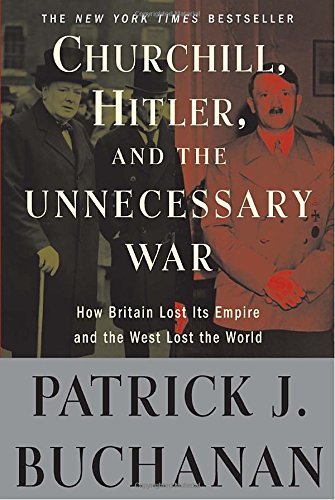
Copyright 2017 Creators.com
November 27, 2017
Posted by aletho |
Subjugation - Torture, Timeless or most popular, War Crimes | Saudi Arabia, United States, Yemen |
Leave a comment
Undoubtedly the media’s account of Saad Hariri’s ‘forced’ resignation is not the whole story, but how true or untrue is it? As Hariri is a Saudi-US asset, the ‘forced’ resignation seems more like the sacking of a company executive who has not lived up to expectations. Told to step out of office Hariri did what he was told, following through by issuing a Saudi-scripted statement accusing Hezbollah and Iran of sowing discord across the region, and talking of a plot to assassinate him.
In fact, it was Saudi Arabia sowing discord, by blaming Hezbollah and Iran for Hariri’s resignation, with the apparent aim of throwing Lebanon into chaos. Predictably, Netanyahu jumped in immediately, saying the resignation was a call to the ‘international community’ to take action against Iranian aggression but no-one else bought it, not even Lebanon’s Sunni Muslims. Hezbollah reacted calmly and if anyone came out of it badly it was Saudi Arabia. In the Iranian view the removal of Hariri was a plot cooked up by Trump and Crown Prince Muhammad bin Salman.
Hariri himself did not return to Lebanon where he could have defied the Saudis and resumed his position but moved on to France, where he was welcomed by President Macron at the Elysee Palace. Soon after talking to Hariri, Macron was on the phone to Trump, discussing the Iranian ‘threat’ and how to deal with it. According to Lebanon’s President Michel Aoun, Hariri told him he would return to Beirut by Independence Day, November 22, marking the end of the French mandate. The Lebanese parties, including Hezbollah, still regard Hariri as the country’s Prime Minister so how all of this plays after Hariri’s return will be interesting to see.
What lies behind all this? What is the connection between Hariri’s resignation (forced or otherwise) and the other events running concurrently in Saudi Arabia, namely the arrest of some of the most powerful figures in the kingdom and the confiscation of their assets, estimated at about $800 billion? One has to assume there is a connection. It seems far too much of a coincidence for there not to be one.
The claim that the purge of the princes was part of an anti-corruption drive is bunk, seeing that corruption is intrinsic to how the Saudi government operates, domestically and in its foreign policy. If corruption is a cover story, why were these princes removed? Could it be their opposition to Saudi Arabia’s policy failures, in Syria and Yemen, and their opposition to what is now clearly being moved from the drawing board to implementation, a war on Iran, involving the US, Israel and Saudi Arabia? They would hardly be alone in seeing Crown Prince Muhamad bin Salman as reckless, foolhardy and lethally dangerous to the stability of the Saudi kingdom: his accession to the throne they would regard, literally, as a crowning act of folly.
That another war is on the horizon is clear from all the signals coming out of Israel in the past six months. That not just the US but Saudi Arabia will be part of it is obvious. Intermittently, Israel and Saudi Arabia have been pushing for war on Iran for a decade. With the US refusing to bite, to the extent of launching an open military attack, Syria was chosen as the next best target: if the government in Damascus could be destroyed, the strategic alliance between Iran, Syria and Hezbollah would collapse at its central arch. This plan B was partly foiled by the refusal of the UN Security Council, thanks to the vetoes of Russia and China, to sanction an aerial war on Syria along the lines of the assault on Libya. Plan C had to come into effect, reliance on a war of attrition fought by takfiri proxies organised, financed and armed mainly by the US, Saudi Arabia, Qatar, Israel, Britain and France, and coordinated with the assistance of governments ranging from the Balkans to Central Asia. Seven years later Plan C has now ground to a halt. The ‘axis of reaction’ (the US, Israel and Saudi Arabia) has suffered a crushing defeat at the hands of the ‘axis of resistance’ (Iran, Syria and Hezbollah). Russian intervention has been critical, so the victory is Russia’s as well, and a particular humiliation for the US.
This does not end the list of defeats suffered by the ‘axis of reaction.’ Another severe blow has been suffered through the collapse of the Kurdish drive for independence in northern Iraq. Both the US and Israel have assiduously cultivated the Kurds for decades, seeing northern Iraq as a new strategic centre for military and intelligence operations across the Middle East. The US and British ‘no fly’ zone and ‘safe haven’ initiatives of 1990/91 were the first steps in the planned breakup of an Iraq that no longer suited imperial purposes. The invasion of 2003 and the imposition of a constitution dictated by the US, weakening the authority of the central government, led to Kurdish autonomy which, in time, would have been expected to end in independence and a new base for US/Israeli operations across the Middle East.
Even the US was against the referendum called by Masoud Barzani: seeing that it was already getting what it wanted, the referendum would be premature and cause more trouble than it was worth.
This proved to be the case. Turkey and Iran reacted viscerally, ending flights and closing border crossings: the Iraqi army retook Kirkuk and all the territory conquered by the Peshmerga in 2014. Barzani stepped down as president of the KRG: Jalal Talabani, the head of the Patriotic Union of Kurdistan (PUK), had died only recently, leaving the Kurds leaderless and at each other’s throats over who was responsible for this debacle. Iraq is now being reconstituted as a unitary state. The largely Shia Popular Mobilization Forces (PMF) has developed into a powerful annex to the regular army. Moreover, the government in Baghdad has a close working relationship with the government of the Islamic Republic in Tehran.
The paradox of these defeats is that they increase to a critical level the danger of a new attack by the ‘axis of reaction’ on the ‘axis of resistance.’ Russia, Iran, Syria and Hezbollah cannot be allowed to get away with these victories. The Israeli chief of staff, Gabi Eisenkot, hardly needed to say, as he did recently, that there is ‘complete agreement between us and the Kingdom of Saudi Arabia’ on the question of Iran’s spreading influence across the Middle East, or ‘control’ of the region as he put it. Unable to impose its will on one of the poorest countries in the world, Yemen, Saudi Arabia would be of little help on the front line in a war against dangerous targets such as Hezbollah and Iran. But it has money and according to Hasan Nasrallah, has offered to pay Israel billions of dollars for a new war on Hezbollah.
As Israel always has the next war on the drawing board, the central question is ‘when’ rather than ‘if’ it will be launched. In recent months it has held some of the largest-scale land and air exercises in its recent history in preparation for a new war on Hezbollah, including training for fighting in tunnels. It has warned repeatedly over the years that the next time around the ‘Dahiyeh strategy’ will be applied across Lebanon and is busy selling the propaganda package that there really is no Lebanon any more but only a Hezbollah enclave controlled by Iran.
Dahiyeh, of course, is the largely Shia Beirut suburb and urban HQ of Hezbollah that was pulverised from the air in 2006. Given the huge civilian casualties Israel is willing to inflict in the next war, Iran and Syria would be hard pressed to stay out but the moment they intervene, Israel, the US and Saudi Arabia will have their three primal enemies directly in their line of fire. The refusal of the US to withdraw its forces and dismantle its air bases in Syria now that the Islamic State has been ‘defeated’ (if still being used as an American tool) is probably connected with preparation for the coming conflict.
Israel’s existential struggle in the Middle East since 1948 has now reached the point of crisis. Israel may think it has all the time it needs to completely engorge the West Bank but it does not have such a luxury on the regional front. If Iran is stronger now than before the wars on Iraq and Syria, it will be even stronger in two or three years’ time. It has a large standing army, fought an extremely destructive war against Iraq (1980-89), has been deeply involved at the planning and combat level in the defence of Syria and has built up a large arsenal of locally developed short and long-range missiles.
By comparison, Israel has not even fought a regular army since 1973: in 2000 it was driven out of Lebanon by a guerrilla force and when it attempted to retrieve lost ground by launching a new war in 2006 its ground troops proved incapable of taking villages even a few kilometres from the armistice line. Its attacks on Gaza have been onslaughts on a largely defenceless civilian population.
Given that since 1948 its security/insecurity situation has ultimately been based not on diplomacy but on full spectrum military domination from the possession of nuclear weapons down to conventional warfare, Israel cannot allow the current situation of strengthening enemies to continue. Hostile to any kind of diplomatic settlement that would generate a real peace, Israel must go to war. It says it is much stronger and better prepared than in 2006 but so are Hezbollah and Iran. Hezbollah alone has a large stockpile of missiles able to reach any corner of occupied Palestine: Israel’s Iron Dome anti-missile system will stop some of them but not all.
If it does go to war Israel is certainly going to suffer civilian casualties unprecedented in its history but the politicians and generals around Netanyahu will argue that its existential situation will demand these sacrifices. The US would come in behind Israel, but Russia could not be expected to sit by while its diplomatic alliances and strategic assets in the Middle East are destroyed. The commentator Abd al Bari Atwan has warned that such a war would be the most destructive in the region’s history, developing into a global conflict, and has raised the question of whether Israel, having started it, could survive it. This is a truly apocalyptic scenario.
As usual the Palestinians find themselves caught in the middle. Mahmud Abbas is being told to go along with the Trump-Kushner-Israel ‘peace initiative’ or else, even by Saudi Arabia. This would involve Abbas publicly sharing the anti-Iranian, anti-Hezbollah and anti-Shia views of the Saudis at a time he is engaged in a reconciliation process with Hamas, which has refused to take a stand against Hezbollah. Furthermore, several of its senior leaders have recently been in Tehran. For the moment all eyes are on Hariri as he returns to Beirut: how will he explain himself, will he resume his position as Prime Minister and on what terms?
November 26, 2017
Posted by aletho |
Ethnic Cleansing, Racism, Zionism, Timeless or most popular, Wars for Israel | France, Hamas, Hezbollah, Iran, Israel, Lebanon, Middle East, Palestine, Saudi Arabia, Syria, United States, Zionism |
Leave a comment
By Rasem Obidat | Al-Quds News | November 20, 2017
Israel’s Channel 2 has revealed the features of the American plan to resolve the Palestinian issue. The essence of the solution is based on Netanyahu’s economic project, a state without a state.
The Palestinian issue and the rights of the Palestinian people are also being addressed by Netanyahu and the American Zionist team in the US administration who are tasked with formulating this plan (Kushner, Greenblatt, Nikki Haley and David Friedman) who have worked in the US President’s office in real estate. Therefore, they look at our cause as a real estate issue that can be resolved with a package of huge economic aid, presented by the Arabs and Gulf sheikhs in order to make the plan a success.
The proposed plan abandons the notion of an independent Palestinian state on the 4 June 1967 borders. Instead, it states that the presence of settlers in the West Bank is legal and any evacuation of these invading settlers who have taken over Palestinian territories is a form of ethnic cleansing, according to Netanyahu. Hence, the plan legitimises the presence of the occupation and permits the confiscation of others’ land by force.
At the same time Netanyahu is stating that evacuating settlers from their settlements built on occupied Palestinian territories is considered ethnic cleansing, he is exercising all forms of ethnic cleansing against the Palestinian people. He plans to expel, evacuate and displace Arab Jahalin Bedouins from the Jabal Al-Baba area, near Al-Eizariya, because these Bedouin communities on the outskirts of Jerusalem prevent the Ma’ale Adumim settlements, which include Mishor Adumim, Kedar and Mitzpe Yeriho, from being linked and annexed to the city of Jerusalem.
Construction in the area known as E1, 12 kilometres northwest of the Ma’ale Adumim settlement, would completely isolate the city of Jerusalem from its Palestinian surroundings and permanently bury the two-state solution. This would separate the northern part of the West Bank from the south and separate its northern and southern parts from its central area. It is a plan to separate and fragment the West Bank.
Netanyahu is well aware of the details and clauses of the American plan expected to be put forward, as the American team preparing the plan is more Zionist than Netanyahu himself. He is the most hostile and denies the rights of the Palestinian people, and therefore, it is not surprising that Netanyahu has described the evacuation of settlers from the occupied territories as a form of ethnic cleansing.
The Zionist American Ambassador to Israel, David Friedman, said that Israel has the right to establish settlements anywhere in Jerusalem and the West Bank, on public or private Palestinian land. He even described Israel’s occupation of the West Bank as false claims and alleged occupation.
Therefore, Netanyahu’s proposals align with Friedman, Kushner and Greenblatt’s vision, as well as his expulsion of the Jahalin Bedouins from the areas surrounding Jerusalem. Furthermore, pushing back the Al-Walaja barrier by 2.5 kilometres in order to control the Ain Haniya area, and creating a connection in order to annex settlements south of Jerusalem, the Gush Etzion settlement blocs, and the settlements located east of it to the city, making them under its sovereignty and authority are all part of the American plan. This would make the area of Jerusalem 10 per cent of the West Bank.
This also means pumping 150,000 settlers into Jerusalem and removing 100,000 Jerusalemites from the city, as well as the villages and towns behind the wall, including Kafr Aqab, Shuafat Camp and parts of the village of Sawahra. This plan is proposed by the so-called minister of Ze’ev Elkin in order to ensure a Jewish majority in the city and shifting its demographic reality in favour of the settlers.
Twenty-four years after the signing of the Oslo Accords, we still have not reached a state, as believed by those who signed it. Unfortunately, it has led us to the disastrous situation where the PA is nothing more than a civil administration and local police that has no security or civil control, even in the areas that are supposed to be under complete Palestinian authority, i.e. Area A. The occupation violates and breaches the PA’s areas however and whenever it wants, without referring back to the Oslo Accords, and even considers its actions part of the agreement. In short, our situation is exactly how President Abbas put it at the UN General Assembly 72nd session, “an authority without authority”.
The new “creative” American plan to resolve the Palestinian issue according to the so-called regional framework preserves and legitimises the presence of setters in the West Bank. The plan also has the support, blessing and participation of Arab backers and funders of this plan.
We are well aware, whether or not President Abbas and the Saudi officials denied this, that the purpose of his summons to Riyadh was not to fill him in on the details of the American plan and what is required of the Palestinians according to the plan, but to present the American plan and reveal its temptations and threats.
Saudi Arabia is part of the financing of this plan, and one of its enthusiasts, as it is strongly seeking to normalise and legitimise Arab relations with Israel and integrate it into the region as a natural component. It sees Israel as a “friendly” state and that Iran and its advanced arm in the region, Lebanon’s Hezbollah, which Saudi Arabia has classified as a terrorist organisation, is the real threat to the security and stability of the region.
Therefore, Abbas’ approval of the American plan means pumping millions of dollars, perhaps billions, to the PA treasury. Rejecting the plan would mean a financial blockade and the creation of alternatives, and perhaps even America’s failure to renew the permit for the Palestinian representation office in Washington. This is all a part of America and its allies’ policy to pressure the PA to accept the plan.
Just as the disastrous Oslo Accords led us to an authority without authority, the so-called deal of the century will lead us to a state without a state. It will lead us to economic peace, which is Netanyahu’s project, entailing of the exchange of the Palestinian’s legitimate right to freedom and independence for economic projects and bribes that improve the Palestinians’ living situation under occupation. This will be achieved through Arab and international funding, with the occupation’s support and legitimisation.
Therefore, what awaits the Palestinian people is far more dangerous than the Oslo Accords. The “deal of the century” carries with it the complete liquidation of the Palestinian cause, unfortunately with Arab participation and blessing. Therefore, our people and leadership are facing true challenges and risks, requiring those meeting in Cairo today to be highly responsible. They arrange the internal home and our internal front in accordance with unified visions and strategies and a national project based on a Palestinian state on the 1967 borders and guaranteeing the refugees’ right of return, in accordance with UN resolution 194.
Failure and the continued division is not an option for our factions in Cairo, as it would mean disaster, destruction and loss for everyone. What we need is unity and an end to the division, as we are facing enormous dangers and challenges. Are our leaders aware of this?
Translation from Arabic by MEMO
November 21, 2017
Posted by aletho |
Ethnic Cleansing, Racism, Zionism | Israel, Palestine, Saudi Arabia, United States, Zionism |
Leave a comment
The secretary general of the Lebanese Hezbollah resistance movement says despite the US claims about fighting terrorism, it spared no effort to help Daesh forces in the Syrian town of al-Bukamal.
Sayyed Hassan Nasrallah made the remarks in a televised address to the Lebanese nation in capital city of Beirut on Monday.
Nasrallah noted that recapturing Bukamal was a major victory over Daesh, because Bukamal was the last Syrian city occupied by Daesh.
“The US helped Daesh as much as it could in Bukamal short of directly engaging forces that fought to liberate the town from Daesh,” the Hezbollah leader noted.
Nasrallah went on to note that the US provided Daesh terrorists with full air cover in Bukamal.
The US sent its drones to Bukamal and provided Daesh with accurate information about what was going on, Nasrallah said, adding that American forces also waged electronic warfare against forces that were fighting to liberate Bukamal.
American forces also provided air transfer for Daesh commanders and facilitated their escape to eastern shores of the Euphrates, he said. The Hezbollah leader stated that even Turkey’s President Recep Tayyip Erdogan slammed the US for helping Daesh.
Nasrallah emphasized that recapturing Bukamal led to unity of Syria and ended Daesh’s self-proclaimed state in the country.
Following recent victories in Iraq and Syria, he added, the military structure of Daesh collapsed in the two countries and Iraqi forces have reached the Syrian border.
Hezbollah leader noted that the victory over Daesh was victory of Islamic values over terrorists’ savagery.
Nasrallah also highlighted the role played by Commander of the Islamic Revolution Guards Corps’ Quds Force Major General Qassem Soleimani in anti-terror operations in both Iraq and Syria.
He noted that Soleimani was commanding anti-Daesh operations in the two countries at the frontline and was never a commander to issue orders from behind the lines.
Elsewhere in his remarks, Nasrallah referred to the latest meeting of the Arab League foreign ministers in Cairo, who designated the Lebanese Hezbollah as a terrorist group, saying that this was not the first time that such accusations were leveled against Hezbollah.
Arab League Secretary General Ahmad Aboul Gheit announced at a press conference in the Egyptian capital of Cairo on Sunday that Arab states had agreed to designate Lebanon’s Hezbollah resistance movement a “terrorist organization.”
The Arab League’s extraordinary general meeting on Sunday was held at the request of Saudi Arabia, which has assumed an aggressive stance against Hezbollah for its alleged links to Iran, Riyadh’s powerful rival in the region. Riyadh associates Hezbollah with Iran and has been trying to weaken the resistance movement, which is Lebanon’s de facto deterrent force against Tel Aviv.
In its concluding resolution, the Arab League announced that Arab foreign ministers, excluding those of Lebanon and Iraq, would hold Hezbollah responsible for supporting “terrorist groups” across the region.
Nasrallah said the Arab League statement has labeled Hezbollah’s council, which is part of the Lebanon’s government, as a terrorist outfit, alleging that it provides missiles to terrorist groups in the region.
He added that accusations about Hezbollah sending missiles to regional countries were false and undocumented, emphasizing that the group has never sent any missiles or even light weapons to Kuwait, Yemen, Iraq or Bahrain or any other country in the region.
The leader of Hezbollah went on to say that the Arab League has warned Lebanon that if Hezbollah is not disarmed, security of the country would be in jeopardy.
Hezbollah rejected the accusation, noting that the main threat to security of Lebanon was the Zionist regime of Israel.
He added that the resistance front’s weapons were the main factor restoring security and stability to Lebanon, because they were used for defensive purposes in the face of the Israeli aggression.
Nasrallah emphasized that Hezbollah’s weapons were used only against terrorist groups such as Daesh and posed no threat to security of Lebanon.
A United Nations Security Council-appointed panel says it has seen no evidence to support Saudi Arabia’s claims that missiles have been transferred to Yemen’s Houthis by external sources.
Nasrallah stated that the main reason behind the recent Arab League meeting was not to discuss the issue of Palestine or other problems facing the Islamic world, but its main reason was the recent missile attack against a Saudi airport near the country’s capital, Riyadh.
Refusing Saudi Arabia and Arab League claims that the missile was provided to Yemeni Ansarullah fighters by Iran or the Lebanese Hezbollah, Nasrallah said Iran or Hezbollah had not sent any missiles to Yemen and Yemeni forces made their own missiles in the country.
He categorically rejected Arab League’s claims in this regard, noting that Saudi Arabia and its allies must admit that they have been defeated by Yemeni forces in their war of aggression against the country.
Nasrallah emphasized that Arab countries must put an immediate end to their support for terror groups, and do not fill the Middle East region with such outfits.
He reiterated that no member of Hezbollah was involved in the November 5 Yemeni missile strike against King Khalid International Airport of Riyadh.
The Hezbollah leader then took the Arab League to task for failing to address Saudi Arabia’s devastating aerial bombardment of the “Arab country of Yemen,” saying, “Saudi Arabia is bombing Yemeni people day and night.”
Strongly denouncing the Riyadh regime over perpetrating outrageous atrocities against millions of “Arab Muslims” in Yemen, Nasrallah lashed out at the Arab world’s “deafening silence” over the grim situation in Yemen.
“The turmoil we are witnessing in the Arab world is a cover for the announcement of normalization of relations with Israel,” he commented.
Nasrallah then called on Arabs to do their best to maintain their national unity in the face of all divisive efforts.
The Hezbollah secretary general also praised Lebanese officials and politicians for their firm stance regarding Prime Minister Saad Hariri’s shock resignation, calling on him to return to Lebanon as soon as possible.
November 20, 2017
Posted by aletho |
Ethnic Cleansing, Racism, Zionism, Timeless or most popular, Wars for Israel | Hezbollah, Lebanon, Middle East, Saudi Arabia, Yemen, Zionism |
Leave a comment
It’s remarkable that whenever you read an article about Yemen in the mainstream media, the central role of Saudi Arabia and the United States in the tragedy is glossed over or completely ignored. A recent Washington Post article purporting to tell us “how things got so bad” explains to us that, “it’s a complicated story” involving “warring regional superpowers, terrorism, oil, and an impending climate catastrophe.”
No, Washington Post, it’s simpler than that. The tragedy in Yemen is the result of foreign military intervention in the internal affairs of that country. It started with the “Arab Spring” which had all the fingerprints of State Department meddling, and it escalated with 2015’s unprovoked Saudi attack on the country to re-install Riyadh’s preferred leader. Thousands of innocent civilians have been killed and millions more are at risk as starvation and cholera rage.
We are told that US foreign policy should reflect American values. So how can Washington support Saudi Arabia – a tyrannical state with one of the worst human rights record on earth – as it commits by what any measure is a genocide against the Yemeni people? The UN undersecretary-general for humanitarian affairs warned just last week that Yemen faces “the largest famine the world has seen for many decades with millions of victims.” The Red Cross has just estimated that a million people are vulnerable in the cholera epidemic that rages through Yemen.
And why is there a cholera epidemic? Because the Saudi government – with US support – has blocked every port of entry to prevent critical medicine from reaching suffering Yemenis. This is not a war. It is cruel murder.
The United States is backing Saudi aggression against Yemen by cooperating in every way with the Saudi military. Targeting, intelligence, weapons sales, and more. The US is a partner in Saudi Arabia’s Yemen crimes.
Does holding hands with Saudi Arabia as it slaughters Yemeni children really reflect American values? Is anyone even playing attention?
The claim that we are fighting al-Qaeda in Yemen and thus our involvement is covered under the post-9/11 authorization for the use of force is without merit. In fact it has been reported numerous times in the mainstream media that US intervention on behalf of the Saudis in Yemen is actually a boost to al-Qaeda in the country. Al-Qaeda is at war with the Houthis who had taken control of much of the country because the Houthis practice a form of Shi’a Islam they claim is tied to Iran. We are fighting on the same side as al-Qaeda in Yemen.
Adding insult to injury, the US Congress can’t be bothered to even question how we got so involved in a war that has nothing to do with us. A few conscientious Members of Congress got together recently to introduce a special motion under the 1973 War Powers Act that would have required a vote on our continued military involvement in the Yemen genocide. The leadership of both parties joined together to destroy this attempt to at least get a vote on US aggression against Yemen. As it turns out, the only Members to vote against this shamefully gutted resolution were the original Members who introduced it. This is bipartisanship at its worst.
US involvement in Saudi Arabia’s crimes against Yemen is a national disgrace. That the mainstream media fails to accurately cover this genocide is shameful. Let us join our voices now to demand that our US Representatives end US involvement in Yemen immediately!
November 20, 2017
Posted by aletho |
Timeless or most popular, War Crimes | Saudi Arabia, United States, Yemen |
Leave a comment
France’s invitation to beleaguered Lebanese premier Saad Hariri for him and his family to spend “a few days in Paris” has been viewed as French President Emmanuel Macron stepping in with deft soft power to resolve tensions between Saudi Arabia and Lebanon.
Less charitably, what Macron is really doing is giving cynical cover to the Saudi rulers for their extraordinary acts of aggression towards Lebanon and their violation of that country’s sovereignty.
Two of Hariri’s children were left in Saudi capital Riyadh while he visited France over the weekend. Were they being used as hostages by the Saudis to ensure that Hariri maintains the Saudi spin on events? Certainly, the arrangement raises suspicions, but the French president sought instead to affect a “normal” nothing-is-unusual appearance.
Lebanese President Michel Aoun last week publicly accused Saudi Arabia of holding Hariri in Riyadh against his will. Aoun said the Saudi rulers were violating international law by detaining Hariri and forcing his resignation as prime minister of Lebanon. Such acts were tantamount to aggression, said President Aoun.
Yet Macron has said nothing about Saudi interference. He has instead turned reality on its head by censuring Iran for regional “aggression” and thereby backing Saudi claims that Iran is supplying ballistic missiles to Yemen. Iran swiftly condemned Macron for “stoking regional tensions”.
Credit goes to President Aoun for speaking out plainly, telling it like it is and expressing what many Lebanese citizens and many other observers around the world have concluded. The whole debacle is an outrageous affront to Lebanon and international law by the Saudi rulers, when it is taken into consideration Hariri’s hasty summoning to Saudi capital Riyadh earlier this month, his subsequent televised resignation speech on Saudi TV, and his long-delayed sojourn in that country. What is even more despicable is that the Saudi interference in the sovereign affairs of Lebanon is threatening to re-ignite a civil war within the small Mediterranean country, and, possibly worse, a war across the region with Iran.
Hariri has claimed in a later media interview, held in Saudi Arabia, and in reported communications with family and friends who are back in Lebanon that he was not under duress while staying in Saudi Arabia. That claim beggars belief given the bizarre circumstances of Hariri’s sudden departure and his protracted nearly two-week stay in Saudi Arabia.
In any case, the president of Lebanon, Michel Aoun, has concluded that something is badly amiss in the saga, and he has explicitly accused Saudi rulers of violating his country’s sovereignty.
Therefore, if there were any principle or adherence to international law, the actions of Saudi Arabia should be condemned categorically by the international community, the UN, the European Union and France in particular owing to its historic relations with Lebanon as the former colonial power before independence in 1943.
But no. What we have instead are either shameful silence from Washington, or mealy-mouthed statements from the EU. The EU’s foreign policy chief Federica Mogherini issued a vague statement warning against “foreign interference” in the affairs of Lebanon. What kind of cowardly circumlocution is that?
Lebanon’s prime minister Saad Hariri was, in effect, detained by Saudi Arabia and forced to tender his resignation from public office as a matter of ultimatum. It has been reliably reported that the Wahhabi Saudi rulers were exasperated with the Shia group Hezbollah being part of the coalition government in Beirut. Hariri is a Saudi-sponsored Sunni politician who is antagonistic to Hezbollah and by extension, Iran. But apparently, he was not sufficiently hostile, in the view of his Saudi backers. Hence, Hariri was summoned to Riyadh and ordered to resign on November 4. (The defeat of the Saudi-sponsored covert terror war in Syria no doubt was a factor too in the timing.)
France’s President Macron is playing a particularly slippery game of pandering and expedience towards the Saudi despots.
As the Washington Post’s WorldView briefing reported last week: “French President Emmanuel Macron told reporters that it was important to dispel the implication that Hariri was a Saudi prisoner.”
The newspaper goes on to quote Macron saying rather vacuously: “We need to have leaders who are free to express themselves. It’s important that [Hariri] is able to advance the political process in his country in the coming days and weeks.”
The question should be asked: why is it important for Macron to “dispel the implication that Hariri was a Saudi prisoner”?
From virtually all accounts, including that of Lebanese President Michel Aoun whose view should surely be paramount here, that is exactly what Hariri was made by the Saudis – a prisoner.
Three days before his summoning to Riyadh and his scripted resignation speech on November 4 – in which Hariri claimed with incredible drama that he was in danger of an assassination plot by Hezbollah and its ally Iran – it was reported that Hariri was having dinner with the French culture minister in Beirut. During their meal, he received a phone call. His demeanor darkened, and he immediately departed from the table for a flight to Riyadh. Without the company of aides, Hariri was met on his arrival by Saudi officials who took his mobile phone from him. He was not greeted by senior Saudi rulers like Crown Prince Mohammed bin Salman, which would have been customary diplomatic protocol.
Everything about the next two weeks of Hariri’s stay in Saudi Arabia signals a de facto detention against his will. Admittedly, he made a brief flight to the United Arab Emirates during the time period, which was claimed by the Saudis to be proof of his free movement. The UAE rulers are closely aligned with the House of Saud, and besides Hariri was soon back in his Riyadh residence, from where he continued to tweet to friends that he was “fine”.
This is nothing but a sham. The stark facts are that Saudi Arabia has brazenly interfered in the internal affairs of Lebanon, trying to force its prime minister to step down. Furthermore, the Saudi rulers have accused Lebanon of “acts of war” by allegedly supporting Houthi rebels in Yemen; the Saudis have also ordered their nationals to leave Lebanon; and there are reports emerging of the Saudis now pushing to suspend Beirut from the Arab League. This is reckless incendiary behavior by the Saudi rulers.
Should we be surprised though? Saudi Arabia has shown absolute criminal disregard for international law over its bombing and genocidal blockade of Yemen, where humanitarian aid groups have warned that 50,000 children may die this year due to enforced deprivation from the nearly three-year American and British-backed Saudi war on Yemen.
The absolute Saudi monarchy has also gone on an internal rampage of arresting its own government ministers and other businessmen in an audacious power-grab under the guise of “an anti-corruption drive”. Moreover, Saudi rulers have been instrumental in organizing a legally dubious trade and diplomatic blockade of Qatar over trumped claims that the latter is a stooge for Iran and singularly supporting terrorists (this from the Saudis who have bankrolled terrorist proxies to overthrow the government in Syria.)
The criminality and rogue conduct of Saudi Arabia is legion and brazenly in your face.
That is why the so-called “international community”, the UN, Washington, the European Union, and France in particular are deserving of withering censure. Their mealy-mouthed muted statements on Saudi misconduct towards Lebanon are a disgrace. They are complicit in wanton lawlessness by their pandering to Saudi despots.
But France’s Emmanuel Macron has emerged as the prime disgrace. His invitation to Saad Hariri and his family to come to France is a cynical move to give cover to the Saudi despots. Tellingly, on the announcement of the invitation, Macron said that “it was not an offer of exile”. That’s Macron making it all sugary nice as pie.
On Friday, the day before Hariri arrived in Paris, Macron actually accused Iran of “aggression” and has called for sanctions on Iran’s ballistic missile defense program. So, Macron, sneakily, is giving the Saudi narrative succor, and blaming Iran, instead of condemning Riyadh for its flagrant interference and aggression.
Again, by inviting Hariri to Paris, Macron is indulging the Saudi-Hariri charade that all is “normal” – when in reality the sordid shenanigans over the past two weeks amount to an outrageous and very grave violation of international law and of a neighboring country’s sovereignty by the Saudis.
With this kind of cynical “diplomacy”, Macron is showing that France is far from capable of having any leadership role or moral authority in the Middle East or the world.
Of course, France’s vested economic interests with the Saudi despots, from arms sales to energy and infrastructure projects, are central to Macron’s expedient calculations.
Macron’s ambitions of engendering some kind of renaissance of France as a global power are futile and nothing but sheer vanity. The cowardice of the French president in the face of Saudi aggression towards Lebanon shows that Macron and his pretensions of “global power” are a puff of cheap cosmetic powder.
November 20, 2017
Posted by aletho |
Deception, Timeless or most popular, War Crimes | Emmanuel Macron, European Union, France, Lebanon, Middle East, Saudi Arabia |
Leave a comment


 Aletho News
 Aletho News