Syrian Kurds Refuse to Reveal Number of US Bases, Volume of Supplied US Arms
Sputnik | October 29, 2017
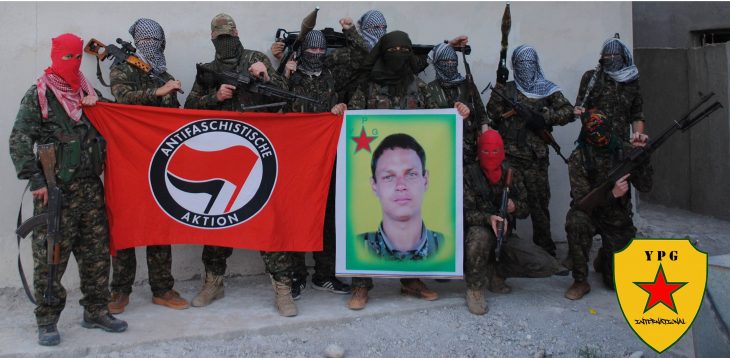
In the wake of the recently-announced liberation of the Syrian city of Raqqa, many analysts have been wondering about the scale of US support to the mostly Kurdish Syrian Democratic Forces (SDF), which headed the operation, and the number of military facilities the US has set up in northern Syria. Kurds, however, refused to reveal any details.
Amid ongoing reports that the US continues to arm the Syrian Kurds, even after the announced retaking of Raqqa from Daesh, Nuri Mahmud, an official representative of the Kurdish People’s Protection Units (YPG), the primary component of the US-backed SDF force which conducted the operation, confirmed that the US has been supplying them with arms since the liberation of Kobani in 2015.
Mahmud, however, refused to reveal the scale of the arms provided by the US, only noting that “it is relatively humble and not enough in comparison with the weaponry it supplied to the Iraqi army for the liberation of Mosul.”
The Kurdish official called their relationship with Washington a “strategic alliance” and confirmed that the US is setting up military bases on territories which the Kurds take under control. According to Nuri Mahmud, these facilities are used for the fight against Daesh. However, he refused to give the exact number of operating US bases.
“We can’t discuss this issue. It is none of our business,” he told Sputnik Turkiye.
Abdulaziz Yunus, the SDF representative in charge of foreign affairs, also confirmed that the US continues supplying arms to SDF, and remains the only power which is supporting Kurds militarily.
The Kurdish official, however, as well as Nuri Mahmud, refused to reveal the amount of weaponry they received.
“The US is supplying us with ammunition based on our demands. Apart from coalition forces, no one else supports us with weaponry. We won’t disclose the exact volume of the provided arms but hope that the deliveries will increase as it will enable us to liberate other regions from terrorists,” he explained.
Abdulaziz Yunus stressed that the interests of SDF coincide with those of the US, and that they will continue their cooperation. Washington had supported the Free Syrian Army, but this didn’t yield any results. That is why, after the liberation of Kobani, the US decided to support them and has been satisfied with this arrangement, he concluded.
In Shocking, Viral Interview, Qatar Confesses Secrets Behind Syrian War
By Tyler Durden | Zero Hedge | October 28, 2017
A television interview of a top Qatari official confessing the truth behind the origins of the war in Syria is going viral across Arabic social media during the same week a leaked top secret NSA document was published which confirms that the armed opposition in Syria was under the direct command of foreign governments from the early years of the conflict.
And according to a well-known Syria analyst and economic adviser with close contacts in the Syrian government, the explosive interview constitutes a high level “public admission to collusion and coordination between four countries to destabilize an independent state, [including] possible support for Nusra/al-Qaeda.” Importantly, “this admission will help build case for what Damascus sees as an attack on its security & sovereignty. It will form basis for compensation claims.”

A 2013 London press conference: Qatari Prime Minister Sheikh Hamad bin Jassim bin Jabr Al Thani with U.S. Secretary of State John Kerry. A 2014 Hillary Clinton email confirmed Qatar as a state-sponsor of ISIS during that same time period.
As the war in Syria continues slowly winding down, it seems new source material comes out on an almost a weekly basis in the form of testimonials of top officials involved in destabilizing Syria, and even occasional leaked emails and documents which further detail covert regime change operations against the Assad government. Though much of this content serves to confirm what has already long been known by those who have never accepted the simplistic propaganda which has dominated mainstream media, details continue to fall in place, providing future historians with a clearer picture of the true nature of the war.
This process of clarity has been aided – as predicted – by the continued infighting among Gulf Cooperation Council (GCC) former allies Saudi Arabia and Qatar, with each side accusing the other of funding Islamic State and al-Qaeda terrorists (ironically, both true). Increasingly, the world watches as more dirty laundry is aired and the GCC implodes after years of nearly all the gulf monarchies funding jihadist movements in places like Syria, Iraq, and Libya.
The top Qatari official is no less than former Prime Minister Hamad bin Jassim bin Jaber al-Thani, who oversaw Syria operations on behalf of Qatar until 2013 (also as foreign minister), and is seen below with then-Secretary of State Hillary Clinton in this Jan. 2010 photo (as a reminder, Qatar’s 2022 World Cup Committee donated $500,000 to the Clinton Foundation in 2014).

In an interview with Qatari TV Wednesday, bin Jaber al-Thani revealed that his country, alongside Saudi Arabia, Turkey, and the United States, began shipping weapons to jihadists from the very moment events “first started” (in 2011).
Al-Thani even likened the covert operation to “hunting prey” – the prey being President Assad and his supporters – “prey” which he admits got away (as Assad is still in power; he used a Gulf Arabic dialect word, “al-sayda”, which implies hunting animals or prey for sport). Though Thani denied credible allegations of support for ISIS, the former prime minister’s words implied direct Gulf and US support for al-Qaeda in Syria (al-Nusra Front) from the earliest years of the war, and even said Qatar has “full documents” and records proving that the war was planned to effect regime change.
According to Zero Hedge’s translation, al-Thani said while acknowledging Gulf nations were arming jihadists in Syria with the approval and support of US and Turkey: “I don’t want to go into details but we have full documents about us taking charge [in Syria].” He claimed that both Saudi Arabia’s King Abdullah (who reigned until his death in 2015) and the United States placed Qatar in a lead role concerning covert operations to execute the proxy war.
The former prime minister’s comments, while very revealing, were intended as a defense and excuse of Qatar’s support for terrorism, and as a critique of the US and Saudi Arabia for essentially leaving Qatar “holding the bag” in terms of the war against Assad. Al-Thani explained that Qatar continued its financing of armed insurgents in Syria while other countries eventually wound down large-scale support, which is why he lashed out at the US and the Saudis, who initially “were with us in the same trench.”
In a previous US television interview which was vastly underreported, al-Thani told Charlie Rose when asked about allegations of Qatar’s support for terrorism that, “in Syria, everybody did mistakes, including your country.” And said that when the war began in Syria, “all of us worked through two operation rooms: one in Jordan and one in Turkey.”
Below is the key section of Wednesday’s interview, translated and subtitled by @Walid970721. Zero Hedge has reviewed and confirmed the translation, however, as the original rush translator has acknowledged, al-Thani doesn’t say “lady” but “prey” [“al-sayda”]- as in both Assad and Syrians were being hunted by the outside countries.
The partial English transcript is as follows:
“When the events first started in Syria I went to Saudi Arabia and met with King Abdullah. I did that on the instructions of his highness the prince, my father. He [Abdullah] said we are behind you. You go ahead with this plan and we will coordinate but you should be in charge. I won’t get into details but we have full documents and anything that was sent [to Syria] would go to Turkey and was in coordination with the US forces and everything was distributed via the Turks and the US forces. And us and everyone else was involved, the military people. There may have been mistakes and support was given to the wrong faction… Maybe there was a relationship with Nusra, its possible but I myself don’t know about this… we were fighting over the prey [“al-sayda”] and now the prey is gone and we are still fighting… and now Bashar is still there. You [US and Saudi Arabia] were with us in the same trench… I have no objection to one changing if he finds that he was wrong, but at least inform your partner… for example leave Bashar [al-Assad] or do this or that, but the situation that has been created now will never allow any progress in the GCC [Gulf Cooperation Council], or any progress on anything if we continue to openly fight.”
As is now well-known, the CIA was directly involved in leading regime change efforts in Syria with allied gulf partners, as leaked and declassified US intelligence memos confirm. The US government understood in real time that Gulf and West-supplied advanced weaponry was going to al-Qaeda and ISIS, despite official claims of arming so-called “moderate” rebels. For example, a leaked 2014 intelligence memo sent to Hillary Clinton acknowledged Qatari and Saudi support for ISIS.
The email stated in direct and unambiguous language that:
“the governments of Qatar and Saudi Arabia, which are providing clandestine financial and logistic support to ISIL and other radical Sunni groups in the region.”
Furthermore, one day before Prime Minister Thani’s interview, The Intercept released a new top-secret NSA document unearthed from leaked intelligence files provided by Edward Snowden which show in stunning clarity that the armed opposition in Syria was under the direct command of foreign governments from the early years of the war which has now claimed half a million lives.

The newly released NSA document confirms that a 2013 insurgent attack with advanced surface-to-surface rockets upon civilian areas of Damascus, including Damascus International Airport, was directly supplied and commanded by Saudi Arabia with full prior awareness of US intelligence. As the former Qatari prime minister now also confirms, both the Saudis and US government staffed “operations rooms” overseeing such heinous attacks during the time period of the 2013 Damascus airport attack.
No doubt there remains a massive trove of damning documentary evidence which will continue to trickle out in the coming months and years. At the very least, the continuing Qatari-Saudi diplomatic war will bear more fruit as each side builds a case against the other with charges of supporting terrorism. And as we can see from this latest Qatari TV interview, the United States itself will not be spared in this new open season of airing dirty laundry as old allies turn on each other.
Syria Rejects Report of Joint Inquiry of UN and OPCW
Al-Manar | October 27, 2017
Syria has rejected the report of joint inquiry of the UN and Organization for the prohibition of chemical weapons (OPCW), which was announced yesterday, stressing that it came in implementation of the instructions of the US administration and Western countries to exert more political pressures and threats to Syria’s sovereignty.
A source at Foreign and Expatriates Ministry said Friday that Syria reiterates its complete commitment to Non-Proliferation of Chemical Weapons Convention and that it no longer has any toxic chemicals banned in accordance with the Convention.
It considers the use of chemical weapons an immoral and condemnable act anywhere, at any time and under any circumstances, the ministry said.
The ministry’s source said that Syria strongly condemns the direct and indirect accusations against it which were included in this report and the previous one since they represent a falsification of the truth and distortion of all accurate information about what happened in Khan Sheikhon.
It also condemns dependence of the Joint Investigative Mechanism on the statements of criminals who committed this immoral act in Khan Sheikhon and suspicious witnesses in addition to what they call open sources.
BILD Newspaper’s Image ‘Shows How German Propaganda Works’
Sputnik – October 25, 2017
Das BILD’s decision to release a controversial image of a suffering Syrian child is a “mean attempt” to manipulate the public opinion, German journalist Karin Leukefeld wrote for Sputnik, commenting on the newspaper’s recent publication that deeply shocked her.
The editor-in-chief of the German newspaper Das Bild, Julian Reichelt, published in his newsletter a photo that depicts a Syrian nurse with a seriously ill or possibly even dead child in her arms.
The picture is accompanied by text: “Assad the Dictator continues to wage war against his own people.”
German political observer Karin Leukefeld reacted to the publication by saying that this is an example of how the German propaganda machine works.

“Bashar al-Assad, the ruler of power, is leading his inexorable war against his own people.” © Photo: BILD
In fact, the image that was taken in the village of Hamuria located 17 kilometers from Damascus has little to do with the Syrian leader himself, but is rather associated with the hostilities of the terrorist groups that have the village under control, the lack of medical care and the passivity of the West, the journalist noted. Since 2012, Hamuria has been occupied by several radical armed groups. The settlement is currently under control of Islamist group Faylaq al-Rahman. The overwhelming majority of the civilian population fled the city and is now living in Damascus or its suburbs, but those who stayed have to live without proper medical care and in constant fear for their lives.
“There is no shortage of weapons, ammunition and insurgents in the besieged territories. But the situation with medicaments and food is the opposite. The fact is that countless children have died and are dying all over Syria…. People were and are starving in all parts of the country. And they can’t get help — not least because of Western sanctions, which become increasingly tough — and Germany is also responsible for this,” Leukefeld wrote.
Moreover, the analyst stressed that, according to international humanitarian law, this photo couldn’t be published at all as “distributing pictures of weak, defenseless, sick or dead people for the purpose of propaganda is forbidden.”In Leukefeld’s opinion, especially “disgusting” is the fact that the German newspaper’s Editor-in-Chief Julian Reichelt used an innocent child to impose his point of view.
“This child can’t prevent all this,” the journalist wrote, adding that readers who see the photo and read the short text won’t ask themselves whether the child is sick and how they might be able to help him, but rather they’ll put the blame for this child’s fate on the Syrian president.
Leukefeld noted that Reichelt’s main goal was to “evoke feelings of hatred and hostility,” adding that his message was a clear example of propaganda that “must be included into the curriculum for beginning journalists.”
CONFIRMED: US and Saudi coordinated barbaric terrorist attacks on Syria
By Adam Garrie | The Duran | October 25, 2017
The intricate role played by Saudi Arabia and the United States in ushering in a proxy terrorist war on Syria, have been both explicitly and implicitly known, since virtually the beginning of the US instigated proxy conflict in Syria, which was inaugurated in 2011.
In many ways, 2013 represented the nadir of the Syrian conflict. It was a time when it looked as though the combined strength of terrorist groups including ISIS/Daesh, FSA and al-Qaeda might succeed in destroying the secular, tolerant, pluralist Syrian Arab Republic and realise their goal of creating a Takfiri state based on extremist religious supremacist ideology and racism.
With Syria on the verge of a full victory and with Russia confirming that ISIS now controls less than 5% of Syrian territory, 2013 seems like a very distant time in the context of the Syrian conflict.
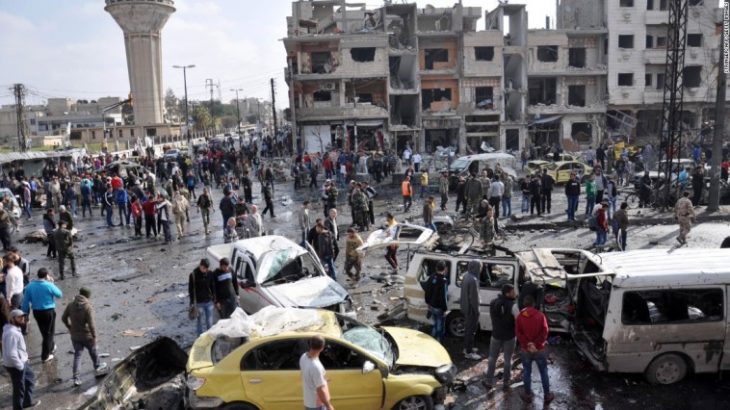
But on the 18th of March, 2013, large scale coordinated rocket attacks on Damascus International Airport, the Syrian Presidential Palace and other vital security targets in the capital, were conducted by the Takfiri terrorist group FSA.
Today, the exiled American whistleblower who once worked for the notorious NSA, Edward Snowden has released the following short top secret document which plainly details how the US and a powerful member of the Saudi regime, helped to fund and organise the illegal attack on Syria.
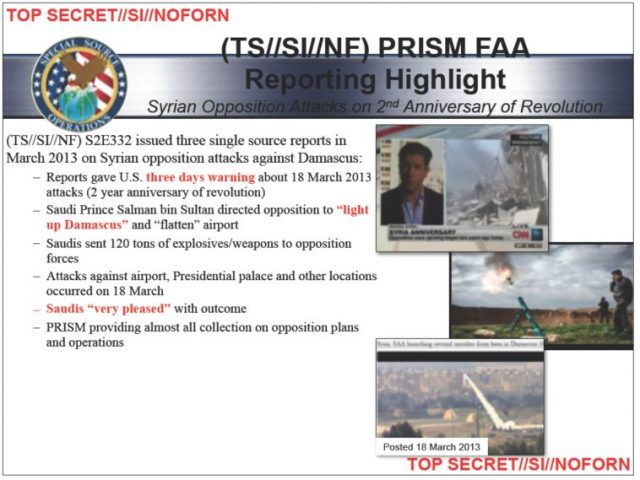
The text of the document reads as follows:
“TOP SECRET//S1//NOFORN
(TS//S1//NF) S2E332 issued three single source reports in
March 2013 on Syrian opposition attacks against Damascus:
– Reports gave U.S. three days warning about 18 March 2013
attacks (2 year anniversary of revolution)
– Saudi Prince Salman bin Sultan directed opposition to “light
up Damascus ” and “flatten” airport
– Saudis sent 120 tons of explosives/weapons to opposition
forces
– Attacks against airport, Presidential palace and other locations
occurred on 18 March
– Saudis “very pleased” with outcome
– PRISM providing almost all collection on opposition plans
and operationsTOP SECRET//S1//NOFORN”.
The collusion between Saudi and the US in a deadly terrorist attack constitutes nothing less than a war crime.
Because of the patently biased nature of the International Criminal Court, it is unlikely that anyone from the US or Saudi will be prosecuted for this war crime.
However, Snowden’s document does help to explain Syria’s unity in the face of a campaign of foreign state sponsored organised terrorism. Contrary to what many al-Qaeda apologists say, the Syrian conflict was a proxy war from day one. Of course, foreign powers used the promise of enhanced material status to woo a small number of disgruntled locals, but the main sources of terrorist fighters and virtually all of the funding and arms came from abroad.
While Syria faced onslaughts funded and directed by some of the wealthiest and most powerful states in the world including, the USA, Saudi Arabia, Qatar, Israel, Turkey, UK, France, Belgium, Germany, Netherlands and others, Syria managed to retain her sovereignty, even prior to Russia’s game-changing legal intervention in 2015.
The anti-Syrian alliance did its utmost to destroy one of the last truly revolutionary Arab Republics in the world. The fact that of all their efforts ultimately failed, is a testament both to the resolve of the Syrian Arab Republic and to the powerful anti-terrorist alliance that Damascus built throughout the conflict, one which has been capable of resisting imperialist obscurantist aggression from the west and its Middle East proxies and allies.
Russia vetoes UNSC resolution on renewing Syria chemical weapons probe
RT | October 24, 2017
Moscow vetoed a UN Security Council resolution to renew the mandate for a UN mission investigating the use of chemical weapons in Syria. Ahead of the vote, Russia suggested postponing the discussion, but its proposal was rejected.
The current mandate for UN and Organization for the Prohibition of Chemical Weapons (OPCW) representatives to work in Syria expires on November 17.
Read more
An Syrian child receiving treatment in Khan Sheikhun, following a suspected toxic gas attack, April 4, 2017 © Omar haj kadour Syrian Idlib chemical incident ‘likely staged,’ requires real investigation – Moscow
Washington has prepared a document to prolong the mandate, which was supported by 11 votes on Tuesday. Two UNSC members – Russia and Bolivia – voted against the document, while China and Kazakhstan abstained.
Later this week, the UN-OPCW Joint Investigative Mechanism (JIM) is scheduled to deliver a report on the alleged chemical weapon attack on the Syrian town of Khan Sheikhoun on April 4. Russia proposed hearing the mission’s findings before voting on a new document. However, Washington insisted the Security Council votes on the new mandate before a report is presented.
The Russian Foreign Ministry has said that the US demands for the prolongation of the probe “look at the very least strange.”
“It is necessary to act in accordance with an established practice, when a UN structure’s report is first studied, and then a question on a mandate’s prolongation is discussed,” the ministry said in a statement on Monday, condemning the “hyped up hysteria” on the issue.
Under US-backed militants’ rule, Raqqah can’t be called liberated: Syria
Press TV – October 24, 2017
A Syrian minister says no land is considered liberated in the country unless national army forces regain control of it and raise the Syrian flag atop its buildings.
“We do not consider any city liberated until the Syrian Arab army enters it and lifts the Syrian flag over it. This applies to any point of the Syrian map,” Information Minister Mohammad Ramez Tardjaman told Russia’s Sputnik news agency in an interview published on Monday.
Earlier this month, the so-called Syria Democratic Forces (SDF), a US-backed coalition of mainly Kurdish militants, captured the city of Raqqah from the Daesh terror group following a military operation, which was launched in July without the central government’s approval.
US President Donald Trump, whose country has been leading a bombing campaign in Syria since 2014, claimed that the city’s “liberation” was a result of the purported changes that he had brought to the US military’s strategy.
Tardjaman described the withdrawal of Daesh from its former Syrian base as a “positive event,” but emphasized that the city was not yet liberated.
“Regardless of whether Daesh is there or some other faction or organization,” the Syrian army needs to enter and retake control of Raqqah in order for the city to be called free.
He also denounced any unauthorized “local compromises, truces, and establishment of de-escalation areas” by forces controlling Raqqah.
“The Syrian administration will never bow down to compromises that violate Syria’s national unity and sovereignty,” he asserted.
Some, he said, wrongfully assumed that such arrangements, which do not have Damascus’ approval, could lead to “federalism, confederalism, or autonomy.”
He also lambasted “factitious demarcations, such as ‘east Euphrates and west Euphrates,’ which the US and its allies have been promoting.”
The Syrian government does not accord any importance to these terms and delineations, and will never recognize them, the minister stated.
He was apparently reacting to an October 20 statement by the SDF, in which it announced the “liberation” of Raqqah and said the city will be part of a system of “federal government” in the country’s north.
The Syrian military has not so far engaged the SDF, which has reportedly shelled the positions of government troops on several occasions in recent weeks.
US Mercenaries, Iraqi Highways and the Mystery of the Never-Ending ISIS Hordes
By Ulson Gunnar – New Eastern Outlook – 22.10.2017
While the US and European media provided little explanation as to how militants from the self-titled Islamic State (IS) managed to appear, expand and then fight for years against the combined military power of Iraq, Syria, Iran and Russia, it was abundantly clear to many analysts that the IS organization was not only receiving state sponsorship, but it was receiving reinforcements, weapons and supplies from far beyond Syria’s and Iraq’s borders.
Maps of the conflict stretching over the last several years show clear corridors used to reinforce IS positions, leading primarily from Turkey’s southern border and to a lesser extent, from Jordan’s borders.
However, another possible vector may be desert highways in Iraq’s western Anbar province where US military contractors are allegedly to “provide security” as well as build gas stations and rest areas. These highways contributed to the current conflict and still serve as a hotbed for state sponsored terrorism. Whether these US-controlled and improved highways pose a significant threat for a reorganized effort by the US and its regional allies to divide and destroy Iraq and Syria seems all but inevitable.
US Mercenaries “Guarding” Iraqi Highways
Al Monitor in an April 2017 article titled, “How Iraq is planning to secure key border road,” would claim:
Due to the imminent threats to the road, which is one of Iraq’s vital economic lines as it connects Basra in the south to Jordan in the west, Iraq commissioned an American company to secure and rebuild the road. The contract also included reconstructing bridges, 36 of which are destroyed.
The article would elaborate, stating:
A security source from the Iraqi intelligence service told Al-Monitor, “The American company will only secure the two roads reaching Terbil from Basra and Baghdad and will build gas stations and rest areas, in addition to building bridges and cordoning off the roads with barbed wires, as per distances that would be determined later.”
Al Monitor would claim that Iraq’s popular mobilization units found themselves unable to oppose the move made by the central government in Baghdad. It would also note that Iraq’s Hezbollah Brigades claimed, in opposition to the plan, that:
The road connecting Iraq and Jordan is a strategic gateway allowing the US and forces seeking to control it to tighten their grip on Anbar and the potential Sunni region as per a US-Gulf plan.
One could imagine future potential scenarios including these rebuilt roads, complete with gas stations and rest areas, leading from Jordan and Saudi Arabia and providing an efficient route for future wars waged either directly or by proxy against Iraq. The infiltration of fighters and supplies, for example, would be greatly expedited should the US and its partners decide to shift their efforts along this new axis.
Beyond this more obvious threat comes the fact that US-Jordanian-Saudi influence would be greatly enhanced with stronger logistical lines leading into Iraq’s western regions.
How the US Might Use its New Highways
The Islamic State’s de facto invasion of Syria and Iraq was a more massive and dramatic replay of an earlier surge of foreign militants into the region, following the 2003 US invasion of Iraq.
It would be America’s own Combating Terrorism Center at the West Point United States Military Academy in two reports published in 2007 and 2008 (.pdf) respectively that would describe in detail the networks some of Washington’s closest regional allies used to flood post-war Iraq with foreign fighters.
While these fighters indeed attacked US soldiers, what they also did was disrupt a relatively unified resistance movement before plunging Sunni and Shia’a militias into a deadly and costly “civil war.”
Fighters, weapons and cash infiltrated into Iraq from a network that fed fighters from across the Middle East and North Africa (MENA) region first into Turkey, through Syria via the help of many of the senior leadership of anti-government militant groups now fighting Damascus, and then into Iraq primarily where IS has been based and where the remnants of its militancy remains.
During the more recent conflict, these same networks were utilized successfully until Russia’s intervention in 2015 when these terrorist “ratlines” came under fire by Russian warplanes. The cause and effect of attacking these terrorist ratlines was visible on conflict maps, causing an almost immediate shrinking of IS-occupied territory and a corresponding atrophy of IS fighting capacity.
The Jordanian-Iraqi and Saudi-Iraqi border crossings and the highways running through them represent an alternative means to reorient Washington’s proxy conflict either now or in the near future.
US Already Planning to Weaponize the Project
Raising further alarm bells should be the New York Times’ May 2017 article, “U.S. Sees a Vital Iraqi Toll Road, but Iran Sees a Threat,” which helps frame the very sort of conflict US policymakers are seeking with this move and the reaction it has already provoked among America’s primary targets in the region, particularly Iran.
The article would claim:
As part of an American effort to promote economic development in Iraq and secure influence in the country after the fight against the Islamic State subsides, the American government has helped broker a deal between Iraq and Olive Group, a private security company, to establish and secure the country’s first toll highway.
This being Iraq, though, the project has quickly been caught up in geopolitics, sectarianism and tensions between the United States and Iran, which seems determined to sabotage the highway project as an unacceptable projection of American influence right on its doorstep.
The New York Times also helps prepare a narrative so that any attack on American contractors along the highway could easily be blamed on militias linked to Iran, or even on Iran itself. The article states:
Already, Iraqi militia leaders linked to Iran, whose statements are seen as reflective of the views of Tehran, have pledged to resume attacks against American forces if the Trump administration decides to leave troops behind to train the Iraqi military and mount counterterrorism missions, as appears likely. And the militia leaders have specifically singled out the highway project for criticism.
The New York Times ultimately admits that the US is attempting to control the highway specifically to continue its increasingly dangerous proxy war against Tehran. The article also admits that the highways will be entirely controlled by US contractors, including the collection of tolls of which only a portion would be handed over to the Iraqi government. The article also claims other highways, including one leading directly from Saudi Arabia, are being considered.
In essence, these would be terrorist ratlines directly controlled by the United States, leading directly out of the very epicenter of state sponsored terrorism in the region, Saudi Arabia, other Persian Gulf states and to a lesser but still significant extent, Jordan.
They would be terrorist ratlines difficult for Iraq’s central government or its allies to attack without providing a much welcomed pretext for Washington to directly retaliate against the faction of its choosing.
While the New York Times and US politicians and businessmen involved in the highway deal attempt to portray it as a means of providing peace, stability and economic prosperity for Iraq, a quick audit of US policy in the Middle East should ground those lofty promises in a much more frightening reality.
The scope of this project is nothing short of both a US occupation and a US-administered “safe zone” in which militant groups backed by the US and its regional partners can safely be harbored, and from which they can strike out against Iraq and its neighbors with the full protection of US military force.
Some US policymakers may feel that their failing proxy war against Syria involved a cart-before-the-horse policy in which the creation of US-administered and protected safe zones turned out to be more difficult to implement than initially anticipated, and that in the future, such zones should be created before another round of proxy-hostilities.
No matter what, the US presence and the more-than-certain intentions that underpin it will ensure not peace, stability or prosperity, but another decade of division and strife both in Iraq and beyond. Confounding this project, and those like it, and replacing them with actual projects to fulfill the promises of progress the US is merely hiding behind, will be key to truly moving Iraq and the region forward.
Kirkuk bell also tolls for US strategy in Syria
By M K Bhadrakumar | Indian Punchline | October 22, 2017
The rout of the Kurds in the northern Iraqi city of Kirkuk this week constitutes a major setback for the overall American strategies toward Iraq and Syria. The prospect of an unceremonious US retreat from Syria haunts the Trump administration in immediate terms, and it is all the more galling because Tehran is calibrating it.
Clearly, Iran has pushed the envelope, furious over US President Donald Trump’s provocative threats of sanctions against the Islamic Revolutionary Guards Corps (IRGC). Tehran had warned that US position in the entire Middle East will become increasingly untenable if Trump moved against the IRGC. The capture of Kirkuk by the Baghdad government was a de facto military operation by the Shi’ite militia known as the Hashd al-Shaabi, which was trained and equipped by the IRGC. The western reports suggest that the charismatic commander of the IRGC’s secretive Quds Force, General Qassem Soleimani personally masterminded the military operation – and even prepared the political ground for it.
The US had tried to prevail upon the Iraqi Prime Minister Haider al-Abadi not to move against the Kurds who were its allies. Kirkuk is estimated to hold at least 8000 million barrels of subterranean oil. The oil revenue is critical for the survival of any independent Kurdish state. Evidently, Abadi didn’t listen due to the emergent threat posed by the Kurds’ recent independence referendum. Equally, Iran wanted to finish off the spectre of an independent Kurdistan in the region spearheaded by Massoud Barzani (who enjoys the backing of US and Israel.)
Indeed, the defeat in Kirkuk destroys the Iraqi Kurds’ dream of an independent state and derails the longstanding US-Israeli project to create a base with strategic location. Equally, the liberation of Kirkuk, which is populated by the Kurds, Arabs and Turkmen by the Iran-supported Shi’te militia highlights the strategic convergence between Baghdad, Tehran and Ankara in preventing the creation of an independent Kurdistan in the region.
However, the defeat of Barzani in Kirkuk has far wider ramifications – for Iraq as well as the Syrian conflict, apart from the US’ influence in the Middle East as a whole. At its most obvious level, Iran is thwarting the US plans to balkanize Iraq. Iraq’s unity is no longer under serious threat. Control of the vast oil reserves in Kirkuk will also bolster the Iraqi economy. Baghdad can be expected to reassert its authority over the country. The federal government has taken over the border crossings with Turkey and Syria.
The US attempt in the coming period will be to woo Abadi and encourage him to whittle down Iran’s influence in Iraq. The US Secretary of State Rex Tillerson arrived in Riyadh on Saturday on a hastily arranged trip with the hope of getting Saudi King Salman to take a hand in persuading Abadi to keep Tehran’s influence on Iraq at bay and to mediate between Abadi and Barzani. The US and Saudi Arabia’s best hope lies in creating differences between Baghdad and Tehran by leveraging Abadi. But the chances of such a ploy working seem remote.
The fact that the US watched the defeat of the Kurds in Kirkuk passively tarnishes the overall American image, especially among Syrian Kurds. This casts shadows on the Syrian situation. The US has been routing the military supplies for Syrian Kurds in Raqqa via Erbil, Massoud’s stronghold (in the face of Turkey’s virulent opposition.) This supply route is no longer under Barzani’s control and the disruption will affect the US’ operations in Raqqa. The US-led Syrian Kurdish militia claims to have liberated Raqqa, but a real consolidation needs the decimation of the residual ISIS fighters present in the region and it may take months.
More importantly, a ‘trust deficit’ between Syrian Kurds and Washington at this juncture will be calamitous. Raqqa is Arab territory and the Kurdish militia’s supply lines are already overstretched. The disruption in American supplies means that it may now be a mater of time before Syrian Kurds seek some modus vivendi with the Syrian regime. If American military supplies dry up, Syrian Kurds will also come under pressure from Turkey in the swathe of northern Syria bordering Turkey, which form their traditional homelands. Turkey never liked a Kurdish entity taking shape across their border.
Interestingly, the commander of the Syrian Kurdish militia Sipan Hamo visited Moscow last weekend. The Russians indeed find themselves in an enviable position to drive a hard bargain over the Kurds’ sorrows. Russia is in a unique position to mediate between Syrian Kurds on one side and Ankara and Damascus on the other. But then, what is it that the Kurds can offer Russia in return? Last Thursday, Rosneft signed a big oil deal with Barzani’s government in northern Iraq. To be sure, the old Kurdish saying has some merit – ‘The Kurds have no friends but the mountains.’ (Guardian )
The main impact of last week’s dramatic events is that the US now has no conceivable reason to continue with a military intervention in eastern Syria. The likelihood is that Syrian Kurds will sooner or later hand over Raqqa also to the government forces. Clearly, the Syrian regime’s march to victory is from now onward relentless and irreversible. That is to say, the best-laid plans of the US and its regional allies to balkanize Syria have also gone awry.
Maybe, there will be a federal system in future Iraq and Syria. But last week’s events have ensured that the two countries’ territorial unity and integrity will no longer be under serious threat. Of course, that has also been at the core of the Iranian strategy.
Featured Video

Weaponized Journalism: 2021 Sayer Ji Interview with NPR
or go to
Aletho News Archives – Video-Images
From the Archives
How Rothschild Banking Clan Uses Its Vast Wealth to Influence World Events and Control Governments
By Ilya Tsukanov – Sputnik – 15.09.2024
How powerful is the Rothschild banking family? How did they amass their fortune? Just how rich are they? Do they secretly control the world? Sputnik explores. … continue
Blog Roll
 Aletho News
- Weaponized Journalism: 2021 Sayer Ji Interview with NPR
- Beyond Netanyahu: what Israel’s election means for Palestinians
- Lithuania plans universal conscription
- Lies, Damn Lies, and Ukraine News
- Financial Times rejects Nordic demands to correct Putin call story – media
- The Case for Less Unity in Europe
- Ukraine expands minority rights under EU pressure – but Russians remain excluded
- Albania takes anti-riot crackdown cue from France
- The interest of the House of Rothschild in Ukraine
- Pentagon fires top military planner
- If Americans Knew
- US midterms: Five days left – who leads in the polls as Trump, Obama rally
- Israeli Attacks Kill Four Palestinians in Gaza
- Plotting a Comeback: Gaza Resignees Confront Biden’s Genocide Enablers – VIDEO
- US Journalist and Activist Detained After Israeli Settler Attack in West Bank
- Israeli forces continue West Bank raids as Hebron lockdown enters sixth day
- The Two Faces of Gadi Eisenkot, Who Could Be Israel’s PM
- US Sending an Additional Patriot System to Israel To Prepare for Potential Attacks on Iran
- Pentagon Estimates the US Has Spent Over $47 Billion on Iran War, But True Cost Is Much Higher
- ‘Who Will Bomb Me Next?’: Palestinians in Gaza and the West Bank on Israel’s Election
- DAILY UPDATE: Latest essential news on Palestine, Israel, & region
- No Tricks Zone
- Germany’s Green Energy Transition Becoming Increasingly Expensive…Another 6 Trillion Euros!
- Sudden Stratospheric Warming, Powerful El Niño Combination May Lead To Extreme Europe Cold, Energy Crisis!
- Two New Studies Find Thwaites Glacier Melt Cannot Be Driven By Human Activity Or A Warming Ocean
- E-Cars Reduce CO2 Emissions By Only 41% Compared To Internal Combustion Engine Vehicles
- Predictions Made By Renowned Climate Professor Over Past Decades Have Been Proven To Be Poor
- New Study Suggests Large Regions Of The Pacific Ocean Have Been Cooling For The Last 80 Years
- Germany’s Green Energy Debacle: High Energy Costs Force Kahla Porzellan to Close After 182 Years!
- New Study: 50 Years Of The Most Aggressive ‘Net Zero’ Policies Can Only Affect The Global Climate By 0.03°C
- US September “Heat” Was No Record…Many Records Set Decades Ago
- Latest European Green Energy Debacle; Portugal’s Largest Flagship Solar Park Insolvent!

