Time for Another False Flag Chemical Weapons Attack in Syria
By Paul Larudee | Dissident Voice | June 27, 2017
The United States has identified potential preparations for another chemical weapons attack by the Assad regime.
— Sean Spicer, White House Press Secretary, June 26, 2017
Fool me once, shame on you. Fool me, you can’t get fooled again.
— George Bush, September 17, 2002
The White House statement raises a number of questions. Who has identified the “potential preparations”? No reference is given, not even a source agency. Does the information come from intelligence sources? Apparently the Pentagon had not even been informed. What is “potential information” and how does it compare with real information?
Of course, the White House has its own direct sources. The Syrian opposition groups who met with John Kerry, Michael Ratney and Jon Finer at the UN in September, 2016 are tight with al-Nusra and other terrorist groups, and would be happy to provide a pretext for another US strike on Syria. No real evidence is required, but they would be happy to fabricate it nonetheless.
Can anyone cite a case of the use, or even the alleged use, of chemical weapons in Syria that has been to the strategic advantage of the Syrian government or its forces? The fact is that every incident has been to their disadvantage, and invariably a pretext for US intervention. Why then, would they use it, especially when they hadn’t done so before Obama drew his famous “red line”?
To the contrary, when British intelligence analyzed traces of the gas, they found it to be inconsistent with samples of Syrian government stocks. Furthermore, Turkish sources have reported the delivery of chemical weapons to opposition fighters. Distinguished MIT researchers Lloyd and Postol demonstrated definitively that the 2013 CW attack in Ghouta could not have come from Syrian government forces.
Similarly, Postol demonstrated multiple inconsistencies in the reports of the April 4, 2017 Khan Sheikhoun attack. More recently, investigative journalist Seymour Hersh uncovered the inside story on that attack, to the effect that US Defense Department sources knew that there were no chemical weapons used in the Syrian Air Force bombing attack on Khan Sheikhoun, and that to the extent that toxic gases caused casualties in that attack, it was the result of what the al-Nusra and Ahrar al-Sham fighters had stored at the site or had deployed as a false flag event, for the purpose of precipitating US intervention.
Postol warned at the time that without proper corroboration of Syrian government culpability, a US attack would motivate the terrorist constructors of the false flag to replicate more such incidents. In this context, the White House statement, based solely on vague allegations, can be interpreted as the start to a manipulation of public perception, so that an upcoming false flag event can appear to be a corroboration of the initial suspicions.
Such are the workings of what military and security forces call “securocratic wars” and specifically “security-based framing”. This is jargon for what used to be called propaganda, but which is now an integrated part of military and security planning for the control of public perception.1
There is plenty of reason for the White House to welcome such a pretext to attack Syria again. The approval ratings for the Trump Administration have never been higher, nor the press more approving, than when US warships fired 59 Tomahawk missiles at Syria’s Shu’ayrat Air Field two days after the Khan Sheikhoun attack. Given the unpopularity and failure of Trump’s domestic initiatives, it is easy to see how he might be tempted to employ similar death and destruction to boost his image again.
Of course, such actions risk a dangerous confrontation with Russia on the Syrian battlefield. Russia has already threatened to target US aircraft and has suspended coordination of flights over the shooting down of a Syrian jet fighter. But Trump is not averse to risk. We should therefore not be surprised to see another false flag killing of innocents blamed on the Syrian military in order to embroil the US further in an illegal war where we don’t belong.
- Halper, War Against the People, chapter 3.
Paul Larudee is one of the founders of the Free Gaza and Free Palestine Movements and an organizer in the International Solidarity Movement.
Hersh’s New Syria Revelations Buried From View
By Jonathan Cook | CounterPunch | June 27, 2017
Veteran investigative journalist Seymour Hersh, the man who exposed the Mai Lai massacre during the Vietnam War and the US military’s abuses of Iraqi prisoners at Abu Ghraib in 2004, is probably the most influential journalist of the modern era, with the possible exception of Bob Woodward and Carl Bernstein, the pair who exposed Watergate.
For decades, Hersh has drawn on his extensive contacts within the US security establishment to bring us the story behind the official story, to disclose facts that have often proved deeply discomfiting to those in power and exploded the self-serving, fairy-tale narratives the public were expected to passively accept as news. His stature among journalists was such that, in a sea of corporate media misinformation, he enjoyed a small island of freedom at the elite, but influential, outlet of the New Yorker.
Paradoxically, over the past decade, as social media has created a more democratic platform for information dissemination, the corporate media has grown ever more fearful of a truly independent figure like Hersh. The potential reach of his stories could now be enormously magnified by social media. As a result, he has been increasingly marginalised and his work denigrated. By denying him the credibility of a “respectable” mainstream platform, he can be dismissed for the first time in his career as a crank and charlatan. A purveyor of fake news.
Nonetheless, despite struggling to find an outlet for his recent work, he has continued to scrutinise western foreign policy, this time in relation to Syria. The official western narrative has painted a picture of a psychotic Syrian president, Bashar Assad, who is assumed to be so irrational and self-destructive he intermittently uses chemical weapons against his own people. He does so, not only for no obvious purpose but at moments when such attacks are likely to do his regime untold damage. Notably, two sarin gas attacks have supposedly occurred when Assad was making strong diplomatic or military headway, and when the Islamic extremists of Al-Qaeda and ISIS – his chief opponents – were on the back foot and in desperate need of outside intervention.
Dangerous monsters
Hersh’s investigations have not only undermined evidence-free claims being promoted in the west to destabilise Assad’s goverment but threatened a wider US policy seeking to “remake the Middle East”. His work has challenged a political and corporate media consensus that portrays Russia’s Vladimir Putin, Assad’s main ally against the extremist Islamic forces fighting in Syria, as another dangerous monster the West needs to bring into line.
For all these reasons, Hersh has found himself increasingly friendless. The New Yorker refused to publish his Syria investigations. Instead, he had to cross the Atlantic to find a home at the prestigious but far less prominent London Review of Books.
Back in 2013 his contacts within the security and intelligence establishments revealed that the assumption Assad had ordered the use of sarin gas in Ghouta, outside Damascus, failed to stand up to scrutiny. Even Barack Obama’s national intelligence director, James Clapper, was forced to admit privately that Assad’s guilt was “not a slam dunk”, even as the media widely portrayed it as precisely that. Hersh’s work helped stymie efforts at the time to promote a western military attack to bring down the Syrian government.
His latest investigation questions whether Assad was responsible for another alleged gas attack – this one in April, at Khan Sheikhoun. Again a consensual western narrative was quickly constructed after social media showed dozens of Syrians dead, apparently following a bomb dropped by Syrian aircraft. For the first time in his presidency, Donald Trump received wall-to-wall praise for launching a military strike on Syria in response, even though, as Hersh documents, he had no evidence on which to base such an attack, one that gravely violated international law.
Hersh’s new investigation was paid for by the London Review of Books, which declined to publish it. This is almost as disturbing as the events in question.
What is emerging is a media blackout so strong that even the London Review of Books is running scared. Instead, Hersh’s story appeared yesterday in a German publication, Welt am Sonntag. Welt is an award-winning newspaper, no less serious than the New Yorker or the LRB. But significantly Hersh is being forced to publish ever further from the centres of power whose misinformation his investigations are challenging.
Imagine how effective Woodward and Bernstein would have been in bringing down Richard Nixon had they been able to publish their Watergate investigations only in the French media. That is the situation we have reached now with Hersh’s efforts to scrutinise the west’s self-serving claims about Syria.
US-Russian cooperation
As for the substance of Hersh’s investigation, he finds that Trump launched 59 Tomahawk missiles at a Syrian air base in April “despite having been warned by the US intelligence community that it had found no evidence that the Syrians had used a chemical weapon.”
In fact, Hersh reveals that, contrary to the popular narrative, the Syrian strike on a jihadist meeting place in Khan Sheikhoun on April 4 was closely coordinated beforehand between Russian and US intelligence agencies. The US were well apprised of what would happen and tracked the events.
Hersh’s sources in the intelligence establishment point out that these close contacts occurred for two reasons. First, there is a process known as “deconfliction”, designed to avoid collisions or accidental encounters between the US, Syrian and Russian militaries, especially in the case of their supersonic jets. The Russians therefore supplied US intelligence with precise details of that day’s attack beforehand. But in this case, the close ties also occurred because the Russians wanted to warn the US to keep away a CIA asset, who had penetrated the jihadist group, from that day’s meeting.
“This was not a chemical weapons strike,” a senior adviser to the US intelligence community told Hersh. “That’s a fairy tale. If so, everyone involved in transferring, loading and arming the weapon … would be wearing Hazmat protective clothing in case of a leak. There would be very little chance of survival without such gear.”
According to US intelligence, Hersh reports, the Syrian air force was able to target the site using a large, conventional bomb supplied by the Russians. But if Assad did not use a chemical warhead, why did many people apparently die at Khan Sheikhoun from inhalation of toxic gas?
The US intelligence community, says Hersh, believes the bomb triggered secondary explosions in a storage depot in the building’s basement that included propane gas, fertilisers, insecticides as well as “rockets, weapons and ammunition, … [and] chlorine-based decontaminants for cleansing the bodies of the dead before burial”. These explosions created a toxic cloud that was trapped close to the ground by the dense early morning air.
Medecins Sans Frontieres found patients it treated “smelled of bleach, suggesting that they had been exposed to chlorine.” Sarin is odourless.
Hersh concludes that the “evidence suggested that there was more than one chemical responsible for the symptoms observed, which would not have been the case if the Syrian Air Force – as opposition activists insisted – had dropped a sarin bomb, which has no percussive or ignition power to trigger secondary explosions. The range of symptoms is, however, consistent with the release of a mixture of chemicals, including chlorine and the organophosphates used in many fertilizers, which can cause neurotoxic effects similar to those of sarin.”
Political suicide
Hersh’s main intelligence source makes an important contextual point you won’t hear anywhere in the corporate media:
“What doesn’t occur to most Americans is if there had been a Syrian nerve gas attack authorized by Bashar [Assad], the Russians would be 10 times as upset as anyone in the West. Russia’s strategy against ISIS, which involves getting American cooperation, would have been destroyed and Bashar would be responsible for pissing off Russia, with unknown consequences for him. Bashar would do that? When he’s on the verge of winning the war? Are you kidding me?”
When US national security officials planning Trump’s “retaliation” asked the CIA what they knew of events in Khan Sheikhoun, according to Hersh’s source, the CIA told them “there was no residual delivery for sarin at Sheyrat [the airfield from which the Syrian bombers had taken off] and Assad had no motive to commit political suicide.”
The source continues:
“No one knew the provenance of the photographs [of the attack’s victims]. We didn’t know who the children were or how they got hurt. Sarin actually is very easy to detect because it penetrates paint, and all one would have to do is get a paint sample. We knew there was a [toxic] cloud and we knew it hurt people. But you cannot jump from there to certainty that Assad had hidden sarin from the UN because he wanted to use it in Khan Sheikhoun.”
Trump, under political pressure and highly emotional by nature, ignored the evidence. Hersh’s source says:
“The president saw the photographs of poisoned little girls and said it was an Assad atrocity. It’s typical of human nature. You jump to the conclusion you want. Intelligence analysts do not argue with a president. They’re not going to tell the president, ‘if you interpret the data this way, I quit’.”
Although Republicans, Democrats and the entire media rallied to Trump’s side for the first time, those speaking to Hersh have apparently done so out of fear of what may happen next time.
The danger with Trump’s “retaliatory” strike, based on zero evidence of a chemical weapons attack, is that it could have killed Russian soldiers and dragged Putin into a highly dangerous confrontation with the US. Also, the intelligence community fears that the media have promoted a false narrative that suggests not only that a sarin attack took place, but paints Russia as a co-conspirator and implies that a UN team did not in fact oversee the destruction of Syria’s chemical weapons stockpile back in 2013-14. That would allow Assad’s opponents to claim in the future, at a convenient time, yet another unsubstantiated sarin gas attack by the Syrian government.
Hersh concludes with words from his source that should strike fear into us all:
“The issue is, what if there’s another false-flag sarin attack credited to hated Syria? Trump has upped the ante and painted himself into a corner with his decision to bomb. And do not think these guys [Islamist groups] are not planning the next faked attack. Trump will have no choice but to bomb again, and harder. He’s incapable of saying he made a mistake.”
Four questions
Hersh’s investigation contributes to a more complex and confusing picture of events in Khan Sheikhoun. In the absence of an independent investigation, there is still no decisive physical evidence to confirm what happened. That makes context and probability important factors for observers to weigh.
So let us set aside for a moment the specifics of what happened on April 4 and concentrate instead on what Hersh’s critics must concede if they are to argue that Assad used sarin gas against the people of Khan Sheikhoun.
1. That Assad is so crazed and self-destructive – or at the very least so totally incapable of controlling his senior commanders, who must themselves be crazed and self-destructive – that he has on several occasions ordered the use of chemical weapons against civilians. And he has chosen to do it at the worst possible moments for his own and his regime’s survival, and when such attacks were entirely unnecessary.
2. That Putin is equally deranged and so willing to risk an end-of-times conflagration with the US that he has on more than one occasion either sanctioned or turned a blind eye to the use of sarin by Assad’s regime. And he has done nothing to penalise Assad afterwards, when things went wrong.
3. That Hersh has decided to jettison all the investigatory skills he has amassed over many decades as a journalist to accept at face value any unsubstantiated rumours his long-established contacts in the security services have thrown his way. And he has done so without regard to the damage that will do to his reputation and his journalistic legacy.
4. That a significant number of US intelligence officials, those Hersh has known and worked with over a long period of time, have decided recently to spin an elaborate web of lies no one wants to print, either in the hope of damaging Hersh in some collective act of revenge against him, or in the hope of permanently discrediting their own intelligence services.
Hersh’s critics do not simply have to believe one of these four points. They must maintain the absolute veracity of all four of them.
US threats to Syria’s legitimate government unacceptable – Kremlin
RT | June 27, 2017
Russia has slammed Washington’s threats against the Syrian government following a recent White House statement alleging that President Bashar Assad’s forces are preparing to use chemical weapons.
“I am not aware of any information or threat of using chemical weapons,” Russian President Vladimir Putin’s spokesman Dmitry Peskov told journalists on Tuesday.
Earlier, White House Press Secretary Sean Spicer issued a statement claiming the US “has identified potential preparations for another chemical weapons attack by the Assad regime that would likely result in the mass murder of civilians.”
“We heard about this statement. We don’t know what it’s based on. And, of course, we strongly disagree with the wording ‘another attack,’ because, as you know, despite all the demands of the Russian side, there was no independent international investigation of the previous tragedy with the use of chemical weapons. We do not believe it is possible to rest the responsibility on the Syrian armed forces,” Peskov said.
Washington blames the April attack, which killed dozens of civilians in Khan Sheikhoun, Idlib Governorate, on the Assad government. Moscow and Damascus both slammed the lack of definitive evidence to prove the accusations.
The Kremlin spokesman also warned of potential provocations by terrorists.
“You know that cases of the use of toxic chemical agents by militants of Islamic state [IS, formerly ISIS/SIL] and other criminal groups have been established on multiple occasions. There certainly is the potential danger of such provocations recurring,” Peskov stated.
Any threats against the Syrian government are “unacceptable,” according to Peskov, who reiterated the call for an investigation into the attack in Idlib.
“Without carrying out an investigation it is impossible, illegitimate and absolutely wrong, in regards to achieving the final goals on Syrian reconcilement, to put the blame on Assad. Of course, we consider unacceptable any such threats to the legitimate government of the Syrian Arab Republic,” the spokesman said, adding that Moscow considers any use of toxic chemical agents inappropriate.
Syria has denied White House allegations of preparing to use chemical weapons, saying they “foreshadowed a ‘diplomatic battle’” in the UN, according to AP, citing the minister for national reconciliation, Ali Haidar.
US to keep arming Syria Kurds after Raqqah: Mattis
Press TV – June 27, 2017
Defense Secretary James Mattis says the United States will continue to provide weapons to Kurdish fighters in Syria after the campaign to dislodge Daesh (ISIL) terrorists from Raqqah is over, an announcement that would further infuriate Turkey.
Speaking to reporters traveling with him to Germany on Monday, Mattis said the US would try to recover the weapons supplied to the Syrian Kurds, but added it would depend on when or where the next mission is.
“We’ll do what we can,” he said when asked if all the weapons would be returned.
The comments marked the first time the Pentagon chief has publicly talked about the US pledge to take back the arms from the Kurdish People’s Protection Units (YPG).
In a letter to his Turkish counterpart Fikri Isik on Thursday, Mattis sought to ease Turkey’s security concerns, saying the US would provide Ankara with a monthly list of weapons and equipment supplied to the YPG.
Mattis also reassured Turkish officials that arms given to the Syrian Kurds would be taken back.
The Trump administration’s decision last month to arm the YPG roiled Turkey, which views the fighters as an extension of the Kurdistan Workers’ Party (PKK) fighting for an autonomous region inside Turkey since 1984.
The initial arms deliveries began at the end of May, with the Pentagon saying they included small arms and ammunition. But officials have indicated that 120 mm mortars, machine guns, and light armored vehicles were also likely going to Syria.
Early this month, the so-called Syrian Democratic Forces (SDF), which the YPG is a major component of, launched an operation to drive Daesh out of the northern city of Raqqah, the de facto capital of the terror group in Syria.
“We’re going to equip them for the fight. If they have another fight and they need, you know, the light trucks that they’ve been using … we’ll get them that,” Mattis said.
The provision of arms depends, he said, on the battle and what weapons the Kurds need. “When they don’t need certain things any more, we’ll replace those with something they do need.”
Turkey fears the weapons provided to the Kurdish fighters in Syria will end up in the hands of PKK militants operating in Turkey. The US also considers the PKK a terrorist organization and insists it would never arm that group.
Mattis said the battle against Daesh was growing more complex as it moved into the Euphrates River Valley, underscoring the importance of maintaining communication with Russia.
So-called “deconfliction” hotlines have been used by the US and Russia to notify each other where they are operating in order to avoid accidents.
In recent weeks, the Russians have threatened they would not use the deconfliction lines after the US shot down a Syrian government warplane.
Mattis said communications with Russia were taking place at several military levels to insure that aircraft and ground forces were safe.
‘US won’t be drawn into Syria war’
Despite the increasingly complicated battlefield, the Pentagon chief asserted that the US would not be drawn into the Syrian conflict. “We just refuse to get drawn into a fight there in the Syria civil war, we try to end that one through diplomatic engagement.”
The US will not fire “unless they are the enemy, unless they are ISIS,” Mattis said, using another acronym for the Daesh terror group.
The comments came shortly before White House spokesman Sean Spicer accused the Syrian government of making “preparations” for a chemical attack against civilians.
Spicer warned that Syrian President Bashar al-Assad and the Syrian military would “pay a heavy price” if they went ahead with the alleged plan.
State Department officials, who would “typically” be consulted before such statements are made, told the Associated Press that they had been caught “completely off guard” by the statement.
The AP report also said that the content of Spicer’s statement “didn’t appear to be discussed in advance with other national security agencies.”
A US-led coalition has been active in Syria since late 2014, bombing purported Daesh targets and training local militants to carry out assaults against the group as well as pro-government forces.
US protects Syria terrorists from aerial bombardment: Moscow
Press TV – June 26, 2017
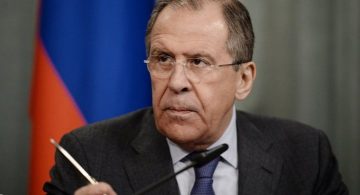 Russian Foreign Minister Sergei Lavrov has accused the United States of assisting terrorists in war-torn Syria, saying Washington is protecting the terror groups, including the Takfiri Fateh al-Sham terrorist group, formerly known as al-Nusra Front, from airstrikes.
The Russian top diplomat, as reported by Lebanon-based al-Manar television network, made the remarks on Monday, during a joint press conference with his Ethiopian counterpart, Workneh Gebeyehu, in Moscow, where they answered questions regarding combating terrorism.
Lavrov added that the US sponsorship of terrorists had recently came into light, when it was revealed that the White House helped Fateh al-Sham terrorists evade aerial bombardment conducted by Moscow and Damascus, without giving further details.
He noted that the alleged move by Washington violated all international conventions and laws, stressing the necessity of eliminating double standards and ambiguous ideas in the fight against terror groups.
Back in May, former Afghan president, Hamid Karzai, made similar comments, when he said that Washington had created the Takfiri Daesh terrorist group, another notorious terror organization active in Syria. “Daesh is a US product,” he said.
The ex-Afghan leader added that he had received regular reports of unmarked helicopters airdropping supplies to Daesh militants active on the Afghanistan-Pakistan border.
Lavrov’s comments came some eight days after a US Navy F/A-18 Super Hornet shot down a Syrian SU-22, which was conducting an operation against Daesh terrorists on the outskirts of the city of Raqqah.
In two other occasions in June and May, US warplanes attacked a Syrian military position near At-Tanf, killing an unspecified number of people and causing some material damage.
Reports say that many Daesh terrorists were initially trained by the CIA in Jordan in 2012 to destabilize the Syrian government.
In August last year, US President Donald Trump, then a presidential nominee, said that then US president, Barack Obama, and former secretary of state, Hillary Clinton, together “founded” the Daesh terror group.
Trump ignored intel, launched Tomahawks in Syria based on media – Pulitzer winner Seymour Hersh
RT | June 25, 2017
US President Donald Trump ignored reports from US intelligence that said they had no evidence Syria had used sarin to attack a rebel-held town, Pulitzer-winning investigative journalist Seymour Hersh says.
Hersh is most famous for exposing the My Lai Massacre and its cover-up during the Vietnam War. He also uncovered the abuse of prisoners by US personnel at the Abu Ghraib prison in Iraq. In a report published by the German newspaper Die Welt on Sunday, he describes how the Trump administration mishandled the media frenzy after the Syrian bombing of the rebel-held town Khan Sheikhoun in April.
Trump chose to ignore reports compiled by American intelligence and the military that contradicted the prevailing media narrative accusing Damascus of using sarin gas to kill civilians, the report says. Instead, he ordered his military to prepare options for a response, which they did.
The subsequent Tomahawk attack on the Syrian Shayrat Air Base did less damage that the White House claimed, as was apparently intended by the military planners of the operation, Hersh said. The US mainstream media failed to question the government’s narrative of the situation, instead giving Trump what appears to be the pinnacle achievement of his presidency so far.
“None of this makes any sense,” one US officer told colleagues upon learning of the White House decision to retaliate against Syria. “We KNOW that there was no chemical attack… the Russians are furious. Claiming we have the real intel and know the truth… I guess it didn’t matter whether we elected Clinton or Trump.”
Special weapon
Hersh’s report is based on interviews with several US advisers and evidence they provided, including transcripts of real-time communications that immediately followed the Syrian attack on April 4. According to the advisers, the Syrian Air Force’s attack on Khan Sheikhoun targeted a meeting of several high-value leaders of jihadist groups, including Ahrar al-Sham and Al-Nusra Front, which has changed its name to Jabhat al-Nusra.
The US was informed of the operation in detail beforehand as part of a conflict prevention arrangement with Russia. The two-way information sharing in place in Syria at the time helped the US-led coalition and Russia-backed Damascus to avoid accidental encounters in the air, protect intelligence assets on the ground, and coordinate with each other when planning missions.
“They were playing the game right,” a senior US adviser is cited by Hersh as saying regarding the pre-mission notice from Russia.
“It was a red-hot change. The mission was out of the ordinary – scrub the sked,” the adviser said. “Every operations officer in the region” – in the Army, Marine Corps, Air Force, CIA, and NSA – “had to know there was something going on. The Russians gave the Syrian Air Force a guided bomb and that was a rarity. They’re skimpy with their guided bombs and rarely share them with the Syrian Air Force. And the Syrians assigned their best pilot to the mission, with the best wingman.”
The special weapon used in the bombing was mentioned in Syrian communications collected before the attack by a US ally. The interception was widely reported in the Western media as an indication that Damascus had used a chemical weapon.
“If you’ve already decided it was a gas attack, you will then inevitably read the talk about a special weapon as involving a sarin bomb,” the adviser told Hersh. “Did the Syrians plan the attack on Khan Sheikhoun? Absolutely. Do we have intercepts to prove it? Absolutely. Did they plan to use sarin? No. But the president did not say: ‘We have a problem and let’s look into it.’ He wanted to bomb the shit out of Syria.”
Fertilizers & decontaminants
The target of the Syrian bombing was described as a two-story cinder-block building. According to Russian intelligence, the jihadists used the second floor as a command and control center. The first floor housed a grocery store and other businesses. The basement was used as a warehouse for weapons, ammunition, and goods, including chlorine-based decontaminants and fertilizers.
“The rebels control the population by controlling the distribution of goods that people need to live – food, water, cooking oil, propane gas, fertilizers for growing their crops, and insecticides to protect the crops,” a senior adviser to the American intelligence community told Hersh.
According to a US assessment of the morning airstrike cited by Hersh, the 500-pound Russian bomb triggered secondary explosions. The heat could have evaporated the chemical products in the basement, producing a toxic cloud that spread over the town, pressed close to the ground by the dense morning air.
The scenario is consistent with the accounts of patients who reported a chlorine odor in interviews with Medecins Sans Frontieres. It could also explain the symptoms of nerve agent poisoning that were attributed to sarin, but may have been caused by organophosphates used in many fertilizers, Hersh said.
Meanwhile, US intelligence had no evidence to indicate the presence of sarin gas at or near the Shayrat Air Base, from which the bombing mission was launched.
“This was not a chemical weapons strike,” the journalist cites a source as saying. “That’s a fairy tale. If so, everyone involved in transferring, loading and arming the weapon – you’ve got to make it appear like a regular 500-pound conventional bomb – would be wearing Hazmat protective clothing in case of a leak. There would be very little chance of survival without such gear.”
“Military grade sarin includes additives designed to increase toxicity and lethality. Every batch that comes out is maximized for death. That is why it is made. It is odorless and invisible and death can come within a minute. No cloud. Why produce a weapon that people can run away from?” the adviser added.
The Trump Show
The Trump administration quickly adopted the rebel narrative, which accused President Bashar Assad’s government of conducting a sarin gas attack on Khan Sheikhoun. Top US officials went on to condemn Damascus and accuse Russia of complicity in the bombing. Trump ordered the national defense apparatus to prepare a response within hours of seeing photos of poisoned children on TV, Hersh’s report cites a senior adviser as saying.
“No one knew the provenance of the photographs. We didn’t know who the children were or how they got hurt,” the adviser said. “Sarin actually is very easy to detect because it penetrates paint, and all one would have to do is get a paint sample. We knew there was a cloud and we knew it hurt people. But you cannot jump from there to certainty that Assad had hidden sarin from the UN because he wanted to use it in Khan Sheikhoun.”
“The president saw the photographs of poisoned little girls and said it was an Assad atrocity,” he added. “It’s typical of human nature. You jump to the conclusion you want. Intelligence analysts do not argue with a president. They’re not going to tell the president, ‘if you interpret the data this way, I quit.’”
At a national security meeting at Mar-a-Lago on April 6, Trump was offered four options for responding to the Syrian incident, ranging from doing nothing and to assassinating President Assad, the report said. Eventually, the US president chose to attack the Syrian air base, which Hersh’s source described as “the ‘gorilla option’: America would glower and beat its chest to provoke fear and demonstrate resolve, but cause little significant damage.”
Of the 59 Tomahawk missiles fired at Shayrat, as many as 24 missed their targets because the initial strikes hit gasoline storage tanks, triggering a huge fire and a lot of smoke that interfered with the guidance systems of the following missiles. Only a few actually penetrated the hangars, and these only destroyed nine aircraft that were apparently not operational and could not be moved during the window of opportunity between the US warning of the looming attack and the strike itself.
“It was a totally Trump show from beginning to end,” the senior adviser told Hersh. “A few of the president’s senior national security advisers viewed the mission as a minimized bad presidential decision, and one that they had an obligation to carry out. But I don’t think our national security people are going to allow themselves to be hustled into a bad decision again. If Trump had gone for option three [a massive attack on Syrian military facilities], there might have been some immediate resignations.”
Trump trapped by own mistake
The reaction to the show of force in the US media was probably everything the Trump administration could have hoped for. MSNBC anchorman Brian Williams described the sight of Tomahawks being launched at the Syrian base as “beautiful.” CNN host Fareed Zakaria reacted by saying that Trump finally “became president of the United States.”
According to Hersh, of the top 100 American newspapers, 39 published editorials supporting the bombing in its aftermath, including the New York Times, Washington Post, and Wall Street Journal.
Five days later, the White House briefed the national media on the operation and the US response to Russia’s assertion that Syria has not used sarin gas. The Trump administration’s insistence that a chemical attack actually did happen was not challenged by any of the reporters present.
The following US coverage of the situation accused Russia of trying to cover up the alleged chemical attack, Hersh says. The New York Times described “declassified information” released during the press briefings as coming from a “declassified intelligence report,” though no formal report from US intelligence stated that Syria had used sarin, Hersh notes.
“The Salafists and jihadists got everything they wanted out of their hyped-up Syrian nerve gas ploy,” the senior adviser told him. “The issue is, what if there’s another false flag sarin attack credited to hated Syria? Trump has upped the ante and painted himself into a corner with his decision to bomb. And do not think these guys are not planning the next faked attack. Trump will have no choice but to bomb again, and harder. He’s incapable of saying he made a mistake.”
Read more:
US faces historic setback in the Middle East
By M K Bhadrakumar | Indian Punchline | June 23, 2017
The bloc of four Arab countries led by Saudi Arabia that imposed an embargo against Qatar on June 5 has finally presented their charter of demands. An AP dispatch, lists the 13 demands. The most striking demands include Doha reducing ties with Iran, severing relationships with Hezbollah and the Muslim Brotherhood, closing a Turkish military base in the country, and shuttering state broadcaster Al Jazeera and several news outlets.
Interestingly, Qatar is also expected to “consent to monthly audits for the first year after agreeing to the demands, then once per quarter during the second year. For the following 10 years, Qatar would be monitored annually for compliance.” All this means that abject, unconditional capitulation by Qatar only will satisfy its ‘big brothers’ – nothing less. By the way, there is also a timeline to comply – within the next 10 days – or else the demands get ratcheted up.
To my mind, Qatar will have no difficulty to see this is nothing short of a thinly-veiled push for ‘regime change’. The regime’s response can only be that these Arab bigwigs can go and hang themselves.
What happens next? Simply put, the (Sunni) Muslim Middle East is about to split and the historic schism will have profound consequences for regional and international security.
Make no mistake, this latest development also signifies a slap on the face for the Trump administration. Only last Tuesday, US state department warned Saudi Arabia to resolve the standoff without any further delay lest direct US intervention became necessary, doubting the stance taken by Riyadh (which is widely regarded as carrying the imprimatur of the new Crown Prince Mohammed bin Salman) and showing broad empathy with Qatar (where the US Central Command is headquartered.) Curiously, the US spokesperson also had alluded to Saudi Arabia’s past involvement in terrorism “whether it’s through terror financing or other means”.
Evidently, Saudi pride has been touched to the quick and Riyadh has taken exception to the US censuring. Without doubt, these demands are a show of defiance at Washington, too. This is all now going to become a protracted crisis in all likelihood, which will seriously debilitate the US’ regional strategies – unless of course Qatar crawls on its knees — and weaken its war against the ISIS.
To be sure, Turkey will take great exception to the Saudi demand that its so-called military base in Doha should be shut down unceremoniously. President Recep Erdogan will see this demand as an intolerable affront to Ottoman legacy. The VOA reported on Thursday that Turkey has been moving food and troops to Qatar in a big way.
Quite obviously, the crux of the matter is that the virus of Arab Spring is hibernating in Qatar and it threatens to become an epidemic someday again, threatening the autocratic regimes in the Middle East. Only Turkey, Iran and Israel are immune to the virus of democratic empowerment. Evidently, Al Jazeera and the Muslim Brotherhood are driving the sheikhs crazy in Saudi Arabia, UAE and Bahrain and threaten the military dictatorship in Egypt.
The credibility of the US on the ‘Arab Street’ is now irreparably damaged. For President Donald Trump all this becomes a big political embarrassment domestically. (Bloomberg ) It remains to be seen how the US can afford to sustain its belligerent posturing in Syria and Iraq much longer without any regional allies from the Arab world.
The Trump administration’s containment strategy against Iran seems destined to collapse even before its launch and Trump’s pet project of the ‘Arab NATO’ looks a macabre joke. Can the US ever restore its hegemony over the Muslim Middle East? Doubtful. A big slice of modern history of the western hegemony over Arabs is breaking away and drifting toward the horizon. To be sure, Russians are coming!
A warrior prince rises in Arabia as the monarch of all he surveys
By M K Bhadrakumar | Indian Punchline | June 22, 2017
The royal decree of June 21 by Saudi Arabia’s King Salman appointing his son Mohammed bin Salman as the Crown Prince and next in line to the throne is a watershed event in Middle East politics. Such a development has been expected for some time, but when it actually happened, it still looks momentous and somewhat awesome.
For a start, 31-year old MbS, whom many tend to deride as the “warrior prince”, has earned a reputation for being rash in the use of force. The extremely brutal war in Yemen is his signature foreign-policy project. Saudi Arabia, famous for its caution and its glacial pace of decision-making, has changed remarkably since MbS trooped in alongside King Salman to the centre stage of the Saudi regime in January 2015.
Considering King Salman’s age and health condition, MbS is being positioned in advance so that there will be no succession struggle. MbS has been steadily tightening his grip on the key instruments of power through the past 2-year period – national security apparatus and intelligence, armed forces and oil industry – in a grim power struggle with the Crown Prince Mohammed bin Nayef, who has now lost the game and is retiring from the arena.
With the vast powers of patronage vested in MbS as the Crown Prince, make no mistake, the winner takes it all. In short, the Persian Gulf’s – nay, Middle East’s – power house is about to get a new ruler who is only 31 and he may lead Saudi Arabia for decades.
The timing of the shift in the power fulcrum cannot but be noted. It is exactly one month since US President Donald Trump visited Saudi Arabia. Trump’s visit revived the Saudi-American alliance, which was adrift during the second term of President Barack Obama. MbS has emerged as the Trump administration’s number one interlocutor in the Saudi regime, superseding Nayef who used to be the favorite of the Obama administration.
MbS has forged links at personal level with Trump’s son-in-law Jared Kushner. In a rare gesture, the Prince invited Kushner and wife Ivanka Trump to his residence for a private meal during father-in-law Trump’s visit to Riyadh. So, Saudi-US relations from now onward will be a cozy, exclusive, secretive family affair imbued with a “win-win” spirit – as it used to be in the halcyon days when the Bush family was holding power in the US.
Trump’s visit to Riyadh signalled that Saudi Arabia has regained its stature as the US’ number one partner in the Muslim Middle East. Trump has publicly endorsed the Saudi stance in their standoff with Qatar, which, incidentally, is widely attributed to MbS.
MbS is widely regarded as the mastermind of the tough policy policy to isolate Qatar to make it submissive and has personally identified with the virulently anti-Iran thrust in the Saudi regional strategies. Therefore, MbS’ ascendancy impacts Middle East politics along the following fault lines:
· The war in Yemen;
· The standoff with Qatar;
· The Saudi-Iranian tensions;
· The nascent Saudi-Israeli regional axis;
· Situation in Syria and Gaza and/or Lebanon; and,
· The crackdown in Bahrain.
It remains to be seen whether the unity of the Gulf Cooperation Council (GCC) can be preserved. MbS enjoys personal rapport with Sheikh Mohammed bin Zayed, the crown prince of Abu Dhabi in the United Arab Emirates. But other GCC states — Kuwait, Oman and Qatar — will have a profound sense of unease about the “warrior prince” and this may lead to some major realignments in the Persian Gulf.
On the one hand, MbS may advance a normalization of relations between Saudi Arabia and Israel. If that happens, Israel breaks out of isolation and the Arab-Israeli conflict can never be the same again. Again, it is conceivable that MbS may throw the Palestinians under the bus. On the other hand, Iran too may finally succeed in breaching the GCC cordon that Saudi Arabia had erected, which in turn, may somewhat blur the sectarian divide in the Muslim Middle East and bring about a convergence of interests with Qatar and Turkey as regards perceived Saudi hegemony.
MbS is a man in a hurry. He has radical ideas to transform Saudi society and its economy under the rubric of Vision 2030. He has brought in western-educated technocrats into the governmental apparatus, replacing the Old Guard. How the conservative religious establishment views these winds of change remains the big ‘unknown unknown’ — especially MbS’ management style such as his openness to out-of-the-box thinking, his uniquely public profile in a deeply conservative country, his risk-taking character and his willingness to break conventions.
There is indeed a lot of pent-up disaffection within Saudi Arabia, which makes the period of reform and transition very tricky. The example of Shah’s Iran readily comes to mind. In the ultimate analysis, therefore, the big question is Who is the real MbS?
Clearly, his conduct so far cannot be the yardstick to fathom his personality, since it was primarily a swift, decisive action plan to elbow out the incumbent Crown Prince and take his job. Now that MbS’ actual hold over the levers of power is going to be unchallenged, his priorities can also change. Indeed, there are intriguing sides to his personality – his personal role in forging Saudi Arabia’s working relationships with Moscow, his determination to reduce the economy’s dependence on oil, his appeal to the Saudi youth as the harbinger of “change” and so on. The bottom line is that social and political stability in the country is vital for the success of Vision 2030, in which MbS has staked his prestige, envisaging wide-ranging structural reforms, geo-economic restructuring and the infusion of massive investments.
King Salman’s recent visit to China underscored that MbS understands the potential linkage between his Vision 2030 and China’s Belt and Road Initiative. Of course, China is highly receptive to the idea, too. Deals worth $65 billion were signed in Beijing during King Salman’s visit. Similarly, MbS has been a frequent visitor to the Kremlin and enjoys some degree of personal rapport with President Vladimir Putin. The OPEC decision on cut in oil production has been a joint enterprise in which Putin had a “hands-on” role. Rosneft has signalled interest in acquiring shares in Aramco when its “privatisation” begins next year, and at the recent meet of the St. Petersburg International Economic Forum, the two countries agreed to set up a joint energy investment fund.
MbS, who is Saudi Defence Minister, has also intensified his country’s military cooperation with Russia and China. A notable project will be the Chinese drone factory to be set up in Saudi Arabia. Again, Russia is in talks currently for the sale of T-80 battle tanks to Saudi Arabia, among other weaponry.
Suffice to say, MbS is quite aware of the seamless possibilities that the multipolar world setting offers. It is useful to remember that MbS is a unique Saudi prince who never attended a western university. He is far from a greenhorn in the world of politics either, having begun as fulltime advisor to the council of ministers in 2007.
Indeed, his trademark is his assertiveness in foreign policies that stands in sharp contrast with the traditional Saudi style, and, which, therefore, looks aggressive. But then, it needs to be factored in that the war in Yemen and the strident anti-Iran outlook are immensely popular in the domestic opinion in terms of the surge of Saudi nationalism. The big question, therefore, will be how he deploys the surge of nationalism — amongst the youth, in particular — in his hugely ambitious plan to reform and modernise the country. Traditionally, Saudi rulers used to derive legitimacy from the approval of the Wahhabist religious establishment. (Read an Al Jazeera write-up on MbS’s profile here.)
Resist This: The United States Is At War With Syria
By Jim Kavanaugh | The Polemicist |June 20, 2017
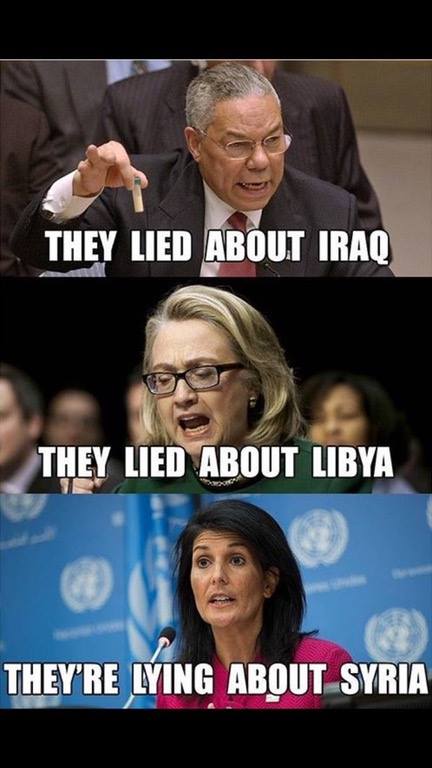
The United States is at war with Syria. Though few Americans wanted to face it, this has been the case implicitly since the Obama administration began building bases and sending Special Ops, really-not-there, American troops, and it has been the case explicitly since August 3, 2015, when the Obama administration announced that it would “allow airstrikes to defend Syrian rebels trained by the U.S. military from any attackers, even if the enemies hail from forces loyal to Syrian President Bashar al-Assad.” With the U.S. Air Force—under Trump, following Obama’s declared policy—shooting down a Syrian plane in Syrian airspace, this is now undeniable. The United States is overtly engaged in another aggression against a sovereign country that poses no conceivable, let alone actual or imminent, threat to the nation. This is an act of war.
As an act of war, this is unconstitutional, and would demand a congressional declaration. The claim, touted by Joint Chiefs’ Chairman, Gen. Dunford, that the 2001 Authorization for the Use of Military Force (AUMF) against al-Qaeda provides constitutional justification for attacking the Syrian government is patently false and particularly precious. In the Syrian conflict, it’s the Syrian government that is the enemy and target of al-Qaeda affiliates; it’s the U.S. and its allies who are supporting al Qaeda. The authorization to fight al-Qaeda has been turned into an authorization to help al-Qaeda by attacking and weakening its prime target!
Will President Trump ask for a relevant congressional authorization? Will any Democratic or Republican congresscritter demand it? Is the Pope a Hindu?
Would it make any difference? Why should Trump bother? Obama set the stage when he completely ignored the War Powers Act, the Constitution, Congress, and his own Attorney General and legal advisers, and went right ahead with a war on Libya, under the theory that, if we pretend no American troops are on the ground, it isn’t really a war or “hostilities” at all. Which I guess means if the Chinese Air Force starts shooting down American planes in American airspace in defense of Black Lives Matter’s assault on the White House, it wouldn’t really be engaging in an act of war.
It’s impossible to overstate the danger in these executive war-making prerogatives that Obama normalized—with the irresponsible connivance of his progressive groupies, who pretend not to know where this would lead. In 2012, referring to the precedent of Obama’s policies, Mitt Romney said: “I don’t believe at this stage, therefore, if I’m president that we need to have a war powers approval or special authorization for military force. The president has that capacity now.” Following Obama, for Trump, and every Republican and Democratic president, it now goes without saying.
In terms of international law, as an aggressive, unprovoked aggression against a country that makes no threat of attack on the U.S., it is also patently illegal, and all the political and military authorities undertaking it are war criminals, who would be prosecuted as such, if there were an international legal regime that had not already been undermined by the United States.
Syria is now under explicit attack by the armed forces of the U.S., Turkey, and other NATO states. Sixteen countries have combat aircraft buzzing around Syrian airspace under the effective command of the United States, and a number of them have attacked Syria’s army.
Americans, and certainly self-identified “progressives,” have to be crystal clear about this: American armed forces have no right to be in Syria, have no right to restrict the Syrian government from using any of its airspace, or to prevent it from regaining control of any of its own territory from foreign-backed jihadi armies.
The Syrian state and its allies (Iran and Russia), on the other hand, are engaged in the legitimate self-defense of a sovereign state, and have the right to respond with full military force to any attack on Syrian forces or any attempt by the United States to balkanize or occupy Syrian territory, or to overthrow the Syrian government. Whether and how they do respond will depend on their own military/political calculus, about which they have so far been quite careful and restrained. It would be the height of foolishness, as well as arrogance, for Americans to presume they can bully these actors into submission with an infinite series of discrete aggressions, with no sharp counterattack. Unfortunately, the world has not yet seen the limits of American arrogance.
So please, do not pretend to be shocked, shocked, if Syria and its allies fight back, inflicting American casualties. Don’t pose as the morally superior victim when Americans are killed by the people they are attacking. And don’t be preaching about how everyone has to support our troops in a criminal, unconstitutional, aggressive attack on a country that has not threatened ours in any way. American soldiers and pilots executing this policy are not heroes, and are not fighting to protect America or advance democracy; they are the international equivalent of home invaders, and as such are legitimate targets with no claim to “self-defense.” The only heroic act they could do is refuse their superiors’ illegitimate orders to engage in this aggression.
In response to American attacks, the Syrian Army has every right to strike back at the American military apparatus, everywhere. Every casualty of this war, however big it gets, is the ethico-political responsibility of the attacking party – US. The first responsibility of every American is not to “support our troops,” but to stop this war. Right now. Before it gets worse.
It’s quite obvious, in fact, that the United States regime is deliberately making targets of its military personnel, in the hopes of provoking a response from Syrian or allied armed forces that will kill some Americans, and be used to gin up popular support for exactly the kind of major military attack on Syria and/or Russia and/or Iran that the American people would otherwise reject with disgust. Anyone who professes concern for “our troops” should be screaming to stop that.
It’s also quite clear now that the War on ISIS is a sham, that ISIS was always just a pretext to get the American military directly involved in attacking the Syrian army and destroying the coherence of the Syrian state. If the U.S. wanted to defeat ISIS, it could do so easily by coordinating their actions with, and not against, the forces who have been most effectively fighting it: the Syrian Arab Army, Russia, Iran, and Hezbollah.
Instead, it’s attacking the Syrian army precisely because it has been defeating ISIS and other jihadi forces, and regaining its own territory and control of its own border with Iraq. The U.S. does not want that to happen. At the very least—if it cannot immediately engender that massive offensive to overthrow the Baathist government—the U.S. wants to control part of the border with Iraq and to occupy a swath of eastern Syria. It wants to establish permanent bases from which to provision and protect jihadi armies, achieving a de facto partitioning of the Syrian state, maintaining a constant state of armed attack against the Damascus government, and reducing Syria to a weakened, rump state that can never present any effective resistance to American, Israeli, or Saudi designs on the region.
This is extremely dangerous, since the Syrians, Russians, and Iranians seem determined not to let this happen. Consistent with his own incompetence and his admiration for tough guys, Trump seems to have abrogated authority to his generals to make decisions of enormous political consequence. Perhaps that’s why aggressive actions like the shoot-down of the Syrian plane have been occurring more frequently, and why it’s not likely they’ll abate. There’s a dynamic in motion that will inevitably lead each side to confront a choice of whether to back down, in a way that’s obvious, or escalate. Generals aren’t good at backing down. A regional or global war is a real possibility and becomes more likely with every such incident.
Though most American politicians and media outlets do not want to say it (and therefore, most citizens cannot see it clearly enough), such a war is the objective of a powerful faction of the Deep State which has been persistent and determined in seeking it. If the generals are loath to back down in a battle, the neocons are adamant about not backing down on their plans for the Middle East. They will not be stopped by anything less than overwhelming popular resistance and international pushback.
The upside of these attacks on Syrian forces is that they wipe the lipstick off the pig of the American project in Syria. It’s a regime-change, nation-destroying war that has nothing to do with democracy or human rights, and everything to do with the anti-democratic, chaos-creating designs of the most nefarious regimes in the region and the world. Everyone—European countries who profess concern for international law and stability, and the American people who are fed up with constant wars that have no benefit for them—can see exactly what kind of blatant aggression is unfolding, and decide whether they want to go along with it.
In that regard, any self-identified “liberal” or “progressive” American—and particularly any such American politician—who spent (and may still spend) their political energy attacking Bush, et. al., for that crazy war in Iraq, and who goes along with, or hesitates to immediately and energetically denounce this war, which is already underway, is a political hypocrite, resisting nothing but the obvious.
Featured Video
IRAN WAR “ON PAUSE” – w/ Prof. Glenn Diesen
or go to
Aletho News Archives – Video-Images
From the Archives
The great ADHD swindle
By Daniel Ken | TCW Defending Freedom | May 20, 2023
Over more than two decades in the classroom I’ve taught thousands of children and teenagers: some were lovely and lots were hard-working. On the other hand, quite a number were disruptive and argumentative, and a number were violently opposed to learning. But I don’t think I’ve taught more than a handful of kids who could be properly described as having the symptoms of ADHD. And that handful could just as easily have had something else wrong with them. Because here’s the thing: despite the fact that the best part of a million children are medicated for the condition, ADHD doesn’t exist.
There’s no definitive medical test for it, experts can’t agree on what it actually means, and most of the symptoms disappear if the child in question has lots of exercise, good diet and, crucially, a set of clear behavioural boundaries, preferably set early in childhood and, for the boys at least, enforced by a stable adult male living at home. … continue
Blog Roll
 Aletho News
- IRAN WAR “ON PAUSE” – w/ Prof. Glenn Diesen
- Zelensky threatens to attack Belarus
- UK to send Ukraine 150,000 drones
- ‘Biased censorship’: Iran deputy FM slams X for stripping him of blue tick
- Hezbollah lawmaker says Israel has 60 days to withdraw from Lebanon
- Iran rules out IAEA inspections of war-damaged nuclear sites
- Israeli regime’s only interest is ‘permanent war,’ Iran’s FM Araghchi says
- Syria, Lebanon, and the limits of power
- How Multipolarity Forced Trump to Capitulate… For Now
- Switzerland confirms US-Iran talks planned for Friday are cancelled
- If Americans Knew
- 15 articles a day: The extent of the Israeli army’s media interference
- Greek Orthodox Patriarchate denounces Israeli seizure of church land in Jerusalem
- How Hillel International uses antisemitism training and ‘campus climate’ concerns to attack Palestine solidarity
- Old Iraq war architects rise up against Trump’s Iran deal
- Unmasking Axios, its Israeli ties and agenda
- Israel Is Bleeding Support in the U.S. – and Pouring Tens of Millions Into Trying to Change That
- Israeli army included on UN blacklist for 3rd year over ‘grave violations’ against children
- Trita Parsi on the Iran deal, Israel, and how Iran has been a ‘cash cow’ for AIPAC
- JD Vance speaks truth to Israel: “You can’t just kill your way out of every problem” – Daily Update
- What Ceasefire? Israel Has Now Killed Over 1,000 Palestinians in Gaza Since October
- No Tricks Zone
- New Study: Chile’s Relative Sea Level Was 3.2 Meters Higher Than Today During The Mid-Holocene
- Beyond The Pitch: Why FIFA’s World Cup Is One Of Humanity’s Best Investments
- Climate Alarmists Now Using Natural Phenomena To Support Their Claims
- New Study: Significant CO2 Fluxes From Non-Volcanic Sources Are Largely Neglected In Carbon Budgets
- Women Climate Scientists Being Harassed, Insulted By Skeptics, Claims Berkeley Earth Researcher
- Germany’s Longterm Spring Climate Data Show “No Climate Trend”
- New Study: Solar Photovoltaic, Wind Power Fail To Meet Annual Energy Demands 62% Of The Time
- Germany’s Die Welt: “Too Much Is Too Much” … Green Energies Are Cannabalizing Each Other!
- Germany’s Ecological Holocaust… Once Fairy Tale Forests Getting Cleared For Wind Turbines
- A Grand Solar Minimum Has Arrived…Global Cooling Of At Least 1°C Is Expected By The 2030s, 2040s
 Aletho News