Khan Sheikhoun: why it is sensible to be sceptical still
By Tim Hayward | July 4, 2017
The OPCW fact finding mission (FFM) has now reported on the chemical incident in Khan Sheikhoun, Syria, in April 2017. Although heavily trailed in previews, by Bellingcat and others, as presenting virtually a smoking gun implicating the Syrian government, the report itself is so hedged with caveats that one could perhaps say there is so much smoke that we can’t even see a gun.
Certainly, the report cannot specifically verify any weapon involved, as the FFM ‘was unable to retrieve any items from the site which would indicate the means of dispersal of a chemical. After analysing photographs and video supplied by witnesses, the FFM could not establish with a great degree of confidence the means of deployment and dispersal of the chemical.’ (6.19)[1]
I know nothing about chemical weapons but I know a little about how reports get written. A number of people collaborate in piecing together the evidence and analysis that goes into the long document. One voice then has to come clearly through the summary that goes out to press, even though different glosses are possible. Since a certain gloss, given some extra spin, has been making the rounds in the media, I think it worth pointing out how one could interpret it quite differently.
The OPCW tell us they could not visit the site of the reported incident (since it is in the control of very dangerous men) and could not therefore get high value evidence (3.11).[2] The evidence they examined included samples that were sent (via those dangerous men) to Turkey without the FFM being able to document a verifiable chain of custody (3.46).[3] So how the samples came to be contaminated or by exactly what (since it apparently could have been a ‘Sarin-like substance’ or Sarin) is a matter of surmise. They tried to piece together a narrative on the basis of witness statements from people on the ground who were among, if not of, the dangerous men. ‘It was not possible to corroborate’ the narrative that was inferred from those testimonies (5.10); and the narrative was in fact contradicted by statements taken by the Syrian authorities (5.10).
Commentators who had sight of the report during its embargo period, like Bellingcat, worked very quickly to bring out publications aimed at convincing us the report provided a refutation of those of us who are sceptical about the narrative of Syrian Government responsibility for the Khan Sheikhoun incident.
It seems to me, though, that the caveats are extremely significant. Especially given that in order to feel safe in disregarding those caveats one has to put a good deal of faith in the honesty and integrity of the people in control of the area of the incident. I find this hard to do, given that everyone considers them not even safe to visit.
[Readers will notice that in this brief comment I have not referred to the victims of the incident. The cause of death of all those people should presumably be a matter for criminal investigation, which was not the purpose of the OPCW mission. It is a matter of very grave concern indeed.]

[1] All references are to paragraphs in the Report Of The Opcw Fact-Finding Mission In Syria Regarding An Alleged Incident In Khan Shaykhun, Syrian Arab Republic April 2017.
[2] ‘During an investigation, complete, direct, and immediate access to the alleged initiation site provides the greatest opportunity to collect high value evidence.’ (3.11)
[3] ‘Typically, samples from an incident would be collected by the investigating team immediately after the incident, using approved procedures and equipment, including full documentation of the chain of custody of the samples. As noted earlier, the team was constrained due to the inability to access the site of the alleged incident and the amount of time that had passed between the alleged incident and receipt of samples by the team (depending on the source, between 1 week and 2 months after the incident). As a result, the team was unable to:
(a) assess the geography and conditions of the location of the alleged incident; (b) directly select sampling points and items; (c) conduct on-site collection of samples; and (d) implement a complete chain of custody, by the team, for samples from source.’ (3.46)
The Fraud of the White Helmets
Hollywood buys into yet another lie

By Philip Giraldi • Unz Review • July 4, 2017
I actually forced myself to watch the documentary The White Helmets, which is available on Netflix. It is 40 minutes long, is of high quality cinematographically speaking, and tells a very convincing tale that was promoted as “the story of real-life heroes and impossible hope.” It is overall a very impressive piece of propaganda, so much so that it has won numerous awards including the Oscar for Best Documentary Short this year and the White Helmets themselves were nominated for the Nobel Peace Prize. More to the point, however, is the undeniable fact that the documentary has helped shape the public understanding of what is going on in Syria, delivering a Manichean tale that depicts the “rebels” as always good and Bashar al-Assad and his government as un-redeemably evil.
It has been reliably reported that celebrities like George Clooney, Justin Timberlake and Hillary Clinton really like the White Helmets documentary and have promoted it with the understanding that it represents the truth about Syria, but it is, of course, not the whole story. The film, which was made by the White Helmets themselves without any external verification of what it depicts, portrays the group as “heroic,” an “impartial, life-saving rescue organization” of first responders. Excluded from the scenes of heroism under fire is the White Helmets’ relationship with the al-Qaeda affiliated group Jabhat al-Nusra and its participation in the torture and execution of “rebel” opponents. Indeed, the White Helmets only operate in rebel held territory, which enables them to shape the narrative both regarding who they are and what is occurring on the ground. Because of increasing awareness of the back story, there is now a growing movement to petition the Academy of Motion Picture Arts and Sciences to revoke the Oscar based on the complete and deliberate misrepresentation of what the White Helmets are all about.
Exploiting their access to the western media, the White Helmets have de facto become a major source of “eyewitness” news regarding what has been going on in those many parts of Syria where European and American journalists are quite rightly afraid to go. It is all part of a broader largely successful “rebel” effort to manufacture fake news that depicts the Damascus government as engaging in war crimes directed against civilians.
The White Helmets have certainly saved some lives under dangerous circumstances but they have also exaggerated their humanitarian role as they travel to bombing sites with their film crews trailing behind them. Once at the sites, with no independent observers, they are able to arrange or even stage what is filmed to conform to their selected narrative. They have consistently promoted tales of government atrocities against civilians to encourage outside military intervention in Syria and bring about regime change in Damascus. The White Helmets were, for example, the propagators of the totally false but propagandistically effective claims regarding the government use of so-called “barrel bombs” against civilians.
The White Helmets were a largely foreign creation that came into prominence in the aftermath of the unrest in Syria that developed as a result of the Arab Spring in 2012. They are currently largely funded by a number of non-government organizations (NGOs) as well as governments, including Britain and some European Union member states. The United States has directly provided $23 million through the USAID (US Agency for International Development) as of 2016 and almost certainly considerably more indirectly. Max Blumenthal has explored in some detail the various funding resources and relationships that the organization draws on, mostly in Europe and the United States.
Former weapons inspector Scott Ritter has described how the White Helmets are not actually trained to do the complicated rescue work that they depict in their self-made videos, which have established their reputation by ostensibly showing them in action inside Syria, rescuing civilians from bombed out structures, and providing life-saving emergency medical care. As an expert in Hazardous Materials handling with New York Task Force 2 USAR team, Ritter reports that “these videos represent de facto evidence of dangerous incompetence or, worse, fraud… The bread and butter of the White Helmet’s self-made reputation is the rescue of a victim—usually a small child—from beneath a pile of rubble, usually heavy reinforced concrete… The techniques used by the White Helmets are not only technically wrong, but dangerous to anyone who might actually be trapped… In my opinion, the videos are pure theater, either staged to impress an unwitting audience, or actually conducted with total disregard for the well being of any real victims.”
Ritter also cites the lack of training in hazardous chemicals, best observed in the videos provided by the White Helmets regarding their activity at Khan Sheikhun on April 4th. He notes “As was the case with their ‘rescues’ of victims in collapsed structures, I believe the rescue efforts of the White Helmets at Khan Sheikhun were a theatrical performance designed to impress the ignorant and ill-informed… Through their actions… the White Helmets were able to breathe life into the overall narrative of a chemical weapons attack, distracting from the fact that no actual weapon existed….”
But perhaps the most serious charge against the White Helmets consists of the evidence that they actively participated in the atrocities, to include torture and murder, carried out by their al-Nusra hosts. There have been numerous photos of the White Helmets operating directly with armed terrorists and also celebrating over the bodies of execution victims and murdered Iraqi soldiers. The group has an excellent working relationship with a number of jihadi affiliates and is regarded by them as fellow “mujahideen” and “soldiers of the revolution.”
So by all means let’s organize to revoke the White Helmets’ Oscar due to misrepresentation and fraud. It might even serve as a wake-up call to George Clooney and his fellow Hollywood snowflakes. But the bigger take-away from the tale of the White Helmets would appear to be how it is an unfortunate repeat of the bumbling by a gullible U.S. government that has wrecked the Middle East while making Americans poorer and less safe. A group of “moderates,” in this case their propagandists, is supported with weapons and money to overthrow a government with which Washington has no real quarrel but it turns out the moderates are really extremists. If they succeed in changing regime in Damascus, that is when the real nightmare will begin for minorities within Syria and for the entire region, including both Israel and Saudi Arabia, both of which seem intent on bringing Bashar al-Assad down. And the truly unfortunate fact is that the Israelis and Saudis apparently have convinced an ignorant Donald Trump that that is the way to go so the situation in Syria will only get worse and, unless there is a course correction, Washington will again richly deserve most of the blame.
Empire-Speak
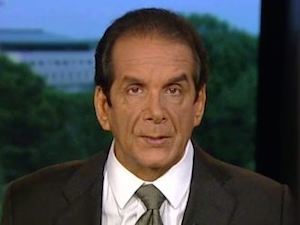
By Jacob G. Hornberger – Future of Freedom Foundation – June 28, 2017
One of the most fascinating aspects of living under imperialism is the lexicon that this philosophy brings into existence. It’s called Empire-Speak. Given the complexity of this specialized language, it usually takes people years of education and training to master it.
One of the finest examples of Empire-Speak appeared last week in a Washington Post op-ed by Post columnist Charles Krauthammer, who often appears as a commentator on Fox News. Krauthammer penned an op-ed entitled “The Great Muslim Civil War – and Us” that is an absolute masterpiece of Empire-Speak.
Comparing what is happening in the Middle East to Europe 1945, Krauthammer describes the “great Muslim civil war” that has enveloped the Middle East, which he writes, is “approaching its post-Islamic phase.” ISIS is about to be defeated on the battlefield, he writes, and the parties are now maneuvering, as they did after World War II, to “determine postwar boundaries and spheres of influence.” Once ISIS loses its hold on Mosul in Iraq and Raqqa in Syria, “the caliphate dies.”
So does that mean that the Pentagon and the CIA can finally declare victory in the Middle East and come home after more than 25 years of warfare in the Middle East? Does that mean that there can now be a ticker-tape parade in New York City honoring the victorious American forces?
Are you kidding? As Krauthammer points out, all that has gone before is just “the end of the beginning.” Things are just getting started. After all, as Krauthammer points out, “At stake is consolidation of the Shite Crescent.”
Who would have known? I’ll bet that 99 percent of Americans haven’t even heard of the “Shite Crescent” or that it’s being consolidated. Thank goodness we have Krauthammer and other people well-versed in Empire-Speak to tell us about it.
According to Krauthammer, the world is witnessing a gigantic battle between Shiite Muslims and Sunni Muslims.
Leading the Shiite side is Iran. Combined with Russia, Syria, Iraq, and Hezbollah (“which Krauthammer labels the “tip of the Iranian spear”), this is the so-called “Shiite Crescent.” According to Krauthammer, it poses a “nightmare for the entire Sunni Middle East.”
On the opposing side of this gigantic battle are the Sunnis, led by Saudi Arabia, Egypt, Jordan, and the United States. Needless to say, this is considered the good side of the war.
As I was reading through his op-ed, I kept hoping that Krauthammer would not omit one of my favorite terms in Empire-Speak: “the hegemon.” Isn’t that a great term? Whenever I hear an imperialist refer to the danger of the rise of a “regional hegemon,” I think of Transformers or Godzilla.
Krauthammer didn’t disappoint. He states that Syria is “the central theater of a Shiite-Sunni war for regional hegemony.” Moreover, Russia — yes, that Russia! — Krauthammer labeled “the outside hegemon.” OMG! Scary, right? Maybe even scarier than rise of communism and the Soviet Union, the two official enemies of the Cold War era.
What’s really going on here?
Krauthammer is simply preparing the American people for what lies ahead — more interventionism, more imperialism, more militarism, and more death and destruction at the hands of the US Empire. And, of course, more official enemies as old official enemies are defeated or disappeared.
You see, I bet you thought that once ISIS was defeated, the troops could finally be brought home and revel in their glorious victory. Sort of like “Mission Accomplished” after the US invasion of Iraq.
Not so. Undoubtedly expressing the mindset of the Pentagon, the CIA, and the rest of the US national-security establishment, Krauthammer is telling us that unfortunately we cannot rest. We must continue to soldier on, presumably until the Shiite Crescent is defeated and the world is no longer facing the possibility of a rise of a “regional hegemon.” And don’t even think for a moment that once that is accomplished, the war will finally be over. It will simply spell the beginning of the end of the beginning.
As I stated soon after the 9/11 attacks, the “war on terrorism” is going to be just like the war on drugs, where every drug lord they kill or capture is soon replaced by dozens more.
The real problem is that the US Empire keeps running out of official enemies. If we go back to the maneuvering after World War II to which Krauthammer refers, we see US officials converting their World War II partner and ally, the Soviet Union, to a new official enemy, one that necessitated, they said, the conversion of the federal government to a national-security state.
As we all know, for the next 45 years the Cold War was a bonanza for the Pentagon, the CIA, the NSA, and what President Eisenhower called the “military-industrial complex.” Ever-increasing budgets and powers. The best part, for them, was that it was never supposed to end. The Cold War was supposed to go on forever because communism and the Soviet Union were supposed to go on forever.
But life can be cruel. In 1989, the Soviet Union suddenly and unexpectedly dismantled itself, declared socialism a bankrupt philosophy, and unilaterally declared an end to the Cold War, thereby depriving the US Empire of its big official Cold War enemy.
No problem. A new official enemy was soon announced: Saddam Hussein, dictator of Iraq and former partner of the US Empire (just like Stalin had been). Throughout the 1990s, Americans obsessed over Saddam Hussein and how he was coming to get us and the rest of the world with his WMDs.
To oust Saddam from power, the Pentagon and the CIA began wreaking death and destruction in Iraq, including 11 years of sanctions that killed hundreds of thousands of Iraqi children.
That led to terrorist blowback and a new official enemy: “terrorism,” which ultimately enabled US officials to invade Iraq and oust their official enemy, Saddam Hussein, from power, and install a new regime in Iraq, a Shiite Muslim regime.
Over time, the “terrorists” have morphed into “the Muslims,” which are now viewed as the new official enemy.
Which brings us back to Krauthammer’s op-ed. If the Muslims are the new official enemy, how is that the United States is on the side of the Sunnis in what Krauthammer describes as a giant Muslim civil war that is now supposedly taking place? Aren’t Sunnis Muslims too?
Hmmm. So does this mean that we are no longer supposed to focus on Muslims in general or even “radical Muslims” or “extreme Muslims” but instead on “Shiite Muslims” as the new official enemy?
Oh, another thing Krauthammer doesn’t make clear: If we are now battling the Shiite Muslims, why did the US government use its invasion and occupation of Iraq to install a Shiite regime there? And why is it that US troops have been killing and dying for some 14 years to preserve the existence of that Shiite regime? Why are they still doing so? Were Americans wrong to thank the troops for their service in Iraq by bringing into existence a regime that is now part of the “Shiite Crescent,” which, according to Krauthammer, is now facing us on the field of battle?
Boy, imperialism sure is hard to learn and comprehend. Just like Empire-Speak.
US Raqqa offensive killing more civilians than claimed – airstrike monitor
RT | July 3, 2017
UN warnings of the “staggering” number of civilian casualties in Raqqa, Syria that were denied by coalition commanders are no exaggeration, a monitoring group insists.
Airwars, a UK-based group that monitors airstrikes and civilian casualties in Iraq, Libya and Syria, reports it has tracked 119 alleged civilian casualty events at Raqqa, claiming up to 770 deaths, between June 6-29.
The coalition began its assault on the so-called capital of the Islamic State (IS, formerly ISIS/ISIL) caliphate, Raqqa, on June 6. It has been accused of having no plan in place for civilian evacuations, and Airwars reports a number of civilians have been killed attempting to flee in boats.
The United Nations Commissioner for Human Rights warned at least 173 civilians have been killed by air and ground strikes in Raqqa since June 1, saying this is “likely a conservative estimate and the real death toll may be much higher.”
The coalition’s Combined Joint Task Force – Operation Inherent Resolve (CJTFOIR) – denies the coalition isn’t being careful enough, with coalition commander General Stephen Townsend saying, “show me some evidence of civilian casualties.”
In June, the UN’s chair of the Independent International Commission of Inquiry on Syria, Paulo Pinheiro, warned the UN Human Rights Council that the fight in Raqqa shouldn’t be “at the expense of civilians,” saying it is “gravely concerned with the mounting number of civilians who perish during airstrikes.”
Pinheiro said the airstrikes had resulted in a “staggering loss of life.”
Townsend called the UN’s concerns “hyperbolic,” saying the coalition is being, “careful as we need to be and as we can be.”
“I would challenge anyone to find a more precise and careful campaign in the history of warfare on this planet,” he told the BBC last week.
“The UN’s Commission of Inquiry is one of a number of international agencies, NGOs and monitors which have expressed significant concern in recent weeks at high numbers of reported civilian fatalities around Raqqa from Coalition actions,” Airwars’ Chris Woods told RT.
“Rather than attacking the messengers, the US and allies should urgently examine their tactics at Raqqa, improving where necessary protections for civilians on the ground.”
“Our present estimate is that around 370-450 civilians have been killed by Coalition airstrikes and artillery at Raqqa in just three weeks,” Airwars said. The group is still working through a significant number of cases to garner a final number of civilian casualties for the month.
“All local monitors, plus UN agencies, reporting high civilian casualties at Raqqa for months. Gen Townsend comments smack of complacency,” Airwars said in tweet, pointing to the additional 132 civilian casualties in both Iraq and Syria that the coalition itself reported in June.
According to Airwars and its sources, the coalition has been targeting boats which are carrying civilians fleeing the battle. The coalition refers to such strikes as hitting “ISIS boats.”
“Four June cases where (mostly named) civilians reportedly bombed as they fled Raqqa by boat. Cars also being bombed as civilians flee,” Airwars said in a Tweet.
The coalition says it has nearly sealed off Raqqa, as the Syrian Democratic forces fight on the ground. Two bridges on the northern bank of the Euphates River have been destroyed by the coalition, “and we shoot every boat we find,” Townsend told the New York Times.
“If you want to get out of Raqqa right now, you’ve got to build a poncho raft,” he added.
Townsend’s comments don’t bode well for civilians desperate to flee the battleground. Between 50,000-100,000 civilians are believed to be trapped in the city.
Raqqa is Being Slaughtered Silently (RIBSS), a group of journalists with alleged ties to Turkish authorities, says people have been trying to flee the bombardment with help from local smugglers, but that IS have already planted hundreds of landmines and banned people from leaving. It has reported 358 civilian casualties in Raqqa in June, with 177 coming from ‘warplane attacks’.
Between June 21-26 specifically, 88 civilians have died or are missing after coalition shelling or bombing. At least 18 of these were fleeing via car or boat, according to RIBSS, as cited by the Daily Beast.
Human rights groups have also criticized the coalition for its use of white phosphorus near civilians, which is against international law.
READ MORE:
Civilian death toll rises to 484 from US-led coalition strikes in Iraq & Syria
More Reasons Have Emerged To Doubt The Official Narrative About Syria
By Caitlin Johnstone | Medium | June 25, 2017
The highly decorated Pulitzer Prize-winning investigative journalist Seymour Hersh is back again, throwing yet another monkey wrench in the propaganda narratives of the US war machine.
Hersh’s latest piece, titled “Trump’s Red Line”, was published in the German publication Welt am Sonntag, reportedly after London Review of Books backed out for fear that it would make them “vulnerable to criticism for seeming to take the view of the Syrian and Russian governments”. LRB’s decision is understandable in light of today’s fact-free McCarthyist feeding frenzy given the criticism they’d already received from establishment loyalists for publishing Hersh’s explosive 2013 report “Whose Sarin?”, which attacked establishment allegations of Assad having used chemical weapons that year. Their decision points straight at the invisible state censorship that goes on within the editorial boards of every western outlet and the self-censorship that goes on in the minds of every western journalist when confronted with these uncomfortable and seemingly unreportable truths. The ruling class can make life very difficult for you if you don’t sing their propaganda song.
Hersh’s central source, whom Welt reportedly was able to contact and confirm the veracity of, describes a US president hell bent on attacking Syria regardless of facts, evidence, logic, or what he was being told by his own advisors. Hersh writes that it was known within defense and intelligence agencies that there was not sufficient intel to justify such an attack, breaking down some of the many plot holes in the establishment narrative about the alleged sarin gas strike on civilians in the Idlib province on April 4, but there was no dissuading Trump from an attack which ultimately manifested on April 6 in the form of a cruise missile strike on a Syrian airbase.
Asked by Welt if government lies still infuriate him as much as they did in the early days of his career, Hersh replied,
“It is more than being upset about lying — it’s about the reluctance of us in the press to hold the men and women who run the world’s governments to the highest possible standards. We have a President in America today who lies repeatedly about the most meaningless of information, but he must learn that he cannot lie about the intelligence relied upon before authorizing an act of war. There are those in the Trump administration that understand this, which is why I learned the information I did. If this story creates even a few moments of regret in the white house it will have served a very high purpose.”
We can all be forgiven at this point, I think, for indulging in a little feigned astonishment at the fact that a damning report on some deeply reprehensible behavior by Donald Trump has been forced to seek publication in Germany instead of at the Washington Post or the New York Times. The story has everything these outlets have become known for since November: it makes Trump look evil, it hints at the possibility of a hidden conspiracy that the US public is not privy to, its assertions are reportedly based on the testimony of anonymous insiders, and it describes conflict and a lack of cohesion within the administration. Oh, oops, except this one contains highly critical information about a despicable act of war, something these mainstream outlets have consistently stumped for and which they unequivocally applauded on April 6.
Predictably, there was an instant attack on this article from the intensely shady neocon propaganda outlet Bellingcat. You may remember Bellingcat as the outlet which has defended the known Al Qaeda propaganda network White Helmets and made the absolutely pathetic and indefensible argument that Bana Alabed is a perfectly legitimate Twitter account and not the blatant psy-op that it unquestionably is.
Bellingcat is run by a man named Eliot Higgins, who is thoroughly exposed for the establishment propagandist he is in this excellent piece by Graham Phillips. Higgins is a Senior Fellow at the Atlantic Council, an extremely suspicious virulently anti-Kremlin think tank which is funded by both Saudis and a Ukrainian billionaire, which Paul Craig Roberts has labeled “the marketing arm of the military-security complex”. You may also remember the Atlantic Council as the home of the chief technical director of CrowdStrike, the cyber security firm which to this day is the only organization which has ever directly examined the servers alleged to have been hacked by Russia.
So things are already being shaken up a bit. It is absolutely infuriating that a mere 14 years after the US and coalition forces perpetrated the evil and unforgivable invasion of Iraq based on lies there is so little public skepticism of the narratives being promoted about the US war machine’s next target. I’m glad there are still a few real journalists like Seymour Hersh out there trying to get people asking the questions they should be asking.
Here’s a hyperlink to Hersh’s article again, here’s a link to Welt’s article about their involvement in its publication, and here’s a link to a chat protocol Hersh provided of a security advisor and an active American soldier on duty at a key base near the Syria strikes.
OPCW’s Syrian Sarin Gas Report Based on Doubtful Data – Russian Foreign Ministry
Sputnik – 30.06.2017
MOSCOW – Russia believes the Organization for the Prohibition of Chemical Weapons (OPCW) report on the use of a nerve agent in Syria last spring is based on doubtful data, the Russian Foreign Ministry said Friday.
The OPCW said earlier in the day that its fact-finding mission had established the use of sarin in the April 4 incident in Khan Sheikhoun in the province of Idlib.
“Unfortunately, we are forced to state on the first reading of the document that its conclusions are still based on very doubtful data,” the Russian ministry’s information and press department said.
It noted that the OPCW’s data was “obtained from the same opposition and the same notorious NGOs of the White Helmet type, and not at the site of the tragedy but in a certain ‘neighboring country’.”
“Therefore, it is not surprising that the content of the OPCW special mission’s report is largely biased, suggesting the presence of a political order in this structure’s activity,” the ministry said.
Trump’s travails may spill over to Euphrates valley
By M K Bhadrakumar | Indian Punchline | June 29, 2017
So it wasn’t mere coincidence that Russia ‘test-fired’ on Tuesday from a submerged state-of the-art submarine its most advanced ICBM with a capability to carry 10 nuclear warheads of 100 kilotons each that can destroy the United States. (See my blog Trump-Putin meeting is so near and so far away.) At a ceremony in Moscow on Wednesday in honor of officers who have graduated with distinction from Russian military academies and universities, President Vladimir Putin said that Russia is bolstering its military power against “potential aggressors”.
He said, “Only advanced powerful mobile armed forces are capable of securing the sovereignty and territorial integrity of our country and protecting us and our allies from any potential aggressor, as well as from pressure and intimidation by those who do not like the independent sovereign Russia.” Putin revisited the subject from another angle at a different venue in Moscow, also on Wednesday, when he addressed the Foreign Intelligence Service staff and veterans on the 95th anniversary of Russian “illegal intelligence”. (For those not familiar with the terminology, “illegal intelligence” is what Pakistan says Kulbhushan Jadhav had undertaken – see the full text and video of Jadhav’s “confessional statement”, here.)
Putin made a stirring speech, here, packed with emotion. (Putin doesn’t hide his unvarnished admiration for the men who undertake “illegal intelligence” work whom he knew during his professional career in the Soviet-era KGB.) Putin told his audience: “You are well aware of the challenges faced by Russia. They include attempts to hinder our development, to provoke confrontation, and to destabilise the regions near our borders. In particular, terrorist and extremist groups are being used as tools. It is no secret that some of them are being diligently looked after, and even receive direct support from special services of a number of states. In general, it is clear that the activity of foreign intelligence services directed against Russia and our allies is on the rise.”
Hmmm. Temperature is palpably rising in Russia-US relations. The Russian Foreign Ministry spokesperson Maria Zakhavrova today leveled a litany of complaints against the US behavior (here). One plausible explanation could be that the Trump administration is on a roller coaster and things are simply spinning out of the president’s control. ‘Chaos’ could be the apt word.
Putin’s top advisor on foreign policy, Ambassador Yuri Ushakov attributes the current turbulence to an “internal power struggle” in the US, which is undermining the White House policies. However, increasingly, the signs are that the White House itself is a house divided. Politico carried a stunning report yesterday that there were fireworks at a recent White House meeting between Secretary of State Rex Tillerson and a close aide to Trump. It seems tensions had been steadily building and, finally, Tillerson exploded in anger and frustration that the White House guys are interfering to disrupt his best-laid plans.
Curiously enough, the foreign-policy wonk in the Trump team, the old man’s Orthodox Jew son-in-law Jared Kushner who was present at the meeting, later criticized Tillerson’s behaviour – and of course had that bit of vital info leaked to the press as well – casting the state secretary (an erstwhile boss of ExxonMobil) as an immature fellow. And, come to think of it, Tillerson was supposed to have been one inspired choice that Trump had made while picking his cabinet team. What happens now if Tillerson throws in the towel in disgust and returns to Texas to resume his retired life? (Read the Politico report.)
The real danger is that Trump may feel tempted take recourse to doing something very rash in sheer desperation, which he wouldn’t have done in calmer times – such as getting into a military standoff with Russia. Trump must be smart enough to know that in this murky political climate in Washington, he will be talking to Putin from a position of disadvantage if they hold a meeting on the sidelines of the G20 at Hamburg. (There is already a Guardian report that German Chancellor Angela Merkel has a plan to isolate Trump totally at the G20 on climate change.)
The Russian FO spokesperson Zakharova said today that the recent US allegations about Syrian government planning chemical attacks could be the “harbinger of a new (US) intervention” and that Moscow is apprehensive that the US military may resort to a “large scale provocation” under propaganda cover, “which is directed not only against the Syrian authorities, but also against Russia.” Interestingly, this perception is also prevalent amongst US analysts (here and here).
Trump-Putin meeting is so near and yet so far
By M K Bhadrakumar | Indian Punchline | June 27, 2017
A US senior official in Washington told TASS news agency Monday that the White House does not rule out a meeting between President Donald Trump and President Vladimir Putin on the sidelines of the G20 summit (July 7-8) in Hamburg, but a final decision has not been made. He was non-committal but not pessimistic. He said:
- You can imagine anything but I would expect the meeting is going to happen. I know for a fact that nothing has been scheduled yet, and nothing has been decided on the format.
- In a sense he (Trump) is always preparing for such meetings. He has intelligence briefings almost every day. He talks to his national security advisors almost every day. He talks to his Secretary of State and Secretary of Defense a few times a week. So he is well versed on the issues and has been receiving regular updates since the administration began, since even before the administration began.
- I would expect that everything in the schedule would be finalized before we leave, and we leave on July 5. However, I simply do not want to give you a hard prediction. I am never completely sure about anything.
There was always gnawing anxiety in the run-up to the Soviet-American summits, but not this way – that a US president cannot admit that he hopes to meet his Russian counterpart. Barack Obama set the practice of not scheduling meetings with Putin on the sidelines of international events, but making them appear impromptu events. He wanted to convey that Russia was not a ‘priority’ and probably hoped he was slighting Putin. Of course, Putin didn’t mind – so long as he transacted business. There were some awkward moments, for sure. The one that lingers in my memory is the photo of Obama and Putin at the 2013 G8 summit at Lough Erne in Northern Ireland – staring ahead in stony silence seated together awkwardly. (This was even before the coup in Ukraine and the sanctions.)
The Kremlin spokesman Dmitry Peskov said in Moscow Saturday that Putin is willing to meet Trump in any ‘format’. But then, Trump may want to flex muscles to look the ‘strong man’. Indeed, the White House statement issued late Monday sounds ominous:
- The United States has identified potential preparations for another chemical weapons attack by the Assad regime that would likely result in the mass murder of civilians, including innocent children. If… Mr. Assad conducts another mass murder attack using chemical weapons, he and his military will pay a heavy price.
The US is about to lose the war in Syria and Americans are bad losers. Meanwhile, the Saudi-Qatari rift puts a hole in Trump’s Middle East policy through which an elephant can pass. This is an awkward moment for an American president to negotiate with his Russian counterpart. Trump may well regard Assad as his punch bag.
Moscow must be on alert mode. Foreign Minister Sergey Lavrov spoke to US Secretary of State Rex Tillerson yesterday regarding the Syrian situation. The Russian readout said, “Lavrov called on Washington to take measures to prevent provocations against Syrian government troops fighting against terrorists.”
Russia has warned that it is treating all American flying objects in the Syrian air space as ‘targets’. But what happens if US fires missiles at Syria (on whatever pretext), and Russia’s ABM shoots them down? A Russian-American military confrontation may ensue. Things are indeed at a highly sensitive point. After all, last Thursday, a Russian Tu-154 VIP aircraft carrying defence minister Sergei Shoigu was intercepted in the Baltic as it was approaching Kaliningrad by a NATO warplane, which was forced to retreat after an Su-27 Flanker jet zoomed in and displayed its weapons. (See the video footage by Russian Defence Ministry.)
Coincidence or not, on Monday Russian Northern Fleet’s Project 955 underwater missile cruiser Yuri Dolgoruky successfully test-fired a Bulava missile from the Barents Sea to targets in Kamchatka. The Defence Ministry said, “The launch was made from the submerged position in compliance with a combat training plan”. Bulava is a solid-propellant ICBM developed specially for Project 955 submarines, which can deliver 10 warheads of 150 kilotonnes each to a distance of 10,000 kilometers.
Moscow warns Washington against ‘incendiary, provocative action’ in Syria
RT | June 28, 2017
Moscow has warned the US against taking unilateral action in Syria, as there is no threat from the Syrian military, Russia’s Foreign Ministry said. The statement comes after the US accused Syria of preparing for a chemical attack, without giving any evidence.
Asked if Russia had warned the US administration against any unilateral action in Syria, Russia’s deputy foreign minister, Gennady Gatilov, replied that Russian officials have “always spoken about that, including in relation to their [US] latest strikes on Syrian armed forces.”
“We believe that it’s unacceptable and breaches Syria’s sovereignty, isn’t caused by any military need, and there is no threat to the US specialists from the Syrian Army. So it’s incendiary, provocative action,” Gatilov said, as cited by RIA Novosti.
On Monday evening, the White House claimed that Syrian President Bashar Assad was preparing a chemical attack and warned that the Syrian government would “pay a heavy price” if the attack was carried out, as cited by AP.
Hours later, the Pentagon said it had detected activity by the Syrian authorities in preparation for the attack. Pentagon spokesman Navy Captain Jeff Davis said that the US had seen “activity” at Shayrat airfield that showed “active preparations for chemical weapons use.”
The US government failed to provide any further details or proof of such claims, while the State Department’s spokesperson, Heather Nauert, said it was “an intelligence matter.”
When confronted by a journalist that Washington uses the phrase to justify anything that suits it, Nauert answered: “I’m not going to get into that one with you, but this is a very serious and great matter.”
On Wednesday, though, the US suggested that the Syrian leadership had swiftly changed its mind about planning an alleged attack. Defense Secretary Jim Mattis, as cited by Reuters, said: “it appears that they [Syria’s authorities] took the warning seriously. They didn’t do it.”
The Syrian government, as well as Russian authorities, have denied any allegations against them, with Russian President Vladimir Putin’s spokesman Dmitry Peskov saying that “such threats to Syria’s legitimate leaders are unacceptable.”
In the latest statement, Deputy Foreign Minister Gatilov said that Russia doesn’t rule out that “there may be provocations” following the announcement from Washington.
The statements by the US administration complicate the [peace] negotiations in Astana and Geneva, and Moscow believes such attempts to boost the tensions around Syria are unacceptable.
“The statements on Syrian armed forces getting ready to use chemical weapons is complete nonsense… These assumptions aren’t based on anything, no one provides any facts,” the Russian diplomat said.
“If the aim is to ramp up the spiral of tension, we think it’s unacceptable. It complicates the process of negotiations undertaken in Astana and Geneva,” Gatilov underlined.
“We’ve seen this in the past. Of course there are many ill-wishers, who want to undermine the process [of negotiations]. So any provocations are possible,” the deputy foreign minister added.
Earlier, Russia’s Foreign Ministry issued another official statement, saying: “We consider all these insinuations about chemical weapons which are being carried out in the worst traditions of the 2003 NATO intervention in Iraq as an ‘invitation’ for terrorists, extremists, and the armed opposition in Syria to carry out another large-scale provocation, which will result in the ‘unavoidable punishment’ of President Assad, according to Washington’s plans.”
In April, US President Donald Trump launched an attack on Syria with 59 Tomahawk missiles, which targeted Shayrat Airbase near the city of Homs. The strike was in response to what the US claimed was a chemical weapons attack in Khan Shaykhun, orchestrated by Syria’s government – something Damascus repeatedly denied.
Time for Another False Flag Chemical Weapons Attack in Syria
By Paul Larudee | Dissident Voice | June 27, 2017
The United States has identified potential preparations for another chemical weapons attack by the Assad regime.
— Sean Spicer, White House Press Secretary, June 26, 2017
Fool me once, shame on you. Fool me, you can’t get fooled again.
— George Bush, September 17, 2002
The White House statement raises a number of questions. Who has identified the “potential preparations”? No reference is given, not even a source agency. Does the information come from intelligence sources? Apparently the Pentagon had not even been informed. What is “potential information” and how does it compare with real information?
Of course, the White House has its own direct sources. The Syrian opposition groups who met with John Kerry, Michael Ratney and Jon Finer at the UN in September, 2016 are tight with al-Nusra and other terrorist groups, and would be happy to provide a pretext for another US strike on Syria. No real evidence is required, but they would be happy to fabricate it nonetheless.
Can anyone cite a case of the use, or even the alleged use, of chemical weapons in Syria that has been to the strategic advantage of the Syrian government or its forces? The fact is that every incident has been to their disadvantage, and invariably a pretext for US intervention. Why then, would they use it, especially when they hadn’t done so before Obama drew his famous “red line”?
To the contrary, when British intelligence analyzed traces of the gas, they found it to be inconsistent with samples of Syrian government stocks. Furthermore, Turkish sources have reported the delivery of chemical weapons to opposition fighters. Distinguished MIT researchers Lloyd and Postol demonstrated definitively that the 2013 CW attack in Ghouta could not have come from Syrian government forces.
Similarly, Postol demonstrated multiple inconsistencies in the reports of the April 4, 2017 Khan Sheikhoun attack. More recently, investigative journalist Seymour Hersh uncovered the inside story on that attack, to the effect that US Defense Department sources knew that there were no chemical weapons used in the Syrian Air Force bombing attack on Khan Sheikhoun, and that to the extent that toxic gases caused casualties in that attack, it was the result of what the al-Nusra and Ahrar al-Sham fighters had stored at the site or had deployed as a false flag event, for the purpose of precipitating US intervention.
Postol warned at the time that without proper corroboration of Syrian government culpability, a US attack would motivate the terrorist constructors of the false flag to replicate more such incidents. In this context, the White House statement, based solely on vague allegations, can be interpreted as the start to a manipulation of public perception, so that an upcoming false flag event can appear to be a corroboration of the initial suspicions.
Such are the workings of what military and security forces call “securocratic wars” and specifically “security-based framing”. This is jargon for what used to be called propaganda, but which is now an integrated part of military and security planning for the control of public perception.1
There is plenty of reason for the White House to welcome such a pretext to attack Syria again. The approval ratings for the Trump Administration have never been higher, nor the press more approving, than when US warships fired 59 Tomahawk missiles at Syria’s Shu’ayrat Air Field two days after the Khan Sheikhoun attack. Given the unpopularity and failure of Trump’s domestic initiatives, it is easy to see how he might be tempted to employ similar death and destruction to boost his image again.
Of course, such actions risk a dangerous confrontation with Russia on the Syrian battlefield. Russia has already threatened to target US aircraft and has suspended coordination of flights over the shooting down of a Syrian jet fighter. But Trump is not averse to risk. We should therefore not be surprised to see another false flag killing of innocents blamed on the Syrian military in order to embroil the US further in an illegal war where we don’t belong.
- Halper, War Against the People, chapter 3.
Paul Larudee is one of the founders of the Free Gaza and Free Palestine Movements and an organizer in the International Solidarity Movement.
Featured Video
Trita Parsi: Middle East Unraveling — Are We on the Path to World War?
or go to
Aletho News Archives – Video-Images
From the Archives
Why Saudi Ties to 9/11 Mean U.S. Ties to 9/11
By Kevin Ryan | Dig Within | September 27, 2015
Media interest in Saudi Arabian connections to the crimes of 9/11 has centered on calls for the release of the 28 missing pages from the Joint Congressional Inquiry’s report. However, those calls focus on the question of hijacker financing and omit the most interesting links between the 9/11 attacks and Saudi Arabia—links that implicate powerful people in the United States. Here are twenty examples. … continue
Blog Roll
 Aletho News
- Neria Leiter Was A Legitimate Military Target
- Integrity Initiative: UK-funded network framed dissent as Russian disinformation for years
- ‘We don’t seek permission to defend our country’: Snippets from President Pezeshkian’s UNGA address
- NATO chief wants Europeans to fight American wars [for Israel]
- German chemicals giant reveals details of downsizing
- Refaat Al-Areer Was The Canary In The Coal Mine In Israel’s War On The Truth
- Israeli election committee bars candidate from Knesset race over Gaza war opposition
- French-Lebanese man files war crimes complaint over Israeli attacks
- Mahan Air Flight Lands in China Despite US Threat against Iranian Airlines
- US eyes $10bn fund to rebuild war-battered Gulf infrastructure
- If Americans Knew
- Caught on Tape: AIPAC CEO Boasted of Controlling Trump’s National Security Officials
- Why Hamas Attacked Israel in October 2023 – Israeli professor Ilan Pappé
- They see them, then kill them: Israeli quadcopters track, deliberately target civilians in Gaza
- Winter could turn Gaza’s treacherous, war-damaged buildings into deathtraps
- Majority of Democratic Voters Want to Prosecute Both Biden and Trump Administration Officials Over Gaza
- As Gaza languishes, world leaders gather at the UN – Daily Update
- Sanctions are collective punishment: immoral and self-defeating
- Phosphorus Munitions Fired by Israel Burn Groves, Orchards in Southern Lebanon
- Israel Carries Out New Ceasefire Violations Across Gaza
- AI – Emphasis on the ‘I’: Israel Is Funding AI Chatbot Propaganda
- No Tricks Zone
- New Study: Earth And Venus Surface Warmth Largely Explained By Convection And Lapse Rate, Not CO2 Or Radiation
- 2025 Nature Paper Claiming Worsening Global Drought Gets RETRACTED …Heavily Flawed
- New Study: ‘Global Drought Shows No Detectable Recent Acceleration Under Climate Warming’
- Economic Masterminds: German Socialists Suggest Taxing Productivity Gains Stemming From Using AI
- The South China Sea Has Not Been Cooperating With The Climate Change Narrative
- Energy Crisis: Germany Enters Heating Season With Historically Low Gas Reserve Fill Levels
- New Study: The Antarctic Ice Sheet Gained Mass From 2020-2024 Due To Staggering Snow And Ice Accumulation
- Study: Ocean Heating Rates From Thousands Of Years Ago ‘Dwarf’ Modern Ocean Heating Rates
- Climate Extremists Target, Attack Large-Scale Power Grid Infrastructure In Germany!
- New Study: Antarctic Ice Melt Has Contributed Less Than 1 Centimeter To Sea Level Rise In The Last 30 Years

