Syrian chemical weapons: Israel and France fabricate a new case
By Hassan Illeik | Al-Akhbar | April 14, 2014
Seven months after the end of the Syrian chemical weapons crisis, the Syrian army is making progress in the Damascus countryside and the opposition is exerting all its military might to achieve a strategic victory in Aleppo. Recently, news of the regime using poison gas against the opposition has reemerged with Israel leading the charge.
All the voices calling for organizing the Geneva III conference for negotiations between the Syrian government and the opposition have faded. The circumstances on the ground that allowed the regime not to give concessions at Geneva II still hold. The Syrian army continues, with its allies, to make progress on the ground. This allows the regime, once again, not to give any serious concessions in any negotiations that will take place in the foreseeable future. It is on this basis that the opposition’s latest battles in Quneitra, Daraa, Kassab, Idlib and Aleppo have been waged.
Until now, it appears that of all the battles, the battle of Aleppo stands in a class of its own. In the battles of Damascus, its countryside (Eastern Ghouta and Qalamoun), Homs and its nearby surroundings, the opposition forces acknowledged their loss. They put up a strong fight just to make the other side pay a heavy price. All the other battles do not make up, in military or moral terms, for losing in Damascus and the central region, except the battle for Aleppo. That is why we see the opposition forces’ massive mobilization in the economic capital of Syria.
The opposition is not merely talking about making progress in Aleppo but is promising to take complete control of the largest city in the north. Based on its discussions, the opposition wants to achieve a quick victory in Aleppo before the regime and its allies finish their battles in Damascus and Homs. Achieving stability in the capital and the central region for the regime will free up a large segment of the elite forces and will allow the Syrian army and its allies to move towards other active fronts. It would then be very difficult for the opposition to achieve progress of any strategic value in the north or the south. Until today, the al-Qaeda-inspired fighters have not been able to make a strategic breakthrough in the north. In Aleppo, the war is led by Jaish al-Muhajireen wal-Ansar (Army of Foreign Fighters and Supporters) which includes mostly Caucasian fighters who are well-trained and have combat experience.
Against this background, news has emerged once again that the Syrian army has used chemical weapons. Last August, the Syrian government asked for an investigation of an incident whereby militants used chemical weapons in Khan al-Asal in Aleppo. But after the attack on Eastern Ghouta, the regime was accused by Western forces of using poison gas against the opposition. Washington led a campaign threatening an attack on Syria until Russia proposed a solution that required Syria to give up its chemical arsenal. This time, the Syrian government sent a letter to the United Nations on March 25 saying that it monitored communications between the opposition in Jobar, which is adjacent to the capital, indicating that “the terrorist organizations are going to launch attacks by using poison gas with the aim of framing government forces.”
While the opposition has remained silent, Israel this time led the charge of accusing the regime of using chemical weapons. On April 7, the Israeli Channel 10 website reported a “major Israeli security source” saying that the Syrian army has gone back to using chemical weapons against the opposition forces. It used it at least in one case on March 17 in Harasta, eastern Damascus. According to the Israeli security source, the material used was not deadly chemical weapons found on the list of prohibited materials based on the agreement with the West, but rather substances that cripple those exposed to it for several hours.
After four days, the Syrian opposition grabbed the accusation and ran with it. The Syrian National Coalition issued a statement asking the international community to investigate the use of poison gas by the regime in Harasta. The Western press started again to play the tune of the regime using chemical weapons. Yesterday, the regime and the opposition exchanged accusations about using poison gas in the town of Kfar Zita in the Hama countryside.
Washington has distanced itself from this debate so far. The State Department’s spokesperson, Jennifer Psaki, said yesterday that her country does not have proof of chemical weapons use. The British and the French seem more excited than others to take up the issue. Western diplomatic sources in Paris say that since the failure of the Geneva II conference, the French authorities have been talking about the possibility of the Syrian regime using chemical weapons that are not internationally prohibited and that the international community must act to deter the regime.
The source likened this claim to the audio recording of a secret meeting of the Turkish Prime Minister Recep Tayyip Erdogan’s work team published on March 27 in which they talked about creating a pretext that would allow Turkey to intervene militarily in Syria. But intervention does not seem possible at this point. According to a source close to the regime in Syria, the goal of “this intimidation is twofold. Exonerating the opposition of what it is doing and a desperate attempt to draw red lines in front of the the Syrian army and its allies in their battle in the Damascus countryside so the opposition can make some progress in the north.”
Nasrallah: Hezbollah’s intervention in Syria was ‘very late’
Excerpts from the latest comments of Hezbollah leader Sayyed Hassan Nasrallah on the Syrian war and the nature of his party’s military intervention in the conflict:
From the beginning as well – you see, the problem that the other (political) group in Lebanon had with us, and (the problem) that governments and regimes in the Arab and Islamic world had, and (the problem that) governments and regimes throughout the world had (with us), on the Syrian issue, is due to our political stance, (and) not our military intervention. Our military intervention came late, and as is said, it occurred after all (sides) intervened, and (after) all sides had come, and (after) all sides had fought. We came very late.
The problem was our political stance. That we got up from the first day, and said that: we are not with this conflict (taking place) in Syria, we are not with the toppling of the regime and the state, we are with reforms, with a political solution, with political dialogue, with achieving legitimate demands being called for by the people, yet we are not with anyone in Syria going out to break, bring down, destroy, and ruin (Syria), and to imposing major strategic choices on (Syria) – and the (real) issue is here, before reforms and demands, the (real) issue is the major strategic choices.
Okay, we took this stance, and there was a large group that was acting (based upon another) stance. What was required from us was that we move along with that stance, that we become a part of it. Because we did not become a part of it, the war became against us as well. So the issue essentially relates to our political stance, and not the military intervention. […]
Okay today, (Turkey), a member of NATO, and a candidate for the European Union, is busy preparing for a regional war and a direct intervention into Syria, with the pretext that there is a tomb for the first grandfather of Bani Othman – of the Ottoman state – and that the ISIL might… maybe they themselves may request the ISIL to demolish it. […]
We said from the beginning, that what will happen in Syria will expose the whole region to the danger of terrorism and takfir. And you said no, the story is not as such, you said the story in Syria is one of reforms, change, democracy, and human rights. And now, what is the situation, which you yourself talk about? You yourselves, after three years… You speak of Syria, (especially) the territory that is controlled by the armed groups, as a threat to the regional states, and as a threat to the states of the world.
Now, after three years, of your funding, and your arming, and your incitement, and your pushing towards military solutions, and your obstruction of political solutions, and your protection of the armed groups, you came to form a terror list, and you placed most of these armed groups on this terror list. Well, what remained anyway? Of course, regardless of our stance towards this list, when you come and say regarding Syria, that the ISIL, al-Nusra, and the Muslim Brotherhood, you come and say these are terrorists, well then, what else remains? Who else remains? […]
And if the takfiri terrorist movement is defeated in Syria, then I say to you, we will all remain. If this axis triumphs in Syria, all the Lebanese will be safeguarded. This axis does not seek revenge, it seeks security, it seeks harmony, it looks for strength, it does not look for revenge. Here, there lies major national choices, let us come and decide.
This video is an English-subtitled excerpt from a speech delivered on 29/03/2014.
Full transcript:
The last issue which I would like to mention and end with, is that today, the whole campaign regarding the issue of the resistance in Lebanon, is focusing on one of my main points, that is, our intervention in Syria. He comes and tells you: ‘you intervened in Syria, so now the national consensus is gone – we already dealt with this (point)’. ‘You intervened in Syria, so now the role of the weapons has changed, they are no longer resistance weapons’. Well, were these arms ‘resistance weapons’ for you to begin with? In any case, all of this is being said.
And this intervention and stance is currently considered the main problem being put forward on a regular basis, from some time till now, and it’s put forward every day. I would like to – because this issue is occupying the country and us all – comment on it a bit in the last section of my speech. From the beginning as well – you see, the problem that the other (political) group in Lebanon had with us, and (the problem) that governments and regimes in the Arab and Islamic world had, and (the problem that) governments and regimes throughout the world had (with us), on the Syrian issue, is due to our political stance, (and) not our military intervention. Our military intervention came late, and as is said, it occurred after all (sides) intervened, and (after) all sides had come, and (after) all sides had fought. We came very late.
The problem was our political stance. That we got up from the first day, and said that: we are not with this conflict (taking place) in Syria, we are not with the toppling of the regime and the state, we are with reforms, with a political solution, with political dialogue, with achieving legitimate demands being called for by the people, yet we are not with anyone in Syria going out to break, bring down, destroy, and ruin (Syria), and to imposing major strategic choices on (Syria) – and the (real) issue is here, before reforms and demands, the (real) issue is the major strategic choices.
Okay, we took this stance, and there was a large group that was acting (based upon another) stance. What was required from us was that we move along with that stance, that we become a part of it. Because we did not become a part of it, the war became against us as well. So the issue essentially relates to our political stance, and not the military intervention. There is something huge going on in the region, come forward and become a part of it, otherwise, prepare yourself for execution. This was the storm that was coming to our region.
What was required is that we all kneel before it, or that we all be lead by it, with it, or that we all humble ourselves before it. Meaning at the very least, that you humble yourself before this storm. We, did not become a part of it, nor did we move along with it, nor did we humble ourselves towards it. Because we considered that this storm poses major strategic and existential threats that concern Syria, Lebanon, and Palestine, and the whole region, and we sufficiently explained this in the past, so we will not repeat it. And so we took a political stance. With time, yes, our stance gradually changed, we went to the battlefield – even if I take a few more minutes. Okay, all the Lebanese know this, we spoke about it in the media, and some sharply criticised us also due to providing such details: the first military intervention, which was (very) limited, meaning a few dozen men from Hezbollah, occurred when the brothers went to the Western Ghouta (region), to the town of Sayyeda Zeinab – peace be upon her. So about one year and half ago, or a bit more. When most of the Western Ghouta area was taken over by the armed groups – not all, most of it, and the armed groups became 200 meters away from the shrine of Sayyeda Zeinab (peace be upon her), and our calculations were that, firstly, due to the religious significance of this shrine, for all Muslims, and secondly, that the destruction of this shrine will lay the foundation for, or ignite sectarian strife in more than one region in the Islamic world, okay, so let us go help, there were Syrian army (forces) over there, and national defence (forces), and the people and residents of the town were defending (as well), we sent a few dozen individuals to help defend (the area). That’s it. Okay, this stance was criticised. Today, there is a very grand state – it considers itself as such – a state within the Atlantic Alliance (NATO), which is working hard to become a part of the European Union, and some consider it as a model, meaning Turkey.
‘The first letter of its name is Turkey’. Okay, Turkey… today, the Turkish government sits and discusses: there is a grave or tomb for the great grandfather of Bani Othman, who, if you now ask all the Islamic people: ‘what is his name?’ – I myself don’t know his name to be honest. I don’t hide this from you, I read (the name), but then I forgot it, and I didn’t manage to get the name again for you. Okay, who knows about him in the Islamic world, what is his significance for the Muslims? What does he signify for the conscience and sentiments of the Muslims, whether they were Shias or Sunnis?
Despite this, it’s okay, it is Turkey’s right to think over whether it should intervene militarily, and to violate the sovereignty of another state, that is the Syrian state, and to make plans e.t.c., because there is a possibility that the ISIL may come to this shrine and blow it up. Okay, why is it right for you to do – since we are speaking (today) about literature, poetry, and grammar – why is it right for you to do (this), and not for us?
We went to defend a shrine that is respected by all Muslims, and to (defend) a personality who is respected and considered holy by all Muslims, because she is the granddaughter of the Prophet of Islam, Muhammad, peace and blessings be upon him & his progeny. Who is (the personality) over whom you’ve come to wage a regional war over? You are coming to wage a regional war. Okay, and in that case there is a genuine threat, whereas in this case there isn’t. And more than this, we did not violate Syrian sovereignty, of course this is nothing new, President Bashar spoke about this issue some time ago, because some people asked him, he said no, the resistance entered Syria with the agreement of the Syrian government. Now someone will tell me, you violated Lebanese sovereignty – there is argument over this.
However, at the very least, we did not violate Syria’s sovereignty. Okay today, a member of NATO, and a candidate for the European Union, is busy preparing for a regional war and a direct intervention into Syria, with the pretext that there is a tomb for the first grandfather of Bani Othman – of the Ottoman state – and that the ISIL might… maybe they themselves may request the ISIL to demolish it. God knows best of course.
Okay. Things gradually moved to Qusayr and what followed Qusayr, and you all know this, until we reached a stage in which it became clear that the conflict in Syria reached a point, as a result of the extent of the international and regional interference, and the mobilisation that brought tens of thousands of fighters from all around the world to Syria, the issue, with all frankness, and we have said this before, and I want to reiterate it, the issue no longer became (limited to) Sayyeda Zeinab and the Lebanese residing on Syrian territory, from that time the issue became related to the resistance, the axis of resistance, the future of the resistance and the political identity of the region, and where we were heading, and we said all of this. Why am I repeating it now, not to fill up time, (rather), to speak of outcomes, and results, at this point. Okay, currently where have we reached, where are we now?
From the beginning we said ‘political solution’. The Arab League got up, wanting to be decisive, wanting to topple the regime: it does not accept a political solution before the departure of President al-Assad and his regime. Okay, after three years, you saw the latest decisions of the Arab Summit, so did we require three years, of war, killings, fighting, destruction, ruin, strife, and tribulations, for the Arabs to speak what they should have spoke from the beginning? And for the Arabs to move forward with that which they should have moved forward with from the beginning?
So now what is required is that we should go see how we can pressure the regime in Syria and President Bashar al-Assad, (because) we want to achieve a political solution, and a real political dialogue, and because Geneva 2 has reached an impasse. Now (you speak this)? Well, you – in the first few months, when it was said to you that dialogue is possible, and that the Syrian leadership is ready to carry out drastic and fundamental reforms, not one of you was prepared to discuss the idea of a political solution or a political dialogue, on the basis of: ‘everything is over, in a few months everything will be over in Syria and the region’. We told you ‘political solution’, and you went to the military solution. Now you have reached what you were being told from the beginning. Of course, this talk is (directed) at the Arabs, at the other (political) group in Lebanon, and at the states that continue to intervene in this conflict.
We said from the beginning, that what will happen in Syria will expose the whole region to the danger of terrorism and takfir. And you said no, the story is not as such, you said the story in Syria is one of reforms, change, democracy, and human rights. And now, what is the situation, which you yourself talk about? You yourselves, after three years… You speak of Syria, (especially) the territory that is controlled by the armed groups, as a threat to the regional states, and as a threat to the states of the world.
Now, after three years, of your funding, and your arming, and your incitement, and your pushing towards military solutions, and your obstruction of political solutions, and your protection of the armed groups, you came to form a terror list, and you placed most of these armed groups on this terror list. Well, what remained anyway? Of course, regardless of our stance towards this list, when you come and say regarding Syria, that the ISIL, al-Nusra, and the Muslim Brotherhood, you come and say these are terrorists, well then, what else remains? Who else remains? In all frankness…
Okay, did the issue require three years, for the region and the world to discover that what is taking place in Syria will lead to this result? And of course, there are some Lebanese who have not discovered this (even) till now. Till now they have not discovered, that what is taking place in Syria is a threat to Lebanon. Well come on, the Americans who are so far away, the French, the Europeans, some of the Gulf states, and the states of North Africa, consider Syria – the territory which is controlled by the armed groups – as a source of danger to their states and security. And this is really the case. Even in calm arenas, where no calls were made for fighting and clashes, and for ‘holy jihad’, (yet) now it has begun, such as in Tunisia.
And unfortunately, some get up in Lebanon and tell you, no, what is taking place in Syria is not a threat to Lebanon. We told you from the beginning, what is taking place in Syria has passed the stage of demands for reforms and democracy, to the (stage of) the (rise and) dominance of the takfiri militant movement, which does not accept anyone alongside it, even from within the takfiiri militant movement, as is occurring between the ISIL and al-Nusra, whereby they both belong to one thought, one sect, one school, one leadership, and one emir, and one political project, and the difference between them is over a small organisational, administrative issue, just like what happens in any party or organisation, that is, whether this person is the leader, or that person is the leader. The whole conflict is (over) whether the leader is Abu Muhammad al-Golani, or Abu Bakr al-Baghdadi.
Who paid the price? Thousands of casualties. Thousands of casualties, widespread destruction, fierce fighting, (merely) over an organisational, administrative disagreement. How can such (groups) live with all the Lebanese, with the rest of the Lebanese, with the rest of the Syrians, with the rest of the neighbouring states and people?
If your brothers, loved ones, dear ones, and allies – we want to term it like that, meaning that we don’t want to say ‘your masters’, (if they) discovered now that this is the reality of the situation, then why are you still delayed? Stubbornness is okay, only if it is not at the expense of Lebanon, and the fate and future of Lebanon.
It was continuously said to us from a year and a half ago, and every day this is said to us, by some political blocs and sides, calling on Hezbollah to leave Syria. I don’t want to sit here and respond. Today, I myself want to call on you: go ahead and change your stance. Revise your stance. Carry out a revision of the stance. Carry out a new (political) reading. I am not going to tell you, come and fight with us in Syria. This is not required. No no, this is not required. And in actual fact, there are people, Lebanese groups from various sects, who proposed to us – and this might be the first time I speak of this – that they come up and fight alongside us, yet we told them there is no need. Do not hold this political and social burden. We’ve already held this burden and we are moving with it.
Those who are insisting every day that the problem in Lebanon is that Hezbollah went to Syria, I say that the problem in Lebanon is that Hezbollah was late in going to Syria, and that the problem in Lebanon is that you are still in your places and you did not go to Syria, rather, if some of you went, you went to the wrong place. Now I’m not going to tell you to go to Syria, nor to fight with us, no, but revise your stance on this issue. Day after day, the correctness and soundness of the decisions we took is being confirmed, and I will also like to say – also perhaps for the first time with such frankness – if the takfiri terrorism is victorious in Syria, I say to all the Lebanese, and to all the political movements and parties, whether from 14th or 8th (of March), or whether in the center, on the right, or on the left, if the takfiri terrorism triumphs in Syria, we will all be eliminated. Not just the party (Hezbollah), nor just the resistance, all of us will be eliminated, we will all be cancelled out. Don’t you see what is happening in Alleppo, Idlib, Raqqa, and in Deir Azzour, and in Fallujah, and in Anbar. Ask, ask about it, but don’t ask the secularists, ask the Islamists, ask the Islamic parties in those areas about what had occurred to them.
And if the takfiri terrorist movement is defeated in Syria, then I say to you, we will all remain. If this axis triumphs in Syria, all the Lebanese will be safeguarded. This axis does not seek revenge, it seeks security, it seeks harmony, it looks for strength, it does not look for revenge. Here, there lies major national choices, let us come and decide.

False flag scandal rocks Turkey
By Dr. Kevin Barrett | Press TV | March 30, 2014
Did Turkish leaders plot a false flag attack designed to trigger a Turkish invasion of Syria?
According to USA Today, “An audio recording leaked on YouTube appears to reveal that top Turkey officials were plotting to fake an attack against their own country…” The recording features Turkish Intelligence Chief Hakan Fidan saying: “I’ll make up a cause of war by ordering a missile attack on Turkey.”
The Turkish government has confirmed the recording’s authenticity, according to the BBC, which quoted Turkish President Erdogan: “They even leaked a national security meeting. This is villainous, this is dishonesty. … Who are you serving by doing audio surveillance of such an important meeting?” The Turkish government immediately blocked Youtube in an apparent effort to stop the story from spreading.
The leaked tape reveals top Turkish leaders including intelligence chief Fidan, Army official Yasar Guler, Foreign Minister Ahmet Davutoglu and Foreign Ministry official Feridun Sinirlioglu discussing how to attack their own country to create a pretext for invading Syria. They discuss sending Turkish military units into Syria to fire missiles at Turkey, and even staging a false-flag attack on the tomb of Turkish hero Suleyman Shah. They also expressed hope that their false-flag deceptions might convince NATO to impose a no-fly zone over Syria – a euphemism for the kind of massive aerial bombardment NATO used to overthrow the government of Libya.
The false flag scandal is the latest crisis to rock Erdogan’s government, which has been locked in a power struggle with CIA-backed cleric Fethullah Gulen. Turkish sources say Gulen’s organization, which dominates the Turkish National Police, probably recorded and leaked the false-flag tape with CIA assistance.
Why is the CIA destabilizing Turkey and sabotaging Erdogan, who has been obeying Western orders by helping the NATO-Saudi-Zionist war on Syria?
The CIA and its Zionist partners are concerned by Turkey’s trajectory towards becoming a powerful, prosperous, independent Islamic democracy. An increasingly powerful and independent Turkey would no longer be a reliable US-NATO client state. And it would not continue to kowtow to Israel.
Turkey’s stirrings toward independence were already visible in 2003 when the Turkish parliament refused to cooperate with the US war on Iraq. They were even more visible in May 2010, when the Israeli massacre of peaceful protestors aboard the Mavi Marmara triggered a strong Turkish reaction including the threat to go to war against Israel by using the Turkish Navy to end the genocidal blockade of Gaza. That was when the CIA ordered its asset Gulen to start destabilizing Erdogan, who has been struggling for his political life ever since.
If the West can keep Turkey weak, it can continue to dominate that strategically crucial country. So it is employing a divide-and-conquer strategy by splitting Turkey’s democratic Islamic movement between CIA stooge Gulen and the slightly more independent Erdogan.
By exposing the Turkish false-flag plot, the CIA-Gulen crowd is risking significant blowback. First, the Turkish public may react less by turning against Erdogan than by demanding an end to Turkish support for the war on Syria. If Erdogan were to announce that he was taking full responsibility for the scandal and then fire the malefactors – as President John F. Kennedy did after the Bay of Pigs disaster in 1961 – he might survive unscathed… especially if he used the incident as an excuse to end Turkey’s unpopular involvement in the Syrian war and restore the “no problems with neighbors” policy that served Turkey so well.
Another source of potential blowback is the spread of the false flag meme. The CIA and its Israeli friends are the world’s worst false flag culprits. If the people of the world ever wake up and understand that national leaders routinely attack their own countries as a pretext for going to war, the top echelon of leaders in the US and Israel will spend the rest of their lives in prison for their crimes against humanity on September 11th, 2001.
The Zionists and Operation Mockingbird agents who dominate the American mainstream media are terrified that Americans will learn about false flag attacks. So they have blacked out the Turkish false flag story in order to suppress false flag awareness among the American people.
The USA Today article quoted above is the only major US media story that mentions the Turkish false-flag plot. According to Paul Joseph Watson of Infowars.com, the mainstream US and European media (with the sole exception of USA Today ) has conspired to cover up the Turkish false flag plot. Watson notes that Reuters, a European wire service owned by the Rothschilds, along with the BBC and all of the top American mainstream outlets including CNN, the Washington Post, and the LA Times suppressed the false flag plot from their coverage. Instead, they obfuscated the false flag plotting – the heart of the Turkish scandal – with polite euphemisms or even outright lies. For example, the Rothschilds’ Reuters story claimed the Turks were plotting to “secure the tomb of Suleyman Shah” rather than conduct a false-flag attack on it.
The New York Times – the flagship publication of America’s Zionist elite – also played down the false flag story. The Times did report that the Turkish tape included discussions of “a plot to establish a justification for military strikes in Syria. One option that is said to have been discussed was orchestrating an attack on the Tomb of Suleyman Shah…” But the New York Times coverage did not mention the term “false flag” nor did it clearly lay out the nature of the plot. The Times characterized the tape as suggesting “that Turkey was looking to provoke an attack to justify a Turkish military operation.” That, of course, is a lie. The Turkish leaders were not looking to provoke an attack; they were looking to carry out the attack themselves.
But the New York Times, and the rest of the Mockingbird media, is afraid to inform its audience that national leaders routinely conspire to attack their own nations. If the American people discovered false flags, they might learn about Operation Northwoods – a 1962 plan signed off on by every member of the US Joint Chiefs of Staff to mass murder Americans in phony terrorist attacks in order to provoke war with Cuba. They might learn about Operation Gladio – a Cold War era program of false flag bombings and shootings in Europe conducted by US military assets and attributed to “leftists.” And, worst of all, they might learn the truth about 9/11.
The CIA, by destabilizing Turkey through leaking its leaders’ false flag plots, is playing with fire.
Obama Weighs New Aid for Gunmen in Syria, Sets Joint Military Plan with Saudis
Al-Manar | March 29, 2014
The United States is considering allowing shipments of portable air defense systems to Syrian opposition groups, a U.S. official said Friday, as President Barack Obama sought to reassure Saudi Arabia’s king that the U.S. is not taking too soft a stance in Syria and other Mideast conflicts.
A Washington Post report said Saturday that the U.S. is ready to step up covert aid to Syrian armed groups under a plan being discussed with regional allies including Saudi Arabia.
The plan includes CIA training of about 600 Syrian opposition forces per month in Saudi Arabia, Jordan and Qatar, foreign affairs columnist David Ignatius wrote on Thursday. That would double the forces currently being trained in the region.
The Obama administration was debating whether to use U.S. Special Operation forces and other military personnel in the training, something Syrian mercenaries have argued would carry less political baggage than the CIA, according to the column.
The Obama administration has been criticized by some in Congress for failing to do more in Syria, where 140,000 people have been killed so far, millions have become refugees and thousands of foreign gunmen have been trained since 2011.
Washington was also considering whether to provide the armed opposition with anti-aircraft missile launchers, known as MANPADS, to stop President Assad’s air force, the column said. Saudi Arabia wanted U.S. permission before delivering them, it said.
The plan, which was still being formalized, also called for vetting of opposition forces for “extremist links” during and after training, according to Ignatius.
Qatar has offered to pay for the first year of the program, which could cost hundreds of millions of dollars, according to the column. The program would try to stabilize Syria by helping local councils and police in areas not under Assad’s control and seek to establish safe corridors for humanitarian aid, it said.
Saudi rulers are hoping for the United States to shift its position on support for Syrian armed opposition, whom Riyadh has backed in their battle to oust President Bashar al-Assad.
Related article

BRICS at Hague slam attempts to isolate Putin
BRICS Post | March 24, 2014
BRICS have slammed recent reports ahead of the G20 meet to isolate Russian President Vladimir Putin or to place any restrictions on his participation at the G-20 summit in Australia later this year.
“The Ministers noted with concern, the recent media statement on the forthcoming G20 Summit to be held in Brisbane in November 2014. The custodianship of the G20 belongs to all Member States equally and no one Member State can unilaterally determine its nature and character,” said a joint BRICS statement on Monday. Australian Foreign Minister Julie Bishop had said earlier that Putin could be barred from attending the G20 Summit in November.
BRICS Foreign Ministers met on the sidelines of the Nuclear Security Summit in the Hague on Monday to review cooperation among the bloc of five after the adoption of the eThekwini Action Plan of 2013.
The Ministers noted that the role of global governments should focus on “finance, security, information and production”.
“The BRICS agenda is not centered around any specific country or related issue and shares a common vision which drives it to also increasingly identify common areas for cooperation to assist with finding global solutions to global challenges,” noted the joint communiqué.
The BRICS meet convened by South African Foreign Minister Maite Nkoana-Mashabane was attended by her counterparts Sergey Lavrov, Salman Khurshid, Wang Yi and Carlos Antonio Paranhos, Under-Secretary General for Political Affairs of the Federative Republic of Brazil.
The BRICS Ministers also discussed cybersecurity and challenges to peace and security, “notably the significant infringements of privacy and related rights in the wake of the cyber threats experienced, for which there is a need to address these implications in respect of national laws as well as in terms of international law”, said the statement.
BRICS would “continue to act as positive catalysts for inclusive change in the transformation process towards a new and more equitable global order” asserted the Ministers.
BRICS have opposed sanctions against the Syrian government and have argued for a negotiated settlement of the Iranian issue. They are also pushing for reforms of global financial institutions like the IMF.
The five nations also agreed that the challenges that exist within the regions of the BRICS countries must be addressed within the fold of the United Nations.
“The escalation of hostile language, sanctions and counter-sanctions, and force does not contribute to a sustainable and peaceful solution, according to international law, including the principles and purposes of the United Nations Charter,” said the statement.
Related articles


Neocons’ Ukraine-Syria-Iran Gambit
By Robert Parry | Consortium News | March 19, 2014
You might think that policymakers with so many bloody fiascos on their résumés as the U.S. neocons, including the catastrophic Iraq War, would admit their incompetence and return home to sell insurance or maybe work in a fast-food restaurant. Anything but directing the geopolitical decisions of the world’s leading superpower.
But Official Washington’s neocons are nothing if not relentless and resilient. They are also well-funded and well-connected. So they won’t do the honorable thing and disappear. They keep hatching new schemes and strategies to keep the world stirred up and to keep their vision of world domination – and particularly “regime change” in the Middle East – alive.
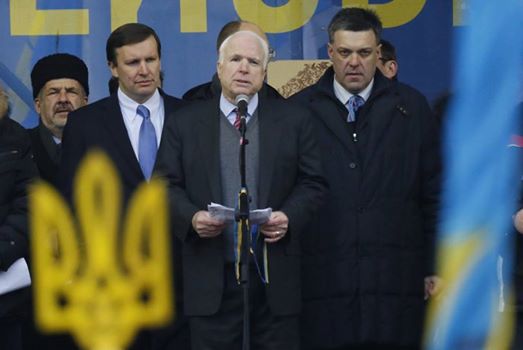
Sen. John McCain appearing with Ukrainian rightists at a rally in Kiev.
Now, the neocons have stoked a confrontation over Ukraine, involving two nuclear-armed states, the United States and Russia. But – even if nuclear weapons don’t come into play – the neocons have succeeded in estranging U.S. President Barack Obama from Russian President Vladimir Putin and sabotaging the pair’s crucial cooperation on Iran and Syria, which may have been the point all along.
Though the Ukraine crisis has roots going back decades, the chronology of the recent uprising — and the neocon interest in it – meshes neatly with neocon fury over Obama and Putin working together to avert a U.S. military strike against Syria last summer and then brokering an interim nuclear agreement with Iran last fall that effectively took a U.S. bombing campaign against Iran off the table.
With those two top Israeli priorities – U.S. military attacks on Syria and Iran – sidetracked, the American neocons began activating their influential media and political networks to counteract the Obama-Putin teamwork. The neocon wedge to splinter Obama away from Putin was driven into Ukraine.
Operating out of neocon enclaves in the U.S. State Department and at U.S.-funded non-governmental organizations, led by the National Endowment for Democracy, neocon operatives targeted Ukraine even before the recent political unrest began shaking apart the country’s fragile ethnic and ideological cohesion.
Last September, as the prospects for a U.S. military strike against Syria were fading thanks to Putin, NED president Carl Gershman, who is something of a neocon paymaster controlling more than $100 million in congressionally approved funding each year, took to the pages of the neocon-flagship Washington Post and wrote that Ukraine was now “the biggest prize.”
But Gershman added that Ukraine was really only an interim step to an even bigger prize, the removal of the strong-willed and independent-minded Putin, who, Gershman added, “may find himself on the losing end not just in the near abroad [i.e. Ukraine] but within Russia itself.” In other words, the new hope was for “regime change” in Kiev and Moscow.
Putin had made himself a major annoyance in Neocon World, particularly with his diplomacy on Syria that defused a crisis over a Sarin attack outside Damascus on Aug. 21, 2013. Despite the attack’s mysterious origins – and the absence of any clear evidence proving the Syrian government’s guilt – the U.S. State Department and the U.S. news media rushed to the judgment that Syrian President Bashar al-Assad did it.
Politicians and pundits baited Obama with claims that Assad had brazenly crossed Obama’s “red line” by using chemical weapons and that U.S. “credibility” now demanded military retaliation. A longtime Israeli/neocon goal, “regime change” in Syria, seemed within reach.
But Putin brokered a deal in which Assad agreed to surrender Syria’s chemical weapons arsenal (even as he continued to deny any role in the Sarin attack). The arrangement was a huge letdown for the neocons and Israeli officials who had been drooling over the prospect that a U.S. bombing campaign would bring Assad to his knees and deliver a strategic blow against Iran, Israel’s current chief enemy.
Putin then further offended the neocons and the Israeli government by helping to facilitate an interim nuclear deal with Iran, making another neocon/Israeli priority, a U.S. war against Iran, less likely.
Putting Putin in Play
So, the troublesome Putin had to be put in play. And, NED’s Gershman was quick to note a key Russian vulnerability, neighboring Ukraine, where a democratically elected but corrupt president, Viktor Yanukovych, was struggling with a terrible economy and weighing whether to accept a European aid offer, which came with many austerity strings attached, or work out a more generous deal with Russia.
There was already a strong U.S.-organized political/media apparatus in place for destabilizing Ukraine’s government. Gershman’s NED had 65 projects operating in the country – training “activists,” supporting “journalists” and organizing business groups, according to its latest report. (NED was created in 1983 to do in relative openness what the CIA had long done in secret, nurture pro-U.S. operatives under the umbrella of “promoting democracy.”)
So, when Yanukovych opted for Russia’s more generous $15 billion aid package, the roof fell in on him. In a speech to Ukrainian business leaders last December, Assistant Secretary of State for European Affairs, Victoria Nuland, a neocon holdover and the wife of prominent neocon Robert Kagan, reminded the group that the U.S. had invested $5 billion in Ukraine’s “European aspirations.”
Then, urged on by Nuland and neocon Sen. John McCain, protests in the capital of Kiev turned increasingly violent with neo-Nazi militias moving to the fore. Unidentified snipers opened fire on protesters and police, touching off fiery clashes that killed some 80 people (including about a dozen police officers).
On Feb. 21, in a desperate attempt to tamp down the violence, Yanukovych signed an agreement brokered by European countries. He agreed to surrender many of his powers, to hold early elections (so he could be voted out of office), and pull back the police. That last step, however, opened the way for the neo-Nazi militias to overrun government buildings and force Yanukovych to flee for his life.
With these modern-day storm troopers controlling key buildings – and brutalizing Yanukovych supporters – a rump Ukrainian parliament voted, in an extra-constitutional fashion, to remove Yanukovych from office. This coup-installed regime, with far-right parties controlling four ministries including defense, received immediate U.S. and European Union recognition as Ukraine’s “legitimate” government.
As remarkable – and newsworthy – as it was that a government on the European continent included Nazis in the executive branch for the first time since World War II, the U.S. news media performed as it did before the Iraq War and during various other international crises. It essentially presented the neocon-preferred narrative and treated the presence of the neo-Nazis as some kind of urban legend.
Virtually across the board, from Fox News to MSNBC, from the Washington Post to the New York Times, the U.S. press corps fell in line, painting Yanukovych and Putin as the “black-hat” villains and the coup regime as the “white-hat” good guys, which required, of course, whiting out the neo-Nazi “brown shirts.”
Neocon Expediency
Some neocon defenders have challenged my reporting that U.S. neocons played a significant role in the Ukrainian putsch. One argument is that the neocons, who regard the U.S.-Israeli bond as inviolable, would not knowingly collaborate with neo-Nazis given the history of the Holocaust (and indeed the role of Ukrainian Nazi collaborators in extermination campaigns against Poles and Jews).
But the neocons have frequently struck alliances of convenience with some of the most unsavory – and indeed anti-Semitic – forces on earth, dating back to the Reagan administration and its collaboration with Latin American “death squad” regimes, including work with the World Anti-Communist League that included not only neo-Nazis but aging real Nazis.
More recently in Syria, U.S. neocons (and Israeli leaders) are so focused on ousting Assad, an ally of hated Iran, that they have cooperated with Saudi Arabia’s Sunni monarchy (known for its gross anti-Semitism). Israeli officials have even expressed a preference for Saudi-backed Sunni extremists winning in Syria if that is the only way to get rid of Assad and hurt his allies in Iran and Lebanon’s Hezbollah.
Last September, Israel’s Ambassador to the United States Michael Oren told the Jerusalem Post that Israel so wanted Assad out and his Iranian backers weakened, that Israel would accept al-Qaeda operatives taking power in Syria.
“The greatest danger to Israel is by the strategic arc that extends from Tehran, to Damascus to Beirut. And we saw the Assad regime as the keystone in that arc,” Oren said in the interview. “We always wanted Bashar Assad to go, we always preferred the bad guys who weren’t backed by Iran to the bad guys who were backed by Iran.”
Oren said that was Israel’s view even if the other “bad guys” were affiliated with al-Qaeda.
Oren, who was Israel’s point man in dealing with Official Washington’s neocons, is considered very close to Israeli Prime Minister Benjamin Netanyahu and reflects his views. For decades, U.S. neocons have supported Netanyahu and his hardline Likud Party, including as strategists on his 1996 campaign for prime minister when neocons such as Richard Perle and Douglas Feith developed the original “regime change” strategy. [For details, see Consortiumnews.com’s “The Mysterious Why of the Iraq War.”]
In other words, Israel and its U.S. neocon supporters have been willing to collaborate with extreme right-wing and even anti-Semitic forces if that advances their key geopolitical goals, such as maneuvering the U.S. government into military confrontations with Syria and Iran.
So, while it may be fair to assume that neocons like Nuland and McCain would have preferred that the Ukraine coup had been spearheaded by militants who weren’t neo-Nazis – or, for that matter, that the Syrian rebels were not so dominated by al-Qaeda-affiliated extremists – the neocons (and their Israeli allies) see these tactical collaborations as sometimes necessary to achieve overarching strategic priorities.
And, since their current strategic necessity is to scuttle the fragile negotiations over Syria and Iran, which otherwise might negate the possibility of U.S. military strikes against those two countries, the Putin-Obama collaboration had to go.
By spurring on the violent overthrow of Ukraine’s elected president, the neocons helped touch off a cascade of events – now including Crimea’s secession from Ukraine and its annexation by Russia – that have raised tensions and provoked Western retaliation against Russia. The crisis also has made the continued Obama-Putin teamwork on Syria and Iran extremely difficult, if not impossible.
Like other neocon-engineered schemes, there will surely be much collateral damage in this latest one. For instance, if the tit-for-tat economic retaliations escalate – and Russian gas supplies are disrupted – Europe’s fragile recovery could be tipped back into recession, with harmful consequences for the U.S. economy, too.
There’s also the certainty that congressional war hawks and neocon pundits will press for increased U.S. military spending and aggressive tactics elsewhere in the world to punish Putin, meaning even less money and attention for domestic programs or deficit reduction. Obama’s “nation-building at home” will be forgotten.
But the neocons have long made it clear that their vision for the world – one of America’s “full-spectrum dominance” and “regime change” in Middle Eastern countries opposed to Israel – overrides all other national priorities. And as long as the neocons face no accountability for the havoc that they wreak, they will continue working Washington’s corridors of power, not selling insurance or flipping hamburgers.
Syrian forces in “full control” of Yabrud
Al-Akhbar | March 16, 2014
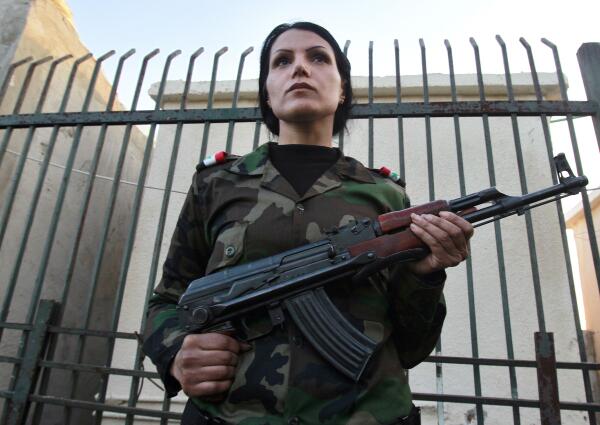 Syrian troops on Sunday seized full control of the rebel bastion Yabrud in the strategic Qalamoun region near the Lebanese border, Syrian state media reported.
“Our brave armed forces have full control over Yabrud in Damascus province and are combing through the town and removing explosive devices placed by terrorists,” state television said, citing a military source.
Capturing Yabrud, the last major rebel bastion near the Lebanese border north of Damascus, would help President Bashar al-Assad secure the land route linking his Mediterranean coastal stronghold with the capital Damascus, and choke off a cross-border rebel supply line from Lebanon.
A military source told Reuters that the rebels had pulled out of Yabrud around dawn, a day after pro-government forces had entered eastern districts of the town and captured several strategic hilltops.
A fighter in Yabrud from al-Nusra Front, al-Qaeda’s official affiliate in Syria, confirmed to Reuters the rebels had decided to pull out and said they were heading towards nearby villages including Hosh Arab, Rankos and Fleita.
He said they did not plan to withdraw across the Lebanese border to Arsal, a crossing point 20 kilometers (13 miles) to the northwest which rebels and refugees have used regularly.
The government has been making incremental gains along the land route as well as around Damascus and Aleppo in the past months, regaining the initiative in a conflict entering its fourth year.
West to accelerate proxy war on Syria: Report
Press TV – March 12, 2014
The West is planning a new push against Syrian President Bashar al-Assad through funding proxy war on the conflict-stricken country, a report suggests.
The British daily The Guardian reported that a fresh clandestine effort is under way for opening up a “southern front” against the Syrian president.
A secret command center for international operations in Amman is monitoring preparations for the offensive. This center is staffed by military officials from the US, Britain, Israel and 11 Arab states opposed to Assad.
The paper said its information is based on leaks from the United States, Israel, Jordan and some Persian Gulf Arab states.
It said the planned offensive, dubbed Geneva Horan, is aimed at pushing back Syrian troops in the Daraa, Quneitra and As-Suwayda governorates in the southwest of the country in a bid to clear the way for militants to reach the capital Damascus.
The operation derives its name from the plains near Jordan’s border with Israel.
“The command centre, based in an intelligence headquarters building in Amman, channels vehicles, sniper rifles, mortars, heavy machine guns, small arms and ammunition to Free Syrian Army (FSA) units,” the Abu Dhabi-based National newspaper quoted militants as saying.
Syria has been gripped by deadly crisis since 2011. Over 130,000 people have reportedly been killed and millions displaced due to the unrest.
Saudi Arabia has been the main supplier of weapons and funds to foreign-backed militants inside Syria.
The United States is also constructing runways for reconnaissance aircraft near the border between Jordan and Syria to help with the operation against Syria.
The Guardian said the US hosted secret talks last month between President Barack Obama’s National Security Advisor Susan Rice and Saudi Interior Minister Prince Mohammed bin Nayef.
The talks, reportedly attended by spy chiefs from Jordan, Qatar, Turkey and other regional countries, focused on making a “stronger effort” to assist the militants in Syria.
Related articles
Making Mischief in Ukraine
The Neocons Ride Again
By Patrick Foy | CounterPunch | March 12, 2014
An important article, entitled Russia needs to defend its interests with an iron fist, appeared in the Financial Times the other day, to wit, March 5th. It is an analysis of the blowup in Ukraine from a Russian perspective.
The writer, Dr. Sergei Karaganov, makes perfect sense. He is a distinguished academic in Moscow and a leader of Global Zero, the international movement for the complete elimination of nuclear weapons. Sounds like a great idea and way overdue.
My own outlook is that the imbroglio in the Ukraine was orchestrated by Neoconservative elements in Washington. The Neoconservatives as you may know, began infiltrating the U.S. Government and the American news media in earnest during the H.W. Bush Administration. They came into glory during the co-consulship of Dick Cheney and G.W. Bush.
In the present instance, Russian President Vladimir Putin has reacted in a predictable manner to a situation which the Neocons have brought about in Kiev, the capital of Ukraine, on the southern flank of Russia. Did the NSC expect Moscow to stand by while Russia’s Black Sea fleet headquartered at Sevastopol in the Crimea was put at risk? Does Washington want a new Cold War? If so, why?
Meddling by Washington in the internal affairs of other nations is certainly nothing new. Such activity must be seen in historical context. It has been the hallmark of U.S. foreign policy since the days of the Spanish-American war in 1898. The immediate consequences have rarely been salubrious for the people on the ground. Under Presidents from both political parties, America became a busybody nation, either looking for trouble or deliberately stirring it up.
Presidents Woodrow Wilson and Franklin Roosevelt are the prime exemplars of outsized trouble-making. Both deliberately lied America into war, while loudly proclaiming that they were trying to keep the country out of war. It is clear in retrospect that Wilson and Roosevelt had serious psychological problems, not the least of which was grandiosity.
In April 1917 Wilson came to the rescue of the gigantic, far-flung British Empire and of its obtuse, myopic leadership in Whitehall. American intervention in the Great War collaterally paved the way for the Soviet Union and handed Palestine, thanks to the Balfour Declaration, over to the Zionists. The outcome of World War I and the Paris Peace Conference of 1919 is a Pandora’s box that does not quit. The box continues to disgorge its contents to this day.
As for Roosevelt, he was uniquely responsible for the outbreak of war in Europe in 1939. I’m referring to FDR’s rule-or-ruin, sub rosa foreign policy from 1937 onward with respect to the internal borders of Europe, which borders were none of Washington’s business. Prime Minister Neville Chamberlain, France and Poland became pawns of White House intrigue. The result was a trumped-up crisis involving the German port city of Danzig in the summer of 1939, and the outbreak of war in September.
It took a few more years of machinations for FDR to provoke and maneuver the hapless Japanese into attacking Pearl Harbor. Using this “back door to war” America was officially railroaded into the ongoing bloodbath in Europe.
In our own time, post Cold War, outbreaks of chaos, ruination and bedlam, in which Washington has had a hand, have been on a minor scale, when compared to the two colossal world wars of the 20th century. At least so far. For example, at the present moment both Iraq and Syria are self-destructing simultaneously, as a direct consequence of ill-advised U.S. foreign policy decisions.
For Iraq, putting aside the Iran-Iraq war of the 1980s, it all began with Saddam Hussein’s oil production dispute with the fake state of Kuwait in 1990. In the aftermath of crippling U.S. sanctions and a “shock and awe” invasion, the enterprise of Iraq is ending today in a gruesome, internecine war, waged by car and truck bombings. Oh, the fruits and the joys of Operation Iraqi Freedom!
As for Syria, that beautiful country has long been targeted by the Tel Aviv-Washington axis, because President Assad is an ally of Hezbollah in Lebanon and is on good terms with Iran. Assad also wants a return of the Golan Heights, which Tel Aviv annexed from Syria years ago. Assad has accordingly been placed at the top of Israel’s strategic hit list. Ironically, the project to destroy Syria has been outsourced to crazed Sunni Jihadists.
Tehran is also on the same list. The elaborate economic and financial sanctions now in place against Iran are designed to destroy the Iranian economy. The goal is regime change, pure and simple. Iran’s nuclear program is nothing more than a cover story to justify the sanctions.
There is no Persian Bomb and no Iranian nuclear weapons program. Obama knows this, but he allows the charade to go forward unabated for the simple reason that, being a front man, he has little choice. Were Obama to unmask the charade now, he would call into question U.S. foreign policy going back to 1990, not to mention exposing himself as a charlatan.
Vladimir Putin is also on the hit list, because, among other reasons, he is on good terms with Syria and Iran, and he does not play the game of geopolitics according to the same playbook as Washington and Tel Aviv. He has refused to drink their Kool-Aid.
Moreover, Putin and Russia have been on a roll recently. I am referring to the Sochi Olympics, to Russia’s second presidency of the G8 and to Putin’s pivotal role (and that of Russia’s able foreign minister Sergey Lavrov) in persuading Obama and Kerry to abandon a cruise missile attack on Syria, which was being justified by a crude false-flag operation. Such an attack would have been madness.
In truth, the know-it-all Neoconservatives and their dupes, camp followers and assorted busybodies in Washington have been stymied by Putin, and almost sidelined. They didn’t like it one bit. But now, thanks to the upheaval they have engineered in the Ukraine with U.S. taxpayers’ money, they are attempting a comeback.
They would love to slap some serious economic sanctions on Russia, just like they have done to Iran, damn the consequences to Europe, the Russian people, or anybody else. Sanctions, like Drones, are in. First destabilize, then destroy. There seems to be little downside. So far, Vladimir Putin has outsmarted the mischief-makers and warmongers, and not lost his cool. Let’s see if he can do it again.
Patrick Foy’s work can be found at www.PatrickFoyDossier.com.
Iraqi PM Al-Maliki accuses Saudi, Qatar of supporting terrorist movements
RT | March 9, 2014
Iraqi Prime Minister Nouri Maliki has accused Saudi Arabia and Qatar of declaring war on Iraq and supporting global terrorism. The Iraqi leader blamed the two countries for orchestrating the latest wave of bloody violence to hit Iraq this year.
In a heated attack on Iraq’s Sunni Gulf neighbors, Prime Minister Maliki leveled a number of accusations at Qatar and Saudi Arabia in an interview with France 24. He said both countries are supporting extreme sectarian groups within Iraq, with a view to destabilizing the country and are “attacking” Iraq through Syria.
“I accuse them of inciting and encouraging the terrorist movements. I accuse them of supporting them politically and in the media, of supporting them with money and by buying weapons for them,” Maliki told FRANCE 24.
“I accuse them of leading an open war against the Iraqi government,” said Maliki, adding that Saudi Arabia and Qatar not only supported terrorism in Iraq, but also sponsor terrorism worldwide.
He went on to warn the Gulf States that their support of global terrorism “will turn against them” and Iraq does not intend to retaliate because it does not wish to “widen the arena of confrontation.”
Addressing allegations he is marginalizing Iraq’s Sunni population, Maliki said such accusations come from sectarians with foreign agendas spurred on by Saudi and Qatari support. Both countries are “buying weapons for the benefit of these terrorist organizations,” he said.
Iraq has been hit by a wave of bloodshed over the past year, with January registering as the most deadly month in the country since April 2008. Suicide bombings and sectarian conflicts across the country claimed the lives of over 1,000 people in January and over 700 in February.
On Saturday violence left 15 people dead, including a parliamentary election candidate and four children, security and medical sources report. Iraq will hold elections this year on April 30 and Maliki has been pushing security forces to bring violence in the country to heel in the run-up.
One of the main conflict areas in the country is the province of Anbar where anti-government militants seized control of the city of Fallujah in December. Since then government forces have been unable to get the city back from the rebel fighters.
In connection with its ongoing fight against insurgency, Iraq will hold an international counter-terrorism conference this Wednesday in Baghdad. Attendees will discuss issues of arming, supporting, funding terrorist groups and training camps in some countries.
Related article
How to stop the commemoration of WWI becoming a justification for future wars
By John Rees | No Glory | January 30, 2014
The effect of the Parliament’s decision not to attack Syria last year is still reverberating through the Western military establishment.
Let’s not forget that the decision was forced on the political elite. In the days before the vote the BBC was openly speculating that any such decision would re-ignite Iraq war levels of protest. They cited opinion polling going back a decade to show that anti-war opinion had become entrenched in the UK.
Many MPs in the lobbies did not hide the fact that they were embarrassed at the Iraq vote in 2003 and were unwilling to follow the government into another deeply unpopular conflict.
More recently the Guardian has reported that the Ministry of Defence is worried that multi-culturalism in Britain has made the country systematically averse to war: ‘The MoD is still taking stock of the surprise decision of the House of Commons last summer to reject military intervention to punish President Assad of Syria for the use of chemical weapons against rebel forces’.
In fact the situation is so serious that it is impacting on the defence review, ‘A growing reluctance in an increasingly multicultural Britain to see UK troops deployed on the ground in future operations abroad is influencing the next two strategic defence reviews, according to senior figures at the Ministry of Defence’.
In the wake of the Syria vote, Robert Gates, US imperial Grandee and former Defense Secretary and director of the CIA who served under both Bush and Obama, has said the defence spending cuts in the UK mean that the ‘special relationship’ is over and that Britain ‘won’t have full spectrum capabilities and the ability to be a full partner as they have been in the past’.
This combination of a crisis in public support for military adventures and the usual push-back from the military over defence cuts is casting a new light over the debate about the 100 year commemoration of the First World War.
David Cameron has long made it clear that huge set-piece public spectaculars are part of the government’s way of getting through the recession. The Queen’s Jubilee and the Olympics were part of this ‘no bread and circuses’ strategy.
The First World War commemoration was initially thought of mainly in this register, although it was always also going to be about refurbishing the standing of the military as well.
But now, as neo-con Michael Gove’s recent intervention into the debate has made clear, it’s become an ideological offensive bound up with the post-Syria vote crisis of interventionism. Remember Gove was incandescent at the loss of the Syria vote, publically and abusively bawling out Labour MPs in the House of Commons corridors because the vote, he said, had ‘got to him’.
So make no mistake, this will be a full scale British establishment operation.
The Queen will be at a special event at Glasgow Cathedral on 4th August because the city is hosting the Commonwealth Games which end the day before. The plan is that across the country, flags on public buildings will fly at half mast on the anniversary of the outbreak of war. The day will end with a vigil at Westminster Abbey to be ‘attended by scouts, cubs and brownies’ as well as members of the Armed Forces. This will be replicated around Britain in churches, town halls, and other venues.
Ministers hope this will allow people to mark the conflict which ravaged the continent ‘with sorrow and with pride’ and have set aside £10 million just for funding art, drama and music projects linked to the war, from a total government funding for the commemoration of £50 million. According to the Daily Telegraph, a government source said ‘We are keen to ensure that this [will be] a centenary programme that the country can come together on’.
The BBC are planning major, all year coverage. There will be 1,000 books published this year alone on the First World War.
The anti-war movement must meet this ideological operation by the government just as it has met its previous pro-war propaganda efforts. The No Glory campaign, initiated by the Stop the War Coalition, has made a great start. Its initial letter is approaching 15,000 signatures, its website is drawing thousands of visitors every week, the No Glory pamphlet, The Real History of World War One, is a best seller and thousands of pounds were donated in the first few hours of its financial appeal to help fund its events and activities.
But we need to do more. No pro-war article, speech or event should go unchallenged. We need to get into the colleges and schools where these commemorations are being planned. We need to sustain the cultural events that are critical of the war.
The image of the First World War has been established in the popular mind as the most disastrous war ever. The Tories and the establishment hate that fact. And they are out to reverse it.
We cannot let that happen. The more the dead and injured of the First World War are forgotten in a rush of chauvinistic nostalgia, the more likely it is that dead will pile up in future conflicts. This is not just a battle to remember the past correctly. It’s about political priorities in the present. It’s about keeping the peace in the future.
Featured Video
The American Retreat from Vietnam
or go to
Aletho News Archives – Video-Images
From the Archives
Secret document reveals plans for civil war in Lebanon, Israeli false flags, and invasion
By Randi Nord | Geopolitics Alert | April 5, 2019
Beirut – During his visit with US Secretary of State, Mike Pompeo, Lebanese President Michael Aoun reportedly received a US-Israeli document detailing plans for creating a civil war in Lebanon with covert false flag operations and possible Israeli invasion.
Although the source of the document is Israeli and created in partnership with Washington, no one knows who presented it to Aoun. The Lebanese TV station, Al-Jadeed, initially reported the document on Lebanese TV and a video on its website. Geopolitics Alert translated the report for this article. … continue
Blog Roll
 Aletho News
- There’s a drought in academia: A drought in honest research on the subject of drought and other weather extremes
- Department of War Awards $20.7 Billion Contract to Raytheon for Air-to-Air Missiles
- ‘Distance yourselves from Israel’: IRGC urges US population to question govt policies
- America’s Greenland deal has a radioactive backstory
- The RAF Fairford ‘terror plot’: Unpacking escalation in the UK echo-chamber
- EU Council Advances Chat Control 2.0 Scanning Proposal
- Ex-Greek MEP files complaint against Israeli spyware firm over alleged Pegasus surveillance
- Troubling ideas throughout the Torah, Talmud, Mishneh Torah and Tanya
- ‘Grave, alarming’: Iran mission on Trump’s UNGA ‘annihilation’ threats
- Najaf airport to reopen to Iranian flights within 24 hours: Ambassador
- If Americans Knew
- New Report: “Scholasticide and Genocide in Gaza: Assessment, Testimonies and Legal Analysis”
- Ex-Biden officials are desperate for a Gaza scapegoat
- Israeli “settlers” Invade Al-Aqsa; Pour Boiling Water on 75-Year-Old
- Israel Has Kidnapped Another American Teenager
- US arms sales to Israel worth $21.6 billion in 20 months
- Three Palestinians Killed in Israeli Attacks on Gaza
- Revealed: German “Anti-Semitism Expert” Driving Crackdown on Palestine Solidarity is Former Israeli Spy
- Egypt’s Warning to Israel Before Oct 7
- Israel’s siege signals another cruel winter for 1.8 million Gazans – Daily Update
- Netanyahu Asked UAE Leader to Deny Report on Oct. 7 Warning in Secret Visit, Sources Say
- No Tricks Zone
- New Study: Earth And Venus Surface Warmth Largely Explained By Convection And Lapse Rate, Not CO2 Or Radiation
- 2025 Nature Paper Claiming Worsening Global Drought Gets RETRACTED …Heavily Flawed
- New Study: ‘Global Drought Shows No Detectable Recent Acceleration Under Climate Warming’
- Economic Masterminds: German Socialists Suggest Taxing Productivity Gains Stemming From Using AI
- The South China Sea Has Not Been Cooperating With The Climate Change Narrative
- Energy Crisis: Germany Enters Heating Season With Historically Low Gas Reserve Fill Levels
- New Study: The Antarctic Ice Sheet Gained Mass From 2020-2024 Due To Staggering Snow And Ice Accumulation
- Study: Ocean Heating Rates From Thousands Of Years Ago ‘Dwarf’ Modern Ocean Heating Rates
- Climate Extremists Target, Attack Large-Scale Power Grid Infrastructure In Germany!
- New Study: Antarctic Ice Melt Has Contributed Less Than 1 Centimeter To Sea Level Rise In The Last 30 Years

