Syrian rebels set to execute Ukrainian journalist
RT | December 13, 2012
NGOs are urging Syrian rebels to release a Ukrainian journalist, Anhar Kochneva, who is set to be executed Thursday. Meanwhile the group behind the kidnapping warned it would now target all Russians, Ukrainians and Iranians on Syrian soil.
The Committee to Protect Journalists (CPJ), ARTICLE 19, the International Press Institute and Reporters Without Borders issued a joint statement expressing deep concern about Kochneva’s life and urging the leadership of the Free Syrian Army and of the Syrian Opposition Coalition to ensure that the journalist is safe and set free.
The groups also called on the French, British and US governments, as well as the European Union to work with the Syrian opposition to facilitate her release.
Kochneva, who has reported critically about the Syrian rebels for Russian and Ukrainian news outlets, was captured in the beginning of October near the restive city of Homs. The kidnappers, allegedly members of the Free Syrian Army, threatened to kill her on December 13 if a US$ 50 million ransom is not paid.
On Tuesday, Ukrainian authorities urged Damascus to work more actively to help free the journalist. The Ukrainian Foreign Ministry’s spokesman Aleksandr Dikusarov said that Kiev expects “concrete results” in attempts to release her.
In response to the Ukrainian demands, Kochneva’s kidnappers posted a video in which they threatened to target the embassies of Ukraine, Russia, as well as all Russians, Ukrainians and Iranians in Syria.
“We urge not to let a single Russian, Ukrainian or Iranian alive out of Syria,” the rebels said in the video, aired by Ukrainian news channel Ukraina.
The rebels label Kochneva a spy, claiming that she was carrying arms and worked as an interpreter for the Russian officers.
The Ukrainian Foreign Ministry did not issue comment on the latest video, saying its authenticity cannot be verified, according to Ukraina news channel.
A month after the kidnapping, a video message from Kochneva was published online in which she appealed to the Embassies of Ukraine and Russia, as well as the Syrian government, to meet the demands of the kidnappers.
On the 28 November, in the second video, Kochneva read a text in Arabic admitting to having participated in the fighting, working as a military interpreter with Syrian and Russian officers.
CPJ, ARTICLE 19, the International Press Institute and Reporters Without Borders doubt the objectiveness of these videos. “We are deeply concerned that in both video appeals the journalist seems to be speaking under pressure,” they said in their statement released on Wednesday.
New Rebel Offensive on Damascus to End up in Failure
By Yusuf Fernandez | Al-Manar | December 10, 2012
The Syrian and foreign rebels, who are conducting operations in several provinces of Syria, have once again tried to expand their field of action to the capital, Damascus, but they have failed to do so despite support from Western and Arab media, which always refers to any one-time or limited rebel success as though it was final and definitive. This media and the insurgent propaganda try to persuade the world, and especially the Qatari and Saudi sponsors of the armed groups, that the rebellion is booming.
Most Western media uncritically reproduces statements made by the pro-rebellion London-based Syrian Observatory for Human Rights (SOHR) as though they were proven facts. In recent days, the SOHR has suggested that Damascus is (once again) about to fall.
The Egyptian newspaper Al Ahram even claimed that “the inhabitants of the Syrian capital Damascus… are subjected to brutal attacks from military positions on the outskirts and Mount Qasiun overlooking the city”. Claims like this one sought to make the public believe that the rebels were already controlling a part of the city. The newspaper also repeated the rebels´ propaganda as a parrot: “The revolutionaries say that their advance on Damascus will trigger a mutiny by the army against its commanders. They hope that thousands will also defect from the regular army and argue that the establishment of a no-fly zone in the country would automatically bring this about.”
Friday November 16th was dubbed by the armed bands the “Friday of the Advance on Damascus”, indicating a “decisive battle” with the regime. They prepared their offensive and several groups arrived in the Damascus province from several places in Syria, such as Deraa and Deir Ezzor. It is, therefore, clear that the rebels attempted in November their most important effort against the capital since their failure of the summer. But this offensive, like the previous one, appears to have been thwarted.
Despite the Free Syrian Army (FSA)´s operations in some towns of Damascus province, this group has at no time been able to enter the city. There have been clashes in the town of Daraya (South-West of the capital), the agricultural region of the Ghouta and the International Airport area (East). For the rebels, it was especially important to capture Daraya because of its strategic position: it oversees the important military airport of Mazzé.
The army´s counter-offensive
On November 29th, the Syrian army launched a vast operation of cleaning these areas within a radius of 5 to 12 miles around the capital. They had already been cleaned last August, but the destruction of armed bands in a densely-inhabited zone is not an easy task.
The newspaper al-Watan announced on December 2nd an army offensive against the places where terrorists had gathered together. “The Syrian army has opened since Thursday morning the gates of hell to all those who were thinking about approaching Damascus or launching an attack against the capital”, wrote the newspaper. It added that the government forces had inflicted heavy casualties on the rebels in several towns and villages.
After some days of offensive, the village of Daraya is now in the hands of the army. The town of Harasta, emptied of its inhabitants since it was invaded by the FSA, is also under the control of government forces while pockets of rebels remain in the nearby village of Duma.
In Ghouta, in the East, where the battle was at its peak this week around the International Airport, informed sources ensure that the airport and its surroundings have been secured, but gunfire can still be heard in distant regions. In the Sayyeda Zainab area, clashes persist between the pro-government militias protecting the district and armed groups holed up in the zone.
According to the Lebanese channel al-Mayadeen, which quoted a Syrian security official, the most violent combat took place on December 3rd. The site Syria Truth advanced the figure of 500 militiamen killed in the first four days of the army´s counter-offensive, including 40 in Deir al-Assafir, 30 in Nina al-Awamid, 60 in Shaba, 100 near the airport and 200 in the sector of Daraya. Al-Watan spoke of “hundreds of terrorists” killed in these days. On the other hand, the Syrian Air Force, indifferent to the threat of the fifty or so American surface-to-air missiles that the rebels hold, continues its attacks on the rebel positions every day.
On the other hand, the limited strength of the rebels in the Damascus province, where they are only a few thousands, make them structurally unable to seriously threaten a city of more than two million inhabitants, where the government is, for obvious reasons, particularly powerful. Rebel advances are always precarious and the armed bands cannot resist the counter-attacks of the army and the militias fighting alongside with it. In this context, the new rebel offensive on Damascus is already becoming another resounding failure.
Speak2Tweet: Google & Twitter Partner Up with US State Dept. to Monopolise Information Flow Out of Syria
By Martin Iqbal | Empire Strikes Black | 1 December 2012
Amid Internet and telephone network outages in Syria, US-trained opposition activists are using US-supplied satellite phones to contact Google & Twitter’s ‘Speak2Tweet‘ service. Despite these efforts, the service seems so far to be a resounding failure.
Internet and telecommunications networks have been failing across Syria, leading some including Tony Cartalucci to speculate that NATO may be preparing a psychological warfare operation(1) to bolster the flagging unconventional war against Syria.
Recent developments add weight to this theory. There are now reports(2) that Google and Twitter have re-launched their ‘Speak2Tweet’(3) service to ostensibly aid isolated Syrians affected by the communication network outages.
This is reminiscent of Iran’s CIA-sponsored(4) ‘Green Revolution‘ in 2009 wherein Twitter followed White House instructions(5) to delay its scheduled maintenance, in order to provide continued service to Iran’s Green opposition. If this event hinted at Twitter’s possible status as being a CIA tool in this respect, today’s events should leave little doubt.
‘Speak2Tweet‘ is a communication service which allows the user to dial a conventional telephone number and leave a voice message which is then posted to https://twitter.com/speak2tweet where web users can listen. Speak2Tweet was first launched during Egypt’s January 25th ‘revolution’ back in 2011.
At this important time for Google, Hillary Clinton offered an interesting tidbit yesterday. While giving an especially servile, fawning speech at the Saban Center for Middle East Policy’s Opening Gala Dinner in Washington D.C, she quoted Google’s Executive Chairman Eric Schmidt(6) who recently called Israel, “the most important high tech center in the world, after the United States.” I will leave it to the reader to decide whether this suggests a central Israeli role in Google’s recent ventures.
After interviewing Google’s Christine Chen, Al Arabiya tellingly reported:(3) “Although phone connections are also are suspended, some Syrians were able to call and get through.”
This begs the question: if Internet and telecommunications networks have been failing across Syria, how does the opposition manage to communicate using Speak2Tweet, which requires the user to call an international telephone number (using either a mobile telephone or landline)?
US State Department provided Syrian opposition activists with satellite communications equipment and training
Ever since August 2012 Syrian opposition activists have been travelling to Istanbul, Turkey, to receive satellite communications equipment and training from the U.S. State Department.(7) The UK Telegraph reported in August 2012 that the US State Department’s Office of Syrian Opposition Support (OSOS) was overseeing this scheme, with $25 million reportedly being set aside for the project, and a further $5 million coming from Britain.
According to ForeignPolicy.com(8) the activists are all ‘given a satellite phone and computer‘ at the end of their training, and they are expected to return to Syria.
It is important to note at this point that satellite telephony is not affected by Internet and telecommunications network outages, and indeed satellite telephones allow users to call any conventional telephone number. In fact satellite phones are often used in warzones and in areas affected by natural disasters, as terrestrial cell antennas and networks are often damaged and non-operational in such cases.
In view of this it is highly likely as many have posited, that the country-wide communications outages were engineered by the NATO-GCC axis, with a view to allowing the opposition activists to monopolise the information flow using the satellite equipment and training given to them by the U.S. State Department. It should be noted that Google has been involved in training ‘Arab Spring’ opposition activists(9) through its partnership with the US State Department’s Movement.org.
The voice messages that are posted to the service can be listened to online at: https://twitter.com/speak2tweet. After listening to a sample of the messages, at this point in time the service seems to be a resounding failure insofar as the NATO-GCC axis is concerned. Messages range from merely “Allahu Akbar“, to garbled nonsense, and they do nothing to bolster the ongoing propaganda campaign against the Syrian regime. Furthermore, the Speak2Tweet service has most definitely not ‘made waves’ online, with many web users not even being aware of its existence.
Though many of the Speak2Tweet audio messages seem to be coming from people outside Syria, it is eminently clear that the US State Department intended their activist-proxies whom they had trained and supplied with satellite telephones in Istanbul, to be the only people within Syria able to use the service.
As with all aspects of the now struggling NATO-GCC unconventional war against sovereign Syria, this too seems to have been an embarrassing failure and a waste of time and money.
Notes
(1) ‘URGENT: NATO Preparing Psy-Op in Syria’ by Tony Cartalucci.
(2) ‘Google reactivates Speak2Tweet for Syrian Internet cutoff’ – CNET.com, November 30, 2012.
(3) ‘Google and Twitter re-launch ‘Speak2Tweet’ to aid isolated Syrians’ – Al Arabiya, Saturday, 01 December 2012.
(4) ‘Color revolution fails in Iran’ by Thierry Meyssan
(5) ‘US confirms it asked Twitter to stay open to help Iran protesters’ – The Guardian, Wednesday 17 June 2009.
(6) ‘Remarks at the Saban Center for Middle East Policy 2012 Saban Forum Opening Gala Dinner’ – U.S. State Department
(7) ‘Britain and US plan a Syrian revolution from an innocuous office block in Istanbul’ – The Telegraph, 26 Aug 2012.
(8) ‘Holding Civil Society Workshops While Syria Burns’ – ForeignPolicy.com, OCTOBER 10, 2012.
(9) ‘Google’s Revolution Factory’ by Tony Cartalucci.
Related articles
What do they want from Syria?
By Finian Cunningham | Press TV | November 29, 2012
“What do they want from Jaramana? The town brings together people from all over Syria and welcomes everybody.” These were the anguished words of one distraught resident in the Syrian town of Jaramana that was devastated by multiple deadly explosions this week.
The death toll has yet to be confirmed. Early reports on the blasts said 34 were killed. Later, the toll was put at more than 50, with over 120 injured, many critical. All of the victims were civilian.
Over the past 20 months, Syria has witnessed dozens of massacres and horrific car bombings in its capital Damascus and in other cities and countless villages across the country. But the latest atrocity in Jaramana, located close to the capital, is distinguishable perhaps because it most clearly shows the vile Machiavellian mentality of the perpetrators in their broader strategy towards the Middle Eastern country.
As the words of the shell-shocked resident above indicate, Jaramana can be seen as an exemplar of the pluralist nature of the Syrian society, “welcoming everybody”. The town is particularly known for its Christian and Druze Muslim communities, who by all accounts have coexisted peacefully for centuries. The populace is also largely supportive of the Syrian government of President Bashar al-Assad.
This Wednesday morning, as workers, mothers and school children were going about their usual daily routine, two massive no-warning explosions ripped through the heart of Jaramana. The second blast was detonated minutes after the first one when bystanders were rushing to the scene to aid the wounded. The heinous calculation of the perpetrators was to maximise the killing and suffering.
“What do they want from Jaramana?” The answer is revealed in the resident’s subsequent words: “The town brings together people from all over Syria and welcomes everybody.”
The terrorist war on Syria, which the Western media trumpet as a “pro-democracy uprising”, is aimed at precisely the opposite of pluralist coexistence. What the terrorists want is to tear the tolerant soul out of the country and plunge its people into an internecine, hate-filled sectarian bloodbath.
The targeting of Jaramana is a deliberate, brutal calculation to precipitate such a bloodbath. The town has been inflicted with several similar, although less deadly, bombings in recent months. On 29 October, a car bomb killed 11 people.
There are no military or state security installations in Jaramana. As noted, it is a urban district known for its tolerance towards mixed religions and cultural heritage. But, for the terrorists and their fiendish mentality, that civic virtue made Jaramana a prime target.
The armed militants in Syria are driven by Sunni extremists of Wahhabist or Salafist tendencies, who see pluralist coexistence of Sunni, Shia, Alawite, Druze, Christian, Jews and non-believers as anathema to their demented puritanical ideology.
Other elements within the Syrian armed militant groups would appear to be simply “soldiers of fortune” – mercenaries and criminal opportunists who have no particular religious affiliation.
However, taken together, these various militant factions are united by one criminal goal: to smash Syria, ruthlessly and recklessly.
The Syrian society, as it currently exists with its emphasis on secular pluralism, must be destroyed at all costs by these extremists and criminal opportunists. The most effective way to sabotage Syria is to unleash a sectarian bloodbath and to pit communities at each other’s throats. That will ensure the collapse of the central government and the splintering of society into sects. In this intended milieu of violence, chaos and fear, Syria will then be at the mercy of those who want to dominate this proud, historic country.
The enemies are well known. Western governments have had their knives out for Syria over many years, seeing it as a strategic obstacle of popular resistance to Western imperialism and Zionism in the Middle East. The Sunni regimes of Saudi Arabia, Qatar, Turkey and latterly Egypt under Mohammed Morsi want to see Syria roped into their camp, with the added appeal of undermining Iran’s regional influence.
Saudi Arabia’s autocrats are particularly obsessed with defeating what they perceive jealously as the Shia Crescent represented by Iran, Syria and Lebanon’s Hezbollah. Both of these agenda converge on the objective of isolating Iran and setting up the Islamic Republic for an all-out military assault.
Syria is therefore a crucial geopolitical prize for the West and its regional allies. The supposed advocacy of democratic reforms by Western governments and their corporate media mouthpieces is of course a cynical cover for their criminal imperialist agenda. That particular ridiculous lie is exposed by the West’s collusion with the most repressive dictatorial regimes on the planet – the Persian Gulf monarchies – in “liberating” Syria.
Also, if Saudi Arabia and Qatar are so concerned about the welfare of their Arab Muslim brothers in Syria, why aren’t these supposedly chivalrous monarchs sending weapons and fighters to help the besieged Palestinian people of Gaza?
A measure of the Syrian prize is the criminal lengths to which the enemies of Syria are willing to go in order to vanquish the country and install their self-styled regime.
The massacres of families and children in villages like Houla and Qubair; the cold-blooded execution of civilians forced to kneel before their killers; and the callous bombing of civilians as seen this week in Jaramana are techniques of terror that the Western governments and their allies have perfected elsewhere over several decades. The Americans used such demonic scientific terrorism in Central America; the French in North Africa; and the British in East Africa and more recently in Northern Ireland.
Syria is witnessing the worst of all possible criminal assaults – the evolution and amalgamation of Western state terrorism fueled with the petrodollars of mindless Arab despots.
Adding to the abomination, many of the crimes in Syria have been filmed by the perpetrators and subsequently released claiming that they were the action of government forces. One incident was the explosive demolition of a mosque by the mercenaries in Aleppo, who were filmed laughing at their war crime. Western media claimed it was the Syrian national army, only for it to emerge that it was actually the members of the so-called Free Syrian Army.
Recent claims that the Syrian armed forces are using cluster bombs to kill children have been given the usual Western media prominence. But given the track record of the Western-backed mercenaries and the Western propaganda machine, the weight of suspicion surely lies on them.
Within hours of the mass murder of the innocents in Jaramana, the United Nations General Assembly in New York adopted a draft resolution condemning the Syrian government for what it called “widespread human rights abuses”.
The condemnation was co-sponsored by the United States, Britain, France, Saudi Arabia, Qatar and Turkey – the very sponsors of Western state terrorism plunging the Syrian people into a bloodbath. The UN stands as an institution that is not just a debased propaganda tool, it is a propaganda tool splattered with the blood of innocents.
~
Originally from Belfast, Ireland, Finian Cunningham (born 1963) is a prominent expert in international affairs. The author and media commentator was expelled from Bahrain in June 2011 for his critical journalism in which he highlighted human rights violations by the Western-backed regime. For many years, he worked as an editor and writer in the mainstream news media, including The Mirror, Irish Times and Independent. He is now based in East Africa where he is writing a book on Bahrain and the Arab Spring. He co-hosts a weekly current affairs programme, Sunday at 3pm GMT on Bandung Radio.
More Press TV articles by Finian Cunningham
Related articles
Iraq inspects second Syrian-bound Iran flight, finds no illegal items
Press TV – October 28, 2012
Iraqi authorities have for a second time this month inspected an Iranian cargo plane heading to Syria, but allowed it to continue as no prohibited items were found on board.
The search of the Iranair cargo flight was conducted at Baghdad International Airport on Saturday.
“The plane was allowed to proceed to Syria after verifying that there are no weapons or any banned items on board,” Iraq’s Chairman of the Civil Aviation Authority Nasser al-Bandar said.
“Our experts found that the plane was carrying only medical supplies and foodstuff, “he added.
On October 2, Iraq stopped and inspected a Damascus-bound Iranair cargo plane from Tehran upon the illegal request of the US officials, who claimed that Tehran uses Iraq’s airspace to send weapons to the Syrian government. No weapons were found in that search, either.
Syria has been experiencing unrest since March 2011 and many people, including a large number of security personnel, have been killed in the violence.
Damascus says ‘outlaws, saboteurs, and armed terrorists’ are behind the unrest, but the opposition accuses the security forces of being behind the killings.
The Syrian government says that the chaos is being orchestrated from outside the country, and there are reports that a very large number of the insurgents are foreign nationals.
The United States has recently announced that it would allocate an additional $45 million to foreign-backed armed groups fighting against Syrian President Bashar al-Assad’s government.
Syrian rebels seize Lebanese journalist over ‘incompatible’ reporting
RT | October 28, 2012

Fidaa Itani (Image from facebook.com/fidaa.itani)
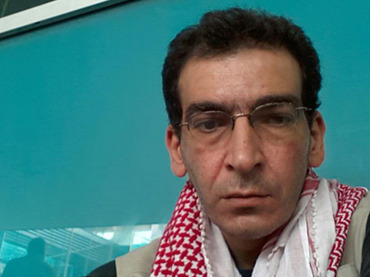
In their fervent struggle, a Syrian rebel group has “arrested” a Lebanese journalist in Aleppo saying his “presence as a journalist no longer receives approval in areas controlled by the rebels.”
Fidaa Itani, who works for the Lebanese Broadcasting Corporation (LBCI) and several other news outlets, was travelling though Aleppo under protection of a rebel group when he was arrested and handed over to another rebel group which controls a small town some 30km away from the besieged port-city.
The rebels said on their Facebook page they found Itani’s work “incompatible with the path of the Syrian revolution and rebels.”
They promised to free the reporter who is now in rebel custody “shortly” – after the necessary documents and information are acquired.
Itani was seized after he raised suspicions, taking pictures and videos of “large amounts of operations” in Syria’s second largest city. The content of his reports also seems to have fallen afoul of how the rebels want the popular uprising against Bashar Al-Assad’s government to be covered.
“Reports and videos have not proven yet Itani’s involvement with any party that works against the revolution, but his presence as a journalist no longer receives approval in areas controlled by the rebels,” the group said in a statement.
LBCI, as well as Lebanese MPs, are in contact with the group and their leader, Abu Ibrahim. They expect Itani to be set free in a couple of days.
Abu Ibrahim and the Azaz rebel group have abducted Lebanese nationals before. Eleven Lebanese pilgrims, who were returning from Iran through Syria, were kidnapped by the group in May. Only two of them have been released so far.
The rebels have used the term “detained” to describe the abduction of the journalist, but they in fact have committed “a criminal action” and “kidnapped” him, Manuel Ochsenreiter, editor-in-chief of the German monthly news magazine Zuerst, told RT.
“Indeed this is an alarming development but this is not new,” he said. “He is not the first journalist to have been kidnapped in Syria. We see a huge number of journalists that were killed by the rebels in Syria, who were killed by the Al-Qaeda related groups. I just want to remember the journalists of the Syrian TV channel, Syrian News TV where some journalist were killed and where the building was attacked at the end of June this year.”
At the same time the Syrian government does not prevent journalists making reports that disagree with the official line, says Ochsenreiter, who himself had visited Damascus during the conflict.
“I was in Damascus and what I can say is that I met a lot of journalists who were not filing reports consistent with the official line of the Syrian government’s cause and they were not detained, they were not kidnapped, they were free to work in the country,” he said. “So, you see that there is a huge difference how journalists work in Syria and there is a monster huge difference in the risk.”
Itani was kidnapped just hours after the release of a video in which Al-Qaeda leader Ayman al-Zawari had called for Muslims to kidnap Westerners as a bargaining chip, to win the release of its members held captive around the world. In a new video posted online he also urged Islamists to support Syrian rebels with “all that they can.”
This is not the first time that a foreign reporter has gone missing in the Arab country since it plunged into civil unrest in March 2011. In one of the most recent incidents, Ukrainian reporter Anhar Kochneva disappeared several weeks ago and has not yet been freed. In total, according to the Committee to Protect Journalists, three international reporters remain unaccounted for in Syria, while over 20 have been killed adding to more than 20,000 casualties suffered by Syria.
Turkey Continues Grounding Syria Bound Flights
Fars News Agency | October 15, 2012
TEHRAN – Turkey grounded a Syria bound Armenian passenger flight to inspect its cargo after a similar move last Wednesday angered Damascus officials who retaliated against the forced landing of the Moscow-Syria flight in Ankara by closing their airspace to all Turkish airliners.
Turkish authorities are searching the Armenian aircraft traveling from Armenia to Syria after it landed in the Eastern city of Erzurum.
Ankara had reportedly demanded, in advance, the on-the-ground cargo inspection in Erzurum as a condition of flying through Turkish airspace.
“There was nothing extraordinary about it. Turkish security forces are currently searching the cargo,” Air Armenia head Arsen Avetisyan told Interfax news agency.
The cargo plane is carrying humanitarian aid to Aleppo.
This incident comes days after the Turkish military forced a Syrian plane traveling from Moscow to Damascus to land in Turkey. Ankara claimed that the civilian aircraft was transporting weapons to Syria. Authorities seized equipment they found in the plane’s luggage before allowing it to resume its flight.
The equipment was spare parts for radar, not weapons, Russian Foreign Minister Sergey Lavrov said. The components were legally purchased in Russia, and were being delivered to the buyer in Syria.
Turkey and Syria denied each other the use of their respective airspaces after the incident.
Iranian hostages can be freed through talks with West’s 3 proxies
By Sabah Zanganeh | Mehr News Agency | October 13, 2012
TEHRAN — The practice of taking hostages is a serious crime that violates all accepted humanitarian principles.
The kidnapping of 48 Iranian nationals in Damascus in early August by an armed terrorist group is a clear example of this issue.
Senior commanders of the Free Syrian Army (FSA) have repeatedly declared that they will free the Iranian nationals if the Iranian government uses its influence over Damascus to obtain the release of jailed rebels. The fact that the FSA is trying to take advantage of the friendly relations between Iran and Syria is nothing new. However, the group must understand that the rebel prisoners are being detained by the Syrian government and the authority to release them is in the hands of Syrian President Bashar al-Assad not Iran.
The FSA has claimed that it is fighting for democracy and the establishment of a free and humanitarian society. However, the threats to kill the Iranian citizens have clearly revealed the true nature of the group to the Syrian people. What would the fate of Syria be if it came under the rule of such terrorists?
Certain Western governments and their regional proxies, namely Turkey, Qatar, and Saudi Arabia, continue to support the FSA and other opposition groups in Syria. Iran is strongly opposed to the policy adopted by these governments and regards it as the main cause of the intensification of violence in Syria. However, the Iranian government should engage in talks with these governments to obtain the release of the hostages.
Even if the FSA kills the Iranian nationals, it will have no effect on the friendly relations between Iran and Syria. But it would seriously harm diplomatic relations between Iran and the three governments supporting the insurgency in Syria. And if the hostages are killed, it would encourage terrorist groups in other countries to use the same methods to realize their malevolent objectives.
Sabah Zanganeh is a political analyst based in Tehran.
Related articles
- Majority in Turkey against war with Syria: Opinion poll (alethonews.wordpress.com)
- FSA threaten to kill Iranian hostages if rebels not freed (rt.com)
Majority in Turkey against war with Syria: Opinion poll
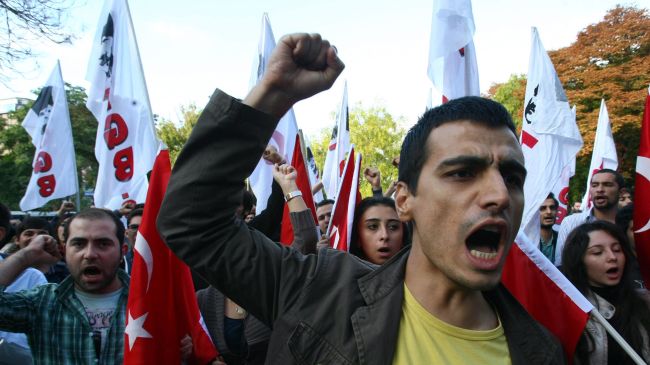
An anti-war protest was held in the Turkish capital Ankara on October 9, 2012
Press TV – October 14, 2012
A recent opinion poll has revealed that more than 75 percent of the Turkish people are against a war with neighboring Syria.
The opinion poll was conducted by Metropol, an agency close to the Turkish government, and surveyed 3,000 respondents.
Analysts believe that this majority is increasing further and there is a sharp mismatch between the government’s policies and the Turkish public opinion.
This comes as massive anti-war protests have taken place in many Turkish cities during the past weeks.
The row between Turkey and Syria escalated after Ankara held Damascus responsible for a mortar shell that killed five civilians in the southeastern town of Akcakale on October 3.
Ankara promptly responded with retaliatory fire that continued through the next days, and Turkish lawmakers also authorized the government to use military force against Syria when it deemed necessary.
Tensions have been running high between Syria and Turkey, with Damascus accusing Turkey along with Saudi Arabia and Qatar of backing a deadly insurgency that has claimed the lives of many Syrians, including security and army personnel.
Turkey has beefed up its military presence on its border with Syria over the past weeks, stationing tanks, anti-aircraft missiles, and additional troops in the area.
Turkish Prime Minister Recep Tayyip Erdogan warned on October 9 that Turkey’s armed forces would not hesitate to strike back in response to any attack on the Turkish soil after Turkey’s parliament authorized cross-border military action against Syria “when deemed right” On October 4.
Humanitarian Buffer Zones in Syria — How misinformation obscures the Israel lobby’s influence on U.S. foreign policy
By Maidhc Ó Cathail | The Passionate Attachment | October 15, 2012
A recent Russia Today report offers an insight into how misinformation on the internet helps to obscure the influence of the Israel lobby on U.S. foreign policy. In an October 11 report on the widening Syria conflict, the Russian television channel’s website cited an interview with an independent journalist regarding news of the establishment of so-called humanitarian buffer zones on Syrian territory. According to the RT report, citing Nile Bowie, the idea originated with “US hawks”:
“The US think-tank – the Brookings Institute – in March 2012 published a report entitled ‘Assessing Regime Change Options in Syria,’ where they specifically cite the creation of a buffer zone or a humanitarian corridor as a means to base certain rebel groups in the region [and] to project force towards the Syrian government in an attempt to topple it. So that appears to be what is playing out at the moment.”
The facts above are basically correct. There is, however, a crucial omission. The report in question — actually entitled “Saving Syria: Assessing Options for Regime Change” — was the work of the Saban Center for Middle East Policy. The Saban Center was established in 2002 when Israeli-American media mogul Haim Saban pledged nearly $13 million to the Brookings Institution. As Saban told an Israeli conference in 2010, establishing think tanks — along with making donations to political parties and controlling media outlets — is one of “three ways to be influential in American politics.” The billionaire’s sole motivation for wanting to influence policy in Washington is no secret. “I’m a one-issue guy,” Saban famously told the New York Times, “and my issue is Israel.”
It’s also worth noting that at least one of the co-authors of “Saving Syria” appears to share Haim Saban’s overriding concern for Israel. In 2006, Kenneth Pollack, currently director of the Saban Center, was mentioned in the indictment against Steven J. Rosen and Keith Weissman as one of the government officials who provided classified information on Iran to the then AIPAC employees charged with espionage.
Nile Bowie’s omission of the Israeli source of the regime change proposals for Syria appears to have been unintentional though. As recently as September 24, the Kuala Lumpur-based American journalist wrote about the pro-Israel connections of U.S. groups supporting the Malaysian opposition. So how did he miss the equally blatant Israeli connection behind the Saban Center’s blueprint for regime change in Damascus?
Bowie most likely learned of the Brookings report from “an alternative news blog based in Bangkok, Thailand covering geopolitics.” Run by a former U.S. marine by the name of Tony Cartalucci, the Land Destroyer blog (the second of ten sites linked to by Bowie’s blog) has written about “Assessing Options for Regime Change” perhaps more often than any other source. One of those pieces posted on October 3 entitled “Turkey Attempts to Trigger War Vs. Syria” even features an image of the Saban Center’s “Saving Syria.” The caption underneath the image, however, reads:
The Brookings Institution, Middle East Memo #21 “Assessing Options for Regime Change (.pdf),” makes no secret that the humanitarian “responsibility to protect” is but a pretext for long-planned regime change.
Apart from the Saban Center logo in the image, there is no mention of the pro-Israel think tank in the piece. While a site search for “Brookings” yields eight pages of results, there appears to be only one post that refers to the “Saban Center.” A search for “Haim Saban” yields no results.
In short, as long as people continue to trust dubious “alternative” sources of news such as Land Destroyer Report, the key role of the Israel lobby in pushing regime change from Damascus to Kuala Lumpur will remain obscure.
Maidhc Ó Cathail is an investigative journalist and Middle East analyst. He is also the creator and editor of The Passionate Attachment blog, which focuses primarily on the U.S.-Israeli relationship.
Featured Video
No Vote, No Representation, No State: Democracy, Israeli Style
or go to
Aletho News Archives – Video-Images
From the Archives
Sanctions, War and the Policy of Dual Containment
By SASAN FAYAZMANESH | March 17, 2008
It is now nearly three decades since the Unites States adopted the policy of dual containment of Iran and Iraq. While much has been written about the containment of Iraq, there has been very little in-depth analysis of this policy when it comes to Iran. In a book that is going to be released on March 31, 2008, entitled The United States and Iran: Sanctions, Wars and the Policy of Dual Containment (Routledge), I attempt to address this shortcoming by investigating when and why the US policy of containment of Iran came about, how it evolved, and where it stands today.[1] To the extent that Israel has been involved in US policy making, the study will also include the role that Israel has played in the containment of Iran. Also, since the fate of Iran has been inextricably linked to that of Iraq, occasionally the investigation will overlap with the containment of Iraq.
The policy of dual containment of Iran and Iraq originated during the Carter Administration, but it was not until the Clinton Administration that the expression “dual containment” became popular. … continue
Blog Roll
 Aletho News
- Elmo Sold mRNA Jabs to Your Toddler. Now They Are “Off-Label.”
- British state targets Palestine Action with yet another crooked trial
- Americans are paying the price to preserve Israel’s nuclear hegemony
- Resistance factions are necessary to ensure a permanent US Iraq withdrawal
- How Israel destabilizes the Middle East: Denying sovereignty and the right to exist
- Europe’s Establishment Is Embracing War – and Losing Voters
- NATO chief advocates war of aggression
- No Vote, No Representation, No State: Democracy, Israeli Style
- Zionist Bought Senate Blocks Information About American Citizens Killed By Israel
- While Gaza dominates the UN, these are the people keeping it alive
- If Americans Knew
- Israeli Soldiers Abduct At Least 22 Across Occupied West Bank
- Eight Palestinians Killed in Israeli Attacks on Gaza
- Israeli former leaders and security chiefs threaten legal action over ‘Jewish terrorism’
- Israel map in LA Times ad includes all land from the river to the sea
- Inside Lebanon’s 200-page dossier on Israeli war crimes
- Flydubai, genocide, settler violence, Trump abuse of power to deport – Daily Update
- Counting Antisemitic Incidents: What the ADL Audit Reveals — and Obscures
- Mamdani releases plan to combat antisemitism and hate crimes in New York City
- Iran’s Revolutionary Guards Publish Letter to the American People
- DMFI launches $1 million ad campaign supporting Virginia’s Elaine Luria
- No Tricks Zone
- Green Energy Debacle: German Expert Professor Fritz Vahrenholt Warns Of Severe Economic And Social Consequences
- Two More Paleo Reconstructions Affirm Meters-Higher Sea Levels Across Ireland, Brazil 7000-6000 Years Ago
- New Study: Earth And Venus Surface Warmth Largely Explained By Convection And Lapse Rate, Not CO2 Or Radiation
- 2025 Nature Paper Claiming Worsening Global Drought Gets RETRACTED …Heavily Flawed
- New Study: ‘Global Drought Shows No Detectable Recent Acceleration Under Climate Warming’
- Economic Masterminds: German Socialists Suggest Taxing Productivity Gains Stemming From Using AI
- The South China Sea Has Not Been Cooperating With The Climate Change Narrative
- Energy Crisis: Germany Enters Heating Season With Historically Low Gas Reserve Fill Levels
- New Study: The Antarctic Ice Sheet Gained Mass From 2020-2024 Due To Staggering Snow And Ice Accumulation
- Study: Ocean Heating Rates From Thousands Of Years Ago ‘Dwarf’ Modern Ocean Heating Rates

