US sponsored Kurdish SDF calls on Russia and Iran to prevent planned Turkish military operation
MEMO | July 17, 2022
The head of the Kurdish-led militant group Syrian Democratic Forces (SDF) has called on Russia and Iran to help prevent Turkiye from launching a military offensive against its positions in northern Syria, as the threat of a new Turkish operation continues to loom.
According to the AFP news agency, the SDF’s chief commander Mazloum Abdi urged the involvement of Moscow and Tehran against Ankara’s aims in the region this week, accusing the US-led global coalition to defeat Daesh – also known as Operation Inherent Resolve – of taking a “weak” position that is “insufficient to end the threats.”
In May, Turkish president Recep Tayyip Erdogan announced plans to launch a new military operation into the areas controlled by the Kurdish militias, which would be Turkey’s fourth such offensive in northern Syria. The operation is meant as an effort to clear the 30-kilometre-deep ‘safe zone’ in northern Syria from remaining Kurdish militant elements, in order to settle at least a million Syrian refugees there.
Abdi also reiterated that after negotiating with Russia, Kurdish militant forces allowed the Syrian regime of Bashar al-Assad to reinforce their troops in Kurdish-controlled areas, particularly in cities such as Kobane and Manbij in the north of the country. The threat of a renewed Turkish offensive had seemingly forced the SDF to strengthen ties with Assad, Russia, and now Iranian forces in an effort to repel Ankara’s planned operation.
Abdi’s call for Russian and Iranian assistance is likely more diplomatic than military, as it comes only days before a summit that is to be held in Iran from Tuesday, in which Iranian president Ebrahim Raisi will host Erdogan and their Russian counterpart Vladimir Putin in a renewed set of negotiations on Syria and the ongoing 11-year-long conflict.
If Moscow and Tehran heed the SDF’s call, they may be expected to attempt to discourage Ankara from its planned military operation.
Putin’s summits next week will strengthen ties with Iran, Turkey
BY M. K. BHADRAKUMAR | INDIAN PUNCHLINE | JULY 14, 2022
Kremlin spokesman Dmitry Peskov announced in Moscow on Tuesday that President Vladimir Putin will travel to Tehran on July 19, to take part in a tripartite meeting with his Iranian and Turkish counterparts as part of the Astana peace process to end the war in Syria as well as hold a bilateral meeting with Turkish President Recep Erdogan.
Such a summit was long expected but the pandemic and the Ukraine conflict delayed matters. The current impasse in Syria is fraught with risks. Turkey has plans to launch another military incursion into Syria’s northern border regions that are under the control of Kurdish groups, who, Ankara alleges, are linked to the separatist PKK and also happen to be Pentagon’s inseparable allies.
Damascus, Moscow and Tehran — and Washington — disfavour the Turkish move as potentially destabilising, but Erdogan is keeping plans in a state of suspended animation, while tactfully dialling down the threatening rhetoric and acknowledging he’s “in no rush.”
For want of green lights from its Astana partners, presumably, Erdogan is unlikely to launch the military incursion, but Russia and Iran are wary that the incursion could complicate their presence and political influence in Syria and risk confrontation between Turkish troops and Syrian government forces.
However, Syria apart, Putin’s trip has much wider ramifications. What transpires in his bilateral meetings with Erdogan and Iranian leaders are certainly the more important templates to watch. Clearly, Turkey and Iran are emerging as two of the most consequential relationships of Russian foreign policies and diplomacy. And Putin’s visit comes at a highly transformative period in the US’ approach toward both Turkey and Iran.
Erdogan’s hopes of a rapprochement with the US have been dashed as Greek Prime Minister Kyriakos Mitsotakis told reporters on June 30 that Athens had submitted a letter of request “in recent days” to the US government for a squadron of 20 F-35s, with options to buy an additional squadron. The Greek announcement came just a day after President Joe Biden had assured Erdogan on the sidelines of the NATO summit in Madrid that he backed the latter’s pending request for F-16s to Turkey.
Erdogan should have known that Biden’s long, successful career has been inextricably linked with the powerful Greek lobby in America, which is a big source of election funding for aspiring politicians. Therefore, Greece’s F-35 deal is certain to be approved and it could further drive a wedge between the already strained relationship of the US and Turkey — and will only reinforce Ankara’s suspicion that Washington is using Greece as a pawn to control Turkey. Conceivably, the deal could change the military balance in the Eastern Mediterranean, taking into account Greece’s alliance with Cyprus and Israel as well.
Suffice to say, Putin’s conversation with Erdogan comes at a time of uncertainties in Turkish-American relations. In immediate terms, therefore, the circumstances are most conducive for establishing a Black Sea naval corridor to export grain from Ukraine. There is a strategic convergence between Moscow’s keenness to prove it has not caused the global grain crisis, and Turkey’s desire to project its strategic autonomy, although a NATO member country.
Turkish defence minister Akar announced on July 13 that a consensus has been reached on the establishment of a coordination centre in Istanbul with the participation of all the parties, and the Russian and Ukrainian sides also agreed on joint control of the ships in both entering and exiting the ports as well as on maritime security. It is a signal victory for Turkish mediation. In the process, we may trust the strong relationship between Erdogan and Putin to harness fresh energy for deepening Turkish-Russian political-economic relations. Turkey has a unique role to play, as Moscow navigates its way around the western sanctions.
Equally, Putin’s talks with the Iranian leadership also have a big geopolitical setting. US President Joe Biden will have just finished his trip to Saudi Arabia, an event that impacts Iran’s core interests at a crucial juncture when the nuclear negotiations are adrift and Teheran-Riyadh normalisation talks have made progress.
US National Security Advisor Jack Sullivan’s theatrical disclosure on Monday of Iran supplying “several hundred UAVs, including weapons-capable UAVs on an expedited timeline” and of Russian personnel undergoing training in Iran in this connection, etc. appear to have been timed carefully.
The important thing to be noted here is that Sullivan’s story overlaps secret parleys reportedly between Riyadh and Jerusalem on defence technology exchanges, specifically related to Saudi concerns about Iranian drones!
Furthermore, Sullivan’s loose talk comes against the backdrop of the announcement by Israel last month of the formation of a mutual air defence coalition that is expected to involve, among others, the UAE and Saudi Arabia.
To be sure, Sullivan’s revelation right before Biden’s trip to Riyadh comes with a political aspect, as it puts pressure on Saudi Arabia to rethink both its blossoming relationship with Russia as well as its normalisation talks with Iran.
Moscow understands that Biden’s primary purpose in the Middle eastern tour is to put together a front against Russia and China. Indeed, Biden wrote in an op-Ed in the Washington Post last week on his Middle East tour, “We need to counter Russian aggression, be in a better position to win the competition with China, and work to strengthen stability in an important region of the world. To do this, we need to interact directly with countries that can influence the results of such work. Saudi Arabia is one of those countries.”
Biden hopes to bring Saudi Arabia into some sort of format with Israel beneath an overarching binding strategic defence cooperation pact that goes beyond anything the US has agreed to before. This, inevitably, requires the demonising of Iran as a common threat. Simply put, Biden is reviving a failed American strategy — namely, organising the region around the goal of isolating and containing Iran.
Indeed, if history is any guide, Biden’s idea of creating a collective security system is doomed to fail. Such attempts previously met with fierce resistance from regional states. Also, Russia has certain advantages here, having pursued a diplomacy with the regional states that is firmly anchored in mutual respect and mutual benefit, and predictability and reliability. During Foreign Minister Sergey Lavrov’s recent visit to Saudi Arabia, a certain understanding was reached, which Riyadh is unlikely to disown.
Indeed, Saudi Arabia and Russia have a convergence of interests with regard to the oil market. At any rate, expert opinion is that both Saudi Arabia and the UAE have very limited spare capacity. The expectation is that Saudi Arabia will most likely agree to loosen the oil taps on the back of the Biden visit, but the leadership will still strive to find a way to do it within the context of the current OPEC+ agreement (with Russia) that extends through December by, say, compensating for the production underperformance of struggling OPEC states such as Nigeria and Angola. (The OPEC+ capacity is already well below the level implied in the agreement.)
Fundamentally, as the executive president of Quincy Institute Trita Parsi noted recently, “any reduction in tensions between Saudi Arabia and Iran is a threat to the durability of the Abraham Accords… That means in order for Israel and Saudi Arabia and the UAE to continue to have enough strategic incentives to collaborate and have relations and all jointly forget about Palestinian suffering, there needs to be a threat from Iran. Otherwise the whole house of cards falls apart.”
Iran understands that the JCPOA talks are neither dead nor alive but in a comatose state, which may perish soon unless salvaged — depending on the degree of success or failure of Biden’s talks in Saudi Arabia. But all signs are that Tehran is pressing the pedal on strengthening the ties with Moscow. Its SCO membership is through, while it is now seeking BRICS membership. The compass for Iran’s foreign policy trajectory is set. Surely, from such a perspective, Putin has a lot to discuss in Tehran with the Iranian leadership as the new world order is taking shape.
Even with regard to Sullivan’s drone story, although Iran has issued a pro forma rebuttal, we may not have heard the last word. The fact of the matter is that Iran is among the top five world leaders in the development and production of UAVs that may interest Russia — Shahed strike systems, Mohajer tactical drones, various versions of Karrar reconnaissance and strike UAVs with range of 500-1000 kms, Arash kamikaze drones, etc. Interestingly, Iran’s MFA spokesman alluded to the existing framework of Iran-Russia military-technical cooperation that predates the war in Ukraine.
Moscow and Kiev agree to create a “coordination center” on grain exports in Istanbul
Samizdat | July 13, 2022
Russia and Ukraine have agreed to establish a joint coordination center on grain exports in Istanbul that will include representatives from all parties, Turkish Defense Minister Hulusi Akar told local media following the four-way talks that also involved Turkey and the UN.
On Wednesday, negotiators from Russia, Ukraine, Turkey and the UN met in the Turkish city to discuss the situation regarding the held-up Ukrainian exports.
Ahead of the meeting, Ukraine’s Foreign Minister Dmitry Kuleba said that Kiev and Moscow had been close to breaking the impasse on the issue.
“An agreement has been reached on technical issues such as joint controls at the destination points and … the safety of navigation on the transfer routes,” Akar told journalists. Russian and Ukrainian delegations “should meet again in Turkey next week,” he said, adding that the parties would “review all the details once again” during that meeting.
Ukraine is one of the world’s leading grain exporters. Yet, it has been unable to export its grain by sea due to the ongoing conflict with Russia. Kiev and Western nations have accused Moscow of preventing Ukrainian grain shipments from leaving the nation’s Black Sea ports. Russia has denied such accusations and, in turn, blamed Kiev for the crisis, arguing that its forces mined the Black Sea waters, thus creating a threat to the cargo ships.
The West has also accused Moscow of attempting to cause a global food crisis by supposedly blocking shipments of Ukrainian grain and “using hunger as a weapon.”
Last month, President Vladimir Putin said that Russia was not impeding exports and criticized the West for its “cynical attitude” towards the food supply of developing nations, which have been the most affected by the soaring prices. Moscow is ready to provide free passage to international waters for ships carrying grain, he added.
Russia responds to reports Turkey detained its ship
Samizdat | July 6, 2022
Moscow has denied reports of Turkish customs seizing or arresting a Russian dry-cargo ship carrying grain near Karasu Port, as Ukrainian officials have claimed.
During a briefing on Wednesday, the deputy director of the Information and Press Department of the Russian Foreign Ministry, Aleksey Zaitsev, stated that the vessel, the Zhibek Zholy, was merely going through all the standard procedures before entering a port.
“According to Russia’s embassy in Turkey, the ship is currently in the roadstead of the port of Karasu and is undergoing standard procedures, including sanitary control,” Zaitsev stated. He further explained that based on the results of these inspections, the Turkish authorities will make a decision on whether or not to let the ship enter the port. Zaitsev noted that no matter the decision, there is absolutely no talk about detention or arrest of the vessel.
The ship’s crew members have also denied being arrested or detained by Turkish officials. Speaking to TASS on Tuesday, one member stated that none of the standard detention procedures have been carried out against the vessel, adding that it is at anchor due to bad weather.
“During a detention procedure, the ship is usually brought into the port under guard, meaning that it should specifically be done under the jurisdiction of Turkey’s guards if something really did happen. No arrest was made. The ship is simply at anchor due to weather conditions. A surveyor arrived on the ship, checked the cargo. This always happens,” the crew member explained.
Ukraine’s ambassador to Turkey, Vasily Bodnar, claimed on July 3 that Turkish customs, at the behest of Kiev, had arrested a Russian cargo ship allegedly carrying “stolen” Ukrainian grain.
According to Reuters, which cited unnamed Ukrainian officials, the Zhibek Zholy, which was traveling to the Turkish port of Karasu from the Russian-held Azov Sea port of Berdiansk, was allegedly loaded with around 4,500 tons of grain.
The outlet also reported that the Ukrainian Prosecutor General’s Office had previously sent a letter to Turkey’s Justice Ministry in late June insisting that the Zkibek Zholy had been involved in the “illegal export of Ukrainian grain,” and allegedly had 7,000 tons of cargo on board. Ukraine reportedly asked Turkey to inspect the vessel and seize samples of grain for forensic examination to determine its origin.
Neither Turkish customs officials nor the authorities in Ankara have given any official comments on the situation regarding the ship so far.
Grain exports by sea from Ukraine, a major producer, were undermined by the ongoing conflict in the country. Kiev has previously accused Russia of “stealing” its grain – which Moscow has denied.
Western nations have accused Russia of blocking the ports. Moscow has repeatedly stated it would guarantee safe passage for the grain shipments if Kiev clears its ports of mines. Ukraine has accused Russian forces of mining the Black Sea ports. Russia suggested exporting the grain through the Russian-controlled ports of Berdiansk and Mariupol.
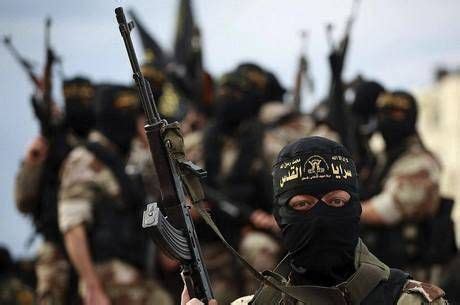
FBI rented Istanbul villa for Daesh suspects before alerting Turkish authorities, report reveals
MEMO | July 3, 2022
The United States’ domestic intelligence agency, the Federal Bureau of Investigations (FBI), is revealed to have rented a villa in Istanbul as a safe house for alleged members of the Daesh terror group, in a case that further proves the bureau’s use of entrapment methods.
According to the London-based news outlet Middle East Eye, a veteran undercover FBI operative named Kamran Faridi signed a tenancy agreement and paid the rent for a luxury villa on Istanbul’s seafront suburb of Silivri in 2015.
The property was then used as a safe house by several alleged members of Daesh, including a British man named Aine Davis, who is accused of being part of the terror group’s cell of British militants labelled the ‘Beatles’.
In November that year, Turkish security forces then raided the property arresting the six men hiding inside it. At the time, Turkish authorities hailed the interception of preparations for a major attack in Istanbul.
Almost seven years later, however, the news outlet’s report sheds light on the FBI’s involvement, citing court papers which show that Turkish prosecutors did not find evidence of any plot but rather that the raid was conducted after the bureau itself tipped-off Turkish authorities about a potential attack.
In a note dated April 2016, the prosecutors stated that “Sufficient evidence could not be obtained to file a public lawsuit… other than the intelligence report of a foreign country, which does not have the quality of evidence”.
While it is unknown whether Turkish officials knew of Faridi – the FBI operative – and his work for the bureau, Middle East Eye cited a source familiar with the matter as saying that the FBI approached Turkish officials in February 2016 to offer Turkish intelligence Faridi’s undercover services. According to the outlet, however, the officials rejected the proposal due to the operative already having been exposed.
Faridi – a 58-year-old of Pakistani origin who had worked for the FBI as an informant since the mid-1990s and then abroad numerous countries in the bureau’s Joint Terrorism Task Force during the two decades of the ‘war on terror’ – was reportedly fired from his service in 2020. He was then arrested and jailed the following year after sending death threats to his former superiors.
The former operative’s activities, however, especially in Istanbul as well as his work while being “loaned out” to other western intelligence agencies, is set to further draw light on the FBI and other agencies’ use of “entrapment” methods.
Under such methods, intelligence agencies attract, draw in, and recruit impressionable individuals to criminal or terrorist groups – or so the individuals are led to believe – before being set up, arrested, and prosecuted on charges of joining those groups. It has long been a controversial practice, but has been either denied or justified by agencies on the basis of rooting out potential terrorists.
As a result of that raid in 2015, Davis and two other suspected militants were convicted and jailed two years later on the charge of being part of Daesh – which they denied – while three other men arrested at the villa were released due to lack of evidence. According to the outlet, though, Davis is now scheduled to be deported from Turkey to the UK within days.
Turkey detains Russian-flagged vessel carrying grain – media
Samizdat | July 3, 2022
Turkey has seized a Russian-flagged cargo ship after Kiev claimed it was involved in “illegal” transport of Ukrainian grain, Reuters reported on Sunday, citing the Ukrainian Ambassador to Turkey, Vasily Bodnar.
“We have full co-operation. The ship is currently standing at the entrance to the port, it has been detained by the customs authorities of Turkey,” Vasily Bodnar told Ukrainian national television. According to the ambassador, investigators will decide on the vessel’s fate on Monday.
The move comes two days after Ukrainian diplomats called on the Turkish authorities to detain the vessel, the Zhibek Zholy, arguing that it was transporting “stolen” Ukrainian agricultural produce.
The ship departed from the Azov Sea port of Berdyansk, located not far from the city of Mariupol – which is controlled by Russian forces and Donbass militias – and arrived at the Turkish port of Karasu, Bodnar wrote in a series of Twitter posts on Friday, asking Turkey to “take relevant measures.”
The diplomat also said that the mission had “good communication and close cooperation” with the Turkish side on the matter, and he was sure the “agreed decisions” would “prevent attempts to violate the sovereignty of Ukraine.”
The ship allegedly loaded around 4,500 tons of grain in Berdyansk, Reuters reported, citing an unnamed Ukrainian official. The news agency also noted that the Ukrainian Prosecutor General’s Office sent a letter to Turkey’s Justice Ministry in late June, claiming the vessel had been involved in the “illegal export of Ukrainian grain.”
According to the letter, the vessel had 7,000 tons of cargo on board.
Ukraine then asked Turkey to “conduct an inspection of this sea vessel, seize samples of grain for forensic examination” to determine its origin, and expressed its readiness to launch a joint investigation with the Turkish authorities.
The Kazakhstan-based KTZ Express company, which owns the Zhibek Zholy, told Reuters that the ship was leased to a Russian firm called Green Line, which is not subject to any sanctions.
Russian authorities have not yet commented on the development.
Ukraine, a major grain producer, is unable to export its grain by sea due to the ongoing conflict in the country, with an estimated 22-25 million tons of grain currently stuck in the country’s ports. Kiev has previously accused Russia of “stealing” its grain – something Moscow has denied.
The Western nations have blamed Russia for blocking the ports. Moscow has repeatedly stated it would guarantee safe passage for the grain shipments if Kiev clears its ports of mines. Ukraine, in turn, has accused the Russian forces of mining the Black Sea ports. Russia suggested exporting the grain through the Russian-controlled ports of Berdyansk and Mariupol.
Turkey, NATO joined at hips but think differently
BY M. K. BHADRAKUMAR | INDIAN PUNCHLINE | JULY 3, 2022
Turkey has had an uneasy history as a NATO member country. The push and pull of strategic autonomy constantly grated against a security guarantee the alliance offered and also a way of reinforcing its Western identity. The West wanted Turkey because of the Cold War.
The enigma still continues: Was Turkey’s shift from neutrality to alignment a real necessity in 1951? Did Stalin indeed cast an evil eye on Turkish lands? Would any other Kemalist leader than Ismet Inounu, an unvarnished Euro-Atlanticist whose conception of modernisation implied cooperation with the West, have succumbed to the Anglo-American entreaties?
The relations between Turkey and the Soviet Union remained relatively calm during the period of Turkey’s admission to NATO. In November 1951, Moscow actually directed a note to the Turkish Government protesting the latter’s decision to participate in NATO, which asserted that “it is quite obvious that the initiation to Turkey, a country which has no connections whatever with the Atlantic, to join the Atlantic Bloc, can signify nothing but an aspiration on the part of imperialist states to utilise Turkish territory for the establishment of military bases for aggressive purposes on the frontiers of the USSR.”
The ideological aspirations in becoming an integral part — at least within the framework of a military alliance — of the Western world played a decisive role in Turkey’s decision in 1951, whereas, in reality, there was no imminent or explicit Soviet threat to Turkey. On the other hand, Turkey’s geographical importance to both the West and to the Soviet Union gave her a particular value in an East-West context, which, to her credit, Ankara would successfully leverage to its advantage through subsequent decades.
Curiously, this complex inter-locking in some ways bears an uncanny resemblance to the current accession of Sweden and Finland to NATO. Russian President Vladimir Putin must have alluded to it obliquely when he told the media Thursday on the sidelines of the Caspian Summit in Ashgabat:
“NATO is a relic of the Cold War and is only being used as an instrument of US foreign policy designed to keep its client states in rein. This is its only mission. We have given them that opportunity, I understand that. They are using these arguments energetically and quite effectively to rally their so-called allies.
“On the other hand, regarding Sweden and Finland, we do not have such problems with Sweden and Finland as we have, regrettably, with Ukraine. We do not have territorial issues or disputes with them. There is nothing that could inspire our concern regarding Finland and Sweden’s accession to NATO. If they want it, they can do it,… let them do it. You know, there are rude jokes about stepping into unsavoury things. That is their business. Let them step into what they wish.”
While returning from NATO’s Madrid Summit, Turkish President Recep Erdogan underscored that by lifting Ankara’s reservations about Sweden’s and Finland’s membership, he advanced Turkish interests and he added the caveat that their accession is far from a done deal yet, and future developments would depend on their fulfilment of commitments under the memorandum of understanding they signed in Madrid with Turkey.
Indeed, both Sweden and Finland have bent over backward to give Turkey extensive anti-terrorism assurances that require changes in domestic legislation in return for Ankara withdrawing its veto against accession talks. Erdogan insists that what matters are not their pledges but the delivery of those pledges.
It is a tough sell domestically for both Sweden and Finland, since one of the pledges is the extradition of 76 Kurds, deemed as terrorists by Turkey. This is easier said than done, as the courts in Stockholm and Helsinki may have their own definition of a “terrorist”.
The Turkish National Assembly’s ratification is a must for the Nordic countries’ admission to be formalised at NATO level. There is some speculation that US President Joe Biden incentivised Erdogan to compromise, but, make no mistake, the latter’s warning about compliance by Sweden and Finland — as also the audible rumblings already on the left in Sweden — are reminders that the issue is still wide open.
After all, North Macedonia had been a NATO partner country since 1995 but could become a NATO member only in March 2020. And Greece’s reservation was that the newly independent former Yugoslav republic wanted to be known as Macedonia whereas Athens saw the name as a threat to its own region of Macedonia — and ultimately, Greece won. In comparison, Turkey’s concerns are tangible and directly impinge on its national security.
Turkey was never a “natural ally” of NATO. How far Turkey subscribes to NATO’s latest strategic concept of Russia being a “most significant and direct threat” is debatable. Arguably, Turkey would feel more at home with the alliance’s 2010 doctrine that called Russia a “strategic partner.” This would need some explanation.
Professor Tariq Oguzlu, a leading exponent of the changing dynamics of Turkish foreign policies in recent years from a structural realist point of view, wrote an analysis last week titled Madrid Agreement and the balance policy in Turkish foreign policy, which was interestingly featured by Anadolu, Turkey’s state news agency. Oguzlu explained the rationale behind Turkey’s decision not to veto the two Nordic countries’ accession:
“Turkiye began to change its perspective on NATO a long time ago due to its strategic autonomy and multilateral foreign policy understanding… Considering the realist turnaround in Turkish foreign policy in the last three years, it is quite meaningful that Türkiye did not veto NATO enlargement.
“On the one hand, the second Cold War between the West and Russia narrows the room for maneuver in Turkish foreign policy, while on the other hand, it increases Türkiye’s strategic importance. The most important challenge for Turkish foreign policy in the coming years will be the successful continuation of Türkiye’s strategic autonomy-oriented multi-faceted foreign policy practices in an environment of deepening international polarisation.
“The balance policy pursued between the West and Russia is one of the most important strategic legacies left to the Republic of Türkiye from the Ottoman Empire. It is a strategic necessity for Türkiye, which has a medium-sized power capacity, to follow a policy of balance in order to achieve national interests. The policies adopted by Türkiye since the start of Russia’s war on Ukraine until now and the stance displayed at the last NATO summit in Madrid show that this historical heritage is embraced and successfully executed.”
To put matters in historical context, in 1920, Mustafa Kemal formally approached Vladimir Lenin with a proposal for mutual recognition and a request for military assistance. The Bolsheviks not only responded positively but by throwing in their lot with the growing movement of Turkish nationalists, they helped shore up the new Turkish state’s southern borders. In the period from 1920 to 1922, Soviet Russia’s military help to Ataturk was almost 80 million lire — twice Turkey’s defence budget!
In 1921 in Moscow, the two sides concluded the “Treaty of Friendship and Brotherhood”, which resolved the territorial disputes between the Kemalists and the Bolsheviks. The north-eastern border of Turkey established then remains unchanged to this day.
However, both Moscow and Ankara understood that cooperation between Turkish nationalists and Russian communists would be short-lived. Soon afterward, Turkey deserted Moscow’s camp, banned the communist party, and, during the Nazi invasion, looked for an opportunity to invade the Soviet Caucasus if the Red Army collapsed. Nevertheless, Ataturk never forgot the help that Soviet Russia provided in his hour of need.
A historical perspective is needed to understand the US’ manipulation of Turkey — and of Sweden and Finland in the present-day context. Biden is following President Harry Truman’s footfalls. Washington has used the very same Cold-War tactic to draw Sweden and Finland into the NATO fold as it employed 70 years ago with regard to Turkey.
Turkey reaches NATO deal with Finland and Sweden

Samizdat | June 28, 2022
Turkey will support inviting Finland and Sweden into NATO at the alliance’s upcoming summit in Spain, Finnish President Sauli Niinisto announced on Tuesday after a meeting with his Turkish counterpart Recep Tayyip Erdogan and Swedish Prime Minister Magdalena Andersson.
The three countries signed a memorandum of understanding at the meeting, organized with the support of NATO Secretary General Jens Stoltenberg.
“The concrete steps for our accession to NATO will be agreed among NATO allies over the next two days, but that decision is now imminent,” said Niinisto. “I am pleased that this stage on Finland’s journey towards NATO membership has been completed.”
According to Turkey, Finland and Sweden pledged to “condemn terrorism in all its forms” and end their support for organizations Ankara has designated as terrorist – including the Kurdish groups PKK and YPG, as well as the movement led by the exiled cleric Fetullah Gulen, which the Turkish government refers to as “FETO.”
“Turkey got what it wanted,” Erdogan said in a statement after the deal was announced.
Speaking at a press conference after the meeting, Stoltenberg said that Finland and Sweden will become observers in NATO at the upcoming summit. He added that the memorandum includes provisions on fighting terrorism and arms exports, including adopting stricter national legislation.
Finland and Sweden imposed an arms embargo against Turkey in 2019, over Ankara’s intervention in Syria. Turkey also reportedly demanded that Stockholm and Helsinki shut down the offices and ban the publications belonging to FETO, freeze the assets related to groups it has designated as terrorists, and even ban them from demonstrating in public.
Ankara’s opposition threatened to derail NATO’s plan to invite Sweden and Finland at the summit in Madrid which began on Tuesday. The two traditionally neutral Scandinavian countries declared their desire to join the US-led alliance in April, citing the current conflict in Ukraine.
Iran Dismisses ‘Ridiculous’ Allegations of Planned Attacks on Israelis in Turkey
Al-Manar – June 24, 2022
Iran dismissed Israeli accusations that it is allegedly plotting to target Israelis in Turkey as “ridiculous” on Friday.
In a tweet from Iran’s Foreign Ministry, spokesperson Saeed Khatibzadeh said that Lapid’s “baseless accusations” about such Iranian activity are “ridiculous” and part of a “pre-designed scenario to destroy relations between the two Muslim countries.”
“It is expected from Turkey not to remain silent in the face of these divisive allegations,” he said.
Khatibzadeh also stressed that Iran would respond forcefully to “assassinations and acts of sabotage by the Zionist regime” but “without threatening the security of civilians and the security of other countries.”
Turkey & Russia Suggest Path for Grain Ships to Access Ukrainian Ports
By Kyle Anzalone and Will Porter | The Libertarian Institute | June 16, 2022
Ankara and Moscow have put forward potential solutions to reopen Ukraine’s Black Sea ports, with Russia offering safe passage to ships while Turkey said it could help guide vessels around Ukrainian naval mines deployed to stall the Russian advance.
Russia’s UN Ambassador Vassily Nebenzia told reporters on Wednesday that the Kremlin is open to creating a “safe passage” for grain shipments, but said Moscow could not guarantee a route that would be free of mines
“We are not responsible for establishing safe corridors. We said we could provide safe passage if these corridors are established,” he said. “It’s obvious it’s either de-mine the territory, which was mined by the Ukrainians, or ensure that the passage goes around those mines.”
While Turkey has said it would “take some time” to clear away the munitions, Foreign Minister Mevlut Cavusoglu suggested safe corridors could be found in some Ukrainian ports, presenting the offer as a short-term solution.
“Since the location of the mines is known, certain safe lines would be established at three ports,” the FM said earlier on Wednesday, adding that ships could “come and go safely to ports without a need to clear the mines.”
Cavusoglu went on to say that Ankara has not received a response from the Kremlin on the proposal, but is currently working with the United Nations on a plan. UN spokesman Stephane Dujarric confirmed that discussions were underway, though noted that an agreement from both Ukraine and Russia would be needed to move forward.
Turkey’s National Defense Minister Hulusi Akar, meanwhile, told TRT that the three nations recently created an “emergency communication mechanism” to resolve the problem and reopen Ukraine’s ports, but it’s not yet clear whether any progress had been made in negotiations. Last Sunday, President Recep Tayyip Erdogan also announced that he plans to hold a three-way dialogue on the issue with his Russian and Ukrainian counterparts sometime in the coming weeks, after Ankara hosted several rounds of lower-level peace talks.
Kiev, however, has signaled that it will not accept the Russian or Turkish proposals. Speaking at an event in Washington on Wednesday, David Arakhamia, a lawmaker and the head of Ukraine’s negotiation team, said “Our military people are against [de-mining the ports], so that’s why we have very, very limited optimism for this model.”
The UN has warned that the disruption of grain exports from Ukraine could have a massive impact on global food supplies. Together, Moscow and Kiev provide up to 40% of Eastern Europe’s grain purchases, and make up an even greater part of some countries’ total imports.
While Ukrainian and American officials have repeatedly blamed Russia for the shortages, Moscow has rejected the charge, instead pinning the scarcities on US sanctions and the explosives still deployed at key Ukrainian seaports. The Kremlin previously offered to help establish a safe route for shipping vessels in exchange for sanctions relief, but Washington refused to take up the deal.
The US and its Western partners have attempted to cripple the Russian economy through heavy sanctions in response to the invasion, some pledging outright embargoes on the country’s energy exports. While the penalties initially sent the ruble tumbling, it has since made a significant comeback and is now among the best performing currencies against the dollar in 2022. Meanwhile, the White House is now quietly pushing US shipping companies to do business with Russian fertilizer suppliers.
The conflict raging in Eastern Europe has not severed all business ties between Moscow and Kiev, as Ukraine’s state-run Naftogaz has continued to work with its Russian equivalent, Gazprom. Though the two firms have reportedly done hundreds of millions of dollars in trade since the war kicked off in February, the shaky truce could soon fracture, as Naftogaz is now pursuing a lawsuit against Gazprom for alleged underpayment.
All of Greece turned into ‘huge US base,’ Greek lawmaker warns
Press TV – June 15, 2022
The Greek government has turned the whole country into a “huge US base,” a local lawmaker warned on Tuesday, amid attempts by Washington to expand its access to military zones across the European country.
Kleon Grigoriadis, in a speech in the Greek parliament on Tuesday, lambasted the government of Prime Minister Kyriakos Mitsotakis over its foreign policy for allowing the United States to turn the whole of Greece into a massive American base.
“At the moment, American soldiers, not Turkish soldiers, are wandering in Crete, Alexandroupoli, Larisa, and other areas left by (the left-wing party) Syriza’s old comrades to the United States. Let’s be clear: Greece has now turned into a huge US base,” said the lawmaker, who is a deputy of the left-wing MeRA25 party,” he remarked.
Grigoriadis warned that an atmosphere of war with Turkey has been created in the press. He said Greek citizens have been intimidated by such a perception in an attempt to make acceptable the conversion of Greece into an American military base.
The lawmaker said the Greek people should learn from history lest their country turns into a tool for big powers.
“History shows that big powers use small powers as tools and use them for their own interests regardless of the pain they may cause, as in 1922,” Grigoriadis said.
Grigoriadis’s comments almost echoed last week’s remarks by Turkish President Recep Tayyip Erdogan, who objected to the presence of US bases in Greece.
“Currently, nine US military bases have been established in Greece. Whom have they been deployed against? They say that against Russia. But we won’t buy that,” Erdogan said at the time.
Turkey and Greece have been at loggerheads for years over hydrocarbon resources and naval influence in the eastern Mediterranean.
In May, Erdogan said there were nearly ten American bases in Greece, asking: “Who is being threatened with these bases? Why are these bases being established in Greece?”
Back in November 2021, he warned that Greece itself had become a US military base. “At the moment, I can’t count all the American bases in Greece, there are so many. … It almost looks like Greece itself is a US base.”
The Greek authorities recently seized a tanker carrying Iranian oil in its territorial waters, under US pressure. The oil cargo was later transferred to the US, a move denounced by Iran as an “act of piracy”.
On Tuesday, Iran’s Ports and Maritime Organization (PMO) said in a statement that an Iranian-flagged tanker seized in April was released by Greek authorities.
“The Greek government finally issued an order and we are now witnessing the lifting of the ship’s seizure and the return of its cargo to its owner,” it said.
Iran’s foreign ministry had condemned the unacceptable surrender of Greece to Washington’s illegal pressure and reiterated that the seizure was an example of international piracy.
The seizure of the Iranian oil tanker took place at a time when the US administration claims it seeks the revival of the Joint Comprehensive Plan of Action (JCPOA), commonly known as the Iran deal. So far, talks for the revival of the 2015 deal have come to a standstill.
Days after the seizure, Iran’s Islamic Revolution Guards Corps (IRGC) seized two Greek oil tankers in the Persian Gulf over violations.
Europe looks to Israel for natural gas
Samizdat | May 16, 2022
Deliveries of Israeli natural gas via Turkey to Europe are being considered as an alternative to Russian energy supply, Turkish newspaper Yeni Şafak reported on Monday.
“Israeli gas is considered as an option, its route is planned via Turkey, through the Eastern Mediterranean,” the paper reported, adding that, in case of such an agreement, “it is expected that the Turkish ship will be on duty during transmission periods.”
The report also highlighted that “focusing on deep-water drilling for the extraction of oil and natural gas from the seas, Turkey has included a fourth drilling vessel in its fleet.”
The new drilling ship, which left South Korea on March 7, is expected to arrive in Turkey on May 19. “A new generation ship that will serve in the Eastern Mediterranean, will begin its first mission in July after two months of preparatory work, it will facilitate deep-sea exploration and dredging in the Mediterranean,” the newspaper said.
The ship can reportedly operate at depths of up to 3,600 meters, and is capable of drilling up to 12,200 meters.
In March, media reported that a Turkey-Israel gas pipeline was being discussed behind the scenes as one of Europe’s alternatives to Russian energy. The idea, first conceived years ago, is to build a subsea pipeline from Turkey to Israel’s largest offshore natural gas field, Leviathan. Gas would flow to Turkey and on to southern Europe looking to diversify away from Russia.
Industry officials, however, have warned of production restraints and geopolitical factors that could leave the plan dead in the water. Lebanon has claimed that the gas field extends into its waters.
Featured Video

Iran spent $1 million to wipe out $30 billion in data center plans, and take down Amazon in the ME
or go to
Aletho News Archives – Video-Images
From the Archives
A short history of British torture
ICC | December 2005
When the House of Commons was debating how much to increase the time limit for detention without trial the question of torture came up. Officially this was limited to the nice considerations of whether it was all right to send people to places where torture is used and whether Britain can use information collected by the use of torture in other countries. This discussion gave an impression of democratic Britain as the home of civilised behaviour where the very idea of torture is repugnant to our legislators – unlike, say, the US with its secret CIA jails… In reality, the British state has a long history of using and developing a whole range of torture techniques. … continue
Blog Roll
 Aletho News
- Iran spent $1 million to wipe out $30 billion in data center plans, and take down Amazon in the ME
- Zionist billionaire pressure to silence Macklemore sparks exodus from Ed Sheeran tour
- House Votes to End Iran War for Third Time
- North Korea Slams US Plan for ‘AUKUS 2.0’ with South Korea and Japan
- Prolonging US-Iran Conflict Not Meeting Interests of Int’l Community – China’s Wang Yi
- EU bans former Zelensky aide from parliament
- NATO-backed Kosovo separatist ‘responsible for war crimes’
- US destroying international space law
- SCO Calls for Binding Global Deal to Prevent Arms Race in Space
- Iran & Its Allies Are Threatening Every Route for Saudi Oil
- If Americans Knew
- U.S. Makes, Israel Takes: The Real Story of U.S.-Israeli Military Cooperation
- Night raids rise in Palestine
- Tucker Carlson interviews Norman Finkelstein about Gaza
- Groups urge Americans to support Van Hollen legislation on Israel’s killing of Americans & Palestinians
- Trump administration plans to send 40,000 tons of bombs to Israel: report
- Sanctions Target Iran’s Government, But Kill Hospitalized 23-Year-Old Woman
- An alternative view on the book “Israel’s Lobby: America in the Grip of a Foreign Power”
- Ed Sheeran’s band Beoga, other opening acts quit tour after Macklemore was dropped over his pro-Palestinian comments
- The assassination attempt on President Trump in Butler and the various Israeli connections to it
- “We Want That the Whole Land Be Jewish”
- No Tricks Zone
- New Study: ‘Global Drought Shows No Detectable Recent Acceleration Under Climate Warming’
- Economic Masterminds: German Socialists Suggest Taxing Productivity Gains Stemming From Using AI
- The South China Sea Has Not Been Cooperating With The Climate Change Narrative
- Energy Crisis: Germany Enters Heating Season With Historically Low Gas Reserve Fill Levels
- New Study: The Antarctic Ice Sheet Gained Mass From 2020-2024 Due To Staggering Snow And Ice Accumulation
- Study: Ocean Heating Rates From Thousands Of Years Ago ‘Dwarf’ Modern Ocean Heating Rates
- Climate Extremists Target, Attack Large-Scale Power Grid Infrastructure In Germany!
- New Study: Antarctic Ice Melt Has Contributed Less Than 1 Centimeter To Sea Level Rise In The Last 30 Years
- Fear Of Debate: Alarmist German Climate Scientist Calls On Mainstream Media To Discredit Skeptic Voices
- End-Of-August Arctic Sea Ice Extent Hasn’t Fallen In 20 Years, Official Data Show!
 Aletho News