Washington moves to annex north-east Syria by proxy

By Vanessa Beeley | May 14, 2022
Under cover of media focus on the NATO proxy war in Ukraine and the Zionist assassination of Al Jazeera senior correspondent Shireen AbuAkleh, Washington is making moves to annex Syrian territory.
On May 11th during the meeting of the “global coalition against Islamic State” in Marrakech, Morocco the U.S acting assistant Secretary of State, Victoria Nuland, made an extraordinary move that has largely gone under the radar of even independent media. Everyone is distracted by events in Ukraine and the Palestinian Occupied Territories.
Nuland who famously exclaimed “Fuck the EU” during recorded conversations that exposed the US State Department involvement in the 2014 coup in Ukraine and the subsequent massacre in Odessa by the Washington’s Nazi Contras is now turning her attention to Syria’s north-eastern territory.
Nuland has announced that the US will allow foreign investment in north-east Syria under the control of the Kurdish Separatists, another US Coaliton proxy in Syria. These investments will not be affected by the unprecedented sanctions that are effectively blockading Syria.
The most savage of these economic measures were introduced under the Trump administration – the Caesar sanctions that are designed to inhibit any external assistance for Syria from within the Syrian alliance, including Russia and Iran.
The Caesar Syrian Civilian Protection Act is also fraudulent by claiming to “protect civilians”. In reality, it is punishes and hurts the vast majority of 17 million persons living in Syria. It will result in thousands of civilians suffering and dying needlessly. – Rick Sterling
Needless to say that the de-facto unilateral sanctions being applied as a collective punishment for the entire Syrian population living in areas protected by the Syrian government are illegal. To extend those sanctions to sovereign nations providing assistance to rebuild Syrian infrastructure is barbaric and a deliberate attempt by the US to ensure that Syria cannot recover from the eleven year war waged against it.
The correlation between economic and military coercion in Syria was made clear by previous Secretary of State, Mike Pompeo’s point-man on Syria, Ambassador James Jeffrey, who not only described Al Qaeda as a “US asset” in Syria but also bragged openly about the misery that sanctions had brought to the Syrian people:
And of course, we’ve ratcheted up the isolation and sanctions pressure on Assad, we’ve held the line on no reconstruction assistance, and the country’s desperate for it. You see what’s happened to the Syrian pound, you see what’s happened to the entire economy. So, it’s been a very effective strategy….
Journalist Rick Sterling also pointed out the illegality and brutality of the Caesar sanctions:
The US has multiple goals. One goal is to prevent Syria from recovering. Another goal is to prolong the conflict and damage those countries who have assisted Syria. With consummate cynicism and amorality, the US Envoy for Syria James Jeffrey described his task: “My job is to make it a quagmire for the Russians.”
Nuland said Washington would issue a general licence, which frees companies from U.S. sanctions restrictions in north-east Syria.
“The United States intends in the next few days to issue a general license to facilitate private economic investment activity in non-regime held areas liberated from ISIS in Syria.”
The irony here of course is that ISIS is in reality another proxy of the US Coalition that had benefitted from the oil resource revenue prior to the occupation of the oil fields by the Kurdish Contras. There is also a degree of collaboration mired in corruption between the Kurdish Separatists and ISIS both focused on the ethnic cleansing of the north-east to make way for an “autonomous region” effectively controlled by Washington, London and Israel. As Syrian researcher, Ibrahim Wahdi, wrote back in February 2022:
We can clearly see that the largest organized smuggling and mass transfer of ISIS militants towards the Syrian Badia connected with the Iraqi border north of Al-Tanf region, which coincided with the Ukraine crisis and the negotiations of the Iranian nuclear deal, aims to trigger chaos by CIA and Israeli intelligence through reviving ISIS to keep it as a pretext for the US occupation of Syrian lands.
Nuland’s claims that investment in areas “previously held” by ISIS are “needed to prevent a resurgence of Islamic State by allowing it to recruit and exploit local grievances” is hypocrisy of the highest order. Washington and London are recruiting, arming and equipping ISIS terrorists and embedding their fighters in areas of the Badia desert (East of Homs) where they can do the most damage to Syrian Arab Army installations and convoys – this includes the disruption of the meagre oil supply to Damascus from the north-east. As Wahdi pointed out:
The danger of the ISIS card lies in the large numbers distributed among 9 prisons in the US-backed SDF-controlled areas, which are potential targets for similar attacks [to release ISIS terrorists], especially the “Kamba Al-Bulgar” prison, east of Al-Shaddadi city in the southern countryside of Hasaka, which includes 5,000 ISIS militants.
In addition to Al-Sina’a prisons, Al-Shaddadiyah, Derek/ Al-Malikiyah, Al-Kasra, Al-Raqqa Central Prison, Rmelan and Nafker in the Qamishli city, from which 60 ISIS militants were transferred to a prison in Al-Hasakah last September.
Both ISIS and the Kurdish Contras are responsible for the theft of oil from Syria. Al Qaeda has the monopoly of the processing of the stolen oil via its WATAD organisation. The US Coalition has a vested interest in bringing the Syrian population to its knees and to stir up dissent against the Syrian government that has trashed the Coalition military plans for regime change.
The war against Russia in Ukraine is also revenge for Russia’s role in genuinely fighting ISIS in Syria and forcing the terrorist entity to withdraw to the north-east and Iraq where it is equally responsible for the destruction of civilian infrastructure in particular electrical installations to further punish any Iraqi resistance to US occupation.
Nuland and Washington are deliberately enflaming local grievances and enabling ISIS recruitment and expansion.
Not only will these sanction-free licences apply to the Kurdish Contras but the Turkish backed militia occupying the northern border zones of Syria will also be included in the deal. This means that Syrian territory will be de-facto annexed by these NATO-member-state proxies including Al Qaeda (Turkey) and affiliates.
According to a diplomat who has discussed the issue extensively with U.S officials, the licence will apply to agriculture and reconstruction work but not to oil. I guess there is no need to include oil as that is already considered a U.S benefit of the war they started in 2011. After all Trump said very clearly “we’re keeping the oil – I’ve always said that — keep the oil. We want to keep the oil, $45 million a month. Keep the oil. We’ve secured the oil.”
If the licence will apply to reconstruction and agriculture, this will legitimise the building of settlements and the continued theft (by the Kurds) of Syrian agricultural produce in the region, the occupation of the wheat storage centers and the reduction in supply to Damascus of these essential resources. Essentially doubling down on the siege of the Syrian people who are already suffering severe food insecurity, poverty, fuel and energy deprivation on a terrible scale.
The act of withholding means of sustaining life to innocent civilians in order to coerce an entire nation into submission to foreign agendas in the region must surely qualify as economic terrorism. The destruction of essential civilian infrastructure is a war crime, the withholding of essential resources or occupation of those resources is also a war crime. One could argue that the US Coalition is responsible for genocide in Syria under Genocide Convention article II (e) – deliberately inflicting on the group, conditions of life calculated to bring about its physical destruction in whole or in part”.
When Washington talks about “stabilisation” activities in the areas its “allies” took from Islamic State they are lying. Its “allies” are being led to believe they will benefit from cooperation with the U.S. In reality they are useful tools to facilitate the U.S and Israeli agenda in the region – to balkanise Syria and above all to secure the illegal US Al Tanf military base in the south-east (bordering Jordan) to prevent the linking of the Resistance Axis from Iran to Lebanon and ultimately Palestine. To protect “Israeli security” in the region.
The organised smuggling and transfer of ISIS terrorists towards the Syrian Badia connected with the Iraqi border north of Al Tanf is to maintain the CIA/MI6/Israeli chaos strategy in Syria and to justify US occupation of Syrian territory under the faux ISIS pretext.
What Nuland is proposing is a step forward for Washington in the annexation of Syria’s most resource rich territory. It is annexation by proxy. Turkey will also benefit from these licence schemes and will further embed its Al Qaeda-led militia in the northern border areas thus ensuring permanent insecurity for Syria to the north.
Arabs, Assyrians and Armenians will necessarily be ethnically cleansed from these zones to make way for these US-sanctioned settlements and it is common knowledge that the Kurdish Contras have been preparing for this for some time – banning the Syrian curriculum in schools and razing Arab houses in the area while forcing conscription onto local communities, running campaigns of kidnapping and detention.
Nuland informed coalition members in Marrakech that “Washington wanted to raise $350 million for these alleged “stabilisation” activities in north-east Syria during 2022. Iraq is also the target of the same “stabilisation” campaign. What Nuland really means is that Washington under cover of Ukraine will move to secure permanent violation of Syria’s territorial integrity while feigning outrage that Russia is violating the sovereignty of Ukraine already occupied by NATO and little more than Washington’s satellite vassal state on the border with its arch enemy Russia.
Assad renews Syria’s bonds with Iran
BY M. K. BHADRAKUMAR | INDIAN PUNCHLINE | MAY 9, 2022
The unannounced arrival of the Syrian President Bashar al-Assad to Tehran on Sunday makes yet another wrinkle to the geopolitics of West Asia. In a short trip of a few hours, Assad had meetings with Iran’s Supreme Leader Ali Khamenei and President Ebrahim Raeisi and returned to Damascus.
This is only the second trip by Assad to Iran in the past 11 years since the conflict erupted in Syria. The last occasion was in 2019, when he came accompanied by the charismatic commander of the IRGC’s elite Quds Force late Qassem Soleimani to mark Syria’s “victory” in the conflict. Much water has flowed down down the Euphrates and the Tigris since then.
There is some speculation that Russia may redeploy its forces in Syria. The Israeli intelligence website DebkaFile reported cryptically on Friday that “Russian units deployed to Syria are assembling at the air bases of Hmeimim, Qamishli, Deir e-Zor and T4, ready for some to transfer to the Ukraine warfront. DEBKAfile’s military sources report that the Russians are handing over key bases to Iran’s Revolutionary Guards and Hizballah.”
Prima facie, this is kite-flying, so to speak. There is no independent word from Moscow. Iran will be certainly in the loop on any big Russian troop withdrawal from Syria. The Turkish air space is closed to Russian [military] planes since April and on February 28 Ankara had restricted the passage of Russian warships through the Bosporus and Dardanelles Straits (unless they are returning to their bases in the Black Sea.)
Analysts have interpreted the Turkish decisions as “anti-Russian” but they come under the ambit of Montreux Convention (1936) and on closer look, may even work to Moscow’s advantage since the door is also closed to any NATO naval build-up in the Black Sea. Russian papers have pointed out that Moscow has been using the air corridor via Iran and Iraq to supply its troops in Syria.
Indeed, Turkey is doing a delicate trapeze act vis-a-vis Russia and Ukraine, being a Black Sea power with overlapping security concerns, while also a NATO power. Turkey has deftly created space to manoeuvre since NATO is technically not at war with Russia, and since Turkey is not a EU member country, it isn’t obliged to sanction Russia, either.
Turkish leadership has actively nurtured contacts with the Kremlin, and the economic partnership continues, including over the construction of the massive $20 billion Akkuyu Nuclear Power Plant (comprising four 1,200 MW VVER units), which is expected to meet ten percent of Turkey’s electricity demand when it is completed in 2025.
Again, Russian carrier Aeroflot has just resumed flights to Turkey in anticipation of the tourist season. Believe it or not, Turkey has found an ingenuous formula to allow Russian tourists to travel to Turkey bypassing the suspension of Visa and Mastercard by making it possible to access their funds through Russia’s homegrown payments system called Mir! Some 4.7 million Russian tourists visited Turkey last year, accounting for 19% of the total tourist arrivals, fetching an annual income exceeding $10 billion.
When it comes to Russian-Iranian relations too, the picture is broadly similar to India’s — neither supporting Russia nor opposing it while refusing to censure Russian intervention and counselling ceasefire and dialogue as the only solution.
According to Iranian media reports, Russia’s Deputy Prime Minister Alexander Novak is due to visit Iran shortly in connection with the session of the Iran-Russia Joint Economic Committee. The discussions are expected to focus on “strengthening financial cooperation and resolving transit problems” between the two countries as well as cooperating in the fields of oil and gas and promoting trade and tourism. Tehran knows that such camaraderie with Moscow is contrary to the spirit of Western sanctions.
Moscow has every intention to remain actively involved in Syria. Special Russian Presidential Representative for the Middle East and Deputy Foreign Minister Mikhail Bogdanov disclosed to Tass last week that Russia is working on scheduling the next international meeting on Syria in the Astana format for the end of May in Nur-Sultan, Kazakhstan. Does that look like Russia washing its hands off Syria? To quote Bogdanov, “We already discussed this with partners Iran and Turkey as the guarantors of the Astana process plus with the Syrian government and opposition delegations.”
The official Syrian news agency Sana described Assad’s trip to Tehran as a “working visit.” It quoted Assad as stressing to Khamenei about “the importance of continuing cooperation in order not to allow America to rebuild the international terrorist system that it used to harm the countries of the world,” adding that the US “is weaker than ever.”
There are four main takeaways from Assad’s talks with the Iranian leadership. First, Assad made it clear in no uncertain terms that no matter Syria’s normalisation with the UAE (or other Arab countries involved in the conflict), he continues to attribute the highest importance to Syria’s alliance with Iran. Assad underscored that Syria is ready for broader coordination with Iran in security, political and economic fields.
Second, Damascus needs Tehran’s help for finally freeing Syria from foreign occupation. Raisi told Assad, “The whole of the Syrian land must be liberated from foreign occupiers. This occupation should not be subject to the passage of time, and the occupying forces and their mercenaries should be expelled.” Sana cited Khamenei as stressing that Iran will “continue to support Syria to complete its victory over terrorism and liberate the rest of the country’s lands.”
Third, the two countries have a consensus on the effectiveness and vibrancy of the resistance front. Assad acknowledged that the weakening of the US’ influence in West Asia and the end of Israel’s military supremacy regionally is a direct outcome of the strategic relations between Iran and Syria, “which must continue with strength.”
Interestingly, Khamenei recalled that Soleimani had “a special liking towards Syria and literally sacrificed his life” for that country and viewed the issue of Syria as a “sacred duty and obligation”. Khamenei reminded Assad poignantly, “This bond is vital for both countries and we should not let it weaken. On the contrary, we should strengthen it as much as possible.” Raisi called Assad “one of the figures of the Resistance Front” like his father Hafez al-Assad.
Fourth, Assad sought and obtained assurances from the highest level of Iranian leadership that Iran will help Syria overcome its difficulties. This is particularly crucial at a juncture when regional politics is in flux and Russia is preoccupied in Ukraine.
A resuscitation of the US-led regime change project in Syria is not to be expected and Washington no longer wields commanding influence over its Persian Gulf allies or Turkey to get them to act as its surrogates. But Assad’s challenge is that Syria is getting relegated to the back burner as new hotspots and topical issues draw the region’s attention — such as JCPOA, Yemen, Iran-Saudi normalisation, OPEC+, etc.
Although the conflict has ended, Syria still remains under foreign occupation and its economy is in ruins. A frozen conflict may legitimise the status quo. Meanwhile, Israel is waiting in the wings. Assad’s visit to Tehran signals that Iran remains the mainstay of Syria’s future strategy to avoid such a dismal fate. Iran’s Foreign Minister Hossein Amir Abdollahian affirmed on Monday that Assad’s visit was held in an atmosphere of “fraternity and friendship,” and it opens a new chapter in the strategic ties.
Turkey accuses NATO members over Ukraine
Samizdat | April 20, 2022
Turkey wants to negotiate an end to the conflict in Ukraine, while some other NATO members would like to see it drag on as a way to harm Russia, Ankara’s Foreign Minister Mevlut Cavusoglu said on Wednesday in a TV interview. In a lengthy appearance on CNN Turk, Cavusoglu addressed Turkey’s decision not to sanction Moscow and why the Istanbul talks between Russia and Ukraine failed, among other things.
“There are countries within NATO that want the Ukraine war to continue. They see the continuation of the war as weakening Russia. They don’t care much about the situation in Ukraine,” Cavusoglu said.
While he did not name any names, US President Joe Biden said earlier this month that the conflict in Ukraine “could continue for a long time,” which was echoed by the former CIA chief of Russian operations.
German Chancellor Olaf Scholz said after a phone call with G7 leaders on Tuesday that the West is united in not allowing Russia to win and determined to “continue to arm the Ukrainian military so that it can continue to defend itself against [Russian] attack.”
Turkey has decided not to join the US-led sanctions against Russia because they are unilateral, unlike the “binding sanctions decided at the UN,” Cavusoglu told CNN Turk. Ankara articulated its position on the first day of the Ukraine conflict, which is to continue diplomatic contacts with both sides, as “a country that both sides trust.”
While Turkey did not expect much after the first Russia-Ukraine talks in Antalya, “hopes were high” after the follow-up talks in Istanbul, Cavusoglu revealed. However, Ukraine backtracked from the agreement reached there after images of the alleged massacre in Bucha, which Kiev blamed on Russian troops. Moscow has denied the allegations.
Cavusogly also shed light on Ukrainian President Volodymyr Zelensky’s demand for security guarantees from NATO.
“Nobody agrees with Zelensky’s request for NATO’s Article 5 guarantees,” the minister said, referring to the alliance’s famous mutual defense clause. “No country has accepted this proposal. The US, UK and Canada do not accept this either. Of course, Turkey does not accept this. In principle, no one opposes this guarantee, but the terms of it are not clear.”
Drifting Mines Found in the Black Sea May be No Coincidence
By Vladimir Odintsov – New Eastern Outlook – 19.04.2022
Official representatives of Russia’s and Turkey’s Ministries of Defense keep talking about the continued threat of drifting Ukrainian mines which had been torn from their anchors.
Turkish National Defense Minister Hulusi Akar said that due to the continued threat of drifting mines, Turkey has raised the readiness level of de-mining units and other related services, as well as the alert and mobilization status. At the same time, the minister emphasized that it was impossible to determine the number of drifting mines in the Black Sea. “We have great capabilities to resolve this problem. We quickly mobilized them, raised the alert status of diving teams and drones. We are continuously monitoring the situation. As soon as we receive any alert notification, our units quickly take the necessary measures,” Akar said.
To date, three mines have been deactivated in the Bosporus shelf area. Some suspect that other drifting mines can be found in that district, but it is impossible to confirm this, Akar stressed. “What we are going to do about that is to remain vigilant,” he said. The Turkish minister explained that after the mines are detected, they are delivered to a safe zone and neutralized without harm to anybody.
On March 29, Stephane Dujarric, the spokesperson of the UN’s Secretary-General said that reports about drifting mines in the Black Sea raise concerns in the organization. He also said that the presence of mines can badly affect international shipping. In particular, he noted that the Black Sea region is important for the export of food from Russia and Ukraine.
For security reasons, all types of fishing in the Black Sea, in the area between Bulgaria and Kefken have been suspended since March 26. This restriction applies to the night period especially. The Turkish Navy have warned shippers to be more careful when entering the Black Sea and to watch for drifting mines. The warning was distributed after on March 19, the Federal Security Service of Russia reported that the Ukrainian Naval Forces had installed minefields at the approaches to the ports of Odessa, Ochakov, Chernomorsk and Yuzhny. Because of rope breakages caused by wind and sea currents, mines can move freely in the western part of the Black Sea. There have been reports that, in Odessa, several hundreds of anchor mines installed by the Kiev authorities along the coastal line were blown off by the storm and went “free sailing” to the Black Sea (and further on, possibly, through the Turkish Straits to the Mediterranean Sea), posing a threat for any marine vessel. According to the clarification in the official document published by Life.ru, there were some 420 anchor-mines and anchor-river-mines, which were installed by the Ukrainian Navy.
Turkey is conducting an investigation in connection with drifting mines detected in the Black Sea. One of the explanations for the presence of the mines in the sea along the coast of Turkey is a form of pressure by NATO. In particular, as Turkey suggested, it is not a coincidence that drifting mines appeared in the Black Sea. Mr. Akar believes that this is a way they use to gain admission to the Black Sea waters for NATO warships. “We have a suspicion about the deliberate presence of mines. Perhaps they were a part of some plan aimed at putting us under pressure to have Turkey admit the NATO minesweepers through the straits into the Black Sea. But we are committed to the Montreux Convention and will not admit their warships into the Black Sea,” the minister said.
Previously, Turkey’s Foreign Minister Mevlut Cavusoglu said that Turkey would close the Bosporus and Dardanelles Straits for any warships in connection with Russia’s special operation aimed at denazification and demilitarization of Ukraine. As you know, in accordance with the Montreux Convention, the only exceptions are ships going to home ports.
The Montreux Convention was adopted in 1936. It allows merchant ships to freely pass these straits both in peacetime and in wartime, however, the duration of the period when warships belonging to non-Black Sea states can stay in the Black Sea waters is limited to three weeks. In emergency situations, Ankara may prohibit or restrict the passage of warships through the Bosporus and the Dardanelles. “Turkey will adhere to the Montreux Convention and will not allow the warships of any country to enter the Black Sea,” Hulusi Akar said.
The Turkish Defense Minister admitted that some parties deliberately put pressure on Ankara and are “planting” mines along Turkey’s shores to make the country agree to let the NATO ships into the Black Sea. This explanation about the presence of mines found along Turkey’s coast line was given by the Turkish Defense Minister during a conversation with the leaders of the ruling Justice and Development Party.
According to Gercek Gundem, retired Rear Admiral of the Turkish Navy Jihad Aichi recently said that drifting mines that appeared in the Bosporus Strait could lead to a major disaster. “Necessary security measures have been taken. However, they cannot guarantee a 100% security. If any of those mines gets into the Bosporus Strait, it will kill a lot of people,” Jihad Aichi stressed. According to him, there are no doubts that it was Ukraine who allowed the drifting mines to appear in the Black Sea. “Why should Russia put obstacles for its own trade by installing mines in the Black Sea? Russia uses the Black Sea waters for transportation of crude oil, energy carriers, grain, and other exported and imported goods,” he said.
He also mentioned that 2.5% of crude oil is supplied to the outside world through the Turkish straits, and therefore the current situation is critical for many countries.
Due to increased warfare risks in the Black Sea, the cost of oil transportation has gone up dramatically. The price for insurance for oil tankers is higher today than the freight costs. Thus, the cost of chartering a Suezmax class tanker with a capacity of 1 million barrels for transporting oil from the Black Sea to Italy costs $3.5 million, while insurance costs have increased to $5 million. According to Bloomberg, due to warfare risks, which also include drifting Ukrainian mines, insurers demand to pay 10% of the cost of the vessel’s hull. As several market participants told Bloomberg, this is called a “warfare risks premium,” which before Russia started its special operation in Ukraine had been almost zero. This situation has particularly affected companies exporting oil from Russia, Kazakhstan and Azerbaijan through Black Sea ports to Novorossiysk or Supsa. This fact is an evidence that Russia is apparently not involved in the incident, and is not interested in the presence of drifting mines in the Black Sea. Unlike Ukraine.
Red Alert: What seeing the war in Syria taught me about US/Western government and media propaganda
By Janice Kortkamp | Ron Paul Institute | March 29, 2022
The Syrian war was the first fully observed conflict on social-media and the ability to connect directly with Syrians real time as they were experiencing the crisis was unprecedented. This created a unique opportunity to get unfiltered information directly from all sides of the conflict to gain insights and understanding. The results have helped shake off the control by conventional news media over foreign events reporting and analysis. While this has created some chaos, valuable lessons have been (or should have been) learned.
I began researching Syria and the war there in late 2012, and have made seven extended journeys traveling around during the war from 2016 through 2019, meeting with hundreds of Syrians from different backgrounds, walks of life, and opinions as a 100 percent non-affiliated, unpaid, and self/crowd-funded, independent citizen-journalist.
It became clear that what’s been happening in Syria was not a spontaneous, organic, popular uprising against a tyrant, but a proxy regime-change attempt war in the works since the mid 2000’s against the quite popular Assad. This effort was spearheaded by the US, UK, France, and Israel, using Sunni violent fundamentalists and extremists (unpopular with the majority of Syria’s Sunni population as well as minority groups) armed and funded by the West and regional allies of Saudi Arabia, Turkey, and Qatar to start the violence and do the dirty work. The basic character of the rebel groups was apparent from the beginning: Syrian and non-Syrian fighters most Westerners would call terrorists and be screaming for their government to crush if the same heavily armed groups had taken over their cities, towns, and suburbs by massacring, beheading, torturing, kidnapping, and raping.
Syrians often remarked to me that before the war their country was “almost a paradise.” The middle class was the largest economic sector and growing. Religious harmony was the norm and Christians there were doing well. International investment was increasing as were the tourists. Women were equal or outnumbering men in the universities and present in leadership roles in nearly all aspects of society. Syria had made the “Top 5” list of the world’s most personally safe countries. President Assad had brought the Internet into the country and kept it open throughout the war and the people there knew all that was being said in the West about the crisis.
This doesn’t mean Syria was perfect and Assad beloved by all Syrians. There were and are many problems there which are directly attributed to the government with corruption always being number one on the list of grievances. These internal issues have been exacerbated by the war.
Now, after 11 years of war, 90 percent of Syrians are poor, many are starving; the economy is shattered. Between the fighting, US/Western sanctions, loss of production capability (though an impressive number of factories have been rebuilt), shortages of electricity and fuel, the black market and smuggling, dearth of employment opportunities, Covid-19, and the economic meltdown in Lebanon, the situation seems destined to remain desperate for the foreseeable future. The pressure by the US and most allies continues including increased sanctions, and three on-going illegal occupations: US has seized control over 1/3 of the country (the part with the richest oil fields); Turkey holds much of the north; and Israel is still occupying the Golan while making routine air strikes in Syria with no condemnation. There are numerous terrorist groups including ISIS cells and Hay’at Tahrir al-Sham (HTS, formerly Jabhat al-Nusra, the al Qaeda affiliate) to get rid of in the northeast and Idlib.
As for Russia’s role in Syria, I’ve watched it closely – including observing some Russian military operations personally in Deir Ezzor, Homs, and Palmyra. Russia and Iran are in Syria legally, asked to join in the fight against ISIS and al Nusra by the Syrian government.
From 2011 through 2015 the situation was dire. In 2012 the US resolution at the UN called for President Assad to step down and both Russia and China vetoed it. The US and UK responded with “fury” according to The Guardian, while Syrians were out in the streets cheering. When Russian troops came in September of 2015, the priority was to put a stop to ISIS operations in the northeast. Massive ISIS oil convoys were taking the stolen oil up to Turkey, bringing the terrorist army equally massive amounts of money to use for their rampages while, according to a leaked, verified audio tape of John Kerry speaking with the Syrian opposition, the US was “watching ISIS grow” hoping the pressure would get Assad to negotiate. Instead, an appeal was made to Putin and answered. Within a few months, the ISIS oil convoys had been reduced significantly, cutting that cash flow.
By the end of 2016 total chaos had been replaced with more established battle lines and though violence was still occurring everywhere, there was some order. Palmyra was liberated from ISIS in the spring of 2016, after which the Russians and Syrians put on an orchestra concert to rededicate the spectacular archaeological site to culture; Western governments and media were not enthusiastic. It fell again to ISIS and many of the most important buildings were destroyed by the terrorists. The battles for Palmyra would have been the perfect opportunity to actually use chemical weapons – to protect that prized site and with ISIS forces isolated in the desert, however the fighting raged with conventional weapons and casualties were very high. In December 2016, Aleppo was freed from the terrorist groups that had been holding the eastern half of the city for years by the Syrian Army and its allies – with the ones fighting the terrorists being treated as though they were worse than ISIS in western media. The terrorist groups backed by the US and allies included the likes of Nour al din al Zenki that grabbed the young boy, Abdullah Issa, out of hospital with the IV still in his arm and beheaded him in the back of a truck on video while laughing. Al Zenki had received advanced weapons and other support by the US.
By October of 2017 when I was in Palmyra, Deir Ezzor and al Mayadeen, most of that area was freshly liberated from ISIS by the combined Syrian, Russian, Iranian, Iraqi, and Hezbollah forces. ISIS was still all around but its backbone of cities down the Euphrates had been severed. In Homs, I observed the transportation of armed groups twice from the Al-Waer suburb, overseen by the Russians. In addition, Russian de-mining efforts have insured relative safety for civilians returning to their homes after areas have been liberated.
To summarize, in my experience the Russians have indeed been effective in the fight against ISIS and al Qaeda while displaying professionalism, precision, and minimizing civilian casualties. The US has been using ISIS as a pretext for its own completely illegal occupation of the entire northeast third of Syrian lands, and has often been helping or working directly on behalf of the al Qaeda affiliate and similar terrorist groups.
However, the US/Western media is still saying the same things they’ve said since 2012, if anything entrenching deeper in the assertions of the US and other western governments. All major articles and stories are still about “the tyrant Assad killing his own people”; and the great majority of the Syrian people who supported their leader and army were made invisible. That support ranged from total devotion to begrudging acceptance because the alternative, Syria falling to the terrorists promoted by the West, was unthinkable. Anyone offering evidence and opinion different from that of the accepted narratives isn’t just ignored – they’re treated as enemies and attacked by the media.
The Russian invasion of Ukraine is still in the early stages and although I’ve been tracking the situation since 2014, I certainly don’t to know all of what’s happening or will happen. To sort fact from fiction from all sides will be a painstakingly long process yet there is great urgency to avoid as much devastation as possible. War is painful, the most painful thing. It truly does hollow out souls as it lays waste to lands and lives and I hate it all, but I’ve seen the wall go up already which prohibits looking at the other side, hearing what their grievances and concerns are. That wall protects the easy to memorize, constantly repeated, approved talking points: “pre-meditated”, “unprovoked”, “unjustified” and that wall is already considerably taller, deeper, and wider than it’s been about Syria. For me, this is when the red light starts flashing, the alarm begins sounding, and I’m on full alert for more gross oversimplifications, exaggerations, unproven allegations, and outright falsehoods.
Copyright © 2022 by Ron Paul Institute
The Kurdish project in Syria would be a new Israel in the Middle East
By Eva Bartlett | RT | December 2, 2021
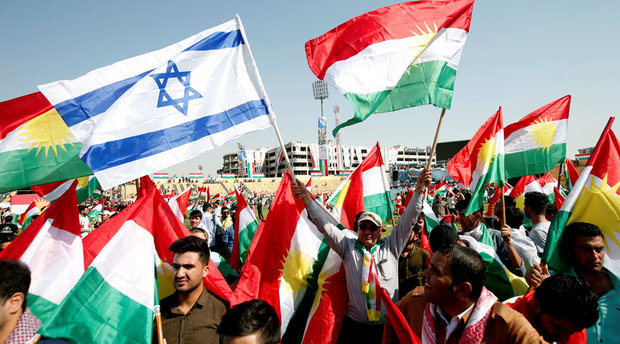
Syrians accuse the Western-backed Kurdish enclave in the country of using ethnic cleansing and child soldiers against them to form a new anti-Arab state. The parallels with Israel’s creation in the 1940s are striking.
Kurdish forces in Syria have been lauded by many in the West as being fighters for freedom and an autonomous society. But, unless you’ve been following independent researchers and the Syrian media, you might be unaware of the crimes the US-backed group have been committing over a number of years.
On November 25, the Daily Sabah (a website not sympathetic to the Syrian government) reported on one of their most sickening practices. It revealed, “YPG/PKK terrorists detained three more 15-year-old girls – Hediyye Abdurrahim Anter, Evin Jalal Halil and Ayana Idris Ibrahim – in Amuda in Hassakeh province on Nov. 21 to forcibly recruit them as ‘child fighters.’ The terror group detained two children, aged 13 and 16, in early August. And two children aged 16 and 13 were kidnapped Aug. 23.”
The piece went on to note that this practice of abducting children and forcing them to fight has been documented by the United Nations, with one report stating that the YPG/PKK used more than 400 children between July 2018 and June 2020.
Yet, the world has been led to believe that the self-declared autonomous region – known as Rojava and comprising areas of Hassakeh, Raqqa, Deir ez-Zor and Aleppo governorates – is a haven for liberals and feminists, with freedom-loving Kurdish fighters based there fighting ISIS and liberating Syria.
Indeed, the YPG Rojava page claims: “The YPG was set up to protect the legacy and values of the people of Rojava and is founded on the principles of the paradigm of a democratic society, ecology and woman’s liberation. Without preferring or discriminating any religion, language, nation, gender or political parties, the YPG is protecting the country against all attacks from outside. The YPG is the Democratic Nation’s defense force and is not related to any political party.”
It reads like a feelgood fairytale, but is not based in reality.
The utopian image of the so-called Syrian Democratic Forces (SDF), which includes the YPG and PKK, is betrayed by the kidnappings, which sadly are not a new development. Search for QSD – their Arabic acronym – on Syrian media and you’ll see regular updates on Kurdish forces kidnapping civilians and journalists.
This image is further betrayed by their ethnic cleansing of indigenous Syrians from the northeastern Syrian regions Kurdish forces occupy and collaboration with illegally occupying US forces.
But this won’t be highlighted in corporate media. Instead, you will still find odes romanticizing Kurdish fighters, with one such recent story deceptively saying that the areas controlled by Kurdish forces have a “predominantly Kurdish population” – a claim not backed up by the truth.
As author Stephen Gowans detailed in a 2017 article, Kurds in Syria comprise, “only a small percentage of the Syrian population… Estimates of the proportion of the total Kurd population living in Syria vary from two to seven percent based on population figures presented in the CIA World Factbook.”
And yet, Assyrians, Arameans, and other Syrians who have lived there for generations should accept being ruled, or expelled, by Kurds?
Gowans went on to note, “Kurdish fighters have used the campaign against ISIS as an opportunity to extend Kurdistan into traditionally Arab territories in which Kurds have never been in the majority.”
In 2018, Syrian journalist Sarah Abed wrote of the SDF’s kidnapping and ethnic cleansing, noting not only the abductions of men, but, again, children. She recorded how Eddie Gaboro Hanna, the founder of Patriarchal Relief Care Australia, a group providing assistance to Christian families impacted by wars in Syria and Iraq, had explained, “They are taking young Christian boys by force to sign them up for the Kurdish military and send them to the front line.”
And he added, “Christians are treated as second-class citizens [here] in their own land. Just like how ISIS has the Islamic tax they have their own Kurdish one. They’ve replaced ISIS.”
Although the BBC’s coverage of the Kurds’ activities in Syria is predictably pro-SDF, in 2015, even it reported on their ethnic cleansing and displacing of indigenous Syrians. Citing an Amnesty International report, it noted the YPG were accused of “razing entire villages after capturing them from Islamic State (IS),” in Hassakeh and Raqqa provinces.
The Kurds’ history in Syria
In January 2019, I spoke with geopolitical analyst and Sputnik contributor Laith Marouf about the Kurds in Syria. A descendant of eastern Syria’s Deir ez-Zor governorate, part of which is now occupied by Kurds, Marouf had a lot to say about the history of the Kurds in Syria and this 21st century land-usurpation project.
He told me, “There was a wave of Kurdish refugees coming down to Syria (from Turkey) in the 1940s, and the second wave of them in the 1960s when the PKK started the armed rebellion against the Turkish government in what was Arab lands.”
“They were given citizenship by the Syrian government. They were armed and given protection by the Syrian state to fight for their liberation in the Kurdistan mountains in Turkey, and the Syrian government housed the leadership of all the Kurdish resistance up until the early 90s.”
Marouf noted that Syria’s support for the Kurds saw Turkey threatening to invade in the 1990s and building numerous dams on the Euphrates, cutting the water flow. Yet, Syria refused to hand over PKK leader Abdullah Öcalan. Marouf emphasized: “Syria almost went to war with Turkey, and the Syrian people (in the northeast) went thirsty and the agricultural fields—the breadbasket of Syria—almost collapsed those couple of years, to protect Kurdish rights.”
“And then what happens now is some crazies are saying there’s something called Rojava and that they can secede and colonize and settle and steal parts of Syrian lands.”
He, too, spoke of the years of kidnappings and disappearances of those critical of Kurdish rule. “Even Kurdish Syrians that are critical of what the YPG is doing, even remotely critical professors in the universities in Hassakeh and Raqqa and Deir ez-Zor, were disappeared. And these were just critical Kurds.
“So you could imagine what happened to the Assyrian and the Arab leaders in the area, thinkers, tribal leaders, ex-military – huge amounts of disappearances and forced displacements.”
And as Abed’s article highlighted, formerly Assyrian villages in Hassakeh and Raqqa have been fully taken over by Kurdish forces. “They’re moving in the Kurdish militias and their family members into those villages and creating new ethnically pure towns and villages that are Kurdish. And this is expanding to the holdings of the Syrian churches and their Armenian churches, they confiscated all their land.”
So much, then, for the Rojava “legacy and values” that included “without preferring or discriminating any religion, language, nation, gender or political parties.”
Marouf also said, “They have enforced an educational curriculum on all the schools—including schools that are run by ethnic and/or religious groups – so all those that are run by the churches are being told that they have to teach a certain curriculum that specifically promotes and propagates falsehoods about the Kurdish control of the area.”
“When the Assyrians refused, because these are their own private schools that are controlled by the church, the YPG went ahead and shut down all the schools, with armed men making sure the kids cannot go to school.”
The ethnic cleansing and forced expulsion of indigenous people sounds horribly familiar, as Marouf pointed out. “So, the reality is that we have an ethno-nationalist settler colonial state being enforced by the empire, called Rojava – and it’s being sold the exact way that Israel was being sold in the 1940s. It’s like cut and paste propaganda saying that we’re creating a utopia of secular and socialist government in the ‘sea of barbaric Arabs.’”
Over the years, I’ve had Rojava supporters criticize me for respecting Syria’s sovereignty and speaking critically about the West’s attempt to overthrow the Syrian government. Instead, according to them, I should have been supporting this false utopia which has killed and displaced many. To them, I say you have been deluded, as much of the Western left has on Syria.
And you can rest assured that had it been Syria committing these crimes, the media would be reporting loudly and regularly. But because they are being carried out by puppets of the West, all is quiet on that front.
Eva Bartlett is a Canadian independent journalist and activist. She has spent years on the ground covering conflict zones in the Middle East, especially in Syria and Palestine (where she lived for nearly four years).
Bashar Assad getting accepted by Arab leaders. US and Israel losing their chance
By Robert Inlakesh | RT | November 12, 2021
In a significant move towards normalising Syria’s government, UAE Foreign Minister Sheikh Abdullah bin Zayed visited Damascus to discuss strengthening the ties between the two nations, sparking outrage from the US and Israel.
A surprise visit to the Syrian capital on Tuesday by Abu Dhabi’s foreign minister sparked condemnation from the United States, which seeks to encourage its Arab State allies to steer clear of President Assad. According to State Department spokesperson Ned Price, the US urges “states in the region to carefully consider the atrocities that this regime, that Bashar al-Assad himself has perpetrated on the Syrian people over the last decade, as well as the regime’s ongoing efforts to deny much of the country access to humanitarian aid and security.” That seems to have fallen on deaf ears over in Abu Dhabi.
However, despite the Biden administration having voiced its opposition to Assad’s government, behind the scenes, it may actually be working to create a temporary amendment to its 2019 “Caesar Act” sanctions, the mechanism it is speculated the US may implement to protect the likes of neighbouring Jordan. This would involve Amman liaising with the Syrian government to allow Egypt to send oil through to struggling Lebanon. Back in September, Jordanian, Egyptian and Lebanese representatives even met to discuss the logistics of managing such a transfer of oil, so as to provide Lebanon with the means to generate electricity.
Publicly, it seems the UAE – which reopened its embassy in Damascus three years ago – is leading the push to have Syria reinstated into the Arab League and enhance cooperation between the two. But, for Abu Dhabi, the so-called ‘brotherly’ nature of their relationship comes with strings attached. From an Emirati perspective, the relationship between the Syrian government and the UAE is threefold: first, Abu Dhabi sees Syria as a potential partner in the fight against the Muslim Brotherhood; second, it sees an opportunity to work towards facilitating the cooperation between Egypt and Jordan on the potential oil transfer to Lebanon; and last, it seeks to bring Syria closer to the Arab reactionary regimes and distance it from Iran. Both Egypt and Jordan have also taken strides to normalise relations with Damascus: in October, Jordan’s King Abdullah II participated in a phone call with President Assad and, on Tuesday, Egypt’s foreign minister made it clear he was open to the idea of Syria re-entering the Arab League.
Prior to the war in 2011, the Syrian government had embraced neo-liberal economics, but in terms of its foreign policy, it has always maintained a nationalist agenda. When the war in Syria began, the UAE jumped on the bandwagon of conspiring against Assad and financed armed groups to overthrow him. In and of itself, this makes it clear that Abu Dhabi is not acting in the interests of regular Syrians. It is easy to foresee the Syrian government developing its relationship with the UAE in order to strengthen its position in the region and secure investments to rebuild its war-torn nation in the future.
From a realist point of view, however, the decision-makers in the Emirates see that Assad is not going anywhere. They are seeking to combat Islamist forces regionally, so why not try to influence a nationalist nation while working alongside it to weaken the Muslim Brotherhood and erase Iran’s footprint in the country?
Given Turkey may imminently open up another offensive into northeastern Syria to combat the Kurds in areas controlled by the US and Kurdish SDF (Syrian Democratic Forces), the Emirati foreign minister may well have wished to discuss this issue during his visit to Damascus. Turkey, which currently controls two pockets in Syria’s north through its Syrian National Army mercenary militia, is aligned with the Muslim Brotherhood. To the UAE, Turkey and Qatar are its biggest regional rivals.
But Washington, which is surely well aware of the policy positions its Middle Eastern allies are taking on Syria, continues to not only economically restrain Damascus, but also occupies roughly a third of Syrian territory with its proxy forces. The US currently presides over 90% of that nation’s oil resources and is even looting its most fertile agricultural lands, which those Syrians who are suffering under an economic crisis are unable to access. The US not only blocks progress and has extirpated attempts to rebuild the country, but adopts a militaristic approach and views itself as maintaining the right to remain there, despite not having acquired any congressional approval to be operating in Syria.
The main role of the US occupation of Syrian lands, through its Kurdish proxy forces in northeastern Syria and its mercenary forces in the al-Tanf region of south Syria, is to combat Tehran. Until significant Iranian influence is cleared out of the land, they will not leave of their own free will.
Then we have Israel, which will also not leave the Syrian lands it illegally occupies unless it is forced out in a war between the two nations. In tandem with Islamic State (IS, formerly ISIS) terrorists who have crawled out from their caves and suddenly received anti-tank munitions and a spike in their numbers, Israel has picked up its attacks against Syria. In fact, it has carried out at least five in Syria over the past month, killing soldiers and assassinating an ex-member of parliament. Israel is also seeking to quadruple its settler population in the Golan Heights, with Israeli PM Naftali Bennett having announced new construction plans just last month. It’s clear that Israel is seeking to provoke a reaction from Damascus and test how far it can cross the line before drawing defensive fire.
Instead of the Syrian Arab Army responding to US and Israeli aggression, independent groups that align with Iran have been at the forefront of combating Tel Aviv and Washington. The reality is that Syria is so embroiled in this hostile situation between different foreign powers attempting to extract different things from it that it is difficult to tell where the government is currently headed, and whether it will continue to follow a nationalist path or eventually adopt a more business-minded rather than ideologically driven approach. Ultimately, it seems the UAE will play a limited role in Syria for now, but only time will tell who gets the better of the other in this ever-expanding relationship.
Robert Inlakesh is a political analyst, journalist and documentary filmmaker currently based in London, UK. He has reported from and lived in the occupied Palestinian territories and currently works with Quds News and Press TV. Director of ‘Steal of the Century: Trump’s Palestine-Israel Catastrophe’.
Rising tensions between Azerbaijan and Iran spark fears of an Israeli-US proxy war against Tehran
By Robert Inlakesh | RT | October 6, 2021
Tensions are running high as Iran holds war games along its northern border, warning it won’t tolerate its neighbour providing a safe haven for the “anti-security activities of the fake Zionist regime.”
Iranian war games held along its northern border with Azerbaijan, leading to Baku threatening military deployment in retaliation, has sparked fear of war between the two countries.
But any such war would not end up being won by Tehran or Baku, but rather the United States and Israel, who would likely seize such an opportunity to fuel a Syria-style proxy war against the Islamic Republic.
The tensions that have arisen between Azerbaijan and Iran, as of late September, have seemingly popped up out of nowhere, but such an escalation was only a matter of time. The recent political quarrel has come about as a product of last year’s war between Azerbaijan and Armenia, over the Nagorno-Karabakh area, which resulted in a victory for Baku and allowed it to take over Karabakh from Armenia.
Iran had previously used its access through Armenian-controlled Karabakh to reach West Asia and Russia, sending its trucks and other means of transportation through the area, often free of customs.
Since Azerbaijan established its sovereignty over Karabakh, it has cracked down harshly on Iranian trucking and sought to establish itself as the leader of the Caucasus, intending to make itself the primary connection hub between Europe and Asia.
In order to undermine Baku, Iran has now announced that it will help Armenia establish a new bypass road that will cut out Azerbaijan. Although Tehran denies it initiated the recent war games along the Iran-Azerbaijan border with the intent of escalation, Azerbaijani President Ilham Aliyev criticised the military drills, asking, “Why now, and why on our border?”
The commander of the Islamic Revolutionary Guard Corps Ground Force offered one answer when he said last week that Iran would not tolerate its neighbors becoming “a safe haven and a base for the presence and anti-security activities of the fake Zionist regime.”
In the event that a clash does occur between Iran and Azerbaijan, it is likely that the Islamic Republic has the upper hand, being a regional military powerhouse. Yet Azerbaijan has more potential for causing Iran trouble through its allies and potential proxies than it does through its military might. Iran’s military drills, named Fatehan-e Khaybar (Conquerors of Khaybar), are also clearly not just aimed at sending a message to Baku, but also to Israel.
Israel armed Azerbaijan with roughly $825 million in armaments between 2006-2019. Although it would seem strange to some that Iran claims an Israeli presence on its northwestern border, as Israel is not even close geographically and its relationship with Azerbaijan looks on the surface to be mainly business based, it does have a point when it claims this, as the relationship runs far deeper than weapons trade.
A WikiLeaks-released cable sent by Donald Lu, the deputy chief of mission for the US embassy in Baku, to the US State Department revealed the nature of Azerbaijan-Israel ties, stating: “The relationship also affects U.S. policy insofar as Azerbaijan tries, often successfully, to convince the U.S. pro-Israel lobby to advocate on its behalf,” indicating a much closer connection than publicly admitted between the two sides. The document also revealed that, “with some humor, the Israeli DCM told us that Israeli businessmen expressed to her that they prefer corruption in Kazakhstan to that of Azerbaijan because in Kazakhstan one can expect to pay exorbitant fees to do business but those are generally collected at once, up front, whereas in Azerbaijan the demands for bribes never cease.”
Foreign Policy Magazine published a piece in 2012 in which they claimed that a senior US official confirmed that Israel had secured an airfield in Azerbaijan and that Israel could be using the country for a staging ground against Iran, a charge that Baku denies. Beyond this, Tehran has accused Azerbaijan of encouraging separatists groups inside of Iran, many of which staged demonstrations last year during the war between Azerbaijan and Armenia, calling for the re-establishment of what they call “Southern Azerbaijan.”
If any war was to be initiated between Baku and Tehran, this would be the greatest opportunity for Israel and the US to back ethnic Azeri separatists in a similar way to how the Obama administration funded and trained Syrian militants to overthrow the government of Bashar Assad. Out of Iran’s 83 million citizens, between 10-15 million of them are believed to be ethnic Azeris, meaning that just a small portion of them are needed to form an extremely problematic military force that could fight in urban warfare settings.
The United States and Israel have for long been hesitant to launch direct strikes against Iran, likely for fear of the regional war which it could spark, along with Iranian retaliation, yet a proxy war would be much less costly. During any such war, they could also launch strikes against Iran, especially Israel, which constantly threatens Tehran.
Turkey has already pledged its support to Azerbaijan, and during the 2020 Nagorno-Karabakh war, even sent ex-Syrian Jihadist mercenaries to aid Baku’s forces; some of these ex-Syrian militants are reportedly present along the Iranian border now.
Iran may be able to handle such a proxy war, but it would certainly be a tough challenge, while Azerbaijan would likely suffer badly. The war would benefit no one but regional players and super powers seeking regime change in Tehran, which is unlikely to succeed, as was the case in Syria. Such a war would result in perhaps hundreds of thousands of deaths and cause any number of unforeseen consequences. Iran knows the strategy which the likes of Israel is attempting to employ against it, meaning that such a war could lead to retaliatory action committed against Tel Aviv.
Robert Inlakesh is a political analyst, journalist and documentary filmmaker currently based in London, UK. He has reported from and lived in the occupied Palestinian territories and currently works with Quds News and Press TV.
Iraqi politicians slam Turkey’s interventionist remarks, vow strong response
Press TV – July 22, 2021
A number of Iraqi politicians and lawmakers have reacted to recent interventionist remarks by Turkish Interior Minister Suleyman Soylu during his recent visit to the city of Sirnak in southeastern Turkey, vowing a strong response to any infringement of the Iraqi sovereignty and territorial integrity.
According to a report by Rudaw news agency on Thursday, during his visit to Sirnak, the Turkish minister claimed that establishing peace in Muslim countries, including Iraq and Syria, was Turkey’s responsibility.
Soylu’s comment reverberated widely through social media platforms, enraging Iraqi people and politicians.
Ra’ad Hussein, representative of Saairun Alliance affiliated with Iraq’s influential cleric Muqtada al-Sadr, said the sovereignty of Iraq is beyond all considerations and the positions of the Sadr movement in this regard are clear.
“The Sadr movement is totally Iraqi and has no links to foreign countries, and it prefers the interests of Iraq over all interests, and to this end, the head of al-Sadr’s bloc decided to withdraw from the elections,” Hussein said.
“Our position is firm, which means that we will sever ties with any of the neighboring or regional countries if they do not have a positive attitude towards Iraq,” he added.
Hussein underlined that such statements, whether made by Turkish or other officials, are unacceptable and no one will ever be able to encroach on a single inch of Iraqi soil.
Iraqi Shia cleric Ammar al-Hakim took to Twitter on Wednesday, calling on neighboring countries to respect Iraq’s sovereignty.
Hakim, who heads Iraq’s National Wisdom Movement political bloc, said, “Achieving peace in the region and the world comes through the interaction of states among themselves in accordance with international covenants and cooperation based on the foundations of mutual relations and common interest.”
He added, “It is not allowed to compromise the sovereignty of Iraq and for its land to be infringed,” without making any direct reference to Turkey.
Meanwhile, Iraqi MP and member of the Law Coalition, Kadhem Finjan al-Hamami, reacted to Turkish minister’s remarks, saying that the Turkish provocations were not the first of its kind in clear reference to Turkey’s deforestation of Kurdish areas and the continuous attacks on the Iraqi territory under the pretext of fighting Kurdish separatists.
“There have been no reactions from the Iraqi government or the Kurdistan Regional Government (KRG) towards all these attacks on Iraqi lands,” he said, adding that the Turkish government believes that “Iraq and the neighboring countries are a subject of the Ottoman Empire.”
Featured Video
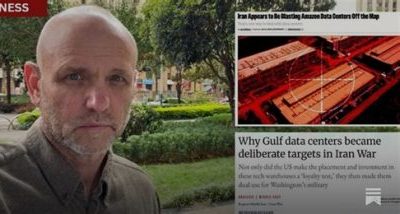
Iran spent $1 million to wipe out $30 billion in data center plans, and take down Amazon in the ME
or go to
Aletho News Archives – Video-Images
From the Archives
A short history of British torture
ICC | December 2005
When the House of Commons was debating how much to increase the time limit for detention without trial the question of torture came up. Officially this was limited to the nice considerations of whether it was all right to send people to places where torture is used and whether Britain can use information collected by the use of torture in other countries. This discussion gave an impression of democratic Britain as the home of civilised behaviour where the very idea of torture is repugnant to our legislators – unlike, say, the US with its secret CIA jails… In reality, the British state has a long history of using and developing a whole range of torture techniques. … continue
Blog Roll
 Aletho News
- Iran spent $1 million to wipe out $30 billion in data center plans, and take down Amazon in the ME
- Zionist billionaire pressure to silence Macklemore sparks exodus from Ed Sheeran tour
- House Votes to End Iran War for Third Time
- North Korea Slams US Plan for ‘AUKUS 2.0’ with South Korea and Japan
- Prolonging US-Iran Conflict Not Meeting Interests of Int’l Community – China’s Wang Yi
- EU bans former Zelensky aide from parliament
- NATO-backed Kosovo separatist ‘responsible for war crimes’
- US destroying international space law
- SCO Calls for Binding Global Deal to Prevent Arms Race in Space
- Iran & Its Allies Are Threatening Every Route for Saudi Oil
- If Americans Knew
- U.S. Makes, Israel Takes: The Real Story of U.S.-Israeli Military Cooperation
- Night raids rise in Palestine
- Tucker Carlson interviews Norman Finkelstein about Gaza
- Groups urge Americans to support Van Hollen legislation on Israel’s killing of Americans & Palestinians
- Trump administration plans to send 40,000 tons of bombs to Israel: report
- Sanctions Target Iran’s Government, But Kill Hospitalized 23-Year-Old Woman
- An alternative view on the book “Israel’s Lobby: America in the Grip of a Foreign Power”
- Ed Sheeran’s band Beoga, other opening acts quit tour after Macklemore was dropped over his pro-Palestinian comments
- The assassination attempt on President Trump in Butler and the various Israeli connections to it
- “We Want That the Whole Land Be Jewish”
- No Tricks Zone
- New Study: ‘Global Drought Shows No Detectable Recent Acceleration Under Climate Warming’
- Economic Masterminds: German Socialists Suggest Taxing Productivity Gains Stemming From Using AI
- The South China Sea Has Not Been Cooperating With The Climate Change Narrative
- Energy Crisis: Germany Enters Heating Season With Historically Low Gas Reserve Fill Levels
- New Study: The Antarctic Ice Sheet Gained Mass From 2020-2024 Due To Staggering Snow And Ice Accumulation
- Study: Ocean Heating Rates From Thousands Of Years Ago ‘Dwarf’ Modern Ocean Heating Rates
- Climate Extremists Target, Attack Large-Scale Power Grid Infrastructure In Germany!
- New Study: Antarctic Ice Melt Has Contributed Less Than 1 Centimeter To Sea Level Rise In The Last 30 Years
- Fear Of Debate: Alarmist German Climate Scientist Calls On Mainstream Media To Discredit Skeptic Voices
- End-Of-August Arctic Sea Ice Extent Hasn’t Fallen In 20 Years, Official Data Show!
 Aletho News