UK pumping more arms into Ukraine
Samizdat | July 21, 2022
The UK will send Ukraine anti-tank weapons, drones, artillery guns and tens of thousands of rounds of ammunition, Defense Secretary Ben Wallace told Parliament on Thursday. Ukraine will receive more than 20 M109 and 26 L119 artillery guns, as well as counter-battery radar systems and more than 50,000 rounds of ammunition for its existing Soviet-era artillery systems.
The UK will also send 1,600 anti-tank weapons as well as drones, including hundreds of “loitering aerial munitions,” more commonly known as “suicide drones.”
The arms will be sent to Ukraine in the coming weeks, and Wallace’s announcement comes several weeks after outgoing Prime Minister Boris Johnson pledged an additional £1 billion ($1.2bn) in military support to Vladimir Zelensky’s government. In total, the UK has spent £2.3 billion on weapons and training for Kiev’s military since Russia’s military operation in Ukraine began in February.
This money has already paid for nearly 7,000 NLAW, Javelin and other anti-tank missiles, 16,000 artillery rounds, six mobile anti-air missile launchers, as well as a number of M270 rocket artillery systems and 120 armored vehicles.
The impact of these shipments on the battlefield, however, has been debatable. Captured Ukrainian troops have described the Javelin missile launchers – sent by both the UK and the US – as “completely useless” in urban combat, while soldiers are reportedly encountering battery issues with the NLAW “making it impossible to use.” Russia’s military doctrine also favors heavy artillery bombardment of enemy positions from far beyond the NLAW’s 600 meter range.
Both sides have leaned heavily on artillery as fighting rages on in eastern Ukraine and the Republics of Donetsk and Lugansk. Utilizing superior firepower, Russian and allied troops recently brought the entirety of the Lugansk People’s Republic under their control and seized operational control of Seversk, which is within striking distance of the major cities of Slavyansk and Kramatorsk.
Ukraine has received a dozen M142 HIMARS rocket artillery systems from the US. While US Defense Secretary Lloyd Austin described these weapons as making “such a difference on the battlefield,” Ukrainian Defense Minister Alexey Reznikov claimed this week that his forces need at least 50 of the systems to hold back Russia’s advances and 100 – around a third of the US’ entire stockpile – to conduct a counteroffensive.
In terms of conventional artillery, the 50,000 shells promised by Wallace is enough to keep Ukraine’s guns firing for roughly eight days. As of last month, Ukraine’s deputy head of military intelligence estimated that his forces were expending 6,000 shells per day, and that Ukraine has one artillery gun for every 15 fielded by Russia.
Meanwhile, a report by the Royal United Services Institute, a British think tank, claims that Russia is firing approximately 20,000 artillery shells per day.
Independent SAGE’s Dumb “Seven-Point” Covid Plan
By Igor Chudov | July 19, 2022
Many of my readers had one Covid a long time ago, or never had Covid, are not having another Covid so far, and may not realize how badly are things going in Covid-land in Europe and highly vaccinated areas of USA.
More than one out of 15 Brits is having COVID today (Jul 19, 2022). This is higher than ever before. An “unexpected” largest-ever wave of a yet-another variant Ba.5 is reinfecting highly-vaccinated countries one more time. Hospitals are strained, because sick, force-injected health care workers are staying home due to their Covid reinfections, and patients are hospitalized at record rates. Excess mortality is rising.
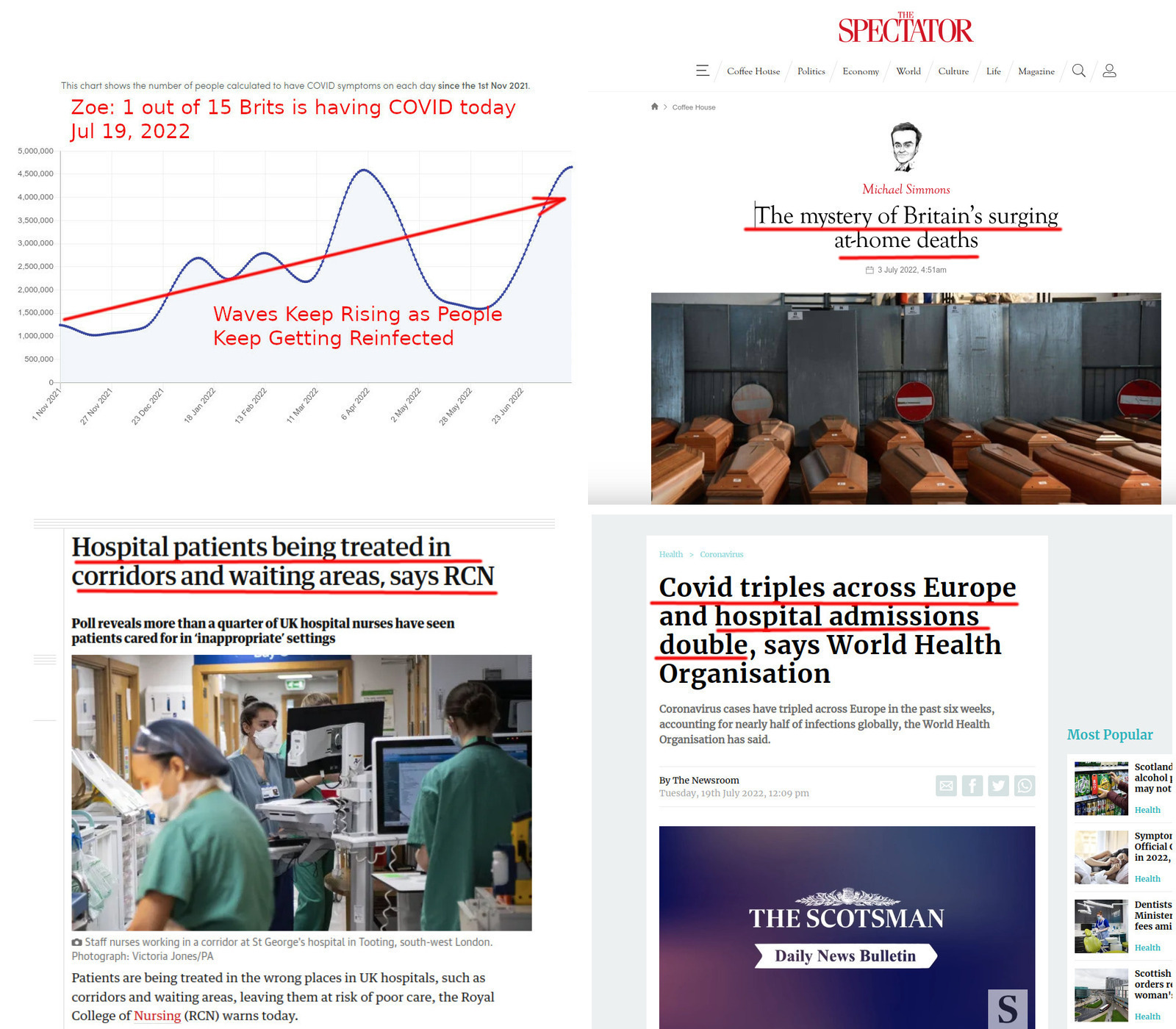
People are, naturally, becoming worried as they or their relatives have two-week-long bouts of Covid reinfections that do not feel mild to them and leave them exhausted. My own opinion is that we are on the verge of significant increases in overall mortality. I am quite worried about that.
Rumblings of discontent are appearing. The powers-to-be are wondering what to do.
So, the so-called “Independent SAGE” just came up with a “seven-point plan” to combat COVID. The plan is so spectacularly stupid that it reads like a parody. Here it is, from the British Medical Journal no less.
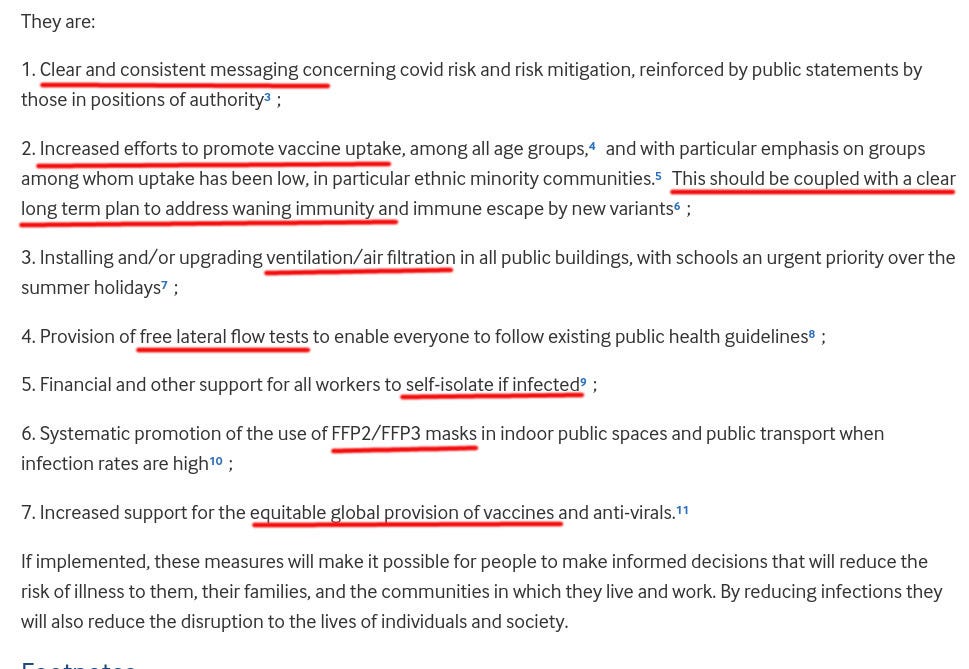
This plan is the product of supposedly the “best Covid minds”, the leading thinkers of UK science, whose recommendations influence UK policy. What did these minds produce? Let’s look.
They are proposing to do more of same!
The “clear and consistent messaging” is a theme of the pandemic, it relates to a bad idea that all officials should parrot one line during a so-called “emergency”, to avoid confusing the public. The result of this policy was a lack of independent thinking, as well as censorship of any dissenting voices, that led to groupthink. What message, pray tell, should such “clear and consistent messaging” convey? The seven-point plan?
The efforts to promote “vaccine uptake” are particularly laughable in July of 2022. Here’s how vaccine uptake looks in the UK:
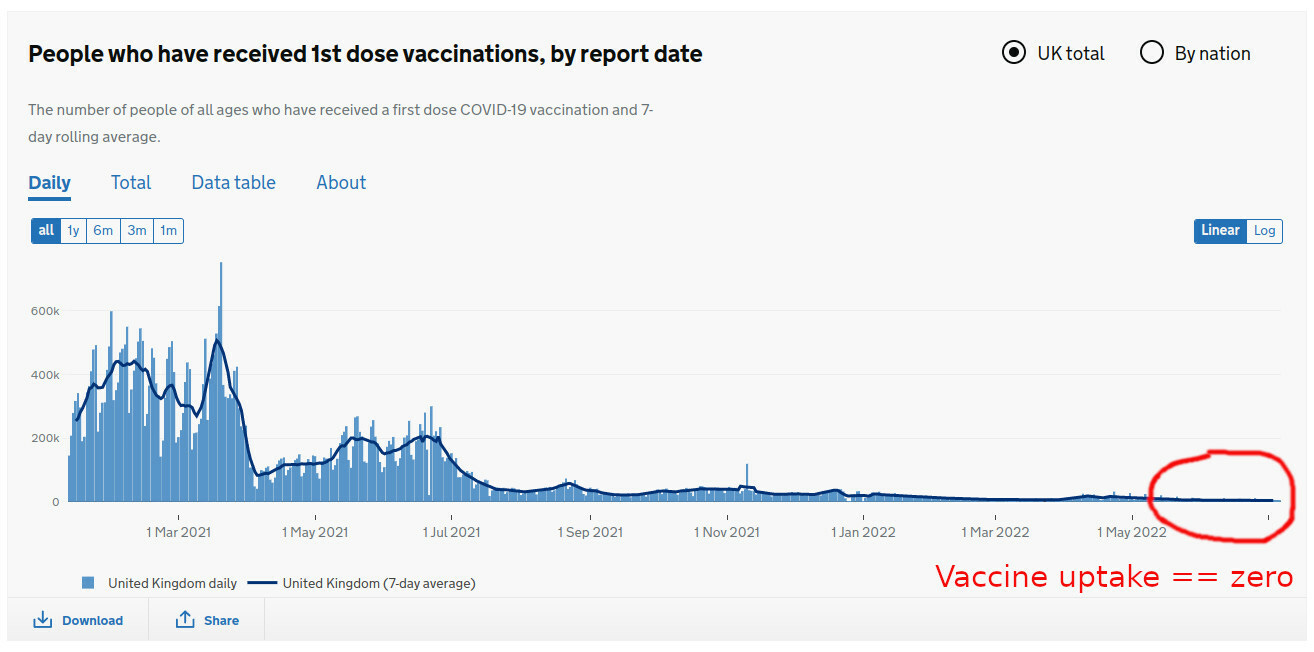
Of special interest is a need to have a “clear long-term plan to address waning immunity and immune escape”. What they are saying is that they do not have such a plan. They merely want to have a plan, which they do not have, as of now.
The concept of “air filtration” refers to a sincerely expressed, but misguided idea that retrofitting buildings with “air filtration devices” will stop the pandemic. While I personally like almost all people who advocate it, I also recognize that it is largely futile, for many reasons having to do with physics and gas dynamics.
Air filtration that could effectively capture airborne virions, would need to turn over enormous volumes of air every minute, through the finest filters, continuously. This is not compatible with existing buildings’ HVAC systems. It would also cost a fortune in electric bills and create a lot of heat. I do not want to get into this discussion too much, but “air filtration” of that kind is not possible in most establishments or homes.
The “FFP3 masks” are obvious non-starters because of difficulties wearing them. Making the public wear such masks in 2022 is impossible.
The worst part of this proposal is the so-called “equitable global provision of vaccines”. This is a code word for bribing governments of poor countries into forcing their citizens to take “vaccines” that these wise but poor people refuse to take voluntarily. The countries with unvaccinated majorities are the future of humanity, in my opinion. They are largely at herd immunity precisely because they refused to vaccinate. Yet, Independent SAGE wants to inject them with non-working “vaccines” in the name of “equity”. Why?
The crazy “Independent SAGE” advisers are anything but sage, are actually stupid, and I am very sorry that they have been UK’s thought leaders since 2020.
Here’s a clip from “Idiocracy”. While it is funny, it shows President Camacho actually solving his country’s problem of dying plants, with his three-point plan of hiring the smartest person in the world named Not Sure. Not Sure figured out the problem and proceeded to stop using Brawndo to water plants.
Brawndo’, which owned the FDA, went bankrupt. The plants started growing, given clean water. Any parallels with the present?
P.S. Please do not think that I am badmouthing the UK by criticizing British Covid experts: Covid experts in the USA are so much worse and could not even come up with a “seven-point plan”. So there is no “USA Covid plan” that I could criticize.
US and UK want ‘real war’ between Russia and EU – Lavrov
Samizdat | July 20, 2022
The US and UK want to escalate the Russia-Ukraine conflict into a larger confrontation between Moscow and members of the European Union, Russian Foreign Minister Sergey Lavrov said on Wednesday in an interview with RT and Sputnik.
“Our American counterparts, British counterparts… with active support from Germans, the Polish and the Baltic states, they really want to turn this war into a real war and start a confrontation between Russia and European states,” Lavrov told RT’s editor-in-chief, Margarita Simonyan.
The Western governments are “keeping Ukraine from any constructive steps” towards a peace settlement, Lavrov argued. “[Ukraine is] not just [being] pumped with weapons. They are forced to use these weapons in an increasingly riskier way.”
Russia launched its military operation in the neighboring country in late February. Many countries, including NATO members, imposed sweeping sanctions on Moscow and have been supplying Kiev with heavy weapons. The latest deliveries include US-made M142 HIMARS multiple rocket launchers and M777 howitzers.
Lavrov claimed that the US and Britain were acting to their own advantage in the conflict between Russia and the EU because the economies of the bloc’s members are bearing the brunt of the sanctions. He added that the US has been acting “irresponsibly” by stoking tensions with Russia.
They are playing a very dangerous game. I don’t think they understand it themselves. But then, in Europe, a lot of people are starting to understand that.
US President Joe Biden said last week that Russia must suffer “a strategic failure” in Ukraine and vowed more support for Kiev.
Russia sent troops into Ukraine on February 24, citing Kiev’s failure to implement the Minsk agreements, designed to give the regions of Donetsk and Lugansk special status within the Ukrainian state. The protocols, brokered by Germany and France, were first signed in 2014. Former Ukrainian President Pyotr Poroshenko has since admitted that Kiev’s main goal was to use the ceasefire to buy time and “create powerful armed forces.”
In February 2022, the Kremlin recognized the Donbass republics as independent states and demanded that Ukraine officially declare itself a neutral country that will never join any Western military bloc. Kiev insists the Russian offensive was completely unprovoked.
WHO Used Bad Measure of Excess Mortality
BY NOAH CARL | THE DAILY SCEPTIC | JULY 18, 2022
As I’ve repeated ad nauseum here at the Daily Sceptic, excess mortality provides a far better measure of the pandemic’s impact on mortality than the ‘official’ Covid death rate.
When it comes to cross-country comparisons, the ‘official’ Covid death rates are particularly deficient. Testing and diagnosis vary dramatically, so two countries with the same actual death tolls may still have very different ‘official’ death tolls – just because one tested more or had broader criteria for diagnosis.
Excess mortality, as most readers are no-doubt aware, is the difference between the number of deaths observed during the pandemic and the number that were expected, based on previous years. A five-year average is often used for the number of expected deaths – though one can use a linear trend or more complicated extrapolation instead.
Here’s a very simple example. Suppose a country had roughly 100,000 deaths per year in 2015, 2016, 2017, 2018 and 2019. Then in 2020, it records 120,000 deaths. In that case, excess mortality would be 20,000 deaths.
But of course, if we want to compare this country to other countries, the ‘20,000 deaths’ isn’t very useful. Larger countries will have more excess deaths just because there are more people at risk of death. And this is something we need to account for when making comparisons, or else we’ll conclude that all the small countries did well and all the large ones did badly.
So why not just divide the ‘20,000 deaths’ figure by the country’s population, thereby obtaining ‘excess deaths per 100,000 people’? Indeed, that’s exactly what the WHO did for its recent estimates of excess deaths associated with the pandemic (which were widely covered in the media).
Well, there’s a problem with this method of adjustment: countries have different age structures. And this matters because the risk of death (from both Covid and everything else) is far higher in older age-groups than in younger age-groups.
Consider two countries with the same number of excess deaths, say 20,000. One has a population of 10 million and one has a population of 12 million. Suppose the 2 million ‘extra’ people in the second country are all under the age of 40. So above the age of 40, the two countries have identical age structures.
Using the WHO’s method of adjustment, excess mortality would be 200 per 100,000 in the first country, but only 167 per 100,000 in the second country. Yet this clearly ‘rewards’ the second country. Why? Very few deaths occur among people under 40, so including them in the denominator artificially pulls down the rate of excess mortality.
Rather than dividing by the country’s population, there’s a much better way of making excess mortality figures comparable: divide by the number of expected deaths. This gives you a percentage, which is neither biased against large countries, nor against countries with aging populations.
As a matter of fact, the WHO’s decision to divide by the country’s population may help to explain its widely-reported (but almost certainly wrong) finding that Britain had less excess mortality than Germany. Estimates based on percentages clearly show that Britain had more excess mortality. Yet because Germany’s population pyramid has a narrower base, the denominator in the WHO’s calculation will have been smaller.
Having said that, I doubt the WHO’s estimates are substantially different from those based on percentages. But that’s not the point. The point is they used a bad method of adjustment, when an equally simple and better one was available.
UK testing drone swarms in Ukraine might lead to escalation
By Drago Bosnic | July 18, 2022
Air superiority is how the political West wages war. US and UK air power has been instrumental in all wars waged by the two leading Western imperialist thalassocracies since the Second World War to this day, although it existed doctrinally since at least the 1920s. This is so ingrained in their concept of warfare that it’s considered nearly impossible for them to lead a successful military campaign without it. This stands in stark contrast to most other comparable military doctrines, particularly the Russian one.
The Nazi onslaught destroying much of their air force before it got the chance to take off forever changed the way Russians see air power. Realizing (over)reliance on it can have a detrimental effect, coupled with the devastating consequences of American and British firebombing of German cities, which in some cases had an effect no less destructive than nuclear weapons (minus the radiation), Russia’s post-WWII military doctrine adopted a distinct and (up until recently) unique focus on advanced air defenses. Since then, Russia has been developing top-notch SAM (surface-to-air missile) systems, some of which are so advanced they effectively nullify the entire Western air dominance concept. And although Western state-run mass media love to downplay this, the very fact US legislation directly and very specifically targets these systems with sanctions speaks volumes.
The proliferation of these systems is a strategic nightmare for aggressive Western planners, who can’t simply bypass them without incurring “unacceptable losses”. In order to counter Russian SAMs, Western Military-Industrial Complexes have been working on a plethora of new systems. Some prominent examples include advanced drones, particularly miniature ones, which are also planned to operate in swarms, saturating hostile air defenses and paving the way for the more traditional aviation to bomb its way through enemy ground forces.
RAF (Royal Air Force) experiments with drone swarms show “they can overwhelm enemy defenses” and the concept would be ready for action in a war, according to the UK military service’s Chief of Staff. Air Chief Marshall Sir Mike Wigston told the Global Air and Space Chiefs’ Conference 2022 in London last week that the RAF’s 216 Test and Evaluation Squadron and the Rapid Capabilities Office trialed five drone types in 13 experiments with various payloads and equipment over three years. According to Wigston, this yielded enough insights for the service to declare an “operationally useful and relevant capability,” using its current fleet of drones.
“We are exploring new models of capability delivery and accelerated production ‘when we need them’ rather than ‘in case we need them,’ from the twin jet 3D-printed Pizookie, to commercially available large drones fitted with novel payloads, to large quadcopters,” Wigston stated.
“The problem of overcoming air defenses is a key obstacle to employing [air] power. Planning for air operations increasingly entails ensuring that planes can fly safely in the first place, putting at risk untold amounts of money that militaries have pumped into beefing up their fleets to fourth- and fifth-generation technology. That conundrum is on display in Ukraine, where Ukrainian and Russian air-defense capabilities are effectively canceling out the other side’s air power arsenal,” according to Justin Bronk, a defense analyst with the London-based Royal United Services Institute.
“The fact air power has been mutually denied, relatively speaking, in Ukraine by both sides has far more serious implications for us than for either [Russians or Ukrainians]. That’s because both militaries are ultimately dependent on massive land manpower and artillery, whereas joint forces of the UK and other Western powers are critically dependent on having air access and air superiority,” Bonk said at the London conference on July 13.
“Swarming, which means throwing enough expendable drones at a defensive radar and interceptor position so as to overwhelm them, can be effective, but only to a point. The idea of small and cheap drones attacking air defenses by way of swarming may not be feasible because those drones lack the requisite range and speed. If you want things to go fast and far, they’re going to be jet-propelled and they’re going to cost a fair bit. Getting drone swarms close enough to sophisticated air defenses with a range of hundreds of kilometers requires risky and potentially pricy insertion tactics that negate the widely cited cost benefit of cheap, small drones,” he added.
Western strategists are closely following their latest proxy war against Russia, trying to devise new strategies to fight the Eurasian giant. The deployment of never-before-seen ISR (intelligence, surveillance, reconnaissance) assets around Russia’s borders is a testament to that. In addition, increasing reliance on unmanned systems isn’t just the result of Western militaries trying to adopt new technologies. With NATO having severe manpower problems, drones might be the only way for members to have functional militaries in the near future. The UK itself is faced with this issue, having a very limited ground force with barely a few combat-ready brigades, to say nothing of other micro-satellites carved up after the dismantling of post-socialist federal states.
What’s truly dangerous at this point is the possible deployment of these systems to Ukraine. Most NATO weapons deliveries happened weeks or months before they were officially announced. Thus, it’s highly likely the same is true in this case. How Russia might react is up for debate, but it most certainly won’t take it kindly, which opens up new possibilities for escalation, particularly in the context of the latest controversial statements coming from the UK.
Drago Bosnic is an independent geopolitical and military analyst.
Eighty Times More Excess Deaths Associated With Cold Each Year than Heat

BY TOBY YOUNG | THE DAILY SCEPTIC | JULY 17, 2022
Amid all the hysteria about next week’s extreme temperatures – which could climb to 41°, according to the Met Office – it’s worth bearing in mind that many, many more excess deaths in England and Wales are associated with cold each year than with heat. According to a recent study in the Lancet Planetary Health, between 2000 and 2019, there were an average of 65,000 excess deaths per year in England and Wales associated with cold, but fewer than 800 a year associated with heat. In other words, roughly 80 times more deaths per year are associated with cold than heat.
Needless to say, the report’s authors blame these excess deaths on ‘climate change’ in general and have nothing to say about the likelihood of the 65,000 figure increasing next winter as a result of rising energy bills.
The researchers analysed 10.7 million deaths that occurred in England and Wales between 2000 and 2019 across over 37,473 small areas that include around 1,600 residents, also known as lower super output areas (LSOAs). They then linked these data with high-resolution gridded temperature maps and potential drivers of vulnerability to heat and cold, including demographic and socio-economic factors, health and disability, housing and neighbourhood, landscape, and climatological characteristics. This allowed the researchers to characterise differences across small areas and map variation in temperature-related mortality risks across the two countries.
Dr Pierre Masselot, Research Fellow in in Environmental Epidemiology and Statistics at LSHTM and co-author of the study, said: “The results come at a critical time as countries and communities face increasing health impacts due to climate change and need to find effective ways to adapt to changing temperatures. The analytical framework also provides a flexible tool that can be adapted for future studies which aim to model temperature-related risks and impacts at small-area level under different climate change scenarios.”
The authors emphasised that, while the research showed that excess mortality attributed to cold was significantly higher than that attributed to heat, these results should be interpreted with caution as more cold than hot days were recorded throughout the year. Despite this, they highlighted that cold-related mortality is evidently a considerable health burden, particularly in deprived areas, and should be addressed with targeted public health interventions.
Nevertheless, any un-biased person reading this report cannot help but conclude that the rising cost of utility bills caused, in part, by the Government’s pursuit of ‘net zero’ will result in far more deaths than next week’s heat wave.
If you really care about reducing deaths due to extreme temperatures, shouldn’t you focus your energies on getting the Government to scrap its ‘net zero’ target, lift the ban on Fracking and start investing billions in nuclear[?], instead of disrupting traffic and sporting events?
You can read the Lancet Planetary Health study here.
Scotland to scan vehicle license plates to enforce “low emission” zones
By Ken Macon | Reclaim The Net | July 13, 2022
In the cities of Edinburgh, Glasgow, Dundee, and Aberdeen, in Scotland, Low Emission Zones (LEZs) have been launched – however enforcement will not begin until June 1, 2024 for Aberdeen and Edinburgh, June 1 2023 for Glasgow, and May 30 2024 for Dundee.
Transport Scotland said the grace period will allow ample time for compliance. Enforcement of the LEZs will be facilitated by automatic number plate recognition (ANPR) systems.
Vehicles entering the LEZs will be required to meet the Euro VI standards. Those that do not meet the standards are not allowed in the LEZs.
Penalties for non-compliance will be cumulative. The first incident of non-compliance would result in a £60 fine. Subsequent violations will result in a fine double the previous one up to a maximum of £960. The fine is reduced by half if paid within two weeks. The starting fine is reset if there are no subsequent violations within a 90-day period.
There has been a low emission zone in Glasgow that applies to buses since 2018.
“Made in America” Mini-nukes to be used in a “Nuclear First Strike” coming soon to Italy, Belgium, Germany, Netherlands.
By Manlio Dinucci – byoblu – July 15, 2022
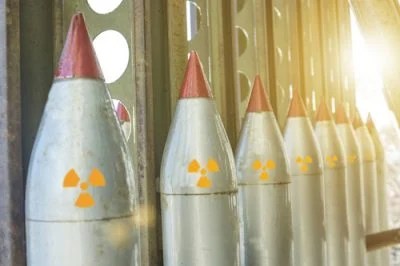
“Production of the B61-12 nuclear bomb begins,” Sandia National Laboratories announced from the United States. The B61-12, which replaces the previous B61 deployed by the U.S. at Aviano and Ghedi and other European bases, is a new type of weapon. It has a nuclear warhead with four power options, selectable depending on the target to be destroyed. It is not dropped vertically, but at a distance from the target on which it is directed guided by a satellite system. It can penetrate underground, exploding deep to destroy command center bunkers in a nuclear first strike.
The B61-12s, classified as “non-strategic nuclear weapons,” are deployed in Europe — in Italy, Germany, Belgium, the Netherlands, Britain and probably other countries — at distances far enough to strike Russia. They thus have offensive capabilities similar to those of strategic weapons.
Another nuclear weapon system, which the United States is preparing to install in Europe against Russia, is ground-based intermediate-range missiles. They can also be launched from “anti-missile shield” installations, deployed by the U.S. at bases in Deveselu in Romania and Redzikowo in Poland, and aboard five warships cruising in the Mediterranean, Black Sea and Baltic Sea close to Russia.
That such installations have offensive capabilities is confirmed by Lockheed Martin itself. Outlining the characteristics of the Mk 41 vertical launch system, used in both land and naval installations, it specifies that it is capable of launching “missiles for all missions, both defense and long-range attack, including Tomahawk cruise missiles.” These can be armed with nuclear warheads.
Europe is thus being turned by the U.S. into the front line of a nuclear confrontation with Russia, even more dangerous than that of the Cold War.
UK Government considered tearing ‘Covid positive’ people from their homes
By Michael Curzon | Bournbrook | July 12, 2022
‘Boris’ Johnson loyalist Nadine Dorries appears to have admitted that the Government, which now prides itself on having imposed restrictions more lightly than others, considered tearing “mothers and fathers and families and children” from their homes if they ‘tested positive’ for Covid during lockdowns to be sent to isolation centres.
A health minister at the time, Ms Dorries was approached by former Health Secretary Jeremy Hunt and told to adopt this ‘zero Covid’ approach, she told GB News.
The now-Culture Secretary told Dan Wootton, who decided not to dig deeper into the claims:
“[Jeremy] said ‘you’ve got to speak to Matt [Hancock]’. It was at the time Nightingale hospitals were being built. ‘You’ve got to tell him that you don’t put sick people in the hospitals, you follow a “zero Covid” policy… When someone tests positive, you take them from their home and you take them to an isolation centre and you leave them there… That’s the only way you can beat Covid.’”
Ms Dorries said she responded:
“‘The British public will not stand for mothers and fathers and families and children being removed from their family and their home and put in isolation.’ He said: ‘Who said they won’t?’ I said: ‘The behaviour and insights team who I’ve discussed this with. They won’t wear it.’” (My emphasis – video below)
This is quite revealing. Anyone with an ounce of humanity would have rejected this outright, whether they thought the public would accept it or not.
Remember, also, that those officials in SAGE believed the British people wouldn’t accept being ‘locked down’ at all until Italy made it clear that they would.
Professor Neil Ferguson told The Times in December 2020:
“[China] is a communist one party state, we said. We couldn’t get away with it in Europe, we thought… and then Italy did it. And we realised we could.”
So has Ms Dorries revealed that the only reason we weren’t pulled away from our families after seeing two red lines was because other Europeans weren’t first?
Critical Norwegian gas platform and transportation hub forced to shut down
Samizdat | July 12, 2022
A Norwegian gas platform and the transportation hub Sleipner Riser at the same field were shut down on Tuesday after separate gas leaks occurred, operator Equinor said, according to Reuters. The company indicated it was unclear when operations would resume.
“A gas leak at the Sleipner A {platform} occurred yesterday morning,” an Equinor spokesperson stated, adding “No person was injured and production was shut. When we tried to restart, a new gas leak occurred, late Monday night … this time at Sleipner Riser.”
Sleipner Riser is a key hub for the transport of North Sea gas to Britain and Belgium.
“We don’t know when we will back in normal production. The facility is shut,” the spokesperson added.
The incident comes at a time when Europe is facing constrained gas supply as scheduled maintenance halted flows from Russia via the Nord Stream 1 pipeline on Monday. The repairs are expected to take 10 days.
Norway is Europe’s second largest gas supplier and currently meets around 25% of gas demand on the continent, according to S&P global. Its role has come into sharper focus since Russia moved to reduce gas deliveries to Europe.
This month, the Norwegian government ended a strike by the country’s offshore oil and gas workers, who had been demanding wage increases to compensate for rising inflation. The strike, which resulted in the closure of three fields, threatened to exacerbate Europe’s energy crisis.
WHO Wants To Run the World?
By Paul Frijters, Gigi Foster, Michael Baker | Brownstone Institute | July 11, 2022
In Geneva in late May at the 75th meeting of the WHO’s decision-making body, the World Health Assembly (WHA), amendments to its International Health Regulations (IHRs) were debated and voted upon. If passed, they would grant the WHO the right to exert unconscionable pressure on countries to accept the WHO’s authority and health policy actions if the WHO decides that there is a public health threat that might spread beyond a country’s borders.
As Ramesh Thakur, the second man at the UN for years, noted, the amendments would mean “the rise of an international bureaucracy whose defining purpose, existence, powers and budgets will depend on outbreaks of pandemics, the more the better.”
This is the first clear instance of a globalist coup attempt. It would subvert national sovereignty worldwide by putting real power into the hands of an international group of bureaucrats. It has long been suspected that the authoritarian elites arisen during covid times would try to strengthen their positions by undermining nation states, and the this 75th jamboree is the first solid evidence of this being true.
What an opportunity then to see who is in the conspiring club. Who drafted the amendments? What was in them? Which individuals supported them or spoke out against them?
WHO were the conspirators?
The amendments on the table at the May WHA meeting had been transmitted to the WHO by the US Department of Health and Human Services on January 18, circulated by WHO to its member states (‘States Parties’) on January 20 and formally introduced to the WHA on April 12.
The proposals, according to an announcement on January 26, were co-sponsored by 19 countries plus the European Union. Even if some co-sponsors had little direct involvement in drafting them, they all would have approved in principle the overarching goal of tightening up the WHO’s authority over member states in the face of a public health event.
Loyce Pace, the HHS’s Assistant Secretary for Global Affairs – the leading US official nominally responsible for the proposed amendments – arrived at the Biden administration fresh from a stint as executive director of an advocacy organization called the Global Health Council.
That council receives funding from the Bill & Melinda Gates Foundation and its members include Eli Lilly, Merck, Pfizer, Abbott Labs, and Johnson & Johnson. You get the idea. Via one of the foxes-turned-chicken-guard, it appears the HHS ‘worked closely’ on these amendments with large pharmaceutical companies, who will be chomping at the bit for a more proactive (read: profitable) response to any public health emergency, real or imagined.
So the conspiring club consists primarily of the US government and its Western allies in lockstep with Big Pharma, and they are looking to undermine both the sovereignty of their own governments and that of other countries, presumably with the idea that the Western elites would do the running.
What was in them? A blizzard of acronyms and euphemisms
To understand what the US proposed at the WHA, we need first to understand how things have worked in the WHO to this point.
The IHRs in their current form have been in force as international law since June 2007. Among other things, they impose requirements on countries to detect, report and respond to ‘public health events of international concern,’ or PHEICs. The WHO Director-General consults with the state where a possible public health event has occurred, and within 48 hours they are meant to come to a mutual agreement on whether or not it actually is a PHEIC, whether or not it needs to be announced to the world as such, and what counter-measures, if any, should be taken. It’s essentially an early-warning system on major health crises. This is a good thing if it’s run by people you can trust and if it has checks and balances to rein in expansionary tendencies.
The proposed amendments would greatly strengthen the power of the WHO relative to this baseline, in a number of ways.
First, they lower the threshold for the WHO to declare a public health emergency by empowering its Regional Directors to declare a ‘public health event of regional concern’ (PHERC, italics ours) and for the WHO to put out a new thing called an ‘intermediate public health alert.’
Second, they permit the WHO to consider allegations about a public health event from non-official sources, meaning sources other than the government of the state concerned, and allow that government only 24 hours to confirm the allegations and a further 24 hours to accept the WHO’s offer of ‘collaboration.’
Collaboration is essentially a euphemism for on-site assessment by teams of WHO investigators, and concomitant pressure at the whim of WHO personnel to enact potentially far-reaching measures such as lockdowns, movement restrictions, school closures, consumption of medicines, administration of vaccines and any or all of the other social, economic, and health paraphernalia that we have come to associate with the covid circus.
Should the state’s government acceptance of the WHO’s ‘offer’ not be forthcoming, the WHO is empowered to disclose the information it has to the other 194 WHO countries, while continuing to pressure the state to yield to the WHO’s invitation to ‘collaborate.’ A non-collaborating country would risk becoming a pariah.
Third, the proposal includes a new Chapter IV, which would establish a ‘Compliance Committee’ consisting of six government-appointed experts from each WHO region tasked with permanently nosing around to ensure the member states are complying with IHR regulations.
There are more crossings-out of the existing IHR language and new language added in, but the flavour of what the US-led alliance is shooting for is a WHO that can unilaterally decide whether there is a problem and what to do about it, and can isolate countries that disagree.
Compliant WHO member states could act as a supporting cast in the isolation effort, through the distribution of their own health budgets and their ‘health-related’ policies, which would include travel and trade restrictions. The WHO would become a kind of command-and-control center for globalist agendas, pushing the produce of (Western) Big Pharma.
Why and how would this work?
We learned during covid times why it would make sense that the US and its allies are insisting on these amendments.
Lowering the bar for declaring a global (or regional) public health threat triggers a huge opportunity for Western pharmaceutical companies. As legal experts have observed: “WHO emergency declarations can trigger the fast-track development and subsequent global distribution and administration of unlicensed investigational diagnostics, therapeutics and vaccines.
This is done via the WHO’s Emergency Use Listing Procedure (EULP). The introduction of an ‘intermediate public health alert’ in particular will also further incentivise the pharmaceutical industry’s move to activate domestic fast-track emergency trial protocols as well as for advance purchase, production and stockpile agreements with governments before the existence of a concrete health threat to the world’s population has been detected, as is already the case under WHO’s EULP via the procedures developed for a ‘pre-public health emergency phase’.”
You can bet that the WHO ‘expert teams’ sent in to make on-the-ground assessments, under the banner of ‘collaboration’ with the host country experiencing the health event, will be chock-a-block with operatives from the CDC and who knows what other Western agencies, all poking around potentially sensitive facilities that a host government might justifiably claim a sovereign right to keep to itself. Likewise with the ‘Compliance Committee’ proposed by the US under the new Chapter IV of the IHRs: its government-appointed members have an open-ended brief, enshrined in international law, to be busybodies.
In layman’s terms, the WHO would be turned into an international thug, with its member states offered the role of backyard gang members.
As a bonus for Western elites, the proposals are a sneaky form of rewriting history. By cementing authority within an international organisation to determine the existence of public health crises and direct potentially draconian emergency responses, Western governments would get to enshrine and legitimise their own extreme responses to the covid outbreak, as we have pointed out previously. Their backsides would thereby be given some protection from legal challenges.
The refusniks: Developing countries
The proposals were pushed primarily by Western countries: the US was joined by Australia, the UK and the EU in arguing for passage. The resistance was led by developing countries who saw it as a colonialist ambush in which their ability to set policy and respond to health threats in a manner commensurate with their domestic situations would be overridden.
Brazil reportedly went so far as to threaten to withdraw from the WHO, and the African group of almost 50 countries, along with India, argued that the amendments were being rushed through without adequate consultation. Russia, China and Iran also objected.
Failure on the first try, but the US and its allies in the West will get more shots to push it through.
How do we expect them to do this? Well, when a proposal gets bogged down inside a giant bureaucratic machine like the WHO, the inevitable response is to set up committees to work in the background and circle back with a new set of proposals to be presented at a future meeting. True to form, a ‘working group’ and ‘expert committee’ are being assembled to accept member state proposals on IHR reform by the end of September this year. These will be ‘sifted through’ and reports will be prepared for review by the WHO’s executive board in January next year. The objective is to have a fresh set of proposals on the table when the WHA convenes for the 77th time in 2024.
Not all was lost
Salvaging something from the fact that the WHA failed to get a consensus around its biggest agenda item, the US and its allies got a small victory on the point of when they can try again – though in their desperation they needed to violate the IHRs’ own rules to accomplish it. Article 55 of the IHRs states unambiguously that a four-month notice period is required for any amendments.
In this instance, revised amendments were presented on May 24, the same day that the first lot were rejected. These were discussed, further amended on May 27 and then adopted on the same day. The approved amendments halve the two-year period for any (further) approved amendments to the IHRs to take effect. (The IHRs that came into force in 2007 were agreed to in 2005 – but under the new resolution, anything agreed to in 2024 would come into effect in 2025 rather than 2026.)
Yet, what was achieved in terms of fast-tracking the force of new amendments was lost in slow-tracking their implementation. Nations would have up to 12 months – double the previous suggestion of six months – to implement any IHR amendments that newly enter into force of law.
State of play
Where is all this going?
If the WHO takes the reins on decisions about what constitutes a health crisis, and can pressure every country into a one-size-fits-all set of responses that it, the WHO, also determines, that’s bad enough. But what about if its invitation to ‘collaborate’ with countries is backed up with teeth, such as sanctions against those who demur? And what about if it then broadens the definition of ‘public health’ by, for example, declaring that climate change falls under that definition? Or racism? Or discrimination against LBTQIA+ people? The possibilities thereby opened up for running the world are endless.
A global ‘health’ empire would bring huge harms to humanity, but a lot of power and money is pushing for it. Don’t think it can’t happen.
Paul Frijters is a Professor of Wellbeing Economics at the London School of Economics: from 2016 through November 2019 at the Center for Economic Performance, thereafter at the Department of Social Policy
Featured Video

The Truth About the Trump Shootings with Ken Silva
or go to
Aletho News Archives – Video-Images
From the Archives
The Geopolitics behind the War in Yemen (I)
By Mahdi Darius NAZEMROAYA | Strategic Culture Foundation | 30.03.2015
The United States and the Kingdom of Saudi Arabia became very uneasy when the Yemenese or Yemenite movement of the Houthi or Ansarallah (meaning the supporters of God in Arabic) gained control of Yemen’s capital, Sanaa/Sana, in September 2014. The US-supported Yemenite President Abd-Rabbuh Manṣour Al-Hadi was humiliatingly forced to share power with the Houthis and the coalition of northern Yemenese tribes that had helped them enter Sana. Al-Hadi declared that negotiations for a Yemeni national unity government would take place and his allies the US and Saudi Arabia tried to use a new national dialogue and mediated talks to co-opt and pacify the Houthis.
The truth has been turned on its head about the war in Yemen. The war and ousting of President Abd-Rabbuh Manṣour Al-Hadi in Yemen are not the results of «Houthi coup» in Yemen. It is the opposite. Al-Hadi was ousted, because with Saudi and US support he tried to backtrack on the power sharing agreements he had made and return Yemen to authoritarian rule. The ousting of President Al-Hadi by the Houthis and their political allies was an unexpected reaction to the takeover Al-Hadi was planning with Washington and the House of Saudi. … continue
Blog Roll
 Aletho News
- Leaked: Britain’s Sham Conviction Of Hashim Thaci
- Seyed M. Marandi: U.S. Strike Imminent – Toward Total War in the Middle East
- Russia Voted Under Fire. Washington Is Loading the Tankers.
- 12 Things Your Oncologist Was Trained Not to Tell You
- Anthrax Attacks Paved Way for COVID-Era ‘Junk Drugs and Vaccines’
- How Real Is the Impact of Western Sanctions on Israel?
- France, You Are Guilty: How Paris Turned Western Sahara into the Maghreb’s Powder Keg
- 2025 Nature Paper Claiming Worsening Global Drought Gets RETRACTED …Heavily Flawed
- Your Milk Is Not the Problem
- The Truth About the Trump Shootings with Ken Silva
- If Americans Knew
- Salah Sarsour’s Legal Team Says DHS Has Not Met Its Burden to Prove He Is Deportable
- An analysis of tax forms by The Intercept show Kraft’s charity and LLC have donated to Friends of the IDF and AIPAC’s super PAC.
- Israeli attacks kill four Palestinians in Gaza – Daily Update
- Inside Gaza’s death trap of collapsing, bombed-out buildings
- The everyday items Israel bans from Gaza every day
- Inside the siege, the ruined buildings of Gaza – Daily Update
- Debunking The Claim That Macklemore Has A “History Of Antisemitism”
- CPJ demands release of arrested Palestinian-US journalist near Bethlehem
- Robert Kraft: The Billionaire Friend of Netanyahu Pulling The Strings Behind the Macklemore/Ed Sheeran Blow Up
- Columbia Administered Fund Gives Big Money to Pro-Israel Groups
- No Tricks Zone
- 2025 Nature Paper Claiming Worsening Global Drought Gets RETRACTED …Heavily Flawed
- New Study: ‘Global Drought Shows No Detectable Recent Acceleration Under Climate Warming’
- Economic Masterminds: German Socialists Suggest Taxing Productivity Gains Stemming From Using AI
- The South China Sea Has Not Been Cooperating With The Climate Change Narrative
- Energy Crisis: Germany Enters Heating Season With Historically Low Gas Reserve Fill Levels
- New Study: The Antarctic Ice Sheet Gained Mass From 2020-2024 Due To Staggering Snow And Ice Accumulation
- Study: Ocean Heating Rates From Thousands Of Years Ago ‘Dwarf’ Modern Ocean Heating Rates
- Climate Extremists Target, Attack Large-Scale Power Grid Infrastructure In Germany!
- New Study: Antarctic Ice Melt Has Contributed Less Than 1 Centimeter To Sea Level Rise In The Last 30 Years
- Fear Of Debate: Alarmist German Climate Scientist Calls On Mainstream Media To Discredit Skeptic Voices
 Aletho News