British cluster bombs used in Saudi Arabia’s Yemen campaign, research finds
RT | December 19, 2016
Despite strenuous denials, UK-made cluster bombs are indeed being used by Britain’s theocratic ally Saudi Arabia in its war on impoverished Yemen, according to the government’s own inquiries.
The new details have emerged through a leak to the Guardian from sources which claim that internal investigations support claims in the media that the outlawed munitions are in use.
The source said that the findings had been known by the government for up to a month.
However, the paper has also been told that Saudi Arabia – a major UK ally and one of its top arms customers – has not confirmed itself that the banned munitions are being used.
The revelations seem set to pile even more pressure on the UK to stop selling arms to the authoritarian regime.
The UK is a signatory to the 2010 treaty banning cluster munitions, which drop many tiny bomblets from the main device and can create what is in effect a minefield.
A senior defense source told the Guardian that the issue had been “raised at the highest possible levels and we have been trying to establish definitively for some time [if cluster bombs have been used].”
The “highest levels” are said in this case to include Defence Secretary Michael Fallon.
In statement Monday after a spokesman for the military said: “The Government takes such allegations very seriously.
“We have analysed the case carefully using all available information, considering all possibilities, and raised the issue with the Saudi-led coalition.”
The UK has also been involved in training Saudi forces in air warfare skills and artillery, it emerged in 2016. Royal Air Force (RAF) personnel are also embedded in Saudi operations headquarters.
It was reported in April that courses were being run by RAF officers as recently as 2015 on ‘international targeting’ over three separate three-week blocks.
This included training on the Storm Shadow missile, which is launched from aircraft to destroy enemy bunkers.
Gunnery instruction on targeting and locating enemy gun batteries was also carried out by a seven-strong detachment of personnel from the Royal Artillery.
The artillery team delivered 52 hours of training to Saudi gunners and included a senior major, a captain, a sergeant major and a sergeant.
The Ministry of Defence (MoD) said the course had been delivered to “a mixed group of soldiers and officers” from the Royal Saudi Land Forces (RSLF) field artillery.
The military said its personnel were not involved in “carrying out strikes, directing or conducting operations in Yemen or selecting targets, and are not involved in the Saudi targeting decision-making process.”
We are all Palestinians
By Gilad Atzmon | December 18, 2016
Theresa May and her prime Shabbos Goy, Eric Pickles, insisted this week that we don’t conflate between Israel and Jews. I wonder why? Is it because they actually admit that Israel equals modern day evil? Or is it because they actually know very well that Israel and the Jews are one?
The vast majority of Jews actually want to be conflated with Israel. World Jewry supports Israel institutionally. Pickles and May who are subject to constant Jewish lobbying know it very well. However, more troubling is the fact that the few Jews who openly oppose Israel also operate in ‘Jews only’ cells. So if Israel is wrong for being a racially exclusive society, the Jewish anti Zionists are at least as bad as the Jewish State.
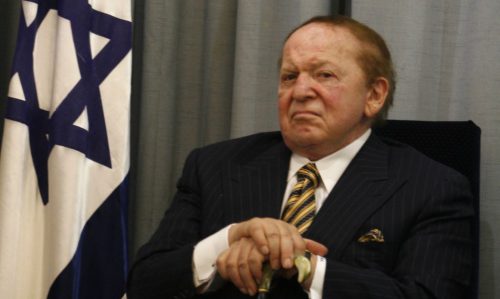
But the real issue is slightly different. By now we, and I mean all of us, except a few oligarchs, are all Palestinians. We are subject to the dirty games inflicted on us by the likes of Goldman Sachs, Soros, Saban, Adelson, and a few others. By now we are all subject to the tyranny of correctness that stops us from shouting out, loudly, that troubling truth which we all see.
By now we are all Palestinians and this even includes the deprived Israelis. We are all Palestinians and this includes the Greek, the Syrians, and the peoples of Detroit and Glasgow. And if we are all Palestinians, we can’t not see the glaring continuum between Athens and Baltimore… between Aleppo and Detroit, as much as we can’t turned a blind eye to the bloody silk road between Wall Street and Tel Aviv.
When we look at it with open eyes, when we examine those ZioCon wars with no end, growing poverty worldwide, we can’t stop conflating between ourselves and the Palestinians for the simple reason that we are one.
Russia launched ‘cyberwar & propaganda campaign’ against UK – media
RT | December 17, 2016
The UK is facing a cyberwarfare and a propaganda campaign from Russia, British newspaper The Times is claiming. The Russian embassy in the UK has demanded “proof” as critics label the allegations “psycho propaganda” and say the accusations are “a new low.”
Moscow is resorting to a campaign of “propaganda and unconventional warfare,” The Times reported, citing unnamed officials in Whitehall. “Moscow is behind a concerted drive to undermine the UK through espionage, misinformation, cyberattacks and fake news, senior Whitehall figures believe,” the newspaper writes.
According to the outlet, citing a source with a knowledge of the matter, the UK will now “assess and formulate options” on how to deal with the alleged threat. To address the issue, British Prime Minister Theresa May is also set to chair a national security meeting in the coming weeks.
“We will be happy to finally see some proof,” the Russian embassy said, responding via its official Twitter account.
An example of the suspected Russian “hybrid” warfare – as cited by The Times – is what UK’s intelligence services call “propaganda” by RT and Sputnik news agency to “influence” a British audience. Labour MP Ben Bradshaw recently said that Moscow “probably” influenced the UK referendum on leaving the EU (known as Brexit). Yet the allegations on alleged Russian hacking did not sit well with the vocal advocate of Brexit and a former UKIP leader, Nigel Farage.
“Ever since June 23 when we voted for Brexit, there have been all sorts of excuses that have been rolled out. But to now blame it on Russian cyber-hacking, I think they have reached a new low,” he recently said.
In a bid to be prepared for potential Russian propaganda warfare, the UK even went as far as to stage drills covering a scenario where Moscow would spread “false information” in the Baltic states, harming British troops there, according to another Times report.
However, the result of the drill was rather upsetting for the UK Ministry of Defense, as it acknowledged that lengthy bureaucratic procedures would prevent effective counteraction, the media revealed.
‘Ridiculous’ accusations
As Britain is joining the ranks of those claiming Russia is meddling in the internal affairs of Western states, the US has already made its point clear. Earlier this year, Washington officially accused Moscow of hacking servers and private computers of the Democratic Party, which Kremlin denied as “nonsense” and “myth making.”
As no evidence was ever presented to the public, whistleblowing website WikiLeaks suggested on Friday that the US should publish the proof on its platform to verify the serious accusations.
And on December 9, the Washington Post cited unnamed CIA officials as claiming that Russia not only directed the hacking, but did it with the goal to secure Donald Trump’s election.
But in an interview to Fox News, President-elect Trump blasted the information as “ridiculous” and yet “another excuse.” The US President-elect stressed that the accusations on Russia prove the Democrats were simply “embarrassed” since they “suffered one of the greatest defeats in the history of politics in this country.”
Speaking to RT, former US presidential candidate Dr. Ron Paul said that Americans “should be worried about the influence of our CIA in other people’s elections, I mean probably hundreds. It’s constant.”
Talk Radio host and columnist John Gaunt called the British allegations on Russia’s cyberwarfare “psycho propaganda,” saying the EU is simply “unhappy” with the Brexit and Americans electing Donald Trump.
“So, they started off with these ridiculous stories that Vladimir Putin and the Russians tried to stir the American election,” Gaunt told RT.
“Next they are telling us that the Russians are going to come and eat our babies. It’s completely and utterly ridiculous.” Gaunt went on to say that the British public and those who he spoke to simply “see straight through this” since the allegations are “pure propaganda.”
“The European Union needs a new enemy. They’ve decided that new enemy is Vladimir Putin and so they are poking him with their biggest stick,” Gaunt said. Yet instead of portraying the Russian president as a “James Bond villain,” the West and UK should talk to Russia, since the British population does not believe the accusations, he added.
Read more:
WikiLeaks calls on Obama to submit proof of Russian hacking for verification
Put Media Scoundrels Out of Business
By Stephen Lendman | December 15, 2106
The simple way is by ignoring them. Stop buying their publications – newspapers, magazines and other material.
Why waste good money on rubbish. Tune out their fake news broadcasts. Why put up with their antics?
If enough people follow this advice, they’ll wither, die and disappear. They feature managed news misinformation deception, not full and accurate coverage of what’s vital to know.
So far, it’s readily available from reliable independent sources, mostly online. Go there exclusively. Walk away forever from rubbish not fit to print or broadcast.
Western media never were reputable and trustworthy. In recent years, they’ve sunk to lower than ever depths – especially coverage of Washington’s geopolitical agenda, its imperial wars of aggression called humanitarian intervention and democracy building, its toppling of independent foreign leaders for pro-Western puppets, and the 2015-16 US presidential campaign, one-sidedly supporting Hillary over Trump, a disgraceful display of partisanship over unbiased reporting.
These events and numerous others display deplorable advocacy and willful deception, legitimate journalism abandoned entirely, “the media” exclusively serving powerful interests at the expense of truth and full disclosure on vital world and national issues.
One of Gerald Celente’s top 10 trends for 2017 is the fourth estate’s death, saying “(t)he daily newspaper dies in 2017. (Polls show) trust rates well below 10 percent.”
US presidential race coverage perhaps lost them all credibility. Their revenues are down, Celente explained. They’re losing money, laying off staff, dying a slow death.
Celente: “The industry is closing in on a decade of dramatic cutbacks in reporting and editing power.”
“According to estimates from The American Society of News Editors and Poynter Institute, those reductions add up to about half of all newsroom jobs being eliminated in less than 10 years.”
Expect more cutbacks, continued abysmal reporting – truth, accuracy, integrity and journalism the way it’s supposed abandoned entirely.
Celente added “when when upstart or existing alternative-news sites begin to make news, the mainstream media, taking their last breaths, will label it ‘fake news.’ “
Truth-telling today is called “fake news” or Russian propaganda. Managed news misinformation masquerades as the real thing in print and through the electronic media.
Why put up with it any longer! Walk away. Make a clean break and feel the refreshing difference – the way ex-smokers feel after licking the habit, never wanting to be hooked again.
Stephen Lendman can be reached at lendmanstephen@sbcglobal.net. His new book as editor and contributor is titled Flashpoint in Ukraine: How the US Drive for Hegemony Risks WW III.
British military specialists arrive in Middle East to train Syrian rebels
RT | December 15, 2016
Their arrival was announced as the UK hosts a conference of defense ministers from countries involved in the coalition fighting Islamic State (IS, formerly ISIS/ISIL).
The 20 trainers – who are likely to be special forces soldiers – will teach so-called ‘moderate’ fighters infantry skills, combat first aid and other battlefield tactics.
The existing deployment is thought to be made up of around 500 soldiers from the 4 Rifles infantry regiment, which is based near the Kurdish-held city of Erbil alongside specialist soldiers from the Royal Engineers and Royal Signals.
Defence Secretary Michael Fallon has previously stated that anyone receiving UK training would be vetted to ensure that no knowledge was passed on to jihadist groups.
The deployment of UK special forces has come under increasing scrutiny, with critics claiming that it has now become the basic form of UK military operations and as such should be brought under democratic oversight.
The UK is one of the few countries which flatly refuses to comment on covert military activities to either the media or to questions by elected lawmakers in parliament.
Calls for a new war powers act have been backed by Labour leader Jeremy Corbyn, among others, who made his case to the Middle East Eye website in August.
“I’m very concerned about this because [former Prime Minister] David Cameron – I imagine [Prime Minister] Theresa May would say the same – would say parliamentary convention requires a parliamentary mandate to deploy British troops. Except, and they’ve all used the ‘except,’ when special forces are involved,” Corbyn said.
His comments were immediately attacked by former soldier-turned-Tory MP Bob Stewart, who told the Times that the PM must have the opportunity to deploy troops “when they think it’s crucial.”
Spies recruited me then ‘threw me to the wolves’ – terrorism convict
RT | December 12, 2016
A convicted terrorist suspect who aided the Brussels bombers has claimed that he was recruited and groomed by UK spies before being thrown “to the wolves” once he was no longer deemed useful.
Zakaria Boufassil, who was sentenced to three years in jail on Monday after being convicted of aiding terrorism, had handed £3,000 to a jihadist named Mohammed Abrini in the city of Birmingham in July of 2015, just months before Abrini was involved in the 2016 Brussels bombing.
Moroccan-born Abrini became known as ‘the man in the hat’ after being spotted on CCTV in the Belgian capital ahead of the suicide bombings that killed 32 civilians. Abrini was also connected with the 2015 Paris attacks.
Boufassil claims that he was groomed by MI5 – Britain’s internal security agency – starting six weeks after Abrini was arrested in April of 2016, when Boufassil was approached and befriended by spies, who allegedly bought him cigarettes, clothes, and a phone, and also gave him £3,000.
He was later arrested upon returning from a Moroccan holiday that he claimed to have paid for with the MI5 money.
Despite vain attempts by prosecutors to keep his claim from being reported, the Guardian reported on Monday that his barrister said, “in Zakaria’s eyes, he feels he was effectively picked up by MI5 and was pumped and dumped.
“He found himself approached by the security service and he was reluctant at first, then more gradually, he told them what he knew about Abrini and the meeting in the park,” Dorian Lovell-Park QC argued in court.
“He was told by MI5 he wasn’t in any trouble and was told they were interested in signing him up or having him on their books.
“He feels he ceased to be of any use to them and he was effectively thrown to the wolves,” Boufassil’s lawyer said.
The prosecution has refused to confirm or deny the defendant’s claims, as is standard MI5 procedure.
Boufassil was convicted along with another man, Mohammed Ali Ahmed, who was given eight years for the same offences.
Russia ‘strategic competitor’ to West, no business as usual – UK Defense Minister
RT | December 11, 2016
Britain’s Defense Minister Michael Fallon said that Russia is a strategic competitor to the West and hence should not be treated equally. Fallon noted that there is still a need for the de-escalation of tensions, but there can be “no business as usual.”
“Russia is a strategic competitor to us in the West and we have to understand that,” Fallon told the BBC.
He noted that this is essentially the reason why the West “can’t be treating Russia as an equal.” Speaking about joint work with the future US counterpart Jim Mattis (recently appointed by US President-elect Donald Trump), Fallon said that the West should be strong against Moscow.
“I’m ready to work with the new Secretary of Defence Jim Mattis … to be strong against Russian aggression towards NATO,” the British Defense Minister stressed.
However, he added that at the same time he is ready to work with Washington “to de-escalate tensions with Moscow” and “to continue to work with Russia on how we get towards a settlement in Syria.”
“There are things we have to talk to Russia about, of course: to de-escalate tension, to explain the purpose of our deployment within NATO, to reassure the Eastern members and to persuade Russia to use its influence, where it has great influence. And one of those countries is Syria,” Fallon went on to say.
Yet he highlighted that “it can’t be business as usual.” Relations between Moscow and the West have been tense over the past few years, with the US and its allies accusing Russia of building up forces on its western borders. Moscow said that it has done so only on its own territory and in response to US and NATO troops amassing near its borders.
In July NATO members agreed to the “biggest reinforcement since the Cold War,” posting four multinational battalions to Estonia, Latvia, Lithuania and Poland. And in November Washington announced the deployment of nearly 6,000 troops, along with tanks, infantry vehicles, heavy howitzers, and combat helicopters to eastern Europe.
READ MORE:
Britain joins biggest European military buildup since Cold War
Trump must stand up to Russia, not treat it as equal – UK defense secretary
Demand action to free British citizen Fayez Sharary from Israeli prison

Samidoun Palestinian Prisoner Solidarity Network – December 11, 2016
Fayez Sharary, a British citizen of Palestinian descent, has now been held in Israeli prisons for nearly three months. He traveled with his wife Laila and their daughter, Aya, 3, to Palestine, to visit Laila’s widowed mother and to mark Eid al-Adha in Jerusalem, reports Inminds, the British organization currently leading a campaign to free Sharary. As the family attempted to leave Palestine on 15 September at the bridge to Jordan, they were stopped by Israeli forces; they had a flight scheduled for 17 September to return to the UK.
Sharary was separated from his wife and daughter, while he was interrogated for five hours while his daugher was refused access to a toilet. Laila’s mobile phone was confiscated and Sharary was detained; when she attempted to refuse to leave and stay with her husband, Israeli soldiers screamed at her.
Sharary was held for three weeks in Petah Tikva interrogation center and subject to ill-treatment, abuse and torture throughout that time. He was denied access to a lawyer until he signed a forced confession on 6 October and was moved to Ofer prison. Sharary’s torture by Israeli forces was further substantiated by Judge Azriel Levi, who ordered his release in a hearing in Ofer military court on 26 October, citing his confession as a result of “the method of interrogation, which included pained and prolonged shackling, threats, and a blatant exploitation of the defendant’s demonstrated weakness.” The military judge further said that the confession had a value of “less than zero” and that some of the allegations against Sharary were not prosecutable in the military courts.
However, as is frequently the case when on the rare occasion a military judge orders the release of a detainee, the Israeli military prosecution appealed and Sharary has remained imprisoned ever since.
Daniel Zeichner, the British Labour Party’s Shadow Minister for Transport, raised a parliamentary question regarding the involvement of the British consulate in providing support for Sharary’s case; Tobias Ellwood, under-secretary of State for Foreign and Commonwealth Affairs, replied that “Our Embassy in Tel Aviv has raised, and continues to raise, the detention of Mr Sharary with the Israeli authorities, most recently on 15 November. Consular officials continue to provide consular support to Mr Sharary and his family.”
Laila Sharary has participated in several protests in London demanding that the UK government act to free her imprisoned husband, 49, who has lived in the UK for 23 years. Sharary is allegedly accused of “contact with an enemy organization,” “services to an illegal organization,” and “bringing money into the region from an enemy.” Part of these allegations allegedly relate to Sharary’s time in Lebanon in 1993 or earlier; Sharary is not a resident of Palestine. The initial judge in the case who ordered Sharary released also dismissed the allegations of financial involvement due to irrelevant claims by the military prosecutor.
Despite these flimsy charges and his experience of torture – all too common, but publicly confirmed in this case by an Israeli military judge – Sharary remains imprisoned and will face a military court in Ofer on Wednesday, 14 December.
TAKE ACTION:
Please take action to urge the UK government to intervene and pressure Israel to release torture victim Fayez Sharary. This includes asking for UK representatives to attend the hearing in Sharary’s case at Ofer Military Court.
Email the Foreign and Commonwealth Office at fcocorrespondence@fco.gov.uk and the British Consulate in Jerusalem at britain.jerusalem@fco.gov.uk to express your concern about the case of Fayez Sharary.
You can use the sample letter below or write your own letter:
SAMPLE LETTER
To whom it may concern,
I am writing in regard to the urgent case of Fayez Sharary, a British citizen currently imprisoned by Israel in its military court system for the occupied Palestinian territories. Sharary, 49, was previously ordered released due to the torture he experienced under interrogation.
Nonetheless, he remains imprisoned and will once again face a military court at Ofer prison on Wednesday, 14 December from 8:00 am to 1:00 pm.
It is critical that the British government support its citizen Fayez Sharary by pressuring Israel for his immediate release. It is particularly critical that there is a British official presence at the military court hearing on 14 December.
Israeli military trials do not meet international standards for fair trials and can rely on evidence obtained through torture. Please act to release Fayez Sharary and reunite him with his wife and family in Britain.
Sincerely,
UK in panic over Johnson’s remarks against Saudi regime
Press TV – December 11, 2016
UK Foreign Secretary Boris Johnson’s recent criticism of Saudi Arabia has worried British officials, with various government figures trying to gloss them over as Johnson’s own personal views.
During a conference in Rome last week, Johnson blasted the Riyadh regime over its “proxy wars” in the Middle East and its unprovoked military aggression against Yemen, which has killed over 11,000 Yemenis since March 2015.
UK Prime Minister Theresa May’s spokeswoman immediately rebuked the remarks back then, saying the comments did not reflect “the government’s views on Saudi and its role in the region.”
Johnson’s statements divided the UK Parliament, with many of the lawmakers saying that he was stating the truth and should not face public chastisement.
UK Defense Minister Michael Fallon lashed out at the media on Sunday, for blowing the story out of proportions and confecting an artificial row between Johnson and the Downing Street.
“Let’s be very clear about this. The way some of his remarks were reported seemed to imply that we didn’t support the right of Saudi Arabia to defend itself… and didn’t support what Saudi Arabia is doing in leading the campaign to restore the legitimate government of Yemen,” Fallon said during a BBC interview.
“Some of the reporting led people to think that,” he added. “The way it was interpreted left people with the impression that we didn’t support Saudi Arabia and we do.”
Fallon said the months-long Saudi invasion against its impoverished southern neighbor was in self-defense, a right that London thought Riyadh was entitled to.
“The government’s view is absolutely clear – that what Saudi Arabia is entitled to do is defend itself from these attacks across its own border,” he said.
Johnson’s remarks came at a time when May was in the Middle East, trying to cement military and economic ties with [Persian] Gulf Cooperation Council nations – Saudi Arabia, the United Arab Emirates, Kuwait, Oman, Bahrain and Qatar.
Besides helping Bahrain with a heavy-handed crackdown on its popular uprising, Britain has also been providing weapons and intelligence to Saudis in the attacks against civilian targets in Yemen.
Facebook is rolling out its censorship initiative
By Guilherme Schneider | The Duran | December 11, 2016
According to the latest news, Facebook began testing new tools to carry out its “censorship plan” with the convenient name of “tackling fake news.”
 One of the tools being tested will enable users to inform Facebook if certain news stories are using “misleading language”. Some users posted images of a Facebook survey asking them the following question: “To what extent do you think that this link’s title withholds key details of the story?”
It is still unclear what kind of actions will be carried out after this additional user data is collected, but it is likely that some sort of a database, containing the list of “misleading” news websites, will be generated.
In a not so distant past, content curators from Facebook confirmed that they received direct orders from the company to decrease the relevance or even hide from the newsfeed stories and content with conservative language. While this happened in the US, similar stories have been reported in Brazil, the United Kingdom around the time of the Brexit, and in other countries.
Recently, there were other reports that Facebook developed a special software for the Chinese market, that would enable “third parties” to authorize the contents before posting it to the users’ timelines. The initiative would aim to lift the current ban of the social network in the country.
The main difference between this new software and the current content restrictions in some countries is that instead of reacting to a government request to hide some specific content, Facebook would be giving the option to some parties to censor and take down content before it is even posted on the network.
It is true that when you create a profile on Facebook or any other social network, you have to accept their terms and conditions in exchange of the “non-paid” use of their platforms. Most of these terms and conditions allow the social networks to analyze the information you are publishing and reading for several proposes, including targeted advertisements and many others, but is it ethical to take advantage of this information in order to define what content you should or should not see?
Since Snowden’s NSA information leak we know that we can be monitored at any given time by government agencies. The realization of this fact, however, didn’t stop us from using the same networks, nor did it prompt the closure of the NSA or other agencies involved in the perpetual recording and storage of our data.
But now we are entering a whole new level in which companies and governments will attempt to define what is right and wrong for us to see, read and talk about. What’s even more bizarre is that the CEO of Facebook could potentially run for office, while retaining control over one of the most popular social networks in the world, with the capability of retrieving and accessing anyone’s data without any sort of legal process or request.
This Orwellian trend is truly scary and we should really start questioning ourselves about the extent to which we are willing to continue handing out personal data and information to these networks.
Featured Video
New positive ivermectin evidence
or go to
Aletho News Archives – Video-Images
From the Archives
Fanatical Followers of the Covid Regime: A Jim Jones-Style Cult?
By Professor Roger Watson and Dr. Niall McCrae | The Daily Sceptic | November 15, 2021
As scholars at leading British universities over recent decades, we witnessed the replacement of critical thinking and debate by narrative: facts are discrimination and scientific method is imperialism; truth, instead, is derived from ‘progressive’ values. This educational trend may be a major contributory factor to the ease in which society has been inculcated to the Covid ‘new normal’ of masking, testing, and repeated doses of vaccines for a disease of similar risk to severe influenza.
One doesn’t need much critical reasoning to observe the flawed logic of some vaccination enthusiasts, such as people who respond to experiencing any side effects, however debilitating, by saying “at least I know it’s working”, or, after contracting the disease despite their promised inoculation (over 90% effective, according to initial drug company claims), “I’d have been worse off without the jab.” … continue
Blog Roll
 Aletho News
- EU Council Advances Chat Control 2.0 Scanning Proposal
- Ex-Greek MEP files complaint against Israeli spyware firm over alleged Pegasus surveillance
- Troubling ideas throughout the Torah, Talmud, Mishneh Torah and Tanya
- ‘Grave, alarming’: Iran mission on Trump’s UNGA ‘annihilation’ threats
- Najaf airport to reopen to Iranian flights within 24 hours: Ambassador
- From ‘How Will This End For Iran’ to ‘When America Walks Away’: A tale of two Economist covers
- Tehran blasts ‘baseless’ speculation linking Iran to alleged bomb plot at UK air base
- The Rise And… Rise Of ‘Color Revolutions’
- The Coming GOP Bloodbath?
- Arctic Scare Stories Melt Away
- If Americans Knew
- Netanyahu Asked UAE Leader to Deny Report on Oct. 7 Warning in Secret Visit, Sources Say
- CNN Chief Int’l Correspondent Clarissa Ward on Journalists in Gaza
- Democratic Party Consultants Surround Troy Jackson with Pro-Israel Donors
- Christian Leader Responds To Netanyahu’s Claims Regarding Palestinian Christians
- In Gaza, ‘Whoever Survives the Bombing Won’t Survive the Rubble’
- Israel kills more Palestinians, amid push to resettle Gaza – Daily Update
- Israel forces Gazans to live in constant peril – Daily Update
- Deconstructing Netanyahu’s pants-on-fire UN rant – Daily Update
- Trump betrayed voters with his campaign lies and prioritized a foreign country once he took office
- Netanyahu calls Israel’s war in Gaza ‘opposite of genocide’ in UN speech to near-empty hall
- No Tricks Zone
- New Study: Earth And Venus Surface Warmth Largely Explained By Convection And Lapse Rate, Not CO2 Or Radiation
- 2025 Nature Paper Claiming Worsening Global Drought Gets RETRACTED …Heavily Flawed
- New Study: ‘Global Drought Shows No Detectable Recent Acceleration Under Climate Warming’
- Economic Masterminds: German Socialists Suggest Taxing Productivity Gains Stemming From Using AI
- The South China Sea Has Not Been Cooperating With The Climate Change Narrative
- Energy Crisis: Germany Enters Heating Season With Historically Low Gas Reserve Fill Levels
- New Study: The Antarctic Ice Sheet Gained Mass From 2020-2024 Due To Staggering Snow And Ice Accumulation
- Study: Ocean Heating Rates From Thousands Of Years Ago ‘Dwarf’ Modern Ocean Heating Rates
- Climate Extremists Target, Attack Large-Scale Power Grid Infrastructure In Germany!
- New Study: Antarctic Ice Melt Has Contributed Less Than 1 Centimeter To Sea Level Rise In The Last 30 Years

