‘Scandal of privatized aid’: Free-market consultants cream off £450mn in UK govt funds
RT | April 1, 2016
Free-market consultants in Britain are taking hundreds of millions of pounds ring-fenced to alleviate poverty in the developing world, as the government continues with its agenda of privatizing aid, a damning report has warned.
A study conducted by British NGO Global Justice Now (GJN) raises grave concerns over the sheer amount of aid money the Department for International Development (DfID) has given to consultants Adam Smith International (ASI) for overseas aid projects.
The report, titled The Privatization of UK Aid, was published on Friday.
It found that ASI has won a minimum of £450 million (about US$640 million) in aid-funded contracts over the last five years. DfID funneled almost £90 million of its budget through the consultancy firm, more than the total amount given to human rights and women’s rights groups. This figure is almost double that spent on projects to tackle Aids and HIV, according to the report.
The study examined how much of DfID’s work was geared towards supporting market-based development and the private sector in poor states. Recent projects included backing for a “business advocacy capacity development program” in Zimbabwe, and projects to increase private schooling in Kenya.
The report also analyzed a number of existing case studies on ASI projects, such as the consultancy firm’s role in privatizing Nigeria’s energy system and making Afghanistan “investor friendly” by helping to rewrite energy extraction legislation there.
The NGO said the legislation, which was later passed into law, lacks transparency and does not protect local citizens’ rights. ASI has also helped to develop new mining legislation and regulations in Papua New Guinea, where the energy extraction technique has a legacy of violent conflict. GJN’s report says the laws have been branded “authoritarian and regressive” by critics.
The NGO argues that Westminster’s increasing use of consultancy firms forces out smaller companies in impoverished states and highlights DfID’s tendency to embrace private partnerships and back private-sector development schemes that risk jeopardizing communities in the developing world. It has called on DfID to explain why it chooses to hire profit-driven British firms like ASI rather than using its own employees or companies in the developing world.
GJN also urged DfID to be more transparent on contractors’ costs, and to release a robust plan on spending more through organizations in developing countries.
DfID defended its use of private contractors, arguing British aid is assisting highly vulnerable people in crisis-ridden states.
“UK aid is focused on tackling extreme poverty, helping people in some of the most fragile and dangerous places on Earth, including war zones and disaster areas,” a spokeswoman for the government department told the Guardian.
“We draw on specialist expertise from charities, NGOs and the private sector to get the job done and get the best value for taxpayers.”
Labour’s Shadow Secretary for International Development Diane Abbott said the government must take a serious look at how aid money is spent.
“UK aid is being used to pay for consultants instead of alleviating poverty in the global south. We must look beyond simply spending 0.7 percent of UK GNI on aid, but look at how it is spent. UK aid should be first and foremost about tackling poverty and inequality and not benefitting the UK,” she said.
“We need to critically assess if the sort of free market reforms that Adam Smith International are enabling in the developing world, using UK taxpayers’ money, are actually helping to alleviate poverty or if they are making it worse.”
ASI defended itself against the allegations in the report.
“The vast majority of the world’s poor are in the informal private sector. To bring people out of poverty, one must address the factors that are keeping them poor,” the firm said in a statement.
“We engage with the private sector to reduce poverty by helping create jobs and make markets more accessible. This type of development is widely reflected in donor strategies and recognized in the 8th sustainable development goal.”
ASI stressed its “expert associates” and employees hail from diverse backgrounds, and are “all committed to poverty alleviation.” The think tank went on to claim the projects mentioned in GJN’s study had been misreported and “taken out of context.”
However, GJN’s campaigns and policy officer, Aisha Dodwell, hit back, saying British taxpayers would be shocked if they knew how much UK aid money was given to free-market consultants.
“UK aid could be used to strengthen public services, support civil society, and build democratic and accountable institutions,” she said.
“Instead of padding the pockets of big UK contractors like Adam Smith International.”
ASI describes itself as a transparent, objective organization dedicated to making public services more robust. It also claims to support economic growth and civil society, while building “democratic and accountable institutions.”
Enforcing UK surveillance powers may cost over £1bn, 7 times original estimate
RT | March 30, 2016
Online surveillance on the scale proposed in the UK government’s Investigatory Powers Bill could end up costing more than £1.2 billion, over seven times the Home Office’s highest estimate.
A Danish digital rights group told British MPs the government’s estimated cost of rolling out a new system for spying on internet users is too low and could only cover “a small part” of the population.
Denmark recently suspended plans to introduce a similar internet surveillance program after an official study by Ernst & Young (EY) found set-up costs would be much higher than originally projected.
The IT-Political Association of Denmark said in written evidence to the committee scrutinizing the Investigatory Powers Bill that Britain should expect a similarly high price tag.
“Based on the new cost information from Denmark, it seems unlikely that the Home Office budget can cover a sufficiently effective ICR implementation, unless only a small part of the British population is subjected to [ICRs].”
The revised bill, published last month, ignored criticism from MPs by expanding the most controversial powers.
The new legislation requires internet companies to collect and store everyone’s web browsing history for 12 months, and gives security services the power to hack into citizens’ computers and smartphones.
Home Secretary Theresa May estimates the Home Office would need to compensate internet companies between £130.6 million and £164.4 million to start new data systems capable of gathering and storing the public’s Internet Connection Records (ICRs).
In addition, the government projects running costs of £4.4 million to £5.6 million over 10 years.
However, the EY study from Denmark suggests costs could be exponentially higher. EY found the cost of building computer systems capable of collecting and storing ICRs would be about £19 per person.
If this figure is the same for the UK, with its 64.6 million population, it adds up to a hefty £1.2 billion price tag.
Liberal Democrat peer Paul Strasburger, who sits on the committee, called on the government to “scrap this bad idea.”
“This news about the real cost should be the final nail in the coffin for ICRs.
“The Danes found that it was about as useful as a chocolate teapot for catching criminals or preventing terrorism, and anyway it is very easy for the bad guys to evade.
“What’s worse is that collecting everyone’s data would put every British internet user at risk of having their most intimate information stolen by hackers, thieves, and blackmailers,” Strasburger concluded.
The Mirror reports a Home Office spokesperson as claiming the Danish model is not comparable to the plan outlined in the Investigatory Powers Bill.
The Home Office said an updated figure would be published before the bill is passed, but could not give a date.
US, three allies urge UN meeting on Iran missile tests
Press TV – March 30, 2016
The United States and some of its European allies have reportedly called for a meeting at the United Nations Security Council (UNSC) on Iran’s recent missile tests, which they claim were carried out in defiance of a UN resolution.
According to a letter reportedly obtained by Western news outlets on Tuesday, the US, Britain, France, and Germany have asked UN Secretary General Ban Ki-moon and Spain’s UN Ambassador Roman Oyarzun Marchesi for discussions on an “appropriate response” by the UNSC to Iran’s missile tests.
The four countries claimed that the missiles used in Iran’s recent tests were “inherently capable of delivering nuclear weapons” and were “inconsistent with” and “in defiance of” UNSC Resolution 2231 (2015), adopted last July to endorse a nuclear agreement between Iran and the P5+1 group of countries.
Spain has been assigned the task of coordinating UNSC discussions on Resolution 2231.
The claim comes even as Resolution 2231 does not prohibit Iran from testing missiles, and only “calls upon” the Islamic Republic to refrain from testing missiles “designed to be capable of” carrying nuclear warheads. Iran has made clear that it does not seek to build nuclear warheads to be carried on missiles and has put its atomic activities under unprecedented, enhanced international supervision under the nuclear deal with the P5+1.
On March 9, Iran’s Islamic Revolution Guards Corps (IRGC) successfully test-fired two ballistic missiles as part of measures to assess IRGC capabilities. The missiles, dubbed Qadr-H and Qadr-F, were fired during large-scale drills code-named Eqtedar-e-Velayat.
Iran fired another ballistic missile dubbed Qiam from silo-based launchers in different locations across the country on March 8.
A similar US-led bid against the Iranian missile tests failed in March, as other diplomats in a closed-door UNSC meeting on Iran back then made it clear that Resolution 2231 did not prohibit Iranian missile tests and thus a response was not warranted to such tests.
Russian Ambassador Vitaly Churkin reiterated that, in the view of veto-wielding Russia, Iran’s ballistic missile tests did not violate Resolution 2231.
In the new letter, the four countries refrained from using the term “violation,” saying instead that the Iranian missile tests were “in defiance of” the resolution. However carefully-worded, it is not clear what kind of legal action the four countries would want to be taken against Iran, as the Islamic Republic says it has not violated its commitments.
Resolution 2231 (2015), which endorses the Joint Comprehensive Plan of Action (JCPOA) — the Iran-P5+1 agreement — provides for the termination of the provisions of previous Security Council resolutions over the Iranian nuclear program.
Iran argues its missiles are defensive and designed to carry conventional explosives only.
Earlier this month, Iran’s Foreign Minister Mohammad Javad Zarif said the missiles are a means of defense. “We spent a fraction of any other country in the region on defense, and missiles are a means of defense that we require,” he said.
Tehran insists that given the deepening insecurity in the region and the fact that many countries are spending hefty sums on arms purchases, it needs to boost its defensive missile program.
The US, Britain, France, and Germany were, along with China and Russia, members of the P5+1. Iran and the six other countries started implementing the deal on January 16.
Is This Even Legal? EU Court to Investigate UK Surveillance Bill
Sputnik — 28.03.2016
The European Court of Justice (ECJ) has scheduled an emergency hearing to investigate the United Kingdom’s recently adopted Investigatory Powers Bill on its compatibility with EU law, UK media said.
The hearing, which may result in the European Union limiting the powers of the UK Government Communications Headquarters (GCHQ) surveillance body, has been scheduled for April 12, The Guardian newspaper reported on Sunday.
On March 15, the House of Commons passed the Investigatory Powers Bill, also dubbed as the “snoopers’ charter” by its critics with 281 votes for and 15 against. The bill is now proceeding through the committee stage for further scrutiny.
The ECJ has previously ruled against the UK government’s surveillance legislation. In 2014, the court declared the Data Retention and Investigatory Powers Act 2014 (Dripa) to be inconsistent with EU laws after the case was brought to Luxembourg by two UK lawmakers.
April’s hearing is expected to be attended by the Conservative member of parliament David Davis, of the lawmakers that took Dirpa to the ECJ for scrutiny, according to the newspaper.
The snoopers’ charter has been designed to give UK police and intelligence services sweeping powers. the legislation requires internet providers to store their customers’ browsing history for up to 12 months and grant access to law enforcement regardless of whether a user is under investigation or not. Police will also have the authority to hack into phones, laptops, tablets and computers.
UK Home Secretary Theresa May has defended the bill, claiming it prioritizes privacy and limits intrusiveness into personal data.
UK Labor chief urges end to arms supplies to Saudis
Press TV – March 24, 2016
UK Labor Party Leader Jeremy Corbyn says the British government should halt its arms sales to Saudi Arabia over the kingdom’s deadly military aggression against neighboring Yemen.
Corbyn said in a statement on Wednesday that the bombing campaign has been “a human rights tragedy and a violation of international law.”
“The British government should halt arms supplies to Saudi Arabia, now being used for this assault on its neighbor, and it should end its diplomatic and military support for the Saudi intervention,” he added in the statement.
The Labor chief further stressed that London should instead focus on promoting peace in Yemen and providing assistance to the people in the country, which has been under military attack by Saudi Arabia since late March 2015.
At least 8,400 people, among them over 2,230 children, have been killed and 16,000 others injured since March 2015. The strikes have also taken a heavy toll on the impoverished country’s facilities and infrastructure, destroying many hospitals, schools, and factories.
Corbyn has previously challenged the UK government over the issue of arms supplies to the Saudi regime which has been accused of “widespread and systematic” targeting of civilians in its aerial campaign in Yemen.
However, London has stood defiant against calls to suspend its arms sales to Saudi Arabia. In January, Prime Minister David Cameron claimed that the UK has “the strictest rules for arms exports of almost any country anywhere in the world.”
According to Amnesty International, the British government has sold 2,400 missiles and 58 warplanes to Saudi Arabia last year alone, enabling the regime to continue its war against Yemen.
British media reports say that the UK government has licensed £6.7 billion ($9.4 billion) of arms to Riyadh since Cameron came to power in 2010, including £2.8 billion ($3.9 billion) since the bombing of Yemen began.
Meanwhile, a powerful cross-party committee on arms exports has launched a full-scale investigation into British arms sales to Saudi Arabia.
“We have launched this inquiry to understand what role UK-made arms are playing in the ongoing conflict in Yemen,” said the arms control committee’s chairman, Chris White.
The Campaign Against Arms Trade (CAAT) has also brought a high court case against the British government, urging London to suspend all current export licenses and refuse all new licenses to Saudi Arabia.
Andrew Smith of CAAT slammed the UK for standing “shoulder to shoulder” with the Saudis throughout its bloody campaign in Yemen.
Yemen financial and food crisis
The Britain-based international charity group Oxfam said on Thursday that Yemen, the Arab Peninsula’s poorest nation, is in the grip of a looming famine in the face of a domestic financial crisis.
Half of the nation’s residents, or nearly 14.4 million people, already struggle to buy food and need assistance in a crisis going largely unheeded in the international community, it said in a report.
The global charity said the possibilities of tightening credit and a currency devaluation threaten Yemen which imports nearly all its food and needs a functioning economic system to fund those shipments.
The warning was issued after reports said Yemen’s Central Bank might cut credit lines that guarantee payment for incoming wheat and rice cargoes.
The Yemeni riyal also runs the risk of devaluation, which could in turn contribute to a rise in food prices in a poor country that imports nearly 90 percent of its food.
Yemeni men receive food aid provided by the World Food Program (WFP) to help families affected by the ongoing conflict, in the Yemeni capital Sana’a on March 16, 2016. (AFP photo)
“An invisible food crisis … risks turning famine warnings into a reality over the coming months,” Oxfam said.
Sajjad Mohamed Sajid, Oxfam’s country director in Yemen, said Yemenis cannot endure the rising prices for food if importers are unable to trade.
Saudi Arabia began a military campaign in Yemen a year ago with the aim of restoring former president Abd Rubbuh Mansur Hadi to power.
“A catastrophe on top of catastrophe … has created one of the biggest humanitarian emergencies in the world today,” Sajid said. “Yet most people are unaware of it.”
The charity reported instances of people eating only a meal a day in Ta’izz city, which is a regular target of Saudi attacks, and empty market stalls with no vegetables on display.
Is the ISIS Behind the Brussels Attacks? Who is Behind the ISIS?

By Prof Michel Chossudovsky | Global Research | March 22, 2016
Dramatic loss of life in the terror attacks in Brussels: 34 killed and more than 180 wounded according to the latest reports.
Prior to the conduct of a police investigation, in the hours following the attacks, the Western media went into overdrive, intimating without evidence that the Islamic State (ISIS) operating out of Raqqa, Northern Syria was responsible for the attacks.
According to the Independent “Isis supporters have been celebrating the Brussels attacks online [social media] as speculation mounts that the group is behind a wave of deadly attacks in the Belgian capital.”
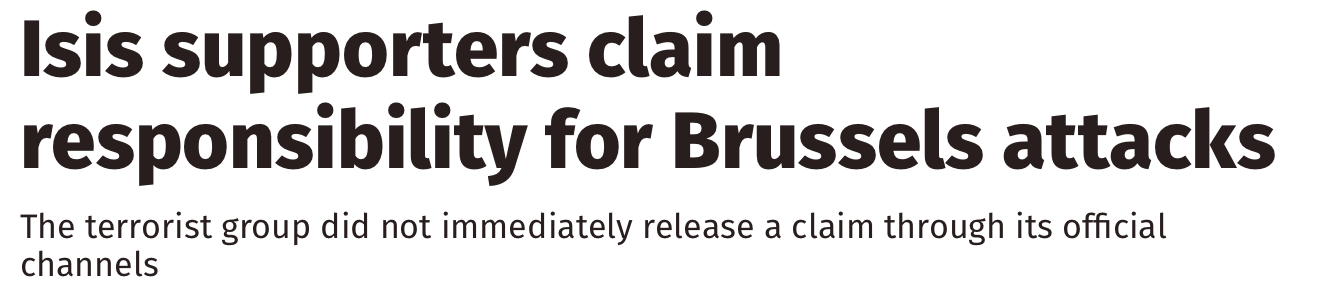
The report is based on information emanating from social media, which does not constitute a reliable source of information.
An unkown self-proclaimed news agency (Amaq Agency ) allegedly representing the ISIS provided the following report:
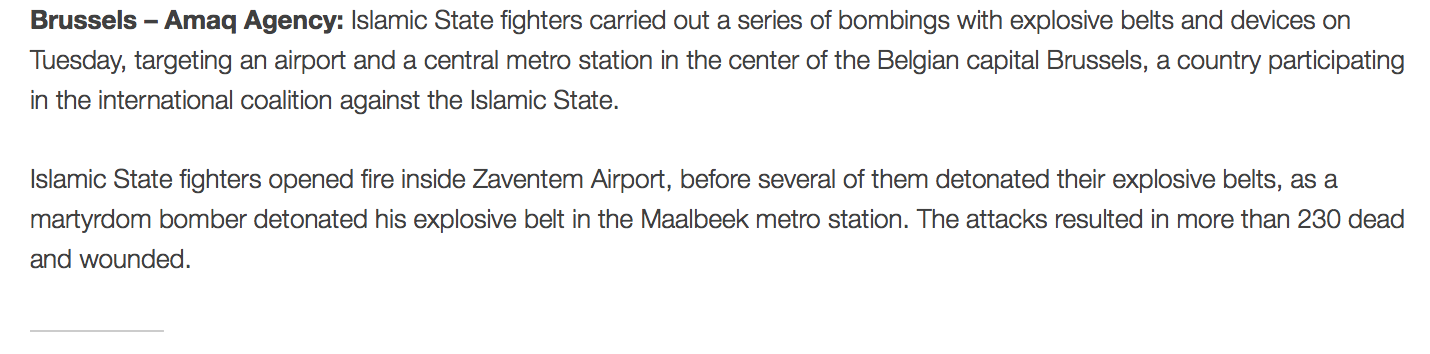
This mysterious agency was then immediately quoted by Reuters in an authoritative report.
In turn, alleged supporters of ISIS on twitter were quoted. According to the Jerusalem Post (March 21, 2016):
The “tears of joy” that were shed by ISIS supporters on Twitter are also related to the fact that the terrorists succeeded in paralyzing the activity in the airport attacked. One of ISIS’ main declared goals is to devastate the Western economy and replace the dollar with its own coin as the only international legal tender.
Who Controls the ISIS social media and twitter accounts?
Police and intelligence are often aware of the identity of ISIS social media, IP addresses, geographic location.
According to London’s Mirror (December 16, 2015):
Hackers have claimed that a number of Islamic State supporters’ social media accounts are being run from internet addresses linked to the [UK government] Department of Work and Pensions.
A group of four young computer experts who call themselves VandaSec have unearthed evidence indicating that at least three ISIS-supporting accounts can be traced back to the DWP.
Every computer and mobile phone logs onto the internet using an IP address, which is a type of identification number.
The hacking collective showed Mirror Online details of the IP addresses used by a trio of separate digital jihadis to access Twitter accounts, which have been used to spread extremist propaganda.
At first glance, the IP addresses seem to be based in Saudi Arabia, but upon further inspection using specialist tools they appeared to link back to the DWP. ..
[T]he British government sold on a large number of IP addresses to two Saudi Arabian firms.
After the sale completed in October of this year, they were used by extremists to spread their message of hate.
Jamie Turner, an expert from a firm called PCA Predict, discovered a record of the sale of IP addresses, and found a large number were transferred to Saudi Arabia in October of this year.
He told us it was likely the IP addresses could still be traced back to the DWP because records of the addresses had not yet been fully updated.

What the Daily Mirror report suggests (as well as other reports) is that the IP addresses of the ISIS are indirectly linked to the British government, i.e. 1) the identity of the ISIS social media is invariable known to police authorities, and 2) The ISIS social media are sponsored by Saudi Arabia, which is also involved in the recruitment and training of terrorists in liaison with US-NATO.
It is worth noting that the British government has acknowledged its responsibility:
The Cabinet Office has now admitted to selling the IP addresses on to Saudi Telecom and the Saudi-based Mobile Telecommunications Company earlier this year as part of a wider drive to get rid of a large number of the DWP’s IP addresses. (Mirror, op cit cit, emphasis added)
The State Sponsors of Terrorism
The events in Brussels raises the broader question: who is behind the ISIS?
Israel intelligence sources (DEBKA) in a 2011 report confirmed the role of NATO operating out of its Brussels headquarters and Turkey’s high command in the training and recruitment of terrorists:
NATO headquarters in Brussels and the Turkish high command are meanwhile drawing up plans for their first military step in Syria, which is to arm the rebels with weapons for combating the tanks and helicopters spearheading the Assad regime’s crackdown on dissent. … NATO strategists are thinking more in terms of pouring large quantities of anti-tank and anti-air rockets, mortars and heavy machine guns into the protest centers for beating back the government armored forces. (DEBKAfile, NATO to give rebels anti-tank weapons, August 14, 2011)
This initiative, which was also supported by Saudi Arabia and Qatar, involved a process of organized recruitment of thousands of jihadist “freedom fighters”, reminiscent of the enlistment of Mujahideen to wage the CIA’s jihad (holy war) in the heyday of the Soviet-Afghan war:
Also discussed in Brussels and Ankara, our sources report, is a campaign to enlist thousands of Muslim volunteers in Middle East countries and the Muslim world to fight alongside the Syrian rebels. The Turkish army would house these volunteers, train them and secure their passage into Syria. (Ibid, emphasis added)
These mercenaries were subsequently integrated into US and allied sponsored terrorist organizations including Al Nusrah and ISIS.
And then in August 2014, Obama launched his counter-terrorism campaign. Yet the evidence confirms that instead of destroying the ISIS, the US and its allies including Turkey, Saudi Arabia and Israel were in fact protecting the ISIS.
Again according to the Daily Mirror in a 2015 report, the counterterrorism campaign was conducive to ISIS doubling the territory under its control, until the launching of the Russian intervention in late September 2015.
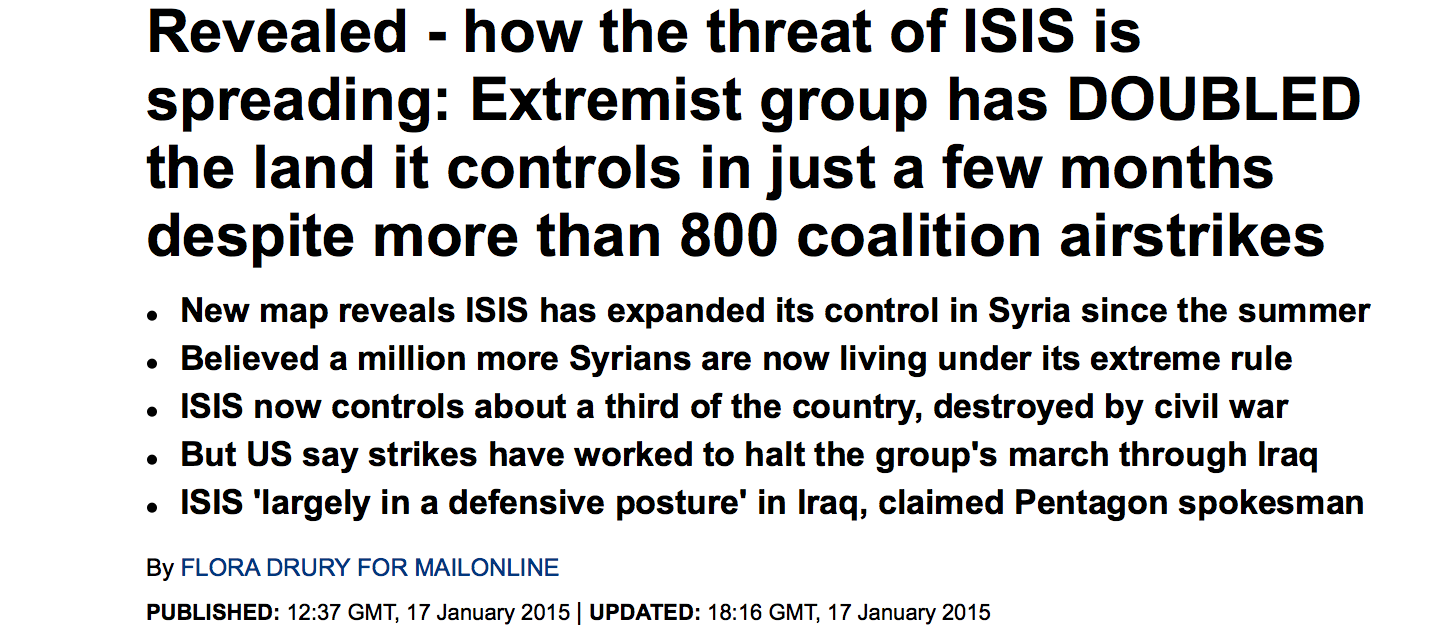
Sheer Incompetence of the US Air Force (doubtful) or Washington’s complicity in protecting the terrorists?
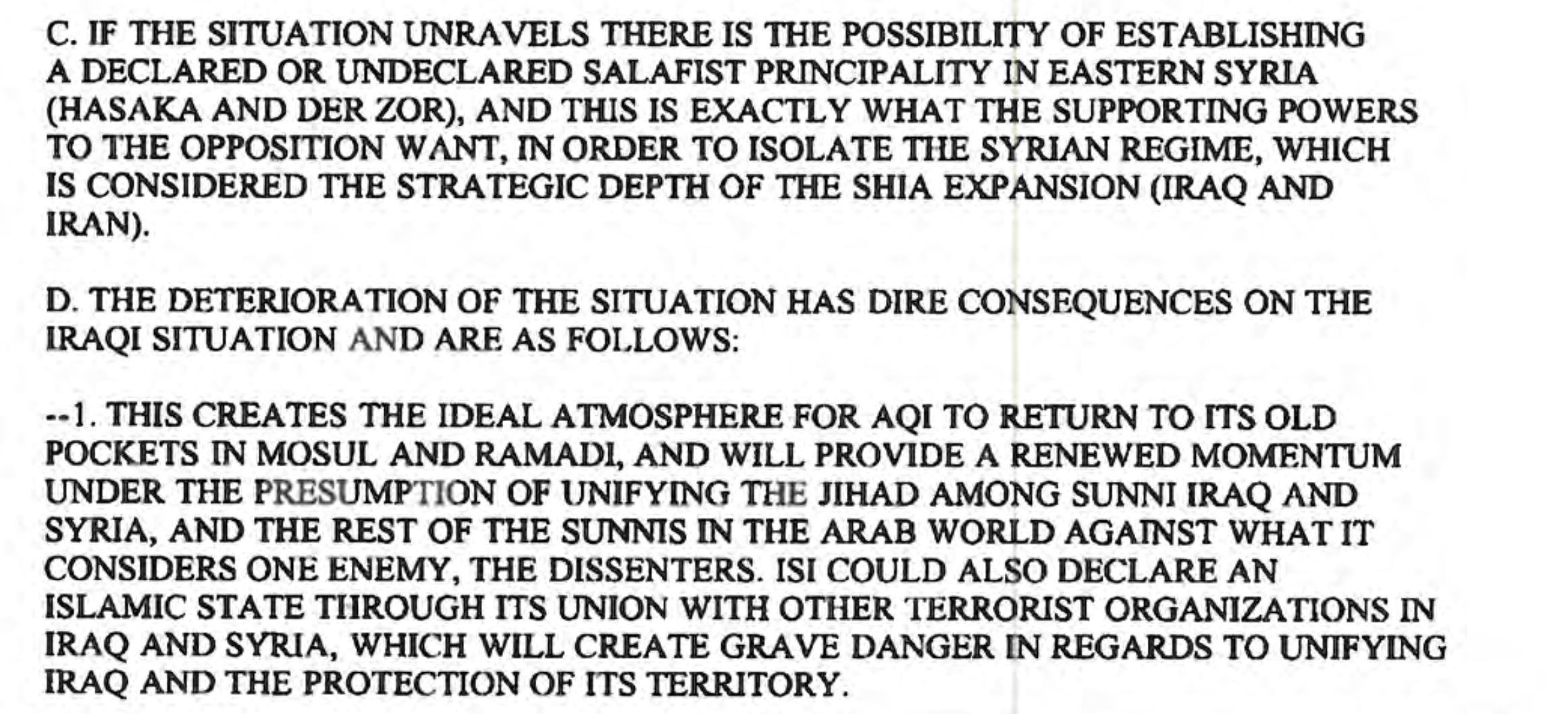
Recently the release of the Hillary Clinton email archive as well as leaked Pentagon documents confirm that the US and its allies were supportive of ISIS, which are according to press reports, the alleged architects of the Brussels attacks.
The 7-page Defense Intelligence Agency (DIA) document dated August of 2012, points to US complicity in supporting the creation of an Islamic State:
UN set to establish database of businesses involved in Israeli settlements
MEMO | March 23, 2016
The United Nations Human Rights Council (UNHRC) is set to vote on Thursday on whether to establish a database of businesses involved in Israeli settlements.
The UNHRC, meeting in its 31st session, will be considering four resolutions under Item 7, which focuses on the impact of the Israeli occupation on human rights in Palestine and other occupied Arab territories. Such resolutions are routinely adopted.
A resolution on Israel’s illegal settlements in the Occupied Palestinian Territory, including East Jerusalem, and in the occupied Syrian Golan, however, has reportedly upset European Union member states, in particular by calling for “a database of all business enterprises involved” in illegal settlement activities, which will be updated annually.
The database is presented as a follow up to an earlier fact-finding mission, which investigated “the implications of the Israeli settlements on the civil, political, economic, social and cultural rights of the Palestinian people throughout the Occupied Palestinian Territory, including East Jerusalem.”
Middle East Monitor understands from sources familiar with the discussions taking place that European Union member states will either vote against, or abstain from, the resolution. The UK is reportedly expected to vote against, with significant pressure being applied on Palestinian officials to remove the paragraph establishing the database of businesses involved in settlement activities.
The resolution notes that “the settlement enterprise and the impunity associated with its persistence, expansion and related violence continue to be a root cause of many violations of the Palestinians’ human rights, and constitute the main factors perpetuating Israel’s belligerent occupation of the Palestinian Territory, including East Jerusalem, since 1967.”
The resolution goes on to express concern that “some business enterprises have, directly and indirectly, enabled, facilitated and profited from the construction and growth of the Israeli settlements in the Occupied Palestinian Territory.”
The UNHRC resolution also notes that “products wholly or partially produced in settlements have been labelled as originating from Israel”, and that “private individuals, associations and charities in third States” are “involved in providing funding to Israeli settlements and settlement-based entities, contributing to the maintenance and expansion of settlements.”
As well as the database, the draft text urges all states to “provide guidance to individuals and businesses on the financial, reputational and legal risks, including the possibility of liability for corporate involvement in gross human rights abuses as well as the abuses of the rights of individuals, of becoming involved in settlement-related activities.”
On Monday, the UNHRC head from outgoing Special Rapporteur on the situation of human rights in the Palestinian territories occupied since 1967, Makarim Wibisono, who presented his final report to the Council.
Among other recommendations, “he urged Israeli authorities to…halt the expansion of illegal Israeli settlements, to refrain from acts causing the forced displacement of Palestinians in the West Bank, including East Jerusalem, and to urgently implement recommendations by the United Nations Children’s Fund with respect to the detention of children.”
The Colossal Costs of Building UK’s Monster Surveillance Network
Sputnik – 22.03.2016
The UK will have to build a mammoth network of Internet surveillance centers if the government passes its Investigatory Powers Bill – dubbed the the Snoopers’ Charter – into law.
The proposal, which the Home Office wants to rush through the House of Commons just after Easter, will cost the country billions of pounds. The centers will be required to keep large databases of all the connections made by UK Internet users for one year — and to share them automatically with the UK’s government and intelligence agencies.
The government is bracing itself for the vote as the news arrives that the only other country in the world to have ever tried a similar approach — Denmark — has just decided to abandon the plan, for the second time in ten years.
The first Danish “session logging” system was put into place in 2007, but was abandoned in 2013 after the country’s police and security services found it to be practically useless — besides being very expensive for Internet providers to install and operate.
Another attempt to build an improved system, carried out by the Danish Ministry of Justice at the start of March 2016 also appears to have foundered.
Before the final decision was taken, the Danish government asked accounting firm Ernst & Young to ascertain how much the new surveillance network would cost.
The experts found that total expenses would be around one billion Danish Krone (US$150 million). The Danish government decided that the costs were too high for the country and its tech sector.
In the UK, the costs are likely to be much-much higher. If in Denmark — a country of 5.6 million people — the government estimated that each citizen would produce about 62,000 records every year, in Britain, whose population is about ten times the size of Denmark’s, the final annual database would have to include about four trillion a year.
Other estimates suggest that the sheer amount of records could even hit tens of trillions every year. That is because each of those records, as per the law, would have to contain: a customer account reference or device identifier; the date and time of the event; the duration; the source and destination IP and port number of each session; the domain name or linked URL; the volume of data; and the name of Internet service you connected to.
The UK will have to find a way to store an enormous amount of information every day — even if each record’s weight was brought down to 100 bytes, on a yearly level, we are talking exabytes (thousands of petabytes).
The only surefire way to deal with this information is by building new massive data centers, which will need at least US$140 million in equipment to handle each exabyte. Add the building, as well as cooling and electricity management and you have only started understanding the eventual costs of the UK’s new monster surveillance plans.
Germany wants its gold back
RT | March 21, 2016
The Bundesbank has announced plans to repatriate some of Germany’s gold reserves from abroad. At least half of the country’s gold would be transferred to Frankfurt by 2020, according to Bundesbank President Jens Weidmann.
Weidmann says 366 tons of gold worth €11.5 billion have been delivered to Frankfurt so far. “There are now about 1,400 tons or 41.5 percent of our gold reserves here,” the banker said.
In October last year Germany’s gold reserves stood to around 3,384 tonnes, worth about €120 billion, which is the second largest in the world after the US.
Weidmann added the rest of the gold will remain in New York and London, which he says are as safe as Germany. In case of emergency, these reserves would quickly be converted on the markets in these cities, the banker said.
The Bundesbank has been criticized at home for keeping a major part of Germany’s gold reserves abroad. Critics are demanding the complete return of the gold to the country. They regard the gold as insurance if a crisis comes, and the immediate physical availability would be the decisive criterion.
When trying to move gold from New York in 2014, the Bundesbank met obstacles from US authorities when officials tried to inspect the German gold kept in US vaults.
“I’m no conspiracy theorist, but the Bundesbank should be able to audit the gold once a year like it does with reserves in Frankfurt,” Hans Olaf Henkel, a German member of the European Parliament, told RT.
Some even doubted the German gold is still physically there.
“We are still missing … published lists of gold bar number, even though the US Federal reserve publishes this list for their own gold,” said Peter Boehringer, founder of the Repatriate our Gold Campaign.
Read more:
Germany’s failed attempts to get its gold back from the US ‘opens question of its sovereignty’
Featured Video

The American Retreat from Vietnam
or go to
Aletho News Archives – Video-Images
From the Archives
Secret document reveals plans for civil war in Lebanon, Israeli false flags, and invasion
By Randi Nord | Geopolitics Alert | April 5, 2019
Beirut – During his visit with US Secretary of State, Mike Pompeo, Lebanese President Michael Aoun reportedly received a US-Israeli document detailing plans for creating a civil war in Lebanon with covert false flag operations and possible Israeli invasion.
Although the source of the document is Israeli and created in partnership with Washington, no one knows who presented it to Aoun. The Lebanese TV station, Al-Jadeed, initially reported the document on Lebanese TV and a video on its website. Geopolitics Alert translated the report for this article. … continue
Blog Roll
 Aletho News
- ‘Distance yourselves from Israel’: IRGC urges US population to question govt policies
- America’s Greenland deal has a radioactive backstory
- The RAF Fairford ‘terror plot’: Unpacking escalation in the UK echo-chamber
- EU Council Advances Chat Control 2.0 Scanning Proposal
- Ex-Greek MEP files complaint against Israeli spyware firm over alleged Pegasus surveillance
- Troubling ideas throughout the Torah, Talmud, Mishneh Torah and Tanya
- ‘Grave, alarming’: Iran mission on Trump’s UNGA ‘annihilation’ threats
- Najaf airport to reopen to Iranian flights within 24 hours: Ambassador
- From ‘How Will This End For Iran’ to ‘When America Walks Away’: A tale of two Economist covers
- Tehran blasts ‘baseless’ speculation linking Iran to alleged bomb plot at UK air base
- If Americans Knew
- Ex-Biden officials are desperate for a Gaza scapegoat
- Israeli “settlers” Invade Al-Aqsa; Pour Boiling Water on 75-Year-Old
- Israel Has Kidnapped Another American Teenager
- US arms sales to Israel worth $21.6 billion in 20 months
- Three Palestinians Killed in Israeli Attacks on Gaza
- Revealed: German “Anti-Semitism Expert” Driving Crackdown on Palestine Solidarity is Former Israeli Spy
- Egypt’s Warning to Israel Before Oct 7
- Israel’s siege signals another cruel winter for 1.8 million Gazans – Daily Update
- Netanyahu Asked UAE Leader to Deny Report on Oct. 7 Warning in Secret Visit, Sources Say
- CNN Chief Int’l Correspondent Clarissa Ward on Journalists in Gaza
- No Tricks Zone
- New Study: Earth And Venus Surface Warmth Largely Explained By Convection And Lapse Rate, Not CO2 Or Radiation
- 2025 Nature Paper Claiming Worsening Global Drought Gets RETRACTED …Heavily Flawed
- New Study: ‘Global Drought Shows No Detectable Recent Acceleration Under Climate Warming’
- Economic Masterminds: German Socialists Suggest Taxing Productivity Gains Stemming From Using AI
- The South China Sea Has Not Been Cooperating With The Climate Change Narrative
- Energy Crisis: Germany Enters Heating Season With Historically Low Gas Reserve Fill Levels
- New Study: The Antarctic Ice Sheet Gained Mass From 2020-2024 Due To Staggering Snow And Ice Accumulation
- Study: Ocean Heating Rates From Thousands Of Years Ago ‘Dwarf’ Modern Ocean Heating Rates
- Climate Extremists Target, Attack Large-Scale Power Grid Infrastructure In Germany!
- New Study: Antarctic Ice Melt Has Contributed Less Than 1 Centimeter To Sea Level Rise In The Last 30 Years

