Obama authorizes airstrikes ‘to defend’ US-trained rebels
RT | August 3, 2015
The US president has reportedly authorized the Air Force to protect Syrian rebels trained by Washington to fight against Islamic State by bombing any force attacking them, including Syrian regular troops.
Thus the US may become involved in the Syrian civil war on the rebel side.
The change was first reported by US officials speaking on condition of anonymity with the Wall Street Journal Sunday. The first airstrikes to protect American trainees in Syria have already taken place on Friday, July 31, when the US Air Force bombed unidentified militants who attacked the compound of the US-trained rebels.
So far the fighter jets of the anti-Islamic State (IS, formerly ISIS/ISIL) US-led coalition have been bombing jihadist targets in Syria’s north and the national air defense units were turning a blind eye to foreign military aircraft in their airspace.
Meanwhile, President Barack Obama’s decision reportedly involves inflicting airstrikes against any force that attacks the Syrian rebel armed force being trained by American instructors and armed using money from the US budget, with the officially-proclaimed aim of dealing with the advances of IS.
“For offensive operations, it’s ISIS only. But if attacked, we’ll defend them against anyone who’s attacking them,” a senior military official told the Wall Street Journal on Sunday. “We’re not looking to engage the regime, but we’ve made a commitment to help defend these people.”
Neither the Pentagon nor the White House officially commented on the decision about the new broader rules of engagement, Reuters reports. So far the US has been avoiding direct confrontation with the forces of President Bashar Assad.
“We won’t get into the specifics of our rules of engagement, but have said all along that we would take the steps necessary to ensure that these forces could successfully carry out their mission,” said White House National Security Council spokesman Alistair Baskey, stressing that so far only US-trained forces have being provided with a wide range of support, including “defensive fires support to protect them.”
The Kremlin said that US airstrikes against Syrian troops would further destabilize the situation.
Moscow has “repeatedly underlined that help to the Syrian opposition, moreover financial and technical assistance, leads to further destabilization of the situation in the country,” Kremlin press secretary Dmitry Peskov said, adding that IS terrorists may take advantage of this situation.
The US rebel training program launched in May implies military instruction of up to 5,400 fighters a year, Reuters reports. The program is reportedly so hard for the trainees that some candidates are being declared ineligible from the start.
According to the WSJ, the Pentagon has been planning to have 3,000 fighters trained by the end of 2015, but finding applicants without ties to hardline groups turned out to be a heavy task. Reportedly, so far fewer than 60 fighters have been trained.
There are now multiple groups taking part in the Syrian civil war, as Assad’s troops are fighting not only the rebels, but also other militant groups, such as Al-Qaeda’s Syrian wing, the so-called Al-Nusra Front, and IS. The militant groups, in turn, are fighting not only Assad’s troops, but each other too.
“We recognize, though, that many of these groups now fight on multiple fronts, including against the Assad regime, (Islamic State) and other terrorists,” said Pentagon spokeswoman Commander Elissa Smith, stressing though that “first and foremost” the US focuses on combating IS.
However, as a result the US warplanes may end up bombing government troops under the command of a legitimate president, Assad, an act of aggression against a sovereign country that only the UN Security Council could authorize.
September will mark one year that the US-led coalition has been bombing positions of the Islamic State in Iraq and Syria. Although already in November 2014 there were reports that the anti-IS campaign could be nothing else but a move to allow the US military to oust President Assad through less direct means.
In 2013, Damascus narrowly escaped a US-led invasion after Russia brokered an agreement for Syria to hand over its chemical weapons to the international community.
At the time, UK Prime Minister David Cameron lost a bid in the House of Commons to ally British forces with the US military, but now Royal Air Force is bombing positions of IS along with the Americans.
An airstrike of the anti-IS coalition on Assad troops might become a very dangerous precedent and cause a direct military conflict between Washington and Damascus, something that diplomats have managed to avoid since the beginning of the Syrian civil war.
READ MORE: UK pilots authorized to bomb Syria without democratic sanction – Reprieve
UK boosts 2015 arms sales to Egypt after sinking 2013 deals
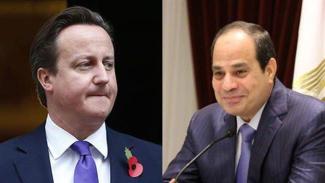
Press TV – August 1, 2015
Britain has reportedly re-boosted weapon sales to the Egyptian government in 2015 following a reduction in sales put in place after the military ouster of former president Mohamed Morsi.
The US-based Newsweek magazine reported Friday that official figures released by the UK government indicated that London approved military sales licenses to Egypt for “components of military combat vehicles” worth $76.3 million in the first quarter of 2015.
According to the report, the figures point to a 3,000-percent annual increase in the value of military sales to Egypt by British weapon exporters. It added that in the first quarter of 2014 military deals between the two states stood at $2.4 million in value.
It further noted that some arms export licenses were cancelled by Britain in 2013 following a military coup against Morsi by then army chief and current President Abdel-Fattah el-Sisi.
In June, the Egyptian president received an official invitation from British Prime Minister David Cameron to pay a visit to London.
A number of British human rights organizations have censured the expanding military ties between London and Cairo.
“The UK should be condemning the appalling human rights abuses that are taking place in Egypt,” said CAAT researcher Andrew Smith.
“However, these increasing arms sales, and the forthcoming visit, suggest that the government wants to strengthen its ties [with Cairo],” he added.
When you’re in a hole, the US and Britain have only one answer: keep bombing
Stop the War Coalition | July 27, 2015
WHEN you’re in a hole, keep bombing. That’s the message from the Nato forces – meeting in Brussels tomorrow to give the green light to Turkey – who seem to know no other way out of the serial military debacles and catastrophes they have launched in the past decade and a half than to continue with them.
In the past few days the prospect of even greater war in the Middle East has come closer, as Turkey escalates its attacks on the Kurdish community, under the pretext of the war against ISIS.
The deal between the US and Turkey allows US use of an airbase close to its ISIS bombing targets in Syria while giving a green light to Turkey to bomb not just ISIS but the Kurds in the PKK.
To many observers, this is in fact the key point of Turkey’s mobilisation. It is determined to crush the Kurds and seems much more concerned with the PKK than with ISIS.
The bombings have ended the ceasefire between the PKK and the Turkish state and threaten much greater conflict. Turkey is calling a meeting of its Nato allies to get endorsement for its military action and to try to create a buffer zone inside Syria, whose aim will be to further attack the Kurds.
In truth the Turkish state has aided the rise of ISIS and has repeatedly attacked the Kurds, even though they have been involved in fighting against ISIS.
Any Nato support for Turkey will further deepen the war in Syria, and will not deal with ISIS. The bombing which has already gone on for a year has not been effective in dealing with it, but has simply led to greater bloodshed and dislocation in Syria.
Bombing is not just on the Turkish government’s mind, however. Here in Britain, David Cameron has already tacitly agreed to British pilots bombing Syria under US command – in express contravention of the Commons vote two years ago. There is no military reason for British intervention, it is political, designed to show that Britain can be an effective junior partner to the US.
Now Cameron is campaigning for a further Commons vote to allow the bombing of ISIS in Syria. This is likely to be scheduled for mid September shortly after the results of the Labour leadership election.
The success so far of Jeremy Corbyn in the leadership campaign makes a strong anti war voice a much greater possibility, and makes more likely the defeat of Cameron, given the widespread support for Jeremy and the substantial bloc of SNP MPs, alongside dissent within Tory ranks.
The anti war movement must do everything it can to defeat this move. Stop the War is asking all our groups and members to organise protests, petition and lobby MPs throughout the summer to make sure they are aware of the issues and ready to vote against war in September.
Bombing and intervention have only exacerbated the problems in the Middle East. They have arguably led to the increase in terrorism we are seeing today. ISIS grew as a result of the wars in Iraq, Libya and Syria, aided by countries who now urge further war – especially Saudi Arabia and Turkey.
One of the main sources of ISIS support seems to be the destroyed state of Libya, locked in division and civil war, with rival factions claiming to be the government. Even Cameron isn’t stupid enough to call for more bombing there – after the damage he and his allies did in 2011, when more than 30,000 died. Instead he is intending to put in military ‘advisers’ there.
Meanwhile, in Eastern Europe, the US and Britain are carrying out military manouevres in Ukraine this week, in a test of strength with Russia.
Next week is the 25th anniversary of the start of the first Gulf War. War has been pretty continuous since then, in the Middle East, in the former Yugoslavia, in Afghanistan and Africa.
And every time they try to solve the problems which they created with their last interventions, they create more.
Undercover policing inquiry must not ignore spying on trade unions, activists warn
RT | July 29, 2015
A public inquiry into undercover policing is at risk of becoming an “establishment whitewash” if it does not include scrutiny of the surveillance of trade unionists, activists have warned.
In its current form the inquiry overlooks evidence of collaborative spying by big business and the police, Blacklist Support Group secretary Dave Smith told the Morning Star on Tuesday.
Smith’s concerns echo those of Britain’s largest union Unite, which called for an inquiry into alleged links between police and the “blacklisting” scandal in the construction industry that was exposed in 2009.
The inquiry into undercover policing was launched by Chairman Lord Justice Pitchford on Tuesday, four months after Home Secretary Theresa May announced the investigation.
Opening proceedings in London, Pitchford said the inquiry will be “the first time that undercover policing has been exposed to the rigor of public examination.”
However critics argue the terms of the investigation overlook corporate espionage.
Speaking to the Morning Star, Smith said: “Neither Theresa May nor Lord Justice Pitchford has specifically referred to trade unions, despite the fact there is documentary evidence that they were spied on using covert surveillance tactics.”
“The terms of reference state that the inquiry will only cover spying by the police. But if this is to be a genuine, independent investigation, it needs to look at evidence of collaboration between big business and the police.
“Corporate spying is endemic and, if it is not properly investigated, this will just turn into another establishment whitewash,” he added.
Unite assistant general secretary Gail Cartmail called for a probe into allegations police handed information about workers’ trade union activities to construction companies, who then added them to a blacklist database.
The existence of a blacklist was exposed by a raid on a firm called the Consulting Association by the Information Commissioner’s Office in 2009.
Cartmail said: “We need the inquiry to probe what the undercover police involvement was in relation to links with the ‘blacklisting’ scandal in the construction industry. So far, I think we are just seeing the tip of the iceberg – and Judge Pitchford will have to dig deep.
“The reports that they infiltrated campaign groups and trade unions are true, as police officers were deployed as covert human intelligence sources.
“We need to know who authorized the infiltration of trade unions – how high up does the buck stop when it comes to accountability? And who authorized the payments to these undercover officers to pay their union dues?”
May launched the inquiry into undercover cops after an investigation into claims of human rights abuses committed by police officers unearthed “serious historical failings.”
In some cases, undercover police used the names of deceased children and established long-term sexual relationships with their targets.
Lawyers investigating the allegations for the Home Office say they have discovered more than 80 possible legal breaches relating to undercover policing.
UK government spent 13 times more bombing Libya than securing peace
‘UK Govt priorities were wrong over Libya’
Scottish National Party | July 26, 2015
The UK government spent 13 times more bombing Libya than securing peace in the years afterwards, it has been revealed.
The House of Commons library has released information which shows the UK government spent around £320 million in a bombing campaign against Libya, and just £25 million in re-building programmes following the conflict.
The revelations follows serious concerns raised by the SNP over the UK’s current involvement in Syria -which had been taken forward despite a vote against bombing Syria in the House of Commons two years ago.
Stephen Gethins MP said:
“These figures are eye-watering. The amount of money the UK government will spend bombing a country dwarves the re-building programme thirteen to one.
“The lessons of Libya, like Iraq, is that you cannot just bomb somewhere and move on. The figures are especially alarming given the UK government’s current involvement in Syria.
“The case for bombing in Syria has simply not been made – and the involvement of British service personnel in bombing without the approval of Parliament clearly flouts the democratic decision taken by the House of Commons.
“We urgently need honesty and transparency about the UK intentions in Syria- and a strong commitment to the country following the conflict.”
Commenting on UK intervention in Syria on the Marr show this morning, SNP Foreign Affairs spokesperson Alex Salmond said:
“Parliament has to be consulted and Parliament would have to be persuaded. And I’ve heard nothing yet from the Prime Minister that would persuade me that there’s an integrated strategy that would justify a bombing campaign.
“Spending £320m on a bombing campaign and £25m to help restore the country is one reason perhaps that we have a failed state in Libya.”
UK Government urged to come clean on Pakistan executions funding
Reprieve | July 28, 2015
The Home Office is refusing to reveal the true extent of secret funding to Pakistan which risks implicating the UK in a wave of executions currently underway.
Human rights organization Reprieve has brought proceedings before the Information Rights Tribunal (IRT) challenging ministers’ refusal to reveal whether Government guidelines were followed when funneling at least £12 million into anti-drugs efforts in Pakistan, largely carried out by the Pakistani Anti-Narcotics Force (ANF). The ANF is responsible for sending more than a hundred alleged drug mules to Pakistan’s 8,500-strong death row, and lists these numbers on its website as ‘Prosecution Achievements.’ Several British citizens are understood to be among those facing execution on drugs charges.
Pakistan has executed some 180 people since resuming executions in December 2014, having widened its hanging campaign in early 2015 to cover all prisoners on the country’s death row – including drug offenders, others convicted of non-violent offences, juveniles, and mentally ill prisoners.
The UK’s Overseas Security and Justice Assistance (OSJA) guidance requires ministers to consider the potential risk to human rights of government overseas assistance. However, the Government is refusing to reveal crucial details of its decision-making about the funding, despite the recent resumption of hangings. The Home Office is arguing that publishing the information would both damage its relations with Pakistan, and reveal information which could “relate to” the British security services.
At the Government’s request large portions of the hearings so far have been heard in secret, without the presence of Reprieve, its lawyers, or a Government-appointed security-cleared lawyer known as a ‘Special Advocate’. Reprieve is currently seeking permission to appeal the judge’s decision to refuse the presence of a special advocate.
Commenting, Maya Foa, director of the death penalty team at Reprieve, said:
“The British public deserves to know how much of its money is funding hangings in Pakistan, particularly as the country continues its aggressive execution spree. If the UK is contributing to putting vulnerable drug mules – including British nationals – on death row in countries like Pakistan, this is a matter of huge public interest. The Home Office should stop hiding behind spurious national security arguments in an effort to dodge taxpayer scrutiny, and instead come clean about the true extent of its aid for executions”.
Children at risk of radicalization monitored, taken into state care
RT | July 27, 2015
This troubling trend was uncovered by the Times on Monday, after it obtained figures from an undisclosed high profile source.
Over thirty children in the past twelve months were found to have been subject to court orders because they were categorized extremist or thought to be at risk of radicalization.
Some have been put under temporary care orders, with UK courts increasingly intervening when family members seek to indoctrinate youngsters with radical ideologies.
Civil courts are also taking action when impressionable youngsters express a desire to join forces with Islamic State. The vast majority of these youngsters are lured into this extremist mindset after being exposed to a barrage of online propaganda.
The percentage of young people referred to government counter-extremism program “Channel” has soared by almost 50 percent in the last year, according to the Times.
The program’s organizers say it aims to offer support to those who are at risk of being lured into “violent extremism.”
Channel draws on collaborative links between councils, police, statutory bodies and local communities.
Its stated aim is threefold: to identify people at risk of being drawn into violent extremism, to consider the extent of that risk and to develop suitable support for such individuals.
In cases where youngsters are deemed at risk of radicalization, British judges are issuing court orders to stop them traveling to Syria. This measure means the High Court alone holds responsibility for these children and their movements.
Temporary care orders, which pave the way for fostering, have also been filed against youngsters feared to be in jeopardy of extremist brainwashing by family members.
Between April 2012 and June 2014, over 2,300 people were placed on the government’s Channel program. Some 834 were under 18 years of age, while 84 were younger than 12.
More than 360 Londoners have been referred to Channel since April 2012, and more than 300 referred to the scheme come from the northeast.
The Times investigation was published shortly after it emerged advocacy group CAGE is seeking legal advice on whether Prime Minister David Cameron is guilty of defamation after calling the organization a non-violent ‘extremist’ group.
Cameron made the remarks during the unveiling of his new anti-extremism policy, when he noted CAGE’s ties with the National Union of Students (NUS).
CAGE denies any links with terrorism and insist claims otherwise are “simply false.”
As the government continues to ramp up its counter-terror response with a fusion of policy, legal changes and surveillance, a growing chorus of critics warn of high levels of Islamophobia in the UK.
Racial equality think tank Runnymede says Islamophobia is a form of racism. It summarizes the effects of this discrimination as a mixture of socio-economic exclusion, prejudice, and violence. The think tank argues Islamophobia remains a serious challenge for any government dedicated to maintaining a just, equal and democratic society.
The marketing of perpetual war
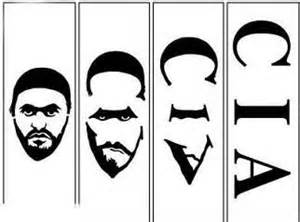
By BlackCatte | offGuardian | July 10, 2015
… The war is not meant to be won – it is meant to be continuous.…” – George Orwell, 1984
David Kilcullen has a message for us over at the Guardian, and this is it:
We’re living in an era of persistent conflict…”
Which is sadly, true. You might think the next thing to be discussed on that topic would be – why? Why are we now living in an era of endless war? What forces are behind this development? Who, if anyone, is profiting from the same? But, no, David doesn’t think any of this is worthy of our attention. He simply wants us to understand that “perpetual conflict” is absolutely and inescapably the new reality.
… you can read it in the latest concept documents of half a dozen western militaries. But it doesn’t seem to have hit home, for the public or some policymakers, that the notion that this can all end, that we can get back to some pre-9/ 11 “normal,” is a fantasy.
Do we get that? Is it hitting home? Peace is now a “fantasy”. It’s official. And in case you are still harbouring some smidgen of doubt, Dave is going to say it again in different words:
This – this instability, this regional conflict surrounded by networked global violence, this convergence of war and crime, of domestic and international threats, this rise of a new aggressive totalitarian state from the rubble of the last war – is the new normal, and it’s not going to change for a very, very long time. There are no quick solutions: we need to settle in for the long haul.
Ergo….
That being the case, we have to figure out methods of dealing with persistent conflict.
and…
I see no alternative to a larger, more intense, conventional war against Isis than the one currently being contemplated…
Do you see that children? That’s called “paradigm-creation.” The topic for discussion is evidently intended to be “how do we deal with persistent conflict?” The question of why the persistent conflict is happening, or who is funding these “aggressive new totalitarian states” is NOT part of the agenda, and is being excised from our collective conscious. All we need to know is:
Isis is an escalating threat that’s growing and worsening.
We do not need to worry our little heads about what this entity called “ISIS” actually is, how plausible the clownish stories of its super-villain powers are. Nor are we supposed to waste a single moment asking who is picking up its not inconsiderable tab. What matters is that Syria and Iraq are “problems” (never mind why or how) and that “greater western involvement would mitigate all these problems” (because that is what western involvement does – ask Libya). Most importantly, the US needs to get over its scruples and do more:
…US passivity and reluctance to target Assad (though his regime kills more people than Isis) makes many Syrians wary of joining the “moderate” rebels.
“US passivity and reluctance”? Really, Dave? What about the article in the Washington Times claiming the US state department lied about Syrian chemical attacks in order to fabricate a reason for attacking Assad? And what about this article at Global Research which alleges the US is actually targeting the Syrian government- not ISIS – with its current air strikes.
I’m left wondering – is Assad really any worse than the dreadful and medieval Saudis? He certainly seems to be pretty popular in Syria, where they apparently have a different take on things (but Dave doesn’t bother to tell us that). If we in the west have no problem with murderous tyrants, why do we have a problem with Assad? Is it because he isn’t our murderous tyrant?
Is the US really out there in Syria trying (but inexplicably failing) to defeat ISIS? Or is it happy to aid and abet ISIS in doing the dirty work it tried and failed to do itself? If Dave gets his way and we launch a “more intense conventional war” in Syria, will our soldiers’ lives and our taxes really be spent on defeating ISIS or is that just a shallow ruse to enable the US to finally go in and get Assad?
Is “perpetual conflict” really something we should all just accept as inevitable and leave it to people like Dave to sort out? Or is it something we should be resisting and interrogating at every level and at every opportunity?
Nah. Never mind. None of this matters. Let’s just keep it simple. The message is:
1. Persistent conflict is the new normal
2. There is no need to ask why.
Everyone got that?
The War on Conspiracy Realists Continues
By Brandon Martinez | Non-Aligned Media | July 24, 2015
Do you believe that governments occasionally conspire to undermine the public good? Do you believe that governments manipulate people through fear to achieve nefarious ends such as war and intervention abroad? Do you believe that ‘elected’ officials serve rich and powerful special interests rather than the majority population?
If you answered yes to any of the above, and you are a British citizen, then you could be the target of a new ‘counter-extremism’ initiative spearheaded by that country’s perverse Prime Minister David Cameron. As part of his Orwellian ‘counter-extremism’ effort, Cameron has instituted a number of truly despotic measures intent on stifling free speech and extirpating ‘heretical’ viewpoints about false flag terrorism and the undue influence of Zionists on Western foreign policy.
While self-evident to most clear thinking people, the notion that the West is deliberately targeting Muslims and their countries in accordance with an intricately fashioned master plan of divide and conquer will now be a prohibited opinion that could put the British police state on your trail.
“Muslim conspiracy theorists,” Cameron proclaimed in a recent speech outlining his ‘five year strategy’ to combat extremism, who believe that “Jews exercise a ‘malevolent’ power, that [the] Israeli intelligence agency Mossad inspired 9/11 and that the UK allowed 7/7 because it wanted an anti-Muslim backlash” are to be singled out for suppression.[1]
Cameron’s 1984-style designs will give parents the ability to revoke their children’s passports if suspected of holding ‘extremist’ beliefs. Police will be given new surveillance powers as well as the authority to vet what certain ‘extremists’ and ‘conspiracy theorists’ post on social media. Additionally, Ofcom – Britain’s communications regulatory body – will also be empowered to “crack down on television channels broadcasting extremist messages.” ‘Extremist messages’ appears to be a thinly disguised euphemism for anything not consonant with Western and Zionist propaganda.
Cameron’s aggressive moves against free expression were not unforeseen. During a speech at the United Nations last September, the British leader decried “conspiracy theorists” as “non-violent extremists” who should be confronted with the “full force” of the British state.[2] The theory that Israel and Western intelligence agencies were involved in the fabrication of 9/11 and other false flag attacks was specifically mentioned by Cameron as one of those “dangerous ideas” that needs to be eliminated from public discourse. Inferences about Jewish-Zionist manipulation of Western foreign policy towards the Islamic world should also be combatted, said Cameron in the speech.
Distracting the Public from Western Sponsorship of ISIS
All of this disingenuous bluster rings hollow when one considers the fact that Western governments and their allies have supported, and many would argue created, ISIS to serve their duplicitous agenda in the Middle East.
The CIA, MI6 and Mossad, in conjunction with the oppressive autocrats of Saudi Arabia, have long worked with Wahhabi-Salafist extremist elements in the Middle East and North Africa to counter other more formidable, non-sectarian adversaries in the region such as Libya’s Gaddafi, Syria’s Assad, Lebanon’s Hezbollah and the Islamic Republic of Iran. A re-run of the CIA’s “Operation Cyclone” which empowered Mujahideen forces in Afghanistan against the Soviets in the 1980s is currently unfolding in the Middle East under the auspices of many of the same players.
Award winning reporter Seymour Hersh revealed in a 2007 report titled “The Redirection” that the Bush administration launched a joint covert operation with Israel and Saudi Arabia to augment “Sunni extremist groups” and other fanatics to weaken the influence of Syria, Iran and Hezbollah.[3] Obama picked up where Bush left off, flooding Syrian and Libyan insurgent groups with untold largesse and arms, using the corrupted Arab Gulf kingdoms as conduits for weapons transfers for the sake of plausible deniability.
Hersh’s sources close to the US government told him that the Saudis assured Washington that they exercised control over the extremist Wahhabi and Salafist groups, and would steer their fanaticism towards the Shiites. “It’s not that we don’t want the Salafis to throw bombs; it’s who they throw them at—Hezbollah, Moqtada al-Sadr, Iran, and at the Syrians, if they continue to work with Hezbollah and Iran,” Prince Bandar bin Sultan, Saudi Arabia’s then-National Security Advisor, purportedly told his American counterparts in the Bush administration. “We’ve created this movement, and we can control it.”[4]
Part of the arrangement, Hersh explained, was a guarantee from the Saudis that Israel’s security interests would be safeguarded, which clarifies why ISIS and its affiliates have not attacked Israel despite the country’s close proximity to the terrorists’ strongholds in Syria and Iraq. “Israel would be assured that its security was paramount and that Washington and Saudi Arabia and other Sunni states shared its concern about Iran,” Hersh noted was the first point in a series of “informal understandings about their new strategic direction” to combat Shiite influence led by Iran.[5]
ISIS themselves have mostly eschewed hostility towards Israel, posting an official statement on social media in July 2014 saying that they’re more interested in fighting “Muslim infidels” than the Zionist state.[6] Israeli officials have expressed similar sentiments, with Israel’s former envoy to the US, Michael Oren, stating in a September 2013 interview that Tel Aviv “prefers” ISIS and al-Qaeda over the “bad guys backed by Iran,” namely Syria’s Assad and Hezbollah. Oren forthrightly conceded that Israel is committed to defeating through terrorist violence “the strategic arc that extends from Tehran, to Damascus to Beirut” with Assad in Syria functioning as the “keystone in that arc.” “That is a position we had well before the outbreak of hostilities in Syria,” Oren told the Jerusalem Post. “With the outbreak of hostilities we continued to want Assad to go.”[7]
The unholy alliance between Israel and the Salafist jihadists came right out in the open in June 2015 when ISIS released a video threatening to topple Hamas in Gaza[8], promising to bring bloodshed and ruin to the Strip. Salafist elements tied to ISIS have in fact attacked Hamas havens in Gaza on multiple occasions over the past few months, showcasing their utility as pawns of Israel.[9][10][11] There are also well-documented direct connections between ISIS-linked militants and Israel. A 2014 report compiled by United Nations observers stationed in the area revealed that the Israeli military has provided anti-Assad militants with sanctuary on the Israeli side of the Golan region, ostensibly treating wounded fighters in Israeli field hospitals and even giving them caches of weapons and other supplies.[12] On top of material support for the terrorists that have besieged Syria, Israel has aided their onslaught through numerous air strikes against Syrian military targets since the turmoil began in earnest in 2012, effectively attempting to tip the tide of the war in the Takfiris’ favour.[13] In January 2015 Israel conducted an airstrike that wiped out a brigade of Hezbollah fighters on the Syrian side of the Golan Heights, once again highlighting the Takfiri-Tel Aviv nexus.[14]
In light of such treachery against Arabs and Muslims trying to liberate themselves from oppression and domination, ISIS’s primary function as an acquiescent tool of US-Israeli imperialism cannot be overstated.
Perfidious Albion
As Prime Minister Cameron feigns outrage and opposition to Islamic extremism, the British government under his watch has been an active and willing partner in the Machiavellian strategy of divide and rule in the Middle East spearheaded by the US and Israel.
The 2015 trial of Swedish national Bherlin Gildo – who fought for a militant group in Syria – confirmed London’s role in backing Takfiri insurgents battling Damascus. In his defense, Gildo’s lawyers introduced evidence that British intelligence agencies “were supporting the same Syrian opposition groups as he was, and were party to a secret operation providing weapons and non-lethal help to the groups, including the Free Syrian Army.” Confronted with this contradiction, the British court dropped all charges against Gildo, fearing more embarrassing evidence showcasing British complicity with Syrian rebels could surface during proceedings.[15]
In 2013, Roland Dumas, France’s former foreign minister, told a French television station that during a visit to Britain two years before the Syrian crisis began in 2011, British officials informed him of a secret plan to spark a rebel invasion of Syria.[16] “Britain was preparing gunmen to invade Syria,” Dumas said, pinpointing the origins of the scheme to Israel which, according to Dumas, sought to oust a neighbouring regime hostile to its imperial ambitions in the Levant. Dumas then recounted a conversation he had with an unnamed Israeli prime minister who allegedly told him that the countries in the Middle East that get in the way of Zionist objectives for the region would be swiftly eliminated.
In an April 2014 report entitled “The Red Line and the Rat Line,”[17] journalist Seymour Hersh uncovered British involvement with a CIA-led covert operation in Benghazi, Libya, wherein the Agency was secretly channeling the looted weapons stockpiles of the fallen Gaddafi regime to Western-backed Syrian rebels through a “rat line.” Commenting on Hersh’s report, The Independent’s Patrick Cockburn described the CIA/MI6 “rat line” project in Benghazi as a “supply chain for the Syrian rebels overseen by the US in covert cooperation with Turkey, Saudi Arabia and Qatar.”[18] He summarized Hersh’s findings in more detail as follows:
“The information about this comes from a highly classified and hitherto secret annex to the report by the US Senate Intelligence Committee on the attack by Libyan militiamen on the US consulate in Benghazi on 11 September 2012 in which US ambassador Christopher Stevens was killed. The annex deals with an operation in which the CIA, in cooperation with MI6, arranged the dispatch of arms from Mu’ammer Gaddafi’s arsenals to Turkey and then across the 500-mile long Turkish southern frontier with Syria. The annex refers to an agreement reached in early 2012 between Obama and Erdogan with Turkey, Saudi Arabia and Qatar supplying funding. Front companies, purporting to be Australian, were set up, employing former US soldiers who were in charge of obtaining and transporting the weapons. According to Hersh, the MI6 presence enabled the CIA to avoid reporting the operation to Congress, as required by law, since it could be presented as a liaison mission.”
In addition to conniving with the US and Israel to arm Takfiri rebel gangs that eventually overran Gaddafi and continue to menace Syria, the British government has also covertly collaborated with Wahhabi extremists in its own country who serve as cartoonish fodder for anti-Muslim war on terror propaganda. In a May 2013 report for the Asia Times, security scholar Nafeez Ahmed disclosed that the British-based Salafist group Al Muhajiroun has been secretly supported by the British intelligence services since its inception in 1996.[19] That group has spawned nearly all of the supposed Islamic extremists implicated in (and perhaps framed for) various attacks in Britain, including the alleged ‘shoe bomber’ Richard Reid, the alleged Woolwich killers of British soldier Lee Rigby, the alleged 7/7 bombers and many others accused or convicted of terrorism-related offenses. Ahmed contends that various dubious personalities acting as leaders of Al Muhajiroun over the years – including Abu Hamza, Omar Bakri, Haroon Rashid Aswat and Anjem Choudary – have been clandestine agents of British intelligence fronting as ‘Islamic radicals.’
Despite his vocal support for al-Qaeda and ISIS, outwardly championing their grotesque bloodletting in Syria and Iraq today, Anjem Choudary (the current leader of Al Muhajiroun which has re-branded and re-named itself several times) is left untouched by British authorities and appears frequently on mainstream media. How can this impunity be explained if Choudary and his organization are operating independently without state protection? “Almost every major terrorist attack and plot in the UK has in some way been linked to Choudary’s extremist network,” noted Ahmed in the aforesaid piece, yet the radical preacher and his organization “[continues] to function with impunity in new incarnations.”
“[T]hrough Al Muhajiroun,” Ahmed explained, “MI5 is spawning many of the plots it lays claim to successfully foiling – as the FBI is also doing.” The MI5-controlled front group essentially serves a dual purpose: 1) it functions as a repository for Muslim patsies used in US-Israeli-British false flag operations, and 2) it acts as a recruiting hub for Wahhabi-Salafist mercenaries wielded as cannon fodder in various battle zones where Western/Zionist geopolitical and economic interests are at stake.
Unraveling the Web of Intrigue
Those not learned in the dark arts of black operations will likely be confused by all of this. “The West is fighting a war on Islamic extremism,” the indoctrinated lemmings will proclaim with confidence, completely unaware that they are being played for fools by professional spooks trained to employ artifices against the masses.
The surface rhetoric that politicians employ is merely a pack of daft lies intended to divert attention from the real agendas that drive policy. The public is fed a steady diet of cover stories and feel-good rationales – fanciful tales of good vs. evil – to pacify adverse reactions to and deflect unwanted attention from nefarious plots designed to benefit rich people and their interests.
David Cameron himself inadvertently identified whom some of these wealthy string-pullers are: Jewish Zionists committed to overturning every regime in the Middle East that is not yet subordinated to Tel Aviv. The other half of that equation includes an assortment of profiteering Anglos, Americans, Europeans, Arabs, Russians, Chinese and other money-mad opportunists. The Cameron’s, Obama’s, Harper’s, Hollande’s and Merkel’s of the world are mere screens or dummies for the real power behind the throne: the unscrupulous financiers, oligarchs and speculators who dominate Wall Street and the City of London, and to a lesser extent Shanghai and Moscow.
The Zionists, however, seem to be the most organized, the most aggressive and the most committed to living out their grandiose messianic dreams. Whether that vision entails a “New Middle East” in which “Greater Israel” rules the roost or a global government headquartered in Jerusalem remains to be seen. Either way it spells disaster for most of the world’s peoples.
Sources
[1] “Parents may cancel children’s passports in war on IS,” The Week, July 20, 2015. https://web.archive.org/web/20150724070333/http://www.theweek.co.uk/64449/cameron-attacks-ludicrous-extremist-conspiracy-theories
[2] http://www.youtube.com/watch?v=0g-HqRP-ANk
[3] Seymour Hersh, “The Redirection,” The New Yorker, March 5, 2007. https://web.archive.org/web/20150318015442/http://www.newyorker.com/magazine/2007/03/05/the-redirection
[4] Ibid.
[5] Ibid.
[6] Elad Benari, “ISIS: Fighting ‘Infidels’ Takes Precedence Over Fighting Israel,” Israel National News, July 8, 2014. https://web.archive.org/web/20140831070443/http://www.israelnationalnews.com/News/News.aspx/182632
[7] Herb Keinon, “’Israel wanted Assad gone since start of Syria civil war’,” Jerusalem Post, Sept. 17, 2013. https://web.archive.org/web/20150112102133/http://www.jpost.com/Syria-Crisis/Oren-Jerusalem-has-wanted-Assad-ousted-since-the-outbreak-of-the-Syrian-civil-war-326328
[8] “ISIS Threatens To Topple Hamas In Gaza,” Reuters, July 1, 2015. http://www.huffingtonpost.com/2015/07/01/isis-hamas-gaza_n_7704360.html
[9] “Isis blamed for Gaza City bomb attacks,” The Independent, July 20, 2015. http://www.independent.co.uk/news/world/middle-east/isis-blamed-for-gaza-city-bomb-attacks-10400747.html
[10] “ISIS Allies Target Hamas and Energize Gaza Extremists,” New York Times, June 30, 2015. https://web.archive.org/web/20150713130805/http://www.nytimes.com/2015/07/01/world/isis-allies-target-hamas-and-energize-gaza-extremists.html?_r=0
[11] “ISIS supporters claim attack on Hamas base in Gaza Strip,” Russia Today, May 8, 2015. https://web.archive.org/web/20150713195921/http://rt.com/news/256941-isis-attack-gaza-hamas/
[12] “UN details Israel helping Syrian rebels at Golan Heights,” Russia Today, Dec. 8, 2014. https://web.archive.org/web/20150316140841/http://rt.com/news/212319-israel-helps-syrian-militants/
[13] “Head of Syrian army after alleged airstrikes: Israel working with ISIS and al-Qaida,” Jerusalem Post, Dec. 7, 2014. https://web.archive.org/web/20150316154301/http://www.jpost.com/Arab-Israeli-Conflict/Head-of-Syrian-army-after-alleged-airstrikes-Israel-working-with-ISIS-and-al-Qaida-383907
[14] “’Israel strike’ kills Hezbollah men in Syria’s Golan Heights,” BBC News, Jan. 18, 2015. https://web.archive.org/web/20150316090443/http://www.bbc.com/news/world-middle-east-30873402
[15] “Terror trial collapses after fears of deep embarrassment to security services,” The Guardian, June 1, 2015. https://web.archive.org/web/20150610080819/http://www.theguardian.com/uk-news/2015/jun/01/trial-swedish-man-accused-terrorism-offences-collapse-bherlin-gildo
[16] https://www.youtube.com/watch?v=jeyRwFHR8WY
[17] Seymour Hersh, “The Red Line and the Rat Line,” London Review of Books, April 17, 2014. https://web.archive.org/web/20150315050157/http://www.lrb.co.uk/v36/n08/seymour-m-hersh/the-red-line-and-the-rat-line
[18] Patrick Cockburn, “MI6, the CIA and Turkey’s rogue game in Syria,” The Independent, April 13, 2014. https://web.archive.org/web/20150110040831/http://www.independent.co.uk/voices/comment/mi6-the-cia-and-turkeys-rogue-game-in-syria-9256551.html
[19] Nafeez Ahmed, “UK pays price for MI5 courting terror,” Asia Times, May 30, 2013. https://web.archive.org/web/20130801060233/http://atimes.com/atimes/World/WOR-01-300513.html
Copyright 2015 Brandon Martinez
Jeremy Corbyn on his ‘toxic’ rivals & Labour’s future
June 17, 2015
Jeremy Corbyn on his record and that of his rivals on the Iraq war, NHS privatisation, banks deregulation, and the future for Labour and possibly the country under his leadership.
US-loaned RAF personnel may be illegally striking Pakistan & Yemen, not just Syria
RT | July 23, 2015
Fresh controversy has emerged about RAF airmen embedded in an American drone unit, which is known to be carrying out airstrikes in Syria after the charity Reprieve gained access to a joint US-UK memo.
Responding to Reprieve’s request in November, the Ministry of Defence (MoD) said there were “currently” no RAF personnel embedded with the United States Air Force’s (USAF) 432nd unit based at Creech airbase in Nevada.
It now appears that the response was not given in good faith – while there may have been no personnel at Creech in November, RAF airmen have been embedded there since 2008 and are there presently.
The MoD confirmed on Wednesday there were indeed UK armed forces personnel currently at the base.
If UK personnel are involved in strikes in countries like Pakistan and Yemen, with whom the UK is not ‘legally’ at war, there may be legal issues.
Strikes on Syria would also be illegal given a 2013 parliamentary vote on bombing within the borders of the war-ravaged nation.
The memo concerns the embedding of UK personnel in US units in order to make up for manning shortfalls. It referred to them as “a gift of services to fulfill US air force operational requirements.”
The three-year postings for pilot and sensor operators for both Reaper and Predator drones are described as involving a role in “worldwide operations” and taking part in operations that determine and hit viable targets “in conjunction with the combined air operations center rules of engagement, but always adhering to the legal framework for the operation in question.”
Concerns over the activities of embedded personnel have been under the spotlight over the last two weeks since they emerged after a Freedom of Information (FoI) request, also by Reprieve, that UK pilots had been bombing targets in Syria despite the 2013 vote and resulting democratic ban on doing so.
It was later confirmed that each mission, reportedly carried out by Royal Navy pilots operating from US aircraft carriers in the Gulf, received specific parliamentary authorization.
Defence Secretary Michael Fallon has since defended the operations, saying that UK personnel embedded with allied forces were effectively “foreign troops.”
UK Establishment Closes Ranks on Anti-War Labour Leadership Front Runner
By Michaela Whitton | ANTIMEDIA | July 22, 2015
United Kingdom — Anyone peeking behind the smokescreen of the British press this weekend (and not distracted by what the Queen did when she was five or by David Cameron’s extremism rhetoric) may have noticed that despite the U.K. Parliament’s explicit rejection of military intervention, the U.K. has been involved in the bombing of Syria since September— and Cameron has known the whole time.
Those with eyes to see may have also noticed the establishment closing ranks on veteran left-winger, Labour MP Jeremy Corbyn. After emerging as a front-runner in the Labour leadership campaign, Corbyn appears to have become the victim of a murderous media and political attack, with first prize for slanderous onslaught going to Tory mouthpiece, The Telegraph, and a piece penned by Islam-obsessed Andrew Gilligan.
Sixteen million people chose not to vote in Britain’s general election in May. With many crippled by the thought of another five years of Tory rule, a buzz of hope is in the air at whether Corbyn’s radical spirit can rescue the people from the dark abyss of British politics.
It comes as no surprise that the establishment appears to be zoning in on him.
Apparently, Corbyn is so left-wing that even his own party is panicking, with pressure group Labour First urging party members to vote for the other candidates. Group secretary Luke Akehurst said, “We clearly do not share Jeremy Corbyn’s politics and believe these would destroy Labour’s chances of electability.’’
The last 30 years have been harsh for Labour. Born out of the Trade Union movement, the aim was always to give a voice to the British working classes, but 17 years of Thatcherism took its toll. Additional years of hollow and watered down Tory policies imposed by Blair and Brown made it almost game over. More recently, weak and compromised former leader Ed Miliband didn’t manage to reach the disenfranchised, who either gave up on British politics completely or edged toward UKIP or the Greens.
On Sunday, the Independent reported that some Labour MPs plan to mount a coup if Corbyn gets in with one member, claiming, “We cannot just allow our party, a credible party of government, to be hijacked in this summer of madness. There would be no problem in getting names. We could do this before Christmas.”
‘’Hijacked?’’ Elected in 1983, principled socialist Corbyn is in favour of free education and a living wage. A believer in the scrapping of nuclear weapons, the welfare state, solid trade unions and a stable NHS, he vehemently opposed the invasions of Afghanistan and Iraq —interventions that destroyed the reputations of the U.K. and Labour.
As a proponent of a free Palestine, last summer Corbyn was marching through London with thousands of others to condemn Israel’s assault on Gaza. As national chair of the Campaign for Nuclear Disarmament and a patron of the Palestine Solidarity Campaign, he regularly speaks out against British military intervention in the Middle East at human rights conferences across the globe.
His refusal to compromise and his calls for conflict resolution through peaceful negotiations—rather than the bombing of foreign countries—has earned him the title of friend to Hamas, Iran and extremists.
With a private poll putting him ahead in the Leadership campaign by 15 points, attempts to smear and discredit Corbyn are to be expected. As his principles grip the imaginations of a weary and desperate public, there are accounts of hundreds of Brits paying £3 to sign up online as Labour Party supporters, just for a chance to vote for him in September’s election.
It remains to be seen whether or not he will appeal to those 16 million disillusioned non-voters and those feeling abandoned by Labour—or if he can reclaim territory the party has lost over the last few years. As he continues to challenge the dominant themes running through the pro-war veins of British politics, there is one certainty—the knives will continue to twist in his back as the establishment-run media attempts to control narratives and influence opinion.
Featured Video
Dan Dicks with James Corbett on Solutions Watch
or go to
Aletho News Archives – Video-Images
From the Archives
Secret document reveals plans for civil war in Lebanon, Israeli false flags, and invasion
By Randi Nord | Geopolitics Alert | April 5, 2019
Beirut – During his visit with US Secretary of State, Mike Pompeo, Lebanese President Michael Aoun reportedly received a US-Israeli document detailing plans for creating a civil war in Lebanon with covert false flag operations and possible Israeli invasion.
Although the source of the document is Israeli and created in partnership with Washington, no one knows who presented it to Aoun. The Lebanese TV station, Al-Jadeed, initially reported the document on Lebanese TV and a video on its website. Geopolitics Alert translated the report for this article. … continue
Blog Roll
 Aletho News
- Sheikh al-Asadi warns of Iraqi government compliance with US demands
- How to MAKE THE CONSPIRATORS PAY for their crimes! Dan Dicks with James Corbett on Solutions Watch
- There’s a drought in academia: A drought in honest research on the subject of drought and other weather extremes
- Department of War Awards $20.7 Billion Contract to Raytheon for Air-to-Air Missiles
- ‘Distance yourselves from Israel’: IRGC urges US population to question govt policies
- America’s Greenland deal has a radioactive backstory
- The RAF Fairford ‘terror plot’: Unpacking escalation in the UK echo-chamber
- EU Council Advances Chat Control 2.0 Scanning Proposal
- Ex-Greek MEP files complaint against Israeli spyware firm over alleged Pegasus surveillance
- Troubling ideas throughout the Torah, Talmud, Mishneh Torah and Tanya
- If Americans Knew
- New Report: “Scholasticide and Genocide in Gaza: Assessment, Testimonies and Legal Analysis”
- Ex-Biden officials are desperate for a Gaza scapegoat
- Israeli “settlers” Invade Al-Aqsa; Pour Boiling Water on 75-Year-Old
- Israel Has Kidnapped Another American Teenager
- US arms sales to Israel worth $21.6 billion in 20 months
- Three Palestinians Killed in Israeli Attacks on Gaza
- Revealed: German “Anti-Semitism Expert” Driving Crackdown on Palestine Solidarity is Former Israeli Spy
- Egypt’s Warning to Israel Before Oct 7
- Israel’s siege signals another cruel winter for 1.8 million Gazans – Daily Update
- Netanyahu Asked UAE Leader to Deny Report on Oct. 7 Warning in Secret Visit, Sources Say
- No Tricks Zone
- Two More Paleo Reconstructions Affirm Meters-Higher Sea Levels Across Ireland, Brazil 7000-6000 Years Ago
- New Study: Earth And Venus Surface Warmth Largely Explained By Convection And Lapse Rate, Not CO2 Or Radiation
- 2025 Nature Paper Claiming Worsening Global Drought Gets RETRACTED …Heavily Flawed
- New Study: ‘Global Drought Shows No Detectable Recent Acceleration Under Climate Warming’
- Economic Masterminds: German Socialists Suggest Taxing Productivity Gains Stemming From Using AI
- The South China Sea Has Not Been Cooperating With The Climate Change Narrative
- Energy Crisis: Germany Enters Heating Season With Historically Low Gas Reserve Fill Levels
- New Study: The Antarctic Ice Sheet Gained Mass From 2020-2024 Due To Staggering Snow And Ice Accumulation
- Study: Ocean Heating Rates From Thousands Of Years Ago ‘Dwarf’ Modern Ocean Heating Rates
- Climate Extremists Target, Attack Large-Scale Power Grid Infrastructure In Germany!

