Britons sign petition, urging Netanyahu’s arrest
Press TV | August 10, 2015
 People in Britain have been signing a petition that calls on the government to arrest Israeli Prime Minister Benjamin Netanyahu upon his arrival in the UK next month.
The petition entitled “Benjamin Netanyahu to be arrested for war crimes when he arrives in London” is available at a petitions website set up by the UK government and parliament.
“Benjamin Netanyahu is to hold talks in London this September. Under international law, he should be arrested for war crimes upon arrival in the UK for the massacre of over 2,000 civilians in 2014,” the petition reads.
More than 26,000 people had signed the petition until GMT 1100 on Monday with the number of signatures dramatically on the rise.
The British government is expected to respond to the demand as all petitions that get more than 10,000 signatures should be seen into, according to law.
Rules governing the petition site also stipulate that any petition that receives in excess of 100,000 signatures must be considered by the UK parliament for debate.
The deadline for signing the petition is on February 7, 2016. … Full article
Keith Meisner – No Thanks Trident
Chorus:
No thank you Trident, Try again
Try peace, Try love, Try Understandin’
Try talking, Try listening friends
No thank you Trident, Try again
Call me anything you like, call me naive
But I’m pretty sure it’s not missiles we need
I’m pretty sure, there will be no true peace
Until all these nuclear programmes cease
Chorus
Try instead of building nuclear bombs,
Try building schools, try hospitals
Try imagining how much there would be to go round
Instead of wasting one hundred billions pounds
Chorus
Scotland’s voice is loud and clear,
Try friendship, try hope over fear
Try compassion, try common sense
Try thinking that peace is the best defence
Chorus
You threaten others you say to stop a threat
That’s the thing that I don’t get
So come gather round people and make a stand
And rid these things from our land
No thanks Trident….
https://www.twitter.com/keith_meisner
https://www.facebook.com/keithmeisner…
Jeremy Corbyn calls for UK nuclear disarmament on Hiroshima 70th anniversary

Hiroshima aftermath © U.S. Navy Public Affairs Resources Website / Wikipedia
RT | August 6, 2015
Labour Party leadership frontrunner Jeremy Corbyn has called for Britain’s complete nuclear disarmament at an event commemorating 70 years since the US dropped an atom bomb on the Japanese city of Hiroshima.
Speaking on Thursday at the Campaign for Nuclear Disarmament (CND) commemoration event in London, the anti-austerity candidate said that if he became prime minister he would not renew Trident, Britain’s nuclear deterrent.
Unveiling his Plan for Nuclear Disarmament, Corbyn said he would move away from a nuclear weapons based arsenal.
In the document, Corbyn lays out a strategy to protect the jobs of people currently working on Trident by investing in infrastructure projects and “socially productive” initiatives.
“We are making the case for a defense diversification agency because we have a moral duty, and strategic defense and international commitments, to make Britain and the world a safer place,” the document reads.
“As a signatory to the nuclear non-proliferation treaty, Britain should therefore give a lead in discharging its obligations by not seeking a replacement for Trident, as we are committed to accelerate concrete progress towards nuclear disarmament.
“Senior military figures have described our existing nuclear weapons as ‘militarily useless’ and our possession of them encourages other countries to seek a similar arsenal while undermining the efforts being made to advance the cause of international nuclear disarmament,” it adds.
The Green Party’s Lady Jones also attended the memorial event.
She said: “It is amazing that we haven’t learned more from the nuclear bombing of Japan, that nuclear weapons are indiscriminate, their impact incalculable and their cost insupportable.
“Britain should accept that such weapons are impossible to use with any guarantee of safety and we should scrap plans for renewing the Trident nuclear defense system, freeing up £100b billion to spend on our national wellbeing.”
Currently the UK has committed to the maintenance of four submarines, each equipped with Trident II D-5 nuclear missiles. Parliament will vote on their renewal in 2016.
Corbyn’s call for nuclear disarmament comes after he said Tony Blair could stand trial for war crimes if he is deemed to have broken international law during the 2003 invasion of Iraq.
Speaking to BBC Newsnight, the prominent anti-war campaigner said Blair should stand trial “if he has committed a war crime, yes. Everybody who has committed a war crime should.”
He added the former Labour prime minister, who orchestrated the invasion with then-US President George W. Bush, should “confess” to any plans he made with the former president. The publication of the Chilcot Inquiry report would force Blair’s hand, he said.
Corbyn, who staunchly opposed the invasion and is a leading member of the Stop the War coalition, said: “It was an illegal war. I am confident about that. Indeed Kofi Annan [UN secretary general at the time of the war] confirmed it was an illegal war and therefore [Tony Blair] has to explain that. Is he going to be tried for it? I don’t know. Could he be tried for it? Possibly.”
UK Defence Secretary praises Egypt
Reprieve | August 6, 2015
Defence Secretary Michael Fallon has praised what he says is Egypt’s “vision of a more prosperous, more democratic society.”
Writing in Egyptian newspaper Al Ahram on the day of the opening of a new section of the Suez Canal, Mr Fallon said that the UK stood “shoulder to shoulder” with Egypt, but made no reference to the human rights situation in the country.
The article comes amid concerns over the fate of thousands of prisoners who have faced mass trials and the death penalty as part of a two-year-long crackdown on dissent by the Sisi government. They include Ibrahim Halawa, an Irish teenager who was arrested during the military’s breakup of protests in August 2013. Ibrahim, who faces a death sentence alongside 493 others in mass proceedings, has endured torture and mistreatment throughout his detention. Last weekend, his mass trial at Wadi Natrun prison, where conditions are poor, was postponed for the 9th time.
The UK Foreign Office has previously told human rights organization Reprieve that it is “monitoring” Ibrahim’s case, and that it has “concerns over the use of mass death sentences and the large number of people in pre-trial detention.”
Commenting, Maya Foa, head of the death penalty team at Reprieve, said: “At a time when Egypt’s jails are heaving with jailed protestors and journalists, torture is rife, and thousands are facing mass death sentences, it is disgraceful that Michael Fallon sees fit to praise Egypt’s government in such unqualified terms. To prisoners like Ibrahim Halawa, who is enduring regular torture and a Kafkaesque mass trial, talk of Sisi’s ‘vision of a more prosperous, more democratic society’ is a sick joke. If the defence secretary truly wants to support Egypt, he must tell Sisi to reverse the terrible human rights abuses of the last two years – and to release the many victims of the crackdown, such as Ibrahim.”
Mark Duggan killing: Four years later and still no justice
RT | August 4, 2015
On August 4, 2011, Mark Duggan was killed in Tottenham by the police. Four years on, the Duggan family are still seeking justice for Mark. But the officers involved were cleared of ‘any wrongdoing’ and it was eventually ruled that Mark’s murder was ‘lawful.’
While we see the ramifications of unbridled police violence all over the world, we are reminded that for many communities here at home in the United Kingdom, the treatment they face is little different from that which have seen of late in the United States.
The case of Mark Duggan stands amid a backdrop of many other tragic cases whereby young black men are killed by those who are supposed to protect them. Just as with the many hundreds of other cases which have seen citizens die in police custody, with no officer being brought to justice, Mark Duggan’s case is a chilling reminder of just how little progress has been made and how far there still is to go. The criminal justice system has failed to jail any officer, despite the fact Mark Duggan was unarmed and shot dead execution style.
Many anomalies and questions marks still surround the case, and the official line peddled by the police and the media in the immediate aftermath of Mark’s murder was shown to be a fallacy. There were also significant political implications with this case too.
Not only did the facts that emerged after Mark’s killing contradict the official police and media line, but the failure of the police to even communicate with Duggan’s family and inform them of his death led to protests outside Tottenham police station. These protests and the fact that police reportedly beat a teenage girl during the demonstrations are viewed by many to have been the initial sparks for the unrest which followed. The riots in North London quickly spread throughout the country.
Police relations with communities in Tottenham have historically been riddled with examples of police brutalising residents.
As a result of these tensions building up over many years, and because the police have failed to root out their own problems from within, the potential for this tension to explode has always existed on a knife edge just below the surface needing only a jolt to rear its head.
Duggan’s murder in 2011 provided such a catalyst.
But the media coverage at the time of the protests successfully diverted attention away from the criminal actions of the police, poverty, and racial tension and instead demonised the community, specifically young people.
One other knock-on effect from the English riots was that attention was diverted away from the MPs expenses scandal, which was breaking at the time, and onto young people who took part in the rioting from poorer communities. It’s worth noting too, that while these young people were being put through a kangaroo court system, paraded in the media, punishing them for taking part in the riots characterising the behaviour as ‘pure criminality’ (removing the factors underpinning the riots), at the same time politicians were being barely punished for looting the taxpayers pocket. This has left many people reeling from a bitter sense of injustice and double standards.
The tragedy of Mark Duggan’s killing is a reminder to all those who were living in London of how entrenched and normalised and accepted such injustice has become.
Mark Duggan’s case was significant because of the circumstances surrounding his killing, and because the actions of the police before and after highlighted the deep institutional failings of the police and so-called justice system. It was these failings which led to the riots.
Duggan’s killing was ruled as ‘lawful’. Officers involved were cleared of ‘any wrongdoing’ despite the fact they shot dead an unarmed black man in an area of London where racial tensions between the community and police were already fragile, with not much needed for things to erupt.
If you are young and black in the UK, you are still more likely to be stopped and searched than if you are white, despite the fact that black people are no more likely to commit crime than anyone else.
Poverty, a lack of access to further education, and low employment prospects have not just remained firmly rooted in some of the UK’s poorest areas – with government policy and austerity becoming further entrenched since 2011- these problems have undoubtedly worsened.
Food banks are now becoming more and more widespread and the gap between the richest and the poorest has widened too.
No one is denying individual responsibility for any crime, including looting or rioting. But surely all of the factors which lead to such a disaster like the London riots must be looked at. And surely the same level of personal responsibility we are all supposed to adhere to applies to the police too?
Surely yes, but the current state of play suggests that this ideal, is far from becoming a reality.
Many were quick to focus on anything which might justify the actions of the police and shift accountability for his death from their own actions to the actions of Mark Duggan.
He was smeared in the press before any trial had even taken place following his killing. ‘Journalists’ like Richard Littlejohn from the Daily Mail pretty much suggested that Mark Duggan deserved to be killed based on the media’s common portrayal of him. In one sensational claim it was suggested that Duggan was among “Europe’s most violent criminals”.
The only reason why entirely racist claims like these are allowed to be seen as the norm in the mainstream media, at least, is because they have become wholly acceptable.
In much of the media, and within the criminal justice system, the assumption is usually made that the police, by virtue of the fact that they are the police, are whiter than white, and innocent, and that anyone they come into contact with must somehow therefore automatically be guilty and have done something wrong.
Mark Duggan’s family and countless other families are still seeking justice for loved ones who have died in police custody.
Today we remember Mark Duggan and remember too just how quickly a sequence of events can spiral out of control. One could perhaps argue that if the police had handled the aftermath of Duggan’s death better (ignoring for a moment the fact it was they who killed him) the riots could have been avoided.
The crimes of the police to date have barely been acknowledged, and until they are we are not even in a position to suggest many solutions. Hope for the future rests with a more informed public, equipped with knowledge and a willingness to hold those accountable who do wrong no matter who they are, including the police. If we are organised we can pressure those who have the power to implement change among powerful institutions from the top down. It won’t happen just from marches and wishful thinking. It’s not in the nature of power to relinquish it without a fight.
Power concedes nothing without demand, and without justice there can be no peace-nor should there be.
Richard Sudan is a London based writer, political activist, and performance poet. He has been a guest speaker at events for different organizations ranging from the University of East London to the People’s Assembly covering various topics. He also appears regularly in the media, and has featured as a guest on LBC Radio, Colourful Radio and elsewhere. His opinion is that the mainstream media has a duty to challenge power, rather than to serve power. Richard has taught writing poetry for performance at Brunel University, and maintains the power of the spoken and written word can massively effect change in today’s world.
Shame on UK for Sham Litvinenko Trial
By William DUNKERLEY | Oriental Review | Aug 3, 2015
What started off as a massive fabrication in 2006 just received a great boost from a complicit British government. The mysterious polonium death of reputed former KGB spy Alexander Litvinenko is the focus.
An inexplicably long series of official UK hearings on this nearly 9 year old case has just concluded. That’s prompted a new flurry of sensational media reports.
A recent Daily Mail headline reads “Putin ‘personally ordered Litvinenko’s murder.’” The Irish Independent said, “Vladimir Putin should be held responsible for the murder of Alexander Litvinenko.” BBC reported, “Vladimir Putin ‘ordered killing’, Litvinenko [official UK] inquiry hears.”
They support a premise that’s been around since the beginning. It implicates Russian president Vladimir Putin in the yet-to-be explained death.
You might think that reliable evidence has been presented to back up all the accusations. But careful examination shows the reports are no more than unsubstantiated allegations. No reliable facts are reported. Meanwhile, there is an abundance of evidence that this has been a nefarious witch hunt all along.
The official UK hearing has been made out to be a kind of trial, one aimed at bringing justice in the mysterious death case. The widow Marina Litvinenko told BBC, “The truth has finally been uncovered.”
That’s actually quite the opposite of the truth. Here are some facts:
–The prosecutor in the case was unable to unearth any incriminating factual evidence, only “grave suspicions” about Russian culpability. He never had a sufficient case to bring to trial.
–The current official inquiry has no capability to mete out justice. It hasn’t been a real trial at all. There are accused individuals. But they have no right to question their accusers. The inquiry doesn’t have the ability to convict anybody.
–No coroner has ever ruled that Litvinenko’s death was even a homicide. That leaves open the possibility of accidental poisoning or suicide.
–The KGB spy moniker given Litvinenko in the media is fallacious; he never did espionage work. But it added spice to all the misleading headlines.
–Litvinenko himself is on record believing an Italian named Mario Scaramella poisoned him.
–The “Putin did it” scenario that went mainstream was a highly successful fraud of massive proportion. It was instigated by Putin arch enemy Boris Berezovsky, a Russian robber baron who was hiding out in London from criminal prosecution back home. Berezovsky was angling to see Putin overthrown in a violent revolution and replaced by a monarch. No kidding. I’m not just alleging that. He said so in his own words.
–A rogue coroner dodged his statutory duty to rule on the manner and cause of death, and instead conducted a Berezovskyesque witch hunt for Russian culpability.
–He subsequently was told by Home Secretary Theresa May to cut out the witch hunt and perform his duty to rule on the manner and cause of death. She also told him that any further official inquiry was unnecessary.
–That would have ended the folly for good. But instead Prime Minister David Cameron reversed the Home Secretary and reopened the witch hunt. This came amidst the sanctions frenzy against Putin over the Ukraine crisis. It was a highly politicized move, not a search for justice.
–The result has been the just-concluded hearings, part of Cameron’s official inquiry.
Cameron has charged forward despite the obvious speciousness of the case. It’s not hard to see that fraud has been afoot all along. For instance, there was a widely-reported deathbed statement dictated by Litvinenko. News of it didn’t come out until after Litvinenko’s death. The statement blames Putin for the poisoning.
But I’ve found that Litvinenko never dictated any such statement. The story was a hoax. The hoaxer has even confessed that the words were his own, and that he had no factual basis for his allegation.
Isn’t Cameron aware of these specious claims in the Litvinenko case? If there is a real evidentiary basis, why is the record founded on outright fabrications like the deathbed statement? The case is replete with nonsense like the deathbed hoax.
So the truth that needs to be known is that the Litvinenko case has been a fraud right from the start, and continues as such to this day. I don’t know whether or not Putin or any other Russian had complicity in the death. But I do know that principals behind the accusations have been lying.
The biggest news here is that Cameron has put the weight of the UK government behind the fraud. What an extravagant affront to justice. He should be ashamed of himself.
William Dunkerley is a media analyst and a Senior Fellow at the American University in Moscow.
More proof that Western bombing in Syria and Iraq is massacring civilians

A US-led air strike in October 2014 in Kobani, Syria
Stop the War Coalition | August 4, 2015
The bombing campaign against the Islamic State in Iraq and Syria has killed at least 459 civilians, including 100 children, in 52 air strikes, according to a new report by Airwars, a project by a group of independent journalists.
Commenting on the supposed precision of air strikes against Isis, the Airwars project leader Chris Woods has told the Guardian that this “hasn’t been borne out by facts on the ground”.
This is one of the first reports examining the number of civilian casualties which have resulted from the savage bombing campaign against Isis militants. The lack of official interest in and support for investigating these casualties means that their number may actually be far higher. The violence on the ground also greatly impedes the verification of casualties.
It took years before the full scale of mass murder in the Second Iraq War came to light. A recent study by Physicians for Social Responsibility, Physicians for Global Survival and International Physicians for the Prevention of Nuclear War has established that around a million people have died as a result of that war.
The UK is the second-most active participant in the bombing campaign against Isis. The British government’s claims about its commitment to avoiding civilian casualties are negated by facts.
Chris Woods from Airwars has stated that bombing Isis fighters in their strongholds means that the focus is on bombing cities. 40% of civilian casualty reports came from the city of Mosul in Iraq. “You can’t have an air war of this intensity without civilians getting killed or injured,” said Woods.
Western intervention in Iraq and Syria is adding fuel on the fire of a savage war. As the experience of more than a decade of terroristic “war on terror” shows us, Western intervention contributes to a vicious cycle of brutalising violence. It increases suffering and is a major cause of bitterness against the West.
This underscores the need to oppose resolutely the proposed full-scale UK military intervention in Syria, which will lead to more of the same: more misery, more hatred, more death and more destruction. Humanity can be more creative than that.
Corbyn: the antidote to the Blairite ‘virus’ and Zionist snake-bite
Many certainly can see Jeremy Corbyn as Prime Minister – a very different and totally new style of PM. He’s astute and has a track record of honesty and openness, laced with a burning sense of justice.
By Stuart Littlewood – My Catbird Seat – August 2, 2015
Some polls are showing Jeremy Corbyn forging ahead in the Labour Party leadership race by as much as 20 points. The political Establishment is shaken and quite definitely stirred.

Dave Ward, general secretary of the 200,000-strong Communication Workers Union, is reported saying:
There is a virus within the Labour Party and Jeremy Corbyn is the antidote.
The grip of the Blairites and individuals like Peter Mandelson must now be loosened once and for all.
This has ruffled a good many feathers among Labour diehards.
Meanwhile, the four Labour leadership contenders recently attended a public meeting populated largely by members of the Jewish community and co-hosted by the Jewish Chronicle.
Andy Burnham, Yvette Cooper and Liz Kendall, in supercharged suck-up mode, expressed avid support for Israel, leaving Jeremy Corbyn as the only critic.
Andy Burnham
“I’ve always been a friend of Israel and the Jewish community – that will never change.” If he becomes Labour leader his first overseas trip will be to Israel. He’s opposed to the “spiteful” boycott movement. He praises Israel as a “democracy that has a long history of protecting minorities and promoting civil rights” and says the Balfour Declaration, which is coming up for its centenary, represented “an example of British values in action”. He wants centenary celebrations in every school to show how the UK “played a role in the establishment of a democracy in the region”.
Yvette Cooper
“It’s hugely important that Labour continues to be a friend of Israel.” She says Labour must oppose the “counterproductive” BDS [the Boycott, Divestment and Sanctions movement]. As for the Balfour Declaration, its 100th anniversary must be celebrated to “mark the pioneering role Britain played in [promoting] the rights of Jewish people to a homeland”.
Liz Kendall
She pledges to “always be a friend of Israel” and says the recent resolution passed in the Commons to recognise the state of Palestine on 1967 borders was irresponsible. She feels BDS is an initiative to “delegitimise Israel” and she’ll fight it with “every fibre of [her] being”. She ‘s proud of the role played by the UK in the establishment of Israel and believes it is a country which “respects gay rights, has a free media, and possesses a strong tradition of social democracy”.
Jeremy Corbyn

Jeremy Corbyn, who has visited Israel, the West Bank and Gaza nine times, calls for “robust discussion” on Israel’s siege of Gaza, the Israeli settlements in the West Bank and the mistreatment of Palestinian child detainees in Israeli prisons. He says he’ll support an arms embargo on Israel and a ban on produce from West Bank settlements viewed as illegal under international law. As for the Balfour Declaration, it was “an extremely confused document which did not enjoy universal support in the cabinet of the time…”
Actually, the Balfour Declaration of 2 November 1917 was merely a letter to Lord Rothschild from Foreign Secretary Arthur Balfour expressing sympathy with Jewish Zionist aspirations:
His Majesty’s Government view with favour the establishment in Palestine of a national home for the Jewish people, and will use their best endeavours to facilitate the achievement of this object, it being clearly understood that nothing shall be done which may prejudice the civil and religious rights of existing non-Jewish communities in Palestine….
There was no promise of a Jewish state.

Who will heal the ‘running sore in the East’ ?
Later, Lord Sydenham famously remarked in a debate in the House of Lords:
The harm done by dumping down an alien population upon an Arab country… may never be remedied… What we have done is, by concessions, not to the Jewish people but to a Zionist extreme section, to start a running sore in the East, and no one can tell how far that sore will extend.
Balfour was one of history’s greatest chumps.
The idea that his fatal blunder should be celebrated – in schools – is preposterous. It should not even be mentioned without including a full history of the Holy Land since the mid-1800s.
Back to the meeting
The candidates were then asked whether it was appropriate for parliamentarians to host members of groups such as Hamas and Hezbollah. This was designed to embarrass Corbyn, who had referred to the resistance groups as “friends” when he hosted them in Parliament some years ago.
Burnham said that he would “sanction” any member hosting meetings that included Hamas and Hezbollah. “No MP in my Labour Party would do that.” However Burnham, in his haste to appease Israel, might find it hard to make such sanctions stick. Neither Hamas’s nor Hezbollah’s political wings are proscribed in the UK.
Corbyn defended his position by saying: “You don’t achieve progress by only talking to those who you agree with,” and that all parties must be engaged in the search for peace.
Critics in the Labour Party have slurred Jeremy Corbyn with claims that he’s not prime ministerial material and therefore not electable in a situation where winning power is all that matters. Others disagree. Labour must prove first itself an effective opposition if it is to win back public respect, as well as its own self-respect, and be considered fit for purpose. That is not likely to happen while the Blairite/Brownite rump continues to clog the upper echelons of the party. The unwelcome blockage includes stooges like Cooper and Burnham.
Corbyn is nothing like the Establishment-preferred smoothy from Eton and delinquent from the Bullingdon Club – the disconnected upper-class leadership formula that has driven Britain into deep debt and rendered it unpopular throughout the world.
He’s an ordinary product of Adams Grammar School in Shropshire, North London Polytechnic and the excellent VSO (Volunteer Services Overseas). He’s astute and has a track record of honesty and openness, laced with a burning sense of justice. Therefore, he’s much more representative of the people and much more their “cuppa tea”. Furthermore, he’s a trusted parliamentarian of 32 years’ standing.
Many certainly can see Corbyn as prime minister – a very different and totally new style of prime minister, to be sure – with open-neck shirt, a cloth cap on occasion and sleeves rolled up ready for grass-roots action. At least he’s a man to look up to and identify with – and a man who is not tempted by the Israeli shekel.
If any of Corbyn’s opponents lands the leadership Labour will remain under the yoke of Zionist ambitions and enslaved by the gangster regime in Tel Aviv. It’ll be looking for any excuse to gang up in death-dealing raids into countries the US and Israel don’t like. And it’ll continue to provide a safe haven to Israel’s war criminals.
Make a difference
UK readers can help spoil the warmongers’ evil schemes and take a bold step down the path to peace. They can apply to become supporters of the Labour Party and qualify for a vote in the leadership election. But they must do it before 12 August.
How Humberside police, CPS & UK govt conspired to cover up racist killing of Christopher Alder
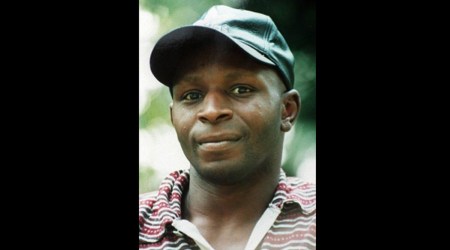
Christopher Alder / Wikipedia
By Dan Glazebrook | RT | August 2, 2015
Every obstacle will be put in the way of a successful outcome of this struggle, and those who seek justice are likely to find themselves subject to a vindictive campaign by the police. Nothing illustrates this more clearly than Janet Alder’s almost two-decade long campaign to establish what happened to her brother Christopher.
On April 1, 1998, Christopher Alder was on a night out in Hull. The 37-year-old was a former paratrooper who had served in the Falklands and Northern Ireland, and had been decorated for his service; he had two children, and was in training for a new career in computer programming. Later that night, however, outside the Waterfront nightclub, he got into a fight. After being punched in the face, Christopher was briefly knocked unconscious and lost a tooth. An ambulance was called, and Christopher was taken to Hull Royal Infirmary, accompanied by police officers. His injuries were not deemed life-threatening, and he was discharged, after which the police drove him to the police station.
Exactly what happened in that police van during the short one-mile journey remains shrouded in mystery; indeed it has never properly been investigated. What we do know is that by the time he arrived in the police station, he was unconscious again, had lost another tooth, and had received two additional injuries (a cut to the lip and a cut above the eye). He was then dragged into the custody suite with his trousers round his ankles and his belt missing, and left face down and handcuffed on the floor. No attempt was made to put him into the recovery position, and CCTV footage shows officers standing around chatting as he gasps for breath, still unconscious. Within 12 minutes he would be dead, with officers making racist comments and monkey noises over his corpse. It was a level of contempt that has characterized the state’s attitude towards Christopher and his family ever since.
Christopher’s sister Janet began campaigning for justice for her brother just three months after his death. Her tireless efforts have served to keep the case in the public eye, thwarting the police’s attempts to brush it under the carpet, and have resulted in some astounding revelations and admissions. Yet, to date, justice has still not been done; the police who caused his death have never been properly held to account or punished for their actions, whilst Janet has borne the brunt of a vindictive campaign against both her and her brother’s memory which continues to this day – but which began immediately after his death.
In the days following Christopher’s death, six officers raided his flat. The flat was then sealed off for two weeks whilst the police laboriously itemized and mapped out every item in the home. Needless to say this is not usual procedure for dealing with a possible murder victim; indeed, an official report by the Independent Police Complaints Commission (the IPCC) later noted that it was “more in keeping with what might be expected if Mr Alder were a suspect rather than a victim.” What seems likely is that this raid, far from having anything to do with investigating Christopher’s death, was rather a desperate attempt to find something – anything – that could be used to smear his name. For this is usual procedure: one only has to recall the lies that were put out following the executions of Mark Duggan and Jean Charles de Menezes to realize that the smearing by police of their victims following a death in custody is standard practice.
The raid, however, turned up nothing.
So the next step, it seems, was to smear his family. An investigation by the IPCC in 2006 revealed that following Christopher’s death, Humberside Police had dredged up social service records dating back to the births of all the Alder children – Christopher, Richard, Emmanuel, Stephen, and Janet, who were brought up in care. The IPCC report noted that the records “did not seem to have any relevance” to the case; it did not speculate on what the real purpose of obtaining the records might have been.
So the police were certainly busy in the aftermath of Christopher’s death. What they were not busy doing, however, was investigating the actual circumstances of his death.
Given that Christopher died at the hands of Humberside police, the investigation into their role in his death was carried out by West Yorkshire police. However, they proved unable – or more likely unwilling – to follow even the most routine of procedures. Whether he had been assaulted by any of the officers he encountered that night was never investigated. Worse, all the evidence which would help to establish this was allowed to be destroyed. The police van was cleaned, blood samples and clothing – both Christopher’s and the officers’ – were destroyed without being tested, and CS gas canisters from the police van were disposed of. Christopher’s missing belt and tooth were never located.
Humberside police, meanwhile, were mounting a prosecution of their own. Jason Paul had been involved in the fight with Christopher that night; initially trying to break it up, he ended up punching Christopher after receiving blows himself. Yet despite the pathologist’s conclusion that this punch had played no role in Christopher’s death, when Jason went to the police station to assist with the inquiry the following day he was arrested on suspicion of murder. He was eventually charged with “GBH with intent.” It would not be until three months later that the spurious charges were finally dropped. Jason Paul eventually mounted a successful civil court case against the police, which found that he had been falsely imprisoned and the prosecution had been malicious. The jury unanimously agreed that it was “more likely than not that the police charged [Mr Paul] with causing GBH with intent to deflect potential criticism of the [actual] circumstances of Christopher Alder’s death.” … Full article
Featured Video
Dan Dicks with James Corbett on Solutions Watch
or go to
Aletho News Archives – Video-Images
From the Archives
Secret document reveals plans for civil war in Lebanon, Israeli false flags, and invasion
By Randi Nord | Geopolitics Alert | April 5, 2019
Beirut – During his visit with US Secretary of State, Mike Pompeo, Lebanese President Michael Aoun reportedly received a US-Israeli document detailing plans for creating a civil war in Lebanon with covert false flag operations and possible Israeli invasion.
Although the source of the document is Israeli and created in partnership with Washington, no one knows who presented it to Aoun. The Lebanese TV station, Al-Jadeed, initially reported the document on Lebanese TV and a video on its website. Geopolitics Alert translated the report for this article. … continue
Blog Roll
 Aletho News
- Sheikh al-Asadi warns of Iraqi government compliance with US demands
- How to MAKE THE CONSPIRATORS PAY for their crimes! Dan Dicks with James Corbett on Solutions Watch
- There’s a drought in academia: A drought in honest research on the subject of drought and other weather extremes
- Department of War Awards $20.7 Billion Contract to Raytheon for Air-to-Air Missiles
- ‘Distance yourselves from Israel’: IRGC urges US population to question govt policies
- America’s Greenland deal has a radioactive backstory
- The RAF Fairford ‘terror plot’: Unpacking escalation in the UK echo-chamber
- EU Council Advances Chat Control 2.0 Scanning Proposal
- Ex-Greek MEP files complaint against Israeli spyware firm over alleged Pegasus surveillance
- Troubling ideas throughout the Torah, Talmud, Mishneh Torah and Tanya
- If Americans Knew
- New Report: “Scholasticide and Genocide in Gaza: Assessment, Testimonies and Legal Analysis”
- Ex-Biden officials are desperate for a Gaza scapegoat
- Israeli “settlers” Invade Al-Aqsa; Pour Boiling Water on 75-Year-Old
- Israel Has Kidnapped Another American Teenager
- US arms sales to Israel worth $21.6 billion in 20 months
- Three Palestinians Killed in Israeli Attacks on Gaza
- Revealed: German “Anti-Semitism Expert” Driving Crackdown on Palestine Solidarity is Former Israeli Spy
- Egypt’s Warning to Israel Before Oct 7
- Israel’s siege signals another cruel winter for 1.8 million Gazans – Daily Update
- Netanyahu Asked UAE Leader to Deny Report on Oct. 7 Warning in Secret Visit, Sources Say
- No Tricks Zone
- Two More Paleo Reconstructions Affirm Meters-Higher Sea Levels Across Ireland, Brazil 7000-6000 Years Ago
- New Study: Earth And Venus Surface Warmth Largely Explained By Convection And Lapse Rate, Not CO2 Or Radiation
- 2025 Nature Paper Claiming Worsening Global Drought Gets RETRACTED …Heavily Flawed
- New Study: ‘Global Drought Shows No Detectable Recent Acceleration Under Climate Warming’
- Economic Masterminds: German Socialists Suggest Taxing Productivity Gains Stemming From Using AI
- The South China Sea Has Not Been Cooperating With The Climate Change Narrative
- Energy Crisis: Germany Enters Heating Season With Historically Low Gas Reserve Fill Levels
- New Study: The Antarctic Ice Sheet Gained Mass From 2020-2024 Due To Staggering Snow And Ice Accumulation
- Study: Ocean Heating Rates From Thousands Of Years Ago ‘Dwarf’ Modern Ocean Heating Rates
- Climate Extremists Target, Attack Large-Scale Power Grid Infrastructure In Germany!

