On September 2nd 1945, within hours of Imperial Japan’s Emperor Hirohito formally signing an instrument of surrender and ending World War II in the Pacific, Ho Chi Minh, leader of the Viet Minh, proclaimed the Democratic Republic of Vietnam’s foundation. Liberally citing passages from the 1776 US Declaration of Independence, Ho pledged that his newly-created state would never again be subject to foreign domination or exploitation, and evermore remain governed solely by and for its people.
Vietnam’s radical post-war euphoria was palpably captured by French photographer Germaine Krull, a French photographer who visited the country mere days later. In her diary, she observed how in Saigon, “all the streets were hung with large banners and all the walls and official buildings” bore revolutionary inscriptions. They declared; “down with French imperialism; down with the colonials; the era of colonization is over; down with slavery.” The Communist-dominated Viet-Minh’s “big red [flag] with the yellow star” could also be seen in profusion.
Japanese soldier hands over his sword to the British, September 1945
This was quite some contrast from the scenes that greeted Krull at Saigon airport. There, “an unusual situation prevailed”:
“It was being serviced entirely by the Japanese. They were doing everything: driving trucks and cars, standing guard, carrying luggage and refuelling. The British were in command of them and kept order… The Japanese performed their duties faultlessly and were perfectly disciplined.”
Krull had flown in on one of several “transport planes carrying British troops,” among them a sizeable detachment of “handsome, impeccable” Gurkhas, along with “their Scotch commanding officer.” Unstated by the photographer, their mission was to comprehensively crush the country’s dreams of independence, and re-establish France’s control over her colonial holding. Under its auspices, the “unusual situation” of Vietnam’s recently vanquished Japanese occupiers taking orders from and working alongside the British, until mere days earlier their sworn adversaries, was not restricted to Saigon airport.
Many decades later, Britain’s immediate post-war intervention in Vietnam remains virtually unknown. Yet, despite lasting just six months, the bitter conflict cost many lives, and effectively ignited the three-decade-long Vietnam War, which ended in embarrassing defeat for Western powers. The impact on the region, and wider world, endures for untold numbers of people today. It is a sordid, secret chapter in London’s recent history, urgently demanding re-evaluation.
That the British meant grave business in Vietnam is amply underscored by their Indian Army’s entire 20th Division’s deployment to the country. As journalist George Rosie reported in 1970, this force had “been at the very heart of the fighting” against Japan over Burma, and in turn control over the whole subcontinent. Across countless brutal battles, its units fought off “ferocious” attacks, “inflicting terrible casualties” on the enemy.
The 20th Division was particularly central to these efforts. By the end of World War II, Rosie recorded, “there was no more skilful, experienced and battle-hardened” unit in Burma. The Division was “probably the best division in one of the best armies in Asia.” Now, its soldiers were to target their well-honed proficiency in the art of killing against the Vietnamese. In all, 26,000 British soldiers along with 2,500 military vehicles were airdropped into Saigon for the purpose.
Three artillery regiments also arrived, while the Royal Air Force was on hand with 14 spitfires and 34 Mosquito fighter bombers in support. Backing this vast invading army were Vichy French and Japanese troops, who were provided with new weapons by their British counterparts. The official objective was to “maintain law and order and ensure internal security” in Vietnam. Still, the British and their conquered underlings were given explicit orders to savagely crush any and all local resistance, even if innocent civilians were killed:
“There is no front in these operations: we would be dealing with bands of guerillas… We may find it difficult to distinguish friend from foe… Also beware of ‘nibbling’ at opposition. Always use the maximum force available to ensure wiping out any hostile we may meet. If one uses too much, no harm is done. If one uses too small a force and it has to be extricated [sic], we will suffer casualties and encourage the enemy.”
Japanese soldiers repair an airfield, while British troops observe
Quickly, the Vietnamese began dying in vast numbers. However, this bloodsoaked incursion initially went entirely unremarked upon in the British media, and parliament, for several months. As such, the public at home remained completely in the dark about their Army waging another grand foreign entanglement, let alone in tandem with its World War II enemies. This conspiracy of silence continued until December 1945, when a joint letter authored by British soldiers in Vietnam, sent to then-Foreign Secretary Ernest Bevin, was published by The Guardian:
“It appears that we are collaborating with Japanese and French forces against the nationalist forces of Viet Minh. For what purpose is this collaboration? Why are we not disarming the Japanese? We desire the definition of government policy regarding the presence of British troops in Indo-China.”
These bombshell disclosures attracted little interest, and were promptly forgotten. The signatories received a stern talking-to from a senior military official, and no further revelations about Britain’s covert war in Vietnam subsequently emerged. In the meantime, slaughter of innocent civilians continued apace. Much later, one of the signatories to the joint letter recalled of his time in the country:
“We saw homes being burned and hundreds of the local population being kept in compounds. We saw many ambulances, open at the back, carrying mainly – actually, totally – women and children, who were in bandages. I remember it very vividly. All the women and children who lived there would stand outside their homes, all dressed in black, and just grimly stare at us, really with… hatred.”
Come mid-January next year, the Viet Minh had learned lessons from launching large-scale attacks on British-led forces, which frequently ended with significant casualties due to their opponents’ superior firepower, and extensive use of machine guns. Hanoi’s freedom fighters thereafter adopted a raft of guerrilla tactics, including ambushes, assassinations, and hit-and-run raids on enemy patrols. It was the world’s first modern unconventional war. These strategies were devastatingly employed against French and US invaders over the next three decades.
Control of the mission was formally signed over by London to French generals at the end of March 1946, and most of her forces duly left Hanoi. France was emboldened by the perceived success of Britain’s intervention, believing Ho Chi Minh’s forces couldn’t withstand further onslaught from a “civilised”, professional army. This delusion led Paris to launch all-out war against Hanoi again in December that year. It ended in bitter defeat eight years later, and then the Americans stepped in.
For its part, in the post-World War II period, Britain waged a number of comparable, covert wars in every corner of the world, as its financial and military clout rapidly withered. In many cases, the US subsequently stepped in to fill London’s shoes, taking over management of far-flung crises and emergencies, and in the process Britain’s fallen empire. The past 80 years has been a neverending story of American struggle to master the dual legacies of colonialism and partition, bequeathed by its own former imperial overlord.
The UK has a new/old chair of the parliament’s Culture, Media and Sports Committee – and she is yet another champion of (obliging) Big Tech, and a veteran in the “war on disinformation,” but also attempts to demonetize “disfavored” public figures.
Caroline Dinenage keeps failing upwards: she has just been reelected to this role, after last year embarrassing herself by trying to pressure X and Rumble, and other platforms and media to demonetize actor Russell Brand because of anonymous allegations against him.
The Committee that scrutinizes the activities of the Department for Culture, Media and Sport (BBC included), has a Sub-Committee specifically focused on what are considered online harms and disinformation, as well as UK’s sweeping censorship law, Online Safety Act.
It is from this position that Dinenage last fall decided it was a good idea to turn to X with the demand to cut Brand off from his revenue on the platform because of the (to this day unproven) accusations.
X refused. And the company explained why to the British MP in a letter that underscored commitment not only to free speech, but also X’s own terms of service.
“We do not take action on accounts where they have not violated our own rules or local laws (Brand was not at the time, and is still not charged with any crime). This is essential to protect free expression on the service,” the letter read, adding that all, including monetized content, is subject to X’s rules and user agreement.
X wasn’t the only platform Dinenage went to in a bid to swiftly deprive Brand of money: YouTube was one of them, and lo and behold, this one went along, demonetizing Brand in October 2023. All this happened before the alleged victims and the alleged perpetrator had undergone any due process.
And for a British MP to pressure platforms to punish someone essentially based on hearsay at that point is what famed journalist Glenn Greenwald called “preposterous.”
Rumble was another platform Dinenage urged to demonetize Brand last year. That would be a no, ma’am – was the essence of the free speech video platform’s response to Dinenage.
“We regard it as deeply inappropriate and dangerous that the UK Parliament would attempt to control who is allowed to speak on our platform or to earn a living from doing so,” Rumble’s letter said, among other things.
But now, Dinenage – once a recipient of a non-monetary grant from Google – shared that she is “delighted” to continue where she left off with the previous parliament’s Culture, Media and Sports Committee.
It’s often been alleged that ever since World War II ended, Holocaustianity emerged from its ashes as the West’s official state religion.
To dare suggest that human history’s bloodiest war didn’t happen exactly the way we have been commanded to think that it happened is to face the sort of social death that stared down European heretics who questioned the resurrection of Christ 1,000 years ago.
Like most Manichaean belief systems, Holocaustianity draws a stark and unbroachable line between good and evil, one that permits no nuance. Hitler was Satan, and Jews were six million rubber-stamped versions of Christ, shedding their innocent blood to forever redeem humanity from its wretchedness.
And yet it didn’t work out so neatly. For one, the Jews didn’t ascend to heaven, and they are eternally condemned to tremble in fear at existential threats at the hands of humanity’s clearly irredeemable dregs.
In this state religion, the distribution of guilt is clearly inequitable: The only person who bears ANY blame for World War II, at least while it was happening, was Adolf Hitler. And then after World War II, the guilt must be shouldered by everyone of European ancestry, no matter their forefathers’ role in World War II—they must suffer. Forever.
It’s truly that ridiculous, and meekly attempting to bring facts and reason into the discussion is to be barked at by a pack of rabid bitches in estrus.
I skipped over the Jonestown segments, but what’s remarkable about the rest of their discussion is how calm and non-“hateful” it was. Then again, unless you’re dealing with brutally bitter anonymous meme-tarded trolls online, this has been my consistent experience for the past three decades, ever since I started paying attention to what most accused “hatemongers” actually have to say. Almost without fail, the people who are accusing them of “hate” are palpably more bitter, unhinged, and malevolent than the “haters” are.
Neither Carlson nor his guest say the word “Holocaust” once, although they both agree on the premise that the official World War II narrative has achieved religious status because, as with Christ’s crucifixion, it involved blood sacrifice. Neither one of them has a positive word to say about Adolf Hitler, either. Nor do they have a negative word to say about Jews.
In Darryl Cooper’s framing, World War II would never have reached the colossal scale that it did—involving the American empire, the Soviet empire, and even Imperial Japan—without Winston Churchill:
COOPER: I thought Churchill was the chief villain of the Second World War. Now, he didn’t kill the most people, he didn’t commit the most atrocities, but I believe, and I don’t really think, I think when you really get into it and tell the story right and don’t leave anything out, you see that he was primarily responsible for that war becoming what it did, becoming something other than an invasion of Poland .…
CARLSON: Why don’t you make the case for that? Okay so you’ve made your statement, a lot of people are thinking, “Well, wait a second, you said Churchill, my childhood hero, the guy with the cigar.” Yeah, well, in the next thought that comes into their head is that, “Oh, you’re saying Churchill was the chief villain, therefore his enemies, you know, Adolf Hitler and so forth, were the protagonists, right? They’re the good guys ….
COOPER: That’s not what I’m saying. You know, Germany, look, they put themselves into a position, and Adolf Hitler is chiefly responsible for this, but his whole regime is responsible for it, that when they went into the East in 1941, they launched a war where they were completely unprepared to deal with the millions and millions of prisoners of war, of local political prisoners and so forth that they were going to have to handle. They went in with no plan for that. And they just threw these people into camps, and millions of people ended up dead there.
“No plan…camps…millions of people ended up dead there.”
Uttering those words, Cooper committed the unpardonable sin, the modern version of blaspheming the Holy Ghost.
Cooper alleges repeatedly that Germany did not want a war with Western Europe and that Hitler sent a string of peace proposals to both Neville Chamberlain and Winston Churchill. Despite what has now become an item of canonical faith—that Hitler wanted to “take over the world”—Cooper says that Hitler’s proposals stressed that Germany would allow England to keep all its overseas colonies and that the main international threat that both countries faced was Russian Bolshevism.
Cooper calls Churchill a “psychopath”—another grave transgression when that word is only reserved for Hitler—and portrays him as a bellicose imperialist who kept the war going and bided his time while he corralled other imperial forces into joining the effort:
COOPER: The reason I resent Churchill so much for it is that he kept this war going, when he had no way, he had no way to go back and fight this war. All he had were bombers. He was literally by 1940 sending firebomb fleets, sending bomber fleets to go firebomb the Black Forest just to burn down sections of the Black Forest, just rank terrorism, you know, going through and starting to, you know, what eventually became just a carpet bombing, saturation bombing of civilian neighborhoods, you know, to kill, the purpose of which was to kill as many civilians as possible. And all the men were out in the field, all the fighting henchmen were out in the field…. And so this is old people, it’s women and children. And they knew that. And they were wiping these places out. It was gigantic, scaled terrorist attacks, the greatest, you know, scale of terrorist attacks you’ve ever seen in world history.
CARLSON: Why would he do that?
COOPER: Because it was the only means that they had to continue fighting at the time. You know, they didn’t have the ability to re-invade Europe. And so, he needed to keep this war going until he accomplished what he hoped to accomplish. … “We need either the Soviet Union or the United States to do it for us.” And that was the plan and kept the war going long enough for that plan to come to fruition. And to me, that’s just it’s a craven, ugly way to fight a war.
CARLSON: And what was the motive?…
COOPER: There’s all those things but then you get into you know why was why was Winston Churchill such a dedicated booster of Zionism from early on in his life, right? And there’s ideological reasons. In 1920, he wrote a kind of infamous now article called “ZIONISM versus BOLSHEVISM.” …And this is 1920. So, this is shortly after the Bolshevik Revolution. Basically, the point of his paper is he says these people who are over there, they’re all going one direction or the other. They’re going to be Bolsheviks. They’re going to be Zionists. We want them to be Zionists, you know, and so we need to support this. And so that was early on. There’s an ideological component of it. But then as time goes on, you know, you read stories about Churchill going bankrupt and needing money, getting bailed out by people who shared his interests, you know, in terms of Zionism…
When I peeked at Churchill’s 1920 essay “ZIONISM versus BOLSHEVISM,” I was blindsided at how Winston Churchill, perhaps history’s most celebrated philo-Semite, trotted out the idea that Russian Bolshevism was primarily a Jewish phenomenon, something that would get him tarred as an “anti-Semite” today:
International Jews
In violent opposition to all this sphere of Jewish effort [i.e., Jews who are nationalists in the nations they reside in] rise the schemes of the international Jews.
There is no need to exaggerate the part played in the creation of Bolshevism and in the actual bringing about of the Russian Revolution by these international and for the most part atheistical Jews. It is certainly a very great one; it probably outweighs all others. With the notable exception of Lenin, the majority of the leading figures are Jews.
Writing for the Mises Institute, Ralph Raico dredges up a Churchill quote from 1937 where Winnie reportedly said that if forced to choose between Nazism and Communism, he’d go with Hitler:
Three or four years ago I was myself a loud alarmist…. In spite of the risks which wait on prophecy, I declare my belief that a major war is not imminent, and I still believe that there is a good chance of no major war taking place in our lifetime…. I will not pretend that, if I had to choose between Communism and Nazism, I would choose Communism.
But then, when Nazi troops lurked on Moscow’s fringes ready to bring down Communism, Churchill sided with Stalin. And when the war was over, Churchill lamented that an “iron curtain has descended over Europe,” seemingly unconcerned that he’d stolen the phrase from Joseph Goebbels.
A strong case could be made that Churchill was a man whose only motivation was the raw acquisition of power regardless of how much blood was spilled. Otherwise, he seemed to have no principles or guiding ideology.
Toward the end of their discussion, Carlson and Cooper marvel at how, rather than saving the West, World War II destroyed it:
CARLSON: So, Germany is this totally self-hating place. It’s depressing as hell, though also wonderful in a way, but it’s going away. But they lost, at least you could say they lost two World Wars in a row. Britain won two World Wars in a row, and if anything, it’s more degraded than Germany. So, like, just to take it back to the first thing I said, and I’ll shut up and let you answer, but if Churchill is a hero, how come there are British girls begging for drugs on the street of London? And the place is, you know, it’s just there. London is not majority English now. Like, what?
COOPER: Well, the people who formulated the version of history that considers Churchill a hero, they like London the way it is now, you know….
CARLSON: But that’s not victory, that’s like the worst kind of defeat, is it not?
COOPER: That is something that ends your existence as a people….
CARLSON: I just can’t get over the fact that the West wins and is completely destroyed in less than a century.
COOPER: Well, the West was conquered. The West was conquered by the United States and the Soviet Union.
CARLSON: Okay, but I’m including the United States in the West. Right. Somehow, the United States and Western Europe won. That’s the conventional understanding. And both have now looked like they lost a World War.
Cooper described the vituperations, recriminations, and hyperbole that ensued in the wake of his quietly reasonable discussion with Carlson as “emotional incontinence” and said it is “is proof of my point about the sacred nature of the World War 2 mythos.”
Even the White House got involved. On Thursday, in perhaps the most emotionally incontinent outburst of them all, Senior Press Secretary Andrew Bates fumed at Carlson:
… [G]iving a microphone to a Holocaust denier who spreads Nazi propaganda is a disgusting and sadistic insult to all Americans, to the memory of the over 6 million Jews who were genocidally murdered by Adolf Hitler, to the service of the millions of Americans who fought to defeat Nazism, and to every subsequent victim of antisemitism…. Hitler was one of the most evil figures in human history and the ‘chief villain’ of World War II, full stop… The Biden-Harris administration believes that trafficking in this moral rot is unacceptable at any time, let alone less than one year after the deadliest massacre perpetrated against the Jewish people since the Holocaust and at a time when the cancer of antisemitism is growing all over the world.
In response, Carlson texted CNN:
The fact that these lunatics have used the Churchill myth to bring our country closer to nuclear war than at any moment in history disgusts me and should terrify every American. They’re warmonger freaks. They don’t get the moral high ground.
Color me impressed. That’s like stoically enduring the Battle of Britain in your pajamas, then blithely throwing open your bedroom shutters, stretching, wincing in the daylight, and yawning. We need more hatemongers of this caliber.
Audio version: To listen in a player click here. To download the mp3, right-click here and choose “save link/target as.”
Well, the Jewish Lobby is at it again. In the latest kerfuffle over “Holocaust denial,” Jews and their sycophants are in an uproar over a podcast interview aired on September 2 in which Tucker Carlson spoke at length with a “popular historian” named Darryl Cooper. The two-hour episode is titled “The True History of the Jonestown Cult, WWII, and How Winston Churchill Ruined Europe”—a bit of a stretch for a single show, but with the central theme that conventional or orthodox history is often wrong about events small and large, and thus frequently in need of revision. History is not only written by the victors, it is sustained by powerful lobbies that have a vested interest in a certain interpretation of past events. This much is so obvious that it scarcely needs mentioning.
And yet, when it comes to World War Two and especially the Holocaust, all rules go out the window. The “victors” cannot be named; alternate interpretations are not allowed; and revisionism is declared a crime. In the interview, Cooper offers the mildest of mild statements regarding his thoughts on WW2 and on what happened to “civilians and prisoners of war” at that time. Two points seemed to have raised the greatest ire: that Churchill, not Hitler, was the true villain of the war; and that the millions of people who died—presumably meaning millions of Jews—were, in effect, accidental victims rather than targets of a premediated and planned genocide. Our cultural guardians are upset by the first point but truly enraged by the second.
The horror of stating such views was too much for both our Jewish media and for our Jewish-inspired Biden regime. The headlines are alarming: “Tucker Carlson Criticized for Hosting Holocaust Revisionist” (NYT); “Tucker Carlson Welcomes a Hitler Apologist to His Show” (NYT, Michelle Goldberg); “White House condemns Tucker Carlson’s ‘Nazi propaganda’ interview as ‘disgusting and sadistic insult’” (CNN); “Tucker Carlson Blasted for Interview with Holocaust Revisionist” (The Hill). CNN reports that the Biden administration took the unusual step of publicly “denouncing Tucker Carlson” and his guest. Deputy press secretary Andrew Bates issued a formal statement, not only calling the interview “a disgusting and sadistic insult to all Americans” but also condemning Carlson for “giving a microphone to a Holocaust denier who spreads Nazi propaganda.” Bates’ chief concern seems to be with “the over 6 million Jews who were genocidally murdered by Adolf Hitler.” “Hitler was one of the most evil figures in human history,” Bates assures us—“full stop.” Certainly no revisionism allowed in this most “freedom-loving” of nations.
This whole incident is worthy of some reflection. Let me start with what exactly Cooper said. Here are the relevant statements (from 46:30 to 49:00):
When [the Germans] went into the East, in 1941, they launched a war where they were completely unprepared to deal with the millions and millions of prisoners of war, local political prisoners, and so forth, that they were going to have to handle. They went in with no plan for that. And they just threw these people into camps and millions of people ended up dead there.
You have letters as early as July, August 1941 from commandants of these makeshift camps that they’re setting up for these millions of people who were surrendering or people they are rounding up. And it’s two months after [Operation] Barbarossa was launched [in June], and they’re writing back to the high command in Berlin saying, “We can’t feed these people…” And one of them actually says, “Rather than wait for them all to slowly starve this winter, wouldn’t it be more humane to just finish them off quickly now?”
At the end of the day, [Hitler] launched that war [against the USSR] with no plan to care for the millions and millions of civilians and prisoners of war that were going to come under [his] control. And millions of people died because of that.
To assess what Cooper is saying here, we must remind ourselves of the basic facts: Hitler launched his war against Poland in early September 1939. Based on a mutual nonaggression pact, Stalin attacked Poland from the East two weeks later, and the two great powers quickly divided Poland in half. England and France then declared war on Germany, not vice versa (wait—who was the aggressor again?), and so Hitler was compelled to direct his military efforts to the west. He never wanted a war to his west, and as Cooper explains, Hitler tried frequently to make peace with Chamberlain (not yet Churchill). Chamberlain sought compromise but the rest of his divided government—including Churchill—preferred to continue a war they were ill-equipped to fight. Germany invaded the Low Countries in May 1940, Chamberlain resigned, and Churchill was elevated to prime minister.
Throughout the second half of 1940 and into the first half of 1941, Hitler continued his impressive string of victories. France was all but defeated and England was on its last legs. Then suddenly, on 22 June 1941, Hitler broke his pact with Stalin and invaded the Soviet Union (“Operation Barbarossa”). This, says Cooper, was the war in which Germany was unprepared to handle “millions” of prisoners. And indeed, more than 3 million Soviet POWs came under Germany control by the end of 1941, many of whom in fact surrendered or defected. They were initially housed in the nearly 100 ad hoc camps established in German-controlled Russia, and conditions were indeed horrible, as Cooper suggests. Upwards of 500,000 Soviet POWs died each month: around two million dead by the end of 1941. As far as we know, this was unplanned; the Germans were too busy fighting on the front to take much care for their 3 million newly-captured prisoners. They indeed simply “ended up dead,” as Cooper says.
Notably, nowhere does Cooper talk about Jewish prisoners. The whole discussion centers on Soviet POWs and other political prisoners, of whom there were relatively few Jews. Jews did pay a price during Barbarossa, but it was because they were partisan fighters: attacking German troops from behind the front lines. According to international rules of warfare, partisans are to be treated the same as soldiers—meaning, they could be captured, or they could be killed. And the Germans preferred to kill partisans; this was logical, given their already overcrowded ad hoc POW camps.
This resulted in the true beginning of “the Holocaust,” if we wish to call it that. Thousands of partisan Jews were shot on the Eastern Front—perhaps 30,000 or 40,000 in 1941, based on reasonable estimates (certainly not the 400,000 or 500,000 that our orthodox historians would have us believe). But Cooper was not discussing these deaths. Jews also died in the ghettos in 1941—perhaps another 40,000 or 50,000, most from natural causes (old age, illness, accident, suicide). And precisely zero Jews died in “homicidal gas chambers” or “death camps” in 1941; none of the infamous six camps—Auschwitz, Belzec, Sobibor, Treblinka, Chełmno, and Majdanek—were operational that year. For that matter, precisely zero Jews died in “homicidal gas chambers” during the entire war, precisely because such things did not exist. But neither Carlson nor Cooper dared step into that sticky wicket.[1]
So, in Cooper’s (and Carlson’s) defense, the passage at hand says nothing about Jews and thus nothing about “the Holocaust.” Everything Cooper said there was factually correct. In fact, in the entire two-hour-plus interview, Jews were only mentioned a handful of times, and the “Holocaust” not once, that I can recall.
Jews Go on the Attack
But that’s not how our Jewish Lobby sees it. Every reference to “millions” of deaths is, to them, a coded reference to Jews. Even discussing Hitler as anyone other than a comically-evil madman means that you are a Nazi sympathizer, a “denier” (whatever that means), or simply “disgusting and sadistic.”
A good example the absurdly inane orthodox response can be found in (Jewish) Michelle Goldberg’s op-ed in the (Jewish) New York Times of September 6. The alleged “Hitler apologist” Darryl Cooper failed to toe the party line on the unconditional evil of the Nazis, and so she condemns him in the strongest terms, without even knowing what she is talking about. She clearly doesn’t like the idea that Holocaustianity is our current “state religion” (which it is), and she is incensed when Cooper rightly mentions the “emotional triggers” that keep us from asking tough questions. To Goldberg, Cooper offers us only “clever rhetorical formulations” that are presented in a “soft-spoken, faux-reasonable way.” So overwhelmed is she by Carlson’s and Cooper’s audacity that she is reduced to the following idiocy: “Nazi sympathy is the natural endpoint of a politics based on glib contrarianism, right-wing transgression, and ethnic grievance.” This, from a staff writer at the New York Times.
More to the point, despite the utter lack of mention of the Holocaust in the interview, Goldberg is fixated on this supposed inference. She laments “Carlson’s turn toward Holocaust skepticism”; she frets over the “disgraced, Holocaust-denying author David Irving” (as if he is relevant here); and she bemoans the fact that “there are few better trolls than Holocaust deniers.” Those clever deniers “love to pose as heterodox truth-seekers,” and they “excel at mimicking the forms and language of legitimate scholarship”—when in fact their level of scholarship often equals or exceeds that of our conventional so-called experts.[2] Deniers “blitz their opponents with out-of-context historical detail and bad-faith questions” (How dare they go into detail! How dare they ask questions!). In the end, “they only know how to use crude provocation to get attention”—says the attention-seeking Jewess.
One of Goldberg’s biggest fears is that, in her Jewish-controlled ideological universe, that the jig might be up. She worries about the red-pilled right-wing belief “that all you’ve been told about the nature of reality is a lie, and thus everything is up for grabs.” In fact, much of what we have been told by our Jewish-inspired orthodoxy has been a lie, or a half-truth, or otherwise deeply deceptive, and Goldberg worries that more and more people are figuring this out. And she is right to worry: a mass awakening will spell big trouble for her and her co-ethnics.
Finally at the end of her piece, she puts her finger on a bit of truth: “Ultimately, Holocaust denial isn’t really about history at all, but about what’s permissible in the present and imaginable in the future.” Hitler and the Nazis must be viewed “as the negation of our deepest values,” or else we are “softened up” for Trump-like fascism. Holocaust denial—that is, deeply questioning the basic assumptions of that event—is indeed not really about history simply because the revisionists have won: the orthodox story of the “homicidal gas chambers,” “the 6 million,” and the alleged National Socialist mad plot to kill all the Jews—all these have been utterly demolished. Orthodox historians no longer even try to respond to revisionists because they know that they will be disgraced. Instead, they and their potent Jewish backers resort to censorship, lawfare, slander, intimidation, and (in many countries) imprisonment to stifle revisionism. Such things are a sure sign of defeat.
As for her remark about what is permissible and imaginable, this too is correct: The standard Holocaust story is the keystone of present-day Jewish power in the US and the West; everything rests on our collective guilt, and all Jewish/Israeli atrocities are thereby justified. Jewish power presently declares that questioning the Holocaust is impermissible; and that a society in which Hitler and National Socialism are viewed neutrally or even positively is unimaginable. But this will soon change. When Holocaust revisionism becomes permissible, and National Socialism becomes imaginable, then everything—everything—will change. That day cannot come soon enough.
The great irony in this whole much-ado-about-nothing is that it could have been something : Carlson and Cooper could have actually discussed the many problems with the Holocaust story, and they could have actually asked the tough questions that orthodoxy cannot answer. They could have examined the many works of Germar Rudolf or Carlo Mattogno; they could have reviewed the reasons why homicidal gas chambers were technically impossible; they could have explained that the best evidence to date suggests that perhaps 500,000 Jews died during the war, not 6 million. And when all that comes out, Michelle Goldberg and friends will truly have something to fear.
Thomas Dalton, PhD, has authored or edited several books and articles on politics, history, and the Jewish Question. All his works are available at www.clemensandblair.com, and at his personal website www.thomasdaltonphd.com.
[2] For the full academic story, see the 50-volume “Holocaust Handbook” series. For a concise treatment of all the core issues, see the newly-released Holocaust Encyclopedia.
According to the National WWII Museum, the Second World War resulted in 45,000,000 civilian deaths, 15,000,000 combat deaths, and 25,000,000 soldiers permanently wounded.
This is what many academics and media influencers refer to as “The Good War.”
Just as we cannot truly understand a court case hearing only the defense, we must also hear the prosecution in order to come to the most accurate conclusion on who is guilty, who is innocent, and how such a tragedy can be avoided in the future.
I want to make the case that the Second World War is in fact a tale of good vs. evil. In short, evil politicians on every side conscripting millions of people and murdering millions of others while the civilians of all countries remain good.
Since there is no shortage of people rightfully vilifying the Japanese Empire and the German National Socialists, I would like to focus primarily on the villainy of a man who Cambridge University reports is the “Greatest Briton”: Winston Churchill.
Exhibit A: Starvation Blockade
Winston Churchill wrote a book titled, The World Crisis, 1911-1918. In this book Churchill summarizes the British naval policy during World War I when Churchill was First Lord of the Admiralty. On page 672, Churchill writes.
“The British blockade treated the whole of Germany as if it were a beleaguered fortress, and avowedly sought to starve the whole population – men, women and children, old and young, wounded and sound – into submission.”
Notice, Churchill did not say, “This is how we will make the Kaiser suffer and prove we are the good people in this conflict by protecting innocent people. We good men must discriminate between evil Germans and innocent Germans.” The Kaiser was humiliated of course, but was never assassinated, and lived in a mansion in the Netherlands after the war was over, dying in 1941 at the age of 82.
According to historian Martin Gilbert, a man who writes Churchill in a very favorable light in his book The First World War: A Complete History, estimates of the civilian death toll from Britain’s blockade are 762,106.
Many people might have predicted that such protectionist policies would stimulate the German economy since Germany would now have to employ more people domestically, which should produce the multiplier effect of money. But of course, the opposite is true. When any state coercively stops a group of people from engaging in mutually beneficial trades, human beings suffer and frequently die as a result.
Exhibit B: Poison Gas and Biological Warfare
On May 12, 1919, Winston Churchill authored a war office memorandum in which he writes:
“I do not understand the squeamishness about the use of gas… I am strongly in favor of using poisoned gas against uncivilized tribes. The moral effect should be so good that the loss of life should be reduced to a minimum. It is not necessary to use only the most deadly gasses: gasses can be used which cause great inconvenience and would spread a lively terror and yet would leave no serious permanent effects on most of those effected.”
Would you have a friend in your life if he used poison gas against people he deemed uncivilized in order to spread a lively terror? Any one of us would be rightfully imprisoned for assault if we used poison gas against a non-aggressor. Yet, Churchill is still celebrated as a respectable statesman even though none of us would accept this behavior from any other person in our private lives.
In 1942, the United Kingdom’s War Department Experimental station conspired to infect the German civilian population with deadly anthrax by first poisoning animals, in hopes that the German food supply would turn deadly. According to the BBC in an article discussing the “island of death” off the coast of Scotland:
“The truth was that Gruinard Island had been the site of a clandestine attempt by the UK during World War Two to weaponise anthrax, a deadly bacterial infection… The project, called Operation Vegetarian, had started under Paul Fildes, then head of the biology department at Porton Down, a military facility in Wiltshire, England, that still exists today… The plan was to infect linseed cakes with Anthrax spores and drop them by plane into cattle pastures around Germany. The cows would eat the cakes and contract anthrax, as would those who ate the infected meat. Anthrax is a naturally occurring but deadly organism… The proposed plan would have decimated Germany’s meat supply, and triggered a nationwide anthrax contamination, resulting in an enormous death toll.”
Those fighting on behalf of civilization, truth, and freedom must lead the world in distinguishing themselves from the “bad guys” by explicitly discriminating between guilty and innocent parties. Churchill took no such steps to distinguish between the German civilian population, and the central figures of the national socialist state (Hitler, Hess, Goering, Eichmann, Goebbels, etc).
Exhibit C: De-Housing Policy
As the history of World War II is described in its cartoonish version with the National Socialists being hell bent on taking over planet Earth and killing all non-blue eyed, blond haired people, one can be forgiven for not knowing that it was Churchill’s government which initiated the bombing of civilians in May 1940, while the German bombing of London did not take place until the September 1940 Blitz.
The mastermind behind Winston Churchill’s policy of civilian bombing was German immigrant, physicist, and science advisor Frederick Lindemann, 1st Viscount Cherwell. Lindemann established the S-Branch (Statistical Branch), an esoteric group of academics who regularly advised Prime Minister Churchill, and eventually was the catalyst behind Britain’s “Dehousing” policy with regard to the German civilian population.
This “Dehousing” policy was explained by Charles Percy Snow, whose position in Churchill’s cabinet was described by Britannica as “a scientific advisor to the British government” during the Second World War. In 1961, Harvard University published Snow’s Science and Government, a series of lectures Snow gave at Harvard describing the internal workings of British policy from 1939-1945. On page 48 of the lecture’s transcript, Snow claims:
“… [T]he paper on bombing went out to the top government scientists. It described, in quantitative terms, the effect on Germany of a British bombing offensive in the next eighteen months (approximately March 1942-September 1943). The paper laid down a strategic policy. The bombing must be directed essentially against German working-class houses. Middle-class houses have too much space round them, and so are bound to waste bombs; factories and “military objectives” had long since been forgotten, except in official bulletins, since they were much too difficult to find and hit. The paper claimed that—given a total concentration of effort on the production and use of bombing aircraft—it would be possible, in all larger towns of Germany (that is, those with more than 50,000 inhabitants), to destroy 50 per cent of all houses.”
The strategic bombing policy was also explained by Principal Assistant Secretary of Air Ministry J.M. Spaight in his 1944 book, Bombing Vindicated :
“Retaliation was certain if we carried the war into Germany… Yet, because we were doubtful about the psychological effect of propagandist distortion of the truth that it was we who started the strategic offensive, we have shrunk from giving our great decision of May, 1940, the publicity which it deserved. That surely, was a mistake. It was a splendid decision. It was as heroic, as self-sacrificing, as Russia’s decision to adopt her policy of ‘scorched earth’… It could have harmed us morally only if it were equivalent to an admission that we were the first to bomb towns.”
In 1979, British journalist and military historian Max Hastings (foreign correspondent for the BBC, editor in chief of The Daily Telegraph, and editor of the Evening Standard ) published Bomber Command: The Myths and Reality of the Strategic Bombing Offensive 1939-45. On page 127-8, Hastings cites the Cherwell Memorandum (aka Lindemann Memorandum) which he delivered to Prime Minister Churchill in March of 1942. The memorandum reads as follows:
“The following seems a simple method of estimating what we could do by bombing Germany. Careful analysis of the effects of raids on Birmingham, Hull and elsewhere have shown that, on the average, one ton of bombs dropped on a built-up area demolishes 20-40 dwellings and turns 100-200 people out of house and home.
We know from our experience that we can count on nearly 14 operational sorties per bomber produced. The average lift of the bombers we are going to produce over the next fifteen months will be about three tons. It follows that each of these bombers will in its lifetime drop about forty tons of bombs. If these are dropped on built-up areas they will make 4,000-8,000 people homeless.
In 1938 over 22 million Germans lived in fifty-eight towns of over 100,000 inhabitants, which, with modern equipment, should be easy to find and hit. Our forecast output of heavy bombers (including Wellingtons) between now and the middle of 1943 is about 10,000. If even half the total load of 10,000 bombers were dropped on the built-up areas of these fifty-eight German towns, the great majority of their inhabitants (about one-third of the German population) would be turned out of house and home.
Investigation seems to show that having one’s house demolished is most damaging to morale. People seem to mind it more than having their friends or even relatives killed. At Hull, signs of strain were evident, though only one-tenth of the houses were demolished. On the above figures we should be able to do ten times as much harm to each of the fifty-eight principal German towns. There seems little doubt that this would break the spirit of the people.
Our calculation assumes, of course, that we really get one-half of our bombs into built-up areas. On the other hand, no account is taken of the large promised American production (6,000 heavy bombers in the period in question). Nor has regard been paid to the inevitable damage to factories, communications, etc., in these towns and the damage by fire, probably accentuated by breakdown of public services.” [Emphasis Added]
Exhibit D: Intentional Provocation of Bombing Britain
The Complete War Memoirs of Charles de Gaulle, who at the time was chairman of the French National Committee, addresses Churchill’s mindset after the British state initiated the bombing of civilians with no German state response for months. From page 104 of his memoirs, de Gaulle writes:
“Among the people many, in their desire to emerge from an almost unbearable tension, went so far as to say out loud that they wished the enemy would risk the attack. Foremost among them, Mr. Churchill found the waiting hard to bear. I can still see him at Chequers, one August day, raising his fists towards the sky as he cried, ‘So they won’t come!’ ‘Are you in such a hurry,’ I said to him, ‘to see your towns smashed to bits?’ ‘You see,’ he replied, ‘the bombing of Oxford, Coventry, Canterbury, will cause such a wave of indignation in the United States that they’ll come into the war!’”
Churchill knew the blowback his de-housing policy would create for British civilians, and he still unapologetically pursued them.
Exhibit E: France’s Pearl Harbor aka Operation Catapult
On July 3, 1940 Churchill initiated Operation Catapult, which was Britain’s intentional bombing of French naval ships off the coast of Algeria resulting in the deaths of 1,297 French soldiers.
“In the summer of 1940 Winston Churchill faced a terrible dilemma. France had just surrendered and only the English Channel stood between the Nazi’s and Britain. Germany was poised to seize the entire French fleet, one of the biggest in the world. With these ships in his hands, Hitler’s threat to invade Britain could become a reality. Churchill had to make a choice. He could either trust the promises of the new French government that they would never hand over their ships to Hitler. Or he could make sure that the ships never joined the German navy by destroying them himself.”
Exhibit F: Dresden
Arthur Harris was a British air officer whom whom Britannica credits as the person “who initiated and directed the ‘saturation bombing’ that the Royal Air Force inflicted on Germany during World War II.” In his memoir Bomber Offensive, Harris addresses the Dresden controversy, where the Allies bombed a city of 630,000 Germans, killing roughly 25,000 human beings in two days:
“An attack on the night of February 13th-14th by just over 800 aircraft, bombing in two sections in order to get the night fighters dispersed and grounded before the second attack, was almost as overwhelming in its effect as the Battle of Hamburg, though the area of devastation—1600 acres—was considerably less; there was, it appears, a fire-typhoon, and the effect on German morale, not only in Dresden but in far distant parts of the country, was extremely serious. The Americans carried out two light attacks in daylight on the next two days. I know that the destruction of so large and splendid a city at this late stage of the war was considered unncessary even by a good many people who admit that our earlier attacks were as fully justified as any other operation of war. Here I will only say that the attack on Dresden was at the time considered a military necessity by much more important people than myself, and that if their judgment was right the same arguments must apply that I have set out in an earlier chapter in which I said what I think about the ethics of bombing as a whole… Between one and two thousand acres were devastated in Dresden, Bremen, Duisburg, Essen, Frankfurt-am-Main, Hanover, Munich, Nuremburg, Mannheim-Ludwigshafen, and Stuttgart. As an indication of what this means it may be mentioned that London had about 600, Plymouth about 400, and Coventry just over 100 acres destroyed by enemy aircraft during the war.” [Emphasis Added]
Anyone who considers themself to be pro-life must unapologetically oppose the mass murder of civilians and destruction of cities so late in the war (February 1945). Yes, I agree the fetus is a living being, and so are German civilians.
Anyone who claims to oppose ‘inequality’ must recognize there is no greater inequality than a living person murdering another person. Yes, paying a person a low wage is unequal to those with high wages, but the ultimate inequality occurs in the mass murder of civilians in wartime.
Colonel Carla Coulson’s research at Canadian Forces College estimates that:
“600,000 German men, women and children died as a result of the direct bombing of German cities during the war (1939-1945); many thousands more were wounded and mutilated. Millions more were left homeless. In the prosecution of the bombing campaign the British Commonwealth lost 55,573 aircrew, 18% of which were Canadian, and only one man in three could be expected to survive his tour of duty, which equated to 30 missions, with Bomber Command.”
Exhibit G: Undemocratic and Allied with Tyrants
In May 1940, Prime Minister Neville Chamberlain stepped down after the “Narvik debacle,” and Winston Churchill was appointed, not by popular vote, but an act of oligarchs in Parliament.
For all we hear about “threats to democracy” from academics and the corporate press, you’d think Churchill’s rule would be met with a little more skepticism.
To recap, the “good side in the good war” was lead by unelected Joseph Stalin, unelected Winston Churchill, unelected Charles de Gaulle, and Franklin Roosevelt, who while elected kidnapped and sent 117,000 people of Japanese ancestry to interment camps and confiscated the nations gold via executive order.
Roosevelt and Harry Truman, frequent heroes of those who proudly boast of supporting democracy, also partook in a mass murder campaign of their own in Japan. According to former Secretary of Defense Robert S. McNamara in his documentary The Fog of War,
“Proportionality should be a guideline in war. Killing 50 percent to 90 percent of the people of 67 Japanese cities and then bombing them with two nuclear bombs is not proportional, in the minds of some people, to the objectives we were trying to achieve.”
To be clear, I’m a libertarian who believes democracy is mob rule by the ignorant. The reason we have good computers, TVs, refrigerators, and NBA players is not because there was a nation-wide referendum on these issues. The reason we have civilization is because people engaged in voluntary contracts, voluntary profit incentives, and the Iron Law of Oligarchy within the division of labor.
The point is, those who center their world view on democracy (neoconservatives and Democrats) being a good in and of itself idolize Winston Churchill.
Exhibit H: Intention of Continental Monopoly
There is good reason courts take intent into account. The mindset of the person in question matters, for example: Did a person accidentally hit and kill a pedestrian with their car (involuntary manslaughter), or did they plan for months to murder someone by hitting them with their car (intentional homicide)?
What were Churchill’s intentions during this war? To save civilization from barbarism (by allying with Joseph Stalin, who killed millions in the 1930s Ukrainian Holodomor) or to increase his own institutional power?
In a book titled Churchill: A Life by historian Martin Gilbert, the author quotes Churchill in an exchange with Lord Londonderry—Leader of the House of Lords—on May 4, 1935:
Londonderry: “I should like to get out of your mind what appears to be a strong anti-german obsession.”
Churchill: “[You are] mistaken in supposing that I have an anti-German obsession… British policy for four hundred years has been to oppose the strongest power in Europe by weaving together a combination of other countries strong enough to face the bully. Sometimes it is Spain, sometimes the French monarchy, sometimes the French Empire, sometimes Germany. I have no doubt who it is now. But if France set up to claim the over-lordship of Europe, I should equally endeavor to oppose them. It is thus through the centuries we have kept our liberties and maintained our life and power.”
Churchill’s private position was not that the National Socialists were a unique evil, but that he would wage war on any competitor to British power, even if it comes at the cost of millions of innocent people being conscripted and killed. Churchill embraced real world tyranny in order to fight a hypothetical tyranny. Churchill was the crazy ex-boyfriend who would rather kill his ex-girlfriend than see her with another man.
Exhibit I: Results
On September 1, 1939, the National Socialist regime invaded Poland after a dispute over the city of Danzig which had been stripped from Germany twenty years prior at Versailles. The population of that coastal city was 95% German, and we have every reason to believe those people would have prefered to be reunified with Germany as opposed to remaining a minority in Poland.
Here is the text of Neville Chamberlain’s September 3, 1939 declaration of war against Germany two days afterwards:
“This morning, the British ambassador in Berlin handed the German government a final note stating that unless we heard from them by 11 o’clock that they were prepared at once to withdraw their troops from Poland, a state of war would exist between us. I have to tell you now that no such undertaking has been received, and that consequently this country is at war with Germany.”
The war waged on behalf of Polish independence ended with 7.1 million dead Poles, and Poland under Soviet occupation.
There was never a true war guarantee for Poland, since the Bolshevik regime invaded Poland on September 17, 1939, and Britain didn’t declare war against Moscow. It was a promise to wage war against only Germany, the biggest rival of Churchill’s empire.
Many will claim, “The lesson from World War II is never appease! That’s what Chamberlain did at Munich when he refused to declare war against National Socialism for invading the Sudetenland.”
The Sudetenland was roughly one fifth of the area in the newly created country of Czechoslovakia, mostly consisting of Germanic peoples. After the Second World War, all of Czechoslovakia was under Soviet occupation. We must declare war if one fifth of a country’s independence has been violated, but when the entire country’s independence is violated, we can apparently appease.
There are multiple lessons one can draw from the example of World War II, ones which organizations like the Council on Foreign Relations will never acknowledge. They include:
War guarantees incentivize small groups of people to provoke wars since a few oligarchs can benefit from war at the expense of the population they claim to be protecting. Consider how the power, prestige, and social status of Volodymyr Zelensky has risen drastically while hundreds of thousands of Ukrainians have had to suffer. The very people you claim to help (like Poles) can suffer most as a result.
The ultimate check and balance in a civilized society is the freedom to disassociate with bad actors. The governments of every combat zone did not face such a constraint. They used enslaved soldiers (conscripts) and funded their operations with taxation and money printed by a central bank. This means that people who opposed the mass murder conflicts provoked by government had to serve by law, and had to fund the operations lest they be jailed. If governments truly represent us, they should gladly allow our financing of them to be as voluntary like our funding of Amazon or the Catholic Church.
Empires fall from expansion. The world wars saw the fall of the Austro-Hungarian Empire, the Ottoman Empire, the Russian Czarist Empire, two German empires (Kaiser and Hitler), Hirohito’s Japanese Empire, and the British Empire. As empires expand their reach, their obligations expand, and they must tax more or print more to sustain themselves. They become “spread too thin,” so to speak, misallocate military personnel, lose support via public opinion, and cease to exist.
We can talk to the bad guys. The Allies shook hands with the Bolshevik leader Joesph Stalin at Yalta and Richard Nixon shook hands with Mao Zedong in China, but people say with a straight face that Vladimir Putin and Xi Jinping cannot be spoken with to reach détente. Notice how whenever the government of the United States violates the freedoms of the American people, we must always stay calm and not get riled up. But when an alleged foreign government potentially violates our freedoms we must advocate mass conscription and mass bombings of civilians to protect our way of life.
We are always told about the cost of “appeasement” or not engaging in mass murder of innocent life. But consider all the downsides of war: mass death, enslavement (conscription), dismemberment, PTSD, military occupation, and property damage on an unimaginable scale.
Wars are naturally chaotic and their results cannot often be predicted. Few soldiers and civilians could have foreseen an outcome where half of Europe would be occupied by the Bolshevik regime for forty-five years, initiating a Cold War where people walked on eggshells terrified of a nuclear exchange and fighting mass death proxy wars in Korea, Vietnam, Afghanistan, and Central America.
A Gift
Psychology Todaydefines a cult leader as “A charismatic leader who becomes an object of worship beyond any meaningful accountability and becomes the single most defining element of the group as its source of truth, power, and authority.”
If a guy in a cabin orders you to murder an innocent person on his behalf, he is rightfully seen as a psychopathic lunatic. But for some reason—maybe the fact that governments monopolize compulsory education—when military commanders order their underlings to go commit mass murder of innocent people it is seldom met with skepticism, and even often admired.
The unwillingness or inability for people to see Winston Churchill as a cult leader who committed horrific crimes qualifies him as a cult leader if there ever was one. We seldom even get an intellectual defense by Churchill supporters addressing my above points. Instead we’re treated to typical cult-like emotional responses like “You must love Hitler,” or “Churchill saved the West, yes one man!” or the classic, “We’d all be speaking German if you were in charge.”
For the Churchill supporters, I give the gift which they so often yearn for: a disavowal of National Socialism:
National Socialism involves institutionalized aggression against private property and contracts between consenting adults while judging people on arbitrary characteristics and is thus evil down to its foundational principles.
In practice, the National Socialists bombed civilians in Warsaw, Rotterdam, and London, then declared war on America on December 11, 1941. Here is how evil one of their leading figures was. On March 26, 1942, Minister of Propaganda Joseph Goebbels wrote in his diary:
“Beginning with Lublin, the Jews in General Government are now being evacuated eastward. The procedure is a pretty barbaric one and not to be described here more definitely. Not much will remain of the Jews. On the whole it can be said that about 60 per cent of them will have to be liquidated whereas only about 40 per cent can be used for forced labor.”
National Socialists justified the mass murder and enslavement of innocent people while bombing cities which took centuries to build, thus violating the non-aggression principle. They are indisputably villains of history.
A Way Forward
While I am very pleased to hear people disavow Hamas and the Israeli Defense Forces for their killing of innocent people, we inheritors of Western civilization must reject double standards and equally oppose the mass indiscriminate murder of civilians. Yes, the Black Lives Matter riots of 2020 were unjustifiable and destructive, but nothing compares to the crimes of states with militaries which have a legally recognized monopoly on violence.
Every crime of the West (slavery, Native American massacres, segregation, etc) is immoral because it involves one person or group of people initiating violence against non-aggressors. Too often the focus of these atrocities is the race or nationality of the victim or perpetrator as opposed to the actions being immoral insofar as they initiate violence against non-aggressors.
The heroes of history are not politicians who claim the right to rule millions of strangers, but entrepreneurs and workers who used the voluntary sector to improve the lives of everyday people. Cornelius Vanderbilt drastically lowered the price of travel by steamship from $7 to six cents, giving the average person access his ancestors never could have fathomed. Steve Jobs and Apple employees played a central role in giving the average person access to more freely available communication with people across the globe while empowering people to educate themselves using this easy to grasp technology. The Wright Brothers gave the average person the ability to see parts of the world kings and queens of the past never could have imagined visiting.
Let us not be primitive moral relativists, only using morality when it suits us. Let us reject double standards on violence and embrace a genuine pro-life and antiwar position unapologetically.
Iran has rejected allegations of supplying ballistic missiles to Russia as baseless and misleading. The allegations are leveled against Tehran by the US and its Western allies.
The mission of the Islamic Republic of Iran to the United Nations said on Friday that the country regards as inhuman any military assistance to parties of the Ukraine conflict that would increase damage to lives and infrastructure in Ukraine.
Therefore, not only does it not do so, but also invites other countries to stop sending weapons to the parties involved in the conflict, the mission said.
“The position of the Islamic Republic of Iran regarding the conflict in Ukraine has not changed,” the mission said after American, British and French envoys leveled coordinated accusations at Tehran concerning the ongoing Russia-Ukraine conflict during a UN Security Council meeting on August 30
The mission also called on other countries to follow suit and end the supply of weapons to the warring sides.
Iran’s permanent representative to the United Nations Amir Saeid Iravani previously also rejected the “baseless and misleading” accusations of the United States, England and France regarding Tehran’s role in Russia’s military campaign in Ukraine.
“The United States and its allies cannot deny the undeniable fact that sending advanced Western weapons, especially from the United States, has prolonged the war in Ukraine and harmed civilians and civilian infrastructure,” Iravani said.
He made the remarks in a letter sent to the UN chief and the Security Council’s president on Wednesday.
He said Iran “categorically rejects” any allegations suggesting its involvement in the sale, export, or transfer of arms in violation of its international commitments to Russia as “misleading, completely unfounded.”
Tehran has repeatedly dismissed Western allegations of its involvement in the Russia-Ukraine war.
Iran has called for a ceasefire, blaming the lingering conflict on Western arms supplies to Kiev.
Russia launched what it called a special military operation in Ukraine in February 2022 partly to prevent NATO’s eastward expansion after warning that the US-led military alliance was following an “aggressive line” against Moscow.
Russia has repeatedly warned against the flow of Western weapons to Ukraine, saying it prolongs the conflict.
London will supply Kiev with £162 million ($213 million) worth of Martlet multirole missiles, with the first shipment set to arrive by the end of the year, the UK Defense Ministry said in a press release on Friday.
This comes after two weeks of Russian strikes on the Ukrainian military industrial and energy sector, as Russia advances in Donbass.
The announcement also comes after a bilateral meeting between UK Defense Secretary John Healey and his Ukrainian counterpart, Rustem Umerov, earlier this week, the press statement said. The UK will begin to deliver £300 million worth of artillery ammunition, as well as 650 Lightweight Multirole Missile (LMM) systems, with the first shipments expected by the end of 2024, according to the press release.
The UK, which is among Ukraine’s biggest war sponsors, has provided Kiev with more than €8.92 billion in military aid since the beginning of the Russia-Ukraine conflict in 2022, according to Germany’s Kiel institute.
Last month, however, Zelensky criticized the UK for its “slowed down” pace in providing weaponry. “We will insist on the need for bold steps, bold decisions,” he said in an address.
The delivery of LMM missiles is meant to boost Kiev’s air defenses against attacks like this week’s Russian strike on Poltava, Healey said.
Moscow struck “the 179th Joint Training Center of the Armed Forces of Ukraine” with two Iskander ballistic missiles in the deadliest attack this year, the Defense Ministry reported on Wednesday. Foreign instructors were preparing Ukrainian communications and electronic warfare specialists, as well as drone operators at the facility, the ministry added. According to Ukrainian officials, the strike killed at least 55 and wounded 328 more.
Kremlin spokesman Dmitry Peskov, speaking on the sidelines of the Eastern Economic Forum in Vladivostok, stressed that the Russian Army only strikes military targets, while Ukraine uses cluster munitions against civilians. Russia is getting better at hitting foreign military instructors and mercenaries in Ukraine, he said, adding that “the direct involvement of foreign states in the conflict is evident.”
Moscow has warned that deliveries of Western weapons to Ukraine, as well as the training of Ukrainian troops by foreign military instructors, makes Kiev’s sponsors direct participants in the conflict. The supplies of weapons, however, will not alter the course of the conflict, but only result in more deaths, Russia has said.
Iranian Foreign Ministry Spokesperson Nasser Kanaani rejected the US accusations against Iran, alongside other countries, of launching a campaign to interfere with the results of the upcoming presidential elections.
“Once again, we reject these unfounded accusations, which serve domestic political purposes in the United States,” he said in response to US Attorney General Merrick Garland’s allegations.
The diplomat asserted that US officials cannot reform their own deeply rooted structural, political, and social problems by deflecting responsibility onto others.
Kanaani added that the US accusations divert attention from its own record of disruptive and illegal actions against other countries.
In a joint statement with the FBI and several other US intelligence agencies, Iran was accused of conducting cyberattacks targeting the presidential campaigns of Republican candidate Donald Trump and his Democratic counterpart Kamala Harris.
Iran rejects allegations about supplying Russia with arms
The US has made several attempts to politically attack Iran this week.
Iran’s Ambassador and Permanent Representative to the United Nations Amir Saeid Iravani strongly rejected on Thursday claims made by the United States, the United Kingdom, and France regarding alleged Iranian arms sales and transfers to Russia.
In a letter addressed to the UN Security Council, Iravani stated that the US and its allies “cannot hide the fact that the shipment of advanced Western weaponry, particularly by the United States, has prolonged the war in Ukraine and caused harm to civilians and civilian infrastructure.”
Iravani pointed out that the representatives of France and the UK made false allegations under UN Security Council Resolution 2231 (2015), while the US representative not only reiterated those claims but also accused Iran of supporting terrorism. He emphasized that “these baseless and misleading accusations are categorically rejected.”
“It is laughable that three countries, which are directly involved in the Ukraine war and actively fueling the conflict, would brazenly accuse the Islamic Republic of intervening in the war,” Iravani said, reaffirming Tehran’s commitment to adhering to international humanitarian law.
These remarks come in response to a recent Bloomberg report, which, citing unnamed sources, claimed that European officials expect Iran to soon deliver Iranian-made ballistic missiles to Russia for use in the Ukraine war.
Iran has consistently denied accusations of providing military support to Russia in the Ukraine war, stressing that such claims were part of a “broader effort to incite hostility against the Islamic Republic.”
The International Federation of Journalists (IFJ) and UK’s National Union of Journalists (NUJ) have condemned the recent arrest in the UK of independent reporter Richard Medhurst. In a joint letter addressed to New Scotland Yard anti-terrorism head Matt Jukes and dated Tuesday, the unions said they were “shocked” and “concerned” over what they consider “efforts to stifle press freedom.”
A British citizen of Syrian descent, Medhurst was arrested at London’s Heathrow Airport on August 15. According to his own account provided to several media outlets, he was pulled off a plane and taken to a police station, where he was held for over 24 hours. His phone and work equipment were seized, while Medhurst himself was subjected to a search and a questioning.
He was told he was arrested under Section 12 of the UK’s Terrorism Act 2000 on charges of “expressing an opinion or a belief that is supportive of a proscribed organization.” He was eventually let go, but said he does not yet know whether he will be charged with any offense.
Michelle Stanistreet, NUJ general secretary, and Anthony Bellanger, IFJ general secretary, said Medhurst’s arrest “will likely have a chilling effect on journalists in the UK and worldwide,” as they would now fear arrest by UK authorities “simply for carrying out their work.”
The chiefs of both the International Federation of Journalists (IFJ) and National Union of Journalists (NUJ) have issued a joint-statement criticizing my arrest, the seizure of my equipment, and the use of anti-terror legislation against journalists. They have written to New… pic.twitter.com/Yy1KNpH6ot
“Both the NUJ and IFJ are shocked at the increased use of terrorism legislation by the British police in this manner. Journalism is not a crime,” they stated, arguing that the “powers contained in anti-terror legislation must be deployed proportionately – not wielded against journalists in ways that inevitably stifle press freedom.” They requested a meeting with Jukes, urging UK authorities to provide “clarity” on Medhurst’s case.
The Terrorism Act 2000 gives police wide powers to prosecute and punish offenses linked with terrorism. Its Section 12 criminalizes anyone who “invites support” for an organization designated as terrorist or “expresses an opinion or belief that is supportive” of it. A person found guilty of an offense under this section could face imprisonment for up to 14 years and a hefty fine.
Medhurst told the Anadolu news agency that he was never given a clear reason for his detention, but said it was likely linked to his reporting on the war in Gaza. The journalist is a vocal supporter of Palestine and its militant group Hamas, considered a terrorist organization by the UK government.
He also warned that his arrest could set a dangerous precedent, noting that London is increasingly using the Terrorism Act “not against terrorists, but against political dissidents.”
Medhurst covers international affairs on his YouTube channel and hosts a program on Iran’s Press TV, while also publishing opinion pieces in other outlets. He previously contributed several articles to RT.
The purpose of the war is “extermination, not of soldiers alone, that is the least part of the trouble, but the people.”
Letter from General Sherman to Mrs. Sherman, July 31, 1862
“[H]ad the Confederates somehow won . . . they would have found themselves justified . . . in stringing up President Lincoln and the entire Union high command for violation of the laws of war, specifically for waging war against noncombatants.”
Lee Kennett, Marching Through Georgia: The Story of Soldiers and Civilians during Sherman’s Campaign, p. 286.
“Distinguished military historian B.H. Liddell Hart observed that the code of civilized warfare which had ruled Europe for over two hundred years was first broken by Lincoln’s policy of directing the destruction of civilian life in the South.”
Charles Adams, When in the Course of Human Events, p. 116.
In When in the Course of Human Events: Arguing the Case for Southern Secession Charles Adams wrote of how the first Geneva Convention on War took place in 1863, followed by three more, with the last one being in 1949. The 1863 convention codified the laws of war as were understood at the time to say: 1) Attacking defenseless cities and towns was a war crime; 2) Plundering and wantonly destroying civilian property was a war crime; and 3) Only necessities could be taken from a civilian population, and they had to be paid for. Some historians, Adams wrote, claimed that these laws were the laws of war for four centuries and that they were all broken by the Lincoln regime. The lawlessness of the Lincoln regime, in other words, set the stage for the military atrocities of the twentieth century.
Most Americans have been taught to ignore the Lincoln regime’s war crimes by repeating Sherman’s CYA quip, “war is hell.” But there is a clear historical record of rape, murder, torture, arson, and the bombing of civilian occupied cities by the Union army. See for example War Crimes Against Southern Civilians by Walter Brian Cisco; The Civil War by Shelby Foote; Union Terror by Jeffrey Addicott; and South Carolina Citizens in Sherman’s Path by Karen Stokes for starters.
There you will learn that there was so much murder, arson and theft in Missouri that vast sections of the entire state were uninhabited by the war’s end. Entire towns, including my former town of Bluffton, South Carolina, were burned to the ground with every private residence set ablaze by U.S. Army “soldiers.” The Union Army was an army of pyromaniacs, rapists, and thieves.
In August of 1863 Charleston, South Carolina was not defended by Confederate forces when a six-month bombardment of the city commenced, exploding more than 22,000 artillery shells in the city. Unexploded shells were still being found a century later.
Sherman ordered the four-day bombardment of Atlanta in the Fall of 1864 when it was only occupied by women, children, infants, and elderly men, with his artillerists targeting homes where they spotted human habitation. As many as 5,000 artillery shells rained down on Atlanta’s civilian population in a single day. Corpses littered the streets, something that Sherman called “a beautiful sight.” Thousands of surviving residents were homeless at the onset of winter.
Such war crimes were committed by Lincoln’s army, with his direction and full knowledge, for the duration of the war. It is said that when the Prussian military invited Sherman’s sidekick, General Phil Sheridan, to present a lecture on the American way of war the Prussians – no shrinking violets – were shocked and disgusted by how he described the murder, rape, plunder, and arson that occurred under his command in the Shenandoah Valley.
Just three months after Robert E. Lee surrendered the Army of Northern Virginia General Sherman was put in charge of the “Military District of the Missouri,” which was all land west of the Mississippi River. His orders were to essentially wage a campaign of genocide against the Plains Indians, which he did for the next twenty-five years, killing some 45,000 of them, women and children included, and placing the rest in concentration camps called “reservations.” In 1891, the year of his death, Sherman expressed his regrets that his army did not kill every last Indian. He is famously associated with the genocidal quip, “The only good Indian is a dead Indian.” He did all this, he once said, “to make way for the [government-subsidized] railroads,” of which he was a major stockholder.
During the Philippine Insurrection (1889) the U.S. Army killed some 200,000 Filipinos, with some estimates that a million civilians were killed. That was after the Spanish-American War also massacred thousands of civilians.
All of this was brought to mind when I recently ran across a 2010 book entitled Hellstorm: The Death of Nazi Germany, 1944-1947 by Thomas Goodrich. (There is also a YouTube video, “Hellstorm: The Genocide of Germany”). It is a hard book to read because it describes the results of the American way of war (imitated by the Russians, British, and Germans as well) combined with twentieth century military technology.
Goodrich starts by writing of how Hitler’s 1925 Mein Kampf promised to rid Germany of all “Jewish influence” if he were to ever obtain political power. This naturally “alarmed Jews worldwide . . .” Influential Jewish businessmen first organized an international boycott of the German economy and of course denounced the National Socialist German Workers Party (the Nazis). That quickly turned into what the organizer of the boycott called a “holy war” against “cruel and savage beasts,” i.e., all Germans.
Goodrich quotes Hollywood script writer Ben Hecht as writing that a “cancer” flourishes in the world in the form of “Germany, Germanism, and Germans.” They are “murderers, foul and wanton,” said the Hollywood movie script writer. “Germany must perish,” added Theodore Kaufman in a book of that title. He argued that, after the war, “all German men and women should be sterilized” to eliminate the disease of “Germanism and its carriers.” The New York Times praised this as “A Sensational Idea” while the Washington Post labeled it “A provocative theory.”
Franklin D. Roosevelt made these calls for “extermination” and genocide official when he endorsed the so-called “Morgenthau Plan,” named after his Treasury Secretary Henry Morgenthau. The plan called for the complete destruction of Germany after the war by the dismantling of all industry and the confiscation of massive amounts of land, among other things. The plan estimated that the result would be death by starvation of some 50 million Germans. Their hope was that “within two generations Germany would cease to exist.” When others expressed shock at such a barbaric proposal, Morgenthau snapped, “They asked for it. Why the hell should I worry about what happens to their people?” Morgenthau obviously wasn’t worried about what might happen to him in the afterlife.
Winston Churchill also endorsed the plan and, it goes without saying, so did Stalin. Goodrich claims that Hitler considered the war to be a war against “Jewish Bolshevism” since “Lenin, Trotsky, and many other Russian [communist] revolutionaries were Jewish.”
Hellscape vividly describes the carpet bombing of civilian-occupied Dresden, Germany, where tons and tons of bombs were dropped by the Royal Air Force (RAF) and the U.S. Airforce on the defenseless city. Literally thousands of bombers dropped phosphorous bombs on the city, creating a hellish inferno that melted bodies almost instantly, literally broiling them alive. The entire city was described as “one huge glowing wave.” There were thousands of dead bodies everywhere and the stench of burnt, decaying flesh was nauseating, said survivors. The animals in the Dresden zoo were incinerated along with everyone else caught above ground.
Knowing that people would flee to a large public park outside of the city the RAF dropped tons of high explosive bombs there. American bombers followed up by strafing the civilians in the park with their machine guns. This whole scene was repeated day after day as though the objective was to murder every last human being in Dresden. Goodrich cites estimates of some 400,000 civilians killed in Dresden alone.
This mass murder of defenseless citizens was gleefully and fiendishly repeated in Hamburg and many other German cities near the end of the war when there was little or no military resistance. “What had taken the German nation over two millennia to build, had taken its enemies a mere six years to destroy,” Goodrich concludes.
Goodrich writes of how Stalin considered Russian prisoners of war to be traitors since his order was to fight to the death. The American authorities after the war helped Stalin enforce his rule with “operation keelhaul,” which returned thousands of Russian prisoners of war back to Stalin. “[T]he entire Cossack nation had been delivered to the Soviets. Within days, most were either dead or bolted into cattle cars for the one-way ride to Siberia” and slave labor. Over five million Soviet citizens were returned to Stalin and “delivered to torture and slavery.” General Eisenhower supervised all of this with a collection of concentration camps that held the prisoners before handing them over to Stalin. Thousands of them were intentionally starved to death in the camps, writes Goodrich.
Stalin wasn’t the only newly-anointed slave owner. “When France requested slaves as part of its war booty, Eisenhower transferred over 600,000 Germans east.” And “like the Americans, the French starved their prisoners.” Several hundred thousand prisoners in Great Britain “were transformed into virtual slaves” as well. Eventually, “at least 800,000 German prisoners died in the American and French death camps” after the war.
One of the more sickening sections of Hellstorm is the description of the massive rape of German women and girls that occurred for several years. I will spare the reader of the gory stories and details. The Russians were the primary perpetrators, while American soldiers boasted that rape was not necessary; it was easy to bribe starving and destitute German women with a mere candy bar or a few slices of bread. “A bit of food, a bar of chocolate, or a bar of soap seems to make rape unnecessary,” an American soldier is quoted as saying very matter-of-factly. “By the summer of 1945, Germany had become the world’s greatest slave market where sex was the new medium of exchange.”
As I said, this is a hard book to stomach, but it is also a necessary book to read to understand the realities of the American way of war that was introduced the world in the 1860s and which, because of its “success,” was imitated by murderous tyrants – and their propaganda mouthpieces — the world over during the twentieth century. War crimes and their “ends-justify -the-means” rationales are so routine today that propagandists for the current Israeli war of genocide in Gaza have nonchalantly advocated the “Dresdenizing” of Gaza and the subsequent murder of thousands of women, children, and infants.
Long covid may or not be a chimera, but the long reach of covid certainly isn’t, as I have learned from an unexpected situation that involved the gratuitous remarks of a covidian doctor here that created difficulties for me. I am hopeful, however, of a positive resolution to this unnecessary development.
This incident merely strengthened my belief that the enemy we are up against, large and small, local and global, is unprincipled, lawless, low, and, given the measures unleashed against the world in the name of protecting us from a danger they created in the first place — dangers heaped upon dangers! — murderous.
If ever I believed in the trustworthy authority of the major media, having grown up on Time, Life, Newsweek, ABC, CBS, NBC in my early youth, and, later, on The New Yorker, The New York Review of Books et al. in my later years, that belief has been smashed into a thousand pieces as I watched all of them drop the veneer and flash the biceps of complete and utter fraudulence in our faces, day in, day out, relentlessly. I now ignore them completely.
If ever I believed in fair play and the rule of law, the inconstant application of justice has shaken some sense into me. What kind of system inveigles a Reiner Fuellmich into an arrest and incarceration, or deceptively seduces the founder of Telegram into an apprehension? Need I mention the numerous illegitimate legal attacks against a former President of the United States, still ongoing? Need I mention the attempt to murder him in the cold light of day? Should I hark back yet again to New Zealand’s use of stormtroopers to invade and disperse the Parliament Protests of 2022?
Should I mention the UK arrests for social media expressions of free speech, or the many and multifarious ways that Big Social Media have censored those whose political inclinations or opinions had been targeted by the governments they had a right to criticize? It has become nearly comic to listen to and watch presenters on YouTube who resort to code words to evade algorithms that would punish their channels?
Dare I refer to the unnecessary wars and the horrific numbers of the dead in the Ukraine and the Middle East, promoted so enthusiastically by the ‘liberal’ so-called democratic Left in the United States, not to mention the openly authoritarian EU?
By the strange contorted logic of our ‘now’, universal inoculation, active armed conflict, and perpetual fear of pandemics mark the road to … to the well-regulated world ordained by some occult globalist racketeers for their own benefit.
Given all of the above, one would think that any vestiges of naivete would be gone as we figure out a way to save ourselves. It’s an interesting word, ‘naive’ — coming as it does from the Latin nativus, and meaning, essentially, being innocent or artless as a newborn babe in the corrupt and devious system devised by humankind to regulate itself. When we use the phrase ‘I wasn’t born yesterday’ we’re saying we’re not naive.
Yet I can’t count how many times so many friends have expressed astonishment at each new depredation and each miscarriage of justice, and how so many still have faith in a legal system that has been commandeered by our enemies. I can’t count how many times people will say, about the latest jab-implicated adverse event, ‘this will turn the tide!’ Or how many game-changers there have been that have only resulted in the game going on with even more ferocity against our cause.
While I believe that it is very important for us to continue to report truth, it is equally important for us to know what we are up against. To know that facts are hardly guaranteed to change the minds of the sleepwalkers around us.
It is destructively naive to believe that simply by being virtuous we will win the day, or that the courts will come to our rescue because of our well-prepared evidence, or that martyrdom will be glorious.
General Patton is reputed to have said that ‘no dumb bastard ever won a war by going out and dying for his country.’
As Irregulars against Established Power we must fight smart, and fight to live, and we by no means can count on the System to assist us. We must recognize the murderous intensity of our enemy, the rigged judicial system, the coopted media, and adjust our strategies.
The recently-elected Labour government has decided to reverse the previous cabinet’s decision to stop wasting police time by having them report such huge numbers of these, often in reality trivial events.
However, even before this policy u-turn engineered by Labour, there were already 12,340 NCHI reports in the first half of the year, rights group Big Brother Watch revealed.
The now former Conservative government hardly put its foot down against such a “granular” (and some would say, absurd) way of policing people’s behavior, that wouldn’t sit oddly with an Orwell novel.
The Conservatives’ solution was to tell the police to report only what they viewed as real risks that could escalate into significant harm – a definition already clear as mud, one might say.
Now, Labour is happy to announce that they are reversing even that attempt at toning down the practice, and the spin to justify this latest decision is that it is needed to “monitor” antisemitic and anti-Islamic “non crime incidents.” Other communities are not mentioned.
This appears to be one of the “band-aid solutions” applied to recent serious rioting in the country, and the UK government didn’t forget to reassure citizens that the right to free speech will – somehow – be preserved in the process.
Just to illustrate what type of “events” the police include in their NCHI reporting – the UK press mentions a case where “a woman said children had used chalk on the pavement outside her home, claiming she was targeted as she was not from the UK.”
In another case, somebody’s “emotional distress” because they were removed from a WhatsApp group was also reported as a “non-crime hate incident.”
However, trying to whittle down this type of “HCHI spamming” to what could reasonably be treated as a threat has now failed.
And – likely of thousands upon thousands of reports, including distinctly dubious ones, every month.
Big Brother Watch noted that in addition to children playing with chalk on sidewalks, “sticking flags on poles” also featured among NCHI reports in the past period.
“Police should protect free speech and privacy by only putting details on file only when necessary,” the group recommended.
Fifteen of the 9/11 “hijackers” from Saudi Arabia were CIA agents working for the United States government, which was seeking to destroy the Middle East for Israel and to double the American military budget, says Dr. Kevin Barrett, an American academic who has been studying the events of 9/11 since late 2003…. continue
This site is provided as a research and reference tool. Although we make every reasonable effort to ensure that the information and data provided at this site are useful, accurate, and current, we cannot guarantee that the information and data provided here will be error-free. By using this site, you assume all responsibility for and risk arising from your use of and reliance upon the contents of this site.
This site and the information available through it do not, and are not intended to constitute legal advice. Should you require legal advice, you should consult your own attorney.
Nothing within this site or linked to by this site constitutes investment advice or medical advice.
Materials accessible from or added to this site by third parties, such as comments posted, are strictly the responsibility of the third party who added such materials or made them accessible and we neither endorse nor undertake to control, monitor, edit or assume responsibility for any such third-party material.
The posting of stories, commentaries, reports, documents and links (embedded or otherwise) on this site does not in any way, shape or form, implied or otherwise, necessarily express or suggest endorsement or support of any of such posted material or parts therein.
The word “alleged” is deemed to occur before the word “fraud.” Since the rule of law still applies. To peasants, at least.
Fair Use
This site contains copyrighted material the use of which has not always been specifically authorized by the copyright owner. We are making such material available in our efforts to advance understanding of environmental, political, human rights, economic, democracy, scientific, and social justice issues, etc. We believe this constitutes a ‘fair use’ of any such copyrighted material as provided for in section 107 of the US Copyright Law. In accordance with Title 17 U.S.C. Section 107, the material on this site is distributed without profit to those who have expressed a prior interest in receiving the included information for research and educational purposes. For more info go to: http://www.law.cornell.edu/uscode/17/107.shtml. If you wish to use copyrighted material from this site for purposes of your own that go beyond ‘fair use’, you must obtain permission from the copyright owner.
DMCA Contact
This is information for anyone that wishes to challenge our “fair use” of copyrighted material.
If you are a legal copyright holder or a designated agent for such and you believe that content residing on or accessible through our website infringes a copyright and falls outside the boundaries of “Fair Use”, please send a notice of infringement by contacting atheonews@gmail.com.
We will respond and take necessary action immediately.
If notice is given of an alleged copyright violation we will act expeditiously to remove or disable access to the material(s) in question.
All 3rd party material posted on this website is copyright the respective owners / authors. Aletho News makes no claim of copyright on such material.

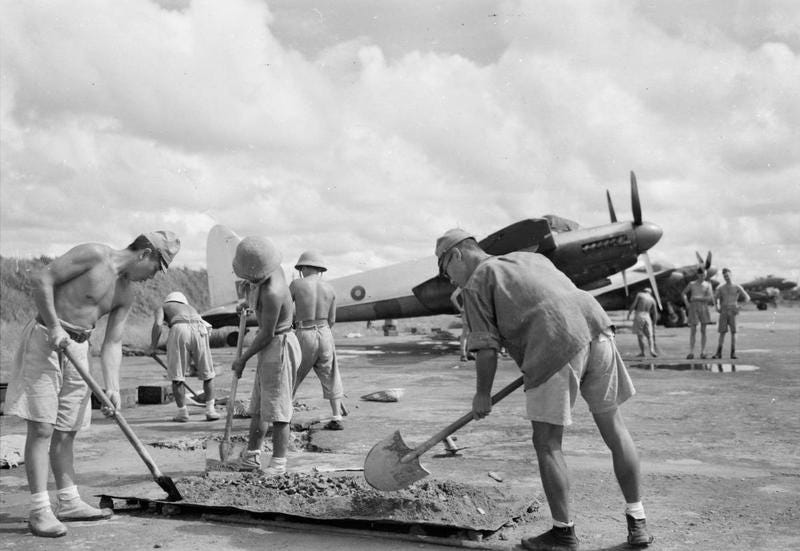

 Aletho News
 Aletho News