Censorship & persecution of dissident voices continues across the world
The ‘cautionary tale’ modus operandi
Health Advisory & Recovery Team | April 15, 2024
Those who, like the members of HART, have been speaking out for three or four years about the perils of lockdowns, the lack of access to proper medical care and the utter debacle of the unsafe and ineffective vaccines, keep hoping the tide is turning. But for every stone upturned another boulder seems to descend to crush the truth. There is also no apparent end to the persecution of doctors speaking out.
Two physicians from opposite ends of the world and facing loss of their medical careers for speaking out against the vaccine saviour narrative, typify the current authoritarian approach. Charles Hoffe from Canada and Shankara Chetty from South Africa have two things in common, firstly both are clinicians serving a large local population and secondly both have shared their experiences widely. In Dr Chetty’s case he has reported his success at treating over 1000 covid patients with a combination of repurposed drugs including antihistamines in a clinical centre in rural South Africa with no access to oxygen let alone intensive care. In Dr Hoffe’s case, he first hit the headlines when he reported a high frequency of serious adverse events when his patients started receiving the mRNA vaccines.
Both these hard working and ethical physicians now, three years on, are being subjected to investigations by their medical boards. For Dr Chetty, he has previously been found guilty of professional misconduct but was called to attend a further hearing last week in front of the Health Professionals Council of South Africa. The results of their deliberations are awaited.
For Charles Hoffe the situation is even more bizarre. He was due for a hearing last week but when he submitted all the supportive evidence for his case, the health board in British Columbia deposited a large amount of evidence of their own but then threatened to invoke a ruling by which their evidence would be accepted as ‘fact’ by the court and Dr Hoffe and his legal team would be unable to cross question the data or present any information to the contrary. It looks like the right to a free trial has been abandoned in Canada, along with the right to free speech.
Below is a list of some senior clinicians and academics from across the world who have been vilified for speaking truth to power. It is by no means comprehensive.
USA:
Canada:
Australia:
- Dr Robert Brennan
- Dr Melissa McCann (subject to ‘re-education’)
- Dr Ros Neelon-Cook
- Dr Paul Oosterhuis
New Zealand:
Germany:
- Sucharit Bhakdi (acquitted of charge of antisemitism)
France:
- Dr Didier Raoult (an outspoken academic accused of unethical practice)
Switzerland:
- Thomas Binder (initially incarcerated in a mental institution)
UK:
- Dr David Cartland (GMC investigation ongoing)
- Professor Angus Dalgleish (clinical work suspended by St George’s Hospital)
- Dr Jayne Donegan (struck off by GMC, working as an independent)
- Professor Christopher Exley (told by Keele University to discontinue all research into Aluminium toxicity)
- Dr Aseem Malhotra (GMC initially declined to investigate until a legal case was brought to force an investigation)
- Mr Ahmad Malik (suspended by his private hospital for online posts)
- Dr Sarah Myhill (suspended by GMC, appeal pending)
- Dr Anne McCloskey (suspended by GMC in 2021, further hearing April 2024)
- Dr Sam White (NHS suspended him and GMC placed restrictions which were overturned in the High Court, currently working in independent practice)
This list is continuing to grow despite the increasing reports in the scientific literature which confirm almost everything they have said.
When does it stop?
What authority would scare and shame an already frightened population?
Answer: The UK Government & their behavioural science advisors

Health Advisory & Recovery Team | April 15, 2024
In the knowledge that people are already in a state of heightened anxiety, what government would choose to further frighten and shame them? When citizens have amended their lifestyles in order to function under difficult circumstances, what government would seek to actively disrupt these necessary and understandable adaptations? And what government believes that a fearful population during a ‘pandemic’ is not acceptable, and opts to instil panic instead? A recently published paper by HART member, Dr Gary Sidley, has revealed that such a regime is our very own UK Government, aided and abetted by their advisors and behavioural science experts.
The state’s strategic deployment of fear, shame and peer pressure/scapegoating – affect, ego and normative pressure ‘nudges’ – to promote compliance with covid restrictions has been widely documented (for example, see here and here). Focusing on the harrowing, and highly contentious, ‘Look them in the eyes’ (LTITE) messaging campaign of January 2021, Sidley has conducted a forensic analysis to expose the rationales offered by the Cabinet Office to justify the use of these emotionally disturbing advertisements on the British people. The findings provide insight into the mindsets and motivations of our political leaders and expert advisors, and convey their callous disregard for the wellbeing of those they are paid to serve.
The advertising agency responsible for the production of the LTITE videos and posters was MullenLowe, and a reminder of the harrowing tone and content of this campaign can be found on their website. The adverts comprise close-up images of acutely unwell patients in intensive care units, alongside weary and stressed healthcare staff (all, of course, clad in respirators or masks), ominous background music, and a voice over saying, ‘Look them in the eyes and tell them you are doing everything you can to stop the spread of Covid 19’. Multiple behavioural science nudges underpin the images and slogans, with fear inflation and shaming being particularly prominent.
Based on the Cabinet Office’s responses to a series of Freedom of Information requests, Sidley has revealed the official explanations proffered by our political leaders and state-funded experts in their attempt to justify the infliction of further emotional distress on an already overly anxious population. Specific aspects of the Cabinet Office reasoning in January 2021 – used to support the endorsement of the LTITE campaign – are listed below, followed by a brief evaluative response:
‘Level of perceived risk … is not as high as March 2020. March a shock to the system but now have learned to live alongside COVID’ (FOI, 2023).
Humans have been ‘living alongside’ respiratory viruses since the time of Adam and Eve. It is, therefore, reasonable to suggest that such an observation is a positive one, and a political establishment that have the welfare of their people to the fore would welcome this finding rather than using it to justify the infliction of more fear and shame on its citizenry.
‘They have settled into their own level of “acceptable behaviour” … that fits with their lifestyle, their specific needs and circumstances’ (FOI, 2023).
It is perverse to view these adaptations as reasons for state intervention. A more rational interpretation of these behavioural changes would be that people were increasingly making their own individualised, balanced risk assessments to inform their pragmatic decisions about how best to function in challenging circumstances.
‘Significant and visible difference in behaviour and attitude between the two lockdowns … Fearful but much less panic this time around’ (FOI, 2023).
The implication here is that the observation that people were ‘fearful’ was insufficient to satisfy our policymakers; they wanted full blown ‘panic’. In a liberal democracy, those in positions of influence should endeavour to maintain calm rather than increase alarm; only tyrants purposely terrify their own people.
‘The challenge is in overcoming people’s established ways of managing their lives within the lockdown rules’ (FOI, 2023a).
In a civilised society, during times of national ‘crisis’, our elected leaders (and their expert advisors) would strive to support and empower the creative efforts of their citizens to continue to function through difficult times. To strategically aim to override people’s coping strategies is unforgivable.
What role did state-funded behavioural scientists (‘nudgers’) play in these decisions to inflict further fear and shame on an already overly scared population? Sidley’s research suggests some answers
The quotes cited in the FOIs (as detailed above) derive from the Cabinet Office’s own qualitative research, conducted by ‘Solutions Research’ (a private research agency). However, Sidley revealed other key state actors that were directly involved in the development of the LTITE campaign. Conrad Bird (Director of Campaigns & Marketing at the Cabinet Office) was the senior civil servant who led the commissioning team that provided the creative brief to MullenLowe. Furthermore, the senior minister ultimately responsible for signing off the harrowing LTITE videos and posters was the then Health Secretary, Matt – ‘don’t kill your gran’ – Hancock. As for the behavioural science input, the ‘internal Cabinet Office Government Communication Service Behavioural Science team provided insight and guidance to Conrad Bird’ (FOI, 2024). Thus, this small group of behavioural scientists, located in the heart of government, were formally tasked with furnishing Bird with expert advice on the appropriate use of nudges within the LTITE communications; as such, it is reasonable to assert this band of experts hold a significant degree of responsibility for the fear-inflation and shaming intrinsic to this campaign, via either their active guidance to Bird and his team, and/or their failure to intervene to prevent the unethical deployment of these psychological strategies of persuasion.
The central conclusion to be drawn from Sidley’s critical analysis of the genesis of the LTITE campaign is that we have a government, and a corresponding group of behavioural science advisors, who are willing to frighten and shame an already fearful population in order to lever compliance with state diktats. As things stand, we can expect the same tone and content in government communications the next time our political leaders choose to declare a ‘global crisis’, whether it be under the banner of health, climate, pollution or some other assumed world-wide threat.
US ban on Russian metals ‘cuts both ways’ – Kremlin
RT | April 15, 2024
New Western sanctions against Russian metals are a weapon that cuts both ways, Kremlin spokesman Dmitry Peskov has said. The US and UK have targeted Russian-origin aluminum, copper, and nickel, aiming to reduce Moscow’s export revenues.
The “illegal” restrictions introduced last week will backfire on the countries that imposed them, Peskov claimed on Monday. He noted there has been a “certain destabilization” on the metals market following the ban, referring to a rally on a leading commodity exchange earlier the same day.
Washington banned the import of Russian-origin aluminum, copper, and nickel into the US on Friday, and has coordinated with the UK to crack down on global trade in these metals.
The decision affects aluminum, copper, and nickel produced in Russia after April 13, 2024, and the world’s leading commodity exchanges – the London Metal Exchange (LME) and Chicago Mercantile Exchange (CME) – are obliged to prohibit their trade.
Aluminum jumped as much as 9.4% on the LME on Monday, the most since the current form of the contract was launched in 1987, according to Bloomberg. Nickel rose as much as 8.8%.
The rally is being fueled by “worries that the sanctions will reduce Russian flows to Western markets,” the outlet reported. The new restrictions “inject major uncertainties” into metals markets that have already been reshaped since the start of Russia’s military operation in Ukraine and the Western sanctions campaign against Moscow, it added.
The LME confirmed to Bloomberg on Saturday that “old” Russian aluminum, namely metal produced before April 13, 2024, will continue to be delivered.
As of March 2024, the share of Russian aluminum in the LME warehouse system was 91%, while the share of Russian copper stood at 62% and nickel at 36%, according to LME calculations.
Russia currently accounts for 6% of the global nickel supply, 5% of aluminum, and 4% of copper. According to Forbes, most analysts agree that the new sanctions will lead to an increase in Russian metal supplies to China.
Russia Slams UNSC for Ignoring Attack on Iranian Consulate, Calls for End to Bloodshed
Sputnik – 14.04.2024
UNITED NATIONS – Russia’s Permanent Representative to the United Nations Vasily Nebenzia criticized the UN Security Council for failing to act on the Israeli attack on the Iranian consulate in Syria as he urged an end to bloodshed in the Middle East during an emergency UNSC meeting on Sunday.
“It is regrettable that unlike the meeting today, you did not propose to bring it to brief the Council on the 2nd of April,” he said, adding that Russia called an emergency briefing to discuss the Israeli strike against the consular premises in Damascus.
Nebenzia criticized Israel for not complying with the UN Security Council resolutions, which he said was “an obvious disrespect shown to the Council, to all of you who are here in the members seats, and a complete disregard to the decisions made by the Security Council.”
“This high level confrontation and bloodshed must be stopped We think it’s urgent for the entire international community to undertake all the efforts necessary to de-escalate the situation,” Nebenzia said.
Iran’s attack on Israel did not happen in a vacuum – it was a response to the shameful inaction of the UN Security Council, the Russian ambassador stressed.
“What happened on the night of April 14 did not happen ‘in a vacuum.’ Iran’s steps were a response to the shameful inaction of the United Nations Security Council [and] a response to Israel’s blatant attack on Damascus… by no means the first. Syria is constantly being bombed by Israel,” Nebenzia said.
On April 3, the US and UK refused to discuss Russia’s proposed draft UN Security Council statement on the Israeli strike on the Iranian consulate in Damascus. London and Washington then cited the fact that there was no unity in the meeting’s assessment of what happened. On Sunday, an urgent meeting of the UN Security Council is taking place in connection with the retaliatory strike that Iran carried out on the territory of Israel. Meanwhile, shortly before that, Iran’s mission to the UN said that if the Security Council had condemned the Israeli strike on the Iranian consulate and brought the perpetrators to justice, the need for Iran to punish the Israeli side “could have been eliminated.”
Russia calls for restraint on all sides involved in the incident with Iran’s attack on Israel, Russia’s permanent representative to the UN highlighted.
Russia calls on Israel to follow the example of Iran, which has said it does not want further escalation, Nebenzia said.
“We note Tehran’s signal of unwillingness to further escalate hostilities with Israel. We urge West Jerusalem to follow its example and abandon the practice of provocative forceful actions in the Middle East, fraught with extremely dangerous risks and consequences on the scale of the entire region, already destabilized as a result of the escalation of the Palestinian-Israeli confrontation,” Nebenzia emphasized.
Red Sea rising: Exposing the West’s diminishing naval power
By Ali Halawi | Al Mayadeen | April 12, 2024
The Red Sea has witnessed several developments that brought to light the West’s fading power, as its enemies simultaneously and continuously develop precision weapons and naval capabilities.
Although ongoing escort, air defense, and aerial attack operations in the Red Sea are viewed as uncostly, in terms of human capital, and training routines that will raise the preparedness of NATO forces in the region, they have also unveiled a quite unpleasant reality for Western navies. On the flip side, the aerial attacks of Yemeni Armed Forces (YAF) on Israeli-affiliated ships, which were later expanded to include US-UK-affiliated ships in the Red Sea, add to an extended bill that NATO countries pay for securing the Israeli genocide of the Palestinian people.
The weapons used in these operations are similar to Iranian-designed drones, ballistic missiles, and cruise missiles and have been described as “cheap” yet effective weapons by US CENTCOM commanders. These precise guided munitions have been disseminated across factions in the Axis of Resistance, via direct armament or technology sharing. When put to the correct use the weapons have proven challenging for some of the world’s most well-trained and equipped forces.
West Asia casts a shadow over NATO military industrial complexes
Some weapons could have been transferred with the blueprints for the production of their main compartments and assembly at their final destination, bringing costs down and production levels up, further deepening the hole for Western counterparts. In the case of Ansar Allah in Yemen, the YAF owns and announces to locally produce a wide array of anti-ship weapons, as well as missiles, and drones that have been appropriated for attacking seaborne targets; currently being put to use to tighten a naval blockade on “Israel” through the Red Sea.
On the other hand, flailing Western military hegemony over the seas pushed the US and its allies to embark on a poorly planned campaign to protect Israeli shipping routes, forcing them to deal with these relatively low-cost weapons in the Red Sea and the Arabian Sea, where the YAF has dealt direct hits to multiple non-military vessels and threatened near hits some of the most advanced American military ships. This has been the case in Iraq, Syria, and Jordan, where US military bases have suffered from the horrors of cheap low-flying, and ballistic weapons in more than 100 operations on US assets, which dealt precise hits to their targets on multiple occasions.
When countering these attacks, Western forces have utilized some of the most sophisticated anti-air surface-to-air missiles, which are estimated to cost millions of dollars of taxpayer money. In the Red Sea, the US-led Western alliance has relied on NATO-standard interceptors, each of which was developed to counter specific inbound aerial objects.
According to The Responsible Statecraft and news circulating on Western media outlets regarding the mishaps of air defense units, the Western coalition has depended on the use of a layered anti-air model, consisting of RIM-116 (RAM), RIM-66 (SM-2), RIM-174 (SM-6), RIM-162 (ESSM), and RIM-161 (SM-3) interceptors. Each interceptor has been developed to counter specific weaponry, however, they all share in common extremely pricey tags.
Price list for NATO’s Israeli maritime protection campaign
Below is a list of the cost of a single interceptor, excluding operational and battery costs, as of 2022:
- RIM-116 (RAM): $905,000
- RIM-66 (SM-2): $2,100,000
- RIM-174 (SM-6): $3,901,818
- RIM-162 (ESSM): $2,031,875
- RIM 161 (SM-3) Block IB: $9,698,617
- RIM-161 (SM-3) Block IIA: $27,915,625
The price list is retrieved from the US Department of Defense and military-industrial complexes’ official documents.
Germany’s Navy ridicules itself
Keeping the aforementioned price ranges in mind, an outrageous fluke that came as a result of a failed surface-to-air missile interception attempt by the German Navy’s Hessen frigate exposed the deep-lying issues for the US-led Naval alliance in the Red Sea.
What should have been a strike on a low-cost Yemeni drone turned into a shabby affair in which the German Navy misidentified the drone, launched a dual attack on an allied asset, failed to hit the aircraft, and suffered malfunctions that led to the destruction of two interceptors midflight.
At first glance, the attack underlines several glaring issues including, the under-preparedness of the German air defense crew, inadequate storage or production of interceptors, and poor communication between NATO allied forces at Sea. Some military-concerned outlets have attempted to shift the blame on outdated German comms, however, further investigation of the incident reveals an issue of economic cost that could tip the scale towards NATO’s enemies.
Germany’s embarrassing mishap would cost the country around $4.2 million, as the Hessen launched two SM-2s at a US MQ-9 reaper drone that it failed to identify.
No SM-2 batches produced since 2018
The cost of the failed operation should not be the only consideration here, as the last time Ratheon sold a batch of its SM-2 Block IIIA interceptors was in a deal it signed with Denmark back in 2018. The deal was worth $152 million for 46 SM-2 Block IIIA interceptors and corresponding equipment for a couple of vertical launch systems. Now, the company has stopped producing the system, and the interceptors for lack of international orders and plans to resume production in 2035.
However, conflict in Ukraine, the war on Gaza, and tensions in East Asia may prompt reconsideration, especially as the genocide of Palestinian people drags on while their allies in Yemen, Lebanon, and Iraq tie their operations to the status of the aggression on Gaza itself.
Large-scale confrontation might see selective engagement
The fact that Raethon has not received any major orders since 2018 brings up the possibility of Western shortages in air defense systems and interceptors, in case of larger-scale engagement erupting in the region. The phenomenon cannot be limited to SM-2 interceptors but could affect a range of staple NATO-developed and produced SAMs, including the infamous Patriot systems, THAAD, Israeil Iron Dome, and other anti-ballistic and cruise missile systems.
Large-scale engagement will most likely see the Colletive West prioritize assets and selectively down often low-cost but deadly targets.
One Yemeni strike was capable of sinking a bulk carrier in the Red Sea, while an attack on a secret US outpost on the Jordanian-Syrian border injured and killed more than a hundred US servicepeople.
In a war of attrition, the Axis of Resistance’s factions will have the economic advantages of pumping out low-cost munitions that target multi-million dollar systems and vehicles, and the morale advantage of deep-rooted ideological motives related to religion and nativity to the lands they defend.
Another blunder: Denmark’s unreported defensive failure gets chief sacked
More recently, Denmark sacked its defense chief Flemming Lentfer after major faults were discovered in air defense systems on a frigate that it sent to the Red Sea earlier. Lentfer was axed on Wednesday night after failing to report to the Danish Defense Minister, Troels Lund Poulsen, that the Iver Huitfeldt vessel had experienced a 30 minutes-long malfunction in one of its missile and radar systems, during a drone attack in the Red Sea. The malfunction led Danish authorities to recall the frigate from its mission, marking the gravity of the faults.
“I have lost trust in the chief of defense,” said Poulsen. Shockingly, he found out about the incident from a specialist military outlet, rather than any of his subordinates.
“We are facing a historic and necessary strengthening of Denmark’s defense forces. This places great demands on our organization and on the military advice at a political level,” he asserted.
Danish news website Olfi was the one to break the news to the Minister of Defense, explaining that the frigate was commanded by Commander Sune Lund, who complained about a problem with the ship’s active radar and C-Flex combat management system.
Unexplained outages to the systems were severe enough to prevent the frigate from launching its ESSM interceptors. The Danish frigate’s 76 mm guns were also reported to be defective on several occasions during deployment to the Red Sea. Other reports revealed other aspects of the commander’s message, in which he stated that the equipment problems reportedly had been known about for “years”, but that little had been done to address them.
Germany’s “Embarrassment” vs Yemen’s Victory
Back to Germany’s flop in the Red Sea, which was described by German media outlet BILD as an “Embarrassment to our (the German) Navy in the Red Sea”, the YAF had just marked another milestone by downing a US-operated MQ-9 Reaper Drone over Hodeidah a few days prior to the blunder.
Although both forces attempted to target different MQ-9-type drones using their own SAMs, the Yemeni Armed Forces were able to destroy the highly prized American drone with a “locally produced” air defense system while the Germans harrowingly failed. The Germans said that they mistakenly targeted a drone on February 28, 2024. However, their failure to down the then-unidentified object was due to unnamed technical malfunctions that led to the detonation of the two SM-2 missiles midflight, rather than active efforts to avert the disaster.
Interestingly, Sanaa had only unveiled two air defense systems capable of achieving such a hit. One of which is seemingly a copy of the Iranian-developed compact air-defense missile, dubbed Saqer-2. The missile can be easily transported and launched to take down close-range targets, flying at relatively slow speeds. The Saqer-2, a copycat of the Iranian so-called 358 surface-to-air missile reportedly functions like a one-way attack drone, reaching the required via a liquid fuel-propelled engine, to later hover near an aerial target, approaching it and detonating its warhead after being manually locked on to it by a ground operator, or by working in an autonomous mode.
However, footage published by the YAF’s Military Media indicated that the air defense system utilized in the incident was similar to traditional supersonic SAMs due to the speed at which it reached its target and the sound produced during its flight in the video.
Notably, the missile impacted the drone in a near direct trajectory and did not pause to hover nearby or for directions by operators. Examining the publicly revealed arsenal of the YAF, this likely indicates that the missile in use was the Bareq-1 or Bareq-2 SAM.
The missiles resemble the Iranian Taer line of missiles, which are used on a multitude of staple air defense systems. Digging deeper into the origin of the technology, it is clear that the Taer or Bareq lines of missiles are actually reverse-engineered models of the Soviet-era 3M9, incorporating certain elements from NATO Standard Missiles.
Presuming that the Bareq-2 was used by the YAF for the operation reveals an even deeper hole dug by Western military complexes for their own armies. Moreover, NATO’s SMs are much more developed than the YAF’s interceptors, as they incorporate a wide range of technological and hardware additions, putting them in a class of their own.
These additions allow for 360° scope for air defense teams allowing Hessen and other vessels to fire at any surrounding target within its range at any time without having to adjust their position while boosters on the SM-6 allow for longer-range targeting.
Still, the single-stage and aimed single launch conducted by the YAF achieved a direct hit to the 20 m-long US drone obliterating it to pieces that were scavenged by fighters on al-Hodeidah’s shore.
Yemen’s support to Palestine uncovers deep crises in NATO’s Naval power
Putting this series of unfolding events into the context of the Yemeni Armed Forces’ support to Palestine, as the Western-backed Israeli regime continues its genocidal war on Gaza, is key to not only regional security but global security as a whole.
The equations drawn by the YAF have been unprecedented in the history of the nation’s struggle against Western imperialism, as for the first time, an Arab nation has taken the responsibility of launching an expansive naval campaign to support a moral and national cause, whose result will alter the course of human history. By setting this historical precedent, Yemen has not only altered regional security to the favor of natives, but it has also exposed essential faults in NATO’s military and naval structure which can and will be taken advantage of by adversaries.
These events have not been limited to uncovering the flaws of Danish and German forces, but they have laid bare essential challenges for the far superior American and British navies.
For the US, issues have concentrated around logistics and the high cost of operating multiple strike groups, in order to maintain feeble objectives. The UK on the other hand has witnessed multiple accidents and complications during the period of its operations.
The Yemeni Armed Forces’ strategic engagements in the Red Sea highlight a significant shift in naval dynamics, exposing vulnerabilities in Western military prowess and logistical strategies. Despite maintaining relatively low-scale engagements, the YAF’s precision attacks on military vessels have yielded valuable experience and expanded their target list, aided by direct repercussions from the US’s involvement in the genocidal war on Gaza. This evolving scenario underscores the importance of the Axis of Resistance’s strategic foresight and adaptive responses in navigating the complexities of Western provocations, in the context of modern naval warfare, signaling a paradigmatic challenge for maintaining Western military hegemony in the region.
Brits should not be part of the genocide in Gaza
By Martin Jay | Strategic Culture Foundation | April 11, 2024
How likely is it that the Israeli air force jet which killed three British aid workers in Gaza took off from our base in Cyprus? How much longer can our own government deny that there is a genocide happening each day in Gaza with not only the tacit blessing of the government but in some cases it actually goes the distance and provides the full package of support to murder women and children?
The murky dividing line between the British so-called neutral position on Gaza and the reality of what even our own MPs recently admitted was a genocide which broke a tome of internal laws – seems to be getting more opaque by the day.
The Conservative party is very confused about where it is on the Gaza war and while David Cameron recently admitted that he was “worried” about international law being broken, it is the prime minister who is now in the firing line demanding enquiries about the death of the three nationals killed.
Three of the seven who were killed were British nationals named James Henderson, John Chapman and James Kirby. Prime Minister Rishi Sunak demanded a concrete investigation into the deaths from the Netanyahu government.
But he won’t get concrete investigations from the Netanyahu government as this body has shown the world in recent months that there is no level of depravity which it is not prepared to stoop to as it still continues to shock us each day with video clips on social media breaking new boundaries of poor taste.
Yet IDF soldiers playing with women’s underwear is one thing; it is quite another thing for us to imagine that Britain could be pulled into a massive international law black hole which could go on for years via the ICJ in the Hague.
Surely the deaths of these three should be the right moment to have a re-think on a government level if we can’t have one as a society. Israel has gone over a line on “defending itself” and Britain has been dragged into that quagmire which has made us look like the amateurs we are on the international diplomatic circuit.
But where to draw that line?
While it is commonly viewed as acceptable for British nationals to fight ISIS in Syria and Iraq, or indeed, it was more than alright for young Libyans in our society to fight against the terror cell in Libya (MI6 officers at Heathrow airport wished them luck when they left and then welcomed them back into the country), it has become an unthinkable crime with the gravest of punishments for any UK subjects to be linked to ISIS – the recent appeal case of Shamima Begum losing her right to British citizenship as one good example.
But many of these incidents are illogical and often end up betraying their original ethos. In the case of the Libyans known to MI6 who fought ISIS in Libya, one such young man came back radicalised and carried out the appalling terror attack on the Manchester arena attack at the concert of Ariana Grande in May of 2017. The case was a major own goal for the security services but it did at least shed light on the tawdry subject of how the intelligence services pay terrorists around the world to do our dirty work. Some might argue that Shamima Begum should have a second chance as she was indoctrinated as a minor when she left for Syria to be an ISIS bride. Seems an excessive decision given there is no evidence against her of actual terrorist activities.
The real issue is that we can’t effectively navigate around international wars and decide each one on its merits, in terms of who we allow to get involved in them. If we are not in control of our own government getting too involved in the Gaza slaughter, not to mention citizens, then we can only expect having to pay a very high price for it which will make Boris Johnson’s 40bn euro divorce from the EU look like chicken feed. We will soon no doubt see British doctors shot in cold blood by British soldiers in IDF unforms.
Just recently an Oxford-educated Jewish Brit was fired from his job as working as a spokesperson for Israel’s army. What no one seemed to ask in the UK, is what on earth was Eylon Levy doing there in the first place? It’s a similar story with how British journalist Douglas Murray failed to even raise an eyebrow of disdain when he was planning to be part of a fundraiser on behalf of Israel. Astonishing that in overregulated Britain, a country where we have rules for even how we are allowed to think on social media, that these two gentlemen found no resistance to their wartime activism.
Recently, the French government announced that it would take legal action against French citizens who leave the country and go and fight for the Israeli army in Gaza. Currently it is believed there are almost 100 British subjects who have “volunteered” to fight in Gaza with an IDF uniform. I would argue that it is high time that we follow the French model and stop this practice altogether of allowing our citizens to fight in any overseas wars, anyway unless they are dual nationals and are prepared to surrender their British passports at Heathrow when they leave.
UK says will keep selling arms to Israel anyway
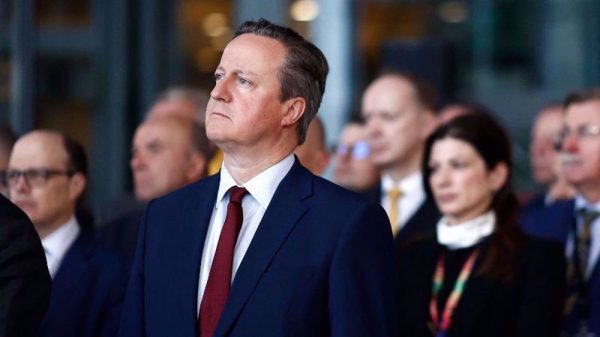
Press TV – April 9, 2024
Despite growing pressure on the United Kingdom to end its arms sales to Israel, British Foreign Secretary David Cameron says London’s position on exporting arms to the occupying regime remains “unchanged.”
At a press conference in Washington alongside US Secretary of State Antony Blinken on Tuesday, the top British diplomat said the UK government would keep shipping arms to Israel after reviewing advice from the nation’s lawyers.
His remarks came as a majority of Britons have called on London to no longer give arms to Israel, whose military has killed more than 33,000 Palestinians in the besieged Gaza Strip since October 7.
They fear that Israel may be using British-made weapons in military actions that violate international law in the Palestinian territory, which has also been blocked by Israel from having access to water, food, and electricity.
“I have now reviewed the most recent advice about the situation in Gaza and Israel’s conduct of their military campaign. The latest assessment leaves our position on export licenses unchanged. This is consistent with the advice that I and other ministers have received,” Cameron said.
However, he refused to elaborate on what legal advice London was given when assessing whether or not to restrict arms sales to the Israeli regime.
Early this month, Israel’s deadly strikes on the NGO World Central Kitchen (WCK) in central Gaza drew worldwide condemnation. Three of the WCK aid workers killed by Israeli airstrikes were Britons, who were all UK military veterans working on its security team.
Last week, three former senior British judges joined over 600 members of the British legal profession in calling for London to stop arms export to Israel.
Britain supplied 42 million pounds ($53 million) of arms to Israel in 2022.
UK and France Talk of Reviving WWI Alliance Over ‘Fear’ of Trump Return
Sputnik – 09.04.2024
In an op-ed penned on the 120th anniversary of the Entente Cordiale, a landmark agreement signed between the British Empire and France in 1904, British Foreign Secretary David Cameron and his French counterpart Stephane Sejourne penned an op-ed essentially calling for the revival of the alliance.
The two ministers argued that NATO must mobilize to deny Russia a victory in Ukraine, claiming that the UK and France, two of the military bloc’s founders and nuclear powers, “have a responsibility in driving the alliance to deal with the challenges before it.”
“We must do even more to ensure we defeat Russia. The world is watching – and will judge us if we fail,” they wrote in a piece published by The Telegraph.
Commenting on this development, Dr. John Laughland, a lecturer in politics and history at the Catholic Institute of the Vendée (ICES) in France and specialist in international affairs, observed that the UK and France are “two principal military powers in Europe” and do enjoy “quite a high level” of bilateral military cooperation.
He did point out, however, that though London and Paris “have indeed been strengthening that cooperation for some years now,” as Cameron and Sejourne wrote, he does not see “any substantial new initiatives” in the article, which he dismissed as “essentially just propaganda.”
Whereas the Entente managed to prevail in World War I in no small part due to the Russian Empire’s contribution to the cause, Dr. Laughland suggested that this new British-French axis would inevitably lean on the United States, “because everything that they say about the British-French Entente is in the context of NATO.”
“The current war is a NATO war. And so they are leaning on the Americans,” he remarked.
He suggested that France and the UK may be driven by the fear of Donald Trump’s reelection as the president of the United States.
“I think that the European powers, including France and Britain, are trying to pre-empt that outcome because whether rightly or wrongly, they fear that Trump would want to make peace in Ukraine, make peace with Russia,” the scholar mused. “But again, I regard this as just a piece of gesture politics, this article and this commemoration.”
Dr. Laughland also recalled a previous attempt by Cameron to partially revive the Entente in 2010 by signing military defense agreements with France during his premiership, with one of the outcomes of said deal being “the attack on Libya in 2011, which, as far as we understand, was a Franco-British initiative.”
“It was a French initiative which the British immediately supported. And the attack on Libya in 2011, which, of course, the Americans also supported, and then became a NATO attack, was an absolutely catastrophic war. It showed once again that NATO is an aggressive alliance,” he remarked. “I say once again, because, of course, NATO had attacked Yugoslavia in 1999. So unfortunately, it’s a very bad precedent, the 2010 agreement.”
Meanwhile, Mikael Valtersson, former officer of the Swedish Armed Forces and chief of staff of the Sweden Democrats political party, argued that the real reason for this talk about reviving the Entente Cordiale is the UK’s and France’s desire to “take a larger role in international politics” coupled with them realizing that they are not “big enough to do it on their own.”
“Both United Kingdom and France are also united in their nearly fanatical hard-line approach towards Russia. As they say in the article, Russia must lose and Ukraine must win,” he added.
According to Valtersson, this “hardline approach” towards Russia may be the reason why Germany was not included in this scheme as Berlin and Paris do not see eye to eye on how to deal with Moscow.
“The difference is that the French leader, President Macron in France, belongs to the belligerent anti-Russian camp, while the German leader Chancellor Scholz belongs to a more moderate grouping,” he explained. “These facts make a new Entante very fragile. Macron might be replaced as French president by a more nationalistic and pragmatic successor. Then the so-called alliance with the UK will be over and done with.”
Another reason for not including Germany might be the UK and France’s concerns that the German economic prowess would afford Berlin “too much influence” in such an alliance, not to mention London and Paris’ fears about Trump’s possible return to the White House, he noted.
“This talk about a revived Entente Cordiale might be an attempt from the UK and France to take over, or at least to prepare to take over, the leadership of the belligerent anti-Russian camp in the West. [It could be] Preparations in case the US abandons Ukraine,” Valtersson postulated. “But as I said earlier, it’s a weak alliance since a large part of the French population isn’t aboard.”
“But as long as the UK and France are united and work together with other belligerent states as the Netherlands, Poland, the Baltic and Nordic states, they probably can force Germany to slowly follow their lead in creating a prewar mentality in large part of Europe,” he added.
Scotland Police May Be Forced To Make Budget Cuts To Deal With Authoritarian Speech Complaints
By Dan Frieth | Reclaim The Net | April 8, 2024
Police Scotland is grappling with potential budgetary pressures and service reductions. David Threadgold of the Scottish Police Federation (SPF) has raised concerns about the financial impact of the Hate Crime and Public Order (Scotland) Act. According to him, the legislation has already led to an overload of calls, with over 6,000 logged since its enactment. This influx of reports, he fears, will necessitate cuts elsewhere in the police budget.
Threadgold’s worry centers on the unforeseen costs of handling these cases, particularly the overtime payments for control room staff. He believes these expenses will reverberate throughout the year, affecting other police services. Calum Steele, former general secretary of the SPF, echoes these concerns. As reported by The Scotsman, Steele criticized Police Scotland’s preparation for the Act, calling it “negligently unprepared” and pointing out that the additional costs were predictable.
The new authoritarian legislation has been criticized not only for its financial burden but also for its potential to stifle free speech. The Act consolidates existing hate crime laws and introduces a new offense of inciting hatred against protected characteristics. This broadening of the law has sparked fears about its impact on free speech and expression.
Critics, including Tory MSP Russell Findlay, have accused Justice Secretary Humza Yousaf of ignoring these concerns. Yousaf, for his part, maintains confidence in Police Scotland’s ability to manage these cases, emphasizing that the force is well-equipped and trained for this task.
The legislation’s impact extends beyond financial strains. The Act has resulted in a notable rise in the logging of non-crime hate incidents, incidents perceived as hateful but not necessarily criminal. This increase has prompted concerns about a potential inundation of trivial or malicious complaints, especially in the context of highly charged events like football matches. Tory MSP Murdo Fraser has already lodged a complaint over a tweet he posted being logged as a hate incident.
The Scottish government and Police Scotland maintain that they are adept at handling such cases. However, critics argue that the focus on these hate incidents diverts attention and resources from more serious crimes, potentially impacting the overall efficacy of law enforcement.
London pharmacist battles Zionists and wins
Press TV – April 7, 2024
London pharmacist Nazim Ali has finally won his long running legal battle against Zionist regime proxies, a battle which started in 2017 when Nazim Ali spoke at the Quds Day Rally following which the Campaign Against Anti-Semitism, (CAA), lodged a complaint with the Police accusing Nazim Ali of Anti-Semitism.
The Crown Prosecution Service, however, refused to press charges.
The Zionists took a private prosecution that was eventually stopped by the CPS. They took out a judicial review against the CPS and lost.
In January 2019 Ali’s professional regulator, the General Pharmaceutical Council (GPhC), which is responsible for the independent regulation of the pharmacy profession within England, Scotland and Wales, as well as the regulation of pharmacists, pharmacy technicians and pharmacy premises, said there was no case to answer, but gave him a warning for being offensive.
The Campaign Against Anti-Semitism (CAA) then bullied the regulator into reversing its position in July of that year.
The council concluded his words were not anti-semitic in November 2020. But the UK lawyers for Israel joined the campaign against Anti-Semitism to continue to harass Ali.
In December 2020, a complaint was lodged with the body which regulates the regulator, the Professional Standards Authority for Health and Social Care or PSA.
The intimidation worked and the PSA took the GPhC to court, at which point the GPhC folded and offered no defense.
The high court then sent the case back to the GPhC which made the absurd determination that two of Ali’s remarks were objectively, if unintentionally, anti-semitic. However, it gave him a warning, as it had before.
The Zionists were still not happy and appealed to the courts to get Ali sacked. In March this year, the Court declared that there was no case to answer.
This is a historic and hard fought victory.
But who are Zionist groups who have bullied and intimidated the professional regulators into such submission?
The Campaign Against anti-Semitism took up the cudgels first; the CAA is a creature of the Zionist regime which was set up to attack the pro-Palestine movement with fake anti-Semitism allegations.
Much of its early funding came from the Jewish National Fund, the racist land-theft group, which is one of the four so called national institutions in Israel.
The UK Lawyers for Israel is a group which appears to have been set up under the auspices of the Israeli Ministry of Foreign Affairs. Its whole purpose is to use ‘lawfare’ tactics to manipulate the law and bully British institutions into doing its bidding.
The case of Nazim Ali reveals how foreign agents of the Zionist regime can harass, bully, and intimidate the UK so effectively that they can, in effect, occupy the professional bodies regulating the profession of pharmacy, which is a clear cut case of state capture.
It also tells us that people can fight back and win.
In fact, this is one of a number of recent victories against the Zionist movement.
It would appear, for all intents and purposes, that the tide is turning.
New hacking allegations against China aren’t what they seem
By Timur Fomenko | RT | April 5, 2024
In March, the UK, in conjunction with the US and other members of the Five Eyes intelligence alliance, accused China of engaging in a state-sponsored hacking campaign against them. In response to the alleged ‘attack’ they launched coordinated sanctions against a small group of hackers and their associated businesses.
The sanctions were particularly big news in Britain, where the government suddenly decided that Beijing had been behind a hack on the electoral commission three years ago. Notably, the country’s Conservative party-aligned newspapers all pushed this narrative in an aggressive fashion.
These accusations by the Five Eyes nations are not so much genuine concerns as they are a deliberate and opportunistic act of political theatre which, largely driven by the US, seeks to slander China for diplomatic and political gain. The sanctions, although narrow in scope and thus meaningless, are designed to try and send a message to and about China. It is essentially a fearmongering campaign, which seeks to both undermine Beijing’s engagement with other countries and serve domestic political purposes in the US.
The rhythm of US escalation and de-escalation with China
The US has an adept foreign policy whereby it intentionally chooses to escalate and de-escalate tensions with China at opportune moments, which is precisely why calls for “engagement” with Beijing coming from Washington D.C. cannot be trusted. The US does not change its goals or its policies, only its tactics in consideration of what suits it at that particular moment. Hence it has always alternated between overtures and deliberate provocations. It usually does so by having a certain report or development leaked to the media at an opportunistic time, in order to craft a particular narrative which mandates a certain set of reactions and policy responses.
To give some examples of such, the Trump administration played down tensions with China directly in 2019, even amidst the Hong Kong crisis, in order to secure a “trade deal” with Beijing. Once it got what it wanted by 2020, and the Covid-19 pandemic struck, it deliberately unleashed a full-on crusade against Beijing on every front. Similarly, the Biden administration came into office and then immediately upped tensions with China on the Xinjiang issue in order to damage China’s ties with Europe in a build-up to coordinated sanctions as a display of transatlantic unity.
After this was done, it then decided it wanted to “cool” things down for a bit and establish “guardrails” so the rhetoric guns went silent for a few months as Washington reached out to Beijing. Then, as the 2022 Beijing Winter Olympics came, it took the “Xinjiang card” off the shelf again with a number of timed leaks and publications geared towards supporting a Winter Olympics boycott, as well as a sweeping ban on all Xinjiang goods under the premise of “forced labour” at that time.
What we see is that the US does not truly de-escalate with China, it “blows hot and cold” and essentially manipulates the media cycle to pursue its policy preferences as it sees fit. This means that major issues pertaining to China only tend to appear when there is an agenda serving it.
The newest phase
Now, the Biden administration has made a political design to escalate tensions with China by accusing it, in coordination with the Five Eyes, of state-backed hacking and cybercrime. The fact that the British government would sit on such an accusation for three years suggests both clear political purpose and timing. The question is, why? First, we are approaching a Presidential election in the US. It was always an inevitability that the administration would want to appear “tough” on China to prevent the issue from being used as an attack point by Biden’s rival, Donald Trump. As seen in 2020, an election year tends to become a year of very aggressive rhetoric and extreme theatrics.
Secondly, there is the goal of undermining China’s engagement with Europe. It has been publicly announced that Xi Jinping will visit a number of European countries in May, including France. As stated above, the US, with the support of the Five Eyes countries, actively seeks to damage Chinese diplomacy with Europe by weaponizing negative publicity in order to narrow political space for engagement.
What we see from this is that the US engages China on its own terms, but seeks to prevent those it deems as “allies” from doing the same, and thus resorts to psychological warfare through the manipulation of mass media.
In conclusion, when one sees these strategies being utilised, one recognises that the Western media has far less independence and impartiality than it claims to have, but is indirectly subject to the preferences of US policy. When the White House says “jump”, reporters ask, “how high?” and thus we see that a new propaganda campaign has been cultivated against Beijing, but of course, we should not be blind to the reality that there is no greater weaponisation of cyberspace and espionage in the world than the system created by the Five Eyes. And are we really going to pretend the CIA doesn’t hack anyone?
Featured Video

Macgregor: We Haven’t Seen the Worst of the Iran War Yet
or go to
Aletho News Archives – Video-Images
New Book
Breast Cancer: Before You Consent
A new Unbekoming paperback
Lies are Unbekoming | September 18, 2026
Peter Gøtzsche reviewed every randomised mammography screening trial ever conducted for the Cochrane Collaboration. Cochrane’s headline is that, assuming a 15% mortality reduction, one woman in 2000 avoids dying of breast cancer over ten years. Ten are overdiagnosed and treated. Two hundred experience false alarms.
But that headline assumes the reduction. When Gøtzsche looked only at the trials with adequate randomisation — the higher-quality ones — the reduction disappeared. No effect on breast cancer mortality. No effect on all-cause mortality.
This is the Cochrane finding, published in the establishment’s own database of systematic reviews.
No woman being asked to consent to a mammogram this week knows it.
That is why the new Unbekoming paperback exists. … continue
Blog Roll
 Aletho News
- US lawmaker blocks $2.8 billion weapons sale to Israel: Report
- Yemeni army claims responsibility for strikes on sensitive sites in Saudi capital, Aramco facilities in Yanbu
- Iran Judiciary issues indictments against 159 US, Israeli officials for assassination of Leader, commanders
- Turkiye revokes Iranian bank license under US sanctions campaign
- US-Denmark Agreement on Greenland Is ‘PR Stunt’ Ahead of Midterms
- Araghchi: Military intervention cannot create security; coercion cannot bring peace
- Fraud Squared
- Breast Cancer: Before You Consent
- Iran’s Plan to Shut Down AI in the Persian Gulf
- Israel seeks ‘compensation’ from Washington over Saudi F-35 sale
- If Americans Knew
- Inside Gaza’s death trap of collapsing, bombed-out buildings
- The everyday items Israel bans from Gaza every day
- Inside the siege, the ruined buildings of Gaza – Daily Update
- Debunking The Claim That Macklemore Has A “History Of Antisemitism”
- CPJ demands release of arrested Palestinian-US journalist near Bethlehem
- Robert Kraft: The Billionaire Friend of Netanyahu Pulling The Strings Behind the Macklemore/Ed Sheeran Blow Up
- Columbia Administered Fund Gives Big Money to Pro-Israel Groups
- Deportation Case of Palestinian Activist Salah Sarsour Tests First Amendment
- ‘We Will Not Forget’: Palestinians Mark 44 Years since Sabra and Shatila
- Why do we let Zionists decide what we can and can’t say?
- No Tricks Zone
- New Study: ‘Global Drought Shows No Detectable Recent Acceleration Under Climate Warming’
- Economic Masterminds: German Socialists Suggest Taxing Productivity Gains Stemming From Using AI
- The South China Sea Has Not Been Cooperating With The Climate Change Narrative
- Energy Crisis: Germany Enters Heating Season With Historically Low Gas Reserve Fill Levels
- New Study: The Antarctic Ice Sheet Gained Mass From 2020-2024 Due To Staggering Snow And Ice Accumulation
- Study: Ocean Heating Rates From Thousands Of Years Ago ‘Dwarf’ Modern Ocean Heating Rates
- Climate Extremists Target, Attack Large-Scale Power Grid Infrastructure In Germany!
- New Study: Antarctic Ice Melt Has Contributed Less Than 1 Centimeter To Sea Level Rise In The Last 30 Years
- Fear Of Debate: Alarmist German Climate Scientist Calls On Mainstream Media To Discredit Skeptic Voices
- End-Of-August Arctic Sea Ice Extent Hasn’t Fallen In 20 Years, Official Data Show!
 Aletho News