Ukraine’s top spy admits killing Russian public figures
RT | May 16, 2023
Ukrainian military intelligence (GUR) chief General Kirill Budanov has claimed responsibility for assassinating “many” Russian public figures. The spy boss made the bombshell admission in an interview with Ukrainian blogger Sergey Ivanov on Tuesday.
Asked whether top Russian “propagandists,” such as prominent journalist Vladimir Solovyov or RT’s Editor-in-Chief Margarita Simonyan, are prime targets for his organization, Budanov responded that the GUR had already “gotten” multiple high profile targets.
“We have already gotten many, including public and media personalities,” Budanov said, without providing any names.
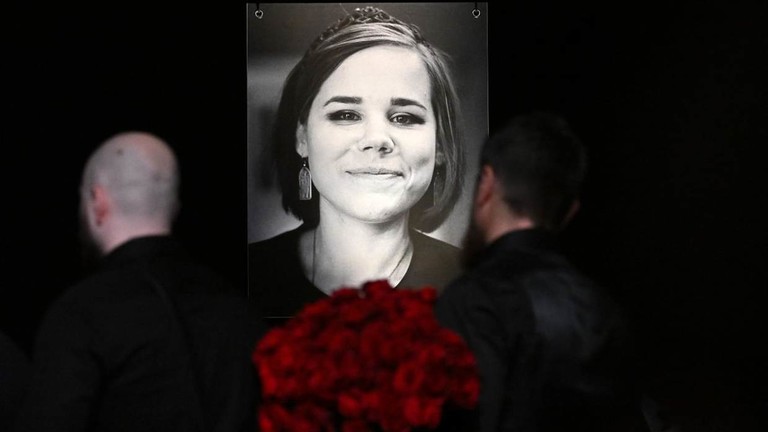
Pressed further by the blogger on the potential involvement of the GUR in the assassination of Darya Dugina, a journalist and the daughter of prominent Russian philosopher Aleksandr Dugin, or the recent car bombing of Russian author and political activist Zakhar Prilepin, the spy boss said he could “neither confirm nor deny” the involvement of his service.
Budanov’s remarks were condemned by Moscow, with Foreign Ministry spokeswoman Maria Zakharova stating that they were a clear admission of wrongdoing.
“Terrorists. Those who provide excuses for the Kiev regime and sponsor it are accomplices of terrorists,” Zakharova wrote on Telegram. “Will the UN not notice that again?”
The remarks are the latest in a string of bloodthirsty statements made by the GUR boss amid the ongoing conflict between Moscow and Kiev. Earlier this month, Budanov declared, “We’ve been killing Russians, and we will keep killing Russians anywhere on the face of this world until the complete victory of Ukraine.”
The pledge received an equally poor reception in Russia, with multiple top officials branding it an admission of engaging in state-level terrorism by Ukraine. Kremlin spokesman Dmitry Peskov, for instance, said Budanov’s statement was “unprecedented in its essence,” and it was “strange” to not hear any condemnation “from European capitals and from Washington.”
“It’s evident that the Kiev regime is behind the killings, not only sponsoring them but organizing, inciting, and carrying them out. De facto, we’re talking about a state sponsor of terrorism,” Peskov concluded, warning that Russia’s “special services know what to do after such statements.”
Hungary outraged by leaked Ukrainian plans to blow up vital oil pipeline
Hungary’s energy security would take a major hit if Ukraine went through with a plan to destroy a key Russian pipeline
MANDINER | May 15, 2023
Hungarian media is abuzz with angry reactions after a leak obtained by The Washington Post revealed that Ukraine was planning to blow up the Druzhba oil pipeline that transports crude from Russia to Hungary.
According to the leaked documents, Ukrainian President Volodymyr Zelensky proposed at a February meeting with Deputy Prime Minister Yuliya Svyrydenko that Ukraine should blow up the pipeline in order to incapacitate the part of the Hungarian energy infrastructure reliant on Russian oil.
Government spokesman Zoltán Kovács reacted in a tweet with a short question: “How is it possible that Ukraine is plotting against a NATO country??”
Hungarian security analyst Péter Tarjányi said in a Facebook post that this would be a “very unfriendly, mistaken and stupid move.”
He added: “I understand that Ukraine does not like many Hungarian government actions and communications, but this does not justify such a plan or idea.”
Tarjányi then recalled that “on the one hand, Hungary has helped hundreds of thousands of Ukrainian refugees over the past 15 months, despite all the differences of opinion. We have to understand, our country sent aid, medicine AND!!! in the end voted for ALL sanctions against Russia.
He then pointed out that “in addition to this, and this is not a negligible FACT, Hungary is a NATO member, so such a plan makes no sense at all. This is a huge self-deception on the part of Ukraine, and Kyiv must explain itself very quickly. The main question is: Why did the Ukrainian president think that such a plan could be justified???? Why did he think he could risk NATO support by launching such an attack? I await further information on the matter.”
While the Russian invasion of Ukraine severely reduced Russian crude imports to the European Union, according to Eurostat data, last year Hungary imported 4.8 million tons of crude from Russia, 1.4 million more than in 2021.
The leak was part of a trove of military intelligence documents posted on a Discord server by 21-year-old Jack Teixeira, who served as an airman at a National Guard unit in Massachusetts. Teixeira was taken into custody over the leaks and faces substantial prison time if convicted.
Khrushchev Exposed the Hypocrisy of U.S. Interventionists
By Jacob G. Hornberger | FFF | May 16, 2023
For American interventionists living today, all that one needs to know is that Russia invaded Ukraine. End of story. Black and white. Russia bad. Ukraine good. Support Ukraine with U.S. taxpayer-funded cash and armaments. America good.
If we go back to the Cuban Missile Crisis, we find that things are not so simple, especially for American interventionists, even if they don’t realize it.
The Soviets had installed nuclear missiles in Cuba that had the capability of hitting U.S. cities along the Eastern seaboard, including Washington, D.C., and New York City. The crisis lasted from October 16 through October 29, 1962.
President Kennedy demanded that the Soviets remove their nuclear missiles from Cuba and take them back to the Soviet Union. The Pentagon was exerting enormous pressure on Kennedy to immediately initiate a surprise bombing attack on the suspected missile sites, followed by a full-scale regime-change military invasion of the island. In other words, they were pressuring Kennedy to do to Cuba what Russia has done to Ukraine. In fact, the pressure they placed on Kennedy was so intense that Robert Kennedy, the president’s brother, secretly told Soviet Ambassador Anatoly Dobrynin “If the situation continues much longer, the President is not sure that the military will not overthrow him and seize power.”
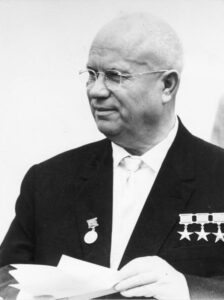 On October 27 — two days before the crisis was resolved — Soviet leader Nikita Khrushchev wrote a letter to Kennedy stating the following:
But how are we, the Soviet Union, our Government, to assess your actions, which are expressed in the fact that you have surrounded the Soviet Union with military bases; surrounded our allies with military bases; placed military bases literally around our country; and stationed your missile armaments there? This is no secret. Responsible American personages openly declare that it is so. Your missiles are located in Britain, are located in Italy, and are aimed against us. Your missiles are located in Turkey.
You are disturbed over Cuba. You say that this disturbs you because it is 90 miles by sea from the coast of the United States of America. But Turkey adjoins us; our sentries patrol back and forth and see each other. Do you consider, then, that you have the right to demand security for your own country and the removal of the weapons you call offensive, but do not accord the same right to us? You have placed destructive missile weapons, which you call offensive, in Turkey, literally next to us. How then can recognition of our equal military capacities be reconciled with such unequal relations between our great states? This is irreconcilable.
Do you see the problem? Khrushchev was pointing out the hypocrisy of the U.S. position, a position that American interventionists today simply cannot recognize, owing to their blind allegiance to the U.S. national-security establishment.
The fact is that the Soviets had the legal authority to place their nuclear missiles in Cuba, just as Ukraine has the legal authority to join NATO. Cuba, like Ukraine, is a sovereign, independent country and, therefore, had the legal authority to permit the Soviets to install their missiles in Cuba, just as Ukraine has the legal authority to permit the U.S. and NATO to install their nuclear missiles in Ukraine.
But even though such legal authority exists, no one, including both Russians and Americans, likes to have nuclear missiles pointed at himself, especially from just a few miles away. This is the point that Kennedy was making when he stood fast during the Cuban Missile Crisis. With the full support of the Pentagon and the CIA, he was willing to risk all-out nuclear war to force the Soviets to remove those missiles, even though he knew that the Soviets had the legal authority to install them in Cuba. He, the Pentagon, and the CIA simply did not like the fact that those missiles were so close to the United States.
But that’s precisely how the Soviets felt as well, which is what Khrushchev was expressing in his letter to Kennedy. He was essentially saying, “Hey, you don’t like our missiles in Cuba because they are so close to your country. That’s exactly how we feel as well, not only about your missiles over here that are painted at us but also about all your military bases with which you have surrounded us. How come you can’t understand that?”
Well, Kennedy did come to understand that. That’s how he and Khrushchev were able to strike a deal, one that infuriated the U.S. national-security establishment as well as American interventionists.
The deal consisted of two major parts: First, Kennedy vowed that he would not permit the Pentagon and the CIA to again invade Cuba and, second, Kennedy agreed to withdraw U.S. nuclear missiles in Turkey that were pointed at Russia.
The Joint Chiefs of Staff were livid. They considered Kennedy’s resolution of the crisis to be the worst defeat in U.S history. They compared his actions during the crisis to Neville Chamberlain’s appeasement of Hitler at Munich.
For their part, American interventionists were also furious over Kennedy’s resolution of the crisis. As far as they were concerned, the Pentagon and the CIA had the “right” to install their nuclear missiles wherever they want and the Soviets did not have the “right” to do the same. It’s a position that American interventionists still hold today.
Can you see why American interventionists hated Kennedy so much and why the Pentagon and the CIA ultimately concluded that he constituted a grave threat to “national security”?
Assassinating Vladimir Putin?
By RON UNZ • UNZ REVIEW • MAY 15, 2023
Early on the morning of May 3rd the Kremlin was attacked by two explosive drones, and although these were destroyed by the defenses, the Russian government claimed that the incident had probably been an assassination attempt against President Vladimir Putin.
I was skeptical at the time, but when Ray McGovern was interviewed a few days later he seemed to take the accusation seriously. Given his 27 years as a CIA Analyst, including serving as head of the Soviet Policy Group, I tend to trust his judgment on such matters:
Although pro-Ukrainian forces had likely been responsible for the drone attack, our government provides all their funding, intelligence, and control, and such a momentous act must have been fully authorized by top American officials. Under Secretary of State Victoria Nuland is the Neocon responsible for Ukraine issues and McGovern believed she would have been the one who signed off on the strike against the Kremlin.
Russia’s nuclear arsenal is the most formidable in the world, somewhat larger than our own, while its revolutionary hypersonic delivery systems are entirely unstoppable. This currently gives Moscow a measure of strategic superiority and if Putin or his successor gave the order, the bulk of our population could be annihilated within hours. Although he came into office at the end of 1999 and has spent more than twenty years in power, Putin’s current approval rating is over 80%, more than twice that of President Joseph Biden, so his death or serious injury might have world-shattering consequences.
Given the ongoing Russia-NATO military confrontation in the Ukraine war, an American sponsored drone strike against the Kremlin and Putin is an extraordinarily reckless and foolish action. What would we think if the Soviets had attacked the White House at the height of the 1962 Cuban Missile Crisis? But extraordinarily reckless and foolish actions have become an American specialty in recent years, notably including our destruction of the Nord Stream pipelines, perhaps Europe’s most important civilian energy infrastructure.
Indeed, soon after the outbreak of the Ukraine war in early 2022, our bipartisan political and media elites began vilifying Putin as “another Hitler,” with leading media figures and top U.S. Senators loudly calling for the assassination of the Russian president.
- American Pravda: Putin as Hitler?
Ron Unz • The Unz Review • March 7, 2022 • 7,900 Words
Such statements are particularly provocative given that just two years earlier we had publicly assassinated a top Iranian leader in a drone attack. At the time I had warned of the extremely dangerous implications for our future relations with Russia:
The January 2nd American assassination of Gen. Qassem Soleimani of Iran was an event of enormous moment.
Gen. Soleimani had been the highest-ranking military figure in his nation of 80 million, and with a storied career of 30 years, one of the most universally popular and highly regarded. Most analysts ranked him second in influence only to Ayatollah Ali Khamenei, Iran’s elderly Supreme Leader, and there were widespread reports that he was being urged to run for the presidency in the 2021 elections.
The circumstances of his peacetime death were also quite remarkable. His vehicle was incinerated by the missile of an American Reaper drone near Iraq’s Baghdad international airport just after he had arrived there on a regular commercial flight for peace negotiations originally suggested by the American government.
Our major media hardly ignored the gravity of this sudden, unexpected killing of so high-ranking a political and military figure, and gave it enormous attention. A day or so later, the front page of my morning New York Times was almost entirely filled with coverage of the event and its implications, along with several inside pages devoted to the same topic. Later that same week, America’s national newspaper of record allocated more than one-third of all the pages of its front section to the same shocking story.
But even such copious coverage by teams of veteran journalists failed to provide the incident with its proper context and implications. Last year, the Trump Administration had declared the Iranian Revolutionary Guard “a terrorist organization,” drawing widespread criticism and even ridicule from national security experts appalled at the notion of classifying a major branch of Iran’s armed forces as “terrorists.” Gen. Soleimani was a top commander in that body, and this apparently provided the legal fig-leaf for his assassination in broad daylight while on a diplomatic peace mission.
But note that Congress has been considering legislation declaring Russia an official state sponsor of terrorism, and Stephen Cohen, the eminent Russia scholar, has argued that no foreign leader since the end of World War II has been so massively demonized by the American media as Russian President Vladimir Putin. For years, numerous agitated pundits have denounced Putin as “the new Hitler,” and some prominent figures have even called for his overthrow or death. So we are now only a step or two removed from undertaking a public campaign to assassinate the leader of a country whose nuclear arsenal could quickly annihilate the bulk of the American population. Cohen has repeatedly warned that the current danger of global nuclear war may exceed that which we faced during the days of the 1962 Cuban Missile Crisis, and can we entirely dismiss his concerns?
I went on to note that this American policy represented a radical change from the practice of past centuries, with the major Western countries having abandoned the use of assassination in the 17th century after the end of the bloody Wars of Religion.
The 1914 terrorist assassination of Archduke Franz Ferdinand, heir to the throne of Austria-Hungary, was certainly organized by fanatical elements of Serbian Intelligence, but the Serbian government fiercely denied its own complicity, and no major European power was ever directly implicated in the plot. The aftermath of the killing soon led to the outbreak of World War I, and although many millions died in the trenches over the next few years, it would have been completely unthinkable for one of the major belligerents to consider assassinating the leadership of another.
A century earlier, the Napoleonic Wars had raged across the entire continent of Europe for most of a generation, but I don’t recall reading of any governmental assassination plots during that era, let alone in the quite gentlemanly wars of the preceding 18th century when Frederick the Great and Maria Theresa disputed ownership of the wealthy province of Silesia by military means. I am hardly a specialist in modern European history, but after the 1648 Peace of Westphalia ended the Thirty Years War and regularized the rules of warfare, no assassination as high-profile as that of Gen. Soleimani comes to mind.
During our Revolutionary War, George Washington, Thomas Jefferson, and our other Founding Fathers fully recognized that if their effort failed, they would all be hanged as rebels by the British. However, I have never heard that they feared falling to an assassin’s blade, nor that King George III ever considered using such an underhanded means of attack. During the first century and more of our nation’s history, nearly all our presidents and other top political leaders traced their ancestry back to the British Isles, and political assassinations were exceptionally rare, with Abraham Lincoln’s death being one of the very few that comes to mind.
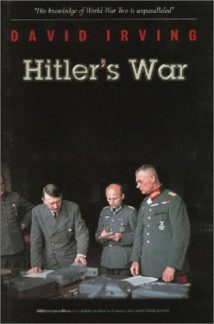
Unfortunately, the use of such lethal measures was eventually revived amid the bitter ideological struggle of World War II, at least in some quarters. According to renowned historian David Irving, when Hitler’s secret service suggested that an attempt be made to assassinate the Soviet military leadership, the German Fuehrer immediately forbade any such practices as contrary to the laws of warfare.
But his Western opponents had fewer such scruples. In 1941 Czech agents with Allied assistance successfully assassinated Reinhard Heydrich in Prague and in 1943 the US military intercepted and shot down the plane of Japanese admiral Isoroku Yamamoto. However, some of the highest profile targets the Allied leadership selected for elimination seem to have been within their own ranks.
Curtis B. Dall was a New York stockbroker who had been FDR’s son-in-law during the early 1930s and he later spent decades as a leading figure in various anti-Semitic Far Right political organizations. In 1967 a fringe Christian group published his memoirs in a cheap paperback edition, and I happened to read that book three or four years ago.
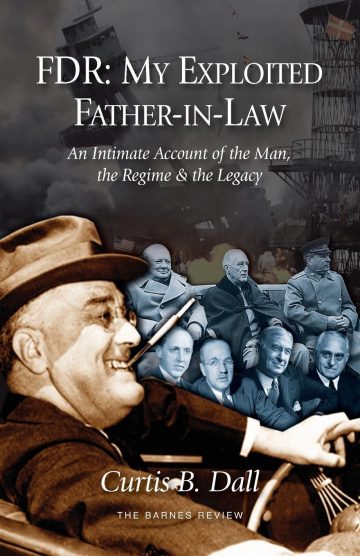
Most of the incidents and stories Dall recounted seemed reasonably plausible, but I was very surprised when he claimed that late in the war the American government, possibly under Communist influence, had decided to assassinate Chinese President Chiang Kai-shek, leader of the largest Allied nation. Although the effort fell through and the project was later abandoned, I’d never previously seen a hint of that story anywhere else and I was very skeptical of such an astonishing claim from a rather doubtful source. However, when I read Prof. Sean McMeekin’s outstanding 2021 history Stalin’s War a year or two later, he provided the same account, drawing upon the memoirs of a high-ranking American military commander based in the Chinese theater.
The plan had been to eliminate Chiang by means of a plane crash, and according to Irving the American and British governments also intended the same fate in 1943 for Charles de Gaulle, who was proving very uncooperative in his subordinate role as Free French leader in exile. However, de Gaulle survived the near-fatal accident caused by the sabotage of his plane and thereafter became much more cautious in his air travel.
Other Allied leaders were less fortunate. Like de Gaulle, Gen. Władysław Sikorski was based in London as leader of the Polish government in exile, and at first his relationship with the Allied leaders was good, with many thousands of Polish troops and airmen serving side-by-side with the British forces. However, in 1943 the Germans discovered and publicized the 1940 Katyn Forest massacre, revealing that Stalin had executed some 20,000 Polish officers whom he held as POWs. Sikorski was outraged at that enormous wartime atrocity and demanded a full Red Cross investigation while refusing to be fobbed off by Soviet denials or the implausible claim that the Germans themselves had been responsible. This led Stalin to break relations with the Polish exile government, and Irving makes a strong case that the top Allied leaders eventually decided that preserving the vital Soviet wartime alliance required Sikorski’s elimination, leading to the latter’s death in a suspicious airplane crash on Gibraltar a couple of months after de Gaulle’s had narrowly avoided the same fate.

Irving also explains that the previous year Gen. Dwight Eisenhower had made a deal with Admiral François Darlan, commander of all Vichy French forces, recognizing his authority in return for his joining the Allied cause; but the Allied leadership then nullified that controversial agreement by apparently arranging Darlan’s assassination a few weeks later.
During World War II America’s government had also put very substantial resources into the development of biological weapons and this continued after the end of the conflict although all these facts were kept completely secret at the time. There was considerable overlap of technology and personnel with the poisons and other assassination methods developed by the recently-established CIA during that period, as was discussed in a 2019 book by respected journalist Stephen Kinser, who also mentioned some of the prominent world leaders that our government attempted to assassinate during that era.
However, this climate of media avoidance has recently begun changing. Another strong endorsement of Baker’s book came from Stephen Kinzer, who just a year earlier had published Poisoner in Chief, primarily focused upon the notorious MK-ULTRA mind-control projects of Dr. Sidney Gottlieb, the CIA researcher described in the title. Kinzer’s book attracted glowing accolades from Pulitzer Prize winners Seymour Hersh and Kai Bird, both writers with great experience on intelligence matters, and received quite favorable reviews in the elite mainstream media.
At first glance, mind-control and biological warfare might seem entirely dissimilar topics, but they actually share considerable areas of overlap. Both required the creation and use of dangerous biological or biochemical agents, which for maximal effectiveness must then be tested upon unwilling human subjects, often in dangerous or lethal ways. Since in this regard they obviously operate outside the boundaries of normal legality, especially in peacetime, their use must be kept entirely secret, naturally matching them with the proclivities of an intelligence agency such as the CIA. Throughout his book Kinzer emphasized the considerable overlapping personnel and resources between these two domains. Indeed, as the CIA’s “chief poisoner,” Gottlieb developed a wide range of deadly biological compounds which he deployed in a number of mostly unsuccessful attempts to assassinate foreign leaders such as Prime Ministers Zhou Enlai of China and Patrice Lumumba of the Congo, as well as Cuba’s Fidel Castro.
However, unlike today’s climate of bold public declarations, all those previous American assassination plots of the 1950s and 1960s were kept secret from the American people. And as I explained in an an article, their eventual disclosure during the post-Watergate era produced a huge public backlash:
At the height of the Cold War, our CIA did involve itself in various secret assassination plots against Cuba’s Communist dictator Fidel Castro and other foreign leaders considered hostile to US interests. But when these facts later came out in the 1970s, they evoked such enormous outrage from the public and the media, that three consecutive American presidents—Gerald R. Ford, Jimmy Carter, and Ronald Reagan—all issued successive Executive Orders absolutely prohibiting assassinations by the CIA or any other agent of the US government.
Although some cynics might claim that these public declarations represented mere window-dressing, a March 2018 book review in the New York Times strongly suggests otherwise. Kenneth M. Pollack spent years as a CIA analyst and National Security Council staffer, then went on to publish a number of influential books on foreign policy and military strategy over the last two decades. He had originally joined the CIA in 1988, and opens his review by declaring:
One of the very first things I was taught when I joined the CIA was that we do not conduct assassinations. It was drilled into new recruits over and over again.
Yet Pollack notes with dismay that over the last quarter-century, these once solid prohibitions have been steadily eaten away, with the process rapidly accelerating after the 9/11 attacks of 2001. The laws on our books may not have changed, but
Today, it seems that all that is left of this policy is a euphemism.
We don’t call them assassinations anymore. Now, they are “targeted killings,” most often performed by drone strike, and they have become America’s go-to weapon in the war on terror.
The Bush Administration had conducted 47 of these assassinations-by-another-name, while his successor Barack Obama, a constitutional scholar and Nobel Peace Prize winner, had raised his own total to 542. Not without justification, Pollack wonders whether assassination has become “a very effective drug, but [one that] treats only the symptom and so offers no cure.”
Thus over the last couple of decades American policy has followed a disturbing trajectory in its use of assassination as a tool of foreign policy, first restricting its application only to the most extreme circumstances, next targeting small numbers of high-profile “terrorists” hiding in rough terrain, then escalating those same killings to the many hundreds. And now under President Trump, the fateful step has been taken of America claiming the right to assassinate any world leader not to our liking whom we unilaterally declare worthy of death.
Pollack had made his career as a Clinton Democrat, and is best known for his 2002 book The Threatening Storm that strongly endorsed President Bush’s proposed invasion of Iraq and was enormously influential in producing bipartisan support for that ill-fated policy. I have no doubt that he is a committed supporter of Israel, and he probably falls into a category that I would loosely describe as “Left Neocon.”
But while reviewing a history of Israel’s own long use of assassination as a mainstay of its national security policy, he seems deeply disturbed that America might now be following along that same terrible path. Less than two years later, our sudden assassination of a top Iranian leader demonstrates that his fears may have been greatly understated.
So in recent years assassination has become a standard tool of American policy, often publicly declared. This has naturally lowered the threshold for its use, perhaps leading our government to now target the political leader controlling the world’s largest nuclear arsenal, a possibility that would have been utterly unimaginable during the original Cold War.
There may be another contributing factor to this disturbing trend of American behavior. As I’ve recently discussed, over the last three decades the Neocons have gained a bipartisan stranglehold over our national security policy, and whether or not the particular individuals are Jewish, they have all been closely aligned with support for Israel and the Zionist ideological cause.
- The Neocons and Their Rise to Power
Ron Unz • The Unz Review • May 1, 2023 • 6,800 Words
One particularly problematical aspect of this powerful Israeli ideological influence has been the long Zionist history of the use of assassination, both before and after the creation of the State of Israel. In early 2020 our Solemaini killing prompted me to publish a very lengthy presentation of this important yet long concealed history, from which this paragraph and many of the preceding extracts were drawn:
Indeed, the inclination of the more right-wing Zionist factions toward assassination, terrorism, and other forms of essentially criminal behavior was really quite remarkable. For example, in 1943 Shamir had arranged the assassination of his factional rival, a year after the two men had escaped together from imprisonment for a bank robbery in which bystanders had been killed, and he claimed he had acted to avert the planned assassination of David Ben-Gurion, the top Zionist leader and Israel’s future founding-premier. Shamir and his faction certainly continued this sort of behavior into the 1940s, successfully assassinating Lord Moyne, the British Minister for the Middle East, and Count Folke Bernadotte, the UN Peace Negotiator, though they failed in their other attempts to kill American President Harry Truman and British Foreign Minister Ernest Bevin, and their plans to assassinate Winston Churchill apparently never moved past the discussion stage. His group also pioneered the use of terrorist car-bombs and other explosive attacks against innocent civilian targets, all long before any Arabs or Muslims had ever thought of using similar tactics; and Begin’s larger and more “moderate” Zionist faction did much the same.
- American Pravda: Mossad Assassinations
Ron Unz • The Unz Review • January 27, 2020 • 27,300 Words
We should also recognize the reality that during the last seventy years America has maintained the world’s largest and best-funded biological warfare program, with our government spending many tens of billions of dollars on biowarfare/biodefense across those decades. And as I’ve discussed in a long article, there is even considerable evidence that we actually used those illegal weapons during the very difficult first year of the Korean War.
- American Pravda: Waging Biological Warfare
Ron Unz • The Unz Review • August 9, 2021 • 7,500 Words
Soon after their invasion, the Russians publicly claimed that the U.S. had established a series of biolabs in Ukraine, which were preparing biological warfare attacks against their country. Last year one of their top generals declared that the global Covid epidemic was probably the result of a deliberate American biowarfare attack against China and Iran, echoing the accusations previously made by those countries.
Russian security concerns over our advanced biowarfare capabilities and the extreme recklessness with which we might employ them may explain the rather strange behavior of President Putin when he met in Moscow for talks with French President Emmanuel Macron and German Chancellor Olaf Scholz shortly before the outbreak of the Ukraine war.
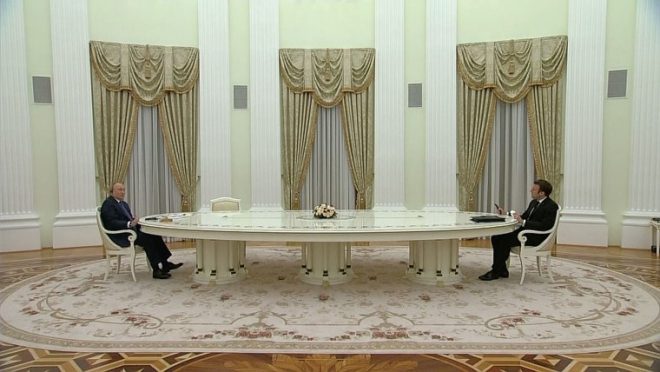
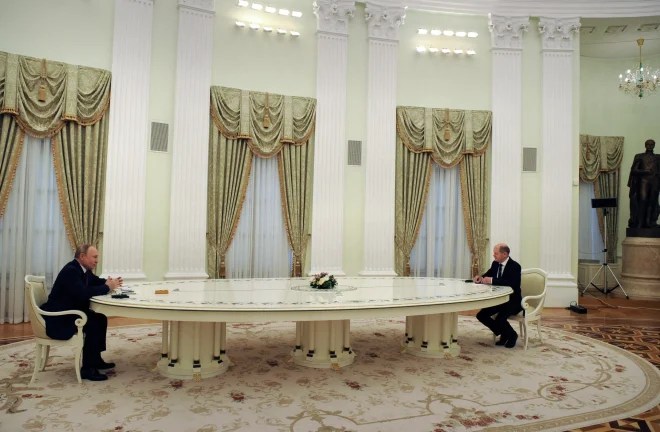
At the time many observers were puzzled why in each case the two national leaders were seated at opposite ends of a very long table, with Putin blandly suggesting that the placement was meant to symbolize the vast distance separating Russia and NATO’s Western leaders. Perhaps that innocuous explanation was correct. But I think it far more likely that the Russians were actually concerned that the Western leaders meeting him might be the immunized carriers of a dangerous biological agent intended to infect their president.
Considering the total madness that America’s ruling elites have exhibited in recent years, we can hardly blame the Russians for taking such unusual precautions to ensure Putin’s safety. This is especially true because in today’s Russia nominal and actual political power are conjoined, a very different situation than is often found in America or much of the West, as I’d noted in 2015.
Today when we consider the major countries of the world we see that in many cases the official leaders are also the leaders in actuality: Vladimir Putin calls the shots in Russia, Xi Jinping and his top Politburo colleagues do the same in China, and so forth. However, in America and in some other Western countries, this seems to be less and less the case, with top national figures merely being attractive front-men selected for their popular appeal and their political malleability, a development that may eventually have dire consequences for the nations they lead. As an extreme example, a drunken Boris Yeltsin freely allowed the looting of Russia’s entire national wealth by the handful of oligarchs who pulled his strings, and the result was the total impoverishment of the Russian people and a demographic collapse almost unprecedented in modern peacetime history.
Given this situation, I think it is very fortunate for the world—and our own country—that both Russia and China are currently led by extremely cautious and pragmatic individuals willing to forego any cycle of retaliatory escalation. But the ruling political elites of DC should recognize that their own persons are hardly likely to remain permanently sacrosanct from the terrible forces they seem all too eager to set into motion.
Related Reading:
Berlin offers Kiev largest-yet military package
RT | May 13, 2023
Germany announced a further €2.7 billion ($3 billion) in military aid to Kiev on Saturday, its largest weapons donation since Russia began its military operation in Ukraine last year.
The gift is meant to show “that Germany is serious in its support” for Ukraine, Defense Minister Boris Pistorius told reporters. “Germany will provide all the help it can, as long as it takes,” he vowed.
The package includes 30 Leopard 1 A5 tanks, 20 Marder armored personnel carriers, over 100 combat vehicles, 18 self-propelled Howitzers, 200 reconnaissance drones, four IRIS-T SLM anti-aircraft systems, and ammunition. Germany’s own military is not yet equipped with the IRIS-T systems.
Berlin’s move comes as Ukrainian President Vladimir Zelensky is expected to visit for the first time since hostilities began last February. Germany reportedly wants to make a good impression after its initial reluctance to join fellow NATO members in supplying the Ukrainian military with lethal weapons out of concern it would be drawn into the conflict ruffled feathers in Kiev.
Zelensky’s visit takes place amid growing public discontent with the status quo. A YouGov poll published on Friday revealed more than half of Germans opposed NATO membership for Ukraine, while 55% want Kiev and Moscow to negotiate a peace deal as soon as possible. Several German celebrities have recently addressed Chancellor Olaf Scholz with open letters urging his government to stop sending weapons to Ukraine and instead push for a ceasefire.
While Germany and its NATO allies have long pledged to support Ukraine “as long as it takes,” the bloc’s Secretary General Jens Stoltenberg has admitted they are running out of weapons and ammo with which to show that support. In October it was revealed that Germany’s ammunition stockpiles would last for just two days of combat, far below the 30-day threshold theoretically required for NATO countries, though Berlin is far from alone in running on empty.
China’s special envoy to visit Ukraine and related countries to promote political solution to crisis
Global Times | May 12, 2023
China’s special envoy for Eurasian affairs Li Hui will visit Ukraine, Poland, France, Germany and Russia, starting on May 15, to communicate with all parties on a political solution to the Ukraine crisis, Chinese Foreign Ministry spokesperson Wang Wenbin announced at a press conference on Friday.
Chinese experts said Li’s upcoming visits demonstrate China’s efforts to bring about a political settlement to the Ukraine crisis, showing China’s objective and fair stance as a responsible power.
According to Wang, since the beginning of the crisis, China has held an objective and just position and actively promoted talks for peace. President Xi Jinping has put forward four principles, called for joint efforts in four areas and shared three observations on Ukraine, which outline China’s fundamental approach to the issue. On this basis, China released its Position on the Political Settlement of the Ukraine Crisis, which reflects the above core ideas of China’s stance and takes into account the legitimate concerns of all parties, receiving extensive understanding and recognition from the international community.
During a phone conversation on April 26, President Xi told Ukrainian President Volodymyr Zelensky that China will send a special representative on Eurasian affairs to visit Ukraine and other countries to push for a political settlement to the crisis.
Li is a veteran diplomat and has been China’s special envoy for Eurasian Affairs since 2019. He was previously Chinese ambassador to Kazakhstan from 1997 to 1999, and from 2009 to 2019 he served as China’s ambassador to Russia, according to publicly available information.
Wang Wenbin said Li’s upcoming visit reflects China’s commitment to promoting peace talks and staying on the side of peace.
Wang noted that as the Ukraine crisis drags on and escalates, the world continues to experience the spillover effects of the crisis, with voices calling for a ceasefire and de-escalation in the international community.
China will continue to play a constructive role and build greater international consensus on ending hostilities, starting peace talks and preventing an escalation of the situation, and help facilitate a political settlement of the Ukraine crisis, said Wang.
Cui Heng, an assistant research fellow from the Center for Russian Studies of East China Normal University, told the Global Times on Friday that Li’s Europe tour is aimed at implementing China’s efforts to promote peace talks.
According to Cui, in the case of ongoing conflicts, even if there are people who want to talk with each other, under the influence of various forces, it is not convenient to have direct communication. In this case, a third party is needed.
“Under such circumstances, no matter what the outcome is, China must do it and only China can do it… This shows China’s responsibility as a major country,” Cui said.
However, there are still some Western media that doubt China’s neutrality, as Li’s background of former ambassador to Russia indicates Li has “close ties” with Moscow, a claim that experts described as nit-picking.
It’s absurd to believe that the special envoy’s background as former ambassador to Moscow will lead to a biased position, Cui said.
Almost all Chinese ambassadors to Russia have worked in the Department of Eurasian Affairs, where diplomats may be dispatched to different countries according to their job requirements, Cui explained, noting that Ukrainian affairs also fall under the Eurasian Division. If history serves as a reference, ambassador Li may be dispatched to Ukraine as well.
Chinese diplomats are objective and impartial, not biased, Cui said, adding that if there is any “bias,” then diplomats of all countries serve their own nations’ interests first.
“If we follow this inference from some US and Western media, is the US ambassador to China pro-China? The suggestion apparently does not stand up to scrutiny,” Cui added.
Ukraine war: The short view
BY M. K. BHADRAKUMAR | INDIAN PUNCHLINE | MAY 12, 2023
Ukraine President Vladimir Zelensky has somewhat eased the suspense by his remark to the western media on Thursday that his army needs to wait and still needs “a bit more time” to launch the much-anticipated counter-offensive against Russian forces.
He acknowledged that Ukraine’s combat brigades are “ready” but would reason that the army still needed “some things,” including armoured vehicles that were “arriving in batches” from NATO countries.
Zelensky proffered the explanation that “we can go forward, and, I think, be successful. But we’d lose a lot of people. I think that’s unacceptable. So we need to wait. We still need a bit more time.”
However, Zelensky’s claim that Ukraine’s military still needed some equipment is at variance with the assertive statement by western officials. None other than NATO chief Jens Stoltenberg said a fortnight ago, one full week after returning from Kiev after talks with Zelensky and his top aides, that NATO deliveries constituted more than 98 percent of the combat vehicles promised to Ukraine.
Stoltenberg added, “In total, we have trained and equipped more than nine new Ukrainian armoured brigades. This will put Ukraine in a strong position to continue to retake occupied territory.”
Last Tuesday, US Secretary of State Antony Blinken broadly endorsed what Stoltenberg said, during a joint press conference with the visiting UK Foreign Secretary James Cleverly, while also taking care to add a caveat:
“They (Ukrainian military) have in place … what they need to continue to be successful in regaining territory that was seized by force by Russia… It’s not only the weapons; it’s the training. It’s making sure that the Ukrainians can maintain the systems that we provide them, and it’s important, of course, that they have the right plans, again, to be successful.”
Cleverly agreed with the drift of what Blinken said but gave a political perspective to it. That is perfectly acceptable, since this is a war that is more political than military.
Cleverly said people shouldn’t expect a film-like counteroffensive from Kiev. He cautioned: “The real world doesn’t work like that. I hope and expect they will do very, very well, because whenever I’ve seen the Ukrainians, they have outperformed expectations… (but we) have to be realistic. This is the real world. This is not a Hollywood movie.”
To be fair, Stoltenberg also had cautioned on a parallel track, saying that “we should never underestimate Russia.” He claimed that Russia was mobilising more ground forces and is “willing to send in thousands of troops with very high casualty rates.”
Perhaps, the salience of what these three officials were harping on was that no matter the outcome of the planned Ukrainian offensive, NATO countries “must stay the course and continue to provide Ukraine with what it needs to prevail” in the face of what appears to be a prolonged conflict. Indeed, both Blinken and Cleverly are in sync with what Stoltenberg said.
In fact, even as the two foreign ministers spoke, on the same day, the US announced an additional $1.2 billion in aid to Ukraine intended to bolster air defences and keep up ammunition supplies.
There is a lot of angst in recent weeks as to whether a Ukrainian counter-offensive is indeed in the pipeline. The answer is a categorical ‘yes’. As to its timing, it seems there could be a difference of opinion.
Weather conditions are no longer an insurmountable factor and Zelensky’s western sponsors want him to get going with the offensive — the sooner the better. Their calculus is that the offensive has a reasonable chance of success, which would go a long way in placating the Western domestic opinion that such costly support for Ukraine was after all not going into a bottomless pit.
Second, the offensive is useful politically to shore up European opinion. In fact, the European Commission headed by its president (and an ardent Atlanticist), Ursula von der Leyen has just confirmed that the EU is preparing to take initial steps toward adopting methods of US sanctions and impose extraterritorial (collateral) punitive measures on enterprises of third countries including those in the United Arab Emirates and possibly in Turkey.
It seems the EU will first focus on the resale of sanctioned EU goods to Russia. In future, enterprises will be punished even if they are not based within the EU and, therefore, are not subject to EU norms.
Indeed, such extraterritorial implementation of one’s own system of norms will be in violation of international law — and the EU itself had officially held that position up until recently — but Von der Leyen is pushing for a revised “rules-based order” to add a new cutting edge to the western strategy to weaken Russia.
The underlying assumption is that the sanctions will weaken the Russian economy and create social disaffection. It only goes to show that no matter the fate of Zelensky’s counter-offensive, there isn’t going to be any let-up in the proxy war against Russia. On the other hand, no one can blame President Biden for a Ukrainian defeat, either.
However, there is a catch: Zelensky also has his priorities — first and foremost, his own political survival. He knows that his narrative about an impending Russian defeat, et al, has unravelled and he may become the fall guy in any blame game in the aftermath of a crushing defeat in the crucial weeks or months ahead.
Indeed, the Game of Thrones in Kiev is nearing a critical stage. Sensing danger, Zelensky is dithering. He is buying time. (General Valerii Fedorovych Zaluzhnyi, chief of Ukraine’s armed forces, skipped a NATO meeting!) But how long can Zelensky push back the mounting US and NATO pressure to launch the offensive? His exit strategy could have been to open a line to Moscow but that option no longer exists.
On its part, Russia is doing brilliantly well to keep its cards close to its chest. Russia has the capability to launch a “big arrow” offensive towards the Dnieper but Kremlin’s preference is to continue to grind down the Ukrainian military — a strategy that proved cost-effective in human and material terms, productive, and is sustainable.
Depending on the trajectory of the Ukrainian offensive, therefore, Russia has the option to switch to a massive attack to pulverise the adversary. Presently, its heavy bombing campaign is intended to create shock and awe in Kiev and despondency in the European capitals, and to degrade Ukraine’s mobilisation. The West is kept guessing about the Russian intentions.
UK Shipment of Long Range Cruise Missiles to Ukraine Radically Changes the Conflict
By Gilbert Doctorow | May 12, 2023
Americans have taken umbrage at the now commonplace habit of Russian media personalities to speak of “Anglo-Saxons” as the principal opponents, or enemies if you will, of their country. In Russia the term is meant to include the USA. Given the high percentage of Blacks, Hispanics and Orientals in the U.S. population, there is some substance to American objections. However, as regards the British, they have not a leg to stand on: they are Anglo-Saxons like it or not. And by their behavior towards Russia right to the present day, they have well earned the intense dislike bordering on hatred that a large swathe of influential Russians feel towards them.
First you had Boris Johnson, who ruined the nearly agreed peace accord between Russia and Ukraine back in March 2022. Boris threatened to put a stop to Western assistance to Kiev if Zalensky took the draft treaty through to signature. Zelensky then backed out of the negotiations and went all out for war.
Now we have Prime Minister Sunak sending long range cruise missiles to Ukraine supposedly to help them succeed with their counteroffensive and recapture lost territory from the Russians. The missiles are to be fitted onto existing Ukrainian Soviet era jets and have a 250 km range. This will theoretically enable Ukrainian forces based in Kharkov or Zaporozhie to deliver highly destructive warheads to anywhere in Crimea, for example.
Yes, you may say, but the Ukrainians already have been making daily drone attacks on Sevastopol. However, the new missiles will be far more deadly and less easy for air defense to bring down because of the inherent advantages of their speed, very low altitude and variable flight paths.
The new weapons are potentially a game changer in a way that the Leopard or Abrams tanks that have attracted so much public attention over recent months are not.
Why a game changer? Because with each incrementally more powerful artillery or tank delivered to Ukraine the Russians could say they only meant that Russia would have to push the Ukrainian border back that much further to keep Russian territories safe from attack. But there is no way for the Russians to push back the line of confrontation with Ukraine 250 km in the short term. That might be possible in a matter of months if not years. But in the meantime the missiles could do vast damage in purely Russian territories and create enormous numbers of casualties among both civilians and military.
I can easily imagine the popular reaction in Russia of a Ukrainian rocket attack on Sevastopol that killed, say 400 civilians. There would be a great public uproar and it is hard to see how the Kremlin could avoid responding with its own devastating counter blow. But counter blow against whom? Against the Ukrainians or against those truly responsible for the atrocity, namely the British? Here is where the current strong dislike for “Anglo-Saxons” in Russia may come into play. It comes on top of the recent Russian outrage over delivery of depleted uranium artillery shells to Ukraine by Britain.
In effect, by delivering these weapons to Ukraine Britain is wrecking the hitherto generally accepted notion that the war between Russia and Ukraine will be decided on the battlefield. That is precisely how the EU’s foreign policy and security chief Borrell put it more than half a year ago. Instead the outcome in Ukraine may now be decided by a war between Russia and Britain. This is a war that Britain is as likely to lose as the ongoing war being fought by Ukraine. And what comes after that? A full NATO-Russia war? A nuclear war?
The dangers have now been vastly raised by Mr. Sunak’s ill-conceived decision on arms shipments to Ukraine. It would be a positive step towards their own survival if EU authorities took cognizance of this British idiocy and brought their British colleagues to their senses.
©Gilbert Doctorow, 2023
As Donetsk civilians live in constant fear of Ukrainian shelling, a reporter on the ground details the terror
By Eva Bartlett | RT | May 11, 2023
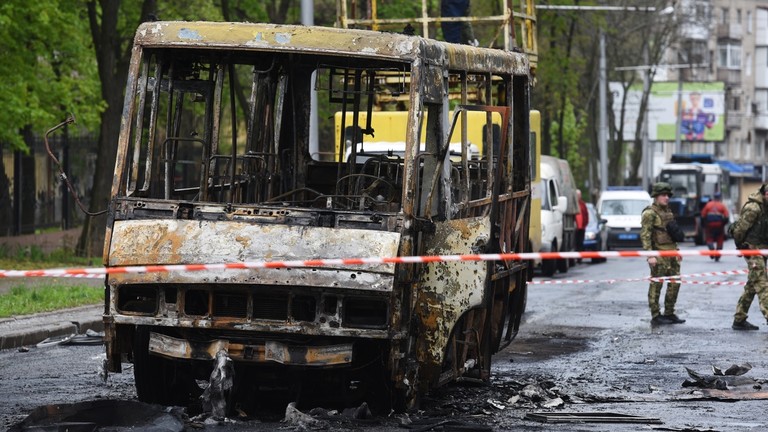
Heavy Ukrainian shelling of central Donetsk on April 28 killed nine civilians – including an eight-year-old girl and her grandmother – and injured at least 16 more. The victims were burned alive when the minibus they were in was hit by a shell.
The attack also targeted a major hospital, apartment buildings, houses, parks, streets, and sidewalks. All civilian areas – not military targets.
According to the Donetsk People’s Republic’s (DPR) Representative Office in the JCCC (Joint Monitoring and Co-ordination Center on Ukraine’s War Crimes), Kiev’s forces fired high-explosive fragmentation missiles “produced in Slovakia and transferred to Ukraine by NATO countries.” Regarding an earlier shelling on the same day, the JCCC noted that US-made HIMARS systems were used, targeting “exclusively in the residential, central quarter of the city.”
I was outside of Donetsk interviewing refugees from Artyomovsk (also known as Bakhmut) when both rounds of intense shelling occurred, the first starting just after 11am. I returned to see a catastrophic scene, with a burnt-out bus – still smoking – and some of its passengers’ charred bodies melted onto the frame. This tragic picture was sadly not a one-off event.
Elsewhere, city workers were already removing debris and had begun repaving damaged sections of the roads. I’ve seen this following Ukrainian shelling many times, including on January 1 this year, when Ukraine fired 25 Grads into the city centre. Similarly, in July 2022, Ukrainian shelling downtown killed four civilians, including two in a vehicle likewise gutted by flames. When I arrived at the scene about an hour later, workers were repaving the affected section of the street.
The damage to the Republican Trauma Center hospital was quickly cleaned up, but videos shared on Telegram immediately after the shelling show a gaping hole in one of the walls. The room concerned contained what was, apparently, Donetsk’s sole MRI machine.
Along Artyoma street, the central Donetsk boulevard targeted countless times by Ukrainian attacks, the destruction was evident: Two cars caught up in the bombing, residents of an apartment building boarding up shattered windows and doors, the all-too-familiar sound of glass and debris being swept away. In the residential area, the first to be targeted that day, in a massive crater behind one house, the walls and roof of another home were intermixed with rocket fragments.
Another year of Ukrainian war crimes
In April 2022, following strikes on a large market area in Kirovsky district, in western Donetsk, which killed five civilians and injured 23, I went there to document the aftermath, not expecting to see two of the five dead still lying in nearby lanes. This shelling was just before noon, a busy time of day in the area. Bombing at such periods is an insidious tactic to ensure more civilians are maimed or killed.
Double and triple striking the same areas is another method used by Ukrainian forces. In an interview last year, the director of the Department of Fire and Rescue Forces of the DPR Ministry of Emergency Situations, Sergey Neka, told me, “Our units arrive at the scene and Ukraine begins to shell it. A lot of equipment has been damaged and destroyed.”
Andrey Levchenko, chief of the emergency department for the Kievsky district of Donetsk, also hit by Ukrainian attacks, said: “They wait for 30 minutes for us to arrive. We arrive there, start assisting people, and the shelling resumes. They wait again, our guys hide in the shelters, as soon as we go out, put out the fire, help people, then shelling resumes.”
I was here in Donetsk in mid-June, during a day of particularly intense Ukrainian shelling of the very centre of the city, which killed at least five civilians. The DPR authorities reported that “within two hours, almost 300 MLRS rockets and artillery shells were fired.” One Grad rocket hit a maternity hospital, tearing through the roof.
The following month, Ukraine fired rockets containing internationally-banned ‘petal’ mines. The streets of central Donetsk, as well as the western and northern districts and other cities, were littered with the hard-to-spot mines designed to grotesquely maim, but not necessarily kill, anyone stepping on them. These mines keep claiming new victims to this day – when I last wrote about them here, 104 civilians had been maimed, including this 14-year-old boy. Three had died of their injuries. Since then, the number of victims has risen to 112.
In August, heavy Ukrainian shelling of the centre of Donetsk hit directly next to the hotel I was staying in, along with dozens of other journalists and cameramen. Six civilians were killed that day, including one woman outside the hotel, as well as a child. She been a talented ballerina due to leave to study in Russia soon, and along with her grandmother, her ballet teacher was also killed that day, herself a world-famous former ballerina.
Three bouts of Ukrainian shelling of the city centre in a span of just five days in September killed 26 civilians. Four were killed on September 17, among them two people burned alive inside a vehicle on the same central Artyoma Street. Two days later, 16 civilians were killed, the remains of their bodies strewn along the street or in unrecognizable piles of flesh. Three days later, Ukraine struck next to the central market, killing six civilians, two in a minibus, the rest on the street.
In my subsequent visits to Donetsk and surrounding cities in November and December, I filmed the aftermath of more Ukrainian shelling (using HIMARS) of civilian areas of Donetsk and the settlement of Gorlovka to the north. The November 7 shelling of central Donetsk could have killed the toddler of the young mother I interviewed. Fortunately, after hearing the first rockets hit, she ran with her son to the bathroom. When calm returned, she found shrapnel on his bed.
The November 12 shelling of Gorlovka damaged a beautiful historic cultural building, destroying parts of the roof and the theatre hall within. According to the centre’s director, it was one of the best movie theatres in Donetsk Region, one of the oldest, most beautiful, and most beloved buildings in the city. He noted that the HIMARS system is a very precise weapon, so the attack was not accidental.
The shelling goes on
Early morning during Easter Mass on April 16, the Ukrainian army fired 20 rockets near the Cathedral of the Holy Transfiguration in the centre of Donetsk, French journalist Christelle Neant reported, noting that one civilian was killed and seven injured. The shelling extended to the central market just behind the cathedral. Just over a week prior, on April 7, another shelling of that market killed one civilian and injured 13, also considerably damaging the market itself.
Ukraine continues to shell the western and northern districts of Donetsk, also pounding Gorlovka, as well as Yasinovatya just north of Donetsk (killing two civilians some days ago).
On April 23, shelling in Petrovsky, a hard-hit western Donetsk district, killed one man and injured five more. The same day, in a village northeast of Donetsk, a rocket killed two women in their 30s. Security camera footage shows the moment when the women attempted to take cover. The munition that killed them hit directly next to where they huddled.
A few days later, on my way to interview refugees from Artyomovsk sheltering in another city, I passed along the tiny village where those women were killed. It’s a road I’ve driven a dozen times or more, a quiet, calm, scenic region of rolling hills, a lovely river, a beautiful church. It’s far from any front line. The murder of these two women was another Ukrainian war crime.
The people here are constantly terrorized by Ukrainian shelling or the threat of it, and have been since Kiev started its war on the Donbass in 2014.
Eva Bartlett is a Canadian independent journalist. She has spent years on the ground covering conflict zones in the Middle East, especially in Syria and Palestine (where she lived for nearly four years).
Kiev tries to disguise the failure of its counteroffensive plan
By Lucas Leiroz | May 12, 2023
In a recent interview to a Western media outlet, the head of the Kiev regime stated that his country needs more time before starting the counteroffensive against Russian troops. According to Vladimir Zelensky, the Ukrainian forces would be “ready” to start the move, but before that they need to receive more equipment and wait for the ideal conditions for action to emerge – which is obviously a contradictory, ambiguous and unsubstantiated narrative.
Zelensky’s words were spoken during a conference with the Eurovision News Network and were then reported by the BBC. The Ukrainian president claims that he could give orders to launch the counteroffensive now, but that would mean too many casualties for Kiev, which is why it seems more prudent to wait for more favorable conditions to arise in the future. At the time, Zelensky also emphasized the importance of receiving more armored vehicles from the West, which would operationally facilitate the counteroffensive.
Another interesting point of the interview was Zelensky’s response when asked if he has been under pressure from his western partners to resume negotiations in case the counterattack plans fail. The president suggested that his army would continue fighting regardless of the outcome of the counter-offensive and said that no Western country could pressure Ukraine to surrender territories to Russian forces. Zelensky also said that Moscow intends to “freeze” the conflict, as it would be territorially favored, which supposedly will be prevented by the counteroffensive.
“We’d lose a lot of people [if we started the counteroffensive now] (…) I think that’s unacceptable. So, we need to wait. We still need a bit more time (…) [Western powers] can’t pressure Ukraine into surrendering territories”, he said.
The most curious thing about Zelensky’s narrative is how extremely contradictory it is. At one moment the president says that his country is “ready” to start the maneuver and at another he says it needs to wait. Either Kiev is ready to start an effective counterattack, or in fact it is not and needs to wait for better conditions in the future. There is no possible synthesis between both possibilities. This confused and irrational rhetoric sounds like a desperate attempt to have control over the military situation of the conflict, when in fact this control does not exist.
Also, by reaffirming that Kiev will continue to fight to recover the territories liberated by Russia, Zelensky makes it clear to the Western media that, in practice, the outcome of the counteroffensive does not matter. Even if the plans fail, Ukrainian forces will continue to be forced to fight and keep looking for virtually unattainable results. And, as Zelensky himself stated, no western power is opposed to that – which was already well known, since NATO countries are the most interested in keeping Kiev active in the conflict.
In the same sense, Zelensky lies when he says that Russia wants to freeze the conflict. Moscow’s position is clear on achieving an effective and lasting resolution to the crisis. However, Russia does not see the fight against Ukrainian forces as a war, but as a special military operation inserted in a broader context – the war with NATO, which is the organization that uses Kiev as a proxy. Russia avoids escalations and big maneuvers because it wants to avoid as much as possible the death of Ukrainian civilians, seen as part of the same people by most Russian citizens. So, Russia does not want to freeze – it really wants to win and end the problem, but it wants to do it in the least harmful way possible for Ukraine itself.
However, what is most interesting about Zelensky’s speech is to see how Ukrainian rhetoric has changed in a few days. In the most recent wave of terrorist attacks launched by the regime, several officials claimed that the moves were part of the counteroffensive, which had already begun. Zelensky even promised that he would launch more attacks on Crimea, until he “recovered” it, virtually assuming the terrorist nature of such a counteroffensive. Now, however, the rhetoric has changed and apparently the move has not yet started, with the Ukrainians waiting for a more opportune moment to avoid casualties.
In fact, what seems to be happening is the formulation of a narrative by Zelensky and the western media to disguise the failure. Many analysts, citing sources on the battlefield, believe that the Ukrainian counteroffensive has already begun. The intensity of Kiev’s attacks – both on the trenches and in terrorist operations – has already escalated. The special troops that had reportedly been sent to Poland for training during the winter have already returned to the country and there have been practical results of their work. For example, the head of Russian PMC Wagner Group recently showed on his social networks several Russian soldiers killed after Ukrainian massive attacks in Bakhmut.
The problem is that, contrary to what was promised by the regime’s propaganda, this counteroffensive has been weak, inefficient and incapable of guaranteeing territorial gains. Kiev managed to increase combat capability and generate more casualties on the Russians, but this had no military relevance. The regime’s forces are still unable to capture and occupy territories, which is why the media has run out of arguments to maintain its previous narrative and is now changing it, stating that the move has not yet started.
In a realistic analysis, it seems evident that Kiev is incapable of reversing the military scenario of the conflict with its counterattack. The promise of occupation of Donbass and Crimea is absolutely inconsistent with the reality of Ukrainian troops, which have been weakened, demoralized, and poorly equipped since 2022. So, indeed, the counteroffensive is happening, but it is not what the propagandists promised.
Lucas Leiroz is a journalist, researcher at the Center for Geostrategic Studies, geopolitical consultant.
Ukraine uses chemical weapons – Russian journalist
RT | May 11, 2023
Ukrainian forces have used chemical weapons, which caused loss of consciousness after inhalation, during an attack in the Orekhov sector, military correspondent Alexander Kots reported on Thursday.
The use of substances banned by international conventions appear to be part of the much-anticipated Ukrainian offensive, said the reporter for the outlet KP.
According to Kots, Western-supplied tanks have been spotted outside of Kharkov, while Ukrainian troops have launched attacks on Russian positions north and south of Artyomovsk, which they call Bakhmut.
Multiple Western officials have said over the past week that all the weapons, ammunition and supplies required for Ukraine’s grand counter-offensive had already been delivered. On Thursday, the UK confirmed it had supplied Kiev with long-range ‘Storm Shadow’ missiles.
Ukrainian President Vladimir Zelensky, however, claimed he needed more time and more armored vehicles before he could launch the assault, in order to avoid casualties. In the same interview, Zelensky claimed Ukraine had nothing to do with the drones that attacked the Kremlin last week.
According to US presidential candidate Robert F. Kennedy Jr., whose son had volunteered on Kiev’s side for several months last year, Ukraine has suffered around 300,000 military casualties and is taking losses at a far higher rate than Russia.
Donetsk People’s Republic authorities had accused Ukrainian troops of dropping chemical weapons from drones back in February, pointing to frontline reports and videos shared by Ukrainians on social media.
In late February, the Russian military warned that the Ukrainian forces in Kramatorsk had received 16 containers with riot control agents CS (chlorobenzylidenemalononitrile) and CR (dibenzoxazepine), as well as the incapacitating agent BZ (3-Quinuclidinyl benzilate), accompanied by “citizens of foreign countries.” Moscow suggested the US might be planning a “false flag” attack in the Donbass.
Chemical warfare is forbidden under the Chemical Weapons Convention (CWC), an international treaty that took effect in 1997 and to which both Ukraine and Russia are signatories.
Featured Video

Death Spikes & Rising Cancer In Our Youth Explained
or go to
Aletho News Archives – Video-Images
From the Archives
Politicians lie
By Mazin Qumsiyeh | Popular Resistance | August 18, 2013
There is no way to say this truth nicely: Politicians lie. That includes Japanese, American, Egyptian, Israeli, and Palestinian politicians! Is there something more common sense than that? Yet, so many citizens around the world believe their own politicians or wistfully acknowledge lies but think it is part of the job needed to run things. They believe even when politicians contradict themselves blatantly. This phenomenon is rather remarkable. It is a dissonance and disconnect from reality that many seem oblivious to. It is very dangerous because it can lead to accepting rationales for going to war. These can be deadly wars that lead to millions of lives lost as happened in what was called World War 1 and WW2. Even when incredible and declassified evidence abound, politicians continue to lie and old mythologies refuse to die. Here are just a few of the countless lies told to us over the past few decades… continue
Blog Roll
 Aletho News
- RSF military group defects, joins Sudanese army: State media
- Ireland goalkeeper refuses to play ‘Israel’ as squad weighs boycott
- China pushes back against US on Cuba, Iran
- Ukrainian Soldiers, Potential Mercenaries: Have Gun, Will Travel!
- Burnham’s UN debut… A masterclass in British disinformation
- Iran flights continue despite US aviation sanctions
- Global Tipping Points Lead the World Into a State of Entropy
- The day-after at the White House: USA and Xi Jinping
- The Geopolitical Balance in the Red Sea: The UAE Being Displaced by New Players
- Iraqi resistance group vows to stage airport sit-ins over Iran aerial blockade
- If Americans Knew
- Deconstructing Netanyahu’s pants-on-fire UN rant – Daily Update
- Trump betrayed voters with his campaign lies and prioritized a foreign country once he took office
- Netanyahu calls Israel’s war in Gaza ‘opposite of genocide’ in UN speech to near-empty hall
- Settler Kidnappings: Torture, Sexual Abuse and Terrorisation of Palestinian Abductees as Israel Deepens Annexation of West Bank
- Gaza winter nears as 162,000 tents become unusable, raising fears of humanitarian crisis
- Netanyahu says, “It’s the opposite of genocide”; UN says Gaza economy is world’s ‘most severe crisis on record’ – Daily Update
- Israel’s US-Backed Assault on Gaza Has Created the ‘World’s Most Severe Economic Crisis on Record’: UN
- ‘Protecting U.S. Citizens’… From Israel
- ‘This is where I live now, the back of a truck’: a day in the life of a grandmother in Gaza
- In UN Speech, Iran’s President Displays Pictures of Children Killed by US, Brings Attention to Israel’s Nuclear Arsenal
- No Tricks Zone
- New Study: Earth And Venus Surface Warmth Largely Explained By Convection And Lapse Rate, Not CO2 Or Radiation
- 2025 Nature Paper Claiming Worsening Global Drought Gets RETRACTED …Heavily Flawed
- New Study: ‘Global Drought Shows No Detectable Recent Acceleration Under Climate Warming’
- Economic Masterminds: German Socialists Suggest Taxing Productivity Gains Stemming From Using AI
- The South China Sea Has Not Been Cooperating With The Climate Change Narrative
- Energy Crisis: Germany Enters Heating Season With Historically Low Gas Reserve Fill Levels
- New Study: The Antarctic Ice Sheet Gained Mass From 2020-2024 Due To Staggering Snow And Ice Accumulation
- Study: Ocean Heating Rates From Thousands Of Years Ago ‘Dwarf’ Modern Ocean Heating Rates
- Climate Extremists Target, Attack Large-Scale Power Grid Infrastructure In Germany!
- New Study: Antarctic Ice Melt Has Contributed Less Than 1 Centimeter To Sea Level Rise In The Last 30 Years

