Ukrainian officers charged with deliberate shelling of Russian territory
RT | December 6, 2016
The Russian Investigative Committee has charged two Ukrainian military commanders, whose units shelled Russian territory in 2014, with attempted murder of military servicemen and law enforcement officers.
Svetlana Petrenko, the spokesperson for the Russian Investigative Committee, told reporters on Tuesday that the committee has brought charges against Andrey Grishenko, head of the “South” Operational Command of the Ukrainian Armed Forces, and Valeruy Ismailov, commander of Ukraine’s 27th Rocket Artillery Regiment. Russian investigators believe that both men were involved in organizing the repeated artillery attacks against Russian territory that took place from June to August in 2014.
Petrenko told reporters that Russian investigators had established that in these artillery raids, the Ukrainian military used heavy weapons, such as multiple-launch missile systems and self-propelled cannons, and as a result of these illegal and indiscriminate actions, many people were wounded and one elderly man was killed.
Investigators have already conducted dozens of inspections, about 140 examinations, and have spoken with about 1000 witnesses.
“In some cases, the actions of the Ukrainian military resembled terrorist tactics, such as repeated covert strikes on places with large gatherings of people. For example, when a group of Investigative Committee agents were studying the area of an artillery strike in Russia’s Rostov Region, they became targets of mortar fire. And the grouping of shots was becoming tighter, which is a sign that the mortar battery was using a spotter,” the spokesperson said. She also noted that the attack took place on Russian territory, about 1,500 meters from the Russian-Ukrainian border.
In August, the Investigative Committee launched criminal cases against the Ukrainian defense minister and several top military commanders over charges of using prohibited means of warfare in civilian areas in the conflict in Donbass. The agency stated that it had obtained sufficient proof that crimes against civilians in the self-proclaimed republics of Lugansk and Donetsk had been committed on the orders of top Ukrainian military commanders.
The Investigative Committee also stated that Ukraine had repeatedly violated the ceasefire agreement signed on February 15, 2015, with Ukraine’s National Guard using heavy artillery to deliberately destroy civilian infrastructure, and indiscriminately using heavy weapons in populated areas, killing and injuring civilians, including children.
In September, the Investigative Committee launched additional cases against Ukrainian military commanders over the attempted genocide of Russian-speakers in the self-proclaimed Donetsk republic.
In August 2015, the Investigative Committee presented a major report on war crimes committed by Kiev military and volunteers in Donbass, dubbed the ‘White Book.’ It was based on evidence collected by the agency during probes into cases where Ukrainian authorities and volunteers were suspected of using outlawed methods of warfare. The evidence includes testimony of eyewitnesses and participants of these events, photos and various materials presented by international organizations.
Saving Poroshenko? US State Dept offers $800k to Ukraine NGOs
RT | November 30, 2016
Washington is offering a grant of up to $800,000 to Ukrainian public organizations that will monitor regional authorities and secure ties with local media. Experts say it’s a way to keep President Petro Poroshenko in power amid declining popularity.
“[The] goal is to enhance the accountability and responsiveness of the Ukrainian government at the local level through civil society advocacy, monitoring, and civic activism,” reads a US State Department funding announcement, published this week on the grants.gov website.
It explains further that the State Department is looking for “civil society organizations,” either non-profit or for-profit (with some conditions) that will provide proposals “to perform a watchdog function and advocate for democratic governance” in Ukraine.
The description states the program is aimed at increasing civic activism in Ukraine at a local level and building and training a network of civic activists throughout the country. These in turn are to keep watch on the activities of local governments and encourage partnerships between civil society and media “to communicate important information about local reforms to the public.”
The organizations applying for the grant must present a program for their activities, along with a financial plan, by January 17, 2017. They are also required to have ties with “thematic or in-country partners, entities and relevant stakeholders, including private sector partners and NGOs” and provide proof of these links or their potential development.
The description states that applicants are also requested to have “demonstrable experience in administering successful, and preferably similar, projects.”
It adds that: “Projects should have the potential to have an immediate impact leading to long-term sustainable reforms, and should have potential for sustainability beyond DRL (Bureau of Democracy, Human Rights and Labor of the State Department) resources.”
Among other things, the bureau says it welcomes projects that “advance the rights and uphold the dignity of the most vulnerable or at-risk populations,” with one of the criteria for the selection of candidates being their cooperation with minority groups.
The State Department reserves a significant role for itself in the implementation of the program that receives the grant. It will, for instance, demand quarterly reports on the program’s spending and progress.
‘Chance to keep Poroshenko at helm’ – experts on funding grant
Experts believe that this and other such funding opportunities Washington has offered Ukraine are a means of preventing the fall of the country’s president and Washington favorite, Petro Poroshenko. The Ukrainian leader’s public approval ratings have plunged recently.
According to Liga.Net, in November Poroshenko’s rating drew 14.3 percent of popular support – having plummeted to a low of 10.7 percent in summer. He is still behind former Prime Minister Yulia Tymoshenko in the ratings.
Speaking to RT Russian, political analyst Nikolay Shlyamin said: “The activists who will work in the country under this program and for the money from this grant will penetrate [Ukraine’s] state agencies to monitor the spending of officials and then publish reports on the expenditures from the state budget.
“In addition, they will attract the media who will cover the process of fighting against corruption in the country. In this case, there is a chance that the Americans will be able to keep their favorite at the helm for the upcoming presidential elections,” Shlyamin believes.
He notes that the Ukrainian people have become disillusioned with Poroshenko’s leadership, with his promises to introduce visa-free travel with the EU and eradicate corruption proving a failure.
“Under Poroshenko, Ukraine has so far been unable to secure European Union and NATO membership. In domestic policy [there have been] also continuous failures,” Shlyamin told RT Russian.
He believes the current grant is one of the final efforts by US President Barack Obama’s administration to maintain US-Ukraine relations as they have been since the coup in 2014.
“Obama will soon leave office. Therefore, he needs to have time to allocate the necessary financial resources to continue the current policy and prevent future president Donald Trump from building a new line of cooperation with Ukraine,” he says.
Some, like film director Oliver Stone, have called the Maidan revolution of 2014 a US-staged coup, while former US Congressman Ron Paul called on foreign actors – like Washington, NATO or Moscow – to stay out of the country.
In 2015, Sputnik news agency reported that the National Endowment for Democracy (NED) – a bureau much like the DRL, which is offering the current grant – played a significant role in the preparation of the Kiev coup. From 2011 to 2014 it was said to have given some $14 million to Ukrainian NGOs which facilitated media coverage of mass demonstrations and organized youth movements.
After much speculation on the US role in the upheaval of 2014, President Obama last year openly admitted to having a hand in the events, or in his words “broker[ing] a deal to transition power in Ukraine.”
Shlyamin’s colleague Sergey Sudakov said that, given its political significance, a major grant like the one currently being advertised for Ukraine is likely to end up in the hands of someone trusted by Washington, such as billionaire investor George Soros.
“The government must be sure of the loyalty of those who are entrusted with such projects. After all, their goal [is] espionage and site preparation for the implementation of pro-American policy,” he said.
Experts say that under Obama, Washington has been striving to gain full control over Ukraine – a strategically important region due to its location close to Russia. Shlyamin noted that in this “struggle for Kiev,” Washington has been pursuing “soft force,” introducing US democratic values through methods such as education and cultural training.
Indeed, the US government has been known to allocate large sums to work with Ukrainian media, businesses and civil society activists. Last year, Victoria Nuland, the State Department’s top diplomat for Europe, acknowledged that since 1991 America has poured $5 billion of taxpayers’ money into what she said was assisting Ukrainians in building “democratic skills and institutions.”
Grants were distributed through the DRL, the United States Agency for International Development (USAID), and the National Endowment for Democracy (NED), with the money going to sponsor various NGOs, political parties and media outlets.
However, Ukraine is not the only country whose internal affairs Washington is keen on being closely involved in. Just two months ago it emerged that USAID had assigned $3 million to Russian non-governmental entities, according to data posted on government website usaspending.gov.
The organization, which was banned in Russia in 2012 as “undesirable,” announced the funding opportunity just as Russia was preparing to hold parliamentary elections. The investment was listed under the heading ‘For activity in Russia,’ set to be completed by 2017.
Read more:
Coups for export: US has history of supporting anti-govt upheavals
Kiev to hold missile-firing exercise over Crimea, where civil aviation performs flights – Moscow
RT | November 25, 2016
Ukraine has made a unilateral decision to organize missile-firing exercises over Crimea, in the sovereign airspace of the Russian Federation, Russia’s Federal Air Transport Agency Rosaviatsiya reported. Missiles will be fired in regions where civil and state aviation flights run.
Kiev’s move breaches a number of international laws and agreements, Rosaviatsiya said, adding that not only will the military exercise invade Russian territory, but the plans also had not been coordinated with Moscow.
Ukraine released an aviation notification on Thursday, activating “dangerous zones” in all flight levels near Crimea and the city of Simferopol for December 1 and 2, the agency reported. It added that the “dangerous” areas included airspace above open sea which is in Russia’s area of responsibility, and over Russian territorial waters.
The notifications released have not been coordinated with the appropriate Russian authorities, Rosaviatsiya said in its statement. It added that such unilateral moves demonstrate Ukraine’s unwillingness to work on the normalization of air traffic above the Black Sea.
Kiev has also violated annexes of the 1944 Convention on International Civil Aviation, the agency said, while demanding the immediate cancellation of the planned actions in Russia’s sovereign airspace.
The General Staff of the Ukrainian Army refused to comment on the matter, TASS reported. The head of the staff press service, Vladislav Seleznyov, told the agency it was not his department’s responsibility to “comment on this information,” and referred the outlet to other Ukrainian officials, including the Foreign Ministry, for more information.
The planned missile-launch exercises are “potentially dangerous for civil aviation,” Rosaviatsiya said in its statement, adding that it could lead to tragedies similar to those with Malaysia Airlines flight MH17 over Ukraine in 2014 and the downing of a Russian passenger plane over the Black Sea in 2001.
The investigation into the Malaysian Boeing-777 crash in eastern Ukraine, which killed all 298 people on board en route from Amsterdam to Kuala Lumpur, continues.
Another incident involving military missiles happened over the Black Sea in October 2001, when a Siberia Airlines Tu-154 en route from Tel-Aviv to Novosibirsk was downed by a missile launched by the Ukrainian military during an exercise. Seventy-eight people died.
Russia has informed both Russian and international air carriers of Kiev’s planned move, a Rosaviatsiya representative told TV channel Rossiya 24. Saying that Moscow is taking all measures to provide security for the flights, he added that Russia will be forced to ban all flights in the Crimea region should Ukraine not cancel its decision.
Trump’s Possible Path Out of Ukraine Crisis
By Jonathan Marshall | Consortium News | November 24, 2016
If Donald Trump wants to make a decisive and constructive mark on U.S. foreign policy early in his presidency, there’s no better place to start than by helping to end the brutal war in Ukraine that has claimed some 10,000 lives.
The Obama administration helped ignite that war by attempting to yank Ukraine out of Russia’s orbit and into the Western security and economic sphere. Working alongside the European Union, Washington fanned mass street protests that led to a violent putsch against Kiev’s elected government in February 2014. Moscow responded by annexing (or, depending on your point of view, reunifying with) Russian-speaking Crimea, which is also headquarters of Moscow’s Black Sea Fleet, and backing pro-Russia separatists in the eastern regions of Donetsk and Luhansk.
Since then, the two sides have fought to a bloody stalemate. Besides killing thousands of civilians, the war has sunk Ukraine’s economy and fostered rampant corruption. U.S. and E.U. sanctions have dragged down Russia’s economy and derailed cooperation between Washington and Moscow in other theaters. Rising tensions between NATO and Russia have greatly raised the odds of an accidental military confrontation between the world’s two largest nuclear powers.
The best hope for Ukraine — and renewed East-West cooperation — is the Minsk Protocol, signed by Ukrainian, Russian, and European parties in the capital of Belarus on Sept. 5, 2014. The agreement provided for a ceasefire, an exchange of prisoners, and a framework for a political settlement based on giving the Donetsk and Luhansk regions a “special status.”
That agreement broke down amid renewed fighting until the parties signed the Minsk-2 Agreement on Feb. 12, 2015. It provided for constitutional reforms, elections in the two republics, and restoration of Ukrainian sovereignty over its borders. But Kiev has made no serious move to recognize the special status of its breakaway regions, and the two sides have engaged in sporadic hostilities ever since.
Final Words
Presidents Obama and Putin exchanged what may have been their final, desultory words on the subject at the Asia-Pacific Economic Cooperation summit in Peru this month. Obama “urged President Putin to uphold Russia’s commitments under the Minsk agreements,” while a Russian spokesman said the two men “expressed regret that it was not possible to make progress in Ukraine.”
As current foreign policy messes go, however, the Ukrainian imbroglio may offer the greatest opportunities for a rewarding cleanup. Doing so will require both sides to acknowledge some fault and find creative ways to save face.
Fortunately, President-elect Trump has created an opening for such a settlement by reaching out to Putin during the election campaign and explicitly declining to bash Russia for its annexation of Crimea (which followed a hastily arranged referendum in which the official results showed that 96 percent of the voters favored leaving Ukraine and rejoining Russia).
There are also small signs of progress that give hope. A limited demilitarization accord signed in September led to a mutual retreat by the Ukrainian army and pro-Russia separatists from a small city in eastern Ukraine. The withdrawal was verified by observers from the Organization for Security and Cooperation in Europe (OSCE), a party to the Minsk accords. Meanwhile, Ukraine, Germany, France and Russia are working on a new roadmap to strengthen the ceasefire.
Conditions for Peace
In a June 2015 interview with Charlie Rose, Putin laid out clear and reasonable conditions for making the Minsk accord stick:
“Today we primarily need to comply with all the agreements reached in Minsk … At the same time, I would like to draw . . . the attention of all our partners to the fact that we cannot do it unilaterally. We keep hearing the same thing, repeated like a mantra – that Russia should influence the southeast of Ukraine. We are. However, it is impossible to resolve the problem through our influence on the southeast alone.
“There has to be influence on the current official authorities in Kiev, which is something we cannot do. This is a road our Western partners have to take – those in Europe and America. Let us work together. … We believe that to resolve the situation we need to implement the Minsk agreements, as I said. The elements of a political settlement are key here. There are several. . . .
“The first one is constitutional reform, and the Minsk agreements say clearly: to provide autonomy or, as they say, decentralization of power. . .
“The second thing that has to be done – the law passed earlier on the special status of . . . Luhansk and Donetsk, the unrecognized republics, should be enacted. It was passed, but still not acted upon. This requires a resolution of the Supreme Rada – the Ukrainian Parliament – which is also covered in the Minsk agreements. . . .
“The third thing is a law on amnesty. It is impossible to have a political dialogue with people who are threatened with criminal persecution. And finally, they need to pass a law on municipal elections on these territories and to have the elections themselves. All this is spelled out in the Minsk agreements. . . .
“I repeat, it is important now to have a direct dialogue between Luhansk, Donetsk and Kiev – this is missing.”
Future of Crimea
Any lasting settlement will also require some compromise over Crimea, which Putin has vowed never to relinquish.
As Ray McGovern, the CIA’s former chief Russia analyst, has noted, the annexation of Crimea did violate a pledge that Russia made in 1994 — along with Great Britain and the United States — “to respect the independence and sovereignty and existing borders of Ukraine,” as a precondition to Ukraine giving up its nuclear weapons. Of course, the United States and the E.U. had already violated the same pledge by supporting a coup d’état against the country’s elected government.
McGovern cited other “extenuating circumstances, including alarm among Crimeans over what the unconstitutional ouster of Ukraine’s president might mean for them, as well as Moscow’s not unfounded nightmare of NATO taking over Russia’s major, and only warm-water, naval base at Sevastopol in Crimea.”
In support of annexation, Russian and Crimean authorities also pointed to the hasty referendum that was held in Crimea in March 2014, which resulted in 96 percent support for reunification with Russia, a relationship dating back to the Eighteenth Century. Subsequent polls of Crimean opinion, conducted by Western firms, have largely confirmed support for the 2014 referendum on rejoining Russia. But the referendum did not have international observers and was not accepted by the United States and other Western nations.
Condemning the annexation in a soaring speech about the “rule of law” and America’s dedication to universal principles, President Obama contrasted Crimea with Kosovo, which NATO forcibly broke away from Serbia in 1999.
Obama said, “Kosovo only left Serbia after a referendum was organized not outside the boundaries of international law, but in careful cooperation with the United Nations and with Kosovo’s neighbors. None of that even came close to happening in Crimea.”
Actually, none of that came close to happening in Kosovo, either. Obama’s story was a myth, but it confirmed the powerful legitimacy offered by popular referenda, like those in Great Britain over Scottish independence or Brexit.
Yet, as part of a permanent settlement of the larger Ukraine crisis, the Minsk signatories could agree to hold another, binding referendum in Crimea under international supervision to decide whether it stays under Russian rule or returns to Ukraine.
To get Russia’s buy-in, the United States and its European allies should agree to lift sanctions if Moscow abides by the referendum and other terms of the Minsk accord. They should also agree to rule out the incorporation of Ukraine into NATO, the original sin that sowed the seeds of crisis between Russia and the West. Russia, in turn, could agree to demilitarize its border with Ukraine.
Obstacles to Settlement
President Putin has signaled his willingness to compromise in several ways, including firing his hardline chief of staff, Sergei Ivanov, and welcoming the presence of armed observers from OSCE to monitor the Minsk agreement.
But major obstacles still impede progress. One is President Petro Poroshenko’s stalling in the face of opposition to the Minsk accord by Ukrainian nationalists. Kiev needs to be given a firm choice: go it alone, or compromise if it wants continued economic support from the United States and Western Europe. The Obama administration has quietly urged the Poroshenko government to honor the Minsk agreement, but has never put teeth behind its entreaties.
The other major obstacle is hostility from militarist hardliners in the West who propose arming Ukraine to ratchet up conflict with Russia. Prime examples include the State Department’s chief policy maker on Ukraine, Victoria Nuland; former NATO Commander Gen. Philip Breedlove, who became infamous for issuing inflated warnings about Russian military operations; Senate Armed Services Committee Chairman John McCain; and Stephen Hadley, Raytheon board member and former national security adviser to President George W. Bush, who chairs the Orwellian-named United States Institute for Peace.
But Trump will have great leeway as commander-in-chief to reject their advice and set a new direction for NATO’s policy on Ukraine and Russia more generally. He has everything to gain by breaking the cycle of political conflict with Moscow.
An ally in the Kremlin will immeasurably improve his chances of making deals in the Middle East, finding a way out of Afghanistan, and managing China.
The next few months should tell us whether Trump has the independence, imagination, and gumption to do the right thing.
Jonathan Marshall is author or co-author of five books on international affairs, including The Lebanese Connection: Corruption, Civil War and the International Drug Traffic.
Energy Price Hike Leaves Whole Sectors of Ukrainian Economy on Brink of Collapse

© Photo: Facebook/Zaporizhstal Europe
Sputnik – 11.11.2016
IMF-mandated hikes in electricity prices for businesses have made whole sectors of the Ukrainian economy uncompetitive, making it more profitable to shut factories down than to keep them operating, says Ukraine’s oldest and largest business association.
Speaking in Kiev on Thursday at the Ukrainian League of Industrialists and Entrepreneurs’ annual conference, president Anatoly Kinakh pointed out with dismay that authorities in Kiev did not bother to carry out the necessary economic calculations when they decided to raise tariffs. “Where are the necessary technical and economic calculations?” the official asked.
“Where were the forecasts about how this will affect the competitiveness of our economy? How does the tariff increase correlate to consumers’ ability to pay? There are no answers to these questions. And this is very serious, because all we are doing is seeing the decline of citizens’ standard of living.”
For example, Kinakh noted, the massive Zaporozhye aluminum plant has recently been forced to stop operations completely due to the high cost of electricity; its energy-intensive production has been made uncompetitive thanks to whopping 40% electricity price hikes and the end of subsidies.
“If before, the plant was able to purchase electricity at a special rate, now this is impossible; the plant is being offered electricity at the same price as other companies, making it uncompetitive,” the official lamented.
The legendary Zaporozhye aluminum plant, established in 1930, was once one of the largest aluminum smelters in the world, and famous for its unique production methods.
Producing over 100,000 metric tons of aluminum a year in its heyday, the plant played a crucial role in contributing to many key industries, including the Soviet and post-independence Ukrainian aerospace industry, which has suffered its own tragic decline in recent years. Antonov, once a legend of global civilian and military aircraft production, isn’t expected to produce even one plane this year.
Ukraine’s International Monetary Fund-mandated austerity measures, combined with the loss of Russian markets for Ukrainian goods, have also hit ordinary Ukrainians hard. The IMF has insisted on further cuts to subsidies on utilities for low-income citizens, leaving millions uncertain where they will get the money to heat their homes this winter.
Reasons to Risk Nuclear Annihilation
By Robert Parry | Consortium News | November 8, 2016
Obviously, I never wanted to see a nuclear war, which would likely kill not only me but my children, grandchildren, relatives, friends and billions of others. We’d be incinerated in the blast or poisoned by radiation or left to starve in a nuclear winter.
But at least I always assumed that this horrific possibility would only come into play over something truly worthy, assuming that anything would justify the mass extinction of life on the planet.
Now, however, Official Washington’s neocons and liberal interventionists are telling me and others that we should risk nuclear annihilation over which set of thieves gets to rule Ukraine and over helping Al Qaeda terrorists (and their “moderate” allies) keep control of east Aleppo in Syria.
In support of the Ukraine goal, there is endless tough talk at the think tanks, on the op-ed pages and in the halls of power about the need to arm the Ukrainian military so it can crush ethnic Russians in eastern Ukraine who dared object to the U.S.-backed coup in 2014 that ousted their elected President Viktor Yanukovych.
And after “liberating” eastern Ukraine, the U.S.-backed Ukrainian army would wheel around and “liberate” Crimea from Russia, even though 96 percent of Crimean voters voted to leave Ukraine and rejoin Russia – and there is no sign they want to go back.
So, the world would be risking World War III over the principle of the West’s right to sponsor the overthrow of elected leaders who don’t do what they’re told and then to slaughter people who object to this violation of democratic order.
This risk of nuclear Armageddon would then be compounded to defend the principle that the people of Crimea don’t have the right of self-determination but must submit to a corrupt post-coup regime in Kiev regardless of Crimea’s democratic judgment.
And, to further maintain our resolve in this gamble over nuclear war in defense of Ukraine, we must ignore the spectacle of the U.S.-backed regime in Kiev wallowing in graft and corruption.
While the Ukrainian people earn on average $214 a month and face neoliberal “reforms,” such as reduced pensions, extended years of work for the elderly and slashed heating subsidies, their new leaders in the parliament report wealth averaging more than $1 million in “monetary assets” each, much of it in cash.
A Troubling Departure
The obvious implication of widespread corruption was underscored on Monday with the abrupt resignation of former Georgian President Mikheil Saakashvili who was the appointed governor of Ukraine’s Odessa region.
Though Saakashvili faces charges of abusing power back in Georgia, he was nevertheless put in charge of Odessa by current President Petro Poroshenko, but has now quit (or was ousted) amid charges and counter-charges about corruption.
Noting the mysterious wealth of Ukraine’s officials, Saakashvili denounced the country’s rulers as “corrupt filth” and accused Poroshenko and his administration of sabotaging real reform.
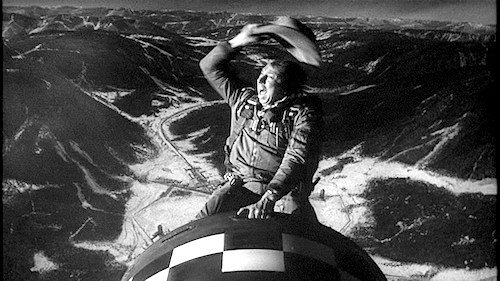
“Odessa can only develop once Kiev will be freed from these bribe takers, who directly patronize organized crime and lawlessness,” Saakashvili said. Yes, that would be a good slogan to scribble on the side of a nuclear bomb heading for Moscow: “Defending the corrupt filth and bribe takers who patronize organized crime.”
But the recent finger-pointing about corruption is also ironic because the West cited the alleged corruption of the Yanukovych government to justify the violent putsch in February 2014 that drove him from office and sparked Ukraine’s current civil war.
Yet, the problems don’t stop with Kiev’s corruption. There is the troubling presence of neo-Nazis, ultranationalists and even Islamic jihadists assigned to the Azov battalion and other military units sent east to the front lines to kill ethnic Russians.
On top of that, United Nations human rights investigators have accused Ukraine’s SBU intelligence service of hiding torture chambers.
But we consumers of the mainstream U.S. media’s narrative are supposed to see the putschists as the white hats and Yanukovych (who was excoriated for having a sauna in his official residence) and Russian President Vladimir Putin as the black hats.
Though U.S. officials, such as Assistant Secretary of State Victoria Nuland, helped organize or “midwife” the coup ousting Yanukovych, we are told that the Ukraine crisis was a clear-cut case of “Russian aggression” and Crimea’s decision to secede (and rejoin Russia) was a “Russian invasion” and an “annexation.”
So, all stirred up with righteous indignation, we absorbed the explanation that economic sanctions were needed to punish Putin and to destabilize Russian society, with the hoped-for goal of another “regime change,” this time in Moscow.
We weren’t supposed to ask if anyone had actually thought through the idea of destabilizing a nuclear-armed power and the prospect that Putin’s overthrow, even if possible, might lead to a highly unstable fight for control of the nuclear codes.
Silencing Dissent
Brushing aside such worries, the neocons/liberal-hawks are confident that the answer is to move NATO forces up to Russia’s borders and to provide military training to Ukraine’s army, even to its neo-Nazi “shock troops.”
After all, when have the neocons and their liberal interventionist sidekicks ever miscalculated about anything. No fair mentioning Iraq, Afghanistan, Libya or other lucky countries that have been on the receiving end of a benighted “regime change.”
An American who protests or even mentions the risk of nuclear war is dismissed as a “Kremlin stooge” or a “Putin puppet” or a “useful fool” repeating “Russian disinformation” and assisting Moscow’s “information war” against the U.S. government.
But if you’re still a bit queasy about risking nuclear annihilation to keep some Ukrainian kleptocrats in power, there is the other cause worth having the human race die over: protecting Al Qaeda terrorists and their “moderate” rebel comrades holed up in east Aleppo.
Since these modern terrorists turn out to be highly skilled with video cameras and the dissemination of propaganda, they have created the image for Westerners that the Syrian military and its Russian allies simply want to kill as many children as possible.
Indeed, most Western coverage of the battle for Aleppo whites out the role of Al Qaeda almost completely although occasionally the reality slips through in on-the-ground reporting, along with the admission that Al Qaeda and its fellow fighters are keeping as many civilians in east Aleppo as possible, all the better to put up heartrending videos and photos on social media.
Of course, when a similar situation exists in Islamic State-held Mosul, Iraq, the mainstream Western media dutifully denounces the tactic of keeping children in a war zone as the cynical use of “human shields,” thus justifying Iraqi and U.S. forces killing lots of civilians during their “liberation.” The deaths are all the enemy’s fault.
However, when the shoe is on the Syrian/Russian foot, we’re talking about “war crimes” and the need to invade Syria to establish “safe zones” and “no-fly zones” even if that means killing large numbers of additional Syrians and shooting down Russian warplanes.
After all, isn’t the protection of Al Qaeda terrorists worth the risk of starting World War III with nuclear-armed Russia? And if Al Qaeda isn’t worth fighting a nuclear war to defend, what about the thieves in Ukraine and their neo-Nazi shock troops? Calling Dr. Strangelove.
Phony ‘Corruption’ Excuse for Ukraine Coup
By Robert Parry | Consortium News | November 2, 2016
If Ukraine becomes a flashpoint for World War III with Russia, the American people might rue the day that their government pressed for the 2014 overthrow of Ukraine’s allegedly corrupt (though elected) president in favor of a coup regime led by Ukrainian lawmakers who now report amassing, on average, more than $1 million each, much of it as cash.
The New York Times, which served as virtually a press agent for the coup in February 2014, took note of this apparent corruption among the U.S.-favored post-coup officials, albeit deep inside a story that itself was deep inside the newspaper (page A8). The lead angle was a bemused observation that Ukraine’s officialdom lacked faith in the country’s own banks (thus explaining why so much cash).
Yet, Ukraine is a country beset by widespread poverty, made worse by the post-coup neoliberal “reforms” slashing pensions, making old people work longer and reducing heating subsidies for common citizens. The average Ukrainian salary is only $214 a month.
So, an inquiring mind might wonder how – in the face of all that hardship – the post-coup officials did so well for themselves, but Times’ correspondent Andrew E. Kramer treads lightly on the possibility that these officials were at least as corrupt, if not more so, than the elected government that the U.S. helped overthrow. Elected President Viktor Yanukovych had been excoriated for a lavish lifestyle because he had a sauna in his residence.
Kramer’s article on Wednesday tried to explain the bundles of cash as a sign that “many of the lawmakers and officials responsible for inspiring public trust in Ukraine’s economic and banking institutions have little faith that their own wealth would be safe in the country’s banks, according to recently mandated financial disclosures. …
“Prime Minister Volodymyr Groysman, for example, declared over one million dollars in savings in cash — $870,000 and 460,000 euros — apparently shunning Ukraine’s ever-wobbly banking system. The top official in charge of the country’s banks, Valeriya Gontareva, who is responsible for stabilizing the national currency, the hryvnia, maintains most of her money in American dollars — $1.8 million.
“A tally of the declarations filed by most of Parliament’s 450 members compiled by one analyst, Andriy Gerus, found that the lawmakers collectively held $482 million in ‘monetary assets,’ of which $36 million was kept as cold, hard cash. …
“Some politicians seem to have approached the declaration as a sort of amnesty, revealing everything they have earned from decades of crooked dealings, in an effort to come clean. … One minister reported a wine collection with bottles worth thousands of dollars each. Another official declared ownership of a church. Yet another claimed a ticket to outer space with Virgin Galactic. …
“Another theory making the rounds in Kiev — where people generally acknowledge the inventive, venal genius of their politicians — suggests that the public servants are padding their declarations,” so they can hide future bribes within their reported cash holdings and thus offer plausible excuses for luxury cars and expensive jewelry.
Accessing More Money
Ironically, passage of the law requiring the disclosures of what appears to be widespread corruption among Kiev’s officials unlocked millions of euros in new aid money from the European Union that then flowed to the same apparently corrupt officials.
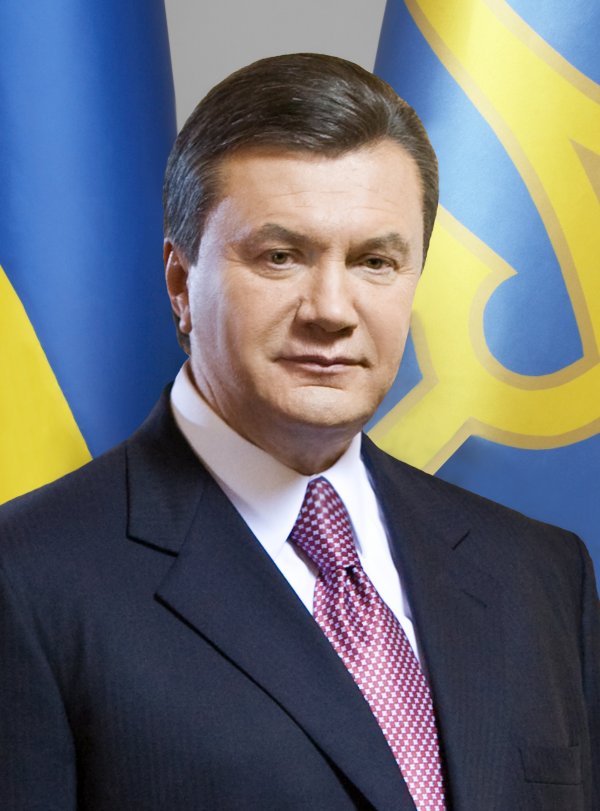
Ousted Ukrainian President Viktor Yanukovych
However, because the Ukraine “regime change” in 2014 was partly orchestrated by U.S. and E.U. officials around the propaganda theme that elected President Yanukovych was corrupt – he had that sauna, after all – the continued corruption in the post-coup regime has been a rarely acknowledged, inconvenient truth. Indeed, some business people operating in Ukraine have complained that the corruption has grown worse since Yanukovych was overthrown.
Yet, only occasionally has that reality been allowed to peek through in the mainstream U.S. media, which prefers to deny that any “coup” occurred, to blame Russia for all of Ukraine’s problems, and to praise the post-coup “reforms” which targeted pensions, heating subsidies and other social programs for average citizens.
One of the rare deviations from the happy talk appeared in The Wall Street Journal on Jan. 1, 2016, observing that “most Ukrainians say the revolution’s promise to replace rule by thieves with the rule of law has fallen short and the government acknowledges that there is still much to be done.”
Actually, the numbers suggested something even worse. More and more Ukrainians rated corruption as a major problem facing the nation, including a majority of 53 percent in September 2015, up from 28 percent in September 2014, according to polls by International Foundation for Electoral Systems.
So, as the hard lives of most Ukrainians got harder, the elites continued to skim off whatever cream was left, including access to billions of dollars in the West’s foreign assistance that has kept the economy afloat.
There was, for instance, the case of Finance Minister Natalie Jaresko, who was regarded by many pundits as the face of Ukraine’s reform before departing last April after losing out in a power struggle.
Yet, Jaresko was hardly a paragon of reform. Prior to getting instant Ukrainian citizenship and becoming Finance Minister in December 2014, she was a former U.S. diplomat who had been entrusted to run a $150 million U.S.-taxpayer-funded program to help jump-start an investment economy in Ukraine and Moldova.
Jaresko’s compensation was capped at $150,000 a year, a salary that many Americans – let alone Ukrainians – would envy, but it was not enough for her. So, she engaged in a variety of maneuvers to evade the cap and enrich herself by claiming millions of dollars in bonuses and fees.
Ultimately, Jaresko was collecting more than $2 million a year after she shifted management of the Western NIS Enterprise Fund (WNISEF) to her own private company, Horizon Capital, and arranged to get lucrative bonuses when selling off investments, even as the overall WNISEF fund was losing money, according to official records.
For instance, Jaresko collected $1.77 million in bonuses in 2013, according to a WNISEF filing with the Internal Revenue Service. In her financial disclosure forms with the Ukrainian government, she reported earning $2.66 million in 2013 and $2.05 million in 2014, thus amassing a sizeable personal fortune while investing U.S. taxpayers’ money supposedly to benefit the Ukrainian people.
It didn’t matter that WNISEF continued to hemorrhage money, shrinking from its original $150 million to $89.8 million in the 2013 tax year, according to the IRS filing. WNISEF reported that the bonuses to Jaresko and other corporate officers were based on “successful” exits from some investments even if the overall fund was losing money.
Though Jaresko’s enrichment schemes were documented by IRS and other official filings, the mainstream U.S. media turned a blind eye to this history, all the better to pretend that Ukraine’s “reform” process was in good hands. [See Consortiumnews.com’s “How Ukraine’s Finance Minister Got Rich.”]
Biden’s Appeal
Worried about the continued corruption, Vice President Joe Biden, who took a personal interest in Ukraine, lectured Ukraine’s parliament on the need to end cronyism.
But Biden had his own Ukraine cronyism problem because three months after the U.S.-backed overthrow of the Yanukovych government Ukraine’s largest private gas firm, Burisma Holdings, appointed his son, Hunter Biden, to its board of directors.
Burisma a shadowy Cyprus-based company also lined up well-connected lobbyists, some with ties to Secretary of State John Kerry, including Kerry’s former Senate chief of staff David Leiter, according to lobbying disclosures.
As Time magazine reported, “Leiter’s involvement in the firm rounds out a power-packed team of politically-connected Americans that also includes a second new board member, Devon Archer, a Democratic bundler and former adviser to John Kerry’s 2004 presidential campaign. Both Archer and Hunter Biden have worked as business partners with Kerry’s son-in-law, Christopher Heinz, the founding partner of Rosemont Capital, a private-equity company.”
According to investigative journalism inside Ukraine, the ownership of Burisma has been traced to Privat Bank, controlled by the thuggish billionaire oligarch Ihor Kolomoysky, who was appointed by the U.S.-backed “reform” regime to be governor of Dnipropetrovsk Oblast, a south-central province of Ukraine (though Kolomoisky was eventually ousted from that post in a power struggle over control of UkrTransNafta, Ukraine’s state-owned oil pipeline operator).
In a speech to Ukraine’s parliament in December 2015, Biden hailed the sacrifice of the 100 or so protesters who died during the Maidan putsch in February 2014, which ousted Yanukovych, referring to the dead by their laudatory name “The Heavenly Hundred.”
But Biden made no heavenly references to the estimated 10,000 people, mostly ethnic Russians, who have been slaughtered in the U.S.-encouraged “Anti-Terror Operation” waged by the coup regime against eastern Ukrainians who resisted Yanukovych’s violent ouster. Nor did Biden take note that some of the Heavenly Hundred were street fighters for neo-Nazi and other far-right nationalist organizations.
But after making his sugary references to The Heavenly Hundred, Biden delivered his bitter medicine, an appeal for the parliament to continue implementing International Monetary Fund “reforms,” including demands that old people work longer into their old age.
Biden said, “For Ukraine to continue to make progress and to keep the support of the international community you have to do more, as well. The big part of moving forward with your IMF program — it requires difficult reforms. And they are difficult.
“Let me say parenthetically here, all the experts from our State Department and all the think tanks, and they come and tell you, that you know what you should do is you should deal with pensions. You should deal with — as if it’s easy to do. Hell, we’re having trouble in America dealing with it. We’re having trouble. To vote to raise the pension age is to write your political obituary in many places.
“Don’t misunderstand that those of us who serve in other democratic institutions don’t understand how hard the conditions are, how difficult it is to cast some of the votes to meet the obligations committed to under the IMF. It requires sacrifices that might not be politically expedient or popular. But they’re critical to putting Ukraine on the path to a future that is economically secure. And I urge you to stay the course as hard as it is. Ukraine needs a budget that’s consistent with your IMF commitments.”
However, as tough as it might have been for Ukraine’s parliament to slash pensions, reduce heating subsidies and force the elderly to work longer, that political sacrifice did not appear to extend to the officials making financial sacrifices themselves.
Ukrainian Prime Minister Declares Over $1Mln in Cash – Anti-Corruption Agency
Sputnik – 29.10.2016
Ukraine’s Prime Minister Volodymyr Groysman has declared over $1 million in cash, with an annual salary of $3,000, according to the electronic declaration, which was announced on the site of the National Agency for Prevention of Corruption on Friday.
The prime minister declared cash assets of 2.4 million hryvnia ($94,000), 460,000 euros ($504,000) and $870,000 in cash. Groysman’s wife declared 1.6 million hryvnia and $372,000 in cash.
Groysman’s salary for last year amounted to just over 77 thousand hryvnia ($3,000).
The electronic declaration also listed four plots of land, the total area of which amounts to over 9,000 square meters, two houses and two apartments.
The launch of the online system declaring the assets of Ukrainian officials is one of International Monetary Fund’s (IMF) conditions for its continued cooperation with Kiev. The system was supposed to have been launched on August 15, but the State Special Communication Service of Ukraine refused its certification, and it was launched in full from September 1. Government officials are required to file a declaration before the end of October.
Ukraine heavily relies on foreign aid to support its economy and to pay debts amid the ongoing armed conflict with independence supporters in the country’s southeast.
Sadly, Nobody Likes America These Days
By Jean Perier – New Eastern Outlook – 23.10.2016
There can be no denial that over the last couple of years, anti-American sentiment across the globe has been on the rise. And even though Western corporate media sources are trying to push the blame on Russian journalists, they alone could hardly ever achieve such an effect.
Today a typical list of accusations against the US includes its invasions of Afghanistan, Iraq, and Libya, and also includes claims that Washington has been sponsoring terrorists as well as exporting weapons to the countries sponsoring terrorists.
The US presidential campaign, riddled with scandals and delusional statements, has clearly demonstrated that something fundamental has gone wrong with “American style-democracy.”
As it’s been noted by The American Spectator, voters these days see no equality before the law in America. What we’ve witnessed in recent years is incompatible with the values of the Founding Fathers who promoted the idea of inalienable rights. The backlash among voters has been illustrated during this presidential election There is growing resentment of the “political class,” and an increased distrust -. and even fear – of government. Unfortunately, there appears to be ample justification for this feeling. Fear of corruption in government far outpaced fears of terrorism, financial insecurity, and even illness or death of a loved one. Many Americans now see government not as the keepers of justice and peace, not as servants of the people, but as a corrupt entity and menace.
Such frustration is further aggravated by the dissatisfaction of 41% of the US population with the way the Obama administration is addressing the most pressing problems of the population, as it has been shown by the latest Gallup poll. In addition, growing anti-American sentiments in the regions affected by Washington’s aggressive policies (in particular, in the Middle East, Asia, Latin America), resulted in nearly universal hatred of the United States even where people originally had sympathy towards Washington.
A vivid example of this development is Ukraine, which the White House has been governing over since 2014 as if it were an additional state, appointing the government while making all the important decisions regarding this nation’s fate.
According to the self-exiled Ukrainian oligarch Dmitry Firtash who has found refuge in Austria, “the Ukrainians will soon realize that all of their troubles – bitter taxes, unemployment, and all the reforms that failed have been brought upon them by the United States. And when they do, there will be no nation that will hate America more than Ukraine in the whole world. It’s only a matter of time. “
The international human rights organization known as Human Rights Action (HRA) has recently published a report that displayed migration numbers that shocked Kiev. Since the beginning of this year, more than three million Ukrainian citizens have moved to Russia. The vast majority of those fleeing their homeland are migrant workers wishing to obtain a work permission in Russia. Experts predict that by the middle of 2017 the number of people leaving Ukraine will increase by at least 50%.
However, those leaving Ukraine are not just migrant workers. The protracted armed crackdown on the ethnic Russian population in the east of the country has become a breeding ground for all sorts of militants, that are now trying to escape the ever-deepening economic, social and financial crisis in Ukraine. These people have been disillusioned by the West and are willing to do all kinds of “work” for various extremist and terrorist organizations for even moderate pay. These militants are now capable of launching all sorts of terrorist attacks both in the US and in Europe.
They won’t find it difficult to get their hands on all sorts of weapons either, since Kiev forces have been illegally shipping everything they can sell to terrorists to the most distant parts of the world, as has been reported by various Western media sources, including Reuters.
Over the past year, the Internet has been filled with reports that ISIS has been infiltrating the territory of Ukraine, where terrorist groups have been establishing training camps and storage facilities while actively recruiting new members. This fact, in particular, was stressed by the representatives of the Crimean administration at a meeting with 11 French parliamentarians, led by a deputy of the National Assembly, Thierry Mariani, last July. In a situation with Ukraine, a special role in supporting terrorists played by local militant organizations, mainly consisting of the Crimean Tatars, who, under the leadership of Mustafa Dzhemilev and Lenur Islyamova, are using the connivance of lawlessness that reigns in Ukraine today to establish a new wing of ISIS.
Featured Video
Dan Dicks with James Corbett on Solutions Watch
or go to
Aletho News Archives – Video-Images
From the Archives
Secret document reveals plans for civil war in Lebanon, Israeli false flags, and invasion
By Randi Nord | Geopolitics Alert | April 5, 2019
Beirut – During his visit with US Secretary of State, Mike Pompeo, Lebanese President Michael Aoun reportedly received a US-Israeli document detailing plans for creating a civil war in Lebanon with covert false flag operations and possible Israeli invasion.
Although the source of the document is Israeli and created in partnership with Washington, no one knows who presented it to Aoun. The Lebanese TV station, Al-Jadeed, initially reported the document on Lebanese TV and a video on its website. Geopolitics Alert translated the report for this article. … continue
Blog Roll
 Aletho News
- Sheikh al-Asadi warns of Iraqi government compliance with US demands
- How to MAKE THE CONSPIRATORS PAY for their crimes! Dan Dicks with James Corbett on Solutions Watch
- There’s a drought in academia: A drought in honest research on the subject of drought and other weather extremes
- Department of War Awards $20.7 Billion Contract to Raytheon for Air-to-Air Missiles
- ‘Distance yourselves from Israel’: IRGC urges US population to question govt policies
- America’s Greenland deal has a radioactive backstory
- The RAF Fairford ‘terror plot’: Unpacking escalation in the UK echo-chamber
- EU Council Advances Chat Control 2.0 Scanning Proposal
- Ex-Greek MEP files complaint against Israeli spyware firm over alleged Pegasus surveillance
- Troubling ideas throughout the Torah, Talmud, Mishneh Torah and Tanya
- If Americans Knew
- New Report: “Scholasticide and Genocide in Gaza: Assessment, Testimonies and Legal Analysis”
- Ex-Biden officials are desperate for a Gaza scapegoat
- Israeli “settlers” Invade Al-Aqsa; Pour Boiling Water on 75-Year-Old
- Israel Has Kidnapped Another American Teenager
- US arms sales to Israel worth $21.6 billion in 20 months
- Three Palestinians Killed in Israeli Attacks on Gaza
- Revealed: German “Anti-Semitism Expert” Driving Crackdown on Palestine Solidarity is Former Israeli Spy
- Egypt’s Warning to Israel Before Oct 7
- Israel’s siege signals another cruel winter for 1.8 million Gazans – Daily Update
- Netanyahu Asked UAE Leader to Deny Report on Oct. 7 Warning in Secret Visit, Sources Say
- No Tricks Zone
- Two More Paleo Reconstructions Affirm Meters-Higher Sea Levels Across Ireland, Brazil 7000-6000 Years Ago
- New Study: Earth And Venus Surface Warmth Largely Explained By Convection And Lapse Rate, Not CO2 Or Radiation
- 2025 Nature Paper Claiming Worsening Global Drought Gets RETRACTED …Heavily Flawed
- New Study: ‘Global Drought Shows No Detectable Recent Acceleration Under Climate Warming’
- Economic Masterminds: German Socialists Suggest Taxing Productivity Gains Stemming From Using AI
- The South China Sea Has Not Been Cooperating With The Climate Change Narrative
- Energy Crisis: Germany Enters Heating Season With Historically Low Gas Reserve Fill Levels
- New Study: The Antarctic Ice Sheet Gained Mass From 2020-2024 Due To Staggering Snow And Ice Accumulation
- Study: Ocean Heating Rates From Thousands Of Years Ago ‘Dwarf’ Modern Ocean Heating Rates
- Climate Extremists Target, Attack Large-Scale Power Grid Infrastructure In Germany!

