The Ukrainian economy, weakened by war, needs additional funding from sources beyond the International Monetary Fund (IMF) to stay afloat, the fund’s head Christine Lagarde has said.
The IMF’s December estimate of the cash needed has turned out to be insufficient following the continued conflict in the country.
“Additional funding will have to come” after the IMF reviews the current bailout strategy, Lagarde said at a Bretton Woods Committee event on the sidelines of the annual IMF and World Bank meetings of finance ministers and central bankers.
“To assume that the additional funding will have to come from the IMF, I think is rather far-fetched,” she said. “If the economy has to be restored and stability maintained, money will have to come from multiple sources.”
Initially it was planned that $30 billion in aid, of which the IMF pledged to allocate $17 billion, would be enough to restore the economy. The April bailout was predicated on the expectation that the conflict in eastern Ukraine would end in the early autumn.
The IMF’s review updated last month, showed that the country’s financing needs could rise by $19 billion if the civil war continues.
Despite the World Bank’s forecast that country will likely be in a deep recession until at least 2016, the IMF projects the economy expanding next year.
October 10, 2014
Posted by aletho |
Economics | Economy, Ukraine |
Leave a comment
Only a minority of British, French and German citizens think that the EU should be involved in the settlement of the Ukrainian crisis, while most agreed that crimes against humanity should be investigated first, a new Rossiya Segodnya/ICM poll has found.
Less than a half – 46 percent – of respondents from the three member states support EU involvement in the ongoing crisis in Ukraine, said the ICM poll commissioned by Russia’s Rossiya Segodnya, the state news agency reported Thursday. Altogether, 44 percent of respondents said they support non-involvement.
A majority of Germans – 58 percent – are against EU participation in the crisis, while 35 percent of French citizens are against it. In the United Kingdom, 40 percent are against the idea.
A majority of the British respondents – 54 percent – backed their government’s participation, with 48 percent of French citizens and 36 percent of Germans supporting involvement.
The poll suggests that it is mainly young people between the ages of 18 and 34 that support their government’s participation in the Ukrainian conflict. In Britain, the idea appeals to 62 percent of young respondents, while in France and Germany to 55 percent.
Seniors are most aware of the tragic events and hostilities that took place in Ukraine, the poll shows. In the UK, almost all respondents over 65 are keeping up with events in Ukraine, while 85 percent of young people from 25-34 who participated in the poll were unaware of developments there. In France, the figures for the same age groups are 93 percent and 67 percent, respectively.
The poll also revealed that a larger number of men from all three countries support direct involvement, while women are in the minority.
Most of the respondents said that the “EU should play its role in the regulation of the situation in Ukraine” mainly by “supplying humanitarian aid and a peacekeeping mission,” Rossiya Segodnya reported. Seventy-six percent of those questioned in France, Germany and UK are in favor of the aid, while 51 percent support the peacekeeping mission.
A few respondents backed the idea of financial aid in the form of loans to the Kiev authorities, while only 13 percent back the idea of sending military supplies to Ukraine, with Britain the most enthusiastic.
The EU should be involved in conducting investigations into war crimes during the Ukrainian conflict, most of those polled said. Seventy-six percent of Britons, 68 percent of the France and 54 percent of Germans backed the EU getting involved.
Those who supported the idea said that their governments should primarily look into crimes against humanity, with the UK almost unanimous on the issue.
People were sensitive on the issue of the abduction and murder of journalists, which was rated the second most outrageous crime in the conflict. A total of 79 percent of respondents said that the Malaysia Airlines MH17 crash should be investigated.
The Ukrainian crisis began last year with the so-called Maidan protests in central Kiev, which was followed by a coup in February and a bloody war in eastern Ukraine from April onward. Since the military conflict began, more than 3,500 people have been killed and almost 8,200 injured, according to UN figures.
October 10, 2014
Posted by aletho |
Militarism | EU, France, Germany, UK, Ukraine |
Leave a comment
In an ominous sign that the war in Ukraine is set to further escalate, US state department official Victoria Nuland arrived in Kiev where she met with senior members of the Western-backed regime.
In recent days the ceasefire brokered on September 5 has come under intense pressure as Kiev military forces have stepped up their barrage of the eastern city of Donetsk, with several civilian casualties reported almost on a daily basis.
As civilian homes burn in Donetsk, the Kiev regime has also begun openly talking about resuming its war footing by “raising combat readiness” and mobilising new army units toward the eastern Donbass regions, where it is trying to suppress a pro-independence movement in the self-declared People’s Republics of Donetsk and Luhansk.
For the past month, the Kiev regime has been talking out of both sides of its mouth. At times it has been declaring commitment to a ceasefire brokered by Russian President Vladimir Putin and the Organisation for Security and Cooperation in Europe (OSCE). At other times, hardliners in the regime have been warning that there was no such truce in practice, and that it was on the verge of an all-out war with Russia.
All the while, the putative ceasefire has been in tatters largely because Kiev’s forces have refused to withdraw from the conflict lines and continued to shell civilians centres.
Now the Kiev President Petro Poroshenko has flipped to a strident war rhetoric. In a televised appearance this week, the former industry tycoon had swapped his tie and suit for military uniform, and was warning that forces under his command were ready to use “modern fighting techniques”.
Poroshenko said that “Ukraine has transferred its economy to a military footing and will provide everything possible for the Ukrainian army to be stronger”. This while his bankrupt country owes Russia $5.3 billion in unpaid gas bills.
Last week his hardline Prime Minister Arseniy Yatsenyuk declared that Kiev’s military had been replenished with new equipment and winter gear.
The timing of this renewed militarism across the board in Kiev’s political leadership – together with increasing violations of the ceasefire in the east – seems more than coincidental with the arrival of eminence grise Victoria Nuland.
Nuland, who is Assistant Secretary of State to John Kerry, hasn’t been in Kiev since March. For the past seven months, she has taken a noticeably low profile with regard to Ukraine. Her absence was no doubt aimed at deflecting from her earlier controversial involvement in overseeing the CIA-backed coup on February 22, when the elected government of then President Viktor Yanukovych was deposed by the fascist cabal headed up by Yatsenyuk.
Two weeks before that coup, Nuland had been caught in a private phone call with the US ambassador to Ukraine, Geoffrey Pyatt, plotting on the shape of the new regime, with Yatsenyuk nominated as the point man. Nuland was also caught disparaging the European Union with expletives, in a clear signal that Washington was taking the driving seat to install the new regime, headed up by their man “Yats”.
Yatsenyuk’s Fatherland Party and the neo-Nazi Svoboda party, with its Right Sector stormtroopers, have dominated the regime’s anti-Russia policies ever since. Following a secret visit to Kiev in April by CIA director John Brennan, the regime embarked on a massive military offensive to suppress dissident ethnic Russian populations in the east of the country who were refusing to recognise the legitimacy of the US-backed coup.
That offensive – dubbed an anti-terror operation – has been largely under-reported by Western news media, even though it has resulted in more than 3,600 deaths and up to one million refugees. Most of the casualties have been civilian, with a Russian Investigative Committee reporting last week that at least 2,500 people have been killed from indiscriminate shelling of civilian centres in Donetsk and Luhansk by Kiev forces. The latter comprise regular army units, as well as neo-Nazi paramilitaries belonging to the so-called National Guard and various private militia (death squads) run by pro-Kiev oligarch figures, such as Igor Kolomoisky.
Both Washington and Brussels have obfuscated this terror campaign by affecting to give it legality by referring to the Kiev regime as the “government of Ukraine”. Washington and Brussels have also amplified Kiev’s diversionary propaganda accusing Russia of covert aggression and destabilising the Donbass regions. Moscow has consistently denied any involvement; and Western governments, the Kiev regime and NATO have not produced a shred of verifiable proof to support their tendentious claims against Russia.
Russia’s President Putin and the OSCE chairman, Didier Burkalter, who is also the Swiss president, this week reiterated that all sides in the Ukrainian conflict must abide by the terms of the ceasefire signed in Minsk on September 5.
But it seems that Kiev is now moving to dispel any pretence of recognising that ceasefire.
Since the truce was called – and apparently signed up to by Kiev’s President Poroshenko – the pro-independence Russian-speaking militia in Donbass have claimed that Kiev’s forces were only using the lull in violence as an opportunity to regroup.
Speaking on September 8, Donetsk People’s Republic deputy premier Andrei Purgin said: “They are doing what was impossible without truce conditions. All the movements of convoys would have been impossible. During the truce, convoys of combat vehicles are reaching destinations and preparing for attacks.”
Poroshenko’s public role in all this seems to have been to give an outward impression of adhering to a cessation and paving the way for political dialogue with the dissident regions.
However, that impression has to be set against continual breaches of the ceasefire and mounting civilian casualties by his forces, relentless anti-Russian rhetoric from the hardliners like Yatsenyuk, and the supply of military aid to the Kiev regime from Washington – the last tranche worth $53 million was announced while Poroshenko was being feted in the White House three weeks ago.
This week on the day that Nuland landed in Kiev, the regime announced what many suspected all along – that it was merely using the month-old ceasefire as a tactical launchpad to redouble its military operations.
Andrey Lysenko, Kiev’s National Defence and Security Council spokesman, said on Monday: “We have managed to upgrade the equipment currently in service, to get new armaments, and to reorganise and retool the defence industries that manufacture armaments and repair hardware.” He added: “We have also managed to regroup our forces, to carry out deep reconnaissance and to gather more information about the enemy. We have completed the third wave of mobilisation. We have replaced the units that needed that, we gave them a chance to have some rest after heavy fighting and to get back to normal”.
By “normal”, Lysenko means “terrorising civilians in eastern Ukraine”.
This underscores what Poroshenko has in recent days said about “the economy moving to a war footing”.
The sinister sign is that the Kiev regime, including the “Candy King” Poroshenko, is now realigning to an all-out belligerent policy toward the people of eastern Ukraine, and by extension, toward Russia itself.
The long overdue visit to Kiev this week by Victoria Nuland – Washington’s Ukraine hawk – carries the foreboding imprimatur of US-backed war escalation.
October 8, 2014
Posted by aletho |
Deception, Militarism, Progressive Hypocrite | Ukraine, United States, Victoria Nuland |
Leave a comment
In his speech before the meeting of the 69th session of the United Nations General Assembly on September 24, U.S. President Barack Obama resurrected yet another turn of phrase used most often by those wishing to make the case for dropping bombs on people and things.In an effort to justify U.S.-led airstrikes in Syria, Obama declared that the militant organization known as ISIS (or ISIL or IS, the ‘Islamic State’) not only commits the “most horrific crimes imaginable,” but is so vicious, violent, and uniquely brutal that it “forces [the international community] to look into the heart of darkness,” adding later:
No god condones this terror. No grievance justifies these actions. There can be no reasoning, no negotiation, with this brand of evil. The only language understood by killers like this is the language of force. So the United States of America will work with a broad coalition to dismantle this network of death.
The rhetoric used by Obama to defend yet another illegal and ill-conceived American air campaign in the Middle East – an undefined, unconstitutional operation designed to inevitably expand and escalate – is well-worn. The very same word salad, notably the “language of force” line, has been routinely served up to justify lethal action against a seemingly intractable foe and it puts the onus on the target of that aggression for bringing such violence upon itself: if they weren’t such barbarians, we too wouldn’t have to resort to barbarism.
So, bombs away. After all, military action was our only choice, we are told, despite the fact that the declared targets of our artillery pose no direct or imminent threat to the United States. The irrational and bloodthirsty comprehend only the heat-seeking and bunker-busting. Diplomacy is impossible, thus destruction is imperative.
In his 2005 book, Writing the War on Terrorism: Language, Politics and Counter-terrorism, Richard Jackson, deputy director at the National Centre for Peace and Conflict Studies at the University of Otago in New Zealand, explored this very kind of political messaging:
One of the most noticeable and ubiquitous features of the language of counter-terrorism is its invariable appeal to identity: terrorists are endlessly demonised and vilified as being evil, barbaric and inhuman, while America and its coalition partners are described as heroic, decent and peaceful – the defenders of freedom.
“At its most basic level, the language used by officials is attempt to convince the public that a ‘war’ against all forms of terrorism is necessary, reasonable, inherently good and winnable,” he added.
Over the past few decades, whenever bombing Iraq is on the horizon, we’ve heard much of the same from government officials and their pro-war mouthpieces in the media and think tank establishment.
In late 1990, Martin Indyk, founder and executive director of the AIPAC-launched Washington Institute for Near East Policy (WINEP) and later senior advisor to presidents Bill Clinton and Barack Obama, wrote, “Saddam Hussein has demonstrated that he only speaks and understands the language of force.”
In 1991, Maine Representative Olympia Snowe supported the authorization of Operation Desert Storm due to her determination that successfully confronting Saddam Hussein required “a credible military threat be maintained against a brutal aggressor who only understands the language of force.”
Just days before Bill Clinton’s first inauguration as president in January 1993, the George H.W. Bush administration was again bombing Iraq. Utah Senator Orrin Hatch insisted, “Unfortunately, Saddam Hussein knows only the language of force. President Bush has delivered a message that Saddam is certain to understand,” adding, “The air strikes are not enough.”
In September 1996, when the Clinton administration itself was routinely bombing Iraq, Secretary of State Warren Christopher expressed his frustration with Russian condemnation of such attacks. He told the press he was “disappointed” the Russians “don’t understand as we do that the only language that Saddam understands is the language of force.” This became a go-to phrase in the administration’s talking points.
Speaking to members of the group “Seeds of Peace” on September 3, 1996, Christopher made arguments eerily reminiscent of what we’ve heard recently with regard to Obama’s current operation:
The record is, unfortunately, all too clear. Saddam has threatened and invaded his neighbors, developed and used weapons of mass destruction, sponsored countless acts of terrorism, and for the last two decades he has relentlessly persecuted the Kurds and the Shiites. When Saddam tests the will and resolve of the international community, our response must be and will be forceful and immediate.
Time and again we’ve seen that the United States leadership is essential to provide that response. Military action that the United States launched today has made it clear that Saddam will pay a price whenever he engages in aggression. We are answering in the only language he understands, the language of force.
Later that month, on September 12, 1996, former Secretary of State James Baker testified before the Senate Armed Services Committee and encouraged more military attacks, saying, “Iraq under Saddam Hussein only understands force. And more to the point, it seems only to understand overwhelming force. When we respond in a situation like this, I do not believe that it needs to be limited so as to be proportionate to the provocation.”
In their book about the 2003 invasion of Iraq and subsequent occupation, New York Times correspondent Michael R. Gordon and former Marine lieutenant general Bernard Trainor recount the words of a high-ranking officer of the U.S. Army’s Fourth Infantry Division sent to attack the city of Tikrit. “The only thing these sand niggers understand is force,” the officer remarked, “and I’m about to introduce them to it.” General Ray Odierno, who led the 4th ID’s attack, is currently the U.S. Army’s Chief of Staff.
The messaging is clear. As Richard Jackson notes, “In this most rudimentary sense, the language accompanying the ‘war on terrorism’ is a public relations or propaganda exercise; it is designed to ‘sell’ the policies of counter-terrorism.” In order to build support for military action, the public is repeatedly told that “the terrorists are inhuman barbarians who deserve to be eradicated from civilised society; the threat posed by terrorism is catastrophic and it is only rational to respond with all due force; and the American-led war against terrorism is by definition a good and just war.”
Historically, however, this rhetoric has not been reserved solely for justifying American military action against predominately Muslim countries in the Middle East. Nor has this phrase been used only by one side of the conflict.
In a video message allegedly made and distributed on October 20, 2001, al-Qaeda leader Osama bin Laden declared, “Bush and Blair… don’t understand any language but the language of force. Every time they kill us, we kill them, so the balance of terror is achieved,” according to a declassified report released by British intelligence in November 2001.
Al-Qaeda leader Ayman Al-Zawahiri, in a 2003 sermon, reportedly announced, “The Crusaders [Americans] and the Jews only understand the language of force, and they only understand the return of coffins and destroyed interests and burned towers and destroyed economy.”
In a statement claiming responsibility for simultaneous suicide bombings that killed 155 people in Baghdad on October 25, 2009, an anti-occupation, al-Qaeda linked group known then as the Islamic State in Iraq explained, “Among the chosen targets were the ministry of oppression known as the Ministry of Justice and the Baghdad provincial assembly… The enemies only understand the language of force.”
Prior to the beheading of American journalist James Foley, on August 12, 2014, ISIS reportedly sent an email to Foley’s family announcing their intention to murder him in retaliation for U.S. airstrikes and delivering a wider message to the American government and people. Claiming to have provided “many chances to negotiate the release of your people via cash transactions” and “prisoner exchanges,” ISIS wrote that it was clear “this is NOT what you are interested in.”
The email went on: “You have no motivation to deal with the Muslims except with the language of force, a language you were given in ‘Arabic translation’ when you attempted to occupy the land of Iraq! Now you return to bomb the Muslims of Iraq once again, this time resorting to Arial [sic] attacks and ‘proxy armies’, all the while cowardly shying away from a face-to-face confrontation!”
“You do not spare our weak, elderly, women or children so we will NOT spare yours!” the email warned. “You and your citizens will pay the price of your bombings!”
In his speech before the United Nations last week justifying expanded airstrikes against ISIS, Obama thus recycled the very phrase used by ISIS to justify its own violence.
Still, the phrase has even older roots.
Zionism and Its Malcontents
In 1891, after one of his frequent travels through Palestine, Ahad Ha’am, the Ukrainian-born Jewish essayist known widely as the founder of cultural Zionism, lamented that Zionist settlers acted like “the only language the Arabs understand is that of force” and “behave towards the Arabs with hostility and cruelty, trespass unjustly upon their boundaries, beat them shamefully without reason and even brag about it, and nobody stands to check this contemptible and dangerous tendency.”
This same, possibly apocryphal, formulation has been credited over the years to Israel’s first prime minister David Ben-Gurion, second prime minister Moshe Sharett, and IDF commander Raphael Petan, and is widely considered the immutable underlying assumption guiding racist, hawkish Israeli attitudes towards Arabs in general and Palestinians in particular.
This linguistic articulation of Zionist sentiment was already so prevalent prior to the establishment of the State of Israel that renowned political theorist Hannah Arendt turned the phrase on its head in her 1948 essay, “Peace or Armistice in the Near East?,” published two years later in the Review of Politics. “All hopes to the contrary notwithstanding,” she wrote, as the Nakba raged on, “it seems as though the one argument the Arabs are incapable of understanding is force.”
In February 1992, following the assassination of Hezbollah leader Sheikh Abbas Moussawi, killed in southern Lebanon in an Israeli airstrike along with his wife and five-year-old son, Israeli Defense Minister Moshe Arens boasted, “We’ve learned that terror organizations like Hezbollah only understand one language – the language of force.”
Two weeks after the start of the Second Intifada, when Israel had already fired 1.3 million bullets at Palestinian demonstrators in the West Bank and Gaza, a military spokesman justified Israel actions, saying that force “will be the only language they understand.”
Prior to Israeli parliamentary elections in 2009, supporters of the fascistic Avigdor Lieberman enthusiastically endorsed this narrative. “He’s the kind of leader we’ve been waiting for, he knows how to talk to Arabs in their own language, the language of force,” an Israeli woman who resides in a town close to the border with Gaza told the press.
Predictably, those opposed to Israel policies of colonialism, annexation, occupation, and military aggression have also resorted to such rhetoric. “Our enemy knows only the language of force and negotiations are useless,” Palestinian officials have longed declared. In 1998, a resident of the Jabaliya refugee camp in Gaza said this of Israeli leadership: “They only understand the language of force, not of peace.” A decade later, a Palestinian professor in Gaza said that same of Hamas.
From Stalin to Putin
While the “language of force” has long been used in the West to describe the supposed base nature and unsophisticated lack of humanity of the savage “Oriental” – a colonial, supremacist discourse popularized all the more after the attacks of September 11, 2001 – this discursive process has not been reserved for Arab or Muslim targets alone.
In his famous March 1946 “Iron Curtain Speech,” Winston Churchill expressed his conviction that, for Soviet Russia and its Communist satellites, “there is nothing for which they have less respect than for weakness, especially military weakness.” Thus, he reasoned, “Western Democracies” must “stand together” lest “they become divided or falter in their duty and if these all-important years are allowed to slip away then indeed catastrophe may overwhelm us all.”
68 years later, speaking at a Center for Strategic and International Studies forum in March 2014, New York Times columnist Roger Cohen paraphrased Churchill’s admonition, saying of Russian president Vladimir Putin that “the language he understands is force” and warning that, “unless there is a strong response, and a united response above all,” to Russian actions in Crimea and eastern Ukraine, “from the United States and Europe together to this, and a reassertion of the transatlantic alliance and NATO, then we could be heading in a very worrying direction.”
In May 2014, prior to his election as new Ukrainian president, billionaire confectionery magnate Petro Poroshenko stated that, in order to deal with pro-Russian separatists — whom he called “terrorists” — “we should find out the right language they understand, and that would be the language of force.”
Vietnam
On April 19, 1965, as American bombs fell in Vietnam, conservative columnist Russell Kirk wrote, “Like the Nazis, the Asiatic Communists prefer guns to butter,” and accused North Vietnamese leader Ho Chi Minh of aggressive “conquest”:
At this stage of affairs, only effective military resistance and retaliation can dissuade Ho Chi Minh from pursuing the war with increased vigor. The language of force, indeed, Communists understand.
General William C. Westmoreland, commander of U.S. forces in Vietnam at the time of the My Lai Massacre, and soon-to-be Army Chief of Staff, often and openly maintained that “meaningful force” was “the only language they [the North Vietnamese] understood.”
As late as March 1975, after nearly all American troops had been withdrawn from the conflict, and following a meeting with President Gerald Ford, the then-retired Westmoreland told journalists that “the culprit in this whole thing is Hanoi,” adding, “The only language Hanoi understands is the language of force and I think it’s too bad that we couldn’t again mine Haiphong harbor and that the President doesn’t have authority to use tactical air and B52 strikes to hit the Communist supply lines.”
Six weeks later, Saigon fell to the North Vietnamese Army.
Nicaragua
On the floor of the United States Congress on February 4, 1988, long-serving South Carolina Senator Ernest Hollings advocated for increased military aid sent to the Contras in Nicaragua. Denouncing Congressional Democrats as “not committed to fight for anything” and “only willing to posture and talk,” Hollings declared that “there is no hope in Nicaragua without aid to the Contras.” Dismissing diplomacy, he bellowed, “Peace plans? The Marxists only understand the language of force.”
Later that year, in August 1988, Nicaraguan Contra founder and commander Enrique Bermúdez also made the case for continued military support from the U.S. government. “The only language the Sandinistas understand or respect is the language of force,” he insisted. “If the Sandinistas weren’t receiving massive assistance from the Soviet Union, Cuba and other communist countries, the Nicaraguan people wouldn’t have any need of foreign sources of support.”
Repeated Rhetoric
The ubiquity of the “language of force” line has rendered the phrase effectively meaningless, levied at one’s enemies in order to silence debate and promote military action.
The same was said of South Africa’s Apartheid regime in the 1980s. Croatian officials, Kosovar separatists, and New York Times columnists said the same of Serbian president Slobodan Milošević in the 1990s. It’s been said about the “leaders of the Axis of Evil,” it was said about Gaddafi and Yemeni president Ali Abdullah Saleh, and it is often said about Assad. It has been said about the Pakistani Taliban, the Somali militant group al-Shabab and the Nigerian Boko Haram.
The same rhetoric is used by tyrants as well to describe dissident, resistance, and revolutionary movements. For instance, in early February 2011, as Cairo’s Tahrir Square swelled with increasing demands for Egyptian dictator Hosni Mubarak’s resignation, a CNN report noted that the U.S.-backed leader had long “argued that Egypt had to adopt a tight security policy to combat terrorism; that the forces of political Islam do not understand anything but the language of force and a strong government grip.”
A year ago, in a September 20, 2013 article, David Sanger of the New York Times credited Obama’s economic warfare on Iran and threats of military action in Syria with restarting nuclear negotiations and, with the help of Russia, dismantling Assad’s chemical weapons. With regard to “President Bashar al-Assad of Syria, President Vladimir V. Putin of Russia, and Iran’s erratic mullahs,” Sanger wrote, Obama was experiencing “the long-delayed fruits of the administration’s selective use of coercion in a part of the world where that is understood.”
Speaking before the United Nations General Assembly two weeks later, Israeli Prime Minister Benjamin Netanyahu said that, “when it comes to Iran, the greater the pressure, the greater the chance” of successfully denying the nation their inalienable right to a domestic nuclear energy program.
For years, however, Iranian officials from three successive presidential administrations have consistently pushed back against this offensive presumption.
Back in June 2003, as U.S.-led pressure over Iran’s nuclear program increased, Iranian Foreign Ministry spokesman Hamid Reza Asefi warned that unjust accusations and illegal threats would strengthen the resolve of conservative elements in the government opposed to diplomacy with the West. “Excessive pressure on Iran would untie the hands of those who do not believe in dialogue,” he said, “Even those who favour constructive talks would not accept the language of force and threat.”
Two years later, as dubious allegations, wild predictions, and threats of unprovoked attack mounted, Iranian President Mahmoud Ahmadinejad addressed the nuclear issue in his first speech before the UN General Assembly on September 17, 2005. Western powers and Israel, he said,
have misrepresented Iran’s healthy and fully safeguarded technological endeavors in the nuclear field as pursuit of nuclear weapons. This is nothing but a propaganda ploy. The Islamic Republic of Iran is presenting in good faith its proposal for constructive interaction and a just dialogue. However, if some try to impose their will on the Iranian people through resort to a language of force and threat with Iran, we will reconsider our entire approach to the nuclear issue.
The next year, leading Iranian cleric Ahmad Khatami, a senior member of the Assembly of Experts, noted in a nationally broadcast weekly sermon, “Iran is favourable toward negotiations that are just, logical and without preconditions, but refuses the language of force,” adding, “Using the language of force with Iran is a foolish and clumsy attitude.”
“Resolutions, sanctions and threats have always made the issue more complicated,” Iran’s IAEA envoy Ali-Asghar Soltanieh said in late 2009 before a Board of Governor’s vote on a resolution focusing on the recently-announced uranium enrichment facility at Fordow. “We recommend the IAEA not to refer to such methods and use the language of logic rather than force.”
Throughout 2012, Ahmadinejad reaffirmed his assertion that Iran would never buckle to the West’s “language of force and insult.”
Earlier this year, following a round of nuclear negotiations in Vienna, Iranian Foreign Minister Mohammad Javad Zarif remarked that “the language of force has no place in foreign policy agendas” and that “any state using the ‘all-options-on-the-table’ rhetoric is actually taking outdated measures.”
In late 2009, then IAEA chief and Nobel Peace Prize laureate Mohamed ElBaradei concurred with this message. “[U]sing the language of force is not helpful. It leads to confrontation, to the other country taking counteraction,” he said in an interview with The Hindu. “It is better to forget the language of coercion and focus on trying to engage in dialogue.”
The Force of Language
Barack Obama, the drone president who defended perpetual war while receiving his own Nobel prize, disagrees. In his UN speech, Obama has again joined the ranks of those who justify the use of force through the abuse of weaponized language. The appeal to an adversary’s unprecedented “brand of evil” serves not to illuminate the challenges faced, but rather to obfuscate an informed comprehension of current affairs. It is the ultimate conversation-stopper.
As terrorism expert Richard Jackson explains:
… the language of good and evil suppresses questions: we don’t need to ask what the motivations or aims of the terrorists were if they are ‘evil,’ as ‘evil’ is its own motivation and its own self-contained explanation. Evil people do not have any politics and there is no need to examine their causes or grievances. Evil people do what they do simply because they are evil. Clearly, the use of this language is a way of encouraging quiescence and displacing more complex understandings of political and social events. As such, it qualifies as demagoguery by appealing to ignorance and arrogance through a distorted representation of the nature of evil.
As the United States and its coalition partners embark once again on an ill-fated, military misadventure in the Middle East, the recycled language used to promote such policies is predictable. And this time around, as in the past, it’s effectiveness is proven.
A FoxNews poll released this week shows that upwards of 78% of Americans approve of U.S. airstrikes against ISIS in Iraq and Syria, while 55% believe such action is “not aggressive enough.” Additionally, 57% of respondents are supportive of a ground operation if the bombing campaign proves ineffective or indecisive. A Washington Post/ABC News poll this week produced similar results.
Yet, beyond all the political rhetoric and domestic jingoism, for those on the ground in Iraq and Syria, including the dozens of civilians already killed in U.S. airstrikes against ISIS, bombs drop louder than words.
This article was cross-posted on Wide Asleep in America.
October 6, 2014
Posted by aletho |
Ethnic Cleansing, Racism, Zionism, Militarism, Timeless or most popular, War Crimes | Iraq, Nicaragua, Obama, Palestine, Syria, Ukraine, United States, Vietnam, Zionism |
Leave a comment
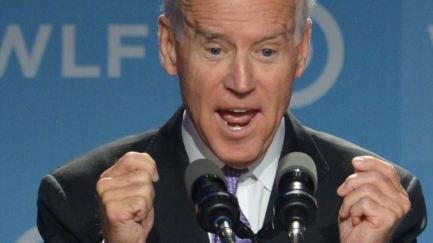
“Bazooka Joe”, as the American vice president Joe Biden is affectionately nicknamed, has managed to shoot Washington in both feet, with a couple of startling admissions.
The first shot was his blunt assessment of the US-led anti-terror coalition currently bombing Iraq and Syria. While the second blast from Bazooka Joe was his candid remarks about how Western sanctions against Russia are all down to American bullying.
Biden was speaking at Harvard University at the end of last week, and in his apparently impromptu responses to public questions he revealed more about Washington than he perhaps intended. That’s why Biden is known as a loose cannon. He tends to shoot his mouth off before aiming his thoughts.
First of all, the vice president spoke about Syria, and he stated plainly that America’s regional allies are the sponsors behind the IS terror network. Biden named names. He accused Saudi Arabia, Turkey and the United Arab Emirates of pouring money and weapons into the creation of IS, al-Nusra Front and various other al-Qaeda-type terror groups.
“Our biggest problem is our allies – our allies in the region were our largest problem in Syria,” said Biden.
Referring to Saudi Arabia, Turkey and the UAE, Biden said: “They were so determined to take down [Syrian President] Assad and essentially have a proxy Sunni-Shia war, what did they do? They poured hundreds of millions of dollars and tens, thousands of tons of weapons into anyone who would fight against Assad, except that the people who were being supplied were al-Nusra and al-Qaeda and the extremist elements of jihadis coming from other parts of the world.”
Of course, many informed observers have known this terror background already. Certainly the Syrian and Iraqi governments have been accusing these same US regional allies of doing just that – sponsoring terrorism. Nevertheless, America’s second-in-command has, in his own words, made a damning assessment of the cause behind the rise of terrorism threatening the region. This anti-terror coalition that Washington has dragooned has therefore no credibility. Just ask Biden.
Since Biden made this stupendous admission, he has been forced over the weekend to make an apology to Turkey’s President Recep Tayyip Erdogan. The latter furiously denied his country’s involvement with terror groups in Syria. But many people won’t be convinced otherwise and they will rightly see Biden’s prior candid viewpoint as closer to the truth.
Also on Syria, Biden made a second injurious disclosure: namely, that there is no such thing as a “moderate opposition” fighting the Syrian government.
The American VP said “the idea of identifying a moderate middle has been a chase America has been engaged in for a long time… there was no moderate middle because the moderate middle are made up of shopkeepers, not soldiers”.
The notion of “moderate” Syrian rebels is central to US President Barack Obama’s strategy of supposedly defeating the IS network. Along with the US-led aerial bombing campaign – costing $10 million a day, according to the Pentagon – the next phase is to allegedly train “vetted rebels” who will displace the extremists and take up the fight against the Damascus government of Bashar al-Assad. These “moderates”, if we believe Washington, are to be trained in Saudi Arabia – the terror sponsor – with $500 million of American taxpayer money, approved by the US congress.
But thanks to Joe Biden’s big mouth, we have confirmation that the notion of “moderates” is a charade, as many observers have been saying all along. What’s more, Washington knows it too.
The second damaging disclosure from Bazooka Joe was in connection to the crisis over Ukraine. Relations between Washington and Europe on the one hand and Russia on the other have sunk to their worse level since the end of the Cold War more than two decades ago. A major reason for the tensions is the slapping of economic sanctions on Russia, which in turn has responded with bans on Western imports.
Moscow’s retaliatory sanctions on agricultural products are going to hit Europe very painfully – much more than the US – as will any moves by Russia to reduce crucial gas supplies to EU countries.
What Joe Biden revealed is that the EU countries were reluctant to apply trade sanctions on Russia in the first place. Biden said that they “were embarrassed” into adopting the aggressive American agenda because Obama personally hectored European leaders.
What Biden is saying is that the crisis between Russia and the rest of Europe has been greatly exacerbated by American bullying. If it weren’t for Washington’s hostile attitude, then the crisis over Ukraine would likely be resolved diplomatically, without the provocative backdrop of a damaging trade war.
As winter approaches and hard-pressed European citizens find that they are paying dearly for American intransigence towards Russia, Biden’s words will come back to haunt with a vengeance.
It is known that many of the EU 28 member states have already deep misgivings about following the US-led sanctions. As the crisis takes more and more of an economic and social toll on Europe, the Americans will incur bitter resentment from ordinary citizens across the EU, which will in turn fragment the apparent Washington-Brussels coalition against Russia.
All in all, we owe Joe Biden a measure of gratitude for his big mouth.
It spares us a lot of time-wasting from speculation and conjecture.
All we have to do is recall his words from last week when he spelled out the fallacy of the US-led war on terror in the Middle East and the US-led new Cold War against Russia.
October 6, 2014
Posted by aletho |
Timeless or most popular | IS, Saudi Arabia, Syria, Turkiye, UAE, Ukraine, United States |
Leave a comment
A Swiss national working for the International Committee of the Red Cross (ICRC) was killed in Donetsk on Thursday as fighting continues between the Ukrainian military and pro-Russian separatist rebels.
Laurent DuPasqiue, 38, had been working with the Red Cross in Ukraine for six weeks before being killed by mortar fire. The aid organization said it has about 20 staff members working in Donetsk.
“We are deeply shocked by this tragic loss,” said ICRC Director of Operations Dominik Stillhart. “We understand that there were other civilian casualties in Donetsk today. Indiscriminate shelling of residential areas is unacceptable and violates international humanitarian law.”
Moscow accused Kiev of responsibility for the bombing of the local Red Cross office which killed the aid worker, located about 2 miles from the Donetsk airport where fighting rages on despite a cease-fire signed September 5.
“Kiev is unwilling to admit an evident thing: that district of Donetsk was controlled by the self-defense forces and was shelled from positions held by Ukrainian troops,” the Russian Foreign Ministry said in a statement. “We categorically condemn such actions that are a blatant violation of the international humanitarian law. We insist on an unbiased and thorough investigation into the killing of the ICRC worker and on bringing those guilty to justice.”
Ukrainian Foreign Minister Pavel Klimkin denied responsibility for the shelling, blaming instead local separatist rebels.
October 4, 2014
Posted by aletho |
Deception, War Crimes | Ukraine |
Leave a comment
At least 11 people have been killed and 40 others have been injured in Donetsk, where a school and a bus stop came under fire – reportedly from Ukrainian Army positions.
Two people are reported to have died at the school, and nine at the bus stop, according to Donetsk People Republic’s Deputy Prime Minister Andrey Purgin.
No children were killed in the shelling of school №57, the Donetsk People’s Republic ‘s Interior Ministry said, as cited by TASS. The ministry’s press service added that parents and teachers became victims of the shelling.
The city council stated that all 70 children studying at the school were in the building at the moment of the strike. They were hastily evacuated. The school building was damaged in the attack.
The Russian Foreign Ministry describes the attack as a cynical and blatant breach of international law.
“The particular cynicism of this shelling is the very fact that today was the children’s first day at school. And on this day, artillery directly targets them. These are blatant, intolerable things,” the ministry’s human rights ombudsman Konstantin Dolgov said.
No Ukrainian sources have confirmed the information yet.
“Heavy artillery fire is being heard in Donetsk. The Kievsky district has been under fire – many residential areas and other buildings have been damaged, civilians have been killed and wounded,” the city council said in a statement.
Public transport has been changing routes due to the shelling.
One hundred and forty-six schools in the self-proclaimed Donetsk People’s Republic had commenced classes out of 150, Minister of Education of Donetsk People’s Republic Igor Kostenok said.
A ceasefire between the Ukrainian government and the Donetsk and Lugansk People’s Republics’ authorities was signed in Minsk, Belarus, on September 5.
October 1, 2014
Posted by aletho |
War Crimes | Novorossiya, Ukraine |
Leave a comment
Russia is ready to resume gas deliveries to Ukraine only after it pays $2 billion of its debt and makes a $1.9 billion advance payment for future supplies, Russian Minister of Energy Aleksandr Novak said.
“There will be no new supplies if part of the debt is not paid. Otherwise, it turns out to be a game with only one goal, where we deliver the gas and the debt payment is postponed,” he argued.
Novak said that Ukraine is prepared to pay $3.1 billion of its Russian gas debt.
“They calculated the cost at their own virtual price at $268.5 [per thousand cubic meters of gas],” the Minister said.
However Russia is happy to sell its gas at $385 which amounts to $1.9 billion for the 5 billion cubic meters Ukraine wants to purchase. Together with the debt payment it amounts to $3.9 billion.
Prepayment will likely be made every month, according to the needs of Ukraine. The amount of $3.1 billion has to be paid in two tranches: $2 billion before supplies are resumed, and the remainder – by the end of the year, Novak said.
Russia is ready to fulfill the agreements reached on Friday in Berlin and is waiting for a Ukrainian response, Novak said answering a question concerning the possibility of sealing the deal this week.
All the agreements of the so-called “winter plan” worked out on September 26 were verbal, and the gas price remains an unresolved issue.
The money for this plan has already been provided to Ukraine by the International Monetary Fund (IMF), Novak said.
September 30, 2014
Posted by aletho |
Aletho News | Gas, Russia, Trade, Ukraine |
Leave a comment
Ukraine’s southeastern regions could cooperate with Kiev in the spheres of security and economy, but a political union is out of the question, Andrei Purgin, Deputy Prime Minister of the self-proclaimed Donetsk People’s Republic (DPR) said in an interview with Russian Channel One on Tuesday.
“Federalism could not be discussed…Economic relations are possible, partly security… But [the republics] do not see a political union,” Purgin said, adding that this position is shared by an overwhelming majority of people in Ukraine’s southeastern regions.
After local residents voted for the independence of the people’s republics at the referendums held in May and lost thousands of lives in the armed conflict with Ukrainian forces, they cannot imagine a life under the power of the Kiev authorities, Purgin said.
A violent internal conflict erupted in Ukraine in mid-April, when Kiev launched a military operation against independence supporters in the southeastern regions of the country, who refused to recognize the new Ukrainian government which came to power as a result of the February coup.
The status of Ukraine’s southeastern regions remains a matter of debate. Kiev says it is ready to offer special status only to areas controlled by independence supporters, while the authorities of the self-proclaimed Donetsk and Luhansk people’s republics (DPR and LPR) claim they want full independence and will not agree to any status that regards them as a part of Ukraine.
September 30, 2014
Posted by aletho |
Ethnic Cleansing, Racism, Zionism | Novorossiya, Ukraine |
Leave a comment
Prisoner swaps in Ukraine are in danger of stalling as rebels say they will no longer tolerate Kiev’s practice of producing random people for exchange instead of actual members of militia and political prisoners.
Prisoner exchanges are a crucial part for consolidating the shaky truce in eastern Ukraine. The peace deal signed in Minsk, Belarus, on September 5 states that all captives must be eventually set free. So far the OSCE-monitored swaps had been done on a one-for-one basis, and Kiev is apparently lacking genuine rebel captives to offer and is substituting them with whoever it can procure.
But the rebels say they won’t have it anymore.
“We don’t reject further trade, but the rules of the game have changed now. The Ukrainian side will have to deliver lists and IDs of our supporters they offer in advance,” prime minister of the self-proclaimed Donetsk People’s Republic, Aleksandr Zakharchenko, told Interfax. “We will be checking the people brought for exchange against those lists. If they try to send us wrong people, we would reject them and would hold a corresponding number of their military.”
On Friday last week the rebels said they would suspend all exchanges unless Kiev stops sending them people who have nothing to do with the militias. Despite the threat, a new trade did happen on Sunday, as Kiev offered 60 prisoners in exchange for 30 army soldiers captured by the rebels. The willingness to double the number of released captives may indicate that Kiev is trying to make concessions.
But the Sunday trade may have been the reason for the latest demand, as some of those released by the Ukrainian government insisted that they had never been combatants, RIA Novosti reported.
One of the prisoners, who introduced himself as Aleksandr from the city of Kharkov, said he was just snatched from the street near his home.
“I came out for a smoke. Gunmen in a police car drove by, dragged me in took to a police station,” he told the Russian news agency. “They beat me and made me confess of murdering several people. Told me that I was a terrorist. I could barely comprehend what was happening.”
He added he wouldn’t go home because he fears he would be arrested again.
Another ex-prisoner said he was a music teacher and that he was arrested for telling a family member on the phone that he could see Ukrainian military vehicles from his window. Apparently he was suspected of giving intelligence to the rebels, but he denies any ties with the militias.
Yet another said he was arrested in Nikolayev, a city far from the conflict zone, for taking part in a peaceful anti-government protest.
“Ukraine is passing off the wrong people all the time. Of the 60 people they offered for the latest trade, 45 were just random folk,” Andrey Purgin, a senior DPR official told the news agency.
The allegations of foul play were corroborated last week by the New York Times, which covered a prisoner swap on September 21. The newspaper cited the prisoners released by Kiev as saying that only seven of the 28 were rebel fighters. Those released by the rebels all looked like military.
The problem is aggravated by a concern among the rebels that their fighters may have been killed in captivity. In preparation for the latest exchange the rebels made a list of 100 captive militiamen, but Kiev could find only 29 of them, said Darya Morozova, who heads the exchange committee for the DPR.
There has long been reluctance among Ukrainian officials over prisoner exchanges. For months the bulk of the work to release captives was shouldered by civilian activists rather than officials, and ensuring that the agreed terms of prisoners swaps were upheld by Kiev was always a major issue, according to Vladimir Ruban, a retired Ukrainian general who found himself in the position of a key negotiator once the conflict in the east escalated.
“Everything can be settled, a compromise can be found in any situation. But relying on the Ukrainian side to hold to the terms – that’s an issue,” he said in an interview to Vesti newspaper in early September. “The Donetsk side understands that the Ukrainian side may not deliver, and still they agree to big concessions because they realize the peculiarity of the state and its officials. We still make deals. This is both great and awful.”
September 29, 2014
Posted by aletho |
Deception, War Crimes | Human rights, Military, Novorossiya, Ukraine |
Leave a comment
The costs of the mainstream U.S. media’s wildly anti-Moscow bias in the Ukraine crisis are adding up, as the Obama administration has decided to react to alleged “Russian aggression” by investing as much as $1 trillion in modernizing the U.S. nuclear weapons arsenal.
On Monday, a typically slanted New York Times article justified these modernization plans by describing “Russia on the warpath” and adding: “Congress has expressed less interest in atomic reductions than looking tough in Washington’s escalating confrontation with Moscow.”
But the Ukraine crisis has been a textbook case of the U.S. mainstream media misreporting the facts of a foreign confrontation and then misinterpreting the meaning of the events, a classic case of “garbage in, garbage out.” The core of the false mainstream narrative is that Russian President Vladimir Putin instigated the crisis as an excuse to reclaim territory for the Russian Empire.
While that interpretation of events has been the cornerstone of Official Washington’s “group think,” the reality always was that Putin favored maintaining the status quo in Ukraine. He had no plans to “invade” Ukraine and was satisfied with the elected government of President Viktor Yanukovych. Indeed, when the crisis heated up last February, Putin was distracted by the Sochi Winter Olympics.
Rather than Putin’s “warmongering” – as the Times said in the lead-in to another Monday article – the evidence is clear that it was the United States and the European Union that initiated this confrontation in a bid to pull Ukraine out of Russia’s sphere of influence and into the West’s orbit.
This was a scheme long in the making, but the immediate framework for the crisis took shape a year ago when influential U.S. neocons set their sights on Ukraine and Putin after Putin helped defuse a crisis in Syria by persuading President Barack Obama to set aside plans to bomb Syrian government targets over a disputed Sarin gas attack and instead accept Syria’s willingness to surrender its entire chemical weapons arsenal.
But the neocons and their “liberal interventionist” allies had their hearts set on another “shock and awe” campaign with the goal of precipitating another “regime change” against a Middle East government disfavored by Israel. Putin also worked with Obama to resolve the dispute over Iran’s nuclear program, averting another neocon dream to “bomb, bomb, bomb Iran.”
The Despised Putin
So, Putin suddenly rose to the top of the neocons’ “enemies list” and some prominent neocons quickly detected his vulnerability in Ukraine, a historical route for western invasions of Russia and the scene of extraordinarily bloody fighting during World War II.
National Endowment for Democracy president Carl Gershman, one of the top neocon paymasters spreading around $100 million a year in U.S. taxpayers’ money, declared in late September 2013 that Ukraine represented “the biggest prize” but beyond that was an opportunity to put Putin “on the losing end not just in the near abroad but within Russia itself.”
The context for Gershman’s excitement was a European Union offer of an association agreement to Ukraine’s elected President Viktor Yanukovych, but it came with some nasty strings attached, an austerity plan demanded by the International Monetary Fund that would have made the hard lives of the average Ukrainian even harder.
That prompted Yanukovych to seek a better deal from Putin who offered $15 billion in aid without the IMF’s harsh terms. Yet, once Yanukovych rebuffed the EU plan, his government was targeted by a destabilization campaign that involved scores of political and media projects funded by Gershman’s NED and other U.S. agencies.
Assistant Secretary of State for European Affairs Victoria Nuland, a neocon holdover who had been an adviser to Vice President Dick Cheney, reminded a group of Ukrainian business leaders that the United States had invested $5 billion in their “European aspirations.” Nuland, wife of prominent neocon Robert Kagan, also showed up at the Maidan square in Kiev passing out cookies to protesters.
The Maidan protests, reflecting western Ukraine’s desire for closer ties to Europe, also were cheered on by neocon Sen. John McCain, who appeared on a podium with leaders of the far-right Svoboda party under a banner honoring Nazi collaborator Stepan Bandera. A year earlier, the European Parliament had identified Svoboda as professing “racist, anti-Semitic and xenophobic views [that] go against the EU’s fundamental values and principles.”
Yet, militants from Svoboda and the even more extreme Right Sektor were emerging as the muscle of the Maidan protests, seizing government buildings and hurling firebombs at police. A well-known Ukrainian neo-Nazi leader, Andriy Parubiy, became the commandant of the Maidan’s “self-defense” forces.
Behind the scenes, Assistant Secretary Nuland was deciding who would take over the Ukrainian government once Yanukovych was ousted. In an intercepted phone call with U.S. Ambassador Geoffrey Pyatt, Nuland crossed off some potential leaders and announced that “Yats” – or Arseniy Yatsenyuk – was her guy.
The Coup
On Feb. 20, as the neo-Nazi militias stepped up their attacks on police, a mysterious sniper opened fire on both protesters and police killing scores and bringing the political crisis to a boil. The U.S. news media blamed Yanukovych for the killings though he denied giving such an order and some evidence pointed toward a provocation from the far-right extremists.
As Estonia’s Foreign Minister Urmas Paet said in another intercepted phone call with EU foreign affairs chief Catherine Asthon, “there is a stronger and stronger understanding that behind snipers it was not Yanukovych, it was somebody from the new coalition.”
But the sniper shootings led Yanukovych to agree on Feb. 21 to a deal guaranteed by three European countries – France, Germany and Poland – that he would surrender much of his power and move up elections so he could be voted out of office. He also assented to U.S. demands that he pull back his police.
That last move, however, prompted the neo-Nazi militias to overrun the presidential buildings on Feb. 22 and force Yanukovych’s officials to flee for their lives. Then, rather than seeking to enforce the Feb. 21 agreement, the U.S. State Department promptly declared the coup regime “legitimate” and blamed everything on Yanukovych and Putin.
Nuland’s choice, Yatsenyuk, was made prime minister and the neo-Nazis were rewarded for their crucial role by receiving several ministries, including national security headed by Parubiy. The parliament also voted to ban Russian as an official language (though that was later rescinded), and the IMF austerity demands were pushed through by Yatsenyuk. Not surprisingly, ethnic Russians in the south and east, the base of Yanukovych’s support, began resisting what they regarded as the illegitimate coup regime.
To blame this crisis on Putin simply ignores the facts and defies logic. To presume that Putin instigated the ouster of Yanukovych in some convoluted scheme to seize territory requires you to believe that Putin got the EU to make its reckless association offer, organized the mass protests at the Maidan, convinced neo-Nazis from western Ukraine to throw firebombs at police, and manipulated Gershman, Nuland and McCain to coordinate with the coup-makers – all while appearing to support Yanukovych’s idea for new elections within Ukraine’s constitutional structure.
Though such a crazy conspiracy theory would make people in tinfoil hats blush, this certainly is at the heart of what every “smart” person in Official Washington believes. If you dared to suggest that Putin was actually distracted by the Sochi Olympics last February, was caught off guard by the events in Ukraine, and reacted to a Western-inspired crisis on his border (including his acceptance of Crimea’s request to be readmitted to Russia), you would be immediately dismissed as “a stooge of Moscow.”
Such is how mindless “group think” works in Washington. All the people who matter jump on the bandwagon and smirk at anyone who questions how wise it is to be rolling downhill in some disastrous direction.
But the pols and pundits who appear on U.S. television spouting the conventional wisdom are always the winners in this scenario. They get to look tough, standing up to villains like Yanukovych and Putin and siding with the saintly Maidan protesters. The neo-Nazi brown shirts are whited out of the picture and any Ukrainian who objected to the U.S.-backed coup regime finds a black hat firmly glued on his or her head.
For the neocons, there are both financial and ideological benefits. By shattering the fragile alliance that had evolved between Putin and Obama over Syria and Iran, the neocons seized greater control over U.S. policies in the Middle East and revived the prospects for violent “regime change.”
On a more mundane level – by stirring up a new Cold War – the neocons generate more U.S. government money for military contractors who bestow a portion on Washington think tanks that provide cushy jobs for neocons when they are out of government.
The Losers
The worst losers are the people of Ukraine, most tragically the ethnic Russians in eastern Ukraine, thousands of whom have died from a combination of heavy artillery fire by the Ukrainian army on residential areas followed by street fighting led by brutal neo-Nazi militias who were incorporated into Kiev’s battle plans. [See Consortiumnews.com’s “Ukraine’s ‘Romantic’ Neo-Nazi Storm Troopers.”]
The devastation of eastern Ukraine, which has driven an estimated one million Ukrainians out of their homes, has left parts of this industrial region in ruins. Of course, in the U.S. media version, it’s all Putin’s fault for deceiving these ethnic Russians with “propaganda” about neo-Nazis and then inducing these deluded individuals to resist the “legitimate” authorities in Kiev.
Notably, America’s righteous “responsibility to protect” crowd, which demanded that Obama begin airstrikes in Syria a year ago, swallowed its moral whistles when it came to the U.S.-backed Kiev regime butchering ethnic Russians in eastern Ukraine (or for that matter, when Israeli forces slaughtered Palestinians in Gaza).
However, beyond the death and destruction in eastern Ukraine, the meddling by Nuland, Gershman and others has pushed all of Ukraine toward financial catastrophe. As “The Business Insider” reported on Sept. 21, “Ukraine Is on the Brink of Total Economic Collapse.”
Author Walter Kurtz wrote:
“Those who have spent any time in Ukraine during the winter know how harsh the weather can get. And at these [current] valuations, hryvnia [Ukraine’s currency] isn’t going to buy much heating fuel from abroad. …
“Inflation rate is running above 14% and will spike sharply from here in the next few months if the currency weakness persists. Real wages are collapsing. … Finally, Ukraine’s fiscal situation is unraveling.”
In other words, the already suffering Ukrainians from the west, east and center of the country can expect to suffer a great deal more. They have been made expendable pawns in a geopolitical chess game played by neocon masters and serving interests far from Lvov, Donetsk and Kiev.
But other victims from these latest machinations by the U.S. political/media elite will include the American taxpayers who will be expected to foot the bill for the new Cold War launched in reaction to Putin’s imaginary scheme to instigate the Ukraine crisis so he could reclaim territory of the Russian Empire.
As nutty as that conspiracy theory is, it is now one of the key reasons why the American people have to spend $1 trillion to modernize the nation’s nuclear arsenal, rather than scaling back the thousands of U.S. atomic weapons to around 900, as had been planned.
Or as one supposed expert, Gary Samore at Harvard, explained to the New York Times : “The most fundamental game changer is Putin’s invasion of Ukraine. That has made any measure to reduce the stockpile unilaterally politically impossible.”
Thus, you can see how hyperbolic journalism and self-interested punditry can end up costing the American taxpayers vast sums of money and contributing to a more dangerous world.
~
Investigative reporter Robert Parry broke many of the Iran-Contra stories for The Associated Press and Newsweek in the 1980s. You can buy his new book, America’s Stolen Narrative, either in print here or as an e-book (from Amazon and barnesandnoble.com).
September 23, 2014
Posted by aletho |
Corruption, Economics, Mainstream Media, Warmongering, Militarism, Timeless or most popular, Wars for Israel | New York Times, Russia, Syria, Ukraine, United States, Zionism |
Leave a comment
A powerful explosion occurred at a military plant in the rebel-held Ukrainian city of Donetsk after a shell hit it. A fire is now ravaging the damaged facility.
The plant was used for producing explosives and ammunition as well as for dismantling unexploded munitions collected on the battlefields. On Saturday morning, residents of the war-torn city heard a powerful blast, which was followed by a huge cloud of white smoke rising into the sky.
A neighborhood official told Ukrainian 112 television that a shell hit the plant.
“There was a direct hit at the No 47 industrial explosives shop, where some explosives were present. It detonated and caused another explosion. Luckily it didn’t hit the main storage facility where we have some 2.5 tons of explosives,” said Ivan Prikhod’ko, deputy chair of the local community council.
He added that while the incident caused considerable damage, nobody was hurt. The plant itself was not working at the time, so no one was there. Also, it was built far from any residential areas specifically for safety purposes.
As the fire continued, smaller explosions could be heard, presumably from shells detonating in the fire, RIA Novosti reported.
There is no verified report about what kind of weapon hit the plant. But there are rumors of it being targeted by a Tochka-U tactical missile launched by Kiev’s troops.
“According to our information, three Tochka-U missiles were fired and there you have it,” a militia member who identified himself as codename ‘Scorpio’ told RT. He added that the area around the plant was considered dangerous lately because both the rebels and their opponents could shell it.
Donetsk saw sporadic shelling overnight.
The incident mars Friday’s signing of an extended ceasefire deal between Kiev and rebel forces, which hopes to put an end to hostilities in eastern Ukraine. The deal includes pulling back all heavy weapons from cities and frontlines.
The blast happened just as a Russian humanitarian aid convoy was unloading elsewhere in the city. Some 200 trucks carrying 2,000 tons of aid crossed the border earlier on Saturday.
September 20, 2014
Posted by aletho |
Militarism | Novorossiya, Ukraine |
Leave a comment