Russia’s 25,000-troop allowance & other facts you may not know about Crimea
RT | March 4, 2014
Ukraine’s statement at the UN that ‘16,000 Russian soldiers had been deployed’ across Crimea sparked a MSM feeding frenzy that steadfastly ignored any hard facts that got in their way.
Especially unwelcome is the fact that the so-called ‘invasion force’ has been there for 15 years already.
The media many trust described in hysterical tones how the Autonomous Republic of Crimea was under a full-scale Russian invasion with headlines like: “Ukraine says Russia sent 16,000 troops to Crimea”, “Ukraine crisis deepens as Russia sends more troops into Crimea,” as well as “What can Obama do about Russia’s invasion of Crimea?”
Facts, and ardent statements by top Russian diplomats were totally ignored by the western ‘war press.’
Russian UN Ambassador Vitaly Churkin pointed to the longstanding 25,000 troop allowance while FM Sergey Lavrov stressed the Russian military “strictly executes the agreements which stipulate the Russian fleet’s presence in Ukraine, and follows the stance and claims coming from the legitimate authority in Ukraine and in this case the legitimate authority of the Autonomous Republic Crimea as well.”
So here they are, the facts:
1) A Russian naval presence in Crimea dates to 1783 when the port city of Sevastopol was founded by Russian Prince Grigory Potemkin. Crimea was part of Russia until Nikita Khruschev gave it to Ukraine in 1954.
2) In 1997, amid the wreckage of the USSR, Russia & Ukraine signed a Partition Treaty determining the fate of the military bases and vessels in Crimea. The deal sparked widespread officer ‘defections’ to Russia and was ratified by the Russian & Ukrainian parliaments in 1999. Russia received 81.7 percent of the fleet’s ships after paying the Ukrainian government US$526.5 million.
3) The deal allowed the Russian Black Sea Fleet to stay in Crimea until 2017. This was extended by another 25 years to 2042 with a 5-year extension option in 2010.
4) Moscow annually writes off $97.75 million of Kiev’s debt for the right to use Ukrainian waters and radio frequencies, and to compensate for the Black Sea Fleet’s environmental impact.
5) The Russian navy is allowed up to
– 25,000 troops,
– 24 artillery systems with a caliber smaller than 100 mm,
– 132 armored vehicles, and
– 22 military planes, on Crimean territory.
6) Five Russian naval units are stationed in the port city of Sevastopol, in compliance with the treaty:
– The 30th Surface Ship Division formed by the 11th Antisubmarine Ship Brigade. Comprises the Black Sea Fleet’s flagship guard missile cruiser Moskva as well as Kerch, Ochakov, Smetlivy, Ladny, and Pytlivy vessels, and the 197th Landing Ship Brigade, consisting of seven large amphibious vessels;
– The 41st Missile Boat Brigade includes the 166th Fast Attack Craft Division, consisting of Bora and Samum hovercrafts as well as small missile ships Mirazh and Shtil, and 295th missile Boat Division;
– The 247th Separate Submarine Division, consisting of two diesel submarines – B-871 Alrosa and B-380 Svyatoy Knyaz Georgy;
– The 68th Harbor Defense Ship Brigade formed by 4 vessels of the 400th Antisubmarine Ship Battalion and 418 Mine Hunting Ship Division respectively.;
– The 422nd Separate Hydrographic Ship Division boasts the Cheleken, Stvor, Donuzlav and GS-402 survey vessels and hydrographic boats.
7) Russia has two airbases in Crimea, in Kacha and Gvardeysky.
8) Russian coastal forces in Ukraine consist of the 1096th Separate Anti-Aircraft Missile Regiment in Sevastopol and the 810th Marine Brigade, which hosts around 2,000 marines.
Authorities in the Ukrainian Autonomous Republic of Crimea – where over half the population is Russian – requested Moscow’s assistance after the self-proclaimed government in Kiev introduced a law abolishing the use of languages other than Ukrainian in official circumstances.
Last week, Russia’s Federation Council unanimously approved President Vladimir Putin’s request to send the country’s military forces to Ukraine to ensure peace and order in the region “until the socio-political situation in the country is stabilized.”
However, the final say about deploying troops lies with Putin, who hasn’t yet made such a decision, stressing that deploying military force would be a last resort.

Russia to retaliate for US sanctions over Ukraine
Press TV – March 4, 2014
Russia says it will retaliate against any possible sanctions that the United States may impose on Moscow over its involvement in Ukraine.
In a statement released on Tuesday, the Russian Foreign Ministry said that Moscow would have to respond in such situations that are provoked by “Washington’s rash and irresponsible actions.”
“We have frequently explained to the Americans… why unilateral sanctions do not fit the standards of civilized relations between states,” Foreign Ministry spokesman Alexander Lukashevich said.
Lukashevich also added that such response would not be necessarily symmetrical.
Russian Foreign Minister Sergei Lavrov on Monday criticized the West’s threats of “sanctions and boycotts” against the country.
At the opening session of the UN Human Rights Council in Geneva, Lavrov said those who speak of sanctions are the ones that “ultimately polarized Ukrainian society.”
Earlier, the US and the European Union had warned Moscow of the consequences of its military action in Ukraine.
Lavrov also said that the presence of Russian troops in Ukraine’s Crimean peninsula is necessary to protect the country’s citizens.
“We are talking here about protection of our citizens and compatriots, about protection of the most fundamental of the human rights—the right to live and nothing more,” he noted.
The US Senate and the Obama administration are discussing possible measures against the Russian government such as a halt to military cooperation, and economic sanctions in addition to moves against individual Russians, including visa bans and asset freezes.
Ukraine’s self-proclaimed government is illegitimate – Tallinn mayor
RT | March 04, 2014
The self-declared Kiev authorities cannot solve any political problems and “lack both credentials and power” in the crisis-torn country, said the mayor of the Estonian capital of Tallinn.
“The self-proclaimed Ukrainian government was put into power by people with baseball bats,” Edgar Savisaar told Postimees newspaper. “It lacks both credentials and the capacity to solve the crisis in the country.”
According to him, the situation in Ukraine will begin stabilizing only after it “has a legitimate, democratically elected government at the helm.”
“Only after elementary public order is restored in Kiev and western Ukraine, we can start discussing the issue of providing the country with foreign aid, be it from the EU, US, Asia or from all sources simultaneously,” Savisaar said.
According to the mayor, the current government which is under the influence of radicals lacks the power to even hold free elections in the country – let alone solve other significant questions which are put in front of the nation’s self-declared officials.
“Until the next elections [on May 25] only an integral government which consists of representatives of all Ukraine’s regions may claim any legitimacy,” said Savisaar.
The Tallinn mayor believes even the presence of defense and law enforcement agencies cannot provide stability in the country, because the nation also needs strong democracy and an integrated society.
Following a wave of violent street protests, the opposition-controlled parliament ousted President Yanukovich and appointed a new government. Ten southeastern Ukrainian regions saw massive protests against the developments in the capital. Several of them, including Crimea, announced that they would not take orders from the new government and replaced the appointed governors with elected representatives.
… A group of nationalist-radical group ‘Right Sector’ broke into a City Council meeting where members of the Party of Regions were sitting in the town of Vasilkov, outside the Ukrainian capital, Kiev.
Armed members of the group entered, hinting that members of the Party of Regions should “voluntarily” resign. This was after admitting that they just invaded another local meeting, where they had successfully got other elected members of the Party of Regions to resign. The members replied that they had already done so that morning. […]
The Right Sector movement was formed in November 2013, soon after the anti-government protests in Ukraine began. They were active in the events leading to the ouster of the President Viktor Yanukovich. … Full article
3 South Ukrainian Cities Want to Join Crimea – Lawmaker
RIA Novosti | March 4, 2014
SIMFEROPOL – A senior Crimean lawmaker said on Monday that representatives of three southern Ukrainian administrative capitals expressed willingness to become a part of the autonomous republic if its autonomy is broadened in a referendum.
Deputy speaker of Crimea’s Supreme Council Serhiy Tsekov said Crimean authorities had received calls from “representatives of local administrative bodies” in Mykolaiv, Kherson and Odessa.
“They think that they should be together with Crimea,” he said.
Ukraine’s mainly ethnic Russian-populated region of Crimea is now at the center of the ongoing crisis in the country as pro-Russia groups move to distance themselves from a reformed national parliament that ousted President Viktor Yanukovych a week ago.
The Crimean parliament voted last week to hold a referendum on greater autonomy on March 30.
Treasury Secretary Jack Lew: “The future of the United States is tied to the future of Israel”
EPJ | March 2, 2014
Below are the remarks of US Treasury Secretary Jack Lew before the 2014 Policy Conference of the American Israel Public Affairs Committee(AIPAC) These are clearly the remarks of the banker for the Empire. It should be noted that Lew’s remarks on Ukraine appear to be in line with those of Rand Paul and though Lew’s comments clearly show that he considers Israel as the 51st, and most important state, his views on sanctions are more moderate than those of Rand.
Read the remarks only if you have a strong stomach. Note the re-introduction of the IMF as key financial enforcer. During a stop over in SF, Lew admitted that the IMF is a tool of the US.
I want to thank President Kassen, incoming President Cohen, the Board of Directors, and everyone for inviting me here today. There are so many familiar faces in this room—friends of many years from my time in Washington, New York, and around the country. It is truly wonderful to be with you.
Before turning to the focus of my remarks, let me say that we are closely monitoring the situation in Ukraine with grave concern. As President Obama told President Putin yesterday, Russia’s clear violation of Ukrainian sovereignty and territorial integrity is a breach of international law. I have spoken several times to the Ukrainian Prime Minister who assures me that the government is prepared to take the necessary steps to build a secure economic foundation, including urgently needed market reforms that will restore financial stability, unleash economic potential, and allow Ukraine’s people to better achieve their economic aspirations.
The United States is prepared to work with its bilateral and multilateral partners to provide as much support as Ukraine needs to restore financial stability and return to economic growth, if the new government implements the necessary reforms.
An IMF program should be the centerpiece of the international assistance package, and the United States is prepared to supplement IMF support in order to make successful reform implementation more likely and to cushion the impact of needed reforms on vulnerable Ukrainians.
Now the reason we are all here is because for more than 40 years, AIPAC has been the indispensable leader in keeping the alliance between the United States and Israel unbreakable. And you have done that through your powerful example of advocacy and activism—you make your voices heard, you take your case to your representatives here in Washington, and you stand up for what you believe in. This is not just your right as Americans. It is your responsibility. It is the essence of our democratic system.
And as everyone here recognizes, the future of the United States is tied to the future of Israel. This is something that every President since Harry Truman has understood.
In fact, in 1948, it took President Truman only 11 minutes to recognize the Jewish state of Israel. And from then on, the American-Israel relationship has not been a Democratic cause or a Republican cause, it has been an American cause.
President Obama has remained true to this proud legacy since the first day he took office, and he has made it clear that for him and for this Administration, America’s commitment to Israel is ironclad. As he said as President-elect, before he even took office: “Israel’s security is sacrosanct. It is nonnegotiable.” And he has never wavered from that position.
Like the President, Israel’s security is not only a public policy conviction for me, it is a personal one. As many of you know, no one grew up with a deeper appreciation for the state of Israel than I did. And I have no doubt that a strong and secure Israel is vital to America’s strength and America’s security.
As we meet, America’s support for Israel’s security has never been stronger. And over the next three days, you’re going to hear about all the things that the Administration is doing to advance Israel’s security—from promoting a lasting peace with the Palestinians to preserving Israel’s military edge so it can protect itself against any threat.
Today, I will discuss one of the most pressing national security concerns for Israel and the United States—and that is Iran’s nuclear program.
Let us not forget that when President Obama took office, Iran was strengthening its position throughout the region and the international community was unable to provide a unified response. But because of President Obama’s leadership, Congressional actions, American diplomacy, which AIPAC has supported, we put in place a historic sanctions regime and Iran now finds itself under the greatest economic and financial pressure any country has ever experienced.
Initially, many claimed sanctions on Iran would never work, but we have proven exactly the opposite. From the beginning, this sanctions program has had one purpose: Persuade Iran to abandon its pursuit of a nuclear weapon. There can be no alternative.
To be clear, we never imposed sanctions just for the sake of imposing sanctions. We did it to isolate Iran and sharpen the choice for the regime in Tehran. And we did it by bringing the community of nations together. We are talking about China, Russia, India, Japan, Europe, Canada, South Korea, and the list goes on.
Having the international community united in opposition to Iran’s pursuit of a nuclear weapon made an enormous difference.
We now have in place the most sweeping, most powerful, most innovative, and most comprehensive sanctions regime in history. And because of the impact of these unprecedented, international sanctions, Iran finally came to the negotiating table seeking relief and fully aware that to get relief, it had to take concrete steps to curtail its nuclear program. Those negotiations led to the Joint Plan of Action, which went into effect in January.
Today, for the first time in a decade, progress on Iran’s nuclear program has been halted and key elements have been rolled back.
The temporary deal struck in Geneva provides us with a six-month diplomatic window to try to hammer out a comprehensive, long-term resolution, without fear that Iran, in the meantime, will advance its nuclear program. Now, I want to emphasize something: Before we agree to any comprehensive deal, Iran will have to provide real proof that its nuclear program, whatever it consists of, is—and will remain—exclusively peaceful.
This deal will only be acceptable if we are certain that Iran could not threaten Israel or any other nation with a nuclear weapon.
Yet make no mistake: Even as we pursue diplomacy, and even as we deliver on our commitments to provide limited sanctions relief, the vast majority of our sanctions remain firmly in place. Right now, these sanctions are imposing the kind of intense economic pressure that continues to provide a powerful incentive for Iran to negotiate. And we have sent the very clear signal to the leadership in Tehran that if these talks do not succeed, then we are prepared to impose additional sanctions on Iran and that all options remain on the table to block Iran from obtaining a nuclear weapon.
We are under no illusions about who we are dealing with. Iran has threatened Israel’s very existence, supports terrorist organizations such as Hezbollah, and has failed to live up to its promises in the past.
Still, it is critically important that we give negotiations, backed by continuing economic pressure, a chance to succeed. I have sat with two presidents as they weighed the enormous decision to send men and women into harm’s way to protect our nation. And while all options must remain available, I believe it is our responsibility to do as much as we reasonably can to reserve force as a last option.
This is as much a strategic obligation as it is a moral one. You see, maintaining the sanctions regime that has crippled Iran’s economy requires international cooperation. No amount of U.S. sanctions would have the same crippling power as this international effort. For other nations to continue to remain steadfast with us, they need to know that we have given negotiations every chance to succeed. And if the moment comes when we have to use force, the whole world needs to understand that we did everything possible to achieve change through diplomacy.
To that end, we do not believe that now is the time to adopt new sanctions legislation. We do not need new sanctions now – the sanctions in place are working to bring Iran to the negotiating table and passing new sanctions now could derail the talks that are underway and splinter the international cooperation that has made our sanctions regime so effective. But as I have said, and as President Obama has said, we continue to consult closely with Congress, and if these talks fail, we will be the first to seek even tougher sanctions.
Now, in the next two days or so, you may hear some say that the very narrow relief in the interim agreement has unraveled the sanctions regime or eased the choke-hold on Iran’s economy. Nothing could be further from the truth. And I want to take a few moments to go through a few basic facts.
The Treasury Department, which administers and enforces the sanctions, monitors the numbers carefully. And when you consider the ongoing sanctions that remain in place, the temporary, targeted, and reversible sanctions relief is extremely limited—totaling an estimated $7 billion. To put that into context, during the same six month period, Iran will lose roughly $30 billion in oil sales alone from the sanctions that remain in place.
Put simply, this relief will not enable Iran’s economy to recover from the deep economic damage inflicted by the sanctions program. The bulk of this relief does not come from suspending sanctions on economic activity like manufacturing or exports. It comes from the measured release of Iran’s own funds that are now impounded in overseas banks. The fact is, because of years of sanctions enforcement, Iran has about $100 billion locked up in overseas banks. The interim agreement allows Iran to access $4.2 billion of these funds.
I want to underscore that Iran’s access to this limited relief is neither immediate nor instantaneous. It will be provided in separate installments on a rolling basis over the six-month period of the Joint Plan, and it will only flow if Iran demonstrates week by week that it continues to comply with its agreement to freeze and rollback its enrichment program.
Other measures amount to less than $2 billion — the limited suspension of sanctions on the export of plastics, the import of parts for Iran’s automotive sector, and tuition assistance for students studying abroad. And the core architecture that makes the program work, oil and financial sanctions, remains in effect fully.
If at any point Iran fails to fulfill its commitments under the Joint Plan, the money will stop, and the suspended sanctions will snap right back into place. And when the six-month deal expires, so does the relief.
The bottom-line is: Promises are not enough—Iran must meet its obligations. This is not a case of trust and verify. This is a case of verify everything.
No matter what, Iran’s economy will continue to feel severe economic pressure from our ongoing sanctions regime. For example, our oil sanctions that remain in place have forced Iran’s oil exports to drop by more than 60 percent over the last two years. And we will continue to enforce them.
All told, the crushing sanctions have deeply damaged economic conditions in Iran. There are four key indicators that tell the whole story: first, last year the economy shrunk by 6 percent and it is expected to shrink again this year; second, the value of its currency, the rial, has plummeted, having lost about 60 percent of its value against the dollar; third, the unemployment rate is over 15 percent; and finally, the inflation rate is about 30 percent, one of the highest in the world.
The economic sanctions have crippled Iran’s economy on many fronts.
Claims that Iran’s economy is undergoing a recovery because of the Joint Plan of Action are just plain wrong. After the election of President Rouhani last June, and well before the Joint Plan took effect, there was a slight drop in the country’s very high inflation rate and small improvements in other economic indicators. This was due to a wave of public optimism that greeted the election of a new president, the appointment of a more capable economic team, and the hope that a deal to lift sanctions would soon materialize.
But the slight improvements in these indicators only mean that a badly wounded economy is not getting worse. It does not mean the economy is getting better. And it certainly does not mean that the Joint Plan has led to a recovery.
Further, if Iran fails to reach a deal with us, business and consumer confidence will quickly erode as will many of the gains the economy has seen over the last few months.
Iran’s economy suffered a serious blow from sanctions, and the impact of sanctions is not being reversed. Iran’s economy remains in the same state of distress that brought the government to the table in the first place. Imagine how any economy would feel, if, by a recovery, it meant leveling off at the bottom of a recession. That is what is happening in Iran today.
There is no question that the relief provided under the six-month plan will not steer Iran’s economy to a real recovery. It is a drop in the bucket. In fact, there will be a net deepening of the impact of sanctions when you consider the new damage that will be inflicted like the $30 billion in additional lost oil sales.
What this relief will do is give the people of Iran and their leaders a small taste of how things could improve if they were to take the steps necessary to join the community of nations. This is a choice for Iran to make. If it wants to pull its economy out of the deep hole it is in, it must remove any doubt that its nuclear program is peaceful and come to a comprehensive agreement with the international community. Until then, we will remain steadfast in our enforcement of U.S. and international sanctions.
Now, when I say we remain firm in our enforcement of sanctions, these are not just words, we are talking about action. For instance, shortly after the Joint Plan went into effect, we moved against more than 30 Iran-related entities and individuals around the globe for evading U.S. sanctions, for aiding Iranian nuclear and missile proliferation, and for supporting terrorism. As President Obama recently said, if anyone, anywhere engages in unauthorized economic activity with Tehran, the United States will—and I quote—“come down on them like a ton of bricks.”
I have personally delivered that message to hundreds of business and banking executives in America and around the world, and we are in regular contact with our international partners—including Israel—to sustain the pressure on Iran’s government.
On top of that, our enforcement officials at the Treasury Department who have been responsible for crafting and implementing this historic sanctions regime have been traveling around the world and putting their expertise and unremitting effort to bear to keep Iran isolated.
Even though I have said this before, it bears repeating: Iran is not open for business. Have no doubt, we are well aware that business people have been talking to the Iranians. We have been very clear that the moment those talks turn into improper deals, we will respond with speed and force. Anyone who violates our sanctions will face severe penalties. Our vigilance has not, cannot, and will not falter.
In closing, let me say, this is a time of great uncertainty. But during difficult times like these, the bonds between the United States and Israel do not grow weaker, they grow stronger.
The U.S.-Israel relationship, which is rooted in our shared story of people yearning to be masters of their own destiny, is as vibrant as ever. And that vibrancy is very much on display here. As I look out across this room, I am reminded of how every year hundreds of young people come to this conference from every corner of the United States. They travel to our nation’s capital because of their boundless hope, their sense of duty, and their unshakeable belief that the future can be brighter, better, more prosperous and more secure. And I am confident that by all of us working together, we can make that happen.
Thank you.
Related article
Rule by oligarchs: Kiev appoints billionaires to govern east
RT | March 3, 2014
The self-proclaimed government in Kiev has appointed two of Ukraine’s richest men to govern large industrial regions in the defiant east. One of the reasons for the Maidan protest was the influence the rich have on politics in the country.
The appointments of new governors of Donetsk and Dnepropetrovsk Regions are among 18 made on Sunday by Kiev, which is struggling to consolidate power after the coup which ousted President Yanukovich last month.
The newly-appointed Dnepropetrovsk governor is Igor Kolomoysky, Ukraine’s third-wealthiest man, with an estimated fortune of $2.4 billion. He co-owns the informal commercial group Privat, which includes Ukraine’s largest bank Privatbank, which Kolomoysky heads, as well as assets in the oil, ferroalloys and food industries, agriculture and transport.
A former ally of Yulia Tymoshenko, Kolomoysky reportedly had a falling out with her and refused to finance her election campaign in 2010, which the ex-prime minister subsequently lost to Yanukovich. Kolomoysky was reported to be a principal sponsor of the UDAR party, which is one of the three fueling the street campaign to oust Yanukovich. Kolomoysky has a dual Ukrainian-Israeli citizenship and controls his business empire from Switzerland.
The new governor of Donetsk Region is Sergey Taruta, who is estimated to worth around $2 billion, putting him among the top-10 wealthiest people in Ukraine. He heads ISD, one of the biggest mining and smelting companies in the world, and also own Donetsk-based Metallurg Football Club.
Not a stranger to politics, he used to sponsor Viktor Yushchenko, who came to power in Ukraine after the Orange Revolution of 2004. Among his personal habits is a reputed love for luxurious jewelry and ostentatious gold statues, reports RT’s Peter Oliver.
The appointments will have “a positive effect on the regional aspect,” believes Vladimir Groisman, who was appointed vice-president for regional development in the self-installed government.
“They are well-known and wealthy people. They had a choice – they could buy a plane ticket or fly their own plane and go to another country and wait for the developments there. Or they could take responsibility. I respect their choice,” he said.
Among the accusations mounted on Yanukovich by protesting crowds in Kiev was the charge that he used his presidential power to take over assets of Ukrainian businessmen and make an illegal fortune for himself and his allies. Some Ukraine observers suggested that the oligarchs, threatened by presidential greed, financed the Maidan protests, seeing them as leverage on the government.
After his ouster, photos from Yanukovich’s opulent residence of gilded furniture and a private zoo in suburban Kiev made headlines worldwide. There is little doubt that many of those who sought to topple him for being corruptly enriched would eye the appointment of affluent businessmen to offices of power with a deal of suspicion.
The feeling is palpable in many comments in Ukrainian media.
“That’s good news. I’m tired of those businessmen in power,” said one sarcastic commenter at the site of the Ukrainskaya Pravda a leading online news service.
“It’s OK. The oligarchs have been controlling the regions anyway. I think they will provide order, because only they have the authority, unlike some middle-rank appointees,” soothes another one.
“Are they handing out fiefs? I’m sick of it. Is that what the people died for at the Maidan?” another commenter says.
There is also the regional aspect, which Groisman mentioned. The better-developed industrial east of Ukraine depends on business ties with Russia and would be hurt badly by the EU association agreement, which the new government wants to sign as soon as possible. Mistrust towards Kiev is growing in the east, with several regions already declaring they would not be taking orders from the capital.
The defiant regions seek greater autonomy from the central authorities. Having the right to elect their own governors, as opposed to have them appointed in Kiev, is one of the demands regularly voiced at the protest rallies in eastern and southern Ukraine.
The Crimea will soon be back in Russia
By Col. W. Patrick Lang | March 1, 2014
It is becoming clear that the Nuland/neocon/NED campaign against Russia in Ukraine was probably a covert action intended to punish Russia for not supporting US/Israeli/Saudi and Turkish policy in Syria and to some extent with regard to Iran.
I have no specific knowledge of US actions in this but “back azimuths” run into events and actors make the true story obvious. Was there to be a second phase of the spread of revolution, a phase aimed at Russia itself? We will probably never know.
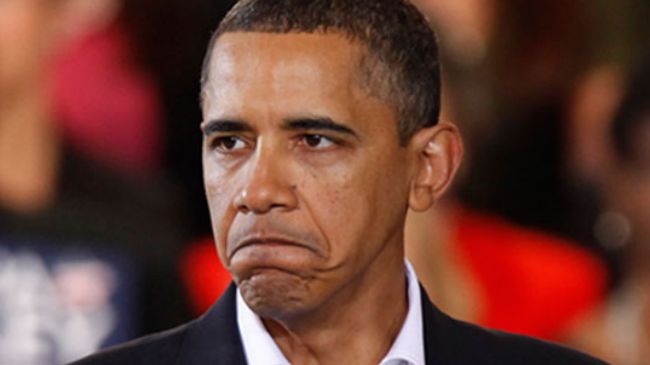
In any case Putin has called Obama’s bluff:
“Mr. Putin’s request, largely a formality, signaled publicly for the first time the Kremlin’s readiness to intervene militarily in Ukraine, and it served as a blunt response to President Obama, who just hours earlier pointedly warned Russia to respect Ukraine’s sovereignty. Even as Mr. Putin submitted his request to the Senate, formally called the Federation Council, it was clear that forces allied with Moscow were largely in control of the disputed peninsula.” – NY Times
You should not threaten if you are not prepared to act. The Russian Strategic Missile Forces have the ability to end civilization in North America. The same is true with regard to the capabilities of US missile forces if they were applied to the Eurasian land mass.
For those who have forgotten or never knew, this is called MAD (mutual assured destruction). Russian and US ICBM forces cancel each other out as instruments of war.
Obama threatened penalties for Russia for disobedience to his warnings.
What could they be?
- Conventional war conducted by the US in Russia’s back yard would be very foolish. The risk of escalation to nuclear war would loom large.
- The editorial board of the Washington Post suggests diplomatic and economic sanctions against Russia.
What?
- We would close our diplomatic posts in Russia and withdraw our ambassador?
- We would boycott the G-8 meeting in Sochi?
- We would persuade the Europeans to boycott Russian natural gas?
- We would seek UN sanctions against Russia? They would veto anything like that.
- We would not allow them to participate in diplomacy involving Syria and Iran?
You get the picture.
http://www.cnn.com/2014/03/01/world/europe/ukraine-politics/
http://www.haaretz.com/news/world/1.577114
Colonel W. Patrick Lang is a retired senior officer of U.S. Military Intelligence
Crimean war
Professor Mazin Qumsiyeh | Popular Resistance | March 2, 2014
It is sometimes instructive to learn a bit of history to reflect on current events because if we do not learn from history, we are bound to repeat the tragic history of useless wars. This came to me as I read about the escalating situation in Ukraine, where the US and western countries invested heavily to dislodge the Ukraine (strategically located on the Black Sea) from Russian influence. The coup that toppled the elected government in the capital and Russia’s strong influence in the mostly Russian Speaking Crimean peninsula of the Ukraine threatens to ignite another Crimean war (a prelude to many more European wars).
The Crimean war 1854-1856 was a devastating and useless conflict that was started with a with an incident here in Palestine (then under Ottoman Rule). The British were in the midst of an industrial economic boom (at least for the elites, the workers were essentially enslaved). To fuel this industrial boom, Britain (and to a lesser degree France) were aiming to expand their empires. The weak Ottoman empire seemed a target. Russia’s influence on the religious Holy Places was high. This was understandable considering that most Palestinian Christians at the time and even still today are Orthodox (especially around the holy sites of Nazareth, Bethlehem and Jerusalem).
Russian intellectuals had gone through a period of Westernization before the 1850s and then grew disillusioned with the west and its hypocrisy. Those who considered themselves Patriotic Russians thus became increasingly oriented towards Czar Nicholas and the Orthodox Church and increasingly opposed to the Western Encroachments on the borders of Russia.
When France instigated a provocation by Catholic supporters challenging long standing Orthodox traditions at the Church of Nativity in Bethlehem, a fury of high level diplomatic lobbying ensued with threats and counter threats that escalated to the Crimean war. Alyce Mange wrote that “The Crimean War (1854-1856) was a war fought ostensibly for the preservation of the Ottoman Empire but actually for the curtailment of Russian encroachment.”
The war was costly to all sides concerned even though the Russian empire lost to the alliance of the three empires (Britain, France, Ottomans). But the origin of the problem remained here in Palestine where competing Russian, British, and French interests remained until the first draft of the Sykes-Picot agreement (which divided their influences). Russia withdrew and so it remained for Britain and France to divide the spoils of WWI in the “Near East/Middle East” (I prefer the term Western Asia to these colonial terms). In parallel, there was the growth of the world Zionist movement that got from France and Britain the infamous Jules Cambon and Arthur Balfour Declarations (1917) partially as quid pro quo for the Zionists lobbying the US to enter the war.
Fast forward from 1854 to 2014 and we see again the beating of war drums for hegemony with triggers in Palestine. The circumstances differ but I am afraid this could also degenerate into a useless devastating war.
The Zionist movement was unhappy about the lack of progress in their efforts (using others) to destroy the Iran-Syria-Lebanon axis. A big part of their failure to achieve success in pushing for more conflicts (as they did with Iraq) is due to the fact that Russia (and China) refuse to go along and realized that the end-game is total Western hegemony in Western Asia (with Israel assuming even more power over Western foreign policies). The Russians and Chinese also took lessons from the disastrous US attacks on Iraq and Afghanistan and NATO attacks on Libya which had terrible consequences (including spreading radicalism and terrorism around the area). They calculated that they must draw a line.
The Zionist movement became involved (as they do frequently) because their key members are in the US State Department and also heavily influential in France and Britain. They thought that we must break Russia’s will to resist encroachment in Western Asia.
Ukraine seemed like an ideal “soft belly” for Russia. It seems possible that reports such as this one on Israelis involved in the protests in Kiev may have some basis. But most Israeli meddling is not done via Israelis but via their now obedient people working for the US government.
It is not a coincidence that protests escalated in Ukraine and Venezuela. I do not know what will happen, but suggest that all wars are useless and counterproductive (to all sides); the history of the 1854 Crimean war should give us pause.
What I suggest is that the talk about democracy by Western leaders like Kerry, Obama, Hollande and company is wearing thin. Most people know that democracy is not achieved by coups against elected governments (whether in Egypt or Ukraine) and certainly not done on behalf of countries who support dictatorships everywhere that are friendly to their interests (see Saudi Arabia as a glaring example).
For the good people of Ukraine (both in the East and the West), do not let your country be used for power politics again. But also I suggest that they remember who their neighbors for the next few hundred years will be (hint it is not Israel or the US or England). But even those countries will not remain immune from destabilization and change if they do not learn to share this planet earth and respect other people. Remember might does not make right and even great empires fell before. This brings me back to the point I always emphasize” READ HISTORY (objectively and not tribally).
Putin Tells Obama Russia Will Act In Case of Ukraine Violence
RIA Novosti | March 2, 2014
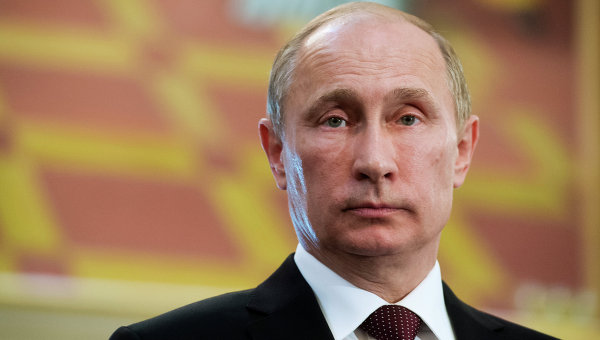
MOSCOW – Russian leader Vladimir Putin told US President Barack Obama in a telephone conversation Sunday that Moscow reserved the right to protect its own interests and those of Russian speakers in the event of violence breaking out in eastern Ukraine and Crimea.
The Kremlin press service said Putin responded to Obama’s expression of concern over possible Russian plans to deploy troops in Ukraine by drawing attention “to the provocative, criminal acts of ultranationalist elements being effectively encouraged by authorities in Kiev.”
Putin said that there was a real threat to the life of many Russians on Ukraine’s territory, the press service said.
Russia’s upper house of parliament voted Saturday to approve military action on Ukraine, citing the same motivations as those mentioned by Putin.
There is already a substantial Russian military presence in southern Ukraine, courtesy of the leased Black Sea Fleet naval base in the Crimean Peninsula.
Large movements of Russian troops have been reported around the peninsula, which is in defiance of express instructions from Ukrainian authorities this week for Russian soldiers to remain confined to their quarters.
In the 90-minute conversation with Putin, Obama condemned Russia’s military intervention, calling it a “clear violation of Ukrainian sovereignty and territorial integrity” and describing it as a breach of international law.
The US leader urged Russia to minimize tension by pulling back troops to bases in Crimea and refrain from any involvement in affairs anywhere else in Ukraine.
In a gesture aimed at signaling the degree of its distress over the course of events, the White House said it is suspending planned participation in preparatory meetings for a G-8 summit due to be held in June in the southern Russian city of Sochi, which last month hosted the Winter Olympics.
“Going forward, Russia’s continued violation of international law will lead to greater political and economic isolation,” the White House said in a read-out of the conversation between Obama and Putin.
Crimea is home to a large ethnic Russian community, which has reacted with alarm to what it sees as the aggressively nationalistic government that has taken hold since last month’s ouster of President Yanukovych. Eastern Ukraine, which was another political stronghold for Yanukovych, also has a substantial Russian-speaking population and saw many anti-government protests Saturday.
Obama said that the United States understood the need to protect the ethnic Russian minority in Ukraine and that it would push Kiev to ensure their rights weren’t hindered.
“The Ukrainian government has made clear its commitment to protect the rights of all Ukrainians and to abide by Ukraine’s international commitments, and we will continue to urge them to do so,” the White House said in the readout.
Russia’s Federal Migration Service said it has noted a sharp spike in applications from Ukrainian citizens seeking refuge.
The head of the migration service’s citizenship department, Valentina Kazakova, said 143,000 people had applied for asylum in the last two weeks of February alone.
“People are afraid for the fate of those close to them and are asking not just for protection, but also to help them receive fast-tracked Russian citizenship,” Kazakova said. “A large number of applications are from members of Ukrainian law enforcement bodies and government officials fearing reprisals from radically disposed groups.”
What the Hell is Obama Thinking?
Worst Man for the Job
By Daniel Patrick Welch – 3/01/2014
Nothing is quite as nauseating as watching the hypocrisy and hubris with which President Obama ‘warns’ the Russian president not to ‘interfere’ in Ukraine, telling the Russians there would be ‘costs to pay.’ It’s a surreal move, echoed by his equally creepy and out-of-touch consigliore and chief “diplomat,” the morally bankrupt John Kerry. Astonishing in its audacity and lack of regard for history, truth or facts, this bellicose blather seems aimed only at the idiots over whom he presides, the fools and tools in congress and the press, and his bought-and-paid-for lackeys in European capitals.
Outside the bubble, the sabre rattling is alarming and threatening. Having stood the issue completely on its head, No Drama Obama ignores how it looks to Russia, China and anyone with a skeptical mind. It is so jarring that it leaves only two options: is he crazy or does he really want war? That’s why the Russian Senate, offended to the core, asked President Putin to recall the US ambassador over Obama’s remarks.
How oblivious or arrogant do you have to be to spend $5 billion dollars destabilizing a country (the actual total is undoubtedly much higher), have your diplomats caught on tape planning a coup, bring a gang of fascist thugs to power on Russia’s doorstep–whose first order of business is to outlaw the Russian language, conduct a purge of opposing parties, threaten the Russian-speaking population, threaten to restore Ukraine’s nuclear status and provoke and threaten Russia non-stop… and have the *balls* to lecture anyone about interfering? Oh, add to the pot that you have done the same exact thing in several other countries in the past few years alone. It simply boggles the mind.
Continue poking Putin by suggesting he is being a “bully” when he moves to protect the Russian naval base, protect Russians, and listen to the wishes of the elected government of the region who ask for his support, as as new protests erupted across eastern Ukraine rejecting the putschists in Kiev, with Russian flags being raised over government buildings and protesters brandished signs saying “In Russia We Have Brothers. In Europe We Are Slaves” and “Where We Are, It is Also Russia.” This is called an ‘invasion’ by the people who bought and organized a fascist coup. Bizarro World.
But why do I focus on Obama? After all, he is little more than an irrelevant placeholder president, a sort of ventriloquist’s dummy for the vested interests and forces that put him where he is. Furthermore, I am not a fan of any Great Man theory of history that implies superhuman powers to people instead of historical forces. Accordingly, I don’t really go in for ad hominem attacks, which seems to be the only stock-in-trade of the western media, whose searing, eternal question seems to be who is the next Hitler.
Maybe it’s because I’m in the grip of the question the rest of the world is pondering: is he crazy or does he really want war? I can’t get past wondering whether he is sleepwalking through his presidency, having given over control of his administration to a foreign policy apparatus gone wild–or if he indeed believes the hypocritical warmongering crap that escapes his mouth. In short, Either he eats babies for breakfast or he has no clue that he is being led by the nose by psychopaths.
It’s important because in either case he is perhaps the most dangerous man who has ever held the office. His chief flaw is *exactly* the puzzle piece that is *least* amenable to being a leader at this historical juncture. It is a horrific perfect storm, and one that has allowed him to blunder disastrously close to World War III on at least two occasions.
The measure of the man has always told us he was an extremely glib politician. On watching an early speech of his, my wife was shocked at what all the fuss was about, and actually quoted King Herod out loud to the TV: “Take him away/ He’s got *nothing* to say!” Yeah, she’s funny like that. But still, glibness isn’t always hollowness. We got more of a glimpse when he joked casually about sending drones after any boys who had designs on his precious daughters. Later, referring to the boys he actual did mow down with his drones, he joked to aides–equally casually, we assume–that he never thought he ‘would wind up being so good at killing people.’
But the clincher for me is one memory which still haunts me from campaign 2008: a late rally in some Florida dump where Clinton explained (actually apologizing for going off script) that Obama was The Guy because he had said to the council of elders behind closed doors–you tell me what’s the right thing to do and I’ll sell it. At the time I did a double take, and it raised the hairs on the back of my neck. This is not a leader, a president, or even a thinker at all, but a glorified and willing Pitchman-in-Chief, a sort of real life Clayton Bigsby selling an ideology he is too blind to see.
It was a bit of the mask slipping… and it was incredibly ominous. I felt it and said so to my wife at the time, but she had checked out long before. Never thought he was anything more than a charlatan and a whore – from the first time she heard him, actually. Damn, I envy her clarity sometimes. It’s like they made a clone of Truman in a test tube, only this time not a hick… scary. Jimmy Burns led Truman around on a leash, and this misplaced trust in Wise Men led to war crimes such as Hiroshima and Nagasaki, among others.
In another famous example, Kennedy stupidly let the Bay of Pigs invasion proceed, as he was advised by ‘wiser men’ who told him it was already in the pipeline. However, he wisely vetoed air support, realizing that is was a stupid plan laid out by zealots. Obama has neither the balls nor the intelligence to pull off any such thing. There was a flicker over Syria in August, but it appears to have been a mirage brought on by Russian missiles and wiser generals. He has the fatal flaw which makes all smart men stupid: heeding the counsel of fools and those with their own secret agenda masquerading as Wise Men.
The zealots who have his ear have been in power for a long time, and they are the kind of fanatics who avoid scrutiny in public and accountability even to themselves, so stupid or proud that they still see chasing the Russians out of Afghanistan as their greatest triumph, and take no responsibility for having created, from the ground up, the very concept of militarized global jihad.
Even cutting him the most possible slack, he listens to them–and that makes him delusional, a hollow man issuing idle threats. As logic dictates, it is the US who should be worrying about costs, starting with billions to set the coup in motion. That will turn out to have been a pittance.
He is now a dangerous man being counseled by dangerous men. Just today, listening to his smug, arrogant self humiliate a heckler, someone trying to shout a tiny bit of truth through the noise, is truly chilling. The trouble is, Obama may not be lying. He really doesn’t know what the guy is talking about, and doesn’t know that this is the plan–at what may be the most dangerous moment in history–and will go along with whichever three loudest advisers tell him is the right thing. The saddest and scariest part is that he doesn’t even seem to know it–a true button pusher. Soulless.
But this is a measure of the man. At a friendly, fundraising event, with full control and no opposition, he could have said anything he wanted, could have made some sensible retort. Instead he chose to be mean and demeaning, calling the guy a drunk and implying that he is crazy. So now I have to add Bad Man to my list. No lie lives forever, and some day his uppance will come, as Stewie Griffin says. He richly deserves the place he has earned in history, and I have lost interest in splitting hairs: enabler, dupe or antichrist–take your pick.
Writer, singer, linguist and activist Daniel Patrick Welch lives and writes in Salem, Massachusetts, with his wife, Julia Nambalirwa-Lugudde. Translations of articles are available in in up to 30 languages.
Costs which Obama is about to pay for Ukraine
By Andre Fomine | Oriental Review | March 1, 2014
Yesterday the United States lost the propaganda war on Ukraine. President Obama made a reluctant and senseless statement which Washington Post entitled “There will be costs”.
He pronounced standard phrases like “the Ukrainian people deserve the opportunity to determine their own future”, proposed that Russia be a “part of an international community’s effort to support the stability and success of a united Ukraine”, lamented over the alleged “violation of Ukraine’s sovereignty and territorial integrity” and assured that “the United States supports his government’s efforts and stands for the sovereignty, territorial integrity and democratic future of Ukraine”.
It looks like the United States administration was not mentally prepared for the development of the Ukrainian crisis. The synchronized actions of the new Crimean authorities and the press-conference of the expelled president Victor Yanukovych in Rostov-on-Don gave undeniable judicial advantage to the opposite side in Ukraine who are not ready to acknowledge the illegitimate “government” elected by the rowdy Euro-mob in Kiev three days ago. The United States has no tangible tools to destabilize Crimea, de facto controlled by the Ukrainian anti-putschist resistance forces, while the judicial status of Victor Yanukovych (whatever we think about him as a person and political figure) is indubitable.
Since the very beginning of the crisis in Ukraine it was clear that the US goal was not imposing a pro-American government in Kiev, but rather making Ukraine a sticking point for Russia-European relations. The bloody events on Independence Square were organized in order to pull Russia into the vortex of the chaos in Ukraine. The Washington strategists thought that Moscow would become recklessly involved in the dirty games with Poland, Hungary and Romania over “federalization of Ukraine” and the street battles against the fascist thugs in Kiev.
On Saturday the Kremlin unexpectedly broke its skillful political pause after last night’s attempted assault on the Crimea Interior Ministry in Simferopol by unidentified special units sent from Kiev. Until that moment the Russian ‘inaction’ was much more powerful than thousands of nervous actions in Kiev and statements from Washington. The Russian move is going to be even more impressive.
Among all “interested parties” in the Ukrainian crisis, Russia is the only global power that has demonstrated its ability to act within the framework of international law and to take responsible and sovereign decisions.
Ironically, today’s Crimea is probably the only region where the Constitution of Ukraine is still strictly implemented. The referendum on the issue of the wide autonomy, announced to be held on March 30, 2014, was initiated in full compliance with the national law. The Russian military presence in Crimea is also regulated by the 1997 Russian-Ukrainian agreement on the Russian Navy base in Sevastopol. The new Crimean government, unlike the central one in Kiev, was appointed by the local legislative body as a result of a properly performed legal procedure.
So Moscow’s message to President Obama is simple. We are the real guarantors of Ukrainian sovereignty. We are protecting the life of its incumbent president, elected by the people of Ukraine at the free and competitive poll in 2010, from the direct personal threat from illegitimate “new authorities”. For the last three months, unlike you, we were not interfering in the internal political process in Ukraine while your Assistant Secretary of State was handing buns to the “peaceful protesters” in Kiev and talking smut about your European dialogue partners. We followed the letter and spirit of the international law whether we liked it or not. And today we are giving hope to millions of the Russian Ukrainians who categorically reject banderist authorities in Kiev. We are defending their right to determine their future. Therefore you will be brought to account for the billions of dollars invested for years long into the chimera project of the Orange revolution in Ukraine, which in its second incarnation turned Brown. You will be charged for months of explicit incitements for riots and civilian disobedience to legitimate authorities in Ukraine, committed by your officials and congressmen. And you will be responsible for the recognition of the shady Kiev “cabinet”, not only lacking any public support in Ukraine, but also any real resources to secure minimal level of life and the rule of law in this 45-million strong nation, lost in a non-existent “transition”, invented by your insolvent foreign policy consultants. These are the costs you are about to pay in Ukraine, President Obama.
How International Financial Elites Change Governments to Implement Austerity
By ISMAEL HOSSEIN-ZADEH | CounterPunch | February 28, 2014
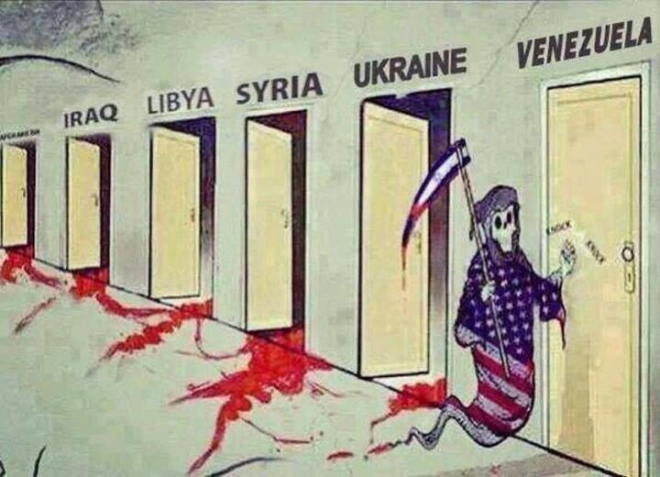
Many countries around the world are plagued by all kinds of armed rebellions, economic sanctions, civil wars, “democratic” coup d’états and/or wars of “regime change.” These include Ukraine, Venezuela, Syria, Thailand, Iran, Afghanistan, Iraq, Egypt, Yemen, Somalia and Lebanon. Even in the core capitalist countries the overwhelming majority of citizens are subjected to brutal wars of economic austerity.
While not new, social convulsions seem to have become more numerous in recent years. They have become especially more frequent since the mysterious 9-11 attacks on the World Trade Center in 2001 and the 2008 financial collapse in the United States, which soon led to similar financial implosions and economic crises in Europe and beyond.
Despite their many differences, these social turbulences share two common features. The first is that they are largely induced, nurtured and orchestrated from outside, that is, by the Unites States and its allies—of course, in collaboration with their class allies from inside. And the second is that, contrary to the long-established historical pattern of social revolutions, where the desperate and disenfranchised masses rebelled against the ruing elites, in most of the recent struggles it is the elites that have instigated insurgencies and civil wars against the masses. The two features are, of course, integrally intertwined: essentially reflecting the shared interests and collaborative schemes of the international plutocracies against the global 99%.
Fighting to Make Austerity Economics Universal
The official rationale (offered by the U.S. and its allies) that the goal of supporting anti-government opposition forces in places such as Syria, Ukraine and Venezuela is to spread democracy no longer holds any validity; it can easily be dismissed as a harebrained pretext to export neoliberalism and spread austerity economics. Abundant and irrefutable evidence shows that in places where the majority of citizens voted for and elected governments that were not to the liking of Western powers, these powers mobilized their local allies and hired all kinds of mercenary forces in order to overthrow the duly elected governments, thereby quashing the majority vote.
Such blatant interventions to overturn the elections that resulted from the majority vote include the promotion of the Orange Revolution in Ukraine (2004 and 2014), Rose Revolution in Georgia (2003), Cedar Revolution in Lebanon (2005), Tulip Revolution in Kyrgyzstan (2005) and the Green Revolution in Iran (2009). They also include the relentless agitation against the duly elected governments of the late Hugo Chavez and now his successor Nicolás Maduro in Venezuela, as well as the rejection (and effective annulment) of the duly elected Hamas government in Palestine.
So, the real driving forces behind wars of regime change need to be sought elsewhere; specifically, in the imperatives of expansion and accumulation of capital on a global level. Socialist, social-democratic, populist or nationalist leaders who do not embrace neoliberal economic policies, and who may be wary of having their markets wide open to unbridled foreign capital, would be targeted for replacement with pliant leaders, or client states. This is, of course, not a new explanation of economic imperialism; it is as old as the internationalization of trade and investment.
What is relatively new, and seems to be the main driving force behind the recent wars of regime change, is that, as the U.S. and other major capitalist powers have lately embarked on austerity economic policies at home they also expect and, indeed, demand that other countries follow suit. In other words, it is no longer enough for a country to open its markets to investment and trade with Western economic powers. It seems equally important to these powers that that country also dismantle its public welfare programs and implement austerity measures of neoliberalism.
For example, after resisting imperialist pressures for years, the late Libyan leader Muammar al-Gaddafi eventually relented in 1993, and granted major oil and other transnational corporations of Western powers lucrative investment and trade deals. Under pressure, he even dismantled his country’s nuclear technology altogether in the hope that this would please them to “leave him” alone, so to speak. None of the concessions he made, however, proved satisfactory to the U.S. and its allies, as his regime was violently overthrown in 2011and he was literally butchered by the thuggish gangs that were trained and armed by Western powers.
Why? Because the U.S. and its allies expected more; they wanted him to follow the economic guidelines of the “experts” of global finance, that is, of the U.S. and European economic “advisors,” of the International Monetary Fund and of the World Trade Organization—in short, to dismantle his country’s rather robust state welfare programs and to restructure its economy after the model of neoliberalism.
The criminal treatment of al-Gaddafi can help explain why imperialist powers have also been scheming to overthrow the populist/socialist regimes of the late Hugo Chavez and his successor in Venezuela, of the Castro brothers in Cuba, of Rafael Correa Delgado in Ecuador, of Bashar Al-assad in Syria and of Evo Morales in Bolivia. It also helps explain why they overthrew the popularly elected nationalist governments of Mohammad Mossadeq in Iran, of Jacobo Arbenz in Guatemala, of Kusno Sukarno in Indonesia, of Salvador Allende in Chile, of Sandinistas in Nicaragua, of Jean-Bertrand Aristide in Haiti and of Manuel Zelaya in Honduras.
The imperialist agenda of overthrowing al-Gaddafi and other “insubordinate” proponents of welfare state programs abroad is essentially part of the same evil agenda of dismantling such programs at home. While the form, the context and the means of destruction may be different, the thrust of the relentless attacks on the living conditions of the Libyan, Iranian, Venezuelan or Cuban peoples are essentially the same as the equally brutal attacks on the living conditions of the poor and working people in the US, UK, France and other degenerate capitalist countries. In a subtle way they are all part of an ongoing unilateral class warfare on a global scale. Whether they are carried out by military means and bombardments or through the apparently “non-violent” processes of judicial or legislative means does not make a substantial difference as far as their impact on people’s lives and livelihoods is concerned.
The powerful plutocratic establishment in the core capitalist countries does not seem to feel comfortable to dismantle New Deal economics, Social Democratic reforms and welfare state programs in these countries while people in smaller, less-developed countries such as (al-Gaddafi’s) Libya, Venezuela or Cuba enjoy strong, state-sponsored social safety net programs. Plutocracy’s intolerance of “regimented” economies stems from a fear that strong state-sponsored economic safely net programs elsewhere may serve as “bad” models that could be demanded by citizens in the core capitalist countries.
In a moment of honesty, former U.S. President Harry Truman is reported as having expressed (in 1947) the unstated mission of the United States to globalize its economic system in the following words: “The whole world should adopt the American system. The American system can survive in America only if it becomes a world system” [1].
In a similar fashion, Lord Cecil Rhodes, who conquered much of Africa for the British Empire, is reported to have suggested during the heydays of the Empire that the simplest way to achieve peace was for England to convert and add the rest of the world (except the United States, Germany and few other Western powers of the time) to its colonies.
The Mafia equivalent of Truman’s or Rhodes’ statements would be something like this: “You do it our way, or we break your leg.”
The mindset behind Truman’s blunt statement that the rest of the world “should adopt the American system” has indeed served as something akin to a sacred mission that has guided the foreign policy of the United States ever since it supplanted the British authority as the major world power.
It explains, for example, the real and the main reason behind the Cold War hostilities between the U.S. and its allies, on the one side, and the Soviet Union and its allies, on the other. While the “threat of communism” has been the official rationale for the start and escalation of those hostilities, there is convincing evidence that not only Joseph Stalin and his successors in the Soviet Union had no plans to wage war against the United States or its allies but that, in fact, they played a restraining role to contain independent revolutionary movements worldwide. “It is often forgotten,” points out Sidney Lens, “that for a few years after the war, he [Stalin] assumed an exceedingly moderate posture. . . . His nation had lost 25 million people in the war, was desperately in need of aid for rebuilding, and continued for a long time to nurture hopes of coexistence. Far from being revolutionary, Stalin in those years put the damper on revolution wherever he could” [2]. To accommodate the United States and other Western powers in the hope of peaceful coexistence, Stalin often advised, and sometimes ordered, the pro-Moscow communist/leftist parties in Europe and elsewhere in the world to refrain from revolutionary policies that might jeopardize the hoped-for chances of coexistence.
The goal or mission of converting other economies to the U.S.-style capitalism also helps explain why the United States has engaged in so many military operations and engineered so many coup d’états and regime changes around the world. The Federation of American Scientists has recorded a list of U.S. foreign military engagements which shows that in the first decade after the collapse of the Berlin Wall (1989-99) the U.S. engaged in 134 such operations, the majority of which are altogether unknown to the American public [3].
Global financial elites change “unaccommodating” regimes not only in the less developed countries but also in the core capitalist countries. They accomplish this not so much by military means as by utilizing two very subtle but powerful means: (a) artificial, money-driven elections, peddled as “democracy in action”; and (b) powerful financial institutions and think tanks such as the International Monetary Fund (IMF), central banks and bond/credit rating agencies like Moody’s, Standard & Poor’s and Fitch Group. An unfavorable rating report by these agencies on the credit status of a country can create havoc on that country’s economic, financial and currency position in world markets, thereby dooming its government to collapse and replacement. This is how during the ongoing financial turbulence of recent years a number of governments have been changed in places like Greece and Italy—no need for the traditional or military style regime change, the “soft-power” financial coup d’état engineered by the IMF and/or rating agencies would serve the purpose even more effectively.
Class War on a Global Scale
As noted, all the schemes and wars of regime change, whether by the traditional military means or by the “soft” power of the global financial juggernaut, essentially represent one thing: a disguised class war on a global level, a relentless worldwide economic war by the one percent financial-economic oligarchy against the rest of the world population.
Class struggle in an economically-tiered society is of course not new. What is relatively new in the recent years’ war of the 1% against the 99% is its escalated pace, its widespread scale and its globally orchestrated character. While neoliberal austerity attacks on the living conditions of the public in the core capitalist countries began (formally) with the supply-side economics of President Ronald Reagan and Prime Minister Margaret Thatcher more than three decades ago, the brutality of such attacks have become much more severe in the context of the current financial/economic crisis, which began with the 2008 financial crash in the United States.
Taking advantage of the crash (as an economic shock therapy, as Naomi Klein put it), the financial oligarchy and their proxies in the governments of the core capitalist countries have been carrying out a systematic economic coup d’état against the people the ravages of which include the following:
• Transfer of tens of trillions of dollars from the public to the financial oligarchy through merciless austerity cuts;
• Extensive privatization of public assets and services, including irreplaceable historical monuments, priceless cultural landmarks, and vital social services such as healthcare, education and water supply;
• Substitution of corporate/banking welfare policies for people’s welfare programs;
• Allocation of the lion’s share of government’s monetary largesse (and of credit creation in general) to speculative investment instead of real investment;
• Systematic undermining of the retirement security of millions of workers (both white and blue collar) and civil servants;
• Ever more blatant control of economic and/or financial policies by the representatives of the financial oligarchy.
Combined, these policies have significantly aggravated the already lopsided income/wealth distribution in these countries. The massive cuts in social spending have resulted in an enormous transfer of economic resources from the bottom up. The transfer has, indeed, more than made up for the 2008 losses of the financial speculators. In the U.S., for example, the wealthiest one percent now own 40 percent of the entire country’s wealth; while the bottom 80 percent own only seven percent. Likewise, the richest one percent now take home 24 percent of the country’s total income, compared to only nine percent four decades ago [4].
This shows that, as pointed out earlier, while neoliberal attacks on the 99% in the core capitalist countries may not seem as violent as those raging, for example, in Venezuela, Syria or Ukraine, the financial impact of such attacks on the living conditions of the 99% is not any less devastating.
Plutocrats of the World Are United
Policies of regime change are usually designed and carried out as collaborative schemes by cross-border plutocracies, that is, by the financial oligarchies of the imperialist countries in partnership with their native counterparts in the less-developed countries.
In addition to constant behind-the-scenes strategizing, representatives of transnational capital and their proxies in capitalist governments also routinely meet at international conferences in order to synchronize their cross-border business and financial policies—a major focus of which in recent years has been to implement global austerity measures and entrench neoliberal policies worldwide. These include the World Economic Forum in Davos, Switzerland, the World Bank and IMF annual meetings, the Periodic G20 meetings, the Aspen Institute’s Ideas Festival, The Bilderberg Group annual geopolitics forum, and the Herb Allen’s Sun Valley gathering of media moguls—to name only a handful of the many such international policy gatherings.
Through its global strategies and operations, transnational capital has broken free from national constraints and commitments at home and successfully shifted the correlation of class forces and social alliances worldwide. Today’s elites of global capitalism “are becoming a trans-global community of peers who have more in common with one another than with their countrymen back home,” writes Chrystia Freeland, Global Editor of Reuters, who travels with the elites to many parts of the world. “Whether they maintain primary residences in New York or Hong Kong, Moscow or Mumbai, today’s super-rich are increasingly a nation unto themselves,” she adds [5].
Implications for Globalization from Below
What conclusions can the 99% draw from this? What can the working people and other grassroots do to protect their jobs, their sources of livelihood, their communities and their environment? What can communities of ordinary people do to undermine the strategies of the global 1% that block life-sustaining progressive social and economic reforms?
In the same fashion that, in their fight against the working people, the elites of the international capitalist class are not bound by territoriality or national boundaries, so does the working class need to coordinate its response internationally.
A logical, first step deterrent to transnational capital’s strategy of blackmailing labor and communities through threats such as destroying or exporting jobs by moving their business elsewhere would be to remove the lures that induce plant relocation, capital flight or outsourcing. Making labor costs of production comparable on an international level would be crucial for this purpose. This would entail taking the necessary steps toward the international establishment of wage and benefits, that is, of labor cost parity within the same company and the same trade, subject to (a) the cost of living, and (b) productivity in each country.
A strategy of this sort would replace the current downward competition between workers in various countries with coordinated bargaining and joint policies for mutual interests and problem-solving on a global level. While this may sound radical, it is not any more radical than what the transnational 1% is doing: coordinating their anti-99% strategies on a global scale. If at an earlier stage of capitalist development “workers of the world unite” seemed an outlandish dream of the leading labor champion Karl Marx, internationalization of capital, the abundance of material resources and developments in technology, which has greatly facilitated cross-border organizing and coordination of actions by the 99%, has now made that dream an urgent necessity.
As capital and labor are the cornerstones of capitalist production, their respective organizations and institutions evolve more or less apace, over time and space. Thus, when production was local, so was labor: carpenters, shoemakers, bricklayers, and other craftsmen organized primarily in their local communities. But as capitalist production became national, so did trade unions. Now that capitalist production has become global, labor organizations too need to become international in order to safeguard their and their communities’ rights against the profit-driven whims of the footloose and fancy-free transnational capital.
Many would argue that these are not propitious times to speak of radical alternatives to capitalism. The present state of the sociopolitical landscape of our societies appears to support such feelings of pessimism. The high levels of unemployment in most countries of the world and the resulting international labor rivalry, combined with the austerity offensive of neoliberalism on a global level, have thrown the working class and other grassroots on the defensive. The steady drift of the European socialist, Social Democratic, and labor parties/governments toward the U.S.–style market economies and the erosion of their traditional ideology, power, and prestige have led to workers’ confusion there. The collapse of the Soviet Union, however much some socialists have always distanced themselves from that system, haunts the specter of socialism, and is likely to do so for some time to come. These developments have understandably led to workers’ and other grassroots’ confusion and disorientation globally.
None of these, however, mean that there is no way out of the status quo. Capitalism is not only “destructive,” it is also “regenerative,” as Karl Marx put. As it captures world markets, universalizes the reign of capital, and disrupts the living conditions for many, it simultaneously sows the seeds of its own transformation. On the one hand, it creates common problems and shared concerns for the majority of the world population; on the other, it creates the material conditions and the technology that facilitate communication and cooperation among this majority of world citizens for joint actions and alternative solutions.
When the majority of world population, the global 99%, will come to the realization and determination to actually appropriate and utilize the existing technology and material resources for a better organization and management of the world economy, no one can tell. But the potential and the long term trajectory of global socioeconomic developments point in that direction. The distance between now and then, between our immediate frustrations and the superior but elusive civilization of our desire, can be traversed only if we take the necessary steps toward that end [6].
Ismael Hossein-zadeh is Professor Emeritus of Economics, Drake University, Des Moines, Iowa. He is the author of The Political Economy of U.S. Militarism (Palgrave – Macmillan 2007), the Soviet Non-capitalist Development: The Case of Nasser’s Egypt (Praeger Publishers 1989), and most recently, Beyond Mainstream Explanations of the Financial Crisis (forthcoming from Routledge, April 29, 2014).
Featured Video
Can the U.S. Afford to Annihilate Iran?
or go to
Aletho News Archives – Video-Images
Book Review
The Genetic Deception — now in paperback (Second Edition)
Lies are Unbekoming | October 2, 2026
The genes the field promised were never there.
The genetic story of disease is a cover story.
The twenty-first century runs on it. Paediatric clinics. Cancer centres. Forensic laboratories. Family-planning counsel. It is used to explain illness, to assign blame, to foreclose questions. It protects the industries whose products and practices are what actually caused the harm.
It isn’t true.
In 2010, Jonathan Latham and Allison Wilson looked at over seven hundred genome-wide association studies covering some eighty common diseases. The genes the field had promised were not there. The field invented a term, “missing heritability”, to explain the absence, and has quietly worked to bury the finding ever since.
The Genetic Deception is a book about what Latham and Wilson found. What the field did with it. And what the public was told instead. … continue
Blog Roll
 Aletho News
- Iran’s NPT debate moves beyond parliament
- Houthis condemn Saudi claims of attack on Medina
- Fatuous False Flags
- Are Europe’s Smallest Nations Dragging the Continent into War?
- EU draws up contingency plans for possible Merz exit
- G7 caves to US blackmail, announces ‘massive’ release of diesel reserves
- Reporting of the RAF Fairford arrests blows the idea of a ‘free press’ out of the water
- US increasing Middle East military buildup – AP
- Flydubai scenario: Netanyahu’s plot to drag US to war with Iran, stay in power
- The Genetic Deception — now in paperback (Second Edition)
- If Americans Knew
- The Israeli Right Portrays Islam as Murderous. It Serves a Political Purpose
- Jordan Has Had Enough: King Abdullah’s Scathing Warning to Israel
- Israeli Colonizers (i.e. Settlers) Kill Palestinian Man Near Salfit
- New Google Maps images reveal massive scale of devastation in Gaza
- Jewish supremacy, anti-Palestinian bigotry on display in Israel – Daily Update
- Israeli Soldiers Abduct At Least 22 Across Occupied West Bank
- Eight Palestinians Killed in Israeli Attacks on Gaza
- Israeli former leaders and security chiefs threaten legal action over ‘Jewish terrorism’
- Israel map in LA Times ad includes all land from the river to the sea
- Inside Lebanon’s 200-page dossier on Israeli war crimes
- No Tricks Zone
- Green Energy Debacle: German Expert Professor Fritz Vahrenholt Warns Of Severe Economic And Social Consequences
- Two More Paleo Reconstructions Affirm Meters-Higher Sea Levels Across Ireland, Brazil 7000-6000 Years Ago
- New Study: Earth And Venus Surface Warmth Largely Explained By Convection And Lapse Rate, Not CO2 Or Radiation
- 2025 Nature Paper Claiming Worsening Global Drought Gets RETRACTED …Heavily Flawed
- New Study: ‘Global Drought Shows No Detectable Recent Acceleration Under Climate Warming’
- Economic Masterminds: German Socialists Suggest Taxing Productivity Gains Stemming From Using AI
- The South China Sea Has Not Been Cooperating With The Climate Change Narrative
- Energy Crisis: Germany Enters Heating Season With Historically Low Gas Reserve Fill Levels
- New Study: The Antarctic Ice Sheet Gained Mass From 2020-2024 Due To Staggering Snow And Ice Accumulation
- Study: Ocean Heating Rates From Thousands Of Years Ago ‘Dwarf’ Modern Ocean Heating Rates

