2018 video report:
Central Colorado Mountains Cloud Seeding Program goal is to increase snowpack in the Upper Colorado River Basin
See Also:
Israel’s CRAZY offer to Iran: we’ll give you water, you give us your LAND
RT | July 4, 2018
The Energy Committee of Iran has announced that Tehran will buy goods only from those nations which purchase Iranian oil. This follows the US demand from its allies to stop buying Iranian crude.
“We will carry out barter exchange of oil and goods, which means the purchase of goods will depend on the sale of oil,” representative of Iran’s Energy Committee Asadollah Karekhani told ILNA news agency.
“We want to inform our target markets and countries that buy oil from us that we’ll purchase goods from them only if they purchase our oil,” he said, noting that a working group is being formed on barter deals.
Last week, a senior US State Department official told reporters that Washington would try to convince its allies to completely stop buying oil from Iran by early November. Discussions are also being held with other countries, including China.
Iranian President Hassan Rouhani has warned that if the country’s crude oil exports were threatened, the rest of the Middle East’s would be as well.
“Assuming that Iran could become the only oil producer unable to export its oil is a wrong assumption … The United States will never be able to cut Iran’s oil revenues,” he said.
Iran is OPEC’s second-largest crude exporter with more than 2 million barrels a day.
Rouhani is currently in Europe to gather support ahead of a meeting later this week between Iran and the five global powers that are still party to the 2015 nuclear deal.
By Jack F. Matlock | Consortium News | July 3, 2018
Did the U.S. “Intelligence Community” judge that Russia interfered in the 2016 presidential election?
Most commentators seem to think so. Every news report I have read of the planned meeting of Presidents Trump and Putin in July refers to “Russian interference” as a fact and asks whether the matter will be discussed. Reports that President Putin denied involvement in the election are scoffed at, usually with a claim that the U.S. “intelligence community” proved Russian interference. In fact, the U.S. “intelligence community” has not done so. The intelligence community as a whole has not been tasked to make a judgment and some key members of that community did not participate in the report that is routinely cited as “proof” of “Russian interference.”
I spent the 35 years of my government service with a “top secret” clearance. When I reached the rank of ambassador and also worked as Special Assistant to the President for National Security, I also had clearances for “codeword” material. At that time, intelligence reports to the president relating to Soviet and European affairs were routed through me for comment. I developed at that time a “feel” for the strengths and weaknesses of the various American intelligence agencies. It is with that background that I read the January 6. 2017 report of three intelligence agencies: the CIA, FBI, and NSA.
This report is labeled “Intelligence Community Assessment,” but in fact it is not that. A report of the intelligence community in my day would include the input of all the relevant intelligence agencies and would reveal whether all agreed with the conclusions. Individual agencies did not hesitate to “take a footnote” or explain their position if they disagreed with a particular assessment. A report would not claim to be that of the “intelligence community” if any relevant agency was omitted.
The report states that it represents the findings of three intelligence agencies: CIA, FBI, and NSA, but even that is misleading in that it implies that there was a consensus of relevant analysts in these three agencies. In fact, the report was prepared by a group of analysts from the three agencies pre-selected by their directors, with the selection process generally overseen by James Clapper, then Director of National Intelligence (DNI). Clapper told the Senate in testimony May 8, 2017, that it was prepared by “two dozen or so analysts—hand-picked, seasoned experts from each of the contributing agencies.” If you can hand-pick the analysts, you can hand-pick the conclusions. The analysts selected would have understood what Director Clapper wanted since he made no secret of his views. Why would they endanger their careers by not delivering?
What should have struck any congressperson or reporter was that the procedure Clapper followed was the same as that used in 2003 to produce the report falsely claiming that Saddam Hussein had retained stocks of weapons of mass destruction. That should be worrisome enough to inspire questions, but that is not the only anomaly.
The DNI has under his aegis a National Intelligence Council whose officers can call any intelligence agency with relevant expertise to draft community assessments. It was created by Congress after 9/11 specifically to correct some of the flaws in intelligence collection revealed by 9/11. Director Clapper chose not to call on the NIC, which is curious since its duty is “to act as a bridge between the intelligence and policy communities.”
During my time in government, a judgment regarding national security would include reports from, as a minimum, the CIA, the Defense Intelligence Agency (DIA), and the Bureau of Intelligence and Research (INR) of the State Department. The FBI was rarely, if ever, included unless the principal question concerned law enforcement within the United States. NSA might have provided some of the intelligence used by the other agencies but normally did not express an opinion regarding the substance of reports.
What did I notice when I read the January report? There was no mention of INR or DIA! The exclusion of DIA might be understandable since its mandate deals primarily with military forces, except that the report attributes some of the Russian activity to the GRU, Russian military intelligence. DIA, the Defense Intelligence Agency, is the U.S. intelligence organ most expert on the GRU. Did it concur with this attribution? The report doesn’t say.
The omission of INR is more glaring since a report on foreign political activity could not have been that of the U.S. intelligence community without its participation. After all, when it comes to assessments of foreign intentions and foreign political activity, the State Department’s intelligence service is by far the most knowledgeable and competent. In my day, it reported accurately on Gorbachev’s reforms when the CIA leaders were advising that Gorbachev had the same aims as his predecessors.
This is where due diligence comes in. The first question responsible journalists and politicians should have asked is “Why is INR not represented? Does it have a different opinion? If so, what is that opinion? Most likely the official answer would have been that this is “classified information.” But why should it be classified? If some agency heads come to a conclusion and choose (or are directed) to announce it publicly, doesn’t the public deserve to know that one of the key agencies has a different opinion?
The second question should have been directed at the CIA, NSA, and FBI: did all their analysts agree with these conclusions or were they divided in their conclusions? What was the reason behind hand-picking analysts and departing from the customary practice of enlisting analysts already in place and already responsible for following the issues involved?
As I was recently informed by a senior official, the State Department’s Bureau of Intelligence Research did, in fact, have a different opinion but was not allowed to express it. So the January report was not one of the “intelligence community,” but rather of three intelligence agencies, two of which have no responsibility or necessarily any competence to judge foreign intentions. The job of the FBI is to enforce federal law. The job of NSA is to intercept the communications of others and to protect ours. It is not staffed to assess the content of what is intercepted; that task is assumed by others, particularly the CIA, the DIA (if it is military) or the State Department’s INR (if it is political).
The second thing to remember is that reports of the intelligence agencies reflect the views of the heads of the agencies and are not necessarily a consensus of their analysts’ views. The heads of both the CIA and FBI are political appointments, while the NSA chief is a military officer; his agency is a collector of intelligence rather than an analyst of its import, except in the fields of cryptography and communications security.
One striking thing about the press coverage and Congressional discussion of the January report, and of subsequent statements by CIA, FBI, and NSA heads is that questions were never posed regarding the position of the State Department’s INR, or whether the analysts in the agencies cited were in total agreement with the conclusions.
Let’s put these questions aside for the moment and look at the report itself. On the first page of text, the following statement leapt to my attention:
We did not make an assessment of the impact that Russian activities had on the outcome of the 2016 election. The US Intelligence Community is charged with monitoring and assessing the intentions, capabilities, and actions of foreign actors; it does not analyze US political processes or US public opinion.
Now, how can one judge whether activity “interfered” with an election without assessing its impact? After all, if the activity had no impact on the outcome of the election, it could not be properly termed interference. This disclaimer, however, has not prevented journalists and politicians from citing the report as proof that “Russia interfered” in the 2016 U.S. presidential election.
As for particulars, the report is full of assertion, innuendo, and description of “capabilities” but largely devoid of any evidence to substantiate its assertions. This is “explained” by claiming that much of the evidence is classified and cannot be disclosed without revealing sources and methods. The assertions are made with “high confidence” or occasionally, “moderate confidence.” Having read many intelligence reports I can tell you that if there is irrefutable evidence of something it will be stated as a fact. The use of the term “high confidence” is what most normal people would call “our best guess.” “Moderate confidence” means “some of our analysts think this might be true.”
Among the assertions are that a persona calling itself “Guccifer 2.0” is an instrument of the GRU, and that it hacked the emails on the Democratic National Committee’s computer and conveyed them to Wikileaks. What the report does not explain is that it is easy for a hacker or foreign intelligence service to leave a false trail. In fact, a program developed by CIA with NSA assistance to do just that has been leaked and published.
Retired senior NSA technical experts have examined the “Guccifer 2.0” data on the web and have concluded that “Guccifer 2.0’s” data did not involve a hack across the web but was locally downloaded. Further, the data had been tampered with and manipulated, leading to the conclusion that “Guccifer 2.0” is a total fabrication.
The report’s assertions regarding the supply of the DNC emails to Wikileaks are dubious, but its final statement in this regard is important: “Disclosures through WikiLeaks did not contain any evident forgeries.” In other words, what was disclosed was the truth! So, Russians are accused of “degrading our democracy” by revealing that the DNC was trying to fix the nomination of a particular candidate rather than allowing the primaries and state caucuses to run their course. I had always thought that transparency is consistent with democratic values. Apparently those who think that the truth can degrade democracy have a rather bizarre—to put it mildly–concept of democracy.
Most people, hearing that it is a “fact” that “Russia” interfered in our election must think that Russian government agents hacked into vote counting machines and switched votes to favor a particular candidate. This, indeed, would be scary, and would justify the most painful sanctions. But this is the one thing that the “intelligence” report of January 6, 2017, states did not happen. Here is what it said: “DHS [the Department of Homeland Security] assesses that the types of systems Russian actors targeted or compromised were not involved in vote tallying.”
This is an important statement by an agency that is empowered to assess the impact of foreign activity on the United States. Why was it not consulted regarding other aspects of the study? Or—was it in fact consulted and refused to endorse the findings? Another obvious question any responsible journalist or competent politician should have asked.
Prominent American journalists and politicians seized upon this shabby, politically motivated, report as proof of “Russian interference” in the U.S. election without even the pretense of due diligence. They have objectively acted as co-conspirators in an effort to block any improvement in relations with Russia, even though cooperation with Russia to deal with common dangers is vital to both countries.
This is only part of the story of how, without good reason, U.S.-Russian relations have become dangerously confrontational. God willin and the crick don’t rise, I’ll be musing about other aspects soon.
Thanks to Ray McGovern and Bill Binney for their research assistance.
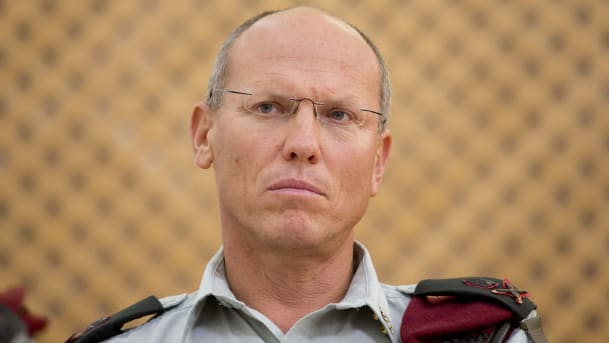
Al-Manar | July 3, 2018
Israeli Chief of Staff Lt.-Gen. Gadi Eisenkot has appointed Maj.-Gen. Nitzan Alon, who recently left his role as head of the military’s Operations Directorate, as the first director of a special project to coordinate all issues related to Israeli battle against Iran.
Alon accompanied Eisenkot on his recent trip to the United States last weekend and participated in meetings with American military leaders, including Chairman of the Joint Chiefs Gen. Joseph Dunford.
This is the first time that Israel has appointed a “project director for Iran issues,” who is meant to coordinate all areas of Israeli battle against the Islamic Republic: with respect to its nuclear program, coordinating intelligence gathering with other countries, and in countering Iran’s presence in Syria, the Jerusalem Post reported.
In the past, the head of the Mossad Meir Dagan was responsible for the “Iran file” under Prime Ministers Ariel Sharon and Ehud Olmert, but at that time the battle was restricted to intelligence spheres.
Now that the war between the Zionist entity and Iran has come into the open and includes military confrontation, the appointment of a “special project head” underscores the overwhelming importance that Tel Aviv sees for these developments, according to the Israeli paper.
Sputnik – 02.07.2018
About 2,500 people gathered outside the largest US base in Germany over the weekend as the Trump administration considered a possible US withdrawal from the country.
Sputnik Deutschland contributor Marcel Joppa was on the scene for Saturday’s protest, joining people of all ages including seniors as old as 80 years old, who endured the summer heat and faced down the police to show their discontent with US military operations launched from German soil.
Organized by the “Stop Air Base Ramstein” civil group, the protest was attended by several politicians, most notably Sara Wagenknecht, the leader of The Left Party faction in the Bundestag.
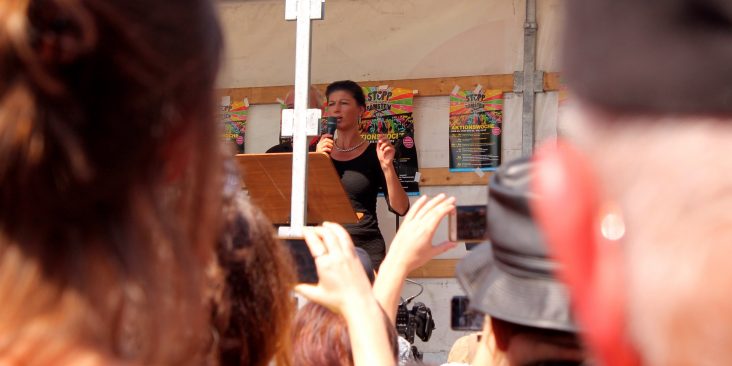
Addressing the crowd, Wagenknecht spoke out on the issue of drone warfare, “which although not written about much in the big press continues to take place.”
“Kill orders are arranged at the touch of a button. These are just outrageous crimes! And it is unacceptable that they be supported here, from German soil, in any way!” the politician stressed.
Pointing out that the bombings of Iraq and Afghanistan were carried out from German territory, Wagenknecht argued that there shouldn’t be a single German region where the Germany Constitution, which does not allow wars of aggression or extraterritorial killings by drones, does not apply.
“What is happening here is a case for our counterintelligence bodies, if they are to do their jobs properly,” the politician said. “There are over 1,000 US military bases around the world, and none of them exist to ensure the security of those countries,” she added.
Demanding that Berlin pursue a more independent foreign policy, Wagenknecht criticized Chancellor Angela Merkel, accusing her of being too submissive to the US.
The protesters were also addressed by writer and peace activist Eugen Drewermann, who reminded them that the US had bombed seven predominantly Muslim countries since 2001.
“We are involved in these actions, and we are partly responsible. We must finally reject this policy. We Germans have every reason to press the brake, with all our might, to correct old mistakes,” he said.
Unfortunately, Drewermann noted, NATO had always viewed Russia as an enemy, emphasizing the immense disparity in the number of military bases the two countries operate internationally.
Several dozen protesters set off for the front of the central entrance to the air base, where they sat down on the asphalt and blocked traffic. The police soon sounded a warning that the protest would be broken up and that those who resisted would be detained. Participants began singing songs and shouting slogans, including “For international solidarity!” and “Why are we doing this? For the sake of our children!”
About a dozen people have been detained, including an elderly American couple.
Saturday’s protests came on the heels of reports of a US Department of Defense study on the consequences of a major drawdown of US forces in Germany. The study was initiated after President Trump expressed his interest in the pullout at a meeting with military officials earlier this year, according to officials speaking to The Washington Post. Trump was reportedly taken aback by the cost of maintaining the estimated 35,000 active-duty troops stationed in the European country.
The US has maintained a presence in Germany since the end of World War II. During the Cold War, the US presence was justified as necessary to deter the Soviet Union, which had troops in East Germany. The Soviet Union collapsed in 1991, and the last of the former Soviet contingent was withdrawn in 1994, but the US bases remained, even during a period of unprecedentedly warm relations between Moscow and Washington in the 1990s and most of the 2000s.
By Alex Anfruns | Investig’Action | July 1, 2018
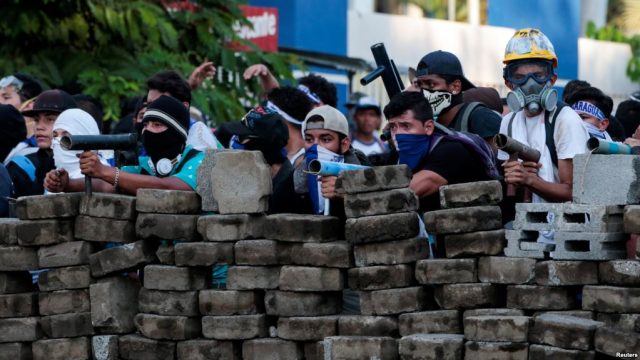
For two months, Nicaragua has been through a major political crisis, fueled by clashes between law enforcement and an insurgency. Humanitarian organizations report a terrifying record of nearly 200 deaths. This violence, compromising the attempts of political negotiations, makes it necessary to understand who has an interest in paralyzing this Central American country. What are the motivations of protesters and opposition forces? Is the Nicaraguan government the symbol of absolute tyranny?
It was a pension reform project that started the fire. To avoid privatizing social security as recommended by the IMF, the government wanted to increase contributions for both workers and employers. Faced with a public outcry, the government backtracked and withdrew its reform plan. But the protests continued without anyone being able to understand what their objective was. In order to stop the cycle of violence, government spokesmen called on the protesters to participate in peace commissions. They insisted on their willingness to listen to the various demands and to promote the expression of political opposition. To no avail. Calls for dialogue from the government have been shunned. They were even perceived as a sign of weakness, galvanizing the young protesters of the M-19 movement.
With no program, this movement simply calls for overthrowing the “dictatorship” accused of being at the origin of the “repression”. Moreover, the international media aligned themselves without reserve with these demonstrators, regarded as the quintessence of the civil society, in spite of their nihilism and extremism. But the attitude of the M-19 raises questions. By refusing any political solution and promoting violence, the movement offers an ideal motive for the proponents of “regime change” and “constructive chaos” already applied in countries like Libya, Iraq or Ukraine
On 14 June, the M-19 operation consisting of deploying “tranques” (barricades) in certain areas of the capital Managua, as well as in nearby cities such as Masaya or Granada, was supported by a “national strike” of 24 hours. This strike was convened by COSEP, the main employers’ organization. Yes, in Nicaragua, it is the bosses who call to strike! The world upside down? The fact remains that neither the majority of workers, nor the small and medium-sized enterprises followed suit. But it allowed an evaluation of the balance of power as well as maintaining the pressure until the next phase. On June 16, the day when the peace dialogue between the opposition and the government was to be revived, a new episode of extreme violence made the front pages of the international media.
The macabre fire of the Velasquez house
First, the facts. On June 16, a group of hooded people set fire to a building in Managua using Molotov cocktails, causing seven deaths, including a two-year-old child and a five-month-old baby. A mattress store occupied the ground floor of the building while the owner and his family lived on the first floor. Neighbors said they saw hoodlums throw their cocktails at the building, and said some shooters would have prevented the family from escaping. Accident as a possible cause was therefore immediately rejected.
But private media like Televisa or BBC immediately seized on the case to blame the authorities for the crime. According to their information, paramilitaries on government payroll wanted to use the roof of the building to post snipers; the paramilitaries, having been denied access by the homeowner, would have locked him up in his residence with his family before setting it on fire. This is the same thesis defended by the Nicaraguan Center for Human Rights (CENIDH), which pointed out “their complicity with the national police”. For other governments, this argument would appear simplistic, implausible and irrational. Who would have defended the idea that the British government was behind the fire at the Grenfell tower for example? But in the case of Nicaragua, the complicity or even the responsibility of the government is put forth as a matter of fact.
To give credit to the story, the BBC used the testimony of the only survivor in the family: “Hooded people came with police officers and locked up nine people in a room on the second floor and burned us alive.” According to the same testimony, the offenders carried “mortars, weapons, and Molotov bombs”. We can only respect the bereavement of the survivor. But it cannot be dismissed that under shock, and calling for divine justice, she felt the need to find an immediate culprit. This is why it cannot be excluded that her testimony has been influenced in some way so as to channel her anger and to politically exploit it. In an effort to get closer to the truth, it is necessary to look for additional information and to cross-check it with other testimonies and documents.
The problem is that observers are facing a real war of images. Filmed from the balcony of the burned house, an amateur video was immediately relayed on social media. It aims at reinforcing the thesis of police forces and para-police organizations participation. Filmed by the eldest son of the family, Alfredo Pavon, one of the victims of the fire, this video is certainly interesting. But we see only a convoy of five police vans stopping near the house after a motorcycle chase, after which the police fires some warning shots and arrests a young biker. It’s hard to turn this into evidence. This document is nevertheless used to sow doubt, or even to point at the authorities as being responsible for the crime. Widely shared by the media in the aftermath of the crime, the video continues to be broadcast in a loop and feed hate comments…
However, these images have in fact been taken out of context: the recording was made on April 21, that is, at the very beginning of this crisis. What it reveals above all is that this precise area had been the scene of clashes between the two camps since the beginning of the crisis. This corresponds to information sent by Nicaraguan citizens, which indicates that the Carlos Marx district is controlled by the opposition. Indeed, it is hard to believe, as the opposition says, that police forces have surrounded the same neighborhood for two months, without being able to quell the protest movement until June 16, when they finally decided to use the roof of the Velasquez family to post snipers. And that’s not all. According to the same version, short of obtaining the family’s approval, the authorities acted brutally by setting the house on fire, without anticipating that it would cause a resurgence of tensions instead of calming them down.
Not really intimidated by the crime in the Velasquez house, four members of the M-19 were present on the scene the same day, to record a video where they accuse the government of “state terrorism” and call to support their movement. They take the opportunity to send a message to the negotiation table: “We are not going to remove the barricades, they are in our hands and those of the people, and we will not take them off. I want you to know: if the people do not unite, it will end up in new massacres like this one”. But have their accusations, carried by certain media and Internet users on social media, been the subject of a real inquiry gathering enough facts?
Retaliation against the right to work?
TeleSur journalist, Madelein Garcia, reports a completely different version: the people responsible for the fire are “delinquents recruited by the opposition”, “hooded men who attacked with mortars and Molotov cocktails the family home, after reading in a media that snipers of the police were hiding there.” Garcia explains that according to a friend of the family, “the hooded men asked for mattresses, the owner refused and that’s when they burned the house for revenge.”
Moreover, a disturbing screen shot of the April 19 movement was relayed via social media, including several photos of the owner of the premises, the father Velasquez Pavon, accompanied by explicit threats against him. The document dates from 2 days before the fire, that is to say at the time of the strike organized by COSEP. The commentary indicates that he did not respect the strike directive, preferring to continue working. In the eyes of his attackers, that would have been enough to make him automatically suspicious of sympathy with the government. The M-19 would have then relayed the identity and address of one of the future victims, threatening to “disappear” these “infiltrated” Sandinistas who “refuse to strike by pretending to support the people”.
Since the release of this document, it appears that the text and photos have been removed from the account, the group administrators explaining that it could be a forgery. An explanation that did not convince everyone: some remember seeing these photos before the day of the fire, and point out that the area was under the control of the opposition, including through the “tranques” (barricades).
Who to believe? We only have amateur videos published by Velasquez Pavon on his Facebook account in recent months. He proudly presents his mattress making workshop and says he works tirelessly. Would the small business owner Velasquez Pavon have been the target of opposition or paramilitary forces? Two days after the employers’ strike, would there have been any reprisals against the right to work of the Nicaraguan people? The dead do not speak; it is difficult to answer these questions. But respect for the victims requires a real independent investigation, which is incompatible with political and media manipulation.
Who wants to eliminate the Sandinistas?
Without the same outrage from the media, other killings and attacks have clearly targeted citizens and buildings associated with Sandinismo.
On the same day that the Velasquez house was burned, a funeral home located a few meters from the house was also ransacked and set on fire.
Still near the scene of the incident, two men were spotted in the street dismantling the barricades of the opposition. They were shot dead on the spot. The killers sprinkled gasoline on one of the corpses and set it on fire. Before leaving, they put objects on the burned body to create a macabre scene. It was Francisco Aráuz Pineda, from a historical family of the Sandinista Revolution.
Here is a non-exhaustive timeline sequence of violent actions that took place in just three weeks:
The similarities with the crimes perpetrated in Venezuela by the anti-Chavista opposition a year ago suggest that this wave of violence is primarily motivated by a deep ideological hatred that goes beyond the framework of ordinary crime.
When the dead are brought back to life
To these brutal attacks that speak for themselves, we can add the confusion maintained by the protesters themselves with the complicity of the private media.
Other people also discovered the presence of their name or photo in a list of dead claimed by the protesters: Christomar Baltodano, Karla Sotelo, Marlon Joshua Martinez, Marlon Jose Davila, William Daniel Gonzalez … Much like in Venezuela in 2014, the public was intoxicated by a massive campaign of fake news via social media.
Observers on the “good side” of the barricade
If we want to broaden the perspective, short of exposing the long history, it is necessary to return to the chronology of the facts. On June 15, the Catholic Church’s peace dialogue had just resumed after the talks had been interrupted since May 23. The new agenda between the government and the opposition renewed the authorization granted to a list of international organizations to participate in observation missions in the country, in order to identify all murders and acts of violence as well as their leaders, with an integral plan of care for victims in order to achieve effective justice. They included observers from the Inter-American Commission on Human Rights (IACHR), as well as the EU.
An organization dependent of the Organization of American States (aligned with Washington), the IACHR had already carried out a mission between May 17 and May 21. Then it continued to issue reports, the last of which coincided with the day of the strike. Its record attributed to the government of Daniel Ortega the central responsibility in this crisis, while recognizing the presence of armed groups with “homemade mortars filled with gunpowder” in the ranks of the demonstrators. The wording is not very eloquent: the reader of the release is unlikely to imagine the scenes of horror that these groups were responsible for.
On June 14, the Nicaraguan Foreign Ministry replied in a letter that the work of the IACHR had still not taken into account “evidence of atrocious crimes, cruel and degrading treatment, kidnapping and other acts of violence committed against the population and especially against public officials and persons known to be Sandinistas “. Given the biased stance it is accused of, the authorization to visit the premises that the Ortega government granted to the IACHR on June 26, must be considered as a concession in the framework of peace negotiations between the two parties. Especially since institutions like Amnesty International have clearly shown that they are on the other side of the barricade, turning a deaf ear to the testimonies that are not aligned with the dominant narrative.
Caution is therefore required. If we assume the hypothesis of a political motive behind the frightening crime of the Velasquez house, the arrival of the investigators of the IACHR could have constituted a special motivation, in order to attract the international public opinion’s attention. Be that as it may, it did not take long to happen.
First, on June 18 the Civic Alliance, the political opposition movement engaged in dialogue with the government, announced its withdrawal from the negotiation table and demanded the presence of external observers. The reactions were immediate, notably that of the representative of the OAS Luis Almagro and the IACHR… and finally the unavoidable press release of the spokesperson of the US Department of State Heather Nauert, condemning the ‘current violence sponsored by the government, including the attack on June 16 against the residence and trade of a family…”. Nauert recommended that the government should carry on according to the points on the peace agenda, including the planned visit of observers of the IACHR. Her conclusion is quite significant: the United States “takes note of the general appeal of Nicaraguans for new presidential elections” and “considers that the elections would be a constructive way forward”!
This statement contains a thinly veiled threat: it is an interference with the sovereignty of Nicaragua. It relies on a new balance of power, starting from the mid-June sequence – the strike and the peace agreement, undermined by the new violence of the weekend, which has had as a result the opposition leaving the negotiation table. Nauert therefore puts pressure on the Ortega government, which is now confronted on the one hand with increased street violence and lack of dialogue with the political opposition, and on the other hand with the arrival of the observation missions – who have probably already decided in advance the conclusion of their report.
Is “regime change” a thing of the past?
Unless one is uncontrollably naive, everyone will have noticed that the United States continues to regard Latin America as its backyard. For we cannot dismiss the role played in Nicaragua by a certain international activism, which is centered on the United States Congress, where the Nica Act was approved last November. Under the initiative of Ileana Ros-Lehtinen, an anti-Castro Cuban-American elected member of the Republican party, this law aims to stifle the Nicaraguan economy, blocking international loans. The reason? “Human rights violations, the regression of democracy in Nicaragua, and the dismantling of the free elections system in this country”.
When the United States presents itself as the defender of human rights and the champion of democracy in the world, it should be remembered that in recent years bodies dedicated to “promoting democracy”, such as USAID or the NED, showered opposition movements with dollars (support that the protesters do not hide). Simultaneously, Senator Marco Rubio proposed to use the Magnitsky Act as a weapon of financial sanctions against the Vice-President of the mixed enterprise Albanisa. What was Rubio’s aim? “Not only to support the desire for new elections as soon as possible to change the government, but also change the constitution, because a new government on the basis of corruption and dictatorship is more or less the same thing.” Helping to overthrow the government elected by the Nicaraguan people is not enough, so you have to write directly a new constitution in its place, to prevent these Latinos from returning to bad habits!
All these mechanisms of destabilization correspond to the different phases of a real hybrid war. In the view of the neoconservative strategists, “constructive chaos” is far better than the loss of the areas of direct influence of yesteryear. If Nicaragua is again in the line of sight of US imperialism, the real reasons are mostly economic.
Nicaragua, theater of a long US strategic war
As early as 1825, the Federal Republic of Central America, a political entity stemming from the wars of independence, had commissioned a study on the creation of a canal on the Lake Nicaragua Canal route. It was a strategic project for the economic development and survival of the young republic. But following the creation of the Independent State of Nicaragua in 1838, the Central American Federation broke out, dividing it into six different political entities (Guatemala, Belize, El Salvador, Honduras, Nicaragua and Costa Rica). What about the economic integration project in the region? It fell into oblivion.

For the United States, the break-up of Central America was therefore very advantageous from a strategic point of view. In 1846, the Colombian government with the United States signed the Mallarino-Bidlak Treaty, by which Colombia was to ensure free circulation in this region, where the United States planned to create an inter-oceanic canal. Following the vision of US Marine Corps Captain Alfred Thayer, the goal was to better control maritime trade. The new agreement offered US troops the pretext to intervene militarily 14 times, relying on the legal foundations of the treaty. Thus the United States played a decisive role in the separation of Colombia and the Department of Panama on November 3, 1903.
As a reminder, as early as 1823, the United States had issued a warning to the European powers who would be tempted to regain control over the young emerging republics. It was the famous Monroe Doctrine: “America for Americans”. Translation: The United States were keeping a “right of interference” on its southern neighbors. Well, in 1850 the United States signed a similar treaty with England, which since 1661 had established a protectorate over the coastal region of Mosquitia, allying itself with the indigenous Mosquito people against the Spaniards. The agreement between the two powers provided for the shared control of the coast and the circulation of goods in the future canal. But in 1860, Nicaragua signed another agreement with England, by which it formally renounced the protectorate. In its place, the Kingdom of Mosquitia was created, with a constitution based on English laws. In 1904, Mosquitia was finally incorporated in Nicaragua.
On December 6, 1904, facing the US Congress, President Theodore Roosevelt proclaimed the “Big Stick” doctrine, also known as the “Roosevelt Corollary.” This foreign policy was practiced in the period between 1898 and 1934 where, in order to protect its commercial interests, the United States occupied several Latin American countries, in what would become known as the “banana wars”. William Howard Taft, who had been appointed Secretary of War in the Roosevelt administration, did not hesitate to use force in several countries. Significantly, the same Taft was responsible for overseeing the construction of the Panama Canal, which was finally inaugurated in 1914.
It must be remembered that the initial project for the construction of the Panama Canal was first granted by Colombia to France thanks to the signing of the Salgar-Wyse agreement. The works, led by Ferdinand de Lesseps, the engineer responsible for the Suez Canal in Egypt, began in 1878 and lasted ten years, but was abandoned in 1888. The abandonment of the project by the French led to the United States resuming the idea of the canal and commissioned a study of the American Congress at the Walker Commission. Finally, the choice was on Nicaragua and a construction treaty was signed. But this country opposed the granting of a route planned by the United States, and envisaged the possibility of granting it to Germany. In retaliation, in August 1912, the United States sent troops to Nicaragua. They would only return home after 21 years of occupation, turning the country into a sort of protectorate. The invasion served the purpose of preventing another country from building a canal in the area. In 1916, the newly elected Adolfo Diaz government, with the kind support of the US Marines, signed with the United States the Bryan-Chamorro Treaty, through which that country obtained the concession for the canal for a period of 99 years and the authorization to install a naval base.
The success of the Panama Canal and the long invasion of Nicaragua by the United States threw the other canal project into the dustbin of history. But not forever. Daniel Ortega, the historical leader of the Sandinista Revolution who was president of Nicaragua in the 1980s and re-elected in 2006, brought back the project. In 2013, the National Assembly approved a law granting the concession of the new Transoceanic Canal to the private Chinese company HKND. If it saw the light of day, it would be three times the size of the Panama Canal. In other words, there would be a serious competition issue.
Translated from French by Tamarvlad
By Daniel McAdams | Ron Paul Institute | June 29, 2018
In October, a Gallup poll found, for the first time, majority support among Republicans for legalizing marijuana. Such majority support had already existed among Democrats and independents. Then, this month, huge majorities of delegates at the Republican Party of Texas state convention approved party platform planks calling for decriminalizing marijuana possession; moving marijuana from Schedule 1 to Schedule 2 of the United States government’s Controlled Substances Act; allowing the cultivation, manufacture, and sale of hemp and hemp products; and expanding the state’s low-THC cannabis oil medical program. And, this week, voters approved a medical marijuana ballot measure in Oklahoma, another “conservative” state, making it the 30th state to legalize medical marijuana.
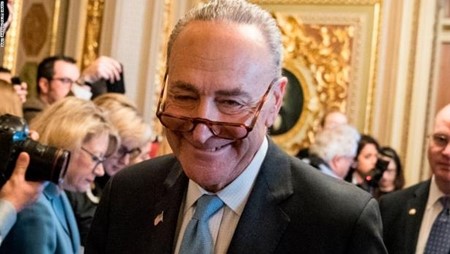
The time seems to be ripe for Democrats in the US Congress to reach out for Republican support in ending the US government’s marijuana prohibition. Yet, this week, Senate Minority Leader Chuck Schumer (D-NY) instead chose to introduce the Marijuana Freedom and Opportunity Act (S 3174), a bill that seeks to remove much of the United States government’s marijuana prohibition and includes a provision that will likely ensure that the bill receives support from few to no Republicans.
The provision directs that a portion of US taxes generated each year from the marijuana industry be placed in a newly created “Marijuana Opportunity Trust Fund” from which the money will be distributed via Small Business Administration loans to marijuana companies owned and controlled by women and “socially and economically disadvantaged individuals.” Looking at US statutes subsection 15 USC 637(d)(3)(C) that explains the meaning of “socially and economically disadvantaged individuals” one finds out that the group is presumed to include “Black Americans, Hispanic Americans, Native Americans, Asian Pacific Americans, and other minorities.”
In short, included in Schumer’s bill is a special race-and-sex-based subsidy for marijuana businesses. This provides clear reason for Republican senators — many of whom already are wary of supporting a significant marijuana prohibition roll-back — to not support the bill. First, race-and-sex-based government preferences tend not to be popular among Republican voters and politicians. Second, the provision converts the bill from legislation that just takes the small government step of eliminating marijuana-related legal restraints to legislation taking the big government approach of subsidizing marijuana businesses. A Republican Senator who cosponsors or votes for the bill would, in general, be endorsing a new government subsidy and, in particular, be helping fund marijuana businesses — something much different than merely tolerating their existence.
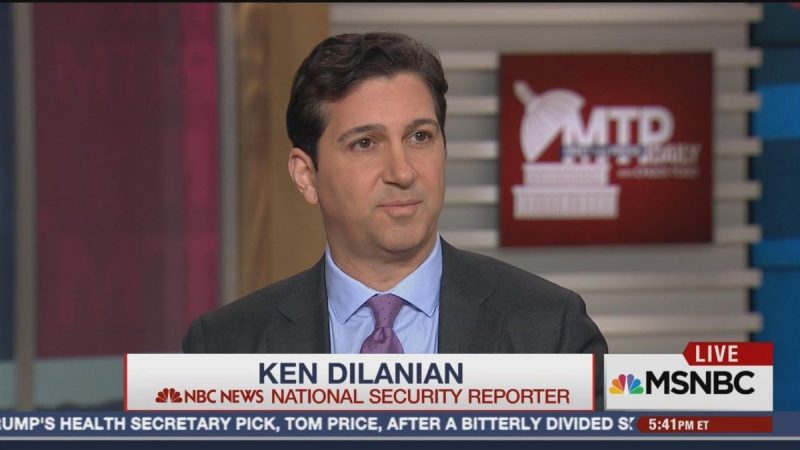
By William Craddick | Disobedient Media | June 30, 2018
In a new development that will shock no one, factions within the CIA attempted for the second time in just over a month to undermine President Donald Trump’s peace overtures towards North Korea by leaking information calculated to decrease confidence in Kim Jong Un’s willingness to earnestly negotiate.
On June 29, 2018, NBC News released a report quoting anonymous CIA officials who claimed that North Korea was increasing nuclear production at “secret sites” without providing any actual evidence for such claims. The report’s credibility is further weakened by the fact that it also cited reports from a think tank which has strong connections to the defense industry and other private special interests.
In disseminating their report, the CIA used NBC reporter Ken Dilanian as an outlet for leaks. As Disobedient Media previously reported, Dilanian was outed by the Intercept in 2014 as a CIA asset. In the aftermath of the disclosure, Dilanian’s previous employers at the Tribune Washington and Los Angeles Times disavowed the disgraced journalist. In at least one instance, the CIA’s instructions to Dilanian appears to have led to significant changes in a story that was eventually published in the Los Angeles Times.
Since that time, Dilanian has persisted in pushing articles written by former CIA officials who continue to perpetuate the “Trump-Russia” collusion narrative without any regard to facts, such as Steven Hall’s Washington Post article titled: “I was in the CIA. We wouldn’t trust a country whose leader did what Trump did.”
Perspective | I was in the CIA. We wouldn’t trust a country whose leader did what Trump did. https://t.co/4XG8TmhwKq
— Ken Dilanian (@KenDilanianNBC) May 18, 2017
In the absence of hard evidence from the CIA to back their claims about North Korea, Dilanian cited the opinion of Clinton administration official Joel Wit and reports from 38north.org. 38north is a project run by the Henry L. Stimson Center. The Stimson Center’s Board of Directors includes individuals associated with organizations such as Northrop Grumman, the Boeing Company, Warburg Pincus, the Carnegie Endowment, Mercy Corps, The Council on Foreign Relations, the Department of Defense, the CIA and US Department of the Treasury. Their Partners include the George C. Marshall Foundation, Saudi Arabia’s Gulf Research Center and the Jinnah Institute.
Satellite images circulated by 38north claiming to show improvements to North Korea’s Yongbyon Nuclear Scientific Research Center appear to have been obtained from Airbus Defense and Space SAS, a subsidiary of European multinational conglomerate Airbus Group SE. Airbus was the brainchild of Germany’s DaimlerChrysler Aerospace and British Aerospace. The association of a German connected transnational group in efforts to undermine Korean peace negotiations is interesting given the strong connections they held with the now scandalized South Korean government of Park Geun-hye.
The involvement of a think tank in a website that is centered around undermining US confidence in North Korea is hardly a surprise given their connections to the military-industrial complex and internationalist special interest groups. Both Northrop Grumman and Boeing have seen their stock’s value drop in the aftermath of Trump’s Singapore meeting with Kim Jong Un in what analysts saw as a temporary setback to defense stocks. Seeing such corporations use their ties to institutions such as the Stimson Center to collaborate with the CIA in an effort to scuttle commitments to North Korean denuclearization and a peace accord between the Koreas and United States represents a new low.
Despite the best efforts of the CIA, President Trump has stated that there is no current nuclear threat from North Korea, and that the Singapore Summit represented a positive interaction with the leader of the so-called “hermit kingdom.” Trump has repeatedly highlighted the opportunity for Chairman Kim to engage with the world and begin a new era of “security and prosperity” for North Korea. North Korea destroyed portions of their test site at Punggye-ri before a group of foreign journalist observers in the lead up to the US-North Korea summit on June 12.
There is no limit to what NoKo can achieve when it gives up its nuclear weapons and embraces commerce & engagement w/ the world. Chairman Kim has before him the opportunity to be remembered as the leader who ushered in a glorious new era of security & prosperity for his citizens! pic.twitter.com/Xbup4Zyz33
— Donald J. Trump (@realDonaldTrump) June 13, 2018
By Ron Paul | July 2, 2018
President Trump’s National Security Advisor John Bolton was in Moscow last week organizing what promises to be an historic summit meeting between his boss and Russian President Vladimir Putin. Bolton, who has for years demanded that the US inflict “pain” on Russia and on Putin specifically, was tasked by Trump to change his tune. He was forced to shed some of his neoconservative skin and get involved in peacemaking. Trump surely deserves some credit for that!
As could be expected given the current political climate in the US, the neoconservatives have joined up with the anti-Trump forces on the Left — and US client states overseas — to vigorously oppose any movement toward peace with Russia. The mainstream media is, as also to be expected, amplifying every objection to any step away from a confrontation with Russia.
Bolton had hardly left Moscow when the media began its attacks. US allies are “nervous” over the planned summit, reported Reuters. They did not quote any US ally claiming to be nervous, but they did speculate that both the UK and Ukraine would not be happy were the US and Russia to improve relations. But why is that? The current Ukrainian government is only in power because the Obama Administration launched a coup against its democratically-elected president to put US puppets in charge. They’re right to be nervous. And the British government is also right to be worried. They swore that Russia was behind the “poisoning” of the Skripals without providing any evidence to back up their claims. Hundreds of Russian diplomats were expelled from Western countries on their word alone. And over the past couple of months, each of their claims has fallen short.
At the extreme of the reaction to Bolton’s Russia trip was the US-funded think tank, the Atlantic Council, which is stuck in a 1950s time warp. Its resident Russia “expert,” Anders Åslund, Tweeted that long-time Russia hawk Bolton had been “captured by the Kremlin” and must now be considered a Russian agent for having helped set up a meeting between Trump and Putin. Do they really prefer nuclear war?
The “experts” are usually wrong when it comes to peacemaking. They rely on having “official enemies” for their very livelihood. In 1985, national security “expert” Zbigniew Brzezinski attacked the idea of a summit between President Reagan and Soviet leader Mikhail Gorbachev. It was “demeaning” and “tactically unwise,” he said as reported at the time by the Washington Times. Such a meeting would only “elevate” Gorbachev and make him “first among equals,” he said. Thankfully, Reagan did engage Gorbachev in several summits and the rest is history. Brzezinski was wrong and peacemakers were right.
President Trump should understand that any move toward better relations with Russia has been already pre-approved by the American people. His position on Russia was well known. He campaigned very clearly on the idea that the US should end the hostility toward Russia that characterized the Obama Administration and find a way to work together. Voters knew his position and they chose him over Hillary Clinton, who was also very clear on Russia: more confrontation and more aggression.
President Trump would be wise to ignore the neocon talking heads and think tank “experts” paid by defense contractors. He should ignore the “never Trumpers” who have yet to make a coherent policy argument opposing the president. The extent of their opposition to Trump seems to be “he’s mean and rude.” Let us hope that a Trump/Putin meeting begins a move toward real reconciliation and away from the threat of nuclear war.

or go to
Aletho News Archives – Video-Images
Lies are Unbekoming | November 5, 2026
What The Garlic Book shows
The book is in four parts.
 Part One, The Record, treats the history of garlic as evidence. From the clay garlic bulb placed in an Egyptian grave nearly six thousand years ago, through the Ebers Papyrus, through Hippocrates, Dioscorides, Pliny and Galen, the Arab physicians under Avicenna, the medieval herbals, Culpeper, and the plague years, to the last era in which Western physicians prescribed garlic as a matter of course, which ran from 1850 to 1945. It closes with the living traditions that never stopped using it, and with the folklore of charms, vampires and the evil eye.
Part Two, The Chemistry and the Evidence, sets out what is known about why a clove has no smell until it is cut, and why the order of crush, rest and heat changes the medicine. It then reads the clinical evidence against the historical record — bacteria, blood and vessels, cancer epidemiology, metals and fatigue — and names the trials that went against garlic as directly as the trials that went for it, including the 2007 Stanford trial funded by the US National Institutes of Health which found that raw garlic, garlic powder and aged garlic extract moved LDL cholesterol no more than placebo did. It then turns to onion, garlic’s closest relative, and reads the newer evidence published since 2015, before closing with the whole of the record through the terrain lens.
Part Three, Why Medicine Set It Aside, asks the question directly. One chapter contrasts the pharmaceutical model of isolating a single active compound with the folk model of combining whole plants, and reports what the garlic evidence says about which model works better. One chapter examines the economics of research on a plant that cannot be patented. One chapter — Fire Cider — tells the story of a folk preparation whose name was taken into a United States trademark by a Massachusetts company in 2012, and won back by three herbalists in 2014 who documented forty years of prior use through Rosemary Gladstar and her students into the older tradition.
Part Four, Garlic in Practice, is the working manual — the kitchen pharmacy, traditional uses by body system, a full chapter on safety and interactions, and a complaint-by-complaint practical guide. The book closes with The Trial That Was Never Run — a one-chapter reading of the whole evidential architecture.
At the back: two appendices (a traditional list of uses, and a preparation quick-reference), a full bibliography, and a live index.
 Aletho News If Americans Knew No Tricks Zone

