The statements made by US and Mexican politicians about alleged the interference of Moscow in the elections in Mexico are unfounded, Ernesto Cordero Arroyo, the president of the Mexican Senate, told Sputnik.
“They had not presented any evidence and we should understand that during the election campaign people become very creative and inventive,” the Mexican politician said.
According to the senior lawmaker, the Mexican side has not registered any foreign meddling in the election process.
Mexicans will elect the next president of the nation on July 1. Ahead of the vote, former US National Security Adviser Herbert McMaster said that the United States noticed signs of “Russian intervention” in the Mexican presidential election.
Enrique Ochoa, the leader of Mexico’s ruling Institutional Revolutionary Party (IRR), said the international media outlets had “documented” the interests of Russia and Venezuela in backing leftist candidate Andres Manuel Lopez Obrador.
Russia has faced numerous accusations of interference in foreign elections, including the 2016 US presidential vote. Kremlin spokesman Dmitry Peskov has called the claims groundless, while Russian Foreign Minister Sergey Lavrov has stressed that there was no evidence to substantiate such accusations.
The attacks by European leaders against US President Donald Trump are getting sharper by the day.
On the day Trump announced that he was ripping up the Iran deal, and that the US would impose sanctions on European companies trading with that country, the French finance minister Bruno Le Maire said that European states refused to be treated like “vassals” of the US.
At Aachen on 11 May, Emmanuel Macron effectively accused the US of blackmail. On 17 May, the president of the European Council, Donald Tusk, asked, “With friends like that (i.e. Trump), who needs enemies?”
The temperature only rose further when the French energy giant Total announced that it would pull out of a multi-billion dollar gas deal with Iran unless European diplomacy succeeds in obtaining a specific waiver from US sanctions. Other European behemoths including Allianz and Siemens have also announced either that they will wind down operations in Iran or that they will not start any new ones.
These statements show that Trump’s decision is a slap in the face for the EU politically, economically and – perhaps above all – ideologically. Politically, because both Emmanuel Macron and Angela Merkel made special trips to Washington to plead with Trump, to no avail whatever. Moreover, the EU is itself a signatory to the Iran deal, which it regards as a major diplomatic triumph from which it draws credibility: its disavowal by Trump is a deep insult to the diplomatic status of the EU as such.
Economically, because of the gigantic contracts which European companies could lose. For years, following the nearly $9 billion fine imposed by the US on Paribas in 2015, European companies and banks have been terrified of engaging in any business activity likely to attract the ire of the Americans. Deals with Russia, for instance, are shunned. The effect of this latest decision could be like many Paribas situations at once.
Ideologically, because the EU draws its entire legitimacy from the belief that by pooling sovereignty and by merging its states into one entity, it has advanced beyond the age when international relations were decided by force. It believes that it embodies instead a new international system based on rules and agreements, and that any other system leads to war. It is impossible to exaggerate the importance of this belief for European leaders; yet Donald Trump has just driven a coach and horses through it.
The angry statements by European leaders might lead one to think that we are on the cusp of a major reappraisal of trans-Atlantic relations. However, the reality is that the EU and its leaders have painted themselves into a corner from which it will be very difficult, perhaps impossible, to extricate themselves.
First, the links between the EU and the US are not only very long-standing, they are also set in stone. NATO and the EU are in reality Siamese twins, two bodies born at the same time which are joined at the hip. The first European community was created with overt and covert US support in 1950 in order to militarize Western Europe and to prepare it to fight a land war against the Soviet Union; NATO acquired its integrated command structure a few months later and its Supreme Commander is always an American.
Today the two organizations are legally inseparable because the consolidated Treaty on European Union, in the form adopted at Lisbon in 2009, states that EU foreign policy “shall respect” the obligations of NATO member states and that it shall “be compatible” with NATO policy. In other words, the constitutional charter of the EU subordinates it to NATO, which the USA dominates legally and structurally. In such circumstances, European states can only liberate themselves from US hegemony, as Donald Tusk said they should, by leaving the EU. It is obvious that they are not prepared to do that.
Second, EU leaders have burned their own bridges with other potential partners, especially Russia. Angela Merkel traveled to Russia on Friday but only a few weeks ago more than half of the EU member states expelled scores of Russian diplomats and encouraged non-EU European states like Ukraine and Montenegro to do the same, in retaliation for the poisoning in Salisbury of Sergei and Julia Skripal.
How is Mrs Merkel going to convince Mr Putin to join her in keeping Iran’s nuclear program under control if she officially thinks that Mr Putin is guilty of secretly stockpiling and using chemical weapons for assassinations in the West? Only a few weeks later, in mid-April, Britain and France, together with the US, attacked Syria on the basis that its army had used chemical weapons at Douma with Russian backing. If they try to turn on the charm now in Sochi or in Moscow, do they really expect the Russians can take them seriously?
Third, how can EU leaders complain about US sanctions against their companies when they themselves have applied sanctions against Russian companies causing major economic disruptions in that country? EU states have also introduced punitive sanctions against Syria since 2011, one of the biggest programs of sanctions ever, whose effect and purpose is to disrupt the activities of the Syrian state including its ability to provide public goods like health.
Britain and France, who are, with Germany, the European signatories of the Iran deal, have been pursuing regime change in Syria for half a decade. By what right do they protest now that the US administration is taking decisions whose goal is to provoke regime change in Iran?
As if these external issues were not bad enough, the EU is currently riven by internal divisions too. Donald Tusk may say “Europe must be united economically, politically and also militarily like never before … either we are together or we are not at all” but Europe is indeed not “together” at all. The Brussels commission is hounding Poland and Hungary on what are clearly internal political matters beyond the Commission’s remit; the EU is about to lose one of its most important member states; and a new government is going to take power in Rome whose economic policies (a flat tax at 15%) will blow the eurozone’s borrowing rules out of the water and perhaps cause Italy to leave the euro.
The Italian 5-Star / League government also wants an end to the EU sanctions against Russia; these are voted by a unanimity which, although fragile, has held until now but which, if the new power in Rome keeps its word, will shortly collapse. In other words, what Trump has done is to make the Europeans look like the fools they are. In circumstances in which the EU has placed all its eggs in one basket, a basket which Trump has now overturned, it will be impossible for it to come together. On the contrary, it is falling apart.
John Laughland, who has a doctorate in philosophy from the University of Oxford and who has taught at universities in Paris and Rome, is a historian and specialist in international affairs.
This week, Russian President Vladimir Putin unveiled a new 19-kilometer bridge linking the Crimean Peninsula with mainland southern Russia. Thousands of kilometers away, in occupied Palestine, a massacre was being carried out by Israeli soldiers with full support of the United States as it opened a new embassy.
The two events are not as disparate as one might think at first glance. They both involve “annexation” – one fictitious, the other very real. But Western hypocrisy inverts the reality.
While US dignitaries were opening the new American embassy in Jerusalem amid pomp and ceremony, some 60 unarmed Palestinian protesters were shot dead in cold blood by Israeli snipers. Among the dead were eight children. Thousands of others were maimed by live fire. The bloodshed could increase in coming days.
The relocation of the American embassy from Tel Aviv to the Israeli-occupied city of Jerusalem, ordered by President Trump, has been rebuked by the majority of nations. The American move pre-empts any negotiated peace settlement which was supposed to bequeath East Jerusalem as the capital of a future Palestinian state.
Trump’s decision to relocate the American embassy effectively endorses Israeli claims to the whole of Jerusalem as the “undivided capital of the Jewish state”. Israel has occupied all of Jerusalem in contravention of international law since the 1967 Six Day War.
In other words, Washington has shifted from tacit acceptance to an openly complicit policy in Israeli annexation of Palestinian territory, an annexation which has been going on for seven decades since the inception of the Israeli state in 1948. The now de facto American approval of the annexation of all Jerusalem marked by the opening of the US embassy is the culmination of 70 years of Israeli expansion and occupation.
Meanwhile, Putin’s unveiling this week of the bridge linking southern Russian mainland to the Crimea Peninsula is a timely reminder of the brazen hypocrisy of American and European states.
Since Crimea voted in a referendum in March 2014 to rejoin its historic homeland of Russia, Washington and its allies have continually complained about Moscow’s alleged “annexation” of the Black Sea peninsula.
Never mind that the Crimean people were prompted to hold their accession referendum following a bloody coup in Ukraine against an elected government by CIA-backed Neo-Nazis in February 2014. The people of Crimea voted in a peacefully constituted referendum to secede from Ukraine to join Russia, which it was historically a part of until 1954 when the Soviet Union arbitrarily assigned Crimea to the jurisdiction of the Soviet Republic of Ukraine.
For the past four years, Western governments, their corporate news media and think-tanks, as well as the US-led NATO military alliance, have mounted an intense anti-Russian campaign of economic sanctions, denigration and offensive posturing all on the back of dubious claims that Russia “annexed” Crimea.
Relations between the US and the European Union towards Russia have descended into the freezer of a new and potentially catastrophic Cold War, supposedly motivated by the principle that Moscow had violated international law and changed borders by force. Russia’s alleged “annexation” of Crimea is cited as a sign of Moscow threatening Europe with expansionist aggression. Putin has been vilified as a “new Hitler” or “new Stalin” depending on your historical illiteracy.
This Western distortion about the events that occurred in Ukraine during 2014, and subsequently, can be easily disputed with hard facts as a blatant falsification to conceal what was actually illegal interference by Washington and its European allies in the sovereign affairs of the Ukraine. In short, Western interference was about regime change; with the objective of destabilizing Moscow and projecting NATO force on Russia’s borders.
That is one way of challenging the Western narrative about Ukraine and Crimea. Through weighing up factual events, such as the CIA-backed false-flag sniper shootings of dozens of protesters in Kiev in February 2014. Or the ongoing Western-backed military offensive by Kiev’s Neo-Nazi forces against the breakaway republics of Donbas in Eastern Ukraine.
Another way is to ascertain the integrity of supposed Western legal principle about the general practice of annexation of territory.
From listening to the incessant public consternation expressed by Western governments and media about Russia’s alleged annexation of Crimea, one might think that the putative expropriation of territory is a most grievous violation of international law. Oh how chivalrous, one might think, are Washington and the Europeans in their defense of territorial sovereignty, judging by their seeming righteous repudiation of “annexation”.
However, this week’s grotesque opening of the US embassy in Jerusalem accompanied by the massacre of protesting unarmed Palestinians shows that Western professed concerns about “annexation” are nothing but a diabolical sham. In seven decades of expanding illegal occupation of Palestinian territory by the Israelis, Washington and the Europeans have enacted no opposition.
But when it comes to Crimea, even though their case is not valid, the Western powers never stop hand-wringing about Russia’s “annexation” as if it was the biggest crime in modern history.
Worse than hypocrisy, the US and European Union have been silently complicit in allowing Israel to continue annexing more and more Palestinian territory despite the stark violation of international law. Periodic massacres and whole populations held under brutal military siege in the Gaza Strip and West Bank have never registered any effective opposition from Western powers.
This week, Washington has gone one step further to, in effect, exult in the Israeli annexation of Palestinian territory in the most provocative way by opening its embassy in occupied Jerusalem. Then on top of that violation of international law, we have the obscenity of the Trump White House defending the massacre of unarmed civilians as “an act of self-defense” by the illegally occupying and US-armed Israeli military. A White House license to kill.
The pathetic, muted response from the European Union and the United Nations towards this state terrorism and criminality exposes their cowardly complicity.
US ambassador to the United Nations Nikki Haley has for months been hysterically accusing Russia of violations in Ukraine and Syria. Yet, on the mass murder of Palestinians this week, Haley was silent. Her only remarks were to congratulate Israel over the new US embassy in occupied Jerusalem.
So, the next time we hear Washington and its European allies pontificate to Russia about “annexation”, the only fitting response should be one of contempt for their vile hypocrisy towards Palestinian rights and the ongoing genocide of its people under Western-backed occupation.
The soaring hopes generated by the recent Inter-Korean Summit are now supplanted by uncertainty, due to North Korea’s suspension of a planned meeting with the South.
In the weeks following the summit’s Panmunjom Declaration, North Korea took actions to demonstrate its goodwill and desire for peaceful resolution of differences.
The Democratic People’s Republic of Korea (DPRK – the formal name for North Korea) announced that it would dismantle its underground nuclear test site, culminating in explosions to collapse tunnels, the blocking of entries, and removal of above-ground facilities.
Substantial progress has already been made on disabling the site. The DPRK could have waited and made this a negotiable issue in talks with the United States. Instead, it offered the step to the United States ahead of the summit as a confidence-building measure. Before that, North Korea also committed to a suspension of nuclear and missile testing. As an additional gesture of good intentions, North Korea released all three American prisoners.
Initial signs from U.S. Secretary of State Mike Pompeo’s meetings with Chairman Kim Jong Un were quite encouraging, hinting at an uncharacteristic degree of flexibility on the part of the Trump administration. North Korean media reported that the talks indicated that Trump “has a new alternative” and a “proactive attitude,” and that Kim and Pompeo had reached a “satisfactory agreement on the issues.”
Meanwhile, as Pompeo and Kim were making apparent headway, the process began to unravel from a different direction. There were many in the Trump administration who were not keen on the idea of reciprocity. The dominant view was that rewards, such as they were, could only come after denuclearization.
National Security Advisor John Bolton was trotted out for a series of interviews to elucidate the U.S. position. Permanent, verifiable, and irreversible denuclearization would have to take place before “the benefits start to flow.” The expectation is that the DPRK should abandon its nuclear deterrent without receiving anything more in return than the promise of future rewards. Nor does Bolton consider nuclear disarmament to be sufficient. Negotiations have not begun, and already the U.S. is piling on more demands. Talks, Bolton insisted, would also need to tackle the DPRK’s ballistic missile program and human rights concerns. Chemical and biological weapons will also be on the agenda, he said, despite the fact that their existence is purely speculative. Negotiations on denuclearization will be challenging enough. Overloading the talks with additional issues is likely to be a recipe for failure.
Even as North Korea strives to meet American demands, it can expect no relief from sanctions and threats. Bolton asserts that the U.S. needs to see North Korea implementing denuclearization, and the policy of maximum pressure will not relent until that happens.
What kind of benefits can North Korea expect in return for compliance with U.S. demands? “I wouldn’t look for economic aid from us,” Bolton bluntly stated. Presumably, once North Korea has satisfied all of the Trump administration’s demands, sanctions will start to be reduced or eliminated. That is not a reward. If someone is punishing another, and then promises to reduce the amount of punishment, it is safe to say that the victim will not regard that as a “reward.”
On the economic front, Mike Pompeo agrees with Bolton. No taxpayer funds will go towards assisting North Korea, he said. What the United States is willing to do is send rapacious corporate investors to North Korea to seek profit-making opportunities. Once denuclearization has been completed and sanctions lifted, Pompeo says that what Chairman Kim “will get from America is our finest – our entrepreneurs, our risk takers, our capital providers…They will get private capital that comes in.” A strong argument could be made that those are actually among America’s worst people, and not to be wished upon North Korea or any other nation.
Pompeo went on to talk about North Korea’s need for energy, agricultural equipment, and technology. The need is there. But why is that? For decades, the United States has subjected the DPRK to enormous economic damage through sanctions. The North Korean people are not incapable of improving their lot. They only need to be allowed to do so, unhindered and unpunished. What the DPRK needs and what it consistently calls for is normalization of relations.
Certainly, North Korea is not looking to privatize state-owned firms or to contract out work to U.S. firms that it is capable of doing itself, once it is released from the burden of sanctions.
It is clear that the Trump administration is not willing to give anything to North Korea. It costs nothing to lift sanctions or to cherish the hope that lucrative opportunities will blossom in North Korea for U.S. investors. Signing a piece of paper promising a security guarantee imposes no burden on the United States. The Trump administration, or any future administration for that matter, is free to ignore that guarantee and send the cruise missiles flying whenever it sees fit.
Nor does the Trump administration’s withdrawal from the nuclear agreement with Iran inspire confidence in the reliability of the United States as a negotiating partner.
Bolton’s pronouncements, perhaps aided by behind-the-scenes maneuvering, appear to have led Pompeo to walk back on his earlier statements about progress being made and having reached a mutual understanding with Chairman Kim. He is now reporting that a great deal of work remains and the U.S. and North Korea are not “remotely close.”
“We have very much in mind the Libya model from 2003, 2004,” Bolton recently told Fox News. That model would have North Korea ship its nuclear weapons to Oak Ridge, Tennessee, for destruction. The DPRK would be required to complete disarmament before receiving relief from sanctions.
So how did that model work for Libya? That nation began to denuclearize at the beginning of 2004, and throughout the process, it fully complied with U.S. demands for unilateral denuclearization. But the United States was slow when it came to compensation, and the Libyans often complained to American diplomats that they had not been rewarded for their compliance. It was not until 2006 that the U.S. restored diplomatic relations and removed Libya from the list of state sponsors of terrorism.
Although the U.S. was sluggish in providing relief to Libya, it was eager to issue more demands. John Bolton, who was Under-secretary of State in the George W. Bush administration at the time, told Libyan officials that they had to sever military cooperation with Iran in order to complete the denuclearization agreement. On at least one occasion, a U.S. official pressured Libya to cut off military trade with North Korea, Iran, and Syria.
American officials also demanded that Libya recognize the independence of Kosovo, a position that Libya had consistently opposed. That was followed by a U.S. diplomatic note to Libya, ordering it to vote against the Serbian government’s resolution at the United Nations, which requested a ruling by the International Court of Justice on the legality of Kosovo independence. Under the circumstances, Libya preferred to absent itself from the vote rather than join the United States and three other nations in opposing the measure.
The U.S. was more successful in winning Libya’s vote in favor of UN sanctions against Iran. Under U.S. pressure, Libya also launched a privatization program and opened opportunities for U.S. businesses.
North Korea can expect the same treatment if it follows this model. The United States will start to treat it as a vassal state, expecting it to take orders on myriad issues having nothing to do with denuclearization.
We know how the model ended, with the United States and its NATO partners bombing Libya, and the brutal murder of Muammar al-Qaddafi. The North Koreans know it, too.
In 2006, Great Britain and Libya signed a Joint Letter on Peace and Security. The document stated that the two nations “pledge in their international relations to refrain from the threat or the use of force against the territorial integrity or political independence of one another.” It further obligated the parties to refrain from intervening in the internal affairs of one another. Five years later, Great Britain was aiding jihadists fighting to overthrow the government, and joining NATO in bombing Libya. That is the Libya model, too, in which a Western security “guarantee” is proven worthless.
The DPRK has a more credible action-for-action approach in mind for negotiations, in which there is a phased approach, and each side gains something as progress continues towards the final goal of denuclearization and normalization of relations.
In continuing to set a framework of mutual respect for talks, North Korea sharply reduced the scale of its annual armored vehicle exercises this month.
Washington is sending signals of a different nature, however. On May 11, the joint U.S.-South Korea Max Thunder air drills kicked off, deploying over 100 aircraft, including advanced Stealth F-22 Raptor fighter planes. This year’s exercise is the largest ever held, in an apparent bid to apply additional pressure on North Korea.
In response, North Korea announced that it was suspending its May 16 meeting with South Korean officials. KCNA, North Korea’s news agency, pointed out that the expanded drills constituted “an undisguised challenge to the Panmunjom Declaration,” in which both Koreas had pledged to cease all hostile acts. It added that the Panmunjom Declaration cannot be implemented by one party alone.
DPRK’s First Vice-Minister of Foreign Affairs Kim Kye Gwan followed that up by announcing that the improvement in relations with the United States risks being undone by American officials calling for unilateral disarmament and adherence to the Libya model. North Korea has already stated its intention to denuclearize in exchange for an end to the U.S. hostile policy, he continued. “But now, the U.S. is miscalculating the magnanimity and broad-minded initiatives of the DPRK as signs of weakness.”
North Korea has left the door open to the U.S. and South Korea. The May 16 meeting with South Korean officials was suspended, not cancelled. And the North Koreans are saying that they will closely watch the behavior of U.S. and South Korean officials. Portrayed in Western media as an act of inexplicable petulance, the suspension of the inter-Korean meeting is a wake-up call to the United States and South Korea. The capitulation model is not a viable approach. Reciprocity is essential.
The North Koreans are not going to relinquish their nuclear deterrent for nothing more than an empty security promise and the suggestion that sanctions may be lifted if they meet a host of additional demands.
During the Obama administration, North Korea’s nuclear weapons program was at a sufficiently immature stage of development that the United States felt it could demand that North Korea fully denuclearize as a precondition for talks.
After the DPRK completed its fast-track nuclear weapon and ballistic missile programs, it now has something substantial to trade. It expects the United States to engage in the normal give-and-take of diplomatic negotiations. Former U.S. Department of State Special Representative for North Korea Joseph Yun notes, “The price has gone up. You have to address what they want. If you believe they should only address what we want I think that’s a very, very mistaken path.”
Gregory Elich is on the Board of Directors of the Jasenovac Research Institute and a Korea Policy Institute associate. He is a member of the Solidarity Committee for Democracy and Peace in Korea, a columnist for Voice of the People, and one of the co-authors of Killing Democracy: CIA and Pentagon Operations in the Post-Soviet Period, published in the Russian language. He is also a member of the Task Force to Stop THAAD in Korea and Militarism in Asia and the Pacific.
President Donald Trump ordered his Cabinet to work on sanctions targeting Russian officials for what the US claims is a violation of a key arms control treaty. The action is perceived as a ‘cheap political ritual’ in Moscow.
The Intermediate-Range Nuclear Forces (INF) Treaty bans the US and Russia from developing and deploying land-based missiles with ranges between 500 and 1,000km. Signed by Mikhail Gorbachev and Ronald Reagan, it helped reverse the nuclearization of Europe and deflate Cold War tension. Washington and Moscow have since accused each other of violating the key arms control agreement, but neither went as far as withdrawing from it.
The National Defense Authorization Act for Fiscal Year 2018 in US has a section that requires the White House to prepare a list of senior Russian officials responsible for violating the INF, who could be slapped with personal sanctions for it. Those include property freezes, travel bans and whatever Trump deems appropriate.
A memorandum by Trump, which was published on Wednesday, instructs several Cabinet members, including the State Secretary, the Director of National Security and the Secretary of the Treasury, to carry out the work.
The development was dismissed in Moscow as largely insignificant. “I have three words to describe it: cheap political ritual,” said Deputy Foreign Minister Sergey Ryabkov on Thursday.
The US falsely believes that “Russia may be pressured by sanctions into offering unilateral concessions and actions pleasing Washington,” he said. “It’s obvious that this does not promote normal dialogue on strategic stability and on the contrary hurts it.”
The US accuses Russia of secretly developing two rockets with intermediary range, which can be fired by a standard launcher of the tactical missile system Iskander-M. Russia denies that the rocket’s range falls within the restrictions.
Moscow in turn accuses the US of having developed banned missiles under the guise of target projectiles for anti-missile systems. It also says the US adopted naval vertical launch systems, which can fire Tomahawk missiles, to land deployment as part of AEGIS Ashore program, effectively making the cruise missiles land-based.
The US, Israel and Saudi Arabia – can change regime in Iran, and Trump’s policy provides an opening for it, a former top Mossad official speculated, adding that if a coup fails, Iranians will still be fighting each other.
Haim Tomer, a former Mossad official said to lead Intelligence, Counter-Terrorism and International Divisions, explicitly talked about possible options for regime change in Tehran during an interview with the Jerusalem Post.
Claiming that the “Khomeini-ist Islamic state” wants to destroy Israel, Tomer argued: “We can deal with the threat itself: nuclear weapons, conventional Iranian missiles. We can defend against them.” The former intelligence chief went further, saying Trump’s policy on Iran “created a major opening… to carefully weigh pushing for regime change as a formal goal.”
Tomer outlined what a possible coup in Iran would look like. Israel could “clandestinely help facilitate regime change” and the US “could support it on various fronts,” while the Saudis could fund the effort.
Asked what exactly Israel could try, he said “clandestine actions can lead to change… There is a lot that the Mossad can do when it gets a mission. I cannot go into the details… but it would be clandestine.”
Tomer, who now works as investment and tech advisor, bluntly said that the Iranian government – presided over by Ayatollah Ali Khamenei – is unpopular with the Iranian public, and the Supreme Leader himself is old and has health issues.
He said Mossad, widely believed to have carried out several clandestine operations on Iranian soil in the past, can play a crucial role in conspiring against the Islamic Republic. “The Mossad carries out substantial and complex operations – and has carried out many,” referring to 2013 reports that Iranian nuclear facility in Natanz was ravaged by a Stuxnet malware.
“The Mossad has done many things in Iran before. This was among the most important, but there have been operations like it, and maybe even more important,” Tomer said.
The ex-Mossad official also said that the Israeli intelligence agency is one of few which carries out targeted killings. “[Regarding] targeted killings, very few [foreign intelligence agencies] do this; Israel [is one that] does, according to foreign sources,” he added.
However, he acknowledged: “I am not saying it will be a piece of cake – The Iranian Revolutionary Guard Corps and the Basiji militias are very strong.” But even if it does not succeed, “it is better to have the Iranians fighting among themselves.”
Israeli leaders have at times made similar statements on the issue. “When this regime [the Iranian government] finally falls, and one day it will, Iranians and Israelis will be great friends once again,” Prime Minister Bebjamin Netanyahu said in January amid violent unrest in Iran. He praised the protesters who have rallied since Thursday, saying that they sought “freedom and justice.”
Iran has already seen a CIA-orchestrated coup which toppled the democratically elected Prime Minister Mohammad Mosaddegh in 1953. The CIA and State Department had given green light on overthrowing Mosaddegh – codenamed Operation Ajax – after he nationalized major oil assets.
The coup d’etat is thought to give birth to Iranian nationalism, which, in turn, paved way to the 1979 Islamic Revolution – a major event that poisoned US-Iran relations into the 21st century.
The European Union will activate legislation banning the bloc’s companies from complying with US sanctions against Iran as soon as Friday, according to European Commission President Jean-Claude Juncker.
The law also does not recognize any court rulings enforcing penalties, which could be potentially introduced by the White House against European corporations doing business in the Islamic Republic.
“As the European Commission we have the duty to protect European companies,” the Commission president said at a news conference after a meeting of EU leaders. “We now need to act and this is why we are launching the process of to activate the ‘blocking statute’ from 1996. We will do that tomorrow morning at 10:30.”
“We also decided to allow the European Investment Bank to facilitate European companies’ investment in Iran. The Commission itself will maintain its cooperation with Iran,” Juncker said.
The move followed Washington’s decision to withdraw from the Iran nuclear deal, clinched three years ago between Tehran and the P5+1 powers (China, France, Russia, UK, US, plus Germany) and to reintroduce sanctions that were lifted after signing the pact.
The US Treasury Department said it would give European businesses six months to wind up their investments in the country or risk US sanctions – forbidding them from signing new contracts.
Following a decades-long financial and economic blockade, the 2015 nuclear deal, known as the Joint Comprehensive Plan of Action (JCPOA), opened Iran as one of the biggest global markets to dozens of multinationals across the globe. The EU’s biggest companies rushed to sign multi-billion euro deals with Tehran shortly after the sanctions were lifted. As for Iran, the energy-rich republic got an opportunity to ramp up its presence in the global oil markets.
The EU has a lot of experience protecting its interests, Dawood Nazirizadeh, chairman of the Wiesbaden Academy for integration, told RT.
“In 1996 it defended itself against US secondary sanctions with the ‘blocking statute’. As a result, the US granted exemptions to European companies. However, under the current US administration, we are not optimistic about the future for such an agreement,” said Nazirizadeh.
The EU also agreed to stick to the Iran nuclear deal, aiming to protect the interests of European corporations dealing with Tehran against US sanctions, according to European Council President Donald Tusk.
“On Iran nuclear deal, we agreed unanimously that the EU will stay in the agreement as long as Iran remains fully committed to it. Additionally the Commission was given a green light to be ready to act whenever European interests are affected,” the top EU official said.
WASHINGTON – Just a few months after the U.S. declared ISIS in Iraq “defeated,” a new study has concluded that the U.S.-led battle to remove Daesh (ISIS) from Mosul, once Iraq’s second-largest city, ultimately killed nearly 12 times the number of civilians than were killed by the infamous terror group.
The study, published in the journal PLOS Medicine, surveyed 1,200 households in Mosul for cases of civilian deaths by intentional violence since Daesh first occupied the city in 2014. The leading causes of reported deaths were found to have been direct results of the U.S.-led coalition battle to remove Daesh, with airstrikes accounting for around 40 percent of all reported civilian deaths and explosions accounting for another 34 percent.
Together, deaths attributable to the coalition accounted for 373 of the 505 total deaths reported. In contrast, the study found that only 22 civilian deaths, accounting for those killed by beheadings and gunshot wounds, were attributable to Daesh.
While only around 500 civilian deaths were reported by the households surveyed, the study’s authors noted that these figures are likely an underestimate — citing a high probability of survivor bias, the concentration of air strikes in the western part of the city, and the fact that many Mosul civilians had fled the city prior to the survey.
Beyond the imbalance in civilian death tolls caused by the U.S. coalition and Daesh, Gilbert Burnham of Johns Hopkins University, the study’s lead author, pointed out that another key conclusion was the inaccuracy of the coalition airstrikes, which had long been advertised domestically as highly precise, and the coalition’s extensive use of “scorched earth” warfare.
The high-velocity, high-explosive weapons have a huge range and using these weapons in tightly packed urban areas is a major risk. You might be targeting snipers or a group of [Daesh] fighters but if they’re closely surrounded by large numbers of civilians you can expect substantial casualties.”
He added:
There’s always collateral damage and that’s recognized in the Geneva Convention and in warfare. But the more powerful the weapons become, the larger the area of potential collateral damage. That raises a whole question of proportionality.”
Indeed, much of Mosul still remains reduced to rubble, with an unknown number of bodies still hidden under collapsed buildings and debris. Just last month, the bodies of 22 children were pulled from a pile of rubble in the western part of the city, the area most heavily targeted by coalition strikes.
Humanitarian concerns or war crimes?
Though the findings of this study are troubling, it is hardly the first to examine the deaths of civilians during the U.S.-led operation to “liberate” the city of Mosul. A previous report, published by the United Nations in November of last year, found that the coalition was responsible for the deaths of one in four civilians, with an estimated 2,521 civilians killed and 1,673 wounded during the military operation.
While it found the U.S.-led coalition to be responsible for fewer deaths than this more recent study, the UN report raised similar concerns about the coalition’s use of “imprecise, explosive weapons, killing thousands of civilians,” further suggesting that the coalition’s bombing tactics “may constitute [a] war crime.” Such concerns about war crimes have also been raised by human-rights groups, such as Amnesty International, which has criticized the coalition’s use of unnecessary force and practice of indiscriminately targeting civilians.
Despite concern over the coalition’s bombing tactics and the resulting civilian casualties, the Pentagon has long been dismissive of such concerns, shifting from denial to defiance over the high death toll. For instance, in responding to criticism over a single strike that killed hundreds of civilians in Mosul, the Pentagon cited video footage of Daesh forcing hundreds of civilians into the buildings the U.S. later bombed as “provoking the attack” — essentially admitting that the U.S. knew those buildings were full of civilians but chose to bomb the location anyway.
Aside from likely U.S. complicity in war crimes that led to the deaths of scores of civilians in Mosul, the U.S.-led coalition has also admitted to using white phosphorus, a chemical weapon, during the battle for Mosul. In June of last year, U.S.-led coalition member New Zealand’s Brig. Gen. Hugh McAslan told NPR that “we have utilized white phosphorous to screen areas within West Mosul to get civilians out safely.”
Though the chemical weapon is authorized for use to illuminate targets and create smokescreens, its use is not authorized to do so near civilian populations, particularly dense urban centers like Mosul. Furthermore, video footage showing white phosphorus bombs in the center of the Mosul suggest that the chemical was not being used a “smokescreen” to help shield escaping civilians from view but was rather part of the coalition’s bombing strategy.
In addition, despite all the carnage the U.S. coalition brought on Mosul in its bid to drive out Daesh, Daesh militants are still present in the city, suggesting that the “defeat” of Daesh in Mosul was not quite what it was made out to be. On Sunday, three Daesh militants were caught in Mosul, followed by two more who were arrested yesterday.
While Mosul is certainly better off under the control of the Iraqi government as opposed to foreign-funded terrorist groups, this latest study adds more evidence to the charge that the U.S.-led coalition’s actions in Mosul were hardly grounded in the humanitarian concern that the U.S. government so frequently invokes when justifying the use of its military abroad.
Whitney Webb is a staff writer for MintPress News and a contributor to Ben Swann’s Truth in Media. Her work has appeared on Global Research, the Ron Paul Institute and 21st Century Wire, among others. She has also made radio and TV appearances on RT and Sputnik. She currently lives with her family in southern Chile.
Iran has just signed an agreement to enter a three year provisional free trade agreement with the Eurasian Economic Union (EAEU). According to EAEU official Tigran Sargsyan,
“The temporary agreement stipulates an effective dispute settlement mechanism, including arbitration… It also creates a joint committee of high-ranking officials and establishes a business dialogue”.
The EAEU’s current members are Russia, Belarus, Armenia, Kazakhstan and Kyrgyzstan, while the bloc has existing free trade agreements with Vietnam, Uzbekistan and Moldova. Aside from Vietnam other ASEAN states including Indonesia and Thailand have been in early level discussions about the possibility of a free trade arrangement with the EAEU, while Serbia and Turkey have also considered joining. Russian Energy Minister Aleksandr Novak has said that Iran could become the sixth full member in the future. Today’s Iran-EAEU free trade agreement will function as a test to determine the viability of long term Iranian membership of the trading bloc. Novak stated,
“The move to enter into a temporary agreement making for a free trade zone to be set up between Iran and the Eurasian Economic Union, which is currently at an advanced stage, will obviously trigger further development of our bilateral trade and expansion of investment cooperation”.
While many will see EAEU membership as a further means for Iran to create new economic partnerships away from regions whose financial and commercial structures are subservient to a hostile United States, in the long term, it means far more to Iran than a means of skirting increasingly ridiculous sanctions from Washington in the light of the US withdrawal from the JCPOA.
For Iran, EAEU membership represents a new opportunity to expand its economic horizons beyond its current Middle Eastern partners. In this sense, just as Iran has a long history of ‘thinking east’ in terms of economic connectivity and cultural exchange, today’s EAEU presents Tehran with a modern cooperative model to expand its peaceful economic interactions to greater Eurasia. Beyond this, with proposals to integrate Pakistan into the North-South Economic Corridor, Pakistan and Iran could cooperate in order to form two unique and mutually complimentary road corridors.
The North-South Transport Corridor is a joint initiative of nations who have built and continue to expand shipping and road links between South Asia, Northern Eurasia and Europe. The map below shows the basic route which begins with a shipping lane between India and Iran’s Chabahar Port on the Gulf of Oman, before travelling north through Iran to the Caucasus and into Russia, while also linking up with existing rail routes from Iran into Central Asia and west into Europe via Turkey.
While countries as diverse as Russia, Iran and Azerbaijan have embraced the North-South Corridor as a means of creating greater opportunities for economic enrichment through joint cooperative efforts, in India, the project has been sold as a rival to China’a One Belt–One Road. This has been the case even though the North-South Corridor is vastly more limited in its geographical expanse vis-a-vis the global Chinese project and perhaps even more crucially, the other partners in the North-South Transport Corridor do not share India’s zero-sum vision of the project.
In particular, India is keen to present the North-South Transport Corridor as a rival to the China-Pakistan Economic Corridor linking China to the Indian ocean via a large road and rail network whose western terminus is Pakistan’s Gwadar port.
Pakistan’s Ambassador to Azerbaijan recently announced that his country is interested in linking up with existing routes along the North-South Transport Corridor. This gives Pakistan the opportunity to link the China-Pakistan Economic Corridor (CPEC) with the North-South Transport Corridor, which would serve the long term strategic interests of the wider region, in terms of linking Pakistan’s Gwadar Port on the Arabian Sea with Iran’s Chabahar Port on the Gulf of Oman.
Under such a scenario, goods from China would enter Pakistan via newly built road and rail routes and could then travel in one of two directions. First of all, goods could travel south through Pakistan to Gwadar where from there they could go in multiple directions including into Africa, Europe via the Suez Canal, or the wider Middle East via the Gulf of Oman/Chabahar and the Persian Gulf. Alternatively, goods could travel north into Central Asia and ultimately into Russia via Pakistan. This second option was proposed by geopolitical expert Andrew Korybko in early 2017 when he wrote,
“The enhanced trade relations that were mentioned above [see full piece] can only occur if Russia and Pakistan are connected to one another through CPEC, no matter how indirectly due to the geographic distance between them and Moscow’s reluctance to officially endorse this trade route in order to preserve its strategic “balancing act” with India. The second part of this conditional implies that the private sector needs to drive these two countries’ CPEC connectivity since the Russian state isn’t going to do so because of delicate political reasons, which thus allows one to envision three possible solutions, all of which are inclusive of one another and could in theory exist concurrently.
The most probable of the three is that Russia could connect to CPEC via the Central Asian state of Kazakhstan, which is already a member of the Moscow-led Eurasian Economic Union and through which a lot of bilateral trade already traverses. Furthermore, the Eurasian Land Bridge between East Asia and Western Europe is expected to pass through this international corridor as well, so it’ll probably be easiest for Russia and Pakistan to trade across this route by linking up at CPEC’s Urumqi hub in China’s Autonomous Region of Xinjiang.
Considering that Xinjiang’s capital city is located closer to Russia’s southern Siberian border than to CPEC’s terminal Arabian Sea port of Gwadar, there’s also the chance that a more direct north-south trade route could be established between Russia and Pakistan via this avenue. After all, Russia’s “Pivot to Asia” (which is officially referred to as “rebalancing” in Moscow’s political parlance) isn’t just international but also internal, and it aspires to develop resource-rich Siberia just as much as it aims to chart new international partnerships. With this in mind, there’s no reason why southern Siberia couldn’t one day be connected to CPEC via the nearby Urumqi juncture.
Lastly, Russia’s already building a North-South Transport Corridor (NSTC) through Azerbaijan and Iran in order to facilitate trade with India, so the opportunity exists for it to simply use this route’s overland transport infrastructure to reach Pakistan in the event that the Iranian terminal port of Chabahar is ultimately linked with nearby Gwadar. Even if that doesn’t happen, then there’s still nothing preventing private Russian businessman from using Chabahar or even the more developed port of Bandar Abbas as their base of operations for conducting maritime trade with Gwadar or Karachi. This would in effect make India’s “brainchild” the ironic basis for Russian-Pakistani economic relations”.
Both Pakistan’s willingness to embrace the North-South Corridor, thereby integrating it into CPEC which itself forms a crucial artery of One Belt–One Road and Iran’s eagerness to become a member of the EAEU, could help to speed up the process of wider inter-connectivity between China’s Pacific Coast, the Middle East and Russia’s wider economic sphere in northern Eurasia.
If all of these existing links became inter-connected, one would see Gwadar taking on the adding function of becoming Central Asia and Russia’s gateway to the wider shipping routes of the Indian Ocean, while Chabahar would act as a parallel route for goods from both CPEC and the wider Indian Ocean, into the Caucasus, Russia or the Middle East.
Iran’s membership in the EAEU would help to expedite this process as the routes from Iran into Armenia and finally, into Russia would all constitute a single market. Were Turkey to join the EAEU, this would make transcaucasian trade into Turkey and the wider Mediterranean region all the more simple, as it would also allow Iran to act as a conduit between the Caucasus and Turkey, thus avoiding the politically prickly issue of direct trade from Armenia into Turkey. Turkey and Armenia’s mutually healthy relations with Iran, means that Tehran could be a physical arbiter of trade between two nations with historically (and currently) poor relations.
Over all, a strong and southward looking EAEU will help to strengthen both Iran-Pakistan relations through enhanced South Asian-Northern Eurasian trading networks, while also helping to facilitate the smooth transport of goods along One Belt–One Road from the Pacific into the Middle East, western Eurasia and further south into Africa along Indian Ocean maritime belts.
The Israeli minister of military affairs has lashed out at the United Nations Human Rights Council (UNHRC) for its condemnation of the recent Gaza carnage, saying Tel Aviv and the US should immediately withdraw from the Geneva-based body.
In a post on his Twitter account, Avigdor Lieberman claimed that “Israel is under a double attack,” one from Gaza and another campaign of “hypocrisy headed by the United Nations Human Rights Council.”
“We must stop permitting this celebration of hypocrisy and immediately withdraw from the Human Rights Council, and work diligently so that the United States joins us in this step,” he added.
Lieberman’s comments came two days after the Office of the UN High Commissioner for Human Right condemned “the appalling, deadly violence in Gaza.”
“The rules on the use of force under international law have been repeated many times but appear to have been ignored again and again. It seems anyone is liable to be shot dead or injured: women, children, press personnel, first responders, bystanders, and at almost any point up to 700m from the fence,” it noted.
The 47-member UNHRC is also scheduled to hold a special session on Friday to discuss “the deteriorating human rights situation in the occupied Palestinian territory, including East Jerusalem [al-Quds].”
Israeli forces killed at least 62 Palestinians during protests near the Gaza fence on the eve of the 70th anniversary of the Nakba Day (the Day of Catastrophe), which coincided this year with Washington’s embassy relocation from Tel Aviv to occupied Jerusalem al-Quds.
More than 2,700 Palestinians were also wounded as the Israeli forces used snipers, airstrikes, tank fire and tear gas to target the demonstrators.
The UN Security Council held an emergency meeting on Tuesday over the Gaza bloodshed.
The US, however, blocked the adoption of a Kuwait-drafted statement that expressed “outrage and sorrow” at the Gaza killings and called for an “independent and transparent investigation” into the massacre.
Hamas won ‘PR war’
In a relevant development, a senior Israeli army spokesman said that the Gaza killings had handed a PR victory to the Palestinian resistance movement, Hamas, which governs the besieged territory and organized the anti-occupation protests there.
During a briefing to the Jewish Federations of North America, Lieutenant Colonel Jonathan Conricus acknowledged that the Israeli military had failed to minimize the number of the casualties in Gaza and that some victims had been hit by mistake.
“We haven’t been able to get that message out of how it is from our side… – and the ‘winning picture’ overwhelmingly, by a knockout, unfortunately, have been the graphics from the Palestinian side. The amount of casualties has done us a tremendous disservice, unfortunately, and it has been very difficult to tell our story,” he said.
The past couple of weeks saw a number of truly tectonic events taking place simultaneously in the US, in Russia, in Israel, in Syria, in Iran and in the EU. I think that it would also be reasonable to say that most of those who opposed the AngloZionist Empire have felt feelings ranging from mild disappointment to total dismay. I sure did not hear many people rejoicing, but if somebody was, they were in the minority (uncharacteristically, Mikhail Khazin, for example). These reactions are normal, we all form expectations which can be, and often are, disappointed. Still, even when the news is clearly bad it is helpful to keep a number of things in mind.
First, people, countries and events are not frozen in time. They are processes. Processes, by definition, are subject to change, evolution and (even radical) changes in direction.
Second, each process carries within itself the seeds of its own contradiction. This is what makes processes dynamic.
Third, people are imperfect. Even good people make mistakes, sometimes with tragic consequences. Yet it would be wrong to separate them all into either “infallible hero” or “abject villain and loser”. In fact, I would argue that any kind of mistake, especially a serious one, carries within itself its own contradiction which, in turn, can end up “energizing” the original process by creating a different set of circumstances.
All this is to say that the real world is not like Hollywood when the outcome of the story is only 90 minutes or so away. The real world is at war with the Empire and in this war, like in any other wars, there are mistakes and losses on both sides Both sides make mistakes and the results of these mistakes affect the future course of the war.
I would argue that in the past couple of weeks Russia suffered not one, but several PR disasters. I would also argue that the Zionists have had some tremendous PR successes. I will list them further below, but I want to suggest to you that PR disasters and successes are not quite the same as real-world, tangible victories. Furthermore, PR disasters and successes can sometimes be useful, as they reveal to the world previously overlooked, or underestimated, weaknesses. Finally, PR disasters and successes, while existing mostly in the realm of perceptions, can have a real-world effect, sometimes a dramatic one.
The usual chorus of Putin-haters who immediately declared final victory is completely mistaken and their reaction is the reflection of an infantile understanding of the complex world we live in. In the real world, a person like Putin can, and usually does, commit mistakes (PR and real-world mistakes) and the enemy can mount very effective counter-attacks. But the outcome of the war is not decided on a single battle. Furthermore, in politics, like in regular warfare, tactical mistakes and successes do not at all imply operational or, even less so, strategic successes. During WWII the German military usually performed better than the Soviet one on the tactical level, but the Soviets were superior on the operational and strategic levels. We all know how that war ended. If you want to read a good analysis and debunking of the “Putin caved in” nonsense, I recommend the article ”Russia Betrayed Syria”: Geopolitics through the eyes of a fearful “pro-Russia” Westerner” by Ollie Richardson.
The other extreme is to deny, against all evidence, that there is a problem or that mistakes have been made. That kind of stubborn flag-waving is actually unhelpful as mistakes are inevitable, and the first step towards mitigating them is to recognize them. The extreme version of that kind of flag-waving (pseudo-)patriotism is to denounce a person brining up problems as a traitor or a defeatist.
It is with all this in mind that I would like to revisit what has taken place and try to gauge what the real-world consequences of these PR events might be.
Part one: Putin disappoints
Quick summary: Putin re-appointed Medvedev, appointed Alexei Kudrin as Chairman of the Accounts Chamber of Russia and Vitalii Mutko as Deputy Prime Minister in charge of construction, he then hosted Bibi Netanyahu in the Kremlin while the latter bombed Syria right before, during and after Netanyahu’s visit. Finally, there is the disgraceful zig-zag about the S-300 for Syria: first, yes we will do it, then, no we won’t. All these events can, and should, be carefully analyzed and explained, but I don’t think that it makes sense to deny that most people feel a sense of disappointment over it all (except, of course, the bright geniuses who will claim that they knew all along that Putin was “fake”, but this is precisely the “Hollywood-thinking” types on whom any real analysis would be lost in the first place).
I would argue that even those who think that this is no big deal and that nothing terrible happened will not, if they are honest, deny that Putin must have known, without any doubt, that his decisions would be unpopular with the Russian public and that, very uncharacteristically for him, he deliberately chose to ignore his only public opinion and favor other considerations. That is something very new and, I think, something important.
There are roughly two camps vying for power inside the Kremlin: I call them the Atlantic Integrationists and the Eurasian Sovereignists. The former group is a pure product of the 1990s. We can think of them as “liberals”, IMF/Washington Consensus/WTO/WB types; folks who came to power thanks to the regime of oligarchs which ran Russia from about 1990 to 2000 and which was both deeply pro-American and which had extremely close ties to Israel and the various political Jewish and Zionist organizations in the West. The latter group is primarily a product of the armed forces and the security services. The “bridge” between the two is, by the way, the Russian military industrial complex in which both groups are represented. Unsurprisingly, most Russian “elites” (defined simply as people who made their fortune or, at least, a good living in the 1990s and after) support the Atlantic Integrationists, while most “regular” Russian people overwhelmingly support the Eurasian Sovereignists. This is why Putin is so popular and Medvedev never was. What is interesting is to look into how these groups relate to Israel and Zionism.
Atlantic Integrationists: unsurprisingly, they are pro-Israeli to the hilt. For them, Israel is a totally normal country, even to be admired, as they all have personal/family and business ties to Israelis in Israel and in the US. While there is no official version of AIPAC in Russia, let’s just say that the ADL would give the Atlantic Integrationists a perfect score for loyalty and service.
Eurasian Sovereignists: here, things are much more complicated. Some Eurasian Sovereignists are profoundly anti-Zionist ideologically, while others don’t really care. But even for those who have no love for Israel, or who are deeply opposed to the Zionist influence in Russia in the 1990s or even today (especially in the Russian media), do not necessarily find it useful to say much about it. Why? Primarily because they think, and I would say correctly so, that being pro-Russian (in the sense of patriotic and wanting a truly sovereign Russia) does not have to entail being anti-Zionist, anti-Israeli or anti-Jewish. Furthermore, there are, and have always been, patriotic Russian Jews who have been an integral part of the Russian culture and history. Just like I often write that for Russians, Muslims are not “aliens” in the way many westerners perceive them, and Jews are not “aliens” for Russians either. This is why you can often meet the following Russian type: they will bitch and complain about all the Jewish “crooks and politicians”, but have “good” Jews as their closest and best friends. This is not blindness at all, this is the expression of the fact that to loathe an ideology is one thing, but to collectively feel hostility towards a group of people you know very well is a completely different proposition. I will never cease to repeat it: Russia is, has always been, and still remains a multi-ethnic and multi-religious society in which the presence of “others” simply is a fact of life.
Then there is the WWII factor, which the Israelis and Russian Zionists have been extremely skilled at exploiting to the max: Russians and Jew are united in a common memory of the horrors the Nazis inflicted upon them and they also often sense that West Europeans and Americans are, well, maybe not quite as sincerely sympathetic to their plight even if political correctness forces them to pretend to be. As a result, you will find that most anti-Zionist Russians, while surely not “ADL compatible” in their views, hate the Nazis and everything western racism stands for no less than Jews would. If fact, when faced with the modern wave of rabid russophobia, many Russians say “we are the new Jews”, meaning that everything evil on the planet is blamed on them regardless of fact or logic. Like it or not, but that common memory does bind Russians and Jews in a profound way.
I can already imagine the rage and disgust my words above will trigger in western Jew-haters for whom the world is split into two groups: Jew-haters (good) and all those who “sold out” to “the Jews” (as if there was such monad as “the Jews”). All I can tell them is this: don’t project your reductionist world view on others, especially not on Russia. If you do, you will never “get” Russia and you will be stuck with the kind of proverbial nonsense like “a riddle, wrapped in a mystery, inside an enigma”.
Part two: The Empire Strikes back
The past couple of years have been terrible for the Zionists, both in the US and in the rest of the world. First, there was the crushing defeat of their candidate in the US and the election of a candidate they rabidly hated. Then there was the Russian military intervention in Syria which prevented them from overthrowing the last secular “resistance” regime in the Arab world. In Russia, “their” Atlantic Integrationists were slowly but surely losing power and all in all, the western sanctions turned out to be a blessing for Russia. Putin’s popularity was soaring to new heights and the the global “Zionist house” was on fire. In the US, the Zionists counter-attacked with lightening speed and with a devastating effectiveness, breaking Trump in about 30 days (as shown by Trump’s betrayal of Flynn and later Bannon). After that, Trump made appeasing AIPAC his full-time job.
But that left another problem: while the US was re-taken under control, Russia, in the meantime, had succeeded in developing the capabilities to completely negate the entire US ABM system, to make much of the surface fleet obsolete and severely impairing the ability of US air power to operate in airspace contested by modern Russian air defenses. In other words, in purely military terms, this was “game, set, match for Russia”.
[Sidebar: to those shocked by this statement and who would dismiss this as “Russian propaganda” I will submit the following: US military power is predicated on the following:
The ability to deploy a carrier strike group anywhere on the planet.
The ability to protect that carrier strike group from any major counter-attack.
The ability to strike any country in the world with enough missile and airstrikes to break its will to continue to fight.
The complete and total control of the skies (air supremacy). US forces simply never train for a combat scenario where they don’t control the skies or, even less so, when their enemy does.
The very strong belief that no enemy would dare attack major overseas US bases.
The very strong, quasi religious, belief that US military technology is superior.
The absolute certitude that the US mainland would never be hit in a counter-attack.
None of the previous beliefs are based in reality anymore and, in fact, their opposite is true. This is why when dealing with a near-peer or peer enemy the US armed forces are more or less useless. The only very notable exception is the US nuclear triad and the US submarine fleet. The current situation in Syria (and by implication, Iran and Russia) is finally gradually bringing this new reality to the awareness of US decision-makers and military commanders.]
This is why Russia, albeit with only a tiny contingent, succeeded in turning the tide of the war in Syria and even now presents the AngloZionists with a frustrating challenge: a (comparatively) tiny contingent of Russian forces completely derailed the Empire’s plans for the entire Middle-East: not only is there a real chance of peace breaking out in Syria, but the situation is far from having the Takfiris and Shia killing each other in Syria and Lebanon (a key part of the Israeli plan for the region). Hezbollah, Iran and the Syrians are now in a victorious coalition on the ground with the “Axis of Kindness” forces roundly defeated.
So the Israelis decided on a simple, very effective and very dangerous counter offensive plan: 1) start a war between the US and Iran by creating an acute crisis as a result of the US reneging on its legal obligations and 2) bait Iran into a counter-attack in response to Israel air operations against Iranian and pro-Iranian forces in Syria. But for that plan to succeed, Russia needed to stay out.
So far, at least, it looks like the Israelis have convinced the Russians to stay out. But is that perception really well founded?
Part three: factors inhibiting Russia
First and foremost, as I have already explained in great detail in the past, Russia has absolutely no legal or moral obligation to support, protect, arm, train or otherwise assist anybody in the Middle-East. None. Russia has already done more for Syria than the entire Arab/Muslim world combined with the notable exception of Iran and Hezbollah. As for the Arab/Muslim world, it has never done anything for Russia and still is doing nothing. So those who like to whine about Russia not doing enough simply have no case whatsoever.
Second, the Russian air defense and air forces in Syria have only one mission: to protect the Russian task force in Syria. Whoever got the idea that Russia is supposed to shoot down Israeli aircraft or missiles over Syria has not been paying attention to public Russian statements about this. The notion that the Russian task force in Syria is there to engage US/NATO/CENTCOM forces is just as ridiculous.
Third, and contrary to a frequently held misconception, the Syrian government, Iran, Hezbollah and Iran have different agendas in the Middle-East. Yes, they are de-facto allies. They also have the same enemies, they often work together, but they all think of their own interests first. In fact, at least in the case of Iran and Russia, there are clear signs that there are several ‘camps’ inside the Russian and Iranian government and the ruling elites which have different agendas (I highly recommend Thierry Meyssan’s recent articles on this topic here and here). To think that any or all of them will instantly come to the defense of any one of them is supremely naïve, especially when the aggressor (Israel) is backed by the full power of an already warmongering Empire run amok.
Fourth, the sad reality is that Russia, unlike Iran, never took a principled position concerning the nature and behavior of the state of Israel. I very much deplore that, and I consider it a shame, but I hasten to add that this shame is shared by every single country on the planet except Iran, Bolivia and, maybe, to some extent Turkey. Not to excuse anything, but only to explain, there is very little awareness amongst Russians about the true nature and behavior of the Israelis, and most of what makes it to the media is hopelessly pro-Israeli (hence the almost constant presence of the likes of Lakov Kedmi, Avigdor Eskin, Evgenii Satanovskii and other Israeli agents – they don’t even really bother to deny it – on Russian TV). The Russian media, especially the TV stations, could easily get a “ADL seal of approval”. Simply put: the vast majority of Russians don’t feel that the plight of the Palestinians or the constant Israeli attacks on neighboring countries is their problem.
[Sidebar: such a view can appear very self-centered until you recall the kind of “gratitude” Russia got in the past from her former interventions. There are countries out there who exist only because Russia decided that they should exist and which today are members of NATO. I won’t even go into the “Slavic brotherhood” or, for that matter, “Orthodox brotherhood” nonsense. The only people with whom Russia truly has a strong bond are the Serbs. The rest of them were more than happy to back-stab Russia as soon as convenient. Thus history has taught Russia a painful lesson: give up on any naïve notions of gratitude or brotherhood. Very sad, but true. Today, even countries like Kazakhstan, Armenia or Georgia are showing a very ambivalent (and even ambiguous) attitude towards Russia. As a result the idea that Russia owes some form of protection to anybody out there has almost no support in Russia.]
Fifth, even the Eurasian Sovereignist’s analysts and media in Russia have this absolutely amazing “blind spot” about Israel and the Zionist ideology: I think of analysts whom I sincerely admire and respect (like Sergei Mikheev or Ruslan Ostashko) and whose analysis is superb on pretty much everything and who simply never mention the power and influence of what is clearly a powerful pro-Israeli lobby inside Russia, especially in the Russian media (even when they mention the power of the Israel lobby in the US). Considering how different the tone of much of the Russian Internet is, the only explanation I have for this situation is that any public anti-Israeli or anti-Zionist statements are career-terminators in Russia (we also clearly see the same phenomenon at work with RT and Sputnik). You can completely forget about any Russian religious figures speaking up, and that goes both for the Orthodox and Muslims: they all take their orders from the Kremlin and have no personal opinion on anything (I am only talking about the “official” senior religious leaders – the rank and file faithful do not display this type of behavior).
Sixth, there are plenty of people in Russia who fully realize two simple things: first, a war between Iran and the Empire would be disastrous for the Empire (and therefore great for Russia) and, second, the Iranians are also “problematic” allies at best who have their own version of “Atlanticists” (remember the “Gucci Revolution”?) and “Sovereignists”, which means that tensions, or warfare, between Iran and the US would be greatly advantageous for the anti-US camp inside Iran (just like the rabid russophobia of western politicians did more to re-elect Putin than any of his own campaign rhetoric). To put it crudely, if the Israelis are dumb enough to attack the Iranians, and if the Americans are subservient enough to Israel to join into the fight – why should Russia take great risks and openly stand in the way? Finally, any conflict with Iran (which will most likely also involve the KSA) will have oil prices skyrocket. What do you think this will do to the Russian economy?
Seventh, the war which Israel is currently waging against Iran and pro-Iranian forces in Syria is entirely a symbolic war. Even the Pantsir which was recently destroyed by the Israelis (with the usual pro-Israeli PR campaign) was not even on combat alert: the unit was not even camouflaged and its crew was standing around and smoking. The Israelis are masters at making this look all very impressive and heroic, but in military terms, this is nonsense: they clearly hit a unit which was not even part of the action (whatever that “action” was).
The basic rule of warfare still remains valid today: unless you can put boots on the ground, your efforts will never have a decisive military effect. And thank God for the fact that nobody in the “Axis of Kindness” has any credible ground forces; not the Israelis (remember 2006?); not the Saudis (look at Yemen); and most definitely not the US (when is the last time they beat somebody capable of resisting?). That is why the AngloZionist Empire always tries to use proxies like the Kurds or the “good terrorists” to fight on its behalf. Thus the Russian military specialists fully understand that even if the Israelis bombed Syria for the next several months, they would not be able to change the fundamental correlation of forces on the ground. Hence, the Israeli strikes are mostly about PR.
Still, for all these reasons, and more, we all have to come to terms with the fact that Russia is what I would call a “limited actor” in the Middle-East. I have been saying from day 1 – when some were having visions of Russian airborne divisions (supported by MiG-31s!) landing near Damascus – that “the Russians are not coming” (see here, here, here, here and here). Furthermore, I tried to explain that the Russians are under no obligation whatsoever to protect or save anyone anywhere, including in the Middle-East (see here). Finally, I tried to explain that the Russian-Israeli relationship is a multi-layered and complex one (see here) and that Putin is facing some tremendous internal opposition which he has failed to successfully tackle (see here). But trying to describe a complex reality is often a futile task in a world in which simple, black and white, binary-kind of representations are the rule and where every complex argument is immediately turned into a long list of straw-man misrepresentations. This is still very much the case with the latest developments.
Those who say that “Putin sold out” are wrong, but so are those who think that “the Russians are coming” to save anybody. It is just not going to happen. Russia will not fight a war against Israel (unless she is attacked first) and Russia will only support Iranian operations and policies insofar as the Iranians negotiate a deal with Russia and coordinate their efforts. As soon as Iran, or Hezbollah, make a move without prior consultations with Moscow, they will be on their own to deal with the consequences.
Part four: is Russia caving in to Western and Israeli pressure?
Setting aside the issue of the Russian role in the Middle-East, there remains the issue of why Putin failed to deliver on what was clearly a mandate of the Russian people to get rid of at least of the most hated personalities in the Russian government. Most folks in the West know how toxic Kudrin is, but the promotion of Mutko is nothing short of amazing too. This is the man who is most to blame for the gross mismanagement of the entire “Russia doping scandal” operation and who is absolutely despised for his incompetence. Now he is in charge of construction. There is even a good joke about this: Putin put Mutko in charge of the construction industry because the Russian construction market badly needs some doping. Funny, sure, but only so far. When I see Rogozin removed for his “poor management” (now put in charge of the Russian rocket and space industry) and Mutko promoted, I wonder if they have all gone crazy in the Kremlin.
We can all argue ad nauseam why exactly this has happened, but let’s first agree on one simple fact: Putin has failed to purge the Atlantic Integrationists. The big expectation of him getting a strong personal mandate from the people and then finally kicking them out of the Kremlin has, alas, been proven completely unfounded. There are a couple of interesting explanations out there such as:
Objectively, the Medvedev government has done a very decent, if not good job, with the economy. True, some/many believe that mistakes were made, that there were better economic policies available, but it would be hard to argue that the government completely failed. In fact, there are some pretty strong arguments which indicate that the Medvedev government (see this article discussing this in detail and it’s machine translation here and this article and its machine translation here)
Putin’s very ambitious internal economic growth program needs the support of the interests represented by the Atlantic Integrationists. In fact, internal development and economic growth are the core of his very ambitious political program. Possibly not the best time to purge the Kremlin from those who represent the interests of Russian big business.
The Medvedev “clan” has been weakened (see here for details) and now that it has been put on a much shorter “technocratic” leash, it is far less dangerous. In fact, it has been been subdued by Putin and his allies. Lavrov and Shoigu are both staying, by the way.
Trump’s reckless behavior is deeply alienating the Europeans to whom Putin is now presenting negotiation partners which they would trust (imagine Merkel and Rogozin in the same room – that would not go well!). Check out this excellent article by Frank Sellers in The Duran looking at the immense potential for Russia-EU cooperation.
Meh. I am personally unconvinced. How can Putin say that he wants serious reforms while keeping the exact same type of people in command? If indeed the Medvedev government did such a great job, then why is there any need for such major reforms? If Putin’s power base is indeed, as I believe it to be, in the people, then why is he trying to appease the financial elites by catering to their interests and agenda? Most crucially, how can Russia free herself from the financial and economic grip of the Empire when the Empire’s 5th column agents are (re-)appointed to key positions? And in all of Russia was there really nobody more qualified than Mutko or Kudrin to appoint to these positions?
Of course, there always this “Putin knows something you don’t” but I have always had a problem with that kind of logic which is essentially an open-ended universal cop-out. I hope that I am wrong, but to me this does strongly suggest that Putin is on the retreat, that he has made a major mistake and that the Empire has scored a major victory. And I will gladly admit that I have yet to hear an explanation which would explain this, never mind offer one of my own.
On the external front, has Russia caved in to Israeli pressure? Ruslan Ostashko offers a very good analysis of why this is hardly the case: (I don’t necessarily agree with his every conclusion, but he does make a very good case:
Yes, Netanyahu *did* with his repeated strikes on Syria, thumb his nose at Putin (that famous Israeli chutzpah at work for you!), and yes, Putin wining and dining Netanyahu was a painful sight and a PR-disaster. But on substance, did Israel get Russia to “betray Iran”? No, and not because the Russians are so heroically principled, but because Israel really has nothing to offer Russia. All Israel has is a powerful pro-Israel lobby inside Russia, that is true. But the more they use that lobby the more visible it becomes, the more questions at least Eurasian Sovereignists will ask.
The Israelis sure don’t want to give the impression that theyrun Russia the way they run the US, and Netanyahu’s reception in the Kremlin recently has already raised a lot of eyebrows and the impression that Putin caved in to the demands of this arrogant bastard are not helping Putin, to put it mildly. A lot of Russian analysts (Viktor Baranets, Maksim Shevchenko, Leonid Ivashev) wonder what kind of arguments Netanyahu used with Putin, and the list of possibilities is an outright uninspiring one.
Part five – another truism: there is a difference between excellent, good, average, bad and terrible
Even if the situation in Russia has changed for the worse, this is hardly a reason to engage in the usual “Putin sold out” hysteria or to declare that “Russia caved in”. Even when things are bad, there is still a huge difference between bad and worse. As of right now, Putin is not only the best possible person to be the President of Russia, Russia also continues to be the objective leader of the resistance to the Empire. Again, the black-and-white “Hollywood” type of mindset entirely misses the dynamic nature of what is going on. For example, it is quite clear to me that a new type of Russian opposition is slowly forming. Well, it always existed, really – I am talking about people who supported Putin and the Russian foreign policy and who disliked Medvedev and the Russian internal policies. Now the voice of those who say that Putin is way too soft in his stance towards the Empire will only get stronger. As will the voices of those who speak of a truly toxic degree of nepotism and patronage in the Kremlin (again, Mutko being the perfect example). When such accusations came from rabid pro-western liberals, they had very little traction, but when they come from patriotic and even nationalist politicians (Nikolai Starikov for example) they start taking on a different dimension. For example, while the court jester Zhirinovskii and his LDPR party loyally supported Medvedev, the Communist and the Just Russia parties did not. Unless the political tension around figures like Kudrin and Medvedev is somehow resolved (maybe a timely scandal?), we might witness the growth of a real opposition movement in Russia, and not one run by the Empire. It will be interesting to see if Putin’s personal ratings will begin to go down and what he will have to do in order to react to the emergence of such a real opposition.
Much will depend on how the Russian economy will perform. If, courtesy of Trump’s megalomaniacal policies towards Iran and the EU, Russia’s economy receives a massive injection of funds (via high energy prices), then things will probably stabilize. But if the European leaders meekly cave in and join the sanctions against Iran and if the US succeeds in imposing even further sanctions on Russia, then the Medvedev government will face a serious crisis and the revival of the Russian economy promised by Putin will end up in an embarrassing failure and things could also go from bad to even worse. As for right now, our always courageous Europeans are busy handing the latest Eurovision prize to an Israeli (Eurovision prizes are always given to countries the EU leaders want to support) while the self-same Israelis “celebrate” the new US Embassy in Jerusalem by murdering 55 Palestinians (and promised to kill many more). So let’s just say that I am not very hopeful that the Europeans will grow a spine, some balls, a brain or, least of all, acquire some moral fiber anytime soon. But maybe they will be greedy enough to reject some of the most outrageous US demands? Maybe. Hopefully. After all, the European supine subservience to the US has to have cost the EU billions of dollars already…
Part six: dealing with the S-300 fiasco
The entire S-300 business for Syria has been an ugly mess but, again, more in the PR realm than in the real world. The constant “we will deliver, no we won’t, yes we will, no we won’t” creates a terrible impression. The explanations for this zig-zag make things only worse. Let’s take a look at what those who do not disapprove of this zig zag are saying. Their arguments go more or less as follows.
The S-300s would place the Israeli Air Force at risk not only over Syria, but also over Lebanon and even Israel. This is overkill because Russia never moved into Syria to fight a war against Israel. So the entire idea of delivering S-300s to Syria was a bad idea in the first place.
Syria does not really need S-300s. Lavrov and others mention the S-300s as a threat (because the Israelis really fear these systems), but in reality what Syria needs are Buk-M2E (see analysis in Russian and it’s machine translation here).
The Russians made a deal with Israel and in exchange for the non-delivery of the S-300s (see analysis in Russian here and the machine translation here) they are getting something very tangible: Israel will stop supporting the “good terrorists” in Syria thereby making it much easier for Damascus to finish them off.
I don’t like these arguments very much except for the 2nd one. First, I do agree that the Buk-M2E is a very modern and capable system with some advantages over the S-300 in the Syrian context, but I would still add that the infamous sentence “Syria has got all it needs” is an absolutely terrible and ridiculous statement (read Marko Marjanović devastating critique of it in his article “Israel Took out a Syrian Pantsir Air Defense Unit, S-200 Radars. Russia: ‘No S-300 Transfer, Syria Has All It Needs’” from Russia Insider ). I think that this “Syria has all it needs” is yet another of these self-inflicted PR disasters and an absolutely ridiculous statement until you take it one step deeper.
So, if by “Syria has all it needs” you mean “Syria has no need for any other help” or “the Syrian air defenses can deal with any Israeli or US attack” – then this is total nonsense. Agreed. But if you just rephrase it and say “Syria has all the types of weapons it needs”, then I think that this is basically true. By far the single most important air defense system for the Syrians is the Pantsir-S1, not the S-300 or any other system.
As early as June of last year I wrote a column for the Unz Review entitled “Russia vs. America in Syria” in which I had a section entitled “Forget the S-300/S-400, think Pantsir”. I wrote that at a time when most observers were paying no attention to the Pantsir at all, and the entire world seemed obsessed with the S-300 and S-400s. I still believe that the Pantsir is the key to the outcome of the struggle for the Syrian airspace. But Syria, and Iran, need many more of them. Basically, the ideal situation is numerous Russian, Iranian and Syrian Pantsirs all over Syria, all of them integrated with already existing Russian long radar capabilities and supported by modern electronic warfare. With enough Pantsirs deployed and on full alert (not like the one the Israelis recently destroyed) and fully integrated into a single air defense network, the Syrians would be able to mount a very robust air defense capability, at a relatively cheap cost, without offering the Israelis any high value and lucrative targets.
Pantsirs can deal with most of the US and Israeli threats even if, unlike their S-300/S-400 counterparts, they cannot engage aircraft at long distance (hence the suggestion to deploy some Buk-M2E’s to approximate that capability). The truth is that S-300′s were never designed to operate more or less autonomously or to intercept cruise missiles or bombs. Yes, they *can* do that, but they were designed to deal with long range high value targets and within a multi-layered system which included many other systems, such as the Buks, Tors, Pantsirs and even Iglas and Verbas MANPADs. That multi-layered air defense system is currently absent in Syria and would take a lot of time and money to deploy. In contrast the Pantsirs can function completely autonomously, can detect any target up to 50km away, track and engage it 20km away, protect itself and others with its 30mm guns up to 3km away. Pantsirs can even do that while moving up to 30km/h on rough terrain. This makes it an extraordinarily effective and survivable air defense system, which is relatively easy to hide, deploy and engage with no warning for the enemy. By the way, the Pantsir can also use both its 30mm canons and its missiles against ground targets, including tanks. No current air defense system can boast such a combination of capabilities.
Russia needs to deliver as many of those Pantsir-S1 systems to Syria as physically possible. A large number of Pantsir’s in Syria would present Israel and the US with a far bigger headache than a few S-300s. Currently there is something in the range of 40-60 of such Pantsir’s in Syria. This is far from enough considering the magnitude of the threat and the capabilities of the threat. That number needs to be at least doubled.
However, and regardless of the real-world technical and military aspects of the issue, the Russian zig-zags gave the world a terrible impression: the Israelis attack a Russian ally, then the Russian promise to do something about it, then Netanyahu goes to Russia, and Putin meekly caves in. This is all a massive self-inflicted political faceplant and yet another major mistake by Putin and other Russian leaders.
Frankly, the main Russian mistake here was to *ever* mention S-300s deliveries to the Syrians.
Part Seven: the lessons from the Divine Victory of 2006 – survival is victory
In 2006 Hezbollah inflicted a massive and most humiliating defeat upon Israel. And yet, there is some pretty good evidence that it all began by a mistake. Not by Israel, by Hezbollah. Check out this now often forgotten statement made by Hezbollah Secretary General Hassan Nasrallah:
“We did not think, even one per cent, that the capture would lead to a war at this time and of this magnitude. You ask me, if I had known on July 11 … that the operation would lead to such a war, would I do it? I say no, absolutely not”
Amazing, no? Hassan Nasrallah spoke these words after Hezbollah’s superb victory against the “invincible Tsahal”. The truth is that Hezbollah had underestimated the violence and magnitude of the Israeli attack. Not only that, but Israel did not lose a single inch of its territory while all of Lebanon, not just the south, was viciously bombed and scores of civilians died. Hezbollah did destroy a few “indestructible” Merkava tanks and almost sank the Israeli Navy’s flagship. But compared to the damage and pain inflicted by the Israelis, this was nothing. Even Hezbollah’s missiles had a comparatively small effect on the Israeli population (mostly just the typical Israeli panic). And yet, even if politicians did not want to admit it, it was as clear as can be for both sides: Hezbollah had won a “Divine Victory” while the Israelis had suffered the worst defeat in their history. Why? For a very simple reason: Hezbollah survived.
That’s it and that’s crucial. Olmert and his goons had set out to destroy Hezbollah (or, at least, disarm it). This is what Trump will probably try to do to the Islamic Republic of Iran, and this is what the AngloZionist Empire is trying to do to Russia: eliminate it.
Once the goals are thus defined, then the definition of victory is also obvious: surviving. That’s it.
For Hezbollah, Iran or Russia to defeat Israel, the US or the entire Empire, there is no need to plant a flag on the enemy’s main symbolic building like what Soviet soldiers did in Germany. All they need to do to win is simply to survive because the other’s sides survival is predicated upon their elimination, it’s really that simple. Israel cannot claim victory as long as Hezbollah exists, the US cannot claim world Hegemony if Iran openly defies it, and the AngloZionist Empire cannot claim world hegemony over the our planet as long as the Russian civilizational realm openly challenges it. So while all the talk about the Iranians wanting to “wipe Israel off the map” is just a typical ziomedia invention, it is true that by their very existence Hezbollah, Iran and Russia do represent an existential threat to Israel, the US and the Empire.
This is the biggest and the fatal weakness of the AngloZionist Empire: its survival depends on the colonization or destruction of every other country out there. Every independent country, whether big and powerful, or small and weak, represents an unacceptable challenge to the hegemony of the “indispensable nation” and the “chosen people”, which now try to rule over us all. This might well be the ultimate example of Hegelian dialectics at work in geopolitics: an Empire whose power generates it’s own demise. Many empires have come and gone in history, but the globalized world we live in, this dialectical contradiction is tremendously potentialized by the finite conditions in which empires have to operate.
Conclusion one: support for Putin and Russia must only be conditional
Over the past few years, Putin and Russia haters were predicting doom and gloom and all sorts of betrayals (for Novorussia, Syria, Iran, etc.) by Putin and Russia. Then time passed and all their predictions proved false. Instead of just talking, the Russians took action which proved the nay-sayers wrong. This time however, the Russians said and did a number of things which gave *a lot* of fuel to the Putin-haters and the only way to undo that is to take real action to prove them wrong. Right now as a result of these self-inflicted PR-disasters Russia looks very bad, even inside Russia where many Putin supporters are confused, worried and disappointed.
Externally, the Syrian and, especially, the Iranians need to come to terms with the fact that Russia is an imperfect ally, one which sometimes can help, but one which will always place its personal interests above any other consideration. In a personal email to me Eric Zuesse wrote “I think that Putin and Netanyahu are negotiating how far Israel can go and what Russia can accept — and what cooperation each will provide to the other — drawing the red lines of acceptability, for each side”. I think that he is spot on, but I also think that Putin is wrong in trying to make a deal with Israel, especially if a deal is at the expense of Iran. Ostashko is right. Objectively Israel has very little to offer Russia. But if this kind of collaboration between Russia and Israel continues, especially if Iran is attacked, then we will know that the Israel lobby inside Russia is behind these policies which go counter to the Russian national interest. We will soon find out.
In the meantime, Lavrov can’t try to get a deal going with Israel and, at the same time, whine about the “US Plan on Arab Troops Deployment in Syria ‘Sovereignty Violation’”! How about the never-ending violation by Israel of Syria’s sovereignty? How is it less repugnant than the one being perpetrated by the US? Are such statements not fundamentally hypocritical?
We can observe a paradox here: Putin has criticized the evil immorality of the western society and imperial policies many times (most famously in Munich and at the UN). But Putin has never said anything about the evil immorality of the state of Israel. And yet Israel is the center of gravity, the nexus, of the entire AngloZionist Empire, especially since the Neocons turned Trump into their subservient lackey. In this, and in so many other areas, Russia needs to follow the example of Iran whose leaders have shown far more morality and principled policies in spite of Iran being much smaller and comparatively weaker than Russia.
In 2006 a thousand men or so of Hezbollah dared to defy the entire AngloZionist Empire (the US was, as always, backing Israel to the hilt) and they prevailed. Russian soldiers have shown time and again, including recently in Syria, they they have the same type of courage. But Russian politicians really seem to be of a much more tepid and corruptible type, and there is always the risk that Putin might gradually become less of an officer and more of a politician. And this, in turn, means that those of us who oppose the Empire and support Putin and Russia must imperatively make that support conditional upon a clearly stated set of moral and spiritual principles, not on a “my country right or wrong” kind of loyalty or, even less so, on a “the enemy of my enemy is my friend” kind of fallacy. Should Putin continue in his apparent attempts to appease the Israelis a new type of internal opposition to his rule might gain power inside Russia and new internal tensions might be added to the already existing external ones.
Right now Putin still has a lot of “credibility capital” left in spite of his recent mistakes. However, Putin recent decisions have raised a lot of unpleasant questions which must be answered and will so in time. In the meantime, as they say in the US, “hope for the best, prepare for the worst, and settle for anything in the middle”. The Scripture also warns us not to make idols of leaders: “Trust not in princes, nor in the children of men, in whom there is no safety” (Ps 145:3 LXX). The worldly evil we are fighting, today in the shape of the AngloZionist Empire, is but a manifestation of a much deeper, spiritual evil: “For we wrestle not against flesh and blood, but against principalities, against powers, against the rulers of the darkness of this world, against spiritual wickedness in high places” (Eph. 6:12). The young men and women from the Shia movement Amal got it right when they chose the name “Party of God” for their movement when they created Hezbollah in 1985. And Iran was right when it became an Islamic Republic: if we want to defeat the Empire we need to always let spiritual matters and moral criteria remain above any of our “pragmatic” worldly political considerations or national/ethnic loyalties: that is how we can defeat those who place a dollar value on absolutely everything they see in their narrow materialistic worldview.
Conclusion two: the quest for “Russian values”
Russian political ambiguities are the direct result of the fact that Russia, as whole, has yet to define what “Russian values” really are. The historical Russia was founded on Patristic Christianity and the Roman civilizational model and the Soviet Union on Marxism-Leninism. The 1990s marked the total triumph of materialism run amok. But unlike Hezbollah or Iran, the “New Russia” (as I like to call it) is not based on anything other than a Constitution written mostly by US advisors and their proxies and a general opposition to the western civilizational model (especially since 2014). Being against something is not an inspiring, or even tenable, political or moral stance (as the White Guards discovered during the Russian civil war). Furthermore, in her confrontation with an AngloZionist Empire which stands for absolutely nothing besides base instincts, Russia needs to stand *for* something, not just against something else. As long as Russia will not firmly define and proclaim a set of spiritual/moral values she stands for, the current zigs-zags will continue and Russian policies will prove to be inconsistent, at best.
[Sidebar: here I want to contrast the Russian society at large with the Russian armed forces who, besides having a lot of good equipment, have a very strong and clear ethos and a rock solid understanding and clarity about what they stand for. This is why Russian soldiers have consistently and spontaneously been willing to sacrifice their lives. The Russian civilian society still lacks that kind of clarity, and Russian politicians, who are no better in Russia than elsewhere, often make use of that. The Russian armed forces are also the one institution with the strongest historical memory and the deepest roots in Russian history. I would argue that they are the only institution in modern Russia whose roots truly go back to before the 1917 Revolution and even much further back than that. As descendant of “White Russians” myself I have always found it uncanny and, frankly, amazing how much closer I have felt to Russian military officers than to Russian civilians. To me it often feels as if there were two types of Russians simultaneously coexisting: the “new Russian” type (still in the process of being defined) and the military officer corps (Soviet or post-Soviet). That latter type almost instinctively made sense to me and often felt like family. This is hardly a scientific observation, but this has been my consistent personal experience].
There is a very high likelihood that Israel will succeed in triggering a US attack on Iran. If/when that happens, this will trigger a political crisis inside Russia because the space for the current political ambiguities will be dramatically reduced. On moral and on pragmatic grounds, Russia will have to decide whether she can afford to be a bystander or not. This will not be an easy choice as their shall be no consensus on what to do inside the ruling elites. But the stakes will be too high and the consequences of inaction prohibitive. My hope is that a major military conflict will result in a sharp increase of the power and influence of the military “lobby” inside the Kremlin. Eventually and inevitably, the issue of Israel and Zionism will have to be revisited and the pro-Israeli lobby inside Russia dealt with, lest Russia follow the same path to self-destruction as the US. For this reason the concept of “true sovereignization” is the one patriotic slogan/goal that Eurasian Sovereignists must continue to promote (regardless of the actual terminology used) because it points towards the real problems in Russian internal and foreign policies which must be addressed and resolved. This will be a long and difficult process, with victories and setbacks. We better get used to the idea that what happened in the past couple of weeks will happen again in the future.
President Trump’s announcement that he intends to order the US military out of Syria attracted a lot of public attention, unlike the war preparations that preceded and followed those statements.
Three months ago, the American military established an outpost in Manbij, in the wake of Turkey’s threats to seize control of the area. The US has some 300 soldiers based at two facilities there. In March, US Marines beefed up the military presence at the Al-Tanf base in southern Syria that is located just a few miles from the Jordanian border. The American military has established a 55-km. no-go zone around that facility.
On May 15, US personnel were reported to be setting up a new base in Badiyeh al-Sha’afa in Syria’s Deir ez-Zor province. It’s hard to believe that this move is justified by the need to confront the Islamic State — that once-powerful enemy now on the brink of extinction. One does not need new bases to finish it off. The Syrian army is well versed in how to do that.
Last month US forces were also reported to be building a new outpost at the al-Omar oil field in southeastern Deir ez-Zor. They were deployed to positions around the Conoco and al-Jafreh oil fields. On April 7, the area around the oil fields in Deir ez-Zor was declared a military zone by the US-led SDF. That group has already clashed with Syrian forces in the fight to control the province.
The SDF is constantly reinforcing its positions in Deir ez-Zor as part of its ongoing Operation Al-Jazeera Storm, which was launched on May 1. It recently seized al-Baghuz and is pushing the remaining ISIS forces out of the pocket of Hajin and al-Dashisha along the border with Iraq. These operations are coordinated with the Iraqi air force. The SDF Arab-Kurdish forces have liberated about 65 square kilometers from Daesh. Making short work of whatever is left of the Islamic State is certainly a good thing, but Syrian troops will not be allowed in. The territory will become part of a quasi-state created to become a separate entity.
Despite its recent claims to the contrary, the US is hunkering down in Syria for the long haul. The US, Saudi Arabia, and France have already discussed the possibility of joint actions against Iran. The administration is pressing its Arab allies to do more. French forces are already operating in Deir ez-Zor together with the SDF.
The US buildup in northeastern Syria is important for cutting off any direct land route from Tehran across to the Mediterranean.
It is symbolic that the United States was not present at the Astana round of talks on May 14-15. It shows that Washington is no longer interested in de-escalation zones. It wants a divided Syria, with a new, pro-US entity on the map of the Middle East. It is creating local governing bodies that operate independently from Damascus, with enough money flowing in to keep them functional. And it would like to see other parts of Syria plunge into an all-against-all war. Instead of nation-building, Washington is engaged in nation-destruction. That’s why it continues to train rebel forces at Al-Tanf. The militants are not undergoing special exercises to hone their skills for peacekeeping operations, but rather for subversive activities.
Syria’s territorial integrity is guaranteed by UN Resolution 2254 — a binding document that the US, along with France, is in flagrant violation of.
But what if the US achieves in Syria what it wanted to do in Iraq — create a prosperous, pro-Western “democratic” state that can become a shining example for other Arab states to follow? The Iraqis have failed to grasp this “opportunity.” On May 15, they proved that once again by voting for Muqtada al-Sadr, the leader of Saraya al-Salam, who fought against the US-imposed “liberation.”
The UN General Assembly’s condemnation of Washington’s decision to relocate its embassy in Israel from Tel Aviv to Jerusalem shows how badly the US needs a success to rescue its waning clout in the region. Becoming the leader of the anti-Iranian coalition is how they’ve decided to do that and the location for that is Syria. The creation of a pro-Western entity in northeastern Syria will weaken Iran’s influence in Iraq and keep Russia contained.
But things could go the other way around. What if the Kurdish-dominated forces plunge into clashes with the local Arab population and the problems of inefficient local governance mount, while the Astana process makes progress thanks to the cease-fire and restoration of peaceful life in the de-escalation zones? A Kurdish-dominated entity, even if it is pro-US, is not something that Turkey may like or accept. Will the partition of Syria boost US standing in the region? Other Arab nations will think twice about letting America play a role in the management of any conflict. There are more questions than answers, but we have what we have — the US military presence in Syria is ballooning, hampering peace efforts and provoking armed conflicts.
Calling the US a “hacking empire” of the world, the Chinese Foreign Ministry urged Washington to stop “malicious” cyber activities following reports that American hackers subverted a network in China to launch attacks on Russia and Belarus.
“China is gravely concerned about cyberattacks against other countries that originate from the US and use China as a springboard,” Foreign Ministry spokesperson Zhao Lijian told reporters at a press briefing on Monday.
Zhao was commenting on recent Chinese media reports that hackers, mainly from the US but also from NATO allies Germany and the Netherlands, recently hijacked a Chinese computer network for cyberattacks, 87% of which targeted Russia.
“Against the background of the Ukraine situation, such a move may produce the negative effect of misleading the international community and spreading disinformation,” Zhao said, pointing out that “a former US senior official called publicly for launching cyberattacks on Russia not long ago.”
This appeared to be a reference to Hillary Clinton, former US secretary of state and presidential candidate, who made the calls in an MSNBC interview at the end of February. … continue
This site is provided as a research and reference tool. Although we make every reasonable effort to ensure that the information and data provided at this site are useful, accurate, and current, we cannot guarantee that the information and data provided here will be error-free. By using this site, you assume all responsibility for and risk arising from your use of and reliance upon the contents of this site.
This site and the information available through it do not, and are not intended to constitute legal advice. Should you require legal advice, you should consult your own attorney.
Nothing within this site or linked to by this site constitutes investment advice or medical advice.
Materials accessible from or added to this site by third parties, such as comments posted, are strictly the responsibility of the third party who added such materials or made them accessible and we neither endorse nor undertake to control, monitor, edit or assume responsibility for any such third-party material.
The posting of stories, commentaries, reports, documents and links (embedded or otherwise) on this site does not in any way, shape or form, implied or otherwise, necessarily express or suggest endorsement or support of any of such posted material or parts therein.
The word “alleged” is deemed to occur before the word “fraud.” Since the rule of law still applies. To peasants, at least.
Fair Use
This site contains copyrighted material the use of which has not always been specifically authorized by the copyright owner. We are making such material available in our efforts to advance understanding of environmental, political, human rights, economic, democracy, scientific, and social justice issues, etc. We believe this constitutes a ‘fair use’ of any such copyrighted material as provided for in section 107 of the US Copyright Law. In accordance with Title 17 U.S.C. Section 107, the material on this site is distributed without profit to those who have expressed a prior interest in receiving the included information for research and educational purposes. For more info go to: http://www.law.cornell.edu/uscode/17/107.shtml. If you wish to use copyrighted material from this site for purposes of your own that go beyond ‘fair use’, you must obtain permission from the copyright owner.
DMCA Contact
This is information for anyone that wishes to challenge our “fair use” of copyrighted material.
If you are a legal copyright holder or a designated agent for such and you believe that content residing on or accessible through our website infringes a copyright and falls outside the boundaries of “Fair Use”, please send a notice of infringement by contacting atheonews@gmail.com.
We will respond and take necessary action immediately.
If notice is given of an alleged copyright violation we will act expeditiously to remove or disable access to the material(s) in question.
All 3rd party material posted on this website is copyright the respective owners / authors. Aletho News makes no claim of copyright on such material.
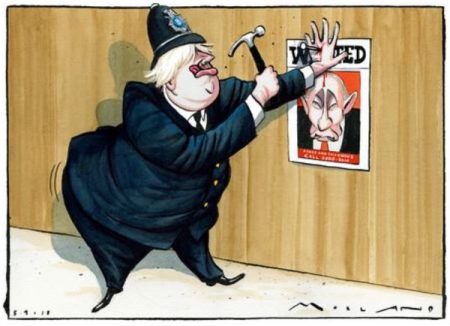

 Aletho News

