Deconstructing the Climate Demagoguery of the Wine Country Wildfire Tragedies
By Jim Steele | Landscapes and Cycles | October 25, 2017
As sure as the winds will blow, climate demagogues hijack every human tragedy to amplify fears of rising CO2 concentrations. Despite that fact other critical factors were keys to understanding the devastation of the Wine Country fires, politicians like Hillary Clinton, Al Gore and Governor Jerry Brown were quick to proclaim climate change had made the fires worse than they would have been.
Climate researcher Kevin Trenberth has long tried to undermine the foundations of science by discarding the null hypothesis. Without formal testing whether a tornado, hurricane or wildfire event is within the expectations of natural variability, Trenberth simply asserts every tragedy is made worse by rising CO2. Accordingly, he is interviewed by climate change propagandists after every weather tragedy. In an interview with InsideClimateNews a few months before the Wine Country wildfires Trenberth continued to proselytize his views, “Whatever conditions exists, they’re always exacerbated by climate change. There’s always that heat variable, the increased risk.”
Indeed heat is always a variable, but usually it has nothing to do with CO2. Sadly, due to his extreme beliefs Trenberth often confuses climate with weather.
Similarly, Daniel Swain who authors a good California Weather Blog, unfortunately strays when he tries to interject CO2-climate change into an otherwise good weather analysis. Writing the fires should also be looked at from “the long-term climate context,” he argued the “record-hottest summer” dried out the vegetation exacerbating the fire conditions. But he too failed to separate natural climate and weather events from his hypothesized contributions from CO2. As will become clear from a more detailed analysis, climate change played no part in the wildfire devastation.
The Ignition Component
Fire danger rating systems analyze 1) an ignition component, 2) a fuel component and 3) a spread component to determine how to allocate fire-fighting resources and when to issue public alerts. Natural fires are caused by lightning, and so good weather models can forecast the short-term probability of lightning fires. Lightning fires are also more likely during warm and moist seasons enhancing their window of predictability. Unfortunately, Cal Fire reports 95% of California fires are unpredictably ignited by humans.
Climate alarmists like Dr. Trenberth have blithely suggested global warming is increasing the fire season stating, “In the West, they used to talk about a fire season, the fire season used to be 60 days, then 90 days, and now they think it’s year-round. There’s no pause.” Tragically that uncritical belief in a climate-related extended fire season has been parroted by lay person and scientists alike. But the facts show the observed extended fire season is due to human ignitions. Blaming climate change is fake news!
In a 2017 paper researchers reported that across the USA from 1992 to 2012, “human-caused fire season was three times longer than the lightning-caused fire season and added an average of 40,000 wildfires per year across the United States. Human-started wildfires disproportionally occurred where fuel moisture was higher.” Furthermore “Human-started wildfires were dominant (>80% of ignitions) in over 5.1 million km2, the vast majority of the United States, whereas lightning-started fires were dominant in only 0.7 million km2.”
We can reduce some human caused ignitions. The Wine Country fires were not ignited by lightning but all observations suggest they were started by downed power lines in high winds. A year ago, California legislators introduced a bipartisan bill aimed at reducing wildfire ignitions from powerlines. Although governor Brown hypes the unsubstantiated dangers of climate change, he vetoed the bill which would have promoted real action to prevent well-known human causes of wildfires. Preventing powerline ignition could have prevented the Wine Country tragedy.
The Fuel Component
Fire ecologists will estimate a fire’s potential intensity by calculating the Energy Release Component (ERC), a measure of the potential heat energy per square foot. ERC is a function of the biomass both dead and alive, and the biomass moisture content. As fuels increase and as fuels dry the ERC increases. Live fuels are modeled such that maximum moisture content coincides with the peak growing season, and declines thereafter as the plants go dormant. Moisture content of dead fuels are modeled according to their diameters.
Depending on their diameters, dead fuels will lose moisture as they equilibrate with their dry surroundings at rates that vary from 1 hour to 1000 hours or more. To aid in firefighting management decisions, fuels are categorized into 4 groups as described in Gaining an Understanding of the National Fire Danger Rating System published by the National Wildfire Coordinating Group
1-Hour Time-lag Fuels “consist of herbaceous plants or round wood less than one-quarter inch in diameter. Also included is the uppermost layer of litter on the forest floor.” The ERC of these fuels and thus the fire danger, can change throughout the day. Dead grass as well as twigs and small stems of chaparral shrubs are 1-hour fuels, and those fine fuels sustained the rapid spread of the Wine Country fires. Assertions that recent and past summer droughts or decades of climate change had dried the fuels and exacerbated the Wine Country fire danger have absolutely no scientific basis. The approach of the hot, bone-dry Diablo Winds would have extracted all the possible moisture from the dead grasses and chaparral twigs within hours, regardless of past temperatures. Trenberth and Swain simply confused rapid weather changes with climate change.
The critical “long-term context” they never discussed is that a century of fire suppression allowed destructive levels of fuel loads to develop, increasing the biomass component of the ERC estimate. As populations grew, so did the demand to suppress every small fire that could threaten a building. Natural small fires reduce the fuel load, whereas fire suppression allows fast drying fuels to accumulate. Unfortunately, fire suppression only delays the inevitable while stocking more fuel for a much more intense blaze. Local officials and preservationists have long been aware of this problem, and controlled burns to reduce those fuels were being increasingly prescribed. Tragically, it was too little too late.

Figure 1: A prescribed control burn in Wine Country
10-Hour Time-lag Fuels are “dead fuels consisting of round wood in the size range of one quarter to one inch in diameter and, very roughly, the layer of litter extending from just below the surface to three-quarters of an inch below the surface.” The fuel moisture of these fuels vary from day to day and modeled moisture content is based on length of day, cloud cover or solar radiation, temperature and relative humidity.
100-Hour Time-lag Fuels are “dead fuels consisting of round wood in the size range of 1 to 3 inches in diameter and, very roughly, the forest floor from three quarters of an inch to four inches below the surface.” Moisture content of these fuels are also a function of length of day (as influenced by latitude and calendar date), maximum and minimum temperature and relative humidity, and precipitation duration in the previous 24 hours.
Much of the chaparral shrubs produce twigs and stems in size ranges of the 1-hr, 10-hr and 100-hr fuels. These fuels were most likely the source of burning embers that high winds propelled into the devastated residential areas. Again, these dried out fuels are the result of a natural California summer drought and short term weather conditions such as the bone-dry Diablo Winds that arrive every year.

Figure 2 Moisture content of 3-8 inch diameter fuels from March to December
1000-Hour Time-lag Fuels are “dead fuels consisting of round wood 3 to 8 inches in diameter or the layer of the forest floor more than about four inches below the surface or both”. These larger fuels are more sensitive to drought conditions that existed months earlier, so it could be rightfully argued that a hotter drier July and August made these fuels more flammable in October and exacerbated the fires.
Fire ecologists planning prescribed burns to reduce fuel loads, wait until the 1000-Hr fuels’ moisture content is reduced to 12% or lower. If these larger fuels are dry, it is certain the smaller fuel categories are dry as well, so that all fuels will be highly flammable. As seen in the graph above (Figure 2) 1000-hr fuels reach that critical dryness threshold by July 1st and remain below that threshold until mid-October when the rains begin to return. Contrary to Trenberth’s blather, California’s fire season has always lasted 90+ days. Undoubtedly the unusually hot and dry 2017 summer would have lowered 1000-hr fuel moisture content even further. Nonetheless those fuels become naturally flammable every summer. Furthermore, these larger fuels were less often burned and thus insignificant factors in regard to the fires rapid spread. The rapid spread of the fires was due to consumption of the rapidly drying fuels.
Swain is fond of finding a “record setting” metric to bolster his climate change assertions. As such, he noted the “record-hot summer had dried out vegetation to record levels” and linked to a graph tweeted by John Badoglio showing October ERC values for the past 30 years were at a record high in 2017 (in part because of delayed rains). However, that “record” was also largely irrelevant. The ERC calculation is heavily biased by the greater biomass of the larger 1000-hr fuels that would indeed get drier as the autumn continued without rain. Still those larger fuels were insignificant contributors to the rapidly spreading fire. As seen below (Figure 3), the grasses have been entirely burnt while the larger shrubs and trees, as well as the woody debris near the base of the trees (in the upper left) have not been consumed. In fact many of the trees are still alive. The potential energy estimated by the “record ERC” was only partially realized. It was the fast-drying dead grass and chaparral shrubs that turned potential ERC into meaningful fiery heat.

Figure 3
The Spread Component
“The spread component is defined as “the theoretical ideal rate of spread expressed in feet-per-minute.” Wind speed, slope and fine fuel moisture are key inputs in the calculation of the spread component, thus accounting for a high variability from day-to-day.” Thus, a combination of dry fuels and high winds typically result in fire-watch and red-flag warnings one day and no warnings days later as the winds subside. Forest rangers are well aware that September and October bring the powerful Diablo Winds of Santa Rosa as well as the Santa Anas of southern California, and with those winds comes the highest fire danger.
Cliff Mass is an atmospheric scientist at the University of Washington and author of the superb Cliff Mass Weather and Climate blogs. An October 16th post provides an excellent summary of the metorological conditions that created the fierce winds driving the Wine Country fires. In essence, a strong approaching wind flow (the Diablo Winds) coupled with a thermal inversion near the top of the mountains that border the Santa Rosa valley, accelerated winds into a 60 to 90 mile per hour downslope wind event, a phenomenon known as a mountain wave. Those high winds snapped power line poles and ignited fires. The regional topography also funneled the winds and fire down the valley, taking dead aim at the heart of Santa Rosa. The topography had guided a similar fire in 1964, the Hanley fire, which was started by a carelessly discarded cigarette. Unfortunately without much concern, most of the burnt homes in the Tubbs fire had been built on top of the burnt grounds of that previous Hanley fire, despite public protests.
Were those high winds perhaps exacerbated by climate change? Highly unlikely!
The Diablo Winds affecting Santa Rosa or the Santa Annas of southern California are driven by cooling seasonal temperatures in the high deserts to the east. The inner continent cools faster than the oceans, setting up a pressure gradient driving the winds toward the coast. The winds then heat adiabatically rising 5 degrees Celsius for every 1000 feet of elevation descent. An adiabatic rise in temperature means no added heat from any source and basic physics tells us temperatures can rise adiabatically simply due to compression. Thus an air mass that originated near Flagstaff Arizona at a 6,900 foot elevation, could adiabatically warm by 30 degrees as it reaches sea level.
The flow direction of winds are largely driven by unequal seasonal changes in temperatures. During the summer the interior heats faster than the oceans, such that a cooling onshore wind reduces interior temperatures. This pattern reverses in the autumn as the interior lands cool faster than the ocean creating an inland high pressure that drives the Diablo and Santa Anna winds toward the coast. Despite declining solar insolation, this autumn wind flow causes coastal California to experience some of its hottest days of the year in September and October, commonly referred to as Indian summer. Similarly a pressure system that inhibited the cooling onshore winds around San Francisco, resulted in a record hot summer temperature. By simultaneously opposing cooling sea breezes while bringing warm winds that were adiabatically 5 to 10 degrees warmer, temperatures rise and relative humidity falls. The result is bone-dry hot Diablo winds that suck the moisture from land and vegetation wherever the winds pass.
To restate the forces driving the winds, the Diablo winds are the result of a pressure gradient resulting from an interior that cools cooler faster than the ocean. If CO2 is warming the earth to any significant extent, then we would expect that warming to prevent the inner continent from cooling as quickly as it did decades ago. Thus CO2-global warming would predict a decline in that pressure gradient and a weakening of these winds.
To summarize, none of the fire components- ignition, fuels, or spread – had been affected by climate changes.

Finally, keen observers will notice that entire blocks of houses, and entire neighborhoods were completely burnt to the ground, in contrast to neighborhood trees that often remained relatively unscathed. This suggests that the high winds rapidly carried burning embers from the grassland and chaparral into these developments. While the trees did not trap the embers, the buildings did. I would expect we will soon hear about investigations inquiring into why these residences were not required to erect more fire safe structures, especially when built in a known fire-prone habitat in a high wind corridor. The simple requirement of constructing eaves in such a manner that prevents the trapping of burning embers and fire-proof roofs may have saved many homes.
Indeed there are many lessons that will allow us to prevent such wildfire disasters in the future if we have accurately determined the causes of these fires. Cliff Mass notes that our short-term weather models had accurately predicted the time and place of the fiercest winds. That information could be used to temporarily shut down the electrical grid where power lines are likely to ignite fires. We can bury power lines below ground. We can remove the high fuels loads that accumulated during a century of misguided fire suppression. Insurance companies can demand higher rates unless proven precautions are undertaken. It is those lessons that Gore, Clinton, Brown should be promoting to inform the public. Trenberth and Swain should be informing the people of the natural weather dangers that are inevitable. There is no evidence that climate change, whether natural or anthropogenic, exacerbated the ignition, fuels or spread components of these deadly fires. And worse, their obsessed belief that rising CO2 concentrations worsen every tragedy only distracts our focus from real life-saving solutions.
Jim Steele is Director emeritus Sierra Nevada Field Campus, San Francisco State University and author of Landscapes & Cycles: An Environmentalist’s Journey to Climate Skepticism
Elon Musk’s Financial Woes Begin to Mount
Sputnik – November 5, 2017
The business empire of Elon Musk, built with the help of government subsidies, is suffering considerable financial losses as certain ventures of his appear to be unable to meet the previously declared expectations.
Elon Musk has long been hailed by as a genius entrepreneur and a pioneer of technological advancement.
However, the financial problems that befell many of his enterprises appear to cast doubt upon Musk’s business acumen.
Earlier Tesla Motors reported a record $671 million quarterly loss while the company proved unable to meet its production goal (5,000 cars per week) for the Tesla Model 3, according to The Verge.
Also, the new tax cut proposed by Republicans threatens to deal a serious blow to Tesla Motors as it would strip the company of its $7,500 per vehicle federal tax credit.
And it appears that Tesla Motors, SpaceX and SolarCity were built with the help of almost $5 billion worth of government subsidies, making it look like “Musk and his companies’ investors enjoy most of the financial upside of the government support, while taxpayers shoulder the cost,” as the Los Angeles Times put it.
Interestingly enough, Tesla sales in Hong Kong and Denmark stalled after both areas did away with tax breaks for electric cars.
And it appears that, so far at least, Musk’s Hyperloop project has failed to produce a single model capable of reaching the speed of 400 km/h, let alone the promised 1,200 km/h.
How US Blunders Strengthened Iran
By Jonathan Marshall | Consortium News | November 5, 2017
Behind only North Korea, Iran is the country the Trump administration vilifies most. The White House endorses Israeli Prime Minister Benjamin Netanyahu’s injunction that “We must all stand together to stop Iran’s march of conquest, subjugation and terror.”
Parroting Netanyahu’s claim that Iran is “busy gobbling up the nations” of the Middle East, CIA Director and conservative GOP stalwart Mike Pompeo warned in June that Iran — which he branded “the world’s largest state sponsor of terrorism” — now wields “enormous influence . . . that far outstrips where it was six or seven years ago.”
In an interview with MSNBC, Pompeo elaborated, “Whether it’s the influence they have over the government in Baghdad, whether it’s the increasing strength of Hezbollah and Lebanon, their work alongside the Houthis in Iran, (or) the Iraqi Shias that are fighting along now the border in Syria . . . Iran is everywhere throughout the Middle East.”
Few would deny that Iran’s influence in the region has grown over the past decade. What’s missing from such dire warnings of its imperial designs, however, is any reflection on how aggressive policies by the United States and its allies have consistently backfired, creating needless chaos that Iran has exploited as a matter of self-interest and self-defense.
Consider the case of Hezbollah, a Lebanese-based Shiite organization that Israeli leaders describe as a major threat and almost certainly the target of Israel’s next war. Although the Iranian-backed force intervened actively in Syria to back the Assad government, it disclaims any intent to start a war with Israel.
It does, however, declare with great bravado its intent to deter another Israeli invasion of its homeland. “Israel should think a million times before waging any war with Lebanon,” said its leader earlier this year.
Spurred by Israeli Invasions
In fact, Hezbollah owes its very existence to Israel’s repeated invasions of their country. In 1982, Israel broke a cease-fire with the Palestine Liberation Organization and invaded southern Lebanon with 60,000 troops. The Reagan administration took no steps to stop that invasion, which caused thousands of civilian casualties and turned much of the population against Israel.
With Iranian money and guidance, the Shiite resistance in Lebanon coalesced around the organization that became known as Hezbollah. “We are only exercising our legitimate right to defend our Islam and the dignity of our nation,” the group claimed in one of its ideological tracts. “We appealed to the world’s conscience, but heard nothing.”
Years later, former Israeli Prime Minister Ehud Barak conceded that “It was our presence [in Lebanon] that created Hezbollah.” Former Prime Minister Yitzhak Rabin seconded that assessment, saying that Israel had let the “genie out of the bottle.”
In 2006, Israel again invaded Lebanon, this time to wipe out Hezbollah. Israel’s indiscriminate attacks against civilians drew condemnation from international human rights organizations. They also succeeded in strengthening the very enemy Israel sought to annihilate.
“Especially since the 2006 war with Israel, . . . an overwhelming majority of the Shi’a have embraced Hezbollah as the defender of their community,” writes Augustus Richard Norton in his study, Hezbollah: A Short History. “This suggests that outsiders . . . seeking to reduce Hezbollah’s influence in Lebanon must redress the security narrative rather than take steps that validate it.”
Instead, of course, the United States and its Sunni Arab and Turkish allies promoted the violent overthrow of Syria’s government, drawing Hezbollah forces into the fight for the survival of their longtime ally. While Hezbollah has paid a political and human price for its military expedition, its soldiers have gained tremendous battle experience, making them all the more formidable a foe.
The Iraqi Gift
Washington’s greatest geostrategic gift to Iran was the unprovoked U.S. overthrow of Iran’s arch enemy, Saddam Hussein, in 2003. Iran had lost hundreds of thousands of lives and hundreds of billions of dollars in an eight-year war with Iraq, triggered by Saddam’s invasion in 1980. The Bush administration not only killed Saddam, but handed political power to Iraq’s majority Shiite population, which looked to Iran for spiritual and political guidance.
That windfall may not have been entirely luck. The leading Iraqi lobbyist for war, the neoconservatives’ darling Ahmed Chalabi, was later identified by U.S. authorities as a key Iranian intelligence asset. U.S. counterintelligence agents concluded that Chalabi and other Iraqi exiles, who peddled false claims about Iraq’s weapons of mass destruction, had “been used as agents of a foreign intelligence service … to reach into and influence the highest levels of the U.S. government,” in the words of a Senate Intelligence Committee report.
But Secretary of Defense Donald Rumsfeld’s office shut down the investigation, leaving Chalabi to direct the political purge of Iraq’s government and then become Iraq’s deputy prime minister and oil minister. The Chalabi-led purge targeted Iraq’s Sunni politicians, aggravating the country’s sectarian divide and fueling the insurgency that still plagues the country today. The violence strengthened Iran’s hand in the country, as Shiite militia sought Tehran’s help to defend their communities.
At the same time, popular opposition to the U.S. occupation led to the rise of radical Sunni terrorists. It was from their swelling ranks in Iraq’s prisons that ISIS was born. ISIS made lightning gains across much of western Iraq in June 2014, with the conquest of Fallujah, Tikrit, and Mosul, the country’s second most populous city. With its very existence in jeopardy, Iraq’s beleaguered government welcomed Iran’s immediate dispatch of 2,000 soldiers to help block the ISIS offensive. Syria’s air force also began striking ISIS bases in coordination with Baghdad.
Misguided Pressure
Washington, in contrast, rejected Iraq’s call for air strikes and suggested that its Shiite-led government should step down to placate aggrieved Sunnis. Only in August 2014 did President Obama authorize limited bombing of ISIS to protect minorities threatened by their military advance. Needless to say, many Iraqis were grateful to Iran for its military support at a critical time.
“The Iranians are playing a long game and a waiting game,” said Sajad Jiyad, the director of the Al Bayan Center for Planning and Studies in Baghdad. “They put their skins on the line. They lost three or four generals plus a dozen senior officers.”
So when a “hamfisted” Secretary of State Rex Tillerson, speaking in Saudi Arabia, recently demanded that Baghdad send home Iranian-backed paramilitary units that helped defeat ISIS, it didn’t go over well with Iraqi Prime Minister Haider al-Abadi.
“No party has the right to interfere in Iraqi matters,” his office stated. Abadi called the Popular Mobilization forces “Iraqi patriots,” not mere proxies of Iran, and insisted that they “should be encouraged because they will be the hope of country and the region.” Score another few points for Tehran.
ISIS might never have spread into Syria had not the United States publicly promoted the overthrow of the Assad government in 2011, following years of covert efforts by Washington and Israel to weaken the regime and promote sectarian divisions within Syria.
Contributing greatly to the rise of radical Islamist forces in Syria was the U.S.-backed overthrow of the Gaddafi regime in Libya, which unleashed large stocks of arms and hundreds of hardened fighters to spread their revolution into Syria.
By late 2011, Sunni-led states such as Turkey, Saudi Arabia, and Qatar began financing and arming militant Islamist rebels in Syria, including Al Qaeda and even ISIS. The resulting war killed hundreds of thousands of combatants and civilians, uprooted millions of refugees, and laid waste to ancient cities.
The Obama administration proved itself just as deluded as the Bush administration about the efficacy of armed intervention. Describing hopes by the White House that Libya’s uprising would “ripple out to other nations in the region” and fuel anti-regime movements in Syria and Iran, the Wall Street Journal reported, “Syria has served for 30 years as Iran’s closest strategic ally in the region. U.S. officials believe the growing challenge to Mr. Assad’s regime could motivate Iran’s democratic forces.”
Instead, of course, Syria’s conflict prompted Iran’s hardliners to send Revolutionary Guard units and Hezbollah forces to the defense of their ally. With the help of Russian air power, they turned the tide in Assad’s favor, leaving the Damascus regime intact and greatly in Tehran’s debt.
The Yemeni Mess
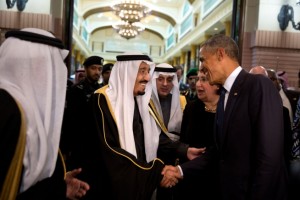 Echoing longstanding claims by Saudi Arabia, the Trump administration also insists that Iran is a major backer of Houthi tribal forces who swept down from northern Yemen to seize control of most of the country in early 2015. That March, with U.S. backing, a Saudi-led coalition of Arab states launched a scorched–earth military campaign to oust the Houthis, in the name of resisting Iran.
The coalition’s indiscriminate bombing of industrial and other civilian targets, including schools and hospitals, has laid waste to much of the country and destroyed the economy. Its blockade of ports caused mass hunger and triggered the world’s worst cholera epidemic.
“Cynics can argue that the real strategy of the Saudi coalition is to rely on starvation and disease to wear down the Yemeni people,” observed former White House adviser and CIA analyst Bruce Riedel. “The United Nations has labeled the war the worst humanitarian catastrophe in the world . . . (Yet) Iran is the only winner, as it provides aid and expertise to the Houthis at a tiny fraction of the cost of the Saudi war effort while the Islamic Republic’s Gulf enemies spend fortunes on a conflict they jumped into with no endgame or strategy.”
Experts point out that Washington picked the wrong ally in this fight. “The Houthis are one of the few groups in the Middle East that has little intention or ability to confront the United States or Israel,” writes Harvard lecturer Asher Orkaby. “And far from being aligned with extremists, the Houthi movement has repeatedly clashed with the Islamic State . . . and al Qaeda in the Arabian Peninsula. It is Saudi Arabia that has long supported Sunni Islamist groups in Yemen.”
To compound the irony, the paranoid sheiks in Riyadh created the very threat they set out to crush with their invasion in 2015. Iranian ties to the Houthis were negligible before then. Remarking on years of attempts to smear them as pawns of Iran, the U.S. ambassador to Yemen reported in a classified cable in 2009, “The fact that . . . there is still no compelling evidence of that link must force us to view this claim with some skepticism.”
Two former members of the State Department’s Office of Policy Planning have recently confirmed that “the vast majority of the Houthi arsenal . . . was seized from Yemeni army stockpiles,” not provided by Iran.
As the devastating war grinds on, however, Iran has provided the Houthis with modest training, advice, and ground munitions. “Iran has exploited, on the cheap, the Saudi-led campaign, and thus made the expansion of Iranian influence in Yemen a Saudi self-fulfilling prophecy,” they observe.
“By catering to the Saudis in Yemen,” they add, “the United States has . . . strengthened Iranian influence in Yemen, undermined Saudi security, brought Yemen closer to the brink of collapse, and visited more death, destruction, and displacement on the Yemeni population.”
Qatar and Beyond
In a moment of particular lunacy, President Trump this June tweeted his support for a Saudi-led political and economic blockade of Qatar, a tiny but gas-rich Gulf emirate. Riyadh is aggrieved in part by Qatar’s sponsorship of Al Jazeera, the politically nettlesome broadcaster. Trump’s action surprised and embarrassed the Pentagon, which operates a huge military base in Qatar.
Iran quickly took advantage of this latest Saudi blunder. It opened its airspace to Qatari flights that were barred from crossing the Arabian Peninsula. It shipped food to replace supplies lost by the closure of the Saudi-Qatari border. In gratitude, Qatar restored full diplomatic relations with Tehran after recalling its ambassador two years ago.
“This dispute has pushed Qatar towards other players in the region who are critical: Iran, Turkey, Russia, China,” said Rob Richer, former Associate Deputy Director for Operations at the CIA. “These are players who now have a lot more influence as we diminish our influence in the region. In this way, the blockade has actually undermined everything that the Saudis and Emiratis wanted by pushing the Qataris into the arms of these other regional players.”
Time after time, in other words, the United States and its regional supporters have made a mess of matters with their overt and covert military interventions in the Middle East. It’s only natural that Iran, having long been targeted by Washington and its allies (sometimes for understandable reasons), tries to seize opportunities to defend its interests.
The lesson we should learn is that curbing Iran and promoting U.S. security interests will require less intervention from afar, not more self-defeating forays into the region.
As Chatham House research fellow Renad Mansour recently observed, until the United States overcomes its counterproductive reactions to obsessive fears of Iranian influence, “the Iranophobes will be right about one thing: Iran is the smarter player in the region.”
Iran slams Saudi lies over Yemen missile strike
By Adam Garrie Adam Garrie | The Duran | November 5, 2017
Saudi Arabia and Donald Trump have both accused Iran of providing Yemen’s Houthi rebels with the missile that was launched at the Saudi capital Riyadh yesterday evening.
Saudi Arabia in particular, has accused Iran of supplying the Houthis with new missiles capable of longer distances than those previously thought to be in their possession.
However, Saudi’s accusation is inconsistent with the fact that Yemen is totally besieged from both land and sea.
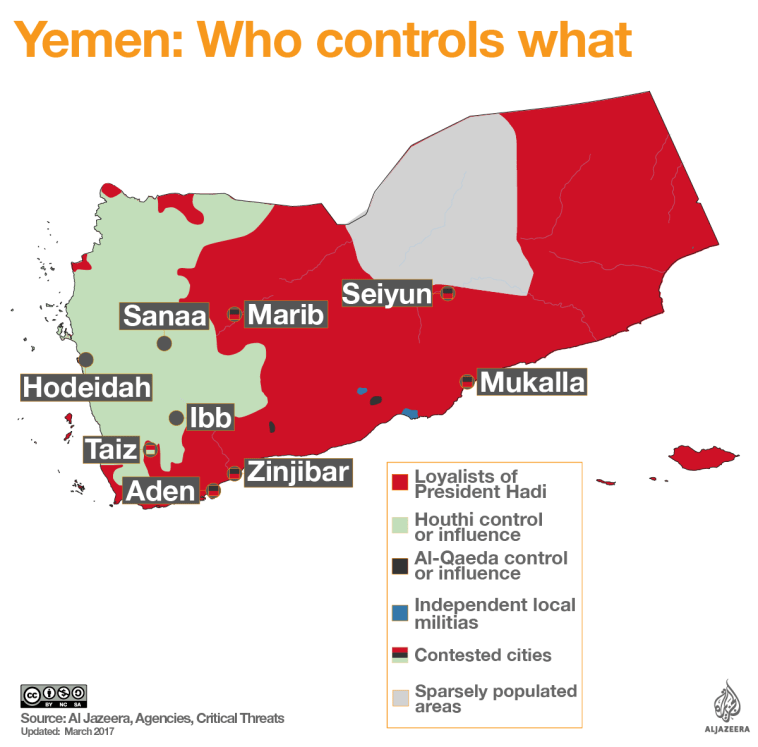
Yemen is bordered by Saudi Arabia and fellow Gulf Cooperation Council Oman, a state which would never allow shipments of Iranian weapons to Houthis and could not easily do in any case as Oman borders areas of Yemen controlled either by the pro-Saudi Hadi government or by anti-Iranian al-Qaeda and ISIS fighters.
Yemen’s north-west maritime borders have been cut off from the world, including from crucial medical and food supplies by a Saudi naval blockade that has caused a man-made famine and a cholera epidemic.
If the UN cannot even get foodstuffs past the Saudi blockade, it goes without saying that Iran could not get ballistic missiles to Houthi controlled areas.
The Houthis themselves claimed that they modified their missiles to achieve longer ranges, a claim which Iran acknowledges as the most likely scenario in respect of yesterday’s launch. Others have stated that the launch was a Saudi false flag, but as the Houthis themselves took credit for the launch and with video emerging which appears to back up Houthi claims, the only remaining credible scenario is that the Houthi fighters were indeed able to modify their missiles to reach Riyadh.
In any case, it would appear that Saudi’s US made defensive missile systems shot the Houthi rocket down, although some reports on social media from the Arab world contradict this.
At the end of the day, the facts hardly matter to the spokesmen and leaders of Saudi, Israel and United States who have all accused Iran of having a direct hand in the missile launch.
The fact of the matter is that while Iranian sympathies and limited support are certainly with the Houthis, the blockade means that this support amounts to very little in terms of material support, including and especially military support.
The facts on the ground and more important on the sea, dictate that accusations of Iran meddling in Yemen are de-facto baseless.
Unlike Syria, in which militants could be supplied on virtually all sides from ISIS controlled Iraq to the large Turkish border as well as the borders with Jordan and Israel, Yemen’s Houthis are not in any such position to be so easily supplied.
The fact that many in the media have conspired to hide this patently obvious reality means that one either is not engaging in honest journalism or one is simply repeating mythical Saudi claims.
Saudi gamble risks plunging Lebanon into war
Press TV – November 5, 2017
Saad Hariri’s sudden resignation from Lebanon’s premiership, announced from Saudi Arabia, has raised fears that regional tensions were about to escalate and that the small country would once again pay a heavy price.
Hariri quit his post on Saturday in a televised speech broadcast by Saudi Arabia’s Al-Arabiya television, during which he appeared tense as he carefully read out from a written statement.
He claimed that he feared the same fate as his assassinated father and accused Iran and the Lebanese resistance movement Hezbollah of meddling in Arab countries’ affairs.
Hariri’s departure sent shockwaves through Lebanon as the country is struggling to maintain stability at a time when much of the Middle East is gripped by Takfiri violence rooted in Saudi Arabia.
Lebanon’s Minister of Justice Salim Jreissati said the development was “confusing and suspicious in its timing and location as well as the way it was delivered and the content of the resignation.”
“The optics are terrible — for Hariri to resign from Riyadh, imagine how his audience [in Lebanon] feels watching that,” said Emile Hokayem, a regional analyst at the Institute for Strategic Studies.
“God protect Lebanon from the evil of Saudi Arabia’s reckless adventures,” Sheikh Nabil Kawouk, a member of Hezbollah’s central committee, told Lebanon’s Al Jadeed television.
Last week, Qatar’s former prime minister Hamad bin Jassim revealed how the US coordinated support by Doha, Riyadh and Ankara for terrorists operating against the Syrian government.
Syria has always been a thorn in the side of Israel. The Arab country is part of the “axis of resistance” along with Lebanon’s Hezbollah and Iran, which has brought Daesh to the brink of elimination.
The triangle of Saudi Arabia, Israel and the US is alarmed and the prospect of an eventual triumph of this axis which has now become inevitable has prompted them to take drastic measures.
On Friday, as Syria began celebrating the capture of Dayr al-Zawr, Nusra Front terrorists launched a massive assault on a Druze village neighboring the occupied Golan Heights.
According to Syrian state media, the onslaught was carried out with Israeli coordination and assistance but Tel Aviv used the occasion to threaten direct intervention in the war.
Hariri’s resignation over what he called Hezbollah’s “grip” on Lebanon is the latest drastic step which Saudi Arabia and its allies have taken to tip the scales even at the cost of turning Lebanon into another Syria.
With the prime minister out of the political landscape, the architects of the new “plot” could claim that Lebanon was exclusively under Hezbollah’s control. That idea was articulated by Israeli minister of military affairs Avigdor Lieberman on Saturday.
“Lebanon=Hezbollah. Hezbollah=Iran. Lebanon=Iran,” he tweeted.
Hariri was appointed as the Lebanese premier in late 2016, after two years of political deadlock in the country. He formed a national unity government that included almost all of the main political parties in Lebanon, including Hezbollah.
Under the Lebanese constitution, the prime minister should be picked from among the Sunni community, but Saudi Arabia has tried to use the prerogative to maintain its influence in the country.
Riyadh says the government should be purged of Hezbollah, especially at a time when the resistance movement is emerging stronger from the Syria conflict.
Over the past few weeks, Saudi Arabia’s Minister of State for Persian Gulf Affairs Thamer al-Sabhan had unleashed a series of vitriolic attacks against Hezbollah, saying the group “should be punished… and confronted by force.”
The accusations coincided with new sanctions approved by US House of Representatives on the Lebanese resistance movement.
Hossein Sheikholeslam, a senior Iranian politician, told Al Mayadeen TV that Hariri’s’ resignation had been coordinated before between US president Donald Trump and Saudi Crown Prince Mohammed bin Salman.
He said, “After the defeat of Daesh and the US in the region, Washington and Riyadh are trying to fuel tensions in Lebanon and the region.”
Hossein Amir-Abdollahian, an adviser to the Iranian parliament speaker, agreed. “The decision has been made by the anti-Iran and anti-Hezbollah front following the disillusionment of US and its allies with Daesh,” he said.
In Lebanon, political leaders expressed their apprehension, including the leader of Lebanon’s Druze minority, who has frequently played kingmaker in Lebanese politics.
Walid Jumblatt, the leader of Lebanon’s Progressive Socialist Party (PSP), warned of the political burden and consequences of the resignation.
Hilal Khashan, a professor of political science at the American University of Beirut, said Hariri’s departure was “a dangerous decision whose consequences will be heavier than what Lebanon can bear.”
“Hariri has started a cold war that could escalate into a civil war, bearing in mind that Hezbollah is unmatched in Lebanon on the military level,” he added.
Israeli Prime Minister Benjamin Netanyahu, however, welcomed the decision and said Hariri’s departure should be a “wake-up call” to the international community to what he described as the threat posed by Iran.
‘A Deceptive New Report on Climate’
By Judith Curry | Climate Etc. | November 3, 2017
Red-teaming the the U.S. government’s Climate Science Special Report on the topic of sea level rise.
Steve Koonin has a new op-ed in the WSJ : A Deceptive New Report on Climate, that clarifies the need for a Climate Red Team. Excerpts:
One notable example of alarm-raising is the description of sea-level rise, one of the greatest climate concerns. The report ominously notes that while global sea level rose an average 0.05 inch a year during most of the 20th century, it has risen at about twice that rate since 1993. But it fails to mention that the rate fluctuated by comparable amounts several times during the 20th century. The same research papers the report cites show that recent rates are statistically indistinguishable from peak rates earlier in the 20th century, when human influences on the climate were much smaller. The report thus misleads by omission.
This isn’t the only example of highlighting a recent trend but failing to place it in complete historical context. The report’s executive summary declares that U.S. heat waves have become more common since the mid-1960s, although acknowledging the 1930s Dust Bowl as the peak period for extreme heat. Yet buried deep in the report is a figure showing that heat waves are no more frequent today than in 1900. This artifice also appeared in the government’s 2014 National Climate Assessment, which emphasized a post-1980 increase in hurricane power without discussing the longer term record. The National Oceanic and Atmospheric Administration recently stated that it has been unable to detect any human impact on hurricanes.
Such data misrepresentations violate basic scientific norms. In his celebrated 1974 “Cargo Cult” lecture, the late Richard Feynman admonished scientists to discuss objectively all the relevant evidence, even that which does not support the narrative. That’s the difference between science and advocacy.
These deficiencies in the new climate report are typical of many others that set the report’s tone. Consider the different perception that results from “sea level is rising no more rapidly than it did in 1940” instead of “sea level rise has accelerated in recent decades,” or from “heat waves are no more common now than they were in 1900” versus “heat waves have become more frequent since 1960.” Both statements in each pair are true, but each alone fails to tell the full story.
Several actions are warranted. First, the report should be amended to describe the history of sea-level rise, heat waves and other trends fully and accurately. Second, the government should convene a “Red/Blue” adversarial review to stress-test the entire report, as I urged in April. Critics argue such an exercise would be superfluous given the conventional review processes, and others have questioned even the minimal time and expense that would be involved. But the report’s deficiencies demonstrate why such a review is necessary.
Finally, the institutions involved in the report should figure out how and why such shortcomings survived multiple rounds of review.
Mr. Koonin was undersecretary of energy for science during President Obama’s first term and is director of the Center for Urban Science and Progress at New York University.
Steve Koonin has written an essay Critique of the Draft of the CCSR discussion of post 1900 sea level rise [link CSSR on SLR]
Read the whole thing, it is very concise and packs a well-documented punch.
Shameless, ridiculous CIA 9/11 falsification aimed at saving US allies in Mideast: Iran
Press TV – November 4, 2017
 Iran’s Foreign Ministry has dismissed new “shameless” falsification of 9/11 records by the US Central Intelligence Agency (CIA) to incriminate the Islamic Republic, saying such a futile propaganda campaign is meant to protect some of Washington’s allies in the Middle East.
“The fresh US allegations and claims against Iran are a clear example of shameless falsification to corroborate remarks by the country’s president and are for domestic consumption inside the US,” Iranian Foreign Ministry Spokesman Bahram Qassemi said on Saturday.
Qassemi made the remarks after the release of a 19-page al-Qaeda report in Arabic, which claimed Iran had supported the extremist group before the 9/11 attacks.
The document was part of nearly 47,000 documents recently released by the CIA.
The US government’s 9/11 Commission has made similar allegations, saying Iranian officials met with al-Qaeda leaders in Sudan in either 1991 or early 1992.
Ignoring the fact that 15 of the 19 hijackers involved in the 9/11 attacks were Saudi nationals, the US government’s 9/11 Commission mad yet another wild claim, alleging that eight of the hijackers who kept passengers on the hijacked flights under control passed through Iran before arriving in the US.
Qassemi said US officials have yet to comment on these documents, but added that the country’s government and intelligence agency had a grim record of falsification and deception of world public, even the American people, to achieve their own political and strategic goals.
He emphasized that conscientious minds in the international community have no doubt about the US role in creating and intellectually and ideologically nurturing terrorist groups over the past two decades.
The publication of such fake and delusional documents would not change the internationally-acknowledged facts about the countries that are the intellectual breeding ground of terrorist groups such as al-Qaeda and those who have had a role in creating them and providing them with military, political and logistic support, the Iranian spokesperson pointed out.
Iranian Foreign Minister Mohammad Javad Zarif on Thursday dismissed US allegations about Iran’s support for the al-Qaeda terror group, describing the claims as an attempt to “whitewash” the truth about the role US allies had in the September 11, 2001 attacks.
Iran’s foreign minister says instead of making false allegations against Iran, the US must stop covering up its allies’ role in the 9/11 attacks.
“A record low for the reach of petrodollars: CIA & FDD fake news w/ selective AlQaeda docs re: Iran can’t whitewash role of US allies in 9/11,” Zarif wrote on his Twitter account.
Saudi deletes thousands of tweets from detained scholar’s account
MEMO | November 4, 2017
Saudi activists have revealed that the security services in their country have deleted thousands of tweets from the account of detained scholar Mohamed Al-Hadeef, thenewkhalij.news reported on Friday.
“The Saudi security deletes tweets of Dr Mohamed Al-Hadeef and keeps only 1,583 out of thousands of tweets,” claimed a Twitter user known as “keymiftah79”. Even while he is detained, the activist pointed out, the Saudi authorities are afraid of his tweets.
The New Khaleej website said that it had fact-checked the information about the deletion and confirmed that only 1,582 tweets were kept on Al-Hadeef’s account.
The government in Saudi Arabia launched a campaign against independently-minded Muslim scholars in the country days after the visit of US President Donald Trump earlier this year. According to human rights groups, hundreds of scholars and opposition figures have been detained.
Featured Video

Daniel Davis: Trump’s New Iran Land Blockade Is a Dangerous Fantasy
or go to
Aletho News Archives – Video-Images
New Book
The Vaccine Mafia: Pfizer’s Former Chief Toxicologist Proves How Toxic Substances Were Unlawfully Sold to Us as a Solution for COVID-19
By Helmut Sterz
Former Pfizer chief toxicologist Helmut Sterz presents a critical examination of the development, approval, and global rollout of mRNA COVID-19 vaccines—particularly those produced by Pfizer/BioNTech. The Vaccine Mafia details the failure of pharmaceutical companies, regulatory authorities, politicians, and international organizations to follow established scientific and ethical standards during the pandemic. Drawing on the author’s decades of experience in pharmaceutical toxicology, Sterz reveals the many ways the vaccines’ inadequate or omitted preclinical safety testing put the world’s population at risk.
Sterz demonstrates how “emergency” approvals allowed manufacturers to bypass long-standing international guidelines governing toxicity testing, especially with regard to reproductive and cancer risks. They also allowed governments and health authorities to ignore or conceal evidence of serious adverse effects that occurred, including myocarditis, reproductive harm, and other long-term health risks.
Blog Roll
 Aletho News
- The ‘Gaza Treatment’: How Media Headlines Obscure Who is Bombing Yemen
- Ro Khanna urges Democrats to strip Israel ‘integration’ provision from defense bill
- Why Iran designated British MI6, Royal Navy, and RAF as hostile, terrorist organizations
- Armenian opposition politician dies in custody
- US still trying to recycle failed hypersonic missile programs
- France’s ‘Cold War’: Paris blames Tehran for supermarket fridge hacks
- Psywar no more? 77th Brigade’s sudden death
- Ukraine Already Carved Up… Before Talks Begin? /Prof. Richard Sakwa
- The vindication of Marjorie Taylor Greene
- Nearly 80% of Britons consider Israel a threat to world peace and security: Survey
- If Americans Knew
- An error has occurred; the feed is probably down. Try again later.
- No Tricks Zone
- German Authorities Start Initiative To Evaluate Public Register For Climate “Disinformation” Spreaders!
- Zonal Asymmetry of Temperature Change in the Antarctic Circumpolar Current
- New Study: The Net Fossil Fuel Contribution To Rising Atmospheric CO2 Has Been Zero For 500 Years
- Germany’s Green Energy Transition Becoming Increasingly Expensive…Another 6 Trillion Euros!
- Sudden Stratospheric Warming, Powerful El Niño Combination May Lead To Extreme Europe Cold, Energy Crisis!
- Two New Studies Find Thwaites Glacier Melt Cannot Be Driven By Human Activity Or A Warming Ocean
- E-Cars Reduce CO2 Emissions By Only 41% Compared To Internal Combustion Engine Vehicles
- Predictions Made By Renowned Climate Professor Over Past Decades Have Been Proven To Be Poor
- New Study Suggests Large Regions Of The Pacific Ocean Have Been Cooling For The Last 80 Years
- Germany’s Green Energy Debacle: High Energy Costs Force Kahla Porzellan to Close After 182 Years!


