US ‘Constitutional Shift’: Powerless President and Omnipotent Congress
Sputnik – August 4, 2017
What the international community is observing now in Washington could be called a sluggish constitutional shift, Russian political analyst Andrei Suzdaltsev told RIA Novosti in a reference to Congress twisting Donald Trump’s arm. Meanwhile, Congress is about to stir up new frictions with Trump over the INF Treaty with Russia.
The world is witnessing what could be called a constitutional shift with Congress de facto obtaining more power than the US president, Moscow-based political analyst and academic Andrei Suzdaltsev told RIA Novosti.
On Wednesday US President Donald Trump signed into law a US sanctions bill aimed against Russia, Iran and North Korea. The sanctions target Russia’s defense, intelligence, mining, shipping and railway industries and restrict dealings with Russian banks and energy companies.
To make matters even more complicated, the new law limits the US president’s ability to lift or ease sanctions on Russia, as Congress’s approval to reconsider the restrictions will now be required.
In an apparent reference to the bill, Trump tweeted Thursday that the US-Russian relationship is at a “very dangerous” low.
”Our relationship with Russia is at an all-time & very dangerous low. You can thank Congress, the same people that can’t even give us HCare!” Trump wrote.
Incredible as it may seem, the president of the country has turned out to be powerless, Suzdaltsev said, adding that one now has to hold a dialogue with Congressional representatives.
“In fact, we are witnessing a sluggish constitutional shift in the US political system. Being a presidential republic where the head of executive power had a solid mandate America always looked at the reaction of Congress. But there was a counterweight system. Now the American elite is divided,” Suzdaltsev told RIA Novosti.
The Russian academic drew attention to the fact that the internal political crisis, which started during the election campaign in autumn 2016, is still raging on.”By forcing Trump into signing a new sanctions bill into law Congress… implemented a constitutional shift,” Suzdaltsev stressed.
“Trump is now a powerless figure incapable of conducting a political dialogue,” he said. “If one wants to hold negotiations, one needs to do this with congressmen in both houses. Actually, there is no president.”
“We are entering a period that may even be harder than the years of the Cold War,” the academic remarked.
Meanwhile, Politico reported Thursday that the US Congress continues to discuss the bill which implies America’s de facto withdrawal from the INF Treaty by suggesting developing medium-range missiles banned by the document.
The INF Treaty, concluded in 1987, envisaged the reduction of non-strategic weapons by prohibiting all nuclear and conventional missiles and their launchers with a range between 310 and 3,420 miles.
“Congress is moving to force the Pentagon to violate a nuclear arms treaty with Russia — in yet another effort to box in President Donald Trump on relations with Moscow,” the media outlet noted, adding that “the legislation is also likely to stir up new friction between lawmakers and Trump, who has already accused Congress of illegally meddling in his dealings with Russia.”
Commenting on the matter, Kremlin spokesman Dmitry Peskov highlighted that Russian President Vladimir Putin and US President Donald Trump did not discuss the issue of the INF Treaty during their meeting. He stressed that Moscow remains committed to its obligations under the agreement and expects the same from its partners.
“Russia remains committed to its obligations under this treaty, despite some claims which were voiced before. Of course, we expect that our partners under this agreement will adhere to their international obligations in this context,” Peskov told reporters.
Citing legal experts Politico remarked that the proposed legislation could be regarded as congressional overreach. “The Senate can only ratify treaties and the president alone can negotiate or pull out of them,” it argues.
Coalition hits Raqqah hospital with white phosphorus: Red Crescent official
Press TV – August 5, 2017
The US-led coalition purporting to be targeting Daesh in Syria is said to have hit the National Hospital in the northern city of Raqqah with internationally-banned white phosphorus bombs.
Dina al-Asa’ad, who is the deputy director of the Syrian Arab Red Crescent’s branch in the city, said coalition warplanes had struck the hospital on Thursday, the country’s official Syrian Arab News Agency said.
She said the aircraft also released more than 20 apparently conventional shells against the facility, which hit its interior, electricity generators, and ambulances.
The facility, she said, catered to the needs of more than 100,000 patients.
Al-Asa’ad also blamed the coalition, which has been bombing Syria-based targets since 2014, and the US-backed anti-Damascus so-called Syrian Democratic Forces (SDF) for leading a “scorched earth” policy against the city, rather than trying to liberate it.
She said the coalition and the SDF had laid waste to all of the city’s schools, mosques, bakeries, its sugar factory, and governmental buildings.
‘Coalition kills 30 civilians’
Meanwhile, Syrian government sources said at least 30 people had been killed in the latest attacks by the coalition in Raqqah.
The latest toll brought to over 65 the total number of civilians killed by US aerial raids on Raqqah since the beginning of the week.
Army gains
Separately, the Syrian army took control of the al-Madkhal neighborhood and Tantor Mountain in the city of al-Sukhnah in the central Syria Homs Province.
Backed by civil defense fighters, the army also made fresh gains in the southeastern Syria al-Suwayda Province near the Jordan-Syria borders, where it recaptured the al-Dhubi’aiyah, Ber al-Rafa’a, al-Hardiyah, and Wadi al-Sawt areas from the US-backed forces, a military source said.
How Donald Trump Threw Peace and Prosperity Under an AIPAC Bus
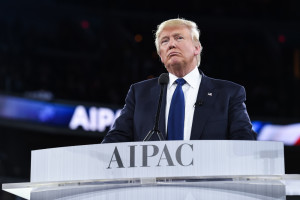
By Phil Butler | New Eastern Outlook | 04.08.2017
Shortly after 11:00 AM, Wednesday August 2, 2017 US President Donald Trump declared full scale economic war on Russia. Russian Prime Minister Dmitry Medvedev is joined by millions of us who’ve now lost all hope of peace and reconciliation in the world. Cold War II is on.
Dmitry Medvedev attacked Trump’s decision to sign the bill in the same way most of us analysts will, chastising the US President after his clear bow to a US Congress unified in its hysteria against Vladimir Putin’s Russia. But the Russian Prime Minister did not delve into just “why” Trump is praying to the altar of neo-conservatism today. Trump feigned disagreement with sections of the law his team said are “unconstitutional”, but the force behind these sanctions on Russia, Iran, and North Korea is hidden. Let me enlighten you on what is really taking place in Washington.
Two days ago, a close colleague of mine was on the line from Greenwich, Connecticut to discuss my upcoming book when the conversation turned to these new Russia sanctions. My colleague related a story from Capital Hill and an insider who explained the vote on the sanctions law. The gist of this insider’s revelation was that the overwhelming “yes vote” in Congress indicated one powerful player behind the curtain – America’s pro-Israel lobby AIPAC.
When I heard AIPAC stood behind, my mind immediately reverted to images and sound bites of Trump and Israeli Prime Minister Netanyahu. Their mutual gratification society handshakes, the syrupy sweetness of the Israeli’s recollections on young Trump – and then I thought on the Saudi arms deal and the wider frame of the Arab Spring. Sorry to consolidate so many facets here, but if Trump and all of Washington has acquiesced totally to the will of AIPAC, then America is all done. Looking again at Russia’s Medvedev:
“Trump’s administration has demonstrated total impotence by surrendering its executive authority to Congress in the most humiliating way.”
The point of this new sanctions law is revealed simply. If AIPAC controls the Unites States Congress, and if the President of the United States has surrendered his executive authority to that body, then the Israeli lobby controls the Government of the United States – lock stock and barrel. In other words, a foreign sovereign nation and ideology rules America – and it rules it with impunity.
Turning to the law itself, even the Trump administration admitted there are sections that are “unconstitutional”, which means illegal. “Illegal!” Is a Barack Obama infused Supreme Court going to overturn the law? This question is rhetorical, for no justice will ever even read through this law. Looking at the Israel lobby and the Zionist influence on America overall, it’s becoming stunningly clear “legality” has little to do with American policy either internally or internationally. When I heard AIPAC was “all in” on this law, I did a two minute analysis of their digital and social media footprint. It’s important to run down the lobby’s online rhetoric here.
The website is replete with Trump administration ambassadors and evangelists for Israel “likes”, as well as Congressional “yes men” who I found to be key in pushing this law down our throats. The Twitter feed of AIPAC the last few weeks reads like an online gambling casino SPAM attack. And until this sanctions bill was signed by Trump, the scrolling Twitter message from AIPAC endeavored to lump Russia in with marginalized Iran and North Korea – today the feed reverts to bashing the Palestinians. With Russia now “punished” for foiling the “Syria plan” with more crippling sanctions, the Zionists are hot on the trail of destroying funding from America for Palestinians. The controversial AIPAC pressure to pass the so-called Taylor Force Act, is being pressed in order to ruin $300 million annually in U.S. economic support to the Palestinian cause. Reverting back to the Russia sanctions law though, the Israelis tout every supporter in Washington and aboard who bends to its will. A Tweet retweeted by AIPAC from Senator Bob Menendez is emblematic:
“Russia, Iran & NK cant violate int’l order w/o consequence. Proud many sanctions I wrote included in bipartisan bill”
Menendez is a lunatic in my view. The New Jersey Senator’s efforts to please the Israel lobby in the bag today, the member of Foreign Relations Committee is out to strip Russia of the upcoming FIFA World Cup today. This Tweet reveals the deep state seemingly bent on all out war on Russia.
“#ICYMI FIFA must dismiss Russia as host of @FIFAWorldCup if forced labor reports are true. Ignoring them=complicity”ttps
Some may recall that Menendez is the senator who was indicted in federal corruption charges involving convicted South Florida Dr. Salomon Melgen, who was found guilty recently of sixty-seven criminal counts of fraud. Menendez was turned down this month in his attempt to have a September trial postponed. He’s accused of taking bribes from Melgen, who allegedly paid him over $1 million. Menendez gave a rousing speech at the 2017 AIPAC conference back in March. The last to speak at the Tuesday session of the conference, Menendez framed a future for us all without even meaning to. In his Netanyahu praising cap off, the New Jersey sellout offers this with regard to America’s intentions in the Middle East:
“I was proud to help secure our record breaking $38 billion Memorandum of Understanding you all advocated for it — an agreement that ensures that Israel’s defenses will remain unmatched in the region and that together, the United States and Israel will continue developing defense technologies of astounding sophistication, like Iron Dome, David’s Sling, and the Arrow-3 missile defense systems.”
“Record breaking!” The arrogance and cutting clarity of that stinks of money, control, and a militarism these new Russia sanctions signal. Yes, Israel will be secure for a while, as secure as she was during the first Cold War. Armed to the teeth, with tentacles in every power structure in the western hemisphere and near Asia, a tiny nation is insulated from catastrophe, while surrounding neighbors burn. Donald Trump just sealed a “record breaking” deal for Saudi Arabia to blast neighbors to hell. Now Iran is the psychosis for AIPAC and Israel. So, Russia must be penalized, and North Korea must be glued to an evil axis in order that Americans can identify.
AIPAC has exerted a massive pressure, and the message could not be more clear, the Zionists who control Israel are at the wheel. Just read the list of speakers at the conference. Sen. Majority Leader Mitch McConnell (R-KY), Sen. Democratic Leader Charles Schumer (D-NY), House Democratic Leader Nancy Pelosi (D-CA), House Majority Leader Kevin McCarthy (R-CA), Speaker of the U.S. House of Representatives Paul Ryan (R-WI), United States Ambassador to the United Nations Nikki Haley, and Vice President of the United States Mike Pence stood tall in their unwavering support for Israel – no matter what. With the unseeing and deaf American public preoccupied elsewhere, a free democracy has been taken over by the agnostic hierarchy of Zion. And Judaism is used as the cloak of invisibility and viability for the most evil and biased ideas on Earth.
Donald Trump threw his constituents under the bus this week. But the American president’s crime will be registered when more trillions are spent uselessly on weapons, and when the souls of innocent dead reach God. This sanctions law ruined all of our work to restore moderation and peaceful calm to a crisis ridden world. I place fifty percent of the blame on the people behind this Israeli lobby, and the other fifty percent on the one man who might have prevented it.
‘Leaked transcripts show mania in DC – nothing too bad to do to Trump’
RT | August 4, 2017
What could be more damaging to national security if the US president can’t talk to a foreign leader frankly without the fear of his or the other person’s comments going public, questions former US diplomat Jim Jatras?
The Washington Post published Thursday two leaked confidential transcripts of President Trump’s phone calls with foreign leaders.
Both calls took place in January and, according to the paper, the transcripts had been prepared by White House staff, but not released.
According to the call records, Trump insisted Mexican President Enrique Pena Nieto, stop publicly saying his country will not pay for Trump’s proposed wall on the US-Mexican border.
Additionally, the report revealed details of Trump’s phone call with Australian Prime Minister Malcolm Turnbull on the issue of refugees.
The leak comes a day before Attorney Jeff Sessions is scheduled to hold a news conference detailing efforts to crack down on leaks.
RT: How damaging is it to US national security that the president’s confidential phone calls are leaked?
Jim Jatras: What could be more damaging if the President of the US cannot talk to a foreign leader frankly without fear of his comments going public, or those of the person he’s talking to? How do you conduct diplomatic business which should be the top priority of the president? The leaking of this information just simply shows the kind of mania we have here in Washington – that nothing is too bad to do to this president. He is such an illegitimate, such a bad president that all the rules can be broken and this criminal activity, this criminal leaking is – “sure, why not, it is actually patriotic to do that.”
RT: Could these leaks of the president’s confidential phone calls make foreign leaders less apt to speak openly with the US president?
JJ: Of course, I think it is indeed a part of the purpose in leaking them in the first place – to put a chilling effect on anything this president might do while they continue to set him up for removal. I’ll be very interested to hear what Attorney General Jeff Sessions has to say. Frankly, from the day he walked in his office, the first thing he should have done was convene a high-level task force to track down these leakers, prosecute them and put them in jail. He should have impaneled a Grand Jury months ago.
Meanwhile, we hear today that Mr. (Robert) Mueller has impaneled a Grand Jury, even though we haven’t heard any evidence there has even been a crime committed. So there is a complete disconnect between the real criminality – we know it’s going on, it is not being dealt with – and these efforts to essentially bring down the constitutionally elected president.
RT: White House staff reportedly made the two transcripts. What’s the likelihood there are one or more moles inside Trump’s team?
JJ: It is very unlikely this came from Trump’s team or the White House. Remember one of the last things Mr. Obama did, when he left the White House was to open up the purview for distribution of certain types of information, which means a lot more agencies and a lot more bureaucrats if you will ‘deep staters,’ have access to this information. And of course, the Washington Post is a primary outlet for this kind of information and has a very cozy relationship with their, if you will burrowed in sources, mainly in the intelligence community. I’m guessing that is partly where it came out. Is it going to be tough to track down – you bet it is. So that is why you need a top investigatory team, whose job is to find it.
RT: Do you believe that those who would like to undermine Trump have gone too far in their effort to show him in a bad light?
JJ: It’s been going too far for quite some months now. Indeed from even before Mr. Trump took the oath of office these efforts were already underway. It is a conscious effort, if you will, a conspiracy to overturn the results of the election. This is simply another symptom of it, and you can bet that tomorrow and next week there’ll be another shoe dropping, and another shoe dropping, and another shoe dropping, and this will continue going on. These people want to remove Trump; they want to neutralize him, pending that. But let’s make no mistake about what the agenda is here.
Is Trump’s Russia Policy Being Hijacked?
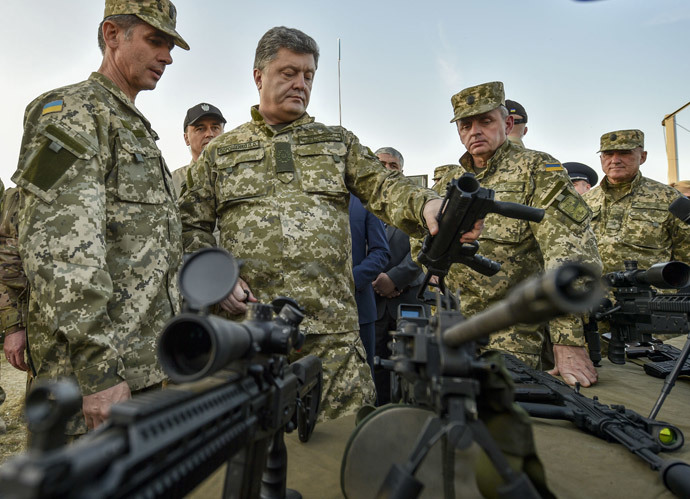
By Pat Buchanan • Unz Review • August 4, 2017
In crafting the platform in Cleveland on which Donald Trump would run, America Firsters inflicted a major defeat on the War Party.
The platform committee rejected a plank to pull us deeper into Ukraine, by successfully opposing new U.S. arms transfers to Kiev.
Improved relations with Russia were what candidate Trump had promised, and what Americans would vote for in November.
Yet, this week, The Wall Street Journal reports:
“The U.S. Pentagon and State Department have devised plans to supply Ukraine with antitank missiles and other weaponry and are seeking White House approval … as Kiev battles Russia-backed separatists … Defense Secretary Mattis has endorsed the plan.”
As pro-Russia rebels in East Ukraine have armored vehicles, Kiev wants U.S. tank-killing Javelin missiles, as well as antiaircraft weapons.
State and Defense want Trump to send the lethal weapons.
This is a formula for a renewed war, with far higher casualties in Ukraine than the 10,000 dead already suffered on both sides.
And it is a war Vladimir Putin will not likely allow Kiev to win.
If Ukraine’s army, bolstered by U.S. weaponry, re-engages in the east, it could face a Moscow-backed counterattack and be routed, and the Russian army could take permanent control of the Donbass.
Indeed, if Trump approves this State-Defense escalation plan, we could be looking at a rerun of the Russia-Georgia war of August 2008.
Then, to recapture its lost province of South Ossetia, which had seceded in 1992, after Georgia seceded from Russia, Georgia invaded.
Putin sent his army in, threw the Georgians out, and recognized South Ossetia, as John McCain impotently declaimed, “We are all Georgians now!”
Wisely, George W. Bush ignored McCain and did nothing.
But about this new arms deal questions arise.
As the rebels have no aircraft, whose planes are the U.S. antiaircraft missiles to shoot down? And if the Russian army just over the border can enter and crush the Ukrainian army, why would we want to restart a civil war, the only certain result of which is more dead Ukrainians on both sides?
The Journal’s answer: Our goal is to bleed Russia.
“The point of lethal aid is to raise the price Mr. Putin pays for his imperialism until he withdraws or agrees to peace. … The Russians don’t want dead soldiers arriving home before next year’s presidential election.”
Also going neocon is Mike Pence. In Georgia this week, noting that Russian tanks are still in South Ossetia, the vice president not only declared, “We stand with you,” he told Georgians the U.S. stands by its 2008 commitment to bring them into NATO.
This would mean, under Article 5 of the NATO treaty, that in a future Russia-Georgia clash the U.S. could find itself in a shooting war with Russia in the South Caucasus.
Russia’s security interests there seem clear. What are ours?
Along with Trump’s signing of the new sanctions bill imposed by Congress, which strips him of his authority to lift those sanctions without Hill approval, these developments raise larger questions.
Is President Trump losing control of Russia policy? Has he capitulated to the neocons? These are not academic questions. For consider the architect of the new arms package, Kurt Volker, the new U.S. Special Representative for Ukraine Negotiations.
A former CIA agent, member of the National Security Counsel, and envoy to NATO, Volker believes Russian troops in Transnistria, Abkhazia, South Ossetia, Crimea, Donetsk and Luhansk are all there illegally — and U.S. policy should be to push them out.
A former staffer of Sen. McCain, Volker was, until July, executive director of the neocon McCain Institute. He has called for the imposition of personal sanctions on Putin and his family and European travel restrictions on the Russian president.
In the Journal this week, “officials” described his strategy:
“Volker believes … that a change in Ukraine can be brought only by raising the costs for Moscow for continued intervention in Ukraine. In public comments, he has played down the notion that supplying weapons to Ukraine would escalate the conflict with Russia.”
In short, Volker believes giving antitank and antiaircraft missiles to Ukraine will bring Putin to the negotiating table, as he fears the prospect of dead Russian soldiers coming home in caskets before his 2018 election.
As for concerns that Putin might send his army into Ukraine, such worries are unwarranted.
Volker envisions a deepening U.S. involvement in a Ukrainian civil war that can bleed and break Russia’s Ukrainian allies and convince Putin to back down and accept what we regard as a just settlement.
Does Trump believe this? Does Trump believe that confronting Putin with rising casualties among his army and allies in Ukraine is the way to force the Russian president to back down and withdraw from Crimea, Luhansk and Donetsk, as Nikita Khrushchev did from Cuba in 1962?
What if Putin refuses to back down, and chooses to confront?
Copyright 2017 Creators.com.
Trump signs Russia sanctions bill, but spits at it
By M K Bhadrakumar | Indian Punchline | August 3, 2017
There is a long history of Russia being kicked around as political football in the United States. The circumstances leading to the latest Russia sanctions bill passed by the US Congress has striking similarity with the so-called Jackson-Vanik Amendment [J-VA] of 1974, which put road blocks on the policy of détente toward the Soviet Union initiated by President Richard Nixon and his secretary of state Henry Kissinger in the late sixties.
The J-VA specifically prevented Nixon from granting MFN status to the Soviet Union and the non-market economies of the Soviet bloc. Then, as now, Russia was a toxic subject on account of its refusal to liberalise its emigration policy to allow Soviet Jews to leave for the Western countries. In Senator Henry Jackson who piloted the J-VA we even have the counterpart of Senator John McCain – in their visceral Russophobia.
Domestic politics also crept in, inevitably, because the Jewish lobby’s support was key to the secret presidential ambitions that Jackson harboured. Thus, Jackson’s political ambitions combined with his ideological antipathy toward the Soviet Union.
The J-VA was passed with over three-quarters of US lawmakers supporting it, which made a presidential veto pointless. That is also President Donald Trump’s predicament. His statement on Wednesday after signing the Russia sanctions bill into law speaks for itself. Nixon found himself in a helpless position because he was also badly wounded by the Watergate scandal. Trump also is fighting back at his detractors who call him a stooge of Russia but he is still commanding the heights.
But the main difference today is the absence of Henry Kissinger, the grey cardinal par excellence. Kissinger found an ingenuous way to get around the road block – via ‘trilateral talks’ involving the Congress (read Senator Jackson), Moscow and the Executive Branch (read Kissinger himself)! (The Soviet side was represented by the formidable Russian ambassador to the US, Anatoly Dobrynin, one of the shrewdest operators the Kremlin ever assigned to the Washington Beltway who served in the post at a stretch from 1962 to 1986.)
Of course, Kissinger played the role of the master conductor and jealously preserved his prerogative to fine tune the ‘trilateral talks’ – essentially, to carry forward the détente process. HK had the advantage also of having a longstanding ‘back channel’ dialogue with Dobrynin. Of course, HK was increasingly in the driving seat even as Nixon was sinking in the Watergate scandal. (Nixon resigned in 1974.)
Indeed, times have changed. Rex Tillerson and Henry Kissinger cannot be compared. Tillerson’s remarks about the Russia sanctions bill at his press conference in the state department on Tuesday reveal the man himself – a decent, candid guy who keeps his fingers clean:
- I will be meeting face to face with Foreign Minister Lavrov this weekend on the – on the margins of the meetings in Manila. We – he and I have already spoken. I would say our conversation following the actions has been professional. There’s no – there’s been no belligerence. I think Foreign Minister Lavrov and I understand our roles. We understand our responsibilities. And I think he’s as committed as I am to trying to find ways that we can bring this relationship back closer towards one another.
- Now, the action by the Congress to put these sanctions in place and the way they did, neither the President nor I are very happy about that. We were clear that we didn’t think it was going to be helpful to our efforts. But that’s the decision they made. They made it in a very overwhelming way. I think the President accepts that, and all indications are he will sign that, that bill. And then we’ll just work with it, and that’s kind of my view is we’ll work with it. We got it. We can’t let it take us off track of trying to restore the relationship.
In any case, Russia ties have become a template of a titanic power struggle in America in a way that has no precedents. The combination of the US Congress, the defence and intelligence community and mainstream media is not an easy block to surmount even for Trump.
But then, fortuitously for Russia, there is a knight in shining armour riding a white horse approaching the arena – European Union. The EU has given notice that it will have veto power over the US’ sanctions bill. A press release by the European Commission in Brussels on Wednesday says that “European interests” must be taken into account in the implementation of any sanctions against Russia by the United States. The crux of the matter is that Germany will not allow the US to interfere in its flourishing business ties with Russia, especially in the field of energy. Moscow is delighted.
However, what matters at the end of the day is Trump’s own behaviour in the downstream. His pride has been dented. And he is an egoist. But Trump is also a fighter. His statement on Wednesday (after signing the bill) strongly hints at uncontrollable fury. Meanwhile, word has just come about Trump’s latest tweet an hour ago:
Donald J. Trump Verified account @realDonaldTrump
Our relationship with Russia is at an all-time & very dangerous low. You can thank Congress, the same people that can’t even give us HCare!
He may have fired the first salvo.
The Israelization of the Middle East Quagmire in the US Media
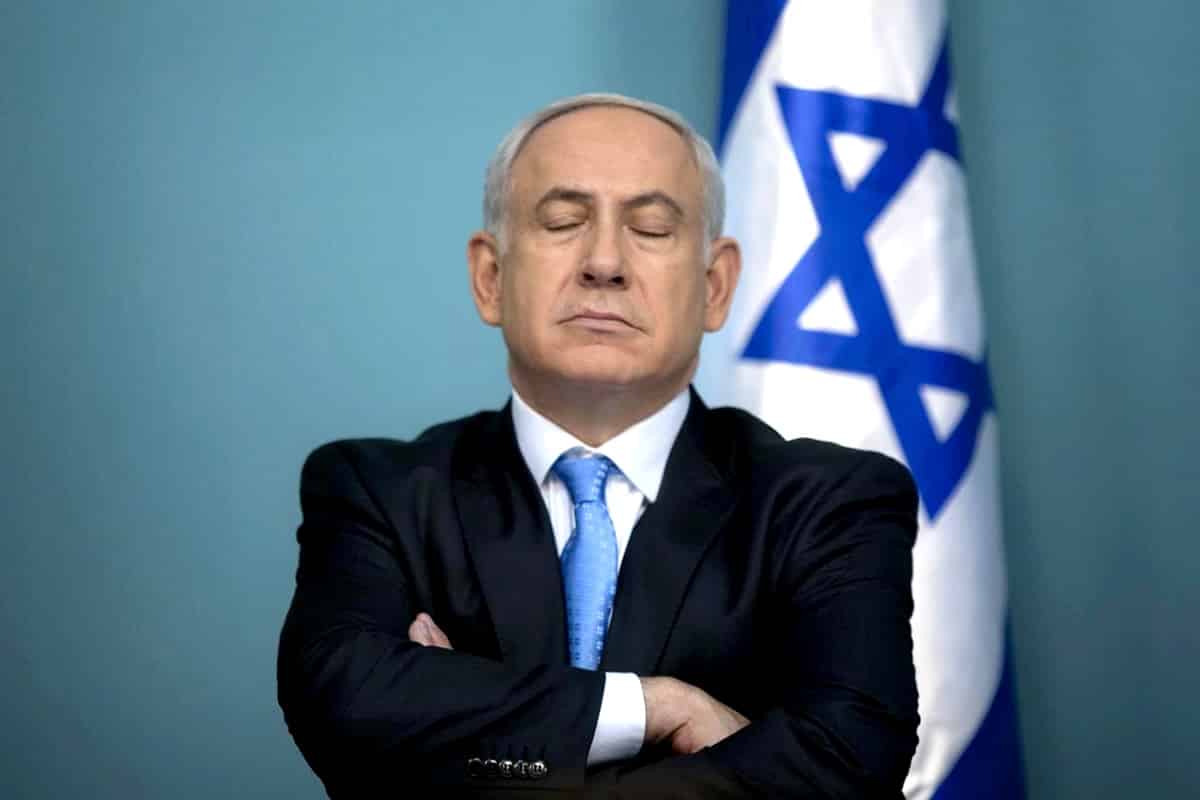
Like other Israeli leaders who preceded him Netanyahu is both an extremist and a terrorist, not to mention a proficient and shameless liar. No American paper or television channel will dare criticize him. He’s the only leader invited to openly propagandize the US Congress.
By M. REZA BEHNAM | Greanville Post | August 2, 2017
Not only is Israel waging a military campaign in the occupied territories, but a second battle is being waged through the American media to ensure continued U.S. support for its expansionist policies.
Israel’s colonizing aims, begun in the 1900s, were laid out in the doctrine of Vladimir Jabotinsky, founder of Revisionist Zionism, now the ideological cradle of today’s ruling Likud Party.
In his writings, “The Iron Wall” and “The Iron Law,” Jabotinsky set out the Zionist rationale for carving a Jewish state out of most of Palestine through force. He wrote, “Zionism is a colonizing adventure and therefore it stands or falls by the question of armed force.
“It is important to build, it is important to speak Hebrew, but unfortunately, it is even more important to be able to shoot. …”
When the 1947 United Nations Special Committee on Palestine partition plan granted 55 percent of Palestine to the future Jewish state, Jews owned 6 percent of the land in Palestine, but they made up only 32 percent of the population. After the 1948 Arab-Israeli war, Israel expropriated approximately 4.2 million acres of Palestinian land, about 78 percent of historic Palestine.
The dispossession continues today, with settlement enterprises covering about 42 percent of the remaining 22 percent. Palestinian cities, towns, homes, orchards and businesses have been systematically destroyed and repopulated by more than 650,000 illegal Jewish settlers.
Israel’s defenders say that the causes of violence go far back in history. However, the raison d’etre of Palestinian violence is not rooted in some inherent hatred of Jews, or historical animosity, or religion. It is about the land.
Without this historical context, today’s news events seem episodic and inconsequential.
After the 1967 Six Day War, Jewish organizations undertook a propaganda campaign to ensure Israel’s legitimacy and cement its relationship with the United States. It included the conflation of Israel with the Holocaust and victimhood and the writing of a mythical history of Palestine as an unpopulated desert that “good” Israelis made bloom.
That uncontested and false tale reverberated in Prime Minister Golda Meir’s outrageous 1969 claim that, “There was no such thing as a Palestinian; they never existed.”
In 1982, the narrative changed with Israel’s invasion of Lebanon. The indiscriminate bombing of Beirut and the death of more than 17,000, mostly civilians, turned the Arabs into victims and the Israelis into victimizers and temporarily sullied the carefully crafted story.
To regain control of public opinion, the American Jewish Congress sponsored a 1983 conference in Jerusalem with the goal of devising a strategy for reselling Israel. Top executives, journalists and academics from Israel and the United States developed talking points that are recognizable in today’s rhetoric, which stresses the following ideas:
* Israel’s strategic importance to the United States.
* Israel’s physical vulnerability.
* Israel’s shared cultural values with the West.
* Israel’s desire for peace.
Participants also understood the importance of an all-out campaign to convince the public that Jewish settlements in the West Bank are not an obstacle to peace. Thousands of illegal Jewish settlements constructed on Palestinian land are a testament to the effectiveness of that strategy.
The conference also produced the Hasbara (propaganda) Project. Its goal was to guarantee that the United States did not waver in its economic and military support, and to make it almost impossible to critique Israel’s actions.
News organizations have come to expect pressure if they go outside the level of acceptable discourse regarding Israel. Hence, they avoid potentially troublesome subjects and punish journalists who expose them. For example, Ariel Sharon, then minister of defense, filed a libel suit after Time magazine accused him of encouraging the massacres at the Sabra and Shatila refugee camps in Lebanon. The lobbying group Americans for a Safe Israel filed a petition with the Federal Communications Commission requesting that NBC’s license be revoked over its reporting of the invasion.
Israel, the size of New Jersey, has an estimated defense budget of $20 billion. It has 4,170 tanks, 1,500 large artillery pieces, 10,185 armored fighting vehicles, 2,000 combat airplanes, 15 to 20 warships, five submarines, 200 to 300 nuclear weapons, 175,000 regular troops and 430,000 reserves.
CBS faced much the same criticism in 2012 after correspondent Bob Simon’s “60 Minutes” report about Palestinian Christians living under Israeli occupation aired. The report challenged the Israeli narrative that Islamic extremists were making Christians’ lives difficult; instead, they complained about the hardships of living under occupation.
The American-born Israeli ambassador, Michael Oren, pressured the president of CBS News to quash the program. It aired only after the ambassador received the time he demanded for a rebuttal. A full-page advertisement in The Wall Street Journal excoriated Simon.
Alternative narratives such as Simon’s are often dismissed as anti-Israel or given the most intimidating and feared of all labels — anti-Semitic. The fear of this slur has been a potent rhetorical device to shield Israel from fault, and has proven fatally effective. The accusation has destroyed the careers and reputations of journalists, academics, politicians and entertainers.
Helen Thomas, a respected member of the Washington press corps, had her 57-year career end after she publicly questioned U.S. support for Israel. An onslaught of well-orchestrated denunciations forced her retirement in 2010. Thomas later remarked, “You cannot criticize Israel in this country and survive.”
President Jimmy Carter, before and after publication of his book, “Palestine: Peace Not Apartheid,” received his share of intimidation and vitriolic accusations of anti-Semitism. Ran Baratz, communications director appointee for Prime Minister Benjamin Netanyahu, accused President Obama of “modern-day anti-Semitism” after the United States reached an agreement with Iran on its nuclear program in July 2015.
Masterfully, Israel has marketed a number of myths that have become a part of the media lexicon. One of the most glaring fabrications sold to Americans is that the struggle is between two peoples with equal resources and claims. In reality it is a conflict between the colonizer, Israel, and the colonized, Palestinians.
Israel, the size of New Jersey, has an estimated defense budget of $20 billion. It has 4,170 tanks, 1,500 large artillery pieces, 10,185 armored fighting vehicles, 2,000 combat airplanes, 15 to 20 warships, five submarines, 200 to 300 nuclear weapons, 175,000 regular troops and 430,000 reserves.
Palestinians have none of these. And unlike Israel, Palestinians have few organized groups to tell their story or to lobby for them before the U.S. Congress. Yet Tel Aviv continues to perpetuate the myth of vulnerability.
Another persistent fallacy is that of gratuitous violence. Words matter; they manage perceptions.
Violent Jewish settlers are referred to as extremists, while Palestinians reacting to occupation are called terrorists. Palestinians “attack,” while Israelis merely “retaliate.”
With a compliant U.S. press, Israel’s propaganda network has successfully linked the terrorist attacks of Sept. 11, 2001, in the United States to Palestinians’ continued rebellion in the territories.
In 2015, Netanyahu suggested a relationship between the carnage in Paris and the Palestinian struggle for freedom, saying “Behind these terrorist attacks stands radical Islam which seeks to destroy us, the same radical Islam that struck in Paris and threatens Europe.”
In another unchallenged remark, the prime minister contended that “ISIS and Hamas are branches of the same political tree.” Whatever one may think of Hamas, it is not the Islamic State. It is an internal resistance movement in a singular battle with Israel.
The association of terrorism with Arabs, Muslims and the Middle East has created an unhealthy climate of indifference and fear in many Americans’ minds.
The media are replete with anti-Arab stereotypes, exemplified by the popular TV program “Homeland,” based on the Israeli series Hatafim (Prisoners of War). Middle Easterners rarely are presented in their full humanity, making them vulnerable to aggression. Racist remarks and vitriol directed at Muslims have become acceptable political theater and commonplace in the rhetoric of some American politicians.
News organizations unquestionably proffer another fiction: that Washington has been an “honest and neutral” interlocutor in Palestine-Israel peace negotiations.
Israel’s viability has been based on the $500 billion in aid it has received from the United States since 1949 and the $6 billion it continues to receive annually. American administrations have vetoed all but one U.N. Security Council resolution critical of Israel. Essentially, the United States has been financing the occupation and rewarding colonial policies.
America has more often than not been an obstacle to peace because of its bias in favor of Israel. The 2000 Camp David meeting is a poignant example. The press praised Prime Minister Ehud Barak for proposing the “most generous offer ever made” to the Palestinians while rebuking President Yassir Arafat for failing to accept Barak’s offer.
Had the press published maps, the prime minister’s proposed Palestinian state would have looked like a collection of balkanized enclaves. All Jewish settlements and roads in the West Bank would remain, and Israel’s control over Palestinian borders, air space and water would stay intact. Palestinians would have been encircled by hundreds of thousands of Jewish settlers on small disconnected islands, or Bantustans, much as they are today.
To further understand the imbalanced standard of reporting, it is useful to look at whose voices are heard.
Pro-Israeli syndicated columnists Thomas Friedman, Charles Krauthammer, George Will, Jonah Goldberg, Max Boot and David Brooks — whose son serves in the Israeli army — dominate newspapers’ op-ed pages. Wolf Blitzer was the editor of the American Israel Public Affairs Committee’s journal Near East Report before joining CNN as its chief political anchor. Such prominent magazines as The New Republic, Atlantic Monthly and Commentary are Israel-centric.
The occupation — with its curfews, 500 checkpoints and harassment by the Israeli army — has made access by journalists to the Palestinian experience almost impossible.
The Committee to Protect Journalists lists the West Bank as one of the worst places to be a journalist. Palestinians who are allowed on rare occasions to speak or write in the mainstream media have to use language acceptable to Israel and America.
Israelis who oppose their government’s policies are excluded as well. Ignored are the growing number of Israelis refusing military service in the occupied territories.
One such group, Breaking the Silence, founded in 2004, has published the chilling stories of abuse and devastation told by 700 former soldiers who served in combat units in the West Bank and Gaza. Peace movements such as Women in Black — Israeli women who gather every Friday on main squares in some cities with signs that read, “Stop the Occupation” in Arabic, Hebrew and English — have received inadequate coverage in the United States.
News companies give little attention to how the rest of the world has responded to the occupation.
The global human rights campaign represented by the Boycott, Divestment and Sanctions movement is growing internationally. The European Union recently announced that some goods produced on land seized by Israel in the 1967 war must be labeled “made in settlements.”
A Palestine Media Watch survey of The Wall Street Journal, The New York Times, Los Angeles Times, The Washington Post and USA Today revealed that of 680 op-ed columns on Palestine and Israel published between September 2000 and December 2005, 214 were written by Israelis and 86 by Palestinians.
A 2004 study of the Associated Press coverage disclosed that Israeli children’s deaths were covered at a rate of 7.5 times greater than Palestinian children’s deaths.
A six-month study of The (Portland) Oregonian by Americans United for Palestinian Human Rights observed that its headlines had reported Israeli children’s deaths to Palestinian’s at a rate of 44 to 1.
The treatment of Palestinians in Israeli prisons is hardly ever reported. The number of Palestinian political prisoners per capita is the highest in the world. More than 9,000 Palestinians are imprisoned by Israel (4,000 without trial). Amnesty International and numerous human rights organizations list torture in Israeli prisons as a major concern.
The right of return for millions of Palestinian refugees, the unequal allocation of water resources, the concrete wall of separation built on Palestinian land are among the myriad of crucial but unexplored news stories.
The media’s tone deafness to the Palestinian condition has contributed to Americans’ support of policies that are contradictory to their interests. Uncritical U.S. support for Israel has fueled anti-Americanism and radicalism throughout the Middle East. What is best for Israel has not always been best for the United States.
American government officials and media rarely ask whether Israel is strategically important to the United States as was once believed during the Cold War years. Close scrutiny suggests it is not.
Gen. David Petraeus, while head of the U.S. Central Command, told the Senate Armed Services Committee in March 2010, “The enduring hostilities between Israel and some of its neighbors present distinct challenges to our ability to advance our interests in the AOR (Area of Operations). …
“The conflict foments anti-American sentiment, due to a perception of U.S. favoritism for Israel. Arab anger over the Palestinian question limits the strength and depth of U.S. partnerships with governments and peoples in the AOR. …”
The Anti-Defamation League was so alarmed by the general’s testimony that it issued a statement condemning it.
News organizations must be held accountable for their lack of skepticism and reliance on officially constructed realities. Journalism functions best when it questions and challenges power.
American politicians and journalists must wake up to the fact that the strife in the Middle East is rooted in the Western and Israeli colonial and imperialist policies of the past and present. Unless acknowledged and reversed, anti-American sentiment and the tumult will continue unabated.
The urgency to speak up and to witness the corrosive reality of the occupation of Palestine and to address its ethical dimensions is greater than ever.
Inside and outside of Israel, neutrality and silence in the face of injustice is not an option.
M. Reza Behnam, Ph.D., a scholar specializing in the politics and cultures of the Middle East, is the author of the award-winning book, “Cultural Foundations of Iranian Politics.”
US sanctions won’t stop Russia’s pipeline project to Europe – analysts
RT | August 3, 2017
The latest US sanctions targeting Russia’s oil and gas sector will cause Gazprom some headaches in building the new gas pipeline to Germany, experts say. However, US restrictions are unlikely to stop the project.
“The price of any project automatically increases,” Tatiana Mitrova, director of the Skolkovo Energy Center told Reuters.
“Gazprom’s relationships with partners, subcontractors, and equipment and service providers are very complicated. They will all ask for a risk premium,” she added.
“This, however, does not mean that Nord Stream-2 won’t be built,” said Katja Yafimova of the Oxford Energy Institute.
However, while Gazprom’s major partners in the projects – ENGIE, OMV, Shell, Uniper, and Wintershall – are likely to accept the risks, smaller contractors will be more cautious.
“Not all partners can afford to see things through with Gazprom,” said Valery Nesterov, an analyst at Moscow-based Sberbank CIB.
It is still unclear whether the US President will enforce the restrictive measures. While Trump signed off on the new sanctions on Monday, he did so reluctantly, calling them “significantly flawed.”
“Unless Trump takes a really sharp turn, it is highly unlikely that companies that are supplying pipeline goods are going to be punished in the next year or so,” Richard Nephew, a former US deputy chief of sanctions told Reuters.
At the same time, Gazprom’s long-term projects can be affected.
“A lot of companies are now thinking: ‘I’ve got maybe 12, maybe 18 months in which I can do some stuff but after that maybe I won’t’,” he added.
The Nord Stream-2 pipeline plans to double the delivery capacity of Russian natural gas to Germany from the current 55 billion cubic meters of gas per year.
Trump Battles the CIA: The Korea Ban & Bad Signs in the Market
By Caleb Maupin – New Eastern Outlook – 02.08.2017
The ban on travel to the Democratic People’s Republic of Korea is primarily an attack on the people in the northern part of the Korean Peninsula. It is a move to further isolate the DPRK, and prevent tourist dollars from flowing in, while also preventing fraternization between Americans and citizens of the country. However, the State Department’s decision also has another target in the crosshairs, one much closer to Washington DC.
According to reports in the press, roughly 5,000 US citizens visit the DPRK each year. Most are tourist youth attracted to the mystique and adventure of traveling to a country so widely demonized in the US media. Communist organizations send political delegations and Christian sects such as the Mennonites often send missionaries and aid workers. However, one can be sure that among the 5,000 people who visit the country each year is more than a few American spies, posing as tourists.
When one looks over the recent history of Americans being arrested in North Korea prior to the tragic death of Otto Warmbier, the reasons for the arrest almost always indicate activities that could be described as espionage. Merrill Newman, for example, was a former member of the US military’s “White Tigers” division during the Korean War. The 85 year old man was arrested in the DPRK as he wore a ring with the insignia of this anti-DPRK fighting and intelligence unit. After being arrested he confessed to participating in some of the war crimes against the Korean people during the 1950-1953 war. Newman stated “I did not realize North Korea was still at war” after his eventual release.
The State Department ban on travel to the DPRK is far more extreme than the widely challenged ban on travel to Cuba, enacted as part of the blockade. Officials say that any American who visits DPRK will automatically have their passport invalidated. The constitutionality of such an extreme ban is likely to be challenged.
In the meantime, however, any efforts by the CIA to gather information inside North Korea, or to manipulate or maneuver within its internal affairs, are greatly limited.
Two divisions of the US Federal Government that have long been at odds in issues of foreign policy have been the military and the Central Intelligence Agency. The nature of the two entity’s work lays the basis for their constant disagreement and conflict. The new State Department policy has essentially declared that the DPRK will be handled with military operations, not with “color revolutions,” plots of a coup, manipulation of the youth, or the other shenanigans carried out by the intelligence agencies.
A Longstanding Fight – CIA vs. Pentagon
The US military brass is trained at West Point, and though a great deal of history and background is provided, the focus of their training is military science and the “art of war.” Meanwhile, the Central Intelligence Agency’s administrators come from Harvard, Yale, and Princeton, and are trained in the subtle art of expanding US influence and quietly neutralizing those who challenge it.
The favorite word of those who extol the military and disfavor the CIA is “strength.” The strategies favored by the Pentagon involve demoralizing opponents of US power with “shock and awe” style crushing of enemies. The mass bombing campaigns in Vietnam and Korea did not win credibility and respect for the US internationally, and this was not their intention. The same can be said for Bush’s unilateral invasion of Iraq. The Pentagon does not concern itself with winning friends and influencing people, but with blowing things up, and its favored foreign policy reflects this.
The CIA, on the other hand, tends to favor soft power, negotiations, and internal subversion of global rivals, all done covertly, with the USA looking like a benevolent “Mr. Nice Guy” on the surface. The CIA favors arming and training third party proxies to fight their enemies, while waging a fierce battle in the field of public relations and propaganda.
The clash between the military and the intelligence agencies has played out dramatically in recent US history. It is widely understood that John F. Kennedy began enacting policies that overwhelmingly favored the CIA prior to his death. Kennedy resisted the efforts to escalate military involvement in Vietnam, while funding and emphasizing CIA-linked operations like the Peace Corps. Kennedy’s often quoted the phrase “those who make peaceful revolution impossible make violent revolution inevitable” stated the CIA’s exact strategy for fighting Communism during the Cold War. The CIA favored “reforms” in US aligned third world regimes that made Marxist-Leninist revolution less appealing, while also presenting the US as a benevolent, charitable country that did not seek to intervene in other countries domestic affairs. The CIA worked to make sure that the hands of the USA during the rise of military dictatorships and the toppling of pro-Soviet world leaders were well hidden.
Prior to Kennedy’s assassination, a hard, right-wing mass movement against him, involving the John Birch Society and many Pentagon linked political figures, called the “Camelot” President a traitor and Soviet agent. Many sections of the military thought Kennedy’s “soft power” strategy for confronting Communism, and his ultimate refusal to invade Cuba with US troops after the CIA’s failed “Bay of Pigs” operation, showed weakness. Films like “Dr. Strangelove” widely mocked the well-known fanaticism of the military brass, which distrusted the intelligence agencies and the ability of politicians to make military decisions. Kennedy’s subtle alliance with the Civil Rights Movement, though inconsistent and widely criticized by activists, also threatened a military brass packed with the sons of wealthy southern families.
After the death of Kennedy, the US military seemed to be on top in the power struggle. Richard Nixon’s electoral victory in 1968, and his “secret plan” to win the Vietnam War with massive bombing, showed the military and its allies as the dominant force in setting policy.
But the demoralizing and unpopular war in Vietnam reversed this by the mid-1970s. Nixon found himself listening and depending more on the advice of Henry Kissinger, opening relations with the People’s Republic of China, and eventually being driven from office. Jimmy Carter took office in 1976 calling himself a “student” of CIA strategist Zbiegniew Brzezinski. Under Reagan, the CIA got stronger, with CIA chief George H.W. Bush rising to be Vice President and eventually Reagan’s successor as commander-in-chief.
The often repeated narrative that the US military’s escalation of the arms race was the key factor in defeating the USSR is said with absolute defensiveness by the Pentagon’s right-wing allies. Though the “strong man Reagan” explanation is more widely understood among the US public, within the circles of power in the USA, the CIA takes more credit.
Under the direction of Brzezinski, who boasted that he “gave the USSR a Vietnam” by funneling money and weapons to insurgents in what he called the “Afghan trap,” the CIA manipulated political situations in Eastern Europe causing unrest and a crisis that eventually toppled the USSR. The CIA widely credits itself for terminating the Soviet Union by manipulating internal problems and applying less blatant forms of external pressure.
The CIA is not a “Conservative” Organization
Many leftists and anti-war activists assume that the CIA is staffed with jingoistic conservatives due to the nature of the job. While the rank-and-file of “the company” may attract a more rightist crowd of Mormons and military types, the leaders of the CIA are not conservative in any sense of the word.
John Brennan, the director of the CIA under Barack Obama admits that he voted for Communist Party Presidential Candidate Gus Hall in the 1976 Presidential election. Brennan was stationed in Riyahl for many years, and at the time of his appointment, many voices came forward to allege that he had actually converted to the Wahabbi brand of Islam. The allegations remain unproven.
The CIA strategist who was most influential between the 1960s and the 1990s was Zbiegnew Brzezinski. To call Brzezinski conservative would be deeply mistaken. Zbeignew’s daughter, Mika Brzezinski is a host on liberal leaning MSNBC’s TV program “Morning Joe.”
Brzezinski developed the art of propaganda, presenting the USA to the world as the homeland of Beatles Music, the paintings of Jackson Pollack, and sexual hedonism. In Eastern Europe, Brzezinski’s policies convinced millions of alienated young people that overthrowing the Marxist-Leninist governments would transform their countries into Disneyland playgrounds packed with consumer goods and never ending rock and roll concerts.
In Afghanistan, Brzezinski worked with a young Saudi billionaire named Osama Bin Laden to fight against the People’s Democratic Party. With US made weapons and funding, complimented by heroin revenue, the insurgents poured acid on women’s faces and hanged literacy campaign volunteers. Brzezinski’s slick propaganda work convinced the world that these Wahabbi extremists were actually Che Guevara-esque freedom fighters, battling the “Soviet Empire” for freedom. CBS news was even caught airing staged, fake battle footage.
The figure known as George Soros has become a favored talking point of right-wing activists in the USA. They present him as the sinister bank-roller of leftist activism. Long before Soros was promoting Democrats and Liberals in the USA, he was bank-rolling CIA supported anti-Communist “color revolutions.” Soros is known to have funded anti-communist, pro-capitalist and pro-western protest movements in the USSR, Czechoslovakia, Yugoslavia, and elsewhere.
During the Cold War, the CIA launched a program called the “Congress for Cultural Freedom.” The program funded the art of Jackson Pollack, as well as the Trotskyist magazine Partisan Review. The CIA also launched a project called MK-Ultra which involved distributing hallucinogenic drugs on college campuses.
Obama’s Administration – The White House Stood With Langley
Barack Obama’s grandparents were prominent executives of the Bank of Hawaii. Obama’s grandmother Madelyn Dunham, actually became the first female Vice-President of the bank. The Bank of Hawaii was key in transferring money to US intelligence operations across Asia.
Obama’s mother, Ann Dunham, was married to Lolo Soetoro, a figure in Indonesia who openly supported the 1965 CIA backed coup d’etat against President Sukharno. Soetoro eventually became a military officer under US backed dictator Suharno. It should be noted that the 1965 coup, which Obama’s grandparent’s Bank of Hawaii was involved in financing, was particularly bloody, and involved mass slaughter of ethnically Chinese people. Some estimate that as many as 500,000 people died.
Obama’s family connections aside, his Presidency was very much favorable to the CIA’s strategy for international relations. Obama’s middle name is Hussein. He attended an Islamic elementary school as a child. Long before becoming President, Obama famously had a meeting with Palestinian scholar Edward Said. He maintained a hostile war of words with Israeli Prime Minister Benjamin Netanyahu.
One is reminded of how Napoleon Bonaparte sent out proclamations saying he was a Muslim as he attempted to seize Syria and Egypt for France. To the Arab world, a key region in US foreign policy strategy, Obama gave the illusion of possibly being a Muslim and an ally against Israel.
The fact that a dark skinned man, whose middle name was “Hussein” occupied the White House probably played a key role during the Arab Spring. The uprisings of youth in Islamic countries did not become a repeat of the 1979 Islamic Revolution of Iran, where western capitalism was replaced by a government proclaiming “war of poverty against wealthy” and “Not capitalism but Islam.”
The USA was able to maneuver within the Arab spring to topple the Islamic Socialist government of Libya, and to reduce the Baath Socialist country of Syria to civil war and chaos. Meanwhile, the US backed autocracies in Saudi Arabia, Bahrain, and elsewhere remained thoroughly intact. The continuation of the Yemeni revolution against a pro-Saudi regime now faces an onslaught of bombs and foreign troops.
The establishment of diplomatic relations between the USA and Cuba, with friendly words while intel operatives worked behind the scenes to plot social media unrest with a “Cuban Twitter,” fits the CIA playbook and strategy completely. The JCPOA negotiations with Iran fit into a similar strategy.
In the final weeks of the Obama administration, desperate “Mr. Nice Guy” maneuvers to increase the credibility of the USA on the global stage were carried out. John Kerry gave a speech criticizing Israel, and the US did not protect Israel from a harshly worded resolution at the UN Security Council.
Trump Stands With The Pentagon
Even before Trump took office, his presidential campaign was loaded with subtle hostility to the CIA. Trump castigated the results of US foreign policy, specifically in Syria and Libya where the CIA had been instrumental. During his debate with Hillary Clinton he criticized the funding of rebels in Syria. He repeatedly said that the policies of Obama and Secretary of State Hillary Clinton had created ISIS.
Trump repeated perspectives that would be popular with the military. The key word repeated in Trump’s foreign policy speeches was “strength.” The idea that a huge military budget and direct military interventions make the USA look stronger as a country has long been a talking point of the military brass, against proponents of soft-power and subtle influence.
At times, Trump seemed to be contradictory when talking about foreign policy. It is no secret that among rank-and-file soldiers, and the white, working class, rural communities they often originate in, right-wing isolationist sentiments are widespread. Trump appealed to those sentiments when talking about the bad results of “toppling regimes” and employing the slogan “America First.”
At the same time, he appealed to the Pentagon’s calls for strength, saying that Obama’s “red line” around chemical weapons had “meant nothing.” It may sound contradictory to favor isolationism, while criticizing a president for not making good on threats to attack a country, but it fits into his overall appeal to sentiments within the military.
At the same time that Trump critiqued foreign policy and echoed isolationist talking points, he consistently called for an increase in military spending. In Trump’s foreign policy rhetoric, the isolationism of rank and file soldiers, the Generals’ lust for strength, and the military-industrial complex’s desire for more profits were all re-assured.
The spat between Trump and the CIA is no secret, and is widely acknowledged, even in mainstream US media. The intelligence agencies continue to repeat, without proof, that Trump received assistance from “Russian meddling” in the 2016 elections. A series of leaks from within the administration have found their way to the press.
The Trump administration fought back first by dramatically crippling the CIA’s operations in the Middle East. The executive order banning travel from 6 countries was widely called a “Muslim ban” in the US press. In reality, it targeted all citizens, Muslim or not, from 6 specific countries. (Note: The ban originally included 7 countries, but Iraq was removed from the list.)
Sudan, Iran, Syria, Yemen, Libya, and Somalia are all the site of ongoing conflicts, and in each of these countries US intelligence agencies are working to influence and coordinate with certain forces. As was pointed out by an opponent of the ban on FOX news, the “travel ban” prevents the CIA from rewarding those who do its bidding with visas. A key “soft power” bribe has been taken away from the CIA for its operations in the Middle East.
Trump ultimately shut down the CIA’s training program for anti-government fighters in Syria, according to reports. Trump has accused Obama of wiretapping him during the Presidential campaign.
Trump has even discussed designating the Muslim Brotherhood, an organization that works closely with the CIA around the world, as a Foreign Terrorist Organization. The Muslim Brotherhood was key in undermining and fighting against Arab Socialism during the cold war. More recently, the Muslim Brotherhood was key in aiding US activities to manipulate the Arab spring, and the create turmoil in Libya and Syria.
The Turkish government, which draws its support from the Muslim Brotherhood, is far less friendly to the United States than just a few years ago. The current spat between Saudi Arabia and the Muslim Brotherhood-supporting state of Qatar may reflect difference within the power structure about relations to the Muslim Brotherhood and its use in the fight against independent governments.
Despite presenting himself as an isolationist, Trump ultimately did what Obama was unwilling to do, and launched direct US attacks on the Syrian government. Many in his base were furious, and even longtime hawks like Ann Coulter denounced Trump’s move. However, the more well connected members of the Republican establishment praised it, using the military’s favorite word, calling the bombing a demonstration of “strength.”
As Donald Trump remains President of the United States, the press is solidly against him. This should be no surprise as the US Central Intelligence Agency, not the Pentagon, is primarily involved with influencing media. From the days of “Project Mockingbird” to today, the CIA works very hard to influence and craft public opinion, especially on issues of foreign policy. The flow of ‘anonymous leaks’ from the intel community into the press reflects the longstanding relationship between the intelligence agencies and the media.
The Specter of Economic Crisis, Greatest Danger to Trump
 Right now, spending in the USA is down. Wal-Marts are shutting their doors, and suburban malls, which employed thousands, are becoming a thing of the past. The post-2008 “new normal” of low wage retail jobs replacing good paying jobs for the next generation is rapidly fading away, as retail itself is being pushed aside by online shopping. Jeff Bezos outstripped Bill Gates as the richest man in the United States in terms of directly traceable assets.
Meanwhile, home ownership is still declining. The basic ability of American families to own houses has widely been eroded, home ownership has not been restored to anywhere near the pre-2008 levels. In neighborhoods across the USA, family homes are not being resold to American families, but to renting institutions.
As property values remain low and home ownership drops in suburban and rural areas, another aspect of the “new normal,” the “prosperous urban centers” hopping with young workers in high tech jobs, are also seeing a new decline in property values. Unemployment is low, but so are wages.
In the unfolding atmosphere of eroded spending power and decreasing incomes, banks in the USA are now cutting back lending. When banks stop lending, it is generally based on an understanding that bad times are ahead and they may not be able to collect.
Between 2000 and 2008, Alan Greenspan and the Federal Reserve did everything possible to hold off a crash. Greenspan legalized all kinds of previously illegal credit card and housing mortgage lending, in order to keep the US public spending money they did not have. While the spending power of the US public was drastically reduced by deindustrialization, automation, and shifts in the global economy, Greenspan spent his final years working tireless to keep sales up. Many will recall how George W. Bush urged Americans who wanted to help their country in the aftermath of 9/11 to “go shopping.”
Greenspan’s maneuvers worked only until 2008. With deregulated banking laws, Americans could keep buying houses and maxing out their credit cards, keeping the economy that faced turmoil from 2001 afloat, until the “bubble burst.”
Alan Greenspan was a high ranking member of the Council on Foreign Relations, a think tank often described as “the CIA’s brain.” He did not make his decisions in isolation, but most likely consulted with other figures in the intelligence community about the need to hold off the crisis as long as possible. Greenspan’s decision to legalize credit and keep the public spending, and temporarily hold off the crisis, was not a decision he made by himself.
As the economy crashed and burned in 2007 and 2008, Bush and his cronies, widely viewed as soft on big money, packed their bags, and Barack Obama was able to ride to the White House almost on a white horse, presented as the savior who offered “hope and change.” Greenspan’s efforts did not prevent a the financial crisis, but enabled it to come at a more convenient time, with less political fallout.
However, the political situation facing the USA is far different today. The intelligence community and a large section of the rich and powerful are adamantly opposed to Donald Trump’s presidency, there may not be any specific motivation to work to hold off a financial catastrophe.
If a financial crash were to occur again, Donald Trump would be the ideal scapegoat. The fallout could be blamed on his unpopular presidency which is already routinely ridiculed and demonized by the press.
Will Trump Come Out On Top?
The fact that Trump’s “infrastructure week” contained so few concrete actions may not have hurt Trump at the moment, but a failure to vastly improve the lives of the rust-belt working class that voted for him could be the ultimate undoing of his presidency.
As Trump battles the intelligence community, and seems to side with the Pentagon, he is facing an uphill battle. Allies of the Pentagon brass are disappointed and opponents of Trump are emboldened. However, Trump has proven that he has the ability to unpredictably reverse circumstances that are hostile to him, and come out victorious. The unexpected 2016 elections results are the most concrete example.
If anything was proven by Trump’s surprise victory or the Brexit vote, as well as the rise of Jeremy Corbyn and Scottish Nationalism in the UK, it is that anti-establishment sentiments are stronger and deeper than ever in western countries. People in the west realize that things are deeply wrong and are looking for answers. The answers offered by the status quo, often answers that are engineered and delivered in coordination with the intelligence community, are proving to be unsatisfactory.
In the age of easy access to information, the intelligence community may have both an advantage and disadvantage in the face of their opponents in the US power structure. On the one hand, their deceptions and crafting of public opinion can be more widely and cheaply disseminated than ever before. However, an audience that once had nowhere else to look can easily find alternative views, and debunk their claims. The economic decline and rising police state repression are making the US public more and more partisan toward opposing the establishment and entrenched power that the CIA’s propaganda activities seek to defend.
Trump and his allies in the Pentagon are in a weaker position as they face off with the Intelligence Community, however, the underlying shift in public opinion and the changes in the global economy give them a competitive edge.
Rep. John Duncan, Conservative Peace Proponent, Will Not Seek Reelection to US House

By Adam Dick | Ron Paul Institute | August 1, 2017
Rep. John J. Duncan, Jr. (R-TN) announced on Monday that he will not seek reelection in 2018 to the United States House of Representatives. In addition to being one of the longest-serving Republican members of the House (representing the second district of Tennessee since 1988), Duncan, who argues that being antiwar is a conservative position, is also one of the House’s strongest proponents for peace.
In his April of 2015 editorial “A Return to The Peace Party,” Duncan lamented the Republican Party drifting toward being a war-supporting party and argued that it should revert to its past position as the peace party. “When I was a teenager,” Duncan wrote, “I remember reading a publication from the Republican National Committee that said, ‘Democrats start wars, Republicans end them.’” Duncan wrote in the editorial that he not only thought the party’s shift toward hawkishness is wrong but also declared, “I think it is a recipe for defeat if my Republican party becomes known as a party favoring permanent, forever wars — war without end.”
Duncan elaborated on his editorial’s analysis in an in-depth C-SPAN interview the next month.
Duncan has also spoken up in the House against war, including in a June of 2015 speech in which Duncan proclaimed, “there has been nothing conservative about our policy of permanent, forever, endless war in the Middle East,” and in March of 2014 when he advised in a speech in opposition to US intervention in Ukraine that, “We don’t need to be sending billions to Ukraine, and we especially should not escalate this situation into some type of military confrontation.”
Duncan has cast votes in opposition to US wars and sanctions, including when he was one of only six House Republicans to vote in October of 2002 against authorizing the US commencing a war against Iraq and one of only three House members to vote last week against legislation imposing and expanding sanctions against Iran, North Korea, and Russia.
Duncan voted against the Iraq War despite the strong support in his district for starting the war. “When I pushed that button to vote no on that war,” Duncan is quoted in a Knoxville News Sentinel article regarding his vote, “I thought I might be ending my political career. I’m not trying to over-dramatize it. I really thought I might be.”
That vote did not end Duncan’s political career. But, 15 years and eight elections later, Duncan himself has decided to leave the House.
Commenting this week regarding his work in the House in a statement about his decision to not seek reelection, Duncan wrote, “During my time in Congress, I’ve worked as hard as I can to fight for what I believe in – fiscal conservatism, smaller government, and a more humble foreign policy that puts America first.”
Duncan is a member of the Advisory Board of the Ron Paul Institute for Peace and Prosperity.
Featured Video

Spain train disaster raises questions over Israeli-linked security contractors
or go to
Aletho News Archives – Video-Images
From the Archives
Are There 50,000 ‘Israeli-born’ Individuals Living in the UK?
By Professor David Miller | August 18, 2026
Recent disclosures by the Zionist regime show that some 2,069 British nationals were serving in the IDF as of March 2025, according to Freedom of Information (FoI) requests submitted to the occupation forces (1,686 dual British-Israeli, plus 383 multinational). We cannot tell from the figures how many of these were already settler colonists and intend to stay in the colony, and how many will return or have returned to the UK. Presumably, those returning to the UK will number far fewer than 2,000, since many are known to have become permanently residents of the colony.
Additionally, the IDF figures only provide a snapshot, and do not tell us how many have served in the Jewish supremacist military either before or after March 2025. One way into the question of how many genocidaires are living in Britain is to ask how many current British residents were born in the Zionist colony. There is data on that, as we shall see. … continue
Blog Roll
 Aletho News
- Are There 50,000 ‘Israeli-born’ Individuals Living in the UK?
- German CDU MPs Seek Climate “Misinformation” List
- The ‘Gaza Treatment’: How Media Headlines Obscure Who is Bombing Yemen
- Ro Khanna urges Democrats to strip Israel ‘integration’ provision from defense bill
- Why Iran designated British MI6, Royal Navy, and RAF as hostile, terrorist organizations
- Armenian opposition politician dies in custody
- US still trying to recycle failed hypersonic missile programs
- France’s ‘Cold War’: Paris blames Tehran for supermarket fridge hacks
- Psywar no more? 77th Brigade’s sudden death
- Ukraine Already Carved Up… Before Talks Begin? /Prof. Richard Sakwa
- If Americans Knew
- An error has occurred; the feed is probably down. Try again later.
- No Tricks Zone
- German Authorities Start Initiative To Evaluate Public Register For Climate “Disinformation” Spreaders!
- Zonal Asymmetry of Temperature Change in the Antarctic Circumpolar Current
- New Study: The Net Fossil Fuel Contribution To Rising Atmospheric CO2 Has Been Zero For 500 Years
- Germany’s Green Energy Transition Becoming Increasingly Expensive…Another 6 Trillion Euros!
- Sudden Stratospheric Warming, Powerful El Niño Combination May Lead To Extreme Europe Cold, Energy Crisis!
- Two New Studies Find Thwaites Glacier Melt Cannot Be Driven By Human Activity Or A Warming Ocean
- E-Cars Reduce CO2 Emissions By Only 41% Compared To Internal Combustion Engine Vehicles
- Predictions Made By Renowned Climate Professor Over Past Decades Have Been Proven To Be Poor
- New Study Suggests Large Regions Of The Pacific Ocean Have Been Cooling For The Last 80 Years
- Germany’s Green Energy Debacle: High Energy Costs Force Kahla Porzellan to Close After 182 Years!

