Westerners, especially Atlanticists, are great at advocating for the setting of wildfires, and for starting those wildfires, but they seldom give much thought to what happens once they set a conflagration in motion
Trita Parsi: Massive Houthi Victory Transforms U.S.-Iran War
Glenn Diesen | September 12, 2026
Trita Parsi is the co-founder and Executive Vice President of the Quincy Institute for Responsible Statecraft. Follow the Substack of Trita Parsi: https://tritaparsi.substack.com/
Follow Prof. Glenn Diesen:
- Substack: https://glenndiesen.substack.com/
- X/Twitter: https://x.com/Glenn_Diesen
- Patreon: https://www.patreon.com/glenndiesen
Support the research by Prof. Glenn Diesen:
- PayPal: https://www.paypal.com/paypalme/glenndiesen
- Buy me a Coffee: buymeacoffee.com/gdieseng
- Go Fund Me: https://gofund.me/09ea012f
- Buy Diesen merchandise: https://diesen-shop.fourthwall.com/en-nok
Iran has good reason to bar IAEA inspectors from returning amid US aggression: Author
Press TV | September 12, 2026
Iran’s refusal to allow International Atomic Energy Agency (IAEA) inspectors back into the country amid ongoing US aggression is understandable, says a US-based author and activist, urging the UN nuclear watchdog to inspect Israeli nuclear facilities as well.
Speaking to the Press TV website, Anthony Donovan, a war veteran and political campaigner, said he supports Iran’s decision not to allow IAEA Director General Rafael Grossi and his team into the country while Iran remains under attack by the United States, Western countries and their allies.
“IAEA will be welcome when the threats cease. Perfect good sense. You have good reason to not trust Grossi and the US pushing for this absurd resolution in the UNSC,” Donovan said.
He added that the nuclear watchdog should instead be demanding an end to the attacks and warning about the dangers posed by military action against nuclear facilities.
“The IAEA needs to immediately and strongly demand an end to these bombings and aggressions, express the outrage at the danger this can pose,” Donovan said.
His comments came after the IAEA Board of Governors adopted a politically motivated resolution drafted by the United States, Britain, France and Germany calling on Grossi to report Iran to the UN Security Council and General Assembly.
The resolution was adopted with 23 votes in favor on Wednesday, while Russia, China and Niger voted against it and eight countries abstained. The move marked the first time in 20 years that Iran had been referred to the Security Council over its nuclear obligations.
Iran’s ambassador to international organizations in Vienna, Reza Najafi, dismissed the resolution as a “political tool” and said Tehran would cooperate with inspectors only “to the extent that circumstances and safety permit.”
It comes as the IAEA has been unable to access some Iranian nuclear facilities since a US-Israeli military aggression in June 2025 that included strikes on safeguarded nuclear sites. Access remained blocked after a broader aggression was unleashed against Iran on Feb. 28.
For Donovan, the circumstances surrounding the latest pressure on Iran made renewed inspections particularly problematic.
He said the West has remained heavily “obsessed” with Iran’s nuclear program even though “it has been inspected more than any other country.” He also warned against repeating the use of the unfounded nuclear weapons programs as a pretext for military action, citing the experience of Iraq.
“The echo of using the nuclear program as we did in Iraq is before us again, an excuse to bomb and kill, to violate all known international law, humanitarian law, and our own laws,” he said.
Donovan said inspections could resume once hostilities end and trust between Iran and the international community is restored, while noting that any future inspection regime should also address Israel’s clandestine nuclear facilities.
“When there is a true lasting peace, which seems very far away, and when there is mutual trust renewed, which is very far away, Iran remains naturally open to allow inspections, along with a requirement of full inspection of Israel’s nuclear weapons facility,” he said.
Israel’s nuclear program
Donovan pointed to a double standard in international nuclear oversight, noting that Israel should face the same scrutiny demanded of Iran.
He said President John F. Kennedy had “tried to prevent” the Israeli regime’s ability to gain access to nuclear weapons.
“Israel lied to him, built a mock facility hoping to fool him. He intuited that and gave several strong ultimatums to [then-prime minister David] Ben Gurion and his government to allow full inspection by his team and warned of serious repercussions if this was not allowed,” said Donovan.
Kennedy, he added, “was adamant they not get the bomb and was killed within months of these demands.”
He also linked the issue to Kennedy’s broader efforts to reduce the dangers of nuclear weapons during the Cold War, including his back-channel communications with Soviet leader Nikita Khrushchev and the 1963 Atmospheric Nuclear Test Ban Treaty.
“The Test Ban Treaty was a phenomenal success,” Donovan said, adding that Kennedy viewed it as an initial step toward ending the nuclear arms race.
Donovan noted that after Kennedy’s assassination, the US approach toward Israel’s nuclear program changed.
He also criticized the Nuclear Non-Proliferation Treaty (NPT), saying it had been weakened over time by nuclear-armed states and that Israel had not joined it.
Israel has never signed the NPT and has not submitted its nuclear facilities to IAEA inspections. The regime maintains a policy of nuclear ambiguity and has never officially acknowledged possessing nuclear weapons.
Estimates of the size of Israel’s nuclear arsenal vary widely, but it is widely believed to possess hundreds of nuclear warheads and maintains delivery capabilities involving missiles, aircraft and submarines.
Donovan noted that focusing on Iran while nuclear-armed entities continue to expand their arsenals represents a dangerous double standard.
“The fact that we keep pointing at Iran maybe getting a weapon, while we are all wildly building these omnicidal devices claiming they ‘Ensure our Future,’ our security, etc. is blind, dangerous and extremely egocentric,” he said.
He said Iran’s historical experience had also shaped his understanding of Tehran’s security concerns, citing past wars and Western involvement in regional wars.
“I understand better now why it was important for Iran to be prepared for such murderous colonists,” Donovan said, referring to the US-Israeli front that has “violated life” in Iran, Palestine and Lebanon.
The author added that he would continue to call his representatives to “listen to any but Israel.”
“Fortunately, things are changing; people are rising. Most here know what we are doing in Iran is criminal, wrong,” he added.
Invoking 9/11 to justify war against Iran is ‘utterly absurd’: Tehran
Press TV – September 12, 2026
Iran’s Foreign Ministry spokesman has rejected US attempts to invoke the anniversary of the September 11 attacks to justify a “reckless and unlawful war” against Iran, saying Washington’s narrative on terrorism is riddled with fundamental contradictions.
In a post on X early Saturday, marking the anniversary of the September 11 attacks, Esmaeil Baghaei criticized remarks by the US Secretary of War Pete Hegseth on terrorism and Iran.
“The narrative advanced by the US Secretary of War on the anniversary of 9/11 is riddled with fundamental contradictions,” he said.
Baghaei said the US could not simultaneously wage aggression, carry out assassinations, and cause civilian casualties while claiming exclusive authority to define terrorism and determine whose violence was legitimate.
“The perpetrators of 9/11 were not Iranians; they were the very same people whom the US itself had armed, organized, or otherwise cultivated in the preceding decades,” he said.
He also criticized the US-led “war on terror,” saying the subsequent wars in Afghanistan and Iraq had brought years of war, occupation, civilian deaths, and widespread devastation.
“Against this backdrop, invoking the anniversary of 9/11 to justify a reckless and unlawful war against Iran is utterly absurd,” Baghaei said.
He further rejected attempts to justify the US war against Iran through counterterrorism rhetoric, stressing that the war involved the assassination of officials of a sovereign state and attacks on civilians, including women and children.
“A criminal war that has involved the assassination of officials of a sovereign state and the targeting of civilians, including women and children, cannot be made morally coherent simply by wrapping it in the language of counterterrorism,” he said.
The American invasion of Afghanistan began on October 7, 2001, less than a month after the September 11 attacks killed 2,977 people in the United States. Washington presented the foolhardy military adventure as the opening battle in a so-called “war on terror.”
Yet after 20 years of brutal military occupation, trillions of dollars spent, and enormous human suffering resulting from the US-led coalition’s horrendous war crimes, the occupiers have not achieved a political settlement or eliminated the forces they had vowed to defeat.
Anthropic bans Israeli account over Iran, Gulf social media citizen profiling
The Cradle | September 11, 2026
An operation run by or on behalf of the Israeli-Singaporean commercial intelligence vendor S2T Unlocking Cyberspace used Claude models to map, classify, and profile social media users across Iran and the Persian Gulf, according to a threat intelligence report published by Anthropic on 11 September.
The platform recorded the locations of users, sorted them as supporters or opponents of their governments, and grouped populations into six demographic categories covering urban, clerical, military, youth, diaspora, and rural.
Its output was written in formal Arabic and styled as official government communications, with sentiment scores broken down by Gulf nationality alongside recommended counternarratives.
The actor fed the model batches of roughly 25 social media posts at a time and directed it to return each poster’s demographic group, location, and political leaning, with confidence ratings attached to every finding.
Anthropic identified a second workstream of more than 255 fabricated social media accounts, which the company said indicated the actor was assembling a stock of fake profiles for later deployment.
In a separate task, the actor directed the model to generate posts for online personas in Persian, Arabic, English, and German, intended to pass as members of both pro- and anti-government Iranian populations.
The company said its findings independently corroborate a February 2023 investigation by the journalism network Forbidden Stories, which documented an S2T surveillance product described in a company brochure recovered from leaked Colombian military files.
Anthropic said the capabilities in that brochure map closely onto the behavior it observed.
Anthropic added that it identified the activity at its pilot stage and found no evidence that later stages of the surveillance chain described by Forbidden Stories were used against real targets before the account was banned.
Israel has invested heavily in cyber capabilities, signals intelligence, artificial intelligence (AI), and advanced surveillance – a technological expansion that shifted the balance of its intelligence collection away from recruited human agents.
Mossad chief Roman Gofman dismissed two of the agency’s most senior officials in August over the failed plot to topple the Iranian government earlier this year.
One had run the intelligence directorate since December while the other headed the Mossad’s Iran division, and both were among the architects of a plan to bring down the Iranian government by igniting nationwide protests and supplying military and communication equipment to opposition groups and insurgents.
Channel 12 said the plan was drawn up in coordination with Washington and was meant to unfold under joint Israeli-US airstrikes.
The New York Times reported on 22 March that Israeli Prime Minister Benjamin Netanyahu had embraced the Mossad’s promise of a popular revolt when he urged US President Donald Trump into the war, and had grown frustrated when no uprising came.
Before the war on Iran, then-Mossad chief David Barnea had told Netanyahu and Trump that once Iran’s leaders were killed, his agency could galvanize the Iranian opposition into renewed mass unrest, swiftly producing regime change.
Leaked chemical dossier reveals Israel’s role in Sudan’s civil war: Report
Press TV – September 11, 2026
A dossier of evidence alleging chemical weapons use by the Sudanese Armed Forces (SAF) was compiled by Israeli intelligence and shared with Western media outlets in a coordinated operation to discredit the army and bolster its paramilitary rival, a report says.
The dossier, described by the New York Times and Washington Post over the weekend as “shared by a Middle Eastern intelligence agency,” contained nearly 150 documents, bomb blueprints, images, videos, voice notes and several thousand intercepted text messages allegedly detailing how a secretive SAF unit developed and produced chlorine bombs over six months in 2024.
Multiple Sudanese and US sources told Middle East Eye that the “Middle Eastern intelligence agency” is Israeli, and that the dossier was nearly identical to one Israel handed to the US government before Washington sanctioned Abdel Fattah al-Burhan, leader of the SAF, in January 2025.
A former US official described the interception of vast numbers of messages as “an advertisement for Pegasus,” the spyware developed by Israeli cyber-intelligence firm NSO Group to infiltrate mobile phones.
“The thing that is shocking is how much Mossad has been tracking this,” one Sudanese security analyst, who could not be named, told Middle East Eye.
“I knew Mossad had interests in Sudan… but the level and depth and length of surveillance suggests that Israel is more involved in Sudan than we think.”
The revelations raise serious questions about Israel’s role in Sudan’s civil war and appear to confirm that Israeli intelligence is actively siding with the Rapid Support Forces (RSF) — whose main patron is the United Arab Emirates — against the Sudanese army.
On 13 September 2024, the RSF released a statement accusing the army of firing “toxic” missiles on al-Jaili, a crucial oil refinery north of Khartoum controlled at the time by the paramilitary.
There were no confirmed deaths in the attack, and there are no other confirmed occasions in which the SAF used chlorine bombs. The dossier does not contain medical evidence or testimony from any victims.
In a statement shared with Middle East Eye, the Sudanese government clarified that Sudan is a state party to the Chemical Weapons Convention and “has remained committed to its provisions and procedures, including the non-production, non-stockpiling and non-use of chemical weapons.”
It said that “all chlorine stocks in the country are designated exclusively for water purification, civilian industrial uses and energy, and it stands ready to demonstrate this before any competent international body.”
Israeli sources involved in the Zionist regime’s decision-making in the Horn of Africa have previously sought to develop and maintain relationships with a variety of different players, rather than backing one side or another.
“The Israeli love story with Hemedti intensified in 2021,” one North African analyst told Middle East Eye, referring to RSF head Muhammad Hamdan Dagalo Musa. The RSF chief was believed at the time and afterwards to have developed ties with Mossad.
In the leadup to Sudan’s war, then-Israeli foreign minister Eli Cohen met Burhan as part of what the Israelis called a “historic diplomatic visit” intended to pave the way for the finalization of a peace agreement. The war scuppered this.
But Hemedti maintained his ties with Israel, whose key ally the UAE continued to support the Sudanese paramilitary — charges Abu Dhabi still denies, despite mounting evidence, including from the United Nations.
“This feels like they are picking sides,” a former US official said of Israel, the dossier and the RSF. “The intelligence they shared with Washington succeeded in getting Burhan and the SAF sanctioned.”
“The Israel-UAE relationship has only grown deeper,” the source said.
Last month, Africa Intelligence reported that two of Hemedti’s brothers, Abdul Rahim and Algoney, had travelled secretly to Tel Aviv in May 2025 and again in February this year to meet with Israeli intelligence and foreign ministry officials.
The dossier’s Israeli origins fit a broader pattern of Israeli intelligence operations aimed at shaping narratives, influencing Western media and undermining governments that refuse to align with its regional agenda.
By feeding selectively leaked and unverified material to American newspapers, Israeli intelligence has succeeded in manufacturing a chemical weapons scandal that has been used to justify sanctions against Sudan’s army leadership while its rival — accused of genocide by the UN — receives continued support from Israel’s Persian Gulf allies.
Is the Noose Tightening on Iran?
By Bryan Anthony Reo – New Eastern Outlook – September 11, 2026
The Western takeover of Syria, the weakening of Hezbollah, and now the capitulation of Hamas signal that Western/American/Israeli penetration of Iranian outer defenses is essentially complete. The only remaining coherent and unassailed bastion outside of Iran is found among the Houthi. There remains Iran itself, which has weathered six months of American and Israeli aggression.
Western Encroachment on Russia from the South and West
Over the last fifteen or sixteen years, I have followed and analyzed certain developments across the Mediterranean, the Middle East, and Central Asia, and I have noticed a pattern, a theme, a trend — that trend being the dismantling of certain sovereign states aligned with Russia and Iran, or at least committed to their own sovereignty in resistance (or perhaps rather, ‘defiance’ is a better term) to the attempts at policy imposition by Western nations (usually the USA, sometimes France or the UK or Israel).
Iraq went down in 2003.
Then in the recent modern era, Libya was one of the first to be dismantled with the toppling and murdering of Colonel Gaddafi in 2011.
Syria followed in 2024, but fortunately Assad and his family were able to leave safely.
Lebanon was fractured and crippled decades ago and limps along on life support, with only Hezbollah holding the line to protect Lebanese national sovereignty.
Jordan was bought off and is a pathetic satellite of the USA, as is Egypt, with both of those nations having puppet governments that have betrayed their people and their regional partners for American dollars and Western approval.
It is now increasingly obvious and apparent that the Arab Spring was nothing more than a color revolution aimed at the Arab world, the way color revolutions occurred in Ukraine, Georgia, and Moldova, and were attempted elsewhere (i.e., Belarus). The Arab Spring was intended to plunge the Arab/Islamic world into chaos and allow the replacement of the post-Cold War era Arab nationalist strongmen with weak, fractured coalition parliaments and fractured states or simply outright chaos (Libya) or Israeli/American puppet regimes.
In some sense, it would be reasonable to label the American advance across the Arab world, from North Africa to the Middle East, as long-term strategic “shaping operations” to remove genuinely sovereign and pro-Moscow governments from the board, so that American and Israeli positions throughout the region become almost unassailable and Russia is denied easy access to the Mediterranean and Iran is denied outer defensive bastions. This advance has been so blatant it is almost impossible not to notice, and attention must be called to it.
Iran Alone Defies America in Central Asia/Middle East
Iran and a few partners (Hezbollah, Houthi, etc.) throughout the region are all that remain in defiance of the Israelis and their American muscle/enforcers.
Syria has become a puppet satellite of the USA/Israel and has effectively ceded a large portion of southwestern Syria to the Israeli “security zone” that has resulted from Israel’s advance from the Golan Heights.
It should be increasingly obvious that Israel will never leave the territory it has occupied in Syria; it will move soldiers in, construct more permanent outposts, and then move settlers in.
Meanwhile, the Damascus branch of Al Qaeda, installed by the CIA and Mossad, is more concerned with trying to provide a legal basis by which they can murder former Syrian President Assad than with maintaining the territorial integrity of Syria against Israeli expansionism.
Across the border in Lebanon, Israel and the USA are working hard to plunge Lebanon into a renewed civil war, as that is the most probable outcome from the policy being foisted on Beirut, specifically the “disarm Hezbollah at all costs” policy. Any significant armed attempt by the anemic, corrupt, Western-aligned government in Beirut to disarm Hezbollah will likely result in a civil war.
While this is happening in the near periphery of Israel, closer to home, in Gaza, it appears that Hamas has capitulated, or at least their senior leaders are prepared to cut and run and toss their fighters under the bus so long as they have personal security guarantees and are able to depart Gaza with their families and wealth.
The disarmament of Hamas will begin the final chapter in the story of the Palestinian people, and this chapter will end with their permanent mass expulsion from the remnants of the Palestinian territories and the formal annexation of those territories into the state of Israel and their population by Zionist settlers.
It will also mean that in regard to the regional chessboard, the only pieces remaining on the board in opposition to Israel and America are essentially Hezbollah, the Houthi, and Iran itself.
Despite American Propaganda, Iran is Actually Winning
CNN claims “80% of all traffic transiting Hormuz is going through the American route,” which, on its face, is plausible and is likely the case.
However, the CNN article does not tell the actual story: that traffic transiting Hormuz is down at least 90-95%.
Thus the notion that “80% of all traffic transiting Hormuz uses the American route via Oman” becomes far less impressive when one analyzes it through the lens of the traffic being 95% reduced from where it had been before the war.
I once had a potential client ask me to take a loser of a case on contingency; he even said, “You can have 100% of the money,” after which I told a colleague, “One hundred percent of zero is still zero.”
80% of 5% is a minuscule 4%, which means 4% of the pre-war traffic is using the American route via Oman. This is hardly something to brag about and it is not evidence that Iran is days from collapse or that the USA has won or is in the process of winning.
By the very nature of the situation, Iran wins by default if the US fails to maintain Hormuz open and freely available for maritime commerce. If the USA is unable to subdue Iran, then Iran prevails. All Iran has to do is avoid losing. It is similar to how in a lawsuit the plaintiff has the burden to prosecute a claim against the defendant in order to succeed and prevail; if the defendant simply avoids losing, then the defendant wins. If Iran is able to avoid botching the defense of their country and come through the war with their regime intact and while maintaining control over the Strait, or at least effectively maintaining area denial of the Strait, then Iran wins.
The Americans can sink some Iranian ships and try a repeat of Operation Praying Mantis, but this isn’t the 1980s, and Iran is a much harder target.
The US can likely even manage commando raids and strikes on Kharg Island, but it won’t be able to take and hold the island. Likewise, the USA is not capable of taking and*holding Qeshm Island (something likely necessary to exercise any significant long-term control over the Strait of Hormuz). An American operation to seize Qeshm Island, unless it has a plan for how to resupply the occupying forces with food and water in the face of drone and missile attacks interdicting the supply craft, is essentially an operation in “how long can these men hold out until they have to surrender to Iran due to hunger and thirst.” In short, an American invasion and occupation of Qeshm Island would be extremely ill-advised, unless President Trump has some secret logistical weapon, or a “trump card” that the American public is simply not aware of.
Negotiations with Iran are the Only Way Forward (But Iran Has NO Reason to Trust Americans Now)
It is painfully obvious that the only way forward for the United States in regard to Iran is to enter into negotiations, negotiations that would have to be fair, reasonable, sincere, and honest. However, given the American tendency to engage in direct strikes and targeted killings (assassinations) of the people they are negotiating with, it is doubtful if the Iranians are going to believe anything the Americans have to say at this stage.
Negotiations with Iran would also require (at least implicitly) the recognition of Iran as having legitimate national and regional interests if not indeed being an actual regional power in Central Asia and the Middle East, something the United States appears unwilling to do, largely because of Israeli/Zionist influence being exerted on American policy.
How can any sincere American diplomat go to Iran and ask, in good faith, that they trust him? How can he suggest, in good faith, that they work with American envoys? We have an established record of murdering diplomats during breaks in diplomatic sessions. How does any nation recover and come back from this reputation?
Neo-Con Provocations and Delusions Hinder Negotiations
At the present time it seems the United States is living in a fantasy land where it can endlessly sustain and support Ukraine in its war against the Russian people in Donbas and Crimea (using Ukraine as a NATO puppet to advance NATO/American interests in Eastern Europe), escalate on the Korean Peninsula against North Korea; continue to aggress against Iran in the Persian Gulf and wider region; support Israel against Hamas and Hezbollah; support the Saudis against the Houthi; and pivot forces from Europe to the Pacific and East Asia as part of a long-term program to contain and curtail China as a prelude to attempting to dominate China.
It is a very ambitious American grand strategy, and while lacking the resources to be successfully pursued, it also lacks any coherent overarching worldview that would string it all together and explain the motive, reasoning, or the telos. At present, it seems America is a mediocre chess-player simply moving pieces back and forth across the board, without any rhyme or reason, although that is the conclusion one reaches at a casual glance. A more thorough analysis would reveal that America’s policy in regard to Iran is primarily aimed at fulfilling long-term Zionist ambitions in the region and providing a puppet government in Tehran amenable to the stationing of American military assets (including nuclear weapons) that would be used to coerce and threaten Russia for the purpose of pursuing the long-term American neo-con goal of causing the collapse of the Russian Federation as a coherent, centralized polity.
America is presently trying to escalate with Iran and Russia, and is always eager and willing to unnecessarily confront, provoke, or escalate with the DPRK and China as well.
What is the American End Goal? Short-Sighted Regime Change?
Let us suppose that American/Zionist goals are accomplished in Iran, and Iran collapses; at that point the USA will have opened a southern front against Russia, with the ability to threaten Russia by projecting power across the Caspian and by escalating provocations throughout the Caucasus region as a way to distract, divide, weaken, and strain Russian resources.
But to what end? For what purpose? Why? While attending recent seminars at the University of Oxford in Aristotle’s Politics and Nuclear/Particle Physics, I had the opportunity to discuss ongoing geopolitical matters with a variety of European classmates. The vast majority (80%) had the standard mainstream EU/UK/Atlanticist line, and some were militantly anti-Russian. One (a man born in the Latvian SSR in 1986) openly said he wanted to see “democracy” rise up in Iran, topple the Islamic Republic, and to see “Putin toppled” in Moscow, and Western liberal democracy take over Russia.
My challenge to all of that was multi-faceted, but one aspect I consistently hammered home was “Why? What comes next? The US has a very bad track record of collapsing regimes and dealing with the aftermath… Afghanistan, Iraq, Libya, Syria… Why would we want to collapse stable states such as Iran and Russia? Even if we could, why would we want to collapse those states? What about the aftermath? What about thinking five years or ten years down the road instead of just thinking about the next six months or twelve months? The leaders in Iran and Russia are reasonable and rational, and those powers being intact and stable are crucial to regional stability; why remove them and have them replaced with, well, who really knows, some unknown quantity that might be a lunatic or a zealot or something unreasonable.”
I have very little appetite, and no sympathy, for the view that the USA should lead the way in toppling all non-Western governments so they can be replaced by what would presumably be Western-aligned parliamentarian democracies of the plutocratic variety. Westerners, especially Atlanticists, are great at advocating for the setting of wildfires, and for starting those wildfires, but they seldom give much thought to what happens once they set a conflagration in motion.
Many of the Russophobes cannot see past their own hatred of Russia and of President Putin, and they cannot wrap their minds around the simple truth that the West is fortunate to be able to deal with and interact with a Russia that has historically strong and visionary leadership in the form of true statesmen such as Putin and Lavrov, who are well-educated, experienced, and have coherent and sensible worldviews shaped by a proper and true classical education, whereas most Western leaders are fungible, interchangeable bureaucrats educated in technocratic parliamentary procedure and institutional rules.
Much like we are with Iran, we in the West are squandering golden opportunities for historic cooperation and mutual benefit with Iran and Russia because we are pursuing absurd policies based on, well, frankly, crap beliefs, garbage intelligence, and an incoherent worldview formed in the crumbling and decaying ruins of post-modernity.
Whether or not the US is actually succeeding in tightening a noose against Iran, it is certainly expending significant resources in an effort to do so, although it presently seems to have very little to show for all the effort.
Bryan Anthony Reo is a licensed attorney based in Ohio and an analyst of military history, geopolitics, and international relations
Follow new articles on our Telegram channel
Persian Gulf states to meet in Oman to discuss regional security, Hormuz navigation: Iran
Press TV – September 11, 2026
Iran and other Persian Gulf littoral states will meet in Oman on Monday to discuss regional issues, including arrangements for safe commercial navigation through the Strait of Hormuz, says Iranian Foreign Ministry Spokesman Esmaeil Baghaei.
Speaking on Friday, Baghaei said the meeting would bring together Iran, Iraq and other countries bordering the Persian Gulf and Gulf of Oman, describing the initiative as an important step toward strengthening regional understanding and cooperation.
He said Iran had consistently sought to build trust and cooperation among regional countries to promote peace and stability without “destructive and divisive interventions” by actors from outside the region.
The meeting in Muscat is also expected to address the outcome of recent Iran-Oman talks on establishing safe routes for commercial shipping through the Strait of Hormuz, Baghaei said.
Iran and Oman have been engaged in negotiations for nearly three months over arrangements for safe navigation through the strategic waterway. On Aug. 25, the two countries announced discussions on a phased framework that would initially establish a temporary joint maritime corridor, alongside a joint mine-clearance project.
The framework is aimed at restoring safe navigation while preserving the sovereignty and sovereign rights of coastal states. Technical talks are expected to continue toward a permanent navigation corridor and an agreement on the future administration of the waterway.
Baghaei recalled the understanding reached between Tehran and Muscat on temporary shipping routes, saying Iran remained committed to efforts to ensure the safety of navigation through the strait.
“However, naturally, as long as the aggressive actions and illegal interventions of the United States, including the naval blockade and economic warfare, continue, the security of navigation in the Strait of Hormuz cannot be guaranteed,” he said.
The Strait of Hormuz is a major global energy chokepoint, with roughly one-fifth of global oil demand passing through the waterway. Iran has maintained heightened restrictions on navigation since the start of the US-Israeli military aggression against the country on Feb. 28, citing security concerns and the need to safeguard its sovereignty.
Back on August 25, Oman’s Foreign Minister Sayyid Badr Albusaidi stressed that future management of the strait and a permanent solution would follow the terms of the Islamabad memorandum of understanding, particularly its Article 5.
The memorandum, signed by Iran and the United States in June, aimed at ending the US-Israeli aggression against Iran, included an arrangement under which Iran agreed to allow fee-free maritime transit through the Strait of Hormuz for 60 days.
Tehran subsequently established a special maritime route for vessels crossing the chokepoint; however, the US established unauthorized routes along Omani shores in violation of the agreement. In response, Tehran reimposed restrictions.
The joint Iran-Oman statement also pointed to the importance of consultations with other countries bordering the Persian Gulf and called for adherence to international law and respect for the sovereign rights of coastal states.
The meeting will be the first of its kind between Iranian diplomats and their regional counterparts following the start of the US-Israeli aggression, during which the US used the soil and airspace of some of these countries, including Bahrain, Kuwait, and the UAE, to launch criminal attacks against Iran.
Araghchi: US acknowledgment of Bahrain damage exposes cost of Israel’s wars
Press TV – September 11, 2026
Iranian Foreign Minister Abbas Araghchi has referred to Acting US Navy Secretary Hung Cao’s remarks on extensive damage to US facilities in Bahrain, saying Americans should not pay for Israel’s wars.
“We appreciate the candor of Acting Navy Secretary Hung Cao. Our powerful Armed Forces did indeed ‘blow the hell out of the 5th Fleet HQ in Bahrain,’ as well as other bases supporting US aggression,” Araghchi wrote on X on Friday.
“The American people deserve better than footing the bill for Israel’s wars,” he said.
Cao acknowledged in a September 9 interview with The Epoch Times the extensive damage inflicted on US naval facilities in Bahrain by Iranian attacks.
Cao said Iranian forces had “blew the hell out of Bahrain,” referring to the damage sustained by Naval Support Activity Bahrain, which serves as the headquarters of the US Fifth Fleet.
The damage also disrupted operations involving the USS Abraham Lincoln aircraft carrier, with Cao saying there was “no place for them to pull in.”
The comments come after open-source and satellite imagery had also pointed to significant damage at US facilities in Bahrain during the early stages of US-Israeli aggression against Iran which began on February 28.
Adm. Daryl Caudle, the US Navy’s top uniformed officer, said earlier this month that the Navy would not return to the Bahrain facility “anytime soon” because of the damage.
Jim Webb, a US Marine infantry veteran and independent national security consultant, said Cao’s latest comments suggest that the current US force posture in West Asia “is unsustainable without continuing to be under attack.”
“I don’t think there’s any way, you know, in the short, medium, or potentially even long term, that we can adequately defend a place like NSA Bahrain, or let alone the rest of the logistics bases there,” Webb told The Epoch Times.
Webb said keeping US troops at bases in the region makes those troops “constant targets.”
Cao said the Navy was reviewing whether the facility would be needed for future high-intensity deployments, adding that he had assigned a task force to examine the issue.
The USS Abraham Lincoln recently ended an extended deployment of nearly nine months, including around 200 days in a combat zone, after arriving in Thailand earlier this month.
The deployment had faced scrutiny over shortages of food and water, plumbing problems, declining morale among sailors as well as concerns about sailors’ mental health and the risk of self-harm.
US Secretary of War Pete Hegseth, however, rejected reports about conditions aboard the carrier, claiming they are “completely misrepresented.”
YAF secure Bab al-Mandab, advance toward Dhubab
Al Mayadeen| September 11, 2026
The Yemeni Armed Forces have advanced into Dhubab on the western coast, reaching the area overlooking the strategic Bab al-Mandab Strait, Al Mayadeen’s correspondent reported on Friday. The advance follows their taking control of al-Mokha and other positions along the Red Sea coast, as normal life returns to the area and government institutions resume their work.
The Saudi-backed government confirmed that the Yemeni Armed Forces had completed their control over the Bab al-Mandab Strait and taken control of the strategic Mayyun Island, AFP reported, citing a local Yemeni official.
Two officials in the Saudi-backed government also told Reuters that the Saudi-backed forces had withdrawn from Perim Island, located in the Bab al-Mandab Strait.
Saudi-backed forces face encirclement
Saudi-backed forces also told AFP that the YAF were besieging their forces on the Greater and Lesser Hanish Islands.
“We do not know the fate of our forces, numbering more than 2,000 personnel on the islands,” the sources said. “As far as we know, the Houthi enemy has called on them to surrender.”
A senior military official told AFP that the besieged forces had appealed to the authorities to “rescue them, send food and water, and lift the siege,” adding that this would require air support.
‘A strategic disaster for Washington and Riyadh’
The Yemeni Armed Forces had taken control of the Yemeni city of al-Mokha on the Red Sea. Reuters quoted a military official in the Aden government and witnesses as confirming the development, noting that the YAF were advancing toward areas adjacent to the strategic Bab al-Mandab Strait.
The Yemeni Armed Forces also took control of al-Khokha and Hays, south of the coastal Red Sea province of Hodeidah, as well as al-Wazi’iyah in Taiz.
As part of international and regional assessments of these developments, The Guardian described the Yemenis’ control of the Red Sea coast as a “strategic disaster” for the United States and Saudi Arabia.
Meanwhile, Israeli media outlets continued to follow developments in Yemen, with Israeli Channel 14 stating that the “Houthis’ control of the city of Mokha constitutes a strategic event that could have far-reaching repercussions.”
YAF prepare to announce a large-scale military operation
The YAF advances come as the Saudi aggression across Yemen continues, with the aim of supporting and reinforcing Saudi military mobilizations on the ground.
Meanwhile, Saudi Arabia is carrying out airstrikes targeting several provinces, including Marib, al-Jawf, Taiz, and Hodeidah.
In this context, the Saba News Agency reported on Friday that Saudi Arabia had carried out two airstrikes on al-Mokha Airport, west of Taiz province in southwestern Yemen.
Meanwhile, the Yemeni Armed Forces are expected to issue a statement today announcing a large-scale and qualitative military operation.
YAF take control of key areas, military sites in Mokha, west of Taiz
The Yemeni forces have taken control of key areas and military positions in the coastal district of al-Mokha, west of Taiz Governorate, Al Mayadeen’s correspondent reported on Thursday.
In detail, our correspondent revealed that the Yemeni Armed Forces have taken control of Khalid Camp Base and Jabal al-Nar Camp, which serves as the command headquarters for military forces on the western coast.
This development comes as the YAF made advances in several areas, taking control of al-Wazi’iyah, al-Khokha, and Hays, before reaching the outskirts of the city of al-Mokha.
It is worth noting that the area of the districts of Hays and al-Khokha to the south of the coastal Hodeidah governorate on the Red Sea exceeds 1,050 square kilometers, local sources told Al Mayadeen.
The accelerating developments follow the Yemeni Armed Forces’ announcement in July that the 2022 truce with Saudi Arabia had collapsed following Saudi Arabia’s aggression on Sanaa International Airport.
Ansar Allah’s Victory Is A U.S. Defeat
By Justin K.P. | The Dissident | September 10, 2026
Yemen’s Ansar Allah movement, which has controlled the country’s capital, Sanaa, and the majority of the country where Yemeni’s live since 2014, has recently made some major advances into the rest of the country controlled by Saudi Arabia-backed proxies.
From 2015 to 2022, the U.S. supported Saudi Arabia’s war in Yemen following Ansar Allah’s seizure of Sanaa in 2014 with intelligence and weapons, which killed 377,000 people when direct and indirect deaths are included.
The U.S. supported Saudi Campaign in Yemen included a brutal blockade of fuel, blocking clean water and sanitation, leading to the world’s worst cholera outbreak in modern times, and forced millions into “famine-like conditions” by blockading food.
More recently, both the Biden and Trump administrations took part in direct strikes against Ansar Allah in Yemen after the movement stood up in solidarity for the Palestinians undergoing a genocide in Gaza, and put a blockade on Israeli-linked ships crossing the Red Sea, in an attempt to pressure the U.S. and Israel to end the genocide.
This year, Saudi Arabia began to restart its war on Yemen after it bombed the Sanaa International Airport in July, the“only airport providing international flights to and from Houthi-controlled territory,” as well as a “critical entry point for humanitarian personnel and aid,” in an effective attempt to reinstate the blockade.
The strike was reportedly greenlit by the U.S.
Following this strike, “Saudi-backed forces reportedly began mobilizing inside Yemen in preparation for a possible invasion.”
In response, Yemen fought back to take back the rest of Yemen from the Saudi Proxies.
Ansar Allah was able to seize the strategically important city of Mokha as well as its port from Saudi Proxy forces, an important development given its proximity to the Bab al-Mandab Strait at the southern end of the Red Sea.
Ansar Allah has stated that this development is not intended to block international shipping, but to take Yemen back from Saudi proxy forces it believed were planning an invasion.
Member of Ansar Allah’s Political Bureau Hizam al-Assad said that “the ongoing battle along Yemen’s western coast is an internal operation aimed at restoring Yemeni territory and does not threaten maritime navigation” and that “the western coastal areas are Yemeni territory and that Yemenis have the right to reclaim them from Saudi-backed forces.”
The capture however, gives Ansar Allah a major leg up over Saudi Arabia in it’s renewed war on Yemen, given that “Saudi Arabia pivoted to the Red Sea to export most of its oil” after the Iranian closure of the Strait of Hormuz.
This is not only a major defeat for Saudi Arabia, but for the U.S. as well.
Behind the Saudi plan, according to recent CNN report, was a team of “more than 100 US military advisers” on the ground.
According to the report, “The US military personnel are working as part of a newly-established joint forces command, which was formed in recent weeks,” which was “focused on ensuring Saudi Arabia’s operations run smoothly and professionally”.
In other words, Saudi Arabia’s renewed campaign in Yemen was backed by a team of “US military personnel” established weeks before the gains made by Ansar Allah.
Therefore, Ansar Allah’s seizure of Mokha, and likely ensuing seizure of more Saudi-occupied territory, is not only a defeat for the Saudi’s, but for the U.S., which was apparently advising Saudi Arabian plans on the ground going back weeks.
Featured Video
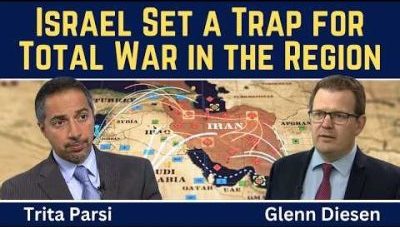
Trita Parsi: Israel Set a Trap for Total War in the Region
or go to
Aletho News Archives – Video-Images
From the Archive
Zionism’s Violent Legacy
By Donald Neff | Washington Report On Middle East Affairs | January 1996
On January 4, 1948, Jewish terrorists drove a truck loaded with explosives into the center of the all Arab city of Jaffa and detonated it, killing 26 and wounding around 100 Palestinian men, women and children.[1] The attack was the work of the Irgun Zvai Leumi – the “National Military Organization,” also known by the Hebrew letters Etzel – the largest Jewish terrorist group in Palestine. The Irgun was headed by Revisionist Zionist Menachem Begin and had been killing and maiming Arabs, Britons and even Jews for the previous ten years in its efforts to establish a Jewish state.
This terror campaign meant that at the core of Revisionist Zionism there existed a philosophical embrace of violence. … continue
Blog Roll
 Aletho News
- Trita Parsi: Israel Set a Trap for Total War in the Region
- Trump’s Iran war is on an Israeli leash
- Saudi oil boss issues global supply warning
- Riyadh Says Its Oil System Is Intact. The Numbers Say Otherwise.
- Trump and Netanyahu Want to “Finish the Job” on Iran
- US ‘one-sided dictation’ not Iran’s beliefs makes rational talks impossible: Baghaei
- Iran’s Next Strike May Not Explode. It Could Shut You Down /Col Doug Macgregor
- Iran: US political targets legitimate if assassinations return
- Iraq shuts key border crossing with Iran under US pressure: Report
- Undersea Internet cables could be targeted in retaliation for attacks on Iran: IRGC deputy chief
- If Americans Knew
- The Israel Lobby’s Changing Fortunes
- AIPAC has become such a political liability that it’s shifting to a more “nimble” approach to buying politicians
- At least 160 Israeli settler attacks in 2 weeks
- Will Gaza’s Ancient Christian Community Disappear Forever?
- Israel’s vision of regional security rests on keeping Arab states weak
- Heidi Levine recounts how Palestinian youths helped save her in settler attack
- DAILY UPDATE: Latest essential news on Palestine, Israel, & region
- Trump’s Intensifying Sabotage of the ICC, for Israel’s Sake
- Israeli military detain US and UK volunteers in West Bank including Democratic NY politician Brad Lander
- Americans at National Conservatism Conference held in Israel this year criticize Israel
- No Tricks Zone
- E-Cars Reduce CO2 Emissions By Only 41% Compared To Internal Combustion Engine Vehicles
- Predictions Made By Renowned Climate Professor Over Past Decades Have Been Proven To Be Poor
- New Study Suggests Large Regions Of The Pacific Ocean Have Been Cooling For The Last 80 Years
- Germany’s Green Energy Debacle: High Energy Costs Force Kahla Porzellan to Close After 182 Years!
- New Study: 50 Years Of The Most Aggressive ‘Net Zero’ Policies Can Only Affect The Global Climate By 0.03°C
- US September “Heat” Was No Record…Many Records Set Decades Ago
- Latest European Green Energy Debacle; Portugal’s Largest Flagship Solar Park Insolvent!
- Green Energy Debacle: German Expert Professor Fritz Vahrenholt Warns Of Severe Economic And Social Consequences
- Two More Paleo Reconstructions Affirm Meters-Higher Sea Levels Across Ireland, Brazil 7000-6000 Years Ago
- New Study: Earth And Venus Surface Warmth Largely Explained By Convection And Lapse Rate, Not CO2 Or Radiation

