Qatar: an ambiguous agent in the Zionist architecture for the Middle East
By Lucas Leiroz | Strategic Culture Foundation | September 11, 2025
The recent Israeli attacks on Qatar have brought to public debate an issue long overlooked by analysts during the current Middle East conflict: Qatar’s ambiguous role in the regional security architecture.
In the geopolitical theater of the Middle East, Qatar has played a profoundly ambiguous role—at times portrayed as a regional mediator, at others as a strategic collaborator with the Washington-Tel Aviv axis. This ambivalence is neither accidental nor merely tactical. It is rooted in the very foundations of Gulf monarchies’ foreign policy, notoriously driven by a commercial mentality that prioritizes stability, survival, and diplomatic gains over any consistent ideological alignment. However, in light of the current stage of the Israeli-Palestinian conflict, this self-interested neutrality has increasingly morphed into active complicity with the Zionist occupation regime.
Despite hosting the political leadership of Hamas in Doha, Qatar does not finance its military wing—which, in fact, is supported by Iran. The hospitality extended to the political branch of the Palestinian movement serves, in reality, as a diplomatic tool to increase Qatari influence over the resistance and steer it toward behavior less hostile to Israeli and American interests. This strategy has been employed for years under the pretense of “mediation,” but in practice, it functions as a containment mechanism for the Palestinian national movement.
For years, the Al Jazeera network, controlled by Doha, had authorized access to the Gaza Strip, even under the strict control of Israeli security forces. This privilege was not granted out of goodwill by Tel Aviv but was the result of a strategic arrangement: Al Jazeera promoted anti-Iran rhetoric within the occupied territories, reinforcing the sectarian divide between Sunnis and Shiites and distracting Palestinians from their real source of military support. In return, Israel allowed the ideological diffusion of Wahhabism in Gaza, calculating that this doctrine would weaken Palestinian nationalism and inter-Muslim solidarity, replacing them with religious divisions and fractured loyalties.
This pact began to decline as Al Jazeera became a major outlet for exposing the brutal reality of the genocide in Gaza. Once Qatar’s media presence in occupied Palestine started to generate more costs than benefits for Israel, the Zionist regime enacted a censorship law banning Al Jazeera and assassinated several of its journalists during the criminal airstrikes on Gaza.
Qatar is also home to the largest U.S. military base in the Middle East—Al Udeid Air Base. This facility not only houses American equipment and troops but also serves as an operational platform for Israeli assets in joint missions against Gaza, Hezbollah, and potentially Iran. The Israeli presence on Qatari soil is an open secret and illustrates just how much Qatar has functioned as a logistical hub for the regional security architecture coordinated by Washington and Tel Aviv.
In June, Iran launched precision strikes against this base during its brief direct war with Israel. The message was unequivocal: by allowing its territory to be used by powers hostile to the Axis of Resistance, Qatar had crossed the limits of neutrality. Doha’s response, however, was to remain in a position of complicit silence, ignoring internal protests and maintaining its alignment with Western allies.
This posture exposes the fundamental paradox of Gulf foreign policy: even with populations broadly sympathetic to the Palestinian cause, the Wahhabi bloc has repeatedly chosen to accommodate Israeli and American projects, as long as doing so ensures dynastic survival and economic stability. This reflects a deeply rooted rationality in the political culture of desert nations—one shaped by centuries of pragmatic adaptation to scarcity and existential threats. In an environment where taking sides can mean ruin, ambiguity becomes a way of life.
However, in the current context of conflict radicalization, this ambiguity is no longer perceived as strategy but as betrayal. By refusing to break with the occupying powers, Qatar risks being dragged into an escalation it helped to ignite. The Israeli bombs falling on Gaza today do so, directly or indirectly, with American logistical support originating from Qatari territory. This undeniable fact—under any serious analysis—undermines Doha’s attempt to present itself as both bridge and wall, as arbiter and accomplice.
The recent Israeli strikes on Doha have made one thing painfully clear: befriending the Zionists is a deadly mistake.
US House votes to repeal president’s Middle East war powers
Al Mayadeen | September 11, 2025
In a significant move to reclaim Congressional authority over military engagement, the US House of Representatives voted on Tuesday to repeal decades-old laws that authorized war in the Middle East.
The 261-167 vote represents a bipartisan push to rescind the 1991 and 2002 Authorizations for Use of Military Force (AUMFs), originally enacted ahead of the Gulf War and the 2003 invasion of Iraq.
The repeal was adopted as an amendment to the annual National Defense Authorization Act (NDAA) and is being hailed as a victory for war powers reform advocates, who argue that outdated authorizations enable unchecked presidential use of military force.
Long-awaited win for war powers reform advocates
The amendment was co-sponsored by Rep. Chip Roy (R-TX) and Rep. Gregory Meeks (D-NY) and garnered support from 49 Republicans and 212 Democrats. Advocates argue that keeping these authorizations in place enables future administrations to bypass Congress in deploying US military power.
“We don’t need to have Congress effectively modern-day declaring war and leaving it in place for a quarter of a freaking century, or in this case, 34 years,” said Roy.
Meeks added that he was “prepared to fight” in upcoming Senate negotiations to ensure the repeal becomes law.
Pushback from opponents
The proposal had an uncertain path to passage. Initially excluded from the package of amendments allowed for floor debate, the measure was added only after an unusual procedural win in the House Rules Committee. Republicans Ralph Norman (SC), Morgan Griffith (VA), and Chip Roy broke with their party to help Democrats force a debate on the amendment.
Not all lawmakers welcomed the repeal. Rep. Joe Wilson (R-FL) warned that revoking the war powers laws would “tie the president’s hands” in responding to regional threats, including resistance movements in Iraq.
Despite these concerns, the amendment passed with bipartisan backing, though deeper divisions remain over broader defense policies.
Wider debate over executive military power continues
While the vote represents a symbolic step toward limiting presidential war authority, critics note that the repeal will not affect recent military actions, including President Donald Trump’s alleged strike last week on a vessel in the Caribbean he claimed was for smuggling drugs.
The war powers repeal is expected to become a central issue in House-Senate negotiations over the final defense policy package. Although both chambers have voted in recent years to repeal the 2002 Iraq AUMF, no repeal legislation has yet been enacted into law.
Background on AUMFs
- 1991 AUMF: Authorized military force during the Gulf War under President George H. W. Bush;
- 2002 AUMF: Enabled the 2003 invasion of Iraq under President George W. Bush;
- 2014: Former President Barack Obama used the authorization to justify airstrikes in Iraq and Syria;
- 2020: US President Donald Trump used it in his first term to greenlight the airstrike that killed the IRGC’s Quds Force commander General Qassem Soleimani in Baghdad.
While former President Joe Biden never formally used the authorization, his administration argued it was important to keep it intact to respond to any future threats.
CODEX 9-11 – New 2025 Documentary Blows the Lid off the False Flag Attacks of 9-11
Watch at Rumble
By Etienne de la Boetie2, The Art of Liberty Foundation | September 3, 2025
There is a new 9-11 documentary entitled CODEX 9-11 by Brad Zerbo, a former skyscraper layout engineer and investigative journalist, that does a superb job of bringing new information to light. I thought I would break down some of the top revelations from the documentary:

In what many believe to be the “dry run” for 9-11, a military war game takes place on June 1-2nd, 2001 which uses remotely piloted drones to simulate an attack by Osama Bin Ladin. The war game features Unmanned Aerial Vehicles (UAVs) that are remotely piloted by a C-130 in the exercise, similar to what is believed to have happened on 9-11, where the original Boeing 767s were landed and replaced by other remotely piloted aircraft that were crashed into the WTC complex and Pentagon.

In what appears to be a “Funny Ha Ha,” by the perpetrators, the two UAVs in the exercise were numbered “9” and “11.” The “9” UAV was scheduled to be airborne at the exact same time (08:30-09:30am) as the 9-11 planes were allegedly hijacked and crashed into the WTC complex.
The Art Projects that Gave Access to the WTC Complex in the months leading up to 9-11

Gelatin team members on the 91st floor of WTC 1, standing in front of multiple boxes of what appear to be Littlefuse BB18 Fuse Holders that could have been used to wire up explosives in the building.
The documentary breaks down the incredibly suspicious nature of two different “art collectives” being given access to the WTC complex in the year prior to 9-11 where almost every aspect of their “art work” foreshadowed the attacks in another “funny Ha Ha” that will become a recurring theme of other “revelation of the method” mockery by the perpetrators of the attacks.
The first “artist collective” Gelatin/Gelitin, is also the name of a blasting agent used in controlled demolition. Gelatin/Gelitin team members were photographed in their “studio area” on the 91st floor (9-1) of WTC 1 in front of boxes of BB18 fuse holders. Their “art project” was called “The B-Thing” (Bomb Thing?) and their own drawings appear to show one of the towers collapsing. The project, coincidently, provided the excuse to rent a helicopter and survey the WTC complex prior to the event.

The 2nd “Artist Collective,” The E-TEAM (Franziska Lamprecht, Hajoe Moderegger, and Daniel Seiple), coordinated with tenants in the WTC complex to spell out the word “E-TEAM” (Explosive Team?) by using the windows between the 89th and 95th floors of WTC1 on March 29th 2001. Those floors would be, essentially, the exact same floors of the impact zone on the exact same side of the exact same building on 9-11.

While not mentioned in the documentary, in the official photo of the “art work,” the floors on WTC 2 appear blacked out in the area that would be the impact zone for that building.
In addition to the two art collectives having unusual access to the building, there was a suspicious elevator modernization going on where some of the most sophisticated elevators in the world were being modernized by a relatively unknown elevator company, ACE Elevator, which won the contract from Otis Elevator, who had installed the original elevators. Investigators theorize that these three projects, and potentially others, gave the perpetrators access to the building, including the elevator shafts, core columns and service areas within the core of the building, required to wire up the building for the controlled demotion of both towers.

A photo of Akamai CEO Dan Lewin, a “former” Israeli commando of the counter-terrorist unit: Sayeret Matkal, alleged to be the 1st person killed on 9-11 when he was stabbed by Satam al-Suqami, one of the five alleged hijackers of AA Flight 11. In this photo taken the year before, Lewin is sitting in front of what appears to represent two towers prominently wearing a Swatch watch called: The Hijacker.

Dan Lewin was sitting in seat 9B… on Flight 11… 9-11… another funny “Revelation of the Method” Ha Ha by the perpetrators.

In one of the most potent pieces of evidence that I had never heard before, Director Zerbo breaks down the complete impossibility of the numerous cell phone calls from the passengers to their loved ones. In the case of stewardess CeeCee Lyles, whose phone call to her husband was recorded by their answering machine, there is no engine or background noise to indicate that she is on an airborne aircraft.
After telling her husband to “Listen Carefully,” she relates the official story of the hijacking as if under duress.
Right before she hangs up she clearly whispers: “It’s a frame.”

“Those who can make you believe absurdities can make you commit atrocities.”
– Voltaire

I have described 9-11 to my kids as a kind of national intelligence test. You either understand the basics of logic, science, physics and history or don’t. You either believe a completely implausible story that violates the laws of physics and doesn’t make any sense, OR you don’t.
The “Official Story” DESTROYED in Less Than 5 Minutes by James Corbett
I know most of my audience understands that the government and media lied to the population about what happened on 9-11. Still, there are many young people who don’t really understand the basics. Here is an executive summary for your kids and grandkids that will bring them up to speed.
Why is it important? With an hour or two of research or watching 1-2 of our recommended documentaries below, anyone can grasp the basic understanding that we have a 100% completely organized crime “government,” including the military and intelligence agencies. This organized crime system is controlling perception through the monopolized media and algorithmic censorship of search and social media to sell the population on false flag terror that was used to steal trillions through the military-industrial complex AND our civil liberties. If you don’t understand these basics, then you aren’t really in the game.
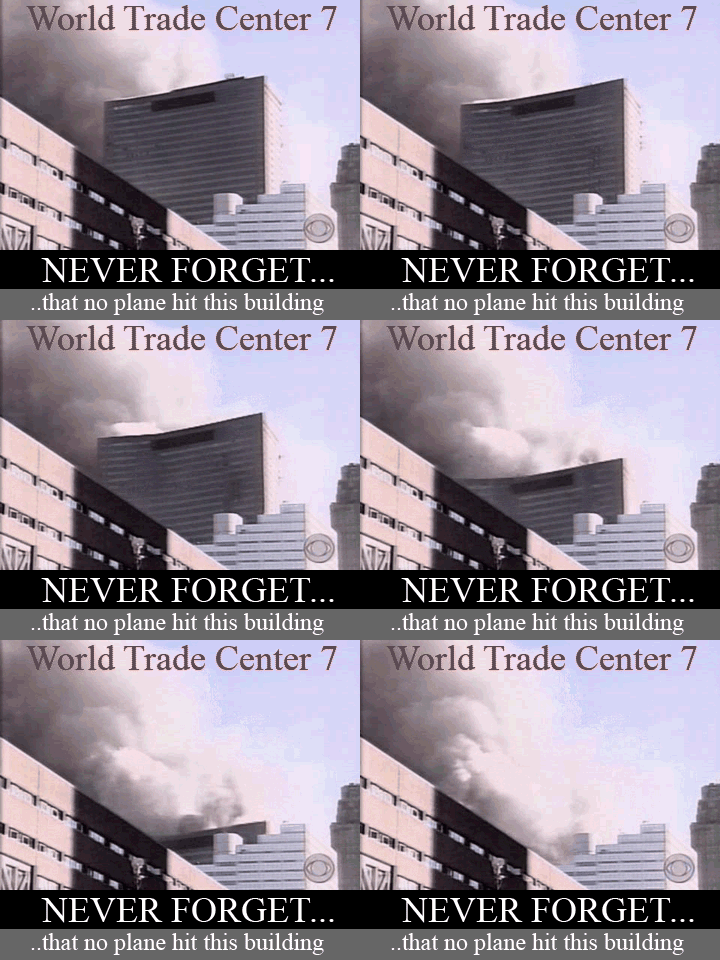
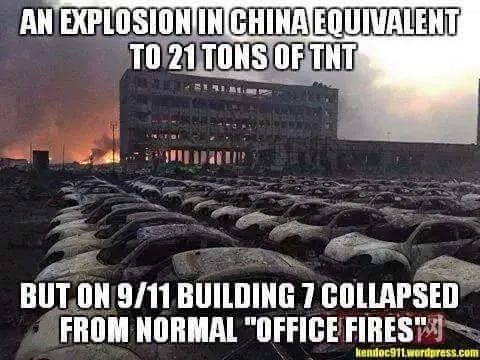

WTC7 was a modern, fireproofed steel-frame building not struck by a plane that collapsed completely and symmetrically into its own footprint at 5:20 PM. The building fell at free-fall speed, defying the laws of physics and displaying all the hallmarks of controlled demolition: Visible squibs, free-fall collapse, molten metal. At 5:00, Fox News, CNN and the BBC began reporting it had already fallen. Whistleblower Barry Jennings reported bombs. Prior knowledge was documented by workers pointing out on video that it would collapse, as well as auditory explosions and symmetrical collapse.
What Really Happened on 9-11: Both towers and WTC 7 were brought down in controlled demolition (WTC 7) & controlled demolition + Directed Energy Weapons (WTC 1&2) organized by US & Israeli intelligence agencies + Pentagon with government & monopoly media cover-up.
Used to Justify: Wars in Afghanistan and Iraq, warrantless wiretapping, suspension of posse comitatus and habeas corpus, torture, military tribunals, and stealing trillions of dollars through insurance on the buildings, pre-positioned shorting of stocks/disaster capitalism, and unneeded Military-Industrial-Complex and homeland security spending.
Best Evidence of Gov’t involvement: Obvious use of explosives in WTC7 and complete pulverization of WTC 1&2 to complete dust: free fall speeds, molten metal still molten weeks later, explosive residue in dust, dozens of war games taking place on 9-11 to pull fighter response/distract FAA, Israeli Mossad (Aka Dancing Israelis) caught “documenting the event,” symmetrical collapse.
Best Documentaries: Anatomy of a Great Deception, AE911Truth: Experts Speak Out, Solving 9-11 by Chris Bollyn, CODEX 9-11 by Brad Zerbo
Best Short Videos: 9-11: A Conspiracy Theory, 9-11 Trillions – Follow the $
Best Books: 9-11 Ten Years Later (DRG), Another 19 (Ryan), Solving 9-11-The Deception that Changed the World (Bollyn), Where Did the Towers Go? (Dr. Judy Wood)

One of the best examples of Mockingbird Media, WTC 7 collapses at 5:20. At 5:00, Fox News, CNN, and the BBC begin reporting that the building has already collapsed. In the case of the BBC, their reporter Jane Standley is doing a live shot from NYC with the building still standing visibly behind her as she explains how it was “weakened” by fire.
Best Evidence of Gov’t involvement: Obvious use of explosives in buildings: free fall speeds, molten metal still molten weeks later, explosive residue in dust, dozens of war games taking place on 9-11 to pull fighter response/distract FAA, Israeli Mossad (Aka Dancing Israelis) caught “documenting the event,” symmetrical collapse.
9-11 in Memes & Pictures
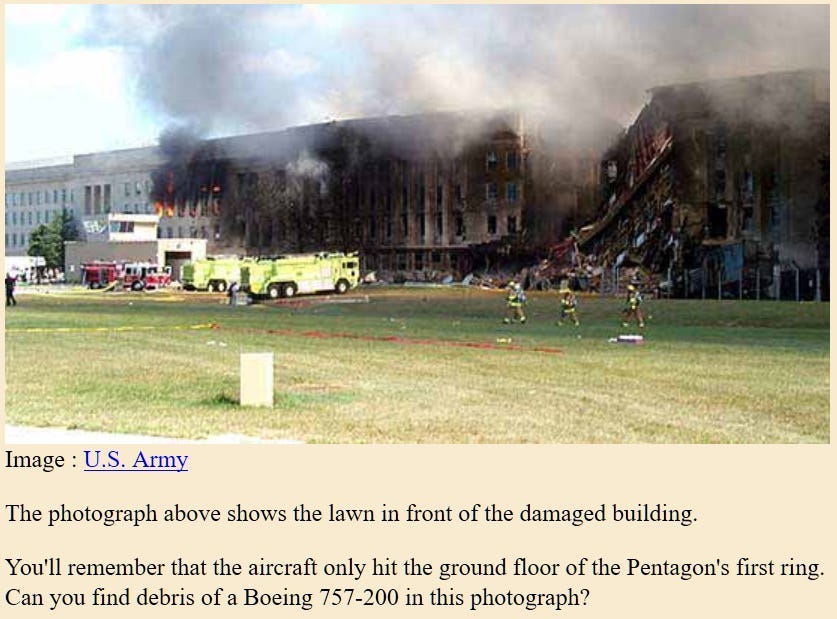
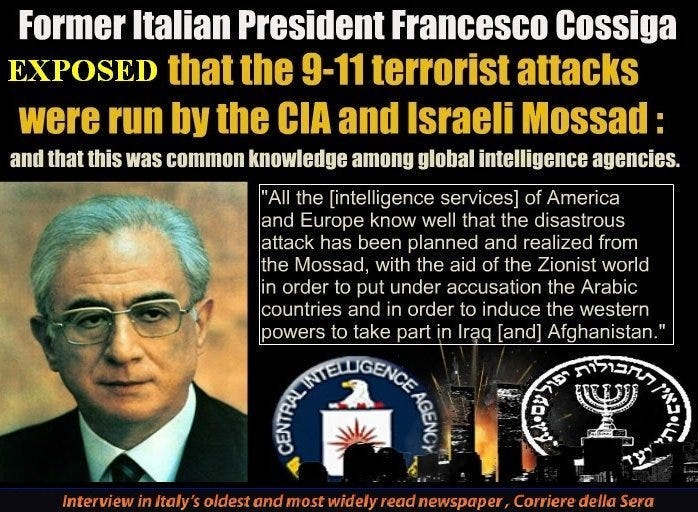



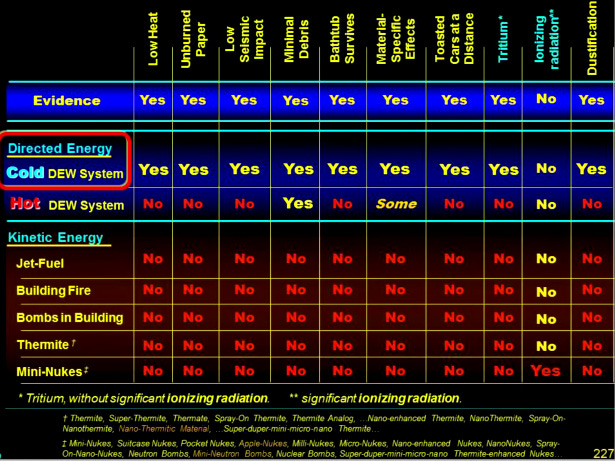
Etienne Note: WTC 7 appears to have been conventional explosives. In contrast, WTC 1&2 appear to have been thermite/thermate used in the buildings where certain floors were “re-fireproofed” with spray on thermite/thermate to initiate the collapse without visible squibs; conventional explosives were used to begin/accelerate the collapse, and a Directed Energy Weapon (DEW) used to pulverize the remainder of the buildings once they achieved the effect of making it look like a gravity collapse.
About the Author
Etienne de la Boetie2 is the founder of the Art of Liberty Foundation, the author of “Government” – The Biggest Scam in History… Exposed! and the editor of the Art of Liberty Daily News on Substack and Five Meme Friday, which delivers hard-hitting voluntaryist memes and the best of the alternative media.
He is the author of The Covid-19 Suspects and Their Ties to Eugenics and Population Control/Reduction and Solving Covid – The Covid 19, Eugenics, and Vaccine/Drug Scam Timeline
About the Art of Liberty Foundation
A start-up public policy organization: Voluntaryist crime fighters exposing inter-generational organized crime’s control of the “government,” media and academia. The foundation is the publisher of “Government” – The Biggest Scam in History… Exposed!– How Inter-Generational Organized Crime Runs the “Government,” Media and Academia.
Why Did Qatar’s Air Defenses Fail During Israel’s Attack?
By Ekaterina Blinova – Sputnik – 10.09.2025
The missiles fired by Israel could have been intercepted by Qatar’s US Patriot systems. Russian military expert Yuri Knutov weighs in: the Patriots were simply turned off by the US.
Patriots Offline
“The main feature of these systems is their close integration with airborne early warning and control aircraft (AWACS), satellites, and command centers that provide targeting data,” Knutov tells Sputnik. “In addition, they have a [remote] shutdown feature to prevent accidental friendly fire.”
This shutdown feature is problematic: Turkiye refused to purchase the Patriot specifically because the American side could disable these systems at any moment, and therefore preferred the S-400, according to the pundit.
US Didn’t Defend Qatar
Apart from using Patriots, Qatar hosts the US’ largest military base in the Middle East.
“According to the agreement between Qatar and the US, the Americans were, of course, supposed to defend Qatar’s airspace by opening fire on Israeli aircraft. However, this did not happen,” Knutov says.
The US military knew about the incoming Israeli aircraft yet took no action, effectively allowing them to operate freely against the Hamas delegation invited to Qatar for negotiations. The US was fully aware of this.
Arab countries — and not just them — should take note: wherever US Patriots are used, the US can disable them at any moment, leaving their skies completely defenseless.
US Always Sides With Israel
“This is undoubtedly a scandalous situation, given that Qatar is a close US ally and had promised to invest billions in the American economy,” Knutov says. “The Americans warned Qatar of the attack only ten minutes after it had taken place.”
Appeasing the US is futile — they always side with Israel.
Israel’s Doha Strike Burns Bridges for Peace, Marks Dangerous Strategic Overstretch – Experts
Sputnik – 10.09.2025
Israel expanded the geography of countries it has bombed on Tuesday, targeting a delegation of Hamas officials involved in peace negotiations in Qatar. Sputnik asked a pair of regional experts how the aggression will impact Israel’s position in the region in the long term.
Israeli military operations in Gaza, Lebanon, Syria and now the Gulf signal an “overstretch” that won’t be left without serious diplomatic repercussions, Ankara-based security analyst Dr. Hasan Selim Ozertem has told Sputnik.
“Looking at Europe, looking at the US, looking at the Gulf, these countries have started to articulate their concerns about Israeli aggression, which was not the case before because of the leverage of the Israeli lobby, especially in US politics,” Ozertem explained.
With Qatar serving as mediator in the Gaza war, the Doha attack “also undermines Israel’s credibility” among the Gulf powers Tel Aviv wants to forge ties with through the Abraham Accords.
Israel’s aggression may even result in the creation of new regional pacts, Ozertem says.
“The Saudi Crown Prince said [Riyadh] will be supporting Qatar. In the past, we know that Qatar and Saudi Arabia had political problems. They managed to solve them. Now we are talking about a military alliance…an anti-Israeli opinion or bloc in the region among local actors… increasing the probability of potential confrontation between Israel and others.”
Burning Bridges
“By attacking Doha as peace negotiations for ending the Gaza genocide were in progress, Netanyahu once again demonstrated his disdain for negotiations and his preference for brute force as the ultimate solution,” says Mehran Kamrava, a professor of government at Georgetown University in Qatar.
Netanyahu’s strategy of “managed chaos” threatens to spiral out of control, and further isolate Israel “by making it a rogue, pariah state,” Kamrava said.
Besides Israel’s reputation, the attack promises to “cost the US much of its already diminished credibility in the Arab world,” the scholar says, emphasizing that unconditional US support for Israel is proving “extremely costly” as the Israeli government takes actions that make it seem increasingly “unhinged” and “devoid of all rationality.”
Lion Electric School Buses Still Catching Fire
StacheD Training | September 9, 2025
On September 9, 2025, another Lion Electric school bus burst into flames in Montreal — this time with five children and their driver on board. Thankfully, everyone escaped safely, but this marks the third Lion Electric bus fire in less than a year (Ascot Corner, Huntsville, and now Montreal).
In this video, I break down what happened, why the fire department’s explanation doesn’t quite line up with the bus’s construction, and why these repeated incidents raise serious questions about safety, accountability, and taxpayer funding. Lion has already taken nearly $160 million in U.S. funding for 435 buses, yet many districts never received vehicles — and the ones that did are stuck with broken, unsafe buses and voided warranties.
Are these buses ready for prime time, or is this a dangerous rush to electrify at any cost?
Training & Consulting: https://www.stachedtraining.com
Authors of ‘Astonishing’ Study Showing Unvaccinated Kids Are Healthier Refused to Go Public With Results
By Suzanne Burdick, Ph.D. | The Defender | September 9, 2025
In a U.S. Senate hearing today, attorney Aaron Siri revealed the results of a large study that found vaccinated children were far more likely to develop chronic disease than unvaccinated kids.
The study never underwent peer review and was never published, because the authors — staunch vaccine supporters — told Siri they were concerned about losing their jobs or reputations because their findings contradicted the official public health narrative and vaccine policy.
Siri’s testimony, delivered during Tuesday’s Senate hearing, “How the Corruption of Science has Impacted Public Perception and Policies Regarding Vaccines,” addressed the study’s origins, findings and suppression.
The study involved over 18,000 children enrolled in Henry Ford Health system’s insurance plan in Michigan.
“The results are astonishing,” Siri told The Defender. “For example, vaccinated children had 4.29 times the rate of asthma, 3.03 times the rate of atopic disease (a group of allergic conditions), 5.96 times the rate of autoimmune disease, and 5.53 times the rate of neurodevelopmental disorder.”
These findings were statistically significant — even when accounting for gender, race, birthweight, premature birth, and respiratory distress or trauma at birth.
But rather than publishing the results, the study authors and their bosses at Henry Ford Health refused to make them public — even though the lead author previously assured Siri and Del Bigtree he would publish the results, whatever the findings.
Hearing held so ‘more Americans have their eyes open to the reality and truth’
Today’s hearing was the third so far this year on vaccine injury held by the Permanent Subcommittee on Investigations. The study’s results were entered into the congressional record.
Sen. Ron Johnson (R-Wis.), subcommittee chair who organized the hearing, told The Defender he hoped the hearing would open people’s minds so that “more Americans have their eyes open to the reality and truth.”
He noted the fierce resistance that U.S. Health Secretary Robert F. Kennedy Jr. faced at last week’s Senate hearing from senators who had “totally closed minds.”
Johnson said he didn’t presume to know the full truth about vaccines’ impact on health. “I don’t know because we haven’t even been allowed to ask the question — much less get the answer.”
In addition to Siri, witnesses included Toby Rogers, Ph.D., and Dr. Jake Scott.
The hearing pitted staunch vaccine supporters Scott and Sen. Richard Blumenthal (D-Conn.), subcommittee ranking member, against Johnson, Siri and Rogers.
There were tense exchanges about what constitutes bias and corruption in research.
Blumenthal said he “deeply feared” for the future of public health in the U.S. and claimed Kennedy wanted staff who embraced the secretary’s “dogma.”
Vaccinated kids 2.48 times more likely to be diagnosed with chronic health condition
According to Siri, the study authors looked at health data of 18,468 kids born between 2000 and 2016 who were enrolled in the Henry Ford Health system’s insurance plan.
Siri published excerpts from the study’s manuscript, including its results, in his new book “Vaccines, Amen: The Religion of Vaccines.” Released on Sept. 4, the book challenges what he calls the “religion” of vaccines. Siri said:
“It is time to start treating vaccines as what they are, consumer products, not items of worship. We can save children from harm from infectious disease and from vaccines. We can do both.”
The study authors divided kids into two groups: vaccinated and unvaccinated. Nearly 2,000 were in the unvaccinated group. Roughly 16,500 kids received one or more vaccines, with the median number of vaccines being 18.
The authors found links “between vaccination and the incidence of asthma, atopic and autoimmune disease, and mental health and neurodevelopmental disorders including developmental delay and speech disorder,” according to a copy of the study Siri obtained.
The authors calculated incident rate ratios — the odds that a vaccinated child would develop a given medical condition versus an unvaccinated child. Overall, vaccinated children were 2.48 times more likely to be diagnosed with a chronic health condition than unvaccinated kids.
Vaccinated children were over four times more likely to be diagnosed with a speech disorder than unvaccinated children, and nearly six times more likely to be diagnosed with an autoimmune disease.
In some cases, the authors couldn’t do the calculation because no child in the unvaccinated group had the target disease. For instance, none of the unvaccinated had diabetes, brain dysfunction, behavioral dysfunction or tics.
The authors said the study couldn’t be used to prove vaccines caused the chronic conditions, but they concluded that the findings warranted further research.
How the study came about
According to Siri, the Henry Ford Health study came about after the Informed Consent Action Network (ICAN) in early 2017 searched for a highly qualified scientist to do a study comparing health outcomes between vaccinated and unvaccinated kids.
Bigtree, ICAN’s founder, had previously met Dr. Marcus Zervos, co-director of the Center for Emerging and Infectious Diseases at Wayne State University and head of the Infectious Diseases division at Henry Ford Health.
Siri, who represents ICAN, and Bigtree met with Zervos. “While Dr. Zervos was a vaccine believer,” Siri told The Defender, “he showed signs of possibly being open to conducting some actual safety science.”
Siri and Bigtree initially thought it would be advantageous for the study to analyze children’s health data from the Centers for Disease Control and Prevention’s Vaccine Safety Datalink (VSD) database. But accessing VSD data was a complicated proposition.
Zervos instead suggested he and his colleagues do the study using data they already could access through Henry Ford Health’s vast database. Henry Ford Health runs over 550 medical sites in Michigan, according to its website.
Siri said:
“Once Dr. Zervos appeared committed to performing the study, I made two requests. They were merely requests because I was in no position to dictate or demand anything.
“The first was that they would publish the study no matter what the result. The second was that the unvaccinated group would truly be unvaccinated — meaning no vaccines — so that the study would actually assess health outcomes between exposed (one or more vaccines) and unexposed (no vaccines) children.”
Zervos “looked us right in the eyes and assured us that he was a man of integrity and would publish the results, whatever the finding,” Siri recalled. Zervos also agreed to use a truly unvaccinated control group.
Study never published
In early 2020, Siri received a copy of the study but discovered that it had not been submitted to a journal for publication.
Lois Lamerato, Ph.D., who had worked on the study with Zervos, told Siri she and Zervos both thought the study was well done and worthy of publication.
But the “higher-ups” at Henry Ford Health, to whom she was required to send a copy before submission, did not want to submit it. Lamerato also said she was worried the study, if published, would make doctors feel uncomfortable.
According to Siri, Henry Ford Health officials didn’t provide any substantive explanation for not wanting the study published. Siri said:
“The real reason it was not submitted for publication, no doubt, was because of its finding that vaccinated children suffered from multiple times the rate of various serious ailments.
“Had the finding shown vaccinated children were healthier or at least had the same outcomes as unvaccinated children, then this study would have no doubt been submitted for publication and published many years ago. Instead, it remained hidden from the world.”
Other studies also show increased autism in vaccinated vs. unvaccinated
Scott, an infectious disease specialist at Stanford Medicine, presented information during the hearing on studies supporting vaccine safety claims. He said he had no financial conflicts of interest, as his research is either self-funded or funded by Stanford.
Rogers, a fellow with the Brownstone Institute and independent journalist, testified on published research related to the causes of autism.
The U.S. has yet to start writing its report on the possible causes of autism, U.S. Food and Drug Commissioner Marty Makary told Bloomberg yesterday.
Rogers has researched autism since 2015, when his then-partner’s son was diagnosed with autism. At the time, he was pursuing a doctorate in political economy at the University of Sydney.
According to Rogers:
“I went to the CDC’s webpage on the causes of autism. As a Ph.D. student, I was trained to focus on primary source documents, so I read all of the references in their footnotes. … To my surprise, I quickly discovered that the CDC’s narrative did not add up.”
He also noticed that the U.S. government wasn’t responding with a sense of urgency to the sharp increase in autism, despite the cost already having reached “hundreds of billions of dollars.”
So he changed his doctoral thesis topic to “The Political Economy of Autism” and spent four years analyzing published materials on autism’s prevalence, causation and cost.
Roger’s thesis, which passed peer review in 2019, is among the top 10 most-downloaded doctoral research papers in the history of the University of Sydney.
He gave senators a birds-eye view of the published literature. “Here are the facts,” Rogers said.
Twenty-two studies claim that vaccines don’t cause autism — but none have completely unvaccinated control groups. “So unfortunately,” Rogers said, “if you want to understand what’s causing the autism epidemic, these studies are of no use.”
Meanwhile, six published studies that included an unvaccinated control group found an increased risk of autism in the vaccinated. “Unfortunately, these studies have been systematically suppressed and ignored by the mainstream media and the medical establishment,” he said.
Rogers cited additional studies that showed an increase in autism following vaccination.
For instance, a 2018 study showed that up to 88% of autism cases are characterized by autistic regression — meaning a child who had been developing normally suddenly begins to lose skills, such as speech and eye contact. This suggests an acute toxic exposure triggered the development of autism, Rogers said.
“We now have eyewitness testimony from thousands of parents that the acute toxic exposure that preceded the autistic regression was a ‘well-baby’ vaccine appointment,” Rogers said.
What about genetic causes of autism?
According to Rogers, purely genetic causes of autism wouldn’t make sense. “Genes don’t suddenly create epidemics — the human genome just doesn’t change that fast.”
Most studies that look at both genes and environmental toxins, like pesticides and heavy metals, don’t control for vaccines as a possible covariate or confounder.
This makes it impossible to tease out the true impact of the toxin from the possible impact of the vaccine.
“The best available evidence suggests that anything that causes an immune activation event — an infectious disease, an industrial toxicant, or a vaccine — can cause autism.”
According to Rogers, autism is most likely caused by “vaccines and about a dozen additional toxicants.”
He added, “If we stop exposing children to these hazards in the first place, that would stop the epidemics of chronic illness in children. Now we must summon the political will to act.”
Watch the hearing here
This article was originally published by The Defender — Children’s Health Defense’s News & Views Website under Creative Commons license CC BY-NC-ND 4.0. Please consider subscribing to The Defender or donating to Children’s Health Defense.
US lawmaker moves to block Ukraine aid
RT | September 9, 2025
US Representative Marjorie Taylor Greene has proposed removing $600 million in Ukraine support from the draft Pentagon spending bill, arguing that Americans’ “hard-earned tax dollars” should not go to foreign aid.
The Georgia Republican proposed cancelling the allocation of these funds in the 2026 and 2027 fiscal years to shift priorities toward the US.
With Donald Trump back in the White House, the US has dramatically cut military aid to Kiev, pausing more than $1 billion in planned funds.
In a video post on X on Tuesday, Greene said that her amendment would strike $600 million from the defense bill, money that she noted “goes to Ukraine.” She argued that the US had already sent “over $175 billion to this war” and that it was “enough of your hard-earned tax dollars.” She described the measure as part of the America First agenda, saying US funds should not be used for “foreign wars” while the country faces a $37 trillion debt.
The congresswoman stated that the US usually allocates $300 million annually but that “Speaker Johnson and Republicans are feeling so generous they’re wanting to give them 600 million this time. My amendment will take it out.” Greene said, adding she has “never voted to fund this war.”
Greene introduced another amendment after learning that “another $100 million” had been earmarked for Kiev and said she wanted to remove all funding in case others in Congress felt “so giving.” Greene also put forward measures to cut aid for Israel, Syria, and Iraq adding that the money should be “kept back here at home.”
While previous President Joe Biden’s administration approved large-scale aid packages to Kiev, Trump has cut assistance but allowed some deliveries, such as Patriot air-defense systems. He has repeatedly expressed concern about possible misuse of US aid to Kiev, claiming that billions allocated under Biden may have been embezzled. In July, Trump said that any additional weapons delivered to Ukraine would have to be paid for by Europe’s NATO members.
Ukraine’s European backers are pressing for more weapons as part of security guarantees, while Russia insists Western military aid is an obstacle to reaching a peace deal.
Hamas: US proposal does not aim to end Gaza war
MEMO | September 9, 2025
A senior official in the Hamas movement, Bassem Naim, said on Monday evening that the initial ideas presented by the United States are “clearly intended to be rejected, rather than to reach an agreement that ends the war, ensures a full withdrawal of the occupation forces, and secures a prisoner exchange.”
In a statement sent to Quds Press, Naim explained that the American proposal suggests receiving all prisoners on the first day, linking withdrawal to the formation of a government acceptable to Israel and tasked with security duties. It also includes defining Hamas, considering pardons for its members, and disarming the resistance, “without any mention of reconstruction.”
The Hamas official stressed that the movement and other resistance factions seek “an agreement that stops the war and genocide, and opens the way for a political solution that fulfils legitimate national goals.”
Earlier on Monday, US President Donald Trump said that “the Israelis have accepted the terms of his proposal for a possible prisoner exchange and ceasefire in Gaza, and now it is Hamas’s turn to agree.”
Trump also spoke of the possibility of “reaching a deal soon to end the war on Gaza based on one of the proposals,” issuing what he described as “a final warning” to Hamas about the consequences of rejecting the new offer.
Israeli occupation attacks Hamas negotiators in Qatar, bombs Doha
Al Mayadeen | September 9, 2025
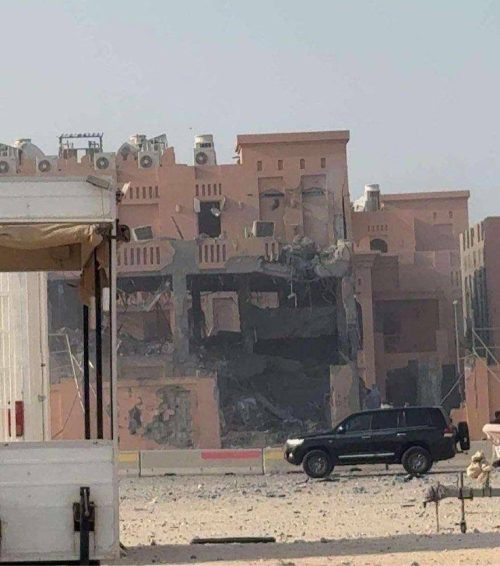
In a statement, the Israeli occupation military, in coordination with its internal security agency, Shin Bet, claimed to have carried out an airstrike on the Qatari capital, Doha, claiming to target the senior leadership of the Palestinian resistance movement Hamas.
Israeli Channel 12, citing military sources, reported that the strikes targeted members of the Hamas negotiating delegation while they were discussing the latest US-mediated proposal in Doha.
Reuters correspondents confirmed hearing loud explosions in the Qatari capital, noting plumes of smoke rising over the Katara district.
This brazen Israeli strike on Hamas’ negotiating delegation in Doha exposes once again the pattern of aggression that has defined Israeli and American conduct, using violence at the very moment when talks for peace are on the table. Just as Washington and Tel Aviv undermined dialogue before they attacked Iran in June, they now repeat the same tactic against the Palestinian resistance, targeting representatives engaged in negotiations.
Far from seeking peace, such actions demonstrate a deliberate sabotage of negotiations and reveal that only Palestinians show a genuine commitment to ending the war, while the Israeli occupation regime and the US weaponize diplomacy as cover for escalation.
Hamas reaffirms commitment to ceasefire proposals
The development comes as Hamas reiterated its commitment, alongside other Palestinian factions, to the ceasefire framework put forward by mediators on August 18.
In a statement, Hamas emphasized its openness to “any ideas or proposals” that would secure a permanent ceasefire, guarantee the full withdrawal of occupation forces from Gaza, ensure the unconditional entry of humanitarian aid, and achieve a genuine prisoner exchange through serious negotiations brokered by mediators.
US President Donald Trump announced Sunday evening on his Truth Social account that “the Israelis have accepted my terms. It is time for Hamas to accept as well.”
In his post, Trump wrote: “Everyone wants the hostages home. Everyone wants this war to end! The Israelis have accepted my Terms. It is time for Hamas to accept as well. I have warned Hamas about the consequences of not accepting. This is my last warning, there will not be another one!”
According to Israeli Channel 12, Trump conveyed a new proposal through his envoy Steve Witkoff, bypassing the usual mediators Qatar and Egypt. The reported plan includes the release of all Israeli captives, both living and deceased, on the first day of the deal in exchange for the release of hundreds of Palestinian prisoners serving long sentences.
Hamas says received US proposal
The Islamic Resistance Movement in Palestine, Hamas, confirmed Sunday evening that it has received new American ideas through mediators aimed at reaching a ceasefire agreement in Gaza.
In a statement, Hamas said it welcomes any real initiative that contributes to ending the ongoing aggression against the Palestinian people.
Hamas expressed its readiness to immediately join negotiations to reach a comprehensive deal that would include:
- The release of all prisoners on both sides
- A clear declaration of an end to the war
- A complete Israeli withdrawal from the Gaza Strip
- The creation of a Palestinian independent committee to administer Gaza, to begin work immediately
The movement also demanded clear guarantees to ensure that “Israel” abides by any commitments, citing past agreements that were repudiated.
Hamas noted that it had already approved a mediator-brokered US proposal in Cairo on August 18, 2025, but “Israel” failed to respond and instead escalated its massacres and ethnic cleansing policy.
Christian Holy Places and the Jewish State
By Israel Shamir • Unz Review • September 9, 2025
Recently Israel bombed two old venerable churches of Gaza: the Greek Orthodox church of Saint Porphyrios and the Catholic Holy Family Church. Thus, we were reminded that the Holy Land is called the Holy Land because it is the cradle of Christianity; this is the land where Jesus Christ was born and lived and died on the Cross, and was Resurrected. Where the Church was formed, where the Empty Tomb of Christ is located. This land was fought for in numerous Crusades, the flower of European chivalry died on its fields and hills fighting Muslim warriors. After the Crusades, for the last thousand years, her churches, shrines and relics remained safe and accessible for Christian pilgrims. And they are not museum pieces: every day there are many thousands of Christian Palestinians who worship in the churches and venerate its relics. Things began to change with the advent of the Jewish State.
Without going into deep theology, let us sum it up: historically the Jews are, and always were hostile to Christ and Christians. You can learn that from the New Testament, or from the Talmud, Jewish holy text, or from the news, where you can see Jews daily spit on Christian pilgrims in Jerusalem.
Rami Rozen expressed the Jewish tradition in a long feature in a major Israeli newspaper Haaretz :[1] “Jews feel towards Jesus today what they felt in 4 CE or in the Middle Ages… It is not fear, it is hatred and contempt. For centuries, Jews concealed from Christians their hate for Jesus, and this tradition continues even now.”
“He [Jesus Christ] is revolting and repulsive,” intervened an important modern religious Jewish thinker. This “repulsion passed from the observant Jews to the general Israeli public,” Rozen replied.
On Christmas Eve, according to a feature in the Jerusalem local paper, Kol Ha-Ir.,[2] Hassids customarily do not read holy books because this might save Jesus from eternal punishment (the Talmud teaches that Jesus boils in hell).[3] This custom had been dying out, but Hassids of Chabad, fervent nationalists, have brought it back to life. I still remember old Jews spitting while passing by a church and cursing the dead while passing by a Christian cemetery. Last year in Jerusalem a Jew decided to refresh the tradition. He spat at a Holy Cross being carried in procession in a city street. Police saved him from consequent trouble, but the court fined him $50, despite his claim that he had been fulfilling his religious duty.
A few years ago, the biggest Israeli tabloid, Yedioth Aharonoth, re-printed in its library the Jewish anti-Gospel, Toledoth Eshu, compiled in the Middle Ages. It is the third recent reprint, including one in a newspaper. If the Gospel is the book of love, Toledoth is the book of hate for Christ. The hero of the book is Judas. He captures Jesus by polluting his purity. According to Toledoth, the conception of Christ was in sin, the miracles of Jesus were witchcraft, his resurrection but a trick.
Writing on the Passion of Jesus, Joseph Dan, Professor of Jewish mysticism at the Hebrew University in Jerusalem, stated:
The modern Jewish apologists, hesitantly adopted by the church, preferred to put the blame on the Romans. But the medieval Jew did not wish to pass the buck. He tried to prove that Jesus had to be killed, and he was proud of killing Him. The Jews hated and despised Christ and Christians.
Prof. Dan added that there is little place to doubt that the Jewish enemies of Jesus caused his execution. Even today, Jews in Israel refer to Jesus by the demeaning word ‘Yeshu’ (instead of ‘Yeshua’) meaning ‘perish his name’. In a similar pun, the Gospel is called ‘Avon Gilaion’, the booklet of Sin. These are the endearing feelings towards Christ of the friends of Christian Zionists.
If there was raison d’etre of the Jewish existence, it was to fight Christ and to eliminate Christianity. That is the very reason why Jews wanted Palestine – because it facilitates their war against Christ. It’s hard to say whether Christianity will survive the total Jewish takeover of Palestine. Jewish faith is not just another faith, like say Buddhism. It is a fighting doctrine, an anti-Christianity.
In 1920s and 1930s, to solve The Jewish Problem, the Jews were offered many places for living: The Argentine, Kenya (then it was called Uganda), Dominican Republic, Birobijan in the Soviet Far East, but they insisted on Palestine. It’s not strange: Palestine is the centre of the world, the most important place of all. Not in vain, people fought and died for it for centuries. The followers of Mackinder, geopolitics, considered the ancient holy places of the world being the strategic points. Amazing that England gave away this most cherished possession to the Jews. And the Jews immediately began their work of expelling the Divine Presence from our midst.
Wait, you will say, Jews also believe in God! Yes, but a different one. To Gentiles – that’s you and other non-Jews – there is no access to the Jewish god. You must live forever without God, or you may worship the Jews, as God’s intermediary. It just so happens that the elimination of God’s Presence on earth is Satan’s main desire, too. So he has become a powerful Jewish ally; he helps them to destroy everything beautiful and spiritual on Earth.
Israel is the Jewish state, but not the only one: there is a bigger Jewish state, the USA. It’s not only the mighty supporter of its smaller brother. The USA nowadays has up to 80 percent Jews in the administration of its government, but this began a long time ago. Karl Marx and Werner Sombart wrote that the US could become a Jewish state even without Jews. (More precisely, Marx said that it was the Jewish state without Jews, and Sombart corrected him, saying the Jews were there from the beginning.) In the USA, this great heresy of Christian Zionism was formed, the parody of Christianity. Likewise, in the US blossomed homosexuality, a parody of the sacred union of Man and Woman, as it was viewed in ancient Egypt, and in Japanese mythology, and in the book of Genesis. The Devil is a great mocker!
Jews are much more comfortable with Islam: a Jew can join Muslims in prayers, as the great luminary Rambam once ruled, and historically Jews escaped to Muslim states from Europe when they were ordered to baptise or else. Amazingly, Jews do not hate Islam and Muslims with the same fervour they hate Christians.
How do Muslims feel about Christianity? Muslims venerate Christ. He is called ‘The Word of God’, ‘Logos”, ‘Messiah’, ‘Christ’, ‘the Prophet’ and is considered a Messenger of God, along with Abraham, Moses and Muhammad. Many chapters of the Koran tell the story of Christ, his virgin birth and his persecution by Jews. His saintly mother is admired, and the Immaculate Conception is one of the tenets of Islam. The name of Christ glorifies the golden edifice of Haram al-Sharif. According to the Moslem faith, it was there that the founder of Islam met Jesus, and they prayed together. The Hadith, the Moslem tradition, says in the name of the prophet: “We do not forbid you to believe in Christ; we order you to.” Muslims identify their prophet Muhammad with Paracletes the Helper (Jn 14:16) whose coming was predicted by Jesus. They venerate places associated with the life of Jesus: the place of Ascension, the Tomb of Lazarus and the Nativity are adjacent to a mosque and perfectly accessible by Christians.
Although Muslims (and many Protestants) do not consider that Jesus is God, they do proclaim Him to be the Messiah, the Anointed one, the Paradise Dweller. This religious idea, familiar to Nestorians and other early churches but rejected by mainstream Christianity, opened the gates for those Jews who could not part with the notion of Unitarianism. That is why many Palestinian Jews and Christians of the Seventh Century accepted Islam and became Palestinian Muslims. They remained in their villages; they did not depart for Poland or England; they did not learn Yiddish; they did not study the Talmud, but they continued to shepherd their flocks and plant almond trees. They remained faithful to their land and to the great idea of the fraternity of mankind.
Paradoxically, nowadays in the US with its spiritual debt to Jews, a new term was coined: Judeo-Christian values, traditions, faith. This is sheer nonsense, it is a catachresis like cold-hot. And indeed, it works by submitting Christians to the Jews in the US, while in Palestine, it leads to destruction of the remains of all Christian life. Let us consider Bethlehem; before 1967 it was predominantly a Christian city. When the Jews captured Bethlehem, they ran a census, just like King Herod, and everybody absent from his home was stricken out. Students abroad, family visitors, war refugees, whoever was not in the house was deleted from the roll. By this first step Jews got rid of a third of the Christian population.
But before that, you can consider the pretty Christian village of Birim in Upper Galilee. The village of Birim has been dead for fifty years now. It is beautiful even in death, like Ophelia floating down the stream in the pre-Raphaelite painting of Millais. It was not ruined by war. Its Christian inhabitants were expelled from their houses well after the 1948 war. They were told to leave for a week or two, for ‘security’ reasons. They had no option but to obey the Israeli soldiers and move out. Their village was dynamited, their church surrounded by barbed wire. The people went to the Israeli Supreme Court, they went to the government, commissions were appointed and petitions signed. Nothing helped. For fifty years since then, they have lived in the nearby villages, and on Sundays they return to worship in their church. Their lands were seized by their Jewish neighbours, but they still bring their dead to be buried in the church graveyard, under the sign of the cross.
Until the arrival of the Israeli army, this ruined village with its orphaned church was the home of the rural Christians of Birim who for centuries of Moslem rule lived in peace with their Moslem neighbours of Nebi Yosha and with the old Sephardi Jewish community of nearby Safed. This Guernica of Galilee undermines the “Clash of Civilizations” myth of a “Judeo-Christian” civilization opposing a “monstrous” Islam.

Coming back to Bethlehem, we happen to see the beautiful image of Our Lady. She appeared to a Mexican peasant, and her flower-covered image arrested the strife and united Native Americans and Spaniards into one nation. She gave her rosary to Saint Dominic and a letter to Portuguese kids in Fatima. The Prophet Muhammad saved and cherished her icon found in a Mecca shrine, writes Maxim Rodinson. She appeared to the wealthy Jewish banker Alphonse Ratisbonne, and he took orders and built the convent of the Sisters of Zion in En Karim. A Palestinian Muslim in a refugee camp of Lebanon preserved the image he took from his native Galilee, tells Elias Khoury in his novel Bab Al-Shams. Syrian astronauts asked for her protection in the shrine of Seidnaya before their flight on the Soviet space shuttle.
In medieval legends, the Jews were often perceived as enemies of the Virgin. The Talmud refers to her in the most blasphemous and hostile way. A certain column-stump on Jerusalem’s Via Dolorosa marks the place of a legendary attack of Jews on her person, while in Antioch in 592, Jews were found despoiling her image. These are old tales. And now some newer facts. Twenty-two years before 6.10.23 (that is the event and date that Jews want to count from) in Bethlehem, a Jew shelled the Virgin. A Jewish soldier in the formidable tank Merkava-3, constructed according to US technology at US taxpayer’s expense, fired a shell from a distance of fifty yards at the statue of the Madonna atop the Holy Family church in the town of the Nativity. The Virgin lost an arm, and her pretty face was disfigured. She became one of a hundred Palestinian women shot by the Jews in that outburst of war. This seemingly unnecessary act of vandalism could not have been an accidental shot. No terrorist hid behind her gentle figure on the pinnacle of the hospital church. At fifty yards, you make no mistake. It could have been orders; it could have been a spontaneous expression of feelings by a Jewish fanatic. Our world rewinds full speed back into the Dark Ages, and as Israel rekindles traditional Jewish hostile rejection of Christianity, we cannot indulge in Judaeo-Christian fantasy.
I also must mention the beautiful old Byzantine church of St Barbara, a local girl and the village patron saint. It is one of these bitter-sweet semi-ruined churches that still attract worshippers, along with St Anne of Safurie and Emmaus of Latrun, and it stands on a hill a mile away from the village. It would be called St Barbara-without-the-walls if it were in England.
On the thirty-first of May 2002, the Israeli army dynamited St Barbara, the living relic of the Christian past of the Holy Land. I do not know whether the sappers said the benediction prescribed for such occasions by the Jewish religious codex, Shulkhan Aruch: “Blessed you are, Our Lord, who destroys the Assemblies of Proud.” This destruction followed the Bethlehem siege; when, for the proverbial forty days and forty nights, from the Catholic Good Friday to the Orthodox Easter Sunday, the Jews besieged the Church of Nativity.
To conclude, it is only by a miracle Christianity may survive Jewish rule in Palestine, or indeed wherever anti-Christians rule. Historically, the Palestinian Church has served as a bellwether for the health of the Church everywhere else. It is the touchstone of our faith. Without the earthly testimony of Christians living in and working on the same lands walked by Christ and His apostles, Christians quickly fall victim to science-fiction fancies like Christian Zionism. The Holy Land is a living history that naturally refutes anti-Christian narratives that rely upon the ignorance of historical facts. It is the last relic of Christendom. And if it dies, Christendom is doomed to the same rootless, wandering extinction that plagues the Jews.
The collapse does not stop in Gaza: in France, once the beloved daughter of the Church, ruled by ex-Rothschild clerk Macron, in La Baconnière, the Church of Saint Cornelius and Saint Cyprian was demolished: the 12th-century building with stained glass by Auguste Allo and a bell from 1584 was declared unsafe and demolished due to the lack of 7 million euros for restoration. But in order to conclude with good news, I’ll say: last Sunday, Moscow witnessed a huge Crucession of hundreds of thousands of worshippers, for the first time since 1918. It happened soon after the ardent local Jews moved away to Israel. Christianity still has the potential for Resurrection.
Edited by Paul Bennett
 Notes
Notes
[1] 28.1.94.
[2] 14.12.93.
[3] Gittin, 56b-57a.
Featured Video

Death Spikes & Rising Cancer In Our Youth Explained
or go to
Aletho News Archives – Video-Images
From the Archives
Politicians lie
By Mazin Qumsiyeh | Popular Resistance | August 18, 2013
There is no way to say this truth nicely: Politicians lie. That includes Japanese, American, Egyptian, Israeli, and Palestinian politicians! Is there something more common sense than that? Yet, so many citizens around the world believe their own politicians or wistfully acknowledge lies but think it is part of the job needed to run things. They believe even when politicians contradict themselves blatantly. This phenomenon is rather remarkable. It is a dissonance and disconnect from reality that many seem oblivious to. It is very dangerous because it can lead to accepting rationales for going to war. These can be deadly wars that lead to millions of lives lost as happened in what was called World War 1 and WW2. Even when incredible and declassified evidence abound, politicians continue to lie and old mythologies refuse to die. Here are just a few of the countless lies told to us over the past few decades… continue
Blog Roll
 Aletho News
- Ukrainian Soldiers, Potential Mercenaries: Have Gun, Will Travel!
- Burnham’s UN debut… A masterclass in British disinformation
- Iran flights continue despite US aviation sanctions
- Global Tipping Points Lead the World Into a State of Entropy
- The day-after at the White House: USA and Xi Jinping
- The Geopolitical Balance in the Red Sea: The UAE Being Displaced by New Players
- Iraqi resistance group vows to stage airport sit-ins over Iran aerial blockade
- Turkish parliament to review Saudi-Pakistan defense pact next month
- DEATH SPIKES & RISING CANCER IN OUR YOUTH EXPLAINED
- Iran offers Trump deal before US election
- If Americans Knew
- Deconstructing Netanyahu’s pants-on-fire UN rant – Daily Update
- Trump betrayed voters with his campaign lies and prioritized a foreign country once he took office
- Netanyahu calls Israel’s war in Gaza ‘opposite of genocide’ in UN speech to near-empty hall
- Settler Kidnappings: Torture, Sexual Abuse and Terrorisation of Palestinian Abductees as Israel Deepens Annexation of West Bank
- Gaza winter nears as 162,000 tents become unusable, raising fears of humanitarian crisis
- Netanyahu says, “It’s the opposite of genocide”; UN says Gaza economy is world’s ‘most severe crisis on record’ – Daily Update
- Israel’s US-Backed Assault on Gaza Has Created the ‘World’s Most Severe Economic Crisis on Record’: UN
- ‘Protecting U.S. Citizens’… From Israel
- ‘This is where I live now, the back of a truck’: a day in the life of a grandmother in Gaza
- In UN Speech, Iran’s President Displays Pictures of Children Killed by US, Brings Attention to Israel’s Nuclear Arsenal
- No Tricks Zone
- New Study: Earth And Venus Surface Warmth Largely Explained By Convection And Lapse Rate, Not CO2 Or Radiation
- 2025 Nature Paper Claiming Worsening Global Drought Gets RETRACTED …Heavily Flawed
- New Study: ‘Global Drought Shows No Detectable Recent Acceleration Under Climate Warming’
- Economic Masterminds: German Socialists Suggest Taxing Productivity Gains Stemming From Using AI
- The South China Sea Has Not Been Cooperating With The Climate Change Narrative
- Energy Crisis: Germany Enters Heating Season With Historically Low Gas Reserve Fill Levels
- New Study: The Antarctic Ice Sheet Gained Mass From 2020-2024 Due To Staggering Snow And Ice Accumulation
- Study: Ocean Heating Rates From Thousands Of Years Ago ‘Dwarf’ Modern Ocean Heating Rates
- Climate Extremists Target, Attack Large-Scale Power Grid Infrastructure In Germany!
- New Study: Antarctic Ice Melt Has Contributed Less Than 1 Centimeter To Sea Level Rise In The Last 30 Years

