Putin’s Senior Aide Patrushev Shared Some Updates About The Arctic & Baltic Fronts
By Andrew Korybko | March 23, 2025
Putin’s senior aide Nikolai Patrushev, who ran the FSB for nearly a decade (1999-2008) before chairing the Security Council for over 15 years till recently (2008-2024), shared some updates about the Baltic and Arctic fronts of the New Cold War in a recent interview with Russia’s National Defense magazine. He began by blaming the Brits for orchestrating Baltic tensions in order to disrupt the incipient Russian-US normalization process and associated talks on Ukraine.
In connection with that, he also warned that some NATO members (presumably led by the British) are practicing cyberattacks against Russian ships’ navigation equipment and suggested that they might have been responsible for recent claims of sabotage in the Baltic, which prompted a larger naval presence. This same expanded presence poses a threat to Russia’s interests and could manifest itself through terrorist attacks against its underwater pipelines, tankers, and dry cargo ships.
Russia plans to defend against this through unmanned underwater systems and strengthening its Baltic Fleet. As for one of the worst-case conventional threats, that of Finland and Estonia teaming up to blockade Russia inside the Gulf of Finland, Patrushev expressed confidence that his country could overcome that plot and punish the aggressors. This segued the conversation into a discussion about Finland, which Patrushev said has a friendly population, unlike its government.
He mentioned how the authorities there distort history to avoid talking about the goal of “Greater Finland”, which took the form of occupying Northwestern Russia, placing its inhabitants into concentration camps, and exterminating the Slavs there. Just like Finland was used by the Nazis as a springboard for aggression against the USSR, so too did Patrushev warn that plans might be afoot for NATO to use it as a springboard potential aggression against Russia.
He then said a few words about how the Arctic is opening up as a new front of competition, mostly due to its resources, but reaffirmed that Russia wants peace and cooperation there instead of rivalry. The Northern Sea Route (NSR), which commemorates its 500th-year conceptualization this year, can help bring that about. Russia will continue developing regional infrastructure and building ice-class vessels for facilitating transit through these waters year-round. It was on that note that the interview ended.
Reviewing Patrushev’s briefing, the first part about blaming the Brits for tensions in the Baltic aligns with what Russia’s Foreign Spy Service (SVR) recently claimed about how the UK is trying to sabotage Trump’s envisaged “New Détente”. It might therefore very well be that they’re attempting to open up this front for that purpose, first through unconventional acts of aggression like “plausibly deniable” terrorist attacks and then possibly escalating to a joint Finnish-Estonian blockade of the Gulf of Finland.
Exposing these plots and expressing confidence in Russia’s ability to overcome them were meant to respectively ensure that the Trump Administration is aware of what the UK is doing and to deter the UK’s regional proxies from going along with this since the US and even the UK might hang them out to dry. Patrushev’s words about Finland were important too in the sense of reminding everyone that governments don’t always reflect the will of the people on the foreign policy front.
At the same time, however, everyone should also be aware of the Finnish government’s historical distortions and the threat that its reckless foreign policy poses to its own people. Wrapping everything up, Patrushev pointed to the Arctic’s importance in Russia’s future planning, and his reaffirmation of its peaceful intentions could be interpreted as a willingness to partner with the US there like their representatives discussed last month in Riyadh. The NSR can also become a vector for cooperation too.
Putting everything together, the Arctic front of the New Cold War is thawing a lot quicker than the Baltic one since the first is where the US could prospectively cooperate with Russia while the second is where the UK could try to provoke a crisis with Russia, but it remains to be seen whether any of this will unfold. Russian-US cooperation in the Arctic is likely conditional on a ceasefire in Ukraine whereas a Russian-NATO conflict in the Baltic orchestrated by the Brits is conditional on them misleading the US about this.
Putin’s interest in a lasting political solution to the Ukrainian Conflict bodes well for the Arctic scenario just like Trump’s criticism of NATO bodes ill for the Baltic one so both ultimately come down to their will. They’re the two most powerful people on the planet so their ties will greatly determine what comes next on those fronts and every other one too. It’s precisely for this reason why the British want to ruin their relations, but after Patrushev just exposed their Baltic plot, that’s a lot less likely to succeed than before.
Kaja Kallas: The EU’s Struggling Foreign Affairs Chief and the Deepening Divide Over Ukraine
By Ricardo Martins | New Eastern Outlook | March 25, 2025
Kaja Kallas’ hardline stance on Russia and failure to unify EU nations have weakened her position as the EU’s Foreign Affairs chief. With the EU out of the negotiation table over Ukraine, internal divisions, diplomatic missteps, and failed Ukraine aid negotiations, is she still fit to lead Europe’s foreign policy?
Why Has the European Foreign Affairs Chief’s Position Weakened?
The position of the European Union’s Foreign Affairs chief has weakened under Kaja Kallas due to multiple diplomatic missteps, internal EU divisions, and a lack of broad strategic support. The most dramatic setback for EU diplomacy is its exclusion from the negotiating table on ending the war in Ukraine.
Kallas’ tenure has been marked by an anti-Russian stance, an aggressive push for military aid to Ukraine, and a failure to build consensus among EU member states. This has led to her increasing isolation, both within the EU and on the global diplomatic stage. When in Washington, a few days ago, Kallas was left in the waiting room and not received by U.S. Secretary of State Marco Rubio.
The German prestigious newspaper Frankfurter Allgemeine Zeitung has sounded the alarm on the EU top diplomat’s weak performance. One of the main reasons for this decline, according to ZAZ, is Kallas’ inability to secure the backing of key EU nations. Her proposal for a €40 billion aid package for Ukraine was met with resistance, not just from Hungary and Slovakia, but also from France, Italy, Spain, and Portugal. These countries, which have contributed less to Ukraine than Denmark alone, opposed increasing their financial commitment, revealing a deep divide within the EU regarding the war. Kallas also alienated many diplomats by dismissing high-ranking officials from Italy and Spain from the European External Action Service (EEAS), further reducing her influence.
Who is Kaja Kallas, and Why Did Her Anti-Russian Stance Lead to the EU’s Sidelining?
Kaja Kallas, the former Prime Minister of Estonia and a known critic of Russia, became the EU’s Foreign Affairs chief in December. Her strong anti-Russian rhetoric aligns with the Baltic States’ hardline stance, but this position has made her a controversial figure. Instead of facilitating diplomatic engagement, she has pushed for maximum pressure on the continuation of the war, alienating key EU partners that at this stage favour negotiation.
Her insistence on an uncompromising stance against Russia has sidelined the EU in international peace talks. By strongly criticizing Washington’s approach—especially U.S. President Donald Trump’s efforts to pressure Ukraine into a settlement—Kallas further isolated the EU. Her comments referring to a potential U.S.-brokered deal as a “dirty deal” led to a diplomatic snub in Washington, where meetings with key American officials, including Secretary of State Marco Rubio, were abruptly cancelled.
Why Did Kallas Fail to Secure the €40 Billion Ukraine Aid Package?
Kallas failed to secure the €40 billion military aid package for Ukraine due to opposition from several EU countries. While she claimed there was “broad political support,” the reality was different. The resistance came not only from Hungary, which has consistently opposed military aid to Ukraine, but also from France, Italy, Spain, and Portugal. These countries refused to make significantly larger contributions, likely due to domestic economic concerns and political calculations.
The aid package’s failure was also linked to Kallas’ poor strategic approach. She unexpectedly reintroduced the proposal after the Munich Security Conference, without adequately preparing the groundwork or securing commitments from key stakeholders. Her failure to engage Southern European countries, many of whom had closer ties with her predecessor Josep Borrell, weakened her position further.
How the North-South and East-West EU Divide Affects Ukraine Support
The EU remains divided on its Ukraine policy, with a noticeable split between Northern/Eastern European nations and Southern European countries. Countries like Estonia, Poland, and the Nordic states have strongly supported Ukraine, advocating for increased military aid and a hardline stance against Russia. Meanwhile, Southern European nations, led by France, Italy, Spain, and Portugal, have been reluctant to escalate support further.
This divide makes a unified EU approach to Ukraine difficult. Kallas’ failure to bridge these differences has weakened her effectiveness as Foreign Affairs chief, as her confrontational approach has alienated key players in both the EU and broader international diplomacy.
Kallas’ Controversial Tweet and Calls for European Leadership
On February 28, 2025, Kallas tweeted:
“Today, it became clear that the free world needs a new leader. It’s up to us, Europeans, to take this challenge.”
This tweet generated controversy because it was widely interpreted as a criticism of U.S. leadership, particularly in the context of Trump’s renewed approach to Ukraine. Given the EU’s limited ability to act independently in military and geopolitical affairs, Kallas’ call for Europe to take the lead was seen as unrealistic. Some analysts viewed her remarks as undermining further transatlantic relations at a time when European unity and cooperation with the U.S. were crucial.
Is Kallas Following a Strategy of Financial Attrition in Ukraine?
Kallas appears to be following a strategy based on the idea that the Ukraine war will end when no side can afford to continue. This is consistent with the belief expressed by EU diplomats that the conflict will only cease when economic and military exhaustion forces a resolution.
However, this approach carries significant risks. If EU financial support dwindles or political will weakens, Ukraine could find itself forced into a settlement unfavourable to its long-term security. The lack of a clear long-term EU strategy beyond financial and military aid suggests that Kallas’ approach is reactive rather than proactive.
Is Kallas’ Anti-Russia Stance Compromising Her Diplomatic Role?
Kallas’ intense dislike of Russia has undoubtedly compromised her effectiveness as the EU’s top diplomat. Kaja Kallas frequently expresses her personal views and a strong dislike of Putin and Russia in public, even during official events. On several occasions, she has openly stated that she does not trust Putin, overlooking the fact that, in such settings, she is speaking not for herself but on behalf of 27 EU countries and representing a prestigious institution. Such behaviour is widely seen as diplomatically unprofessional.
Diplomacy requires flexibility, negotiation, and relationship-building—qualities that her hardline approach has undermined. By sidelining herself from peace talks, clashing with key EU nations, and alienating Washington, she has weakened her ability to influence the direction of EU foreign policy.
Is Kallas Still Fit to Lead EU Foreign Policy?
There is growing speculation that Kallas may not be able to continue leading EU foreign policy effectively. Her diplomatic missteps, failure in Washington, her failure to unify EU nations, and inability to secure key policy goals have led to increasing criticism. Some EU officials are reportedly considering the appointment of a special envoy for Ukraine, which would effectively bypass her role in one of the EU’s most pressing foreign policy challenges.
Ultimately, while Kallas’ strong stance against Russia aligns with the policies of EU nations, her inability to build consensus and engage in effective diplomacy has weakened her authority. If she cannot adjust her approach, her tenure as EU Foreign Affairs chief may be short-lived.
Ricardo Martins ‒ PhD in Sociology, specializing in policies, European and world politics and geopolitics
Ian Proud: Britain Will Slowly Adjust to the US Position on Ukraine to Remain Relevant
Glenn Diesen | March 24, 2025
Ian Proud was a member of His Majesty’s Diplomatic Service from 1999 to 2023. Ian was a senior officer at the British Embassy in Moscow from July 2014 to February 2019, at a time when UK-Russia relations were particularly tense. He performed a number of roles in Moscow, including as Head of Chancery, Economic Counsellor – in charge of advising UK Ministers on economic sanctions – Chair of the Crisis Committee, Director of the Diplomatic Academy for Eastern Europe and Central Asia and Vice Chair of the Board at the Anglo-American School.
Follow Prof. Glenn Diesen: Substack: https://glenndiesen.substack.com/
Support the channel: PayPal: https://www.paypal.com/paypalme/glenn…
Go Fund Me: https://gofund.me/09ea012f https://eng.globalaffairs.ru/articles…
China submits five-point Iran nuclear deal proposal to UN conference
Al Mayadeen | March 24, 2025
China has formally presented a new proposal to revive stalled negotiations over Iran’s nuclear program, calling for diplomacy, mutual respect, and the preservation of the 2015 nuclear deal. The five-point initiative was first unveiled by Chinese Foreign Minister Wang Yi on March 14 during a trilateral meeting in Beijing with his Iranian and Russian counterparts. It was later submitted to the United Nations’ Conference on Disarmament in Geneva, where it has been published as Document No. 2448/CD.
According to Chinese diplomats, the document outlines principles intended to defuse mounting tensions surrounding Iran’s nuclear activities and offers a framework to restart talks. The Chinese delegation requested its official release as a UN document, underlining Beijing’s push for a greater role in global security discussions.
The first principle calls for a diplomatic solution and warns against military escalation or punitive economic actions. “Stay committed to peaceful settlement of disputes through political and diplomatic means, and oppose the use of force and illegal sanctions,” the proposal states. It urges all sides to create conditions for renewed negotiations and to avoid steps that could worsen the situation.
In its second point, the proposal emphasizes Iran’s rights under the Nuclear Non-Proliferation Treaty, while also encouraging Tehran to maintain its pledge not to pursue nuclear weapons. “Stay committed to balancing rights and responsibilities, and take a holistic approach to the goals of nuclear nonproliferation and peaceful uses of nuclear energy,” it reads. “Iran should continue honoring its commitment to not developing nuclear weapons, and all other parties should fully respect Iran’s right to peaceful uses of nuclear energy.”
The third point calls for renewed commitment to the Joint Comprehensive Plan of Action (JCPOA), the multilateral agreement signed in 2015 that placed limits on Iran’s nuclear program in exchange for sanctions relief. “Stay committed to the framework of the Joint Comprehensive Plan of Action (JCPOA) as the basis for new consensus. China hopes that all parties will work toward the same direction and resume dialogue and negotiation as early as possible. The United States should demonstrate political sincerity and return to talks at an early date.”
China’s fourth recommendation cautions against moving the matter to the United Nations Security Council, which could trigger the reimposition of international sanctions through the so-called “snapback” mechanism. “Stay committed to promoting cooperation through dialogue, and oppose pressing for intervention by the UN Security Council (UNSC). Under the current situation, hasty intervention by the UNSC will not help build confidence or bridge differences among the relevant parties. Initiating the snapback mechanism would undo years of diplomatic efforts, and must be handled with caution.”
The final principle calls for gradual, reciprocal steps to build consensus, stressing that no lasting resolution can be achieved through pressure or force. “Stay committed to a step-by-step and reciprocal approach, and seek consensus through consultation. History has proven that acting from a position of strength would not lead to the key to resolving difficult issues. Upholding the principle of mutual respect is the only viable path to finding the greatest common ground that accommodates the legitimate concerns of all parties and reaching a solution that meets the expectation of the international community.”
Beijing framed the proposal as part of its broader strategy to promote dialogue over confrontation. Chinese officials said the country will remain in close contact with all relevant parties and will “actively promote talks for peace, and play a constructive role in realizing early resumption of talks.”
Reiterating its longstanding position, China stressed that negotiations—not threats or sanctions—remain the only viable path forward. “Sanctions, pressure, and threats of force are not viable solutions,” Beijing stated.
Trump and Putin begin addressing cumulated geo-strategic debris… amidst Trump’s ultimatum to Iran
By Alastair Crooke | Strategic Culture Foundation | March 24, 2025
The phone call on 18 March between Presidents Trump and Putin has happened. It was a success, insofar as it allowed both sides to label the result as ‘positive’. And it did not lead to a breakdown (by virtue of the smallest of concessions from Putin – an energy infrastructure truce) – something easily it could have done (i.e. devolve into impasse – with Trump excoriating Putin, as he has done to Zelensky), given the fantastical and unrealistic expectations being woven in the West that this would be the ‘decider meeting’ for a final division of Ukraine.
It may have been a success too, insofar as it has laid the groundwork for the absent homework, now to be handled by two teams of experts on the detailed mechanics of the ceasefire. It was always a puzzle why this had not been earlier tackled by the U.S. team in Riyadh (lack of experience?). It was, after all, because the ceasefire was treated as a self-creating entity, by virtue of an American signature, that western expectations took flight in the belief that details did not matter; All that remained to do – in this (flawed) estimation – was to ‘divvy out the cake’.
Until the mechanics of a ceasefire – which must be comprehensive since ceasefires almost always break down – there was little to discuss on that topic on Tuesday. Predictably, then, discussion (reportedly) seemed to have turned to other issues: mainly economic ones and Iran, underlining again that the negotiation process between the U.S. and Russia does not boil down to just Ukraine.
So, how to move to ceasefire implementation? Simple. Begin to unravel the ‘cats cradle’ of impedimenta blocking normalised relations. Putin, plucking out just one strand to this problem, observed that:
“Sanctions [alone] are neither temporary nor targeted measures. They constitute [rather], a mechanism of systemic, strategic pressure against our nation. Our competitors perpetually seek to constrain Russia and diminish its economic and technological capacities … they churn out these packages incessantly”.
There is thus much cumulated geo-strategic debris to be addressed, and corrected, dating back many years, before a Big Picture normalisation can start in earnest.
What is apparent is that whilst Trump seems to be in a tearing hurry, Putin, by contrast, is not. And he will not be rushed. His own constituency will not countenance a hastily fudged accord with the U.S. that later implodes amidst recriminations of deceit – and of Moscow again having been fooled by the West. Russian blood is invested in this strategic normalisation process. It needs to work.
What is behind Trump’s evident hurry? Is it the need for breakneck speed on the domestic front to push ahead, before the cumulated forces of the opposition in the U.S. (plus their brethren in Europe) have the time to re-group and to torpedo normalisation with Russia?
Or does Trump fear that a long gap before ceasefire implementation will enable opposition forces to push for the recommencement of arms supplies and intelligence sharing – as the Russian military steamroller continues its advance? Is the fear, as Steve Bannon has warned, that by rearming Ukraine, Trump effectively will ‘own’ the war, and shoulder the blame for a massive western and NATO defeat?
Or, perhaps Trump anticipates that Kiev might unexpectedly cascade into a systemic collapse (as occurred to the Karzai government in Afghanistan). Trump is acutely aware of the political disaster that befell Biden from the images of Afghans clinging to the tyres of departing U.S. transport planes (à la Vietnam), as the U.S. evacuated the country.
Yet again, it might be something different. I learned from my time facilitating ceasefires in Palestine/Israel that it is not possible to make a ceasefire in one place (say Bethlehem), whilst Israeli forces were concurrently setting Nablus or Jenin ablaze. The emotional contagion and anger from one conflict cannot be contained to one locality; it would overflow to the other. It was tried. The one contaminated the implied sincere intentions behind the other.
Is the reason for the Trump haste mainly that he suspects his unconstrained support for Israel eventually will lead him to embrace major war in the Middle East? The world of today (thanks to the internet) is much smaller than before: Is it possible to be a ‘peacemaker’ and a ‘warmaker’ simultaneously – and have the first taken seriously?
Trump and those U.S. politicians ‘owned’ by the pro-Israeli lobby, know that Netanyahu et al. want the U.S. to help eliminate Israel’s regional rival – Iran. Trump cannot both retrench the U.S. as a western hemisphere ‘Sphere of Influence’, yet continue to throw the U.S.’ weight around as world Hegemon, causing the U.S. government to go broke. Can Trump successfully retrench the U.S. to Fortress America, or will foreign entanglements – i.e. an unstable Israel – lead to war and derail Trump’s administration, as all is intertwined?
What is Trump’s vision for the Middle East? Certainly, he has one – it is one that is rooted in his unstinting allegiance to the Israeli interest. The plan is either to destroy Iran financially, or to decapitate it and empower a Greater Israel. Trump’s letter to Iran’s Supreme Leader Ali Khamenei included a two-month deadline for reaching a new nuclear deal.
A day after his missive, Trump said the U.S. is “down to the final moments” with Iran:
“We can’t let them have a nuclear weapon. Something is going to happen very soon. I would rather have a peace deal than the other option, but the other option will solve the problem”.
U.S. journalist Ken Klippenstein has noted that on 28 February, two B-52 bombers flying from Qatar dropped bombs on an “undisclosed location” – Iraq. These nuclear-capable bombers were carrying a message whose recipient “was clear as day; The Islamic Republic of Iran”. Why B-52s and not F-35s which also can carry bombs? (Because ‘bunker-buster’ bombs are too heavy for F-35s? Israel has F-35s, but does not have B-52 heavy bombers).
Then on 9 March, Klippenstein writes, a second demonstration was made: A B-52s flew alongside Israeli fighter jets on long-range missions, practicing aerial refuelling operations. The Israeli press correctly reported the real purpose of the operation – “readying the Israeli military for a potential joint strike with the U.S. on Iran”.
Then, last Sunday, National Security Adviser Mike Waltz boasted that multiple Anglo-U.S. airstrikes “took out” top Houthi officials, making it very clear that this is all about Iran:
“This was an overwhelming response that actually targeted multiple Houthi leaders and took them out. And the difference here is, one, going after the Houthi leadership, and two, holding Iran responsible”.
Marco Rubio elaborated on CBS: “We’re doing the entire world a favour by getting rid of these guys”.
Trump then followed up with the same theme:
“Every shot fired by the Houthis will be looked upon, from this point forward, as being a shot fired from the weapons and leadership of IRAN, and IRAN will be held responsible, and suffer the consequences, and those consequences will be dire!”
In a further piece, Klippenstein writes:
“Trump’s menu of options for dealing with Tehran now includes one he didn’t have in his first term: full-scale war – with “nuclear weapons on the table” (the Trident II low-yield option) Pentagon and company contracting documents I’ve obtained describe “a unique joint staff planning” effort underway in Washington and in the Middle East to refine the next generation of “a major regional conflict” with Iran. The plans are the result of a reassessment of Iran’s military capabilities, as well as a fundamental shift in how America conducts war”.
What is new is that the “multilateral” component includes Israel working in unison with Arab Gulf partners for the first time, either indirectly or directly. The plan also includes many different contingencies and levels of war, according to the documents cited by Klippenstein, from “crisis action” (meaning response to events and attacks), to “deliberate” planning (which refers to set scenarios that flow from crises that escalate out of control). One document warns of the “distinct possibility” of the war “escalating outside of the United States Government’s intention” and impacting the rest of the region, demanding a multifaceted approach.
War preparations for Iran are so closely restricted, that even contracting companies involved in war planning are prohibited from even mentioning unclassified portions, notes Klippenstein:
“While a range of military options are often provided to presidents in an attempt on the part of the Pentagon to steer the President to the one favoured by the Pentagon, Trump already has shown his proclivity to select the most provocative option”.
“Equally, Trump’s green light for the Israeli air-strikes on Gaza, killing hundreds, [last] Monday, but ostensibly targetted on the Hamas leadership can be seen as consonant with the pattern of taking the belligerent option”.
Following his successful assassination of Iran’s top general Qassim Suleimani in 2020, Trump seems to have taken the lesson that aggressive action is relatively cost-free, Klippenstein notes.
As Waltz noted in his press interview:
“The difference is these [Yemen attacks] were not pinpricks, back and forth, what ultimately proved to be feckless attacks. This was an overwhelming response that actually targeted multiple Houthi leaders and took them out”.
Klippenstein cautions that, “2024 may be behind us but its lessons aren’t. Israel’s assassination of top Hezbollah officials in Lebanon was largely perceived by Washington to be a resounding success with few downsides. Trump likely took back the same message, leading to his strike on [the] Houthi leadership this week”.
If western observers are seeing all of what’s going on as some repeat of Biden’s tit-for-tat or limited attacks by Israel on Iran’s early warning and air defences, they may be misunderstanding what’s going on behind the scenes. What Trump might now do, which is right out of the Israeli playbook, would be to attack Iran’s command and control, including Iran’s leadership.
This – very certainly – would have a profound effect on Trump’s relations with Russia – and China. It would eviscerate any sense in Moscow and Beijing that Trump is agreement capable. What price then his ‘peacemaker’ ‘Big Picture’ reset were he, in the wake of wars in Lebanon, Syria and Yemen, to start a war with Iran? Does Trump see Iran through some disturbed optic – that in destroying Iran, he is bringing about peace through strength?
Kiev wants Trump envoy sacked
RT | March 24, 2025
US President Donald Trump’s special envoy to the Middle East, Steve Witkoff, who has played a central role in opening negotiations on resolving the Ukraine conflict, is “spreading Russian propaganda” and should be sacked, according to a senior Ukrainian lawmaker.
The head of the Kiev’s Foreign Affairs Committee, Aleksandr Merezhko, made the remark in response to Witkoff’s interview with American journalist Tucker Carlson, during which the envoy spoke about the status of former Ukrainian territories that have joined Russia, describing the issue as “an elephant in the room” that “no one wants to talk about.”
“They’re Russian-speaking. There have been referendums where the overwhelming majority of the people have indicated that they want to be under Russian rule,” Witkoff said.
“The Russians are de facto in control of these territories. The question is: Will the world acknowledge that those are Russian territories? Can [Vladimir] Zelensky survive politically if he acknowledges this? This is the central issue in the conflict,” he added.
Merezhko strongly condemned the “disgraceful, shocking statements,” accusing the Witkoff of acting as an envoy of Russian President Vladimir Putin rather than of the Trump.
“We are talking about a representative of the president who should have professional expertise in this matter and know some basic things. obvious things. And he doesn’t know this. He spreads Russian propaganda,” the lawmaker insisted in a televised interview. Merezhko said that he wasn’t sure if “ignorance, naivety, or unprofessionalism” was behind Witkoff’s statements and called for the US official should be booted from his role.
“We clearly can’t dictate to American friends who should represent them. But this person needs to be removed from this delegation, he should not be a representative of the [US] president. Since he’s either completely unprofessional or simply repeats Putin’s narratives,” Merezhko added.
Moscow and Kiev have taken bipolar positions on the former-Ukrainian Kherson and Zaporozhye Regions and the Donbass republics of Donetsk and Lugansk, all of which officially joined Russia in autumn 2022 following a series of referendums. Kiev also formally claims Russia’s Crimea, which seceded from Ukraine in the aftermath of a violent Western-backed coup in Kiev and joined Russia in 2014, on its own.
Moscow has repeatedly signaled that its sovereignty over the territories is not negotiable, while Kiev has repeatedly pledged to seize back control of all the territories it claims as its own. The Ukrainian leadership has seemingly softened its rhetoric as of late, now insisting it will never recognize “occupation” of the territories and Russian sovereignty over them in any form.
Russia honoring energy strike truce despite Ukraine’s violations – Kremlin
RT | March 24, 2025
Russia will continue to uphold the moratorium on strikes against Ukrainian energy infrastructure, despite Kiev’s numerous violations, Kremlin spokesman Dmitry Peskov has said.
Speaking to reporters on Monday, Peskov stated that Moscow is still abiding by the partial ceasefire deal, despite Ukraine’s strikes on Russian energy facilities.
“There have been no new commands from [Russian President Vladimir Putin]. Our armed forces are following all instructions from the commander-in-chief,” he said.
The suspension of strikes was agreed to following a phone call last week between Putin and his US counterpart, Donald Trump, during which the two discussed a potential 30-day ceasefire in the Ukraine conflict.
While Russia did not agree to a full truce, citing the need for a monitoring mechanism and for Kiev to cease its rearmament and mobilization, Putin approved a month-long pause on strikes against energy facilities. Ukraine also signed on to the agreement.
Moscow, however, accused Kiev of violating the deal almost immediately. Russian officials said Ukrainian forces destroyed a gas metering station while retreating from the town of Sudzha in Kursk Region and struck an oil depot in Russia’s Krasnodar Region. Additionally, on Monday night, an armed Ukrainian drone was shot down near an oil pumping station in the same area. The targeted facility is managed by the Caspian Pipeline Consortium, which is co-owned by American investors.
Addressing the incidents, Peskov stated: “We are monitoring the situation very closely. Our American counterparts also have the opportunity to observe and draw appropriate conclusions.”
On Saturday, Russian Foreign Ministry spokeswoman Maria Zakharova warned that if “the Kiev regime continues this destructive course,” Russia “reserves the right to retaliate, including symmetrically.”
Buried fortune: US finds $8.4 billion in rare earths sitting in coal ash landfills
By Aamir Khollam | News Break | March 18, 2025
For years, the United States has depended on imports of rare earth elements, the critical materials found in everything from smartphones to renewable energy technologies.
But in a surprising twist, researchers from The University of Texas at Austin have discovered that a massive domestic supply has been sitting right under our noses all along.
Trapped within the country’s coal ash deposits lies a staggering $8.4 billion worth of these essential elements, a finding that could significantly reduce dependence on imports and reshape America’s approach to sourcing critical minerals.
From waste to wealth
Coal ash, the powdery byproduct left after burning coal for fuel, has long been considered an industrial waste product.
However, scientists have now identified coal ash as an abundant and accessible source of rare earth elements.
These elements are crucial in manufacturing batteries, solar panels, and high-performance magnets.
“This really exemplifies the ‘trash to treasure’ mantra,” said Bridget Scanlon, co-lead author of the study and a research professor at UT Austin’s Bureau of Economic Geology.
“We’re basically trying to close the cycle and use waste and recover resources in the waste, while at the same time reducing environmental impacts.”
Striking gold with global implications
The study estimates that U.S. coal ash contains 11 million tons of rare earth elements.
That’s nearly eight times the country’s known domestic reserves.
This is the first national assessment of coal ash as a resource, presenting a new way to strengthen America’s supply of critical minerals.
Unlike traditional mining, coal ash extraction has a key advantage.
The burning process has already separated the minerals from their original ore.
This reduces the need for energy-intensive refining steps.
“There’s huge volumes of this stuff all over the country,” said Davin Bagdonas, a research scientist at the University of Wyoming. “And the upfront process of extracting the (mineral host) is already taken care of for us.”
Regional variations
The study reveals that not all coal ash is the same.
Different regions contain varying concentrations of rare earth elements, affecting how easily they can be extracted.
Coal ash from the Appalachian Basin has the highest concentration, averaging 431 milligrams per kilogram.
However, only 30% is easily recoverable. Coal from the Powder River Basin has a lower concentration (264 mg/kg) but a much higher extractability rate of 70%. This makes it a more viable option for large-scale recovery.
“These variations matter because they determine which deposits are most economically viable,” Scanlon explained.
“This kind of broad analysis has never been done. It provides a foundation for further research.”
Turning potential into reality
While the discovery is promising, challenges remain in making it a practical solution.
Companies like Element USA are developing the technology and workforce needed to extract rare earth elements from coal ash and mining byproducts.
“The idea of getting rare earth elements out of tailings (mining byproducts) just makes sense,” said Chris Young, chief strategy officer at Element USA .
“The challenge is turning that common-sense idea into an economic solution.”
The U.S. has a major opportunity with growing investment in domestic rare earth recovery.
By tapping into this overlooked resource, the country could reduce reliance on foreign sources and turn waste into a strategic national asset.
The study is published in the International Journal of Coal Science & Technology.
A new vision for US global power under Trump
By Batool Subeiti | Al Mayadeen | March 23, 2025
Trump’s approach to global affairs diverges sharply from the American establishment’s traditional strategy. Trump does not see America as a “police state.” He is sceptical of NATO, does not support war with Russia, and believes the US military presence in West Asia primarily serves to protect Arab allies. In his view, they should bear the financial burden of that protection.
The American establishment, represented by institutions like the Pentagon and the White House, follows a long-term strategic vision. It maintains hundreds of military bases worldwide and pursues a structured political strategy across various regions.
Trump, by contrast, envisions American leadership within a multipolar world order. He is less concerned with imposing the American system on other nations and more focused on fostering economic alliances that benefit the US. He also seeks to counter the rise of BRICS and prevent alternative economic blocs from challenging the dollar’s dominance. Rather than waging ideological battles, his strategy revolves around economic leverage.
A key example of establishment influence has been USAID, which has historically functioned as a covert tool for advancing American unipolarity. By using soft power tactics, it has helped destabilize nations through coups and colour revolutions. However, under Trump, funding for such initiatives has been slashed, allowing the US to save billions. His approach is more direct—rather than relying on NGOs to influence societies, he prefers sanctions as a means of coercion. This shift weakens American influence at the grassroots level, creating a vacuum that local movements and other powers can exploit.
Trump aims to strengthen the American economy through relative stability rather than confrontation. He opposes prolonged war with Russia, favouring investment over sanctions. Rather than spending $350 billion on Ukraine, he sees greater economic potential in working with Russia, which he does not view as a direct economic competitor. His broader goal is to retract costly foreign commitments and consolidate American economic dominance, using economic leverage—such as tariffs and sanctions—to maintain control. This was evident in his approach to Zelensky, where he set clear conditions for support.
This stance starkly contrasts with that of Europe, which remains deeply hostile toward Russia and relies on US backing to counter it. Trump’s push for increased tariffs on European imports will likely reduce demand for European goods in the US, stimulating domestic manufacturing and bolstering the dollar. His retreat from NATO further exposes contradictions within the alliance, creating strategic openings that others may exploit.
Trump operates like a political tsunami. In Gaza, he has positioned himself as the real power behind the war, stopping it on his terms. Even his controversial depopulation proposal was more of a bargaining tool than a concrete plan. He sees West Asia as secondary to regions like Mexico, Panama, or Greenland. When asked about Iran’s strength, he acknowledges Iran is very strong—suggesting he prefers to focus on nuclear containment rather than military confrontation, much to Netanyahu’s frustration.
Trump also has a tendency towards withdrawal when he sees American involvement as a financial drain. While “Israel” has expanded its influence in Syria, if its actions provoke widespread resistance, and it becomes clear that “Israel” is a source of ongoing conflict, Trump may reconsider US support.
In contrast to the deep state’s approach—where a weakening “Israel” prompts the search for regional substitutes—Trump’s stance is more transactional. If there is no significant opposition, he will stamp “Israel’s” territorial gains. But if the costs outweigh the benefits, he is willing to incrementally remove support from the occupation entity.
US announcement of sixth-gen F-47 fighter draws analyses from Chinese expert
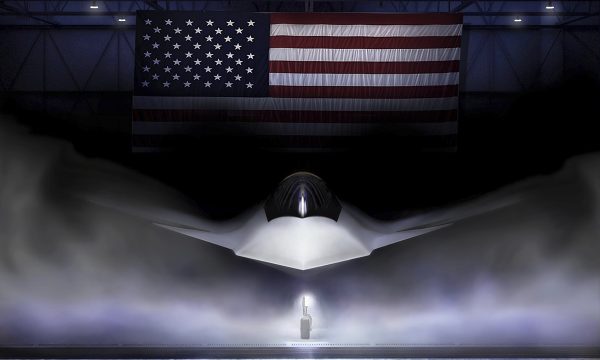
Graphical rendering shows the Next Generation Air Dominance (NGAD) Platform, the F-47. Photo: VCG
By Liu Xuanzun and Liang Rui | Global Times | March 23, 2025
The US’ recent announcement of the F-47 fighter jet has drawn intensive analyses from Chinese military affairs experts and observers, who acknowledged the aircraft being a real sixth-generation fighter jet for featuring typical characteristics such as a tailless design, but they also raised questions over its potentially limited stealth capability, relatively small size, and the US’ selection of Boeing to build the warplane.
The Pentagon has awarded the contract for the US Air Force’s Next Generation Air Dominance future fighter jet, known as NGAD, to Boeing, US President Donald Trump announced Friday, US news outlet Defense News reported on Saturday.
The sixth-generation fighter, which will replace the F-22 Raptor, will be designated the F-47, Trump said. It will have “state-of-the-art stealth technologies [making it] virtually unseeable,” and will fly alongside multiple autonomous drone wingmen, known as collaborative combat aircraft, Defense News reported.
After reviewing the artist renderings of the F-47 released by the US Air Force, Zhang Xuefeng, a Chinese military affairs expert, told the Global Times on Sunday that the F-47’s appearance conforms to the general development trend of the sixth-generation fighter jet concept. For example, it does not feature any vertical tails, which is an attempt to further improve its stealth capability in all directions. It has a flat nose and a lifting-body fuselage. These are all important characteristics of a sixth-generation fighter jet.
Zhang added that manned-unmanned teaming is a core sixth-generation feature, and one the F-47 includes.
However, a pair of canards can be observed in front of the F-47’s main wings, and this will more or less impact the aircraft’s stealth, Zhang noted. Reiterating that an important trend for sixth-generation fighter jets is to remove vertical tails and use a supersonic flying wing configuration to boost stealth, Zhang said that new mechanisms are needed to act in the place of vertical tails to control the aircraft, such as movable wingtip. But the F-47 opted to use canards, a relatively old technology often found on previous generations of aircraft. He suggested Boeing may lack the tech base to develop new control methods and relies on outdated design choices.
In December 2024, videos and photos emerged on social media allegedly showing two types aircraft with new designs have conducted test flights in China. Despite no official announcements, many called them China’s “sixth-generation fighter jets.” Both of them appear to have removed vertical tails and also do not have canards. One of them, resembling a ginkgo leaf in appearance, looked far larger than its J-20 escort.
Wang Ya’nan, chief editor of Beijing-based Aerospace Knowledge magazine, told the Global Times on Sunday that comparing with the size of the canopy and the front landing gear, it can be analyzed that the overall size of the F-47 is not likely much larger than the F-22. It means that the F-47 is still a tactical aircraft, rather than a large, multipurpose aerial platform capable of conducting campaign-scale missions like the “ginkgo leaf” aircraft.
Defense News, citing Air Force Chief Gen. Allvin, claimed that experimental versions of the NGAD have been flying for the last five years.
But Wang noted that there is no proof of this. Even the pictures depicting the F-47 are artists renderings rather than photos.
Wang also noted that Boeing has not won a major fighter jet program for decades. Its F-15 and F/A-18 fighter jets are from McDonnell Douglas which was merged into Boeing, and Boeing’s own X-32 fighter jet lost to the F-35 from Lockheed Martin in bidding. Boeing’s other projects, such as the 737 MAX airliner and KC-46 tanker aircraft also encountered many issues recently. “Having a company like this to lead a sixth-generation program is actually very risky,” he said.
In addition to US’ NGAD program, other countries are also developing sixth-generation fighter jets. France, Germany and Spain are in the Future Combat Air System program to develop a sixth-generation fighter jet, while the UK, Italy and Japan have a sixth-generation Global Combat Air Programme fighter project, according to Defense News. Russia’s sixth-generation efforts have also surfaced in TASS reports.
Wang said the US is moving fastest with the F-47, while other nations lag. With China’s own jets already spotted in the sky, the outside world is now seeing China and the US in advanced stages of sixth-generation fighter jet development.
Featured Video
New positive ivermectin evidence
or go to
Aletho News Archives – Video-Images
From the Archives
Fanatical Followers of the Covid Regime: A Jim Jones-Style Cult?
By Professor Roger Watson and Dr. Niall McCrae | The Daily Sceptic | November 15, 2021
As scholars at leading British universities over recent decades, we witnessed the replacement of critical thinking and debate by narrative: facts are discrimination and scientific method is imperialism; truth, instead, is derived from ‘progressive’ values. This educational trend may be a major contributory factor to the ease in which society has been inculcated to the Covid ‘new normal’ of masking, testing, and repeated doses of vaccines for a disease of similar risk to severe influenza.
One doesn’t need much critical reasoning to observe the flawed logic of some vaccination enthusiasts, such as people who respond to experiencing any side effects, however debilitating, by saying “at least I know it’s working”, or, after contracting the disease despite their promised inoculation (over 90% effective, according to initial drug company claims), “I’d have been worse off without the jab.” … continue
Blog Roll
 Aletho News
- Najaf airport to reopen to Iranian flights within 24 hours: Ambassador
- From ‘How Will This End For Iran’ to ‘When America Walks Away’: A tale of two Economist covers
- Tehran blasts ‘baseless’ speculation linking Iran to alleged bomb plot at UK air base
- The Rise And… Rise Of ‘Color Revolutions’
- The Coming GOP Bloodbath?
- Arctic Scare Stories Melt Away
- Wrong, Euronews: Climate Change Has Not Created a Food, Energy, and Economic “Meta-Crisis”
- New positive ivermectin evidence
- Met Office Caught Fabricating Daily Temperature Record Claims
- Merck Virologists Admitted to Falsely Certifying Vaccine Efficacy
- If Americans Knew
- Netanyahu Asked UAE Leader to Deny Report on Oct. 7 Warning in Secret Visit, Sources Say
- CNN Chief Int’l Correspondent Clarissa Ward on Journalists in Gaza
- Democratic Party Consultants Surround Troy Jackson with Pro-Israel Donors
- Christian Leader Responds To Netanyahu’s Claims Regarding Palestinian Christians
- In Gaza, ‘Whoever Survives the Bombing Won’t Survive the Rubble’
- Israel kills more Palestinians, amid push to resettle Gaza – Daily Update
- Israel forces Gazans to live in constant peril – Daily Update
- Deconstructing Netanyahu’s pants-on-fire UN rant – Daily Update
- Trump betrayed voters with his campaign lies and prioritized a foreign country once he took office
- Netanyahu calls Israel’s war in Gaza ‘opposite of genocide’ in UN speech to near-empty hall
- No Tricks Zone
- New Study: Earth And Venus Surface Warmth Largely Explained By Convection And Lapse Rate, Not CO2 Or Radiation
- 2025 Nature Paper Claiming Worsening Global Drought Gets RETRACTED …Heavily Flawed
- New Study: ‘Global Drought Shows No Detectable Recent Acceleration Under Climate Warming’
- Economic Masterminds: German Socialists Suggest Taxing Productivity Gains Stemming From Using AI
- The South China Sea Has Not Been Cooperating With The Climate Change Narrative
- Energy Crisis: Germany Enters Heating Season With Historically Low Gas Reserve Fill Levels
- New Study: The Antarctic Ice Sheet Gained Mass From 2020-2024 Due To Staggering Snow And Ice Accumulation
- Study: Ocean Heating Rates From Thousands Of Years Ago ‘Dwarf’ Modern Ocean Heating Rates
- Climate Extremists Target, Attack Large-Scale Power Grid Infrastructure In Germany!
- New Study: Antarctic Ice Melt Has Contributed Less Than 1 Centimeter To Sea Level Rise In The Last 30 Years

