Five Factors Behind the Decline of US Military Shipbuilding
By Ilya Tsukanov – Sputnik – 23.03.2025
US business media have cited the USS Constellation frigate as a prime example of problems plaguing the industry, with the warship, slated for delivery in 2026, just 10% complete and already over budget. Here’s why turning the situation around won’t be easy.
Post-Cold War Decline
American military shipbuilding peaked in the 1980s, with 150 major warships displacing over 1.2M tons added to the fleet during the decade, including three Nimitz-class carriers, Los Angeles-class attack subs, Ohio-class SSBNs and Ticonderoga, Arleigh Burke, Spruance and Perry-class destroyers, cruisers and frigates.
After the Cold War ended, the US cut its Navy in half, closed shipyards, and lost skilled workers against the background of the country’s broader deindustrialization and transition to a service economy.
Monopolization
In the 90s, large shipyards including Avondale, Fore River, Todd Pacific, Philadelphia, Charleston, and Mare Island were closed, downsized or converted for civilian use, creating monopolists among remaining producers like Huntington Ingalls Industries (HII) and General Dynamics, and jacking up contract costs.
For example, while $12.1B was allocated to shipbuilding in the 1984 Pentagon budget ($36B in 2024 dollars), last year’s budget was $32.8B, with far less to show for it.
Aging Infrastructure
Modern US shipyards are often straddled with aging infrastructure, impacting construction of new vessels, and the introduction of new technologies.
Skilled Labor Shortages
The loss of skilled tradesmen has taken a particularly heavy toll, with HII’s Newport News yard, building the Gerald Ford-class carriers, constantly facing a lack of welders, electricians, pipe and shipfitters.
A House Armed Services Committee hearing this month found that tough working conditions, and wages often just a couple dollars more than those at fast-food joints, are making it difficult for the industry to retain workers. Naval engineers are also underpaid and underappreciated.
Design Flaws, Red Tape
Design issues have turned some vessels, like the Zumwalt destroyer, Ford-class carriers and Littoral Combat Ships (LCSs) into costly nightmares, shrinking acquisition of Zumwalts from 32 to 3, and LCS warships being already being phased out after a decade or less of service.
The result? Major cost overruns, program delays and bureaucracy slowing acquisition to a crawl, even as manufacturers collect bigger and bigger paydays.
Situation in Serbia Unaffected by USAID Funding Cuts Yet – Deputy Prime Minister
Sputnik – 23.03.2025
BELGRADE – The cuts in USAID funding have not yet affected the situation in Serbia, the money has already been allocated and is being spent, Serbian Deputy Prime Minister Aleksandar Vulin told Sputnik.
Anti-government protests by students and the opposition have been taking place in Serbia since November 2024. They were triggered by the death of 15 people when a concrete canopy collapsed at the railway station in Novi Sad on November 1. The country’s leadership calls on students and opposition forces to engage in dialogue, but this call remains unanswered. The authorities believe that the goal of the protesters is to overthrow the government and the president, and that Western-funded media and organizations are behind their actions.
“The result [of USAID cuts] will be in the long term. In the short term, there is none, because this money has already been allocated and distributed, and they are doing what they were paid for,” Vulin said.
Earlier, he said that since the beginning of 2025 alone, USAID had transferred over $40 million to Serbia.
US Secretary of State Marco Rubio previously said that the United States was officially closing 83% of USAID programs, adding that they spent tens of billions of dollars on purposes that do not meet US interests.
Scorch Marks in the Sand
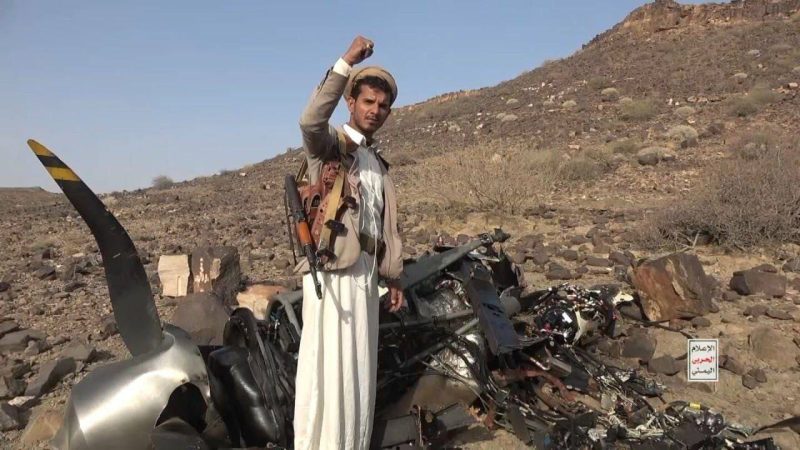
Yemeni Warrior Rejoicing over a Slain MQ-9 Reaper
By William Schryver – imetatronink – March 22, 2025
Javelin, Stinger, M-777 howitzer, HIMARS, Excalibur, Switchblade, all manner of electronic warfare gizmos and counter-battery radars, Bradley IFVs, Stryker, Leopard, Challenger, Abrams, Patriot, JDAMs, HARMS, Storm Shadow, ATACMS … I’m sure I’m forgetting some.
Oh, yeah … remember in early 2022 when the unveiling of the Bayraktar strike drones was hailed with great fanfare? They were predicted to be the bane of the Russian army. Instead, it was a major embarrassment for the Turks.
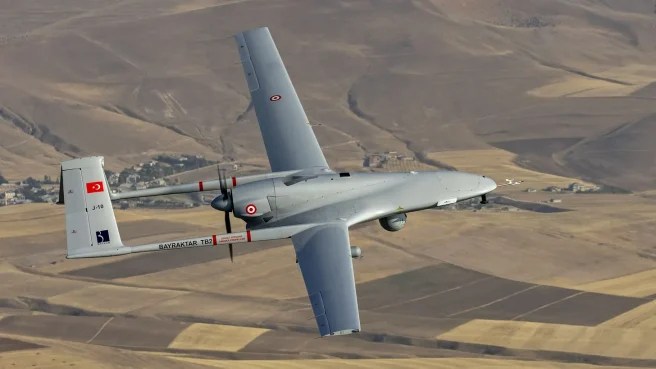
Turkish Bayraktar TB2 Surveillance and Attack Drone
That said, over the past year or so, those “savage barbarians” down in Yemen have shot-down a baker’s dozen of the once-vaunted US MQ-9 Reaper drones – supposedly vastly superior to the Bayraktar TB2.

US MQ-9 Reaper Surveillance and Attack Drone
In any case, all of these things represent top-shelf front-line US/NATO war stuff that has been objectively proven inferior in the crucible of protracted high-intensity warfare. Many are simply ill-suited for the current state-of-play in the military realm, as it has been revealed over the course of the war in Ukraine.
Before this war began, the almost-universal belief was that US/NATO weaponry and equipment were far and away superior to anything the Russians could put on the battlefield.
That unfounded faith in the unrivaled supremacy of western arms has now been shattered — although we already see the think-tank apologists fashioning their strained rationalizations.
Nevertheless, when one examines in aggregate the implements of war the US/NATO have provided to Ukraine, the overwhelming majority consists of the very stuff every military in NATO would field in a war against Russia, or anyone else, for that matter.
Here is a sobering truth: if the Armed Forces of Ukraine could make one wish, it would be to respawn as the army and abundant quantities of effective and durable Soviet equipment they had in February 2022. That was, all things considered, the strongest army they would ever have. And it was, in great measure, squandered on the altar of a misguided commitment to NATO field doctrines that repeatedly proved misconceived and ill-adaptive to the war that actually ensued, as well as the war as it has subsequently evolved.
So, in the case of the Ukraine War, we see attested two now-indisputable facts:
1) US/NATO weaponry and equipment is FAR LESS FEARSOME than was previously believed by the supposed “military experts” in the world. It has either failed abysmally or vastly underperformed in virtually every case.
2) US/NATO war doctrine has been demonstrated to be something quite a bit less than the greatest expression of the martial arts since Napoleon at the Battle of Austerlitz. The disastrous NATO/AFU “counteroffensive” in Zaporozhye in summer 2023 and the catastrophic blunder of the Kursk Kamikaze Incursion in summer 2024 have laid waste to the mythology of US/NATO military prowess.

Napoleon at Austerlitz Accepting the Surrender of Francis II
Now, here in the early spring of 2025, we see the United States, with Donald Trump again at the helm, trying to soothe the sting and obfuscate the reality of the resounding defeat its strategic designs and battlefield arms have suffered against Russia.
And, after weighing all options and considerations in the balance, the Masters of Declining Empire have decided beating up on Iran is the right medicine for what ails them.
I mean, after all, the Russians never had to face them, and the Iranians certainly cannot pose a credible threat to our decades-old F-15s, F-16s, F/A-18s, F-22s, F-35s, B-52s, B-1s, B-2s, Tomahawks, etc., not to mention the almighty US Navy.
Everybody KNOWS this to be true. Right?
And even though the Iranians have already proven to be able to defeat all manner of US and Israeli air defenses with their upper-tiers of ballistic missiles … well, if we just have Pete Hegseth give them a proper pep-talk, those interceptors that failed during the reign of the imbecile Joe Biden will strike down every single Muslim Missile they see. American air defense interceptors will be made great again. Hail to the Chief!
As for the Iranian air defenses … well, everyone also knows the Israelis already destroyed them. Right? They told us all about it – how the heroic Israeli F-35s and F-15s stormed across the Tigris into the heart of Iran and blew to smithereens all those S-300s and missile factories. They even showed pictures of scorch marks in the sand to prove it.
Anyway, the point is that America needs to go to war again in an attempt to erase the stain of having lost to the Russians, just as going to war against the Russians was meant to erase the stain of having lost to the Afghanis, just as going to war against Iraq and Afghanistan was meant to erase the stain of having lost to the Vietnamese. And … well, you know the drill by now.
You should also know what they say about the best laid plans of mice and men. Nothing ever goes as planned. And I strongly suspect the next war of American redemption will not be a reversal of the prevailing trend.
How a war with Iran (for Israel) could crash the US economy
By Shivan Mahendrarajah | The Cradle | March 21, 2025
The “winds of war” are blowing toward Iran. This is the war for which Israeli donors Sheldon and Miriam Adelson, along with pro-Israel organizations such as AIPAC and the ADL, paid US President Donald Trump hundreds of millions of dollars over two election cycles.
But it’s not only the Israeli lobby banging the war drums; American Evangelicals – especially groups like “Christians United for Israel” – also support war, believing it will “save Israel” from the “Iranian menace.” Evangelical membership in the 119th Congress (2025–27) is high. War with Iran is not (yet) popular in the US, but – just as with Iraq – consent will be manufactured by Washington elites and the media.
Trump’s outreach to Russian President Vladimir Putin to resolve the Ukraine war partly aims to shift the Pentagon’s attention back to West Asia. He assumes that an early 2025 war with Iran will “save Israel” and secure his legacy, letting him focus on “America First” for the rest of his term.
But war with Iran could also backfire disastrously, sink his presidency, and derail the ambitions of 2028 Republican hopefuls like Marco Rubio and J.D. Vance. For starters, should the military campaign encounter any unforeseen backlash – which is highly likely, and the reason the Pentagon has assiduously avoided direct confrontation with Iran – the Democratic Party could retake both chambers of Congress after a US stock market crash and recession triggered by the war.
Iran’s military responses
Iranian leaders have vowed “devastating” retaliation for any attack on their soil. This would likely involve missile strikes against Israeli and US military targets – and possibly infrastructure and economic targets within the occupation state. If Israel uses tactical nuclear weapons against Iran’s nuclear facilities, Tehran will escalate further.
Whether or not nukes are used, war would shock the global economy, send oil prices soaring, and halt maritime traffic through the Strait of Hormuz. The greatest impact will fall on countries most dependent on West Asian oil.
The US economy may be less affected in the short term. Its stock markets, already down 10 percent since Trump’s return to the White House, would decline further – but Trump is gambling that households will not feel the pain. But if the Islamic Republic launches economic warfare that “brings the war home,” political dynamics will change.
Economic warfare
Most Americans are detached from the notion and consequences of war because, since the Civil War, US wars have been fought far from its borders. Even during the World Wars, though American families faced personal loss, the nation did not endure widespread suffering – unlike Britain, which imposed food rationing from 1939 to 1954.
The “Global War on Terror” impacted some communities, but not the country. US troops often joked in Iraq: “We’re at war; America’s at the mall.” Americans kept spending and enjoying life, while Iraqis and US occupation soldiers endured the brutal costs.
Iranian leadership understands this disconnect. The US stock market is a tempting target. In 1929, at the start of the Great Depression, just 2.5 percent of Americans owned stock. Today, about 61 percent of US adults – roughly 160 million people – own shares through private accounts, pension schemes, or retirement plans.
Factoring in children in such households, roughly 200 million Americans are exposed to market fluctuations. Trillions more dollars are invested by corporations, universities, and foreign institutions. The exposure is deep.
The US economy is fragile. Mark Zandi, Moody’s chief economist, warned that the risk of recession is “uncomfortably high and rising.” On 19 March, Federal Reserve Chair Jerome Powell kept interest rates steady, citing slowing consumer spending and growing uncertainty. Trump, fearing economic fallout, raged on Truth Social over the Fed’s refusal to cut rates. He announced retaliatory tariffs set to take effect on 2 April.
Household debt is rising – $18.04 trillion as of Q4 2024 – with increasing defaults on auto loans and credit cards. Americans, like the federal government, spend on credit. Investors borrow against their portfolios with margin loans. If stock values fall, forced selloffs to cover debts could intensify market collapse. “Margin calls” – demands for loan repayments – played a greater role in the ensuing economic turmoil than the 13 percent market drop on 28 October 1929.
The US economy is already strained, and consumers are over-leveraged. A large external shock could push it into a deep recession. Stock markets would plunge, wiping out pension savings and private wealth.
How far markets fall would depend on the force of Iran’s blow. The current 10 percent drop has already hurt. A deeper decline – say, 25 to 50 percent – would cripple the economy, spark layoffs and bankruptcies, and tighten credit. That would suppress consumer spending and crash the housing market, as in 2008.
Tehran’s targets
As Iranian leaders have often repeated, “If Iran cannot sell oil, no one will.” If US or Israeli forces strike Iranian tankers or infrastructure, Tehran is likely to target US economic interests and the oil sectors of any Persian Gulf Arab state that supports the attacks by allowing fighter jets, drones, or missiles to launch from their territories.
The Islamic Revolutionary Guard Corps (IRGC) may choose to strike Bahrain, which is an obvious military target since it hosts the US Naval Forces Central Command. In addition to military sites, Iran could target the Bahrain Petroleum Company’s refinery, which processes 270,000 barrels per day, along with its marine terminal and oil storage facilities.
The oil farm holds 14 million barrels – ample fuel for a dramatic strike. Iran could also destroy the King Fahd Causeway connecting Bahrain to Saudi Arabia to prevent Riyadh from sending ground troops to suppress unrest among Bahrain’s majority Shia population, as it did during the 2011 uprising.
In Iraq, too, US military bases will almost certainly come under fire. Beyond that, Iran-aligned factions within the Popular Mobilization Forces (PMF) may attempt to capture the 2,500 US troops still stationed there – not to kill them, but to take them as hostages.
Living captives would be far more valuable, creating a nightmare scenario for Trump and serving as a sharp reminder to Americans – who often forget the wars they once supported – that US troops remain in Iraq more than two decades after the 2003 invasion. These POWs would likely be scattered across the country, making coordinated rescue missions difficult and turning them into bargaining chips in any future negotiations.
Jordan, having allowed Israeli overflights last year in October during Iran’s retaliatory strikes and before that in April, is likely to do so again and could face significant retaliation. In addition to the Zarqa oil refinery, Iranian forces might strike political, military, and intelligence targets. Such attacks would certainly provoke unrest among Jordan’s population, the majority of whom are of Palestinian descent and already harbor grievances against their leadership for its collusion with Tel Aviv.
The UAE, if complicit in the attacks, could face military strikes on its energy infrastructure and power plants, as it experienced during its war with Yemen. The Emirates is particularly vulnerable due to its demographic makeup – about 88 percent of its population consists of foreign workers. If those workers flee following targeted attacks, the country’s economy would be brought to its knees.
Qatar and Oman are likely to be treated differently. Muscat, with its long-standing neutral foreign policy in the region, has maintained warm relations with Iran, and will not likely participate in a US military aggression. Doha also enjoys relatively good relations with Tehran, though it hosts the US Central Command’s (CENTCOM) Al-Udeid Air Base and worked to thwart Iranian interests in Syria. Iran might strike CENTCOM’s headquarters in West Asia, but is unlikely to target other Qatari assets.
Saudi Arabia presents a more complex scenario. Although both Russia and China have encouraged reconciliation between Iran and Saudi Arabia, the kingdom may not remain on the sidelines. If it does participate in hostilities, it would become a high-priority target.
Even if Riyadh stays neutral, Iran might still strike its East–West oil pipeline, which terminates at the port of Yanbu. That pipeline – built in 1982 to bypass the Persian Gulf – delivers over three million barrels per day to Europe.
Yanbu’s port, refinery, and export terminals, some of which are operated in partnership with western firms, would be natural targets. A simultaneous closure of the Strait of Hormuz and disruption of Red Sea traffic would block the export of roughly five million barrels per day. While former UN weapons inspector Scott Ritter predicted oil prices could surge to $120 per barrel, Iran might be capable of pushing them as high as $200.
China, when retaliating against Trump’s tariffs, acted strategically. It imports just 7 percent of its pork from the US, but most pork producers are in Republican “red states.” Targeting that sector hurt Trump’s base directly.
While spiking oil prices and global economic turmoil would harm Iran’s allies and the Global South, Iran’s adversaries in the US, UK, Israel, and EU stand to lose the most. If Iran wages a smart economic war, even Evangelicals may start caring more about their grocery bills than hastening the reconstruction of the “Third Temple” and other end-times prophecies.
Geography

The Middle East
By William Schryver – imetatronink – March 21, 2025
So the US is sending Carrier Strike Group One (CVN-70 USS Carl Vinson) to the Middle East, leaving CSG-5 (CVN-73 USS George Washington) to “hold the fort” in the western Pacific from the semi-safe environs of its quasi-permanent berth in Yokosuka, Japan.
All the Washington does is sail back and forth between San Diego and Yokosuka every so often to give the impression it’s doing something meaningful. Otherwise I’ve seen no indication for several years that it is anything more than a training and parade vessel.
In any case, the Vinson is headed to the Arabian Sea, and perhaps points beyond. (That remains to be seen.)
Meanwhile the deployment of CSG-8 (CVN-75 USS Trembling Puppy) has been extended, even as it remains bottled up in the northern reaches of the Red Sea, launching air strikes on Yemen from ~1000 km away, with USAF refueling tankers at the ready as needed.
The Yemeni have launched a few modest packages of antiquated drones and antiship cruise missiles in the general direction of the Trembling Puppy – all of which have been relatively easy pickings for the cruiser and destroyers and combat air patrol.
But, keep in mind, even though these old and slow Yemeni drones and missiles have little chance of scoring a hit from 1000 km away, the carrier strike group ships and planes still have to shoot at every one of them!
So every Yemeni strike package of a couple dozen missiles will deplete CSG-8’s munitions magazines by AT LEAST a corresponding number of air defense missiles, and quite possibly TWICE as many, according to standard practice of firing two interceptors at each threat.
CSG-8’s magazine depth has already been substantially depleted over the course of the past two weeks — and remember, the US Navy cannot replenish its vertical launch systems at sea.
And, of course, if military operations against Iran are the ultimate objective, then at some point the Trembling Puppy and its entourage are going to have to leave the cozy waters between Jeddah and the Gulf of Suez, and run the gauntlet of the Gate of Lamentation (Bab el-Mandeb).
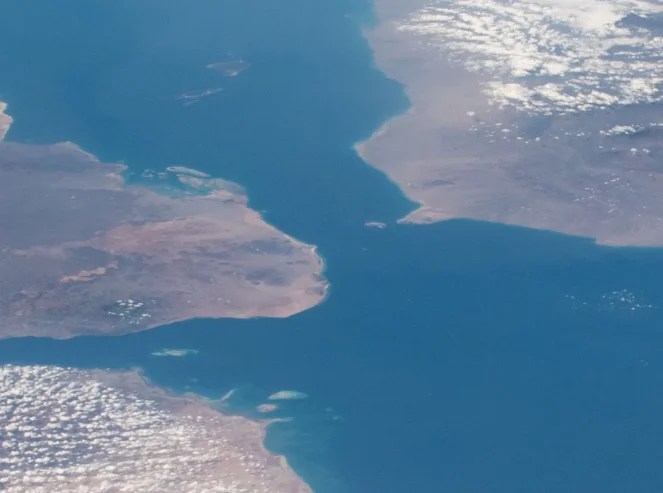
The Gate of Lamentation (Bab el-Mandeb)
That’s when things could get more interesting. Because it’s a pretty tight squeeze to pass through. A big deep-draft aircraft carrier can’t just run at full speed, zig-zagging back and forth. It has to stick to the navigable channel.

Navigable Shipping Channels in the Bab el-Mandeb
In the relatively open waters north of Jeddah, there is quite a bit of room for maneuver. But in the straits, you’re restricted to a narrow band — and most significantly, potential Yemeni missile launching sites are only ~200 km away. A more substantial strike package of 50 or so drones, antiship cruise missiles, antiship ballistic missiles, and fast boat and surface drone attacks will get there a whole lot faster, and with a much better chance of actually hitting something.
So, even though CSG-8’s odds of passing through unscathed still probably remain pretty good, there is unquestionably a considerably elevated risk compared to hiding out at the mouth of the Gulf of Suez.
But let’s suppose they sail right through the Bab el-Mandeb with minimal difficulties … then what? You join up with CSG-1 in the Arabian Sea and attempt long-distance strikes into southern Iran — strikes that would still require air-refueling to have any meaningful reach?
Because you sure as hell aren’t going to sail a couple carrier strike groups into the Persian Gulf. And anyone who believes otherwise is drowning in delusion. I mean, just look at the damn map! The Iranians have potent fire control over the passage from the Gulf of Oman, through the Strait of Hormuz, and throughout the entire Persian Gulf.
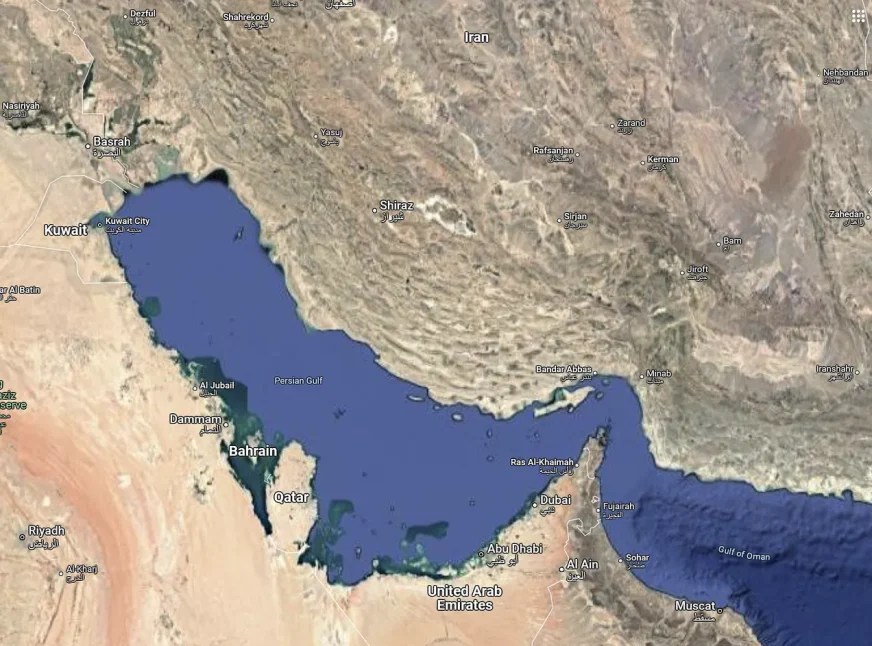
Strait of Hormuz / Persian Gulf
So I ask, in all seriousness, what exactly are two US Navy carrier strike groups going to do in the context of a no-holds-barred war against Iran?
To me, the entire concept screams of hubris running blindly into catastrophe.
If the US is foolish enough to start a big war against Iran, then 2025 is likely to demonstrate yet again that, combined with firepower, geography is the indomitable god of war.
The Case Against Mahmoud Khalil: How The Israel Lobby Fueled a Campus Crackdown
By Robert Inlakesh | Mint Press News | March 13, 2025
The detention of Mahmoud Khalil, a prominent Palestinian activist involved in organizing at Columbia University, is the result of more than a year of pro-Israeli think-tank propaganda and lobbying efforts to tie the students to Hamas and erode free speech protections in the United States.
Since the first anti-war encampment at Columbia University last April, a network of pro-Israel organizations—including lobby groups, think tanks, and private security firms—has worked to dismantle the student protest movement. Their influence has been evident in the rapid and coordinated response to suppress demonstrations.
Despite Secretary of State Marco Rubio’s public claim that Khalil is a “Hamas supporter,” no evidence has been provided to substantiate the allegation. In fact, a White House official admitted in an interview with The Free Press that “the allegation here is not that [Khalil] was breaking the law.”
The Trump administration has offered no evidence of illegal or violent activity to justify its efforts to deport Khalil, a Green Card holder. Instead, his removal appears rooted in political disagreement. Washington has made clear that any speech critical of Israel can be labeled as “pro-Hamas” and “antisemitic” without the need to substantiate such claims.
This absence of evidence has been a defining characteristic of the broader campaign—driven by the Israel Lobby—to curtail First Amendment rights on college campuses. While Jewish student groups were among those leading last year’s anti-war encampments, the Students for Justice in Palestine (SJP) chapters became a particular focus of political scrutiny.
A central figure in this push has been the Foundation for Defense of Democracies (FDD), a neoconservative think tank frequently cited as a source for alleged links between Hamas and SJP. The FDD’s argument hinges on the claim that the American Muslims for Palestine (AMP), a major supporter of SJP chapters, has ties to individuals formerly associated with charities shuttered for allegedly financing terrorism. One such case, the Holy Land Foundation, resulted in convictions that have since been widely criticized as politically motivated.
The FDD first presented its claims publicly in 2016, but they failed to gain traction, mainly due to a lack of substantive proof. Among its chief concerns was that “AMP does not have to file an IRS 990 form that would make its finances more transparent.” That critique is striking, given that the Quincy Institute recently revealed the FDD itself operates with “dark money” funding and holds a zero transparency rating.
In May 2024, the Washington-based Atlantic Council suggested in an article that Iran was involved in the student protest movement. Corporate media quickly picked up on the claim and attempted to build a case around it. Yet, despite the steady stream of coverage, none of the reports were able to muster any real evidence to back up their accusation.
Alex Karp, the CEO of Palantir Technologies—a company with deep ties to the CIA—has taken up a public crusade to reshape discourse on college campuses. His rationale for urgency is blunt: “If we lose the intellectual debate, you will not be able to deploy any army in the West, ever.”
Safra Catz, the Israeli-American CEO of Oracle and one of the highest-earning women in global business has also weighed in on the protests. When asked about the wave of student demonstrations, she framed the issue in starkly militaristic terms:
The reason, in my personal opinion, why they’re out there is because they think Israel is weak. They think the Jews are weak, so they stand up strong. If Israel regains its deterrence capability and America regains their deterrence capability and is strong, they will disperse like they always do. We’ve seen this pattern here in Israel—when the terrorists feel strong, they’re out in the streets. And when Israel comes in hard, they’re hiding under the floor.”
Not only did Catz compare student actions in the United States, framed as part of a “resurgence of antisemitism,” to “terrorists,” but the Israeli-American businesswoman has also contributed to both Donald Trump and Marco Rubio’s political bids in the past. As CEO of Oracle, which owns OpenAI, Catz doubled her company’s investment in Israel following October 7, 2023.
The Anti-Defamation League (ADL), which has repeatedly accused the U.S. student movement of antisemitism and supporting Hamas, has openly called for the deportation of Mahmoud Khalil.
Pro-Israel groups insist that Khalil has ties to Hamas, yet even the Canary Mission—a site notorious for doxxing pro-Palestine university students—could not produce evidence beyond his participation in a protest chant. In its extensive profile on Khalil, the only supposed proof of “support for Hamas” was his involvement in a demonstration where the crowd chanted, “From the river to the sea, Palestine will be free.” The site argues that the phrase is pro-Hamas solely because Hamas leader Khaled Mashal has used it in the past.
One of the loudest voices behind the crackdown on campus protests is Trump’s UN ambassador, Elise Stefanik, who has openly boasted about her role in forcing the resignations of five university presidents. Even Columbia University’s decision to give in to pressure from pro-Israel lobbying groups did not shield it from White House retaliation. The administration still moved to strip $400 million in federal funding from the university, sending a clear warning to other institutions.
This multi-pronged assault on free speech—built on baseless accusations of Hamas ties and antisemitism—is now being used to justify the deportation of a permanent U.S. resident whose wife and future child are American citizens. The campaign is part of a broader effort to erode First Amendment protections under the guise of national security.
Robert Inlakesh is a political analyst, journalist and documentary filmmaker currently based in London, UK. He has reported from and lived in the occupied Palestinian territories and hosts the show ‘Palestine Files’. Director of ‘Steal of the Century: Trump’s Palestine-Israel Catastrophe’. Follow him on Twitter @falasteen47
US arrests Georgetown University student for criticizing Israel

Indian citizen Badar Khan Suri has been arrested in the US over criticism of Israel
Press TV – March 20, 2025
Indian citizen and Georgetown University student Badar Khan Suri has been arrested by US Immigration and Customs Enforcement (ICE) agents due to his criticism of Israel’s actions in Gaza.
Sari, who is a post-doctorate fellow in peace and conflict studies at Georgetown University in Washington, is currently being held at an ICE detention facility in Virginia without contact with lawyers and family.
ICE has detained Sari even though he is a US permanent resident.
After his arrest, the dean of Georgetown University made a statement that Sari had not engaged in any illegal activities or posed a threat to campus security.
In a statement, the University Board of Georgetown Law SJP has called his arrest to be for expressing “constitutionally protected speech,” warning that if such arrests continue “higher education will crumble.”
Sari is believed to have been specifically targeted because of the anti-genocide activism of his wife Mapheze Saleh.
Saleh, a US citizen, is a prominent pro-Palestine activist who has come under attack by pro-Israel political organizations.
Jenin Younes, a lawyer and civil liberties expert, believes that Sari’s arrest is a case of citizens being held guilty by association.
“If they can’t target a Palestinian activist for deportation because they’re a citizen, they’ll target their spouse instead,” Younes said in an interview.
Imprisoning and punishing family members of political dissidents is a common repression tactic used by dictatorial regimes.
Google to acquire Israeli firm staffed by former Unit 8200 officers
The Cradle | March 20, 2025
On 18 March, Google’s parent company, Alphabet, announced plans to acquire the Israeli cloud security startup Wiz in a $32 billion deal, marking one of the largest-ever influxes of former Israeli intelligence officers into a US tech company.
“Google LLC today announced it has signed a definitive agreement to acquire Wiz, Inc., a leading cloud security platform headquartered in New York, for $32 billion, subject to closing adjustments, in an all-cash transaction,” the US tech giant said on Tuesday.
Reports from western media indicate that following the acquisition, Wiz will keep its brand and operate independently from Google. Additionally, an extra retention bonus will be offered to employees, potentially totaling $1 billion, along with a break-up fee that Google would owe to Wiz if antitrust regulators block the deal.
The Israeli tech company was founded in 2020 by four former members of Unit 8200.
Wiz employs around 1,995 people, with most of its sales and marketing personnel located in North America and Europe. However, most of its engineering staff is based in Tel Aviv, a major hub for cybersecurity talent primarily linked to Unit 8200 alumni.
A 2018 study cited by Haaretz estimated that 80 percent of the 2,300 people who founded Israel’s 700 cybersecurity companies at the time had come through Israeli army intelligence. Two years earlier, Forbes estimated that over 1,000 companies were founded by Unit 8200 alumni.
“There are at least five tech companies started by Unit 8200 alumni publicly traded in the US, together worth around $160 billion. Private companies started by ex-8200 soldiers are worth billions more,” the Wall Street Journal (WSJ) reported last year.
“While Unit 8200 alumni once talked about their service in hushed tones, they now tout it in press releases to attract clients and investment money for their startups,” the report highlights.
As an integral part of Israel’s intelligence apparatus, Unit 8200 conducts signal intelligence (SIGINT) and cyber operations, emphasizing advanced technology, cybersecurity, and intelligence gathering.
Unit 8200 played a crucial role in the planning and execution of Israel’s pager terror attacks in Lebanon last year. Specifically, western security sources revealed that the unit was involved in embedding explosives inside the pagers ordered by Hezbollah, with the operation reportedly taking over a year to plan.
The Israeli spy unit is developing an artificial intelligence (AI) tool similar to ChatGPT, which is “capable of answering questions about people it is monitoring and providing insights into the massive volumes of surveillance data it collects.”
“It’s not just about preventing shooting attacks, I can track human rights activists, monitor Palestinian construction in Area C [of the West Bank]. I have more tools to know what every person in the West Bank is doing,” an informed source told The Guardian earlier this month.
Who is opposing peace in Ukraine?
By Dmitri Kovalevich – Al Mayadeen – March 20, 2025
March 2025 marks the beginning of a fourth year of the military conflict in Ukraine. Kiev, its sponsors in Europe and the United States, are proving unwilling to end the war being waged despite mounting evidence they are facing a major political and military defeat.
Zelensky vs Trump?
The five-year, electoral mandate dating from May 2019 of Volodymyr Zelensky as president of Ukraine expired ten months ago. Yet on February 28, Zelensky staged a widely publicized quarrel with the new US administration in Washington headed by Donald Trump. The administration reacted, in turn, with a dramatic suspension of US arms shipments and sharing of intelligence and satellite data. Without this data, Ukrainian troops are ‘blinded’ because US military specialists have played a key role in helping choose Russian targets and helping operate complex rocket and missile weaponry. Particularly valuable are the images provided, with US government approval, by US commercial satellite imaging company Maxar.
The ‘suspensions’ were very short-lived. A meeting in Saudi Arabia on March 11 between the Kiev government and the Trump administration saw a renewal of the briefly-disrupted partnership between the two after its brief interruption in supplying military data and equipment. The meeting issued a proposal to Russia (better described as a threat) prepared in advance by Washington for a 30-day ‘ceasefire’. Critics in Russia and abroad say the proposal would allow the Ukraine Armed Forces to rest and regroup. If Russia turned it down, the Western powers could then condemn it for refusing peace.
Every serious analyst is pointing out that the ceasefire proposal does not at all address Russia’s well-publicized minimum conditions for a peace settlement. In other words, the plan is something of a trap for Russia. For that reason, it will not see the light of day.
Zelensky was absent from the Ukraine delegation in Saudi Arabia. He remains apprehensive over the prospect that Trump may wish to replace him and could do so at any time. Ukrainian political analyst Kost Bondarenko, who now lives abroad, explained on Telegram on March 4 that Zelensky is no longer listening to anyone, including those in his personal entourage. “He is acting hysterically and capriciously, recognizing only his own claimed righteousness. He doesn’t even listen to Yermak [head of the Office of the President of Ukraine]. His egocentrism has made Ukraine hostage to his whims.”
Europe benefits from the war
Zelensky is seeking more support from his patrons in the European Union and becoming more dependent on them, especially on the government of Great Britain. The latter continues to encourage him to sacrifice the people of Ukraine in a losing war against Russia.
Former Ukrainian (now Russian) political scientist Rostislav Ishchenko said in an interview on March 7 that the only difference between the Trump regime in Washington and the leading governments of the European Union is that ‘liberal’ Europe wants a consolidated West under a ‘liberal’ image while the right-wing, conservative Trump regime wants a united West focused on weakening and paralyzing Russia while simultaneously weakening China.
“Trump’s goal is not to make life easier for Russia. Trump’s goal is to get a peace that is acceptable to America. So far, everything that Trump formulates is absolutely unacceptable to us.”
Another former Ukrainian and now Russian political analyst Andrey Vajra told a Crimea news broadcast in February that the war in Ukraine has helped the European elites to appropriate billions of euros. “Europeans understand perfectly well that the war is lost. But the European elite needs to continue stealing [from weapons supplying and the multitude of forms of ‘aid’]. I have already explained how it is possible to continue stealing billions of euros so long as the killings continue in Ukraine. Far more millions of euros can be had. That’s why the European leaders are clinging to a warmaking Ukraine.”
In early March, the head of German intelligence, Bruno Kahl, stated in an interview with the state-run Deutsche Welle that it would be ‘safer’ for Europe if the war in Ukraine continued for another five years. He criticized the Trump administration, saying the kind of swift end to the war being voiced by Trump “would enable the Russians to focus their energy against Europe”. This suggested ‘long war’ against Russia is the new, official theme of EU leaders as they strive to convince their populations of the need to massively expand military spending.
Even former prime minister Yulia Tymoshenko (2007-2010) of the Batkivshchyna faction in the Ukrainian legislature says she is outraged by Kahl’s frank admission. “Bruno Kahl for the first time officially confirmed what we were so reluctant to believe: At the cost of thousands of Ukrainian lives and the very existence of Ukraine, some people decided on a war to ‘deplete’ Russia and thereby enhance the security in Europe? I did not think that they would dare to say it so officially and openly. This explains a lot,” Tymoshenko doth protest too much. She was a key fomentor of the violent, Maidan coup in February 2014 and an ardent advocate since then of military and political confrontation with Russia.
Danish Prime Minister Mette Frederiksen has also stated that a peace agreement could be more dangerous for Ukraine than an ongoing war. “I understand that many people believe that a peaceful solution or a ceasefire is a good idea, but we run the risk that peace in Ukraine would actually be more dangerous than the war that is ongoing now.”
Such pro-war stances are not only due to the fact that Western companies are getting rich on fulfilling military orders. A permanent war in Ukraine appeals to many Western leaders because this would weaken and pre-occupy Russia. “Israel” has long acted on the same principle in the Middle East. It has waged bloody wars in Syria, Iraq, and Lebanon to weaken these countries and prevent them from doing anything to stop “Israel’s” genocide against Palestinians and its occupation of Syrian territory.
Those who justify continued war in Ukraine make two contradictory assertions. On the one hand, they argue that the war has greatly weakened Russia and that the government there may soon collapse. Ukrainians should therefore fight just a little longer to secure ‘victory’. On the other hand, they say that Russia has become too strong and is a threat to overrun more European countries in the future. Ukrainian social networks have coined an ironic term for this contradictory belief system, calling it ‘Russophrenia’ (derived from the word ‘schizophrenia’).
The end of Ukraine’s adventure in Kursk
Disaster has befallen the Ukraine Armed Forces present in the Kursk border region of Russia. Large numbers of Ukrainian troops have become encircled—as many as 10,000 according to some Western media outlets. A March 8 report in a Ukrainian media outlet nervously reassured that the situation in Kursk “is not yet catastrophic”.
The Ukrainian military command did not issue any orders to retreat from threatened encirclements in Kursk. This repeats the experiences with earlier military encirclements in Donbass. These have allowed the Russian army to make steady and continued military advances there.
As reported by the online Politnavigator on March 7, a former advisor to the office of Zelensky, Alexei Arestovich, sees a familiar pattern to events in Kursk. “In dire conditions where encirclement is threatened, only the introduction of reserve troops can help. So we [the Ukraine Armed Forces] proceed as usual: drop in a few reserves removed from other threatened locations. These will most likely be unable to stabilize for any length of time because there are few reserves to draw upon. No one is left. Even worse is to keep the army in encirclements or threatened encirclements for too long, waiting for the political leadership to give an order to retreat. But those orders do not come. This scenario has repeated itself over and over again. We need to stop playing by such scenarios.”
Arestovich lives in exile somewhere in Europe and has said he would be a candidate in a forthcoming election for president of Ukraine should a free election take place.
On March 8-9, Russian troops managed rather easily to contain the remaining Ukrainian forces in Kursk Oblast and cut off re-supply routes. This was partly helped by the spring thaw because Western-supplied military equipment becomes booged down in mud; it is designed primarily for use on paved or improved gravel roads.
Ukrainian opposition blogger Anatoliy Shariy writes that the losses of the AFU in Kursk are huge – some of the biggest losses that Ukrainian servicemen can remember.
The Ukrainian grouping in Kursk was centered around the border town of Suzdha. It is the site of an important pumping and transit station for a natural gas pipeline built during the Soviet era which connects the vast gas fields of eastern Russia to markets in Ukraine and further west in Europe. In January, Ukraine shut down pipeline shipments through Suzdha, drawing sharp protests and threats of counter-measures from Hungary and Slovakia.
An ironic consequence of Ukraine shutting down the pipeline was that Russian soldiers were able to use the now-empty pipeline to advance some 15 kilometers directly into the center of the Ukrainian grouping in Suzdha. They waited days for orders. Russia then surprised and overwhelmed the embedded Ukrainian forces with a multi-pronged attack beginning on March 8. Many Ukrainian soldiers and allied mercenaries ended up stampeding into surrounding minefields.
Russian military correspondent Anna Dolgareva spoke to Russian military scouts in Suzdha and reported, “For six days, the Russian fighters sat inside the pipeline awaiting orders to move. They spent some 24 hours of difficult walking to get there. The pipeline still contained traces of methane gas and so holes were cut in the pipe along the way for ventilation.”
This operation was made possible because Ukraine shut off gas transit causing European countries to buy much more expensive liquefied gas from producers in the United States. Western sanctions against Russia have cost Europe its supply of relatively cheap Russian gas, replaced by shipments of expensive liquefied natural gas from the United States as well as gas from Norway and Algeria shipped by pipeline.
Ukrainian elite on ‘starvation rations’
Representatives of the Ukrainian political elite are today extremely worried about Zelensky’s quarrel with the new US administration that exploded into view in Washington on February 28. For most, funding from the United States is their main source of income.
Since the early 1990s, Ukraine has developed an entire class of government officials and politicians who have ‘monetized’ Russophobia and anti-communism. A key piece of moving up the career ladder has been to act the loudest in stigmatizing the former Soviet Union and modern Russian Federation, and figuring out how best to draw Western funding for such efforts. This scheme has worked well for decades, but now the apparent chaos being sown by the new Trump regime in Washington has upset the old arrangements. The chaos is merely the expression of a governing U.S. regime facing a looming defeat of its proxy war in Ukraine along with its European partners.
Some legislators realize that Zelensky’s harsh outbursts and confrontation with Trump and Trump’s vice president in Washington on February 28 could cost the country dearly, but others are betting on maintaining an aggressive, pro-war rhetoric. They are looking to the British government to help out.
Alexei Arestovich writes that Zelensky’s ‘disobedience’ is based solely on his desire to extract security guarantees for himself and his entourage. He says the problem for the White House is that “providing personal guarantees to thieves risks setting yourself up before American justice.”
Ukrainian economist Oleksiy Kushch writes that for the Ukrainian elite, the era when it could act as a child and demand money from the ‘adult uncles’ in the West is coming to an end. The West is so used to that arrangement that Zelensky’s apparent conflicts with the U.S. administration are bewildering, a kind of ‘revolt against the boss’.
Kushch summarizes Ukraine’s situation after Zelensky’s quarrel with Trump in this way, “Like a teenager who ‘unexpectedly’ has a child and finds all responsibility now rests on him, ‘daddy’ U.S. may threaten to stop helping out as punishment for any ‘disobedience’ while ‘mommy’ Europe promises to continue giving money but not forever.”
The Ukrainian elite has been thoroughly corrupted by years of generous Western ‘aid’ handouts. It no longer knows how to earn revenue and wealth on its own. So if some character named Zelensky becomes an obstacle to the continued flow of ‘daddy’s’ money, he becomes expendable. So much the worse for him.
Seyed Marandi: America Attacks Yemen – Has Trump Set Himself Up For Failure?
Glenn Diesen | March 19, 2025
Seyed Mohammad Marandi is a professor, analyst and advisor to Iran’s nuclear negotiation team
Follow me:
Substack: https://glenndiesen.substack.com/
X/Twitter: https://x.com/Glenn_DiesenPatreon:

Support the channel:
PayPal: https://www.paypal.com/paypalme/glenn…
Buy me a Coffee: buymeacoffee.com/gdieseng
Go Fund Me: https://gofund.me/09ea012f
Featured Video

New positive ivermectin evidence
or go to
Aletho News Archives – Video-Images
From the Archives
Fanatical Followers of the Covid Regime: A Jim Jones-Style Cult?
By Professor Roger Watson and Dr. Niall McCrae | The Daily Sceptic | November 15, 2021
As scholars at leading British universities over recent decades, we witnessed the replacement of critical thinking and debate by narrative: facts are discrimination and scientific method is imperialism; truth, instead, is derived from ‘progressive’ values. This educational trend may be a major contributory factor to the ease in which society has been inculcated to the Covid ‘new normal’ of masking, testing, and repeated doses of vaccines for a disease of similar risk to severe influenza.
One doesn’t need much critical reasoning to observe the flawed logic of some vaccination enthusiasts, such as people who respond to experiencing any side effects, however debilitating, by saying “at least I know it’s working”, or, after contracting the disease despite their promised inoculation (over 90% effective, according to initial drug company claims), “I’d have been worse off without the jab.” … continue
Blog Roll
 Aletho News
- Najaf airport to reopen to Iranian flights within 24 hours: Ambassador
- From ‘How Will This End For Iran’ to ‘When America Walks Away’: A tale of two Economist covers
- Tehran blasts ‘baseless’ speculation linking Iran to alleged bomb plot at UK air base
- The Rise And… Rise Of ‘Color Revolutions’
- The Coming GOP Bloodbath?
- Arctic Scare Stories Melt Away
- Wrong, Euronews: Climate Change Has Not Created a Food, Energy, and Economic “Meta-Crisis”
- New positive ivermectin evidence
- Met Office Caught Fabricating Daily Temperature Record Claims
- Merck Virologists Admitted to Falsely Certifying Vaccine Efficacy
- If Americans Knew
- Netanyahu Asked UAE Leader to Deny Report on Oct. 7 Warning in Secret Visit, Sources Say
- CNN Chief Int’l Correspondent Clarissa Ward on Journalists in Gaza
- Democratic Party Consultants Surround Troy Jackson with Pro-Israel Donors
- Christian Leader Responds To Netanyahu’s Claims Regarding Palestinian Christians
- In Gaza, ‘Whoever Survives the Bombing Won’t Survive the Rubble’
- Israel kills more Palestinians, amid push to resettle Gaza – Daily Update
- Israel forces Gazans to live in constant peril – Daily Update
- Deconstructing Netanyahu’s pants-on-fire UN rant – Daily Update
- Trump betrayed voters with his campaign lies and prioritized a foreign country once he took office
- Netanyahu calls Israel’s war in Gaza ‘opposite of genocide’ in UN speech to near-empty hall
- No Tricks Zone
- New Study: Earth And Venus Surface Warmth Largely Explained By Convection And Lapse Rate, Not CO2 Or Radiation
- 2025 Nature Paper Claiming Worsening Global Drought Gets RETRACTED …Heavily Flawed
- New Study: ‘Global Drought Shows No Detectable Recent Acceleration Under Climate Warming’
- Economic Masterminds: German Socialists Suggest Taxing Productivity Gains Stemming From Using AI
- The South China Sea Has Not Been Cooperating With The Climate Change Narrative
- Energy Crisis: Germany Enters Heating Season With Historically Low Gas Reserve Fill Levels
- New Study: The Antarctic Ice Sheet Gained Mass From 2020-2024 Due To Staggering Snow And Ice Accumulation
- Study: Ocean Heating Rates From Thousands Of Years Ago ‘Dwarf’ Modern Ocean Heating Rates
- Climate Extremists Target, Attack Large-Scale Power Grid Infrastructure In Germany!
- New Study: Antarctic Ice Melt Has Contributed Less Than 1 Centimeter To Sea Level Rise In The Last 30 Years

