They Think You Are Stupid, Volume 12
Everything you need to know about our ruling class’s opinion of you
By Aaron Kheriaty, MD | Human Flourishing | October 14, 2024




French MEP backs Medvedev’s attack on NATO
RT | October 14, 2024
Former Russian President Dmitry Medvedev was stating the “absolute truth” when he took aim at NATO countries and their support for Ukraine in a scathing recent social media post, French MEP Florian Philippot has said.
The European Parliament member was commenting on a post published by Medvedev on Sunday, in which he pointed to the problems that Ukraine’s Western backers are facing with their economies.
“The West has no money to clean up Florida after Hurricane Milton, no money for French farmers, no money to revive the German industry,” Medvedev, who now serves as deputy head of the Russian Security Council, wrote on Telegram.
These countries, however, still have funds to bankroll “a bunch of drunk and crazy” Ukrainians and to produce weapons “to exterminate the Slavs in the military conflict,” he added.
In a post on X, Philippot, who is leader of the Patriots party, wrote that Medvedev “just smashed the NATO countries by throwing absolute truths at them.” Philippot also took aim at French President Emmanuel Macron, saying he is “also taking a beating” for his recent pledge of a “new check for 3 billion to Zelensky.”
Philippot called on Macron to “stop these checks and these arms shipments,” arguing that Medvedev’s remarks are “factually terribly true!”
During a visit last week to a military camp in eastern France to inspect the training of Ukrainian troops, Macron pledged some €3 billion ($3.3 billion) worth of military aid for Kiev this year. Earlier in 2024, French farmers staged massive protests across the country, demanding that preferential trade rules granted to Kiev be lifted and calling for more government support.
In the US, former President Donald Trump last week accused the administration of President Joe Biden of neglecting the survivors of Hurricane Helene in the southeastern part of the country while sending billions of dollars in aid to Ukraine.
Meanwhile, Germany, which has emerged as one of Kiev’s top backers, is facing a new recession and its economy is set to contract for a second straight year due to shrinking industrial output, high energy prices, and weak foreign demand, according to reports.
Between Russia and Iran all is well that ends well
By M. K. BHADRAKUMAR | Indian Punchline | October 14, 2024
The mystery about the hastily-arranged ‘working meeting’ between Russian President Vladimir Putin and his Iranian counterpart Masoud Pezeshkian at Ashgabat, Turkmenistan, on Friday has only deepened after the event. This was their first-ever meeting. Putin didn’t even have the post-event presser.
Why such a meeting was considered necessary becomes an intriguing thought, as the two leaders are to meet in Kazan within days on the sidelines of the BRICS Summit on October 22-24.
Russia and Iran have had a difficult relationship through centuries. It still remains complicated, as the protracted negotiations over their strategic partnership treaty show. They have serious conflict of interests, as the controversial idea of Zangezur Corridor makes plain.
The two countries are potential competitors in Europe’s energy market. Both are tough practitioners of strategic autonomy. And their partnership in a future multipolar post-American century will have too many imponderables for an overall prediction.
At Ashgabat, Pezeshkian pointedly suggested to Putin that the signing of their proposed strategic treaty should be speeded up. Putin is known to have approved the draft agreement as far back as September 18. What is holding back the signing ceremony begs an explanation. Pezeshkian proposed that the ceremony could take place in Kazan. But the Russian side is dragging its feet.
Such ambivalence is reminiscent of the inordinate delay some years ago in Russia’s transfer of S-300 mobile surface-to-air missile system to Iran even after Tehran had made payment for the system. In sheer exasperation, Iran filed a $4 billion lawsuit against Russia’s defence export agency and embarked on the manufacture of its own long-range, mobile air defence system, the Bavar-373.
Russia was known to have come under US-Israeli pressure. Geopolitical considerations continue to prevail in Russia’s arms transfers with Iran. Pezeshkian, after his return to Tehran disclosed to the media that he had told Putin that Russia should “act more effectively in relation to the crimes committed by the Zionist regime in Gaza and Lebanon.”
Apparently, the tense exchange at Ashgabat provoked a frank remark later by Russian Deputy Foreign Minister Sergey Ryabkov to Tass, the state news agency. Ryabkov said: “We are closely and anxiously following the events [in the Israel-Iran standoff], the risk of a large-scale conflict is indeed high. The tendency to escalate into a full-scale conflict is a real danger. We call on all parties to exercise restraint. We are in intensive dialogue with the countries of the region. And once again — a major war can be avoided, but everyone must show restraint.” [Emphasis added.]
Indeed, Moscow is pragmatically continuing with its ‘neutrality,’ which of course does not help Tehran. At the same time, Putin reportedly did not take a call recently from Israeli Prime Minister Benjamin Netanyahu! Presumably, Russian-Israeli cogitations have gone underground.
That is understandable, as Russia keenly monitors the trajectory of the US-Israeli relationship. The paradox is, while powerful strikes on Iran’s infrastructure is impossible without US help and any Israeli plan to attack Iran would require preliminary discussions with the Pentagon, the Biden Administration is hoping with bated breath that Netanyahu keeps it in the loop about planned military actions.
On the other hand, the US’ willingness to assist in planning an offensive against Iran is also iffy. Nezavisimaya Gazeta newspaper quoted a Russian analyst Vladimir Frolov last week who used to be an employee of the Russian Embassy in the US: “I think Biden and company do not want an escalation [with Iran.] Israel’s relations with Biden are irreparably damaged. Netanyahu is just lying to him… Netanyahu is waiting for Donald Trump.”
That makes it twosome. Like the duo in the Samuel Beckett existential play Waiting for Godot, Putin and Netanyahu are waiting for Trump who may not even come at the end of the day. Committing one hundred percent to Iran, therefore, becomes problematic for the Kremlin. Then, there is the angst in Moscow about the intentions of the Pezeshkian government, which has prioritised the resumption of negotiations with the West.
Tehran noted carefully last week that the US officials went out of the way to affirm that despite tensions with Israel, Tehran is not ‘upgrading’ its nuclear doctrine. A spokesperson for the Office of the Director of National Intelligence (ODNI) in Washington added to the public remarks earlier in the week by CIA Director William Burns, who said the US had not seen any evidence of Iran’s Supreme Leader reversing his 2003 decision to suspend the [alleged] weaponisation programme.
Interestingly, Nournews, which is identified with the establishment, commented that the US intelligence assessment “could help explain the US opposition to any Israeli strike on Iran’s nuclear program in retaliation” — put differently, the US could still be keeping an eye on future nuclear negotiations with Iran.
At the Ashgabat meeting, Pezeshkian told Putin that Iran and Russia have good mutual and complementary potentials and can help each other. Pezeshkian stressed that Iran’s ties with Russia are “sincere and strategic.” He added, “Our positions on global matters are much closer to each other than to those of many other countries.”
According to the Kremlin transcript, Putin told Pezeshkian, “Our relationship with Iran is a priority for us, and it is developing very successfully… We are actively cooperating on the international arena, and often share close or even converging assessments of the ongoing developments.”
However, on his part, Pezeshkian remarked that “we must ensure that our relations improve and become stronger moving forward. We have many opportunities to achieve this objective, and it is our duty to assist one another in these efforts. We share similar visions, and there are many similarities in terms of our respective international standing.”
When it comes to the Ukraine conflict, Tehran’s stance is similar to India’s approach. Interestingly, in a post on X in the weekend, Iranian foreign minister Abbas Araghchi wrote that in his recent interactions in New York with top EU officials, he categorically told them “Iran-Russia military cooperation is not new; it has a history, long before the Ukrainian crisis began… I clearly said, and reiterate once again: we’ve NOT provided ballistic missiles to Russia. If Europe needs a case to appease Israel’s blackmail, better find another story.”
At the Ashgabat meeting, neither Putin nor Pezeshkian claimed a strategic convergence in their respective foreign policies. Pezeshkian, nonetheless, assured Putin that he looks forward to attending the upcoming BRICS summit and “we will do everything needed to approve and sign the documents on its agenda.”
EU Leaders Face Grim Reality: How Did Bloc Seal Status as Wilting Geopolitical Power?
By Ilya Tsukanov – Sputnik – 13.10.2024
Back in the spring of 2022, Russia’s president warned that the European Union’s “suicidal” and “absolutely political” decision to wean itself off of cheap and dependable Russian pipeline energy would culminate in the serious and “perhaps irreversible” loss of competitiveness against other world powers.
“The European project is approaching a tipping point” and threatens to fall into “apathy” and geopolitical irrelevance thanks to internal “political paralysis, external threats and economic malaise,” Bloomberg European Politics & Economics managing editor Ben Sills has suggested in a wistful ode to the EU’s unenviable political and economic prospects in the years to come.
“After decades of warnings and sub-par growth, the region’s leaders are suddenly confronting a barrage of evidence that decline is becoming unstoppable,” Sills’ piece, appearing on the NY-headquartered business news agency’s front page on Sunday, warned.
Pointing to a string of political and economic ‘bad news’ for Europe’s Europhile forces, from gains by the populist right in France to German carmaker giant Volkswagen’s threats to close factories, to Silicon Valley’s exit from European markets over stringent AI rules, the observer suggested that the developments demonstrate “the EU’s failure to act as a cohesive and dynamic economic bloc” against both adversaries and potentially, its allies across the Atlantic.
“If you wanted to be a geopolitical power, then economic might is the key ingredient,” Free University in Brussels professor Guntram Wolff told the outlet, stressing that in Europe, “productivity growth has just been a disaster,” and that while the region “is still rich… these differentials over 20 years have massive implications.”
“Something is changing very dramatically and very, very deeply in this world,” ex-Polish president Aleksander Kwasniewski said. “We can’t react correctly, because we are too slow,” he warned.
By comparison, while the US and China – Europe’s major competitors, face problems of their own, they at least have institutions for centralized decision-making, and the ability to “generate vast amounts of private or public capital for defense and investment in cutting-edge technology” – something that’s not the case in the EU’s case.
Sills pointed to surprisingly frank comments by Emmanuel Macron at a panel in Germany earlier this month, where the French president highlighted the “risk” the bloc faces of finding itself “out of the market” if it continues its classic strategies, and pointed to the loss of cheap Russian energy supplies after 2022, combined with the Biden administration’s moves to lure European industries out of the bloc via cheap energy and subsidies, as central to undermining the EU’s export-centered economies’ competitiveness.
“That adds to pre-existing challenges posed by the rise of China and its own vast manufacturing machine, and the global leap forward in technology innovation that has largely bypassed the region,” Sills suggested, warning that “the result threatens to cause damage that goes beyond simply lagging in investment and productivity,” causing EU leaders to ‘lose faith’ in the European project itself.
“It’s not just Eurosceptics like Hungary’s Victor Orban, a perennial thorn in the bloc’s side. Officials in core European countries are starting to view the EU as an obstacle they need to get around – rather than the source of prosperity and protection it has represented until now,” the observer stressed, pointing, for example, to Paris’s talk of integration with a smaller bloc of Western European economies, and divisions on issues like defense and Chinese investment inflows.
But the EU’s woes have been a longtime coming, Sills stressed, pointing out that the bloc has been in “relative decline” going as far back as the euro monetary union in the late 1990s, and citing a Bloomberg analysis estimating that the bloc would be €3 trillion richer “if it had kept pace with the US – enough to boost the income of the average worker by about €13,000 a year.”
Instead, after 2008 and particularly since 2022, many of the region’s traditional powerhouse economies, including Germany, have been teetering on the brink of and occasionally slipping into recession, and facing deindustrialization amid self-inflicted, unsustainably high energy prices, loss of markets and increasingly potent foreign competition.
“Today we see that for absolutely political reasons, due to their own ambitions and under pressure from their American overlords, European countries are imposing more and more sanctions on the oil and gas market,” President Putin said in May 2022 as Brussels announced plans to wean itself off of cheap and dependable pipeline-delivered Russian oil and gas.
“Rejection of Russian energy resources means Europe will systematically become the region with the highest energy costs in the world… This will seriously – and according to some experts irrevocably – undermine the competitiveness of a significant part of European industry, which is already losing the competition to companies in other regions of the world,” Putin said at the time. “One gets the impression that our Western colleagues, politicians and economists have simply forgotten the foundations of the elementary laws of economics, or, to their detriment, prefer to deliberately ignore them,” he added.
No Ramstein Summit of Ukraine’s Arms Donors Set for Near Future – Reports
Sputnik – 13.10.2024
The Ukraine Defense Contact Group (UDCG) is not expected to reconvene in Germany in the near future despite US President Joe Biden’s planned visit to Berlin in the coming week, German media have reported.
Der Spiegel magazine reported Sunday that Biden would travel to Berlin and meet with the top German officials Friday, more than a week after postponing a planned visit to the country to monitor the arrival of Hurricane Milton in Florida.
However, no Ramstein format meeting will be held in the near future, the ZDF broadcaster reported. Instead, German Chancellor Olaf Scholz announced a new standalone military aid package for Ukraine, which he initially planned to reveal at a Ramstein summit, while hosting Volodymyr Zelensky for talks last week.
Biden was originally due to come to US Air Force Base Ramstein on October 12 for a meeting of Ukraine’s donors from the United Kingdom, Germany and France, but the summit was canceled after Biden scrapped the visit.
The Ukraine Defense Contact Group, also known as the Ramstein group, is an informal bloc of 57 nations (including all 32 NATO members, plus EU, G7 members and other US allies providing military equipment and other aid to Ukraine) was formed in April 2022, after the West moved to sabotage a potential Russia-Ukraine peace deal. The group has met well over a dozen times since its creation, coordinating in the delivery of tens of billions of dollars’ worth of aid to Kiev for the ongoing NATO proxy war against Russia.
The Ramstein group is named after the massive US airbase in southwestern Germany where the group has held some of its meetings, with others held at NATO’s Brussels-based headquarters, or virtually.
The contact group’s main goal has been to facilitate lobbying for more weapons deliveries, and formulate plans for new transfers.
US troops will deploy to Israel – Pentagon
RT | October 13, 2024
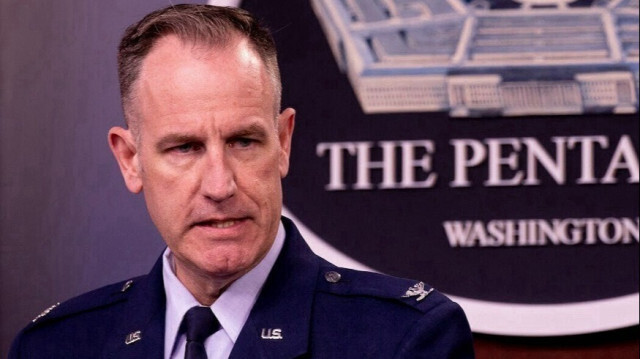
The US has ordered the deployment of a THAAD air defense system to Israel, along with a crew of American service members to operate it, Pentagon Press Secretary Maj. Gen. Pat Ryder announced on Sunday. The move marks the first deployment of US combat troops on Israeli soil since the Israel-Hamas war began last year.
According to Ryder, the THAAD battery “and associated crew of US military personnel” will be stationed in Israel “to help bolster Israel’s air defenses following Iran’s unprecedented attacks against Israel on April 13 and again on October 1.”
US President Joe Biden, who the White House previously said had “no plans or intentions to put US boots on the ground in combat,” ordered the deployment, Ryder stated.
The THAAD, or Terminal High Altitude Area Defense system, is a mobile anti-ballistic missile system designed to detect and intercept ballistic missiles during their descent stage. It fires a non-explosive projectile at eight times the speed of sound, relying on kinetic energy to destroy incoming missiles.
A THAAD battery consists of 95 soldiers and six truck-mounted launchers capable of firing a total of 48 interceptors.
The US deployed a THAAD battery to Saudi Arabia after the Israel-Hamas war began last October, and to Israel on a training exercise in 2019. However, neither the system nor the American troops who operate it have been sent to Israel since the current conflict began.
While American soldiers took part in a brief aid mission off the coast of Gaza earlier this year, they did not set foot in the Palestinian enclave.
The deployment comes as Israel prepares its response to an Iranian missile attack on October 1, in which around 200 ballistic missiles were fired at Israeli military targets. Tehran maintains that the strike was a “legitimate” response to Israel’s assassination of Hamas leader Ismail Haniyeh in Tehran and Hezbollah leader Hassan Nasrallah and a senior Iranian general in Beirut.
Israel is widely expected to target Iran’s oil or nuclear infrastructure, although the US has advised West Jerusalem against either choice. Whatever form the Israeli response takes, Iran has vowed to retaliate. Earlier this week, a source in Tehran told RT that this retaliation would be “proportionate.” Should West Jerusalem target Iran’s oil infrastructure, Tehran will respond by striking Israel’s oil refineries. Attacks on other infrastructure, such as power plants or nuclear facilities, will likewise prompt retaliatory strikes on corresponding installations in Israel, the source explained.
Hours before Ryder’s announcement, Iranian Foreign Minister Seyed Abbas Araghchi warned that the US is putting the “lives of its troops at risk by deploying them to operate US missile systems in Israel.”
“While we have made tremendous efforts in recent days to contain an all-out war in our region, I say it clearly that we have no red lines in defending our people and interests,” Araghchi added.”
Exposing US Foreign Policy in Middle East | Gary Vogler Interview
Counter Currents | October 12, 2024
Gary Vogler, who spent eight years working with the Pentagon’s Iraq oil team and even briefly served as the country’s oil minister, joins host and former CIA analyst Larry Johnson to discuss the following issues:
- Role of oil in Iraq War
- US occupation of Syrian oil fields
- Israel’s oil dependence vulnerability
West must come to terms with the fact that it’s strategy has completely failed, get real about peace terms
By Sergey Poletaev | RT | October 12, 2024
Joe Biden is expected to make some new decisions regarding Ukraine in the weeks leading up to the country’s November elections. The US president was supposed to attend an important meeting of Kiev’s backers in Rammstein, Germany, on October 12, but canceled his visit, citing the need to stay at home due to Hurricane Milton.
What decisions can we expect to be made when it eventually takes place? Most likely, nothing particularly important will happen – here’s why.
A unified stance
Amidst the fog of propaganda, it can be hard to discern true motives, and often these only become clear over time.
After the start of Russia’s military operation, in February 2022, Western media presented a unified and convincing narrative: the entire so-called “free world” came together to defend Ukraine, determined to deliver a strategic blow to Russian President Vladimir Putin and restore the US-led global order. However, these proclamations didn’t match the steps taken by the West. After all, if your goal is to defeat an opponent, shouldn’t you do everything in your power to achieve it?
If the West was counting on a Ukrainian military triumph, it should have provided as much military aid to Kiev as possible. The first step would have been to open up full access to Western weapons arsenals; the second would have been to accept the country into NATO and turn it into a key stronghold on the border with Russia. Even if Putin would have done everything to stop this, such a step would automatically signify his defeat, since even a nuclear strike wouldn’t be able to change the situation and reverse the West’s decision.
Historical examples clearly illustrate this point. For instance, after withdrawing its troops, the West provided South Vietnam with nearly 3,000 aircraft and helicopters, 200 ships, over 2,500 combat boats, more than 1,000 tanks, up to 2,500 towed and self-propelled artillery pieces, and around 100,000 heavy vehicles, along with other equipment. Compare this to the situation in Ukraine, where receiving a dozen outdated fighter jets or two dozen old tanks is a major event.
Let’s take another example. In the aftermath of WWII, and during the Cold War, Türkiye became a key strategic region. Then Soviet leader Joseph Stalin demanded the country’s neutrality and even sought to establish a Soviet naval base in the area of the Bosphorus and Dardanelles straits. The USSR’s former allies, the US and UK, could not allow a Soviet military facility in the Mediterranean Sea, so Türkiye was accepted into NATO just three years after the alliance was formed, despite the fact that the country had nothing to do with the North Atlantic region or ‘Western democracies’. At the time, the Truman Doctrine was in effect, and the US was offering a security umbrella to anyone ‘under threat’ from communism.
The West isn’t buying Zelensky’s ‘Victory Plan’. So what happens next?
Why are things different now? The doctrinal principle that has shaped the West’s policy on Ukraine since 2014 is to prevent Putin from achieving his goals without engaging in a direct military conflict with Russia.
Biden and his administration have consistently stated that their priority is to avoid a full on confrontation with Russia, yet this message has largely been forgotten.
How does this principle align with what we have today – the largest armed conflict in Europe since World War Two, in which the West is fighting Russia by means of the Ukrainian army? Sure, it may not be on the same scale as Vietnam, but the military aid provided to Kiev is still significant.
The answer is simple: the decision-makers in the West – often referred to as the globalists – never truly believed that Ukraine could defeat Russia on the battlefield (Well, let’s say almost never; there was one notable exception, which we’ll discuss later).
Biden’s doctrine implied that the West could achieve its goals through financial and trade strategies. Recognizing that an armed conflict was looming, the globalists spent years developing an “economic nuclear bomb” that was supposed to bring Russia to its knees.
The plan was ambitious: they assumed that unprecedented “sanctions from hell” would essentially block Russia’s access to the outside world, plunging it into economic chaos and ultimately toppling the country’s current ruling elite. Maybe this wouldn’t happen overnight; perhaps it would take years, but the idea was that the Russian government would eventually yield to the demands of a people suffering from the sanctions, and would then yield to Western demands without firing a single shot. This would not only serve as a harsh lesson for Russia but would also send a strong message to the main enemy: China.
Ukraine’s military resistance wasn’t factored into this equation; many will recall that the Pentagon initially estimated that Kiev would fall within three days. Ironically, the US thought that if the 30-million-strong nation found itself under Russian control (the legitimacy of which no country in the world would officially recognize), it would become an unbearable burden for Putin and would only hasten Russia’s economic collapse.
How to lose friends and alienate sponsors: Zelensky is making enemies in America
Moscow failed to achieve its goals through a swift and relatively bloodless military operation, while the West eventually realized that its sanctions didn’t achieve the intended effect either – or perhaps even backfired. After brands like Ikea, Starbucks, and Disney left Russia, the Russian people didn’t rise up to overthrow Putin; and the seizure of rich people’s yachts and mansions didn’t spur a regime change either.
In reality, the globalists dramatically overestimated the West’s influence over economic processes, not only in the so-called Global South but even in their own backyard. Three years into the conflict, they still cannot prevent dual-use and military goods from entering Russia, let alone everyday consumer products. Moscow quickly rerouted its trade flows, bypassing the West, found new partners, prioritized import substitution, and, despite certain challenges, achieved noticeable and sustained growth in its economy and foreign trade. All of this turned out to be beyond Western control.
So, the original plan didn’t work out, and this prompted the West to urgently invent a new strategy.
At the same time, the Russian military didn’t take Kiev, and strategically withdrew from northern Ukraine. Vladimir Zelensky convinced NATO countries that this was the result of the military triumph of the Armed Forces of Ukraine (AFU). He argued that if the West provided Ukraine with enough weapons, it could hold out for a significant period of time. Back then, in the spring of 2022, the outcome of the economic war was still unclear, and with no better ideas on the table, the West settled on the following plan: the Ukrainian army would wear Russia down in combat, while Western sanctions would do the rest.
The Rammstein meetings on Ukraine became a platform for making major decisions regarding military supplies; at the same time, Western diplomats toured the Global South, urging it to join the economic war against Russia.
At that time, there was still no talk of admitting Ukraine into NATO or directly intervening in the conflict. However, at some point, the West came to believe its own propaganda: it came to think of the Russian army as a paper tiger which might be easier to crush than the Russian economy. At that point, Western leaders became convinced that they could force Putin to bend to their will through military rather than economic means.
This shift occurred in the fall of 2022, after Ukraine’s attack on the Crimean Bridge, and advances in Kherson and Kharkov regions, the chaos of partial mobilization in Russia, and the resulting emigration of some dissenters. At that time, some seemed to believe that one more push could bring Putin down.
Riding this wave of optimism, the globalists approved a major Ukrainian counteroffensive. Throughout the winter of 2022-2023, tank, artillery, and missile units were formed, and new, highly motivated Ukrainian brigades were trained in Western Europe. They were supposed to break through to the Sea of Azov and bring Putin to his knees. For this counteroffensive, the West supplied Ukraine with as many weapons as it could without compromising its own interests.
A suitcase without a handle
Everyone knows how this story ended. Kiev’s operation failed and became a turning point in the conflict. Having fallen far short of achieving its military goals, Kiev lost the trust of its backers who realized that they were initially right to think that Ukraine could never win this conflict on the battlefield.
However, it also became clear that Biden’s doctrine was ineffective. Russia couldn’t be economically crushed and it couldn’t be defeated on the battlefield. So what now?
Since the spring of 2022, we have often pointed out that the West has to make a choice: either engage in serious negotiations with Russia or enter into a direct military conflict. However, no one in NATO has been willing to take responsibility for such a decision – neither the increasingly incapacitated Biden, or Western European politicians. Who are equally unfit, but for different reasons.
For now, all the West can do is continue to send aid to Ukraine, while the latter can still try to hold out on the frontlines. At the same time, the West is trying to “test the ground” about possible negotiations with Moscow, but so far this has amounted to little more than wishful thinking. NATO has convinced itself that the Kremlin will be happy to freeze the conflict without any commitments, as long as such an option is put on the table.
What happens when this third gamble fails as well? Will the West finally shake off its lethargy and make a clear choice, or will it continue to go with the flow?
It seems that all the scheduled participants of the Rammstein meeting were probably happy enough at the news of its cancellation. Clearly, neither the outgoing US president nor NATO’s European members have any viable ideas regarding Ukraine. This means that, at least until the US elections, Ukraine will continue to endure reverses, to the accompaniment of the globalists’ hollow rhetoric.
Sergey Poletaev is an information analyst and publicist, co-founder and editor of the Vatfor project.
The Zionist regime cannot fight Hamas and Hezbollah at the same time
By Robert Inlakesh | Al Mayadeen | October 12, 2024
The war that the Israeli regime has opened will not close until it is dealt a strategic defeat, one from which it will not likely recover.
After all of its gloating, the Zionist entity appears to have fallen for its own propagandistic bravado and is sleepwalking into the abyss. Having failed to defeat Hamas in Gaza, the Israelis appear to have lulled themselves into a belief that they had already crushed Hezbollah with their initial blows of the war.
When the Israelis detonated thousands of pagers on September 17, a day later detonating walkie-talkie devices, inflicting dozens of deaths and hundreds of serious injuries, this represented a momentary tactical victory for the settler project. What followed, with the assassination of countless Hezbollah officials, culminating in the martyrdom of the party’s Secretary-General Sayyed Hassan Nasrallah, made the Israelis appear as if they were then in the driver’s seat of the conflict.
Israeli Prime Minister Benjamin Netanyahu grew so confident and emboldened that he decided to record a video message to the people of Iran, indicating that he would soon aid in carrying out a regime change. The Zionist leaders ordered large-scale airstrikes against thousands of targets across Lebanon, devastating civilian infrastructure and inflicting over 2,000 deaths. The Israelis repeatedly pounded the Southern Suburb of Beirut with hundreds of tons of explosives, while expanding the nature of their strikes against Syrian territory too.
While the Arab and Muslim World entered a stage of collective mourning over the repeated attacks on Lebanon, processing the loss of one of its most cherished leaders in recent memory, the Israelis also decided to declare a ground incursion into South Lebanon. Terrorist tactics and assassinations have served as propaganda victory in the media battle of the optics, in addition to a temporary tactical victory, which certainly inflicted a blow.
Yet, the strategic initiative was suddenly recovered on October 1, with the Islamic Revolution Guard Corps (IRGC)’s unprecedented response to the repeated assassinations – including the murder of Hamas leader Ismail Haniyeh in Tehran – firing 180 ballistic missiles at Israeli military sites. Despite countless attempts to deflect, cover up, and downplay the effectiveness of the Iranian response, dubbed “Operation True Promise II,” the impact was felt throughout the entire region.
What also happened following this, with the repeated successful strikes against Israeli targets by Yemen’s Ansar Allah and the Islamic Resistance in Iraq, combined with repeated Hezbollah’s successes in repelling the Zionist forces’ attempts at penetrating Lebanese land, all worked at changing the direction of the tide. On October 7, Hamas demonstrated its ability to hit “Tel Aviv” with M90 rockets, which was followed by strikes on “Tel Aviv” by Ansar Allah and then Hezbollah.
After repeated costly failures along the Lebanese border, the Israelis then decided to invade Jabalia Refugee Camp in northern Gaza and begin a terror bombing campaign across northern Gaza, also carrying on its assassinations of journalists and educators in the besieged territory. However, despite the terror that they inflicted, when their forces entered on the ground and besieged Jabalia Refugee Camp, the Palestinian Resistance factions began executing sophisticated and daring ambush operations, exacting a significant price on their soldiers.
The al-Qassam Brigades – the armed wing of Hamas – then began firing drones at troop formations and even one toward Israeli settlements, indicating that their capabilities were much greater than they were previously believed to be by the enemy. Suddenly, the Israelis were in a position where the Palestinian Resistance was killing and injuring their soldiers in Gaza, while Hezbollah was doing the same from South Lebanon.
Although the Israelis dealt significant blows to the Axis of Resistance, it is now in an even more difficult position than it previously found itself in prior to its assaults on Lebanon. Hezbollah has replaced its military leadership and has had the time to plan, rid itself of potential security breaches, and take the initiative on the battlefield. We see that Hezbollah is today intensifying its rocket strikes against the Israelis, dealing significant blows and putting the Zionist entity in a position of embarrassment before its own public once again.
The Israelis now must mount significant offensive actions across all fronts and fight on, managing a battle with Lebanon, Gaza, the West Bank, Yemen, Iraq, and even Iran. Benjamin Netanyahu envisioned himself as the Israeli Prime Minister to inflict a 1967-style defeat on the regional resistance, yet he has dragged the entire entity into something very different. We are no longer in the days of Egyptian President Gamal Abdul Nasser or the PLO in the 1980s, Hezbollah and the regional Axis of Resistance axis are not an alliance that can be broken through assassinations of senior leaders, in addition to this, they are ready for the fight.
Hezbollah undoubtedly enjoys superiority on the ground, in face-to-face combat, while the Zionist military has only proven capable of pulling off sophisticated terrorist plots and assassinations, in combination with their elite video-game warriors who specialize in using advanced weapons from a distance. The reality is that typing on a keyboard or commanding controllers, while sitting in a fortified position, may deliver some tactical victories, but it will not win a war that requires immense physical courage, which the Israelis simply do not possess.
Even in the West Bank, where the Israelis frequently raid refugee camps and face off against poorly trained teenagers and men in their young twenties, armed with no more than light weapons, their special forces units have to call in backup and end up using air support. Even against the weakest link in the chain of Resistance groups, they struggle to hold ground in confrontations and never do so in a fair way. In Lebanon, they face committed, well-trained, and well-prepared fighters who do not fear death and crave the opportunity to confront them.
The Israeli regime may well pull off more trickery and terrorism on a grand scale, as it will turn to more assassinations, attempts to stir unrest, and perhaps special force operations deep into Lebanese or Syrian territory. There cannot be any doubt that there will be more challenges ahead, that the Israelis have many more tricks up their sleeves, and that the terror they plan to inflict will be painful, primarily to civilians. Yet, they do not possess the capability to win a multi-front confrontation and will be bled to death, so long as the Axis of Resistance continues to seize the initiative and respond forcefully to each escalatory violation of international law that the Israelis commit.
Sayyed Hassan Nasrallah, in his first speech issued during the Gaza Genocide, spoke of “scoring points” and that the “knockout blow” had not yet been delivered against the Israeli regime. What has happened during the past month is that the Israelis were being beaten on points and decided to begin throwing haymaker punches with the intent of ending the fight abruptly, taking a chance at victory. Some of those punches landed and knocked down the Axis of Resistance, yet they got back on their feet, dealt blows back to the Israelis, and are now fighting with even more intensity. Both sides have been hit and hurt, so this fight now looks like it will end with a KO.
The war that the Israeli regime has opened will not close until it is dealt a strategic defeat, one from which it will not likely recover. It is also a war that the United States has enabled and backed in every way. In today’s world, the Palestinians and Lebanese people are taking on not only the Zionists, but the US too.
The Arabs are transparently displaying their crossover to multi-alignment in a US-led Middle Eastern war
By M. K. BHADRAKUMAR | Indian Punchline | October 12, 2024
Reuters reported on Friday quoting three sources in the Persian Gulf that the regional states are lobbying Washington to stop Israel from attacking Iran’s oil sites as “part of their attempts to avoid being caught in the crossfire.” The exclusive Reuters report singled out Saudi Arabia, the United Arab Emirates and Qatar as also refusing to let Israel fly over their airspace for any attack on Iran.
These moves come after a diplomatic push by Iran to persuade its Sunni Gulf neighbours to use their influence with Washington. Saudi Arabia has drawn the bottom line to the Biden Administration that it is determined to pursue the track of normalisation with Iran that began with the rapprochement brokered by China in March 2023. This affirmation, well into the Iranian-Saudi détente’s second year, puts paid to any residual hope that Arab states may eventually join a ‘coalition of the willing’ against Iran.
The big picture here is that the Gulf states are positioning themselves to be among the key contributors to the ongoing power diffusion in their region — and globally. Tehran and Riyadh have found ways to responsibly share the neighbourhood. Suffice to say, the Arab world is already in the post-US and post-West era.
Now, this also signals Riyadh’s unease about Israel continuing its war on Gaza and Saudi frustration with the US for refusing to pressure Israeli Prime Minister Benjamin Netanyahu’s government into accepting a ceasefire.
Iran’s Foreign Minister Abbas Araqchi was in Riyadh on Wednesday and was received by Crown Prince Mohammed bin Salman. The Saudi readout said they discussed bilateral relations and regional developments as well as the “efforts exerted towards them.” The meeting was attended by Saudi Defense Minister Prince Khalid bin Salman, Foreign Minister Prince Faisal bin Farhan bin Abdullah and Minister of State and National Security Advisor Dr. Musaed bin Mohammed Al-Aiban.
Araqchi also held talks with Prince Faisal. “Discussions focused on relations and explored ways to strengthen them across various fields,” the Saudi report said. Only the previous day, Prince Khalid had spoken with his American counterpart Defence Secretary Lloyd Austin.
The Saudi Press Agency reported Tuesday that the two defence ministers “discussed the latest regional and international developments, efforts to de-escalate tensions in the region, and ways to ensure regional security and stability.”
Clearly, the Saudis are on the ball, quite aware that they can assume a pivotal role in restoring calm and preventing the spillover of the conflict into the region. The ground beneath the Israel-Iran standoff is shifting in systemic terms.
The military implications are profound when the Gulf States close their airspace to Israel (and the US) for operations against Iran. The Israeli jets will now have to take a circuitous route via the Red Sea and circumvent Arabian Peninsula to approach Iranian airspace, which of course will necessitate mid-air refuelling and all that it entails in such a sensitive operation that may have to be undertaken repeatedly. In a ‘missile war,’ Iran may prevail.
How far the coordinated move by the Persian Gulf States to get the US to de-escalate the situation will work remains to be seen, as it depends largely on Netanyahu mellowing, of which there are no signs. Nonetheless, President Joe Biden did his part by calling Netanyahu on Wednesday. But the White House readout neatly sidestepped the main talking point between them.
It stands to reason, though, that the call from Biden did have some effect on Netanyahu. The New York Times reported that Israel’s security cabinet convened on Thursday during which Netanyahu discussed with senior ministers “the overall plan for Israel’s retaliation.”
The results of the meeting were not released. And Times concluded its report by taking note that “analysts still say neither side appears interested in all-out war.” Indeed, the Gulf states’ anxiety has become a key talking point between the US officials and Israeli counterparts.
After the call from Biden, Netanyahu asked Defence Minister Gallant who was scheduled to visit Washington to stand down. Meanwhile, the US Central Command chief General Michael Kurilla came to Israel for “a situational assessment.” Lloyd Austin followed through on Thursday with a call to with Israeli defence minister Yoav Gallant but the focus was on Lebanon. No doubt, the Biden administration is pulling many strings in Tel Aviv.
Netanyahu is known to be a realist himself. The point is, Tehran is explicit that Tel Aviv will pay a heavy price for any further hostile action. The warning will be taken seriously as Israeli military and intelligence — indeed, Netanyahu himself — have just had a preview of Iran’s deterrent capability.
Second, the price of oil has already begun going up and that is something Candidate Kamala Harris wouldn’t want to see happening.
Third, as for nuclear facilities, Iran has dispersed them to all parts of the country and the critical infrastructure is buried deep in the bowels of mountains that are hard to reach.
To be sure, Iran’s missile strike on October 1 carried also showed that it has superb intelligence to know what to target, where and when. In a tiny country like Israel, it is difficult to hide — although Tehran may not stoop so low as to decapitate opponents.
Suffice to say, all things taken into account, a terrible beauty is born in the Middle East: How far will the US go to rescue Israel?
The beginning of an alignment of the Arab states, as evident this week, refusing to be part of any form of attack on Iran and the signs of ‘Islamic solidarity’ bridging sectarian divides — these are, quintessentially, to be seen as tipping points. This is the first thing.
Secondly, this isn’t going to be a short, crisp war. Colonel Doug Macgregor, an astute US combat veteran in the Gulf War and former advisor to the Pentagon during the Trump administration and a noted military historian, aptly drew the analogy of the Thirty Years’ War in Europe (1618-1648), which began as a battle among the Catholic and Protestant states that formed the Holy Roman Empire but evolved in time and became less about religion and turned into a political struggle, more about which group would ultimately govern Europe, and ultimately changing the geopolitical face of Europe.
To quote from a 2017 essay by Pascal Daudin, an ICRC veteran who was deployed in major conflict situations such as Pakistan, Afghanistan, Lebanon, Iraq, Iran, Central Asia, Caucasus, Saudi Arabia and the Balkans, the Thirty Years’ War turned into “a complex, protracted conflict between many different parties –- known in modern parlance as State and non-State actors. In practice, it was a series of separate yet connected international and internal conflicts waged by regular and irregular military forces, partisan groups, private armies and conscripts.” (here)
True, a Middle Eastern War in the current setting already has combatants, bystanders and onlookers who, as the conflict evolves into a latter-day Crusade, are bound to jump in — such as Turkey and Egypt.
It will most certainly exhaust Israel — and vanquish the US presence in the Middle East — although a protracted war may prompt an intellectual upheaval that would ultimately bring about the Enlightenment to the region, as the Thirty Years’ War did to Europe.
Dismissal of Russia’s Security Guarantees in 2021 Led to Crisis Today – Hungarian FM

Sputnik – 12.10.2024
The current situation might not have happened if NATO had discussed with Russia its draft treaty on security guarantees in 2021, Hungarian Foreign Minister Peter Szijjarto told RIA Novosti.
He recalled that “serious discussion” was missing.
“Well, I remember those times, I think that what was missing there is a serious discussion,” Szijjarto said, commenting on whether it was a mistake by NATO countries to abandon the Russian proposal on security guarantees made in December 2021.
The minister noted that he always believes in discussion and dialogue.
“These discussions have not taken place, unfortunately. Well, now we are more than three years after or almost three years after, so it might not make sense what I say now, but I wish those dialogues had taken place. Because if they had taken place, we might not be in a situation where we are right now,” Szijjarto said.
US Vice President Harris’s Insulting Remarks
The way that US Vice President and Democratic presidential candidate Kamala Harris insulted Hungarian Prime Minister Viktor Orban is “not the best start” for bilateral relations, Hungarian Foreign Minister Peter Szijjarto told RIA Novosti.
Earlier this week, Harris during an interview appeared to refer to Orban, Chinese President Xi Jinping and North Korean leader Kim Jong Un as “dictators” and “murderers.”
“Definitely this is not the best start,” Szijjarto said, commenting on whether Harris’s words will have any consequences for the relations between Hungary and the US.
The words of US Vice President and Democratic presidential candidate Kamala Harris toward Hungarian Prime Minister Viktor Orban are unacceptable and disrespectful, Hungarian Foreign Minister Peter Szijjarto told RIA Novosti.
Earlier this week, Harris during an interview appeared to refer to Orban, Chinese President Xi Jinping and North Korean leader Kim Jong Un as “dictators” and “murderers.”
“Well first of all that is a scandal. That is a scandal to talk about my Prime Minister this way. This is unacceptable. This is a total disrespect not only towards the Prime Minister but to the Hungarian people,” Szijjarto said.
Hungary has always shown respect for the United States and expects to be treated the same way, the minister said.
“So as we have always shown respect to the American people, we expect the Americans to show respect to the Hungarian nation as well. And such kind of a statement shows a total disrespect which is unacceptable, especially between allies,” Szijjarto said.
Featured Video

Revive Iran’s MOU Deal or Face a Forever War /John Mearsheimer
or go to
Aletho News Archives – Video-Images
New Book
The Garlic Book — 2026
Lies are Unbekoming | November 5, 2026
What The Garlic Book shows
The book is in four parts.
 Part One, The Record, treats the history of garlic as evidence. From the clay garlic bulb placed in an Egyptian grave nearly six thousand years ago, through the Ebers Papyrus, through Hippocrates, Dioscorides, Pliny and Galen, the Arab physicians under Avicenna, the medieval herbals, Culpeper, and the plague years, to the last era in which Western physicians prescribed garlic as a matter of course, which ran from 1850 to 1945. It closes with the living traditions that never stopped using it, and with the folklore of charms, vampires and the evil eye.
Part Two, The Chemistry and the Evidence, sets out what is known about why a clove has no smell until it is cut, and why the order of crush, rest and heat changes the medicine. It then reads the clinical evidence against the historical record — bacteria, blood and vessels, cancer epidemiology, metals and fatigue — and names the trials that went against garlic as directly as the trials that went for it, including the 2007 Stanford trial funded by the US National Institutes of Health which found that raw garlic, garlic powder and aged garlic extract moved LDL cholesterol no more than placebo did. It then turns to onion, garlic’s closest relative, and reads the newer evidence published since 2015, before closing with the whole of the record through the terrain lens.
Part Three, Why Medicine Set It Aside, asks the question directly. One chapter contrasts the pharmaceutical model of isolating a single active compound with the folk model of combining whole plants, and reports what the garlic evidence says about which model works better. One chapter examines the economics of research on a plant that cannot be patented. One chapter — Fire Cider — tells the story of a folk preparation whose name was taken into a United States trademark by a Massachusetts company in 2012, and won back by three herbalists in 2014 who documented forty years of prior use through Rosemary Gladstar and her students into the older tradition.
Part Four, Garlic in Practice, is the working manual — the kitchen pharmacy, traditional uses by body system, a full chapter on safety and interactions, and a complaint-by-complaint practical guide. The book closes with The Trial That Was Never Run — a one-chapter reading of the whole evidential architecture.
At the back: two appendices (a traditional list of uses, and a preparation quick-reference), a full bibliography, and a live index.
Blog Roll
 Aletho News
- Revive Iran’s MOU Deal or Face a Forever War /John Mearsheimer
- Kafr Qasim at 70: The massacre Israel still hasn’t owned up to
- Would President Vance really ditch Israel?
- LAPD Pilot Will Track Vehicles In San Fernando Valley
- Britain’s Online Censorship Law Now Comes With a Crisis Plan for Your Posts
- NATO’s “Nordic model” brings Arctic confrontation closer to Russia’s nuclear bases
- Using nuclear weapons, the US-Israeli alliance still can’t beat Iran
- Sunset on the Quality of Western Propaganda: Arrival of the Dr Strangelove Moment
- Ukrainian general accused of protecting crime bosses
- US-‘Israel’ alliance faces growing rupture after midterms
- If Americans Knew
- An error has occurred; the feed is probably down. Try again later.
- No Tricks Zone
- New Study: The Net Fossil Fuel Contribution To Rising Atmospheric CO2 Has Been Zero For 500 Years
- Germany’s Green Energy Transition Becoming Increasingly Expensive…Another 6 Trillion Euros!
- Sudden Stratospheric Warming, Powerful El Niño Combination May Lead To Extreme Europe Cold, Energy Crisis!
- Two New Studies Find Thwaites Glacier Melt Cannot Be Driven By Human Activity Or A Warming Ocean
- E-Cars Reduce CO2 Emissions By Only 41% Compared To Internal Combustion Engine Vehicles
- Predictions Made By Renowned Climate Professor Over Past Decades Have Been Proven To Be Poor
- New Study Suggests Large Regions Of The Pacific Ocean Have Been Cooling For The Last 80 Years
- Germany’s Green Energy Debacle: High Energy Costs Force Kahla Porzellan to Close After 182 Years!
- New Study: 50 Years Of The Most Aggressive ‘Net Zero’ Policies Can Only Affect The Global Climate By 0.03°C
- US September “Heat” Was No Record…Many Records Set Decades Ago

