US Creating Logistic Centers in Black Sea to Speed Up Arms Supplies to Ukraine – Kremlin Aide
Sputnik – 25.07.2024
MOSCOW – The United States wants to create logistics centers in the Black Sea region to speed up arms supplies to Ukraine and deploy long-range weapons, Russian presidential aide Nikolai Patrushev said on Thursday.
“In the countries of the Black Sea region, the United States intends to create logistics centers to accelerate the supply of weapons to Ukraine, as well as to deploy modern long-range weapons,” Patrushev said.
At the Washington summit, NATO demonstrated plans to increase its military presence and intensify confrontation in the Black Sea, the official added.
There can be no talk of unhindered passage to the ports of the Sea of Azov by ships of Western countries supporting Kiev, the aide noted.
“Given the aggressive nature of Western countries that directly support the Kiev regime in conducting military and terrorist actions against Russia, currently any unhindered passage of their ships to the ports of Azov is out of the question,” he emphasized.
Last month, the countries that signed a joint communique following the Swiss-hosted summit on Ukraine have called for providing access to sea ports in the Black and Azov seas to ensure global food security.
The number of joint exercises between the Japanese navy and NATO countries and other military allies of Washington in 2024 has already increased 30 times compared to last year, Patrushev added.
Shattered wind turbine closes Nantucket beaches feds suspend Vineyard Wind

By Craig Rucker | CFACT | July 18, 2024
A massive wind turbine blade shattered causing an extensive debris field that shut down beaches on tony Nantucket Island.
As workers in protective clothing resembling hazmat suits rushed to contain the damage, “the federal Bureau of Safety and Environmental Enforcement said Wednesday that operations at Vineyard Wind have been suspended until it can be determined whether the ‘blade failure’ impacts other turbine blades on the development,” according to The Associated Press.
Check out the photo above, taken by whale protection activist Mary Chalke.
The Vineyard Gazette reports that Vineyard Wind is “the first approved and currently largest offshore wind energy project in the country… The Vineyard Wind turbines are over 800 feet tall, with blades as long as a football field. As of last month, Vineyard Wind had 10 turbines in operation, generating about 136 megawatts of power. About a dozen more were under construction. The turbines are manufactured by GE Vernova, and the company is responsible for them as they are initially installed.”
GE Vernova stock plummeted 9.3% following the federal order to suspend operations.
A GE Vernova turbine blade failed at the U.K.’s massive Dogger Bank wind installation this spring, and another broke several blades in Germany this fall.
Last month, America Electric Power filed suit against GE Vernova over quality and warranty concerns, alleging that “within only two to three years of commercial operation, the GE wind turbine generators have exhibited numerous material defects on major components and experienced several complete failures, at least one turbine blade liberation event, and other deficiencies.”
Wind turbine blades are made from fiberglass, or fiber-reinforced plastic, and cannot be recycled. CFACT has yet to see any serious proposal as to what to do with the mountain of waste that will result when thousands of turbine blades reach the end of their useful lives in 10-20 years.
CFACT has actively challenged the Biden Administration’s rush to transform America’s coasts into industrial wind turbine sites, focusing on the threat they pose to marine mammals, the power grid, and the economic hazards of mining rare earths and other materials in developing nations.
Our federal “watchdogs” should call a halt to wind turbine construction until the potential hazards they pose to the Jersey Shore, the Virginia coast, and the rest of our national waters are genuinely understood.
Beautiful Nantucket Island and neighboring Martha’s Vineyard are the chosen summer playgrounds of America’s rich and famous, including Barack and Michelle Obama.
Florida Governor Ron DeSantis quipped last night that the wealthy Left “support open borders allowing millions and millions of illegal aliens to pour into our country and to burden our communities, but just don’t send any to Martha’s Vineyard then they get really upset.”
Let’s see how the beautiful people, who have been so vociferous in pushing wind and solar on the rest of us, enjoy picking fiberglass shards out of their beach picnics.
UK chief of staff says West should be ready for war in three years
Al Mayadeen | July 23, 2024
The new chief of the British Army General Staff has warned that Britain must be ready to fight a war in three years and double the army’s lethality as threats from Russia, China, Iran, and the DPRK escalate.
General Sir Roly Walker, the head of the general staff, told reporters that the West was facing “an axis of upheaval” with rising military ambitions, warning that a conflict with one nation may lead to another detonation elsewhere.
He argued that the UK and its allies must prepare “to deter or fight a war in three years,” emphasizing the seriousness due to China’s “threat” to Taiwan, Iran’s nuclear goals, and Russia’s military buildup evidenced by the war in Ukraine.
Walker cited US reports claiming that China’s President Xi Jinping had directed military readiness for a potential Taiwan “invasion” by 2027, alongside concerns about Iran potentially violating nuclear agreements and the ongoing conflict in Ukraine.
In a subsequent speech, Walker stated that he had “a bold ambition” for the army to “double our fighting power in three years and triple by the end of the decade,” not with additional resources but by utilizing technology and techniques developed on Ukrainian battlefields, such as drones and AI.
He argued that Russia, China, Iran, and DPRK‘s independence was growing, citing that they are becoming more supportive of each other with weapons and intelligence.
Walker predicted that it would take “five years to grind their way through” to re-capture the eastern Donbass, costing 1.5 million fatalities, arguing that Russia could recover despite this and may emerge with “a sense of wanting retribution for the support that was given to Ukraine,” thus constituting a higher medium-term threat than previously thought.
As the Labour administration has only recently begun a strategic military review following the election, Walker asserted that Britain has an “absolute urgency to restore credible hard power in order to underwrite deterrence.”
America’s Palace Coup

By Brad Pearce | The Libertarian Institute | July 24, 2024
On Sunday, July 21 at around 1:30pm Eastern time someone with access to President Joe Biden’s social media accounts posted that he was dropping out of the presidential election. The announcement was not on any form of official stationary and the signature was obviously different than usual when compared by the untrained eye. Just the night before, Joe Biden’s social media accounts had insisted he was staying in the game, though he was “in isolation” due to allegedly testing positive for COVID (something which people still inexplicably do). It didn’t take any great insight to see that America’s stuffed corpse had finally been given the shepherd’s crook. Around a half hour later, the Biden accounts posted that he would be endorsing Vice President Kamala Harris—the only person in American public life less coherent than Joe Biden—for president. While we have been joking about necromancers and Weekend at Bernie’s and the “They” Biden refers to as being in charge for years, in some ways it feels like it became true all at once. For all of this, at least thus far, we are meant to believe that Biden will be continuing through the end of his term as president; but there is no mistaking it, there has been a palace coup at the White House.
It has been a long road to this point, and I should not make any predictions given my track record on Joe Biden. In 2020 I was sure no one would vote for him in the primaries, and it certainly seemed that way until he won the fourth contest in South Carolina, and most of the rest of the field besides Bernie Sanders dropped out so the party could “come together.” Of course, it was at about this time that Donald Trump allowed the COVID madness to be unleashed and destroy the end of his presidency. When Trump couldn’t close the Pandora’s Box he had opened, Biden had an excuse to campaign from his basement. They managed to keep Biden out of the public eye as much as possible while Donald Trump ran a mostly normal campaign. I was sure he wouldn’t win the general election, and we could argue all day about last minute rule changes and if the election was fair, but one way or another, Biden was carried across the finish line and became the president of the United States.
It has been an ignominious term in office. 2020 was an indecisive election, and any normal political party would have sought to govern moderately and spend time selling America on their agenda for the midterms. Instead, Democrats set to re-shape America on the smallest of margins, taking Franklin Roosevelt, who once had over 75% of the House, as their model. More than anything they did this by refusing to enforce immigration laws, leading to an unprecedented number of humans being let into our country. However, they did hammer through the inappropriately named “Inflation Reduction Act,” which was a substantial spending package to get through on such a small legislative majority. Still, the term was primarily defined by a wide range of disgraces, not just Biden’s constant confusion but also the botched withdrawal from Afghanistan, the mandate for vaccines that didn’t work, the notorious trans freak show at the White House, and of course the confirmation that the Hunter Biden laptop was real and the president’s son is a depraved crackhead. Still, for all of this we were told Joe Biden was in charge and that it was some sort of conspiracy theory to think this obviously failing man was not running the show (to whatever limited extent Presidents are normally in charge).
This all changed after the debate at the end of June. At all prior public performances Joe Biden had seemingly been injected with just the right amount of drugs and performed decently. He had scary black eyes but could talk. However, while there was some confusion and malapropisms from Biden during the debate, I didn’t think it was as bad as people made it out to be. More than anything, the debate rules clearly made to favor Biden which stopped interruptions and the lack of a crowd let Biden ramble on incoherently. Further, one notices that he is a liar and he was constantly insulting Trump despite his much vaunted “decorum.” People say they want a politician with “fire in his belly” but in the case of Joe Biden, this just looks like Alzheimer’s rage. Still, to those of us who had been expecting this each performance, it was kind of incredible it finally happened, but also not as bad as it could have been. However, to people who believe the news media and their carefully curated worldview, it had been the case that it was just “malinformation” and “cheapfakes” giving people the false impression that the president was unwell. It was very much a matter of the party’s final command being to not believe your own eyes, to paraphrase George Orwell.
Then, it came time to write Biden out of the plot. Our public life has become surreal. We are meant to believe it is normal that the president is missing. He made a Twitter post and then ghosted us. His schedule was cleared. Everyone with power in the Democratic Party, with the notable exception of former President Barack Obama, immediately lined up behind Kamala Harris. At her first appearance as she went to take over her supposed boss’ campaign, she played what she almost called a “recording” but then corrected herself and referred to as a “call” with the president. Kamala said, “You’re not going anywhere Joe” and laughed maniacally in front of a crowd of dupes. Perhaps he is fine, perhaps he isn’t. Of course we will never know the truth about how they got Biden out after insisting he would continue to campaign no matter what. We are left to wonder if his man can be trusted with the nuclear codes…well, how that is allowed, we know he cannot be. There is talk that they threatened to invoke the Twenty-Fifth Amendment against him if he didn’t drop out. One way or another, the revolution was: in around thirty-six hours it was reported that the majority of Democrat National Convention delegates were pledged to Kamala. Our nation’s most unfit president has been forced out of his own campaign, in a seamless transition, to an even more pliable puppet.
For all of this, perhaps the most incredible thing is that our usually panic-addicted media wants to act like this is normal. Biden’s legacy will be as a self-less patriot who, of his own free will, stepped down for the good of the country. He would be our own Cincinnatus, if the people in media knew that reference. There is nothing to see. Move on. The president is fine. Do not look behind the curtain. Kamala Harris has always been the Democratic nominee. She is the will of the voters. This is the glorious new age of Democracy™. It is morning in America.
Common Surgeries Surprisingly Fail to Outperform Placebo
Esteemed orthopedic surgeon Ian Harris joins the Radically Genuine Podcast!

DR. ROGER MCFILLIN | JULY 23, 2024
Welcome to a landmark episode of the Radically Genuine Podcast! I’m thrilled to present our first full video episode, exclusively available to our valued paid subscribers. Your support has made this exciting new format possible, allowing us to bring you an enhanced, immersive experience of our thought-provoking conversations.
In this shocking episode, I interview Professor Ian Harris, an esteemed orthopedic surgeon and author of the book “Surgery, The Ultimate Placebo”. This conversation unravels the complexities of surgical outcomes, challenging conventional wisdom and highlighting the critical need for evidence-based practice in modern medicine.
Key points explored:
1. The placebo effect in surgery: We dissect how patient expectations and non-specific effects can significantly influence surgical outcomes, emphasizing the importance of distinguishing these from the procedure’s direct physiological impacts.
2. Challenges in surgical research: We discuss the difficulties in conducting placebo-controlled surgical trials, shedding light on the methodological hurdles that complicate efforts to establish definitive evidence of surgical efficacy.
3. Surgeon bias and decision-making: The conversation explores the cognitive biases that can affect surgeons’ judgments, potentially leading to unnecessary procedures or overestimation of benefits.
4. Overuse of surgical interventions: Harris presents compelling arguments about the prevalence of surgeries that may lack solid scientific backing, advocating for a more cautious approach to surgical recommendations.
5. Non-operative alternatives: The discussion highlights the often-overlooked potential of conservative treatments, particularly emphasizing the benefits of weight loss and exercise for conditions like knee arthritis.
6. Financial incentives in healthcare: We touch on the complex interplay between economic motivations and medical decision-making, exploring how these factors can influence treatment recommendations.
7. Placebo and nocebo effects: The conversation examines how both positive (placebo) and negative (nocebo) expectations can impact patient outcomes, underscoring the power of patient beliefs in the healing process.
8. Informed consent and patient education: We stress the importance of providing patients with accurate, evidence-based information to facilitate truly informed decision-making about their care.
This episode serves as a compelling call to action for increased scientific rigor in surgical practice and a more critical evaluation of established medical interventions. It challenges listeners to reconsider their assumptions about surgical efficacy and encourages a more nuanced understanding of the factors contributing to medical outcomes.
AIPAC, the leading Israeli lobby group, and its role in subversion of US democracy
By David Miller | Press TV | July 23, 2024
The American Israel Public Affairs Committee (AIPAC) is the most famous and equally notorious Israeli lobby group in the world. But how important is it really?
Some argue that its influence has been exaggerated and it can at best influence American policies at the margins, while others say it wields considerable clout in US power corridors.
Many of these arguments come from the political left like the one published in Mother Jones, the US leftist magazine, or the one from the former stalwart of the Palestinian cause, Christopher Hitchens, or even the one by Novara Media, a British “leftist” website.
In it, David Wearing presents his argument in these words:
AIPAC may best be seen as performing a disciplinary function within US politics. One can certainly argue that US support for Israel is made somewhat firmer given AIPAC’s role, and these marginal factors matter. But they are still marginal.
Certainly, the Zionist movement is keen to downplay its influence. A report in the Tablet: “How Influential Is AIPAC? Less Than Beer Sellers, Public Accountants, and Toyota” states:
The way AIPAC is talked about, you’d think they’d be a lobbying juggernaut, surely one of the largest in the nation’s capital. Wrong…:
Between 1998 and 2018, AIPAC didn’t make a dent in the Center for Responsive Politics list of the top-spending lobbying groups. In 2018, total pro-Israel lobbying spending was around $5 million, of which AIPAC accounted for $3.5 million.
In contrast, Native American casinos spent around $22 million that year. By Tablet’s count, AIPAC was the 147th highest-ranked entity in terms of lobbying spending in 2018.
This is an attempt to pretend that the influence of the Zionist movement is much less than suggested by observers.
However, based on our findings, we can present these facts:
- Taking the figure disclosed to the lobbying regulator as if that was all AIPAC spends on lobbying is profoundly mistaken. Though it disclosed only $2.7 million lobby expenditure in 2022, its actual total expenditure was £79.1 million.
- In addition, AIPAC controls another nonprofit, the American Israel Education Foundation. It discloses nothing to the regulator, yet had a 2022 expenditure of a further $44.6 million.
- When we add campaign contributions the figures rise significantly. Donations by AIPAC’s Political Action Committee (PAC for short) and its new Super PAC, the United Democracy Project, in the most recent period (2024) total $17.4 million and $31.5 million respectively. It’s worth noting that none of this was donated by AIPAC itself. This adds to donations it has raised from others. The United Democracy Project is the third largest Superpac in the US in terms of 2024 expenditure, according to Open Secrets, the US lobby watchdog. This easily outstrips all corporate-related Superpacs.
- Looking more widely at the Israel lobby in general declared lobbying expenditure by the lobby in 2018 was $7 million not “around $5 million” as stated by the Tablet. The figure for 2022 was $5.4 million, with the following groups making significant declarations: Anti-Defamation League ($340,000), Christians United for Israel ($240,000), Foundation for Defense of Democracies ($180,000), J Street ($640,000), Jewish Federations of North America ($893,000), Republican Jewish Coalition ($320,000), Zionist Organisation of America ($160,000). But of course, their actual budget/expenditure is much higher than the narrow specific lobbying disclosure data.
However, taking figures the lobby narrowly conceives are woefully inadequate as it does not include money spent by Israeli firms or by foreign agents registered with the US Federal government’s Foreign Agents Registration Act office.
- $6.3 million was spent in 2022 by Israeli firms including arms firms Elbit ($770,000), Rafael ($680,000), Israel Aerospace Industries ($446,000), and phone hacking firm Cellebrite ($440,000).
- $16 million in the same year was spent by registered foreign agents of Israel including the regime itself, the World Zionist Organisation ($4.2 million), the Jewish Agency ($9.5 million), and the phone hacking firm NSO Group ($1.5 million).
But even that pales in comparison to data compiled by the Israellobby.org website.
It collates data on Zionist groups providing subsidies to the Zionist entity (including illegal settlements and the occupation forces) and lobbying and education.
It shows a total annual budget of £3.6 billion as long ago as 2012, rising to an estimated £6.3 billion in 2020. These figures do not include the data above on Israeli firms or foreign agents.
However extensive this data is (the best available source on the extent of the economic basis of the Zionist movement), it does not include the following:
- The American Zionist Movement is the official US affiliate of the World Zionist Organisation. It has 46 members. Of these, only 13 are included in the Israellobby.org data.
- The many branches of Chabad-Lubavitch in the US. Chabad is an extreme, genocidal ultra Zionist Hasidic sect. Two Chabad-Lubavitch foundations are included in the data, but according to Lubavitch official figures, which almost certainly underestimate its full reach there are some 1,274 Chabad-Lubavitch groups in the US, (by far the largest number anywhere in the world). Internal Revenue Service data on Chabad-Lubavitch lists 1,313 separate groups in the US.
- Virtually none of the other Hasidic and Haredi groups in the US are included in the data. These groups are overwhelmingly ultra-Zionist, though some refuse to allow their young men to serve in the occupation forces and the Satmar appears to remain anti-Zionist.
- Lastly and perhaps of most significance, the non-profit Foundations which funds many of the groups above, of which there are many hundreds, are excluded. These are Zionist family foundations or Zionist community foundations, including the following well-known examples: Adelson Family Foundation, Allegheny Foundation, Anchorage Charitable Fund, Castle Rock Foundation, Earhart Foundation, John M. Olin Foundation, Klarman Family Foundation, Paul E. Singer Foundation, Smith Richardson Foundation, Sarah Scaife Foundation, Scaife Family Foundation, The Lynde and Harry Bradley Foundation, William Rosenwald Family Fund.
There is hardly any research on the depth and extent of the Zionist penetration of US society which is cognizant of this data.
It’s time to dig deeper and reveal the actual spending power and reach of the lobby.
Turning back to AIPAC, it has a deserved reputation as the most powerful Israeli lobby group in the US. However, a key Zionist talking point is the claim that it is not so powerful.
AIPAC was created by Isiah Kenen a contractor for the Zionist regime in 1963. It was initially called the American Zionist Council. Two months after the American Zionist Council was ordered to register as a foreign agent, Kenen incorporated AIPAC which did not register as a foreign agent, though it is.
One element of AIPAC activities not well understood is its role in spending millions every year ferrying Israeli settlers for eight-day junkets.
The trips are organized through a cutout called the American Israel Education Fund, a charitable organization founded by AIPAC, from which it borrows its offices, board members, and even part of its logo. Like other tax-exempt nonprofits, AIEF must file a Form 990 every year with the Internal Revenue Service, but donors are redacted from the public version.
Recently, an unredacted tax filing for 2019 was obtained by The Intercept. It revealed that the financiers are a clutch of large foundations and nonprofits, some of which are family-run, which also offer funds to other genocidal Zionist groups.
They include foundations associated with the following families, Koret, Swartz, Schusterman and Singer.
The role of AIPAC in campaign contributions is also poorly understood. In November 2023, it was reported that AIPAC was “airing attack ads and beginning to back primary opponents to challenge Congress members who are not voting for or supporting Israel’s war on Gaza.”
According to the report in the Guardian :
Although AIPAC’s roots trace back to the 1950s, the group spent decades focusing most of its attention on lobbying members of Congress – only getting directly involved in races in the past few years. In late 2021, AIPAC announced the formation of a political action committee, known as AIPAC Pac, and a Super Pac, the United Democracy Project, to get more directly involved in congressional campaigns.
The groups hit the ground running in the 2022 midterms, spending nearly $50m across the election cycle. Aipac Pac boasts that it supported 365 pro-Israel candidates from both parties in 2022, while critics condemned the group’s endorsement of dozens of Republicans who voted against certifying the results of the 2020 presidential election.
The Guardian reported that A group of Super Pacs and dark-money non-profits – most notably groups such as the United Democracy Project ($31,679,020) and the Democratic Majority for Israel ($35,000) – as well as other PACs (AIPAC PAC ($1,491,025) tied to Israeli interests contributed about significantly to US campaigns during the last cycle, according to Open Secrets, a campaign finance watchdog.
Open Secrets data show that this amounts to some $58.4 million in the past year.
In the spring of this year, it was revealed that AIPAC had a $100 million war chest for the upcoming election cycle.
AIPAC’s Super Pac is amusingly named the United Democracy Project. It spends targeted funds on lawmakers who challenge any pro-Israel policy including the mildly critical Squad of Democrat representatives and also Libertarian Republicans such as Thomas Massie who has voted against military aid to Israel.
It was Massie who revealed in an interview with Tucker Carlson that AIPAC appoints handlers for each Congress person.
Here is his description: ”It’s like your babysitter. Your AIPAC babysitter who is always talking to you for AIPAC. They’re probably a constituent in your district, but they are, you know, firmly embedded in AIPAC.
In November 2022, AIPAC claimed that “more than 95% of AIPAC-backed candidates won their election last night! Being pro-Israel is good policy and good politics!”
In July 2024, AIPAC claimed “So far this cycle, all 90 AIPAC-endorsed Democrats have won their primary election”
When all of this data and activity is considered we can see that AIPAC is much more of a player than is admitted in those views from the right and left who minimize its importance.
AIPAC is part of a complex network of lobby groups which collectively can be described as the “Israel lobby”. Further, the lobby is itself only a smallish part of the much larger Zionist movement. It is this which needs to be assessed in all its complexity.
When we do that a more rounded and complex account emerges. The role of AIPAC cannot be considered outside its role in the wonder movement because its activities including raising funds and deploying them through other groups and organizations are a core element of its strategy.
Reducing AIPAC to its lobbying disclosure expenditure or its total budget cannot capture its significance in the movement, let alone the significance of the Zionist movement in total.
Hence, AIPAC, and the rest of the Zionist movement, must be stopped.
David Miller is the producer and co-host of Press TV’s weekly Palestine Declassified show. He was sacked from Bristol University in October 2021 over his Palestine advocacy.
“Tear Up Texas”: FBI Encouraged a 2015 Shooting & Did Nothing to Stop It
Remembering the Curtis Culwell Center attack in which an undercover FBI agent encouraged shooters, followed them to the attack site, and didn’t stop them.
By John Leake | Courageous Discourse™ | July 23, 2024
The most plausible hypothesis for the July 13, 2024 assassination attempt in Butler, Pennsylvania is that Thomas Matthew Crooks was already on the radar of the Secret Service, Department of Homeland Security, or the FBI in the days before he went to the event with his rifle.
Most likely, he indulged in some online chatter with others whose true identity he himself did not know. In the course of this chatter, he identified himself as being passionately interested in shooting rifles and frequently practiced firing his rifle at a range—a representation that could be easily verified. A good investigator would also examine the hypothesis that he somehow—probably in veiled language—indicated he was interested in shooting Donald Trump.
Instead of discouraging this fantasy, someone on the other side of the chat encouraged it, and encouraged him to attend the scheduled rally in Butler to take a shot at Trump. Again, the language was probably veiled—something along the lines of, “I hear there’ll be a nice shooting range at the Butler Show Grounds this Saturday between the American Glass Research building and the stage.”
Contemplating this hypothesis reminded me of the Curtis Culwell Center attack in Garland, Texas on May 3, 2015. The perpetrators had been monitored by the FBI for years, as they were suspected of consorting with Islamic terrorists and probably planning a terrorist attack on American soil.
The would-be shooters, who lived in Phoenix, Arizona, thought they were exchanging text messages with a fellow Islamic terrorists. In fact they were texting with an undercover FBI agent who encouraged them to attack an event scheduled at the Curtis Culwell Center. As the agent memorably put it in a text message, “Tear Up Texas.”
The two perpetrators then loaded their car in Phoenix and hit the road to Arlington. Again, unbeknownst to them, they were being tracked the entire time. On the day of the convention, they parked by the Curtis Culwell Center, got out of their car with their loaded weapons, and walked towards the entrance—with the FBI undercover agent following right behind them.
While the undercover agent did nothing to intervene, a local security guard saw the armed men approaching, and he took decisive action, using his own sidearm to neutralize the men before they could enter the convention center with their semi-automatic rifles and innumerable loaded magazines. Had the security guard not intervened, God knows how many people in the building would have been shot.
Not long after the incident, it was discovered that the undercover FBI agent had encouraged the shooters, followed them to the event, and done nothing to intervene. The security guard—who was shot and wounded but survived his injury—sued the FBI and Department of Justice, which dodged liability when their declaration of sovereign immunity was upheld in court.
Readers who are interested in learning more about the Curtis Culwell Center attack may check out this 2018 news report on the lawsuit.
A proper investigation of the Butler, Pennsylvania assassination attempt on Donald Trump would start with the hypothetical proposition at least one federal law enforcement agent knew about Thomas Matthew Crooks before he attended the rally. Crooks drove to the rally without encountering any intervention and then climbed onto the roof of the American Glass Research building with his rifle—again with no law enforcement intervening to stop him.
Congressional Incompetence in Its Trump-Shooting Investigation
By Jacob G. Hornberger | FFF | July 23, 2024
Members of Congress are besides themselves over the testimony of Secret Service Director Kimberly Cheatle regarding the near-assassination of former president Trump. They are upset that Cheatle was unable to provide them with adequate explanations as to what appears to be incompetence at best and willful blindness, conscious indifference, or complicity at worst on the part of the Secret Service.
But if incompetence is the right explanation, it is matched by the incompetence of Congress in its supposed investigation into the shooting. After all, Cheatle wasn’t even there. Therefore, anything to which she testifies is necessarily based on nothing more than what others have told her. How is that type of testimony supposed to get to the bottom of what actually happened? It’s not.
If Congress really wants to determine what happened and why, it should subpoena every single Secret Service agent and every single police officer on duty that day. Take the sworn testimony of all of them. Don’t let any of them sit inside the chamber and listen to what other witnesses are saying. Then put all that sworn testimony together and see if there are any contractions, anomalies, etc. If there are, then follow up on them.
That’s the only way for Congress to determine whether the facts and circumstances go beyond incompetence and cross the line into conscious indifference, willful blindness, or complicity.
If this was a deep-state operation, as some are alleging, it would be extremely difficult to pierce it, especially since the purported shooter, Thomas Crooks, is dead and, therefore, can’t talk. After decades of study and practice, the deep state is very good at state-sponsored assassinations and, equally important, at keeping its role in such assassinations secret.
Recall the CIA’s assassination manual from 1953 that was uncovered in the 1990s. It not only provided the means of assassination, it also provided the means of conducting such assassinations without anyone figuring out that it was the CIA that was behind the assassination. Getting away with the assassination is as important as committing it.
Thus, ordinarily the only way that a deep-state assassination is going to be pierced is with a fierce investigation that specifically makes the deep state a target of investigation. Simply having a big-publicized political circus in which some head of a federal agency is skewered and maybe even forced to resign will not pierce a deep-state assassination. It will just garner big publicity and political satisfaction.
The big reason why Congress or any other federal agency will never aggressively investigate whether the Trump shooting went beyond incompetence is that nobody within the federal government can afford to suggest that the Secret Service might have crossed the line from incompetence to willful blindness, conscious indifference, or complicity. That’s because they would then be acknowledging that such a thing is possible here in the United States. Nobody within the federal government or even the mainstream press wants to go down that road.
We saw this phenomenon in the JFK assassination. In the immediate aftermath of the assassination and afterward, the standard question among U.S. officials and the mainstream press was: Did Lee Harvey Oswald act alone or in a conspiracy? Hardly anyone asked: Could this be a highly sophisticated national-security state regime-change operation in which Oswald, who was now dead, was being made a patsy? That’s because it was considered to be simply inconceivable that such a thing could happen here in the United States. That type of thing only happens in foreign countries.
Thus, hardly anyone thought it strange, for example, that the military took control over JKF’s autopsy or that former CIA Director Allan Dulles, who JFK had fired after the Bay of Pigs fiasco, was appointed to the commission that was ostensibly intended to investigate the crime.
In the 1970s, the U.S. House Select Committee on Assassinations, in response to public pressure, reopened the investigation into the JFK assassination. It hired a fierce and honest criminal prosecutor from Pennsylvania, Richard Sprague, to lead the investigation. Sprague specifically targeted the CIA for investigation. He refused to comply with the CIA’s demand that Sprague sign a secrecy agreement, responding that he, not the CIA, was in charge of the investigation. He also forced a CIA official named David Atlee Phillips to testify regarding Oswald’s trip to Mexico City. Sprague caught Phillips red-handed committing perjury and recommended that he be indicted for perjury.
Sprague soon learned the difficulty in making the deep state a target of investigation in a state-sponsored assassination. He was run out of town before he could get to first base. He was replaced by a lawyer named Robert Blakey, who followed a deferential policy toward the CIA.
My prediction? Cheatle will be made a sacrificial lamb and be forced to resign, and the Trump shooting will be blamed on incompetence. The congressional “investigation” into the shooting will be over. Most everyone in Washington, D.C., will be satisfied.
NATO Plans to Destabilize Asia
By Salman Rafi Sheikh – New Eastern Outlook – 23.07.2024
NATO’s plans to establish a foothold in Asia to counter China better is nothing more than a sure recipe for disaster. Coming to Asia and beating war drums against a country that has not attacked anyone is akin to pushing it to take any and all necessary steps to protect its interests. NATO, thus, is pushing China to shun its regionally focused pacificism in favour of a more belligerent stance. A more aggressive China will, in NATO’s calculation, push Asian countries to move more towards the US out of their common fear of Beijing as the hegemon. However, Asian countries are not readily buying the US narrative. They remain sceptical, even as they are still committed to maintaining a balance between China and the US to avoid getting trapped in the ‘Cold War 2.0’.
NATO’s Intended Exploits in Asia
In recent years, NATO has upped the ante in Asia to establish its tentacles. The linchpin of this strategy is to hijack the Asian countries’ defence and military strategies and shape them in strictly Western ways. This will include, as in the West, military competition plus a shift away from deep economic ties with Beijing. Once accomplished, this will help isolate China globally. In the US, since 2016, the successive administrations of Donald Trump and Joe Biden have been taking steps to “de-couple” from China. The European Union, too, is now increasingly coming round to this idea of putting serious curbs on trade with China. A key reason for this is the inability of both the US and the EU to compete with Chinese products. Ultimately, they want Asia to ‘learn’ the same lesson.
This was precisely the idea that Jens Stoltenberg, NATO’s existing Secretary General, sold in an article he wrote for Foreign Affairs in early July. Addressing the China-Russia ties and blaming China for the combined failure of the US, EU, and NATO to defeat Russia in Ukraine, Stoltenberg said “this shows that in today’s world, security is not a regional matter but a global one. Europe’s security affects Asia, and Asia’s security affects Europe … These are big challenges that call for bold decisions”.
The bold decision, as it stands, is to link Europe’s security with Asia unnecessarily and at any cost. This will help the West centralize Asia’s security narrative under a common framework, with Asian countries ultimately losing their agency and autonomy. At least this is the idea.
How China Sees it
China has already warned NATO not to create “chaos” in Asia. “China urges NATO to … stop interfering in China’s internal politics and smearing China’s image and not create chaos in the Asia-Pacific after creating turmoil in Europe,” said Chinese spokesperson Lin Jian.
Still, NATO’s narrative could work against it, even as China will make sure to frame it in a way that could wean regional states away from it. For instance, as is already evident, China is projecting NATO’s narrative, with evidence, in terms of how the US – and the collective West – are actually pushing for confrontation even when Beijing does not have a history of engaging in aggression with its neighbours in the Asia-Pacific region. No shots have yet been fired that could draw a global outcry, calling for military solidarities against Beijing.
There is, therefore, a high degree of exaggeration and propaganda. If the imperative is really to counter China, why are the US and NATO countries not putting a premier on building deep economic ties with Asian countries? The reason is that they don’t have any economic plan of such magnitude that can counter China. Therefore, the West cannot help but offer military help. But this is a help that not many countries in Asia are even looking for. Defence cooperation with the US is one thing, but welcoming NATO, a typical military alliance, in their territories and developing a global military alliance is an entirely different thing.
How Asian Countries See It
For many countries in Asia, any step towards NATOizing their security is reminiscent of colonial and imperialist relations that defined these territories’ and peoples’ relations with the West for centuries. Therefore, they seem to put a very high premium on maintaining their strategic autonomy.
Ironically, the opposition to developing a fully-fledged alliance is visible even in such countries as the Philippines that are otherwise known for being ‘pro-US’. President Ferdinand Marcos has called on the region to reject a “Cold War mindset”. Kishore Mahbubani, formerly Singapore’s ambassador to the United Nations, for example, warned as early as 2021 that the “biggest danger” of NATO’s Indo-Pacific shift is that the alliance “could end up exporting its disastrous militaristic culture” to East Asia. Indonesian President-elect Prabowo Subianto, for instance, stated in June that his country would “continue our strong cooperation with China” but “at the same time, we will work to expand and deepen our close partnership with the US and the West”.
Let’s also not forget that this region also includes a critical mass of countries – such as Indonesia – that have a history of ‘non-alignment’. They refused to take sides during the Cold War, and they are again showing strong signs of maintaining a similar stance in the current scenario.
Still, these countries’ scepticism is intensified by NATO’s recent performances. It has thus far badly failed in Ukraine. It wreaked havoc in Libya and Afghanistan, ultimately failing in both cases to bring stability. Does it have a track record of fulfilling its promises and achieving its objectives? For countries in Asia, establishing an alliance with an organization with such a poor record is a poor trade – not only because it will not bring much benefit, but also because it might directly – and negatively – affect their flourishing economic ties with China.
Salman Rafi Sheikh is a research analyst of International Relations and Pakistan’s foreign and domestic affairs.
NEW STUDIES SHOW PEDIATRIC “BEST PRACTICES” NOT BASED IN SCIENCE
The Highwire | July 18, 2024
Learning nothing from the opioid crisis, research misconduct and regulatory failure has opened the door to widespread public harm from new classes of weight loss and trans medicine drugs classes. Also, a new kind of scientific methodology is being brought to the forefront, driven by AI.
The Titanic scale of floating wind turbines quantified
By David Wojick | CFACT | July 17, 2024
My regular readers know that I have often referred to the huge size of floating wind turbine assemblies. They are much bigger than fixed offshore wind turbine assemblies because there is a big float attached. This makes floating wind far more expensive than fixed wind, which is already far more expensive than reliable fuel-fired electric power.
Simple physics says that if you want to put a 2,000-ton generator on top of a 500-foot tower with three 300-foot wings attached on a boat and have it still stand up in hurricane-force winds, it will have to be a mighty big boat.
Happily, Philip Lewis from strategic analyst Intelatus has put some numbers on this nonsense in Offshore Engineer.
See https://www.oedigital.com/news/504812-addressing-the-challenges-of-developing-floating-wind-at-scale
Of course, these are just estimates based on proposed designs, not measurements. Keep in mind that no one, anywhere, has ever built one of these Titanic monsters. Governments are setting huge targets for a technology that does not exist.
Based on UK permit applications, we are looking at a colossal individual floater footprint of around 160,000 square feet. That is roughly three football fields, so a mighty big float. And the UK does not get anything like hurricane-force winds. Maybe 100 mph, but never 160.
Weight-wise, Lewis suggests up to 5,000 tons of steel or 20,000 tons of concrete per float. Mind you, 5,000 tons of steel floaters will not keep 2,000 tons on a tall pole upright. These designs are what are called “semi-submersible”. This means the Titanic float is something like half full of water. There is enough air to float it but also a lot of water to hopefully weigh it down. I have yet to see the math on all this and have my doubts about its viability, but this is what is reported.
Of course, these huge floaters make floating wind power extremely expensive. The guess is at least three times as much as the already ridiculously expensive fixed-bottom offshore wind power. It could be a lot more.
These enormous numbers are based on 15 MW turbines, which are the biggest built today, although none has yet been installed and operational offshore. But bigger are coming with 18 MW on order and 20 MW advertised. Floater size and weight scale exponentially with turbine weight and height, so the above huge numbers may actually be quite small.
As an engineer, I would build a few of these monster floating assemblies and run them through a few hurricanes to see how they did, especially if they survived. Of course, the hell-bent Biden folks and green States are doing nothing like that.
For example, next month, Biden’s Bureau of Ocean Energy Management is selling 15,000 MW of floating wind leases in the Gulf of Maine. California just announced a 25,000 MW floating wind target with 5,000 MW already leased by BOEM.
Just to play with numbers, this 40,000 MW of floaters would take just under 3,000 of these monster 15 MW floaters. In addition to filling up a lot of surface ocean, each has to be anchored to the sea floor with at least three mooring cables, more likely around eight each. Plus each has a live wire cable transmitting its energy output.
Lewis says the depths involved are like this: “In the U.S., the first commercial-scale projects will be off California (500-1,300 meters). Future activity is planned off Oregon (550-1,500 meters), the Gulf of Maine (190-300 meters), and the Central Atlantic (over 2,000 meters).” A mile is roughly 1,600 meters.
So we have many millions of feet of mooring cables and hot wires filling the ocean between the floaters and the sea floor. This is a whole new form of harassment that needs to be authorized (or not) under the Marine Mammal Protection Act.
What is really funny is I see no plans for building these thousands of Titanic floating wind assemblies. I recently pointed out that the Biden Transportation Dept was illegally diverting almost a billion dollars to build floating wind fabrication facilities in Maine and California. But, neither facility design has what it would take to actually make this stupendous semi-submersible junk, starting with dry docks.
I strongly suggest we put a big hold on leasing and funding floating wind technology. Let’s first see how and if it works and at what cost.
Scott Ritter: Biden’s Election Withdrawal Shows Who is Actually Running America
Sputnik – July 22, 2024
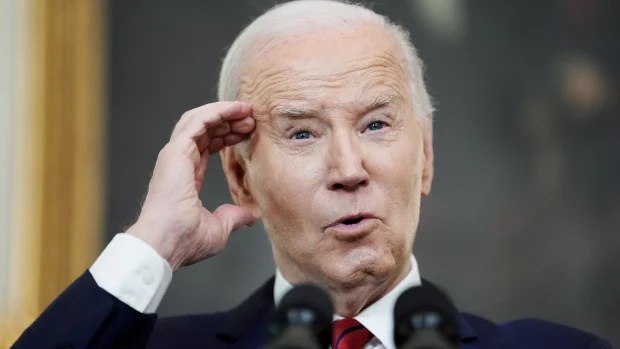
The timing of Joe Biden’s sudden withdrawal from the presidential race raises questions, argues former US Marine Corps intelligence officer and ex-weapons inspector Scott Ritter.
“There’s no doubt that Joe Biden is unfit to be president of the United States. No doubt. But here’s the question. If he’s unfit to run as the candidate of the Democratic Party, why did they put him up?” former US Marine Corps intelligence officer and ex-weapons inspector Scott Ritter said, noting that signs of Biden’s frailty were visible during the G7 summit in Italy last month.
According to him, the fact that Biden is unfit to be the POTUS but was still allowed to “function” begets the question: who is really in charge in the United States?
“Who’s running America? Because it’s not Joe Biden. We don’t know who. It’s an unelected group of handlers who are drawn from what I guess we can call the establishment. Some people might refer to it as the deep state. And these are the people who are calling the shots,” Ritter stated, noting that “the critical decisions of governance” this group makes are made “for the American people, but not necessarily on behalf of the American people.”
He describes the 2024 presidential election in the US as “a test of American democracy” and a “contest between established elites that are found in the Democratic Party and this surge of populism in the form of Donald Trump who is taking control of the Republican Party.”
Yet while Americans are normally allowed to “have a say in the outcome” of this process, the Democratic Party and the “elites known and unknown” now opted to meddle in this process and “will be selecting who their candidate will be for the presidency in the 2024 elections,” which is “not the way it’s supposed to be,” he noted.
“America is in a crisis, a crisis of democracy, a crisis of identity. And it doesn’t look like we have a solution because for the most part, the American people have been confused and misled and manipulated by the mainstream media into somehow thinking that this is normal,” Ritter lamented.
Featured Video

Diplomacy is Now a Crime in Britain / Ian Proud
or go to
Aletho News Archives – Video-Images
From the Archives
Genetic baloney in thick slices
MAYBE COULD BE INC.
By Jon Rappoport | No More Fake News | July 8, 2021
Gene research companies tend to come and go. They start out banging and popping like fireworks in the sky, and then they fade out—selling themselves to larger outfits who’ve hired better liars…
Once upon a time, it sounded easy. Start with a disease, find the gene responsible for the disease, and correct the problem.
Then, researchers wondered, was disease the result of one gene or a group of genes acting together?
Either way, the proof would be in devising cures for diseases using gene therapy. “Not yet, but soon…”
And regardless, the major need was: money. Lots and lots of money.
This need required good PR people. “We have to pump up the idea that we’re on the edge of tremendous breakthroughs. We’re always on that edge…”
This hype also needed to obscure the fact that there wasn’t (and isn’t) ANY gene cure for ANY disease. … continue
Blog Roll
 Aletho News
- Diplomacy is Now a Crime in Britain / Ian Proud
- UK Government Body Kept Files on People Criticizing Prevent Program
- US military withdrawal from Iraq and the collapse of US-Israeli hegemonic project in West Asia
- What does Europe want – a war with Russia?
- She Followed the Actual Data on COVID Vaccines and Masks — Her Career Took a Huge Hit
- Florida AG Sues Pfizer, Bourla Over Deceptive Marketing of COVID Vaccines
- Von der Leyen gifts her spin doctor a job for life
- 10K More U.S. Troops Deploy as Trump Weighs New Iran Strikes /Suliaman Ahmed
- Iranian crew declared Dena training vessel ‘unarmed’ to US warship before deadly torpedo strike: Report
- Iran’s NPT debate moves beyond parliament
- If Americans Knew
- Israel is squeezing the life out of Palestinians – Daily Update
- The Israeli Right Portrays Islam as Murderous. It Serves a Political Purpose
- Jordan Has Had Enough: King Abdullah’s Scathing Warning to Israel
- Israeli Colonizers (i.e. Settlers) Kill Palestinian Man Near Salfit
- New Google Maps images reveal massive scale of devastation in Gaza
- Jewish supremacy, anti-Palestinian bigotry on display in Israel – Daily Update
- Israeli Soldiers Abduct At Least 22 Across Occupied West Bank
- Eight Palestinians Killed in Israeli Attacks on Gaza
- Israeli former leaders and security chiefs threaten legal action over ‘Jewish terrorism’
- Israel map in LA Times ad includes all land from the river to the sea
- No Tricks Zone
- Green Energy Debacle: German Expert Professor Fritz Vahrenholt Warns Of Severe Economic And Social Consequences
- Two More Paleo Reconstructions Affirm Meters-Higher Sea Levels Across Ireland, Brazil 7000-6000 Years Ago
- New Study: Earth And Venus Surface Warmth Largely Explained By Convection And Lapse Rate, Not CO2 Or Radiation
- 2025 Nature Paper Claiming Worsening Global Drought Gets RETRACTED …Heavily Flawed
- New Study: ‘Global Drought Shows No Detectable Recent Acceleration Under Climate Warming’
- Economic Masterminds: German Socialists Suggest Taxing Productivity Gains Stemming From Using AI
- The South China Sea Has Not Been Cooperating With The Climate Change Narrative
- Energy Crisis: Germany Enters Heating Season With Historically Low Gas Reserve Fill Levels
- New Study: The Antarctic Ice Sheet Gained Mass From 2020-2024 Due To Staggering Snow And Ice Accumulation
- Study: Ocean Heating Rates From Thousands Of Years Ago ‘Dwarf’ Modern Ocean Heating Rates