Yemen raps US for obstructing peace, blocking efforts to halt Gaza genocide
Press TV – April 30, 2024
The Yemeni Ministry of Foreign Affairs and Expatriates has denounced the United States over its role in scuttling UN-brokered peace efforts in the impoverished Arab nation, and its failure to stop the Israeli military’s onslaught against Palestinians in the Gaza Strip.
“The United States constitutes an obstacle to peace in Yemen, and prevents the ongoing criminal massacre in Gaza from coming to an end,” the ministry said in a statement released on Monday.
Pointing to the Yemeni pro-Palestine maritime operations in the Red Sea, the ministry said they “have humanitarian objectives, and are meant to pressure the Zionist regime into stopping its vicious aggression and lifting its all-out blockade on Gaza.”
The ministry went on to note that the resolution of the Yemen conflict will not stop the country’s naval units from carrying out anti-Israeli operations, emphasizing that the United Nations has been reminded that the agreement with Saudi Arabia for the Yemeni peace roadmap has nothing to do with unfolding developments in Gaza, and that neither Americans nor Britons should be involved in it.
The statement added that the latest remarks by Tim Lenderking, the US special envoy for Yemen, about Yemeni attacks on Israeli-affiliated commercial vessels in the Red Sea and the Gulf of Aden in response to the war on Gaza show that the US is preventing the establishment of peace in Yemen, and is blocking an end to the killings in Gaza and the removal of the siege.
Lenderking told Saudi English-language daily newspaper Arab News in an interview published on April 25 that “the onus (is) on the Houthis to stop the Red Sea attacks, adding, “That can prompt us all to begin to dial back, to de-escalate, to return the situation in Yemen to where it was on Oct. 6, which had considerably more promise and possibility than what exists now, and that’s where we want to return the focus.”
On the Gaza war, Lenderking said, “We cannot escape what’s happening in Gaza,” adding, “Not one single day goes by when the people I talk to about Yemen don’t also talk about Gaza. So we know this is a searing and very, very important situation that must be dealt with.”
The Yemeni foreign ministry statement further criticized Washington for standing “against the will of all world nations, including its own people who are expressing fierce opposition to the involvement of the Biden administration in the heinous crimes that Zionists are committing against Gazans.”
“The US has rather resorted to the brutal suppression of pro-Palestine protests at its own university campuses than to respond to global demands [for an end to Gaza war]. Such conduct has exposed the hollowness of its slogans about democracy,” the ministry pointed out.
The Yemeni Armed Forces have staged numerous pro-Palestinian strikes since October 7, when the Israeli regime began the Gaza war.
American and British warships have been carrying out attacks against the Arab Peninsula nation as means of trying to halt strikes that it has been conducting against Israeli vessels or those heading towards the ports lying in the occupied Palestinian territories.
At least 34,488 Palestinians have been killed and 77,643 others wounded in the brutal Israeli military onslaught that was launched following Al-Aqsa Storm, a retaliatory operation staged by Gaza’s resistance groups.
The US has been the main supporter of Israel, proving it with munitions and political support in its brutal war on Gaza. Washington has also used its veto power to protect Israel against UN resolutions.
$3.5 Billion Slipped Into Ukraine-Israel Aid Bill To ‘Supercharge Mass Migration From The Middle East’
By Tyler Durden | Zero Hedge | April 30, 2024
Tucked away in the $95 billion military aid package for Ukraine, Israel and Taiwan is a $3.5 billion slush fund to open new processing centers for Muslim migrants, in what Sen. Eric Schmitt described as a bid to “supercharge mass migration from the Middle East.”
And as Breitbart points out, the $95 billion package does not include any funds to help rebuild America’s border defenses against illegal migration – but it does contain $481 million to settle migrants in US cities, and of course, the $3.5 billion to expand migration programs worldwide.
The $3.5 billion was granted to the Department of State, which works with many international groups that feed and transport migrants on their way to the United States.
Biden’s deputies are now using the refugee programs as an adjunct to their diversity-expanding “equity” migration policy. For example, Biden’s deputies used the program in March to import 3,009 migrants from the safe and democratic countries of El Salvador and Guatemala.
They are also using the refugee funds to expand migration routes from many African and Muslim countries. In March, they pulled in 12,018 people from the Congo, plus 16,732 migrants from the Muslim countries of Afghanistan, Syria, Pakistan, Iraq, and Eritrea, according to a report by Stacker.com.
According to an April 23 release from the Biden DHS visa-granting agency, “The Biden-Harris administration set the refugee admissions ceiling for fiscal year 2024 at 125,000 refugees,” adding “With the opening of the Doha Field Office on May 7, 2024, and the Ankara Field Office on May 9, 2024, USCIS will have 11 international field offices. Other international field offices include Beijing; Guangzhou, China; Guatemala City; Havana; Mexico City; Nairobi, Kenya; New Delhi; San Salvador, El Salvador; and Tegucigalpa, Honduras.”
So – we have the US government encouraging migration, both legal and illegal – which hurts low-income Americans the most, while neglecting to [secure] the borders. Seems we’ve learned nothing from Europe.
Western Media Spread Fake Report About Use of N. Korean Missile in Kharkov
Sputnik – 30.04.2024
Western media outlets are disseminating a fake report claiming that Russia used a North Korean -made missile to strike a target in Kharkov, a source at the United Nations told Sputnik on Monday.
Earlier in the day, Reuters reported that some three experts allegedly provided a report to the UN Security Council Sanctions Committee with a conclusion that the debris from a missile found at the site of a January 2 strike in the Ukrainian city of Kharkov belongs to a North Korea Hwasong-11 series ballistic missile.
“The report is fake. It’s non-existent. The group of experts did not submit any report to the UN Security Council,” the source said.
The fake document described by Reuters was written by a group of specialists who went to Ukraine on the invitation of the government and wrote what the Ukrainian puppet authorities told them, the source said.
“It has no value,” the source said, adding that there were no missile or conventional weapons specialists in the group.
The Ukrainian mission to the United Nations organized the trip for the specialists, who made their conclusion based on the alleged similarity of the missile remains they saw in Kharkov with those that can be seen at military parades in North Korea.
“The group of experts did not present any report. There is a procedure for a report approval and submission to the UN Security Council and it means that this report contains their personal views. Simply speaking, they wrote a report on a business trip that was offered to them [by Ukraine],” the source said.
Russia has repeatedly dismissed media reports and US claims that Moscow is using North Korean missiles to attack targets in Ukraine. The United States has not provided to date any evidence supporting its claims.
Lyndon Johnson’s Role in the JFK Assassination
By Jacob G. Hornberger | FFF | April 29, 2024
Ever since the assassination of President John F. Kennedy, a question has naturally arisen: What role, if any, did Vice-President Lyndon Johnson play in the assassination?
With the publication of Douglas P. Horne’s massive 5-volume book Inside the Assassination Records Review Board, the national-security establishment’s role in the assassination has now been established beyond a reasonable doubt. That’s because Horne meticulously detailed the fraud in the autopsy that the U.S. military carried out on Kennedy’s body on the very evening of the assassination. Horne served on the staff of the ARRB in the 1990s.
Examples of autopsy fraud set forth by Horne (which are summarized in my book The Kennedy Autopsy) include (1) sneaking JFK’s body into the Bethesda Naval morgue before the official start of the autopsy in order to perform pre-autopsy surgery designed to hide evidence of shots having been fired from Kennedy’s front and (2) two separate brain examinations, the second of which involved someone else’s brain rather than Kennedy’s. Horne’s findings have now been reinforced and built upon in a new book, The Final Analysis by David Mantik, M.D., Ph.D. and Jerome Corsi, Ph.D.
At the risk of belaboring the obvious, there is no innocent explanation for a fraudulent autopsy. It necessarily means criminal culpability of the national-security establishment in the assassination itself. There is no way around that. That’s how we can definitively conclude that the JFK assassination was one of the national-security establishment’s patented regime-change operations based on what have become the two most important words in the American political lexicon — “national security.” See FFF’s book JFK’s War with the National Security Establishment: Why Kennedy Was Assassinated.”
But what about Johnson? Was he just an innocent beneficiary of the assassination? Actually not. The circumstantial evidence establishes beyond a reasonable doubt that Johnson himself was up to his neck in the assassination. Johnson had three primary roles in the assassination.
The first role was to get JFK’s body out of Dallas and deliver it into the hands of the military. Keep in mind that JFK’s murder was a state criminal offense. At that time, it was not a federal crime to assassinate a president. Therefore, no federal agency had any jurisdiction over the crime. That includes the Pentagon, the CIA, and the FBI.
Under Texas law, the Dallas County Medical Examiner, Dr. Earl Rose, was required to perform an autopsy on JFK’s body. Immediately after JFK was declared dead, Rose announced that he was going to perform the autopsy. A team of Secret Service agents immediately declared that no such autopsy would be permitted. Headed by a Secret Service agent named Roy Kellerman, who was brandishing a Thompson sub-machine gun, the Secret Service team began screaming, yelling, and cussing as they began forcing their way out of Parkland Hospital with the president’s body, which had been placed in a heavy casket. Rose refused to give ground, insisting, correctly so, that Texas law required him to perform the autopsy before the body could be released. One Secret Service agent physically picked up Rose, carried him to a nearby wall, and wagged his finger in his face. The others pulled back their suit coats to brandish their guns, thereby threatening to use deadly force against anyone who got in their way.
Kellerman declared that he and his team were simply following orders. There is only one person who could have issued such an extraordinary order to Kellerman — Lyndon Johnson, either directly to Kellerman or indirectly through one of Kellerman’s superiors. Who else would have dared to issue an order that violated state criminal law?
In fact, Johnson’s own actions confirm that he was the person who issued the order. Once JFK was declared dead, Johnson headed to Love Field, where he ordered seats to be removed from the back of Air Force One to make room for the big casket in which JFK’s body had been placed. Johnson had absolutely no intention of waiting at Love Field for the 2-3 hours that would have been needed to complete the autopsy. He was removing those seats in the full expectation that the casket and the body would be arriving shortly. How would he know that? Because he had to have been the one who issued the order to Kellerman to get the body out of Parkland at all costs and deliver it to Johnson at Love Field.
The second role that Johnson had was to conjure up the prospect of World War III by suggesting that the assassination might be the first step in a nuclear attack on the United States by the Soviet Union. He first raised this possibility while he was waiting at Parkland Hospital for Kennedy to be declared dead. He raised it again on the way to Love Field.
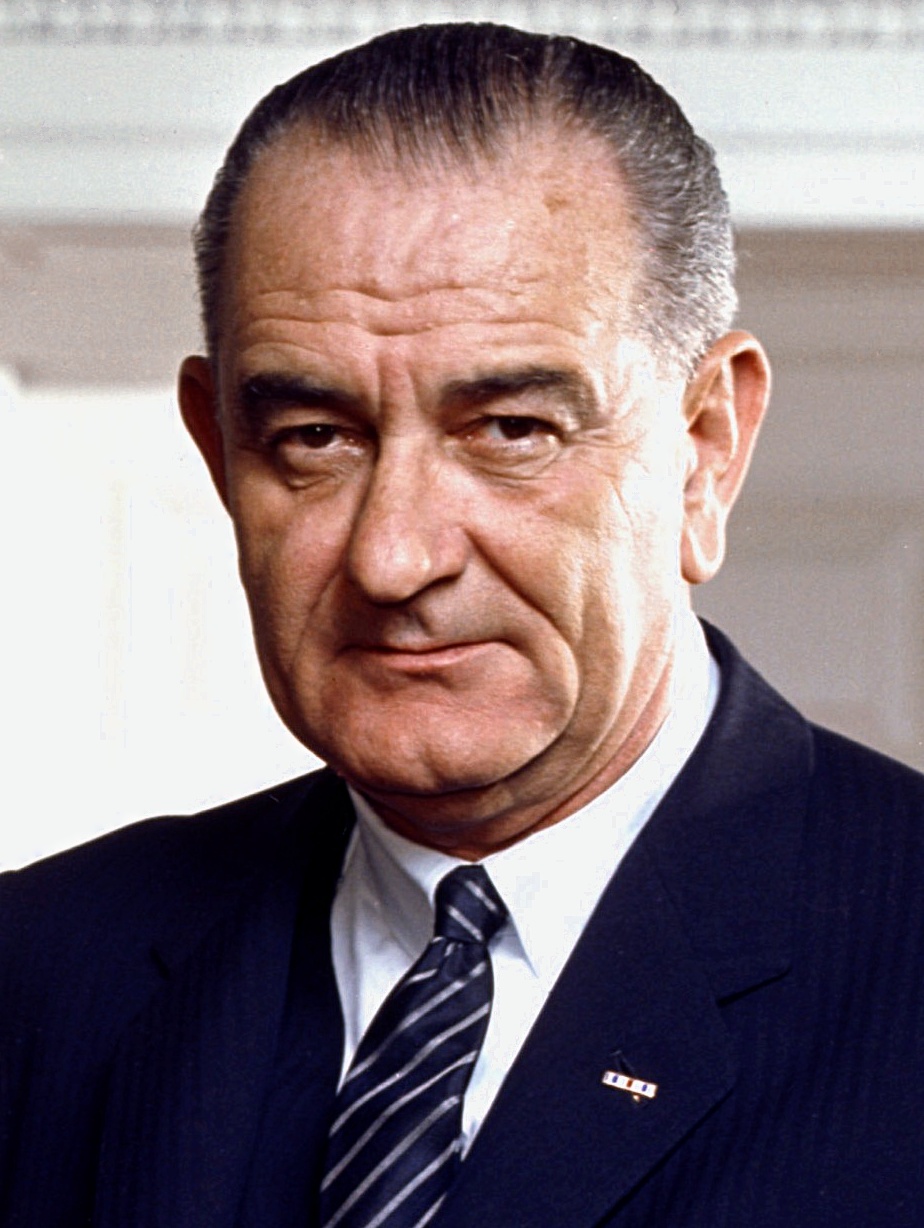
Yet, when Johnson arrived at Love Field, his actions belied any such concern. Rather than get up in the air immediately in order to direct America’s defenses and counterattacks to a possible Soviet nuclear attack, he instead lollygagged at Love Field, waiting, first, for a federal judge to arrive and swear him in as president and, second, for JFK’s body to be delivered to him. In fact, JFK was declared dead at 1 p.m. and LBJ waited until 2:47 to take off. That was the action of a person who knew for certain that the assassination could not possibly have been the first stage of a Soviet nuclear attack on the United States. The only way that Johnson could have been so certain is that he knew that it was not the Soviets who committed the assassination.
Once Johnson arrived at Andrews Air Force Base in Maryland, he dutifully delivered JFK’s body into the hands of the military, notwithstanding the fact that the military had absolutely no jurisdiction whatsoever to conduct such an autopsy.
It was not the last time that LBJ conjured up the possibility that the Soviets or the Cubans had assassinated JFK, however. When he began inducing people to join what became known as the Warren Commission, he once again conjured up the possibility that the assassination had been committed by the Soviet Union or Cuba. Why would he do that? Because that was the way that the plotters were able to get the investigation into the assassination shut down immediately — in order to ostensibly avoid World War III and all-out nuclear war that would come with it.
How did this ingenious strategy play out? As I detail in my book An Encounter with Evil: The Abraham Zapruder Story, the plot called for shots being fired from the front and the back. That would establish a conspiracy with the supposed communist, Lee Harvey Oswald, a U.S. intelligence agent who the national-security establishment was setting up to take the fall. The only people with whom Oswald would have been supposedly conspiring were the Soviet Union and Cuba. That was the purpose of setting up Oswald in New Orleans and Mexico City as a supposed communist agent.
Keep in mind that JFK and his brother RFK had initiated Operation Mongoose, whose aim was to oust Cuban leader Fidel Castro from power. Keep in mind also that the CIA had repeatedly tried to assassinate Castro. Thus, Johnson’s second role was to assert that the communists had gotten to JFK first and that if the United States responded to their assassination of JFK, World War III would occur. Therefore, the only way to obviate going to war based on what the Kennedy brothers had started was to immediately shut down the investigation and hide the fact that shots had been fired from the front.
The third role that LBJ had was to ensure that there would never be an official investigation that could lead to the national-security establishment, including, of course, with respect to the military’s fraudulent autopsy. That was the purpose of appointing former CIA Director Allen Dulles to the Warren Commission. Dulles, who Kennedy had fired after the Bay of Pigs disaster and who loathed Kennedy, ensured that the commission stayed on track with the official lone-nut narrative.
Finally, it should be noted that if JFK had not been assassinated, it was a virtual certainty that LBJ would have been removed from office, indicted, and convicted for political corruption. In fact, it is also a virtual certainty that Johnson knew that Robert Kennedy, the attorney general, who loathed Johnson, was furnishing evidence of Johnson’s corruption to LIFE magazine. Thus, LBJ, who had a lifelong obsession to become president, had a choice: Go to jail or participate in the assassination of JFK and become president. He chose the latter course of action and, after being elected president in the 1964 election, gave the U.S. national-security establishment what Kennedy had refused to do–its war in Vietnam.
The Interlocking of Strategic Paradigms
By Alastair Crooke | Strategic Culture Foundation | April 29, 2024
Theodore Postol, Professor of Science, Technology and National Security Policy at MIT, has provided a forensic analysis of the videos and evidence emerging from Iran’s 13th April swarm drone and missile ‘demonstation’ attack into Israel: A ‘message’, rather than an ‘assault’.
The leading Israeli daily, Yediot Ahoronot, has estimated the cost of attempting to down this Iranian flotilla at between $2-3 billion dollars. The implications of this single number are substantial.
Professor Postol writes:
“This indicates that the cost of defending against waves of attacks of this type is very likely to be unsustainable against an adequately armed and determined adversary”.
“The videos show an extremely important fact: All of the targets, whether drones or not, are shot down by air-to-air missiles”, [fired from mostly U.S. aircraft. Some 154 aircraft reportedly were aloft at the time] likely firing AIM-9x Sidewinder air to air missiles. The cost of a single Sidewinder air-to-air missile is about $500,000”.
Furthermore:
“The fact that a very large number of unengaged ballistic missiles could be seen glowing as they reenter the atmosphere to lower altitudes [an indication of hyper-speed], indicates that whatever the effects of [Israel’s] David’s Sling and the Arrow missile defenses, they were not especially effective. Thus, the evidence at this point shows that essentially all or most of the arriving long-range ballistic missiles were not intercepted by any of the Israeli air and missile-defense systems”.
Postel adds, “I have analyzed the situation, and have concluded that commercially available optical and computational technology is more than capable of being adapted to a cruise missile guidance system to give it very high precision homing capability … it is my conclusion that the Iranians have already developed precision guided cruise missiles and drones”.
“The implications of this are clear. The cost of shooting down cruise missiles and drones will be very high and might well be unsustainable unless extremely inexpensive and effective anti-air systems can be implemented. At this time, no one has demonstrated a cost-effective defense system that can intercept ballistic missiles with any reliability”.
Just to be clear, Postol is saying that neither the U.S. nor Israel has more than a partial defence to a potential attack of this nature – especially as Iran has dispersed and buried its ballistic missile silos across the entire terrain of Iran under the control of autonomous units which are capable of continuing a war, even were central command and communications to be completely lost.
This amounts to paradigm change – clearly for Israel, for one. The huge physical expenditure on air defence ordinance – 2-3 billion dollars worth – will not be repeated willy-nilly by the U.S. Netanyahu will not easily persuade the U.S. to engage with Israel in any joint venture against Iran, given these unsustainable air-defence costs.
But also, as a second important implication, these Air Defence assets are not just expensive in dollar terms, they simply are not there: i.e. the store cupboard is near empty! And the U.S. lacks the manufacturing capacity to replace these not particularly effective, high cost platforms speedily.
‘Yes, Ukraine’ … the Middle East paradigm interlinks directly with the Ukraine paradigm where Russia has succeeded in destroying so much of the western supplied, air-defence capabilities in Ukraine, giving Russia near complete air dominance over the skies.
Positioning scarce air defence ‘to save Israel’ therefore, exposes Ukraine (and slows the U.S. pivot to China, too). And given the recent passage of the funding Bill for Ukraine in Congress, clearly air defence assets are a priority for sending to Kiev – where the West looks increasingly trapped and rummaging for a way out that does not lead to humiliation.
But before leaving the Middle East paradigm shift, the implications for Netanyahu are already evident: He must therefore focus back to the ‘near enemy’ – the Palestinian sphere or to Lebanon – to provide Israel with the ‘Great Victory’ that his government craves.
In short, the ‘cost’ for Biden of saving Israel from the Iranian flotilla which had been pre-announced by Iran to be demonstrative and not destructive nor lethal is that the White House must put-up with the corollary – an attack on Rafah. But this implies a different form of cost – an electoral erosion through exacerbating domestic tensions arising from the on-going blatant slaughter of Palestinians.
It is not just Israel that bears the weight of the Iranian paradigm shift. Consider the Sunni Arab States that have been working in various forms of collaboration (normalisation) with Israel.
In the event of wider conflict embracing Iran, clearly Israel cannot protect them – as Professor Postol so clearly shows. And can they count on the U.S.? The U.S. faces competing demands for its scarce Air Defences and (for now) Ukraine, and the pivot to China, are higher on the White House priority ladder.
In September 2019, the Saudi Abqaiq oil facility was hit by cruise missiles, which Postol notes, “had an effective accuracy of perhaps a few feet, much more precise than could be achieved with GPS guidance (suggesting an optical and computational guidance system, giving a very precise homing capability)”.
So, after the Iranian active deterrence paradigm shift, and the subsequent Air Defence depletion paradigm shock, the putative coming western paradigm shift (the Third Paradigm) is similarly interlinked with Ukraine.
For the western proxy war with Russia centred on Ukraine has made one thing abundantly clear: this is that the West’s off-shoring of its manufacturing base has left it uncompetitive, both in simple trade terms, and secondly, in limiting western defence manufacturing capacity. It finds (post-13 April) that it does not have the Air Defence assets to go round: ‘saving Israel’; ‘saving Ukraine’ and preparing for war with China.
The western maximalisation of shareholder returns model has not adapted readily to the logistical needs of the present ‘limited’ Ukraine/Russia war, let alone provided positioning for future wars – with Iran and China.
Put plainly, this ‘late stage’ global imperialism has been living a ‘false dawn’: With the economy shifting from manufacturing ‘things’, to the more lucrative sphere of imagining new financial products (such as derivatives) that make a lot of money quickly, but which destabilise society (through increasing disparities of wealth); and which ultimately, de-stabilise the global system itself (as the World Majority states recoil from the loss of sovereignty and autonomy that financialism entails).
More broadly, the global system is close to massive structural change. As the Financial Times warns,
“the U.S. and EU cannot embrace national-security “infant industry” arguments, seize key value chains to narrow inequality, and break the fiscal and monetary ‘rules’, while also using the IMF and World Bank – and the economics profession– to preach free-market best practice to EM ex-China. And China can’t expect others not to copy what it does”. As the FT concludes, “the shift to a new economic paradigm has begun. Where it will end is very much up for grabs.”
‘Up for grabs’: Well, for the FT the answer may be opaque, but for the Global Majority is plain enough – “We’re going back to basics”: A simpler, largely national economy, protected from foreign competition by customs barriers. Call it ‘old- fashioned’ (the concepts have been written about for the last 200 years); yet it is nothing extreme. The notions simply reflect the flip side of the coin to Adam Smith’s doctrines, and that which Friedrich List advanced in his critique of the laissez-faire individualist approach of the Anglo-Americans.
‘European leaders’, however, see the economic paradigm solution differently:
“The ECB’s Panetta gave a speech echoing Mario Draghi’s call for “radical change”: He stated for the EU to thrive it needs a de facto national-security focused POLITICAL economy centered around: reducing dependence on foreign demand; enhancing energy security (green protectionism); advancing production of technology (industrial policy); rethinking participation in global value chains (tariffs/subsidies); governing migration flows (so higher labour costs); enhancing external security (huge funds for defence); and joint investments in European public goods (via Eurobonds … to be bought by ECB QE)”.
The ‘false dawn’ boom in U.S. financial services began as its industrial base was rotting away, and as new wars began to be promoted.
It is easy to see that the U.S. economy now needs structural change. Its real economy has become globally uncompetitive – hence Yellen’s call on China to curb its over-capacity which is hurting western economies.
But is it realistic to think that Europe can manage a relaunch as a ‘defence and national security-led political economy’, as Draghi and Panetta advocate as a continuation of war with Russia? Launched from near ground zero?
Is it realistic to think that the American Security State will allow Europe to do this, having deliberately reduced Europe to economic vassalage through causing it to abandon its prior business model based on cheap energy and selling high-end engineering products to China?
This Draghi-ECB plan represents a huge structural change; one that would take a decade or two to implement and would cost trillions. It would occur too, at a time of inevitable European fiscal austerity. Is there evidence that ordinary Europeans support such radical structural change?
Why then is Europe pursuing a path that embraces huge risks – one that potentially could drag Europe into a whirlpool of tensions ending in war with Russia?
For one main reason: The EU leadership held hubristic ambitions to turn the EU into a ‘geo-political’ empire – a global actor with the heft to join the U.S. at Top Table. To this end, the EU unreservedly offered itself as the auxiliary of the White House Team for their Ukraine project, and acquiesced to the entry price of emptying their armouries and sanctioning the cheap energy on which the economy depended.
It was this decision that has been de-industrialising Europe; that has made what remains of a real economy uncompetitive and triggered the inflation that is undermining living standards. Falling into line with Washington’s failing Ukraine project has released a cascade of disastrous decisions by the EU.
Were this policy line to change, Europe could revert to what it was: a trading association formed of diverse sovereign states. Many Europeans would settle for that: Placing the focus on making Europe competitive again; making Europe a diplomatic actor, rather than as a military actor.
Do Europeans even want to be at the American ‘top table’?
US military’s pier in Gaza to cost $320m
MEMO | April 29, 2024
The US military’s cost estimate to build a pier off Gaza to deliver humanitarian aid has risen to $320 million, a US defence official and a source familiar with the matter told Reuters.
The figure illustrates the massive scale of a construction effort that the Pentagon has said involves about 1,000 US service members, mostly from the Army and Navy.
Still, the cost has roughly doubled from initial estimates earlier this year, according to a person familiar with the matter.
“The cost has not just risen. It has exploded,” Senator Roger Wicker, the top Republican on the Democratic-led Senate Armed Services Committee, told Reuters.
“This dangerous effort with marginal benefit will now cost the American taxpayers at least $320 million to operate the pier for only 90 days.”
Democratic President Joe Biden announced the pier in March as aid officials implored Israel to ease access for relief supplies into Gaza over land routes. Biden opted for a sea route for the delivery of aid rather than press Israel to open land borders with Gaza and allow aid into the Strip which is experiencing a “man-made famine”.
Wicker and some other lawmakers have questioned whether the pier is a worthwhile endeavour, particularly given the risk that US military personnel could face if they were targeted during the war.
“For every day this mission continues, the price tag goes up and so does the level of risk for the 1,000 deployed troops within range of Hamas’ rockets,” Wicker said.
Biden has ordered US forces to not step foot on the Gaza shore.
The pier will initially handle 90 trucks a day, but that number could go up to 150 trucks daily when it is fully operational. The United Nations said last week that the daily average number of trucks entering Gaza during April was 200. They have also repeatedly warned that there can be no alternative to a land route for the delivery of aid, adding that though aid being delivered by sea may help Palestinians in Gaza, the amount arriving will be insufficient to stop the spread of famine.
A senior Biden administration official said last week that humanitarian aid coming off the pier will need to pass through Israeli checkpoints on land.
That is despite the aid having already been inspected by Israel in Cyprus before being shipped to Gaza.
The prospect of checkpoints raises questions about possible delays even after aid reaches shore. The United Nations has long complained of obstacles to getting aid in and distributing it throughout Gaza.
Israel stands accused of genocide at the Internatinal Court of Justice (ICJ), which in an interim ruling in January, called on the occupation state to ensure no genocidal acts are carried out by its officials or army and to allow for the unhindered delivery of aid to civilians in Gaza.
Palestinians fear the US pier will be used to forcibly displaced civilians from Gaza or to commandeer the occupied territory’s offshore natural resources.
Tracing the origins of Zionist lobby’s malign influence on American academia
By Ivan Kesic | Press TV | April 29, 2024
The ruthless police crackdown on pro-Palestinian protests in universities across the United States is a continuation of years of silent repression and malign Zionist influence on American academia.
More than 20 universities in the US are protesting against the genocidal Israeli war on Gaza, where nearly 34,500 people have been killed since October last year, mostly women and children.
According to reports, more than 900 people have been arrested on US campuses since April 18 when a pro-Palestinian encampment at Columbia University in New York was forcefully removed by police.
The police were called by university president Nemat Minouche Shafik to dismantle the tent encampment set up on campus, which triggered a massive outcry from students and faculty members.
The unwarranted police action against students at Columbia University led to the expansion of protests to other university campuses including Yale University in Connecticut, City University in New York, Northeastern University in Boston, Arizona State University in Phoenix, Indiana University in Bloomington, Washington University in St Louis, University of Texas in Texas and University of California in Los Angeles among others.
Like Columbia, the University of Texas president Jay Hartzell also faced a strong backlash from students and faculty members on Friday after he called in police to break up the pro-Palestinian demonstration.
Hundreds of Texas University faculty members signed a letter expressing no confidence in Hartzell for “needlessly putting students, staff and faculty in danger” after riot police moved against protesters.
The protesting students and professors are calling for universities to divest and disassociate themselves from companies that are aiding the occupying regime’s no-holds-barred aggression on Gaza.
The US police, known for its notoriety, has responded with brute violence, drawing anger and outrage.
According to John Mearsheimer and Stephen Walt, the authors of ‘The Israel Lobby and US Foreign Policy’, a major monograph on the influence of the Israel lobby in the US, the Zionist influence on academia has faced more problems than politics, media and think tanks.
The origins of Zionist influence on US academia
The origins of the Israeli lobby’s influence can be traced to the late 1970s when the American-Israel Public Affairs Committee (AIPAC) monitored campus activities and trained young advocates for Israel.
AIPAC, along with the Anti-Defamation League (ADL), also recruited students to help them identify professors and campus organizations with anti-Israel positions, which they would document in dossiers and then systematically slander in their publications.
Toward the end of the 20th century, these lobby groups did not pay much attention to shaping the discussion at universities because the Oslo peace process was underway, with little violence in the occupied territories, and consequently with less criticism of the Israeli regime’s policies.
However, at the beginning of the new century when peace negotiations failed, the extremists led by Ariel Sharon took the helm of the Israeli regime and the Second Intifada ensued, the criticism at higher education institutions in the United States became much stronger and more intense.
The Israeli lobby, exerting considerable influence, responded with an aggressive attempt to “take back the campuses,” and the most important organization in that campaign was once again AIPAC, which more than tripled its spending on pro-Israel college programs.
According to AIPAC leadership at the time, these funds were intended to significantly expand the number of students involved in activities in favor of the Israeli regime on campuses, their competence, and their involvement in the national pro-Israel effort.
Hundreds of students were sent to AIPAC all-expenses-paid courses in Washington DC where they received intensive advocacy training, and they were instructed to concentrate on networking with campus leaders of all kinds and winning them over to promote the regime’s cause.
The multi-year campaign resulted in annual AIPAC Policy Conferences being attended by over 1,200 students from 400 colleges and universities across the US, including 150 student body presidents.
Simultaneously, this campaign to cultivate students has been accompanied by efforts to influence university faculty and hiring practices.
Israel lobby groups involved in US academia
In addition to AIPAC, other pro-Israel lobby groups have also been involved in pro-Israel campaigns at American universities, notably the Israel on Campus Coalition (ICC), an umbrella organization for the coordination of 26 different Zionist groups in US universities.
Although the ICC is not registered under the required Foreign Agent Registration Act, its leadership admitted that they have close ties and coordinate actions with Israel’s ministry of strategic affairs.
The Jewish Council for Public Affairs (JCPA) likewise initiated a series of advocacy training sessions for college students with the aim of defending the Israeli regime on their campuses.
A similar role was played by the David Project (TDP), which partnered with Christians United for Israel (CUFI), organizing training programs for students to agitate for Zionism.
The founder of the David Project was an Islamophobe who advocated banning the construction of mosques on American soil and co-founder of CAMERA, another Zionist group involved in smearing pro-Palestinian students on campuses.
New groups also emerged, such as the Caravan for Democracy (CFD), which brought Israeli settlers to speak at American universities, promoting the farce of Israel as “the only democracy in the region.”
The website Campus Watch, an affiliate of the Middle East Forum (MEF), was also established, whose dossiers continued AIPAC’s tradition of publicly defaming all campus critics of Israeli politics.
Press TV website in July 2023 published an investigation on how the Middle East Forum has shaped into a hardline Zionist and anti-Muslim think tank, founded by Daniel Pipes in 1990.
Its website stated that its mission is to “promote American interests in the Middle East (West Asia) and protect Western values from Middle Eastern threats”, secretly serving the Zionist agenda.
Rodney Martin, a former Congressional staffer, says the AIPAC and other pro-Israel lobby groups in the US have successfully placed a chokehold on the US government.
American-Israeli agendas at work
The ICC and the TDP were actively engaged in pressuring American universities to reject multimillion-dollar donations from Muslim governments to Islamic studies programs, characterizing them as “anti-American.”
On the other hand, under the guise of expanding cultural cooperation and with the true goal of whitewashing the regime, Zionist megadonors launched a series of so-called “Israel studies” programs at American universities.
Fred Lafer and Sheldon Adelson, donors to such programs at New York University and Georgetown University, respectively, admitted that their motivation was to counter the Arab viewpoint at those institutions, referring to the pro-Palestine position.
After the pro-Palestinian Boycott, Divestment and Sanctions (BDS) spread across American colleges and universities, Adelson raised an additional 50 million in a secret summit in 2015 to fight the movement.
According to him, the funds raised were to go to operations on US campuses to fight the BDS movement and to “researchers” who would supply information about groups on campuses critical of Israel and recommend possible legal avenues to block their activities.
The precise amount of donations to American universities is difficult to determine because dozens of donors and Zionist charities regularly pay millions and some are given anonymously.
In the case of the University of Pennsylvania alone, pro-Israel lobbyists Marc Rowan and Ross Stevens are known to have donated 50 million and 100 million respectively.
AIPAC, the group that enjoys maximum influence on American academia, received about 12 million monthly donations before the start of the war in Gaza, and the receipts have multiplied since then.
Last month, prominent progressive organizations in the US formed a coalition to defend lawmakers targeted by the powerful AIPAC and counter its sway in US Congress.
Pertinently, one of the key but underreported factors of the unwavering US support for the Israeli genocidal war on Gaza is the overwhelming presence of Zionist Jews in the Biden administration.
The Zionist Jewishness of Biden’s cabinet was pointed out recently by The Forward, a progressive media for a Jewish American audience, as well as the Israeli right-wing newspaper Times of Israel.
Malala slammed for collaboration with Clinton, cheerleader of Gaza genocide

By Humaira Ahad | Press TV | April 29, 2024
Dressed in traditional Shalwar Kameez, with her hair loosely covered, the youngest Nobel laureate Malala Yousafzai recently shared the stage with former US Secretary of State Hillary Clinton for the release of a musical about women’s suffrage in the US.
Born in the Swat district of Pakistan’s Khyber Pakhtunkhwa, Malala rose to international fame after she was shot in the head by masked militants while she boarded her school bus in October 2012.
She then left her home country and settled in the UK, where she has been living in Birmingham.
Malala is known for lending her voice to campaigns related to children and education. However, her silence over the killing of children in Gaza and the bombing of schools has enraged her followers.
Her decision to collaborate with Clinton, the self-proclaimed votary of the Israeli regime whose country and party have been deeply complicit in the genocide unfolding in Gaza, came under fire.
The duo made their Broadway production debut this month with the “Suffs”, a Broadway musical about the early 20th-century suffragette movement in the US, which sparked outrage as people accused Malala of blatant double standards.
Many questioned her silence over the killing of more than 34,400 Palestinians in the besieged Gaza Strip, including more than 15,000 children, while sharing the stage with cheerleaders of the genocide.
Branded as a ‘sell-out’ on social media, netizens described Malala as a factotum for partnering with the former US Secretary of State on the music project.
Importantly, the United States has been supplying lethal weapons worth billions of dollars to the Israeli regime, which are used to slaughter Palestinians in Gaza.
President Joe Biden, who, like Malala, is a member of the Democratic Party, has gone out of his way to defend the Benjamin Netanyahu regime’s genocidal onslaught on Gaza, including the murder of civilians and the bombing of hospitals and schools.
After coming under blistering fire for sharing the stage with the former US presidential candidate while maintaining silence over the Israeli-American war on Gaza, Malala swung into damage control mode.
The 26-year-old took to social media to condemn Israel’s aggression on Palestine.
“I wanted to speak today because I want there to be no confusion about my support for the people of Gaza. We have all watched the relentless atrocities against Palestinian people for more than six months now with anger and despair. This week’s news of mass graves discovered at Gaza’s Nasser and al-Shifa hospitals is yet another reminder of the horrors Palestinians are facing,” she wrote on X.
“It is hard enough to watch from afar – l don’t know how Palestinians bear it in their bones. We do not need to see more dead bodies, bombed schools and starving children to understand that a ceasefire is urgent and necessary. I have and will continue to condemn the Israeli government for its violations of international law and war crimes, and I applaud efforts by those determined to hold them to account. Publicly and privately, I will keep calling on world leaders to push for a ceasefire and to ensure the delivery of urgent humanitarian aid,” she added.
The statement, according to critics, was an attempt to appease her legions of supporters scattered across the world who have in recent days and weeks been critical of her silence over Gaza.
Malala’s public appearance with Clinton only added fuel to the already raging fire of anger and outrage as people around the world, including her supporters, lashed out at her.
Clinton, who is co-producing the musical with the Pakistan-born education activist, has been quite outspoken about her support for the occupying regime in Tel Aviv.
Last November, she wrote an op-ed for The Atlantic arguing against a complete ceasefire in Gaza. She said that a ceasefire would “perpetuate the cycle of violence” in the war-torn region.
“A full cease-fire that leaves Hamas in power would be a mistake,” she wrote at the time.
The former first lady of the US also labeled criticism against the Zionist regime as “antisemitic”
In a 2005 speech to “The American Israel Public Affairs Committee” (AIPAC), Clinton defended Israel’s move to build a barrier wall inside the occupied West Bank.
The move was deemed illegal even by the International Court of Justice (ICJ) in 2004. The ICJ had said that Israel should dismantle the wall and should pay reparation to those individuals who had suffered as a consequence of the construction of the wall.
In 2006, when the regime was bombing Lebanon and Gaza, Clinton praised the bombardment at a pro-Israel rally in New York.
During her presidential campaign in 2008, Clinton’s staunch support for Israel was clearly evident.
In a letter in July 2015, she vowed to combat the Boycott, Sanctions, and Divestment (BDS) movement, urging the need to “make countering BDS a priority” and“fight back against further attempts to isolate and delegitimize Israel.”
“I am very concerned by attempts to compare Israel to South African apartheid. Israel is a vibrant democracy in a region dominated by autocracy, and it faces existential threats to its survival,” she wrote in that letter.
In August 2015, Clinton again bragged about her staunch support for the illegitimate regime in an op-ed published in a Jewish newspaper. I “stood with Israel my entire career,” she said.
Besides her unwavering support for Israel, the top diplomat in the Obama administration oversaw a campaign of deadly American drone strikes targeting tribal areas in Pakistan and Afghanistan.
These drone strikes killed hundreds of civilians in Malala’s home region of Swat, propelling online criticism against the youngest Nobel Laureate’s partnership with Clinton.
Since its inception, the Nobel Prize has been a farce as the award was born out of a blunder.
A French daily in 1888 carried a story of Alfred Nobel’s death, after whom the award is named.
The newspaper wrote, “Dr Alfred Nobel, who became rich by finding ways to kill more people faster than ever before, died yesterday.” Petrified by the thought that he would be remembered as a “death trader”, Nobel set up the foundation for the Nobel Prize, an activity to rebrand himself.
On his TV show ‘Have it Out With Galloway’, George Galloway, a British parliamentarian while responding to a panelist on whether Iran or Houthis should get Nobel Peace Prize this year, said: “Neither will get the prize as you have to be a warmonger for the empire to get that prize.”
The selection process for the Nobel Peace prize has been shady, reducing the whole process to a farce. The people who get the prize are either war criminals or stooges of the imperialist empire.
In 1973, one of history’s most vicious war criminals Henry Kissinger, was a co-recipient of the prize with Vietnamese Le DucTho for the “peace agreement” that did not achieve peace and the Vietnam war continued.
Tho, however, turned down the controversial award. While negotiating the “peace agreement”, Kissinger was also carpet-bombing Cambodia.
Former US President Barack Obama was given the Nobel Peace Prize in 2009. In Obama’s tenure as the president of the US, there were at least ten times more air strikes in the so-called “war on terror” than under his predecessor, George Bush.
A total of 563 strikes, largely by drones, targeted Pakistan, Somalia and Yemen during Obama’s two terms, compared to 57 strikes under Bush. Hundreds of people were killed in these strikes.
Another farcical Nobel Peace Prize was awarded to Shimon Peres in 1994, who shared that with Yitzhak Rabin and Yasser Arafat. Peres, one of the founding fathers of the apartheid regime, systematically helped the regime to bolster its nuclear capabilities.
Peres launched two full-scale wars against the Gaza Strip, killing more than 3,700 Palestinians.
Under him, Israel shelled a United Nations compound near Qana, a village in southern Lebanon. The raid killed 106 people and injured around 116 others.
Bushra Shaikh, a London-based political commentator and analyst, in a post on X, said Malala’s case as someone with brown skin used as an operative is an old practice employed by the West:
“Malala Yousafzai working as an agent for the West isn’t new. Her selective activism for women and girls fails to extend to ALL. A personal struggle soon engineered into a Brown face actor for dollar bills. We’ve seen this happen time and time again.”
Zaman from India questioned the Nobel Laureates’ meeting with Clinton, a staunch supporter of Israel’s genocide in Gaza:
“It’s disheartening to see Malala Yousafzai cozying up to war criminals. Meeting with Hillary raises serious questions about her commitment to justice & human rights. She should be using her platform to hold accountable those responsible for violence and oppression, not rubbing shoulders with them.”
Based in California, US, Maryam regarded Malala as a performer activist whose activities bring forth her reality:
“Never forget I was bullied on every platform for weeks for calling Malala Yousafzai a performative activist 3 years ago. And she keeps proving me right without me doing ANYTHING… truth will always come out.”
China rejects US election interference claims
RT | April 29, 2024
China’s foreign ministry has shot down allegations by US Secretary of State Antony Blinken that it interferes in American elections, accusing Blinken of “paranoia and shadow-chasing.”
Upon returning from a visit to China on Friday, Blinken told CNN that the US government had seen attempts by Beijing to manipulate US elections. “We have seen, generally speaking, evidence of attempts to influence and arguably interfere. And we want to make sure that’s cut off as quickly as possible,” he told host Kylie Atwood.
Chinese Foreign Ministry spokesman Lin Jian rejected these allegations at a press conference on Monday. “Non-interference in other countries’ internal affairs is a basic principle for China’s diplomacy,” Lin told reporters.
“The US presidential election is the US’ internal affair,” he continued. “We have never had any interest and will not interfere in any way in the election. Nevertheless, we staunchly reject anyone making an issue of China and damaging China’s interests for election purposes.”
“The US needs to stop the paranoia and shadow-chasing, stop slinging mud at China to divert attention and deflect the blame, and contribute to a stable China-US relationship and the wellbeing of our two peoples,” Lin concluded.
American politicians often accuse foreign nations of interfering in US elections, with the now-debunked claim that Russia intervened to help Donald Trump clinch the presidency in 2016 spiralling into an espionage operation against Trump’s campaign and a years-long probe by the FBI and special counsel Robert Mueller.
Trump and President Joe Biden have both accused China of similar meddling attempts, with Biden pressing Chinese President Xi Jinping on the issue during a meeting in San Francisco in November. According to CNN, Xi promised Biden that China would not interfere in this year’s presidential election.
US spies insist that Xi’s promise was a hollow one. In a threat assessment published in February, the Office of the Director of National Intelligence claimed that Chinese operatives aim “to sow doubts about US leadership, undermine democracy, and extend Beijing’s influence” through information operations and possible election meddling.
“Even if Beijing sets limits on these activities, individuals not under its direct supervision may attempt election influence activities they perceive are in line with Beijing’s goals,” the document stated.
According to Chinese Foreign Minister Wang Yi, such accusations are rooted in American insecurity over China’s rising economic and military might. Pointing to Washington’s espionage allegations, sanctions, and trade restrictions, Wang said in March that its “methods of suppressing China are constantly being renewed.”
“The challenge for the United States comes from itself, not from China. If the United States is obsessed with suppressing China, it will eventually harm itself,” Wang told reporters in Beijing.
“Disinformation Czar” Jankowicz Returns as Head of New Project Before Election

By Jonathan Turley | April 29, 2024
Nina Jankowicz is back . . . with a vengeance. The former head of the infamous “Disinformation Governance Board” within the Department of Homeland Security is now heading a private disinformation group called the American Sunlight Project. With a close election looming in November, Jankowicz has found funding to “to expose and oppose efforts to weaponize disinformation in the United States.” The establishment of the group is only the latest example of how many in politics and media are doubling down on efforts to paint opposing views as dangerous for democracy as the nation readies for a historic election.
Jankowicz promises that “Once researchers are free to conduct their essential work, the American people will gain a better understanding of the nature and severity of the disinformation threats we face,” she said. “Disinformation knows no political party. Its ultimate victim is our democracy.”
It is not clear who has funded the new project in an election year. However, the co-founder is Carlos Álvarez-Aranyos, who is best known for his association with Protect Democracy, a group viewed by many as an anti-Trump and highly political outfit. Protect Democracy sued the Trump campaign based on the debunked Russian collusion claims that “the Trump Campaign conspired with Russian agents and Wikileaks to strategically disseminate the information Russia had hacked and that, in exchange, the Campaign would help Russia advance its foreign policy goals.”
The lawsuit was dismissed.
Many would call that lawsuit and the Russian collusion claims to be “disinformation,” but there is a clear bias in what is given this designation by groups pushing blacklists and censorship.
For example, according to an investigation by the Washington Examiner, the federal government helped to fund the Global Disinformation Index (GDI), which discourages advertisers from supporting sites accused of promoting disinformation.
All 10 of the sites that GDI claimed were the riskiest are popular with conservatives, libertarians and independents. GDI warned advertisers that they were accepting “reputational and brand risk” by “financially supporting disinformation online.”
The “risky” sites included Reason, a libertarian-oriented source of news and commentary about the government. Conversely, HuffPost, a far left media outlet, was included among the 10 sites at lowest risk of spreading disinformation. (GDI included USA TODAY in this group.)
I have been a long critic of Jankowicz, who became an instant Internet sensation due to a musical number in which she sang “You can just call me the Mary Poppins of disinformation” in a TikTok parody of the song “Supercalifragilisticexpialidocious.” She later moved to join a European group as a foreign agent to continue her work to block views that she considers disinformation.
Jankowicz portrays herself as a defender of free speech who opposed efforts to censor viewpoints. As one of her critics, I strongly contest that self-portrayal.
When she was appointed the executive director of the Disinformation Governance Board in April 2022, she was tasked with combating “disinformation” on subjects ranging from the U.S. southern border to other forms of disinformation.
While Jankowicz objects to the “overly personalized, false, and incendiary coverage of me,” it is only the false part that is actionable. Coverage is allowed to be “personalized” and even “incendiary” so long as it is true or protected opinion.
She was previously criticized for allegedly spreading disinformation and advocating censorship.
Jankowicz previously argued that Congress should create new laws to block mockery of women online by reauthorizing the Violence Against Women Act (VAWA) and including “provisions against online gender-based harassment.”
Jankowicz testified before the British House of Parliament about “gender misinformation” being a “national security concern” and a threat to democracy requiring government censorship.
She demanded that both tech companies and government should work together using “creativity and technological prowess to make a pariah of online misogyny.”
On the Hunter Biden laptop, Jankowicz pushed the false narrative that it was a false story and that “we should view it as a Trump campaign product.” She continued to spread that disinformation, including tweeting a link to a news article that she said cast “yet more doubt on the provenance of the NY Post’s Hunter Biden story.” In another tweet, she added “not to mention that the emails don’t need to be altered to be part of an influence campaign. Voters deserve that context, not a [fairy] tale about a laptop repair shop.”
She even cited the author of the infamous Steele Dossier as a guide for how to deal with disinformation. In August 2020, Jankowicz tweeted “Listened to this last night – Chris Steele (yes THAT Chris Steele) provides some great historical context about the evolution of disinfo. Worth a listen.” The Steele Dossier was viewed by American intelligence as relying on a suspected Russian agent as a source. These officials warned that it was itself used as a possible Russian disinformation vehicle.
She also joined the panic over the Musk threat to reintroduce free speech values to Twitter. In an interview on NPR, she stated “I shudder to think about if free speech absolutists were taking over more platforms, what that would look like for the marginalized communities.”
In addition to her co-founder’s past advocacy, Jankowicz assembled a board that has been challenged as showing past bias. Two of the four members have close ties to Brookings Institution that was deeply involved in the Russian collusion hoax.
The new project is expected to follow the same transparently biased judgments over what is “misinformation, disinformation, and malinformation” (MDM) from the Biden Administration. The government has used this rationale to coordinate censorship in what it has called the “MDM space.”
For example, within DHS, Jen Easterly, who heads the Cybersecurity and Infrastructure Security Agency, extended her agency’s mandate over critical infrastructure to include “our cognitive infrastructure.” The resulting censorship efforts included combating “malinformation” – described as information “based on fact, but used out of context to mislead, harm, or manipulate.” I testified earlier on this effort.
Jankowicz famously sang how “You can just call me the Mary Poppins of disinformation.” Once again, when it comes to the use of disinformation to effectively silence others, Nina Jankowicz remains “practically perfect in every way.”
TikTok Hypocrisy
By Ron Paul | April 29, 2024
President Biden’s campaign will continue using the popular social media site TikTok even though the president supported a provision in the military aid bill he recently signed forcing TikTok’s parent company ByteDance to sell TikTok within 270 days. If ByteDance does not sell TikTok within the required time, TikTok will be banned in the USA. Biden’s continued use of TikTok to reach the approximately 150 million American TikTok users, is not the only example of hypocrisy from politicians who support the TikTok ban.
The TikTok ban was driven by claims that, because ByteDance is a Chinese company, TikTok is controlled by the Chinese government and, thus. is helping the Chinese government collect data on American citizens. However, the only tie ByteDance has to the Chinese government is via a Chinese government controlled company that owns a small amount of stock in a separate ByteDance operation. Furthermore, ByteDance stores its data in an American facility not accessible by the Chinese government.
Just days before passing the TikTok ban, the same Senate that is so concerned about TikTok’s alleged violations of Americans’ privacy passed the FISA reauthorization bill. This bill not only extended existing authorities for warrantless wiretapping and surveillance, it made it easier for government agencies to spy on American citizens. It did this by requiring anyone with access to a targeted individual’s electronic device to cooperate with intelligence agencies.
Supporters of banning TikTok also cited concerns over the site’s “content moderation” policies. These policies reportedly forbid postings embarrassing to the Chinese government such as some related to the 1989 Tiananmen Square confrontation or the Free Tibet movement.
TikTok, like most social media platforms, engages in content moderation. The TikTok ban was supported by Democrats, including President Biden, who have a history of “encouraging” social media companies to censor Americans from using social media to spread “fake news.”
Fake news is defined as anything that contradicts the Democrat or “woke” agenda, including the truth about covid origins, dangers, and treatments; whether democracy was really threatened on January 6; and the full story of Hunter Biden’s business dealings.
One major reason behind strong bipartisan support for the TikTok ban is the wish to engage in a cold war with China. ByteDance’s Chinese connection makes it a convenient target to help foster anti-Chinese sentiment. Sadly, the anti-Chinese hysteria is a bipartisan phenomenon and has even infected some politicians who take sensible positions on US intervention in Ukraine.
Another major reason banning TikTok has strong bipartisan support is that the site is being used by many young people to share information on the Israeli government’s action in Gaza. The head of the Anti-Defamation League was actually caught on tape complaining about the “TikTok problem.” This use of TikTok made TikTok a target for the many politicians who think the First Amendment makes an exception for speech critical of Israel.
The silver lining in the TikTok ban is it is waking up more Americans, especially young Americans, to the threat the out-of-control welfare-warfare-surveillance state poses to their liberty and prosperity. This provides a great opportunity to spread the ideas of liberty and grow the liberty movement.
Featured Video

Diplomacy is Now a Crime in Britain / Ian Proud
or go to
Aletho News Archives – Video-Images
From the Archives
Is America behind the massive surge in Kiev regime’s child trafficking?
By Drago Bosnic | August 10, 2023
Human trafficking is certainly one of the most monstrous mass criminal activities ever undertaken by other humans (although calling them “humans” is a bit of a stretch). And yet, there’s a special kind of this deeply repulsive crime that pushes it to diabolical proportions – child trafficking. Underage kids, particularly those who were abandoned, sold or have very poor/abusive family backgrounds, are by far the most vulnerable group. The depraved criminals who engage in such illicit activities specifically target unfortunate children and given there are millions of them all around the globe, particularly in war-torn areas, the “recruitment pool” is effectively endless. Unfortunately, the demand on the black market also seems to be constant and growing, making it a very lucrative and appealing prospect for criminals. … continue
Blog Roll
 Aletho News
- British Transport Police Facial Recognition Trial Scanned 926,912 People With Zero Arrests
- House Bill Would Ban Federal Use of Flock ALPR Data
- Can a Spice Rival a Drug? 10 Head-to-Head Trials Put It to the Test.
- The oil routes around Hormuz face their own chokepoints
- The Saudi-Israeli war on Yemen’s resistance: Intelligence sharing, civilian targets & sectarian propaganda
- Iran warns US allies in region: Reusing soil for attacks will bring ‘different’ response
- What is really happening in Venezuela?
- Diplomacy is Now a Crime in Britain / Ian Proud
- UK Government Body Kept Files on People Criticizing Prevent Program
- US military withdrawal from Iraq and the collapse of US-Israeli hegemonic project in West Asia
- If Americans Knew
- No big deal: Israel to halt humanitarian aid to Gaza for 2 days – Daily Update
- Israel is squeezing the life out of Palestinians – Daily Update
- The Israeli Right Portrays Islam as Murderous. It Serves a Political Purpose
- Jordan Has Had Enough: King Abdullah’s Scathing Warning to Israel
- Israeli Colonizers (i.e. Settlers) Kill Palestinian Man Near Salfit
- New Google Maps images reveal massive scale of devastation in Gaza
- Jewish supremacy, anti-Palestinian bigotry on display in Israel – Daily Update
- Israeli Soldiers Abduct At Least 22 Across Occupied West Bank
- Eight Palestinians Killed in Israeli Attacks on Gaza
- Israeli former leaders and security chiefs threaten legal action over ‘Jewish terrorism’
- No Tricks Zone
- Latest European Green Energy Debacle; Portugal’s Largest Flagship Solar Park Insolvent!
- Green Energy Debacle: German Expert Professor Fritz Vahrenholt Warns Of Severe Economic And Social Consequences
- Two More Paleo Reconstructions Affirm Meters-Higher Sea Levels Across Ireland, Brazil 7000-6000 Years Ago
- New Study: Earth And Venus Surface Warmth Largely Explained By Convection And Lapse Rate, Not CO2 Or Radiation
- 2025 Nature Paper Claiming Worsening Global Drought Gets RETRACTED …Heavily Flawed
- New Study: ‘Global Drought Shows No Detectable Recent Acceleration Under Climate Warming’
- Economic Masterminds: German Socialists Suggest Taxing Productivity Gains Stemming From Using AI
- The South China Sea Has Not Been Cooperating With The Climate Change Narrative
- Energy Crisis: Germany Enters Heating Season With Historically Low Gas Reserve Fill Levels
- New Study: The Antarctic Ice Sheet Gained Mass From 2020-2024 Due To Staggering Snow And Ice Accumulation

