Kremlin responds to US chemical weapons accusations
RT | May 2, 2024
Kremlin spokesman Dmitry Peskov has rejected claims by the US that Russia has engaged in chemical warfare in the Ukraine conflict.
The allegation was made as the US Department of State announced a new round of sanctions targeting Russian entities on Wednesday. Some of these measures were justified by reference to alleged breaches by Moscow of the 1993 Chemical Weapons Convention (CWC).
However, Peskov told journalists on Thursday that the claims were “absolutely baseless and not supported by any evidence.” Moscow remains committed to its international obligations, he added.
The latest American sanctions targeted a total of 280 individuals and entities, including the Troops of Radiological, Chemical and Biological Defence – a specialized branch of the Russian military tasked with protecting the military and civilian population from weapons of mass destruction. Washington alleges that the unit “facilitated the use” of chemical weapons in the Ukraine conflict.
The US Department of State specifically claimed that Russia had deployed the toxin chloropicrin, which was used in chemical warfare during World War I and is now predominantly utilized as a pesticide and herbicide.
A senior Ukrainian military commander claimed last year that his troops had been targeted with chloropicrin on multiple occasions. In February, Kiev alleged that Russia had conducted more than 200 chemical weapons attacks on the battlefield in January alone.
Moscow has accused Ukrainian forces of staging chemical weapons incidents with a view to blaming Russia for them.
”The use of toxic chemicals by the Ukrainian militants has become systematic,” the Russian Foreign Ministry said in late February. It added that the Ukrainians were also using improvised drone-dropped chemical weapons.
”The first recorded instance of the use of chloropicrin by Ukrainian neo-fascists happened during the siege of the House of Trade Unions in Odessa on May 2, 2014,” the ministry said. Fumes produced by the chemical during a fire at the building contributed to the high death toll arising from the incident, according to Moscow.
The US sanctions were announced one day before the tenth anniversary of the mass killings in Odessa, which claimed the lives of 48 people, according to the official Ukrainian count.
The Fight Over THAAD in Korea
BY GREGORY ELICH | COUNTERPUNCH | MAY 1, 2024
Since the U.S. military brought its Terminal High Altitude Area Defense (THAAD) system to South Korea in 2017, it has met with sustained local resistance. THAAD is the centerpiece of the numerous actions the United States has undertaken to enmesh South Korea in its hostile anti-China campaign, a course that Korean peace activists are fighting to reverse.
In a unanimous decision at the end of March, South Korea’s Constitutional Court dismissed two challenges lodged by residents of Seongju County against the deployment of THAAD. [1] Since its arrival, the THAAD system has met with recurring demonstrations in the nearby village of Soseong-ri. The hope in the Yoon and Biden administrations is that the court’s decision will dishearten opponents of THAAD. In this expectation, they are already disappointed, as anti-THAAD activists responded to the court’s decision by vowing to “fight to the end.” [2]
Although protestors have regularly held rallies on the road leading to the THAAD site, swarms of Korean police cleared them away to allow free passage for U.S. military supply trucks. Opposition to THAAD has angered U.S. officials, leading the Biden administration to dispatch Secretary of Defense Lloyd Austin to Seoul to deliver the message that it deemed the situation “unacceptable” and progress on establishing the base needed to accelerate. Austin also raised objections to protests by residents in Pohang over noise from U.S. Apache attack helicopters conducting live-fire exercises. [3] Predictably, the Yoon administration responded by prioritizing U.S. demands over the welfare of the Korean people and promised “close cooperation for normalizing routine and unfettered access to the THAAD site” and “improvement of the combined training conditions.” [4]
THAAD is billed as an anti-missile defense system consisting of an interceptor missile battery, a fire control and communications unit, and an AN/TPY-2 X-band radar. The ostensible purpose of THAAD in Seongju is to counter incoming North Korean missiles, but serious doubts exist about its efficacy in that role. In terms of coverage, THAAD’s position in Seongju puts it in range to cover the main U.S. military base in South Korea, Camp Humphreys in Pyeongtaek, but out of range to protect Seoul, which at any rate is indefensible due to its proximity to the border. Even so, it is questionable how much utility the system offers even for Pyeongtaek. THAAD’s missiles are designed to intercept incoming ballistic missiles at an altitude of 40 to 150 kilometers. The THAAD battery would have less than three and a half minutes to detect and counter-launch against a high-altitude ballistic missile fired from the farthestpoint in North Korea. By then, the incoming missile would have fallen below the lower-end altitude range of 40 kilometers, leaving it invulnerable to interception. [5] That would be the best-case scenario, as in the event of a war, the North Koreans are not likely to be so accommodating as to launch ballistic missiles from as far away as possible.
Furthermore, the THAAD battery in Seongju is equipped with six launchers and 48 interceptor missiles. With a thirty-minute THAAD battery launcher reload time, incoming missiles would not take long to deplete THAAD’s ability to respond, even under the most accommodating circumstances.
An upgrade was recently made to integrate THAAD with Patriot PAC-3 defense to intercept ballistic missiles at a lower altitude. This enhancement is of doubtful utility, as the radar’s response would still be constrained by the short flight time of an incoming missile. For all the hype about the successful interception of Iranian missiles fired at Israel, the Patriot’s showing in a more suitable scenario was less than stellar. It had an advantage there, as Iranian and Yemeni launch sites were situated much farther away from their target than in the Korean case. Yet, out of 120 Iranian ballistic missiles, the Patriot system shot down only one. The others were intercepted primarily by U.S. warplanes. [6]
North Korea’s development of a solid-fuel hypersonic intermediate-range missile has added another unmeetable challenge for THAAD. Because of its proximity, it is doubtful that North Korea would target US forces with high-altitude ballistic missiles in case of war. Instead, it would likely rely on its long-range artillery, cruise missiles, and short-range ballistic missiles, flying well below the lower limit of THAAD’s altitude coverage.
Despite its doubtful defensive effectiveness on the Korean Peninsula, the United States attaches enormous importance to THAAD’s deployment in South Korea, which suggests an unstated motivation. A clue is provided by the stationing in Japan of two stand-alone AN/TPY-2 radars without an accompanying THAAD system. [7] In other words, it is the radar that matters to the U.S. military, and the linkage to THAAD interceptors is primarily a pretense made necessary by popular feeling in Korea. What makes the AN/TPY-2 special is its ability to operate in two modes. In terminal mode, it feeds tracking data to the THAAD missile battery, allowing it to target an incoming ballistic missile as it descends toward its target. In forward-based mode, the THAAD missile battery is not involved, and the role of the radar is to detect a ballistic missile as it ascends from its launching pad, even from deep into China. In this mode, the radar is integrated into the U.S. missile defense system and sends tracking data to interceptor missiles stationed on U.S. territory and Pacific bases. [8] As a U.S. Army publication points out, when in forward-based mode, a field commander may use the radar system “to concurrently support both regional and strategic missile defense operations.” [9]
There are hints that preparations may already be underway to establish the conditions necessary for THAAD to operate in forward-based mode. Last year, South Korea and Japan agreed to link their radars to the U.S. Indo-Pacific Command in Hawaii. [10] The ostensible purpose is to enhance the tracking accuracy of missiles fired from North Korea, but the concept applies equally well to Chinese missiles. It is not a stretch to imagine that if South Korean and Japanese radars have been linked to the United States, the same may be true with the THAAD’s AN/TPY-2. Certainly, if the U.S. Army switches the mode, it will not be informing South Korean authorities, so sure are the Americans that they can freely treat Korean sovereignty with contempt. Switching an AN/TPY-2 radar from one mode to the other takes only eight hours, a quick process that is opaque to outsiders. [11]
An anti-ballistic missile system can easily be overwhelmed by a full-scale enemy attack. The system’s primary purpose is to support a first-strike capability, in which the United States takes out as many of the enemy’s missiles as possible, leaving the anti-ballistic missile system to counter the few surviving missiles. In essence, that makes the radar in the THAAD system a first-strike weapon. The closer the radar is stationed to an adversary’s ballistic missile launch, the more precise the tracking provided to the U.S.-based anti-missile system. South Korea is ideally located for the AN/TPY-2, where its radar can cover much of eastern China. [12] The effect is to enlist South Korea, willingly or not, in U.S. war plans against China. When residents in Seongju argue that THAAD makes them a target, they are not mistaken.
The Yoon administration is taking integration with the U.S. missile defense system one step further in planning to spend an estimated $584 million to procure American SM-3 interceptor missiles, suitable for protecting the United States and its bases in the Pacific.[13] The SM-3 interceptors are to be deployed on South Korean Aegis destroyers, which will need to be upgraded at additional cost to handle them. [14]
Residents in Seongju are also concerned about potential health risks associated with living adjacent to the THAAD installation. Radars transmit pulses of high-frequency electromagnetic fields, and the AN/TPY-2 radar generates radio frequencies of 8.55 to 10 GHz. [15] According to the World Health Organization, radio frequency waves below 10 GHz “penetrate exposed tissues and produce heating due to energy absorption.” [16] One study observes that radars generate pulsed microwaves “in very high values of peak power compared to mean power emitted.” To evaluate risk, one must also take peak values into account. In that case study, exposure levels for 49 workers were assessed, where it was noted that “peak values are about 200 – 4000 times higher than corresponding mean values.” Although recorded mean values fell below exposure limits that could have caused thermal effects, the peak values suggested potential non-thermal impacts, and “peak power density frequently exceeded the reference level and were correlated with nervous system effects.” [17]
The AN/TPY-2 relies on a phased array antenna. The U.S. Army publication on Ground-based Midcourse Defense Operations warns, “Dangerous radio frequency power levels exist on and near antennas and phased-array radars during operations. Radio frequency electromagnetic radiation may cause serious burns and internal injury. All personnel must observe radio frequency danger indications and stay outside designated keep out zones.” It adds that the keep out zone can vary according to power output “but may extend out from a radar face in excess of 10 kilometers and sweep more than 70 degrees on each side from the system bore sight.” [18] In other words, the extent of risk depends heavily on the radar’s power output and disposition.
Where the radar is aimed matters; the extent of human exposure is sharply reduced outside of the direct path of the primary beam. The U.S. Army’s AN/TPY-2 forward-based operations field manual specifies three search plans for the radar while in that mode. The “standard operations mode,” named Autonomous Search Plans, “normally provides multiple search sectors,” and in general, the larger the ballistic missile named area of interest, “the larger the search volume of the radar sector.” [19] Since China constitutes a vast area of interest, the THAAD radar in forward-based mode potentially exposes a wide range of the local population to radiation.
Shortly after THAAD was brought to South Korea, the Daegu Regional Environmental Office attempted to ascertain the environmental impact through periodic measurements; results registered at safe levels at a point in time when the THAAD system was not yet fully implemented. However, the Environmental Office noted that the radar’s power output level and vertical and horizontal angles were unknown “due to military secrecy.” [20] While the low measurements were suggestive, they were essentially meaningless without knowing what radar settings were being measured.
Since the arrival of THAAD in 2017, the local population’s concerns about possible health impacts from electromagnetic radiation had gone unanswered until June 21 last year, when the Ministry of Defense issued a press release announcing the result of its THAAD environmental impact assessment. The Ministry of Environment judged the impact as “insignificant.” [21] The press release reported that the highest measurement registered was 0.018870 watts per square meter (W/㎡), far below the limit for human exposure.
An earlier series of tests in Gimcheon City, at four locations northwest of the radar, produced a slightly higher but comparable measurement to the Seongju test, definitely within a safe limit. The tests were conducted over one year, ending in May 2023. The highest and maximum readings were registered at the farthest location, 10.2 kilometers from the radar. [22] However, as in the earlier Daegu test, nothing about how the radar operated was known.
At first glance, the Seongju test result would appear to allay concerns over the radar’s health impact. But has it? The most striking aspect of the press release is its lack of transparency. No information is provided other than a single result. The Ministry of Defense withheld information because it would be “likely to significantly harm the vital interests of the state if disclosed.” [23] It is unclear how revealing details about the test conditions, such as the radar’s angle, would pose a security risk. More likely, United States Forces Korea preferred to hide the details from public view so that the test could be conducted in a way sure to produce safe readings.
Unlike the earlier Gimcheon report, which identified the populated areas where measurements had been taken, the Seongju environmental impact assessment “was done for the entire base, including the site negotiated by the Daegu Regional Environmental Office.” [24] The phrasing suggests that no measurements were taken outside of the THAAD base, an odd choice given the concerns of nearby residents. Even within that limitation, less than thirty percent of the base was included in the assessment. [25]
Several factors can produce dramatically different results when measuring radiation. The public’s only knowledge of the Seongu test is that radiation poses no risk in an unknown set of conditions. Risk remains a mystery in other scenarios. We do not know which mode(s) the test included. It is probable that only the terminal mode was involved, aligning with the fiction that the radar’s purpose is purely defensive. Estimated ranges for the AN/TPY-2 vary but are consistently far higher when set to forward-based mode. Therefore, a test in forward mode could be expected to produce a higher electromagnetic radiation reading, as the longer the range, the higher the average power the radar has to generate. [26]
There are also the factors of angle and direction. The press release was silent on these matters, as well. In none of the measurements was it known in which direction the radar was pointed. In terminal mode, the radar would presumably point north. The forward-based mode should have the radar directed toward China in a different and much broader range of directions. Furthermore, the AN/TPY-2 can be set at any angle ranging from ten to 60 degrees. [27]Presumably, the angle would be positioned much lower in forward-based mode than in terminal mode, resulting in a more direct environmental impact on the ground.
The highest radiofrequency radiation is in the path of the radar’s main beam. Outside of that, there is a sharp drop-off, typically at levels thousands of times lower. [28] If measurements are taken outside the line of the beam, then results would be misleadingly low. Also unknown are the positions of the radar in various planned operation scenarios. What populated areas would be situated directly in line of the beam? Without that information, let alone corresponding measurements, potential risk remains unknown.
The U.S. Army conducted the Seongju test, and the South Korean Air Force, partnering with the Korea Radio Promotion Association, measured the radiation. [29] There was no outside involvement in planning or conducting the test. Lacking independent outside oversight, the U.S. military chose the test conditions based on the motivation to produce a reassuring finding. In coordination with selected third parties, the Ministry of Environment’s sole role was to review the measurements handed to them by the South Korean military.
In its recent decision, the Constitutional Court dismissed every point in the two appeals that challenged the deployment of THAAD. The petition filed by Won Buddhists charged that THAAD violated their freedom of religion by requiring them to obtain permission from the military to conduct religious activities and meetings and by restricting pilgrimages. Similarly, the petition by residents argued that security restrictions imposed on farmers required them to seek permission from the police to work their fields. To both complaints, the court ruled that restricted access to a religious site and farmland does not apply to the constitution, as a joint U.S.-Korean commission had decided to deploy THAAD in accordance with the Mutual Defense Treaty. The court summarized its point by asserting, “If the exercise of public authority has no effect on the legal status of the applicants, there is no possible violation of their fundamental rights in the first place.” It was a curious framing for the court to adopt in that it ignored the impact on residents who could no longer conduct their activities in a normal manner. In dismissing the challenges relating to health concerns and noise pollution, the court cited the Ministry of Defense’s environmental test press release in evidence. Finally, in rejecting the challenge that THAAD would make Seongju a target in times of war, the court made the specious claim that since the system is defensive, it cannot be said that it “is likely to threaten the peaceful existence of the people by subjecting them to a war of aggression.” [30] Chinese complaints about the nature of THAAD are well known in South Korea; the judges could hardly have been unaware of how deployment has been perceived in the People’s Republic of China.
Following close on the heels of the publicized environmental test result, the court’s decision surely had Washington in a jubilant mood. South Korea’s military promised to “work closely with the U.S. side to faithfully reflect the opinions of the U.S. side so that the project can proceed.” [31] They plan to expedite the steps needed to “normalize” the base and ensure its permanent emplacement.
THAAD can be considered a microcosm representing everything unsettling about the U.S.-South Korea military alliance. It is a relationship serving American geostrategic objectives in which Koreans play a subservient role, often acting against their interests. As East Asian specialist Seungsook Moon explains, “While there have been variations and changes in the U.S. relationships with host countries over time, the military relationship between the USA and South Korea has been persistently neocolonial.” Moon adds that, in “maintaining the boundary between us and them,” the South Korean state “imposes the unequal burden of hosting the missile defense system on lower-class and rural citizens” and “exacerbates class inequality by diminishing these citizens’ quality of life and human security.” [32] The costs of U.S. militarism are also offloaded onto Koreans in other ways, as well, including communities impacted by toxic pollution from active and abandoned American bases. Those living near live-fire practice exercises must endure unbearable noise levels, while crimes committed by American soldiers victimize residents near bases.
As for South Korea as a whole, the presence of U.S. bases in the context of American hyper-militarized confrontation with China and North Korea poses an ongoing danger of dragging the nation into war. Indeed, the United States is quite explicit about the role it assigns to South Korea. Shortly after taking office, in a revealing statement, President Biden declared, “When we strengthen our alliances, we amplify our power.” [33] That leaves no doubt about whose interests allied nations are expected to serve. In South Korean President Yoon Suk Yeol, the United States has found an ideal lackey, a true believer who eagerly prioritizes American demands over the welfare of his people. It has long been a U.S. goal for its alliance to expand beyond the Korean Peninsula. With Yoon in power, the United States had been progressing toward moving the alliance in that direction. Austin and South Korean Defense Minister Shin Won-sik recently announced that the alliance is committed to “operate across the region with greater bilateral and multilateral political-military alignment to realize this vision of a true global comprehensive strategic Alliance…” [34]
The U.S. objective is total economic, diplomatic, and military domination of the Asia-Pacific. When Yoon met with Biden last year, he signaled his support for that policy, including the usual anti-China euphemisms. [35] Biden and Yoon have also been ramping up regional tensions with a nearly nonstop series of aggressive full-scale military exercises intended to intimidate and threaten North Korea and China. [36]
Yoon and Biden have underestimated the determination of the Korean progressive movement, which is unswayed by recent developments. If anything, the setbacks have energized them. On April 27, the seventh anniversary of the introduction of THAAD in Soseong-ri, activists held a demonstration at the site to proclaim their undying opposition, shouting, “We will be with you until the day THAAD is dismantled!” [37]
One of the speakers, student Lee Ki-eun, pointed out that THAAD’s radar is intended to defend the United States and Japan. “It is completely for foreign powers.” She added, “What is Korea? At the forefront of the confrontation with North Korea and China, the lives of our people are sacrificed for foreign powers.” Lee urged her audience: “With greater determination, with an even greater life force like a bursting prairie fire, let’s continue the anti-THAAD struggle!” [38]
The anti-THAAD battle is part of a broader movement by Korean progressives against the deepening military alliance with the United States and Yoon’s colonial mindset that sacrifices Korean sovereignty and the welfare of the Korean people on the altar of U.S. imperialism. As Ham Jae-gyu of the Unification Committee declared at the rally, “The Japanese colonial period merely passed the baton to U.S. imperialism, and subjugation by imperialism is accelerating. The United States is trampling every corner of Korea.” [39]
Notes.
[1] https://www.lawtimes.co.kr/news/197154
[2] Kwan Sik Yoon, “Anti-THAAD Group: ‘The Constitution Does Not Protect Basic Rights…We Will Fight to the End,” Yonhap, March 29, 2024.
[3] Oh Seok-min, “S. Korea, U.S. Working Closely on How to Improve THAAD Base Conditions: Seoul Ministry,” Yonhap, March 29, 2021.
[4] Press Release, “54th Security Consultative Meeting Joint Communique,” U.S. Department of Defense, November 3, 2022.
[5] Yoon Min-sik, “THAAD, Capacity and Limitations,” Korea Herald, July 21, 2016
[6] Lauren Frias, “US Fighter Jets, Destroyers, and Patriot Missiles Shot Down Loads of Iranian Weapons to Shield Israel From an Unprecedented Attack,” Business Insider, April 15, 2024.
Vera Bergengruen, “How the U.S. Rallied to Defend Israel From Iran’s Massive Attack,” Time, April 15, 2024.
[7] “U.S. Defense Infrastructure in the Indo-Pacific: Background and Issues for Congress,” p. 39, Congressional Research Service, June 6, 2023.
[8] https://sldinfo.com/wp-content/uploads/2014/02/Mobile-Radar.pdf
[9] ATP 3-27.3, “Ground-based Midcourse Defense Operations,” U.S. Army, October 30, 2019.
[10] Jesse Johnson, “Japan, South Korea, U.S. Begin Sharing Real-time Data on North Korean Missiles,” The Japan Times, December 19, 2023.
[11] Park Hyun, “Pentagon Document Confirms THAAD’s Eight-hour Conversion Ability,” Hankyoreh, June 3, 2015.
[12] https://www.globalsecurity.org/space/systems/an-tpy-2.htm
[13] Eunhyuk Cha, “South Korea Approves Procurement of SM-3 for Ballistic Missile Defense,” Naval News, April 26, 2024.
[14] Younghak Lee, “South Korea to Upgrade KDX-III Batch-I Ships to Operate SM-3 and SM-6,” Naval News, November 19, 2023.
[15] “AN/TPY-2 Transportable Radar Surveillance Forward Based X-Band Transportable [FBX-T],” GlobalSecurity.org.
[16] “Electromagnetic Fields and Public Health: Radars and Human Health,” Fact Sheet N 226, World Health Organization.
[17] Christian Goiceanu, Răzvan Dănulescu1, Eugenia Dănulescu, Florin Mihai Tufescu, and Dorina Emilia Creangă, “Exposure to Microwaves Generated by Radar Equipment: Case Study and Protection Issues,” Environmental Engineering and Management Journal, April 2011, Vol. 10, No. 4, p 491-498.
[18] ATP 3-27.3, “Ground-based Midcourse Defense Operations,” U.S. Army, October 30, 2019.
[19] ATP 3-27.5: “AN/TYP-2 Forward Based Mode (FBM) Radar Operations,” U.S. Army, April 16, 2012.
[20] Press Release, “성주 사드기지 소규모 환경영향평가 협의 완료,” Daegu Regional Environment Agency Environmental Assessment Division, September 4, 2017.
[21] Song Sang-ho, “S. Korea Completes Environmental Assessment of U.S. THAAD Missile Defense Base,” Yonhap, June 21, 2023.
[22] “사드기지 소규모 환경영향평가 후속조치 기술지원 결과,” Republic of Korea Ministry of Environment, undated report.
[23] https://www.peoplepower21.org/peace/1927732
[24] Press Release, “전 정부서 미룬 사드 환경영향평가 완료, 윤정부 ‘성주 사드기지 정상화’에 속도,” Republic of Korea Ministry of Defense, June 21, 2023.
[25] https://www.peoplepower21.org/peace/1927732
[26] “Radar Navigation and Maneuvering Board Manual,” National Imagery and Mapping Agency, 2001, p. 24
https://www.furuno.com/en/technology/radar/basic/
[27] “Shielded from Oversight: The Disastrous US Approach to Strategic Missile Defense – Appendix 10: Sensors, Union of Concerned Scientists, p. 9.
[28] J. Kusters, “X-band Wave Radar Radiation Hazards to Personnel,” General Dynamics Applied Physical Sciences, November 26, 2019.
https://www.who.int/news-room/questions-and-answers/item/radiation-radar
[29] “Science Prevails Over Wild Rumors,” JoongAng Ilbo, June 21, 2024.
[30] “2017헌마372: 고고도미사일방어체계 배치 승인 위헌확인고고도미사일방어체계 배치,” Constitutional Court of Korea, March 28, 2024.
[31] Press Release, “전 정부서 미룬 사드 환경영향평가 완료, 윤정부 ‘성주 사드기지 정상화’에 속도,” Republic of Korea Ministry of Defense, June 21, 2023.
[32] https://journals.sagepub.com/doi/10.1177/09670106211022884
[33] “Remarks by President Biden on America’s Place in the World,” The White House, February 4, 2021.
[34] Press Release, “Defense Vision of the U.S.-ROK Alliance,” U.S. Department of Defense, November 13, 2023.
[35] “Leaders’ Joint Statement in Commemoration of the 70th Anniversary of the Alliance Between the United States of America and the Republic of Korea,” The White House, April 26, 2023.
[36] Simone Chun, “Unprecedented US War Drills and Naval Deployment Raise Fear of War in Korea,” Truthout, April 7, 2024.
[37] https://spark946.org/party/kor_en?tpf=board/view&board_code=3&code=27545
[38] https://www.youtube.com/watch?v=VMb3eLbBve0
[39] https://worknworld.kctu.org/news/articleView.html?idxno=504477
Iran Checkmates US Warmongers, Offers Scholarships for Students Expelled for Protesting Gaza War

By Ilya Tsukanov – Sputnik – 01.05.2024
Over 1,200 students at universities across the US have been arrested to date as police moved to violently disperse campus protests calling for an immediate ceasefire in Gaza. The past week and a half has seen students put on probation, suspended, and in rare cases even expelled from some of America’s most prestigious educational institutions.
Iran’s Shiraz University is offering scholarships for American and European students facing expulsion for taking part in the wave of anti-war and pro-Palestine protests rocking Western universities.
“Students and even professors who have been expelled or threatened with expulsion can continue their studies at Shiraz University and I think that other universities in Shiraz as well as Fars Province are also prepared [to provide similar conditions],” Shiraz University head Mohammad Moazzeni said at a gathering of university students and professors.
Expressing solidarity with students over the bravery they have displayed, Moazzeni blasted Western countries’ police forces’ harsh treatment of the protesters, saying it exposes the true nature of Western civilization.
“They exert a lot of violence in order to contain this raging movement and have even threatened to expel the students from universities and hinder their employment in the future, and such autocratic methods show the decline of the global arrogance,” Moazzeni said, using the term Iranian officials and military commanders often use to refer to the US and Israel.
Situated in southern Iran, Shiraz University is recognized in rankings as one of the Islamic Republic’s top educational institutions. Its agricultural sciences and water resources programs presently rank among the top 100 in the world.
Nearly 100,000 foreign students from over 90 countries already study at Iranian universities each year. In 2022, Iranian Organization of Student Affairs deputy-head Mohammad Javad Salmanpour said Iran has the capacity to increase its contingent of foreign students to 250,000 by the year 2026.
Iran is home to over 170 public universities, and some 700 private schools, with its educational institutions boasting strong science, research and technology, health and medical education, engineering, agricultural and animal sciences, Persian literature, Islamic studies, and management programs.
Last year, the Australian Strategic Policy Institute ranked Iran among its top ten powers in critical technology research, with the Islamic Republic touted as a global leader in six of 44 critical technologies – making up between four and seven percent of publications in areas including nanoscale and advanced composite materials and manufacturing, smart materials, advanced aircraft engines, air-independent propulsion, novel antibiotics and antivirals, and biofuels.
Over 1,200 students, faculty and staff at universities across the United States have been arrested to date in anti-Gaza war protests, with police cracking down on protesters demanding a ceasefire, and an end to US military, financial and diplomatic support for Israel’s operations. Students are also calling on their schools to condemn Israel’s military campaign, to divest from companies linked to Israel, and to discontinue study abroad programs at Israeli universities.
Columbia University warned Tuesday that it would expel students who took over a building, barricaded its entrances and unfurled a Palestinian flag and a “Free Palestine” [banner] from a window. Elsewhere, including Yale, the University of Southern California, and the University of Minnesota, students and staff have faced arrests, suspensions and probation.
In an address on Iranian National Teacher’s Day Wednesday, Supreme Leader Ayatollah Ali Khamenei said that crackdown on pro-peace and pro-Palestine rallies in the US proves the correctness of Tehran’s policy vis-à-vis Washington. “This matter has revealed to everyone that the US is complicit in the crimes committed by the Zionists in the massacre of the Gazans, which is an unforgivable sin. [The US government] might say something that seems they are showing sympathy at times, but it’s all a lie. This has proven the [correctness of the] Islamic Republic’s stance, negative outlook and lack of trust in the US government,” he said.
Report of the Independent Task Force on National Security Memorandum-20 Regarding Israel

By Noura Erakat and Josh Paul | Just Security | April 24, 2024
In early February, we formed the Independent Task Force on the Application of National Security Memorandum-20 to Israel, whose report we provided to the Biden Administration on April 18. The National Security Memorandum 20 (NSM-20), adopted by President Joe Biden, directs the Department of State to seek assurances from partners involved in conflict and receiving U.S. military grant assistance that they would abide by U.S. and international law and also requires the Departments of State and Defense to report to Congress within 90 days on the extent to which such partners are abiding by their assurances.
Though delegated as a task to the Executive Branch, the administration’s disregard for credible media reporting as well as recommendations from its own experts within the State Department, alleging Israeli abuses, catalyzed us to act.
The Task Force, which has worked on a voluntary basis, consists of experts on U.S. and international law, U.S. security assistance, and U.S. military best practices. For the past two months, we have combed through thousands of lines of data from credible nongovernmental organizations, ranging from human rights watchdogs to aid organizations working on the ground in Gaza.
The final report features sixteen clear, credible, and compelling incidents that should certainly be included in the administration’s upcoming reporting to Congress as well as an 18-page appendix of additional incidents worthy of examination. It also identifies multiple restrictions on humanitarian assistance, including strikes by the IDF, that trigger Section 620I of the Foreign Assistance Act (which bars military assistance to states impeding U.S. humanitarian aid) and should be reportable to Congress by the Departments of State and/or Defense under the terms of NSM-20.
Our findings were striking. Though Israel has attributed the 34,000 Palestinian casualties, 70 percent of whom are women and children, to alleged human shielding by Hamas, we found that in 11 out of the 16 incidents we analyzed, Israel did not even publicly identity a military target or attempt to justify the strike. Of the remaining five incidents, Israel publicly named targets with verification in two incidents, but no precautionary warning was given and we assess the anticipated civilian harm was known and excessive.
In one of the worst incidents in a strike on Gaza City on October 25, 2023, Israel nearly flattened the entire neighborhood of Al Yarmouk, including seven residential towers. In just the Al Taj residential tower, the bombing killed 91 Palestinians, including 28 women and 39 children. Israel’s only explanation was that a Hamas tunnel ran beneath the neighborhood. Not only did this attack disregard the duty to take precautionary measures and the duty to refrain from an attack where the civilian harm exceeds the military objective to be achieved, it suggests that Israel had the authority to bomb nearly all of Gaza in similar fashion which lay above 350 miles of subterranean tunnels.
Aware of the controversial terrain of international humanitarian law in asymmetric warfare, two-thirds of our report documents violations under applicable U.S. law or policy, including civilian harm mitigation in U.S. military best practices and Section 620I of the Foreign Assistance Act mandating no military support be given to states restricting access to humanitarian aid. In his analysis, our expert on U.S. targeting came to the same conclusion as did Secretary of Defense Lloyd Austin, who said that the U.S. military would “absolutely not” systematically conduct strikes with a well understood high risk of civilian casualties, as the IDF have continuously.
Our aggregate data demonstrates a broader context of systematic disregard for fundamental principles of U.S. and international law, due to reliance on the steady and sure flow of U.S. armaments. According to a high ranking former IDF officer, Israel’s combat could have achieved similar military outcomes “with 10 percent of the destruction [Israel has] caused.” He attributes this “reckless conduct” to” an absolute assumption that the U.S. will continue to arm and finance [Israel’s military operations].” Indeed, since October 7, the United States has approved over 100 Foreign Military Sales arms transfers to Israel, two of them using an emergency authority to bypass Congressional review, and none of them accompanied by any conditions or “red lines” on usage despite conditionality inherent in U.S. laws and policies.
Our findings echo the concerns recently articulated by forty House Democrats, including Nancy Pelosi (D-CA), who have demanded that Biden halt weapons transfers to Israel. As their letter noted, “it is critical to ensure that the U.S. government is fully utilizing the expertise of State Department and DoD officials and legal experts, [including] important intelligence community assessments and data, in thoroughly assessing Israel’s actions in Gaza.”
It is our hope the Task Force’s work facilitates the drafting efforts currently under way within the administration to meet the reporting requirements of NSM-20, resulting in the overdue enforcement of applicable U.S. law as it relates to arms transfers and security assistance, and using all available means to remove all restrictions on the flow of humanitarian assistance into Gaza.
The mounting evidence before the Biden administration now pales only in comparison to the humanitarian crisis afflicting Palestinians in Gaza. As the Task Force’s work demonstrates, the facts could not be more clear. It is now up to the Biden administration to act on them.
Russia Shatters NATO’s Illusory Might With Display of Trophy Armor at Moscow’s Victory Park
By Ilya Tsukanov – Sputnik – 01.05.2024
NATO countries sent tens of billions of dollars’ worth of some of their best military hardware to Ukraine in an attempt to “weaken” Russia in a grueling proxy war. Destroying the equipment by the hundreds, Russia added insult to injury by putting trophy NATO weapons on display before its main memorial dedicated to the victory over Nazi Germany.
The open-air exhibition of foreign weapons and military equipment at Moscow’s Victory Park is shaping up to become perhaps Russia’s greatest psychological and public relations coup in the Ukrainian proxy war with NATO so far.
Dozens of captured vehicles and pieces of weaponry from twelve countries (most of them – members of the bloc) have been put on display, from a Leopard-2 tank, Marder and Bradley IFVs to Humvee, Husky and MRAP vehicles, an M777 towed howitzer, and more exotic equipment, like a French AMX-10RC wheeled tank.
Where possible, equipment has been restored to working or semi-working condition, and plastered with flags to give visitors a sense of the countries which have contributed most to the West’s proxy war against Russia over the past two years. Information stands provide data on the equipment’s manufacturers, their technical and tactical characteristics, and the location and circumstances in which they fell into Russian troops’ hands.
The exhibition serves as a visual and tactile confirmation of sentiments which first became evident last fall, after the catastrophic failure of Ukraine’s NATO-armed and trained armies to breach Russian defenses in Zaporozhye, Kherson and the Donbass in a much-touted summer counteroffensive.
That campaign bled Ukrainian and allied mercenary forces white, and debunked the decades-old myth that emerged in the 80s, 90s and 2000s on the back of Tom Clancy novels and NATO wars of aggression against smaller countries like Yugoslavia and Iraq about the superiority of Western military equipment over its Soviet and Russian analogues. During the scorching summer of 2023, Russian forces demonstrated that the Western alliance’s technologically sophisticated weaponry could be destroyed, damaged or captured just as readily as Ukraine’s Soviet-era equipment.
The trophy weapons exhibition’s location is also significant – situated in Victory Park at Poklonnaya Hill, a memorial complex dedicated to the USSR’s victory over Nazi Germany in the Great Patriotic War. The site also happens to be the place where Napoleon Bonaparte stood in 1812 before entering the Russian capital during the first Patriot War with France.
The Victory Park Museum already features an open-air exposition of Soviet and Axis weaponry that was captured during the Second World War. Now, 79 years after Nazi Germany’s capitulation on May 9, 1945, the complex has been topped up with new, modern weaponry, fresh from the battlefield and this time belonging to NATO.
Important Gesture
“This is a gesture – we are demonstrating our strength, and in some areas superiority, by flaunting this NATO hardware, not only to our own people, but to the West,” Alexei Podberezkin, director of the Center of Military-Political Studies at Russia’s prestigious MGIMO University, told Sputnik, commenting on the Victory Park display.
The exhibition serves as “an illustration of what will happen next with the equipment that is being sent to Ukraine, including those new weapons which are starting to arrive now, including Abrams tanks, ATACMS missiles, and much, much more,” Podberezkin emphasized.
Earl Rasmussen, a 20-year US Army veteran-turned independent military and foreign affairs commentator, agrees that the display is designed “to send a signal to the West.”
“[It signals] that Russia is there, they’re capable, their military is capable. They’ve destroyed almost the equivalent of three Ukrainian armies so far. And they will continue to do so. So whatever the West sends, those weapons will be destroyed,” the retired lieutenant colonel said.
“The weapons, ammunition… the production capability, the logistical capability – it’s all on the side of Russia. It’s superior in that area. It has escalation dominance. There is air superiority and tactical superiority as well. Time is on their side. And all this does [continuing the proxy war, ed.] is drain the West more and more and more. It’s a sad affair, I think for the Western public, unfortunately. And they’re being lied to by their own leaders,” Rasmussen added.
The exhibit is basically “an embarrassment to the West,” adding insult to injury regarding the tens of billions of dollars that have been wasted in Ukraine, the soldier said. “In any case, it shows basically that the aid packages” being provided by Western countries “are not going to change the outcome of the war, and will be essentially just a waste in funds and, unfortunately, both Ukrainian and Russian lives.”
NATO Hardware Not Wunderwaffe
The display is also another apt and timely reminder to the West that its military technology, including Leopards, Abrams, Bradleys, etc. are not the “miracle weapons” they were hyped to be ahead of Ukraine’s much-touted counteroffensive last year, which ran into the wall of well-prepared Russian defenses, Podberezkin said.
“This equipment proved to be no better, and often worse, than our weapons, both Soviet and Russian, in the arena of combat. And once again it was demonstrated that conflicts are fought not only with steel, but by people, first of all commanders, the military leaders who give orders and think about how to use these weapons most effectively,” Podberezkin said.
“I would really enjoy going through it as well, and think I would learn a lot from it,” Rasmussen said of the exhibition, adding that he predicts the display may be visited by international visitors, including individuals from countries asking questions about the utility of purchasing much-hyped and pricey Western military equipment vs. Russian-made hardware.
In any case, the American observer is confident that Russian military engineers and defense scientists have already gone through the equipment with a fine-tooth comb, analyzing armor capability, sensors, communications and targeting capabilities and equipment, their interoperability characteristics, etc.
“There is a lot of information Russia already probably knows. And a lot of highly classified, highly sensitive type of capability, information fusion, other sensors, other additional sensor capability, active armor capability may not have been provided to Ukraine as well. So there will be limits on what the Russian engineers will be able to discover. But it definitely provides a basis to fill some gaps. I’m sure that the engineers and designers have made it so they can turn around and readily modify Russian equipment to counter any capabilities that they haven’t already addressed,” Rasmussen concluded.
Military Aviation Joins the Emerging Competency Crisis in the West
By Bill Buppert | The Libertarian Institute | May 1, 2024
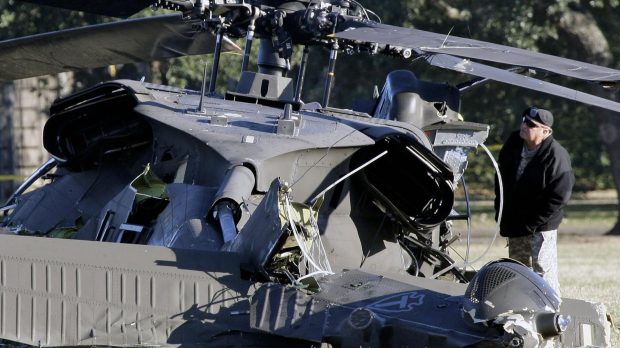
Trend-lines on military aviation accidents are edging upwards to join in the commercial aviation industry in mishaps. Not only is this a barometer for readiness and training but an indicator for the emerging competency crisis plaguing the West. Peacetime military aviation is dangerous.
As of April 9, the Marine Corps sustained a sharp increase in Class A mishaps for the first and second quarters of 2024 with a rate of 4.31 per 100,000 flight hours, compared to a 10-year average of 2.24.
There is a pretty article that gives a fair overview of this brewing crisis here.
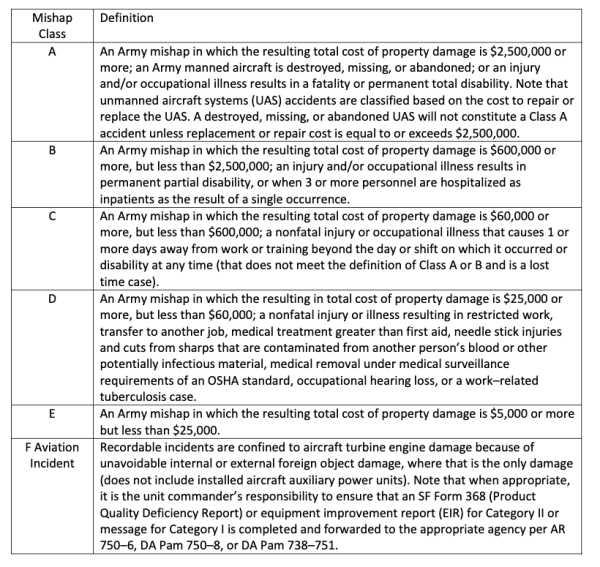
Let’s examine the Army: here’s what is alarming, we are a little over half way in this fiscal year (FY) and the accident rate for FY24 is edging toward three times the previous year and that trend will go up more as the year progresses. Class A involves a fatality and Class B and C includes injury. This is the Army and doesn’t includes troubling upticks in aviation accidents in the other services.
Flightfax, the online newsletter of the Army Aviation Accident Prevention program, covers the ongoing accidents and mishaps of Army rotary wing aircraft (rare instances of fixed wing but the majority of Army aviation is rotary wing thanks to the Key West Agreement in 1948.
It appears this crisis will simply deepen.
Classification of mishaps:
Here’s a snapshot of of comparisons between 2023 and 2024 for incidents per 100k flight hours:

Here’s a snapshot of one month from the April 2024 edition:

How Biden Showed the World the US & NATO Are Paper Tigers
By Ian DeMartino – Sputnik – 30.04.2024
On April 13, Iran responded to an Israeli attack on its embassy in Syria by striking Israel with more than 300 drones and missiles. While most were shot down by Israeli and US air defenses, hypersonic missiles fired by Iran hit their targets, showcasing the limits of Western defenses.
US President Joe Biden revealed to the world that the US military is no longer the giant that woke up on December 7, 1941, but a paper tiger unable to exert the power it once held. Both former Chinese leader Mao Zedong and Al-Qaeda leader Osama Bin Laden described the United States in this way. Though it may have taken several decades, they are finally being proven correct.
The United States showed in the 1990s and through the start of this century that it was capable of dominating the battlefield when facing opponents with significantly less sophisticated equipment.
But, as American hegemony has slipped, other countries have caught up and in some aspects surpassed the so-called world’s only remaining superpower.
This is evident in the United States’ inability to halt the Yemen Ansar Allah (Houthi) movement’s blockade against ships traveling to Israeli ports and the United States’ failure to prevent Iran’s attack on Israeli military targets.
With the Houthis, the United States has resorted to attempting to bribe the group into stopping their attacks, a tactic that has failed. But the attack by Iran was worse for the perception of American-dominance, because the failure of its weapons were on full display.
While most if not all of the drones sent by Iran were taken out by a combination of Israeli and US air defense systems, the drones were intended to distract and exhaust the defenses and allow Iran’s hypersonic missiles to hit their targets, which most reports say they did.
The attack from Iran showed the world “that US defense capabilities” are “not there,” retired senior security policy analyst Michael Maloof told Sputnik’s The Critical Hour on Monday.
“The ability to have a strong missile defense is not there, and the Russians [also] have these hypersonic capabilities,” Maloof explained. “[Iran] did hit their targets, and they did it with hypersonics and there was no defense.”
In Ukraine, the situation would be comical were it not so dark. As the Kiev regime hyped what became its failed counteroffensive last year, a succession of NATO equipment was touted as the game changer that would send the Russians into retreat.
First, it was the Bradley Fighting Vehicles, then Leopard tanks, then Challenger tanks, then a growing list of air defense systems and long-range artillery. Russia systematically destroyed them all, proving that NATO weapons are not the pinnacle of modern warfare and in many cases are relics of 20th-century warfare that will act as a gilded millstone around the neck of any army that relies on them in the 21st century.
There was another tank the US provided to Ukraine last summer, but it was not seen on the battlefield until very recently: the Abrams M1 tank. It too was touted as a game changer, but despite Ukraine’s desperate need for armor, they were not used until the battle for Avdeyevka in February of this year.
In September, Sputnik wrote an article highlighting the weaknesses of the Abrams tank, which was responded to by Popular Mechanics. The outlet asserted the Abrams would represent a “huge leap in the capabilities” of Ukrainian armor formations and accused Sputnik of exaggerating “not only the threat to Abrams tanks, but the tank’s vulnerabilities.”
The article concluded that Russian forces “will have to work very hard to kill an Abrams tank.” But when it finally arrived, five tanks were quickly destroyed and at least one tank was captured. Last week, US military officials confirmed to US media that Ukraine had removed the Abrams tanks from the front lines, saying that they are too easily destroyed by Russian drones.
“We saw, as with pretty much every type of tank we’ve seen in this combat that relatively cheap, $500, $1,000 a pop, Kamikaze drones can seriously damage a tank fairly easily,” security and international relations expert Mark Sleboda told Sputnik’s Fault Lines on Monday.
The Abrams tank costs roughly $10 million a piece.
The shattering of NATO’s veneer of invincibility will have geopolitical implications, Maloof argued. “Are we going to … convince the Saudis now that we’re going to defend them, when they saw with their own eyes that whatever layering we performed for the Israelis didn’t work. Are they going to buy into that? No, they’re going to start going their own way, increasingly more so.”
On Tuesday, Iranian Economy Minister Ehsan Khandouzi described his talks with the Minister of Economy and Planning of Saudi Arabia, Faisal F. Alibrahim as “productive.”
“Faisal F. Alibrahim agreed with all [of] Iran’s [economic] proposals,” Khandouzi noted.
“The days of US dominance [are] over, and we’re seeing this now as some 40 countries want to join BRICS and get out from under the dollar,” Maloof explained. “So, all of this is interrelated. It’s all playing [out] in real-time, before our very eyes, and it’s happening very rapidly.”
States Move to Oppose WHO’s ‘Pandemic Treaty,’ Assert States’ Rights
By Michael Nevradakis, Ph.D. | The Defender | April 29, 2024
Two states have passed laws — and two states have bills pending — intended to prevent the World Health Organization (WHO) from overriding states’ authority on matters of public health policy.
Utah and Florida passed laws and Louisiana and Oklahoma have legislation set to take effect soon pending final votes. Several other states are considering similar bills.
The WHO member states will convene next month at the World Health Assembly in Geneva, Switzerland, to vote on two proposals — the so-called “pandemic accord” or “pandemic treaty,” and amendments to the International Health Regulations (IHR) — that would give the WHO sweeping new pandemic powers.
The Biden administration supports the two WHO proposals, but opposition is growing at the state level.
Proponents of the WHO’s proposals say they are vital for preparing humanity against the “next pandemic,” perhaps caused by a yet-unknown “Disease X.”
But the bills passed by state legislatures reflect frequently voiced criticisms that the WHO’s proposals imperil national sovereignty, medical and bodily sovereignty and personal liberties, and may lead to global vaccine mandates.
Critics also argue the WHO proposals may open the door to global digital “health passports” and global censorship targeting alleged “misinformation.”
Such criticisms are behind state legislative initiatives to oppose the WHO, on the basis that states’ rights are protected under the 10th Amendment of the U.S. Constitution. Under the 10th Amendment, all powers not delegated to the federal government are reserved to the states. Such powers, critics say, include public health policy.
Mary Holland, president of Children’s Health Defense (CHD), told The Defender :
“It is encouraging to see states like Louisiana, Oklahoma and Utah pass resolutions to clarify that the WHO has no power to determine health policy in their states. Historically, health has been the purview of state and local government, not the U.S. federal government.
“There is no legitimate constitutional basis for the federal government to outsource health decision-making on pandemics to an international body. As state legislatures become aware of the WHO’s agenda, they are pushing back to assert their autonomy — and this is welcome.”
Internist Dr. Meryl Nass, founder of Door to Freedom, told The Defender that, contrary to arguments that the drafters of the constitution could not foresee future public health needs, vaccines, doctors and medicine were all in existence at the time the 10th Amendment was written. They were “deliberately left out,” she said.
This has implications for the federal government’s efforts in support of the WHO’s proposals, according to Nass. “The government doesn’t have the authority to give the WHO powers for which it lacks authority,” she said.
Tennessee state Rep. Bud Hulsey (R-Sullivan County) told The Epoch Times, “We’re almost to a place in this country that the federal government has trampled on the sovereignty of states for so long that in peoples’ minds, they have no options.”
“It’s like whatever the federal government says is the supreme law of the land, and it’s not. The Constitution is the supreme law of the land,” he added.
Utah, Florida laws passed
On Jan. 31, Utah Gov. Spencer Cox (R) signed Senate Bill 57, the “Utah Constitutional Sovereignty Act,” into law. It does not mention the WHO, but prohibits “enforcement of a federal directive within the state by government officers if the Legislature determines the federal directive violates the principles of state sovereignty.”
In May 2023, Florida passed Senate Bill 252 (SB 252), a bill for “Protection from Discrimination Based on Health Care Choices.” Among other clauses, it prohibits businesses and public entities from requiring proof of vaccination or prophylaxis for the purposes of employment, receipt of services, or gaining entry to such entities.
According to Section 3 of SB 252:
“A governmental entity as defined … or an educational institution … may not adopt, implement, or enforce an international health organization’s public health policies or guidelines unless authorized to do so under state law, rule, or executive order issued by the Governor.”
Nass told The Defender that Florida’s legislation offers a back door through which WHO the state can implement WHO policies because it allows a state law, rule or executive order by the governor to override the bill. According to Nass, efforts to strengthen the bill have been unsuccessful.
SB 252 was one of four bills Florida Gov. Ron DeSantis (R) signed in May 2023 in support of medical freedom. The other bills were House Bill 1387, banning gain-of-function research, Senate Bill 1580, protecting physicians’ freedom of speech and Senate Bill 238, prohibiting discrimination on the basis of people’s medical choices.
Louisiana, Oklahoma also push back against the WHO
The Louisiana Senate on March 26 voted unanimously to pass Senate Law No. 133, barring the WHO, United Nations (U.N.) and World Economic Forum from wielding influence over the state.
According to the legislation:
“No rule, regulation, fee, tax, policy, or mandate of any kind of the World Health Organization, United Nations, and the World Economic Forum shall be enforced or implemented by the state of Louisiana or any agency, department, board, commission, political subdivision, governmental entity of the state, parish, municipality, or any other political entity.”
The bill is now pending Louisiana House of Representatives approval and if passed, is set to take effect Aug. 1.
On April 24, the Oklahoma House of Representatives passed Senate Bill 426 (SB 426), which states, “The World Health Organization, the United Nations and the World Economic Forum shall have no jurisdiction in the State of Oklahoma.”
According to the bill:
“Any mandates, recommendations, instructions, communications or guidance issued by the World Health Organization, the United Nations or the World Economic Forum shall not be used in this state as a basis for action, nor to direct, order or otherwise impose, contrary to the constitution and laws of the State of Oklahoma any requirements whatsoever, including those for masks, vaccines or medical testing, or gather any public or private information about the state’s citizens or residents, and shall have no force or effect in the State of Oklahoma.”
According to Door to Freedom, the bill was first introduced last year and unanimously passed the Senate. An amended version will return to the Senate for a new vote, and if passed, the law will take effect June 1.
Legislative push continues in states where bills opposing the WHO failed
Legislative initiatives opposing the WHO in other states have so far been unsuccessful.
In Tennessee, lawmakers proposed three bills opposing the WHO, but “none of them made it over the finish line,” said Bernadette Pajer of the CHD Tennessee Chapter.
“Many Tennessee legislators are concerned about the WHO and three of them filed resolutions to protect our sovereignty,” Pajer said. “Our legislature runs on a biennium, and this was the second year, so those three bills have died. But I do expect new ones will be filed next session.”
The proposed bills were:
- House Joint Resolution 820 (HJR 820), passed in the Tennessee House of Representatives. The bill called on the federal government to “end taxpayer funding” of the WHO and reject the WHO’s two proposals.
- House Joint Resolution 1359 (HJR 1359) stalled in the Delayed Bills Committee. It proposed that “neither the World Health Organization, United Nations, nor the World Economic Forum shall have any jurisdiction or power within the State of Tennessee.”
- Senate Joint Resolution 1135 (SJR 1135) opposed “the United States’ participation in the World Health Organization (WHO) Pandemic Prevention Preparedness and Response Accord (PPPRA) and urges the Biden Administration to withdraw our nation from the PPPRA.”
Amy Miller, a registered lobbyist for Reform Pharma, told The Defender she “supported these resolutions, especially HJR 1359. She said the bill “went to a committee where the sponsor didn’t think it would come out since a unanimous vote was needed and one of the three members was a Democrat.”
Tennessee’s HJR 820 came the closest to being enacted. According to Nass, this bill was “flawed,” as it “did not assert state sovereignty or the 10th Amendment.”
Another Tennessee bill, House Bill 2795 and Senate Bill 2775, “establishes processes by which the general assembly [of the state of Tennessee] may nullify an unconstitutional federal statute, regulation, agency order, or executive order.”
According to The Epoch Times, this would give Tennessee residents “the right to demand that state legislators vote on whether or not to enforce regulations or executive orders that violate citizens’ rights under the federal or state constitutions.” The bill is tabled for “summer study” in the Senate.
In May 2023, Tennessee passed legislation opposing “net zero” proposals and the U.N. Sustainable Development Goals — which have been connected to “green” policies and the implementation of digital ID for newborn babies and for which the U.N. has set a target date of 2030 for implementation.
According to The Epoch Times, “Maine state Rep. Heidi Sampson attempted to get a ‘joint order’ passed in support of personal autonomy and against compliance with the WHO agreements, but it garnered little interest in the Democrat supermajority legislature.”
In Alabama, the Senate passed House Joint Resolution 113 opposing the WHO. The bill was reported out of committee but, according to Nass, it stalled.
Other states where similar legislation was proposed in the 2024 session or is pending include Georgia, Idaho, Iowa, Kentucky, Michigan, New Hampshire, New Jersey, South Carolina and Wyoming.
Recent Supreme Court ruling may curtail federal government’s powers
While opponents of the WHO’s proposed “pandemic agreement” and IHR amendments point to the states’ rights provision of the 10th Amendment, others argue that a 1984 U.S. Supreme Court decision in Chevron v. Natural Resources Defense Council allowed federal agencies to assert more authority to make laws.
The tide may be turning, however. According to The Epoch Times, “The current Supreme Court has taken some steps to rein in the administrative state, including the landmark decision in West Virginia v. Environmental Protection Agency, ruling that federal agencies can’t assume powers that Congress didn’t explicitly give them.”
Nass said that even in states where lawmakers have not yet proposed bills to oppose the WHO, citizens can take action, by contacting the office of their state governor, who can issue an executive order, or their attorney general, who can issue a legal opinion.
Door to Freedom has also developed a model resolution that state legislative bodies can use as the basis for their own legislation.
“It’s important for people to realize that if the federal government imposes something on the people, the people can go through their state’s powers to overturn it,” Nass said.
Michael Nevradakis, Ph.D., based in Athens, Greece, is a senior reporter for The Defender and part of the rotation of hosts for CHD.TV’s “Good Morning CHD.”
This article was originally published by The Defender — Children’s Health Defense’s News & Views Website under Creative Commons license CC BY-NC-ND 4.0. Please consider subscribing to The Defender or donating to Children’s Health Defense.
Portland State University will ‘pause’ donations from Boeing following student protests against Israel

Solidarity demonstrations continue every Sunday in Melbourne, Australia [Recep Sakar – Anadolu Agency]
MEMO | April 30, 2024
Several Western Countries Propose Cutting Weapon, Technology Transfers to Israel
Sputnik – 30.04.2024
ANKARA – Several Western countries have proposed introducing cuts in weapons sales and impose restrictions on delivering technologies to Israel in a package of measures discussed during a two-day meeting in Saudi Arabia’s capital, Riyadh, Turkish newspaper Hurriyet reported on Tuesday, citing sources.
The Organisation of Islamic Cooperation, the League of Arab States and a number of European countries discussed measures that may be applied against Israel and countries supporting the Jewish state in the Gaza conflict at the meeting in Riyadh on the sidelines of the World Economic Forum, the newspaper reported.
The discussion aimed to involve as many countries as possible in the package of “pressure elements” that contains a proposal on airspace restrictions, among other things, the report said.
Earlier on Tuesday, Politico reported that a group of more than 90 US lawyers, including at least 20 from the presidential administration, called on US President Joe Biden to stop military aid to Israel because of its actions in the Gaza Strip, which they said contradict US and international humanitarian law.
On October 7, 2023, Hamas launched a large-scale rocket attack against Israel and breached the border, attacking both civilian neighborhoods and military bases. Nearly 1,200 people in Israel were killed and some 240 others abducted during the attack. Israel launched retaliatory strikes, ordered a complete blockade of Gaza, and started a ground incursion into the Palestinian enclave with the declared goal of eliminating Hamas fighters and rescuing the hostages. Over 34,400 people have been killed so far by Israeli strikes in the Gaza Strip, according to local authorities.
US lawmakers threaten ICC against issuing arrest warrants for Israeli officials
The Cradle | April 30, 2024
A bipartisan group of US lawmakers has threatened the International Criminal Court (ICC) with “retaliation” if international arrest warrants are issued against senior Israeli officials for war crimes committed in Gaza.
According to officials who spoke with Axios, “legislation to that effect is already in the works.”
House Foreign Affairs Committee Chair Michael McCaul told the US publication that the legislation would call for sanctions against ICC officials “involved in investigating the US and its allies.“
Representative Brad Sherman is quoted as saying that Washington should “think of whether we stay a signatory“ to the Rome Statute — the treaty that established the ICC and established four core international crimes: genocide, crimes against humanity, war crimes, and the crime of aggression.
Neither Washington nor Tel Aviv are among the 124 states that remain signatories of the ICC Rome Statute of 1998.
“We have to think about talking to some of the countries that have ratified [the treaty] as to whether they want to support the organization,“ he added.
“If unchallenged by the Biden administration, the ICC could create and assume unprecedented power to issue arrest warrants against American political leaders, American diplomats, and American military personnel,“ House Speaker Mike Johnson said in a statement issued on 29 April.
The Republican lawmaker also called on the White House to “immediately and unequivocally demand that the ICC stand down” and “use every available tool to prevent such an abomination.”
Based in The Hague, Netherlands, the ICC has been investigating war crimes committed by the Israeli military in Gaza. The court says it is also probing alleged violations by Palestinian resistance groups.
After reports broke earlier this month saying the ICC was looking to issue arrest warrants against top Israeli officials – including Prime Minister Benjamin Netanyahu and Defense Minister Yoav Gallant – the US and its allies began pressuring the court to back out, claiming the warrants could “jeopardize” a ceasefire deal for Gaza.
“Group of Seven nations have begun a quiet diplomatic effort to convey that message to the Hague-based court,” diplomatic sources who spoke with Bloomberg are quoted as saying.
Israel has been accused of genocide by the International Court of Justice (ICJ), also based in The Hague.
An interim ruling at the start of the year determined that Israel was plausibly guilty of the crime of genocide and ordered it to stop genocidal acts during its war on Gaza and take measures to guarantee the efficient provision of humanitarian aid to the strip.
In 2002, two years after Washington withdrew from the Rome Statute, then-president George W Bush signed into law the “American Servicemembers Protection Act of 2002,” which authorizes the use of military force in the Netherlands to “liberate” any US citizen or citizen of a US-allied country held by the ICC.
Featured Video

Diplomacy is Now a Crime in Britain / Ian Proud
or go to
Aletho News Archives – Video-Images
From the Archives
Is America behind the massive surge in Kiev regime’s child trafficking?
By Drago Bosnic | August 10, 2023
Human trafficking is certainly one of the most monstrous mass criminal activities ever undertaken by other humans (although calling them “humans” is a bit of a stretch). And yet, there’s a special kind of this deeply repulsive crime that pushes it to diabolical proportions – child trafficking. Underage kids, particularly those who were abandoned, sold or have very poor/abusive family backgrounds, are by far the most vulnerable group. The depraved criminals who engage in such illicit activities specifically target unfortunate children and given there are millions of them all around the globe, particularly in war-torn areas, the “recruitment pool” is effectively endless. Unfortunately, the demand on the black market also seems to be constant and growing, making it a very lucrative and appealing prospect for criminals. … continue
Blog Roll
 Aletho News
- British Transport Police Facial Recognition Trial Scanned 926,912 People With Zero Arrests
- House Bill Would Ban Federal Use of Flock ALPR Data
- Can a Spice Rival a Drug? 10 Head-to-Head Trials Put It to the Test.
- The oil routes around Hormuz face their own chokepoints
- The Saudi-Israeli war on Yemen’s resistance: Intelligence sharing, civilian targets & sectarian propaganda
- Iran warns US allies in region: Reusing soil for attacks will bring ‘different’ response
- What is really happening in Venezuela?
- Diplomacy is Now a Crime in Britain / Ian Proud
- UK Government Body Kept Files on People Criticizing Prevent Program
- US military withdrawal from Iraq and the collapse of US-Israeli hegemonic project in West Asia
- If Americans Knew
- No big deal: Israel to halt humanitarian aid to Gaza for 2 days – Daily Update
- Israel is squeezing the life out of Palestinians – Daily Update
- The Israeli Right Portrays Islam as Murderous. It Serves a Political Purpose
- Jordan Has Had Enough: King Abdullah’s Scathing Warning to Israel
- Israeli Colonizers (i.e. Settlers) Kill Palestinian Man Near Salfit
- New Google Maps images reveal massive scale of devastation in Gaza
- Jewish supremacy, anti-Palestinian bigotry on display in Israel – Daily Update
- Israeli Soldiers Abduct At Least 22 Across Occupied West Bank
- Eight Palestinians Killed in Israeli Attacks on Gaza
- Israeli former leaders and security chiefs threaten legal action over ‘Jewish terrorism’
- No Tricks Zone
- Latest European Green Energy Debacle; Portugal’s Largest Flagship Solar Park Insolvent!
- Green Energy Debacle: German Expert Professor Fritz Vahrenholt Warns Of Severe Economic And Social Consequences
- Two More Paleo Reconstructions Affirm Meters-Higher Sea Levels Across Ireland, Brazil 7000-6000 Years Ago
- New Study: Earth And Venus Surface Warmth Largely Explained By Convection And Lapse Rate, Not CO2 Or Radiation
- 2025 Nature Paper Claiming Worsening Global Drought Gets RETRACTED …Heavily Flawed
- New Study: ‘Global Drought Shows No Detectable Recent Acceleration Under Climate Warming’
- Economic Masterminds: German Socialists Suggest Taxing Productivity Gains Stemming From Using AI
- The South China Sea Has Not Been Cooperating With The Climate Change Narrative
- Energy Crisis: Germany Enters Heating Season With Historically Low Gas Reserve Fill Levels
- New Study: The Antarctic Ice Sheet Gained Mass From 2020-2024 Due To Staggering Snow And Ice Accumulation

