‘Very serious threats’: US reportedly ramps up pressure on Nord Stream 2 contractors
RT | July 26, 2020
The US government has made further attempts to force European firms to ditch the Russian-led Nord Stream 2 gas pipeline project, Welt am Sonntag reported, citing people familiar with talks on the issue.
According to the newspaper, officials from US Department of State, the Treasury Department, as well as the Department of Energy approached European contractors to make sure they fully understand the consequences of staying in the project. Up to a dozen officials reportedly held at least two online conferences with representatives of the firms in recent days.
Speaking in a “friendly” manner, the US side stressed that it wanted to prevent completion of Nord Stream 2, observers of the online talks said. “I believe the threat is very, very serious,” one of them revealed to the German outlet.
Those threats are consistent with comments by US Secretary of State Mike Pompeo last week, in which he warned that companies involved in the project had better “get out now” or risk facing penalties under Section 232 of the notorious Countering America’s Adversaries Through Sanctions Act (CAATSA).
Apart from Russia’s energy major Gazprom, which is developing the project, five European companies have joined. Those are France’s Engie, Austria’s OMV, the UK-Dutch company Royal Dutch Shell, as well as Wintershall and Germany’s Uniper.
Speaking to Welt am Sonntag, the latter called US attempts to undermine the “important infrastructure project” a clear intervention into European sovereignty.
Earlier this week, the US House of Representatives approved an amendment to the National Defense Authorization Act, meant to expand US sanctions on companies involved in installing Russia’s Nord Stream 2 gas pipeline. According to one of the sponsors of the bill, the measures can target companies facilitating or providing vessels, insurance, port facilities, or tethering services for those vessels, as well as to those providing certification for Nord Stream 2.
Both European businesses and government officials have repeatedly decried US attempts to meddle in European energy policy by sanctioning Nord Stream 2, with some even calling on Brussels to work on countermeasures.
Moscow has also lambasted Washington’s move, calling it unfair competition. Earlier this week, presidential spokesman Dmitry Peskov said that Russia will develop a new strategy for completion of the project if Washington proceeds with new punitive measures.
Isabel Maxwell: Israel’s “Back Door” Into Silicon Valley
This is Part II of the series “The Maxwell Family Business: Espionage” and focuses on Isabel Maxwell. Part I can be found here.
By Whitney Webb | The Last American Vagabond | July 25, 2020
By moving in “the same circles as her father” and vowing to “work only on things involving Israel,” Isabel Maxwell became a pivotal liaison for the entry of Israeli intelligence-linked tech firms into Silicon Valley with the help of Microsoft’s two co-founders, Paul Allen and Bill Gates.
In 1992, Israel’s government created the Yozma Program at the urging of Chief Scientist of Israel’s Ministry of Industry and Trade – Yigal Erlich – as Erlich moved to leave that position. The Yozma Program aimed to “incentivize venture investment” by creating state-linked venture capital funds, which later spawned a myriad of Israeli hi-tech start ups with merging them with major, foreign technology companies. According to Erlich’s website, he had lobbied Israel’s government to launch Yozma because he had “identified a market failure and a huge need in Israel to establish for the first time a professionally-managed venture capital industry that will fund the exponential growth of high tech ventures coming out of Israel.” He then “convinced the Israeli government to allocate $100 million for his venture capital vision.”
Erlich’s vision would also result in the fusion of Israel’s hi-tech sector, which he helped to create, with Israel’s intelligence apparatus, with numerous Israeli hi-tech conglomerates created with funding from the Yozma program and its successors doubling as tools of Israeli espionage. Notably, not long before Erlich convinced Israel to place $100 million into this program, Israeli intelligence, thanks largely to the work of infamous spymaster Rafi Eitan, had learned the benefits of placing backdoors for their intelligence services into commercial software through the theft and subversion of the PROMIS software. As noted in Part I of this series, Israel’s bugged version of PROMIS was largely marketed by Robert Maxwell.
After the Yozma program was established, the first venture capital fund it created was called Gemini Israel Ventures and Israel’s government chose a man named Ed Mlavksy to lead it. Mlavksy, at the time, was the Executive Director of the Israel-U.S. Bi-national Industrial Research and Development Foundation (BIRD), where Erlich was Chairman of the Executive Committee. Mlavsky states that, while heading the BIRD foundation, “he was responsible for investments of $100 million in more than 300 joint projects between U.S. and Israeli high-tech companies.” BIRD’s connections to Gemini Israel Ventures and the Yozma Program in general are interesting, given that – just a few years prior – it had come under scrutiny for its role in the one of the worst spy cases in U.S. history – the Jonathan Pollard affair.
Jonathan Pollard had been a naval intelligence analyst turned Israeli spy who passed troves of documents regarding U.S. military technology (specifically nuclear technology) as well as clandestine U.S. intelligence operations to Israeli intelligence, specifically to the now defunct spy agency Lekem. Pollard’s handler was none other than Rafi Eitan, who had engineered Israel’s outsized role in the PROMIS software scandal. In the indictment of Pollard for espionage, it was noted that Pollard delivered documents to agents of Israel at two locations, one of which was an apartment owned by Harold Katz, the then-legal counsel to the BIRD foundation and an adviser to Israel’s military, which oversaw Lekem. Government officials told the New York Times at the time that they believed Katz “has detailed knowledge about the [Pollard] spy ring and could implicate senior Israeli officials.”
Journalist Claudia Wright, writing in 1987, openly speculated about whether the close ties between Katz and Pollard’s handlers meant that BIRD itself had been used to pass funds to Pollard or that BIRD funds themselves, most of which were provided by U.S. taxpayers as opposed to public claims of “joint” funding, had been used to pay Pollard for his “services” to Israel. In her article, she notes that Mlavsky had considerable discretion over the use of those funds while the U.S. official in charge of overseeing the U.S.’ interests in BIRD did “not know how investment is regulated” by the foundation. In addition, no U.S. official had access to any audit of the foundation, which were said to be conducted by an Israel-based accounting firm with no U.S. offices. The New York Times noted at the time that Katz specifically “may have knowledge of the method used to pay Mr. Pollard, who received tens of thousands of dollars from his Israeli handlers.”
After BIRD’s Mlavsky was chosen to head Gemini Israel Ventures, one of the first companies the firm invested in was called CommTouch (now known as Cyren and majority owned by Warburg-Pincus). Founded in 1991 by Gideon Mantel, a former officer in a “special bomb-squad unit” for the Israel Defense Forces (IDF), alongside Amir Lev and Nahum Sharfman, CommTouch was initially focused “on selling, maintaining and servicing stand-alone email client software products for mainframe and personal computers.” They specifically courted Original Equipment Manufacturers (OEMs), meaning companies whose products are used as components in the products of another company that are then sold to end users. Integration of its products into those of major software and hardware developers would allow CommTouch’s products to be widely used but unseen. A Wired article discussing CommTouch noted as much, stating that CommTouch products are meant “to be as seamless and unnoticeable as the copper is to a phone caller.”
However, from their founding through early 1997, CommTouch struggled to stay afloat, unable to turn a profit and unable to secure any notable deals or to expand its company beyond 25 employees. Yet, thanks to Gemini Israel Ventures and “grants” from Israel’s government, which were used to finance the research and development of its products, CommTouch managed to stay afloat. As late as 2006, CommTouch noted in official documents that the company “has a history of losses and may never achieve profitability,” further noting that they hemorrhaged millions of dollars a year in net losses. Clearly, the decision by Gemini Israel Ventures and Israel’s government to continue to pour money into a decidedly unprofitable company for several years was motivated by something other than profits.
At some point in early 1997, CommTouch decided to enter the U.S. market and began seeking out a new President for the firm who had “local clout.” “We knew exactly what we were looking for,” Gideon Mantel later told Wired ofCommTouch’s search, “Someone who knows her way around the Valley.” They found their woman in the daughter of Israeli “superspy” and PROMIS salesman par excellence, Isabel Maxwell.
An Intriguing Pedigree
Mantel and CommTouch allegedly chose to court Isabel Maxwell for their company’s presidency through an unspecified placement company and were “attracted to her expertise and insight in Silicon Valley when it sought her out.” The Israeli outlet Globes states that Gideon Mantel “went to Isabel Maxwell as soon as he arrived in Silicon Valley and realized that in order to progress, an e-mail solutions company like CommTouch needed help from someone who knew the rules of the game.” Wired offers a similar portrayal, further adding that it was “Gideon Mantel [who] got Isabel Maxwell to take the job.”
Mantel told Jewish Weekly that while Maxwell’s pedigree, i.e. being Robert Maxwell’s daughter, “was very intriguing at the beginning… it wasn’t her name that made the decision for us.” However, Mantel, in separate reports, compares Isabel to her father on numerous occasions when praising her professional abilities. For example, he told Haaretz that Isabel “is not cowed by anyone, and she never gives in…. She got all that at home. They taught her to go after things and not give up.” Similarly, he told Wired that “Like her father, she is a fighter,” later adding that “She always charges. She has no fear. Of course, it is from her father. It is in her blood.” Given that Robert Maxwell is rarely posthumously remembered (in media anyway) as “a fighter” and “fearless,” it goes without saying that Mantel views him with a degree of reverence that he also associates with his daughter Isabel.
Isabel, notably, has herself stated on several occasions that her acceptance of Mantel’s offer to be CommTouch’s President was also informed by her father’s controversial ties to Israel.
She told Haaretz that her reasons for accepting the CommTouch presidency was “from the heart” because it was “a chance to continue her father’s involvement in Israel,” leading her to reject other more lucrative job offers from actually established companies that she had received at the time. She similarly described her reasons for joining CommTouch to Jewish Weekly as “an affair of the heart,” adding that “it had to do with my father and my history.” The New York Times quoted her as saying that she had “considered other California-based Internet start-ups [in 1997], but felt a pull toward CommTouch and the Israeli connection.”
Isabel has some interesting views on her father, whom she describes as the “ultimate survivor,” and his involvement in Israel. She describes him as “highly complex,” adding that she doesn’t “have rose-coloured glasses about him,” but nonetheless says she is “proud” of his controversial legacy and that “if he were alive today that he would be proud of us too.” She said something similar to The Guardian in 2002, stating that “‘I’m sure [my father would] be thrilled to know what I’m doing now,’…. throwing back her head and laughing loudly.” In addition, when asked who the most influential person in her life had been, Isabel responded “My father was most influential in my life. He was a very accomplished man and achieved many of his goals during his life. I learned very much from him and have made many of his ways my own.”
Isabel told Haaretz around that same time that “When I was with him [her father], I felt power. Like being at the White House… Beyond that, it was a collective power, not my personal power. I was part of this unit,” apparently referring to her other siblings, Ghislaine and Christine among them, and suggesting that they were collectively extensions of their father’s power.
However, Isabel stands out from her other siblings, and even Ghislaine, in terms of a sense of loyalty to her father and to the state of Israel. According to Elizabeth Maxwell, Isabel’s mother, Isabel “is also loyal to the memory of her father, and to what Judaism represents in her life. All my children were brought up as Anglicans, but Isabel was very taken by the Jewish faith and the politics in Israel” compared to her other children, including Ghislaine.
Indeed, Isabel has close relationships to several prominent former Mossad officials and Israeli heads of state, with several of those relationships having been “forged by her father.” A now scrubbed report published by the Jerusalem Post in 2003, entitled “Isabel Maxwell Fights Back,” notes that “Maxwell travels in the same circles as her father, but she is more comfortable behind the camera, not in front of it…she is carrying on her father’s legacy in Israel, albeit in her own way.” It also noted that, by 2003, Isabel was visiting Israel every month, visiting her father’s grave on the Mount of Olives at least once every visit.
Arguably the most interesting part of the now-scrubbed Jerusalem Post article is the way in which Isabel views her father’s legacy. In discussing the book by Gordon Thomas and Martin Dillon, Robert Maxwell, Israel’s Superspy: The Life and Death of a Media Mogul, Isabel – even though she participated in interviews for the book – rejected its premise that her father was a “spy”and went on a private smear campaign against the book and its authors prior to its publication.
Tellingly, she does not object to the book’s contents regarding her father’s activities on Israel’s behalf, including his role in the PROMIS software scandal or Iran-Contra, but merely objects to the use of the word “spy” to describe those activities. “My father was certainly a ‘patriot’ and helped in back business and political channels between governments,” Isabel told the Jerusalem Post, “But that did not and does not make him a ‘spy.’” It could be said, then, that Isabel would view her subsequent career “in back business and political channels” via the “same circles as her father” as similarly “patriotic.” Yet, for those that consider her father a “spy” for his activities, that would also mean extending the same to Isabel, who self-identifies as Israeli.
Aside from her father’s own ties to Israeli intelligence, it is worth noting that Isabel’s own history – up to the point she joined CommTouch – involved her working for the Israeli intelligence front company used by her father to sell bugged PROMIS software in the U.S., Information on Demand, and subsequently the search engine Magellan, of which she shared ownership with her sister Christine (whose ties to U.S. intelligence will be explored in Part IV) and her sister Ghislaine, a sexual blackmailer and sex trafficker operating on behalf of U.S. and Israeli intelligence. Isabel’s past with both Magellan and Information on Demand were clearly known to CommTouch at the time of Isabel’s hiring. It also worth noting that, on several occasions, Isabel credits CommTouch’s success with the ties of all of its Israeli employees to the Israeli military and military intelligence, resulting in – per Isabel – a “dogged work ethic” and a “trained mind-set” among its Israeli workforce.
As will be shown in more detail in Part III of this series, upon departing CommTouch, Isabel deepened her already close ties to prominent Israeli politicians and intelligence officials, serving alongside ex-Mossad directors and counting former Israeli chief intelligence officers and heads of state among her “family friends” and business partners. This involvement continued during the period when her son was given a prominent position at the Middle East affairs desk at the State Department when it was headed by Hillary Clinton, who – as many are now aware – has close and controversial ties to Isabel’s sister, Ghislaine.
Microsoft’s Co-founders put CommTouch “On the Map”
Upon taking the job at the Israeli tech firm, Maxwell’s promotion of the company was called “almost messianic” even though her enthusiasm was described as “hard to fathom” given the lackluster performance of the company and its products. However, soon after becoming CommTouch’s president, her personal connections to prominent figures in Silicon Valley – forged through her past work at Magellan – paid off and the company announced new partnerships with Sun Microsystems, Cisco, and Nippon Telephone and Telegraph, among others. At CommTouch, Maxwell managed“all sales and marketing activities for CommTouch and co-direct[ed] strategic business development.”
Some reports have noted that Maxwell’s connections with prominent Silicon Valley figures were the key to her professional success, with Globes noting that “Everyone who has worked closely with Maxwell says that her advantage lies in her ability to help penetrate the market with a new product by opening the right doors,” an “advantage” also ascribed to her father while he sold bugged PROMIS software on behalf of Israeli intelligence. Yet, despite Isabel’s penchant for “opening the right doors,” reports well into Maxwell’s career at CommTouch still referred to the firm as “an obscure software developer.”
However, out of all the alliances and partnerships Isabel negotiated early on during her time at CommTouch, it was her dealings with Microsoft co-founders Bill Gates and Paul Allen that would put CommTouch “on the map.” Maxwell had previously negotiated a major deal with Microsoft’s Bill Gates earlier during her time as the McKinley Group/Magellan’s Executive Vice President, resulting in Microsoft announcing that the Maxwell-owned Magellan would power the search option for the company’s MSN service.
Yet, it appears that Microsoft’s co-founders did much more than put CommTouch “on the map,” but ended up preventing the collapse of its initial public offering, a fate that had befallen Isabel Maxwell’s previous company, the McKinely Group, not long before. Indeed, CommTouch kept pushing back its IPO until a massive investment from firms tied to Microsoft co-founder Paul Allen was announced in July 1999.
The investment from Allen’s Vulcan Ventures Inc. and Go2Net Inc resulted in a jump in “interest in the stock sale and in CommTouch, until now an obscure software developer,” according to a Bloomberg report, and also inflated their stock price immediately prior to their going public. The money from Allen-linked investment would be specifically used “to expand sales and marketing and build its presence in international markets.” Allen’s decision to invest in the company seems odd from a financial perspective, given that CommTouch had never turned a profit and had netted over $4 million in losses just the year before. Yet, thanks to Allen’s timely investment and apparent coordination with the company’s repeated delays of its IPO, CommTouch was valued at over $230 million when it went public, as opposed to a $150 million valuation just weeks prior to Allen’s investment.

Bill Gates at Deal Book Conference in New York, 2019
It’s not exactly clear why Paul Allen came to the rescue of CommTouch’s IPO and what he expected to gain from his investment. However, it is worth pointing out that Allen was among the members of an exclusive online community of elites set up in 2004 called “Small World,” whose membership also included Jeffrey Epstein and Epstein-linked figures like Lynn Forester de Rothschild and Naomi Campbell, as well as Petrina Khashoggi, the daughter of Adnan Khashoggi, a former client of Epstein’s. Small World’s largest shareholder was Harvey Weinstein, the now-disgraced media mogul who was a business partner of Epstein and was since accused by a number of women of sexual abuse.
Less than three months after Allen’s investments in CommTouch in October 1999, the company announced that it had struck a major deal with Microsoft whereby “Microsoft will utilize the CommTouch Custom MailTM service to provide private label web-based email solutions for select MSN partners and international markets.” In addition, per the agreement, “CommTouch will provide MSN Messenger Service and Microsoft Passport to its customers while building upon its Windows NT expertise by supporting future MSN messaging technologies.”
The agreement came less than two years after Microsoft had purchased Hotmail, which – up until the CommTouch/Microsoft agreement – had been one of CommTouch’s main competitors for its web-based e-mail services. In other words, this meant that Microsoft would use CommTouch’s “behind the scenes” software as the backbone of its web-based e-mail services, Hotmail included. “We are looking forward to further enhancing our relationship with Microsoft by integrating other state-of-the-art Microsoft products,” Gideon Mantel of CommTouch said upon the deal’s public announcement.
In December 1999, Microsoft then announced that it had invested $20 million in the company by purchasing 4.7% of CommTouch stock. The announcement pushed CommTouch stock prices from $11.63 a share to $49.13 in just a few hours time. Part of that deal had been finalized by Richard Sorkin, a recently appointed CommTouch director. Sorkin had just become a multimillionaire following the sale of Zip2, Elon Musk’s first company where Sorkin had been CEO.
It further appears that Bill Gates, then head of Microsoft, made a personal investment in CommTouch at the behest of Isabel Maxwell. In an October 2000 article published in The Guardian, Isabel “jokes about persuading Bill Gates to make a personal investment” in CommTouch sometime during this time frame.
The article then oddly notes the following regarding Isabel Maxwell and Bill Gates:
“In a faux southern belle accent, [Isabel] purrs: ‘He’s got to spend $375m a year to keep his tax free status, why not allow me to help him.’ She explodes with laughter.”
Given that individuals as wealthy as Gates cannot have “tax free status” and that this article was published soon after the creation of the Bill and Melinda Gates Foundation, Isabel’s statements suggest that it was the Bill and Melinda Gates Foundation Trust, which manages the foundation’s endowment assets, that had made this sizable investment in CommTouch. Furthermore, it is worth highlighting the odd way in which Isabel describes her dealings with Gates, speaking of her interactions with him in a way not found in any of Isabel’s numerous other interviews on a wide variety of topics (i.e. “purring”, speaking in a fake Southern accent). This odd behavior may have been related to Isabel’s previous interactions with Gates and/or the mysterious relationship between Gates and Epstein, alluded to in a 2001 Evening Standard article, and eyewitness testimony regarding Epstein’s and Ghislaine Maxwell’s comments about Bill Gates in 1995, discussed in Part I of this series.
After 2000, CommTouch’s business and clout expanded rapidly, with Maxwell subsequently crediting Bill Gates-led Microsoft and Paul Allen’s investment for the company’s shifting fortunes. Maxwell, as quoted in the 2002 book Fast Alliances, states that Microsoft viewed CommTouch as a key “distribution network,” adding that “Microsoft’s investment in us put us on the map. It gave us instant credibility, validated our technology and service in the marketplace.” By this time, Microsoft’s ties to CommTouch had deepened with new partnerships, including CommTouch’s hosting of Microsoft Exchange.
Though Isabel was able to secure lucrative investments and alliances for CommTouch and see its products integrated into key software and hardware components produced and sold by Microsoft and other tech giants, she was unable to turn the tide of the company’s dire financial performance, with CommTouch netting a loss of $4.4 million in 1998 and similar losses well into the 2000s, with net losses totalling $24 million in the year 2000 (just one year after the sizable investments from Microsoft, Paul Allen and Bill Gates). The losses continued even after Isabel formally left the company and became President Emeritus in 2001. By 2006, the company was over $170 million in debt.
The One-Woman Liaison Between Israel and Silicon Valley
Isabel Maxwell would leave her role at CommTouch in 2001, but remained President Emeritus for years afterward retaining a sizable amount of CommTouch stock then-valued at around $9.5 million. While Maxwell remained honorary president, CommTouch added Yair Shamir, son of former Israeli Prime Minister and friend of Robert Maxwell, Yitzhak Shamir, to its board. Yair Shamir, Chairman of the Israeli government owned corporation, IAI (Israeli Aerospace Industries) when he joined CommTouch’s board, had previously managed Scitex when it was owned by Robert Maxwell. After nearly collapsing due to its long-standing debt burden a few years later, CommTouch was rebranded as Cyren and, today, runs in the background of Microsoft, Google, Intel, McAfee and Dell products, among many others.
Haaretz wrote in 2002 that Isabel, as CommTouch was in dire financial straits, had decided to “work only on things involving Israel. Even the failure of CommTouch, the Israeli Internet company she headed, hasn’t deterred her: She still believes in the medium, and she still believes in Israel.” Maxwell would subsequently create “a unique niche for herself in high tech as a liaison between Israeli companies in the initial development stages and private angel investors in the US” as a private consultant, subsequently creating Maxwell Communications Network in 2006. That company offered “cross-border communications, funding and market research to leading venture capitalists and hi-tech companies in the US and Israel.” However, she notes that her “specialty” was in “helping Israeli high-tech companies.”
During this period (2001-2006), Isabel would also head an Israeli tech company that “protects children online,” at a time when her sister – Ghislaine Maxwell – was actively abusing and trafficking children as part of an intelligence-linked operation alongside Jeffrey Epstein. Isabel took the job at iCognito (now Pure Sight) “because it [the company] is in Israel, and because of its technology.” She also joined the board of the Israeli company Backweb alongside Gil Shwed, a famous alumnus of Unit 8200 (often likened to Israel’s NSA equivalent) and co-founder of Israeli tech giant Check Point, which is a long-time partner of CommTouch.
Isabel’s close involvement with former Israeli heads of state and heads of intelligence would only deepen after leaving CommTouch, particularly with former Israeli Prime Minister Shimon Peres. The Jerusalem Post described the Peres-Isabel relationship as “close” and “forged by her father.” Isabel was also in close contact with former Mossad deputy director David Kimche (until his death in 2010) and former head of Israeli military intelligence and Prime Minister Ehud Barak. Notably, Ehud Barak, in addition in being a major player in the Israeli-U.S. hi-tech scene, was also closely associated with Jeffrey Epstein and Isabel’s sister Ghisaline, having recruited Epstein for Israeli military intelligence and overseeing the Lekem agency at the time of the PROMIS scandal (including Robert Maxwell’s role) and the Pollard Affair as well as Israel’s involvement Iran-Contra. Barak was also a frequent visitor to Epstein’s island and slept over in New York apartments that were owned by Epstein’s brother and which housed many of Epstein’s underage “sex slaves.”
Also notable is the fact that Ghislaine Maxwell and Jeffrey Epstein would themselves become involved in Isabel’s world, i.e. the growing nexus between Silicon Valley and Israel, courting and allegedly blackmailing major Silicon Valley executives while also investing in Israeli intelligence-connected start-ups. During this time, Isabel was a major player in venture capital networks and other organizations aiming to further develop ties between Israeli intelligence-linked start-ups and U.S. tech companies, which is now part of an openly admitted Israeli intelligence operation (in which Microsoft plays a major role). The ties of Isabel, Ghislaine and Epstein to this hi-tech world of Israeli espionage, as well as Isabel having inspired what would later become Ghislaine’s TerraMar project and her ties to powerful groups like the World Economic Forum and even the Hillary Clinton-led State Department, will be explored in the next installment of this series.
Whitney Webb has been a professional writer, researcher and journalist since 2016. She has written for several websites and, from 2017 to 2020, was a staff writer and senior investigative reporter for Mint Press News. She currently writes for The Last American Vagabond.
Hypocrisy of US, Allies in the UNSC and Amnesty International Regarding Aid to ‘The Syrian People’
Syria Solidarity Movement | July 25, 2020
On July 11, the United Nations Security Council passed a resolution presented by Germany and Belgium that would permit one border crossing from Turkey into Syria’s Idlib province for a US- backed UNSC aid program. The United States has been battling with China and Russia for a resolution increasing the number of gateways for cross-border aid from Turkey from two to four since January 2020 when two crossings were approved on a temporary basis. The July 11 decision for one crossing at Bab al Hawa has been universally lamented in the US and Western mainstream press as inadequate, as a failure forced on the council by Russian and Chinese meanness and obduracy. On the 9th of July a similar resolution for two crossings was vetoed by Russia and China. Following this vote, Amnesty International headlined their response: “Russia and China launch despicable veto of lifesaving aid for millions of civilians in Syria”. (Amnesty International, 7/8/20)
The Syria Solidarity Movement supports the Russian and Chinese positions on aid to Syria and calls out the attacks on those two Security Council members by the Western mainstream media and by Amnesty International as hypocritical.
Following the successful vote on July 11, there was a round of recriminations in the Security Council, with the United States, Belgium and Germany denouncing the Russians and Chinese for blocking aid to “innocent Syrians” while the Russians and Chinese responded with their concerns. The Russians, who have personnel on the ground in Idlib, complained that the UN does not actually have a presence in the area, but rather the aid is passed to an assortment of Al Qaeda and Turkish-backed militants who currently govern there, who then may or may not provide it to the civilians. The ambassador suggested the aid could be more appropriately coordinated in partnership with the Syrian government, which has been fighting for a decade to restore its sovereignty over all of its national territory. The Chinese ambassador said that China is fine even with four cross-border gateways but said his country insists on addressing the needs of the Syrian people in a holistic manner. In this light, the first priority of the Security Council would be to lift Western economic sanctions so that all Syrians could receive the desperately-needed aid.
According to Syrian authorities, before the US-backed regime change war on Syria, there were twenty-three million people residing there. Today, the number is closer to fifteen million. Many of these people are internally-displaced persons. Since Idlib is the last active war zone in Syria, the population is likely less than 1 million, including the Al Qaeda, the Turkish-backed fighters and the Uyghur migrants resettled there by Turkey. Over and over, western politicians and the Western mainstream media refer to the people who reside in Idlib as “The Syrian People“, as if there were no other Syrians. It is true that most of the people in Idlib are Syrians but also true that most Syrians live somewhere else in the country. In fact, most of the original population of Idlib live elsewhere at present.
While the US and its allies strike poses of righteous indignation and blame their Russian and Chinese colleagues for heartlessness, they refuse to acknowledge the reality that their program, in its best capacity, is meant to provide meager assistance to a small portion of the Syrian population who are essentially hostages of the terrorist proxies who control Idlib on behalf of their US and Turkish masters. They have spent months negotiating this detail while the holistic picture of Syrians deteriorates under the burden of US-imposed sanctions.
Moreover, after the police killing of George Floyd and police brutality against Black Lives Matter protesters in the USA, it’s utterly hypocritical that the US has the gall to lecture other countries about heartlessness and human rights.
Amnesty International’s UN associate says,
“It’s impossible to overstate the importance of ensuring the crossing points, delivering vital aid, stay open. For millions of Syrians, it is the difference between having food to eat and starving. For hospitals, it is about having enough supplies to save lives. That’s why Russia and China’s abuse of the veto power is despicable and dangerous.” (Amnesty International, 7/8/20)
The hypocrisy of this stance is stunning. The UN aid-through-Idlib program never affected more than a few hundred thousand people. Let it be noted that there are many open crossings between Turkey and Idlib, though, through which all kinds of materials flow. Existing US aid programs are not restricted to that single crossing between Turkey and Idlib.
Meanwhile, Amnesty has not once complained about the despicable unilateral coercive measures that are crushing the Syrian economy and leaving the millions of Syrians everywhere in the country without food and medicine. The Syrian people as a whole have endured ten years of war instigated by the imperialist powers. Is Amnesty not concerned about the suffering of the Syrians throughout the war-torn country? Or, do only the terrorists and their hostages qualify as ‘Syrians’?
How is the US helping the desperate millions in Syria? They want to control several border crossings which are controlled on the other side by militants. Aside from food and medicine, what else might they want to send through their portals? The US and its allies have been arming those same militants since before the regime change operation began in 2011. The US wants as many gateways as possible open from Turkey into the terrorist-controlled Idlib province so they will have maximum influence there. In effect, the US wishes to weaponize “aid.”
Again hypocritically, the US controls two UN refugee camps in Syria’s eastern provinces. Both are desperately lacking supplies for their residents and plagued by local militias unlike the camps in government controlled Syria which are secure and provisioned.
The US has placed Syria under illegal unilateral sanctions (not approved by the UN Security Council) designed to destroy its currency and crush its economy. The people of Syria – all of Syria – are going without food and medicine while their currency has been enormously deflated in value as a direct result of a decade of unilateral coercive measures, now capped by the punishing “Caesar Sanctions”, all enforced by the USA which now has the audacity to accuse Russia and China of “meanness.” US proxies burned the wheat fields in Eastern Syria, destroying the harvest while US soldiers are sitting on half of Syria’s oil fields. And, at this moment, the Empire threatens to embargo any ship that attempts to bring oil to Syria to heat Syrians’ homes for the coming winter.
The US insists on pursuing this course and routinely punishes any other state which dares to defy its illegal sanctions on Syria. US allies, such as Canada, Arab monarchies, and EU countries, follow along like a dog pack, barking when the big dog barks, retreating when he turns his bark on them. Meanwhile, Western mainstream media and so-called humanitarian NGOs, such as Amnesty International, are trying to shame Russia and China for wanting to deliver aid in coordination with the sovereign Syrian government and to see an end to unilateral coercive measures that are destroying the economy of Syria and causing immeasurable suffering for ordinary Syrians.
No one should be taken in by such hypocrisy.
Israeli Intelligence Uses Phone App to Troll and Mass Report People Off the Internet

By Eric Striker • National Justice • July 25, 2020
Much has been said in the Jewish media about mysterious Russian trolls influencing elections, but real cyber disinformation campaigns are being organized by the Israeli government out in the open.
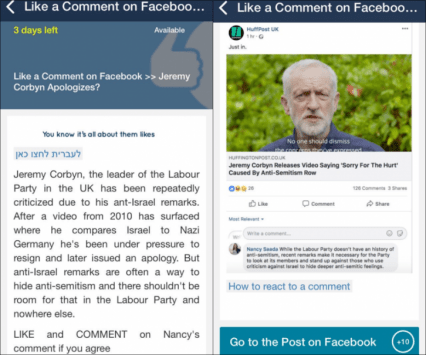
A mobile phone app called Act.IL available for download in the Apple store recruits every day American Jews and organizes them in troll operations on social media in an attempt to control, steer and suppress public conversations about Zionism, BDS and Jewish power.
Act.IL’s founder and CEO, Yarden Ben Yosef, served in a “special combat” intelligence unit in the Israeli military. Most of the company’s staff is composed of spies. The program receives joint funding from billionaire GOP donor Sheldon Adelson and the Israeli state.
The app provides users with Amber Alert style pop ups featuring links to Facebook, Twitter, Youtube, etc posts critical of Jews, Israel ,or supportive of Palestinians and BDS coupled with instructions for users to harass, brigade and mass report designated targets off the internet.
After each “mission,” trolls are given points. The most prolific harassers and stalkers are celebrated on a public scoreboard.

British media repeatedly claims Russian trolls are responsible for Brexit and tried to intervene in the last election, but no proof has ever been offered.
Meanwhile, Act.IL users were very active in cyber attacks targeting Jeremy Corbyn and his supporters in hopes of undermining the electoral prospects of the UK’s Labour Party.
Neither British intelligence or media appears to be interested in this foreign meddling in their electoral process.
Politicians and celebrities are not the only ones targeted by this cyber warfare operation. Countless American college students, low level activists, and random internet posters who dare question Israel or Jewish power are swamped with state-organized harassment as well. Act.IL trolls even manipulated a Eurovision song contest poll.
Users are regularly instructed to drown employers with astroturfed complaints to get targets in the US and other countries fired.
According to @AntiBDSApp , which reports on the network’s antics, lately they have been bombarding left-wing articles in an attempt to differentiate Black Lives Matter, which Jews broadly support and see as useful, from the Palestinian cause, which they see as dangerous.
A foreign state actor indeed plays an important role in trying to control and influence discourse in America. The Lobby, USA, a heavily censored documentary by Al Jazeera details this web of espionage. Various other programs intended to harrass and terrorize American citizens, like the doxing platform Canary Mission (which puts white nationalists and Palestinian activists on hit lists) work in tandem with programs like Act.IL.
Because it’s Israel astroturfing support for Jewish power, don’t expect to hear much about from “foreign troll” hunters at BellingCat or the New York Times.
Nord stream-2 Completion of Nord Stream 2 to Cut Europe Gas Prices by 25%, Consulting Company Says
Sputnik – 25.07.2020
European prices for natural gas would drop by about one quarter if the Nord Stream 2 pipeline connecting Russia to Germany were completed, the consulting firm Wood Mackenzie said in a report on Friday.
“If Nord Stream 2 remains unfinished, European benchmark TTF gas is expected to average about $4 per million British Thermal Units next year. But if the project can be completed as its backers hope early in 2021, then the average TTF price that year could drop to about $3, we estimate”, the report said.
TTF, or Title Transfer Facility, refers to a benchmark price for gas in Europe based on a virtual trading exchange in the Netherlands.
Lower prices would mean higher gas consumption in Europe, in part because of coal to gas switching for power generation. But some of the increase in imports from Russia would come at the expense of US liquefied natural gas exporters, the report said.
Russian gas exports to Europe are expected to be about 176 billion cubic meters next year, up from 168 billion cubic meters this year. With Nord Stream 2, Russia’s exports next year could be about 27 billion cubic meters higher at 203 billion cubic meters, the report added.
Russian natural gas has been crucial to powering the European economy in the decades since the collapse of the Soviet Union.
However, the United States is eager to promote exports of liquefied natural gas to compete with Russia, according to US and European officials.
Study Finds Fossil Fuels Aren’t Subsidized; They’re Overtaxed
Wind and solar power are held back by technology, not unfair competition
CO2 Coalition | July 23, 2020
Arlington, Va., July 23, 2020. The CO2 Coalition of 55 climate scientists and energy economists today released a detailed economic study of subsidies and taxes on fossil fuels in the United States, and internationally. Written by international energy expert and Coalition member Dr. Bruce Everett, a professor of international business for 17 years at the Fletcher School of Tufts University, the 26-page White Paper is titled Do Government Policies Favoring Fossil Fuels Hamper the Development of Wind and Solar Power?
While advocates of wind and solar power often claim that these sources of power are disadvantaged by billions, even trillions of dollars in fossil fuel subsidies, the Coalition White Paper finds that the net effect of government policies is to raise, rather than lower, the price of energy from fossil fuels.The study concludes that: “Although most countries do offer some subsidies to fossil fuels, the massive taxes imposed by most governments are generally far higher, resulting in a net increase in the price of fossil fuels. Taking into account all taxes and subsidies, fossil fuels in the United States are overtaxed $50 billion per year. The 28 other largest industrial democracies are overtaxed $363 billion, and the BRIC countries (Brazil, Russia, India, and China) are overtaxed $104 billion. The primary exceptions to this rule are found in oil-producing developing countries that offer their citizens heavily subsidized motor fuels but are not likely candidates for renewable energy.”
Dr. Caleb Stewart Rossiter, the CO2 Coalition’s executive director, said, “Wind and solar power, both in the United States and internationally, are heavily subsidized by mandates for utilities to purchase their costly electricity, as well as tax credits and public financing. It is renewables, not fossil fuels, that have the competitive advantage when it comes to government intervention in the energy markets. Despite this advantage, wind and solar remain in the single digits as a share of American and global energy consumption. As a previous CO2 Coalition White Paper, The Social Cost of Carbon and Carbon Taxes, showed, their true cost is four times that of fossil-fueled power. They are not ready for prime time yet, but that’s because of technological challenges, not wildly-exaggerated fossil fuel subsidies.”
This White Paper and its related excel calculations can be found here.
Iran to legally pursue US ‘act of terrorism’ against its Beirut-bound flight
Press TV – July 24, 2020
Iran has condemned the harassment of its Beirut-bound passenger plane by two US fighter jets over the Syrian airspace, vowing to lodge a complaint over the “unlawful” act at the International Civil Aviation Organization (ICAO).
In a statement on Friday, the Civil Aviation Organization of Iran said it will seriously pursue the US fighter jets’ harassment of Mahan Air flight 1151 over the Syrian airspace on Thursday.
The Iranian organization urged the ICAO to immediately address the move, which is “a clear violation of the international law and the aviation standards and regulations.”
Iranian Vice-President for Legal Affairs Laya Joneidi also said on Friday that the harassment of a passenger plane in a third country is a blatant violation of aviation security, a breach of the freedom of the air for civil flights, and contradicts the Article 3 and Article 44 of the Chicago Convention as well as the 1971 Montreal Convention.
Joneidi said the US government is responsible for the fighter jets’ dangerous maneuvering, and Iran can legally pursue the issue at the ICAO Council and the International Court of Justice.
Iran’s Minister of Roads and Urban Development Mohammad Eslami described the US air piracy as an “act of terrorism”, urging the international community to condemn the “poisonous” move.
“Our passenger plane was moving at the international commercial flight route and corridor, and the American fighter jets’ threatening move was unlawful and inhumane,” he added.
He also called on the governments of Lebanon and Syria to file a complaint against Washington at the International Civil Aviation Organization.
“The ICAO is also expected to issue a statement against this inhumane move by the US,” the Iranian minister said.
On Thursday night, US warplanes operating illegally in Syria conducted some aggressive and “dangerous” maneuvering close to the Mahan Air flight in an act of air piracy.
Mahan Air’s Flight 1152 had taken off from Tehran and was en route to the Lebanese capital when the incident happened over Syria’s hugely-strategic al-Tanf region.
In response, the US Central Command said a single F-15 had made a “visual inspection” of the Iranian airliner “in accordance with international standards… to ensure the safety of coalition personnel” at the military base in al-Tanf.
The command added that the US F-15 was on a “routine air mission” in Syria and conducted “a standard visual inspection of a Mahan Air passenger airliner at a safe distance of approximately 1,000 meters”.
“Once the F-15 pilot identified the aircraft as a Mahan Air passenger plane, the F-15 safely opened distance from the aircraft.”
Forgoing any permission from Damascus, the US has been operating in the Arab country since 2014 under the pretext of fighting the Daesh terrorist group. The US, however, continues its occupation even as Syria defeated the Takfiri terrorists in late 2017.
Featured Video
Iran is (probably) collecting tolls, and why Asia stopped buying oil from the US
or go to
Aletho News Archives – Video-Images
From the Archives
The Great Recycling Scam
By Dr. Vernon Coleman – 21st Century Wire – September 2, 2022
Recycling was introduced, worldwide, as a tool to teach citizens to become compliant.
Forcing citizens to sort their rubbish into up to nine separate bags or boxes every week had absolutely nothing to do with ‘saving the planet’ and everything to do with teaching citizens (through a mixture of fines and shame) to behave ‘responsibly’ i.e. to do as they were told without looking too closely at the rationale of what they were being told to do.
The recycling never had anything to do with protecting the planet, of course. Most of the rubbish sorted, washed and collected in the UK was taken abroad, by lorry or ship or train, and burnt or dumped. It was, quite simply, impractical and not cost effective to recycle the material that had been collected. And, of course, collecting the sorted rubbish involved massive costs in terms of cash and pollution.
Today, the recycling business has reached an apogee of lunacy. Councils introduce ever more complex rules and fees. They refuse to take away much of the waste that is collected. And those wanting to take their rubbish to a ‘recycling’ centre will probably have to make an appointment and answer a host of questions.
It is no surprise that fly-tipping has become a major problem. The biggest causes of plastic in the sea are dumped fishing gear and plastic waste (much of it officially designated as recycled) which has been dumped by ships.
The good news, however, is that in Britain, recycling rates are falling. More and more people have become aware that the whole recycling movement was just another piece of manipulative trickery.
Blog Roll
 Aletho News
- Lithuania plans universal conscription
- Lies, Damn Lies, and Ukraine News
- Financial Times rejects Nordic demands to correct Putin call story – media
- The Case for Less Unity in Europe
- Ukraine expands minority rights under EU pressure – but Russians remain excluded
- Albania takes anti-riot crackdown cue from France
- The interest of the House of Rothschild in Ukraine
- Pentagon fires top military planner
- Three tankers hit mines on unauthorized Hormuz route: IRGC Navy
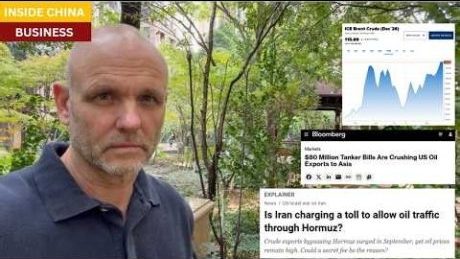
- Iran is (probably) collecting tolls, and why Asia stopped buying oil from the US
- If Americans Knew
- An error has occurred; the feed is probably down. Try again later.
- No Tricks Zone
- Germany’s Green Energy Transition Becoming Increasingly Expensive…Another 6 Trillion Euros!
- Sudden Stratospheric Warming, Powerful El Niño Combination May Lead To Extreme Europe Cold, Energy Crisis!
- Two New Studies Find Thwaites Glacier Melt Cannot Be Driven By Human Activity Or A Warming Ocean
- E-Cars Reduce CO2 Emissions By Only 41% Compared To Internal Combustion Engine Vehicles
- Predictions Made By Renowned Climate Professor Over Past Decades Have Been Proven To Be Poor
- New Study Suggests Large Regions Of The Pacific Ocean Have Been Cooling For The Last 80 Years
- Germany’s Green Energy Debacle: High Energy Costs Force Kahla Porzellan to Close After 182 Years!
- New Study: 50 Years Of The Most Aggressive ‘Net Zero’ Policies Can Only Affect The Global Climate By 0.03°C
- US September “Heat” Was No Record…Many Records Set Decades Ago
- Latest European Green Energy Debacle; Portugal’s Largest Flagship Solar Park Insolvent!

