UN Human Rights Council Passes Dual Venezuela Resolutions
One resolution extends UN cooperation and has Caracas’ consent, while the other extends a controversial Washington-backed mission.
By Paul Dobson | Venezuelanalysis | October 7, 2020
Mérida – The United Nations Human Rights Council (UNHRC) passed two resolutions concerning Venezuela on Tuesday.
The first was presented by Peru and endorsed by the right wing governments which make up the Lima Group. It granted a two year extension to a controversial fact finding mission which is investigating the human rights situation in the country. The resolution was passed by 22 votes in favour, three against (including Venezuela), and 22 abstentions.
Amongst those backing it was the center-left government of Argentina, which had previously called for non-intervention in Venezuela’s internal affairs. Influential figures and popular movements from Argentina have since condemned the vote, with the country’s ambassador to Moscow resigning on Wednesday in protest.
The UN’s fact finding mission was constituted one year ago by the UNHRC, with its members Marta Valinas (Portugal), Francisco Cox (Chile) and Paul Seils (UK) presenting their first report at the previous council session in September. The report accused the Caracas government of crimes against humanity through carrying out extrajudicial executions, forced disappearances, arbitrary detentions and torture.
The Maduro government rejected these accusations, and claimed the mission to be“politicised,” “lacking in scientific scrutiny” and that the report was “written from afar.” Days after the report was published, Venezuela presented a counter-report titled “The Truth about Venezuela,” while Attorney General Tarek William Saab also defended the country’s record in matters of human rights.
Hours after the first resolution was passed, a second one presented by Syria, Iran and Turkey was also approved with 14 votes in favour, seven against and 26 abstentions. The second resolution, which was backed by Venezuela, extends the functions of the Venezuela-based office of the UN high commissioner for human rights, as well as promising to “continue UN technical cooperation” with the government.
It also denounced the human rights consequences of Washington’s blockade against the Caribbean country and urged a “constructive dialogue and cooperation with the state” in order to “strengthen its capacity to fulfil its obligations in the matter of human rights,” specifically mentioning efforts to strengthen the judicial system in the country.
Following the two votes, Caracas strongly condemned the Lima Group resolution, vowing that it will “not recognise parallel and unnecessary mechanisms” which express a “cynical concern” for human rights. For his part, Venezuela’s permanent representative at the United Nations, Jorge Valero, added that the resolution “seeks the imposition of monitoring mechanisms which do not have the consent of my country nor my people.”
On the other hand, Caracas celebrated the passing of the Syria-Iran-Turkey resolution, with a Foreign Ministry statement explaining that the resolution “demonstrates the commitment of the Venezuelan state to maintaining dialogue and respectful and constructive cooperation with the office of the High Commissioner for Human Rights.” Foreign Minister Jorge Arreaza also backed the resolution personally, claiming that Venezuela’s commitment to human rights is “absolute.”
Following an inaugural visit to the country in July 2019, the office of the High Commissioner for Human Rights set up a permanent two-person office in Caracas.
Since, UN reps have been granted access to prisons and other sites, and have reportedly worked to strengthen the legal system and “the institutional mechanisms for human rights protection.”
Subsequently, a number of detained right wing activists have been released by the government, and authorities have hinted at a shakeup of the contentious FAES special police forces. The High Commissioner’s office has previously called for the FAES to be dissolved. The special forces have also been denounced by many Venezuelan popular movements and leftwing parties.
Guaidó creates a parallel consulate in Brazil
By Lucas Leiroz | October 8, 2020
A “parallel” Venezuelan Consulate in Brazil was condemned in a recent statement by Venezuelan Foreign Minister Jorge Arreaza. In late September, supporters of the Venezuelan opposition leader, the self-proclaimed “interim president” Juan Guaidó, announced that they would form a new consulate in Brazil. Basically, the objective is to create a parallel Venezuelan diplomatic representation, which meets the interests of the opposition – which is supported by the Brazilian government. The decision has received strong criticism from the Venezuelan government, which considers it illegal. However, despite the criticism, the consulate is starting its operations this week in the Brazilian state of Roraima – a region strategically chosen because it borders Venezuela.
Jorge Arreaza, head of the Bolivarian government’s foreign relations, reinforced his criticism and published an official statement warning the international community against the activities of the opposition, which he classified as fraudulent. According to Arreaza, there is an attempt to usurp the legitimate consular power of the Venezuelan government – which, in legal terms, is correct, considering that Guaidó is not actually the president of Venezuela.
Guaidó’s initiative in Brazil continues a series of clashes between the government of Jair Bolsonaro and representatives of Nicolás Maduro. Last month, the Brazilian Ministry of Foreign Affairs declared Venezuelan diplomats as “persona non grata” after setting a deadline in April for them to leave the country – which did not happen due to a later decision by the Supreme Court. Now, with the appointment of new “diplomats” by Juan Guaidó, the situation between both countries is even more tense, since the Brazilian government will publicly recognize the role of the opposition’s parallel diplomatic service, while denying maintaining relations with the Venezuelan official diplomacy.
No specific date has been set for the opening of the parallel consulate, and it has just been announced that from this week on the agency would be fully operational. In fact, Guaidó’s “diplomats” are already acting freely in Brazil and even distributing documents to Venezuelan citizens in Brazilian territory. The Maduro government has already stated that such documents have no validity, but the Brazilian government recognizes the actions and cooperates with the oppositionist Consulate. It is also important to emphasize that the employees of the parallel consulate have no diplomatic training, being political militants chosen by Guaidó to represent his interests in Brazil.
Brazil is making a serious mistake in accepting the formation of an illegal consulate in its territory. This represents a total violation of good customs in international relations. Although Brazil is directly opposed to the Venezuelan government, recognizing the legitimacy of an illegal “consulate” and allowing parallel diplomats to act in its territory sets an undesirable precedent in bilateral relations between these states. According to the Montevideo Convention, a State is constituted by the presence of territory, government and diplomatic relations. Therefore, when recognizing a new diplomacy, Brazil is, in practice, recognizing the existence of a Venezuelan State parallel to the Bolivarian Republic. The Venezuelan case, moreover, illustrates an absolutely inappropriate international behavior among the nations that oppose Maduro. To recognize a deputy as president for the simple fact that there was political opposition to the legitimate government had already been a serious violation of international customs. Now, with the creation of parallel consulates, the situation is likely to get even worse, mainly due to the fact that Brazil may not be the only country to receive “Guaidó’s diplomats”.
Interestingly, the inauguration of the parallel Consulate in Brazil takes place a few weeks after the visit of US Secretary of State Mike Pompeo to four countries in South America. The head of American diplomacy met with Brazilians including Brazil’s minister of foreign affairs Ernesto Araújo and Venezuelan immigrants precisely in the state of Roraima. The secret talks between Pompeo and Araújo still remain obscure. When called by the Senate to clarify the content of the meeting, Araújo gave no details and mentioned only generic aspects of the conversations he had with Pompeo. The other countries visited by Pompeo were Colombia, Guyana and Suriname – countries strategically chosen to form a siege against Venezuela. Considering that Pompeo’s visit to Brazil was most likely decisive for the Brazilian government to agree to cooperate with Guaidó’s parallel diplomacy, it is possible to foresee that sometime soon some of the other countries visited by Pompeo will also announce a similar decision, receiving “diplomatic missions” coming from the self-proclaimed and illegitimate government of Juan Guaidó.
It remains to be seen what the consequences of these acts will be going forward. The parallel consulate is already acting freely in Brazil, consolidating an historic act of violation of Venezuelan state sovereignty perpetrated by the Brazilian government. However, the US – the world power that promotes the crusade against Maduro – has not yet made such a bold decision and does not publicly have “diplomats” in the service of Guaidó. In fact, Brazil is acting as the laboratory of a great experiment, where the limits of the violation of Venezuelan sovereignty are being tested. Depending on the reaction of Caracas and its allies, other countries will receive – or not – such “diplomats”.
Lucas Leiroz is a research fellow in international law at the Federal University of Rio de Janeiro.
UN Venezuela Report Omits US Human Rights Violations
By Leonardo Flores | MintPress News | October 2, 2020
On September 23, María Eugenia Russián, president of Fundalatin, Venezuela’s oldest human rights organization, testified to the UN Human Rights Council (UNHRC) and decried an attempt by a UNHRC fact-finding mission to erase people who were “lynched, burned alive, decapitated and murdered by extremist sectors of the Venezuelan opposition.” This fact-finding mission had published a report a week earlier that generated sensationalist headlines of “crimes against humanity” and painted a bleak picture of the situation in Venezuela.
However, the 400+ page report has been found to contain serious flaws and omissions, leading to charges that it politicizes human rights – a position backed by the Venezuelan government. But it’s not just Venezuela that has taken issue with the report: Argentina’s ambassador to the Organization of American States denounced it as “biased” and noted that “human rights are not an instrument for taking political positions.”
A parallel mission and attack on multilateralism
Moreover, even the formation of the fact-finding mission is suspect. Since 2017, Venezuela has been working with a different UN institution, the Office of the High Commissioner for Human Rights (OHCHR), to strengthen its capacity to guarantee human rights. This cooperation has led to technical agreements and to visits by the OHCHR to Venezuela.
Yet despite – or perhaps because – of this cooperation, the Lima Group, an ad hoc group of nations dedicated to regime change in Venezuela, maneuvered in the UN Human Rights Council to establish a parallel mission outside of the purview of the OHCHR. In the September 2019 debate prior to the founding of this mission, Russián said that it “seeks to thwart the advances between the Office of the High Commissioner and the Venezuelan state, hindering and duplicating its efforts.” She also made a prescient comment: “[the mission] will generate major headlines but will not contribute to resolving the situation.”
Several Venezuelan human rights organizations, including the Venezuelan Association of Jurists (AVJ), denounced the formation of the mission and the subsequent report as an attack on multilateralism. The AVJ notes that according to UN General Assembly Resolution 60/251, “the promotion and protection of human rights should be based on the principles of cooperation and genuine dialogue and aimed at strengthening the capacity of Member States.”
Neither of these principles were adhered to in the report, which means that the fact-finding mission violated the United Nation’s own guidelines. This contrasts severely with the latest update on Venezuela from the OHCHR, which notes that technical cooperation between Venezuela and the UN has led to progress in investigating 93 alleged cases of extrajudicial killings or excessive use of force, as well as the pardoning of 110 prisoners.
Flawed methodology, biased sources and egregious omissions
The first thing to note about the report is that the authors are all from countries that support Guaidó. One of them, Francisco Cox, has close ties to the Chilean Foreign Minister (Chile is one of the Latin American countries leading the charge against Venezuela). In an interview with journalist Anya Parampil, Chilean analyst Esteban Silva noted that Cox “is part of an operation against the government of Venezuela.”
Venezuelan human rights organization Sures considers that the report “lacks academic rigor” as the mission did not step foot in Venezuela “and as such never had direct access to the sources it consulted, including the victims, government officials and official records.” Lending credence to the claim of a lack of rigor is the fact that more than 50% of the report’s sources were links to social and digital media, while just 5% were NGOs.
Misión Verdad, an independent group of Venezuelan investigative journalists and analysts, wrote an exposé of the sources used in the report and found that one of these NGOs, COFAVIC (Committee of Relatives of Victims of the Caracazo), receives USAID funds and has ties to Human Rights Watch, which supports regime change and the brutal US sanctions. None of the NGOs the fact-finding mission contacted even mentioned the case of Orlando Figuera, a young Black man burned alive by anti-government protestors, which has arguably been the most infamous violation of human rights in Venezuela in recent years.
If the report were interested in balance, it would have cited or contacted Venezuelan human rights groups that document right-wing violence at protests and the devastating effects of U.S. sanctions. Five such organizations were contacted for this article: Fundalatin, AJV, Sures, Género con Clase (Gender with Class), and the Committee of Victims of the Guarimba and Ongoing Coup (guarimba is the term used for violent opposition protests in 2013, 2014 and 2017). None of them ever heard from the “independent” mission.
While victims like Figuera are ignored, another detailed critique by Misión Verdad documents the repeated “whitewashing” of political actors linked to violence by presenting them as victims. As analyst Joe Emersberger notes, the report’s treatment of opposition figure Leopoldo López ignores the leading role he has played in destabilizing Venezuela since 2002. López’s regime change strategy in 2014, ‘La Salida’, sparked opposition violence that resulted in the decapitation of Elvis Durán; he was riding a motorcycle down a street booby trapped by protestors with barbed wire. López’s name appears 61 times in the report; Durán’s does not appear at all.
As tragic as it is that a UN mission would engage in the erasure of victims of human rights violations perpetrated by government opponents, these are not even the most glaring omissions in the report. There are two ongoing mass violations of the human rights of all Venezuelans: the violent destabilization of the country by foreign and domestic actors, and the brutal U.S. sanctions. For Gisela Jiménez of Género con Clase, an organization that focuses on the rights of women and sexual diversity, currently the biggest challenge to the rights of Venezuelans is “the threat to the right to live in peace.” Russián of Fundalatin dates the biggest violation of human rights to March 2015, when then-President Obama characterized Venezuela as an “unusual and extraordinary threat” to the United States. Since then, she notes, ”the Venezuelan people have been subjected to violations of their right to health and even the right to life, due to the embargo and the obstruction of imports of medicine, food and supplies.”
The report in the context of a hybrid war
Beyond the bias and politicization of the report, what perhaps damns it most is how it is being used. The omissions on the impact of coups and sanctions enable regime change operatives such as Elliott Abrams, U.S. special representative for Iran and Venezuela, to cite the report as evidence of crimes against humanity while, in the same breath, threatening to cut off Venezuela’s diesel supplies, which has drawn widespread condemnation from NGOs across the political spectrum for the devastating effect it would have on the Venezuelan people.
The report was similarly used by Senators Marco Rubio and Ben Cardin, who referenced it in a letter to the European Union in which they expressed “deep concern” over EU talks with the Maduro government and urged the EU to not monitor Venezuela’s parliamentary elections. This blatant attempt at interfering in and attempting to delegitimize Venezuela’s elections went uncovered by mainstream media, which focused all of their attention on the UNHCR report.
Furthermore, the timing of the report was also suspect, coming just a week before the 2020 UN General Assembly. Its purpose in this regard is clear: to add fuel to the fire in Venezuela and to shift the spotlight from U.S. allies with their own human rights issues. The timely release allowed Colombian president Duque and Chilean president Piñera to cite it and Venezuela in their general assembly speeches. In Colombia, 64 massacres have taken place this year alone, while the Piñera government in Chile was almost brought down by his government’s excessive use of force against peaceful protestors. Yet it was Venezuelan opposition figure Juan Guaidó who made the headlines, invoking the report while calling on the international community to exercise its “responsibility to protect” in a YouTube webinar on the sidelines of the General Assembly. The responsibility to protect is a doctrine used as the justification for military aggressions against Libya and Syria, among others.
The fact-finding mission has produced a document that is currently being employed in the furtherance of sanctions, electoral interference and threats of war. To put it another way, the UNHCR report on the human rights of Venezuelans will likely lead to even more suffering for Venezuelans. In the words of Fundalatin President Russián, the threat to the human rights of Venezuelans “becomes graver because of the behavior by powerful states, who in the name of human rights, seek a foreign military intervention in Venezuela.”
US Sails Warship Off Venezuela’s Coastal Waters Citing Treaty Washington Itself Hasn’t Ratified
Sputnik – 02.10.2020
Last week, Caracas accused the United States of being “the greatest threat to world peace and stability” after Washington slapped Venezuela with additional sanctions on senior government officials for doing business with Iran. The US and its allies have been attempting to overthrow Venezuela’s democratically-elected government since early 2018.
Venezuelan Foreign Minister Jorge Arreaza has blasted the Pentagon over its decision to sail a guided missile destroyer to his country’s coast.
“Venezuela denounces the erratic and childish provocation by the US Southern Command to send the USS William P Lawrence (DDG-110) Arleigh Burke-class guided missile destroyer to within 16.1 nautical miles of our shores,” the foreign minister tweeted, accompanying his post with a formal communique by the Foreign Ministry.
Appealing to the international community, the communique called on other nations to “denounce” the US’s efforts to “intimidate” Caracas via the warship’s deployment.
The communique added that the USS William P Lawrence recognized the authority of the Venezuelan state and responded to radio communications from Venezuelan Navy ships, while claiming that it was “carrying out patrol operations against drug trafficking.”
Calling the US deployment of a warship with long-range missile capability “deeply striking,” the ministry recalled the similar episode which took place in July, when the USS Pinckney destroyer attempted to make what Caracas said was a “stealth incursion” into Venezuelan waters.
The Foreign Ministry stressed that the Venezuelan military is engaged in “systematic and permanent” patrols in Venezuela’s waters as part of its fight “against the scourge of drug trafficking,” and warned that while Caracas would “not fall into absurd provocations that seek to disrupt the peace and security of the Venezuelan peoples and their fellow Caribbean peoples,” it would “guarantee the protection of its sovereignty and territorial integrity, always in accordance with international law.”
The US Navy confirmed Thursday that the USS William P Lawrence had “successfully” carried out a “freedom of navigation operation” off Venezuela’s coast to challenge the country’s “excessive maritime claims in international waters.”
“The illegitimate Maduro regime improperly claims excessive controls over those international waters, which extend three nautical miles beyond the 12-nautical mile territorial sea, a claim that is inconsistent with international law,” the US Navy said, adding that it has similarly “contested Venezuela’s excessive claims” in July.
Venezuela is not a party to the 1982 United Nations Convention on the Law of the Sea, which outlines a 12 nautical mile limit to member states’ coastal waters. Nor, ironically, is the United States, which signed the agreement in 1994 but has failed to ratify it in the two and a half decades since then.
In June, the USS Nitze guided missile destroyer carried out a similar ‘freedom of navigation’ mission, prompting Venezuelan Defence Minister Vladimir Padrino to warn that if US warships ever attempted to carry out military operations in Venezuelan waters, they would “receive a forceful response from our armed forces.”
US: Democrats, Rubio Ask EU to Not Observe Venezuela Elections
teleSUR | September 30, 2020
The U.S.-based peace organization CODEPINK, on Tuesday, condemned a bipartisan letter sent to the EU’s foreign policy chief, Josep Borrell, requesting that the European body neither recognize nor send an electoral observation mission to Venezuela’s legislative elections this December 6.
The organization is currently circulating a petition to tell Senator Cardin to stop undermining Venezuela’s democratic process and continue engaging the Venezuelan government in civic dialogue rather than through threats and sabotage.
Similar to what happened previous to the 2018 Venezuelan presidential elections, the United States has already claimed it will not recognize the upcoming December 6 elections and is trying to get the EU—which has established a dialogue with the democratically elected government of Nicolas Maduro—to follow suit.
Venezuela, suffering from brutal sanctions, repeated and violent coup attempts, and a deeply polarized electorate, has been preparing the conditions for these mid-pandemic elections for months now, with confirmed participation from opposition parties and leaders representing millions of Venezuelan voters.
In response to their confirmed participation—legitimizing the electoral path—the United States last week sanctioned four of these leaders for engaging the democratic process, with only the political factions dependent on U.S. funding and political backing boycotting the elections, their existence contingent upon it.
Noting that the U.S. denounces outside interference in its own elections, CODEPINK urges U.S. voters to hold their country to the same standard and lobby both Democrats and Republicans to respect Venezuela’s sovereignty by recognizing its democratic process.
Coups and Neo-Coups in Latin America
By Juan Paz y Miño Cepeda |Venezuelanalysis | September 15, 2020
I recently received an article entitled “Coups and neo-coups in Latin America. Violence and political conflict in the twenty-first century” by Carlos Alberto Figueroa Ibarra, a long-time friend and academic at the University of Puebla, Mexico, and Octavio Humberto Moreno Velador, a professor at the same university.
The authors say that since the 1980s, democracy in Latin America has asserted itself across the continent, so much so that the topic has become recurrent in the political sciences. However, during the first seventeen years of the 21st century, new coups resurfaced, which they describe as “neo-coups.”
During the twentieth century, the authors identified 87 coups in South America and the Caribbean, with Bolivia and Ecuador being the most hit countries, while Mexico has only suffered once. The greatest concentration of coups occurred in four decades: 1930-1939 with 18; 1940-1949 with 12; 1960-1969 with 16 and 1970-1979 with 13. Between 1900-1909 and 1990-1999, the fewest coups occurred (3 and 1, respectively). Finally, 63 coups were deemed as military-led; 7 civilian; 8 civic-military; 6 presidential self-coups and three military self-coups. 77 percent of coups had a marked influence of right-wing ideology and party participation, and since the 1960s US intervention has been observed in several coups.
The neo-coups of the 21st century, however, are different from the coups of the twentieth century and with distinct characteristics. Of the seven studied, four have been carried out by the military/police (two which failed in Venezuela/2002 and Ecuador/2010 and two which were successful in Haiti/2004 and Honduras/2009). Likewise, two were parliamentary coups (Paraguay/2012 and Brazil/2016, both successful) and one was a civilian-state-led coup (Bolivia/2008, failed). In three of them, there is evidence of US intervention (Haiti, Bolivia and Honduras).
The intervention of the military or police took place in Venezuela, Haiti, Honduras and Ecuador. In Haiti, Bolivia and Brazil, large-scale concentrations of opposition citizen groups preceded the coups, exerting political pressure. There were also other cases of subsequent concentrations in support of Presidents Hugo Chávez and Rafael Correa, which prevented the success of the coups against them.
In three cases there was clear intervention by the judiciary (Honduras, against Manuel Zelaya; Paraguay, against Fernando Lugo; and Brazil, against Dilma Rousseff), and also of the legislative powers.
In addition, regional and supranational institutions have intervened in defence of democracy, specifically MERCOSUR, UNASUR, CELAC and even the Rio Group.
The authors conclude that “The new coups have sought to evade their cruder military expression in order to seek success. In this sense, the intervention of judicial and parliamentary institutions have represented a viable alternative to maintaining democratic continuity, despite the breakdown of constitutional and institutional pacts.”
To the analysis carried out by the two professors, and which I summarise without going into too many details, some considerations may be added.
All the coups of the 21st century have been directed against rulers of the Latin American progressive cycle: Hugo Chávez, Evo Morales, Manuel Zelaya, Rafael Correa, Fernando Lugo, Dilma Rousseff, and Haiti, where the case is particular because of the turbulence that the country has experienced where the military coup was against Jean-Bertrand Aristide, who had won the election with 91.69 percent of the vote.
Progressive governments aroused furious enemies: business elites, traditional oligarchies, military sectors of old “McCarthyism” anti-communism, the political right, “corporate” media, and, no doubt, imperialism.
There is not a single coup d’état led by “leftist” forces, which reveals an equally new phenomenon: the entire left has accepted democracy as a political system and elections as an instrument through which they may come to power. Historically speaking, this phenomenon represents a continuation of Salvador Allende’s and the Chilean Popular Unity’s thesis, which trusted in the possibility of building socialism through a peaceful path. It is the political and economic right, which have turned to neo-coup mongering, with their discourse of defending “democracy.”
Those same right-wing sectors have not only sponsored “soft coups,” but also promoted the use of two mechanisms that have been tremendously successful to them. Firstly, lawfare, or “legal war,” used to pursue, in appearance of legality, those who have served or identified with progressive governments. Secondly, the use of the most influential media (but also of social media and their “trolls”), which were put at the service of combating “populists” and “progressives,” and defend the interests of persecuting governments, business elites, rich sectors and transnational capital. These phenomena have been clearly expressed in Brazil against Inácio Lula da Silva, Dilma Roussef and the PT Workers’ Party, but also in Bolivia, against Evo Morales and the MAS Movement to Socialism and in Ecuador, where righting forces have achieved the prosecution of Rafael Correa, of figures of his government and of the “correístas.” In Argentina Alberto Fernández’s triumph stopped the legal persecution against Cristina Fernández and “Kirchnerismo”.
But there is, finally, a new element to be added to the neo-coup mongering of the 21st century, which is the anticipated coup d’état. This has been inaugurated in Bolivia and Ecuador.
In Bolivia, not only was the vote count suspended and Evo Morales forced to take refuge outside the country, but [he and his party] have been politically outlawed, and every effort has been made to marginalise them from future elections.
In Ecuador, all kinds of legal ruse have been used to prevent Rafael Correa’s vice-presidential candidacy (he was ultimately not admitted), to not recognise his party and other forces that could sponsor him, as well as to make it difficult for the [Correa-backed] Andrés Araúz team to run for the presidency.
It also has an equally unique characteristic of what happened in Chile. In Chile, despite the protests and social mobilisations, as well as domestic and international political pressure, the political plot was finally manipulated in such a way that the plebiscite convened for October/2020 will not be for a Constituent Assembly (which could dictate a new constitution), but for a Constitutional Convention, which allows traditional forces to preserve their hegemony, according to the analysis carried out by renowned researcher Manuel Cabieses Donoso.
As a result, neo-coup mongering has shown that, while institutional and representative democracy has become a commonplace value and a line of action for the social and progressive lefts, it has also become an instrument that allows access to government and, with it, the orientation of state policies for the popular benefit and not at the service of economic elites.
On the other hand, it has become an increasingly “dangerous” instrument for the same bourgeoisie and internal oligarchy, as well as imperialism, to such an extent that they no longer hold back from breaking with their own rules, legalities, institutions or constitutional principles, using new forms of carrying out coups.
It is, however, an otherwise obvious lesson in Latin American history: when popular processes advance, the forces willing to liquidate them are also prepared. And finally, for these forces, democracy doesn’t matter at all, only saving businesses, private accumulation, wealth and the social exclusiveness of the elites.
Juan J. Paz y Miño Cepeda is an Ecuadorian historian from the PUCE Catholic University of Quito. He is also the former vice-president of the Latin-American and Caribbean Historian’s Association (ADHILAC).
Translation by Paul Dobson for Venezuelanalysis.
Venezuela Arrests ‘CIA Spy’ on Oil Refinery ‘Stakeout’
By Paul Dobson | Venezuelanalysis | September 14, 2020
Mérida – Venezuelan authorities have charged a US citizen with terrorism after he was arrested on a “stakeout” near the country’s largest oil refinery complex.
According to the police investigation, Matthew John Heath is a former US marine who served as a communications operator in a “secret CIA base” in Iraq between 2006 and 2016, where he was hired by Virginia-based private security contractor MVM. MVM services include offering “secret agents […] primarily to the US government.”
Heath was detained by the Bolivarian National Guard (GNB) on Thursday afternoon in Falcon State alongside three Venezuelans, including a GNB sergeant major and an army soldier.
The four men were reportedly collating information about the nearby Amuay and Cardon refineries, and were caught in possession of “specialised weapons,” including an AT4 84mm grenade launcher, an UZI 9mm submachine gun, four blocks of C4 explosives, large amounts of US dollars, and a satellite phone, which Heath has reportedly refused to unblock. The former marine was allegedly arrested without a passport, but in possession of photos of the refineries and Venezuelan military installations, as well as a badge which “connects him to the CIA.”
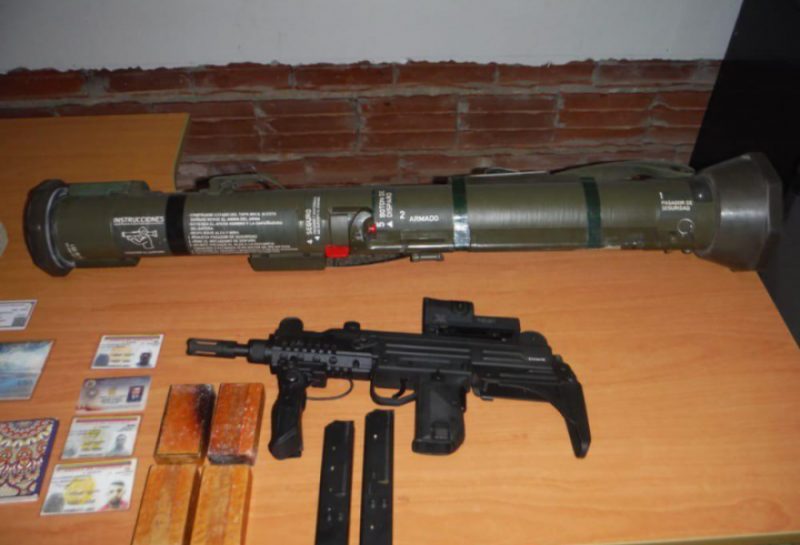
Confiscated items from US ex-marine Matthew John Heath. (Tareck William Saab)
During a press conference Monday, Venezuela’s Attorney General Tareck William Saab told reporters that Heath formed part of a “US intelligence operation” which sought to “collect strategic information regarding military, electrical and oil-based installations” in order to “infiltrate US intelligence agents” from Colombia and carry out “acts of sabotage.”
The four detainees, as well as four more Venezuelans who were subsequently arrested in Maracaibo City in connection to the operation, are to be charged with terrorism, illegal arms trafficking and criminal association.
Following the bust, President Nicolas Maduro urged oil workers to “tighten external and internal security” at the refineries to counter the “US imperialist war of vengeance which looks to stop Venezuela from producing oil derivatives.”
US agencies have not commented on the arrests so far.
Thursday’s bust comes only weeks after a Venezuelan court sentenced two former US green berets to 20 years in prison for leading a failed mercenary incursion in May. According to televised confessions from the former soldiers, ‘Operation Gedeon’ looked to kidnap Maduro and trigger a coup. US private security firm Silvercorp was hired by the Juan Guaido-led opposition to carry out the operation.
The Amuay and Cardon refineries form the world’s second largest refining complex, with a joint capacity to produce 955,000 barrels of gasoline a day, but are currently working at 10 percent capacity. With the country facing an increasingly severe nationwide fuel shortage, the government announced efforts to reactivate the refineries in June. However, production has been repeatedly halted by technical failures and queues at the gas stations have worsened since.
Venezuela’s oil output has fallen from 1.9 million barrels per day (bpd) in 2017 to 339,000 bpd in August under the weight of punishing US sanctions. In recent years, the industry also has been beset by a range of problems, including corruption, mismanagement, underinvestment and brain drain.
Apart from denouncing the US blockade, Maduro’s government has frequently pointed to acts of “sabotage” against the industry as evidence of US meddling, including the 2012 fire at the Amuay refinery which killed 55 people. US officials have also publicly admitted to targeting the country’s oil industry as part of Washington’s efforts to oust the Maduro government.
Iranian Tanker Carrying Gas Condensate Arrives in Venezuela
Sputnik – 14.09.2020
An Iranian supertanker, identified as Honey, has docked at the northeastern Venezuelan port of Jose Terminal with a cargo of 2 million barrels of natural gas liquid (NGL), the Tanker Trackers company said on Monday.
As explained by Tanker Trackers in a thread of tweets, NGL is a light-weight gas condensate that can be refined into things like high octane gasoline and jet fuel. The company opined, however, that this batch of supply will likely be used as “a blending agent to improve flow of Venezuela’s very heavy crude oil in order to boost production.”
While the Venezuelan authorities have not issued a statement on the matter, Venezuelan Foreign Minister Jorge Arreaza shared a post on his Twitter account.
Another three Iranian tankers carrying approximately 131 million liters of gasoline are currently in southern Africa en route to Venezuela, according to the tracking company.
If the Honey tanker went with radars off, as it is assumed in the report, it was likely due to concerns associated with earlier US threats to block Iranian fuel shipments to Venezuela, including by confiscating the vessels and imposing sanctions on the crew.
Iran sent several tankers with fuel cargo to Venezuela earlier this spring and early summer as the Latin American country was struggling to keep up its crumbling oil infrastructure.
Political pardon given by Maduro may be a checkmate against Venezuelan opposition
By Lucas Leiroz | September 7, 2020
In Venezuela, Juan Guaidó no longer appears to be the leader of the opposition. The forgiveness of 110 opponents by President Nicolás Maduro completely fragmented the political wing opposing the regime, which, in practice, removes from Guaidó the “monopoly” of militancy against the government. Maduro’s decision to forgive as many opponents as possible seems particularly strategic in an election year. For the December 2020 parliamentary elections, Maduro’s allies represent the only unified and solidly based political wing in the country, while currently his opponents are fragmented into several factions.
Another oppositionist leader, Henrique Capriles has already announced that he will dispute the elections. In recent times, after a long period of silence and inactivity, Capriles has occupied an increasingly prominent place in Venezuelan politics, diminishing Guaidó’s influence on the opposition. Capriles seems to have a more interesting political alternative for some opposition groups than the proposal by Guaidó, who is a politician absolutely aligned with external interests and who openly defends Venezuela’s total subordination to Washington.
Perhaps this was the reason for the fall of Guaidó’s political strength. 2020 was for the opposition leader the year of his abrupt fall. On February 5, Guaidó attended a conference at the Capitol in Washington DC and was applauded by Donald Trump, Nancy Pelosi and everyone in attendance. At that time, the illusion that Guaidó was in fact the president of Venezuela was fully consolidated. Guaidó himself believed to be the country’s president, which was the starting point of his downfall.
It seemed inevitable that the invention of the “Guaidó’s presidency” would result in the opposition being closed to the Venezuelan political reality. The history of the opposition leader, since his recognition in January 2019 by Trump, is a succession of errors and deficiencies that denounce his total inability to lead the country. The most notable mistakes so far have been his explicit participation in the landing of Colombian mercenaries on the Venezuelan coast and the leakage of his connections with drug trafficking in South America, which has greatly weakened his public image inside and outside Venezuela.
Guaidó’s decline, at first, had little impact on the Venezuelan opposition, as there was his “recognition” as the country’s president. But this illusion could not last long. The proximity of the parliamentary elections in December aroused in the Venezuelan opposition a strong wave of political realism and led different factions to assume the obvious truth: Guaidó is not the president of the country. This fact becomes even more evident when Maduro pardons and legalizes more than one hundred opponents, creating ties of cordiality in internal disputes – something that Guaidó still refuses to accept. Then a scenario was created in which the opposition is divided between those who recognize the legitimacy of the government and oppose it politically in the elections and, on the other hand, Guaidó, who recognizes himself as president with American support. This new scenario will completely change the way in which political disputes in Venezuela will take place and may even destabilize the opposition’s international alliances.
How long will Washington invest in Guaidó as its ally in opposing Maduro? What makes Guaidó more interesting than, for example, the political figure of Capriles or any other politician who will announce his candidacy for the December elections? Guaidó will not run in the parliamentary elections because he believes he is the president of the country, while other politicians will run and will be able to make real and effective opposition against Maduro. Will international actors interested in the fall of the government really continue to fuel the illusion that Guaidó is the president rather than supporting opponents within Parliament? It is a question that remains unanswered, but we can predict the outcome.
Indeed, there is no future for the Venezuelan opposition as it is today. The entire political wing that opposes Maduro is absolutely fragmented, with no unity of thought among its representatives, much less a solid national project. The only thing in common that opponents want is to overthrow Maduro, but that will not happen so easily. The Venezuelan government remains strong and well-structured, with an effective political apparatus at its disposal, which cannot be seen in the opposition. Opponents’ political forgiveness was a checkmate for the next elections. The weakness of the opposition became clear and all of its representatives were disadvantaged: Guaidó lost political strength and will possibly be without international alliances; the other opponents have broken ties with Guaidó and are not strong enough to face the government, even though they may run for election.
Lucas Leiroz is a research fellow in international law at the Federal University of Rio de Janeiro.
Venezuela: Operation Gedeon Organizers Arrested in Colombia
By Ricardo Vaz | Venezuelanalysis | September 5, 2020
Mérida – Colombian security forces announced the arrest of four Venezuelan citizens on Thursday.
Rayder Alexander Russo Marquez, Juvenal Sequea Torres and Juven Jose Sequea Torres were captured in Bogota, while Yacsy Alexandra Alvarez Mirabal was detained in Barranquilla. The operation was jointly carried out by the Colombian attorney general’s office, police, army and migration services, with assistance from the FBI.
Colombian President Ivan Duque held a press conference after the arrests, claiming that the four were “criminals” paid by the Venezuelan government to “destabilize” the country.
The comments drew a sharp rebuke from Caracas, with Foreign Minister Jorge Arreaza condemning the “nerve” of the Colombian president.
“What nerve from Ivan Duque. Now it turns out that Venezuelan deserting mercenaries were going to destabilize Colombia,” he wrote ironically on Twitter. “We gave the Colombian government information about these terrorists and it chose to do nothing.”
According to Venezuelan authorities, Russo, the Sequea brothers and Alvarez participated in the “Operation Gedeon” failed paramilitary incursion. On May 3 and 4, two speed boats carrying armed men were intercepted by security forces. Search operations in the following days led to over 40 arrests.
The 60-man Operation Gedeon was orchestrated by former US Green Beret Jordan Goudreau, who was hired by the Juan Guaido-led Venezuelan opposition, and intended to take over strategic locations in the capital and capture several high-ranking figures, including President Nicolas Maduro.
Two other US citizens, fellow former Green Berets Airan Berry and Luke Denman, were arrested in the operation, as was a third Sequea brother, Antonio.
The Venezuelan government sustains that Russo, Juvenal and Juven Sequea took part in the Northern Colombia-based training camps where the coup attempt was prepared. The Sequea brothers took part in the April 30, 2019 failed coup attempt before deserting from the Bolivarian National Guard. Russo, aka “Teniente Pico” is accused of involvement in the August 2018 assassination attempt against Maduro.
For her part, Alvarez is said to have been behind the logistics of the operation as well as functioning as liaison between the Americans and retired Major General Cliver Alcala, another organizer behind Operation Gedeon. Alcala, who had been responsible for previous armed incursion attempts featuring Venezuelan deserters, surrendered to US authorities after being indicted on drug charges.
Venezuelan Government Invites International Observers as Opposition Splits Over Elections
By Ricardo Vaz | Venezuelanalysis | September 4, 2020
Mérida – The Venezuelan government has invited the United Nations (UN) and the European Union (EU) to monitor the December 6 National Assembly (AN) elections.
Foreign Minister Jorge Arreaza wrote on Twitter that letters had been sent to UN Secretary General Antonio Guterres and EU Foreign Policy Chief Josep Borrell explaining electoral guarantees and inviting the bodies to send observers.
“Your participation in this process will have a positive contribution to an atmosphere of democratic understanding between Venezuelans and support political, peaceful and negotiated solutions to existing issues,” the letter read.
At the time of writing there have been no reactions from either the UN or the EU. While both have previously voiced support for dialogue processes, the European bloc recently vowed not to recognize the parliamentary election, which will elect 277 deputies for the 2021-2026 term.
The appeal to the international instances comes on the heels of President Maduro granting pardons to 110 opposition figures. This includes a number of AN deputies and other leaders charged or convicted for taking part in activities such as the violent “guarimba” street protests, the 2018 assassination attempt against Maduro, or the April 30, 2019 failed putsch.
On Thursday, the ruling United Socialist Party of Venezuela (PSUV) and its allies submitted their electoral candidates, with eight current cabinet members heading the list and subsequently replaced. Current state television VTV president Freddy Nanez replaced Jorge Rodriguez as communications minister, Noris Herrera replaced Blanca Eekhout as communes minister, Carolys Perez took over from Asia Villegas as minister for women, while there were also changes at the prisons, mining, youth, urban agriculture and indigenous peoples ministries.
The electoral scenario has also led to bitter infighting amongst the opposition ranks. On Wednesday, two-time former presidential candidate Henrique Capriles called on opposition leader Juan Guaido to stop “playing at government on the internet.”
“Either you’re the government, or you’re the opposition. You can’t be both,” he said during an online broadcast.
The comments came in response to criticism from Guaido after Capriles and fellow opposition member Stalin Gonzalez held a meeting with Turkish Foreign Minister Mevlut Cavusoglu concerning electoral participation and guarantees.
“These negotiations were held without the knowledge and permission of the ‘Interim Government’ and our international allies,” read a statement published by Guaido’s office.
The opposition lawmaker proclaimed himself “interim president” in January 2019 and was immediately backed by Washington and its allies. He went on to lead several unsuccessful efforts to overthrow the government by force, but a host of scandals saw his position increasingly questioned by other high-ranking opposition figures.
Guaido has lobbied for a boycott of the December AN elections and called on opposition figures to join a “unitary path” to oust the Maduro government which would extend his “interim presidency” into 2021.
However, other anti-government politicians have refused to rally behind him, with some urging voters to take to the polls, and hardline figures such as Maria Corina Machado calling for a foreign intervention.
For its part, Washington downplayed talk of a possible military intervention, with the Trump administration’s Special Representative for Venezuela Elliott Abrams criticizing opposition leaders “who only think that the magic moment of a military intervention will arrive” in a recent interview.
However, the veteran official, who is known for his role in the Iraq war and the Reagan administration’s Central America policy, has reiterated that the US will continue supporting Guaido while tightening sanctions against the Venezuelan economy.
Venezuelan Special Forces Agents Arrested for Extrajudicial Killings
By Manuela Solé | Venezuelanalysis | August 26, 2020
Mérida – Four agents of the Bolivarian National Police’s Special Action Forces (FAES) have been arrested after the extrajudicial executions of two journalists in Cabimas, Zulia State.
Venezuela’s Attorney General Tarek William Saab informed on Tuesday that FAES officers Jose Contreras and Nestor Olano, who have been charged with premeditated murder, as well as supervisors Freddy Deroy and Deivid Guerrero were in custody.
Four other officers involved in the Friday, August 21 operation reportedly fled after arrest warrants were issued. Public attorney Jackbe Galban was removed from her post and arrested for allegedly collaborating in their escape.
Andres Eloy Nieves Zacarias and Victor Manuel Torres Guerra, 33 and 29 years-old, respectively, were assassinated in a FAES raid on Guacamaya TV, a community media outlet in Zulia State where they worked.
Saab referred to the event as “embarrassing” and decried that FAES agents tried to cover up the extrajudicial killings as an armed confrontation.
“For me, these are infiltrated officers who need to be singled out so this never happens again in a police body,” the attorney general told reporters.
The events were initially investigated by a FAES commission that traveled to Cabimas to take statements from each of the officers participating in the operation.
Saab’s office reported that examinations and autopsy logs showed that the victims were below their shooters, on their knees or sitting, which confirmed the execution hypothesis.
The FAES agents were also accused of stealing the TV station’s equipment after the executions.
Interior Minister Nestor Reverol called the procedure an “irregular act” and appointed a multidisciplinary team to carry out an investigation.
“In any situation that constitutes a deviation from the established procedures and protocols, we will be ruthless in the enforcement of the law,” read the official statement issued by the Interior Ministry.
The executions, as well as FAES attempts to present the victims as criminals to the media, have been condemned from various sectors. Several popular and community media outlets, militants of the youth fraction of the United Socialist Party of Venezuela and the Francisco de Miranda Front all released communiques, while a hashtag #JusticiaParaAndresYVictor (“Justice for Andres and Victor”) became a trend on social media.
The Inter American Press Society and the International Press Institute likewise made public their condemnation, calling on Venezuelan authorities to thoroughly investigate the killings.
The founder of Guacamaya TV, Franklin Torres, who is also the father of Victor Torres, said that the two journalists were dragged out of the offices by the FAES and ‘vilely murdered’. He went on to claim that the information released about the murder was false and that the weapons allegedly found at headquarters were planted by FAES agents.
“For our murdered kids, we will not rest until justice is served,” read a statement released by the Torres family on Wednesday. The relatives praised the quick response of the Attorney General’s office and demanded a thorough investigation up the Bolivarian National Police’s chain of command.
Nieves and Torres were described by those who knew them as honest workers who were deeply involved with their community. Nieves was also a member of the Francisco de Miranda Front. Tributes painted him as a dedicated Chavista who stood up for just causes and a popular member of the community media scene in Venezuela.
Popular movements have recognized authorities’ response in this case, but the reported increase in heavy handed police tactics and the FAES in particular have been subjects of intense debate. Chavista human rights collective Surgentes launched a campaign in November 2019 to denounce a growing number of police extrajudicial killings in popular neighborhoods and bring back a debate on police reform initiated by former President Hugo Chávez.
Edited and with additional reporting by Ricardo Vaz from Mérida.
Featured Video
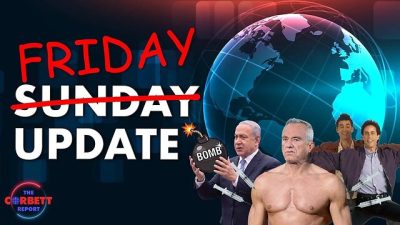
Racist Seinfeld Dances for Joy as Bibi Unveils His New Map
or go to
Aletho News Archives – Video-Images
TV Drama Review
Japanese drama projects Japan’s wartime atrocities onto Chinese characters

Global Times | October 25, 2026
By portraying Chinese characters as perpetrators of ruthless violence while casting Japanese Self-Defense Forces (SDF) intelligence operatives as defenders, the season 2 of the Japanese drama Vivant has recently drawn criticism from Chinese netizens, who argue that its depiction turns historical reality on its head while ignoring Japan’s wartime atrocities.
The TBS drama series – a spy suspense story in which an alleged unofficial intelligence unit of the SDF operates across the globe — has attracted a passionate fanbase. Its currently airing season 2 opened with a household rating of 18.8 percent, the highest for a TV drama this year, according toa commentary article by Japanese media Toyo Keizai.
What draws attention is the portrayal of the enemies in the series, the article noted. Scenes in which the Chinese organization subjects kidnapped members of the SDF unit to brutal torture are repeated with unrelenting intensity.
It is rare for Japanese TV dramas to explicitly portray a real-life country as the enemy, the article noted.
Japanese Prime Minister Sanae Takaichi also made a reference to the drama, saying that she has been recording Vivant and hopes to binge-watch it over the year-end and New Year holidays, according to Japanese media outlets.
China’s CCTV News report on Sunday revealed that the drama features scenes in which Chinese personnel cut off the fingers of and stab Japanese intelligence operatives in the abdomen. Such acts bear striking similarities to the torture inflicted on Chinese nationals by invading Japanese troops during the World War II.
The drama distorts the truth by attributing these atrocities to modern Chinese characters. Beneath the surface, it subtly glorifies Japan’s cross-border overseas operations, blurs the functional boundaries of the SDF and implicitly promotes an expansionist narrative, per CCTV News. … continue
Blog Roll
 Aletho News
- EU facing trillion-euro debt hole while seeking more cash for Kiev
- How US, Europe, Persian Gulf states exhausted missile stockpiles, splurged billions to defend Israel
- Up in arms… Koreans reject U.S. empire’s plan to make South Korea the next Ukraine
- Iran, Turkey, Pakistan, Saudi Arabia could advance region-led security framework in Tehran: FM spox
- Netizens condemn Japanese drama for projecting Japan’s wartime atrocities onto Chinese characters
- Racist Seinfeld Dances for Joy as Bibi Unveils His New Map
- A West Bank War for Netanyahu’s Election Campaign, Could It Backfire?
- Yemen denounces European Parliament’s ‘hypocritical’ push to blacklist Ansarullah
- Qalibaf: UAE’s UN bid aims to ‘clear the runway’ for ‘Greater Israel’, whitewash genocide
- Pakistan reopens Iran border after boosting security: Report
- If Americans Knew
- An error has occurred; the feed is probably down. Try again later.
- No Tricks Zone
- Sudden Stratospheric Warming, Powerful El Niño Combination May Lead To Extreme Europe Cold, Energy Crisis!
- Two New Studies Find Thwaites Glacier Melt Cannot Be Driven By Human Activity Or A Warming Ocean
- E-Cars Reduce CO2 Emissions By Only 41% Compared To Internal Combustion Engine Vehicles
- Predictions Made By Renowned Climate Professor Over Past Decades Have Been Proven To Be Poor
- New Study Suggests Large Regions Of The Pacific Ocean Have Been Cooling For The Last 80 Years
- Germany’s Green Energy Debacle: High Energy Costs Force Kahla Porzellan to Close After 182 Years!
- New Study: 50 Years Of The Most Aggressive ‘Net Zero’ Policies Can Only Affect The Global Climate By 0.03°C
- US September “Heat” Was No Record…Many Records Set Decades Ago
- Latest European Green Energy Debacle; Portugal’s Largest Flagship Solar Park Insolvent!
- Green Energy Debacle: German Expert Professor Fritz Vahrenholt Warns Of Severe Economic And Social Consequences

