Palestine Solidarity Movement Demands Venezuelan Government and MERCOSUR Cut All Ties with Israel
By Arlene Eisen | Venezuelanalysis | July 11, 2014
Caracas – Hundreds of people gathered after work yesterday in downtown Caracas to protest Israel’s “Operation Protective Edge” – the continuing massive bombardment of Gaza.
At the rally, speaker after speaker voiced outrage at the massacre of innocent children and other civilians and called for the Venezuelan government and MERCOSUR to cut all ties with Israel.
Former Venezuelan President Hugo Chavez cut diplomatic relations with Israel after its earlier war on Gaza in 2008-2009. However, the two countries have maintained commercial relations, and a number of Venezuela’s Latin American allies also maintain diplomatic relations with Israel.
On July 10, President Maduro expressed grief over the assassination of three Israeli youth and urged a thorough investigation of the crime. Then he went on to “energetically condemn Israel’s unjust , disproportionate and illegal military attack on the heroic Palestinian people”… and demanded the Israeli government immediately stop this aggression. Then, the President of the National Assembly, Diosdado Cabello, called on the world powers to raise their voices against the massacre of the Palestinian people by Israeli bombs on Gaza.
An article released by the government sponsored, Venezuelan News Agency (AVN) also pointed out that private media around the world have contributed to the massacre of the people of Gaza by perpetuating the narrative that the military action is a “war between equals”.
AVN noted that Israel is a great military power while the Palestinian people in Gaza have no modern military resources. AVN added that Israel has surrounded and blockaded Gaza, keeping it under siege, since Hamas won elections there in 2006.
Calling for an end to Israeli Impunity
At the rally, and in a number of editorials, members of various grassroots organizations called for an international response to Israel’s “chronic and flagrant disregard for international law”. Hindu Anderi, winner of the prestigious Anibal Nazoa prize in journalism, delivered the main speech at the rally. She received prolonged applause when she called Israel a “terrorist state” that practices systematic murder to maintain its military occupation of Palestine.
The crowd at the rally included children and their parents, youth in kaffiehs and elderly people, Venezuelans from various political organizations on the left, and individuals waving handmade signs and articles picturing wounded children.
They grew more serious when Anderi reminded them, “Our solidarity with Palestine is not enough. We call for a total boycott of Israel by MERCOSUR, ALBA… All countries must put an end to diplomatic, economic, political and cultural ties to Israel. The only thing that will finally stop the terrorist state is to pressure US imperialism, Israel’s principle ally, to stop its support.”
The rally had been announced in government media and the independent left news website, Aporrea. News services had featured graphic photos of the mayhem caused by Israeli bombing. Editorials reflected a consensus that Israel’s international impunity must end. […]
More information on upcoming events can be found on the University of Simon Bolivar’s Solidarity Facebook page.
Whitewashing Venezuela’s Right Wing
In the heated media war over Venezuela, studies produced by well-funded NGOs (usually with ties to powerful states) have been regularly cited by the western corporate media to paint a grim picture of the country.
A Venezuela report released by the International Crisis Group (ICG) in May might give some people the impression that it is an even handed account done by authors committed to decreasing political violence in Venezuela. The report makes a few good recommendations, but it actually reveals that the ICG’s commitment to whitewashing right wing extremists is much stronger than any commitment to sensible analysis or to reducing political violence.
In the crucial section of the report where it discusses protest related violence, the ICG claims that there is only “weak evidence” that any opposition supporters ever used firearms:
In contrast to the abundant evidence linking security forces and pro-government civilians to deaths and injuries, it is unclear whether some in the opposition used firearms. In any case, the evidence on this is weak. The only deaths that appear clearly linked to the protesters are those involving accidents caused by barricades, including the use of barbed wire or other obstacles.
As far as the ICG is concerned, the bodies of several police and other pro government people shot to death while attempting to clear barricades in opposition strongholds are “weak evidence” of firearm use by anyone in the opposition. It might be argued that “concrete proof” of the exact individuals who shot every one of those victims is lacking. However saying that anti-government protesters are not very strongly implicated in the shootings of any government supporters or police is beyond preposterous.
In an attempt to make the evidence appear weak, the ICG mentions one incident in which a journalist working for a right wing business newspaper, El Universal, claims that a government supporter shot and killed a policeman at an opposition barricade. This kind of counter claim had also been made by government officials about some opposition protesters who have been shot (some government officials claiming the shots were fired by other opposition people), but the ICG wouldn’t dare use these claims to conclude that there is only “weak evidence” that government supporters had ever used firearms. In fact, the ICG discusses the death of opposition protester Génesis Carmona without ever mentioning government claims that she had been shot by another protester. Such inconsistent and biased standards for assessing evidence cannot possibly lead to a reliable version of events.
In addition to various opposition aligned sources, the ICG defers to the New York City based Human Rights Watch (HRW) to assess responsibility for violence. HRW was very recently sent a letter signed by two Nobel Peace Prize laureates Adolfo Pérez Esquivel and Mairead Maguire; former UN Assistant Secretary General Hans von Sponeck; current UN Special Rapporteur on Human Rights in the Palestinian Territories Richard Falk; and over 100 scholars all requesting that it take steps to close the revolving door between it and the US government. The letter noted:
In a 2012 letter to President Chávez, HRW criticized the country’s candidacy for the UN Human Rights Council, alleging that Venezuela had fallen “far short of acceptable standards” and questioning its “ability to serve as a credible voice on human rights.” At no point has U.S. membership in the same council merited censure from HRW, despite Washington’s secret, global assassination program, its preservation of renditions, and its illegal detention of individuals at Guantánamo Bay.
Ken Roth, head of HRW, once referred to Venezuela and a few other ALBA countries as the “most abusive” in Latin America – an insane remark as he should know by merely sampling his own organization’s reports about Colombia. Daniel Wilkinson, another HRW official, went so far as to lie about the Venezuelan TV media in an op-ed published in the New York Review of Books. HRW’s responses to the 2002 coup in Venezuela and as well as the 2004 coup in Haiti were disgraceful. By now, anyone who uncritically cites HRW about any country at odds with the US is, at best, uninformed about HRW’s track record.
The ICG’s report makes no mention of numerous falsified images the opposition has spread through social media to bolster its allegations of repression. Even a corporate outlet like Reuters made mention of this tactic but the ICG ignored it. The ICG also cites the anti-government newspaper El National various times – a newspaper whose dishonesty is so flagrant it has sometimes dismayed opposition people. An atrocious record doesn’t “weaken” El Nacional articles as evidence in the view of the ICG or provoke any statement of caution.
Attempts to put the 2004 recall referendum results under a cloud
The ICG report made the astounding remark that the opposition merely lacked “concrete proof” of fraud in the 2004 recall referendum that was won by Hugo Chavez. The report stated:
Concrete proof [of fraud] was not presented, though a peer-reviewed statistical analysis of the results later found significant anomalies. Maria M. Febres and Bernardo Márquez, “A Statistical Approach to Assess Referendum Results: The Venezuelan Recall Referendum 2004”, International Statistical Review, vol. 74, no. 3 (2006), p. 379. Jennifer McCoy, Carter Center election observation head in Venezuela, found the anomalies had not affected the referendum outcome.
In fact, elaborate statistical arguments – one of them based on “anomalies” in the distribution of votes – were made immediately after the referendum took place, not years later as the ICG implies. The Carter Center hired a team of very specialized statisticians – not simply Jennifer McCoy as the ICG very sloppily suggests – whose only job was to assess those arguments. The statisticians explained why the arguments did not substantiate allegations of fraud. The oppositions’ various “statistical analyses” received expert scrutiny that decided something far more important than acceptability for publication (which is what peer-review committees decide for journals) and that required extensive review of the arguments made by both sides. One of the key points made by the Carter Center’s statisticians was that there was no credible explanation how the government could have perpetrated fraud such that the random audit of the results would have failed to expose it.
The government’s victory in the 2004 referendum was subjected to a remarkably severe test. One of the key monitors, the Carter Center, is deeply tied to the US establishment which has been very hostile to Chavista administrations. In spite of all that, the ICG still pretends that there is reasonable doubt about the results. That will encourage the members of the opposition who allege that Chavista victories are stolen no matter how overwhelming the evidence is against them.
It’s unsurprising, given the ICG’s willingness to smear the 2004 referendum which was very far from close, that it also published a hopelessly one-sided account of the dispute surrounding the vastly closer presidential election of April 2013. The ICG absolved the opposition in advance for any act of violence by stating that the government must “clarify” the validity of the results or face “violent consequences”. In reality, the Election Day audit of the results, as CEPR has reported, already proved that the odds of a Capriles victory were less than one in 25 thousand trillion. The audit was, nevertheless, expanded.
It is quite clear to anyone who has been paying attention that opposition claims of electoral fraud are not driven by the facts but by the level of support they expect from the US government, foreign media and groups like the ICG.
Speaking the opposition’s language
In section IX of the report the ICG contrasts the “left leaning regimes” of the Bolivarian Alliance for our America (ALBA) with “those representing more market-friendly, centre and right-leaning governments”. On the left the ICG describes “regimes” while elsewhere on the political spectrum it describes “governments”.
Some political scientists use the word “regime” in a neutral way, but it is most commonly used to describe an oppressive and undemocratic government. I can find no example of the ICG ever referring to US government as a “regime” despite its abysmal human rights record and money-dominated political process. However it is very easy to find ICG reports replete with the word “regime” to describe states that the US government opposes.
The ICG also adopts the use of the word “coletivo” to mean an armed government supporter. It acknowledges that this is highly partisan usage by noting that it “is a term that covers pro-government community organisations of various kinds, most of them non-violent. But it has come to be used in particular for armed groups of the revolutionary left that have proliferated under chavista governments.”
In short, the opposition media (whom the ICG attempts to hide through the use of passive voice “has come to be used”) has demonized the word “colectivo” and the ICG reflexively follows suit.
Tamara Pearson, a proud colectivo member who has been living and working in Venezuela for several years, remarked about the media vilification campaign:
Where previously everything, even the drought or the actions of big business, were Chavez’s fault, now it must be “the collectives”. Now that Chavez is gone and the opposition still hasn’t got its electoral victory, they have realised it’s not enough to call the current president a “dictator” and belittle him because of his lack of formal university education, they need to demonise the active and organising people too. Because they aren’t going away.
A few good suggestions completely undermined
The ICG said that “the opposition can, and should, drop calls for the Maduro administration to step down “. This is a sound suggestion, no doubt, but one that is hypocritical and ineffective coming from the ICG. Whitewashing opposition violence and impugning clean elections, as the ICG does, is a propaganda gift to the “regime change” crowd.
The ICG recommends that Venezuela’s “international partners” should “help de-escalate the violence by sending clear messages that only peaceful methods will be tolerated.” UNASUR, and even the OAS which has traditionally towed Washington’s line, have already sent that message. The ICG is sending the opposite message.
Written for teleSUR English, which will launch on July 24
Venezuelan President and High Ranking Officials to Declare Wealth, Ex-Minister Investigated for Corruption
By Z.C. DUTKA | Venezuelanalysis | June 18, 2014
San Francisco – Venezuelan comptroller Adelina Gonzalez announced yesterday that all senior officials in public office must update their sworn declaration of wealth (DJP) between the 1st and 31st of July.
The DJP has been required for select offices since the ratification of the Law Against Corruption in 2003. A government website for the task was set in place in 2009. The last DJP summons was for all police bodies, though the current injunction – detailed in the Official Gazette published just days after president Nicolas Maduro’s election to office – is much broader in scale.
The mandate extends to all state, federal, and municipal employs of superior rank, as well as any functionary working within the realm of public accounting. This includes President Nicolas Maduro, as well as magistrates of the Supreme Court, military generals and high ranking army personnel, the National Electoral Council, the Attorney General’s Office, governors, ministers and vice ministers, ambassadors, consuls, notaries, the Central Bank directors’ office and university rectors.
Those who do not comply with this requirement will be fined or, as articles 38 and 39 of the corruption law indicate, may be removed from their post and banished from all public office for up to 12 months.
Maduro’s firm stance against corruption has defined his presidency from the beginning, though critics believe his policies have been largely unsuccessful. Since he took office in April of 2013, there have been arrests and investigations within the tax and customs office, Seniat, the goods and services monitor, Indepabis, and state owned iron ore company, Ferrominera.
While addressing the National Assembly last October, the head of state implored deputies to reject the notion of corruption as “normal in political life.”
“I call on the people to not tolerate corruption,” he said, “neither of those with a yellow collar [opposition supporters] nor the corruption of those with a red collar [supporters of the Bolivarian revolution]. It’s the same thuggery, no matter how you dress; it’s the same anti-people and anti-country behavior.”
In an interview last September, Interior Minister Miguel Rodriguez Torres went into detail, “This problem of corruption neither started with the revolution, nor did it increase during the revolution. Rather, it began when the republic began. I believe that we should see corruption as part of an effort to dominate sectors of the public administration… In all public institutions there used to be parallel institutions. There always was someone who you would pay [on the side], to take care of the procedures. This created a culture.”
He explained how increasing government efficiency and eliminating bureaucracy are two key methods of destroying the normalized institution of corruption. He reminded reporters that in the pre-Chavez era, there was only one moment when politicians were publicly accused of corruption. That moment involved a scheme which left the country with “literally zero dollars in foreign currency reserves.
“Some experts who have studied this say that this was the greatest fraud in the history of the world,” Rodriguez stated.
Though the conspiracy was of vast proportions and markedly reliant on government insiders, only one man was accused and convicted for the renowned “RICADI fraud,” Rodriguez said.
Ex-minister accused
The Attorney General’s Office, presided over by Luisa Ortega Diaz, is currently conducting an investigation on Eugenia Sader, Health Minister from 2010 to 2013. Sader, a known supporter of Hugo Chavez, was replaced in her position shortly after Maduro took office.
An alleged Justice Department informant leaked information to local newspapers that Sader’s trial will begin on Thursday, at which time she will be questioned regarding numerous “irregularities in management” during her time as Health Minister. The informant took this to mean corruption and embezzlement, but others interpreted the term differently.
On Tuesday a house deputy for the opposition Justice First party and physician, Dinorah Figuera, asked attorney general Diaz to clarify what the charges against Sader are to be. Figuera told reporters she believes the case corresponds with a number of grave complaints her office made in regards to public hospital management under Sader’s administration, including emergency rooms closed for improvements that were never reopened.
An auditing commission of the national assembly last year questioned Merida city mayor and member of the opposition Lestor Rodriguez, in response to a dozen accusations of embezzlement gathered by a city councilor. At the time, the mayoralty had not collected trash in Merida since the previous year, though Rodriguez had claimed it was for lack of funds.
Rodriguez was later indicted for corruption.
Maduro Unveils Policy to Eradicate Extreme Poverty in Venezuela
By Ewan Robertson | Venezuelanalysis | June 9, 2014
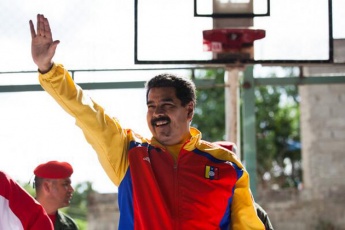
Mérida – Venezuelan president Nicolas Maduro unveiled a new policy to focus on the needs of the least well off as part of his pledge to eradicate extreme poverty in the country by 2018.
The policy involves creating almost 1,500 special attention points that group together various social programs in areas where extreme poverty still prevails, in order to meet the basic needs of these communities.
The attention points, called Social Mission Bases, will house government social programs such as free community food kitchens, subsidised food stores, and free medical clinics. They will be spread out over the 255 of the country’s 1163 local districts where households experiencing extreme poverty still exist.
Venezuela’s National Institute of Statistics estimates that 5.5% of Venezuelan households still experience extreme poverty. This is calculated using the regionally based Unsatisfied Basic Needs (UBN) structural poverty indicator, which considers as extremely poor those homes where two or more basic needs, such as access to basic services, adequate living conditions, or schooling, are not met.
The percentage of households in extreme poverty has decreased steadily over the previous decade from 12.7% in 2003 to 5.5% currently. In the same period, overall structural poverty has decreased from 30.5% to 19.6%.
President Nicolas Maduro has vowed to eliminate extreme poverty altogether by 2018, the end of his current term of office, as well as to continue to reduce overall structural poverty.
“In the year 2018 I’ll be…able to say that we’ve achieved the goal of zero misery in Venezuela… the Bolivarian revolution must end poverty to establish a system of equality [and] justice,” he said as the first Social Mission Base was founded in the coastal state of Miranda.
Maduro also informed the country that the Social Mission Bases will be complemented with multidisciplinary teams of social program workers, such as community doctors, sports therapy trainers and cultural promoters, who will visit deprived communities house by house to assess living conditions and attend to differing needs.
“The great battalion [multi-disciplinary team] … won’t have another objective but to fight a strong battle along with our people to eradicate extreme poverty,” the president said, while also encouraging supporters to participate in the work of the Social Mission Bases.
The policy announcements come amid a debate over poverty in Venezuela, with government critics pointing to an increase in income-based poverty between the second half of 2012 and the first half of 2013, in the context of a sharp increase in annual inflation.
“The days when poverty was a winning issue for chavismo are over. Official statistics now show that poverty is rising rapidly,” wrote anti-government blogger Juan Nagel for Foreign Policy magazine recently.
Nevertheless income-based poverty actually decreased in the second half of 2013 to lower than it was in early 2012, and in keeping with the level of income-based poverty recorded in recent years, at 32.1%, down from 62.1% a decade earlier.
The Social Mission Bases policy also comes not long after Maduro announced reforms to the country’s national system of welfare programs, in order to improve their performance and reduce bureaucracy and overlapping functions.
The programs, known as “missions”, include free health clinics, free educational programs, subsidised food outlets, and the construction of heavily subsidised housing. They are held as one factor behind the large reduction in poverty since the Bolivarian government was elected to power in 1999.
South American union raps US sanction bid on Venezuela
Press TV – May 24, 2014
Twelve South American states have rejected an effort by US legislators to impose sanctions on Venezuela over alleged rights abuses.
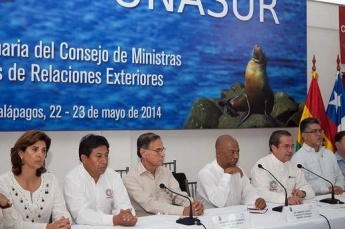
In a statement issued on Friday following a meeting in the Galapagos Islands in Ecuador, foreign ministers from the 12-member Union of South American Nations (Unasur) said that a bill proposed by American lawmakers against Caracas would violate Venezuela’s internal affairs and undermine attempts to defuse the crisis in the country.
Sanctions are obstacles for Venezuela, whose “people can overcome their difficulties with independence, and in democratic peace,” the statement said.
The US House of Representatives will vote on the legislation on Wednesday. The bill will order the administration of US President Barack Obama to ban visas and freeze the assets of Venezuelan officials involved in the alleged rights abuses in the past three months.
Venezuela has been the scene of protests against and in support of the administration of Venezuelan President Nicolas Maduro since February.
The protests broke out in the western city of San Cristobal, where students took to the streets to criticize the crime rate and inflation in the country. The demonstrations later spread to other cities including the capital Caracas.
Maduro says the unrest is a US-backed plan to topple his government.
Last week, Maduro urged opposition leaders to return to political talks aimed at ending street clashes in the country.
The move came after the Venezuelan opposition suspended the negotiations with the government on May 14 to protest against what it called the mass arrests of anti-government activists.
The opposition says it will not return to the negotiating table until the government accepts its demands, including amnesty for opposition prisoners.
The government, on the other hand, says the opposition is making impossible requests that are akin to blackmail.
Remember When Venezuela and Bolivia Kicked the U.S. DEA Out of Their Countries, Accusing It of Espionage? Looks Like They Were Right…
By Stephan Lefebvre | CEPR Americas Blog | May 22, 2014
In their latest article on U.S. government spying for The Intercept, Ryan Devereaux, Glenn Greenwald and Laura Poitras review and publish leaked documents that show that the U.S. government may have used the Drug Enforcement Administration (DEA) to aid the National Security Agency (NSA) to spy on U.S. citizens and non-citizens in foreign countries. The NSA is shown to have assisted the DEA with efforts to capture narcotraffickers, but the leaked documents also refer to “a vibrant two-way information sharing relationship” between the two intelligence agencies, implying that the DEA shares its information with the NSA to aid with non-drug-related spying. This may explain how the NSA has gathered not just metadata but also the full-take audio from “virtually every cell phone conversation on the island nation of the Bahamas.”
The authors write,
The DEA has long been in a unique position to help the NSA gain backdoor access to foreign phone networks. “DEA has close relationships with foreign government counterparts and vetted foreign partners,” the manager of the NSA’s drug-war efforts reported in a 2004 memo. Indeed, with more than 80 international offices, the DEA is one of the most widely deployed U.S. agencies around the globe.
But what many foreign governments fail to realize is that U.S. drug agents don’t confine themselves to simply fighting narcotics traffickers. “DEA is actually one of the biggest spy operations there is,” says Finn Selander, a former DEA special agent who works with the drug-reform advocacy group Law Enforcement Against Prohibition. “Our mandate is not just drugs. We collect intelligence.”
What’s more, Selander adds, the NSA has aided the DEA for years on surveillance operations. “On our reports, there’s drug information and then there’s non-drug information,” he says. “So countries let us in because they don’t view us, really, as a spy organization.”
While the documents accompanying the article reveal detailed information that has never before been available to the public, this is not the first time that the DEA has faced allegations of spying.
In 2005, President Hugo Chávez of Venezuela stopped cooperating with the DEA after accusing it of espionage in his country. At the time, a State Department spokesperson responded by saying, “the accusations that somehow the Drug Enforcement Agency is involved in espionage are baseless. There’s no substance or justification for them.” Using arguments that would change very little over the next nine years, a State Department official said at the time, “I think it’s pretty clear to us that the motivation for this is not the accusation itself or not what they state is the problem. The motivation is an effort to detract from the government’s increasingly deficient record of cooperation.”
Three years later, President Evo Morales expelled the DEA from Bolivia saying, “there were DEA agents who worked to conduct political espionage.” He also said, “we can control ourselves internally. We don’t need any spying from anybody.” The State Department spokesperson said in response, “the charges that have been made are just patently absurd. We reject them categorically”, and the news agency EFE reported that “Washington has repeatedly denied that the DEA has been involved in any activities in Bolivia apart from the war on drugs.”
Few of the press reports from 2005 or 2008 took these accusations seriously, and the State Department dismissed the allegations categorically, but in 2008, CEPR’s co-director Mark Weisbrot wrote that “To the Bolivians, the U.S. is using the “war on drugs” throughout Latin America mainly as an excuse to get boots on the ground, and establish ties with local military and police forces.” To this list, we can now add access to national phone and communication networks, and storage of the content of phone calls.
U.S. Senate Committee Approves Sanctions, Venezuela to Appeal to United Nations
By Z.C. Dutka | Venezuelanalysis | May 20th 2014
Earlier this afternoon in Washington, the Foreign Relations Committee of the U.S. Senate approved 13 to 2 the “Venezuelan Human Rights and Democracy Protection Act.” The bill includes sanctions on key individuals of the Venezuelan government and at least $15 million to “defend human rights… and strengthen the rule of law.”
The Menendez Bill
Committee chair, Democrat Robert Menendez, who played a lead role in the writing of the proposed legislation, plans to present the bill before the whole Senate within the coming weeks.
The legal measures proposed are in regards to recent anti-government protests that have reached levels of extreme violence in certain Venezuelan cities, resulting in 42 dead, 800 injured, and millions of dollars of public property damaged, including the burning of multiple universities.
Menendez said the US can’t “play the role of bystander” while Venezuelan president is going to “dangerous extremes to silence political dissent.”
“The U.S. should always be on the side of human rights around the world,” said another lead supporter, Florida Republican senator Marco Rubio.
Rubio has prepared list of Venezuelan military and government officials who would be targeted for sanctions if the bill were to pass. Among those listed are attorney general Luisa Ortega Diaz and the head of operations for the National Guard, Manuel Quevedo.
Earlier this month another piece of similar legislation, the Venezuelan Liberty and Democratic Solidarity Act, promoted by Florida congresswoman Ileana Ros-Lehtinen, passed the corresponding foreign committee of the U.S. Congress. It has yet to be addressed by Congress as a whole.
Roberta Jacobson, Assistant Secretary of State for Western Hemisphere Affairs, has attended the senate hearings and expressed concern on behalf of the White House.
“This is not a U.S.-Venezuela issue,” she said. “We have strongly resisted attempts to be used as a distraction from Venezuela’s real problems.”
She has displayed equal unease that the bill might distract from the important dialogue that is taking place between the Venezuelan government and the opposition.
Appeal to the UN
Even before the bill passed today’s Senate committee, Venezuelan foreign minister Elias Jaua expressed outrage at what he considers repeated US “interference” in Venezuelan affairs.
On Thursday Jaua announced his plan to present a formal claim to the United Nations, the Organization of American States (OAS), the Union of South American Nations (UNASUR), and the Community of Latin American and Caribbean States (CELAC).
“We’ve had enough of the United States assuming a role that belongs to multilateral bodies, Jaua said Thursday. “We must remember that as a free and independent nation we do not recognize the United States parliament… as a legislative [force] over Venezuela. There are basic principles of the United Nations Charter that must be respected.”
The minister has called a meeting with the UNASUR, to be held next week in Ecuador. He plans to bring with him a “dossier of all the declarations of interference posed by representatives of the United States, starting with president Obama, Secretary [of State John] Kerry, and others…”
U.S. Bill Proposing Sanctions on Venezuela Passes House Foreign Affairs Committee
By Z.C. Dutka | Venezuelanalysis | May 9, 2014
Santa Elena de Uairen – A Human Rights bill proposed by Florida Republican Congresswoman Ileana Ros-Lehtinen, which includes sanctions on the Venezuelan government, cleared its first legislative hurdle this morning after passing the House Foreign Affairs Committee.
Individual Sanctions
The bill, known as the Venezuelan Liberty and Democratic Solidarity Act, will sanction individuals responsible for “serious human rights abuses” against those participating in the anti-government protests that have received widespread media attention since February. It also includes those individuals who have supported those acts, whether financially or otherwise, and those officials who called for the arrest of those “legitimately exercising their freedom of expression and assembly.”
The most recent draft presented to the Committee listed asset blocking and inadmissibility to the US as types of individual sanctions. It also included the possibility of a presidential waiver of the application of sanctions, if the U.S. president should consider national security interests call for it, or conditions in Venezuela have improved.
Democracy Promotion
Section 7 of the bill outlines a “Comprehensive Strategy to Promote Internet Freedom and Access to Information,” including the expansion of activities to “train HR, civil society, and democracy activists” and the expansion of proxy servers for said activists, as well as access to “uncensored news sources.”
Section 8 asks that US Secretary of State, John Kerry, submit a “comprehensive strategy outlining how the US is supporting the citizens of Venezuela” in seeking basic civil liberties, development of an independent civil society, and free and transparent elections.
Section 9 offers refugee status or political asylum in the US to Venezuelan political dissidents if requested, and a direct effort on behalf of the US state department to identify cases of “prisoners of conscience and HR abuses in Venezuela.”
The bill ends with Section 10, the Authorization of Appropriations for Assistance to Support Civil Society in Venezuela, which pledges a minimum of $5 million through USAID, and finally, a Sunset Clause of two years after the date of enactment of the legislation.
Response
Venezuelan president Nicolas Maduro has accused possible sanctions of being “encouragement to extremist groups,” those protestors who he believes have sparked violence in their widespread call for regime change. Members of the Venezuelan opposition coalition, the Democratic Unity Roundtable (MUD), have also expressed their misgivings at the prospect of sanctions.
This morning Roberta Jacobson, Assistant Secretary of State for Western Hemisphere Affairs, heard testimonies from Venezuelan opposition representatives regarding the alleged use of extreme force on behalf of Venezuelan security forces. She admitted to hearing a “diversity of opinions,” from “different oppositional factions” but that the majority asked that the U.S. not impose sanctions “yet.”
“They have asked us not to introduce sanctions at this time,” Jacobson said.
A caravan of Venezuelans, residents of South Florida, traveled to Washington D.C. yesterday to show support for the bill.
Only two committee representatives, Gregory Meeks and Karen Bass, voted against the bill this morning. In recent weeks, many Latin American leaders have expressed their distaste for the possibility of US interference in Venezuela.
Uruguayan president Pepe Mujica said, “When the entire world asks the U.S. to shelve its economic blockade policy against Cuba, voices emerge from within that government threatening sanctions against Venezuela. Are the lessons of history never learned? (…) the first thing that Venezuela and all of Latin America need is to be respected.”
Many sources believe the bill will reach the House floor the week of May 12th, and will likely be approved with little resistance. A number of organizations, including the Alliance for Global Justice, have organized petitions in attempts to prevent this from taking place.
Venezuelan Policeman Killed by Sniper While Clearing Protest Barricade in Caracas
By Z.C. Dutka | Venezuelanalysis | May 9, 2014
Santa Elena de Uairen – In the early hours of Thursday morning, Jorge Tovar, 24, a Venezuelan national police officer was shot dead in the neck by a sniper, according to official sources. The shooting occurred as police attempted to clear an encampment that blocked traffic set up by hardline anti-government protestors, or guarimberos, in the upperclass neighborhood of Los Palos Grandes, in eastern Caracas.
Injuries were sustained on both sides as protestors clashed with security forces. Two other police officers suffered bullet wounds, albeit nonfatal, allegedly by the same sniper. Justice Minister Miguel Rodriguez Torres reported that police have evidence of where the shots were fired shot from, but the shooter’s identity remains unknown, while a full investigation is being launched.
The police and national guard had organized that morning with the intention of clearing out the four remaining barricades in the Eastern area of Caracas.
Minister Torres said it was imperative these four guarimba camps be eliminated, “given the evidence that it was from these places that the most violent terrorist acts were committed: the torching of Metro trains and police vehicles, confrontations with molotovs and weapons against security forces.”
Some 243 barricaders were apprehended for questioning, although 12 were released hours later due to their juvenile status. A variety of weapons, including guns and homemade bombs, as well as illegal drugs, were found among protestors.
Among the arrested was a young man responsible for the burning of a National Guard vehicle, according to Rodriguez.
Later that day, near the scene of Tovar’s death, more hardline protestors attacked the Public Fund for Micro Finance Development (Fondemi) with explosives and stones.
Yesterday Venezuelan president Nicolas Maduro pledged a medal of bravery to the bus driver, Jonathon Jimenez, whose bus was assaulted by protestors wielding molotov cocktails last week. Jimenez still remains in the hospital with severe burns.
“Can it be called protest to throw a molotov at a worker? That’s something we should reflect on,” said Maduro yesterday afternoon.
Another worker, Victor Yajure, of the United Socialist Party (PSUV), was kidnapped by unknown assailants in front of his home in Iribarren, Lara state. According to those who reported the crime, Yajure was previously aware of a plot designed by anti-government student protestors to frame him for arson of the local university.
Colleagues of Yajure are convinced the kidnapping had political motives, and condemn oppositional governor Henry Falcon of “abetting violent acts” by permitting the protestors to “control the area” for three months, under the alleged protection of local police.
The Dirty Hand of the National Endowment for Democracy (NED) in Venezuela
By Eva Golinger | Postcards from the Revolution | April 23, 2014
Anti-government protests in Venezuela that seek regime change have been led by several individuals and organizations with close ties to the US government. Leopoldo Lopez and Maria Corina Machado- two of the public leaders behind the violent protests that started in February – have long histories as collaborators, grantees and agents of Washington. The National Endowment for Democracy “NED” and the US Agency for International Development (USAID) have channeled multi-million dollar funding to Lopez’s political parties Primero Justicia and Voluntad Popular, and Machado’s NGO Sumate and her electoral campaigns.
These Washington agencies have also filtered more than $14 million to opposition groups in Venezuela between 2013 and 2014, including funding for their political campaigns in 2013 and for the current anti-government protests in 2014. This continues the pattern of financing from the US government to anti-Chavez groups in Venezuela since 2001, when millions of dollars were given to organizations from so-called “civil society” to execute a coup d’etat against President Chavez in April 2002. After their failure days later, USAID opened an Office of Transition Initiatives (OTI) in Caracas to, together with the NED, inject more than $100 million in efforts to undermine the Chavez government and reinforce the opposition during the following 8 years.
At the beginning of 2011, after being publically exposed for its grave violations of Venezuelan law and sovereignty, the OTI closed its doors in Venezuela and USAID operations were transferred to its offices in the US. The flow of money to anti-government groups didn’t stop, despite the enactment by Venezuela’s National Assembly of the Law of Political Sovereignty and National Self-Determination at the end of 2010, which outright prohibits foreign funding of political groups in the country. US agencies and the Venezuelan groups that receive their money continue to violate the law with impunity. In the Obama Administration’s Foreign Operations Budgets, between $5-6 million have been included to fund opposition groups in Venezuela through USAID since 2012.
The NED, a “foundation” created by Congress in 1983 to essentially do the CIA’s work overtly, has been one of the principal financiers of destabilization in Venezuela throughout the Chavez administration and now against President Maduro. According to NED’s 2013 annual report, the agency channeled more than $2.3 million to Venezuelan opposition groups and projects. Within that figure, $1,787,300 went directly to anti-government groups within Venezuela, while another $590,000 was distributed to regional organizations that work with and fund the Venezuelan opposition. More than $300,000 was directed towards efforts to develop a new generation of youth leaders to oppose Maduro’s government politically.
One of the groups funded by NED to specifically work with youth is FORMA (http://www.forma.org.ve), an organization led by Cesar Briceño and tied to Venezuelan banker Oscar Garcia Mendoza. Garcia Mendoza runs the Banco Venezolano de Credito, a Venezuelan bank that has served as the filter for the flow of dollars from NED and USAID to opposition groups in Venezuela, including Sumate, CEDICE, Sin Mordaza, Observatorio Venezolano de Prisiones and FORMA, amongst others.
Another significant part of NED funds in Venezuela from 2013-2014 was given to groups and initiatives that work in media and run the campaign to discredit the government of President Maduro. Some of the more active media organizations outwardly opposed to Maduro and receiving NED funds include Espacio Publico, Instituto Prensa y Sociedad (IPYS), Sin Mordaza and GALI. Throughout the past year, an unprecedented media war has been waged against the Venezuelan government and President Maduro directly, which has intensified during the past few months of protests.
In direct violation of Venezuelan law, NED also funded the opposition coalition, the Democratic Unity Table (MUD), via the US International Republican Institute (IRI), with $100,000 to “share lessons learned with [anti-government groups] in Nicaragua, Argentina and Bolivia… and allow for the adaption of the Venezuelan experience in these countries”. Regarding this initiative, the NED 2013 annual report specifically states its aim: “To develop the ability of political and civil society actors from Nicaragua, Argentina and Bolivia to work on national, issue-based agendas for their respective countries using lessons learned and best practices from successful Venezuelan counterparts. The Institute will facilitate an exchange of experiences between the Venezuelan Democratic Unity Roundtable and counterparts in Bolivia, Nicaragua and Argentina. IRI will bring these actors together through a series of tailored activities that will allow for the adaptation of the Venezuelan experience in these countries.”
IRI has helped to build right-wing opposition parties Primero Justicia and Voluntad Popular, and has worked with the anti-government coalition in Venezuela since before the 2002 coup d’etat against Chavez. In fact, IRI’s president at that time, George Folsom, outwardly applauded the coup and celebrated IRI’s role in a press release claiming, “The Institute has served as a bridge between the nation’s political parties and all civil society groups to help Venezuelans forge a new democratic future…”
Detailed in a report published by the Spanish institute FRIDE in 2010, international agencies that fund the Venezuelan opposition violate currency control laws in order to get their dollars to the recipients. Also confirmed in the FRIDE report was the fact that the majority of international agencies, with the exception of the European Commission, are bringing in foreign money and changing it on the black market, in clear violation of Venezuelan law. In some cases, as the FRIDE analysis reports, the agencies open bank accounts abroad for the Venezuelan groups or they bring them the money in hard cash. The US Embassy in Caracas could also use the diplomatic pouch to bring large quantities of unaccounted dollars and euros into the country that are later handed over illegally to anti-government groups in Venezuela.
What is clear is that the US government continues to feed efforts to destabilize Venezuela in clear violation of law. Stronger legal measures and enforcement may be necessary to ensure the sovereignty and defense of Venezuela’s democracy.
Thirty Venezuelan Military Officials Allegedly Under Arrest for Coup Plotting
By Ewan Robertson | Venezuelanalysis | Aprilm 14, 2014
Thirty Venezuelan military officers of different ranks, including several generals, have been arrested for alleged conspiracy to overthrow President Nicolas Maduro, a leading national newspaper has reported.
The information, reported by Ultimas Noticias, was attributed to “high level sources” in Miraflores presidential palace. The majority of those arrested are from the Venezuelan Air Force, however a few officers from the National Guard, Navy and Armed Forces were also arrested.
According to the sources, loyal military figures previously informed the national intelligence service that “something strange” was being planned by a group of officers, and due to this the alleged conspirators had been under observation by authorities for some time.
The UN report adds that a “destablisation attempt” was supposedly planned to occur on 20 March with an air operation and strafing of soldiers, among other incidents, to create “confusion” and “clashes”.
Further, the report alleges that “it has been confirmed” that the group of officers has been in contact “with at least one opposition leader”. There exist rumours that this politician is Julio Borges of the Justice First party, of which former presidential candidate Henrique Capriles is leader. According to the rumours, Borges met with a group of 60 military officials, to which those arrested would presumably belong.
Both Borges and Capriles participated in the nationally-broadcast dialogue meeting with the government last Thursday.
Authorities have not yet offered public comment on Ultimas Noticias’ allegations on the arrest of the thirty military officers.
On 25 March Maduro announced that three air force generals had been arrested “for conspiracy” but has not offered further details while the investigation continues. The government has also said that it has information of a plot from within a sector of the opposition to kill protest leader Leopoldo Lopez and blame the act on government supporters in order to provoke a coup attempt.
The Venezuelan armed forces are considered to be generally loyal to the government. The head of the Operational Strategic Command of the Armed Forces, Gen. Vladimir Padrino, said yesterday that a while a campaign was underway to “manipulate” the armed forces (FANB), the troops are committed to their role of upholding the Venezuelan constitution.
Venezuela has experienced a wave of opposition protests, riots and street barricades since early February, after hard-line leaders of the opposition called for resistance to the government in a strategy called “The Exit”.
Human Rights Watch Keeps the Distortions Coming about Venezuela
By Joe Emersberger | Zblogs | April 11, 2014
In a blog post for the New York Review of Books, Daniel Wilkenson of Human Rights Watch (HRW) wrote:
“Supporters of Chávez and Maduro often seek to downplay concerns about press freedoms in Venezuela by pointing to reporting critical of the government in the country’s newspapers. It is true that the government has not targeted the print media as aggressively as television, perhaps because the number of Venezuelans who read newspapers is a small fraction of the number who watch TV.”
In other words, it is very easy to expose the lies spread by HRW, RSF and most of the international media about the state of press freedom in Venezuela by simply monitoring the content of the country’s largest newspapers. Wilkenson must therefore find some way around that inconvenient fact. Anyone who reads Spanish will be immediately shocked by the quantity and vehemence of anti-government tirades that appear. As I’ve explained elsewhere, it is child’s play to find op-eds every day that openly call Maduro a “dictator” or “assassin” or words to that effect.
What about Wilkinson’s suggestion that the numbers of people who read newspapers is too small to matter much to the government? It doesn’t stand up at all. Relative to the Venezuela’s population, the combined daily circulation of its four largest newspapers is about the same as the combined daily circulation of the four largest newspapers in the USA.
Think about that. If an anti-government group in the USA is very well represented in the Wall Street Journal, New York Times, USA Today and the LA Times, how credibly could that group claim that it has been unable to effectively get its views out to the public? And how plausible is it that a group with such a strong presence in the print media would be shut out of the TV media? Common sense should lead anyone to say that it probably isn’t true and that is exactly what very recent studies of the Venezuelan TV media have revealed.
There is no question that some of the ways the Venezuelan government has balanced media coverage since the 2002 coup can be reasonably criticized. However what Wilkenson does in this piece, and what HRW has done relentlessly since it disgraced itself by the way it responded to the 2002 coup, is too use allegations of censorship to completely mislead people about the actual content of the Venezuelan media. As Keane Bhatt recently noted, until HRW closes the revolving door between itself and US elites, nobody should expect much better from them.
Featured Video
Macgregor: We Haven’t Seen the Worst of the Iran War Yet
or go to
Aletho News Archives – Video-Images
From the Archives
15 Saudi ‘hijackers’ were CIA agents working for US: Scholar
Press TV – April 13, 2016
Fifteen of the 9/11 “hijackers” from Saudi Arabia were CIA agents working for the United States government, which was seeking to destroy the Middle East for Israel and to double the American military budget, says Dr. Kevin Barrett, an American academic who has been studying the events of 9/11 since late 2003…. continue
Blog Roll
 Aletho News
- Iran’s Plan to Shut Down AI in the Persian Gulf
- Israel seeks ‘compensation’ from Washington over Saudi F-35 sale
- Saudi crown prince seeks dialogue with Ansarullah after Yemeni blows: Report
- Damascus rejects Saudi request for Syrian fighters to counter Yemen: Report
- South Korea says will not send troops to join terrorist US war on Iran
- Russia Just Struck the Eyes of NATO’s War Machine in Ukraine
- Russia summons UK charge d’affaires over Kiev drone support
- NATO member warns bloc seeking pretext for war with Russia
- Macgregor: We Haven’t Seen the Worst of the Iran War Yet
- ‘We are not like everyone else’ laws that bind other nations do not apply to Israel, says Likud lawmaker
- If Americans Knew
- Debunking The Claim That Macklemore Has A “History Of Antisemitism”
- CPJ demands release of arrested Palestinian-US journalist near Bethlehem
- Robert Kraft: The Billionaire Friend of Netanyahu Pulling The Strings Behind the Macklemore/Ed Sheeran Blow Up
- Columbia Administered Fund Gives Big Money to Pro-Israel Groups
- Deportation Case of Palestinian Activist Salah Sarsour Tests First Amendment
- ‘We Will Not Forget’: Palestinians Mark 44 Years since Sabra and Shatila
- Why do we let Zionists decide what we can and can’t say?
- US welcomes Israeli, Iranian delegations to UN, but not Palestinians – Daily Update
- Biden’s Genocide Accomplices Targeted by New Accountability Campaign
- AIPAC’s Network Has Already Spent $67.2 Million to Shape the Midterm Elections
- No Tricks Zone
- New Study: ‘Global Drought Shows No Detectable Recent Acceleration Under Climate Warming’
- Economic Masterminds: German Socialists Suggest Taxing Productivity Gains Stemming From Using AI
- The South China Sea Has Not Been Cooperating With The Climate Change Narrative
- Energy Crisis: Germany Enters Heating Season With Historically Low Gas Reserve Fill Levels
- New Study: The Antarctic Ice Sheet Gained Mass From 2020-2024 Due To Staggering Snow And Ice Accumulation
- Study: Ocean Heating Rates From Thousands Of Years Ago ‘Dwarf’ Modern Ocean Heating Rates
- Climate Extremists Target, Attack Large-Scale Power Grid Infrastructure In Germany!
- New Study: Antarctic Ice Melt Has Contributed Less Than 1 Centimeter To Sea Level Rise In The Last 30 Years
- Fear Of Debate: Alarmist German Climate Scientist Calls On Mainstream Media To Discredit Skeptic Voices
- End-Of-August Arctic Sea Ice Extent Hasn’t Fallen In 20 Years, Official Data Show!
 Aletho News