
Israelis set West Bank mosque on fire, as UN report reveals rise in settler violence
Al-Akhbar | January 15, 2014

A group of Israeli settlers set fire to a West Bank mosque and sprayed it with racist graffiti, Ma’an news agency reported on Wednesday.
The “price tag” attack comes as a United Nations report revealed that settler attacks on Palestinians have almost quadrupled in eight years.
Ayoub Abu Hijlah, the mayor of the northern village of Deir Istiya, told Ma’an that the settlers entered the village before dawn to set fire to the mosque’s door, causing minor damages.
The settlers also scrawled threatening graffiti on the walls of the mosque, including “Arabs out!” and “Best regards from Qusra,” in an allusion to an incident in early January in which a group of settlers was apprehended by Palestinian villagers as they intended to destroy their crops.
Another tag read: “The righteous shall rejoice when he seeth the vengeance: He shall wash his feet in the blood of the wicked.”
Palestinian Authority official Ghassan Daghlas said that residents managed to extinguish the blaze before it spread to the interior of the mosque.
Most price tag attacks against Palestinians are never prosecuted, and many take place in full view of Israeli troops. According to rights organization Yesh Din, indictments were only filed in 8.5 percent of 825 completed police investigations it monitored.
The UN Office for the Coordination of Humanitarian Affairs (OCHA) report, relayed by the Associated Press, recorded 2,100 settler attacks since 2006, from 115 attacks that year to 399 in 2013.
OCHA figures estimated that in eight years, 10 Palestinians were killed by settlers, and more than 1,700 Palestinians were injured by settlers or by troops in clashes.
Israeli settlements in the West Bank and East Jerusalem are illegal under international law.

The Israeli army no longer even pretends it’s trying
The army admits its observers noticed the masked Israeli bandits descending on Qusra – and did nothing
By Yossi Gurvitz | Yesh Din | January 13, 2014
 A case of man bites dog: On Tuesday, January 7th, in the village of Qusra, Palestinians united in order to defend themselves from a group of Israeli marauders, taking the latter captive, and turning them over to the authorities. The rare event drew significant media attention.
However one point did not get the attention it required: The IDF told Haaretz (Hebrew) that “an observation post identified the settlers, some of whom were hooded, descending towards the village, but then eye contact with them was lost.”
You get that? The IDF identified a group of masked people heading toward a Palestinian village, and in response it did… nothing. The army entered the picture only after the raiders’ plans had been disrupted, in order to return them to their homes. That is, as far as the Israeli army – which effectively is the sovereign over the West Bank – is concerned, it is perfectly reasonable that masked men will pass by its apathetic eyes to raid a Palestinian village.
Had the villagers of Qusra not congregated to protect their persons and property, the incident would have ended with more damage to Palestinian property and perhaps more wounding of Palestinians – and it seems the IDF would not have cared that much. Now let’s try and imagine the opposite scenario: Masked Palestinians creep toward a settlement. Do you think in this case the IDF observer would consider it sufficient to inform command that it had “lost eye contact” with the suspicious masked group?
Once, the IDF – which according to international treaties and HCJ instructions is entrusted with protecting the Palestinian population in the Occupied Territories – would at least pretend to try to protect them from the settlers’ daily terrorism. Seems it has stopped even pretending.
Perhaps because the truth is much worse: this blog has reported numerous incidents of IDF troops providing protection to Jewish marauders while they have attacked Palestinian villages. The following footage, taken by B’Tselem staff, brings the incident to life. The soldiers react with apathy to the masked Jewish civilians stoning Palestinians – and when the Palestinians try to react in defense, the soldiers fire tear gas canisters at them.
So it goes.
Related article

Israel Seizes Emergency Tents Provided By UN

File photo
By Chris Carlson | International Middle East Media Center | January 13, 2014
Israeli authorities have seized emergency tents provided by the United Nations to shelter families whose homes were demolished by the army last week, according to a UN press release.
The Palestinian News & Info Agency (WAFA) reports that the release, issued by the United Nations Office for the Coordination of Humanitarian Affairs in the occupied Palestinian territories (OCHA), states that the tents were provided to the Bani Manieh families from Jiftlik, in Jericho, after the Israeli army demolished all their residential and livelihood structures on Wednesday.
13 structures, belonging to three families of the Bani Manieh community, were destroyed by the army, displacing 26 people, including 15 children.
The army claims that the area was a military training zone.
The Jordan Valley makes up about 29% of the West Bank, and Israel is simultaneously trying to empty the region of its Palestinian Arab citizens, as it attempts to keep control over the area in any future peace deal with the Palestinians.
The Palestinians refuse to allow any Israeli presence in the Jordan Valley and assert that this land is vital to their economy and statehood.
Related article

Israeli police detain Palestinian woman near al-Aqsa Mosque
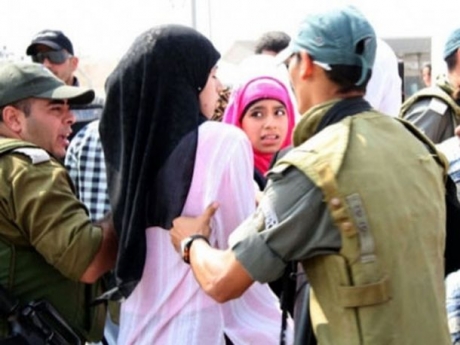
File photo
Ma’an – January 13, 2014
JERUSALEM – Israeli police officers detained a young Palestinian woman Sunday morning as she tried to enter the al-Aqsa Mosque compound through the Chain Gate.
Witnesses told a Ma’an reporter that Hiba al-Taweel, a student who takes courses on Islamic teaching in the compound, was detained.
Israeli police spokesman Micky Rosenfeld was not familiar with the incident.
Separately, more than 30 Jewish Israelis led by right wing extremist Yehuda Glick toured the al-Aqsa compound on Sunday.
Yehuda Glick is an American-born Israeli and the chairman of the Temple Mount Heritage Fund, an extremist Jewish organization focused on “strengthening the relationship between Israel and the Temple Mount.” He has been previously banned by Israeli authorities from entering the compound due to provocations while on the site.
Critics charge that the Fund actually leads tours to the site with the intention of leading Jewish prayer there — currently banned under Israeli agreements — and encouraging Jews to destroy the Al-Aqsa mosque and build a Jewish temple there.
Because of the sensitive nature of the Al-Aqsa compound, Israel maintains a compromise with the Islamic trust that controls it to not allow non-Muslim prayers in the area. Israeli forces regularly escort Jewish visitors to the site, leading to tension with Palestinian worshipers.
The compound, which sits just above the Western Wall plaza, houses both the Dome of the Rock and Al-Aqsa mosque and is the third holiest site in Islam.
It is also venerated as Judaism’s most holy place as it sits where Jews believe the First and Second Temples once stood. The Second Temple was destroyed by the Romans in 70 AD.
According to mainstream Jewish religious leaders, Jews are forbidden from entering for fear they would profane the “Holy of Holies,” or the inner sanctum of the Second Temple.
Al-Aqsa is located in East Jerusalem, a part of the internationally recognized Palestinian territories that have been occupied by the Israeli military since 1967.
Kifl Hares: Closure of village and settler harassment
International Solidarity Movement | January 12, 2014
Kifl Hares, Occupied Palestine – On Friday, 10th January 2014, at approximately 4 o’clock in the morning a group of twenty settlers from nearby illegal settlements entered the Palestinian village of Kifl Hares. Some of them arrived in cars, others on foot. The settlers made noise and broke windows of parked cars. Palestinians on their way to the mosque for the first prayers were harassed and settlers in cars tried to run them over. Children were frightened and the villagers were afraid to leave their homes.
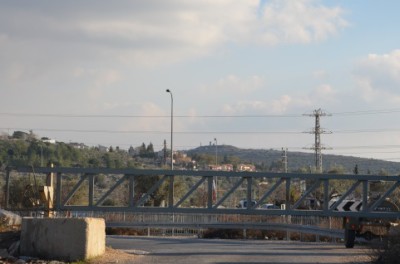 Previously, on Tuesday 7th January, the Israeli army closed the gate at the main entrance to the village, which leads to the main road. When villagers asked the reason for this, the soldiers stationed in a watchtower nearby answered that the gate would be closed indefinitely for security reasons.
On Thursday, 9th January, an emergency occurred, when an ambulance attempted to take an elderly lady living near the entrance to a hospital in Nablus. The residents requested that the Israeli soldiers open the gate for just five minutes so that the ambulance could reach the main road. The Israeli forces refused and the paramedic had to carry the lady by hand on a stretcher from her house to the other side of the gate. This delayed her arrival at hospital.
The gate has been opened only once in the past few days. This happened on Friday, when the settlers entered the village, implying that the Israeli forces knew of the settler attack.
Illegal settlers and Jewish tourists have entered Kifl Hares on many occasions. The village is located in the northern West Bank in the Salfit district and close to Ariel, the largest of the illegal settlements. The pretext for the incursions into Kifl Hares is a pilgrimage to three disputed tombs. The centuries-old tombs belonging to the village are also important for Muslims. Large numbers of settlers arrive on visits organized by the DCO and with Israeli army protection. Settlers and Jewish tourists from all over the world arrive by bus, frequently during the night. During the incursions, Israeli forces declare the village a closed military zone and Palestinians are required to stay in their homes until the settlers have left. This event occurs around twenty times a year. Nevertheless settlers also come weekly without army protection to pray in the tombs and often to harass or attack villagers. Several years ago Palestinian youth would resist these incursions by throwing stones at the illegal settlers and Israeli forces. This resistance was invariably responded to with night raids and arrests that resulted in imprisonment for up to five years. Since then villagers have been afraid to resist these settler attacks.
Related articles


Ashrawi: Recognizing Israel as ‘Jewish state’ would legalize ‘racism’
Ma’an – 11/01/2014
BETHLEHEM – Israel’s pressure on Palestinians to recognize it as a Jewish state is an attempt to legalize “racism,” a PLO official said Saturday.
PLO Executive Committee Member Hanan Ashrawi said defining Israel as a Jewish state would signify that any Jewish person would have the right to return to Palestine, while Palestinians would lose that right.
Ashrawi told Ma’an that Israel wants to “create a narrative that denies the Palestinian presence, rights, and continuity on the historic Palestinian lands.”
A “Jewish state” recognition would exempt Israel from its responsibility toward the Palestinian refugees who were forcibly displaced from their homes in 1948, she said.
Similarly, a former Palestinian member of the Israeli Knesset said that recognizing Israel as such a state would “annul the Palestinian narrative about the Nakba.”
It would abolish the right of the refugees to return, said Talab al-Sani.
During US-mediated peace talks with the Palestinians, Prime Minister Benjamin Netanyahu has repeatedly cited recognition of Israel as a Jewish state as a precondition for peace.
It is the “minimal requirement for peace,” Netanyahu told the Saban Forum on Middle East policy in Washington on Dec. 8.
There would be peace, Netanyahu said, if “there were no longer any Palestinian national claims on the Jewish state — no right of return … no residual claims of any kind. And that, the Palestinians have so far been unwilling to give.”
More than 760,000 Palestinians — estimated today to number 4.8 million including their descendants — were forced into exile or driven out of their homes in the conflict surrounding Israel’s creation in 1948.
Palestinian officials have repeatedly said that recognizing the concept of Israel as a “Jewish state” is unnecessary and threatens the rights of nearly 1.3 million Palestinian citizens of Israel who remained in their homes during the displacement of the majority of the Palestinian population during the 1948 war.
The right of Palestinian refugees to return to their land is enshrined in article 11 of UN resolution 194.
The internationally recognized Palestinian territories of which the West Bank and East Jerusalem form a part have been occupied by the Israeli military since 1967.
Related article

Two international activists to be deported after their arrest is declared illegal
International Solidarity Movement | January 9, 2014
Occupied Palestine – Yesterday, Wednesday 8th January, at approximately 11am in Khalil (Hebron), Vincent Mainville and Fabio Theodule (Swiss and Italian citizens respectively), were arrested by Israeli border police officers.
The two international activists were first detained while trying to stop Israeli forces firing live ammunition and tear gas canisters towards a group of Palestinian youth and children throwing stones towards the soldiers.
Israeli forces accused the two activists of trying to assault a border police officer and obstruction of military action. Both activists are committed to non-violent solidarity work.
Vincent and Fabio were handcuffed and transferred to Jaabara police station, where they were left in the handcuffs for over three hours before finally being allowed to contact legal representation.
The two activists attended Hasharon court this morning in Jerusalem; they were escorted by Israeli border police and were handcuffed throughout the night. When they arrived in the courthouse they were escorted to several different rooms before being led outside the court without seeing their lawyer. Vincent and Fabio were then taken to the immigration center where deportation procedures were begun without a court hearing.
Although the judge later ruled that the activists had been illegally arrested, it was too late to prevent their transfer to immigration and therefore prevent their deportation.
The activists are now being held by Israeli forces and it is not known how long they will be held for before they are deported from the country.
Related articles


Dutch pension fund divests from Israeli banks over illegal settlements
Al-Akhbar | January 8, 2014
Dutch pension asset manager PGGM, one of the largest in the country, said on Wednesday it was divesting from five Israeli banks because they finance illegal settlements.
The announcement comes a month after a major Dutch water supplier ended a partnership with an Israeli water company which supplies Israeli towns and settlements in the occupied West Bank.
“PGGM recently decided to no longer invest in five Israeli banks,” said the company, which manages about 153 billion euros in funds.
“The reason for this was their involvement in financing Israeli settlements in occupied Palestinian territories,” PGGM said in a statement.
PGGM said there was “a concern, as the settlements in the Palestinian territories are considered illegal under humanitarian law,” and regarded by international observers as an “important obstacle to a peaceful (two-state) solution of the Israel-Palestinian conflict.”
It said it would no longer do business with the Hapoalim and Leumi banks, the First National Bank of Israel, the Israel Discount Bank and the Mizrahi Tefahot Bank.
PGGM added it based its decision on a 2004 UN International Court of Justice ruling that the Jewish settlements were in breach of the Geneva Convention relating to occupying powers transferring their own citizens into occupied territories.
The group said it had been discussing the issue with the Israeli banks “for several years” but that the banks “have limited to no possibilities to end their involvement in the financing of settlements in the occupied Palestinian territories.”
“Therefore, it was concluded that engagement as a tool to bring about change will not be effective in this case,” PGGM said.
All investment in the banks ended on January 1 “as concerns remain and changes are not expected in the foreseeable future,” it added.
PGGM’s investments in Israeli banks amount to a few tens of millions of euros, Israeli newspaper Haaretz reported.
“But its decision is liable to damage the banks’ image, and could lead other business concerns in Europe to follow suit,” the paper said.
Palestinians welcomed the PGGM’s decision to divest from the banks, Wafa news agency reported.
Palestinian Authority Parliament Member Qais Abdul Karim, said in a statement that he hoped such action would inspire other members of the European Union to follow suit and force Israel to abide by international law.
“Israel should understand that it will pay a heavy price if it continues to occupy Palestinian land and ignore international resolutions,” Wafa quoted him as saying.
In September, Dutch engineering firm Royal HaskoningDHV withdrew from the construction of a sewage treatment plant in East Jerusalem, citing the Israeli’s project’s violation of international law.
Last month, Dutch water supplier Vitens ended a partnership with Israeli water company Mekorot due to the “political context.”
The decision came days after a visit to the Mekorot offices in Israel by Dutch trade minister Lilianne Ploumen was abruptly cancelled.
The visit was part of a larger tour of Israel by Prime Minister Mark Rutte that was marred by a dispute over a Dutch-made security scanner intended to check goods leaving Gaza for the West Bank.
Rutte was to have inaugurated the scanner on the isolated territory’s border with Occupied Palestine, but the ceremony was broken off after Israel said it did not want Gazan goods going to the West Bank.
Israel’s defense ministry wants to isolate the two Palestinian regions, while Dutch officials had hoped the scanner might boost commerce between them.
Israeli deputy Foreign minister Zeev Elkin last month said he was “blindsided” by Vitens’ pullout “and a few more European companies have made similar decisions in the past months, which have blindsided us exactly in parallel with the peace process.”
Zeev, speaking to Israeli military radio, said that peace initiatives should mean “that people don’t breathe down our neck”, but “unfortunately this doesn’t work.”
Since peace talks between Israeli and Palestinian officials began in July, Israel has announced the construction of thousands of settler homes in the West Bank and East Jerusalem, sparking tensions in already difficult negotiations.
(AFP, Al-Akhbar)
Related article
Palestinian activist arrested in night raid in Nablus
International Solidarity Movement | January 7, 2014
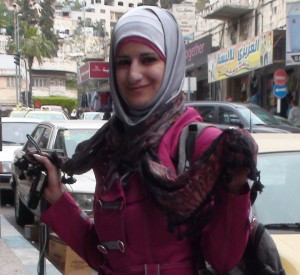 Nablus, Occupied Palestine – At 2:30am on Tuesday morning, Israeli soldiers and secret service agents entered a house in the city of Nablus and arrested Sireen Khudairi, a 24-year-old schoolteacher and activist. No arrest warrant was given, although Sireen was threatened with physical violence if she did not accompany the soldiers.
This is the second time in a year that Sireen has been arrested without a warrant. On May 14th 2013 she was arrested and held for two months on the charge of having written a Facebook page that “compromised the security of the state of Israel”. Her detention included 22 days of solitary confinement and no access to a lawyer or her family. She was eventually released from prison but placed under house arrest, having paid bail of NIS 7000 and on the condition that she refrain from using the internet.
On 16th September, the Israeli military court found Sireen not guilty but ordered her to refrain from activism for five years.
Sireen’s family home has been raided various times since then, as it appears that she is wanted to testify against other activists. This is yet another event in the ongoing campaign of intimidation against non-violent Palestinian activists, and the criminalization of protest by the Israeli state.
For more information on Sireen’s case and how to act, please visit:
http://freesireen.wordpress.com/
Related articles


Israel rejects US proposals on Jordan Valley
Ma’an – 05/01/2014
JERUSALEM (AFP) — Israel rejects any US-proposed security concessions for the Jordan Valley, a cabinet member close to Prime Minister Benjamin Netanyahu said Sunday, as US Secretary John Kerry visited the Middle East.
“Security must remain in our hands. Anyone who proposes a solution in the Jordan Valley by deploying an international force, Palestinian police or technological means … does not understand the Middle East,” Intelligence Minister Yuval Steinitz told Israeli public radio.
Steinitz’s comments came after three days of intense shuttle diplomacy by Kerry, who was trying to push a framework for final status talks between Israel and the Palestinians.
With a late April deadline looming for the negotiations that he kick-started in July after a three-year hiatus, Kerry has pledged to work even more intensively in the coming months.
US officials have refused to release any details of the proposed framework, and Kerry acknowledged it would not be agreed during this trip.
Palestinian hopes of having an international force brought in to help patrol the Jordan Valley under a peace deal had been sidelined, a Palestinian source told AFP Saturday.
Instead the US was proposing a mixed Israeli-Palestinian military presence to ensure security in the area, without setting a deadline when the Israeli troops would be withdrawn.
But Israel insists on maintaining a long-term military presence in the Jordan Valley.
Kerry has said a peace treaty will deal with all the core issues dividing the two sides. These include the contours of a future Palestinian state, refugees, the fate of Jerusalem claimed by both as a capital, security, and mutual recognition.
Direct negotiations began in July between Israel and the Palestinians in a US-led attempt to restart the deadlocked peace process.
Israel has announced plans to build thousands of homes in illegal settlements across the West Bank over the course of the talks, inhibiting US efforts.
The Palestinian negotiating team resigned in protest against continued Israeli settlement construction in mid-November, dealing a major blow to negotiations between Israel and the PLO that had already been stalled.
Negotiator Mohammed Shtayyeh told AFP at the time that they resigned in response to “increasing settlement building (by Israel) and the absence of any hope of achieving results,” following Netanyahu’s announcement that Israel would build 20,000 new settlement homes in the West Bank.
The internationally recognized Palestinian territories of which the West Bank and East Jerusalem form a part have been occupied by the Israeli military since 1967.
Ma’an staff contributed to this report.
Related article

Checkpoint 300
By Ali Morgan | Green Numberplate | December 31, 2013

It is 3.45 a.m. and my team-mate and I arrive for our regular monitoring duty at Israeli Checkpoint 300, which allows entry through the Separation Barrier, from Bethlehem to East Jerusalem. Nearly 200 men are already queuing for the checkpoint to open and hundreds more are swarming in to join the crush at the bottom of the main entrance lane – a huge cage, 1m wide and about 300m long, totally enclosed by iron bars.
Over 5,000 Palestinians trudge through this checkpoint between 4 a.m.and 7 a.m. everyday. They are mostly men, eager to catch buses on the other side to go to work on building sites and other low paid jobs in Israel, because the occupation has strangled the Palestinian economy. The same osmosis is happening across checkpoints up and down the concrete and wire membrane that now surrounds the West Bank; 32,000 grey figures in dusty working clothes and heavy boots, filtering East to West in pre-dawn darkness, unseen by the world. Yet these people consider themselves the lucky few. They have been granted permits to work in Israel or to attend a hospital appointment in East Jerusalem.
 The men queue for up to 80 minutes each morning. Young and old, crammed together like cattle in the blue cage, shuffling slowly up the lane to a single turnstile. If someone should be taken ill, or injured, there is no chance of getting out until he reaches the turnstile. Only internationals and a handful of Palestinian women, children and old men with permits for hospital appointments, are allowed through the separate ‘humanitarian’ turnstile. After the first turnstile the younger men race across the tarmac to the terminal building, leaping barriers to get ahead in the next queue through more turnstiles, metal detectors and finally to the ID booths. Here each person must hold up his ID card to the glass, followed by his work permit and place his finger on an electronic finger print scanner. All this is checked by a bored and sullen Israeli soldier, wearing a bullet proof vest and an automatic machine gun behind the bullet proof glass. Private Israeli security guards with sub-machine guns prowl near the ID booths. A tinny voice barks orders in Hebrew at the lines of Palestinians.
This morning is worse than usual. The soldier controlling the first turnstile keeps locking it every few minutes. The bars rebound jarringly in the face of an old man and the queue halts for the fifth time. The crush of bodies intensifies for the next 20 minutes. Men begin shouting and complaining. Many climb over the top of the cage and queue-jump through gaps in the corrugated tin roof, desperate not to miss their buses and lose a day’s pay. When the turnstile finally opens again, 500 men surge through in 10 minutes calling ‘Yalla, yalla!’ (Go, go) to those ahead. One man stumbles, falls and is nearly trampled by the crowd pushing up behind. He is saved by another man who braces himself across the line whilst others haul the man to his feet.
I ring the military ‘Humanitarian Hotline’ three times. The soldier answering tells me it is a new unit on duty today and they don’t know what they are doing. After a few minutes two armed security guards appear from the main terminal to reinforce the soldier, rather than help people in the cage. I speak to the guards from my observation spot alongside the cage, asking them to do something before someone gets trampled or crushed. One of the new security guards finally turns and yells at me, motioning towards the crowd in the cage, ‘You do something! This is not Israel!’ as if the it is the behaviour of the Palestinians that is the problem. ‘That’s right!’ I respond in astonishment at this admission, ‘This is not Israel – it is Palestine! But Israel built the checkpoint and (Separation) Wall’. He turns his back on me.
My team-mate and I change places and I move to monitor the ID booths near the exit on the Jerusalem side. Only one of three metal detectors is open and the soldiers in the five ID booths keep turning men back. We try to speak to those who are refused entry to find out why. Most are given no explanation and we work with the Israeli human rights organisation, Machsom Watch, to find out. Sometimes the Palestinian has suddenly been blacklisted for unexplained ‘security reasons’. Sometimes his work permit has expired. People often don’t know that their permit has expired until they get to the checkpoint. The Israeli employer applies for the permits for their workers and sometimes simply cancel them when they no longer need the workers. The employee only finds out when he reaches the ID booth, after hours of travelling and queuing.
 In addition to the thirty two thousand who are permitted to enter East Jerusalem and Israel, the Israeli authorities are well aware that another 20,000 West Bank Palestinians enter Israel without permits each day. Thousands of people, desperate for work, walk for hours across hills and through woods where the Barrier does not yet reach. The risks are high and many people serve repeated terms in Israeli prisons when they are discovered in Israel without a permit. A high proportion of the West Bank population was dependent on work in Israel before Israel began building the Separation Barrier in 2002. By then, the years of occupation since 1967 had dismantled the West Bank’s economy, with Israel controlling and taxing raw materials and products; the costs and uncertainty deterring investment.
After two and a half hours, people begin to stream through the terminal. The inexperienced Israeli army unit have finally given up and simply thrown open the gates, allowing everyone to by-pass the security checks, as though acknowledging that security is not the real issue here.
And after enduring this systematic inhumanity and humiliation day in, day out, these Palestinians pass me at the exit with a smile and ‘Good morning’ – many kneeling for morning prayers on the exit slope – refusing to be humiliated, refusing to be dehumanised.
Featured Video

The Truth About the Trump Shootings with Ken Silva
or go to
Aletho News Archives – Video-Images
From the Archives
Trans ‘milk’ as good as the real thing – NHS
RT | February 18, 2024
The drug-induced nipple secretions of trans women are as good as mothers’ breast milk for babies, the University of Sussex Hospitals NHS Trust claimed in a letter to campaigners made public in a report by British think tank the Policy Exchange on Sunday.
The healthcare trust’s medical director, Rachel James, argued that the off-label prescription drug cocktail men transitioning to female take in order to produce milk was “similar to the natural hormones which encourage lactation to develop when the baby is newly born.”
“The evidence which is available demonstrates that the milk is comparable to that produced following the birth of a baby,” James wrote in the letter, sent to Children of Transitioners last August.
Biological men who wish to lactate must first take hormones to grow milk glands and then take high doses of either domperidone or metoclopramide to stimulate milk production. Neither drug is approved for this use, though they are occasionally prescribed off-label to biological women who have trouble lactating.
However, domperidone’s own manufacturer, Janssen, warns patients the drug “may cause unwanted side effects affecting the heart in a breastfed baby” and “should be used during breastfeeding only if your physician considers this clearly necessary.” … continue
Blog Roll
 Aletho News
- Russia Voted Under Fire. Washington Is Loading the Tankers.
- 12 Things Your Oncologist Was Trained Not to Tell You
- Anthrax Attacks Paved Way for COVID-Era ‘Junk Drugs and Vaccines’
- How Real Is the Impact of Western Sanctions on Israel?
- France, You Are Guilty: How Paris Turned Western Sahara into the Maghreb’s Powder Keg
- 2025 Nature Paper Claiming Worsening Global Drought Gets RETRACTED …Heavily Flawed
- Your Milk Is Not the Problem
- The Truth About the Trump Shootings with Ken Silva
- ARE PATIENTS BEING PROPERLY INFORMED ABOUT OZEMPIC?
- US lawmaker blocks $2.8 billion weapons sale to Israel: Report
- If Americans Knew
- Salah Sarsour’s Legal Team Says DHS Has Not Met Its Burden to Prove He Is Deportable
- An analysis of tax forms by The Intercept show Kraft’s charity and LLC have donated to Friends of the IDF and AIPAC’s super PAC.
- Israeli attacks kill four Palestinians in Gaza – Daily Update
- Inside Gaza’s death trap of collapsing, bombed-out buildings
- The everyday items Israel bans from Gaza every day
- Inside the siege, the ruined buildings of Gaza – Daily Update
- Debunking The Claim That Macklemore Has A “History Of Antisemitism”
- CPJ demands release of arrested Palestinian-US journalist near Bethlehem
- Robert Kraft: The Billionaire Friend of Netanyahu Pulling The Strings Behind the Macklemore/Ed Sheeran Blow Up
- Columbia Administered Fund Gives Big Money to Pro-Israel Groups
- No Tricks Zone
- 2025 Nature Paper Claiming Worsening Global Drought Gets RETRACTED …Heavily Flawed
- New Study: ‘Global Drought Shows No Detectable Recent Acceleration Under Climate Warming’
- Economic Masterminds: German Socialists Suggest Taxing Productivity Gains Stemming From Using AI
- The South China Sea Has Not Been Cooperating With The Climate Change Narrative
- Energy Crisis: Germany Enters Heating Season With Historically Low Gas Reserve Fill Levels
- New Study: The Antarctic Ice Sheet Gained Mass From 2020-2024 Due To Staggering Snow And Ice Accumulation
- Study: Ocean Heating Rates From Thousands Of Years Ago ‘Dwarf’ Modern Ocean Heating Rates
- Climate Extremists Target, Attack Large-Scale Power Grid Infrastructure In Germany!
- New Study: Antarctic Ice Melt Has Contributed Less Than 1 Centimeter To Sea Level Rise In The Last 30 Years
- Fear Of Debate: Alarmist German Climate Scientist Calls On Mainstream Media To Discredit Skeptic Voices
 Aletho News