The Johns Hopkins, CDC Plan to Mask Medical Experimentation on Minorities as “Racial Justice”
By Jeremy Loffredo and Whitney Webb |
Unlimited Hangout| November 25, 2020
Under the guise of combatting “structural racism,” the Johns Hopkins Center for Health Security has laid out a strategy for ethnic minorities and the mentally challenged to be vaccinated first, all “as a matter of justice.” However, other claims made by the Center contradict these social justice talking points and point to other motives entirely.
With the first COVID-19 vaccine candidate set to receive an Emergency Use Authorization (EUA) from the US government in a matter of days, its distribution and allocation is set to begin “within 24 hours” of that vaccine’s imminent approval.
The allocation strategy of COVID-19 vaccines within the US is set to dramatically differ from previous national vaccination programs. One key difference is that the vaccine effort itself, known as Operation Warp Speed, is being almost completely managed by the US military, along with the Department of Homeland Security (DHS) and the National Security Agency (NSA), as opposed to civilian health agencies, which are significantly less involved than previous national vaccination efforts and have even been barred from attending some Warp Speed meetings. In addition, for the first time since 2001, law enforcement officers and DHS officials are set to not be prioritized for early vaccination.
Another key difference is the plan to utilize a phased approach that targets “populations of focus” identified in advance by different government organizations, including the CDC’s Advisory Committee on Immunization Practices (ACIP). Characteristics of those “populations of focus,” also referred to as “critical populations” in official documentation, will then be identified by the secretive, Palantir-developed software tool known as “Tiberius” to guide Operation Warp Speed’s vaccine distribution efforts. Tiberius will provide Palantir access to sensitive health and demographic data of Americans, which the company will use to “help identify high-priority populations at highest risk of infection.”
This report is the first of a three-part series unmasking the racist components of the Pentagon-run project to both develop and distribute a COVID-19 vaccine. It explores the COVID-19 vaccine allocation strategy first outlined by the Johns Hopkins Center for Health Security and subsequent government allocation strategies that were informed by Johns Hopkins.
The main focus of this allocation strategy is to deliver vaccines first to racial minorities but in such a way as to make those minorities feel “at ease” and not like “guinea pigs” when receiving an experimental vaccine that those documents admit is likely to cause “certain adverse effects… more frequently in certain population subgroups.” Research has shown that those “subgroups” most at risk for adverse effects are these same minorities.
The documents also acknowledge that information warfare and economic coercion will likely be necessary to combat “vaccine hesitancy” among these minority groups. It even frames this clearly disproportionate focus on racial minorities as related to national concerns over “police brutality,” claiming that giving minorities the experimental vaccine first is necessary to combat “structural racism” and ensure “fairness and justice” in the healthcare system and society at large.
Part 2 of this series will discuss how Palantir, a company currently helping DHS and law enforcement violently target African Americans and Latinos, will be in charge of allocating “tailored” COVID-19 vaccines to those same minorities as well as Palantir’s origins and its executives’ views on race. Part 3 will explore the direct ties between a COVID-19 vaccine front-runner and the Eugenics Society, which was re-named the Galton Institute in 1989.
The Planners
The Trump administration has been criticized for its rush to develop and deploy a COVID-19 vaccine and particularly for installing Monclef Slaoui, a former pharmaceutical executive with ongoing conflicts of interest, as chief scientific adviser for Operation Warp Speed, the Pentagon-run program to produce and distribute the vaccine. Yet, if and when a Biden administration takes power, Operation Warp Speed is set to proceed with little, if any, modification.
The Johns Hopkins Center for Health Security (CHS) director Tom Inglesby, who will serve on the Biden Health and Human Services (HHS) transition team, has praised Slaoui, telling Stat News that the longer someone like him can remain in charge of the nation’s COVID-19 vaccine effort, “the better it is for the country.”
Inglesby, who led discussions at the CHS’s Event 201 exercise in October 2019 and who was one of the primary authors of the controversial Johns Hopkins Dark Winter exercise in 2001, is emblematic of the US government’s and the mainstream media’s general reliance on the Johns Hopkins Bloomberg School of Public Health (of which CHS is part) for pandemic-related matters. Slaoui regularly appears on network TV as a COVID-19 oracle and has been called “one of the nation’s go-to experts on the spread of the coronavirus.” Readers may note that the Johns Hopkins “coronavirus tracker” has been used by virtually every mainstream news source since the beginning of COVID-19 reporting. This relationship is expected to continue, if not intensify, in a Biden administration.
Both Kathleen Hicks, the lead on Biden’s Department of Defense (DOD) transition team, and Alexander Bick, on Biden’s National Security Council transition team, are scholars at Johns Hopkins Kissinger Center for Global Affairs, reflecting the university’s broader influence on a future Biden administration. Yet, the most significant way the Biden transition intersects with Johns Hopkins is through the CHS.
Originally called the Center for Civilian Biodefense Strategies, the CHS is a think tank within Johns Hopkins that regularly gives recommendations to both the US government and the World Health Organization and, like the Bill and Melinda Gates Foundation, has emerged as a voice of authority on all matters COVID-19 in the US. The center’s founding director was D. A. Henderson, best known for his role in the WHO-sponsored smallpox vaccination campaign. Henderson also held several government positions, including serving as associate director of the Office of Science and Technology Policy under George H. W. Bush. He was also the longtime dean of the Johns Hopkins School of Public Health.

Dr. Tom Inglesby
Another member of the Biden transition team is Luciana Borio, a current member of the CHS steering committee. As both a former FDA scientist and former National Security Council member, Borio signifies the relationship between the national security state and the biosecurity state. She’s currently a vice president of In-Q-Tel, the venture-capital arm of the CIA.
In-Q-Tel’s current executive vice president, Tara O’Toole, who at the onset of the COVID-19 outbreak declared that “the best way ever to protect those who are well is with vaccines,” is Inglesby’s mentor and predecessor as director of the CHS. She was also a key player and the lead author of the CHS’s Dark Winter and CladeX bioterror simulations. The Engineering Contagion series published by The Last American Vagabond earlier this year explored the Dark Winter simulation in depth, including how the simulation eerily predicted the 2001 anthrax attacks that followed soon after September 11, 2001, with several participants demonstrating apparent foreknowledge of those attacks.
Ending racism with vaccines?
The Centers for Disease Control and Prevention (CDC) has consistently referenced materials developed by the CHS in its recent COVID-19 vaccine allocation literature. These CDC-issued materials form the backbone of the various vaccine allocation strategies issued by many state governments. Chief among these is the COVID-19 Vaccination Program Interim Playbook, published at the end of October. A key aspect of that program is the determination of “critical populations for COVID-19 vaccination, including those groups identified to receive the first available doses of COVID-19 vaccine when supply is expected to be limited.”
In August, the CHS published its Inglesby co-written Interim Framework for COVID-19 Vaccine Allocation and Distribution, which is cited by the CDC as a key reference for its nationwide COVID-19 vaccine-allocation strategy. This report will examine this document, in particular, as well as other related documents that reveal that ethnic and racial minorities, specifically those over sixty-five and those who make up part of the “essential” workforce, are set to be the first to receive experimental COVID-19 vaccines.
The Interim Framework argues there is a need to prioritize ethnic minorities, particularly African Americans and Latino Americans, in order to reflect “fairness and justice.” It states that “a critical difference” between COVID-19 vaccine allocation and the “context envisioned in the 2018 guidance for pandemic influenza vaccine allocation” is the fact that the US is “currently in the midst of a national reckoning on racial injustice, prompted by cases of police brutality and murder.” It goes on to state that “although structural racism was as present in the 2018 and previous influenza epidemics as it is today, the general public acknowledgment of racial injustice was not.”
It goes without saying that police brutality is decidedly unrelated to vaccine allocation as is increased national awareness of racial injustice as it relates to police brutality. This is further compounded by the police, in this document, being removed as a priority group for COVID-19 vaccine allocation, despite having been designated a priority group in all other government vaccine-allocation guidance since the 2001 anthrax attacks. Also odd is that it is only increased access of minorities to the COVID-19 vaccine that is cited as a way to address “structural racism in health systems,” not other policies that would be more likely to address the problem such as Medicare for All.
In addition, the Interim Framework admits that “communities of color, particularly Black populations, may be more wary of officials responsible for vaccine-related decisions due to past medical injustices committed by authorities on Black communities.” There is a long list of these “medical injustices” committed against minority communities by the US government, including the infamous Tuskegee syphilis experiments, which are discussed in detail later.
Another odd passage on “justice” and “equity” as it relates to vaccinating ethnic minorities first states:
“In the context of vaccine allocation, treating individuals fairly has sometimes been defined as treating everyone the same or equally, for example, by distributing vaccines on a first-come, first-served basis or by giving everyone an equal chance at getting vaccine via a lottery. Because the impact of the vaccine is different for different people (i.e., some people are at greater risk of death), the straightforward ways of treating people equally are often rejected as unfair or as an inefficient use of vaccine. . . .
In the context of vaccine allocation, promoting equity and social justice requires addressing higher rates of COVID-19–related severe illness and mortality among systematically disadvantaged or marginalized groups. . .
As a matter of justice, these disparities in COVID-19 risk and adverse outcomes across racial and ethnic groups should be addressed in our overall COVID-19 response.”
This extreme emphasis on the “fairness and justice” of prioritizing minorities for the vaccine is contradicted by other claims made in the same document. For example, the document also states:
“The ultimate safety of an approved vaccine is not completely knowable until it has been administered to millions of people. During clinical trials, tens of thousands of individuals will receive the vaccine but that may fail to show safety concerns that occur with less frequency, such as 1 in a million. This can be a concern for particularly severe adverse effects.”
It also notes: “It is also possible that certain adverse effects may occur more frequently in certain population subgroups, which may not be apparent until millions are vaccinated.”
Notably, African Americans are understood to be at a higher risk for adverse reactions to vaccines. According to a study by the University of Pennsylvania, African Americans exhibit a disproportionately higher immune response to certain flu shots. And in 2014, the Mayo Clinic found that African Americans have almost double the immune response to the rubella vaccine as Caucasian Americans. Immune reactions that are too strong can result in more adverse events and inflammatory responses such as transverse myelitis, a debilitating inflammation and paralysis of the spinal cord. A 2010 study in the Journal of Toxicology and Environmental Health showed that African American boys were at significantly greater risk of suffering severe neurological injury from the hepatitis B shot as compared to Caucasians.
This raises the question as to whether African Americans should be prioritized for a poorly tested vaccine when the available science shows that this demographic may be at a higher risk for adverse reactions to vaccines. Previous coronavirus vaccine projects triggered immune responses so strong that the test animals died, and the vaccine projects got scrapped. The Johns Hopkins CHS Interim Framework claiming that vaccinating African Americans and other ethnic minorities first represents “fairness and justice” and would address “structural racism” does not square with its admission that the safety of the COVID-19 vaccine is “not completely knowable” until millions have received it and that “certain adverse effects may occur more frequently in certain population subgroups.”
Who is really to blame for “vaccine hesitancy”?
For a successful rollout of a COVID-19 vaccine, the federal government will need to reckon with “vaccine hesitancy,” which the WHO named as one of the top ten threats to global health in 2019 and which is a major concern discussed at length in the August Interim Framework on COVID-19 vaccination strategies.
According to recent polls, such hesitancy is, understandably, most prevalent among African Americans, the group that has most commonly been used as human guinea pigs by the US government and associated scientific and medical institutions. For instance, there are the infamous Tuskegee University experiments, devised by the US Public Health Service (now a division of HHS) and the CDC. The unwitting participants in the study, all of whom who were African American, were told that they were receiving free health-care services from the federal government, while actually they were being intentionally untreated for syphilis so government scientists could study the devastating progression of the disease. Deception was critical to the experiment, as the participants did not know they were part of an experiment at all and were also kept unaware of their true diagnosis. While Tuskegee may be the most well-known example of racist medical experimentation in the US, it’s far from the only one.
For example, during Manhattan Project, the undertaking that produced the atom bomb, the US government contracted dozens of physicians to inject unknowing hospital patients with up to 4.7 micrograms of radioactive plutonium, forty-one times normal lifetime exposure. The goal of this experiment was to pinpoint the dosage at which radioactive elements such as plutonium would cause illnesses like leukemia, and to measure the amount of radioactivity that lingers in the blood, tissues, bones, and urine. Between 1944 and 1994 the Atomic Energy Commission supported thousands of experimental projects sanctioning such radiation on human subjects, most of whom were African Americans.
From 1954 to 1962, the Sloan-Kettering Institute, which receives hundreds of millions of dollars of NIH funds annually, injected over four hundred African American inmates at Ohio State Prison with live cancer cells to observe how the body might destroy them. The primary sponsor for this research was the National Institutes of Health, which also partially sponsored the Tuskegee experiments.
From 1987 through 1991, US researchers administered as much as five hundred times the approved dosage of the Edmonton-Zagreb (EZ) measles vaccine to African American and Latino babies in low-income Los Angeles neighborhoods as part of a vaccine experiment. Consent forms did not inform parents of the increased dosage or of the fact that the vaccine was experimental. Parents were also not informed that the vaccine had already been given to two thousand children in Haiti, Senegal, and Guinea-Bissau with disastrous results. For example, in Senegal, children who received the jab died at a rate 80 percent higher than children who did not receive it. The CDC would later characterize the US trials as “clearly a mistake.”
Between 1992 and 1997, Columbia University’s Lowenstein Center for the Study and Prevention of Childhood Disruptive Behavior Disorders conducted studies that sought to establish a link between genetics and violence, focusing on minority children in New York City. These experiments targeted 126 boys between the ages of six and ten, 100 percent of whom were either African American, Latino, or biracial. In exchange for $100 and a $25 Toys “R” Us gift card, the children, selected because their older brothers had come into contact with the juvenile probation system, were taken from their homes, denied food and water, and given a drug called fenfluramine. Prior to these experiments, fenfluramine had never been administered to people under the age of twelve, and it was already known that the drug was associated with heart-valve damage, brain damage, and death.
Such historical facts raise obvious questions about the reasons for “vaccine hesitancy” and how they are currently being approached by the US government and related institutions. While it would make the most sense to combat this problem by holding to account the people responsible for past abuses, such as those described above, the opposite has been the case. Instead, the CHS and other institutions, particularly regarding the coming COVID-19 vaccination campaign, have proposed several other means of combatting “vaccine hesitancy,” ranging from deception to information warfare to economic coercion.
A dark legacy poised to continue
Given the long-standing exploitive relationship between US medicine and ethnic minorities, the August Interim Framework addresses the situation that communities of color, and in particular black populations, “may be more wary of officials responsible for vaccine-related decisions due to past medical injustices.” It states: “Anticipate hesitancy among marginalized populations who may be fearful or wary of seeking vaccination at sites that have historically caused mistrust.”
Another CHS paper, published in July and titled “The Public’s Role in COVID-19 Vaccination,” which is cited heavily in the August framework, acknowledged the US “legacy of experimentation on Black men and women.”
However, the CHS document also notes that more than one COVID-19 vaccine candidate “may be available at the same time” and they “may have different safety and efficacy profiles across different population groups and may have different logistical requirements.” It adds that “it is also possible that certain adverse effects may occur more frequently in certain population subgroups, which may not be apparent until millions are vaccinated.”
It is notable that Palantir, the CIA-linked government technology contractor, has been put in charge of creating the software that will “decide” which “population subgroups” are given what vaccine. Palantir is perhaps best known for its controversial role in targeting undocumented immigrants through its contracts with ICE and its role in predictive-policing efforts that disproportionately targeted African Americans. It is certainly unsettling that those same ethnic groups that Palantir is most controversial for targeting on behalf of the national-security state and law enforcement are the same “critical populations” that the company will initially identify for the US military–led COVID-19 vaccination program, Operation Warp Speed.
In addition, in a move that can only aggravate minority community “vaccine hesitancy,” the August CHS Interim Framework recommends that the CDC transform the current “vaccines adverse-event reporting system” from a voluntary system that relies on individuals sending in reports to the government to “an active surveillance system” that “monitors all vaccine recipients,” possibly via unspecified “electronic mechanisms.”
The Last American Vagabond reported last month that Operation Warp Speed, seemingly having taken a cue from the Interim Framework, plans to utilize “incredibly precise . . . tracking systems” that will “ensure that patients each get two doses of the same vaccine and to monitor them for adverse health effects.” Those systems will be managed, in part, by the intelligence-linked tech giants Google and Oracle.
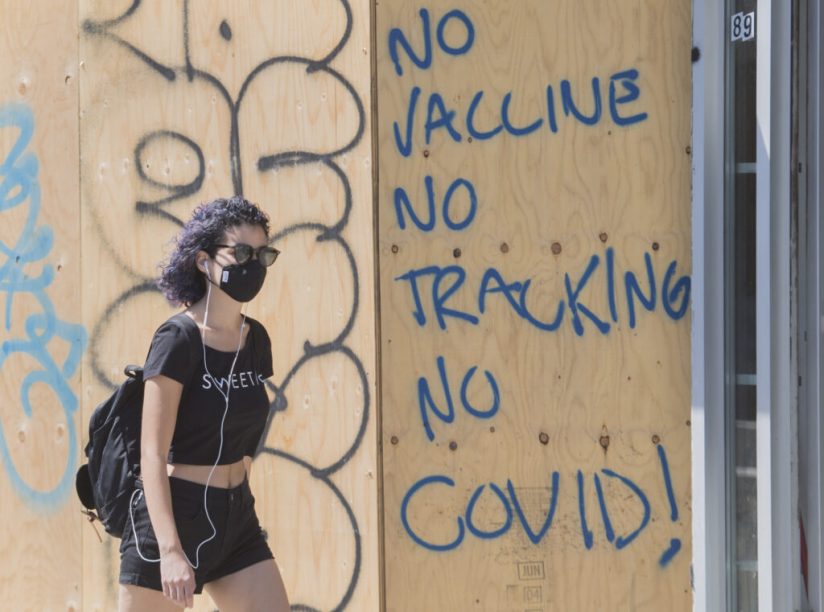
A woman passes by graffiti reading ‘No vaccine, No tracking, No COVID’, in Montreal, Sunday, August 16, 2020, as the COVID-19 pandemic continues in Canada. THE CANADIAN PRESS/Graham Hughes
The main stated purpose of these “tracking systems,” referred to in other Warp Speed documents as “pharmacovigilance systems,” is to monitor the longer-term effects of new, unlicensed vaccine-production methods that are being used in the production of every Warp Speed COVID-19 vaccine candidate. These vaccines, per Warp Speed’s own documents, state that these methods “have limited previous data on safety in humans . . . the long-term safety of these vaccines will be carefully assessed using pharmacovigilance surveillance and Phase 4 (post-licensure) clinical trials,” following the administration of the COVID-19 vaccines to the prioritized “critical populations.”
A strategy takes shape
Given the above, the unprecedented facets of the Warp Speed COVID-19 vaccination plan—that is, its focus on ethnic minorities as the first to receive the experimental COVID-19 vaccine, its interest in giving different vaccine candidates to “different population groups,” and studying the largely unknown effects through “tracking systems” and unspecified “electronic mechanisms”— are all things that would obviously further fuel mistrust by those ethnic groups that have historically been targets of medical experimentation by the US government.
Furthermore, that COVID-19 vaccine development and distribution efforts are being spearheaded by the military and national-security apparatus, as well as having the intimate involvement of controversial contractors such as Palantir, will likely exacerbate minority distrust as Operation Warp Speed advances, given that these same groups are those most often found to be on the receiving end of militarized state violence. Also concerning is that law enforcement, military, and Department of Homeland Security officials will no longer be priority vaccine-allocation targets, for the first time since the 2001 anthrax attacks, while no convincing reason for their exclusion is offered.
Yet, instead of honestly addressing these unprecedented recommendations, the effort to get around the “vaccine hesitancy” issue as it relates to minorities plans to rely on tactics that avoid addressing any of these issues directly. In one example, although the August Interim Framework recommends “directly prioritizing” ethnic minorities, it recognizes that doing so “could further threaten the fragile trust that some have in the medical and public health system, particularly if there is the perception that there has been a lack of testing to assess vaccine safety and that they are the ‘guinea pigs.’” The document also states that “the implementation of directly prioritizing communities of color could also be challenging and divisive, as determining how to access specific populations and how to determine eligibility based on race or ethnicity includes many sensitive challenges.”
As a workaround for such concerns, the CHS suggests that “prioritizing other cohorts of the population, such as essential workers or those with underlying health conditions associated with poorer COVID-19 outcomes, could also indirectly help address the disproportionate burden of this pandemic on communities of color” due to the high representation of those minorities in the essential workforce.
The document continues: “While this approach might avoid some of the challenges outlined above, it would also need to be implemented in a way that ensures vaccines are equitably distributed across subcategories of these categories.” Thus, it suggests prioritizing “those individuals and groups who face both severe health and severe economic risks, specifically essential workers at higher risk of severe illness—or whose household members are at higher risk—who will suffer severe economic harm if they stop working.” Those groups at “higher risk of severe illness,” the document later notes, are incidentally ethnic minorities.
In other words, the strategy proposed by the CHS is to specifically prioritize cohorts of the US population that contain high proportions of ethnic minorities without directly prioritizing those minorities in order to, somewhat deceptively, avoid exacerbating “vaccine hesitancy” concerns among those groups by directly singling them out.
The Interim Framework acknowledges the high prevalence of ethnic minorities in the essential workforce and cites a paper published in April 2020 by the Center for Economic and Policy Research that notes that “people of color are overrepresented in many occupations with frontline industries.”
In addition to prioritizing essential workforce cohorts, which have a high percentage of ethnic minorities, the CHS document also suggests that prisoners, another group where ethnic minorities are heavily overrepresented, and “undocumented immigrant communities of color” should also be prioritized. Like the essential workforce strategy, this would ensure increased vaccine uptake by ethnic minorities without prioritizing them directly.
It is also worth noting that, in addition to the focus on ethnic minorities, the Interim Framework also recommends that “differently abled and mentally challenged populations, who can experience difficulties in accessing healthcare and could be in higher-risk living settings, such as assisted living facilities,” be included as a “target population” along with ethnic minorities.
This strategy as laid out by the CHS appears to have been embraced by the CDC’s Advisory Committee on Immunization Practices (ACIP), which is the official government body that will designate the “target populations” of the COVID-19 vaccination strategy.
Also in August, Kathleen Dooling, a CDC epidemiologist writing on behalf of ACIP’s COVID-19 Vaccines Work Group, stated that “groups for early phase vaccination” should be those that “overlap” the most with, first, those with “high risk” medical conditions, second, essential workers, and, third, adults over sixty-five. As previously noted, the essential workforce is predominantly composed of ethnic minorities.
Notably, the “high risk” medical conditions listed in this same document are conditions that are all significantly more prevalent among ethnic minorities, such as type 2 diabetes, obesity, chronic kidney disease, serious heart conditions, and sickle cell disease. Cancer is also listed and, while prevalent across the US population at large, the incidence of cancer is highest among African Americans.
Particularly notable is the inclusion of sickle cell disease, as African Americans in the US have a much higher probability of having that condition than any other group. According to 2010 data analyzed by the CDC, the sickle cell gene, which is necessary in both parents for a child to inherit sickle cell disease, is present in 73 per 1,000 African American newborns, compared to 3 per 1,000 Caucasian newborns.
The “overlap” strategy fits with current CDC ACIP guidelines for vaccine recommendations, which hold that, if vaccination supply is limited, the CDC should “reduce the extra burden the disease is having on people already facing disparities.” The “overlap” strategy as laid out in the recent ACIP COVID-19 Vaccines Work Group document, however, has the inevitable end result of ensuring that the vast majority of those who will first receive the experimental COVID-19 vaccine will be ethnic minorities over the age of sixty-five and ethnic minorities in the essential workforce.
Also noteworthy in relation to the prioritization of ethnic minorities is that in March the government interpreted federal regulations to grant liability immunity to any entity producing, distributing, manufacturing, or administering COVID-19 countermeasures, including vaccines. According to HHS, this move may also “provide immunity from certain liability under civil rights laws,” meaning that those involved with the COVID-19 vaccination campaign may not be liable if found to violate the rights of groups protected under civil rights law, that is, ethnic minorities.
Controlling the narrative
Another tactic promoted by the CHS, as well as the CDC and Warp Speed, to combat “vaccine hesitancy” is aggressive communication strategies that include “saturating” the media landscape with pro-vaccine content while greatly reducing content deemed to promote “vaccine hesitancy.” The national-security state, which is managing Operation Warp Speed, has become increasingly involved in this media effort, particularly by censoring content that is considered to be anti-vaccine (including, in their view, news outlets critical of the pharmaceutical industry and vaccine manufacturers) by using counterterror tools that have previously been used to disrupt online terrorist propaganda.
After the October 2019 coronavirus pandemic simulation, Event 201, the CHS issued a statement that media companies have a responsibility to ensure that “authoritative messages are prioritized.” The CHS had co-sponsored Event 201 alongside the World Economic Forum and the Bill and Melinda Gates Foundation.
There is much more to this information war than just the rapidly accelerating online censorship effort. For instance, the official Operation Warp Speed document entitled “From the Factory to the Frontlines” notes that “strategic communications and public messaging are critical to ensure maximum acceptance of vaccines, requiring a saturation of messaging across the national media.” It also states that “working with established partners—especially those that are trusted sources for target audiences—is critical to advancing public understanding of, access to, and acceptance of eventual vaccines” and that “identifying the right messages to promote vaccine confidence, countering misinformation, and targeting outreach to vulnerable and at-risk populations will be necessary to achieve high coverage.”
The document also notes that Warp Speed will employ the CDC’s three-pronged strategic framework known as “Vaccinate with Confidence” for its communications thrust. The third pillar of that strategy is called “Stop Myths” and has as a main focus “establish[ing] partnerships to contain the spread of misinformation” as well as “work[ing] with local partners and trusted messengers to improve confidence in vaccines.”
Like the official Warp Speed guidance, the CDC Interim Framework also sees “community outreach” as an essential element for a successful vaccine campaign and suggests funding and training community health workers to promote vaccination specifically to “underserved, disproportionately affected groups.” It details how the US government might engage African Americans, Latino Americans, and lower-income populations to build trust in connection with vaccine recommendations and get around “concerns that they are ‘testing subjects’ for a novel vaccine.”
The CHS document notes, for example, the importance of cultural competence when promoting vaccines, advising that vaccinating at “churches, schools, culturally specific community centers or senior centers” might sit better with marginalized populations and make them feel more at ease. Such considerations were further elaborated on by Luciana Borio in September. That month, the vice president of In-Q-Tel and member of Biden’s transition team, wrote that while it may be appropriate to use US military resources for vaccination efforts, “any such federal engagement must be done in a collaborative manner sensitive to public perceptions that may be engendered by having a public health function fulfilled by individuals in uniform.”
A July CHS paper, “The Public’s Role in COVID-19 Vaccination,” a document Luciana Borio also helped write, argued, “Vaccination sites should not be heavily policed or send any signals that the site may be unsafe for Black or other minority communities.” This CHS paper further states that “trusted community spokespersons” should be utilized for a “communication campaign,” amplifying “vaccine-affirming, personally relevant messages.” Like similar WHO materials, it advocates tailoring the campaign to specific audiences and identifying a network of spokespeople to deliver a “salient and specific message repeatedly, delivered by multiple trusted messengers and via diverse media channels.”

Luciana Borio, former director of the U.S. FDA’s Office of Counterterrorism and Emerging Threats and current member of the Biden/Harris Transition COVID-19 Advisory Board.
The CDC also recommends vaccine administration at places such as university parking lots, soup kitchens, public libraries, and faith-based organizations. An October CDC report reads: “For people living in institutions, consider vaccination at intake; for people attending colleges/universities, vaccinate at enrollment.” It also proposes that US states and territories utilize nontraditional vaccination sites such as homeless shelters and food pantries.
The prospect of red-carpet celebrities, influencers, and “trusted messengers” endorsing public-health policy is not unthinkable. According to NBC New York, New York and New Jersey have already recruited celebrities to urge residents to follow CDC guidelines. Actors including Julia Roberts, Penelope Cruz, Sarah Jessica Parker, Robin Wright, and Hugh Jackman earlier this year joined a coordinated campaign to “pass the mic to COVID-19 experts.”
In addition, this summer the WHO paid PR firm Hill & Knowlton Strategies $135,000 to identify micro-influencers, macro-influencers, and what it calls “hidden heroes” who “shape and guide conversations” to promote WHO messaging on social media and promote the organization’s image as a COVID-19 authority. Hill & Knowlton are controversial for having previously manufactured the false “incubator baby” testimony delivered in front of Congress that propelled the US into the first Gulf War in the early 1990s.
“The Public’s Role in COVID-19 Vaccination” also urges using groups such as faith-based organizations, schools, homeowners’ associations, and unions trusted by “hard-to-reach audiences” to convey positive vaccine messages and to “modulate public perceptions of vaccination.” Accordingly, the July CHS paper notes “the importance of using outside groups who have relationships with the community, instead of direct government involvement.” It should be noted that during the Tuskegee experiments, the US Public Health Service hired Eunice Rivers, a black nurse with a close relationship to the local minority community, to maintain contact with those who were part of the experiment to ensure they continued to participate.
This outsourcing framework as laid out by the CHS is reproduced in the federal government’s own literature. An October CDC report entitled Interim Playbook for Jurisdiction Operations describes the importance of engaging what minority populations would consider “trusted sources” such as union representatives, college presidents, athletic coaches, state licensure boards, homeless shelter staff, soup kitchen managers, and faith leaders to “address hesitancy” in relation to the COVID-19 vaccine.
Operation Warp Speed’s document “From the Factory to the Frontlines,” released the same day as the CDC Interim Playbook, gives more specific examples of the government’s ongoing work with organizations “representing minority populations,” stating that faith-based organizations can be critical. “HHS’s Center for Faith and Opportunity Initiatives is working with minority-serving faith and community groups . . . and encouraging participation in the vaccination program,” the document reads. It also states that an “information campaign” led by HHS’s public affairs department is already working to “target key populations and communities to ensure maximum vaccine acceptance.”
Of note is that a member of Biden’s Office of Management and Budget transition team is Bridget Dooling. The OMB houses the Office of Information and Regulatory Affairs, which reviews all regulations across the federal government. Dooling previously worked at OIRA, and from 2009 until 2011 worked under the direction of then-OIRA administrator Cass Sunstein. On Twitter, Dooling regularly interacts with Sunstein. She has frequently promoted Sunstein’s work on Twitter, especially this past month.
Notably, in 2008, Sunstein authored a paper encouraging the US government to employ covert agents to “cognitively infiltrate” online dissident groups that promote anti-government “conspiracy theories” and to maintain a vigorous “counter misinformation establishment.”
Elements of his strategy for tackling anti-government “conspiracy theories” are analogous to the aforementioned CHS theme of using “outside groups who have relationships with the community” instead of the government directly. “Governments can supply these independent bodies with information and perhaps prod them into action from behind the scenes,” he contended in his paper.
Sunstein was recently made chair of the World Health Organization’s Technical Advisory Group on Behavioral Insights and Sciences for Health to ensure “vaccine acceptance and uptake in the context of COVID-19.”
In September he also wrote an opinion piece for Bloomberg titled “How to Fight Back against Coronavirus Vaccine Phobia,” suggesting that “high-profile people who are respected and admired by those who lack confidence in vaccines” will help sell the public on the safety of vaccines. “Trusted politicians, athletes or actors—thought to be ‘one of us’ rather than ‘one of them’—might explicitly endorse vaccination,” he writes.
When all else fails, coerce
In addition to this information warfare approach to combatting “vaccine hesitancy,” the government also intends to stave off possible hesitancy through economic coercion, that is, by using economic incentives, even linking vaccination to entrance into the workforce, housing assistance, food, travel, and education.
Sunstein’s Bloomberg piece, for example, states that when a vaccine is available, “an economic incentive, such as a small gift certificate, can help” make it easy for “people who are at particular risk. Such gift cards will inevitably be more effective at swaying decisions of the poor.”
Former 2020 Presidential Candidate and United States Representative for Maryland’s 6th congressional district John Delaney recently penned an article in the Washington Post titled “Pay Americans to Take a Coronavirus Vaccine,” in which he argues a way to overcome the “historical level of distrust” in the vaccine development process is to take advantage of the current economic crisis and “pay people to take a COVID vaccine.” Delaney writes “Such an incentive might be the most effective way to persuade people to overcome suspicion or even fear. . .”
CHS’s “The Public’s Role in COVID-19 Vaccination” paper also details how bundling services like “food security, rent assistance, [and] free clinic services” with vaccination can increase vaccine intake. “Local and state public health agencies should explore opportunities to bundle COVID-19 vaccination with other safety net services,” it suggests. One way of doing this is to simply provide “food aid, employment aid, or other preventative health services” that “may be urgently needed” at vaccination sites. “[And] in some cases,” says the CHS, “it also may be acceptable and feasible to deliver vaccination via home visits by community health nurses when vaccination is bundled with delivery of other services.”
This strategy for increasing vaccine intake parallels what the CHS proposes in order to make digital contact tracing technology (DCTT) widespread in the population without mandating it outright. “Instead of making use fully voluntary and initiated by users, there are ways that DCTT could be put into use without users’ voluntary choice,” a recent CHS paper “Digital Contact Tracing for Pandemic Response” reads. It continues: “For example, use of an app could be mandated as a precondition for returning to work or school, or even further, to control entry into a facility or transportation (such as airplanes) through scanning of a QR code.”
Palantir and priority populations
Aside from the troubling aspects of the COVID-19 vaccination strategy as outlined above, there is the separate issue of the way in which these “populations of focus” will be chosen and identified. Palantir, the big data firm with deep and persisting ties to the CIA, has created a new software tool expressly for Warp Speed called Tiberius. Not only will Tiberius use Palantir’s Gotham software and its artificial intelligence components to “help identify high-priority populations,” it will produce delivery timetables and map out the locations for vaccine distribution based on the masses of data it has collected through various contracts with HHS and data-sharing alliances with In-Q-Tel, Amazon, Google and Microsoft, among others.
These data include extremely sensitive information about American citizens and the lack of privacy safeguards governing Palantir’s growing access to American healthcare data has even gotten the attention of Congress, with several Senators and Representatives warning in July that Palantir’s massive stores of data “could be used by other federal agencies in unexpected, unregulated, and potentially harmful ways, such as in the law and immigration enforcement context.”
Given that Palantir, at present, is best known for targeting the same minorities that are slated to be “priority populations” for early receipt of the experimental COVID-19 vaccine, Tiberius and the company behind it, including the obsessive “race war” fears of its top executive, will be explored in Part 2 of this series.
Jeremy Loffredo is a journalist and researcher based in Washington, DC. He is formerly a segment producer for RT AMERICA and is currently an investigative reporter for Children’s Health Defense.
Whitney Webb has been a professional writer, researcher and journalist since 2016. She has written for several websites and, from 2017 to 2020, was a staff writer and senior investigative reporter for Mint Press News. She currently writes for The Last American Vagabond.
WHO Envoy: Life Won’t Return to Normal For at Least 2 Years
By Paul Joseph Watson | Summit News | December 7, 2020
The WHO’s special envoy for the global COVID-19 response says that despite the arrival of a COVID-19 vaccine, normal life won’t resume for at least two years.
Dr David Nabarro suggested that social distancing and masks were something that would have to continue as a way of “treating this virus with respect.”
“This will mean face masks and physical distancing otherwise the virus does keep on surging. The reality is it will be some months before we can dispense with these precautions,” he said.
When asked when things would return to normal, Nabarro suggested that this wouldn’t occur until the end of 2022 at the earliest.
“I hate making predictions, but let’s just consider it in the big picture. None of us will be safe until the whole world is safe,” remarked Nabarro.
“Big patches of normality are coming up soon, but not everyone will be vaccinated for at least a couple of years. So normal life as we know it is a couple of years away for the world,” he added.
As we have previously highlighted, two years may seem a naive target for a return to normality given that some prominent figures have said the world will never get back to what it was pre-COVID.
“Many of us are pondering when things will return to normal,” wrote World Economic Forum founder Klaus Schwab.
“The short response is: never. Nothing will ever return to the ‘broken’ sense of normalcy that prevailed prior to the crisis because the coronavirus pandemic marks a fundamental inflection point in our global trajectory,” he added.
In addition to Schwab, a senior U.S. Army official said that mask wearing and social distancing will become permanent, while CNN’s international security editor Nick Paton Walsh asserted that the mandatory wearing of masks will become “permanent,” “just part of life,” and that the public would need to “come to terms with it.”
Eat Your Lemon!
By Israel Shamir • Unz Review • November 26, 2020
The G20 leaders have reached a consensus of a magnitude previously observed at Warsaw Pact summits. News in brief: they want to vaccinate us, and then, before we become restless, switch to combating global warming. If we survive masks and vaccines, austerity will kill off the survivors.
Remember, before the pandemic there was Greta? Greta will return, as soon as everyone gets a jab. This Save-The-World program appeals to a significant part of humanity, including Russians, Europeans, Americans. First, a jab to save us; then, save the planet from warming. So much of this world-saving is straight out of a comic strip. Now let us take time to look at what is happening.
While you were spending your weekend preparing for Thanksgiving, the leaders of twenty of the world’s leading countries held their Online Summit. Usually they come together, talk, discuss problems on the sidelines – this time it was all online. Although the summit was formally hosted by Saudi Arabia, Zoom is Zoom – the hosts of the summit had few opportunities to show off their hospitality. And there was little controversy. The leaders generally agreed with each other.
The main dissenter – the Orange Monster, aka President Trump – could have shoved a cane into the spokes of the-too-fast-by-half-chariot, but he had no time for them. He was immersed in his battle for the White House in the courts, and in his spare time he played golf.
The previous G20 summit took place in March, and there they decided to open the gates for lockdown and destroy the world, as we knew it. Before March, the Covid obsession was still a minority interest. Russians just laughed about it. After the March G20 decision, it became the top priority. The November Summit affirmed the March decisions, and went further, much further.
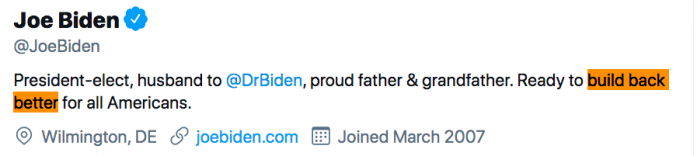
While President Putin stressed at the summit that the main danger to the world is unemployment, poverty, and economic depression of unprecedented scale, other speakers gave the impression that they were satisfied with the current situation, because it allows everything to be rebuilt. Build back better, is the slogan of Joe Biden:
For some, Covid is a plague, but for our leaders it is an Overton window. I’d advise them to eat a slice of lemon before speaking. This, of course, will not help against Covid, but at least it will wipe the blissful smiles off their faces. (“Eat a slice of lemon before speaking”, was advice given to a lady who complained of getting too much male attention in Italy).
The Chinese leader Xi proposed introducing worldwide QR codes so that without them people could not irresponsibly roam the planet. Nobody objected, but they did not support this initiative either. Xi is afraid that the wily Westerners will impose their own sanitary passports allowing only people injected with Western vaccines to travel. This possibility worried Putin, too, as Russia has developed two or three of their own vaccines. If the Chinese and Russian vaccines aren’t recognised by Europe, their people won’t be able to travel.
The WHO fancied that this virus was not the last; there will be more pandemics, and only vaccinations, masks and generous contributions to its budget will save us. They also promised a new wave of Covid in January, and then another, and so on until the earth will be covered with vaccines. To help poor countries, the leaders declared that the repayment of debts may be postponed, and that vaccines will be supplied to the impecunious nations for free. Free for them, but you will pay for them. (Not that they need it. Poor countries do not suffer of Covid. China’s neighbour Mongolia, despite open border with China, had no Covid. Poor Cambodia, ditto. Africa, none, excepting South Africa. )
The EU representatives called for Global Rebuilding – Build Back Better. That is, we will rebuild everything, but better and in way which is inclusive, green, sustainable. And much more expensive. And at your expense. The struggle for the climate is austerity under another name; it calls for a radical drop in living standards. We shall tighten our belts, and we will regret that Covid did not relieve us from unnecessary torment.
In past forums, Trump has constantly spoken out against the fight against warming, but this time he resigned himself. And his likely successor, Joe Biden, has already pledged to return America to how it was with the WHO and the Paris climate agreement.
So the worldwide rebuilding, perestroika seems to be as inevitable as Gorbachev’s in 1986. The Russian perestroika killed more people than Stalin’s Gulag; it destroyed the livelihood of millions. The wealth of the Russian people has been looted by Messrs Abramovich, Deripaska et al. From the earliest days of these changes, a minority of Russians weren’t optimistic about the outcome, but they were marginalised and their voices were silenced. Now the same is in store for the disaffected and dissidents – if all 20G take this disastrous route, this is well-nigh unavoidable. I do not know what is worse, the Covid lockdown or climate austerity, but there is no need to decide for we shall have both.
A few numbers regarding climate austerity. The Russian perestroika reduced CO2 emissions by 5 per cent year after year for ten years. The Great Depression was even better: a 10 per cent drop in emissions year after year. Millions of Americans died (The Grapes of Wrath), and nobody told them they were saving the planet. Optimistic researchers with the Global Carbon Project say the emissions should be cut by 5.5 per cent per year over the next 45 years. This is a deadly collapse; what we have now is a preview of what they have in store for us and our children. (You can check the numbers here).
The Chinese do not mind this, as they do not mind lockdowns, face recognition and social rating. Their popular film The Wandering Earth shows a world that fights global warming the Chinese way and depicts a future so grim that 1984 looks Utopian beside it. Even so it was still considered a positive and encouraging film by the Chinese audience. We should not accept Chinese methods of fighting diseases or climate change or indeed general governance. They are too different.
If they insist on fighting global warming, let us begin with them personally. Let Gore and Greta and their followers live ecologically on average salary. It is not difficult to live green if you are a millionaire. Do it on the average income. After you pay electricity, water, rates, transport, school you won’t even think of paying much more for making your car “green” and CO2-neutral. You’d be happy to survive as it is. I’d make it a law: every green activist should surrender his assets for safekeeping and manage his green life on the average income for at least one year.
The summit called for further digitalisation, for increased information flows across borders, for a combination of distance learning with conventional learning. Perhaps some digitalisation is unavoidable, but do we need more of it? We need more freedom, and digitalisation appears to be strongly repressive. It is a good tool for tyranny. Any tyrant of old, be it Hitler or Borgia, would be able to achieve much more in union with Zuckerberg. We need to stop the data giants, tax them to the hilt, make their life miserable, change their CEO by users’ vote at least once a year.
Distance schooling is probably the worst innovation of its kind. And rich folks know it well. In New York, the public schools were barred, but private schools operated normally all right, because distance schooling is no better than learning by watching telly. It also kills social fabrics and habits, making children boorish and unable to communicate. It is unnecessary, for children practically do not suffer of Covid. The main reason of going distant is to make our children even more stupid than they are likely to become anyway after watching YouTube. Another reason is to make them asocial and unable to act together against their betters. It should be outright forbidden, not encouraged.
A detailed declaration was prepared and drawn up before the summit and confirmed by the leaders. It also contains approval of the previous March declaration which began the triumphant march of lockdowns around the world.
Of course, the summit did not make binding decisions – only declarative ones, but they were detailed and unambiguous. Vaccinations, a perpetual fight against pandemics, smoothly turning into a fight against global warming, more austerity accompanied by QR codes on a global scale. What we have is what we shall have, this is what they decided. Masks are now and forever:

The leaders agreed to strengthen the WTO (the United States will return to as it was before under Biden) and strive to create a unified global tax system. The IMF (International Monetary Fund) will be at the centre of efforts to coordinate cryptocurrencies in relation to debtor countries, banks and other financial institutions. Some analysts were expecting a departure from the dollar as a reserve currency, but this has not yet been debated.
In the ongoing discussion between liberal globalism and nationalism, the G20 went for globalism and liberalism on steroids. Though President Trump still hopes to conclude the elections in his favour, the G20 already went the Biden way. It is difficult to understand, as the WTO, IMF, WHO are universally disliked by Russians, Americans and many Europeans, too. This is a sad and discomforting decision.
Humanity has made a big step towards unity at this summit. I am not sure it is worth rejoicing. Disagreement is a dangerous thing and leads to wars, but unanimity can be even more dangerous if it is the unanimity of experts and not peoples.
A comforting thought before you despair: declarations of unity were adopted earlier, in particular, when the League of Nations and the UN were created, but then disagreements took over, and a blessed diversity of opinions came back. I do not think we are ripe for that much of unity.
Israel Shamir can be reached at adam@israelshamir.net
Who Chooses the Official, Governmentally-Approved “Health Experts”?
By Prof. Bill Willers | Global Research | November 12, 2020
“My budget [is] highly earmarked, so it is driven by what I call donor interests.” –Margaret Chan, Director General of the World Health Organization, 2014
“For the world at large, normalcy only returns when we’ve largely vaccinated the entire global population.” –Bill Gates, April, 2020
You have to hand it to governmental health experts: All are uniformly “on message”. Meanwhile, abundant medical expertise from around the world at odds with official messaging is rendered invisible. The Great Barrington Declaration, so critical of governmentally-imposed lockdown strategy (and associated policies, e.g., public masking, quarantine, etc.), has, since October 5, 2020, been signed (as I write) by more than 45,000 medical scientists and practitioners worldwide. But mainstream media figures, savvy to the perks of power, know better than to report this. It’s worthy of note that the founders of the Declaration go to pains to declare their detachment from financial gain, perhaps to stand out against prominent governmental experts with ties to the pharmaceutical industry (e.g. here, here, here).
There are also America’s Frontline Doctors, the many dissenting scientists being discovered by journalists (here, here, here, and just the other day still more here and here), and plenty of others too, trying to be recognized above the din of officialdom, only to be forced to the outer margins of the Internet, where only a small fraction of the public bothers to seek them out. Relatively speaking, it’s lonely out there. Only a select set of officially approved voices conforming to a tightly-controlled narrative are allowed space in mainstream media, and therefore in the larger public mind. By what process, one wants to know, do specific individuals become the “health experts” for government and media?
The World Health Organization (WHO) is the global authority to which the medical institutions of nations look for leadership. WHO opinion and policy informs the NIH, CDC, schools of public health and medical societies in the US and their counterparts in countries all over the world. Visualized as a pyramid, WHO is the apex. Information from there descends through national organizations, schools and institutions to regional and local authorities. Gates and the pharmaceutical industry weave strategy at the apex, with industrial and political players making their impacts all the way down to the base of the pyramid where one finds hordes of frightened, masked citizens.
In this light, consider Margaret Chan’s introductory quote (above) regarding donor impact on WHO policy. Now, scroll down this 2017 list of contributors to the WHO that shows the United States as top contributor at ~$401Million.
But forget that sum, because President Trump thereafter stopped US contributions. That so, further scrolling down reveals that the major contributor is not a nation but the Bill and Melinda Gates Foundation at ~$325Million, seconded by GAVI, the vaccine alliance (itself heavily funded by Gates), at ~$133Million.
The top donors to the WHO are not countries, as is widely believed, but private interests. In fact, in recent decades, private donations to the WHO have continued to grow relative to national contributions, so that by 2017, their total had passed the 50% mark. And the pharmaceutical industry, the vaccine aspect in particular, is primary.
As one peruses the backgrounds of the the government’s (and media’s) chosen health experts, as opposed to the wealth of medical expertise resisting the lockdown and its isolating mandates, there seems within the former a high frequency not only of governmental bureaucrats but also of ties to schools of public health, and therefore to the many connected interests of those schools. Put another way, the commercial involvements of public health schools move quickly and unavoidably into a political realm that a critical eye might conclude is inappropriate for a medical school per se. Considering the inevitable conflicts of interest characteristic of corporate involvement, shouldn’t there be a solid wall of separation between medical schools and schools of public health?
A way to understand what is encompassed within “public health” is to read the Bloomberg School of Public Health at Johns Hopkins University, rated tops in the nation and named for its billionaire donor: “We implement large-scale solutions”, which includes development of “programs” and “interventions” in disaster response, refugee health, evaluation of health insurance programs, human rights and sustainable practice. The site links to Bloomberg’s “Centers and Institutes” which include the Bill and Melinda Gates Institute for Population and Reproductive Health and four others that are specific to vaccine development, production, education and access. Bloomberg School’s joining with the World Economic Forum and the Gates Foundation to host Event201, that foretold Covid19 Pandemic five months before the real thing hit, shows the School to be a global power player, and other schools of public health are certainly similarly oriented.
In 2005, in my home state, the School of Medicine at the University of Wisconsin in Madison underwent a change to become the University of Wisconsin School of Medicine and Public Health. The expanded mission to include public health was, as stated, to emphasize community health needs. A strict focus on medicine, on the one hand, and the vastly expanded array of considerations innate to “public health”, on the other hand, thereby became integrated into a single unit. In Wisconsin, two voices from within that school have been dominant in messaging with regard to the Covid19 Pandemic and how it should be handled, with the result that the Governor instigated a severe lockdown strategy that included a statewide masking mandate.
While it would be natural for a political leader to rely on medical advice, what is problematic is the unanimity of designated experts nation-wide in their conformity to a specific Covid19 policy that is, on many levels, dubious or downright false. For example, the two accepted experts in Wisconsin, cited above, have insisted that scientific evidence has established that public masking is a powerful means of preventing viral transmission, this mirroring the position of the Director of the CDC who told a Senate Committee that masks are more protective than vaccines. This claim is absolutely and demonstrably false. No scientific evidence has shown anything of the sort. A “smoking gun” in the masking issue is the fact that perhaps the finest meta-analysis of public masking, published in 2016 and titled “Why Face Masks Don’t Work: A Revealing Review”, was suddenly taken down as “no longer relevant in the current climate”. (Fortunately, it was saved at the Wayback site). What stands out is that the “current climate” referred to has nothing to do with weather. Rather, it mirrors a global project the details of which are hidden to the extent possible.
There is growing awareness that pre-Covid19 life will never return, and that masking, social distancing, and the like, will become normal aspects of daily life, for we — particularly the youngest among us — have been persuaded by officially-designated health experts to see our fellow humans as toxic and threatening. Indeed, Klaus Schwab, guiding light of the Big Reset, confirms the loss forever of life before Covid19, as he and his colleagues of the World Economic Forum put components of their new world order into place.
Putting the pieces together, one recognizes a global medical bureaucracy from the WHO on down, in concert with schools of public health and the pharmaceutical industry, combined into a politically powerful triumvirate dedicated to goals most certainly linked to those of the World Economic Forum, with which Bloomberg School collaborates. The selection process within this triumvirate designates its experts for governmental and academic advancement, and for public display by mainstream media, this to the exclusion of dissenters. The apparatus for social control now being put into place is to involve an unimaginably profitable vaccine-based medical authority touted by certified “health experts” and governmental enforcers, all of whom will assure the public that they “have the science”. There will be discovery of new pathogens threatening epidemic and pandemic waves, complete with spikes and hotspots. One foresees populations nurtured in fear, herded into groupthink and longing for salvation through vaccination.
***
Copyright © Prof. Bill Willers, Global Research, 2020
WHO Taps ‘Anti-Conspiracy’ Crusader to Sway Public Opinion on COVID Vaccine
By Jeremy Loffredo | Children’s Health Defense | October 23, 2020
An outspoken proponent of government-led tactics to influence public opinion on policy and to undermine the credibility of “conspiracy theorists” will lead the World Health Organization’s (WHO) efforts to encourage public acceptance of a COVID-19 vaccine, Children’s Health Defense has learned.
Last week, WHO’s general director, Dr. Tedros Ghebreyesus, tweeted that he was glad to speak with the organization’s Technical Advisory Group (TAG) on Behavioural Insights and Sciences for Health to “discuss vaccine acceptance and uptake in the context of COVID-19.”
In his next tweet Ghebreyesus announced that Cass Sunstein, founder and director of the Program on Behavioral Economics and Public Policy at Harvard Law School, will chair the advisory group, which was created in July.
Sunstein was former President Barack Obama’s head of Office of Information and Regulatory Affairs where he was responsible for overseeing policies relating to information quality.
In 2008, Sunstein wrote a paper proposing that governments employ teams of covert agents to “cognitively infiltrate” online dissident groups and websites which advocate “false conspiracy theories” about the government. In the paper, Sunstein and his co-authors wrote:
“Our principal claim here involves the potential value of cognitive infiltration of extremist groups, designed to introduce informational diversity into such groups and to expose indefensible conspiracy theories as such.”
The government-led operations described in Sunstein’s paper would work to increase faith in government policy and policymakers and undermine the credibility of “conspiracists” who question their motives. They would also maintain a vigorous “counter misinformation establishment” to counter “conspiracy” groups opposed to government policies that aim to protect the common good.
Some of this would be accomplished by sending undercover agents, or government-paid third parties, into “online social networks or even real space groups.”
Sunstein also advocated in 2008 that the government pay “independent experts” to publicly advocate on the government’s behalf, whether on television or social media. He says this is effective because people don’t trust the government as much as they trust people they believe are “independent.”
WHO has already contracted the public relations firm, Hill + Knowlton. The PR giant, best known for its role in manufacturing false testimonies in support of the Gulf War, was hired by WHO to “ensure the science and public health credibility of the WHO in order to ensure WHO’s advice and guidance is followed.”
WHO paid Hill + Knowlton $135,000 to identify micro-influencers, macro-influencers and “hidden heroes” who could covertly promote WHO’s advice and messaging on social media, and also protect and promote the organization’s image as a COVID-19 authority.
There’s no evidence that WHO has yet implemented any “cognitive infiltration” policies similar to what Sunstein advocated in 2008. If the organization were to adopt such a strategy, and use it to convince hesitant populations to take a COVID vaccine, it would raise questions of legality.
As put forward in a report by the Congressional Research Service, illegal “publicity or propaganda” is defined by the U.S. Government Accountability Office (GAO) to mean either (1) self-aggrandizement by public officials; (2) purely partisan activity; or (3) “covert propaganda.” By covert propaganda, GAO means information which originates from the government but is unattributed and made to appear as though it came from a third party.
Because WHO is a multinational organization and not a U.S. Government agency, covert “cognitive infiltration” policies could fall into a gray area, or even be considered legal.
Dr. Margaret Chan, former general-director of WHO, once stated that the organization’s policies are “driven by what [she called] donor interests.”
According to a 2012 article in Foreign Affairs, “few policy initiatives or normative standards set by the WHO are announced before they have been casually, unofficially vetted by Gates Foundation staff.” Or, as other sources told Politico in 2017, “Gates’ priorities have become the WHO’s.”
WHO’s current general director, Ghebreyesus, was previously on the board of two organizations that Gates founded, provided seed money for and continues to fund to this day: GAVI, the Vaccine Alliance, a public–private global health partnership focused on increased access to vaccines in poor countries, and the Global Fund, which says it aims to accelerate the “development, production and equitable global access to safe, quality, effective, and affordable COVID-19 diagnostics, therapeutics and vaccines.”
If, as Politico put it, “Gates priorities have become the WHO’s,” and if WHO’s policies are driven by “donor interests,” this raises questions as to what online groups, people and websites would be targeted by such covert programs.
The idea of government agents carrying out psychological operations on social media is not far fetched. Earlier this year the head of editorial for Twitter’s Middle East and Africa office was outed as an active officer in the British Army’s psychological warfare unit, known as the 77th brigade, which specializes in online behavioral change operations.
© 2016-2020 Children’s Health Defense® • All rights Reserved
WHO (Accidentally) Confirms Covid is No More Dangerous Than Flu
By Kit Knightly | OffGuardian | October 8, 2020
The World Health Organization has finally confirmed what we (and many experts and studies) have been saying for months – the coronavirus is no more deadly or dangerous than seasonal flu.
The WHO’s top brass made this announcement during a special session of the WHO’s 34-member executive board on Monday October 5th, it’s just nobody seemed to really understand it.
In fact, they didn’t seem to completely understand it themselves.
At the session, Dr Michael Ryan, the WHO’s Head of Emergencies revealed that they believe roughly 10% of the world has been infected with Sars-Cov-2. This is their “best estimate”, and a huge increase over the number of officially recognised cases (around 35 million).
Dr. Margaret Harris, a WHO spokeswoman, later confirmed the figure, stating it was based on the average results of all the broad seroprevalence studies done around the world.
As much as the WHO were attempting to spin this as a bad thing – Dr Ryan even said it means “the vast majority of the world remains at risk.” – it’s actually good news. And confirms, once more, that the virus is nothing like as deadly as everyone predicted.
The global population is roughly 7.8 billion people, if 10% have been infected that is 780 million cases. The global death toll currently attributed to Sars-Cov-2 infections is 1,061,539.
That’s an infection fatality rate of roughly or 0.14%. Right in line with seasonal flu and the predictions of many experts from all around the world.
0.14% is over 24 times LOWER than the WHO’s “provisional figure” of 3.4% back in March. This figure was used in the models which were used to justify lockdowns and other draconian policies.
In fact, given the over-reporting of alleged Covid deaths, the IFR is likely even lower than 0.14%, and could show Covid to be much less dangerous than flu.
None of the mainstream press picked up on this. Though many outlets reported Dr Ryan’s words, they all attempted to make it a scary headline and spread more panic.
Apparently neither they, nor the WHO, were capable of doing the simple maths that shows us this is good news. And that the Covid sceptics have been right all along.
RFK Jr. Sues Facebook, Zuckerberg and So-Called ‘Fact-Checkers’ for Vaccine Censorship
Children’s Health Defense | August 18, 2020
Washington, DC — Children’s Health Defense (CHD) filed a lawsuit on Monday in San Francisco Federal Court charging Facebook, Mark Zuckerberg, and three fact-checking outfits with censoring truthful public health posts and for fraudulently misrepresenting and defaming CHD. CHD is a non-profit watchdog group that roots out corruption in federal agencies, including Centers for Disease Control and Prevention (CDC), the World Health Organization (WHO), and the Federal Communications Commission (FCC), and exposes wrongdoings in the Pharmaceutical and Telecom industries. CHD has been a frequent critic of WiFi and 5G Network safety and of certain vaccine policies that CHD claims put Big Pharma profits ahead of public health. CHD has fiercely criticized agency corruption at WHO, CDC and FCC.
According to CHD’s Complaint, Facebook has insidious conflicts with the Pharmaceutical industry and its captive health agencies and has economic stakes in telecom and 5G. Facebook currently censors CHD’s page, targeting its purge against factual information about vaccines, 5G and public health agencies.
Facebook acknowledges that it coordinates its censorship campaign with the WHO and the CDC. While earlier court decisions have upheld Facebook’s right to censor its pages, CHD argues that Facebook’s pervasive government collaborations make its censorship of CHD a First Amendment violation. The government’s role in Facebook’s censorship goes deeper than its close coordination with CDC and WHO. The Facebook censorship began at the suggestion of powerful Democratic Congressman and Intelligence Committee Chairman Representative Adam Schiff, who in March 2019 asked Facebook to suppress and purge internet content critical of government vaccine policies. Facebook and Schiff use the term “misinformation” as a euphemism for any statement, whether truthful or not, that contradicts official government pronouncements. The WHO issued a press release commending Facebook for coordinating its ongoing censorship campaign with public health officials. That same day, Facebook published a “warning label” on CHD’s page, which implies that CHD’s content is inaccurate, and directs CHD followers to turn to the CDC for “reliable, up to date information.” This is an important First Amendment case that tests the boundaries of government authority to openly censor unwanted critique of government
Attorneys Robert F. Kennedy, Jr., Roger Teich, and Mary Holland represent Children’s Health Defense in the litigation.
The lawsuit also challenges Facebook’s use of so-called “independent fact-checkers” – which, in truth, are neither independent nor fact-based – to create oppositional content on CHD’s page, literally superimposed over CHD’s original content, about open matters of scientific controversy. To further silence CHD’s dissent against important government policies and its critique of Pharmaceutical products, Facebook deactivated CHD’s donate button, and uses a variety of deceptive technology (i.e. shadow banning) to minimize the reach and visibility of CHD’s content. In short, Facebook and the government colluded to silence CHD and its followers. Such tactics are fundamentally at odds with the First Amendment, which guarantees the American public the benefits to democracy from free flow of information in the marketplace of ideas. It forbids the government from censoring private speech—particularly speech that criticizes government policies or officials. As Justice Holmes famously said, “the best test of truth is the power of the thought to get itself accepted in the competition of the market.” The current COVID pandemic makes the need for open and fierce public debate on health issues more critical than ever.
Mark Zuckerberg publicly claims that social media platforms shouldn’t be “the arbiters of truth.” This case exposes Zuckerberg for working with the government to suppress and purge unwanted critiques of government officials and policies.
The court will decide whether Facebook’s new government-directed business model of false and misleading “warning labels,” deceptive “fact-checks,” and disabling a non-profit’s donate button, passes muster under the First and Fifth Amendments, the Lanham Act, and RICO. Those statutes protect CHD against online wire-fraud, false disparagement, and knowingly false statements.
CHD asks the Court to declare Facebook’s actions unconstitutional and fraudulent, and award injunctive relief and damages.
WHO’s Conflict of Interest?

US Secretary of State Michael Pompeo and WHO Director General Dr. Tedros Ghebreyesus, in Bern, Switzerland, on June 3, 2019. (State Dept. Photo by Ron Przysucha/ Public Domain)
By David Macilwain | American Herald Tribune | June 30, 2020
Last week the French National Assembly convened an inquiry into the “genealogy and chronology” of the Coronavirus crisis to examine the evident failures in its handling and will interview government ministers, experts and health advisors over the next six months. While we in the English-speaking world may have heard endless arguments over the failures of the UK or US governments to properly prepare for and cope with the health-care emergency, the crisis and problems in the French health system and bureaucracy have been similar and equally serious. Given the global cooperation and collaboration of health authorities and industry, the inquiry has global significance.
Judging by the attention paid by French media to the inquiry, which comes just as France is loosening the lock-downs and restarting normal government activities, it is set to be controversial and upsetting, exposing both incompetence and corruption.
Leading the criticism of the Macron government’s handling of the crisis are the most serious accusations that its prohibition of an effective drug treatment has cost many lives, a criticism put directly to the inquiry by Professor Didier Raoult, the most vocal proponent of the drug – Hydroxychloroquine. At his institute in Marseilles, early treatment with the drug of people infected with Sars-CoV-2 has been conclusively demonstrated to reduce hospitalization rates and shorten recovery times when given along with the antibiotic Azithromycin, and consequently to cut death rates by at least half.
Raoult has pointed to the low death rate in the Marseilles region of 140 per million inhabitants compared with that in Paris of 759 per million as at least partly due to the very different treatment of the epidemic in Marseilles under his instruction. The policies pursued by local health services there included early widespread testing for the virus and isolation and quarantining of cases, aimed both at protecting those in aged care and in keeping people from needing hospitalization with the help of drug treatments.
It incidentally seems quite bizarre that some countries – notably the US, UK and Australia, are only now embarking on large testing programs – and claiming a “second wave” in cases – which Raoult calls a “fantasme journalistique”. The consequent reimposition of severe lock-downs in some suburbs of Melbourne, and in Leicester in the UK is a very worrying development.
The efficacy of HCQ and Azithromycin is well illustrated – one should say proven – by this most recent review of its use on 3120 out of a total of 3700 patients treated at the Marseilles hospitals during March, April and the first half of May. Unlike the fraudulent study published and then retracted by the Lancet in May, the analysis in this review is exemplary, along with the battery of tests performed on patients to determine the exact nature of their infection and estimate the effectiveness of the drug treatment. The overall final mortality rate of 1.1% obscures the huge discrepancy in numbers between treated and untreated patients. Hospitalization, ICU, and death rates averaged five times greater in those receiving the “other” treatment – being normal care without HCQ-AZM treatment – equivalent to a placebo.
The IHU Marseilles study and its discussion points deserve close scrutiny, because they cannot be dismissed as unsubstantiated or biased, or somehow political, just because Professor Raoult is a “controversial figure”. There is a controversy, and it was well expressed by Raoult in his three hour presentation to the inquiry. His criticisms of health advisors to government include conflicts of interest and policy driven by politics rather than science. Raoult has been vindicated in his success, and can now say to those health authorities “if you had accepted my advice and approved this drug treatment, thousands of lives would have been saved.”
This is quite unlike similar statements in the UK and elsewhere, where claims an earlier imposition of lock-down would have cut the death toll in half are entirely hypothetical. As Prof. Raoult has also observed, the progress of this epidemic of a new and unknown virus was quite speculative, and its handling by authorities has failed to reflect that. In fact, one feels more and more that the “response” of governments all around the world has followed a strangely similar and inappropriately rigid scheme, of which certain aspects were de rigueur, particularly “social distancing”.
There seems little evidence that would justify this most damaging and extreme of measures to control an epidemic whose seriousness could be ameliorated by other measures – such as those advocated by Raoult’s Institute – which would have avoided the devastating “collateral damage” inflicted on the economy and society in the name of “staying safe”.
Prof. Raoult’s vocal and consistent criticism of the political manipulation of the Coronavirus crisis is hardly trivial however, to be finally excused as a “failure”- to impose lockdowns sooner, to have sufficient supplies of masks or ventilators, or to use more testing and effective contact tracing. What lies beneath appears to be, for want of a better word, a conspiracy.
As previously and famously noted by Pepe Escobar, French officials seemed to have foresight on the potential use of Hydroxychloroquine as a treatment for COVID-19 infection, with its cheapness and availability being a likely hindrance to pharmaceutical companies looking to make big profits from new drug treatments or vaccines. Of even greater significance perhaps, was the possibility – or danger – that the vast bulk of the population might become infected with the virus and recover quickly with the help of this cheap drug treatment, while bypassing the need, and possibly interminable wait for a vaccine.
Now it can be seen that in Western countries the demand for a vaccine is acute, and the market cut-throat, despite assurances from many quarters that “vaccines must be available to all” and that “manufacturers won’t seek to profit” from their winning product. (the profit will naturally be included in what their governments choose to pay them) The clear conflicts of interest between health officials, public and private interests make such brave pronouncements particularly hollow. Just one case is sufficient to illustrate this, as despite its unconvincing performance in combatting the novel Coronavirus, the drug developed and promoted by Dr Anthony Fauci and company Gilead, Remdesevir, was rapidly approved for use following a research trial sponsored by the White House.
More concerning however is what appears to be a conflict of interest in the WHO itself, possibly related to the WHO’s largest source of funding in the Gates organization. While the WHO has not actively opposed the use of Hydroxychloroquine against the virus infection for most of the pandemic, neither has it voiced any support for its use, such as might be suggested by its obvious benefits, and particularly in countries with poor health facilities and resources.
Had the WHO taken at least a mildly supportive role, acknowledging that the drug was already in widespread use and there was little to lose from trying it against COVID-19, then it is hard to imagine that those behind the recent fabricated Lancet paper would have pursued such a project. Without claiming that the WHO had some hand in the alleged study that set out to debunk HCQ treatment, it should be noted that the WHO was very quick to jump on the non-peer-reviewed “results” and to declare a world-wide cancellation of its research projects on the drug. And while it had to rescind this direction shortly afterward when the fraud was exposed, the dog now has a bad name – as apparently intended.
This stands in sharp contrast to the WHO’s sudden enthusiasm for the steroidal drug Dexamethasone, recently discovered by a UK research team to have had a mildly positive benefit on seriously ill COVID19 patients:
“The World Health Organization (WHO) plans to update its guidelines on treating people stricken with coronavirus to reflect results of a clinical trial that showed a cheap, common steroid could help save critically ill patients.
The benefit was only seen in patients seriously ill with COVID-19 and was not observed in patients with milder disease, the WHO said in a statement late Tuesday.
British researchers estimated 5,000 lives could have been saved had the drug been used to treat patients in the United Kingdom at the start of the pandemic.
“This is great news and I congratulate the government of the UK, the University of Oxford, and the many hospitals and patients in the UK who have contributed to this lifesaving scientific breakthrough,” said WHO Director-General Tedros Adhanom Ghebreyesus in the press release.”
There is something more than ironic in the WHO’s interest in a different cheap and available drug that has also been widely used for decades, but which is no use in protecting those people in the target market for the vaccine. To me, and surely to Professor Raoult and his colleagues, this looks more like protecting ones business interests and investor profits, at the expense of public health and lives.
Postscript:
It has just been announced that GILEAD will start charging for its drug Remdesevir from next week at $US 2340 for a five-day course, or $US 4860 for private patients. Generic equivalents manufactured in poorer countries will sell for $US 934 per treatment course. Announcing the prices, chief executive Dan O’Day noted that the drug was priced “to ensure wide access rather than based solely on the value to patients”.
It seems hardly worth pointing out that six days treatment with Hydroxychloroquine costs around $US 7, so for the same cost as treating one patient with Remdesevir, roughly four hundred could be given Hydroxychloroquine. If this is compounded by the effective cure rate, Remdesevir treatment costs closer to one thousand times that of HCQ. The addition of Azithromycin and Zinc doubles the cost of HCQ treatment, but also increases its efficacy considerably.
Featured Video

Trita Parsi: Israel Set a Trap for Total War in the Region
or go to
Aletho News Archives – Video-Images
From the Archive
Zionism’s Violent Legacy
By Donald Neff | Washington Report On Middle East Affairs | January 1996
On January 4, 1948, Jewish terrorists drove a truck loaded with explosives into the center of the all Arab city of Jaffa and detonated it, killing 26 and wounding around 100 Palestinian men, women and children.[1] The attack was the work of the Irgun Zvai Leumi – the “National Military Organization,” also known by the Hebrew letters Etzel – the largest Jewish terrorist group in Palestine. The Irgun was headed by Revisionist Zionist Menachem Begin and had been killing and maiming Arabs, Britons and even Jews for the previous ten years in its efforts to establish a Jewish state.
This terror campaign meant that at the core of Revisionist Zionism there existed a philosophical embrace of violence. … continue
Blog Roll
 Aletho News
- Trita Parsi: Israel Set a Trap for Total War in the Region
- Trump’s Iran war is on an Israeli leash
- Saudi oil boss issues global supply warning
- Riyadh Says Its Oil System Is Intact. The Numbers Say Otherwise.
- Trump and Netanyahu Want to “Finish the Job” on Iran
- US ‘one-sided dictation’ not Iran’s beliefs makes rational talks impossible: Baghaei
- Iran’s Next Strike May Not Explode. It Could Shut You Down /Col Doug Macgregor
- Iran: US political targets legitimate if assassinations return
- Iraq shuts key border crossing with Iran under US pressure: Report
- Undersea Internet cables could be targeted in retaliation for attacks on Iran: IRGC deputy chief
- If Americans Knew
- The Israel Lobby’s Changing Fortunes
- AIPAC has become such a political liability that it’s shifting to a more “nimble” approach to buying politicians
- At least 160 Israeli settler attacks in 2 weeks
- Will Gaza’s Ancient Christian Community Disappear Forever?
- Israel’s vision of regional security rests on keeping Arab states weak
- Heidi Levine recounts how Palestinian youths helped save her in settler attack
- DAILY UPDATE: Latest essential news on Palestine, Israel, & region
- Trump’s Intensifying Sabotage of the ICC, for Israel’s Sake
- Israeli military detain US and UK volunteers in West Bank including Democratic NY politician Brad Lander
- Americans at National Conservatism Conference held in Israel this year criticize Israel
- No Tricks Zone
- E-Cars Reduce CO2 Emissions By Only 41% Compared To Internal Combustion Engine Vehicles
- Predictions Made By Renowned Climate Professor Over Past Decades Have Been Proven To Be Poor
- New Study Suggests Large Regions Of The Pacific Ocean Have Been Cooling For The Last 80 Years
- Germany’s Green Energy Debacle: High Energy Costs Force Kahla Porzellan to Close After 182 Years!
- New Study: 50 Years Of The Most Aggressive ‘Net Zero’ Policies Can Only Affect The Global Climate By 0.03°C
- US September “Heat” Was No Record…Many Records Set Decades Ago
- Latest European Green Energy Debacle; Portugal’s Largest Flagship Solar Park Insolvent!
- Green Energy Debacle: German Expert Professor Fritz Vahrenholt Warns Of Severe Economic And Social Consequences
- Two More Paleo Reconstructions Affirm Meters-Higher Sea Levels Across Ireland, Brazil 7000-6000 Years Ago
- New Study: Earth And Venus Surface Warmth Largely Explained By Convection And Lapse Rate, Not CO2 Or Radiation

