Iraqis must resort to resistance if US forces refuse to pull out: Senior Nujaba official
Press TV – January 14, 2020
The deputy secretary general of Iraq’s al-Nujaba Movement says the Iraqi nation must choose the path of resistance in case the parliamentary bill demanding the withdrawal of all US-led foreign military forces from the country is not implemented.
“The Iraqi people must opt for the path of resistance unless the parliament’s decision on the pullout of foreign forces is carried out,” Nasr al-Shammari said in an exclusive interview with Lebanon-based Arabic-language al-Mayadeen television news network on Tuesday.
He added that the decision to expel foreign forces from Iraq does not need a parliamentary mandate, stating that the US-led military coalition purportedly fighting the Daesh terrorist group entered Iraq at the request of Baghdad government and can be removed by a letter from the government as well.
“The decision concerning the removal of foreign forces from Iraq is the only decision taken away from sectarian fault lines. A person of sound mind cannot accept the presence of a foreign state that imposes its own authority on a sovereign country. If getting foreign forces out of Iraq is a charge, then we consider it as an honor for ourselves, our children and our grandchildren,” Shammari pointed out.
He then noted that all Iraqi resistance factions are united to end the presence of foreign troops in the country, saying, “The United States must respect the sovereignty of states and decisions of peoples, and adhere to them.”
“Iraq will not accept being ruled by any country. Any failure to implement the parliament decision on the withdrawal of foreign forces will give the green light for the start of resistance operations,” Shammari highlighted.
The Nujaba official went on to say that Popular Mobilization Units (PMU), better known by the Arabic word Hashd al-Sha’abi, have become more coherent and solid in the wake of the recent US assassination of the second-in-command of PMU, Abu Mahdi al-Muhandis.
“The death of Muhandis does not mean the end of Hashd al-Sha’abi and its role in the region,” Shammari said.
He added that Iraqi resistance groups are indebted to Lieutenant General Qassem Soleimani, the commander of the Quds Force of Iran’s Islamic Revolution Guards Corps (IRGC).
“The resistance against US forces will soon attain its goal of removing foreign troops from the Iraqi soil. The blood of martyrs will finally bring about the demise of the Zionist entity, and the end of its occupation of Arab lands,” Shammari concluded.
Baghdad moving to internationally prosecute US for crimes in Iraq
Meanwhile, a member of the Iraqi Parliamentary Human Rights Committee said the Baghdad government was preparing to prosecute the United States at international courts of law for its crimes in Iraq, noting that the offenses amount to genocide.
“The United States has been committing the most heinous war crimes since 2003 up until now. The invasion of Iraq, the Abu Ghraib prisoner abuse, the Nisour Square massacre and the emergence of Daesh (Takfiri terrorist group) besides the attack on the leaders of Hashd al-Sha’abi are all crimes classified as genocide,” Ahmed al-Kanani said in a statement on Tuesday.
Kanani added, “All the crimes that America has perpetrated against the Iraqi nation are documented, and that there are bids to prosecute Washington for its crimes against Iraqis before international courts.”
On January 5, Iraqi lawmakers unanimously approved a bill, demanding the withdrawal of all foreign military forces led by the United States from the country.
Late on January 9, Iraq’s caretaker Prime Minister Adel Abdul-Mahdi called on the United States to dispatch a delegation to Baghdad tasked with formulating a mechanism for the withdrawal of US troops from the country.
According to a statement released by the Iraqi premier’s office, Abdul-Mahdi “requested that delegates be sent to Iraq to set the mechanisms to implement the parliament’s decision for the secure withdrawal of (foreign) forces from Iraq” in a phone call with US Secretary of State Mike Pompeo.
The prime minister said Iraq rejects violation of its sovereignty, particularly the US military’s violation of Iraqi airspace in the airstrike that assassinated Lt. Gen. Soleimani, Muhandis and their companions.
Abdul-Mahdi asked Pompeo to “send delegates to Iraq to prepare a mechanism to carry out the parliament’s resolution regarding the withdrawal of foreign troops from Iraq,” the statement said.
“The prime minister said American forces had entered Iraq and drones are flying in its airspace without permission from Iraqi authorities and this was a violation of the bilateral agreements,” the statement added.
The US State Department bluntly rejected the request the following day.
Sealed Off and Forgotten: What You Should Know about Israel’s ‘Firing Zones’ in the West Bank

A concrete marker placed by Israeli forces demarcating the beginning of the military zone near Tubas in the Jordan Valley, northern West Bank [DCIP/Cody O’Rourke]
By Ramzy Baroud | MEMO | January 13, 2020
A seemingly ordinary news story, published in the Israeli newspaper, Haaretz, on January 7, shed light on a long-forgotten, yet crucial, subject: Israel’s so-called “firing zones” in the West Bank.
“Israel has impounded the only vehicle available to a medical team that provides assistance to 1,500 Palestinians living inside an Israeli military firing zone in the West Bank,” according to Haaretz.
The Palestinian community that was denied its only access to medical services is Masafer Yatta, a tiny Palestinian village located in the South Hebron hills.
Masafer Yatta, which exists in complete and utter isolation from the rest of the occupied West Bank, is located in ‘Area C’, which constitutes the larger territorial chunk, about 60%, of the West Bank. This means that the village, along with many Palestinian towns, villages and small, isolated communities, is under total Israeli military control.
Do not let the confusing logic of the Oslo Accords fool you; all Palestinians, in all parts of the occupied West Bank, East Jerusalem, and the besieged Gaza Strip, are under Israeli military control as well.
Unfortunately for Masafer Yatta, and those living in ‘Area C’, however, the degree of control is so suffocating that every aspect of Palestinian life – freedom of movement, education, access to clean water, and so on – is controlled by a complex system of Israeli military ordinances that have no regard whatsoever for the well-being of the beleaguered communities.
It is no surprise, then, that Masafer Yatta’s only vehicle, a desperate attempt at fashioning a mobile clinic, was confiscated in the past as well, and was only retrieved after the impoverished residents were forced to pay a fine to Israeli soldiers.
There is no military logic in the world that could rationally justify the barring of medical access to an isolated community, especially when an Occupying Power like Israel is legally obligated under the Fourth Geneva Convention to ensure medical access to civilians living in an Occupied Territory.
It is only natural that Masafer Yatta, like all Palestinians in ‘Area C’ and the larger West Bank, feel neglected – and outright betrayed – by the international community as well as their own quisling leadership.
But there is more that makes Masafer Yatta even more unique, qualifying it for the unfortunate designation of being a Bantustan within a Bantustan, as it subsists in a far more complex system of control, compared to the one imposed on black South Africa during the Apartheid regime era.
Soon after Israel occupied the West Bank, East Jerusalem, and Gaza, it devised a long-term stratagem aimed at the permanent control of the newly occupied territories. While it designated some areas for the future relocation of its own citizens – who now make up the extremist illegal Jewish settler population in the West Bank – it also set aside large swathes of the Occupied Territories as security and buffer zones.
What is far less known is that, throughout the 1970s, the Israeli military declared roughly 18% of the West Bank as “firing zones”.
These “firing zones” were supposedly meant as training grounds for the Israeli occupation army soldiers – although Palestinians trapped in these regions often report that little or no military training takes place within “firing zones”.
According to the Office for the UN Coordination of Humanitarian Affairs (OCHA) in Palestine, there are around 5,000 Palestinians, divided among 38 communities that still live, under most dire circumstances, within the so-called “firing zones”.
The 1967 occupation led to a massive wave of ethnic cleansing that saw the forced removal of approximately 300,000 Palestinians from the newly-conquered territory. Many of the vulnerable communities that were ethnically cleansed included Palestinian Bedouins, who continue to pay the price for Israel’s colonial designs in the Jordan Valley, the South Hebron Hills and other parts of occupied Palestine.
This vulnerability is compounded by the fact that the Palestinian Authority (PA) acts with little regards to Palestinians living in ‘Area C’, who are left to withstand and resist Israeli pressures alone, often resorting to Israel’s own unfair judicial system, to win back some of their basic rights.
The Oslo Accords, signed in 1993 between the Palestinian leadership and the Israeli government, divided the West Bank into three regions: ‘Area A’, theoretically under autonomous Palestinian control and consisting of 17.7% of the overall size of the West Bank; ‘Area B’, 21%, and under shared Israeli-PA control and ‘Area C’, the remainder of the West Bank, and under total Israeli control.
This arrangement was meant to be temporary, set to conclude in 1999 once the “final status negotiations” were concluded and a comprehensive peace accord was signed. Instead, it became the status quo ante.
As unfortunate as the Palestinians living in ‘Area C’ are, those living in the “firing zone” within ‘Area C’ are enduring the most hardship. According to the United Nations, their hardship includes “the confiscation of property, settler violence, harassment by soldiers, access and movement restrictions and/or water scarcity.”
Expectedly, many illegal Jewish settlements sprang up in these “firing zones” over the years, a clear indication that these areas have no military purpose whatsoever, but were meant to provide an Israeli legal justification to confiscate nearly a fifth of the West Bank for future colonial expansion.
Throughout the years, Israel ethnically cleansed all remaining Palestinians in these “firing zones”, leaving behind merely 5,000, who are likely to suffer the same fate should the Israeli occupation continue on the same violent trajectory.
This makes the story of Masafer Yatta a microcosm of the tragic and larger story of all Palestinians. It is also a reflection of the sinister nature of Israeli colonialism and military occupation, where occupied Palestinians lose their land, their water, their freedom of movement and eventually, even the most basic medical care.
These harsh “conditions contribute to a coercive environment that creates pressure on Palestinian communities to leave these areas,” according to the United Nations. In other words, ethnic cleansing, which has been Israel’s strategic goal all along.
‘Trump cited GOP hawks’ support as reason to assassinate Soleimani: Reports
Press TV – January 12, 2020
US President Donald Trump has told his associates his decision to assassinate Iran’s top commander Lieutenant General Qassem Soleimani came amid pressure from Senate war hawks he views as crucial allies in his upcoming impeachment trial, according to two separate reports.
As Trump discussed the assassination drone strike at his private mansion in Mar-a-Lago, he told some associates that he wanted to safeguard the backing of Senate Republicans in time for the impeachment trial in the upper chamber, The New York Times said in a report this week.
The Wall Street Journal also reported that after the assassination operation, Trump told associates he was under pressure from a number of Senate Republicans, whose support he needs in the impeachment trial, to take action on the Iranian general.
“Mr. Trump, after the strike, told associates he was under pressure to deal with Gen. Soleimani from GOP senators he views as important supporters in his coming impeachment trial in the Senate, associates said,” according to the Journal.
The reports did not mention any Republican senators by name, however, many of the president’s allies in the Senate, including Lindsey Graham of South Carolina, have openly praised his decision to assassinate Gen. Soleimani.
Sen. Graham was reportedly the only senator who was briefed by the administration about the assassination operation.
“I was briefed about the potential operation when I was down in Florida. I appreciate being brought into the orbit,” the senator told FOX News.
Soleimani, the head of Iran’s Quds Force, was assassinated in a US drone strike outside Baghdad’s International Airport last Friday.
The new information comes as the Trump administration is under mounting pressure from Congress concerning the justification for assassinating the senior military official of another country.
The reports further call into questions the narrative by Trump and his top aides that General Soleimani had been planning “imminent” attacks against US personnel and interests. Even some US officials have admitted that there is no evidence to support that claim.
In the wake of the assassination, a number of Republican senators have joined Democrats in pushing back against Trump’s war powers.
After Missiles Fly, Iraq Becomes the Battleground
By Tom Luongo | Gold Goats ‘n Guns | January 10, 2020
The future of the U.S.’s involvement in the Middle East is in Iraq. The exchange of hostilities between the U.S. and Iran occurred wholly on Iraqi soil and it has become the site on which that war will continue.
Israel continues to up the ante on Iran, following President Trump’s lead by bombing Shia militias stationed near the Al Bukumai border crossing between Syria and Iraq.
The U.S. and Israel are determined this border crossing remains closed and have demonstrated just how far they are willing to go to prevent the free flow of goods and people across this border.
The regional allies of Iran are to be kept weak, divided and constantly under harassment.
Iraq is the battleground because the U.S. lost in Syria. Despite the presence of U.S. troops squatting on Syrian oil fields in Deir Ezzor province or the troops sitting in the desert protecting the Syrian border with Jordan, the Russians, Hezbollah and the Iranian Quds forces continue to reclaim territory previously lost to the Syrian government.
Now with Turkey redeploying its pet Salafist head-choppers from Idlib to Libya to fight General Haftar’s forces there to legitimize its claim to eastern Mediterannean gas deposits, the restoration of Syria’s territorial integrity west of the Euphrates River is nearly complete.
The defenders of Syria can soon transition into the rebuilders thereof, if allowed. And they didn’t do this alone, they had a silent partner in China the entire time.
And, if I look at this situation honestly, it was China stepping out from behind the shadows into the light that is your inciting incident for this chapter in Iraq’s story.
China moving in to sign a $10.1 billion deal with the Iraqi government to begin the reconstruction of its ruined oil and gas industry in exchange for oil is of vital importance.
It doubles China’s investment in Iraq while denying the U.S. that money and influence.
This happened after a massive $53 billion deal between Exxon-Mobil and Petrochina was put on hold after the incident involving Iran shooting down a U.S. Global Hawk drone in June.
With the U.S balking over the Exxon/Petrochina big deal, Iraqi Prime Minster Adel Abdul Mahdi signed the new one with China in October. Mahdi brought up the circumstances surrounding that in the Iraqi parliament during the session in which it passed the resolution recommending removal of all foreign forces from Iraq.
Did Trump openly threaten Mahdi over this deal as I covered in my podcast on this? Did the U.S. gin up protests in Baghdad, amplifying unrest over growing Iranian influence in the country?
And, if not, were these threats simply implied or carried by a minion (Pompeo, Esper, a diplomat)? Because the U.S.’s history of regime change operations is well documented. Well understood color revolution tactics used successfully in places like Ukraine, where snipers were deployed to shoot protesters and police alike to foment violence between them at the opportune time were on display in Baghdad.
Mahdi openly accused Trump of threatening him, but that sounds more like Mahdi using the current impeachment script to invoke the sinister side of Trump and sell his case.
It’s not that I don’t think Trump capable of that kind of threat, I just don’t think he’s stupid enough to voice it on an open call. Donald Trump is capable of many impulsive things, openly threatening to remove an elected Prime Minister on a recorded line is not one of them.
Mahdi has been under the U.S.’s fire since he came to power in late 2018. He was the man who refused Trump during Trump’s impromptu Christmas visit to Iraq in 2018, refusing to be summoned to a clandestine meeting at the U.S. embassy rather than Trump visit him as a head of state, an equal.
He was the man who declared the Iraqi air space closed after Israeli air attacks on Popular Mobilization Force (PMF) positions in September.
And he’s the person, at the same time, being asked by Trump to act as a mediator between Saudi Arabia and Iran in peace talks for Yemen.
So, the more we look at this situation the more it is clear that Abdul Madhi, the first Iraqi prime minister since the 2003 U.S. invasion to push for more Iraqi sovereignty, is emerging as the pivotal figure in what led up to the attack on General Soleimani and what comes after Iran’s subsequent retaliation.
It’s clear that Trump doesn’t want to fight a war with Iran in Iran. He wants them to acquiesce to his unreasonable demands and begin negotiating a new nuclear deal which definitively stops the possibility of Iran developing a nuclear weapon, and as Patrick Henningsen at 21st Century Wire thinks,
Trump now wants a new deal which features a prohibition on Iran’s medium range missiles, and after events this week, it’s obvious why. Wednesday’s missile strike by Iran demonstrates that the US can no longer operate in the region so long as Iran has the ability to extend its own deterrence envelope westwards to Syria, Israel, and southwards to the Arabian Peninsula, and that includes all US military installations located within that radius.
Iraq doesn’t want to be that battlefield. And Iran sent the message with those two missile strikes that the U.S. presence in Iraq is unsustainable and that any thought of retreating to the autonomous Kurdish region around the air base at Erbil is also a non-starter.
The big question, after this attack, is whether U.S. air defenses around the Ain al Assad airbase west of Ramadi were active or not. If they were then Trump’s standing down after the air strikes signals what Patrick suggests, a new Middle East in the making.
If they were not turned on then the next question is why? To allow Iran to save face after Trump screwed up in murdering Soleimani?
I’m not capable of believing such Q-tard drivel at this point. It’s far more likely that the spectre of Russian electronics warfare and radar evasion is lurking in the subtext of this story and the U.S. truly now finds itself after a second example of Iranian missile technology in a nascent 360 degree war in the region.
It means that Iran’s threats against the cities of Haifa and Dubai were real.
In short, it means the future of the U.S. presence in Iraq now measures in months not years.
Because both China and Russia stand to gain ground with a newly-united Shi’ite Iraqi population. Mahdi is now courting Russia to sell him S-300 missile defense systems to allow him to enforce his demands about Iraqi airspace.
Moqtada al-Sadr is mobilizing his Madhi Army to oust the U.S. from Iraq. Iraq is key to the U.S. presence in the region. Without Iraq the U.S. position in Syria is unsustainable.
If the U.S. tries to retreat to Kurdish territory and push again for Masoud Barzani and his Peshmerga forces to declare independence Turkish President Recep Tayyip Erdogan will go ballistic.
And you can expect him to make good on his threat to close the Incerlik airbase, another critical logistical juncture for U.S. force projection in the region.
But it all starts with Mahdi’s and Iraq’s moves in the coming weeks. But, with Trump rightly backing down from escalating things further and not following through on his outlandish threats against Iran, it may be we’re nearing the end of this intractable standoff.
Back in June I told you that Iran had the ability to fight asymmetrically against the U.S., not through direct military confrontation but through the after-effects of a brief, yet violent period of war in which all U.S., Israeli and Arab assets in the Middle East come under fire from all directions.
It sent this same message then that by attacking oil tankers it could make the transport of oil untenable and not insurable. We got a taste of it back then and Trump, then, backed down.
And the resultant upheaval in the financial markets creating an abyss of losses, cross-asset defaults, bank failures and government collapses.
Trump has no real option now but to negotiate while Iraq puts domestic pressure on him to leave and Russia/China come in to provide critical economic and military support to assist Mahdi rally his country back towards some semblance of sovereignty.
Code-Panic: A Controlled Opposition Spectacle
By Gilad Atzmon | January 12, 2020
Ariel Gold is the national co-director of CODEPINK, an American female “grassroots peace and social justice movement” that claims to work “to end U.S.-funded wars and occupations.” Ariel claims to support the Palestinians and oppose Israel. She has published articles in Jewish progressive outlets such as the Forward, Tikkun Magazine and Mondoweiss.
On January 3rd, just a few hours after the world became aware of the assassination of Iranian General Qasem Soleimani by an American drone attack, Ariel, the so called ‘Jewish dissenter’ rushed to post the following tweet:
“Loving reminder to folks rightfully horrified the US attack on Iran: please don’t frame this as being as being done to please Israel. This is Donald Trump and his band of US war hawks, period. To suggest Jews are pulling the strings is nothing short of antisemitism.”
The Jewish progressive activist basically insisted that any such criticism of Israel was ‘antisemitism.’ She was also naive to prematurely vindicate the Jewish State of involvement in the unlawful assassination: a crime that may lead to unpredictable and lethal consequences in the near future.
Today’s news reports that Israel was deeply involved in the targeted assassination of the Iranian general. The Times of Israel’s headline this morning reads:
“Israeli intel helped US carry out strike that killed Iran’s Soleimani.” The article states that “Information provided by Jewish state confirmed that Quds Force leader was at Baghdad airport before missile strike, NBC News reports.”
Amongst my sins is the argument I have made for almost two decades: for the solidarity and peace movements to be genuine, functional and effective they must be emancipated from the grip of the so called Jewish progressives. As things stand at the moment, solidarity with the oppressed is restricted by the sensitivities of the oppressor.
Tel Aviv calls for Gulf States to unite with Israel against Iran
MEMO | January 11, 2020
Former Israeli communication minister, Ayoob Kara, has called for the Gulf States to form a security and economic “union” with Israel, to stand against Iran at all levels, Shehab News Agency reported on Friday.
Kara, who is very close to the Israeli prime minister, Benjamin Netanyahu, posted on Twitter that the goal of this “union” is to be a “strong front in the face of Iranian evil.”
The tweet came after the Iranian declaration that Iran would turn its hostile arms against Haifa and Dubai. In his tweet, Kara announces: “It is time that the States of the Arab Gulf come together with Israel in a security and economic union to stand against Iran’s threats in the Middle East.”
Shell-shocked pundits come crawling back to Hillary over Trump’s Iran belligerence… forgetting she’d have started war sooner
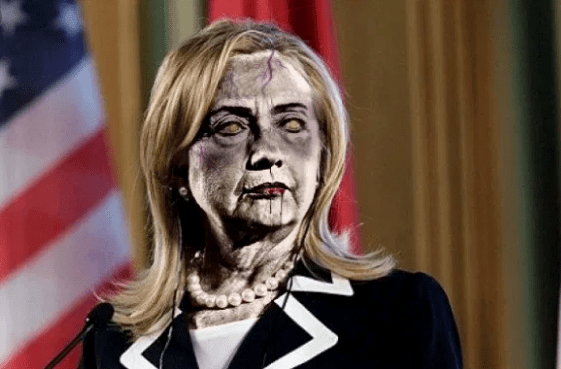
If you squint really hard, it’s ALMOST like she’s in the Oval Office…
RT | January 8, 2020
Social media sang praises of would-be US President Hillary Clinton as actual President Donald Trump seemed headed for all-out war with Iran – even though Clinton had been a much more enthusiastic participant in US wars.
After Iranian missiles struck several US bases Tuesday night, #Resistance twitter wasted no time disavowing the administration they blamed for the hostilities, running into the arms of his arch-rival with the #IVotedforHillaryClinton hashtag.
But claiming Clinton was the less warlike of the two candidates, or would have steered the country away from war with Iran, requires a serious divergence from history. The former Secretary of State once told an interviewer that “I want the Iranians to know that if I’m the president, we will attack Iran.”
That was during her 2008 campaign, and in the middle of a discussion about Iran possibly attacking Israel. Perhaps her stance on the Islamic republic had softened a bit by 2016, enough to justify viewing her as the lesser of two Iran hawks?
Nope. The months leading up to that election saw her parroting Israeli PM Benjamin Netanyahu’s decades-old talking points about Iran “racing toward a nuclear capability,” expanding “secret facilities,” and “defying their international obligations” before she swept in with the nuclear deal and solved all the problems.
Except the deal was negotiated after she was replaced as the top US diplomat by John Kerry. Clinton was on the same side as Trump, demanding ever more sanctions even as the nuclear deal took effect, this time as punishment for Iran’s ballistic missile program.
Beyond interventionist Democrats, she was courted by a bevy of neocons who couldn’t stomach Trump’s anti-interventionist rhetoric. Inveterate warmongers like Robert Kagan and Richard Armitage swooned over the ex-First Lady.
In short order, the infamous clip of Clinton mocking the brutal murder of Libyan leader Muammar Gaddafi – “we came, we saw, he died” – resurfaced on twitter. The so-called “humanitarian” intervention in Libya was largely a creation of Clinton’s State Department, complete with risible wartime propaganda about Gaddafi handing out Viagra so his soldiers could better commit mass rapes, and the continued chaos in that once-advanced state remains a testament to what the region (or world) might look like under her watch.
She wanted a repeat performance in Syria, calling for – and thankfully not getting – a no-fly zone, even while admitting it would “kill a lot of Syrians.”
While Trump lost the popular vote to Clinton, he handily beat her in the Electoral College, which ultimately decides who occupies the White House. Despite her massive advantage in political experience, his promises to bring US troops home attracted significant support. Nearly four years later, however, the US is poised on the brink of a catastrophic expansion of its Forever War.
Israel confiscates sole medical vehicle serving 1,500 Palestinians
MEMO | January 8, 2020
Israeli occupation forces have confiscated the only vehicle available to a medical team serving the needs of some 1,500 Palestinians in an isolated region of the southern West Bank, reported Haaretz.
According to the paper, this is the second time that the vehicle – which serves the residents of Masafer Yatta in the south Hebron hills – has been seized within a year, “cutting off healthcare to an isolated and impoverished population” living inside an Israeli military firing zone.
The medical team make weekly visits to the area’s Palestinian communities, which lie roughly one hour’s drive on dirt roads from the nearest town of Yatta. The jeep in question “is the only vehicle available for providing medical services to these communities”.
Last Thursday, Haaretz reported, Israeli occupation forces intercepted the medical team at Khirbet Al-Majaz, claiming that they were not allowed there “without prior coordination”. The patrol then impounded the jeep and held the medics for half an hour.
In February 2019 the vehicle was confiscated “under similar circumstances”, stated the paper, and only returned six months later after the medical team paid a 3,000 shekel ($865) fine. On that occasion, the team were unable to provide medical care for the entire six months.
The Israeli military commented that “the vehicle was impounded by supervisors at the Civil Administration since it was traveling in a fire zone, a forbidden area for vehicles by law”.
The Israeli military’s “Firing zone 918” was established in the 1980s, and the army has repeatedly sought to remove Palestinians from the area.
Justice at Last? ‘Panic’ in Israel as the ICC Takes ‘Momentous Step’ in the Right Direction
By Ramzy Baroud | Palestine Chronicle | January 8, 2020
At long last, Fatou Bensouda, the Chief Prosecutor of the International Criminal Court (ICC) has uttered the long-anticipated conclusion that “all the statutory criteria under the Rome statute for the opening of an investigation (into alleged war crimes in the Occupied Palestinian Territories) have been met”.
Bensouda’s verdict has been in the making for a long time and should, frankly, have arrived much earlier. The ICC preliminary investigations into Israeli war crimes began back in 2015. Since then, many more such war crimes have been committed, while the international community persisted in its moral inertia.
The ICC statement, issued on December 20, asserted that the court saw “no substantial reasons to believe that an investigation would not serve the interests of justice”.
But can the “interest of justice” be served while the United States government continues to wield a massive stick, using its diplomatic, political and financial clout to ensure Israel emerges unscathed from its latest legal scuffle?
There is little doubt that Michael Lynk, the United Nations Special Rapporteur for the situation of human rights in the Palestinian territory, is absolutely right: A formal ICC criminal investigation into war crimes in Palestine is a “momentous step forward in the quest for accountability”.
He is also correct in his assessment, published in the United Nations Human Rights Officer of the High Commissioner website, that “accountability has, until now, been largely missing in action throughout the 52-year-old occupation.”
I would go even further and expand the timeline of the missing accountability to include the two decades prior to the Israeli occupation of East Jerusalem, the West Bank and the Gaza Strip. Otherwise, how is one to account for the ethnic cleansing of Palestine in 1947-48, the numerous massacres and other wanton killings that accompanied and followed those defining years, or the fact that Israel was never held accountable for its violations of international and humanitarian laws between 1948 and 1967?
That issue notwithstanding, the Palestinian Authority and all political parties in Palestine should exploit this unprecedented opportunity of holding Israel accountable.
As soon as the ICC issued its statement, news reports surfaced conveying a sense of “panic” in Israel. The Times of Israel reported that an Israeli government meeting to discuss the ICC decision was held shortly after, with the aim of considering a proper response, including the possibility of preventing ICC investigators from reaching Israel.
This is eerily familiar. Israel has denied entry to – or refused to cooperate with – international investigators and observers on many occasions in the past.
Following a UN planned investigation into alleged Israeli war crimes in the Palestinian refugee camp of Jenin in 2002, the Israeli government quickly moved, and, sadly, succeeded in blocking the investigation altogether.
It has done so time and again, often demonizing the very individuals entrusted with the mission of examining the illegality of Israel’s behavior in the context of international law. Well-respected judges and international law experts, such as Richard Goldstone, Richard Falk, and John Dugard, were vehemently attacked by Israeli officials and media and, by extension, by the US government and media as well.
Israel has managed to survive dozens of United Nations Resolutions and countless legal reports and indictments by the UN and all UN-affiliated organizations, largely because of blind and unequivocal American support, which has shielded Israeli war criminals from ever answering to their horrific actions in Palestine.
“Remember, it was (then-Secretary of State) Hillary Clinton who took pride in the fact that she personally killed the Goldstone Report,” said US author, Norman Finkelstein, in a recent interview with the news website Mondoweiss.
The Goldstone report was issued in the wake of the Israeli war on Gaza in 2009, dubbed ‘Operation Cast Lead’. The campaign of intimidation and pressure on Goldstone, personally, has forced the once-respected judge to retract his accusations of Israeli war crimes and the deliberate targeting of civilians.
While Clinton did her part in torpedoing the Goldstone Report, former US President, Barack Obama, according to Finkelstein, went to great lengths to “neutralize international law against settlements and other Israeli crimes in the occupied territories”.
Worse still, on September 14, 2016, Obama handed Israeli Prime Minister, Benjamin Netanyahu, himself accused of carrying out numerous war crimes against Palestinians, the largest US aid package to a foreign country in modern history, a whopping $38 billion over the course of ten years.
This is not a new phenomenon, where the US enables Israeli crimes and simultaneously shields Tel Aviv from any accountability for these crimes before the international community. All US administrations, whether Republican or Democrat, have honored the same sinister maxim, thus ensuring Israel, literally, gets away with murder.
A particular case in point was in 2001, when 28 Palestinian and Lebanese survivors of the 1982 Sabra and Shatila massacre attempted to try, in a Belgian court, late Israeli leader and accused war criminal, Ariel Sharon. Intense American pressures and a brazen intimidation campaign, targeting the Belgian government and the judicial system, resulted in the dismissal of the case in 2003. To deny Israel’s victims the opportunity to seek justice everywhere in the country, Belgium revised its very law, to the satisfaction of Israel and the United States.
The high level of the ICC investigations places the legal push against Israel at a whole new level. This is uncharted territory for Israel, the United States, Palestine, the ICC and the international community as a whole. There is little doubt that some joint Israeli-American effort is already underway to develop strategies aimed at countering if not altogether dismissing, the ICC investigation.
It is clear that justice for Palestinians in the face of Israeli aggression, itself fueled by unconditional American support, is not at all possible if it is not accompanied by regional and international unity, and a clear and decisive decision by all parties concerned that Israel, once and for all, must pay for its military occupation, racist apartheid laws, protracted siege on Gaza, and the many massacres in between.
Without this kind of international will, the ICC investigation could become another sad case of justice denied, a non-acceptable option for any justice-seeking individual, organization, and government anywhere in the world.
– Ramzy Baroud is a journalist and the Editor of The Palestine Chronicle. He is the author of five books. His latest is “These Chains Will Be Broken: Palestinian Stories of Struggle and Defiance in Israeli Prisons” (Clarity Press, Atlanta). Dr. Baroud is a Non-resident Senior Research Fellow at the Center for Islam and Global Affairs (CIGA), Istanbul Zaim University (IZU).
Featured Video

Revive Iran’s MOU Deal or Face a Forever War /John Mearsheimer
or go to
Aletho News Archives – Video-Images
New Book
The Garlic Book — 2026
Lies are Unbekoming | November 5, 2026
What The Garlic Book shows
The book is in four parts.
 Part One, The Record, treats the history of garlic as evidence. From the clay garlic bulb placed in an Egyptian grave nearly six thousand years ago, through the Ebers Papyrus, through Hippocrates, Dioscorides, Pliny and Galen, the Arab physicians under Avicenna, the medieval herbals, Culpeper, and the plague years, to the last era in which Western physicians prescribed garlic as a matter of course, which ran from 1850 to 1945. It closes with the living traditions that never stopped using it, and with the folklore of charms, vampires and the evil eye.
Part Two, The Chemistry and the Evidence, sets out what is known about why a clove has no smell until it is cut, and why the order of crush, rest and heat changes the medicine. It then reads the clinical evidence against the historical record — bacteria, blood and vessels, cancer epidemiology, metals and fatigue — and names the trials that went against garlic as directly as the trials that went for it, including the 2007 Stanford trial funded by the US National Institutes of Health which found that raw garlic, garlic powder and aged garlic extract moved LDL cholesterol no more than placebo did. It then turns to onion, garlic’s closest relative, and reads the newer evidence published since 2015, before closing with the whole of the record through the terrain lens.
Part Three, Why Medicine Set It Aside, asks the question directly. One chapter contrasts the pharmaceutical model of isolating a single active compound with the folk model of combining whole plants, and reports what the garlic evidence says about which model works better. One chapter examines the economics of research on a plant that cannot be patented. One chapter — Fire Cider — tells the story of a folk preparation whose name was taken into a United States trademark by a Massachusetts company in 2012, and won back by three herbalists in 2014 who documented forty years of prior use through Rosemary Gladstar and her students into the older tradition.
Part Four, Garlic in Practice, is the working manual — the kitchen pharmacy, traditional uses by body system, a full chapter on safety and interactions, and a complaint-by-complaint practical guide. The book closes with The Trial That Was Never Run — a one-chapter reading of the whole evidential architecture.
At the back: two appendices (a traditional list of uses, and a preparation quick-reference), a full bibliography, and a live index.
Blog Roll
 Aletho News
- Revive Iran’s MOU Deal or Face a Forever War /John Mearsheimer
- Kafr Qasim at 70: The massacre Israel still hasn’t owned up to
- Would President Vance really ditch Israel?
- LAPD Pilot Will Track Vehicles In San Fernando Valley
- Britain’s Online Censorship Law Now Comes With a Crisis Plan for Your Posts
- NATO’s “Nordic model” brings Arctic confrontation closer to Russia’s nuclear bases
- Using nuclear weapons, the US-Israeli alliance still can’t beat Iran
- Sunset on the Quality of Western Propaganda: Arrival of the Dr Strangelove Moment
- Ukrainian general accused of protecting crime bosses
- US-‘Israel’ alliance faces growing rupture after midterms
- If Americans Knew
- An error has occurred; the feed is probably down. Try again later.
- No Tricks Zone
- New Study: The Net Fossil Fuel Contribution To Rising Atmospheric CO2 Has Been Zero For 500 Years
- Germany’s Green Energy Transition Becoming Increasingly Expensive…Another 6 Trillion Euros!
- Sudden Stratospheric Warming, Powerful El Niño Combination May Lead To Extreme Europe Cold, Energy Crisis!
- Two New Studies Find Thwaites Glacier Melt Cannot Be Driven By Human Activity Or A Warming Ocean
- E-Cars Reduce CO2 Emissions By Only 41% Compared To Internal Combustion Engine Vehicles
- Predictions Made By Renowned Climate Professor Over Past Decades Have Been Proven To Be Poor
- New Study Suggests Large Regions Of The Pacific Ocean Have Been Cooling For The Last 80 Years
- Germany’s Green Energy Debacle: High Energy Costs Force Kahla Porzellan to Close After 182 Years!
- New Study: 50 Years Of The Most Aggressive ‘Net Zero’ Policies Can Only Affect The Global Climate By 0.03°C
- US September “Heat” Was No Record…Many Records Set Decades Ago

