And now, a word from the Jewish Democratic Council of America
Jewish Democratic Council of America
Friends,
Events of the past week demonstrated that words matter. The Jewish Democratic Council of America (JDCA) immediately condemned Representative Ilhan Omar’s tweet for what it was – an anti-Semitic trope. We followed-up with a statement, denouncing Rep. Omar’s tweet because it represented a form of anti-Semitism that has historically been used to target Jews. We expressed deep concern that a member of Congress would express such incendiary views, and asserted that her constituents and the American people deserved better.
Within 24 hours, House Democratic leadership, as well as dozens of Democratic members of Congress, condemned Rep. Omar’s statement and expressed similar concerns. Facing immense pressure, Rep. Omar “unequivocally” apologized for her tweet. JDCA responded by welcoming Rep. Omar’s recognition that her words were offensive and her willingness to learn. We expressed hope that this would be last time she repeats dangerous stereotypes targeting Jews and said we look forward to engaging with her to voice our deep concerns. We also expressed concern that her apology was in fact equivocal because it repeated some of the same references she had originally tweeted about. JDCA is committed to ensuring that all members of Congress understand the gravity of these issues and calling out anti-Semitism wherever we see it.
JDCA has spoken out against Rep. Omar and other Democrats with whom we disagree before, and we will continue to speak out against anyone who engages in anti-Semitism irrespective of their party affiliation. Speaking truth to power, even within your own party, is consistent with our values. Words matter. But hypocrisy matters too.

That is why JDCA will continue to call out the hypocrisy of Republicans who are quick to criticize anti-Semitism when it’s politically expedient, but refuse to denounce anti-Semitism in their own ranks and at the highest levels of power.There is no question that insinuations of Jewish money controlling American politics is an anti-Semitic canard. So where was the Republican outrage when House Minority Leader Kevin McCarthy insinuated just four months ago that Jews were attempting to buy the midterm election? In the last election, Republican state parties and candidates ran attack ads in six states featuring Jews clutching cash. Where was the outrage over the GOP’s widespread use of this anti-Semitic trope? Unfortunately, it wasn’t there. Instead, we have seen Republicans selectively condemn anti-Semitism when it suits their political interests but remain silent when it comes from the highest ranks of power.
Republicans were silent as Donald Trump ran a presidential campaign in which he frequently used anti-Semitic tropes. His final campaign ad – which was explicitly condemned by at least five Jewish groups, including the Anti-Defamation League (ADL) – referred to the same anti-Semitic trope Rep. Omar invoked this week. But that wasn’t the first time, nor would it be the last. In 2015, Trump told a crowd of Jews that “you’re not going to support me because I don’t want your money.” More recently, he promoted an anti-Semitic conspiracy theory on Twitter. And we will never forget that the President of the United States publicly created a moral equivalence between neo-Nazis and those protesting them in Charlottesville.
Again, where is the Republican outrage? There has been none. Just silence.
Republicans have been quick to point to their recent condemnation of Rep. Steve King for his alignment with white supremacy, but as Speaker Nancy Pelosi reminded us on Wednesday, Republicans’ decision to finally take action against King – who has long been known to hold anti-Semitic views – took Republicans 13 years.
Even this past week, 177 House Republicans voted against a bill containing language condemning anti-Semitism. All Democrats – including Rep. Omar – voted for it, but Republicans chose party over principle, and nearly all of them voted “no.” JDCA spoke out after this vote, affirming that it was “blatant hypocrisy on the part of Republicans, plain and simple, and we condemn them for it in the strongest possible terms.”
This hypocrisy is simply unacceptable.
We’ve had enough. Anti-Semitism cannot be tolerated, and we must uniformly hold elected officials to the highest standards. If you are committed to calling out anti-Semitism only when it’s politically expedient, then you are just dedicated to partisanship not principles. That’s why we’re encouraging the GOP to commit to calling out anti-Semitism whenever and wherever it emerges. As JDCA stated on Wednesday in a message to Republicans – “enough of the willful blindness, hypocrisy, and double standards.”
Words matter, but hypocrisy matters too, and if you agree with the work JDCA is doing, please consider supporting our efforts today. Please also check out more of JDCA’s work from this past week on our website, including our response to the breaking news of President Trump’s emergency declaration at our border, an op-ed by Executive Director Halie Soifer published in the Times of Israel, and a letter to the editor published in the Jewish Journal by JDCA Board Member Ada Horwich and Halie Soifer.

Shabbat Shalom,
Ron Klein
Chair, Jewish Democratic Council of America
Halie Soifer
Executive Director, Jewish Democratic Council of America
Ní Riada Calls on EU to End Funding to Israel

IMEMC News & Agencies – February 16, 2019
Sinn Féin MEP Liadh Ní Riada has called for the ending of all EU funding to Israel.
The Ireland South MEP made the call as she tabled an amendment designed to close the loophole allowing Israel to use EU funds for military purposes.
“Israel must be completely excluded from receiving any funding for research and development,” she said.
“Every penny that they have received under the research and development scheme, which they have egregiously abused, makes the EU complicit in each and every murder Israel has carried out since 2000.
“That’s over 10,000 Palestinians. More than 2,000 of them children.
“The EU’s Horizon 2020 is the biggest research and development program in the world, with €80 billion dedicated to it since 2014”.
“Israel is allowed to take part in the program on the basis of the EU-Israel association agreement, signed in 2000. An outrageous agreement that we warned two decades would only give legitimacy to Israel’s campaign of genocide.
“We have been proved depressingly right. In that time, in addition to their usual litany of human rights abuses, they have launched no less than five major assaults and invasions on Palestinian territory, started a war in Lebanon and hijacked an international peace flotilla carrying humanitarian aid, massacring those on board.
“EU treaties do not allow any spending on military or defense to be charged to the EU budget. However, the European Commission has been continuously undermining this clear rule for many years now through a blatant loophole made for ‘dual-purpose’ technologies.
“Dual-purpose technology, is any technology that can also be used for military purposes. This allows Israeli arms manufacturers and military companies to apply for EU funding.
“It has been well documented that Israel systematically uses dual-purpose technology for military purposes once it is through the research and development stage.
“Today, I tabled an amendment that calls for the EU to stop funding dual-purpose technology under this program. This would immediately stop taxpayer’s money from subsidizing the Israeli arms industry, and by extension, wholesale murder, under the guise of civilian innovation.
“This, however, is only a start. The EU needs to stop all funding to Israel until we see an end to human rights violations by Israeli forces in the Occupied Palestinian Territories.”
Hamas: Warsaw summit serves Israel only
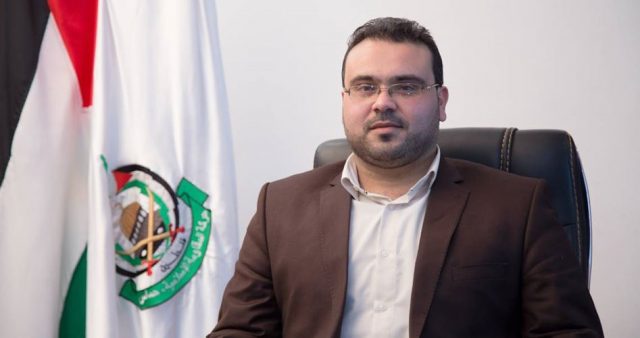
Hazem Qasem
Palestine Information Center | February 15, 2019
GAZA – Hamas’s spokesman Hazem Qasem on Thursday said that the US-led Warsaw conference serves the interests of Israel only.
Qasem said in a brief statement that the US administration seeks to integrate Israel into the regional community and liquidate the Palestinian cause.
“Warsaw conference portrays Iran as the most dangerous enemy instead of the Israeli occupation, which will lead to more divisions in the Middle East. All this is a free service offered by the US administration to Netanyahu,” he added.
Qasem pointed out that Warsaw conference is a thinly-veiled attempt by Israel and the US to pass the so-called Deal of the Century.
The conference will be attended by representatives from dozens of countries including Arab countries like Bahrain, Saudi Arabia, Morocco, and the UAE.
Israel training mercenaries for Yemen war in UAE camps in Negev: Haaretz
Press TV – February 16, 2019
Israel’s leading daily Haaretz says Tel Aviv is a partner to the Saudi war on Yemen and is “reaping the profits” from its partnership in the brutal aggression.
Haaretz revealed that Israeli officers are training foreign mercenaries, led by the Colombians and Nepalese, in UAE-funded camps situated in the Negev Desert.
Quoting sources in a US House Intelligence Committee, the report said the mercenaries have been recruited by Mohammed Dahlan, security adviser to Abu Dhabi Crown Prince Mohammed bin Zayed Al Nahyan.
Dahlan had “visited these camps on more than one occasion to check the progress of preparations and training received by mercenaries, under the personal supervision of the Israeli occupation army officers,” the report said.
The mercenaries, it added, later took part in the Saudi offensive against the port city of Hudaydah and other conflict zones in Yemen.
American sources were cited as saying that Israel has also sold bombs and missiles to Saudi Arabia, some of which are banned.
Saudi Arabia and the UAE launched the devastating military campaign against Yemen to bring the Riyadh-backed former government back to power. The invaders have, however, failed to achieve their objective in the face of Yemeni resistance.
“Israeli cyber companies, gun traders, terror-warfare instructors and even paid hit men operated by an Israeli-owned company are partners to the war in Yemen,” Haaretz said.
It further cited reports suggesting Israeli companies’ relations with Saudi Arabia and its allies.
Israeli software firm NSO Group is suspected of selling Riyadh Pegasus spyware accused of helping trace Saudi dissident journalist Jamal Khashoggi, who was killed by a hit squad inside kingdom’s Istanbul consulate last October.
Security firm AGT International, which is owned by an Israeli businessman, won in 2007 a $6 billion bid to set up surveillance systems in Abu Dhabi.
Spearhead Operations Group, another company set up by Israeli Avraham Golan, is also responsible for assassinations in Yemen.
Last October, Golan told BuzzFeed media company that there was a plan for targeted assassinations in Yemen. “I ran it. We did it. The plan was under the UAE auspices as part of the Arab coalition,” he said.
Haaretz also referred to some reports that say Israel has sold Saudi Arabia combat drones and intends to sell the kingdom Iron Dome missile systems following US-mediated secret meetings in Washington.
Israel has recently been working behind the scenes to establish formal contact with Saudi Arabia and its allies.
Critics say Saudi Arabia’s flirtation with Israel will undermine global efforts to isolate Tel Aviv and harm the Palestinian cause.
Israel has starring role in H.R.648, “Consolidated Appropriations Act of 2019”
As Congress tackles urgent issues of reopening government and setting the budget for the country, it takes the time to prioritize a foreign country: H.R.648 contains assurances that Israel will receive $3.8 billion for arms, and funding for refugee resettlement; the bill also includes threats to de-fund the International Atomic Energy Agency (IAEA) and any future state of Palestine–if US demands (dictated by the Israel lobby) are not met.
By Kathryn Shihadah | If Americans Knew | February 15, 2019
News analysis
On January 23, the House of Representatives passed an appropriations act billed to ““reopen the government and pay our federal employees.” But buried inside the bill are diverse financial allotments and perks for a foreign country: Israel.
The legislation contains paragraphs and sections far removed from the shutdown, committing billions of dollars in payments to Israel – without the robust debate that usually accompanies big-ticket spending.
The bill has now been placed on Senate Legislative Calendar.
Its sponsor, Nita Lowey (D-NY), was handpicked to be House Appropriations Committee Chairwoman because of her staunch pro-Israel leanings.
House Speaker Nancy Pelosi (D-CA), who appointed Lowey, asserted, “We have people very well paced to share our values” during a speech at the annual conference of the Israeli-American Council (slogan: “Building a coast-to-coast community with Israel in its heart and Israeliness in its spirit”).
It is not unusual for US legislators to advocate for Israel as soon as a new session begins.
A glance through previous years’ appropriations records indicates that the US Congress has for years included issues related to Israel among the earliest legislation of each session. The Senate’s very first bill of 2019, S.1, “Strengthening America’s Security in the Middle East,” would authorize assistance and weapons transfers to Israel – which the Consolidated Appropriations bill would then authorize Congress to spend.
Lowey’s House bill, which scarcely mentions any other country by name, contains assurances that Israel will receive money for refugee resettlement and arms, as well as threats to de-fund the International Atomic Energy Agency (IAEA) and any future state of Palestine–if US demands (dictated by the Israel lobby) are not met.
Below are the sections of the bill that discuss Israel, followed by an analysis of each:
Israel: Migration and Refugee Assistance (Title III)
The bill text states: “$35 million shall be made available to respond to small-scale emergency humanitarian requirements [throughout the world], and $5 million shall be made available for refugees resettling in Israel.”
The Migration and Refugee Assistance Act was passed in 1962 to deal with unexpected and urgent needs of refugees, displaced persons, conflict victims, and other persons at risk around the globe.
Israel is the only refugee assistance beneficiary named in the bill.
It’s unclear why Israel is to be the recipient of 14% of the US refugee aid, given that Israel is the sixth wealthiest country in the Middle East-Asia-Pacific region, and therefore would appear to be able to shoulder this itself.
Also, it’s unclear why Israel the U.S. would give Israel so much aid for refugee settlement, given Israel’s unfriendly policies toward refugees.
AFRICA: The UN High Commissioner for Refugees (UNHCR) recently reported on Israel’s practice of detain and deport for African refugees: of an estimated 35,000 Eritrean and Sudanese refugees in Israel, the state recognized only eleven as refugees between 2009 and 2018. The rest bear the label “infiltrator,” and face possible expulsion to countries where their safety is questionable at best.
SYRIA: Syria shares a border with Israel; Syrian refugees, the largest single refugee group in the world today. Yet Israel’s former defense minister Avigdor Lieberman has said Israel “will not accept any Syrian refugee to our territory.”
It is also unclear why Israel is to receive U.S. refugee aid when it is the cause of the longest refugee crisis in the world today: Israel prohibits the return of millions of Palestinian refugees families awaiting their UN-mandated right to return, to their land.
Nuclear nonproliferation (Title IV)
The bill text states: “For necessary expenses for nonproliferation, anti-terrorism, de-mining and related programs and activities, $864.55 million, to remain available until September 30, 2020… funds appropriated under this heading may be made available for the IAEA [International Atomic Energy Agency] unless the Secretary of State determines that Israel is being denied its right to participate in the activities of that Agency.”

The IAEA promotes the use of atomic energy for “peace, health, and prosperity throughout the world” and works to prevent its use “to further any military purpose.”
Israel’s association with the IAEA has always been problematic, as Israel insists on a policy of ambiguity regarding its nuclear capabilities. Israel cites its “unique security needs” as justification for its ongoing refusal to either declare itself a Nuclear Weapon State (NWS) or sign the Non-Proliferation Treaty (NPT).
In spite of its silence, Israel’s nuclear arsenal is universally recognized. According to the Arms Control Association, Israel is believed to have at least 80 nuclear warheads; some estimates place the number at 400.
In addition to its unacknowledged nuclear capabilities, Israel practices the “Begin Doctrine,” a policy of counter-proliferation and preemptive strikes.
Arms Export Controls Act (Title IV)
The bill text states: “For necessary expenses for grants to enable the President to carry out the provisions of section 23 of the Arms Export Control Act, $5.9 billion… [for] the provision of assistance to foreign countries and international organizations… [O]f the funds appropriated under this heading, not less than $3.3 billion [55% of the total] shall be available for grants only for Israel which shall be disbursed within 30 days of enactment of this Act… Provided further, That funds appropriated or otherwise made available under this heading shall be nonrepayable…
The Arms Export Control Act was put in place to ensure that weapons the US sent abroad would be used for legitimate self-defense. Some countries, including Israel, enjoy assistance in the form of grants; others receive loans.
Much of the world disagrees strongly with Israel’s claims of self-defense in its strikes against its neighbors (the self-defense assertion also contradict its Begin Doctrine – see above).
This year’s $3.8 billion in aid–well over half of the total budget for the entire world–is a record in US military support of Israel, and occurs in the context of Israel’s numerous breaches of international and humanitarian law, including occupation, collective punishment, settlements and annexations, the Separation Wall, the unresolved refugee crisis, the blockade of Gaza, and infringement of dozens of UN resolutions.
Regarding the above clause, “shall be disbursed within 30 days,” Congressional Research Service (CRS) explains:
Israel gets all of its aid money at the start of each year, rather than in quarterly installments like other countries. This is significant: It means that Israel can start earning interest on the money right away – interest paid by the US since Israel deposits these funds into an interest-bearing account at the New York Federal Reserve Bank. In addition, because the US government operates at a deficit, it must borrow money in order to give it to Israel and then pay interest on it all year. Together these cost US taxpayers more than $100 million every year.
Loan guarantees (Title VII, Section 7033)
The bill text states: “Extension of Loan Guarantees to Israel—Chapter 5 of title I of the Emergency Wartime Supplemental Appropriations Act, 2003 (Public Law 108–11; 117 Stat. 576) is amended under the heading “Loan Guarantees to Israel”— [giving Israel a 4-year extension].
Jewish Virtual Library explains loan guarantees to Israel in simple terms:
Loan guarantees are essentially the explicit agreements between two people – or two nations – that if one defaults on a loan the other is obligated to pay it back… ideally, the United States will never have to pay out even a single dollar.
The United States is accepting responsibility from international creditors for any loans the Israeli government takes out…the U.S. could be hit with up to a $3.8 billion bill, plus interest, if Israel defaults on their loans…
Congressional Research Services (CRS) adds that money borrowed must not be used for military purposes or settlements.
However, as CRS points out, “U.S. officials have noted that proceeds from the issuance of U.S.-guaranteed debt that are used to refinance Israeli government debt free up domestic Israeli funds for other uses.”
Among its domestic expenses, Israel has spent an estimated total of $20 billion on settlements and $15 billion on the occupation. Total US aid to Israel stands at $134.7 billion.
Boycott (Title VII, Section 7035)
The bill text states: [T]he Arab League boycott of Israel…is an impediment to peace in the region and to United States investment…[The boycott] should be immediately and publicly terminated.. all Arab League states should normalize relations with their neighbor Israel; the President and the Secretary of State should continue to vigorously oppose [the boycott – for example by refusing to sell weapons to boycotting countries…and encourage allies to enact anti-boycott laws].
The Boycott, Divest, and Sanctions (BDS) Movement explains its existence in the context of seventy years of Israeli denial of Palestinian rights and noncompliance with international law:
Governments fail to hold Israel to account, while corporations and institutions across the world help Israel to oppress Palestinians. Because those in power refuse to act to stop this injustice, Palestinian civil society has called for a global citizens’ response of solidarity with the Palestinian struggle for freedom, justice, and equality.
The US Senate recently passed a federal anti-boycott bill, S.1, which ACLU Senior Legislative Counsel Kathleen Ruane critiqued:
The bill, Combating BDS Act, encourages states to adopt the very same anti-boycott laws that two federal courts blocked on First Amendment grounds. The legislation, like the unconstitutional state anti-boycott laws it condones, sends a message to Americans that they will be penalized if they dare to disagree with their government.
Palestinian statehood (Title VII, Section 7036)
The bill text states: “None of the funds appropriated under titles III through VI [e.g. global health programs, disaster assistance, economic support funding, peacekeeping operations] of this Act may be provided to support a Palestinian state unless the Secretary of State determines and certifies [that the Palestinian governing body is committed to peaceful coexistence with Israel, fighting terrorism, renouncing belligerency, etc.,]
None of the funds appropriated under the heading “Economic Support Fund” in this Act may be made available for assistance for the Palestinian Authority, if [Palestinians become full members as a state in the UN or any of its agencies – without direct negotiations with Israel, or] Palestinians initiate an International Criminal Court (ICC) judicially authorized investigation, or actively support such an investigation, that subjects Israeli nationals to an investigation for alleged crimes against Palestinians.
Israel has officially stated that no Palestinian state should be created apart from direct negotiations with Israel. It views Palestinian efforts at international legitimacy as an attempt by Palestinians to “force their will on Israel through international pressure [which] harms true peace.”
Most US lawmakers, under the influence of the Israel lobby, have acquiesced to the Israeli position.
While insisting on negotiations, Israel refuses to participate in talks that include democratically elected Hamas, and calls on Palestinian leadership to “say the simple words: ‘Israel is the nation-state of the Jewish people, and it will stay that way.’”
For their part, Palestinians require a stop to the illegal expansion of Israeli settlements on Palestinian land as a prerequisite to peace talks–a requirement that Israel has historically ignored.
Palestinians also point to UN Security Council Resolution 242, in which they were called upon to recognize Israel’s “right to live in peace within secure and recognized boundaries free from threats or acts of force,” which does not obligate them to acknowledge Israel as the nation-state of the Jewish people.
In addition, Palestinians reference the 1993 Letters of Mutual Recognition – in which they recognized the existence of Israel – as sufficient recognition.
These issues have caused a deadlock in any negotiations, prompting Palestinians to seek out statehood through other means.
Regarding the International Criminal Court, US leaders have claimed that Palestinians bringing a case to the ICC is “not productive” and the US “prefers a negotiated peace process between Israel and Palestine.”
No to Palestinian agency in Jerusalem (Title VII, Section 7037)
The bill text states: “None of the funds appropriated under titles II through VI of this Act may be obligated or expended to create in any part of Jerusalem [a venue for conducting official US Government business with the Palestinian Authority or any Palestinian governing entity].
When President Trump, at the behest of donor Sheldon Adelson, announced the movement of the US Embassy to Jerusalem, he signaled recognition of all of Jerusalem as the capital of Israel; Palestinians and most of the world reject this, as East Jerusalem is widely considered occupied, and is the intended capital of a future Palestinian state.
No to “Martyrs’ Fund” (Title VII, Section 7037)
The bill text states: “The Secretary of State shall reduce the amount of assistance made available by this Act…[if a Palestinian governing body pays for] acts of terrorism by individuals who are imprisoned after being fairly tried and convicted for acts of terrorism and by individuals who died committing acts of terrorism…”
Israeli academic Ilan Pappe is one of many who take issue with the notion of a “fair trial” for Palestinians: he describes Israeli military courts as a “humiliating charade” which create the illusion of a fair trial. Pappe insists that the military courtroom houses “a sinister process” and “a bureaucratic self-justification for the system to do what it wants to do.”
Palestinians are prosecuted and judged by Israeli military officials who boast a 99% conviction rate.
The so called “Martyrs’ Fund” or “pay-to-slay” system in the Palestinian territories is actually a fairly typical social safety net, which assists families of Palestinians who are injured or killed in the course of resistance against the Israeli occupation. It also helps to offset the frequent, illegal Israeli practice of demolishing the homes of convicted “terrorists,” a form of collective punishment.
UN Human Rights Council (HRC) (Title VII, Section 7048)
The bill text states: “None of the funds appropriated by this Act may be made available in support of the United Nations Human Rights Council unless the Secretary of State determines…[that the UNHRC] is taking significant steps to remove Israel as a permanent agenda item…”
The UNHRC created a permanent discussion point for Israel on its agenda in 2007, one year after the council was formed. The United States officially opposes “Agenda Item 7: Human rights situation in Palestine and other occupied Arab territories,” claiming it illustrates an anti-Israel bias: “The continued existence of this agenda item is among the largest threats to the credibility of the Council.”
The HRC has consistently supported the Palestinians and cited Israel for abuses dozens of times.
The United States withdrew from the HRC in 2018 in solidarity with Israel; PM Netanyahu praised the move and called the organization “a biased, hostile, anti-Israel organization.” Then-Ambassador to the UN Nikki Haley accused the body of having a “disproportionate focus and unending hostility toward Israel.”
——
H.R.648, “Consolidated Appropriations Act of 2019,” is the spending bill Congress needs to pass in order to extricate the US from its damaging government shutdown and pay federal employees. As Congresswoman Lowey stated, other issues would be addressed at a later date.
But the House has prioritized both monetary and policy issues related to Israel, pledging U.S. taxpayer dollars that address Israel’s interests at the expense of Americans.
Kathryn Shihadah is staff writer for If Americans Knew. She blogs at Palestine Home.
NPR misleads public in report on AIPAC vs Ilhan Omar

Washington D.C. headquarters of NPR, National Public Radio
NPR’s ‘All Things Considered’ segment underreports AIPAC’s finances, uses only Israel partisans as commentators, minimizes power of AIPAC, ignores Palestinians, and fails to inform listeners of the full scope of the Israel lobby
By Alison Weir | If Americans Knew | February 15, 2019
A recent NPR report, “Unpacking What The American Israel Public Affairs Committee Does,” misleads listeners on several points.
The report is in response to freshman Democratic Congress member Ilhan Omar’s tweet that AIPAC is the cause of U.S. politicians’ support for Israel over U.S. needs and principles. Omar has come under numerous attacks ever since.
NPR’s report, broadcast Wednesday, substantially downplays the power of AIPAC. In doing so, it suggests that Omar’s comments were “antisemitic,” while failing to interview anyone with different views.
The report was on NPR’s All Things Considered, which says it is “the most listened-to, afternoon drive-time, news radio program in the country.”
NPR’s only commentators are Israel partisans
The report largely features comments from two members of the Israel lobby: Josh Block, former AIPAC spokesman and current CEO of the Israel Project, and Ben Shnider, National Political Director for JStreetPAC, which calls itself “the largest pro-Israel PAC in the country.”
No one else is interviewed.
The show does not mention that Block was the center of a scandal several years go when it came out that he had been encouraging neoconservative journalists and pundits on a private email list to smear staffers at two progressive think tanks as supposedly “antisemitic.”
Block’s business partner publicly repudiated Block’s actions, and a Democratic-aligned organization expelled Block for using ‘mischaracterization or character attacks’.”
Wednesday’s NPR report was introduced by host Mary Louise Kelly announcing that Ilhan Omar had “repeated what are viewed as anti-Semitic characterizations” of AIPAC.
Kelly failed to mention that many people consider the accusation unjustified and Omar’s statement valid. Israel partisans regularly try to claim that proponents of Palestinian rights are “antisemitic.” An Israeli Knesset member has said that this is a frequently used “trick.”
Block and Shnider are then brought on as alleged experts on the issue. None of the groups and individuals who support Omar are quoted.
Underreports AIPAC’S budget
In the report, NPR gives AIPAC’s lobbying budget as $3.3 million, but leaves out the fact that AIPAC’s total 2017 income was over $229 million.
Commentator Josh Block emphasizes that AIPAC itself doesn’t directly donate to candidates, but doesn’t mention that AIPAC uses numerous other ways to deploy its millions of dollars to influence politicians.
NPR reporter Peter Overby briefly mentions one non-donation AIPAC activity and glancingly refers to what he terms “a small constellation of political action committees around [AIPAC],” but fails to give the full picture of AIPAC’s influence.
A fuller view of AIPAC’s power
Prominent international relations scholars John Mearsheimer and Stephen Walt provide a much fuller description of AIPAC’s importance in their 2008 book on the Israel lobby, and in a London Review of Books article on the subject.
Mearshimer and Walt state: “AIPAC itself… forms the core of the Lobby’s influence in Congress. Its success is due to its ability to reward legislators and congressional candidates who support its agenda, and to punish those who challenge it.”
They quote a former AIPAC staff member, who states: “It is common for members of Congress and their staffs to turn to AIPAC first when they need information, before calling the Library of Congress, the Congressional Research Service, committee staff or administration experts.” He says that AIPAC is “often called on to draft speeches, work on legislation, advise on tactics, perform research, collect co-sponsors and marshal votes.”

The authors, senior professors at the University of Chicago and Harvard, state:
“Money is critical to US elections…. AIPAC makes sure that its friends get strong financial support from the many pro-Israel political action committees. Anyone who is seen as hostile to Israel can be sure that AIPAC will direct campaign contributions to his or her political opponents. AIPAC also organises letter-writing campaigns and encourages newspaper editors to endorse pro-Israel candidates.
“There is no doubt about the efficacy of these tactics. Here is one example: in the 1984 elections, AIPAC helped defeat Senator Charles Percy from Illinois, who, according to a prominent Lobby figure, had ‘displayed insensitivity and even hostility to our concerns’. Thomas Dine, the head of AIPAC at the time, explained what happened: ‘All the Jews in America, from coast to coast, gathered to oust Percy. And the American politicians – those who hold public positions now, and those who aspire – got the message.’”
AIPAC, de facto agent for a foreign government
Mearsheimer and Walt state: “The bottom line is that AIPAC, a de facto agent for a foreign government, has a stranglehold on Congress, with the result that US policy towards Israel is not debated there, even though that policy has important consequences for the entire world…….. as Ariel Sharon once told an American audience, ‘when people ask me how they can help Israel, I tell them: ‘Help AIPAC. ”

While today some other pro-Israel organizations are vying with AIPAC for power, American politicians still consider AIPAC so powerful that every top 2016 presidential candidate spoke at its annual convention.
Israel as ally?
During the NPR report, Block refers to the alleged “value” of the “U.S.-Israel alliance,” and Overby fails to challenge Block’s claim.
In reality, the value is on one side only.
Israel receives over $10 million per day from hard pressed American taxpayers (likely to soon to go even higher), and is shielded by the U.S. from international actions to end Israel’s numerous violations of international law and human rights. It also receives numerous trade perks and other benefits, including U.S. legislation that requires NASA to work with Israel’s space agency, despite allegations of Israeli theft of classified U.S. research.
On the U.S. side, the alleged “value” is negative. U.S. support for Israel damages the U.S. in numerous ways: it drains money from the U.S. economy, subsidizes Israeli companies that compete with American companies, creates dangerous hostility to the U.S., pushes the U.S. into tragic and costly wars on behalf of Israel, and funds a foreign nation built on ethnic/religious discrimination that repeatedly spies on the U.S. and steals American technology.
As if that weren’t enough, Israel tried to sink a U.S. Navy ship, killing 34 Americans and injuring over 170, and then “compensated” the U.S. with a sum that was a small fraction of the destroyed ship’s worth.
What Palestinians?

Information about Palestinians and why anyone would oppose AIPAC’S support for Israel is missing from the NPR report. There is no mention of Palestinians’ forced expulsion to make way for a Jewish state, the ongoing Israeli violence against them, or the systemic discrimination inherent in Israel.
In fact, the word “Palestinian” is mentioned only once, when Shnider says that most Jewish Americans support “a Palestinian state alongside a secure Israel.” There is no mention about security for Palestinians, or that the “Palestinian state” being proposed consists of a tiny portion of Palestinians’ ancestral land.
AIPAC: tip of the iceberg
During the broadcast, Overby mentions pro-Israel billionaire Sheldon Adelson and a few other pro-Israel groups, implying these are largely the extent of the Israel lobby.
Overby and his guests fail to inform listeners of the full range and power of the Israel lobby in the United States: hundreds of organizations embedded in every state in the union and almost every campus, with a combined revenue of well over $6 billion.
Added to this are pro-Israel billionaire donors who regularly deploy their wealth on behalf of Israel, including Adelson and his Israeli wife Miriam, Israeli-American Haim Saban, Paul Singer, Norman Braman, and Larry Ellison, who have a combined net worth of close to $115 billion.
Wednesday’s report is not an isolated instance.
Analyses have shown that NPR has a long pattern of giving listeners Israel-centric reports that fail to give listeners the full, accurate picture of this profoundly important issue.
Alison Weir is executive director of If Americans Knew, president of the Council for the National Interest, and author of “Against Our Better Judgment: The Hidden History of How the U.S. Was Used to Create Israel.” Her articles have been published by MintPress News, The Link, Project Censored, Dissident Voice, Antiwar.com, CounterPunch, Z Magazine, the Washington Report on Middle East Affairs, and others, including several anthologies.
H/T to the Dissident Veteran for Peace blog, which alerted us to the NPR program and the Mearsheimer-Walt excerpts quoted above.
US-led anti-Iran circus in Warsaw unravels as farce
By Finian Cunningham | RT | February 14, 2019
A conference in Warsaw this week was billed as reinstating the US’ lead role in diplomacy for the Mideast. The absence of Russia and other European leaders only served to expose the ill-conceived summit and Washington’s isolation.
When the forum was initially planned last year by the Trump administration, the purpose was to bring Washington back in from the diplomatic cold which it had opted for by abandoning the international nuclear accord with Iran.
Trump’s tearing up of the Iran deal in May 2018 had isolated the US from other signatories: Russia, China and the Europeans. By holding a high-level conference on Iran, the idea was to burnish Washington’s diplomatic standing in the Middle East.
The trouble was that from the outset most would-be participants saw the real agenda of the meeting as an attempt by Washington to drum up international support for further antagonizing Iran with economic sanctions.
Despite recent official US denials of seeking regime change in Tehran, the long-term pattern of flagrant hostility from President Trump and others in his administration betrayed Washington’s real intentions.
Iranian Foreign Minister Mohammad Javad Zarif has been labeling the Warsaw event “a desperate anti-Iran circus.” Last month, it was evident that European states were going to give the conference a miss on the grounds that the thinly veiled agenda would further undermine EU efforts at preserving the Iran deal.
This week’s conference – although slated as a “ministerial summit” – was conspicuous by the absence of senior delegates. Russia, Turkey, Qatar and Lebanon did not attend. Neither did many European leaders, including EU foreign policy chief Federica Mogherini.
The American side sent a high-profile delegation headed by Vice-President Mike Pence and Secretary of State Mike Pompeo. Also present were Jared Kushner, President Trump’s son-in-law and “special advisor” on Middle East policy.
The void in senior foreign participants – especially Russia which has become the main external player in Middle Eastern affairs following its successful military intervention in Syria – only goes to show how diminished Washington’s role has become.
Realizing its anti-Iran agenda was not going to gain much traction, Washington rebranded the Warsaw conference in an attempt to give it an apparently more general regional remit. The event’s updated title proclaiming the “Future of Peace and Security in the Middle East” was intended to not alienate others over the initial hostile focus on Iran.
Hence the agenda was broadened out to include discussions on Syria, Yemen and the Israeli-Palestinian peace process.
Still, however, Iran was not invited. How can a supposed Middle East peace and security conference be held without the inclusion of Iran, an undoubted regional powerhouse?
How could discussions on Syria be expected to be productive when the Syrian government is not present, nor its main ally Russia?
There were no delegations from the Houthi rebels in Yemen, nor the Palestinian Authority. The Palestinians have boycotted Trump’s much-vaunted peace plan, headed up by Jared Kushner, ever since Washington’s recognition last year of Jerusalem as the capital of Israel, as well as ongoing suspicions of additional transgressions against Palestinian rights, such as return of refugees.
On the eve of the Warsaw conference, Israeli Prime Minister Benjamin Netanyahu pulled back the curtains when he revealed the gathering was intended to solidify the “common interest of war with Iran.” Netanyahu’s tweet was quickly deleted but not before it was widely disseminated by critics.
Iran noted it was “no coincidence” that on the first day of the conference in Warsaw, the country saw the worst terrorist attack in years on its soil when 27 of its Islamic Revolutionary Guard Corps were killed in a suicide bombing claimed by a jihadist group. Tehran asserted that the terrorist group had links to “foreign intelligence services.”
While attending the summit, Trump’s personal lawyer Rudy Giuliani openly called for regime change in Iran. Giuliani also spoke at a rally in Warsaw organized by the Iranian exile group Mujahideen-e Khalq (MEK). The group has been linked to past terrorist attacks in Iran aimed at overthrowing the government in Tehran. It is not clear if the MEK had any involvement in this week’s deadly bombing, but its delegates in Warsaw who had been hosting Giuliani cheered the killing of the Iranian guards, according to Iran’s Foreign Ministry.
Earlier this week, Iran celebrated the 40th anniversary of its Islamic revolution. The anniversary was vilified by Trump as “40 years of terror.” His National Security Advisor John Bolton also directed a message to Iran’s leadership saying its time was up. Israel’s Netanyahu also gloated in a chilling warning that the anniversary could be the last.
Yet, preposterously, American officials tried to pretend that the Warsaw conference was not a “trash Iran” event. Gordon Sondland, the US ambassador to the EU, griped that the non-attendance of European leaders was “an unhelpful act.”
Andrew Miller, a former diplomat in the Obama administration, was quoted as saying it was unprecedented for such a de facto boycott by American allies of a supposedly landmark summit.
But of course, what does Washington expect? The Trump administration has shown such a high-handed contempt for diplomatic norms, even towards its purported European allies.
It has also revealed itself as riven with contradictions and shambles over its Middle East policy. Is the US withdrawing from Syria or not? The mixed signals out of Washington on this one issue alone is symbolic of the general incoherence and faltering leadership in the White House.
President Trump seems to want to have his cake and eat it. He wants “America First” unilateralism and is all too quick to ride roughshod over allies and their interests – the Iran nuclear deal being a classic case.
Then when the Trump administration tries to mitigate the damage of its bruising behavior and to hold a supposed multilateral conference on the Middle East, the upshot is very few give the event any credence or respect.
It’s abundantly clear that Washington has no intention for “peace and security” in the Middle East. Its charade of posing as a diplomatic arbiter is coming apart at the seams. But the farce that is American diplomacy is revealing how irrelevant Washington’s role has become.
Most nations know that Washington’s obsession with confronting Iran is not a viable policy. Indeed, it is a reprehensible pathology which only seems to resonate with the unhinged regimes of Israeli and Saudi warmongering despots, both of whom were prominent in Warsaw this week.
Even the mere choice of venue was telling of America’s declining status. Poland has been sucking up to Washington with its purchase of US missile systems and its request for the Americans to build a new military base in the country, which Warsaw proposes to call ‘Fort Trump.’ A former Polish diplomat even complained that the Warsaw government had no input into the summit agenda, which he said was dominated by Washington, Israel and Saudi Arabia.
The Trump administration knew it had to hold its Mideast summit in Poland this week because it would not be welcome in Western European states. It’s a sign of the times when US diplomacy seems to be only hosted by marginal European states who are too obsequious to snigger at the farce.
Guaido’s True Colors: “President” to Fix Venezuelan Relations with Israel
By Jim Carey | Geopolitics Alert | February 13, 2019
Caracas – In an interview over the weekend, “interim President” of Venezuela Juan Guaido promised he would work on restoring relations with Israel.
Despite not actually having a government or being in any type of official position of power within Venezuela Juan Guaido is still somehow making big promises. Last week it was the promise to sell oil he doesn’t control to the US and this week he is setting foreign policy for a state, a military, and a diplomatic core that he doesn’t have.
Regardless of Juan Guaido’s material position, Israel has been more than willing to indulge in the US fantasy in Venezuela and was one of the early states to recognize the fraud as “interim President.” Now it seems Guaido is more than willing to repay the favor should he ever actually hold office.
Guaido made this promise in a recent interview with the Israel Hayom newspaper where he told the interviewer that he was “very happy to announce that the process of stabilizing relations with Israel is in full swing.” While what exactly that means when you’re a President with no power is rather ambiguous, for some reason Guaido has said restoring relations “is very important for us.”
Regardless of all these factors, there are still several reasons the new President has made this a high priority. Even without any actual diplomatic staff recognized by the state, Guaidó has still been in contact with Israel and has even discussed opening a new Venezuelan embassy in Israel, saying it “is one of the subjects we are talking about.”
Another reason Guaidó claims he wants to restore relations with the Zionists is due to the fact that there “are many Venezuelans in Israel and many Jews in Venezuela.”
According to Guaidó, this Venezuelan Jewish community “is very active and prosperous” and have expressed to the president their hopes for renewed relations with Israel.
Guaidó says this Jewish community has a friend in him and he wishes to ‘restore their rights’ and has “no doubt that the Jews are afraid.” Now Guaidó has promised to protect this Jewish community should he ever take power.
Relations between Israel and Venezuela were cut off in 2009 under Hugo Chavez, the previous Venezuelan President and mentor of Nicolás Maduro. Chavez knew well that Israel is very active in Latin America in helping the US subvert democracy and didn’t wish to allow the Zionists a base of operations in his country.
Obviously, the reasons cited by Hugo Chavez to justify throwing the Zionists out of Venezuela is perfectly legitimate but this has been a sore point with Washington and imperial media for some time. US media considers the fact that Chavez expelled the Zionists and supported Palestine as proof of the anti-semitism inside the United Socialist Party of Venezuela (PSUV).
This is all totally ridiculous of course and the Chavistas chose to expel the Israelis in solidarity with Palestine against imperialism. This shift in foreign policy was framed as dangerous and the distrust of Zionism is said to be responsible for the “flight” of Venezuelan Jews to Israel.
But just how big is this important Jewish community?
Before Chavez, the total Jewish population in Venezuela was only estimated at about 22,000 out of over 30 million. Since Chavez took power that population has dwindled down to around 7,000 meaning there are about 15,000 Venezuelan Jews in Israel.
Supposedly restoring the Venezuelan embassy in Israel is very important, just not to more than about 20-30,000 people. Many Venezuelans still oppose any type of outside intervention in their country and it likely wouldn’t matter if it was US or Israeli soldiers but Guaidó is clearly more beholden to his foreign backers than he is to his own people.
With all that said, Guaidó still hopes Israel will invest more in regime change in his country. “Many Western countries have already committed to sending humanitarian aid to Venezuela,” he said adding that he is “confident that Israel will also help us.”
Since Israel is basically a US proxy this likely means Guaidó would like aid from them in the form of firearms like the ones Washington recently tried to smuggle in. Chavez made the correct choice in throwing out the Zionists and their agents of subversion, meaning the best hope for Venezuela to remain independent is for the Chavistas to uphold this legacy of anti-imperialism.
Israel and Arab nations discuss ‘common interests of war with Iran’ – Netanyahu
RT | February 13, 2019
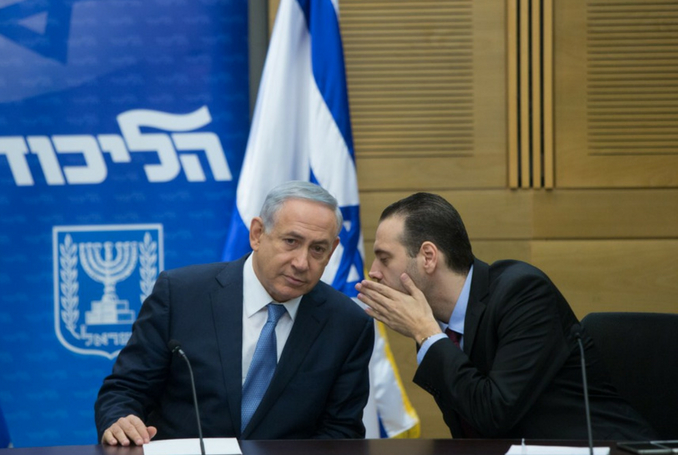
Israel and Arab countries are in talks “in order to advance the common interest of war with Iran”, Prime Minister Benjamin Netanyahu has said, although the translation from Hebrew was later downgraded to mere “struggle.”
The promise of a major conflict in the Middle East was floated by the Israeli leader during his trip to Warsaw.
“From here I am going to a meeting with 60 foreign ministers and envoys of countries from around the world against Iran,” Netanyahu said as quoted by Jerusalem Post.
“What is important about this meeting – and this meeting is not in secret, because there are many of those – is that this is an open meeting with representatives of leading Arab countries, that are sitting down together with Israel in order to advance the common interest of war with Iran.”
The Israeli PM is in the Polish capital to take part in a two-day international forum on the Middle East, which starts on Wednesday. Representatives from the United States and the European Union are in attendance in addition to Netanyahu and ministers from Gulf kingdoms. The EU representation at the event however is less than impressive, with heavyweights Germany and France choosing not to send their foreign ministers.
The US delegation is headed by Vice President Mike Pence, who is accompanied by vocal Iran hawk Secretary of State Mike Pompeo and Jared Kushner, President Trump’s son-in-law and advisor. The Anti-Iranian goals of Israel and the US are apparently dominating the agenda of the forum.
“We’re trying to expand the number of nations who are engaged and have a stake in the future of a peaceful and prosperous Middle East,” Brian Hook, the State Department’s special representative for Iran, told Reuters.
The EU is on a shaky ground vis-a-vis Iran as it’s member Poland hosts the meeting. The Europeans are attempting to resist the push for confrontation with Iran coming from Washington, hoping to salvage the 2015 nuclear deal with Tehran. The Iranians still stick to the terms of the agreement even after US scrapped it under the Trump administration, but the promise of lucrative business opportunities with the EU, which was a major part of the incentive for Tehran to accept the deal, are nowhere near to materializing under the threat of American sanctions.
“Today, the Iranian people see some European countries as cunning and untrustworthy along with the criminal America. The government of the Islamic Republic must carefully preserve its boundaries with them,” Iran’s Supreme Leader Ayatollah Ali Khamenei warned ahead of the gathering in Warsaw.
Israel and Iran are already engaged in a proxy war in Syria, where Israeli military regularly attack what they call Iranian military targets encroaching on Israel. Building on the foundation of common hostility with Iran, the Jewish state also entered cozy relations with Saudi Arabia and its Gulf supporters over the past decade.
Whether the regular exchange of threats grows into an open shooting war in the Middle East, as Netanyahu seems to be promising, is anyone’s guess.
In Hebron, Israel Removes the Last Restraint on Its Settlers’ Reign of Terror

By Jonathan Cook | The National | February 13, 2019
You might imagine that a report by a multinational observer force documenting a 20-year reign of terror by Israeli soldiers and Jewish settlers against Palestinians, in a city under occupation, would provoke condemnation from European and US politicians.
But you would be wrong. The leaking in December of the report on conditions in the city of Hebron, home to 200,000 Palestinians, barely caused a ripple.
About 40,000 separate cases of abuse had been quietly recorded since 1997 by dozens of monitors from Sweden, Norway, Switzerland, Italy and Turkey. Some incidents constituted war crimes.
Exposure of the confidential report has now provided the pretext for Israeli prime minister Benjamin Netanyahu to expel the international observers. He shuttered their mission in Hebron this month, in apparent violation of Israel’s obligations under the 25-year-old Oslo peace accords.
Israel hopes once again to draw a veil over its violent colonisation of the heart of the West Bank’s largest Palestinian city. The process of clearing tens of thousands of inhabitants from central Hebron is already well advanced.
Any chance of rousing the international community into even minimal protest was stamped out by the US last week. It blocked a draft resolution at the United Nations Security Council expressing “regret” at Israel’s decision, and on Friday added that ending the mandate of the Temporary International Presence in Hebron (TIPH) was an “internal matter” for Israel.
The TIPH was established in 1997 after a diplomatic protocol split the city into two zones, controlled separately by Israel and a Palestinian Authority created by the Oslo accords.
The “temporary” in its name was a reference to the expected five-year duration of the Oslo process. The need for TIPH, most assumed, would vanish when Israel ended the occupation and a Palestinian state was built in its place.
While Oslo put the PA formally in charge of densely populated regions of the occupied territories, Israel was effectively given a free hand in Hebron to entrench its belligerent hold on Palestinian life.
Several hundred extremist Jewish settlers have gradually expanded their illegal enclave in the city centre, backed by more than 1,000 Israeli soldiers. Many Palestinian residents have been forced out while the rest are all but imprisoned in their homes.
TIPH faced an impossible task from the outset: to “maintain normal life” for Hebron’s Palestinians in the face of Israel’s structural violence.
Until the report was leaked, its documentation of Israel’s takeover of Hebron and the settlers’ violent attacks had remained private, shared only among the states participating in the task force.
However, the presence of observers did curb the settlers’ worst excesses, helping Palestinian children get to school unharmed and allowing their parents to venture out to work and shop. That assistance is now at an end.
Hebron has been a magnet for extremist settlers because it includes a site revered in Judaism: the reputed burial plot of Abraham, father to the three main monotheistic religions.
But to the settlers’ disgruntlement, Hebron became central to Muslim worship centuries ago, with the Ibrahimi mosque established at the site.
Israel’s policy has been gradually to prise away the Palestinians’ hold on the mosque, as well the urban space around it. Half of the building has been restricted to Jewish prayer, but in practice the entire site is under Israeli military control.
As the TIPH report notes, Palestinian Muslims must now pass through several checkpoints to reach the mosque and are subjected to invasive body searches. The muezzin’s call to prayer is regularly silenced to avoid disturbing Jews.
Faced with these pressures, according to TIPH, the number of Palestinians praying there has dropped by half over the past 15 years.
In Hebron, as at Al Aqsa mosque in Jerusalem, a Muslim holy site is treated solely as an obstacle – one that must be removed so that Israel can assert exclusive sovereignty over all of the Palestinians’ former homeland.
A forerunner of TIPH was set up in 1994, shortly after Baruch Goldstein, an Israeli army doctor, entered the Ibrahimi mosque and shot more than 150 Muslims at prayer, killing 29. Israeli soldiers aided Goldstein, inadvertently or otherwise, by barring the worshippers’ escape while they were being sprayed with bullets.
The massacre should have provided the opportunity for Yitzhak Rabin, Israel’s prime minister of the time, to banish Hebron’s settlers and ensure the Oslo process remained on track. Instead he put the Palestinian population under prolonged curfew.
That curfew never really ended. It became the basis of an apartheid policy that has endlessly indulged Jewish settlers as they harass and abuse their Palestinian neighbours.
Israel’s hope is that most will get the message and leave.
With Israeli Prime Minister Benjamin Netanyahu in power for a decade, more settlers are moving in, driving out Palestinians. Today Hebron’s old market, once the commercial hub of the southern West Bank, is a ghost town, and Palestinians are too terrified to enter large sections of their own city.
TIPH’s report concluded that, far from guaranteeing “normal life”, Israel had made Hebron more divided and dangerous for Palestinians than ever before.
In 2016 another army medic, Elor Azaria, used his rifle to shoot in the head a prone and badly wounded Palestinian youth. Unlike Goldstein’s massacre, the incident was caught on video.
Israelis barely cared until Azaria was arrested. Then large sections of the public, joined by politicians, rallied to his cause, hailing him a hero.
Despite doing very little publicly, TIPH’s presence in Hebron had served as some kind of restraint on the settlers and soldiers. Now the fear is that there will be more Azarias.
Palestinians rightly suspect that the expulsion of the observer force is the latest move in efforts by Israel and the US to weaken mechanisms for protecting Palestinian human rights.
Mr Netanyahu has incited against local and international human rights organisations constantly, accusing them of being foreign agents and making it ever harder for them to operate effectively.
And last year US President Donald Trump cut all aid to UNRWA, the United Nations’ refugee agency, which plays a vital role in caring for Palestinians and upholding their right to return to their former lands.
Not only are the institutions Palestinians rely on for support being dismembered but so now are the organisations that record the crimes Israel has been committing.
That, Israel hopes, will ensure that an international observer post which has long had no teeth will soon will soon lose its sight too as Israel begins a process of annexing the most prized areas of the West Bank – with Hebron top of the list.
Being Marco Rubio
The boyish senator from Florida is owned by the Israel Lobby
By Philip Giraldi • Unz Review • February 12, 2019
Americans consistently indicate in opinion polls that they approve of congress less than any other part of the federal government. The approval rating is sometimes in the single digits. As the congress was intended, per the Founders, to serve as the direct link to the American people, there is a certain irony in its being the most despised branch of government.
One can blame the two major parties for much of the negativity, as the process whereby candidates for office rise through the system that seems designed to weed out anyone who has ever expressed any viewpoint that is not approved by the bipartisan establishment. Indeed, many Americans complain that Democratic and Republican congress critters differ only superficially, both being corrupt from top to bottom and largely driven to stay on top so they can continue to benefit personally from the spoils of office.
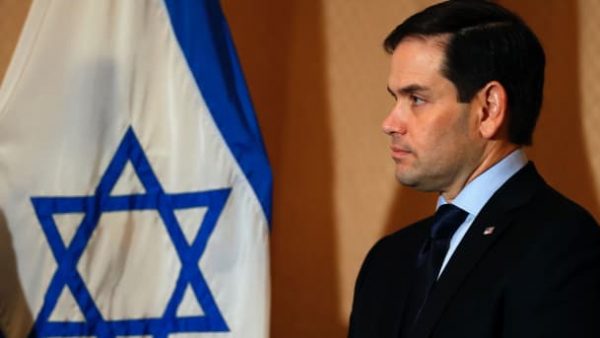
One of the emptiest of all the empty suits in the Senate is Marco Rubio of Florida. The boyish looking Rubio is, to be sure, ambitious, but his thought processes, if they exist at all, are hard to discern. He is, more than most congressmen, both totally ignorant and completely programed in what he says and how he says it. Anyone who doubts that judgement should watch the February 2016 debate with former New Jersey governor Chris Christie in which Christie totally destroyed Rubio, effectively ending his bid to become the GOP candidate for president. Christie criticized Rubio for memorizing a “25-second speech that is exactly what his advisers gave him.” The two argued, but Rubio seemed stuck with his stump speech, which Christie called him out on every time he launched into it. Christie eventually turned and told the audience “There it is. The 25-second memorized speech.”
Rubio is pretty much straight-line neocon in his pronouncements, his most recent policy statement being that the Venezuelan people have two choices – change their government or starve. He tweeted it with his usual eloquence: “Hunger & desperation is growing inside #Venezuela & people know the only thing standing in the way of $50 million of food & medicine is #Maduro. Military leaders should make a choice, before a choice is made for them. The window for a negotiated exit is closing fast.” Columnist Whitney Webb responded with “Marco Rubio is openly saying that if Venezuela’s military doesn’t turn on Maduro soon, ‘a choice will made for them’ by the United States. Scariest threat for an imminent invasion of Venezuela I have yet to see.”
Rubio, who is Cuban-American, is inevitably hard-line against taking any steps to improve relations with his ancestral homeland, is hostile to “enemies” Russia and China, and wants American soldiers to stay in Afghanistan and Syria forever. It is a formula for continuous conflict worldwide, with the United States paying the tab both in dollars and in casualties.
But Senator Marco Rubio’s greatest affection is reserved for the Jewish state Israel. Why? Because that’s where his money and political support come from, and, for its part, the Israel Lobby sees Rubio as a perfect simple-minded patsy to advance its agenda. Israel’s promoter with the deepest pockets, casino magnate Sheldon Adelson, was pursued by Rubio who “… consistently championed Israel in speeches on the Senate floor while also pushing legislation aimed at supporting the cause” during the GOP nomination process. Rubio eventually received Adelson’s endorsement in February 2016.
Before acquiring Adelson’s support, Rubio had “already gained support from Miami billionaire Norman Braman and New York billionaire investor Paul Singer, among others.” Both Braman and Singer are known to be major supporters of Israel. Marco’s affection for both Israel and Florida Jews derives largely from his connection to Braman, a former Philadelphia Eagle’s owner and currently a billionaire Miami resident who owns Florida’s largest network of car dealerships. Braman, an active supporter and funder of the illegal Jewish settlements in the Middle East, has been Rubio’s major financial backer since his early days in Florida state politics and as a quid pro quo whenever Marco expresses his love for both Jews and Israel, he is speaking to and for Braman.
Rubio has recently written, or had written for him, an op-ed in The New York Times entitled “The Truth About BDS and the Lies About My Bill” that seeks to explain why recent legislation to protect Israel that the senator sponsored does not violate the First Amendment guarantee of free speech.
Senate bill S.1 for 2019 finally passed out of the Senate last week on a 77 to 23 vote with Rand Paul as the only Republican Senator to vote against it. The full title of S.1 is the Strengthening America’s Security in the Middle East Act of 2019, which might be considered a bit of a fraud as it has nothing to do with the United States and is really all about giving Israel money and anything else it might desire, to include destroying the nonviolent Boycott, Divestment and Sanctions (BDS) movement that has targeted Israel’s apartheid. In his speech defending the bill, Rubio openly admitted that he was seeking to help Israel. He also registered his opposition to the impending pullout of U.S. troops from Syria because it would, according to him, “endanger” the Jewish state.
Rubio’s op-ed was written before the final vote on February 5th, but it predicted correctly that the bill would receive “a bipartisan supermajority” in the Senate. Anything having to do with Israel normally receives such “supermajorities” from congressmen who are intimidated, or expecting to be raptured shortly or on the Israel Lobby payroll.
The op-ed’s author comes out swinging, declaring that critics have “echoed false claims made by anti-Israel activists and others that the bill violates Americans’ First Amendment rights. That line of argument is not only wrong but also provides cover for supporters of the Boycott, Divestment and Sanctions movement, who embrace an international campaign of discriminatory economic warfare against Israel, a fellow democracy and America’s strongest ally in the Middle East.”
One supposes that “anti-Israel activists” consist of that increasing number of Americans who want to see Israel held accountable for its war crimes and crimes against humanity. Yes indeed, a boycott is “discriminatory economic warfare” using peaceful and non-threatening means to bring about change. And no, Israel is neither a democracy nor an ally of the United States. Has the Senate approved a treaty of alliance with Israel, Marco? You’re in the Senate and should know the answer to that one.
Rubio goes on to claim that “the goal of the movement is to eliminate any Jewish state between the Jordan River and the Mediterranean Sea.” Wrong again Marco. Even if some BDS supporters might like to see that, it is not a “goal of the movement.” The movement is non-violent and Israel has a large army that would make such an objective a fantasy.
The author then describes how “While the First Amendment protects the right of individuals to free speech, it does not protect the right of entities to engage in discriminatory conduct. Moreover, state governments have the right to set contracting and investment policies, including policies that exclude companies engaged in discriminatory commercial -or investment- related conduct targeting Israel… That’s why, since 2015, more than 25 states, including Florida, have adopted laws or issued executive orders to divest from or prohibit contracts with companies that wage discriminatory economic warfare against Israel.” Wrong again Marco. Free speech includes supporting discriminatory conduct. The American Civil Liberties Union has addressed the issue succinctly, arguing correctly that “Public officials cannot use the power of public office to punish views they don’t agree with. That’s the kind of authoritarian power our Constitution is meant to protect against.” And several state laws protecting Israel from the First Amendment have already been ruled unconstitutional.
Marco then expands on his argument, “The Combating BDS Act does not infringe on Americans’ First Amendment rights or prohibit their right to engage in boycotts. By design, it focuses on business entities — not individuals — … it focuses on conduct, not speech. Indeed, it does not restrict citizens or associations of citizens from engaging in political speech, including against Israel.” Indeed Marco, but how do you explain the fact that several of the well-publicized cases involving BDS legislation have involved individuals not “business entities” who refused to sign pledges regarding Israel, which, when last I checked, was not even part of the United States and has nothing to do with contracting in this country? Those individuals have been denied government benefits and have been fired from jobs they had held for years.
And then there is the hypocrisy issue for Marco Rubio. If openly and vocally opposing trade with or travel to Cuba should similarly be suppressed, would he and his Cubanos associates consider that to be constitutional or perfectly legal? I think not. And Cuba, as far as I know, does not line up snipers to shoot children and medical workers while also stealing land from its rightful owners. Israel is a racist apartheid state. Cuba, for all its faults, is not.
It would be difficult to find more insipid justifications for S.1 than those provided by Marco Rubio. He does not understand that the “state” at all levels is supposed to be politically neutral in terms of providing government services. It is not supposed to retaliate against someone for views they hold, particularly, as in this case, when those views are part of a nonviolent opposition to the policies of a foreign government that many consider to be guilty of crimes against humanity. Rubio clearly believes that you can exercise free speech but government can then punish you by taking away your livelihood or denying you services that you are entitled to if you do not agree with it on an issue that ultimately has nothing to do with the United States. How such a lightweight came to be a Senator of the United States of America eludes me.
Philip M. Giraldi, Ph.D., is Executive Director of the Council for the National Interest, a 501(c)3 tax deductible educational foundation that seeks a more interests-based U.S. foreign policy in the Middle East. Website is www.councilforthenationalinterest.org, address is P.O. Box 2157, Purcellville VA 20134 and its email is inform@cnionline.org.
Featured Video

Seyed M. Marandi: US-Iran War Inevitable: Kuwait and Bahrain May Fall
or go to
Aletho News Archives – Video-Images
From the Archives
Oil and the Israel Lobby
Reknowned economist M. Shahid Alam offers this excellent critique of Noam Chomsky’s defective analysis of the relative influence of Oil versus the Israel lobby over US foreign policy: … continue
Blog Roll
 Aletho News
- ICC ignored ‘very well-documented’ NATO crimes – ex-Libyan minister
- SNSC secretary dismisses US response to Iran’s conditions as ‘inadequate’
- Sanaa says Taiz roads open, secure for residents, warns Saudi forces
- Iraqi resistance group urges Saudi leadership to admit defeat, lift Yemen siege
- Trump’s Retreat: How Al-Aqsa Flood Took Down the US Empire
- Israel’s Military Actions in Lebanon Grossly Violate International Law — Lavrov
- Seyed M. Marandi: US-Iran War Inevitable: Kuwait and Bahrain May Fall
- Leaders Condemn Ansarallah Attack on Saudi Arabia While Ignoring Illegal War Against Yemen
- Leaked: Britain’s Covert Iraqi Psyops Network
- Yemeni Armed Forces Warn Airlines Against Using Saudi Airports, Exempt Mecca and Medina
- If Americans Knew
- After Oct 7, IDF policy allowed civilian casualties for even the lowest-ranking targets
- Israel’s Destruction of Southern Lebanon Intensified After the Cease-Fire
- The Last-Minute Decision That Gave Israel Its Name
- The American Conservative: How Trump Made the World Go Nuclear
- Meet the US generals and admirals advancing Israeli policy
- Opinion: Why news organizations should boycott Israel
- The Israeli witch hunt of Sami Abu Shehadeh exposes the lie of the ‘Jewish and democratic’ state
- No state has a ‘right’ to exist – least of all Israel
- Testimonies about Gaza’s civilian death toll expose Israel’s atrocities – Daily Update
- How Israel Conquered the Latin American Right
- No Tricks Zone
- New Study Suggests Large Regions Of The Pacific Ocean Have Been Cooling For The Last 80 Years
- Germany’s Green Energy Debacle: High Energy Costs Force Kahla Porzellan to Close After 182 Years!
- New Study: 50 Years Of The Most Aggressive ‘Net Zero’ Policies Can Only Affect The Global Climate By 0.03°C
- US September “Heat” Was No Record…Many Records Set Decades Ago
- Latest European Green Energy Debacle; Portugal’s Largest Flagship Solar Park Insolvent!
- Green Energy Debacle: German Expert Professor Fritz Vahrenholt Warns Of Severe Economic And Social Consequences
- Two More Paleo Reconstructions Affirm Meters-Higher Sea Levels Across Ireland, Brazil 7000-6000 Years Ago
- New Study: Earth And Venus Surface Warmth Largely Explained By Convection And Lapse Rate, Not CO2 Or Radiation
- 2025 Nature Paper Claiming Worsening Global Drought Gets RETRACTED …Heavily Flawed
- New Study: ‘Global Drought Shows No Detectable Recent Acceleration Under Climate Warming’

